Category: Birds

  • Trouble in Paradise: Why the Galapagos Islands Need Ecological Restoration

    Trouble in Paradise: Why the Galapagos Islands Need Ecological Restoration

    By: Anna Calle-Loor

    MESM Anna Calle-Loor has nearly five years of experience working in ecological restoration and biodiversity conservation in the Galapagos Islands. She is a former researcher for the Galapagos Verde 2050 (GV2050) Program of the Charles Darwin Foundation (CDF). She is also a member of the Galapagos’ Plants Specialists Group of the IUCN’s Species Survival Commission and the Society for Ecological Restoration. annagcalle@gmail.com

    The Galapagos archipelago is famous for inspiring Charles Darwin’s theory of evolution by natural selection after his visit in 1835. Its geographic and environmental characteristics have given rise to unique creatures like giant tortoises, pink iguanas, the second smallest penguins in the world, flightless cormorants, and the only marine iguana. Due to its extraordinary biodiversity, it was established as Ecuador’s first national park in 1959 and declared a UNESCO World Heritage Site in 1979.

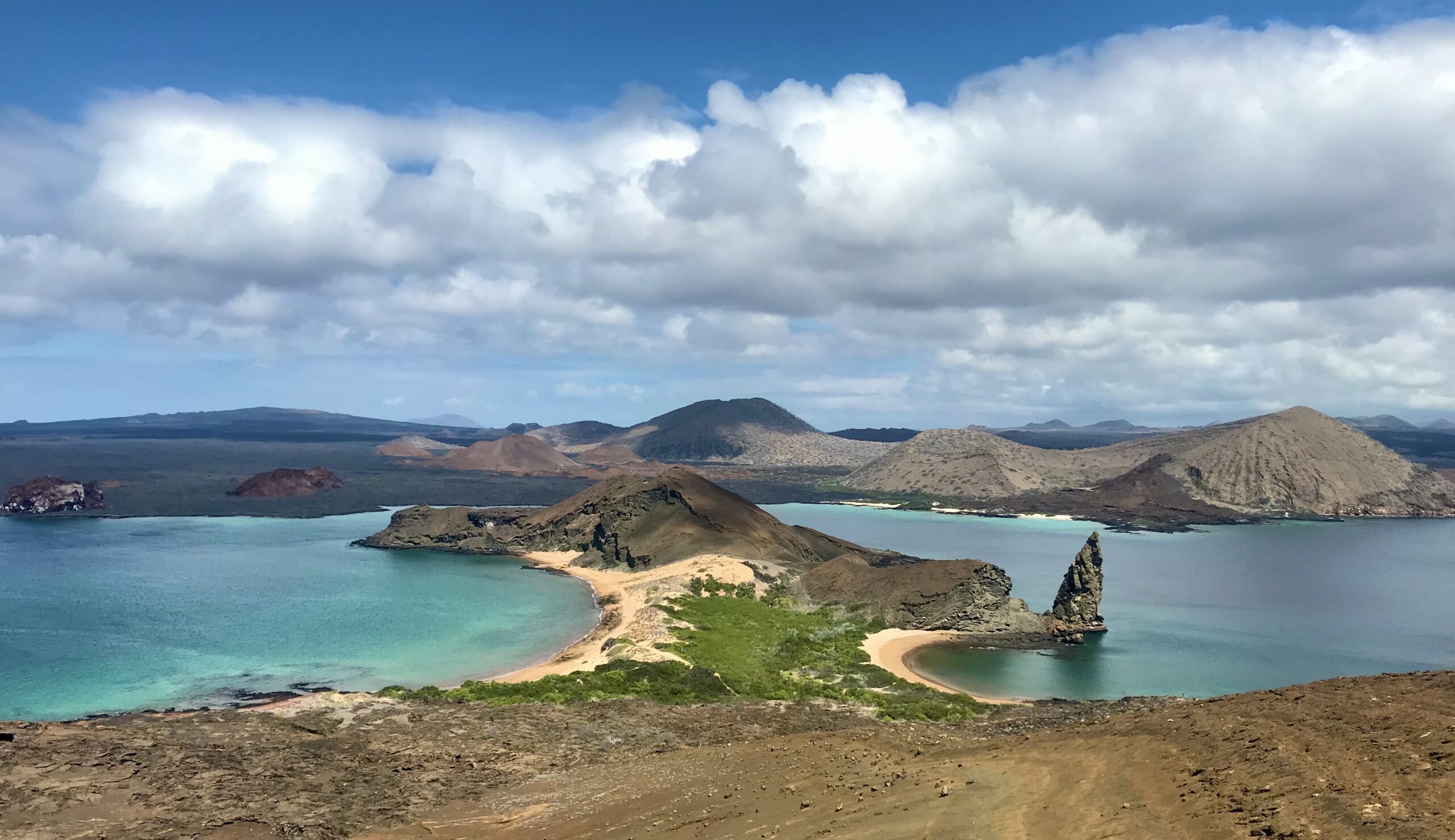
    Bartolomé Island, one of the most photographed landscapes in the Galapagos, offering a view of turquoise bays and the Pinnacle Rock formation. Photo credit: Anna Calle

    Today, the islands’ biodiversity and volcanic landscapes continue to astonish visitors. But behind their reputation as a pristine paradise lies a story of vulnerability, degradation, and a need for ecological restoration.

    Islands: Biodiversity Hotspots and Extinction Hotspots

    Islands often have high levels of endemic species, but they are also highly vulnerable to extinctions. With small populations, restricted geographical ranges, and often having evolved with no predators, many island species are especially sensitive to disturbances.

    We have seen the consequences before. On Easter Island, deforestation and overexploitation of limited resources led to ecological collapse and the downfall of a once-thriving society. Mauritius Island lost the dodo, one of the first species recognized as extinct due to human activity, in the 1600s. Hawaii has earned the unfortunate title of “the extinction capital of the world” because of its high extinction rates of plants, insects, and birds. Guam has lost most of its native birds following the introduction of the invasive brown tree snake. All of these are reminders of how quickly biodiversity can disappear when island ecosystems are disrupted.

    The Galapagos are no exception. With ecosystems that have already suffered degradation, efforts now go beyond species conservation to include ecological restoration.

    A History of Degradation

    With a recorded human history that starts in 1535 with the arrival of the bishop Tomás de Berlanga, there have been many people that have visited the islands and inevitably have left a mark on them. The first visitors were pirates, whalers, prisoners, and a few early settlers. But they did not come alone. They brought rats, cats, goats, and other animals, many of which became invasive and highly destructive. To give you a scale of the problem, an eradication campaign known as Isabela Project was launched in 1997 and eliminated >140K goats from three islands. 

    Today, the pressure continues. Around 30,000 people live in the Galápagos, and nearly 300,000 tourists visit every year. Of course, this level of human activity requires infrastructure. The islands now have roads, towns, gravel mines, agricultural fields, and landfills, all of which exert pressure on the surrounding environment. The continuous flow of tourists and imported goods make introduced species a growing threat.

    In response, the Galápagos National Park Directorate and conservation NGOs like the CDF have launched multiple ecological restoration projects. I have collaborated in several of these efforts through the GV2050 Program, combining endangered species recovery with ecological restoration strategies.

    Recovering Galapagos Endangered Flora

    About 60% of Galapagos flora is threatened with extinction. This includes Lecocarpus lecocarpoides, a shrub with yellow daisy flowers that is found only on Española Island and a few nearby islets. Unfortunately, it has almost disappeared from the main island, with a single population left, likely due to past goat herbivory. Although goats were eradicated from Española in the 1970s, L. lecocarpoides has not recovered.

    That led us to investigate deeper into its biology. Were the remaining plants producing viable seeds? A study found that yes, there was a large number of seeds in the soil and 80% were viable. Then, why did we rarely see any germination? There was something preventing the seeds from germinating, and the same study hinted at the thick outer seed coat. 

    In our laboratory, we found that using a scarification technique consisting of carefully cutting the seeds under a stereoscope leads to high germination rates of 75%. As part of the investigation, we returned 29 adult plants to Española and produced over 6000 seeds to continue restoration efforts. These were promising results, but they also led to more questions.

    Lankester composite dissection plate of Lecocarpus lecocarpoides showing key plant structures. Created by N. Espinosa-Ortega. Originally published in Calle-Loor & Jaramillo (2024).

    How does the scarification process happen in nature? The interactions with other species might play a key role. We have seen moth larvae feeding on the seed coat without damaging the embryo. And we suspect Darwin’s finches might also be involved. They feed on the hard and spiny seeds of Tribulus, which are very similar to Lecocarpus seeds. Could they be helping L. lecocarpoides germinate? This remains to be investigated.

    Restoration of Arid Ecosystems

    The first island most visitors arrive to in the Galapagos is Baltra Island, where the main airport is located. But few realize it is one of the most degraded islands in the archipelago. A combination of invasive especies and the construction of a U.S. military base during World War II led to habitat destruction and likely to the local extinction of land iguanas, the main seed dispersers. Although they have since been successfully reintroduced through a successful captive breeding program, much of the vegetation has not recovered.

    Aerial photo of the U.S. military base “The Rock” in Baltra. Two airstrips, roads, and several buildings can be appreciated. Photo credit: U.S. Army

    A challenge when restoring an ecosystem that has been significantly altered, especially when historical records are scarce, is defining what restoration should aim to achieve. To help answer that, we compared Baltra with its neighbor island, North Seymour, which shares similar ecological conditions but has suffered less degradation. 

    Through two vegetation surveys we identified the plant composition and community structure that once likely existed on Baltra. For example, we found that the five most dominant woody and cacti species in North Seymour are Bursera graveolens, Castela galapageia, Cordia lutea, Opuntia echios, and Parkinsonia aculeata. The surveys also showed that Baltra’s most intact vegetation remains in the north and southwest, while the central region is sparsely vegetated.

    These results can serve as guides for future restoration efforts. For example, for choosing what species to plant and where to plant them. On Baltra, where infrastructure like the airport, roads, and Ecuadorian military base already shape the landscape, restoration should minimize potential conflicts with these other land uses. Instead of trying to recreate the past, efforts should aim to increase connectivity between the two remaining patches of native vegetation to support wildlife movement and seed dispersal.

    Recovering Keystone Species: The Opuntia Genus

    If there is one Galapagos plant that is underrated, is the Opuntia prickly pear cactus. These cacti are a food source for two of the most charismatic animals of the Galapagos, giant tortoises and land iguanas. They also provide native birds with food, shelter, and nesting structures, including Darwin finches and Galapagos mockingbirds, two groups of birds that inspired Darwin’s theory of evolution by natural selection. 

    Additionally, they are one of the best examples of plant adaptive radiation in the Galapagos. Their 14 endemic taxa show great variation in form and size, with up to 4-fold differences in height and 100-fold in seed size. Some grow as tall as 12 meters, about the height of a pine tree! Interestingly, tree-like forms are found on islands with giant tortoises, while shorter forms occur where tortoises are absent.

    Unfortunately, populations have declined in some islands and low regeneration is a pattern throughout the archipelago. This is exacerbated by the pressure from introduced and native herbivores.

    Because of its ecological importance, Opuntia was included in a restoration plan for four islands. Among the actions proposed for increasing its numbers is testing different propagation methods: planting seedlings, cactus pads, seeds from fresh fruits, and perhaps most intriguingly, seeds collected from tortoise and iguana droppings. There is evidence that passing through the digestive system of these animals helps scarify the seeds, improving germination.*

    But giant tortoises and land iguanas are not the only species that seem to be helping Opuntia regenerate. We have observed Opuntia growing underneath the protection of trees and spiny shrubs. Could they be shielding them from herbivores or ameliorating harsh environmental conditions? The answer remains unknown, as there have been no formal studies on plant-plant facilitation in the Galapagos. This presents a unique opportunity to deepen our understanding of plant facilitation in island ecosystems and how these interactions can be used to improve restoration outcomes.

    Left: Giant tortoise feeding on a broken branch of Opuntia cactus. Photo credit: Anna Calle-Loor.
    Right: Cactus finch feeding on the pollen of an Opuntia flower. Photo credit: Elena Espín.

    From Evolution to Restoration
    The Galapagos changed our understanding of how new species emerge. Now, they are challenging us to learn how to repair the ecosystems that sustain those unique species. This extraordinary archipelago is no longer just a living laboratory for evolution. It’s becoming a living laboratory for restoration ecology. And if we get it right, the Galápagos can once again inspire the world, this time by showing what successful ecological restoration can look like, not just here, but everywhere.

    * Estupiñán, S., & Mauchamp, A. (1995). Interacción planta–animal en la dispersión de Opuntia de Galápagos. Charles Darwin Foundation, Puerto Ayora.
  • What does the Black-faced Antthrush tell us about tropical forest restoration?

    What does the Black-faced Antthrush tell us about tropical forest restoration?

    Anna Spiers (University of Colorado Boulder) describes a recent field experiment done with Emma Singer (Hamlin College) and Leighton Reid (CCSD) during an Organization for Tropical Studies Field Ecology Course in Costa Rica.

    Bird diversity and forest restoration are synergistic. Birds facilitate forest regeneration through seed dispersal, pest control, and pollination. Forest restoration replenishes lost bird habitat by providing food, protection from predators, and suitable territory for breeding and nesting. Monitoring bird communities in a regenerating forest is an effective strategy to gauge the success of restoration.

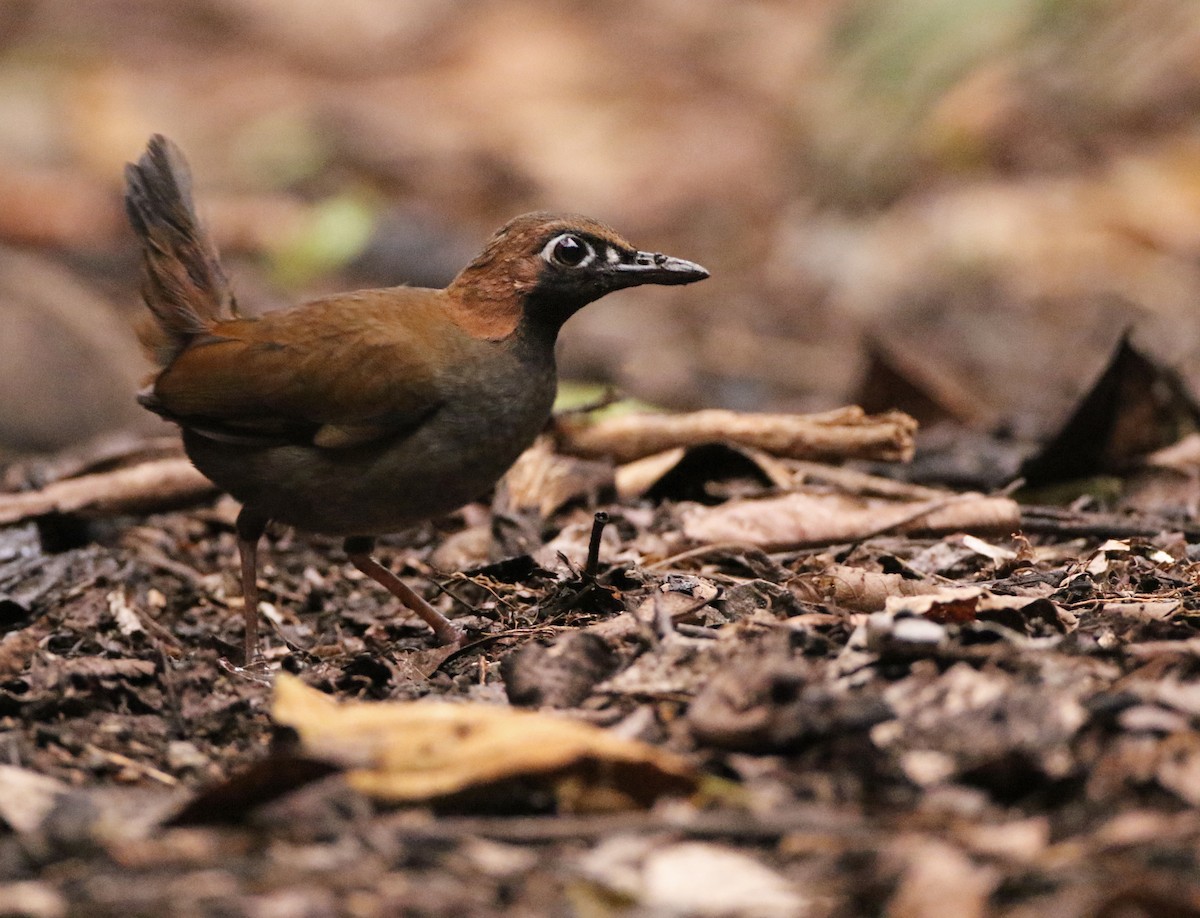
    While some birds are flexible regarding the quality of their habitat, others require a narrower set of conditions to survive. One such bird is the Black-faced Antthrush (Formicarius analis), a medium-sized, ground-dwelling insect-eater, easily distinguished by its plaintive song and chicken-like strut. The bird spends its days flipping over leaves and sticks with its bill to expose tasty ants, beetles, and other arthropods (and sometimes small vertebrates). A member of a bird family highly threatened by forest fragmentation (Formicariidae), the Black-faced Antthrush is known to disappear from small forest fragments and to struggle crossing even narrow strips of open space. Finding such sensitive birds in a regenerating forest is a positive signal that forest restoration is increasing habitat for forest-dependent species.

    bfan
    Black-faced Antthrush (Formicarius analis) strutting across the rainforest floor. Image: Luke Seitz/Macaulay Library at the Cornell Lab of Ornithology (ML54054261).

    Earlier this month, we did an experiment to find out how different forest restoration strategies affect the Black-faced Antthrush. Specifically, we tested whether the bird exhibited a stronger territorial response in tree plantations, naturally-regenerating secondary forests, or areas where patches of trees (tree islands) had been planted to stimulate forest recovery. We expected to find that birds would be more defensive of areas where trees had been planted, given that these areas had a more closed canopy and more leaf litter for the birds to pick through for arthropods.

    jlrplayback
    Leighton holds up a speaker to conduct a bird call playback. Unsurprisingly, there was no response in this scrubby, abandoned pasture (one of the control points in our experiment). Image: Martha Bonilla-Moheno.

    To test the bird’s territorial response, we amplified a locally-recorded sound file of the bird’s vocalization and recorded its response. We noted how long it took for the bird to respond, how many notes it sang in response, and how close it approached the speaker. For this species, a short call with 4 notes is a “hello”, but a long call with upwards of 12 notes is a warning to let the other birds know that this territory is taken.

    map
    Our study area at Las Cruces Biological Station in southern Costa Rica. Each of the two restoration sites contained a tree plantation, a natural regeneration area, and a “tree island” area where patches of trees were planted to kick-start forest recovery. Image: Google Earth 2018.

    Antthrushes defended restoration areas where trees were planted

    As we expected, Black-faced Antthrushes responded more quickly and more forcefully when we taunted them with calls broadcast from tree plantations and tree island plantings – an indication that they were expending more energy to defend these areas. However, we only found this at one of the two restoration sites. The other site was a veritable antthrush desert with not a single response during any of our trials. Leighton’s collaborator Juan Abel Rosales often finds Black-faced Antthrushes at both sites, but this second site is near a road and dogs occasionally wander into the regenerating forest, possibly causing birds to temporarily abandon this area.

    maxnotesfig
    Black-faced Antthrushes responded quickly and with many tooting notes when we played their song to them from tree islands, plantation, and mature forest, but they responded not at all in abandoned pastures or in natural regeneration. The data representing restoration treatments are from one site only – at the other site we recorded no birds during any trials.

    Tree islands and plantation had a couple of habitat features that natural regeneration lacked. First, the understory was more open, providing ground-dwelling birds with greater visiblity. Second, planted areas also had deeper leaf litter, and leaf litter is essential for a bird that makes a living flipping leaves to find its dinner.

    habitats
    Understory comparison between natural regeneration (left) and a tree plantation (right). Both have been recovering for 15 years. Natural regeneration vegetation is thick and still grassy from pasture days. A closing canopy in the tree plantation produced a thinner, more visible understory, with lots of nice leaf litter, full of delicious arthropods.

    So what does the Black-faced Antthrush tell us about forest restoration?

     It may be telling us two things. First, restored forests growing up alongside remnant ones can be valuable habitat worth defending. When birds spend time calling, that is time that they do not spend foraging, and they can pay a price with their energy budget. Second, tree planting may create habitat for these birds faster than natural forest regeneration – although natural regeneration is highly variable from site to site, and we only found a pattern at one site right next to an old-growth forest. Promisingly, we did not see a difference between tree islands and the tree plantation, which suggests that we could plant fewer trees and still see the return of a forest-dependent bird species within about 15 years.

    For more information about the Islas Project (with the tree islands) see previous NHER posts here, here, and here. Thanks to Bert Harris for some of the ideas that we used in this project!


  • What happened to the Bahama Nuthatch?

    What happened to the Bahama Nuthatch?

    On January 6-10, CCSD scientist Leighton Reid joined Bert Harris, Kelly Farrell, and David Wilcove on a search for what has become one of the rarest bird species in the western hemisphere.

    Maker:L,Date:2017-8-24,Ver:5,Lens:Kan03,Act:Kan02,E-ve
    Grand Bahama Island, only known home of the Bahama Nuthatch.

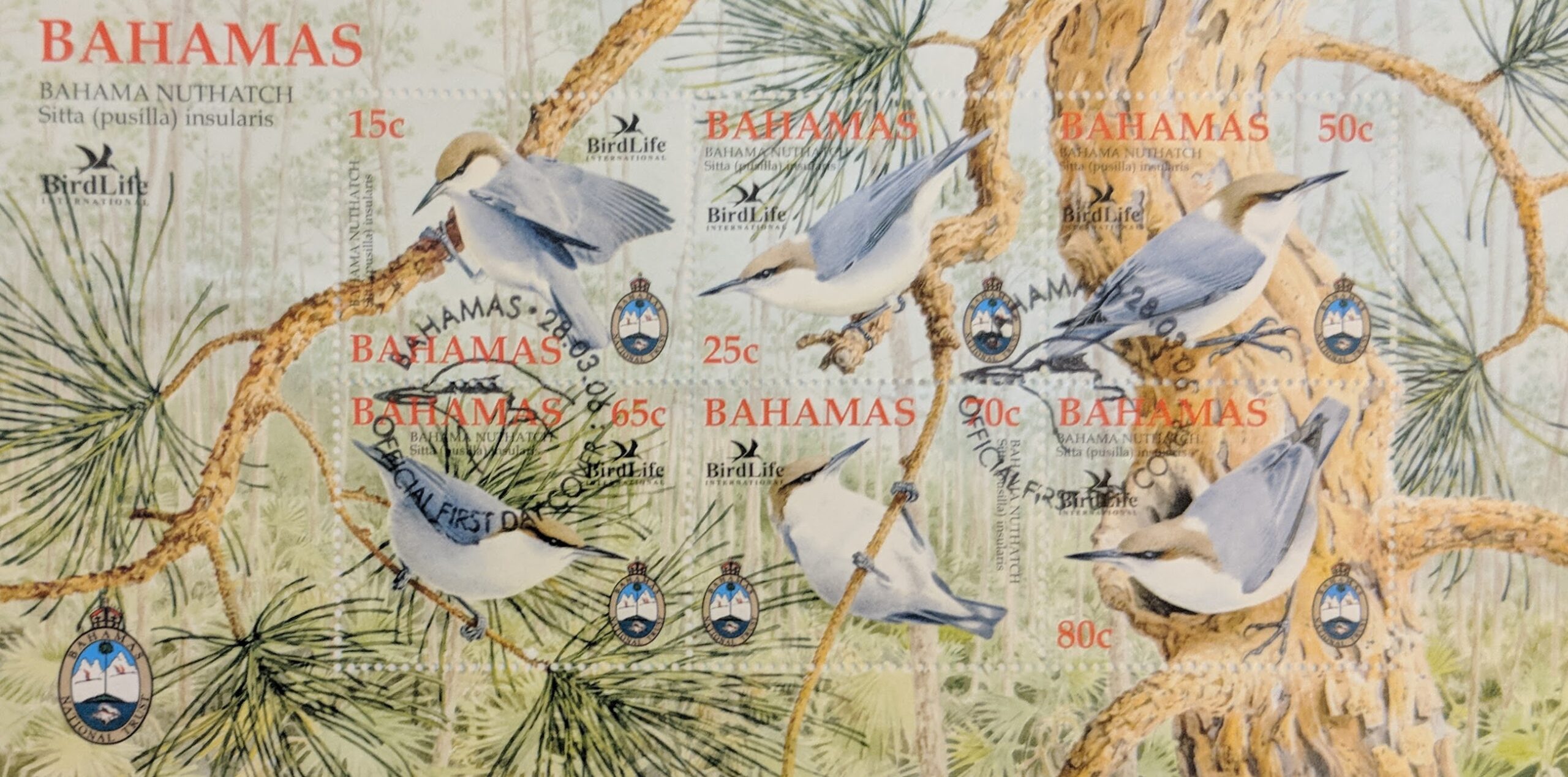
    The Bahama Nuthatch (Sitta insularis) is or was a bird found nowhere except on Grand Bahama Island, a thin, 153-km long piece of weathered limestone lying 84 km east of Palm Beach, Florida.


    The Bahama Nuthatch differs from a widespread southeastern US species, the Brown-headed Nuthatch (S. pusilla) in having a longer bill and a distinctive, high-pitched warbling call. It is a denizen of the Caribbean pine (Pinus caribaea) forests that cover about 60,000 ha of Grand Bahama Island. Perhaps always rare, the species was a lot more common in the 1960s than 30 years later in the early 1990s. Ten years ago, a nearly island-wide survey found only 14 individuals in a single tract of forest east of Freeport, the island’s largest settlement. A local nature guide, Erika Gates, regularly found one to three individuals of the species in this area through June 2016, but in early October 2016, Hurricane Matthew (Category 5) blew across the island, causing significant damage. The Bahama Nuthatch has not been detected since June 2016 despite Ms. Gates and others searching in its previous locations. It is considered “endangered” by the IUCN.

    Maker:L,Date:2017-8-24,Ver:5,Lens:Kan03,Act:Kan02,E-ve
    A postage stamp sheet commemorating the Bahama Nuthatch (Sitta insularis), an extremely rare species known only from a single island in the Bahamas.

    Maker:L,Date:2017-8-24,Ver:5,Lens:Kan03,Act:Kan02,E-ve
    Bert Harris plays the distinctive warbling call of the Bahama Nuthatch through a speaker into a very quiet Caribbean pine forest.

    For six days in early January, four of us intensively searched the area around the two most recent sightings, the ones from May and June 2016. We focused on the core area at first and gradually expanded outwards as it became clear that we were finding no individuals at the former sites. We estimated that we searched an area of roughly 4600 hectares of pine forest over a period of 26 hours (88 person-hours). We travelled approximately 92 km of roads and trails, both driving and walking. Many of these were old logging roads, which crisscross the entire island. While driving, we stopped every 0.4 km (0.25 mi) and played a recording of the nuthatch’s distinctive call. While walking, we played the call more frequently.

    We did not find any Bahama Nuthatches. We think that our group, the first to search for multiple days for this species since 2016, was also the first to fail to find it. Perhaps the species’ conservation status should be changed from endangered to critically endangered. Ideally, some Bahamian ornithologist will be able to survey again for the species during the coming breeding season, and if the species is rediscovered, its remaining habitat will be protected, restored, and expanded.


    In addition to the Bahama Nuthatch, we noted that several birds which breed exclusively in the pine forests were also very rare or absent. Bahama Yellowthroats (Geothlypis rostrata), Bahama Warblers (Setophaga flavescens), and Olive-capped Warblers (S. pityophila) were relatively abundant during surveys in 1968 and 2007, but Bahama Yellowthroats were totally absent from our search, and we found only a handful of Bahama Warblers and Olive-capped Warblers, making them even rarer in our survey than the nuthatch was in 2007 (though we searched during some relatively cold weather and during the non-breeding season). We also failed to detect a single Bahama Swallow (Tachycineta cyaneoviridis). Looking through historical records on eBird we noted that the West Indian Woodpecker (Melanerpes superciliaris) was formerly abundant across the island but has not been recently seen.

    The causes of decline for the Bahama Nuthatch and perhaps for other breeding birds of the pine forests are mysterious. Grand Bahama Island has been extensively logged, initially for large diameter timber (prior to 1900) and later (1940s-1970s) for pulpwood. The expansion of the city of Freeport and tree-killing inundation by seawater over large areas have both reduced the potential habitat area. Feral cats, introduced raccoons, and corn snakes introduced in the 1990s could be predating native birds. We saw at least nine raccoons during our short time on Grand Bahama. Altered fire frequency and the increased frequency of Atlantic hurricanes may also be impacting the species, possibly by removing snags that are required for nesting.

    Erika_Nuthatch3Bus
    As recently as 2011, 65 Caribbean ornithologists were able to view the Bahama Nuthatch simultaneously and within three meters of a tour van. Photo by Erika Gates.

    Addendum: After six weeks and 400 km of searching a team in Grand Bahama has located at least five extant individuals of the Bahama Nuthatch!