Category: Grassland

  • From Hayfield to Meadow: An Herbicide-Free Sod Removal Trial to Restore Native Meadows in Virginia’s Northern Piedmont Region, USA.  

    From Hayfield to Meadow: An Herbicide-Free Sod Removal Trial to Restore Native Meadows in Virginia’s Northern Piedmont Region, USA.  

    By Charlotte Lorick

    Charlotte Lorick is the Head of Biodiversity Conservation at the Oak Spring Garden Foundation in Virginia, United States. She also leads the Forgotten Flora Project, an environmental and educational consulting initiative. In addition to this work, she serves as a co-lead of the Restorative Landscape Coalition, a working group of the Northeast Seed Network. In this blog, she shares her hands-on experience organically restoring a meadow in a former horse pasture and hayfield in the eastern United States.

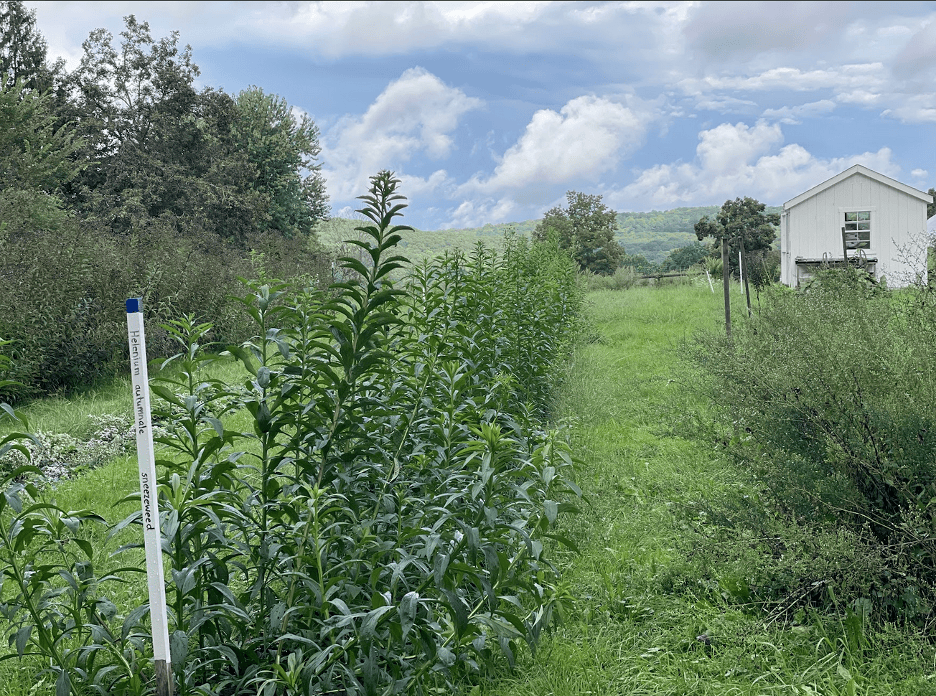
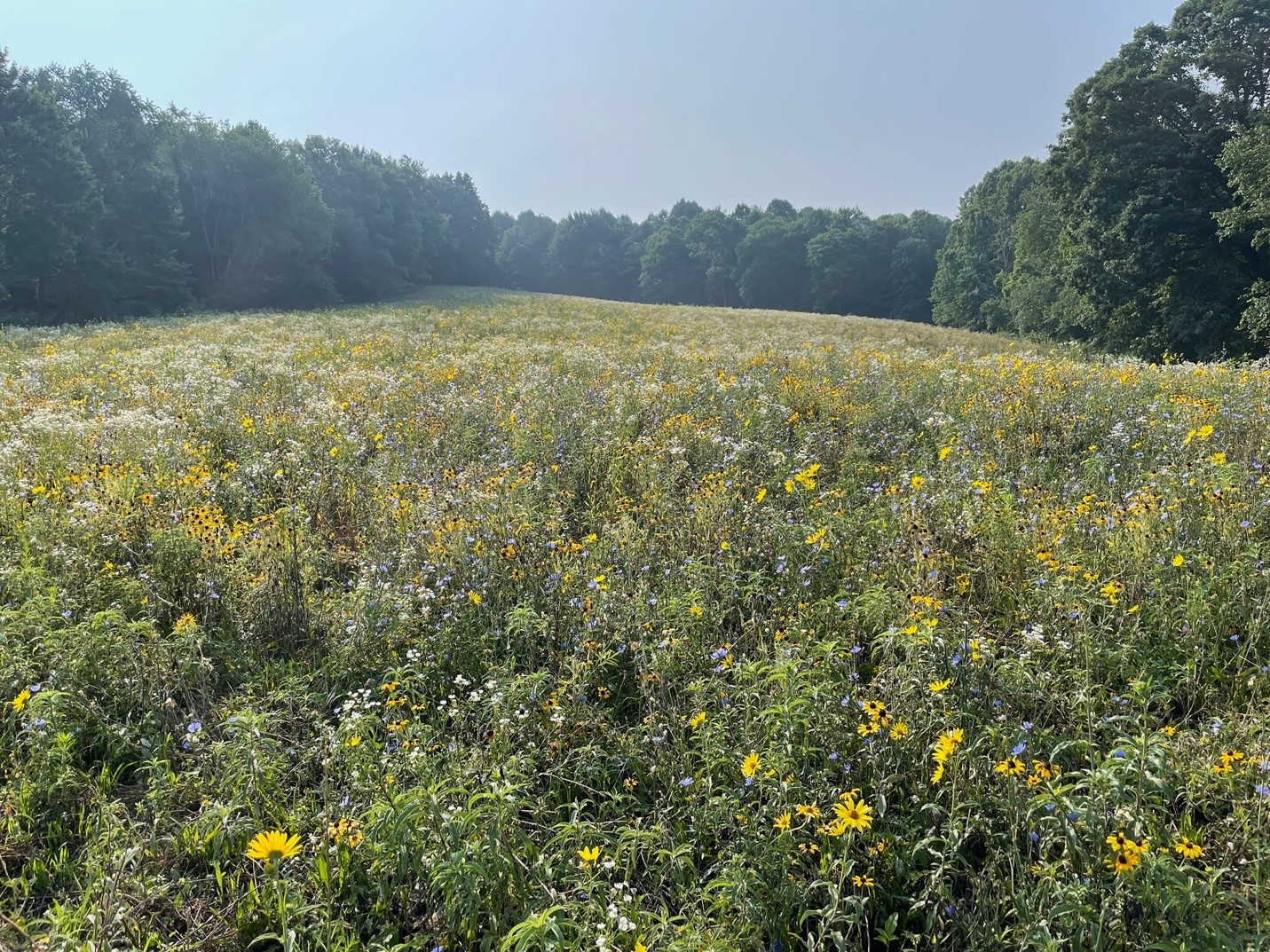
    Transformation of former hay fields (left) to native meadow (right) using sod removal for site prep. Photo by Charlotte Lorick.

    In Virginia’s Northern Piedmont region, where rolling hills extend from the Blue Ridge Mountains toward the Atlantic Coastal Plain, sits the Oak Spring Garden Foundation (OSGF). Its mission is to support and inspire scholarship and public dialogue on the history and future of plants, including the art and culture of plants, gardens, and landscapes, and the importance of plants for human well-being. OSGF advances this mission through fellowship and residency programs, a renowned research library, and by cultivating a biocultural conservation farm and ornamental gardens. The foundation also convenes meetings and collaborations focused on botany, horticulture, and landscape conservation. In this capacity, OSGF hosted the inaugural meeting of the Restorative Landscape Coalition in 2024

    Among the foundation’s primary goals is conserving and promoting native plants and biodiversity across the 280-hectares (700-acres) of land under its care. This goal can often prove challenging because the land at OSGF, like much of the rich soils of the Northern Piedmont, has long been shaped by agricultural land use. The impacts of agriculture on soil and plant communities are long lasting and can be detrimental to native species richness and diversity. Heavy fertilization favors exotic species over natives and the common practice of heavy tillage forever alters the soil and seed bank, further decreasing native species richness. Indeed, the IUCN considers temperate grasslands the least protected, most heavily altered, and most endangered terrestrial biome in the world. In the southeastern United States in particular, an estimated 90% of pre-European grasslands have been lost due to agricultural practices and other factors. And the small amount that do remain are indicators of the incredible species richness that have been lost. A recent study of Virginia’s Piedmont grasslands demonstrates they are far more biodiverse than previously documented, with surveyed sites having over 100 plant species in a single 100 m² plot. 

    This ecological and land use legacy raises a common challenge for conservation landowners across our region: how to restore native meadows to ecosystems degraded by intensive agriculture? As agricultural abandonment has increased across the region, converting old pastures to native meadows by removing existing vegetation and seeding a regionally native seed mix has become a common practice to address that challenge. Meadow restoration as a practice can actually mean different things depending on the situation. In the context of the Society for Ecological Restoration’s (SER) Restorative Continuum of activities, most often these kinds of meadow plantings fall along the restoration continuum but are distinct from efforts to fully restore native biodiversity and ecosystem health based on a reference ecosystem. Instead, in our region and at OSGF these meadow restorations emphasize incorporating designed, site-adapted native plant communities into degraded grasslands. We are aiming to increase native diversity in our grasslands and this is one way to accomplish this. However, for several reasons, including lack of robust data on reference communities or access to hyperlocal native seed, we consider these projects as distinct from but complementary to a full-scale ecological restoration effort. 

    As every practitioner will tell you, restoring a native meadow is a challenging process in this region as the non-native weeds and pasture grasses (that had historically been introduced for cattle and hay production throughout the Eastern US) are tenacious. Removing them effectively to allow establishment from a native seed mix is arguably the most critical yet most challenging part of the meadow restoration process. Conventional methods rely on heavy use of herbicides or tilling, which both have considerable downsides. Yet data are lacking in this region specifically on alternatives. To address this gap and inspire formal research on innovative or alternative techniques to restore native meadows in the Eastern US, in 2023 we trialed a novel method to restore a meadow that could prove a viable alternative for small areas to the conventional herbicide and tillage approaches.  

    This post details our project, outcomes, and lessons learned. We outline the experimental approach, site preparation methods, and early establishment results, and reflect on the practical implications of this technique. This project is a case study rather than a formal experiment, but we believe that what we learned in the field and are sharing here can havevalue for generating hypotheses and informing land managers interested in applying this method on their land and researchers interested in conducting future studies.

    Landscape Context and the Case for Meadow Restoration

    The OSGF landscape includes a rich mosaic of open fields, meadows, forests, streams, and wetlands that have been shaped by a long history of anthropogenic influence. In Pre-settlement times, the commonly held theory is that the Piedmont was characterized by oak-hickory landscapes with patches of forest and savannahs often managed by controlled fire. Post European settlement, the land at OSGF was managed, including by enslaved people, for row crops and apple orchards, grazing cattle and hay production, and, in the last 50 years, horse pasture. 

    Today, through careful inventory of the landscape, we have identified several remnant and globally rare plant communities on the OSGF property that seem to have escaped much of the human impacts. These include a Piedmont upland depression swamp containing cypress-knee sedge (Carex decomposita), a species designated as critically imperiled in Virginia with fewer than five known populations remaining in the state, and false hop sedge (Carex lupuliformis), another exceptionally rare species.

    However, most of the open fields on the property are now products of a two and a half century agricultural legacy and are low in diversity, dominated by non-native cool-season grasses and other exotic species. While these non-native grass dominated pastures are actually choice nesting areas for many declining grassland specialist bird species at OSGF (including Eastern Meadowlarks (Sturnella magna), Grasshopper Sparrows (Ammodramus savannarum) and Bobolinks (Dolichonyx oryzivorus), we are selecting areas carefully to convert to native meadow where these birds are not nesting to support other suites of species that benefit from native meadow conversion. These areas hold strong potential for ecological restoration and conversion to diverse native meadow habitat and have become high priorities for conservation for OSGF.  For example OSGF is also home to several threatened or declining bird species that depend on diverse grasslands and early successional plant communities. These species include Short-eared Owl (Asio flammeus), Northern Bobwhite (Colinus virginianus), American Kestrel (Falco sparverius), Savannah Sparrow (Passerculus sandwichensis), and Henslow’s Sparrow (Centronyx henslowii). Notably, the native meadows that OSGF has established over the years have become winter hotspots for Short-eared Owls and Northern Harriers (Circus hudsonius) and other birds.

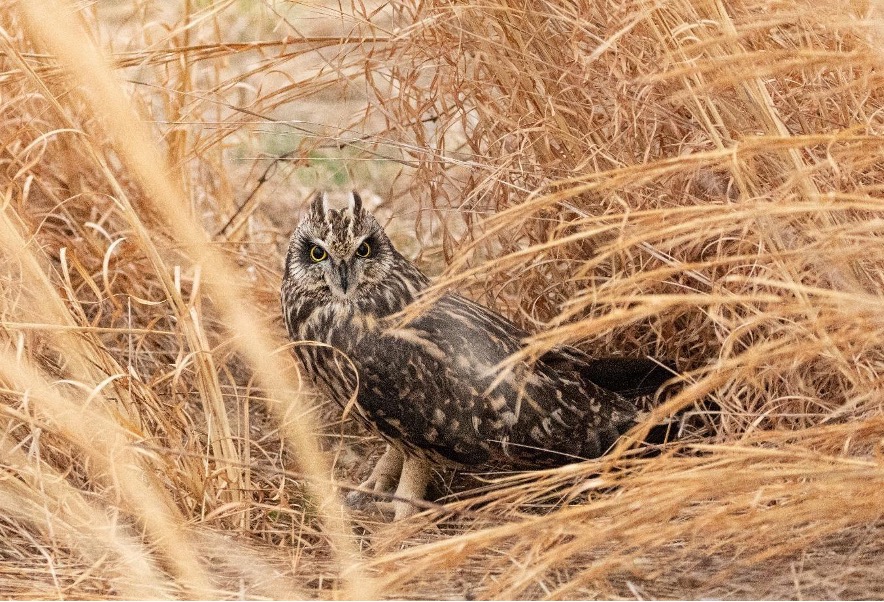
    Short eared Owls overwinter at OSGF every year and prefer roosting in clumps of native bunch grasses and in our restored native meadows. Pictured here in native broomsedge (Anatherum virginicus, syn. Andropogon virginicus) and purpletop (Tridens flavus) clump. Photo by Josh Rector, OSGF.

    Can Sod Removal Replace Herbicides?

    As OSGF transitions away from its historic use of the land for hayfields and pasture, we have initiated several native meadow restoration projects over the past decade, totaling roughly 24 hectares (60 acres). These projects have primarily used conventional installation approaches, including herbicide application or chemical-free methods such as repeated tilling and plowing. The most common conventional method is to apply a broad-spectrum herbicide, such as glyphosate, at least 3 times to create enough bare ground to seed the meadow. But chemical herbicides are not always effective on some of the most aggressive weeds, they are not effective on controlling weed seeds in the seed bank, they can alsonegatively alter the soil, and pose safety concerns for humans and wildlife. Unfortunately the common organic alternative relies on heavy tillage which comes with its own major downsides, including increases in noxious non-native weeds and negative impacts on soil health.

    OSGF is particularly interested in restoration strategies that minimize or avoid the use of chemical herbicides. We are not alone. Across our region, many landowners are exploring herbicide-free approaches to meadow restoration. However, robust data on the efficacy of alternative methods are limited.

    For this project we decided to try sod removal or scraping. Although this method of site preparation is often employed on small scales for garden installation or lawn conversion, we found little data on this method for large scale restoration plantings. However, we were encouraged by the results of some restoration studies from Europe and California involving topsoil removal.

    Sod Removal Project Design: Methods, Site Preparation, Seeding, and Maintenance

    The sod removal trial was designed with two main goals: to test an understudied organic approach to meadow restoration site preparation, and to share our case study to encourage further exploration of the approach, and perhaps formal research comparing this method with more common approaches. 

    The trial took place on a 0.8-hectare (2-acre) parcel of a former horse pasture and hayfield. Baseline vegetation surveys showed it was dominated by introduced cool-season pasture grasses: tall fescue (Lolium arundinaceum), orchard grass (Dactylis glomerata), and Kentucky bluegrass (Poa pratensis).

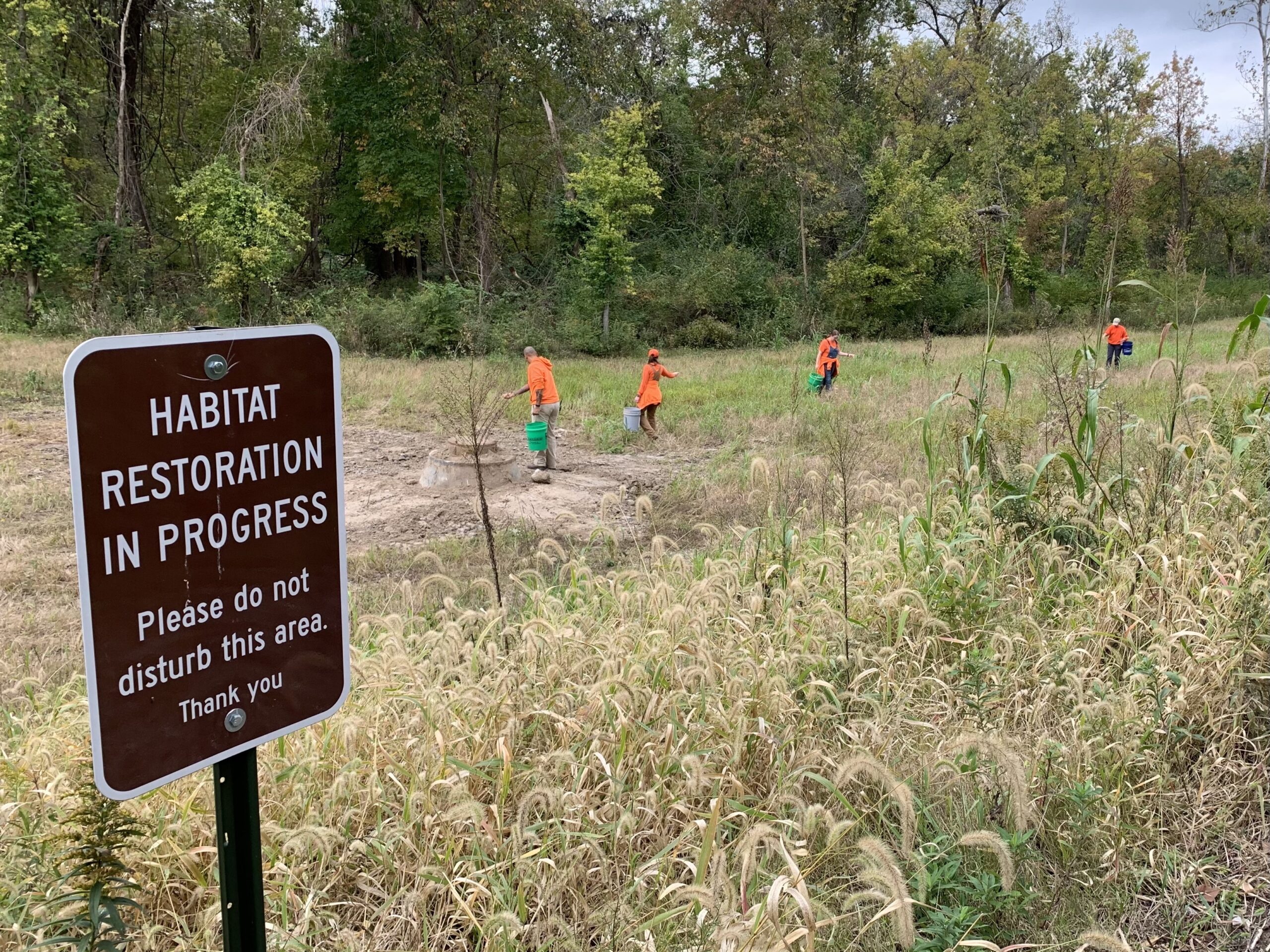
    To track change over time, we established permanent vegetation monitoring plots across the site. Vegetation surveys were conducted at baseline (Year 0) before disturbance and twice per growing season following seeding (2024 = Year 1, 2025 = Year 2). Soil samples were also collected at baseline and in each subsequent year. In November 2023, we removed the top layer of sod using the bucket of a skid-steer at a depth of approximately two inches. Afterward, the soil surface was lightly raked to improve seed-to-soil contact. We hand-broadcast a native seed mix using pine shavings as a carrier at 13.5 kg per hectare (12 lb per acre) and seeded a temporary cover crop of 50% winter rye and 50% oats at 34 kg per hectare (30 lb per acre). The field was then lightly covered with straw using a straw blower. The seed mix included 28 regionally appropriate species, roughly 60% perennial grasses and 40% forbs. 

    Management during the first two years was intentionally light. In Year 1, the cover crop was flail-mowed once in the spring. Other interventions involved manual cutting or pulling of problem weeds, primarily biennial thistles (Carduusspp.), a single clump of Johnsongrass (Sorghum halepense) likely introduced during site preparation, and spot mowing of creeping thistle (Cirsium arvense). Additional mowing had been planned but proved unnecessary due to relatively low weed pressure. The most common weeds were the annual grass Setaria pumila, which we expected to decline naturally, and white clover (Trifolium repens), which remained low-growing and did not appear to inhibit germination of the native seed mix. In Year 2, the meadow was flail-mowed once in the spring, followed by two days of manual cutting of problem weeds—mainly biennial thistles—to prevent seed set during the growing season.

    Progress photos

    Year 0 baseline (left) dominated by cool-season pasture grasses with intermittent ruderal forbs. Site prep (middle & right) included sod removal with skid-steer, raking soil, hand seeding and covering with straw. Photos by Charlotte Lorick.
    Year 1 from left to right, July, September, October. A lot of bare ground in year 1 (left) and complete removal of non-native grasses with pioneering black-eyed susan and mistflower (middle) already blooming. Slower-growing perennials such as hoary mountain-mint were abundant as well (right). Photos by Charlotte Lorick.
    Year 2 from left to right, July, September, October. Abundant mountain mints and volunteer path rush dominating the wetter section with black-eyed susans in the background (left). Many perennials flowering and fruiting including the gray goldenrod and little bluestem (middle & right). Photos by Charlotte Lorick.

    Preliminary but Encouraging Outcomes 

    Because native meadows take time to establish, we want to emphasize that these observations are preliminary, with only two growing seasons documented so far. We will continue monitoring the site over the coming years and hope to share longer-term results as the meadow develops.

    Nevertheless, at this early stage, several encouraging patterns have emerged. Total native species richness approximately doubled in Year 1 and tripled in Year 2 compared to baseline conditions. Native forb richness increased even more dramatically, more than tripling from baseline to Year 2. At the same time, the three most abundant baseline species—all exotic cool-season grasses—dropped from nearly 100% cover in Year 0 to less than 5% cover by Year 2 when averaged across all survey plots. This is an important indicator that sod removal was extremely effective in removing existing non-native vegetation.

    Figure 6. Total number of species documented across all survey plots and including incidentals encountered outside formal surveys. Plants were designated native or introduced rank based VA Digital Atlas and given invasive rank based off : https://www.dcr.virginia.gov/natural-heritage/invsppdflist
    Figure 7. Total number of native forb species documented across all survey plots and including incidentals encountered outside formal surveys. 

    By the second year, 22 of the 28 species in the seed mix had germinated, with several species already fruiting in the first year. This is a highly successful germination result by year two. For comparison, some of our other meadow restoration projects that used herbicide did not have germination of many of these same species until after year 2.

    Species seeded. P = Present but not seen flowering or fruiting, F = Observed flowering or fruiting, 0 = Not observed. *A small number of Midwestern species were included to provide early visual interest and occupy space in the first few years, but are expected to fade as the native perennial species establish. ** This species was only seeded in a small drift to prevent overabundance.

    In addition to the seeded species, we documented a number of native volunteer species that were not part of the seed mix and were not recorded in baseline surveys. These included secund rush (Juncus secundus), path rush (Juncus tenuis), forked rush (Juncus dichotomus), sweet everlasting (Pseudognaphalium obtusifolium), green milkweed (Asclepias viridiflora), and sedges such as fox sedge (Carex vulpinoidea), straw-colored flatsedge (Cyperus strigosus) and globe flatsedge (Cyperus echinatus). The arrival of native volunteer species was an exciting bonus and good indicator that some of the legacy native seedbank was still intact and uncovered with sod removal.

    Lessons Learned and Key Takeaways 

    While this project was not designed as a formal experiment, the results have been striking and our hypotheses can inform further studies. Compared to other meadow restoration efforts attempted at OSGF, this planting has performed exceptionally well. It has required far less maintenance and weed management, and the native seed mix established with noticeably higher germination, flowering, and overall cover. The method was also particularly effective at suppressing the dominant cool-season grasses that often make meadow establishment so challenging.

    Before seeding, the site supported very little native diversity. And the few native plants that we did find were woody seedlings or ruderal species such as horse-nettle (Solanum carolinense) and pokeweed (Phytolacca americana). Following the restoration work, native forb diversity increased substantially, including the appearance of several volunteer species. Although non-native white clover became the dominant plant by percent cover, its low, spreading growth did not appear to suppress the emerging native seedlings.

    Of course, many factors could have contributed to this success. The seed was broadcast rather than drilled, which may have supported quicker germination. Careful site selection, existing vegetation conditions, and even the drought that followed seeding may also have played a role. Still, after more than a decade spent surveying and working in meadows across Virginia, this site stands out as one of the most rapidly successful restorations I’ve ever observed.

    Our working hypothesis is that scraping away the existing sod removed much of the weed pressure by removing the grassrhizomes in the uppermost soil profile and some of the associated seed bank. It also slightly reduced the organic matter and nutrient layer at the soil surface—conditions that may have favored native species during establishment by reducingweed pressure (which thrive in more fertile soil). Although a decrease in organic matter may not be ideal for overall soil health, the decline is likely temporary. A growing body of research suggests that over time, the increase in native plant diversity may ultimately improve soil health beyond what we observed at baseline. This is something we plan to monitor in the years ahead with continued soil sampling. 

    The primary drawback of this method is cost. Removing and relocating large amounts of topsoil requires significant upfront investment, which may be impractical in some situations and at larger scales. However, this material can be reused elsewhere on a property in areas not prioritized for restoration or offered as a resource to farmers or composting operations. It is possible that these higher initial costs could ultimately be offset by reduced long-term maintenance and weed control, but that would take further study to determine.

    Another challenge we encountered was sourcing local seed. Ideally, we would have used seed with documented provenance sourced from populations occurring in Virginia’s Northern Piedmont ecoregion, but the native seed supply chain still has significant gaps. To help address native seed shortages, OSGF has partnered with the Northeast Seed Network’s Mid-Atlantic Seed Partnership and the Restorative Landscape Coalition, a working group of botanic gardens, arboreta, seed banks, and allied organizations working to expand the availability of diverse, source-identified native seed for ecological restoration across the Mid-Atlantic and Northeastern United States. For this project we purchased seed from Ernst Conservation Seed in Pennsylvania and although not all seeds were sourced from our ecoregion, we were pleased that all their seed was from very nearby ecoregions and states in the Eastern US. 

    We hope this project encourages others to explore sod removal for meadow restoration. There is much practical experience still to be gained and there are many questions worth investigating in controlled experiments to compare this method with other site preparation techniques, test different sod removal depths, or variations in seed mix compositions.

    In the meantime, we plan to explore the further use of this approach in future restoration projects at OSGF. If you’re curious about the project or interested in collaborating, we’d be happy to connect.

    Please feel free to reach out to me at charlotte.lorick@osgf.org, and stay up to date with the outcomes of this project—and more of my work—at https://www.osgf.org/conservation-biodiversity and https://forgottenfloraproject.substack.com/.

    Acknowledgements: Special thank you to OSGF team Clif Brown, Josh Rector, Katharine Perkin, Sarah Krementz, Sam Terry and local contractor Virginica LLC for support of this project.
  • Native Plant Seeding Solutions for High Disturbance Highway Roadsides

    Native Plant Seeding Solutions for High Disturbance Highway Roadsides

    By Wes Bollinger

    Wes Bollinger completed his master’s in 2025 with Jeffrey Matthews lab in the Department of Natural Resources and Environmental Sciences at the University of Illinois. Wes is now a restoration ecologist in Chicago and runs his own restoration consulting business – Wildshape Ecological Design.

    The modern American landscape is crosscut by millions of miles of roadways. This land that was previously part of intact ecosystems has been converted into impermeable pavement and ditches, reducing the quantity and quality of habitat. Roadways also lead to habitat fragments, which can impede the movement of animals around the landscape. Highways in the Midwest (Illinois, Indiana, Iowa, Michigan, Minnesota, Missouri, Ohio, and Wisconsin) amount to more than 100,000 centerline miles (160,934 km) of roadway, and their unpaved right-of-way (roadside margins, medians, interchanges, etc.) total over 1,010,000 acres (445,000 ha) of unpaved land and soil. Highway roadsides typically experience high rates of disturbance due to wind, vehicle traffic and pollution from oil, microplastics from tires and litter, and often agricultural additives like herbicides, insecticides, and fertilizers. These lands and similar areas adjacent to roadways may be either burden or boon to the local ecosystem depending on management regimes and use of disturbance tolerant plant species. Here I recommend an approach to identifying appropriate native species for roadside vegetation, but this perspective may also apply to a variety of marginal greenspaces, such as residential sidewalk strips.

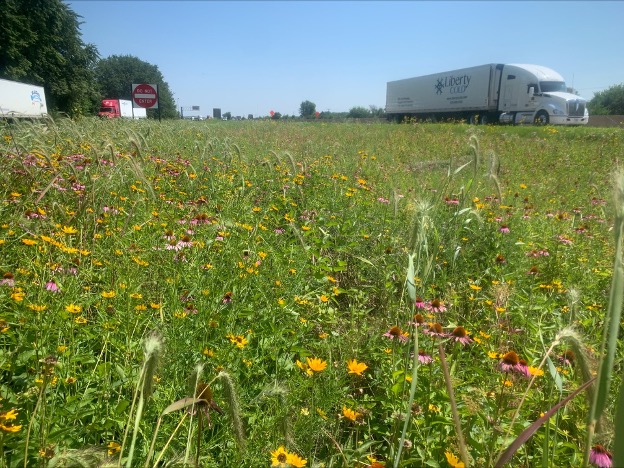
    Native species dominated restoration project on a highway roadside in Northern Illinois. Visible flowerheads are pale purple coneflower (Echinacea pallida), lanceleaf coreopsis (Coreopsis lanceolata), black-eyed Susan (Rudbeckia hirta), and Canada wildrye (Elymus canadensis). Photo by Wes Bollinger.

    If poorly managed, rights-of-way can become heavily invaded by nonnative plants like common reed (Phragmites australis), teasel (Dipsacus fullonumDipsacus laciniatus), and Johnsongrass (Sorghum halepense) among many others. These invasive species inhibit the native grasses and forbs and reduce ecosystem functioning. When heavily invaded, roadsides also cause economic impacts, functioning as source populations of weeds that can impact adjacent agroecosystems. Typically, roadsides are seeded with a mixture of Eurasian turfgrasses like Kentucky bluegrass (Poa pratensis) and red fescue (Festuca rubra). These nonnative grasses are comparatively short both in their above- and below-ground growth. Their short roots do not inhibit the growth of undesirable nonnative species, resulting in more mowing and maintenance than a native plant community to keep areas appearing ‘pristine.’ 

    However, roadsides can be restored with native species and managed using best practices to provide economic and environmental benefits to the region. Native-dominated vegetation can inhibit invasion, protect nearby remnant habitats, promote healthy soil, improve stormwater retention, absorb agricultural additives, sequester carbon, and provide forage and migration corridors for native animals. Though establishing native vegetation on roadsides may have these obvious benefits, there are many knowledge gaps pertaining to this practice such as how and what to seed in these areas to maintain the highest ecosystem fidelity and greatest economic benefits.

    We conducted research to determine which native species to seed on highways and the best practices for establishment and maintenance of these areas, with the goals of lowering overall maintenance costs by reducing the frequency of mowing needed to maintain these areas. This work was funded through grants from the Illinois and Indiana Departments of Transportation (DOTs) in conjunction with the Illinois Center for Transportation and the University of Illinois.

    I carried out three projects to gain empirical evidence on how to restore Midwestern roadsides with native species. Project 1) reviewed the native seeding practices of the DOTs of the Midwest to identify commonly seeded species and assessed establishment and management practices. For Project 2) we conducted experimental trials in Illinois comparing existing Illinois DOT mixes (non-native and partially native) with novel mixes that we designed to be more diverse and contain only native species. For Project 3) we conducted a field survey of existing native roadside plantings across Illinois and Indiana. Projects 2 and 3 sought to quantify the performance of individual species to determine which ones have the greatest establishment and persistence in roadside conditions, and what conditions lead to favorable native establishment generally.

    Project 1) Current native seeding and management practices

    My review of Midwestern DOT seeding practices revealed stark differences between DOTs among states, but some commonalities that are noteworthy for establishment and maintenance. Most interestingly was the disparity in native diversity between states. Michigan did not list any native species in their roadside manual, while Minnesota listed 108, the most of any Midwestern DOT. Further, Minnesota listed 11 majority or entirely native seed mixes and had the most comprehensive standard operating procedures for native seeding. Many mixes had average max heights under 3 ft (~1m) to avoid obscuring motorists views on roadsides; however, some states had mixes more than 5 ft (~1.5 m) for tallgrass areas and to increase the invasion resistance of an area by blocking light access with taller plants. Perhaps surprisingly, the states of Ohio and Indiana still list an invasive legume, crownvetch (Securigera varia), in mixes designed for erosion control.

    Number of majority native species mixes listed by Midwestern Department of Transportation in order of most to least native species (n) listed.

    Several establishment methods were common across states. Native seeds should be sown into low-fertility topsoil using a hydroseeding machine (a device that sprays a mixture of seed, water, and an organic adhesive agent directly onto soil) especially on sloped areas. Hydroseeders show remarkable success in soils with a seed bank containing invasive species, by avoiding tillage which can bring these seeds to the surface and increase their germination. Native straw can be applied as a mulch layer and may be harvested from areas scheduled for maintenance with mowing. Seeding should take place in the fall to allow for cold stratification. Local ecotype seeds are preferred to produce individuals with locally adapted phenotypes and avoid genetic contamination with seeds harvested outside the region. Mowing in the first year of growth is critical to reduce invasive species while native seedlings establish. Minnesota recommends three mows in year one, in May, June, and July, and a singular mow between July and August of year two. Controlled burning of these areas is ideal every 3-5 years but mowing at the same rate is also beneficial. 

    Project 2) Comparative performance of standard (mixed origin) and native-only mixes

    As a method of direct comparison between existing DOT seed mixes and a fully native roadside, I established four trials across Illinois to test differences in seeded, native, seeded native, and nonnative unseeded plant cover and richness, thus also providing information on invasion resistance between four popular mixes (DOT lawn, roadside, north IL, south IL) and four corresponding fully native plant mixes I designed to meet the same general criteria (low growing, disturbance, and salt tolerant) while also being higher diversity (from 9 to 38 species depending on mix). These experimental plots were seeded in November 2023 and surveyed in May and August of 2024. I observed that plantings differed in degrees of success, but every trial showed at least one significant positive result for the native planting over the nonnative IDOT mix. Native richness was higher for all sites by August of the first growing year, and native cover was higher for three of the four experiments. My trial of the IDOT Class 3 North Slope mix against a mix of 38 native species yielded significantly higher seeded cover by August 2024, and higher richness and cover of all native species in both May and August, suggesting that this high diversity mix competed very well against an existing DOT mix which was a combination of native forbs and nonnative grasses. Based on preliminary data collected during 2025, the native species are continuing to outpace the nonnatives in these mixes. 

    Of the native species seeded in these trials, those with the greatest record of germination in year one are lanceleaf coreopsis (Coreopsis lanceolata), common milkweed (Asclepias syriaca), partridge pea (Chamaecrista fasciculata), Illinois bundleflower (Desmanthus illinoensis), pale purple coneflower (Echinacea pallida), common evening primrose (Oenothera biennis), golden Alexander (Zizia aurea), blue vervain (Verbena stricta), and plains oval sedge (Carex brevior), which were present in the first year between 50% and100% of plots they were seeded in.

    Example paired plot before site prep and seeding (left) and August of the first growth year after establishment (right). IDOT mix on the left, native mix on the right of each image. Yellow flowers are golden Alexanders (Zizia aurea). Photo by Wes Bollinger.

    Project 3) Identifying the most successful native species from field surveys

    Lastly, I surveyed 34 native plantings on roadways across Illinois and Indiana at various distances from the road edge while collecting data on soil chemistry, surrounding land use, and soil compaction. Sites were more than two years old to avoid plantings early in their establishment. The purpose of this project was to identify which seeded species tend to germinate and persist, and what environmental factors contribute to higher native and invasive success. Of the 153 native species seeded in one or more sites, we found that 28 native species were observed in at least half of the planted sites and 84 species were never observed once despite being seeded in anywhere from one to 12 sites. Five species were found a total of 10 or more times each across all 34 sites: common milkweed (Asclepias syriaca), bee-balm (Monarda fistulosa), black-eyed Susan (Rudbeckia hirta), false sunflower (Heliopsis helianthoides), and switchgrass (Panicum virgatum). These five species along with Virginia wildrye (Elymus virginicus) were also the most observed species at sites where they were seeded. These surveys were not designed to be comprehensive given the size of many of these plantings and it is highly probable some other seeded species were present but unobserved.

    I found that native diversity and cover were generally higher further from the road edge, in areas with less salt, more basic soil, lower nitrogen and phosphorous, and a higher seed mix diversity. The opposite was true for nonnative cover and diversity. Richness of the seeded native mix was one of the strongest determinants of both diversity and cover. 

    In summary, we recommend that seed mixes should be hydroseeded at a rate of 60-70 seeds per square ft. (650-750 seeds per square meter) into low-nutrient, unfertilized soils, and covered in native straw. High-diversity mixes with no more than 10% legumes and an otherwise equal ratio of grasses to forbs should be used. Several species (but no more than 10%) should be early-establishing annual forbs for first year cover. Select species so that there is at least one blooming at all times of the growing season, favoring plants like golden Alexander (Zizia aurea) and native Alliumspecies for early spring blooms. Seed in as large an area as possible to reduce edge effects, consider cloverleaf interchanges as ideal locations for large projects.

    For maintenance in year one post-seeding, mow several times (May, June, July, potentially also August in warmer states) to a height of 6-8 inches. In year two, mow at least once between June and September. Controlled burning or mowing can be conducted as needed for persistent weed issues but generally are only required every three to five years. If mowing is needed, areas with low abundance of non-native plants can be harvested as native straw for future plantings.

    Native species with the best establishment record and widest usage are as follows and should be prioritized in high disturbance roadside plantings: Asclepias syriacaAsclepias verticillataBouteloua curtipendulaCarex breviorCarex cristatellaCarex hystericinaChamaecrista fasciculataCoreopsis lanceolataDalea purpureaDesmanthus illinoensisEchinacea purpureaElymus canadensisElymus virginicusEryngium yuccifoliumEupatorium perfoliatumHelianthus grosseserratusHeliopsis helianthoidesJuncus effususMonarda fistulosaOenothera biennisPanicum virgatumPenstemon digitalisPhysostegia virginianaPycnanthemum tenuifoliumRatibida pinnataRudbeckia hirtaSilphium laciniatumSymphyotrichum novae-angliaeSymphyotrichum puniceumLiatris pycnostachyaVerbena strictaVernonia fasciculataand Zizia aurea.

    Further details and methods can be found in the thesis here or by contacting the author at info@wildshaperestoration.com

  • Natural History and Ecological Restoration in the Madrean Mixed-Grass Prairie of Southeastern Arizona

    Natural History and Ecological Restoration in the Madrean Mixed-Grass Prairie of Southeastern Arizona

    By Matilda Essig

    Matilda Essig is an artist and agriculturalist who has lived in the grasslands of southeast Arizona since 2006. She uses visual art, hands-on restoration and public outreach to express the resilience of wild ecosystems. matilda@mindspring.com

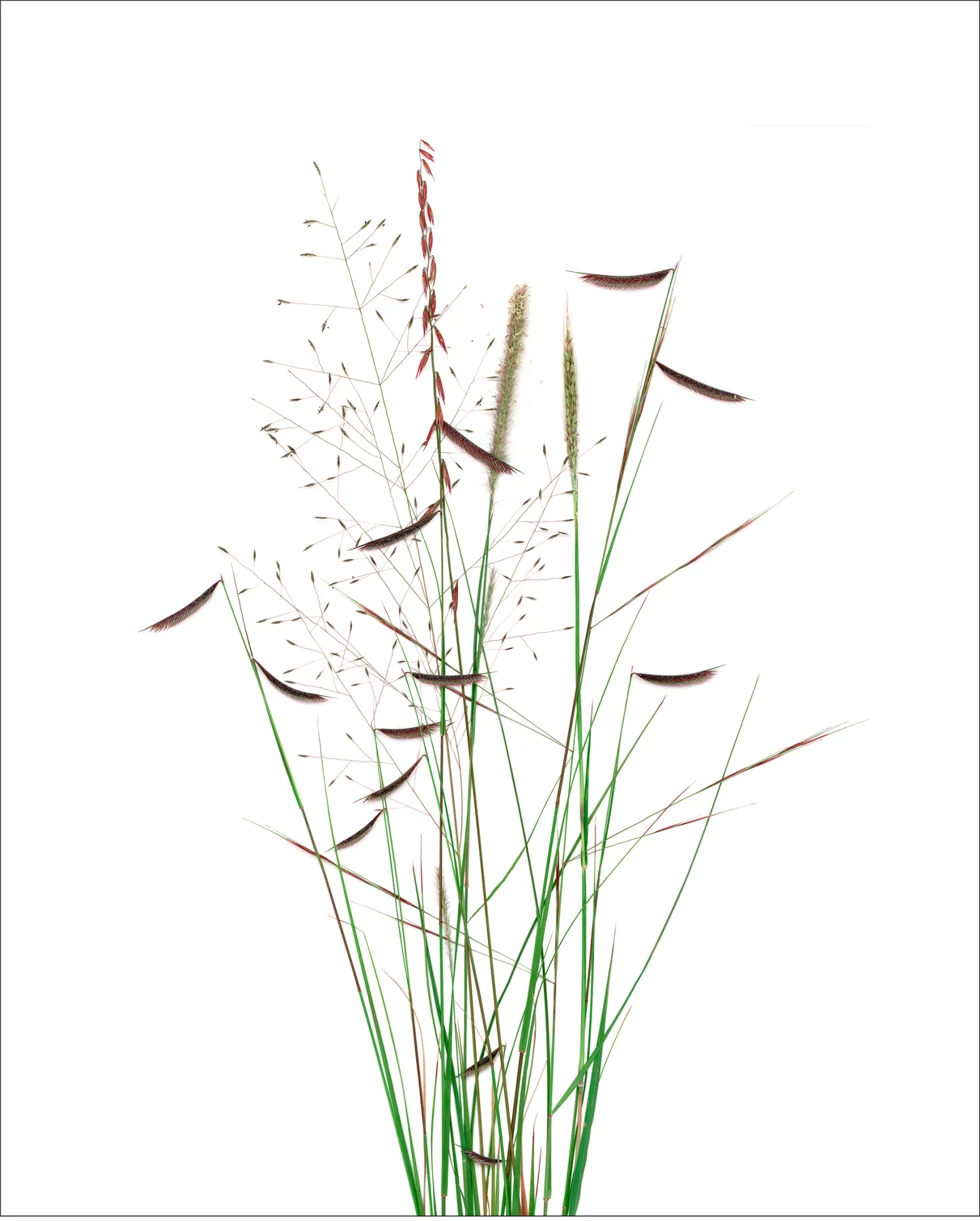
    Blue grama. Digital capture, archival inkjet print by Matilda Essig. Unless otherwise indicated, all images are by the author.

    Nineteen years ago, I began a project to restore the native diversity of the grasslands on a badly damaged 5-acre residential parcel in southeast Arizona, in a region locally known as the Apache Highlands Grasslands, a.k.a. Madrean-Mixed Grass Prairie to botanists, naturalists and biogeographers. My journey was informed and inspired by landscape stewards throughout the American west – ranchers and conservation groups alike. My mission included restoring not just the amazing diversity of grasses in the region, but also using my experiences, expressed through the arts, to help restore the role of art as a visionary vehicle within our culture. Visual beauty, ecological, and spiritual beauty – we need to get in touch with all of them again.

    San Rafael Valley Overview. A monsoon cloud unleashes its fury over Saddle Mountain, headwaters of the Santa Cruz River.

    In 2008, I wrote an article for Ecological Restoration, with my friend, and then-editor Mrill Ingram, wherein I described the conditions and biological makeup of my land. This article, Portraits of Grasses, gave an in-depth description of the biological ingredients I had to begin with, and also the artistic process I learned to use to make direct images from nature, using digital technology.
    At the invitation of my friend James Aronson, I am delighted to share an update here, in NHER, mentioning the methods that worked and failed, and highlighting  native grass species, and sharing how my portraits of these grasses engaged new audiences. What I have borne witness to in my brief tenure as an artist and restoration steward on my small tract of land has given rise to meaningful dialogue across the spectrum of possible audiences, through exhibitions, residencies, studio visits, and the artist’s book that I produced, Native Grasses of the Apache Highlands, which is now available for use in five university library special collections.

    Suite of five grasses. Blue grama (Bouteloua gracilis), Hairy grama (Bouteloua hirsuta), Little bluestem (Schizachrium scoparium), Sideoats grama (Bouteloua curtipendula), and Rothrock’s grama (Bouteloua barbata var. rothrockii). Digital capture, archival inkjet prints.

    The Apache Highlands grasslands – also known as the Madrean Mixed-Grass Prairie, which derives its name from The Madrean floristic region (named after the Sierra Madre Occidental) that occupies the arid and semiarid areas in the southwestern US and northwestern Mexico, at the northern edge of the subtropics. Sandwiched between huge basins and the rocky mountains, it’s a biodiversity hotspot. The summer monsoon delivers the most annual precipitation and is the primary (warm) growing season for the grasses. The San Rafael valley, which spans the US/Mexico border, is home to the southwestern-most intact stand of Shortgrass prairie in North America.

    The Apache Highlands Ecoregion, X marks Matilda’s property. Map by Robert Bailey, The Nature Conservancy.

    According to the late, great desert ecologist Tony Burgess, who passed away in 2022, these were the most characteristic native grasses in my region: Black grama Bouteloua eriopoda, Blue grama, Curly-mesquite grass – Hilaria belangeri, Vine-mesquite grass – Panicum obtusum, Cane beardgrass – Bothriochloa barbinodis, Purple threeawn – Aristida purpurea, Poverty three-awn grass – Aristida divaricata, Plains lovegrass – Eragrostis intermedia, Giant sacaton – Sporobolus wrightii and Arizona cottontop – Digitaria californica

    Over the years, I’ve come to recognize many more grasses, some of which I’ll mention below. Sadly, a plethora of invasive grasses and other plants now compete with the natives on my property which is in a subdivision carved out of what was, until quite recently, open grassland.

    Sideoats grama. Digital capture, archival inkjet print.

    The slope is gently north facing, with the buildings situated on the flat area of the ridgetop in the SE corner of my 5-acre property. It has fenced pastures which had been overgrazed by an equine for 20 years, resulting in an abundance of amaranths (Amaranthus spp.) and various kinds of ‘tumbleweeds’ including Salsola spp. (Chenopodiaceae). 

    Among the invasive grasses I had to deal with were Johnson grass (Sorghum halepense), and Lehmann’s love grass (Eragrostis lehmanniana), Yellow bluestem grass (Bothriochloa ischaemum), and the infamous, cosmopolitan weed Skutch grass or Bermuda grass (Cynodon dactylon) that had been planted by previous owners for lawn and equine grazing. My first steps to control the invasives, and promote recovery of the pre-existing flora and vegetation, began with cattle and rotational grazing practices that I learned from neighbors. That was quite successful in knocking back the swarms of amaranths at the start of the monsoonal growing season, thereby allowing the slow-growing grasses to gain a foothold. While I had wanted to work with goats in subsequent years, I chose not to undertake the labor-intensive fencing that would be required to control them and their voracious grazing habits. The cattle had been easy to contain with single strand aluminum wire and a solar charged battery for electricity.

    Five borrowed cattle – a British white park bull, and four criollo heifers – feasting on amaranth and other invasives at the start of the rains and growing season, early July.

    Instead, I invested in a high-quality mower and did a lot of pulling by hand of all the invasive species that I could. In the first few years, my progress was great – eliminating the amaranth completely around the buildings and well into the pastures, and completely extirpating the tumbleweeds, without any chemical assistance. Instead, I set out to learn about the root strengths and soil moisture of each invader species, so as to be able to pull each plant at the most appropriate moment in order to remove the entire root system with minimal soil disturbance. Working to reduce the invasives, I also learned about the natives, as I watched them rebound in the absence of competition.

    Sensing and observing the effects of my role as a player in this ecological equation gave me great inspiration for creating the artworks – to celebrate the grass species that I was learning about, and to share the story of healing the landscape. By healing, I mean restoring the native grasses which I knew, in turn, would be nourishing soil health and ecosystem health. 

    The Grasses

    Out of the more than 100 native Poaceae in the Apache Highlands, the most prevalent and iconic is Blue grama, a recognized keystone species and, now, a keystone also in the communications programs based on my artwork. It was the favorite of my first local mentor, senior rancher John Donaldson, who first taught me about the role of grasses in assisting the recovery of soil and watershed health on the nearby Empire Ranch, now the Las Cienegas National Conservation Area. This species has persisted and rebounded from the impacts of overgrazing on my property, and is notably much beloved throughout the interior western USA and northern Mexico, for its role  as a pillar of many kinds of grassland communities, and because it is palatable and provides high protein content for feed for livestock.

    I had immediate success in portraying the character of this species, and through the strong imagery, it served as a common denominator in rangeland discussion amongst the agricultural communities with whom I met at conferences. In particular, the Quivira Coalition’s 2009 conference on the theme of American conservationist Aldo Leopold was a great opportunity to engage in the dialogue about the role of beauty in land conservation. As I mentioned above, visual beauty, ecological beauty and spiritual beauty are all players, so to speak, in the determination of future land usage decisions based on human values. Sideoats grama, Rothrock’s grama, and Hairy grama were all present and easy to portray, with their vertical postures and  showy inflorescence, but Black grama was a far greater challenge to find and portray, with tiny its slivers of seed head, and prostate growth patterns.

    Black grama. Digital capture, archival inkjet print.

    I’d searched for this species after hearing Brandon Bestlemeyer, ecologist and research leader at the Jornada Experimental Range, describe it as a critical species in the future of grasslands conservation. Many such inspiring collaborative conversations came about in the context of annual science meetings convened by the Malpai Borderlands Group, whose legendary accomplishments in bringing ranchers and conservationists together have resulted in biological protection for vast tracts of open range grasslands in the Chihuahuan desert. My friend Ben Wilder, a biogeographer and communicator with the Next Generation Sonoran Desert Researchers, chose the image of Black grama to draw an audience for a fundraising event for the UA Herbarium and the vast resource of its collections. The image spoke to them about spirit and resilience.

    While my original focus had been to learn everything I could about how and where the individual grasses grow, the point of understanding multiple species was to illuminate the strength that biodiversity creates within the fabric of ecological communities. When the Land Institute, the Kansas-based agricultural research organization working to develop sustainable food crops, invited me to present as Artist for the 30th annual Prairie Festival (2010), they wanted an image for the theme of perennial polyculture. This challenged me to portray a group portrait that was inspired by a series that I collected, just as it occurred, from a pasture of a neighboring rancher, Rukin Jelks, who practiced holistic management methods: a mature rotational cell system designed byAlan Savory thirty years ago.

    Perennial Polyculture. Hairy grama, Plains lovegrass, Sideoats grama, Poverty three-awn, Bristle wolf’s-tail (Lycurus setosus), and the naturalized Afghani bluestem (Bothriochloa bladhii). Digital capture, archival inkjet print.

    The Audiences 

    The audiences at conservation meetings and the Prairie Festival knew the subject and shared my love for it. I believe they even felt their passion for land and prairie conservation was being recognized and honored in a new way. At traditional art venues —museums and galleries —the subject matter was largely novel, reaching audiences in different, more intuitive ways. The resounding response was, ‘I will never look at grasslands the same way again’. The diversity of plant characters also brought out the diversity in my audience:  some viewers related to chaotic images like Tanglehead grass (Heteropogon contortus) whereas others were repelled by it.

    Tanglehead grass. Digital capture, archival inkjet print.

    The audiences of the fine art world were ripe for the authenticity of nature based values, a light of climate change and then the pandemic. At Tucson Museum of Art, (2013) I worked with the curator to produce a large group exhibition called “Desert Grasslands”, which offered side events such as art-science panel talks about rangeland conservation, Buffelgrass (Pennisetum ciliareformerly calledCenchrus ciliaris),  the noxious and highly flammable invasive that now threatens the Sonoran desert. 
    At the Amerind Museum, I had a solo show for Native Grasses of the Apache Highlands,(2016) and was able to engage with Hopi and Navajo tribal members in a shared sense of spiritual and creative source in the natural world. At the Willa Cather Foundation my solo show focused on comparing the prairie grass characters to Cather’s meticulous human portraits of pioneer immigrants – studies in adaptation and resilience. At the Tucson Airports’ Center Gallery, in 2019, I was able to offer the work to the broadest audience yet, and also use the setting to meet with visiting classical composer Emerson Eads to discuss collaborative musical intentions, and also Indigenous author and botanist Robin Wall Kimmerer.

    Over Time

    While an extreme weather event in 2021 – 3 inches (75 mm) of rain in one hour – reversed years’ of hard work in a single episode, leading to the germination of an ‘avalanche’ of amaranth seed that had likely lain dormant for more than a decade, the subsequent two years of sustained drought allowed a favorite native grass of mine to appear – Sand dropseed (Sporobolus cryptandrus)- in uncanny abundance. Additionally, as I grew to learn the songs of grassland birds, my restoration priorities expanded to include the habitats of the avian species that also thrived from my work, Meadowlark and Scaled quail in particular.  The meadowlark’s song is both ancient and evolving in this landscape, as we have eastern, western, and also a new Chihuahuan subspecies recently identified by its song. The invasive plants have also inspired their own folio, currently underway.

    In conclusion,  my intentions moving forward are to work with the folios in university settings, to challenge our culture-driven perceptual paradigms of the natural world, engaging the next generation with the inspiration of stewardship thinking, both from conceptual understanding through the stories of these many land managers, and also to inspire them to see their own potential hand in the process, to experience the role of healer, and to know that no matter how small or large a parcel or landholding they may be working on, five acres or fifty thousand, every gesture makes a difference. To that end, I look forward to further opportunities to collaborate with EHN and its partners, to help inspire acts of ecological restoration, and to offer the arts as a catalyst for all.

    Matilda on Flecha, looking north across the San Rafael Valley, headwaters to the Santa Cruz river. Saddle Mountain and the Santa Rita Mountains in the background. Photo by Zay Hartigan.

    I would like to express my gratitude to James Aronson and Lauren Shew for editorial and technical assistance in creating this post.

  • ACCIÓN SERRANA Network: Conserving and restoring cloud forests in the mountains of Córdoba  province, central Argentina.

    ACCIÓN SERRANA Network: Conserving and restoring cloud forests in the mountains of Córdoba  province, central Argentina.

    By: Pablo Friedlander and Romina Torre

    Dr. Pablo Friedlander, Director of Acción Serrana has initiated and led pioneering restoration and intercultural education projects in Argentina, Brazil and Spain for more than two decades. He also organizes ethnobotanical research and expeditions to the Amazon and the Andes. pablofriedlander@gmail.com

    Biologist Romina Torre is the executive coordinator of Acción Serrana, with ten years of  experience in mountain restoration, research and educational activities involving rural communities, health practitioners and scientific institutions at bioregional and international levels. torre.romina@gmail.com

    Introduction to the Polylepis forests

    In the highest mountains of South America, remnants of vast stands of so-called cloud forests dominated by members of the beautiful Rose-family genus Polylepis are found throughout the Andes Cordillera, from Colombia and Venezuela to northern Chile and northwestern Argentina. In addition, in the much older Sierras Grandes de Córdoba, in central Argentina, the endemic Polylepis australis (locally known as Tabaquillo), occurs in scattered fragments of once extensive mid-altitude forests. At the continental scale, the canopies of these open, moist formations,  or what remains of them today, comprise 45 recognized species and constitute the highest altitude forests on Earth (Boza Espinoza & Kessler 2022). Sadly, their range and integrity has been drastically reduced by logging, burning, and overgrazing since the 16th century, especially with the introduction of European cattle.Their moss- and lichen-covered branches collect fog, while their roots prevent erosion and regulate water runoff. These forests also contribute to climate change mitigation,  by favoring carbon sequestration, and they support diverse endangered species dependent on these habitats. In all seven of the Andean countries where they occur, the restoration and conservation of these cloud forests is of vital importance to local communities and to protect. the headwaters of the main rivers and creeks (del Campo & Friedländer 2023).

    This locally famous ‘Grandfather’ Tabaquillo (Polylepis australis) tree grows in the heart of one of the last remaining cloud forest fragments in Córdoba  province.
    The Argentina anole, Pristidactylus achalensis, is an endemic lizard of the Pampa de Achala.

    The hand-shaped Polylepis leaves and the soft, multi-layered bark of the trees, draped with epiphytes, mosses and lichens, collect fog and give rise to the compelling and accurate image of the forest “milking” the omnipresent mist and clouds. At a continental scale, these cloud forests when they are healthy and thriving contribute to the ‘biotic pump’ connecting the Andes- the Amazon-and the Atlantic Forest biomes (Beveridge et al. 2024) and regulating water and climate cycles and  reducing the risk and severitry of wildfires. The savannas and cloud forests The recent increase of forest fires in all biomes of South – and Meso- and North America – demands more strategic and intercultural, public-private coalitions to increase restoration areas and protection of basins at multiple spatial scales for present and future generations (Argañaraz et al. 2015; Argibay & Renison 2018). Additionally, Polylepis roots and their mutualistic microorganisms retain and enrich soils. They also provide a ‘framework’ for regenerating forest communities undergoing active or assisted restoration. Indeed, when mature, these emblematic forests harbour very high biodiversity, including many endemic species of epiphytic orchids, insects, birds and reptiles, and also provide a wide range of ecosystem services to people at multiple spatial scales. Finally, they have huge cultural significance, and by working in synergy with local communities we aim to introduce and sustain biocultural as well as ecological restoration.

    Conserving and Restoring the cloud forests with Acción Serrana and Acción Andina

    In 2002, the project “Milking the Clouds” (Ordeñando Nubes, in Spanish) was launched, along with other local grassroots initiatives. Then, after a long learning curve in restoration methods and typical pioneering struggles, the five interrelated projects gradually scaled up their ‘footprint’ and their impact to a bioregional level over the next decade and a half. A big step was taken in 2018 when, together with the ECOAN (Asociación Ecosistemas Andinos) and Global Forest Generation, Acción Serrana was set up as a hub including 5 different local organizations to help in the launching of  “Acción Andina” as a a new international ecocultural restoration consortium. In that context, Acción Serrana is now managed by the Fundación de Actividades Biosféricas as part of Acción Andina

    Currently working in Peru, Ecuador, Colombia, Bolivia, Chile and Argentina, with 23 member institutions, Acción Andina partners have planted more than 7 million Polylepis trees, of many different species, and this number is rising each year, as is the success rate of the plantings. In 2023, Accion Andina received the prestigious Earthshot Prize, and in 2024 we were named one of the 7 UN World Restoration Flagships for the UN Decade on Ecosystem Restoration 2021-2030

    Map of the 12 Acción Serrana restoration sites in the Sierras Grandes de Córdoba.

    The 12 biocultural restoration areas in the Sierras Grandes of Córdoba under Acción Serrana management add up, at the time of writing, to a total of 3,170 fenced hectares. 

    The reforestation and restoration campaigns are made possible by 65 permanent staff members and over 1,500 volunteers per year on average. To date, we have produced and planted more than 860, 000 Polylepis australis nursery-grown saplings in consecutive seasons (see https://ecohealthglobal.org/network-sites/accion-serrana-argentina/). All of these trees were grown from seeds collected locally in each of the planting areas managed by the five different partnering organizations or local implementing groups  For the 2024-2025 October 2024 to March 2025 planting season, 250,000 trees were propagated in the 29 plant nurseries we maintain, and at the time of writing most of the plantings have been very successful. Since 2023, Accion Serrana has been helping to replicate the same initiative in Northwestern Argentina, with the Project Arbol y Vida in Jujuy Province (in cooperation with various high-Andean communities) and the Germinar Project in Tucuman Province (working with Diaguita communities of the Tafi del Valle bioregion), advising on and synergizing actions and application of  techniques and strategies. In addition to this biocultural restoration, another critical line of work is our environmental education program being run in local schools and municipalities for more than a decade already.

    The ecosystems of Acción Serrana are Sub-Andean and Chaco serrano forests and grasslands (sensu Cabrera 1976), composed of seasonally dry forests or open woodlands with 4 different altitudinal belts in the central Argentina mountain ranges, Sierras Grandes de Córdoba (Giorgis et al. 2011). The land tenure of the areas under restoration inside the Provincial Watershed Reserve of Pampa de Achala, which consists of private landholdings subject to Provincial Management & Conservation plans, or  public protected áreas within the National Park Quebrada del Condorito. The numerous activities we carry out include: maintenance and fencing of new areas, native forest tree and shrub seed collection, construction and improvements of nurseries, germination of seedlings, transplanting of seedlings to reusable plastic forest tubes, high mountain transfer of seedlings to the planting areas and their planting in the intervention areas during the rainy season. We establish permanent plots for scientific monitoring and we support research carried out in the intervention areas. Workshops, public talks and training programs are also organized yearly to train and recruit more enthusiastic and qualified citizen restorationists for the work in the mountains.

    Acción Serrana team planting the native Polylepis australis of Córdoba province.

    Implementation of Acción Serrana with local partners in reciprocity

    We work to  generate ecological, economic, social and cultural sustainability by reaching agreements with landowners, communities, networks and institutions (municipalities of Mina Clavero and Villa de Las Rosas, the Ministry of Education of the Province of Córdoba, and others). 

    To help with the local matching needed to be part of the Acción Andina  initiative, Acción Serrana had set up the Ayni Plan (“ayni” meaning “reciprocity” in the quechua language of the Andes). Basically this implies the commitment to generate 30% of operating costs through specific fundraising campaigns and by other quantified means. For example the constant one of inviting the public to participate by donations of the costs required for producing a forest (25 trees under monitoring), a tree or a volunteering activity. Then we promote the reception of donations of funds, lands, tools, materials, vehicles, etc.. In addition, we encourage ecotourism with a schedule for each area: summer plantations and seeds, winter transplanting of seedlings and fencing of restoration areas. Acción Serrana aims to increase reciprocity and abundance also throughout the different courses and events both virtual and in-person, and some special community parties, with raffles, concerts, talks, video screenings, and promotion of crowdfunding campaigns. Currently we are running our international matching crowdfunder campaign with the help of the Treeangle Foundation from the United Kingdom, as we have done each year from 2012, to complete the mission of this season January 2024 – March 2025. (See video here.)

    In the years ahead, Acción Serrana will propagate and plant a wider variety of native trees and shrubs in pursuit of a Framework species approach to restoration such as that being tested by EHN partner Daniel Perez and his team in Caviahue, Patagonia (Perez et al. 2019; see also here and (here). As a new initiative, we aim to  deploy 30% of funds raised to reintroduction of multipurpose Neltuma (formerly Prosopis) species and other framework species in lower altitudes of the mountain system, and 70% to ongoing Polylepis restoration in the high mountains. This year, we have begun studying how to propagate the obvious additional choices of “framework species” namely Maiten (Maytenus boaria), Escalonia (Escallonia cordobensis) and Molle (Lithraea molleoides)

    Escallonia cordobensis a formerly common shrub now considered key to restoration.
    Co-dominant Maytenus boaria and Polylepis australis ‘giants’.

    Next steps

    Following decades of reforestation and cloud forest restoration, we are working with Indigenous inhabitants in these mountains, including the Comechingones (Henia and Camiare tribes) and Sanavirones peoples, who have been historically marginalized. We are cultivating intercultural bridges (Rojas et al. 2025) in áreas like nursery propagation, environmental education, and llama and alpaca reintroduction and ancestral practices of weaving with camelid wool. This collaborative framework aims to integrate and restore  key zones around the Ansenuza Sea, Traslasierra Valley, Pampa Achala, and Pampa de Pocho. 

    In January 2025, Acción Serrana became a new member hub of the Ecological Health Network, following two fruitful visits from James Aronson. These visits facilitated knowledge sharing and collaboration, furthering our core purpose of scaling up watershed restoration, enhancing environmental education, and deepening intercultural collaboration for research projects. By integrating ecological, social, and economic perspectives and approaches, we aim to share our regenerative experiences across mountains, jungles, deserts and oceans within a quickly growing international network of networks. We are delighted to be part of this movement and consortium with a strong, clear set of values and shared purpose  – something we all need to cultivate in these critical times. As a meaningful next step of Acción Serrana, we look forward to participating in multi-site research projects based on the simultaneous monitoring and evaluation of a series of ecological and human health indicators in areas undergoing biocultural restoration protocols. Through these efforts, we are committed to enhancing ecosystem health and strengthening our relationship with nature, ensuring the longevity and health of Andean cloud forests and lower buffer zones of Chaco serrano forests -as well as the local communities living there for generations to come. 

    Learn more by watching these videos on Acción Serrana and the Biodiversity in Sierras Grandes de Córdoba.

    All images are from the archives of Acción Serrana.

  • Using a 130-year-old dataset to inform ecological restoration decisions on Mount Desert Island, Maine, USA

    Using a 130-year-old dataset to inform ecological restoration decisions on Mount Desert Island, Maine, USA

    By: Tate Bushell

    Tate Bushell is the Director of Natural Lands with the Mount Desert Land & Garden Preserve on Mount Desert Island, Maine, where he cares for ~1,400 acres of beautiful spruce-fir forest.  tbushell@gardenpreserve.org

    The Mount Desert Land & Garden Preserve’s mission is to conserve and share the beauty of our historic lands and gardens, which it does by managing three historic gardens and approximately 1,400 acres (567 ha) of natural land on Mount Desert Island, Maine for ecosystem health. Also, as needed, we undertake restoration interventions, particularly in our post-agricultural meadows. 

    Mount Desert Island (‘MDI’, ~60,000 acres, 24,280 ha) is well known for its breathtaking, rugged coastal scenery and for holding the largest unit of Acadia National Park (~30,500 acres, 12,343 ha), one of America’s earliest (1916) and most visited (~4 million visitors/year) national parks. The two other units of Acadia National Park include part of Schoodic Peninsula (2,366 acres, 957 ha) and part of Isle au Haut (2,900 acres, 1,200 ha).  The Garden Preserve’s natural lands are directly adjacent to Acadia National Park and mirror it ecologically; both are covered by spruce-dominated hills (primarily red spruce, Picea rubens), streams and wetlands.

    Acadia National Park (shown in green on map) comprises three primary units. Mount Desert Island is home to the park’s largest unit. The yellow star shows the location of the Land & Garden Preserve’s natural lands (1,400 acres, 567 ha).  Map courtesy of US National Park Service.

    As the Land & Garden Preserve’s Director of Natural Lands, I am charged with conserving the ecological integrity of the natural lands while ensuring safe public access. Our ten miles of trails and ten miles of carriage roads see over 75,000 visitors per year. A twenty-acre, post-agricultural meadow sits at the heart of the natural lands, and from the nearby carriage road the meadow provides picturesque views of the surroundings, making this a popular destination for walkers, dog walkers, horseback riders, and bird watchers.

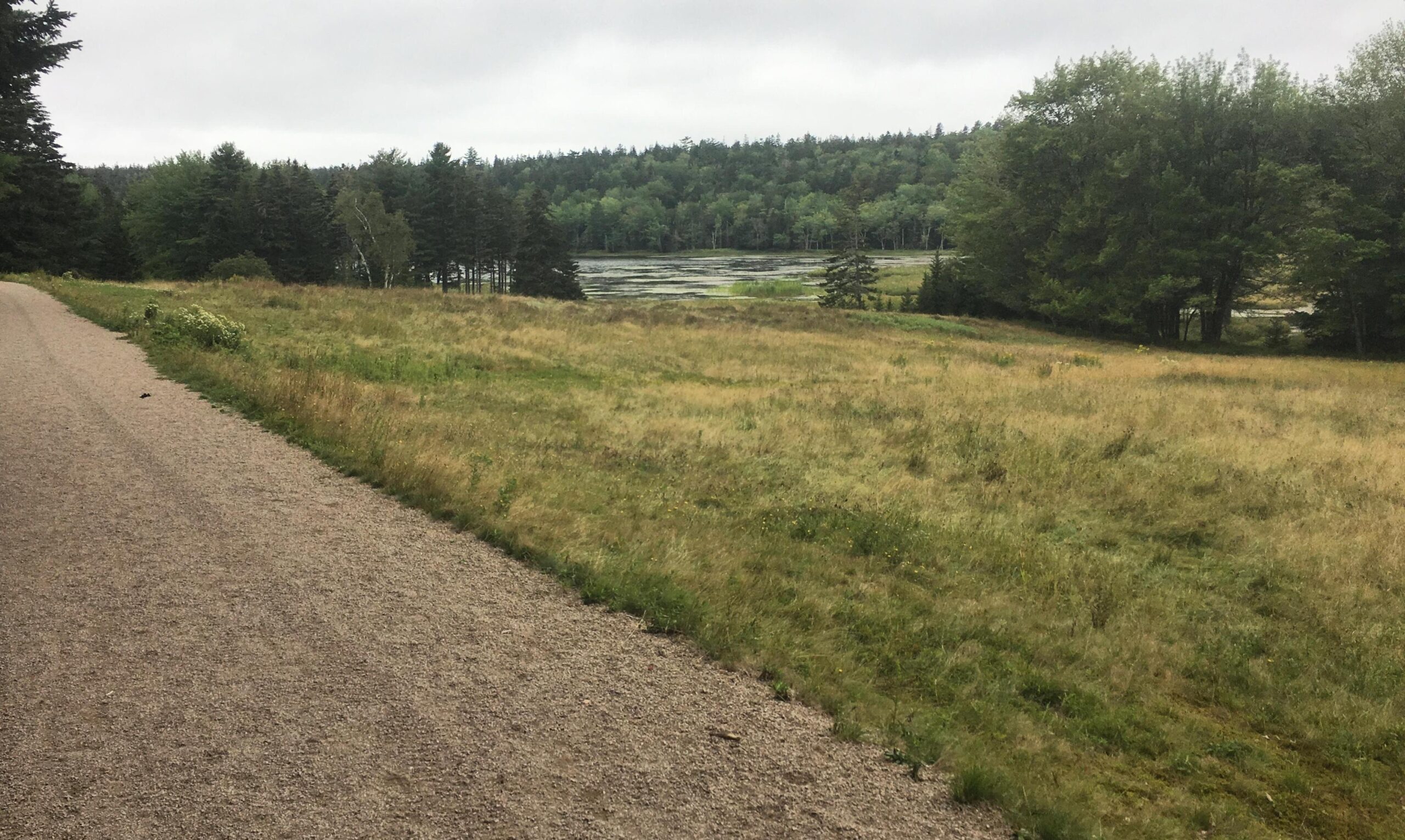
    A ‘carriage road’ sits next to the 20-acre meadow. Because of its views, this road is a draw to thousands of walkers and nature enthusiasts. (This and all other photos are by the author unless otherwise indicated.)

    I have focused management on Garden Preserve’s meadow because early successional habitats are uncommon on Mount Desert Island (Acadia National Park manages less than 100 acres of upland meadows on MDI) and because of the presence of invasive glossy buckthorn (Frangula alnus), invasive reed canary grass (Phalaris arundinacea), and some other weedy, nonnative plants. To establish a firm understanding of the plant community I commissioned a wonderful field botanist to conduct a survey of the meadow’s vascular plants (completed in 2020). From 2019-2021 we eradicated the canary grass from three monoculture patches (totaling 2,500 ft², 232 m²) and began restoring the area left behind.  We have used a 130-year-old dataset – Flora of Mount Desert Island, Maine, published in 1894 – to better understand changes in the meadow’s plant community, and help us select a plant species list for our ecological restoration work. I also visited approximately 15 different meadows – ranging from 2-60 miles (3.2 km – 97 km) away – to develop a loose reference system. The goal of this restoration work was to 1) ensure long term eradication of reed canary grass and, 2) establish an enduring native plant assemblage that could provide habitat and other ecosystem benefits to the meadow’s fauna. I began with a conservative approach to ‘native’ and selected species according to this hierarchy:

    MDI>Hancock County>Maine>New England. Most species we use in this restoration naturally occur in Maine.

    Aerial photo of a portion of the Land & Garden Preserve’s meadow. Two patches of invasive reed canary grass are visible: center left (with hole in middle of patch), and center (some soil is exposed). Once the grass was eradicated, we restored the areas with native plants. Photo credit: Allison Bourke. 

    The 1894 Flora of Mount Desert Island, Maine by Rand and Redfield        

    The Champlain Society was a group of scientifically minded Harvard students who, starting in the early 1880’s, dedicated their summers to learning and documenting MDI’s natural history. Student Edward L. Rand headed up the society’s botanical studies and, along with John C. Redfield, published the Flora of Mount Desert Island, Maine in 1894. The flora is incredibly comprehensive, including nearly 1,500 species of vascular plants, marine algae, bryophytes, and lichen. Remarkably, MDI represents less than 1% of the state of Maine’s land area but supports more than half of its known plant species (Greene et al. 2005).  

    Members of the Champlain Society at their summer campsite on Mount Desert Island, 1880. These students from Harvard University summered on MDI starting in 1880 and documented the island’s natural history. Photo credit: Mount Desert Island Historical Society.

    The 1894 Flora has proven to be a reliably accurate reference for late 19th century plant life on MDI. For example, by reviewing the herbarium vouchers, Greene et al. (2005) concluded that less than 45 taxa were misidentified. As a natural resource professional, this 285-page book serves me as a priceless reference. I even found an original copy signed by the authors in the Garden Preserve’s library! 

    Old datasets of this breadth, accuracy and credibility are rare, and therefore extremely valuable to understanding how plant communities change over time. When you compare the ‘Flora of Mount Desert Island, Maine’ (1894) to the contemporary ‘Vascular flora of Acadia National Park region, Maine’, (2005) as MacKenzie et al. (2019) did, you can see just how much has changed in approximately 120 years. They report that between 1894 and 2005, 15.8% of the original species are no longer found on MDI, 34.4% declined in abundance, 30.4% experienced no apparent change in abundance, 19.4% increased in abundance, and there were 205 new plant species in 2005.  

    In their 1894 Flora, Rand and Redfield left us wonderful notes about each taxa’s abundance, special occurrences and locations, which I’ve used to reconstruct something of an 1894 Flora for the Garden Preserve’s meadow (albeit incomplete). For example, many entries include location names where large populations of that taxa could be found, and location names such as ‘long pond meadows’ (the old name of our meadow), ‘Seal Harbor’ (the village where the meadow is found), ‘road to Jordan Pond’ (approximately ½ mile from meadow) provide a direct link to the Garden Preserve’s meadow of the 1880’s. To show how prevalent this anecdotal data is, ‘Long Pond meadows’ is included in 30 taxa entries and ‘Seal Harbor’ is included in over 100 taxa entries. 

    Where Rand and Redfield did not provide location names, I use their notes on habitat (e.g., ‘fields’, ‘meadows’, ‘open areas’) and abundance (e.g., ‘common’, ‘frequent’, ‘rare’), and what I personally know about these species’ habitats to infer which taxa were found in 1894 at or around the Garden Preserve’s meadow. For example, the entry for New York aster (Symphyotrichum novi-belgii) includes ‘Abundant everywhere in both wet and dry ground’ (pg. 115). Therefore, although Rand and Redfield did not tell us that New York American aster was found at the Long Pond meadows, I can assume that it was. 

    When I compared my 2020 meadow survey (340 taxa) to the list I recreated from Rand and Redfield’s 1894 Flora, I found that at least nine native forbs were likely present in the late 19th century but are no longer found on or around the Garden Preserve’s meadow. I call these ‘historic’ species. There are more than nine historic species, but for the purposes of this article, I only discuss the taxa considered for meadow restoration. The nine historic forbs I have identified are: 

    Anaphalis margaritacea (pearly everlasting), Clematis virginiana (Virginia virgin’s bower), Eupatorium perfoliatum (boneset), Eutrochium maculatum (spotted Joe-Pye weed), Lobelia spicata (pale-spiked lobelia), Symphyotrichum ciliolatum (Lindley’s American-aster), Symphyotrichum lanceolatum (Lance-leaved American-aster), Symphyotrichum pilosum (awl American-aster), Symphyotrichum undulatum (wavy-leaved American-aster)

    Although I conclude that these species are no longer found in our meadow, they have not been extirpated from Maine. For example, I see Anaphalis margaritacea growing on roadsides on MDI, and I infrequently see Eupatorium perfoliatum in Acadia National Park. Likewise, I see large swaths of Symphyotrichum lanceolatum on the mainland, just three miles from MDI. Other Symphyotrichum species were more difficult to find, but they still turned up when I searched similar meadows approximately 30-60 miles from MDI. 

    Natural resource professionals can be apprehensive by nature because we fear the slow creep of local species extinction. We understandably get nervous when our data reveal that we lost at least nine forbs in a 130-year span. The reasonable question becomes: ‘With viable populations of these historic species nearby, should we include these in our ecological restoration efforts’? 

    Using ‘historic’ species in meadow restoration efforts

    Starting in 2021 we decided to incorporate eight of the nine ‘historic species’ into our meadow restoration efforts (Virginia virgin’s bower requires different habitat characteristics and was used elsewhere), via two different methods: 1) planting pint and quart-size live plants, and 2) seeding (with associated seed bed preparation). These eight historic species were among a larger group of approximately 25 species, all of which are native to Maine and/or New England and found in similar early successional habitats.  

    The author monitors the germination of native plants at a restoration site, August, three months after seeding. The site was formerly dominated by invasive reed canary grass. Photo credit: Christa Little-Siebold
    Restoration site, June, in its second growing season. We used a seed mix of twenty native species (13 forbs, 7 graminoids).
    Restoration site, August, in its second growing season.

    The Mount Desert Land & Garden Preserve operates a propagation facility to support the needs of our three gardens, and the propagation staff enthusiastically grows native plants from seed for our restoration projects on the natural lands.

    Staff propagator waters her plants in the Land & Garden Preserve’s propagation facility. Photo credit: Cassie Banning.

    While obtaining the seed for the historic species, I employed a ‘local is better’ mindset regarding provenance. I collected seed from populations on MDI where possible, then as near as possible thereafter. Where I couldn’t collect the seed for a given species myself or obtain wild-collected seed from a trusted colleague in Maine, I purchased seed from the Wild Seed Project (Portland, Maine). Some of the asters were only available through larger, Midwestern nurseries such as Prairie Moon Nursery (Minnesota).

    A pint sized wavy-leaved aster ready for planting in a meadow restoration site that was formerly dominated by invasive reed canary grass.

    The only consistent impediment to historic plant reintroduction and establishment that we have observed has been deer browse, which impacted six of the eight species.

    Staff planting native plants in a restoration site.

    An all too familiar story – too many deer

    White tailed deer foraging has been shown to impact a great variety of North America’s ecosystems including forest ecosystems, tallgrass prairie, boreal forests  through selective browsing. It is generally accepted that at high enough densities selective deer browse can drive floristic changes in plant communities, decrease native plant biodiversity, impact wildlife populations and hinder forest regeneration.    

    The National Park Service’s ecologists conducted forest health assessments in Acadia National Park, 2006-2013, and found that forest health is relatively good, and that deer abundance is within the carrying capacity of the park (i.e. tree regeneration is sufficient). In fact, for both of those metrics, the forests of Acadia National Park scored better than the seven other National Park forests in their ‘Northeast Temperate Network’ study. Acadia National Park’s forests may not be experiencing the detrimental effects of deer browse that many other forests in eastern USA are (yet), but my work in the Garden Preserve’s meadow suggests that forb diversity in early successional habitats is – at least in part – influenced by deer. Ask any gardener or farmer in the northeast USA, and they will agree that deer are an issue.  

    In New England, white tailed deer abundance has risen and fallen in response to landscape-scale land use changes since European colonization. The 1890’s saw the lowest historic deer population in the United States (only 350,000 animals). It is very likely that the flora documented by Rand and Redfield in the late 1800’s thrived in a period of low deer abundance, which allowed some of these more deer palatable historic species to survive.

    White tailed deer browse on New England aster in a meadow restoration site. Notice that the terminal shoot has been chewed off.

    It’s not currently realistic to manage the deer herd on the Garden Preserve’s natural lands so I have experimented with planting some of the deer-palatable historic species in areas that deer are less likely to access, such as behind pre-existing fences and near buildings and other structures. I have had good success with this.

    This fence was erected to manage human and dog traffic entering a pond, but we have since used it to deter white tailed deer from browsing historic species.
    Here we are using historic species joe-pye weed (pink flowers) and boneset (white flowers) behind a fence where deer cannot reach it. In the absence of deer browse, both species have flourished.
    Virginia’s virgin bower, an historic species no longer found on Land & Garden Preserve’s natural lands. Here, we use the vine on a fence where it has space and support to grow and spread.

    At the Garden Preserve, we are not attempting to recreate past ecological conditions. Incorporating some historic species into our meadow restoration would be nice if it were possible, but I am keeping an open mind going forward regarding which plants we promote versus which plants we try to remove. We have experimented with some (native to Maine) species not currently found on MDI or in the county. So long as deer browse remains an issue, we may need to use plant species that are not native in the strictest sense, and I personally feel comfortable with that. Our restoration work is benefitted by partnering with others in the Northern Appalachian/Atlantic Maritime hub of the Northeast Seed Network.

  • The cost-effectiveness of fertilizing and irrigating tropical dry forest seedlings in an applied nucleation project

    The cost-effectiveness of fertilizing and irrigating tropical dry forest seedlings in an applied nucleation project

    By Dr. Laura Toro

    Laura is a Restoration Scientist at the Missouri Botanical Garden’s Center for Conservation and Sustainable Development, where her research focuses on dry tropical forest restoration (ltoro@mobot.org).

    Tropical dry forests are among the most threatened ecosystems in the world. Commercial agriculture, livestock farming, and mining have damaged and reduced the extent of this ecosystem type globally. Now less than 10% of the original extension of this ecosystem persists. The conservation and restoration of tropical dry forests are often overlooked because they are not as lush and well-studied as rainforests. However, restoring tropical dry forests can ensure the survival of thousands of unique plant and animal species that only exist in this ecosystem, and the protection of food, medicine, and livelihoods for millions of people. 

    Colombia has been one of the few countries that has invested resources to study the diversity and function of tropical dry forests across the country to ensure the conservation and restoration of the existing remnants of tropical dry forests. Since 2013 the von Humboldt Institute has been leading most of the research initiatives, and all the knowledge compiled about tropical dry forests has motivated the creation of a biodiversity offsetting policy. This policy establishes that for every hectare of tropical dry forest that is impacted by any kind of development project, 10 hectares (25 acres) of land need to be restored and conserved.

    Although our understanding of the ecology, function, and diversity of tropical dry forests has increased in the last decade, the unique characteristics of this ecosystem type including the lack of precipitation for up to 8 months, makes it challenging for seeds and seedlings to naturally establish in these forests. Therefore, restoring tropical dry forests requires extra investment, like seed purchasing, in situ seedling production, tree planting, irrigation, fertilization, and weed control. These extra steps translate into a large financial investment at the beginning of a restoration project. According to published estimates, the establishment phase (year 1) of a restoration project in a tropical dry forest can range from $105 – $25,830 ha-1 (Bodin et al. 2022).

    Irrigation and fertilization are among the most expensive management practices often implemented. When seedlings are planted in previously tropical dry forest areas, they are often irrigated to extend seedling access to water, and fertilized because most tropical dry forest soils are expected to be highly degraded from previous land uses. However, it is still unknown how much irrigation and fertilization seedlings need to be able to survive and grow. To answer this question, Fundación Natura, a Colombian nonprofit organization, Enel-Emgesa, an Italian electrical company, and researchers from the University of Minnesota established an applied nucleation project (where trees are planted in small patches to serve as focal areas of recovery) in a grassland area dominated by non-native species in southwestern-central Colombia that used to be a tropical dry forest. In this area, Enel-Emgesa built a dam, and as part of their biodiversity offsetting strategy the company committed to restore ~12,000 ha of degraded tropical dry forests in the next 10 years. 

    Ten-year-old grassland where tropical dry forests seedlings are not naturally establishing (photo: Laura Toro).

    The grassland, where the research project we report on here was established, covered 7 hectares (17 acres) and had little evidence of spontaneous natural regeneration, so we implemented an applied nucleation intervention. To do that, we cleared the existing vegetation of the area with machetes and scythes, tilled with a tractor to reduce soil compaction, and set up 42 hexagonal plots that had an area of 1000 m2 (0.25 acres) each. In each plot, we planted 271 seedlings belonging to 11 different plant species native to dry tropical forests of this region. Four of these species had the ability to associate with bacteria that can fix atmospheric nitrogen. The seedlings planted all received 1 kilogram of ant farm soil, 10 grams of hydrogel to extend the period of favorable soil moisture, and 50 grams of nitrogen – phosphorus – potassium (NPK) fertilizer, 25 grams of NPK, 43 grams of phosphoric rock, or no fertilizer, depending on the plot where the seedlings were planted. All seedlings were irrigated once they were planted to activate the hydrogel. The seedlings that received the irrigation treatments were watered two more times during the first month of the experiment. The control and the 50 grams of NPK without additional irrigation treatments did not receive any additional water. Once the seedlings were 6 months old, we started monitoring their survival and growth. In each plot,we recorded the height of every seedling that was still alive. Thereafter, we measured seedling height approximately every six months for two years.

    Aerial image of the 42 nucleation plots established in 2019 in El Quimbo, Colombia. The extension of the restoration intervention was 7 hectares (17 acres) (photo: Fundación Natura). 
    A close-up view of the experimental restoration plot. The orange lines represent the limits of the plot (1000 m2 = 0.25 acres), and each small dot represents a seedling planted (Photo: Fundación Natura). 

    Additionally, we decided to compare the costs among the different management strategies implemented. We documented the cost of seedling production, planting, fertilizers, irrigation, and monitoring. Finally, we estimated the cost-effectiveness of each treatment for any of the eleven species planted. We did that by first estimating the total cost of planting a hectare of grassland with a single tree species (a hectare is equivalent to six nuclei = 1,626 individuals) under a specific treatment, and then dividing that cost by the % survival of that species under that specific treatment after two years. The most cost-effective method was the one that yielded the lowest cost and had the highest % survival.

    An employee from Fundación Natura fertilizing a seedling of Vachellia farnesiana a shade-avoiding plant species common in tropical dry forests in Colombia (photo: Laura Toro). 

    We found that during the first two years of the project seedling survival was on average 73% across treatments. The seedlings that received 25 grams of NPK plus irrigation treatment had the highest survival (76%), while the seedlings that were fertilized with 50 grams of NPK and did not receive additional irrigation had the lowest survival (69%). However, when we looked at the survival across species, we found that survival varied across species and treatments. The plant species with the highest survival was Ceiba pentandra (99%), while Handroanthus coralibe had the lowest survival rates (5%). In terms of costs of planting seedlings, we found that the cheapest strategy was to not fertilize or irrigate the seedlings ($7,313 per hectare, $2,961 per acre), while the most expensive strategy was 50 grams of NPK plus irrigation ($11,689 per hectare, $4,732 per acre). Finally, when we compared the cost-effectiveness of the six fertilization and irrigation strategies implemented, we found that the control treatment was the most cost-effective management practice across the eleven species planted ($19,522 per hectare, $7,903 per acre) in part due to the low costs of no additional management beyond planting and monitoring, and the modest benefits to survival of costly irrigation and fertilization practices.

    Aerial image of nucleation plots in El Quimbo, Colombia in 2022. (photo: Fundación Natura).

    Even though restoration practitioners deal with a lot of uncertainty and restoration studies still lack information about how fertilizers affect the growth of native tree species and non-native grasses, there are multiple ways to improve restoration outcomes in tropical dry forests. We encourage partnerships between scientists and restoration practitioners to test how fertilizers impact different plant species growth and survival, and to estimate the costs of this practice across different tropical dry forests. Additionally, paying close attention to the soil fertility of the area, planting species that are found locally, actively weeding during the first year of the project, and fencing the restored area to ensure herbivores do not browse the seedlings will increase seedling survival and the success of the restoration efforts. Based on our results, we suggest that restoration projects should spend less resources on irrigation and fertilization, and more on plant species selection and weed removal.

    If you want to learn more about how fertilization and irrigation impacted the growth and survival of tropical dry forest seedlings, we invite you to read our recent paper in Restoration Ecology or contact Dr. Laura Toro.

  • The Restorative Landscape Coalition: A new social-ecological impact network takes root in the Eastern United States

    The Restorative Landscape Coalition: A new social-ecological impact network takes root in the Eastern United States

    Eve Allen, Program Director for the Northeast Bioregion, James Aronson, President of the Ecological Health Network, and Sefra Alexandra, Director of The Ecotype Project, share insights and outcomes from the inaugural workshop held at the Oak Spring Garden Foundation in Upperville, VA. This workshop led to the launch of a new coalition supporting initiatives for sustainable ecosystem and landscape restoration in the Eastern United States.

    Unprecedented federal and state-level investments, combined with growing environmental education programs and awareness, are increasing the demand for ecological restoration (ER) and allied activities in the US, Canada, and worldwide. This is causing a demand surge for native seed and plant material across the United States. Similar trends are coming to light in many other parts of the world as well.

    In January 2023, the National Academies of Sciences, Engineering, and Medicine released a 228-page report that found the country’s current supply of native seeds is already insufficient to meet the restoration needs of agencies like the US Forest Service and the Bureau of Land Management (BLM), and the situation is even more acute in the states east of the Mississippi River. 

    The skewed distribution of federal land ownership in the US exacerbates this problem.  To wit, the US Government owns about 46% of the land in the 11 contiguous Western states, whereas its ownership averages only 4.6% in the remaining mainland states. Given that the US government is the primary purchaser of seed and plant material nationally, for use in restoration programs on public lands, this demand serves as a strong signal for farmers and nursery professionals to ramp up production. Despite this, a notable procurement gap exists in the Eastern states, where land ownership is predominantly divided among state governments and private individuals, hindering the development and expansion of robust seed and plant material supply chains.

    In 2018, a survey of 760 respondents across the Eastern US states undertaken by the Mid-Atlantic Regional Seed Bank and the University of Maryland indicated that seed buyers sourced seeds from vendors located an average of 418 miles (673 km) away from their restoration sites (typically from vendors in the Upper Midwest (Tangren, Toth, and Siegel 2022). We conclude that there is an urgent need to build stronger networks in the Eastern US to increase supply chain capacity and to improve the quantity and quality of genetically and ecologically adapted seeds and nursery-grown plants with verified provenances.

    The Northeast Seed Network

    To this end, in March 2023, the Native Plant Trust, Ecological Health Network, and other partners launched the Northeast Seed Network (NSN) to reinforce and build connections and trust among government agencies, Tribal Nations, educational institutions, citizen groups, farmers, nurseries, other private companies, and nonprofit organizations including botanic gardens, seedbanks, and arboreta. By fostering collaboration among all these diverse stakeholders, the NSN seeks to facilitate knowledge exchange, promote impactful research, and advocate for the adoption of best practices, thus fostering a vibrant community of practice. Building strong private, public, and nonprofit partnerships is essential for building seed supply chain capacity or the ability to ensure that we have “the right seed [or plant], in the right place, at the right time” (Oldfield and Olwell 2015). This is because there are numerous ‘public good’ aspects of the ‘supply chain’ (e.g., R&D, education, demonstration, and advocacy) that will not be supported solely through market mechanisms. 

    New York ironweed (Vernonia noveboracensis), an important host plant to pollinators including the Eastern Tiger Swallowtail Butterfly (Papilio glaucus), is commonly used in ecological landscaping in the US Northeast Region. Credit: Sefra Alexandra.

    Recognizing the Role of Botanic Gardens

    To gather more information prior to undertaking any major new steps, the Ecological Health Network carried out a social network analysis to understand existing relationship patterns among the seed supply and demand chain actors in the Northeast US (Allen et al., under review). The study’s findings align with those of Tangren, Toth, and Siegel (2022), indicating that Midwestern seed vendors predominantly dominate markets in the Eastern US. For instance, a seed vendor based in Minnesota has established connections with over 94% of the end-users of native seed and plant material in the US Northeast identified in the study.

    However, the research also unveiled that producers of seed and plant materials within the US Northeast region enjoy well-established social ties with many botanic gardens, arboreta, seed banks (referred to as botanic gardens hereafter), and educational institutions in the region. These results support the argument that botanic gardens are uniquely positioned to play an essential role in ecological restoration science and practice (Hardwick et al. 2011), especially in their own regions. Botanic gardens have expertise in numerous relevant fields, including plant taxonomy, horticulture, genetics, seed science, and environmental education, as well as knowledge from ecological field research being undertaken by a growing number of botanic gardens around the world (Aronson et al. 2014Miller et al. 2016). Furthermore, as emphasized by Crane (2022), botanical gardens share the obligation of addressing socio-ecological challenges arising from climate change, alterations in land cover, and pollution. They must actively maintain their relevance through engagement, education, and tangible actions, particularly at the local level, outside the confines of their garden walls. 

    Indeed, many botanic gardens across the Northeastern and Northern Mid-Atlantic USA region have programs and activities aimed at strengthening native seed and plant material supply chains, among other things. For example, the Highstead Foundation in Redding, Connecticut, is deeply involved in sustainably harvesting seeds from local, naturally occurring plant populations. Following this, the staff meticulously cleans and stratifies the seeds before growing them into plugs. Local farmers, such as those affiliated with the Northeast Seed Collective will then proceed to amplify the plant material to produce the specialty crop of ecotypic seed. (Read more here). 

    In Hockessin, Delaware, Mt. Cuba Center, a botanic garden dedicated to preserving native plants and ecosystems across the Mid-Atlantic and Eastern Temperate Forest Region, conducts trial garden studies aimed at evaluating native species for their horticultural and ecological value. These studies serve to educate the public about the garden performance and ecosystem services provided by native species while also fostering the development of new markets for regionally produced seed and plant materials. The garden evaluates material and, where appropriate, shares material for local native plant nursery production. Beyond the horticultural side of the trade, Mt. Cuba engages with land managers and restoration growers, working to understand needs and promote local provenance workhorse species in collaboration with others in a mid-Atlantic seed users network.

    At the Cornell Botanic Gardens in Ithaca, New York, a native lawn demonstration project has successfully transformed a plot of turfgrass and weeds into a low-maintenance, low-input, high-biodiversity native grassy meadow. This project serves as a model for home and public green space redesign

    Native Plant Trust’s Nasami Farm in Whately, Massachusetts, Nasami Farm, has a longstanding practice of cultivating native plant material from hand-collected wild seeds. More recently, they have expanded their efforts by establishing seed increase plots to enhance production capacity for regional restoration projects. 

    These examples provide a sampler of the valuable contributions that botanic gardens across the region are already making to native seed and plant supply chains. However, in May 2023, Eve Allen and James Aronson, alongside Christopher Dunn, the Director of the Cornell Botanic Gardens, recognized a need to improve communication about these existing activities, and programs through improved networking among botanic gardens at a bioregional level. 

    Eve Allen, from the Ecological Health Network (EHN), and Todd Bittner, Director of Natural Areas at Cornell Botanic Gardens, discussing the Native Lawn Demonstration Area during the EHN Site visit in the fall of 2022. Photo Credit: James Aronson.
    Least trillium (Trillium pusillum) in bloom at the Mt. Cuba Center, a botanical garden in Delaware dedicated to preserving native plants and their ecosystems across the Mid-Atlantic and Eastern Temperate Forest Region. On the right, Eve Allen of the Ecological Health Network (EHN) stands with Élan Alford, Plant Conservation Scientist, and Jeff Downing, Executive Director of the Mt. Cuba Center, during an EHN site visit in the spring of 2023. Photo Credit: James Aronson.

    Convening Botanic Gardens 

    In this context, in late February 2024, the Northeast Seed Network brought together leaders and key staff members from thirteen botanic gardens, arboreta, seed banks, allied non-profit organizations, and the largest native seed and plant material supplier in the Northeast. The participants’ organizations included Coastal Maine Botanical GardenCornell Botanic GardensEcological Health NetworkThe Ecotype ProjectHighstead FoundationLongwood GardensMt. Cuba CenterNative Plant TrustVirginia Natural Heritage ProgramOak Spring Garden FoundationPinelands NurserySoutheastern Grasslands Institute, and the US National Arboretum. The convening workshop, organized and moderated by the Ecological Health Network, was graciously hosted by the Oak Spring Garden Foundation in Upperville, Virginia. This was the ideal venue from the Northeast Seed Network’s perspective, and the object of our workshop aligned seamlessly with Oak Spring Garden Foundation’s Mission Statement: “to support and inspire fresh thinking and bold action on the history and future of plants.”

    The formal garden bathed in sunset hues at the Oak Spring Garden Foundation, a non-profit organization established by Rachel “Bunny” Mellon to “support and inspire fresh thinking and bold action on the history and future of plants, including the art and culture of plants, gardens, and landscapes.” Photo Credit: Eve Allen.
    Workshop participants at the Oak Spring Garden Foundation (from left to right) – Marcello de Vitis, Southeastern Grasslands Institute; Charlotte Lorick, Oak Spring Garden Foundation; Élan Alford, Mt. Cuba Center; Melissa Cullina, Coastal Maine Botanical Gardens; Fran Chismar, Pinelands Nursery; Sefra Alexandra, The Ecotype Project; Uli Lorimer, Native Plant Trust; Eve Allen and James Aronson, Ecological Health Network; Richard Olsen, U.S. National Arboretum; Geordie Elkins, Highstead Foundation; Michael Piantedosi, Native Plant Trust; Lea Johnson, Longwood Gardens; Todd Bittner, Cornell Botanic Gardens; Ryan Klopf, Virginia Natural Heritage Program; Jessamine Finch, Native Plant Trust.

    The launch of the Restorative Landscape Coalition 

    Over the course of a long day and delightful evening, the participants worked together to chart a course for a new collaborative effort. Together, we recognized the distinctive responsibility botanical gardens bear to strengthen native seed and plant supply chains for landscape restoration across a spectrum of ecosystems, spanning from urban areas to suburbs, agricultural landscapes, corridors, and other protected areas of significant conservation value. More broadly, we agreed that botanic gardens are custodians of our shared plant biodiversity on our planet. By engaging in conservation, exploration, education, research, providing facilities, and leveraging expert horticultural know-how, they – and allied organizations like arboreta, herbaria, and seedbanks, should work together to bolster resilience and restore the health of people, ecosystems and landscapes. We also agreed that it would be timely to work on meeting this challenge at a bioregional level, namely in the Eastern US.

    Additionally, we discussed immediate ways to leverage experience, expertise, and educational capacity held within our gardens and allied organizations to address key objectives and recommendations outlined in the US National Seed Strategy and the National Academies of Sciences, Engineering, and Medicine’s 2023 Report, An Assessment of Native Seed Needs and the Capacity for Their Supply

    Enhancing demand signals by building better markets 

    The National Academies Report identifies unpredictable demand as the foremost challenge for native seed suppliers across the United States (p.98). This problem is especially pronounced in the US Northeast, as the substantial increase in demand for native seeds and plants fails to translate into intelligible markets. Current and potential suppliers within the Northeast Seed Network, including farmers and nursery professionals poised to expand their production of diverse species and ecotypes, require more consistent and transparent signals of demand.

    As such, a primary objective of the Restorative Landscape Coalition is to address and surmount the various policy, regulatory, and cultural obstacles hindering the utilization of source-identified, genetically diverse seed supplies, as well as nursery-grown or propagated plant materials. For example, we addressed the necessity of conducting targeted outreach and engagement with state and municipal agencies to facilitate the development of enhanced recommended species and species substitution lists. Currently, these lists predominantly feature mid-western species, likely due to their commercial availability. 

    Rather than solely focusing on seed production or amplification efforts, we recognize the critical importance of fortifying the ‘demand’ side of seed and plant material supply and demand chains. This strategic emphasis not only elucidates the distinction between the Restorative Landscape Coalition and the Northeast Seed Network but also underscores their mutually reinforcing relationship. Our approach involves generating and sharing knowledge, know-how, and best practices to enhance existing markets and create new markets for high quality seed and plant material. 

    Leverage our living collections to amplify seed production

    Citing The National Academies of Science’s 2023 report, we reaffirmed how the in situ  living collections (particularly conservation collections of wild origin) housed in botanic gardens and affiliated non-profit organizations serve as a crucial safeguard for native species within the plant materials development pipeline, when reproductively isolated from other related collections, for seed amplification.

    The US National Seed Strategy and National Academies of Sciences report emphasizes the imperative to increase collaboration and cooperation across agencies and with external partners. This involves sharing expertise, facilities, and optimizing the production and use of plant materials. Botanic gardens are custodians of our shared plant biodiversity. By engaging in conservation, education, research, providing facilities, and leveraging expert horticultural know-how, we are committed to providing a key link in efforts to bolster resilience and restore the health of landscapes in the Eastern US.

    In the Apple Room, our workshop proved not only enjoyable but remarkably productive. As the day drew to a close, participants reached a consensus on the crucial role of botanical gardens in tackling socio-ecological challenges stemming from climate change, land cover change, and pollution. Photo Credit: Sefra Alexandra. 
    As the evening drew to a close, together, we affirmed the unique responsibility botanical gardens bear in bolstering native seed and plant supply chains for landscape restoration. It was underscored that our institutions must actively assert our relevance through tangible actions, particularly at the local level, extending beyond the confines of our garden walls—a sentiment eloquently highlighted by Peter Crane, Director of the Oak Spring Garden Foundation, in his insightful 2022 opinion piece, Botanic gardens: Seizing the moment while imagining the future in Plants People Planet. Photo Credit: Oak Spring Garden Foundation.

    Fostering bioregional collaboration to achieve lasting social-ecological impact

    To advance the individual and collective missions and visions of the organizations and institutions participating in the Restorative Landscape Coalition, we will strive for a holistic perspective and approach that emphasizes the tremendous power and potential held within the concept of a bioregion. This is a spatial scale often overlooked by public, private, and government institutions. Note that a bioregion is not defined by political boundaries nor even by ecological and biogeographical boundaries alone. Rather, the concept corresponds to the geographical territories of human communities and cultural groups as well as the ecological systems on which they depend and of which they are a part. To be coherent, and useful, the boundaries of a bioregion must be delineated to uphold the integrity of its biological and human communities, ecosystems, and social-ecological systems. This includes preserving essential processes such as nutrient cycling, historical disturbance regimes, and species migration, among other biological and ecological factors. Additionally, sustainable and equitable management of resources and ecosystem services is vital, spanning generational and community boundaries within the diverse human populations inhabiting a bioregion. Bioregions vary in scale, ranging from watersheds to much larger territories, and may traverse international borders. However, they are fundamentally shaped by their flora, fauna, and human communities, each contributing to and benefiting from a distinctive identity defined by climatic, ecological, and cultural characteristics (Berg 1991).

    While initially complex and possibly daunting, there are significant advantages to the approach of organizing human activities and systems based on bioregional boundaries. Most importantly, it provides a strategic framework for connecting individual and collective efforts to facilitate impactful changes at appropriate scales to address biodiversity and climate goals (Pezzoli, 2015Wearne et al., 2023). That being said, addressing the intricate environmental challenges of the 21st century on a large spatial scale, especially with an unconventional concept like bioregionalism, demands innovative forms of network governance (Scarlett and McKinney, 2016).

    Left photo: Beds holding tree saplings for reforestation projects, including urban tree planting initiatives, in the Mid-Atlantic region. Right Photo: cleaned seeds of Arrow Wood Viburnum (Viburnum dentatum) at Pinelands Nursery in New Jersey. EHN Site Visit, Summer of 2022. Photo Credit: Eve Allen.

    Social impact and Social-ecological impact networks 

    A social impact network is one in which formal and informal institutions collaborate across diverse interests, sectors, and political arrangements to establish social norms, social capital, and trust that together can propel and sustain collective information sharing, decision-making, and action (Kapucu and Hu 2020Ehrlichman 2021). However, when social-impact networks are operating at broader geographical and societal levels – bioregions – and developing initiatives that target ecological and environmental challenges that demand integrated ecological and social interventions, we may call them social-ecological impact networks (Ecological Health Network 2024). 

    The Restorative Landscape Coalition is intended to be a social-ecological impact network dedicated to working with and enhancing the capacity and impact of the Northeast Seed Network and other seed production-focused partnerships, as well as emerging, restoration- and conservation-oriented partnerships operating across the Eastern US. Our commitment is to support initiatives that sustain, conserve, and, when necessary, restore degraded ecosystems and reintegrate fragmented landscapes within our bioregion – the overlapping and adjacent EPA Level III Ecoregions of the US Northeast, Mid-Atlantic, and Southeast regions. Please note that here we use the ecological definition of “landscape,” namely an assemblage of ecosystems that are arranged in recognizable patterns and that exchange organisms and materials such as nutrients and water (Forman & Godron 1986).

    Left photo: Seed increase plots of Slender Rush (Juncus tenuis), Common boneset (Eupatorium perfoliatum), Blue vervain (Verbena hastata), Swamp milkweed (Asclepias incarnata), and Coastal Plain Joe Pye Weed (Eutrochium dubium). Right photo: Flats of (clockwise from upper right), Bishop’s cap (Mitella diphylla), Blue wood-aster (Symphyotrichum cordifolium), Downy Goldenrod (Solidago puberula), New York aster (Symphyotrichum novi-belgii), Creeping Little Bluestem (Schizachyrium scoparium var. scoparium), Narrowleaf Mountain Mint (Pycnanthemum tenuifolium) at Native Plant Trust’s Nasami Farm in Whately, MA. Photo Credit: Eve Allen.
    Fall sneezeweed (Helenium autumnale) seed increase fields at The Hickories in Ridgefield, CT- the hub of the Northeast Seed Collective. Photo Credit: Sefra Alexandra. 

    Our next steps 

    While acknowledging the substantial work ahead, we are confident that the collective resources within our institutions, organizations, and like-minded networks will allow us to make inroads toward our shared goals. Collectively, we embrace an unwavering dedication to the public good and the well-being of future generations. Our shared missions encompass inspiring meaningful connections among people, plants, and the natural world, education and awareness, conservation and stewardship, and research and innovation, all aimed at enhancing society’s overall well-being, resilience to global changes, vigor, and – in a word – health.

    Please join the Restorative Landscape Coalition at the American Public Gardens Association’s Annual Meeting in Boston, June 24 to 27, 2024. We will be there, hosting a 90-minute workshop entitled Fostering regional collaboration among public gardens to address native seed and plant material needs, on Thursday, June 27th, from 10:30 a.m. to 12:00 p.m. 

    To stay in touch and receive updates about the Restorative Landscape Coalition and the Northeast Seed Network, please sign up for our mailing list. You can also follow us at @ecohealthglobal on Instagram, @EcoHealthNet on X and Facebook, and Ecological Health Network on LinkedIn for updates. 

  • Reconstructing and reconnecting native habitats post-pipeline construction at the Litzsinger Road Ecology Center

    Reconstructing and reconnecting native habitats post-pipeline construction at the Litzsinger Road Ecology Center

    By James Faupel & Caity Sims 

    James Faupel is the urban ecology restoration supervisor at the Litzsinger Road Ecology Center (LREC) and Caity Sims is the Project Clear restoration coordinator. The LREC is a private, urban outdoor education site in the heart of Metropolitan St. Louis, Missouri that is managed by the Missouri Botanical Garden for educational programming with K-12 teachers and students, and supported by many local university-based researchers.

    Part 1: by James Faupel

    Anticipating Loss

    In September of 2018, when I took on the lead restoration ecologist role at the  Litzsinger Road Ecology Center (LREC), I was aware of the impending utility pipeline project (Project Clear) that would impact around a quarter of this education center’s restored habitats and the adjoining urban Deer Creek. The 15.8-hectare (39-acre) ecology center combines a mix of reconstructed bottomland prairie and restored riparian woodlands, with a stretch of urban creek in surprisingly good ecological condition. I knew this was a unique opportunity to set up a long-term study to examine the processes of reconstructing tallgrass prairie following major anthropogenic soil and landscape disturbance, a topic with little previous research, especially in urban areas.

    The 6.3 km (3.9 mile) long Deer Creek branch of Project Clear was slated to dissect a 0.8 km (0.5 mile) long swath of LREC’s restored habitats – a pretty significant amount of collateral damage. To be clear, the purpose behind Project Clear’s sanitary pipeline path is well intentioned. The Metropolitan St. Louis Sewer District’s (MSD) Project Clear is a six billion dollar, 28-year long initiative to improve water quality and alleviate many wastewater concerns related to the frequent sewage overflows of the legacy sewer system of the St. Louis region. Cleaner water in Deer Creek would mean healthier breeding and feeding conditions for a wide variety of wildlife that live in or rely on the water of the creek, as well as healthier adjoining ecosystems, and much healthier domestic water supplies for human residents of St Louis County. The collateral damage of the MSD Deer Creek branch was 6.3 km (3.9 mile) of riparian habitat was damaged, degraded or destroyed.

    In 2019, the Litzsinger Road Ecology Center (LREC)’s oldest prairie reconstruction and woodlands were dissected by the Project Clear pipeline path. The LREC is an outdoor educational facility of the Missouri Botanical Garden, and relies on functional ecosystem services to introduce children to the intricacies of nature. The pipeline project construction equipment would directly impact the LREC’s grounds and classes for three years, but its impact to the habitats here will be felt for generations. Photo by James Faupel.

    As discussed in a previous NHER blog post on the topic, urban prairie reconstructions are important tools in the toolbox of prairie education to the general public and in saving North America’s prairie remnants. Remnant prairies are invaluable fragments of a once vast grassland ecosystem of the Midwest and are now one of the most endangered ecosystems in the world. Getting the chance to expand the area covered by reconstructed prairie at an educational site like LREC was an opportunity that I did not want to miss. The downside was that the LREC restoration team would have only one year to gather baseline data before the sanitary pipeline construction began, and I also had to fit in learning all of the other ins and outs of my new role.

    Throughout 2019, with the assistance of LREC volunteers, interns, and partner researchers from local universities and organizations, we were able to gather a wide array of baseline data that could be used as a comparison in the years ahead, once the future restored prairies are older. In 2019, the previously restored habitats at LREC were 30 years old, among some of the oldest restored habitats in the St. Louis region. Restoration projects of this age are incredibly valuable for ecological research projects looking to better understand anthropogenic impacts on the environment around urban centers and to learn best practices for effective, long-lasting restoration efforts. They are priceless.

     During the growing season of 2019, we were able to survey all the vascular and nonvascular plant species growing in the proposed pipeline path and adjoining areas, as well as survey for birds, bees, spiders, ants, and algae thanks to the varied expertise of all involved. Baseline samples were collected of the upper soil horizons along the entire pipeline path, in addition to a complete inventory of all of the trees and shrubs that would be removed during construction so we could assess their value. The most significant baseline dataset is that of Elizabeth Hasenmueller and her Lab at Saint Louis University, who had been studying the water quality of Deer Creek at LREC for five years prior to the sanitary pipeline installation and are excited to continue this research, hoping to capture more data and test hypotheses concerning the hydrology and geochemistry of this urban stream as water quality improves with the removal of the sewage overflows from the creek.

    LREC volunteers assisted staff in a tree inventory of 746 native trees and shrubs ahead of the pipeline installation in 2019. The canopy trees were measured and their value assessed using the US Forest Service’s iTree database. The USFS’s estimated replacement value of the 289 mature canopy trees was half a million US dollars. This dollar value is in addition to the countless ways the ecological and environmental services provided by these trees could be valued. Photo by James Faupel.

    Deconstruction of Habitat

    On September 30th, 2019, construction vehicles arrived on the grounds of LREC, and began the month-long habitat removal on site. In what felt like the blink of an eye, a large section of one of the oldest prairie reconstructions in the St. Louis region, along with 746 individual native trees and shrubs, were gone and no longer providing any ecological or educational services. It was quick, like a bandage being ripped from the skin.

    Before and after the 0.8 km (0.5 mile) MSD pipeline construction path on the property of the LREC. 
    Left: October 2018. Right: August 2020 (Google Earth 2019, 2021).

    The pipeline installation process, from start to finish on LREC property, lasted nearly three years. Following the removal of all the preexisting habitat, work began on trenching the ground open, dynamiting the bedrock, installing the sewer pipe, reworking the now homogenized limestone bedrock/C horizon soil mix back into the trenches, restabilizing the streambanks from their stream crossings, and finally grading the soil out to pre-construction elevations. We knew from the beginning of their trenching process that we would ultimately be trying to grow native prairie plants in a “novel ecosystem” with soil conditions that would never co-occur with them in nature. 

    Throughout the construction process, there was plenty of time for planning how we would restore the land once it came back into our hands, as well as how we would monitor it long term. There is little research that has been done on the topic of prairie reconstruction following major anthropogenic soil disturbance. Initially we thought it would be beneficial to test many different methods of soil remediation ahead of the seeding of native prairie plants in different study plots. However, during the three year construction period, there were several major flooding events from the adjacent Deer Creek that changed our minds. The regularity and increasing frequency of these flash flood events of this urban creek made us take pause and the aforementioned research idea was scrapped. These events aren’t likely to lessen anytime soon, as the area covered by impervious surfaces in the surrounding watershed continues to grow. Future flooding events would introduce too many confounding variables to any kind of research that compared the outcomes of various soil remediation methods to make it a worthwhile investment of our time and resources.

    Left: Throughout the construction of the pipeline path (2019-2022), the path was impacted by Deer Creek flooding beyond its banks 11 times. It was completely covered by 4 major flash flood events as seen here. Right: The pipeline path a few months after construction had finished in late summer of 2022, covered in a growing season’s worth of early successional species. Here a contractor puts down the first annual cover crop to help break up the compacted soils and help hold the soil in place during rain events. Photos by James Faupel.

    In late summer of 2022, the property was handed back to the staff at LREC to begin the habitat reconstruction work. By this point in time, I had been promoted to a supervisor position at LREC and had many more responsibilities that took me away from being able to dedicate significant time to the Project Clear pipeline restoration project. Our two summer interns that year assisted with the second round of soil sampling for comparison to the baseline soil data and an inventory of all of the plants that naturally colonized the disturbed areas along the entirety of the pipeline path that year. For information from that botanical inventory, you can read our article that was published in the 2022 volume of Missouriensis. Our immediate reconstruction plans were to bring in a contractor that could quickly get annual cover crops down and hopefully germinate and root into the compacted soil before any fall or winter flooding events occurred. We also planned for a major seed collecting effort in 2023, so that we could sow a wide variety of early successional native species onto the pipeline path in late fall of 2023, or before the first snow of winter.

    With my role having been redirected away from the pipeline path reconstruction, I lobbied for a new staff member that could replace me and focus all their efforts on the reconstruction, research, and monitoring of this important project. Caity Sims was hired for the role of coordinator of the project in January of 2023 and hit the ground running. It has been an incredible year mentoring her throughout this process and I look forward to exploring the reconstructed prairie habitat she will be establishing and chaperoning with our amazing team of volunteers, staff, and interns over the next few years.

    Part 2: by Caity Sims 

    Before Reconstruction Began

    I was fortunate enough to witness the LREC before Project Clear as a summer intern in 2019. That summer, I assisted with collecting pre-deconstruction baseline data on trees and the algae found in Deer Creek. After my internship, I left St. Louis for Jonesboro, Arkansas to earn a master’s degree focused on botany in the Mississippi Alluvial Plain. Ready to apply my botanical and research skills in the working world, I returned to the LREC in January 2023 as the Project Clear restoration coordinator. I was shocked to finally see first-hand the impact the pipeline construction project had had on the riparian, woodland, and prairie ecosystems of LREC. What seemed in my memory like a maze of bottomland woodland was reduced to a scanty wooded edge surrounded by a sparsely vegetated brown strip of fallow land. 
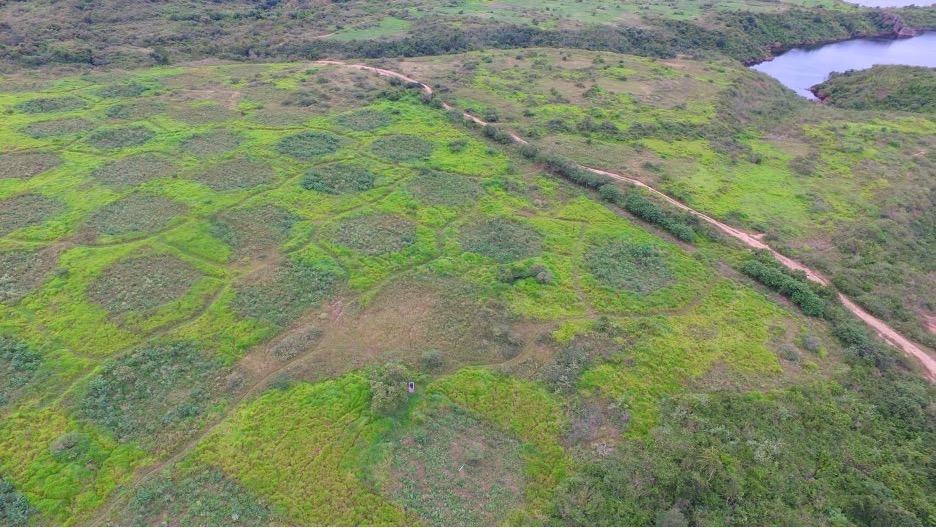
    Before I joined the LREC team, a cover crop of common wheat (Triticum aestivum) had been seeded onto a majority of the pipeline path in winter 2022. Around the same time, a six-species cover crop mix, consisting of crop grasses, common pea, and field mustard (Brassica rapa) was seeded onto the southern section of the path. Cover crops mend the soil by adding nutrients, perforating the soil for better water infiltration, outcompeting weedy species, and preventing erosion of bare soil. 

    Unfortunately, the first round of cover crop mixes did not do well, and by mid-April the common wheat was barely a foot tall and had already gone to seed. The mixed species cover crop did not grow on most of the seeded area of the southern section due to flooding washing away a majority of the seeds. The path desperately needed a second cover crop at that point, so we hired contractors to seed the warm season crop, Sudan grass (Sorghum bicolor), onto the majority of the path again and a nine species cover crop mix onto the southern section. The Sudan grass did much better, growing to heights of over six feet in some areas. Although the mixed species cover crop seemed to do better, the extreme summer heat drying out the compacted soils resulted in depauperate mature plants. There were many areas directly over the pipeline that seemed unlikely to hold any vegetation at all. 

    Cover crop comparison between common wheat, taken on May 23, 2023 (A) and Sudan grass taken on August 3, 2023 (B); both photos were taken from about the same position on the path, but facing in opposite directions. Pictured in panel C are size comparisons of common wheat individuals on May 26, 2023, the two on the left were collected from the middle of the pipeline and the one on the right from the outer edge of the pipeline path. Note the numerous bare patches of soil in panels A and C. Photos: Caity Sims.

    Despite environmental conditions being heavily anthropogenically impacted, a good number of native early successional and bottomland species grew alongside the cover crops on the path. I was surrounded by many familiar disturbance-prone and riparian species, as my master’s thesis had focused on plants growing on Mississippi River islands. I recorded 310 species growing on the entire path after completing vegetation surveys in 2023. As I expected, some of the most common species were yellow foxtail grass (Setaria pumila), southern crabgrass (Digitaria ciliaris), barnyard grass (Echinochloa crusgalli and E. muricata), hairy seed crowngrass (Paspalum pubiflorum), late boneset (Eupatorium serotinum), and tall goldenrod (Solidago altissima), all of which thrive in disturbed environments. 

    As I work toward reconstructing the land to improve structure and function of the ecosystem for many native organisms, I need to quantify the results of this effort. To measure the changes in plant communities along the pipeline path over time, I established dozens of permanent vegetation monitoring plots along the path that will be monitored every summer. For each plot, I collect the presence and percent cover of each species in the plot. I am hopeful that by 2027, native prairie plants will constitute 75% of the flora and vegetation in every plot. 

    Summer interns, Karen (left) and Cicely (right), learning to identify plants from a vegetation monitoring plot on the pipeline path. Photo: Adam Rembert.

    Also found post-pipeline construction were two species new to Missouri:  Centaurium pulchellum, and Myosotis arvensis, and three new to St. Louis County records: Sesamum indicum, Cyclospermum leptophyllum, and Krigia cespitosa. All record species are not native to Missouri except K. cespitosa, which has been recorded from neighboring counties. It’s not uncommon to find new state or county records in disturbed areas. For more detailed information about those species, their identification, and potential explanations for their introduction to the LREC, check out my article in the 2023 volume of Missouriensis

    We have classified several different habitat types on the pipeline path including wet depressions and ephemeral ponds, rocky upland (i.e., “glade”), creek bank, woodland edge, and fallow ground. Due to a permanent pipeline access easement built and maintained by the Metropolitan St. Louis Sewer District (MSD), we cannot reconstruct the bottomland woodland that was destroyed. However, we can reconstruct a bottomland prairie on a majority of the path where the fallow ground with rocky and compacted soil are the most prominent. In the wider southern section, we will reconstruct a savanna that will include tree plantings outside of the MSD’s easement. 

    Going Forward

    Staff and volunteers collected seed throughout the 2023 growing season. We focused on collecting species with Coefficient of Conservatism (C-Value) ranks of six or below, which is consistent with the range of C-values observed in the 2022 vegetation survey of the path. The coefficient of conservatism (or C-scores) is an index ranging from 0-10, representing a species’ fidelity to intact remnant or long-restored habitats, as determined by local botanical experts. Species with higher C-scores are less tolerant of environmental degradation and increasingly restricted to high quality sites. Species with C-Values from 0-6 are likely to be found in disturbed and early successional environments, while species with C-Values from 7-10 are more likely to be found in near-pristine and remnant environments (Ladd and Thomas 2015). High C-Value species are harder to establish in restored and reconstructed habitats. 

    Summer and fall interns focused mainly on seed collection, cleaning, and organization to prepare for the 2023/2024 winter seeding. It was a monumental effort with amazing results. We collected seeds from 96 species in 2023 for a total weight of 49 kg (108 lbs) of mostly Pure Live Seed (PLS), with some chaff. In addition to collecting seeds, contractors have drilled 39 prairie species onto the pipeline path seeding a total of 16 kg (36 lbs) of PLS. We also added seeds collected in previous years that were housed in seed storage at the LREC. Including the 2023 collected seed, the PLS from contractors, and the previously collected seed, a total of 189 species with a total weight of 74 kg (164 lbs) was seeded on the pipeline path. To view the results of our seed collecting effort in 2023, please see our interns’ compiled end of season unpublished report.

    Boxes of Culver’s root (Veronicastrum virginicum) seed ready to be cleaned (A), fall intern, Cailyn, posing with seed to be added to the broadcasting mix (B), staff and volunteers mixing seed in preparation for broadcasting the pipeline path on January 5, 2024 (C), and staff and volunteers broadcasting the “glade” mix onto the most well-drained and rocky portion of the pipeline path on January 11, 2024 (D). Top photos by Adam Rembert, bottom photos by Caity Sims.

    I am hopeful that the seedings will be successful and signs of a prairie will begin to emerge this year. However, flooding and poor soil conditions are major issues on the pipeline path. I have already dealt with the aftermath of floods washing away cover crops and soil, and remaining soils lacking suitable nutrients and structure for plant growth. These are out of my control, so all I can do is accept them, keep trying, have patience, and not let frustration get the best of me. 

    In three years, I anticipate less introduced and early successional species as they fail to compete with the maturing perennial natives. I envision more pollinator observations on the former pipeline path as the prairie species begin to bloom. After the third growing year, we may be able to burn the young prairie and savanna. In 30 years, I hope to return to see restored prairie, savanna, woodland, and creek habitats functioning as home to a diversity of plants, insects, birds, reptiles, amphibians, mammals, and microbiota like the undisturbed LREC habitats do today. 

    Staff and volunteers broadcasting a spring and summer flowering seed mix onto the pipeline path on October 13, 2023. Photo: Tom Kibby.

  • Bunkered ex situ plant conservation and páramo biodiversity farms

    Bunkered ex situ plant conservation and páramo biodiversity farms

    By Iván Jiménez (Center for Conservation and Sustainable Development, Missouri Botanical Garden), Carlos A. Vargas (Herbario, Jardín Botánico de Bogotá José Celestino Mutis), Carlos I. Suárez (Colecciones Vivas, Jardín Botánico de Bogotá José Celestino Mutis), and Erika Benavides (Finca Milmesetas, Pasca, Sumapaz, Cundinamarca, Colombia)

    As anthropogenic pressures on biodiversity mount, plant species conservation increasingly requires the integration of a variety approaches, including ex situ conservation: the maintenance of populations in intensively managed living collections. Conventional seed banking is commonly regarded as a particularly effective and efficient method of ex situ conservation, because a large number of seeds representing many species can be stored for long periods in relatively small spaces at seemingly low cost. It entails drying seeds to 15% relative humidity and storing them at −20 °C. For some “exceptional” species that cannot be easily represented in conventional seed banks, cryopreservation and associated methods are seen as good choices. In contrast, living collections of whole growing plants are often seen as relatively inefficient, requiring more space and care.

    A particular problem with seed banks and cryopreservation projects, however, is that they may suffer from a “bunkered” conception of biodiversity conservation. By example, the Millenium Seed Bank is a “flood, bomb and radiation proof” underground facility designed as a “global insurance policy” to conserve seed diversity. Although focused on crops rather than wild plants, the Svalbard Global Seed Vault has a similar bunker ethos, aiming to guard against the loss of plant diversity due “not only to natural catastrophes and war, but also to avoidable disasters, such as lack of funding or poor management”. These bunker-like seed banks invite obvious questions: what protects them from lack of funding, miscalculation, poor management or extreme political ideology?

    Both bunker-like seed banks are remarkable spatial concentrations of resources for ex situ conservation, seemingly at odds with the key biological insight according to which a large spatial spread decreases the probability of extinction. At the same time, these seed banks correspond to what Bruno Latour called “centers of calculation”, institutions where observations and specimens from faraway locations are amassed, organized and combined to produce scientific knowledge. Centers of calculation were foundational to the expansion of European colonialism. The Millenium Seed Bank and the Svalbard Global Seed Vault may be seen as contemporary extensions of the same colonial mindset, repurposed in the context of biodiversity conservation.

    While other seed banks might not seem as obviously colonial, many do dislocate plant propagules from their original wild plant populations and human milieu. Most plant diversity in ex situ collections is held in the Global North, largely away from sources at the main centers of plant diversity. Even seed banks focused on nearby regional floras remove propagules from their immediate human and non-human environments.

    And while not all seed banks boast about their bunker-like properties, many do sit well within the “ark paradigm”, whereby representative samples of species must be secured away (perhaps even in the back side of the moon, as suggested by a foundational paper) in preparation for a likely apocalyptic future of widespread extinction. The ark paradigm is clearly articulated in a chapter about the role of botanical gardens in ex situ plant conservation: “The primary goal of ex situ collections is to maintain a representation of the species as a source of material for restoration, should the species be lost in the wild, and this should be done as effectively and efficiently as possible”. This salvific post-extinction role for seed banks (let alone cryopreservation projects) seems to have little support in practice.

    An alternative to the ark paradigm suggests that ex situ conservation can play a primary role before the extinction of wild populations. Ex situ collections may be used for research, training, education, awareness-raising and incentive programs that directly target the causes of primary threats to wild populations. In terms of this pre-extinction role, the conservation value of ex situ collections may be determined by their geographic location. The primary threats to many plant species are local. To address the causes of such threats, the most valuable living collections may be those able to engage the human communities coexisting with threatened plants. Bunkered living collections, removed from the human and non-human environment of the source plant populations, would likely be ineffective and inefficient at this task.

    The alternative to the ark paradigm also suggests that ex situ conservation can play a central role in offsetting the effects of threats to wild populations, through the restoration of wild populations via reinforcement. Ex situ collections may provide plant stock for population management aimed at mitigating the effects of threats. Here, again, the geographic location of ex situ collections may determine their effectiveness and efficiency. Ex situ collections in the vicinity of threatened species would seem best for reinforcement programs. Moreover, issues related to propagation of whole growing plants would seem far more germane in this context than the worries about long-term storage prioritized by the ark paradigm and pursued in seed banks and cryopreservation projects.

    An initiative adopting this alternative view of ex situ conservation is taking place in the páramo de Sumapaz, perched on the Eastern Colombian Andes. Páramos are high elevation ecosystems that are central for provisioning water to human populations in the tropical Andes. They are perilously affected by global change. The páramo de Sumapaz occupies about 315,000 hectares and, based on analysis of a recently compiled and edited database, hosts more than 3,000 plant species. Although the conservation status of 76% of these species has yet to be evaluated, currently 64 species are known to be threatened.

    In this context, a group of researchers including local campesinos as well as staff and students from the Jardín Botánico de Bogotá, Parque Nacional Natural Sumapaz, Universidad Nacional de Colombia, Washington University in St. Louis, and the Missouri Botanical Garden, are engaged in participatory action research, with partial support from the Living Earth Collaborative. The aim is to develop the concept of “páramo biodiversity farms”, provisionally defined as properties in or near the páramo that derive economic benefits from at least one of four activities: i) biodiversity research, ii) education about biodiversity, iii) ex situ conservation of threatened plant species in living collections, and iv) plant stock production for population or ecosystem restoration.

    A pilot páramo biodiversity farm began in 2019 at “El Carmen”, a 40-hectare property in the Sumapaz region. This pilot is focused on an ex situ collection of plants in the genus Espeletia (Asteraceae). Although páramo biodiversity farms would include work on many other plants, the focus on Espeletia at El Carmen is strategic. First, Espeletia are dominant “nurse-plants” in páramos and largely determine the physical structure of these ecosystems. Second, despite being locally dominant, several taxonomic species of Espeletia are threatened. Third, obtaining meaningful monitoring data for conservation is often difficult because the species boundaries in Espeletia are poorly understood and field identification is problematic.

    Espeletia plants are dominant in páramos, as shown in the picture of the páramo de Sumapaz on the left. Orlando Romero, a campesino working for the Parque Nacional Natural Sumapaz, collects Espeletia seeds for the living collection at El Carmen. Photos by Iván Jiménez.

    The living collection at El Carmen serves multiple purposes. First, it is a “common garden” experiment, designed to understand species boundaries and phenotypic characteristics of Espeletia species from Sumapaz. The experiment entails propagating plants from seeds sourced from +500 mother plants occurring across the páramo de Sumapaz, initially in a nursery and subsequently in an outdoor landscape. Second, the living collection serves as a facility to train local students in plant biology and conservation. Third, the collection conserves ex situ threatened Espeletia species that are endemic to the Sumapaz region. Finally, the living collection may serve as a seed-increase field providing Espeletia plant stock for future population or ecological restoration projects.

    The picture on the left shows part of the living collection at El Carmen, including seedling trays (forefront), germination containers (right and back), and 3-year old plants in pots on the ground (back left). On the right Rudy Ortiz (left) and Natalia Beltrán, both biology students at the Universidad Nacional de Colombia, measure Espeletia seedlings at El Carmen. Photos by Erika Benavides.

    A central theme of the project is the participation of local campesinos as co-investigators and managers, alongside researchers and officials from academic and environmental institutions. Achieving true participatory research and exchange of knowledge across these actors is far from trivial. Nonetheless, a concrete result of the project is that co-investigators, including campesinos, developed a sophisticated understanding of the phenotypic groups of Espeletia and their geographic distributions across Sumapaz, facilitating conservation monitoring programs. This increase in plant awareness among people coexisting with Espeletia plants is a key step towards addressing the causes of threats to páramo plant diversity. Campesino management of the ex situ collection at El Carmen (and the associated information) provides modest but direct economic benefits to a local family. We hope it also builds local capacity for the governance of biodiversity and collaborative relationships between campesinos and institutions focused on studying and managing biodiversity.

    Jorge Penagos (left) and Erika Benavides, both campesinos from Sumapaz, record survival of Espeletia seedlings in the living collection at El Carmen. Photo by Rudy Ortiz.

    The pilot biodiversity farm at El Carmen hints at how ex situ collections of whole growing plants may help prevent extinction of wild populations. This kind of collection is often thought to be inefficient because requirements of space and resources may be higher than for seed banks and cryopreservation. Collections of whole growing plants for ex situ conservation can indeed be costly when bunkered inside botanical gardens. But they can be more efficient when spread across lands owned by human communities coexisting with threatened plants. We suspect that páramo biodiversity farms may not be more costly than comparable seed banks in the Global North. And the benefits from páramo biodiversity farms would include ex situ collections that act not only as safeguards (the ark paradigm) but also as tools to prevent extinction in the wild and promote local (rather than colonial) biodiversity governance. Studies comparing costs and benefits, beyond back-of-the-envelope calculations, are needed to determine which approaches to ex situ conservation are more effective and efficient in different regions of the world.

  • Bee-friendly beef: rehabilitating cattle pastures to increase pollinator habitat

    Bee-friendly beef: rehabilitating cattle pastures to increase pollinator habitat

    Dr. Parry Kietzman is a research scientist in Virginia Tech’s School of Plant and Environmental Sciences. Here she describes a new experiment aimed at improving Southeastern grazing lands to improve cow health, provide habitat for pollinators, and conserve plant biodiversity. A member of the bee-friendly beef team since 2020, her work focuses on the ecology and conservation of pollinating insects.

    Across the world, pastures account for over 20% of the Earth’s land surface, an area roughly the size of Africa. Many of these pastures were once species-rich meadows, prairies, and woodlands that offered abundant and diverse food resources for pollinators, but are now limited to a handful of species that provide forage for grazing livestock.

    Lanceleaf coreopsis (Coreopsis lanceolata), a native composite sewn into an active cattle pasture near Stuart, Virginia. Photo credit: Parry Kietzman.

    Pollinating insects such as bees, flies, butterflies, moths, and beetles are currently in crisis, as habitat loss from development, intensive agriculture, and other human activities have diminished the food sources and nesting sites they rely on. The conservation of pollinators native to each particular region is especially important, as many plants depend on native specialists for pollination. The widely-kept, domesticated, European honey bee (Apis mellifera L.), though of great importance to modern agriculture, is often not successful or at least not as efficient at pollinating certain plants as the bee specialists that coevolved alongside each particular species. Landscapes rich in a diversity of plant species native to that location are therefore needed to provide habitat for these native pollinators.

    Some types of beetles, such as the soldier beetles (Colanoptera: Cantharidae) pictured here, also visit flowers and can provide pollination services. Soldier beetles feed on nectar and pollen and do not damage their plant hosts. Photo credit: Parry Kietzman.

    Researchers at Virginia Tech, the University of Tennessee, and Virginia Working Landscapes are currently collaborating on a multi-year rehabilitation project to plant native North American prairie grasses and wildflowers in cattle pastures in Virginia and Tennessee. The project is based on the idea that a landscape can be supportive of healthy cattle production while at the same time providing ecological niches for pollinating insects. Bringing back diverse food sources for pollinators in pastures, however, presents some significant challenges. First, the plants must not be harmful to livestock that may graze on them. Second, they must be hardy and practical to establish in new and existing pastureland. Finally, they should be native to the region in which they will be planted, as this will be most beneficial to that region’s native pollinators and help prevent the accidental introduction of invasive species.

    Some of the wildflower species used in our experiment, such as this blanketflower (Gaillardia pulchella), are native to North America but not naturally found in Virginia or Tennessee. Photo credit: Parry Kietzman.

    Our team is currently working to identify and successfully establish seed mixes that thrive in Virginia and Tennessee without becoming excessively weedy or crowding out grasses grazed on by cattle. Once established, pollinator diversity and abundance will be measured in plots with and without wildflowers introduced. Herds of cattle grazing in the pastures will also be monitored for health and body condition.

    Bumble bees are common visitors at our wildflower-enhanced sites. Photo credit: Parry Kietzman.

    Results from this study, including critical information about best practices for establishing the seed mixes, optimal grazing regimes to promote blooms, and wildflowers as forage will be disseminated to growers and other stakeholders through extension services such as published fact sheets, protocols, and workshops. This foundational work will help inform researchers and land managers around the globe how to transform pasturelands into landscapes that can help save our pollinators.

    For more information on this ongoing study, visit the team’s website: beesandbeef.spes.vt.edu.

    A wildflower-enhanced pasture in southwestern Virginia in mid-summer 2021. Photo credit: Parry Kietzman.