Category: Virginia

  • From Hayfield to Meadow: An Herbicide-Free Sod Removal Trial to Restore Native Meadows in Virginia’s Northern Piedmont Region, USA.  

    From Hayfield to Meadow: An Herbicide-Free Sod Removal Trial to Restore Native Meadows in Virginia’s Northern Piedmont Region, USA.  

    By Charlotte Lorick

    Charlotte Lorick is the Head of Biodiversity Conservation at the Oak Spring Garden Foundation in Virginia, United States. She also leads the Forgotten Flora Project, an environmental and educational consulting initiative. In addition to this work, she serves as a co-lead of the Restorative Landscape Coalition, a working group of the Northeast Seed Network. In this blog, she shares her hands-on experience organically restoring a meadow in a former horse pasture and hayfield in the eastern United States.

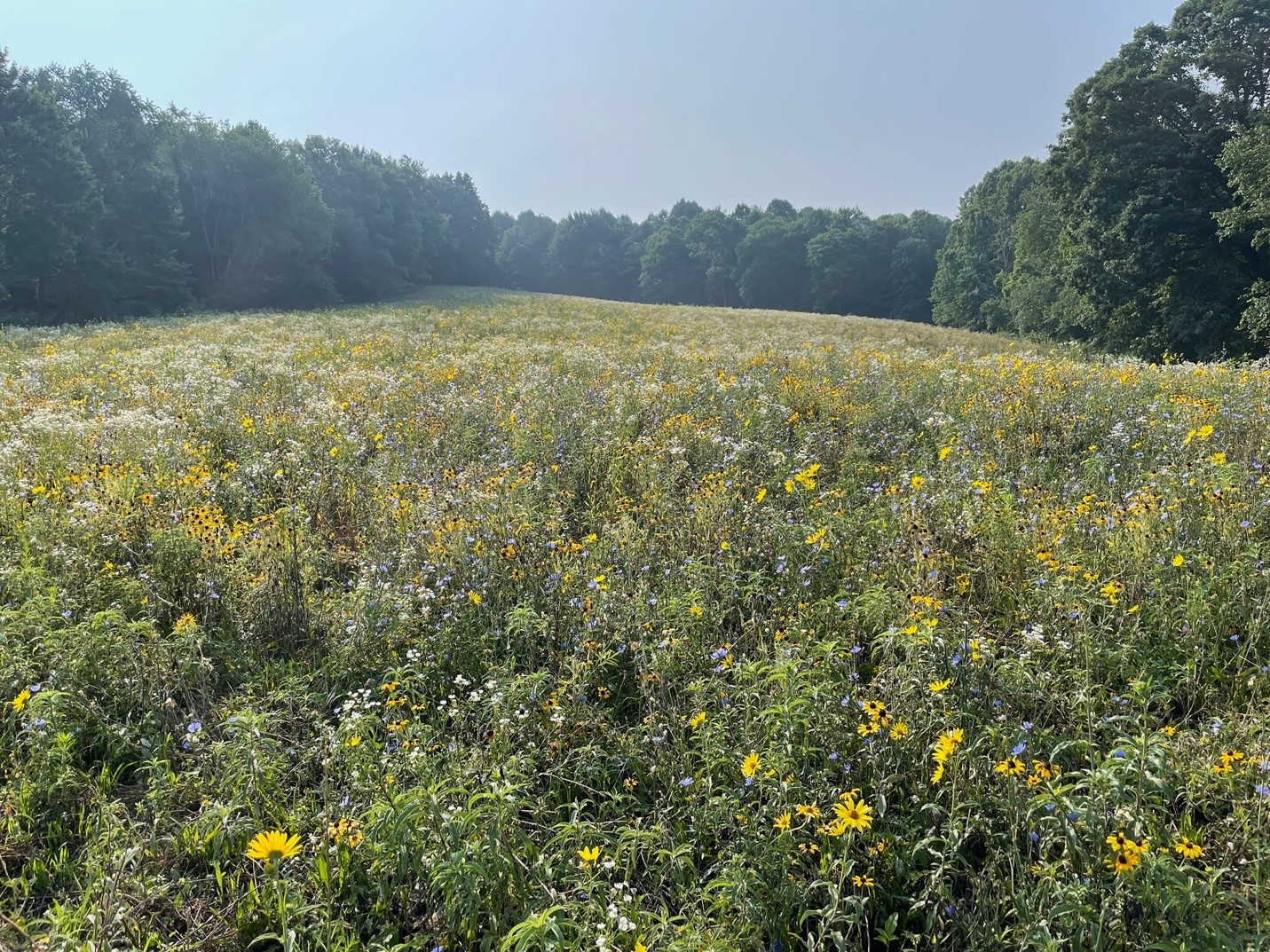
    Transformation of former hay fields (left) to native meadow (right) using sod removal for site prep. Photo by Charlotte Lorick.

    In Virginia’s Northern Piedmont region, where rolling hills extend from the Blue Ridge Mountains toward the Atlantic Coastal Plain, sits the Oak Spring Garden Foundation (OSGF). Its mission is to support and inspire scholarship and public dialogue on the history and future of plants, including the art and culture of plants, gardens, and landscapes, and the importance of plants for human well-being. OSGF advances this mission through fellowship and residency programs, a renowned research library, and by cultivating a biocultural conservation farm and ornamental gardens. The foundation also convenes meetings and collaborations focused on botany, horticulture, and landscape conservation. In this capacity, OSGF hosted the inaugural meeting of the Restorative Landscape Coalition in 2024

    Among the foundation’s primary goals is conserving and promoting native plants and biodiversity across the 280-hectares (700-acres) of land under its care. This goal can often prove challenging because the land at OSGF, like much of the rich soils of the Northern Piedmont, has long been shaped by agricultural land use. The impacts of agriculture on soil and plant communities are long lasting and can be detrimental to native species richness and diversity. Heavy fertilization favors exotic species over natives and the common practice of heavy tillage forever alters the soil and seed bank, further decreasing native species richness. Indeed, the IUCN considers temperate grasslands the least protected, most heavily altered, and most endangered terrestrial biome in the world. In the southeastern United States in particular, an estimated 90% of pre-European grasslands have been lost due to agricultural practices and other factors. And the small amount that do remain are indicators of the incredible species richness that have been lost. A recent study of Virginia’s Piedmont grasslands demonstrates they are far more biodiverse than previously documented, with surveyed sites having over 100 plant species in a single 100 m² plot. 

    This ecological and land use legacy raises a common challenge for conservation landowners across our region: how to restore native meadows to ecosystems degraded by intensive agriculture? As agricultural abandonment has increased across the region, converting old pastures to native meadows by removing existing vegetation and seeding a regionally native seed mix has become a common practice to address that challenge. Meadow restoration as a practice can actually mean different things depending on the situation. In the context of the Society for Ecological Restoration’s (SER) Restorative Continuum of activities, most often these kinds of meadow plantings fall along the restoration continuum but are distinct from efforts to fully restore native biodiversity and ecosystem health based on a reference ecosystem. Instead, in our region and at OSGF these meadow restorations emphasize incorporating designed, site-adapted native plant communities into degraded grasslands. We are aiming to increase native diversity in our grasslands and this is one way to accomplish this. However, for several reasons, including lack of robust data on reference communities or access to hyperlocal native seed, we consider these projects as distinct from but complementary to a full-scale ecological restoration effort. 

    As every practitioner will tell you, restoring a native meadow is a challenging process in this region as the non-native weeds and pasture grasses (that had historically been introduced for cattle and hay production throughout the Eastern US) are tenacious. Removing them effectively to allow establishment from a native seed mix is arguably the most critical yet most challenging part of the meadow restoration process. Conventional methods rely on heavy use of herbicides or tilling, which both have considerable downsides. Yet data are lacking in this region specifically on alternatives. To address this gap and inspire formal research on innovative or alternative techniques to restore native meadows in the Eastern US, in 2023 we trialed a novel method to restore a meadow that could prove a viable alternative for small areas to the conventional herbicide and tillage approaches.  

    This post details our project, outcomes, and lessons learned. We outline the experimental approach, site preparation methods, and early establishment results, and reflect on the practical implications of this technique. This project is a case study rather than a formal experiment, but we believe that what we learned in the field and are sharing here can havevalue for generating hypotheses and informing land managers interested in applying this method on their land and researchers interested in conducting future studies.

    Landscape Context and the Case for Meadow Restoration

    The OSGF landscape includes a rich mosaic of open fields, meadows, forests, streams, and wetlands that have been shaped by a long history of anthropogenic influence. In Pre-settlement times, the commonly held theory is that the Piedmont was characterized by oak-hickory landscapes with patches of forest and savannahs often managed by controlled fire. Post European settlement, the land at OSGF was managed, including by enslaved people, for row crops and apple orchards, grazing cattle and hay production, and, in the last 50 years, horse pasture. 

    Today, through careful inventory of the landscape, we have identified several remnant and globally rare plant communities on the OSGF property that seem to have escaped much of the human impacts. These include a Piedmont upland depression swamp containing cypress-knee sedge (Carex decomposita), a species designated as critically imperiled in Virginia with fewer than five known populations remaining in the state, and false hop sedge (Carex lupuliformis), another exceptionally rare species.

    However, most of the open fields on the property are now products of a two and a half century agricultural legacy and are low in diversity, dominated by non-native cool-season grasses and other exotic species. While these non-native grass dominated pastures are actually choice nesting areas for many declining grassland specialist bird species at OSGF (including Eastern Meadowlarks (Sturnella magna), Grasshopper Sparrows (Ammodramus savannarum) and Bobolinks (Dolichonyx oryzivorus), we are selecting areas carefully to convert to native meadow where these birds are not nesting to support other suites of species that benefit from native meadow conversion. These areas hold strong potential for ecological restoration and conversion to diverse native meadow habitat and have become high priorities for conservation for OSGF.  For example OSGF is also home to several threatened or declining bird species that depend on diverse grasslands and early successional plant communities. These species include Short-eared Owl (Asio flammeus), Northern Bobwhite (Colinus virginianus), American Kestrel (Falco sparverius), Savannah Sparrow (Passerculus sandwichensis), and Henslow’s Sparrow (Centronyx henslowii). Notably, the native meadows that OSGF has established over the years have become winter hotspots for Short-eared Owls and Northern Harriers (Circus hudsonius) and other birds.

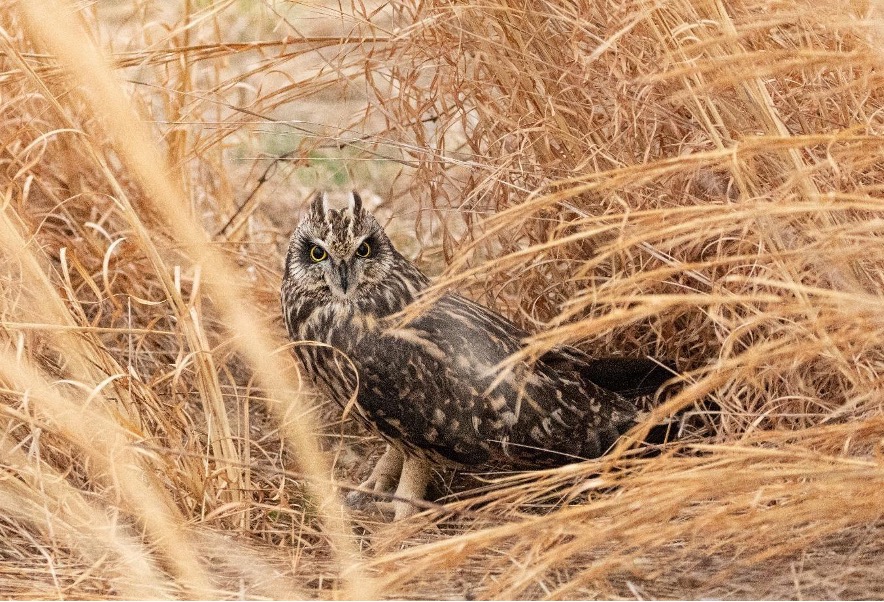
    Short eared Owls overwinter at OSGF every year and prefer roosting in clumps of native bunch grasses and in our restored native meadows. Pictured here in native broomsedge (Anatherum virginicus, syn. Andropogon virginicus) and purpletop (Tridens flavus) clump. Photo by Josh Rector, OSGF.

    Can Sod Removal Replace Herbicides?

    As OSGF transitions away from its historic use of the land for hayfields and pasture, we have initiated several native meadow restoration projects over the past decade, totaling roughly 24 hectares (60 acres). These projects have primarily used conventional installation approaches, including herbicide application or chemical-free methods such as repeated tilling and plowing. The most common conventional method is to apply a broad-spectrum herbicide, such as glyphosate, at least 3 times to create enough bare ground to seed the meadow. But chemical herbicides are not always effective on some of the most aggressive weeds, they are not effective on controlling weed seeds in the seed bank, they can alsonegatively alter the soil, and pose safety concerns for humans and wildlife. Unfortunately the common organic alternative relies on heavy tillage which comes with its own major downsides, including increases in noxious non-native weeds and negative impacts on soil health.

    OSGF is particularly interested in restoration strategies that minimize or avoid the use of chemical herbicides. We are not alone. Across our region, many landowners are exploring herbicide-free approaches to meadow restoration. However, robust data on the efficacy of alternative methods are limited.

    For this project we decided to try sod removal or scraping. Although this method of site preparation is often employed on small scales for garden installation or lawn conversion, we found little data on this method for large scale restoration plantings. However, we were encouraged by the results of some restoration studies from Europe and California involving topsoil removal.

    Sod Removal Project Design: Methods, Site Preparation, Seeding, and Maintenance

    The sod removal trial was designed with two main goals: to test an understudied organic approach to meadow restoration site preparation, and to share our case study to encourage further exploration of the approach, and perhaps formal research comparing this method with more common approaches. 

    The trial took place on a 0.8-hectare (2-acre) parcel of a former horse pasture and hayfield. Baseline vegetation surveys showed it was dominated by introduced cool-season pasture grasses: tall fescue (Lolium arundinaceum), orchard grass (Dactylis glomerata), and Kentucky bluegrass (Poa pratensis).

    To track change over time, we established permanent vegetation monitoring plots across the site. Vegetation surveys were conducted at baseline (Year 0) before disturbance and twice per growing season following seeding (2024 = Year 1, 2025 = Year 2). Soil samples were also collected at baseline and in each subsequent year. In November 2023, we removed the top layer of sod using the bucket of a skid-steer at a depth of approximately two inches. Afterward, the soil surface was lightly raked to improve seed-to-soil contact. We hand-broadcast a native seed mix using pine shavings as a carrier at 13.5 kg per hectare (12 lb per acre) and seeded a temporary cover crop of 50% winter rye and 50% oats at 34 kg per hectare (30 lb per acre). The field was then lightly covered with straw using a straw blower. The seed mix included 28 regionally appropriate species, roughly 60% perennial grasses and 40% forbs. 

    Management during the first two years was intentionally light. In Year 1, the cover crop was flail-mowed once in the spring. Other interventions involved manual cutting or pulling of problem weeds, primarily biennial thistles (Carduusspp.), a single clump of Johnsongrass (Sorghum halepense) likely introduced during site preparation, and spot mowing of creeping thistle (Cirsium arvense). Additional mowing had been planned but proved unnecessary due to relatively low weed pressure. The most common weeds were the annual grass Setaria pumila, which we expected to decline naturally, and white clover (Trifolium repens), which remained low-growing and did not appear to inhibit germination of the native seed mix. In Year 2, the meadow was flail-mowed once in the spring, followed by two days of manual cutting of problem weeds—mainly biennial thistles—to prevent seed set during the growing season.

    Progress photos

    Year 0 baseline (left) dominated by cool-season pasture grasses with intermittent ruderal forbs. Site prep (middle & right) included sod removal with skid-steer, raking soil, hand seeding and covering with straw. Photos by Charlotte Lorick.
    Year 1 from left to right, July, September, October. A lot of bare ground in year 1 (left) and complete removal of non-native grasses with pioneering black-eyed susan and mistflower (middle) already blooming. Slower-growing perennials such as hoary mountain-mint were abundant as well (right). Photos by Charlotte Lorick.
    Year 2 from left to right, July, September, October. Abundant mountain mints and volunteer path rush dominating the wetter section with black-eyed susans in the background (left). Many perennials flowering and fruiting including the gray goldenrod and little bluestem (middle & right). Photos by Charlotte Lorick.

    Preliminary but Encouraging Outcomes 

    Because native meadows take time to establish, we want to emphasize that these observations are preliminary, with only two growing seasons documented so far. We will continue monitoring the site over the coming years and hope to share longer-term results as the meadow develops.

    Nevertheless, at this early stage, several encouraging patterns have emerged. Total native species richness approximately doubled in Year 1 and tripled in Year 2 compared to baseline conditions. Native forb richness increased even more dramatically, more than tripling from baseline to Year 2. At the same time, the three most abundant baseline species—all exotic cool-season grasses—dropped from nearly 100% cover in Year 0 to less than 5% cover by Year 2 when averaged across all survey plots. This is an important indicator that sod removal was extremely effective in removing existing non-native vegetation.

    Figure 6. Total number of species documented across all survey plots and including incidentals encountered outside formal surveys. Plants were designated native or introduced rank based VA Digital Atlas and given invasive rank based off : https://www.dcr.virginia.gov/natural-heritage/invsppdflist
    Figure 7. Total number of native forb species documented across all survey plots and including incidentals encountered outside formal surveys. 

    By the second year, 22 of the 28 species in the seed mix had germinated, with several species already fruiting in the first year. This is a highly successful germination result by year two. For comparison, some of our other meadow restoration projects that used herbicide did not have germination of many of these same species until after year 2.

    Species seeded. P = Present but not seen flowering or fruiting, F = Observed flowering or fruiting, 0 = Not observed. *A small number of Midwestern species were included to provide early visual interest and occupy space in the first few years, but are expected to fade as the native perennial species establish. ** This species was only seeded in a small drift to prevent overabundance.

    In addition to the seeded species, we documented a number of native volunteer species that were not part of the seed mix and were not recorded in baseline surveys. These included secund rush (Juncus secundus), path rush (Juncus tenuis), forked rush (Juncus dichotomus), sweet everlasting (Pseudognaphalium obtusifolium), green milkweed (Asclepias viridiflora), and sedges such as fox sedge (Carex vulpinoidea), straw-colored flatsedge (Cyperus strigosus) and globe flatsedge (Cyperus echinatus). The arrival of native volunteer species was an exciting bonus and good indicator that some of the legacy native seedbank was still intact and uncovered with sod removal.

    Lessons Learned and Key Takeaways 

    While this project was not designed as a formal experiment, the results have been striking and our hypotheses can inform further studies. Compared to other meadow restoration efforts attempted at OSGF, this planting has performed exceptionally well. It has required far less maintenance and weed management, and the native seed mix established with noticeably higher germination, flowering, and overall cover. The method was also particularly effective at suppressing the dominant cool-season grasses that often make meadow establishment so challenging.

    Before seeding, the site supported very little native diversity. And the few native plants that we did find were woody seedlings or ruderal species such as horse-nettle (Solanum carolinense) and pokeweed (Phytolacca americana). Following the restoration work, native forb diversity increased substantially, including the appearance of several volunteer species. Although non-native white clover became the dominant plant by percent cover, its low, spreading growth did not appear to suppress the emerging native seedlings.

    Of course, many factors could have contributed to this success. The seed was broadcast rather than drilled, which may have supported quicker germination. Careful site selection, existing vegetation conditions, and even the drought that followed seeding may also have played a role. Still, after more than a decade spent surveying and working in meadows across Virginia, this site stands out as one of the most rapidly successful restorations I’ve ever observed.

    Our working hypothesis is that scraping away the existing sod removed much of the weed pressure by removing the grassrhizomes in the uppermost soil profile and some of the associated seed bank. It also slightly reduced the organic matter and nutrient layer at the soil surface—conditions that may have favored native species during establishment by reducingweed pressure (which thrive in more fertile soil). Although a decrease in organic matter may not be ideal for overall soil health, the decline is likely temporary. A growing body of research suggests that over time, the increase in native plant diversity may ultimately improve soil health beyond what we observed at baseline. This is something we plan to monitor in the years ahead with continued soil sampling. 

    The primary drawback of this method is cost. Removing and relocating large amounts of topsoil requires significant upfront investment, which may be impractical in some situations and at larger scales. However, this material can be reused elsewhere on a property in areas not prioritized for restoration or offered as a resource to farmers or composting operations. It is possible that these higher initial costs could ultimately be offset by reduced long-term maintenance and weed control, but that would take further study to determine.

    Another challenge we encountered was sourcing local seed. Ideally, we would have used seed with documented provenance sourced from populations occurring in Virginia’s Northern Piedmont ecoregion, but the native seed supply chain still has significant gaps. To help address native seed shortages, OSGF has partnered with the Northeast Seed Network’s Mid-Atlantic Seed Partnership and the Restorative Landscape Coalition, a working group of botanic gardens, arboreta, seed banks, and allied organizations working to expand the availability of diverse, source-identified native seed for ecological restoration across the Mid-Atlantic and Northeastern United States. For this project we purchased seed from Ernst Conservation Seed in Pennsylvania and although not all seeds were sourced from our ecoregion, we were pleased that all their seed was from very nearby ecoregions and states in the Eastern US. 

    We hope this project encourages others to explore sod removal for meadow restoration. There is much practical experience still to be gained and there are many questions worth investigating in controlled experiments to compare this method with other site preparation techniques, test different sod removal depths, or variations in seed mix compositions.

    In the meantime, we plan to explore the further use of this approach in future restoration projects at OSGF. If you’re curious about the project or interested in collaborating, we’d be happy to connect.

    Please feel free to reach out to me at charlotte.lorick@osgf.org, and stay up to date with the outcomes of this project—and more of my work—at https://www.osgf.org/conservation-biodiversity and https://forgottenfloraproject.substack.com/.

    Acknowledgements: Special thank you to OSGF team Clif Brown, Josh Rector, Katharine Perkin, Sarah Krementz, Sam Terry and local contractor Virginica LLC for support of this project.
  • Peter’s Mountain Mallow – Back on the brink as it approaches its 100th anniversary

    Peter’s Mountain Mallow – Back on the brink as it approaches its 100th anniversary

    By Ben Sapperstein, Quinlan Campbell, and Leighton Reid

    Ben Sapperstein and Quinlan Campbell are undergraduate researchers in Leighton Reid’s Restoration Ecology Lab at Virginia Tech.

    Peter’s Mountain Mallow (Iliamna corei) is among the rarest plants in the world. As of 2025, only five individuals remain in the wild, all of them clustered in a single population on a rocky ridge in southwestern Virginia. In the 98 years since its discovery, Peter’s Mountain Mallow has teetered on the edge of extinction and come roaring back like a phoenix from the ashes, but today its future is again uncertain.

    First discovered in 1927 by two botanists from West Virginia, Peter’s Mountain Mallow is a showy wildflower with light pink, hibiscus-like flowers. In full sun it reaches an impressive 2-m stature, with multiple stems covered in fuzzy, maple-like leaves. The blossoms are slightly smaller than the aperture of a coffee mug. They feature prominent columns of fused stamens tipped with yellow pollen. Uniquely, the flowers have no discernable scent.

    Peter’s Mountain Mallow (Iliamna corei) in full bloom during happier times. A key difference between this species and its midwestern relative the Kankakee Mallow (Iliamna remota) is that I. corei flowers have no discernable scent. Photo courtesy of the Massey Herbarium.

    The mallow’s habitat is a unique pine-oak woodland situated on a rocky ridge above the New River. The ridgetop is underlain by calcareous sandstone, which lends a richer feeling to this site than nearby ridges, which are much more acidic. For example, the plant community includes calciphiles like white-flowered leafcup (Polymnia canadensis), toothache tree (Zanthoxylum americanum), and American barberry (Berberis canadensis). Other species include honey locust (Gleditsia triacanthos) and northern leatherflower (Clematis viorna) – a distinctly rich ridgetop assemblage. Historically, the site had an open canopy that also supported sun-loving plants like Monarda and Coreopsis, but the canopy has apparently closed in and these are no longer evident.

    Changing vegetation structure at the Peters Mountain Mallow habitat. Left: an open canopy in the mid 1980s afforded a view of the surrounding landscape. Right: in 2025, there was nowhere that afforded such a view, suggesting that the canopy has closed substantially over the past ~40 years. Authors Quinlan Campbell and Ben Sapperstein (right) inspect an updated version of the herbivore exclosures first built by Johnny Randall (left), Mary Lipscomb, Tom Wieboldt, and others in the 1980s. Left photo by Tom Wieboldt. Right photo by Leighton Reid.

    Fire required

    Today, Peters Mountain is densely forested, but this may not always have been the case. Pine trees there bear fire scars showing that the mountain burned many times in the past. From the late 18th Century until the 1940s, Peters Mountain burned on average every second or third year, but after the 1940s fires abruptly disappear from the record. This reflects a change in federal policy towards fire suppression that affected forests throughout the United States.

    The loss of fire coincided with a decline in the mallow population. In 1927, when Perry Strausbaugh and Earl Core discovered it, they estimated that there were no more than 50 plants. Botanists in 1962 found the population little changed, but by 1985 the population was decimated – with only five individuals remaining.

    The US Fish and Wildlife Service added the mallow to the Endangered Species List in 1986, and a recovery plan was written by 1990. Yet in 1993 the population hit rock bottom with just three plants. Researchers at Virginia Tech and elsewhere mounted investigations to understand the cause of the mallow’s decline and clues about how best to assist its recovery.

    germination experiment in the early 1990s revealed a strong connection between fire and Peters Mountain Mallow. Jerry and Carol Baskin at the University of Kentucky tried to germinate a batch of mallow seeds, but only a tiny proportion (3%) grew. When they burned the seeds, the germination rate increased 13-fold, to 39%. The Baskins further increased seed germination by repeatedly heating the burned seeds to 80-90°C, ultimately achieving a maximum germination rate of 71% – nearly 24 times the baseline rate. They concluded that Peters Mountain Mallow forms a persistent seed bank and requires fire to break seed dormancy and trigger germination.

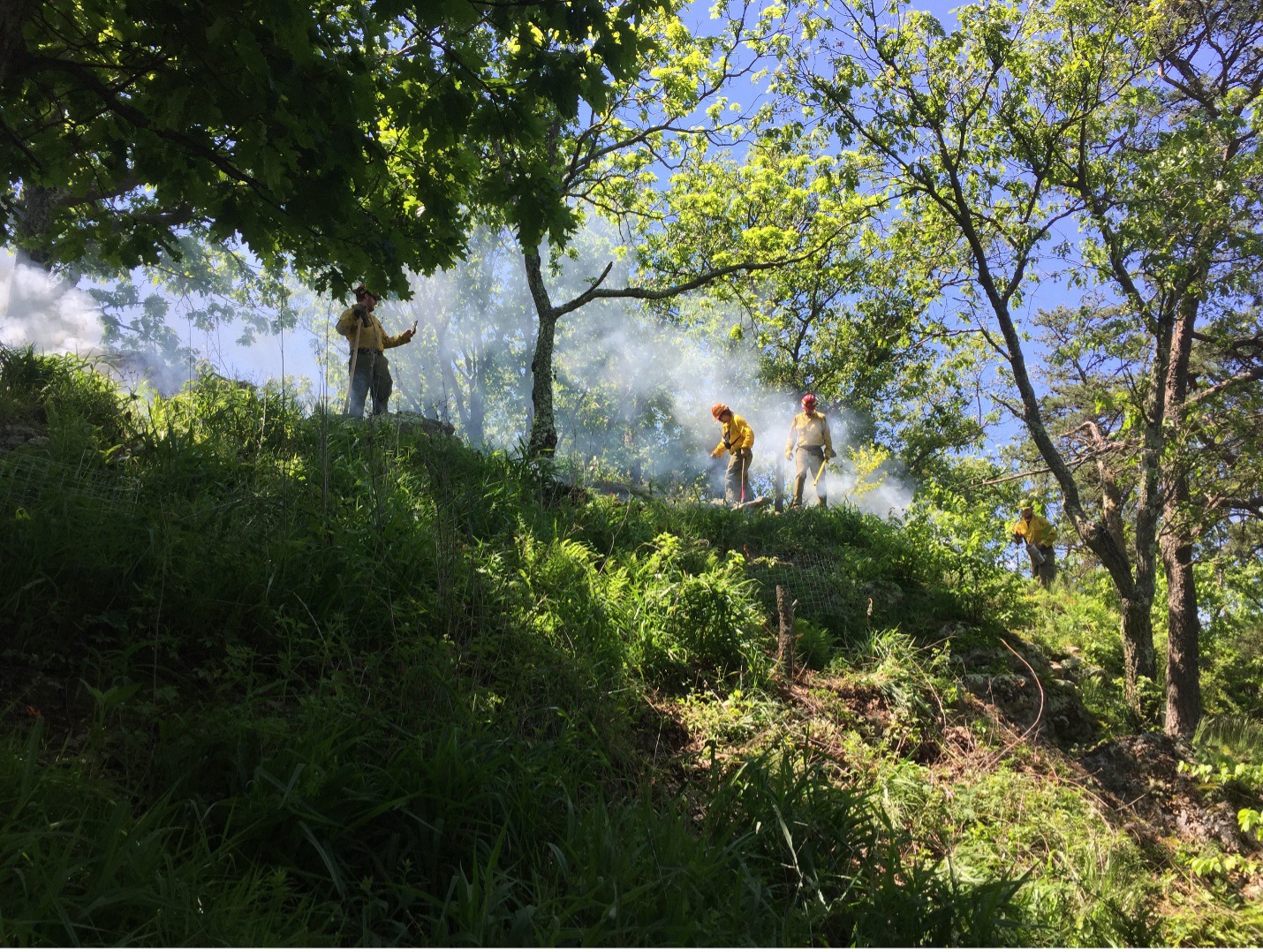
    A smoky prescribed fire on the crest of Peters Mountain in May 2017. Photo by Ryan Klopf.

    Population restoration

    These two lines of evidence – germination studies and fire history – suggested that a prescribed fire campaign would help reinvigorate the mallow population. A consortium of institutions rose to the challenge, including The Nature Conservancy and the Virginia Department of Conservation and Recreation. Burning the site was not easy. Fire crews hand-carried heavy tools, water, and drip torches off-trail up the side of the mountain. They created fire lines through steep, intact forest to prevent fire from spreading into the adjacent Jefferson National Forest.

    Initially, the ridgeline habitat was burned twice, once in 1992 and again in 1993. The return of fire led to a dramatic population increase as hundreds of seeds in the soil seed bank broke dormancy and germinated.

    In addition, the few remaining adult plants were caged to prevent wandering deer and other herbivores from eating them. Land managers removed trees, shrubs, and herbs with hand tools and herbicide to increase light availability. Two particular targets were white-flowered leafcup and garlic mustard (Alliaria petiolata) – an invasive species.

    As a further precaution, experimental populations were created offsite, including two at Virginia Tech. Some of the seeds from these garden plants were preserved frozen at the North Carolina Botanical Garden. Others were broadcast back into the habitat to await the next fire – and their opportunity to recruit into the population.

    In June 2004, lightning struck and a hot wildfire consumed the mountaintop. This conflagration followed two exceptionally dry years in which the Peters Mountain Mallow population failed to produce any fruits. The wildfire again stimulated germination of seeds in the soil seed bank, and a flush of mallows appeared over the next two years.

    Further burns in 2008, 2009, 2010, and 2011 assisted in growing the population from 74 individuals in 2005-2007 to an average of 110 individuals each year from 2012-2014. In May 2017, a multi-agency team burned the Peters Mountain Mallow habitat one last time. The vegetation was green, and the fire was smoky, but the population that year was robust. The team counted stems (an individual plant can have several) and found 345, down from 630 the year before. This was the last fire ignited on Peters Mountain before the COVID-19 outbreak. There has not been another one since.

    Reinvigorating research

    On a steamy morning in July 2024, a small group of ecologists, botanists, and land managers climbed the mountain to see how Peters Mountain Mallow was faring. One of us (Leighton) accompanied others from the Massey Herbarium, The Nature Conservancy, and the US Fish and Wildlife Service. What we found was disappointing. The mallow flowers we hoped to see were shriveled and dry from a prolonged drought. Worse, there were only a few of them. We did not do a thorough census, but this trip sparked the notion that the mallow required renewed attention.

    Drought-stressed flowers of Peters Mountain Mallow in summer 2024. Photo by Leighton Reid.

    For many years, researchers at Virginia Tech were heavily invested in this species – measuring the population, collecting seed, growing plants, performing genetic and physiological studies – even carrying jerry cans up the mountain to water plants during droughts. But this involvement waned as faculty retired and students moved on to other things. It seemed like a good time for a new wave of researchers to join the effort. Moreover, students in the newly-formed Ecological Restoration major had created a Society for Ecological Restoration student association (SER-VT) and were seeking a local project.
    Our first action was to formally survey the population. Last July, we laid out a transect to measure and map every individual. It did not take long. Since the last population inventory in 2018, the world’s only population of Peters Mountain Mallow has declined from 155 stems to just ten, representing only five individual plants. This is the same number of plants that there were when the species was first listed on the Endangered Species Act in 1986.

    What’s more, only two of the plants were large enough to produce flowers this year, and the flowering times were misaligned so that one plant was setting flower as the other was senescing. Peters Mountain Mallow requires cross-pollination, so no seeds were produced last year.

    While disappointing, this information is valuable for understanding the species’ boom-and-bust population dynamics and informing land managers about the acute need to bring fire back onto this landscape in the near future.

    Looking backwards to move ahead

    We know from the pine tree study that Peters Mountain burned frequently over the past two hundred years, but presumably the mallow has lived here for much longer. In what sort of environment did it evolve? Another undergraduate researcher, Nisha Polk, is using a different approach to construct an older, precolonial environmental history – and a potential reference for land managers to emulate.

    In October, Nisha climbed the mountain with Dr. Rachel Reid, a conservation paleoecologist in the Virginia Tech Geosciences Department. Nisha and Rachel inserted PVC tubes into the ground to collect soil cores from small pockets of earth between the boulders that make up the ridgetop. The soil is thin, no more than 25 cm, but it could contain organic matter from as much as 2,000 years ago.

    Over the next few months, Nisha will analyze the carbon isotopes from the soil organic matter to learn how old the soil is and what kinds of plants produced it. To age the soil, they will use carbon dating, which estimates when the soil was formed based on how much of the radioactive carbon-14 isotope is present. Then they will study the ratio of stable carbon-13 and carbon-12 isotopes to learn about past vegetation. In essence, lower ratios indicate plants that use a C3 photosynthetic pathway, including most broad-leaved plants that make up the temperate forests in our region, while higher ratios indicate plants that use a C4 photosynthetic pathway, such as warm-season grasses adapted to open grassland, savanna, and open woodland habitats. In other words, carbon isotopes can tell us what the predominant ecosystem was here over hundreds or thousands of years.

    Virginia Tech Ecological Restoration majors Nisha Polk (left) and Alex Owusu-Sampah (center) carefully collect a soil core on Peters Mountain with conservation paleoecologist Rachel Reid. Photo by Leighton Reid.

    A bright future?

    While Peters Mountain Mallow is again in the single digits worldwide, there are reasons for hope. First, the species produces a robust seed bank that may revitalize it when the site is next burned (hopefully soon). Second, the North Carolina Botanical Garden maintains a collection of its seeds – a back-up if the worst should happen. Third, the habitat is owned by The Nature Conservancy, whose land managers are committed to ensuring the species’ persistence. Fourth, the species is protected by the US Endangered Species Act, a 1973 law that is estimated to have prevented the extinction of more than 70 species.

    Finally, Virginians should have hope for the future of this botanical crown jewel because a new generation of undergraduate researchers is engaged, bringing fresh energy and insights to the cause, documenting the species’ ups and downs, and uncovering its natural history. Over the next five years, we envision an undergraduate-led research agenda that includes monitoring the mallow population, using paleoecology methods to learn about the long-term environmental history of the species’ habitat, and refining our understanding of its ecological niche.

    The New River cuts through Brush Mountain in southwest Virginia, just a bit upstream from Peters Mountain. Photo by Leighton Reid.
  • How does prescribed fire affect a threatened terrestrial orchid?

    How does prescribed fire affect a threatened terrestrial orchid?

    By Leighton Reid and Ryan Klopf

    Leighton Reid is an assistant professor of ecological restoration in the School of Plant and Environmental Sciences at Virginia Tech. Ryan Klopf is the Mountain Region supervisor and natural areas science coordinator for the Virginia Natural Heritage Program. They describe a new research project that aims to understand how an important restoration tool impacts the population dynamics of federally threatened small whorled pogonia orchids. This project has an open PhD position available to start in January 2023; details can be found at the end of this post.

    Deep in the heart of Virginia’s Shenandoah Valley, nestled against the western edge of the Blue Ridge Mountains, two clusters of small, green orchids grow in the dappled sunlight of a woodland understory. The orchids are small whorled pogonias (Isotria medeoloides) – a rare species that is considered threatened by the United States government because its population is declining so quickly that it could become endangered in the foreseeable future. We have monitored these populations for the past two summers, keeping tabs on every individual, to learn how this species is affected by one of the most important restoration tools in North America – prescribed fire.

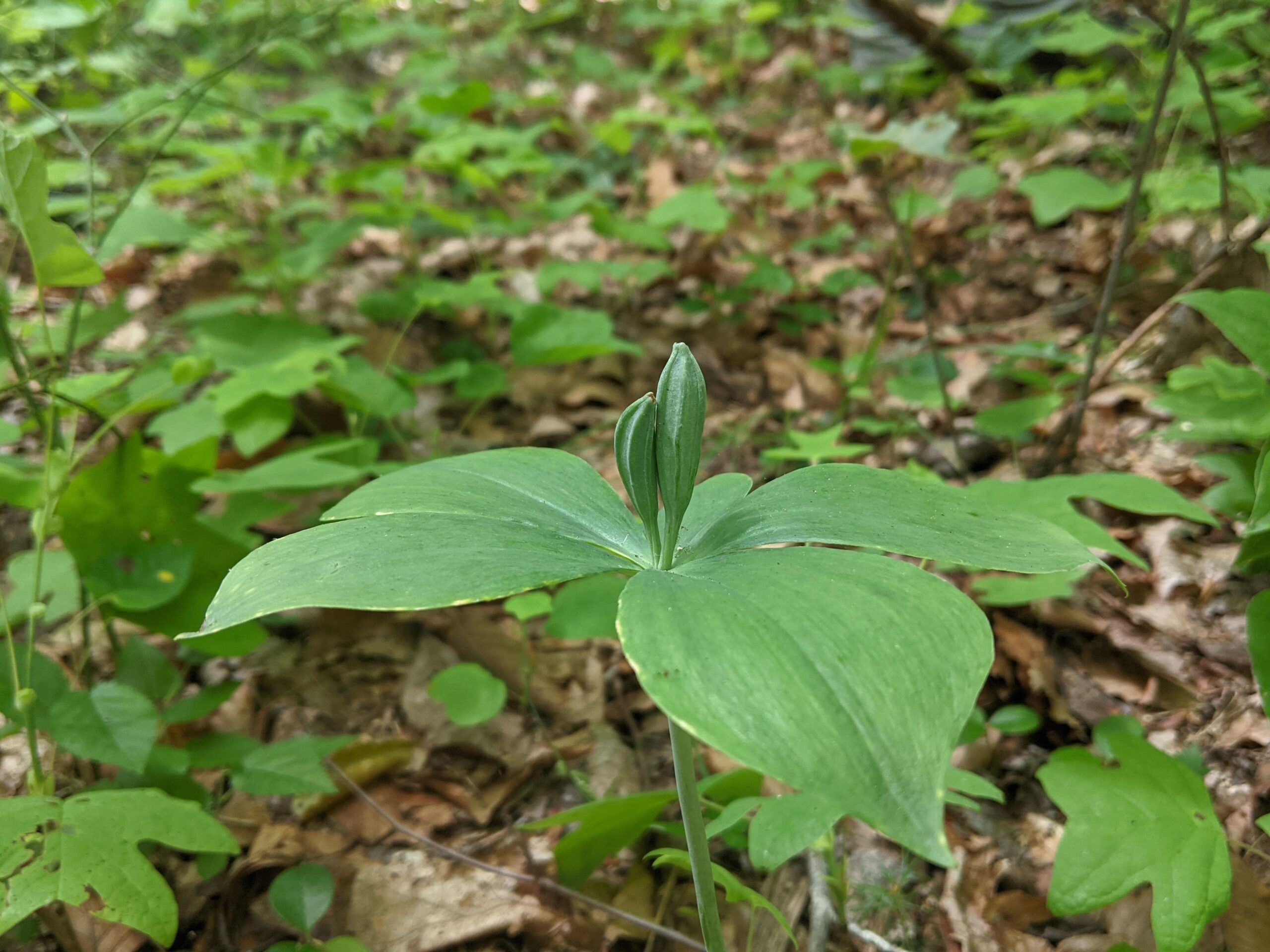
    A small whorled pogonia orchid with two flowers at Mount Joy Pond Natural Area Preserve. Photo: Lindsay Caplan.

    Small whorled pogonia

    As their name implies, small whorled pogonias are small (≤25 cm) and whorled (their leaves radiate outward from the stem). This species is a member of the Pogonieae, an orchid tribe that includes species in Asia and eastern North America. Its closest relative is the large whorled pogonia (I. verticillata) which sometimes grows alongside small whorled pogonia, but is distinguished by its purplish stem (small whorled pogonia has a whitish green, glaucous stem).

    Small whorled pogonia (left) with a whitish, glaucous stem compared to large whorled pogonia (right) with a purplish stem base. Photos: Sara Klopf (left) & JL Reid (right).

    Small whorled pogonias emerge from the leaf litter in late spring and in some years produce one or two solitary greenish yellow flowers, particularly when plants are exposed to more sunlight. Their flowers do not require any help with pollination; they produce the same amount of seed whether they are cross-pollinated or pollinate themselves.

    The seeds themselves are tiny – like vanilla seeds, which are in the same orchid sub-family (Vanilloideae). The parent plant (which is usually both a mother and a father) provides almost no resources at all to its offspring. Each seed’s fate is closely linked to whether or not it finds a mycorrhizal fungus in the Russulaceae family to help it acquire the resources that it needs to survive and grow. In a typical relationship between plants and mycorrhizal fungus, the fungus scours the soil for nutrients like nitrogen and phosphorus and provides them to the plant in return for energy in the form of carbohydrates, which the plant produces through photosynthesis.

    A developing fruit on a small whorled pogonia orchid at Mount Joy Pond Natural Area Preserve in June 2022. Photo: Andres Cunningham.

    Fire and water at Mount Joy Pond

    The story of this research project begins about 80 years ago, in a DuPont chemical plant in Waynesboro, Virginia. In the 1930s-1950s, the DuPont facility used mercury to produce rayon – a synthetic, silk-like fiber. Some of the mercury escaped from the plant and leaked into the South River – a tributary of the Shenandoah River. Mercury is a neurotoxin, and in the environment it can accumulate to dangerous levels in animals that are higher on the food chain, like fish. For many years, people living along the South River have been warned about the poor water quality and advised not to eat the fish.

    In 2016, DuPont reached a $50 million USD settlement with the United States Department of Justice, the Department of the Interior, and the Commonwealth of Virginia to restore habitat for wildlife in the South River watershed, enhance water quality, and improve recreational areas. This settlement represented one of the largest environmental damage settlements in United States history.

    Some of the DuPont settlement money was allocated to the Virginia Natural Heritage Program, a division of the Virginia Department of Conservation and Recreation that uses science-based conservation to protect Virginia’s plants and animals. Specifically, funds were provided to allow the Virginia Natural Heritage Program to protect and restore woodland habitat surrounding a unique wetland at the Mount Joy Pond Natural Area Preserve in Augusta County.

    Briefly, Mount Joy Pond is a Shenandoah Valley Sinkhole community; that is, it is a groundwater-controlled wetland that floods intermittently when water percolates up through underlying carbonate rocks and then floods over the top of a clay lens perched in a layer of soil derived from the overlying sedimentary rocks. When this happens, the water becomes trapped, like water in a saucer. This unique situation creates wetland habitats which have persisted for the past 15,000 years and contain numerous rare and disjunct species, including the globally rare Virginia sneezeweed (Helenium virginicum). There are several dozen Shenandoah Sinkhole ponds, but only a handful of them are protected.

    Virginia sneezeweed, an endemic species in the southeastern United States with disjunct populations in Virginia’s Shenandoah Valley sinkhole ponds and in a similar wetland situation in the Ozark Mountains of southern Missouri. Photo: JL Reid.

    In the past, Mount Joy Pond filled with water every few years, but in recent decades it has filled up less and less often. To restore the wetland’s hydrology, the Virginia Natural Heritage Program set out to thin the surrounding forest and re-introduce fire to prevent fire intolerant trees, such as red maple, from regenerating. This may sound counterintuitive to some, but the logic is this:

    • Each tree is like a drinking straw sucking water out of the ground and releasing it into the air via transpiration. If there are a lot of trees, the groundwater may stay too low to fill up the pond.
    • Fire used to be much more common in the Shenandoah Valley. Prior to European colonization, Indigenous People burned the landscape and maintained much of it as savanna and open woodland – ecosystem types that have fewer trees than present day forests.
    • By removing some trees and reintroducing a regular fire cycle, land managers at Mount Joy Pond Natural Area Preserve can restore an open woodland and raise the groundwater level, causing the pond to flood more often.

    The Virginia Natural Heritage Program began to implement this restoration project in 2017, and the first thinning operations and burn were a success. In the years since, the groundwater level appears to have gone up, suggesting that the hydrological restoration plan is working.

    Small whorled pogonia discovery

    In the first spring after that first fire, a botanist was surveying the burned woods near the pond and found something unexpected – a small population of small whorled pogonia orchids, which had not been seen previously in the preserve despite extensive surveying by the Virginia Natural Heritage Program’s inventory team. Were the orchids there all along and nobody noticed them? Maybe. Or maybe the fire helped the orchid population emerge after years of suppression in the dense leaf litter in the shady understory.

    Our team uses a grid sweep survey to search for new small whorled pogonia individuals in June 2022. Photo: JL Reid.

    The story became more complicated later that summer when a more intensive search turned up a second population of small whorled pogonia orchids on the preserve – this one in an area that had not been burned.

    The immediate consequence of discovering the new pogonia populations was that the United States Fish and Wildlife Service expressed concerns that future fire management might be detrimental to this threatened species. Nobody had studied how small whorled pogonia responds to fire, and there was a chance that burning could damage the population, even if it was good for the nearby pond’s hydrology. Of course, there was also a chance that not burning could damage the population. With fire, inaction is still an action.

    To help settle the issue, the United States Fish and Wildlife Service agreed to sponsor a PhD student to study the small whorled pogonias at Mount Joy Pond and figure out how their population dynamics are impacted by prescribed fire.

    Lindsay Caplan and Jimmy Francis monitor a population of small whorled pogonias at Mount Joy Pond Natural Area Preserve in June 2022. Photo: JL Reid.

    Effects of prescribed fire on small whorled pogonia orchids

    The main goal of our ongoing research is to understand how prescribed fire impacts small whorled pogonias. To do this, we will map and monitor the two subpopulations and the woodland plant communities in which they live. Over the next two years, one of the two subpopulations will be burned during a winter or early spring prescribed fire, and we will continue monitoring to document changes in plant vigor, reproduction, and population size. We will pay special attention to the light environment, which seems to be important for small whorled pogonia reproduction, and to the diversity and composition of soil fungi, which are important for small whorled pogonia emergence. We will also conduct annual surveys of the entire reserve to search for additional populations.

    Ethan Dunn uses a canopy imager to measure canopy cover, photosynthetically active radiation, and leaf area index over a tiny small whorled pogonia individual in July 2021. Photo: JL Reid.

    This project is just beginning. To date, we have monitored the two populations for two growing seasons (2021, 2022). There is still much work to be done. One of the next steps will be to produce an accurate map of each plant’s location, which will require centimeter-level precision using high-quality GPS equipment under a forest canopy.

    We are currently seeking a PhD student to lead this research project starting in January 2023. A description of this opportunity is below. This project is an excellent opportunity for a student to develop expertise in ecological restoration and threatened species conservation from both a scientific perspective and an on-the-ground land management perspective.

    Ultimately, the results of from this study will inform management of natural areas and small whorled pogonia restoration projects throughout the species’ wide range – from Ontario to Georgia.

  • Major in Ecological Restoration at Virginia Tech

    Major in Ecological Restoration at Virginia Tech

    By Leighton Reid, Assistant Professor of Ecological Restoration in the School of Plant and Environmental Sciences at Virginia Tech.

    Now is a great time to start a career in environmental restoration. Worldwide, society has degraded an area of land larger than South America with disastrous outcomes for biodiversity, climate, and human wellbeing. More than a million species face extinction, and ongoing deforestation is second only to fossil fuel emissions in driving global climate change.

    Ecological restoration is the process of assisting the recovery of damaged ecosystems, and this profession is at the heart of a worldwide movement to solve the biggest challenges of the 21st Century. During the past few years, dozens of countries, including the US, have pledged to restore an area of the Earth’s surface bigger than the state of Alaska. There are now three different initiatives to plant a trillion trees, and the United Nations recently launched the Decade on Ecosystem Restoration to amplify the critical role that restoration must play in preventing climate change and species extinctions right now.

    Starting in December 2021, Virginia Tech offers a major in Ecological Restoration through the School of Plant and Environmental Sciences. Students who graduate with a BS in Ecological Restoration will be trained broadly in environmental science, ecology, botany, soil science, and human dimensions (download the course checklist). They will learn about ecological restoration projects happening in Virginia and around the world, and they will get hands-on experience designing restoration plans for degraded sites.

    Undergraduates in Plant Materials for Environmental Restoration (ENSC 3644) plant an oak tree along Holtan Branch, a tributary of Stroubles Creek on the Virginia Tech campus. Photo: JL Reid.

    Virginia Tech has deep roots in environmental restoration and continues to be in the vanguard. For decades Virginia Tech faculty have been research leaders in restoration monitoring, mine reclamation, river restoration, and endangered species recovery. Today faculty from across campus specialize in many more areas related to ecological restoration, including tropical forest restoration, grassland restoration, plant propagation, fire ecology, agroecology, environmental history, natural resource economics, and philosophy. Several faculty members and students have recently formed a Restoration Ecology Working Group to address the interdisciplinary nature of environmental problems.

    A tropical forest restoration site in northwestern Ecuador. An undergraduate researcher in summer 2022 will measure the survival of native tree seedlings planted in this former cattle pasture.

    Virginia Tech was the first university in the United States to formally align its Ecological Restoration curriculum with the Society for Ecological Restoration, the largest professional organization of ecological restoration professionals worldwide. This alignment means that students graduating with a degree in Ecological Restoration will have completed the knowledge requirements to apply for professional recognition as in the Certified Ecological Restoration Practitioner in Training (CERPIT) program. Professional certification clearly communicates to employers that graduates of this program are recognized within the profession as being knowledgeable in ecological restoration and committed to a high standard of practice.

    A Virginia Tech research intern and staff of the Virginia Department of Conservation and Recreation search for a federally threatened orchid in a woodland restoration site in the Shenandoah Valley. Photo: JL Reid.

    Undergraduate and graduate students at Virginia Tech can also get involved in restoration through a new student organization. The Society for Ecological Restoration Student Association at Virginia Tech (SER-VT) is student-led and aims to connect students with restoration projects and provide networking opportunities. For example, students who join SER-VT are eligible to apply for free membership in the Society for Ecological Restoration. Students can also get involved with the Virginia Tech Environmental Coalition, a student-run organization that advocates for a sustainable future and organizes events, including The Big Plant, an annual event to improve habitat and water quality in a local creek by planting native trees.

    The Environmental Coalition is a student-led organization that organizes native tree planting events and other sustainability efforts on campus. Photo source: https://gobblerconnect.vt.edu/organization/ec.

    Job prospects for ecological restoration professionals are already good and likely to improve given the huge scale of land and water degradation worldwide. As of 2016, the US restoration economy employed >126,000 workers and produced $9.5 billion USD in economic output. In terms of workers, there are more professionals working in ecological restoration than in iron and steel mills (91,000 workers in 2016) but somewhat fewer than in motor vehicle manufacturing (175,000). Many different sectors require restoration to comply with state and federal regulations. As such, ecological restoration professionals are hired by architectural firms, construction companies, state and federal government agencies, environmental consultancies, environmental education organizations, public/private/NGO land management organizations, state highway departments, mining companies, forestry companies, universities, and others.

    PhD student Jordan Coscia measures plant community composition in a recently restored native grassland on the northern Virginia Piedmont. Photo: JL Reid.

    Virginia Tech’s location in the New River Valley provides access to a wide variety of natural areas and restoration projects. One important site within walking distance of classroom buildings is the StREAM Lab, a restoration experiment designed to test different strategies for improving water quality along 1.3 miles of Stroubles Creek (watch a 7-minute video about StREAM Lab). Restoration courses also visit sites managed by the town of Blacksburg, The Nature Conservancy, the USDA Forest Service, and the Virginia Department of Conservation and Recreation to develop hands-on skills in plant identification, community ecology, seed collection, invasive species management, tree planting, and ecological monitoring.

    Masters student David Bellangue sets up an experiment focused on improving native wildflower establishment at McCormick Farm near Raphine, Virginia. Photo: JL Reid.

    An excellent way for students to get more out of their degree is to participate in a research experience or an internship. By working with a graduate student, a faculty member, or a local land manager, undergraduates develop new skills and perspectives as well as personal relationships with working professionals. Students can also broaden their horizons through a wide variety of study abroad programs.

    Undergraduates who participate in research gain new skills (like plant community monitoring) and personal relationships with professionals in the field. Photo: JL Reid.

    In a nutshell, the Ecological Restoration Major at Virginia Tech is designed to launch meaningful careers for students who are passionate about the environment and want to move the needle on climate change, biodiversity conservation, and ecosystem services.

    To learn more about majoring in Ecological Restoration at Virginia Tech, contact Dr. Leighton Reid (jlreid@vt.edu) or Karen Drake-Whitney (kdrake@vt.edu).

  • Bee-friendly beef: rehabilitating cattle pastures to increase pollinator habitat

    Bee-friendly beef: rehabilitating cattle pastures to increase pollinator habitat

    Dr. Parry Kietzman is a research scientist in Virginia Tech’s School of Plant and Environmental Sciences. Here she describes a new experiment aimed at improving Southeastern grazing lands to improve cow health, provide habitat for pollinators, and conserve plant biodiversity. A member of the bee-friendly beef team since 2020, her work focuses on the ecology and conservation of pollinating insects.

    Across the world, pastures account for over 20% of the Earth’s land surface, an area roughly the size of Africa. Many of these pastures were once species-rich meadows, prairies, and woodlands that offered abundant and diverse food resources for pollinators, but are now limited to a handful of species that provide forage for grazing livestock.

    Lanceleaf coreopsis (Coreopsis lanceolata), a native composite sewn into an active cattle pasture near Stuart, Virginia. Photo credit: Parry Kietzman.

    Pollinating insects such as bees, flies, butterflies, moths, and beetles are currently in crisis, as habitat loss from development, intensive agriculture, and other human activities have diminished the food sources and nesting sites they rely on. The conservation of pollinators native to each particular region is especially important, as many plants depend on native specialists for pollination. The widely-kept, domesticated, European honey bee (Apis mellifera L.), though of great importance to modern agriculture, is often not successful or at least not as efficient at pollinating certain plants as the bee specialists that coevolved alongside each particular species. Landscapes rich in a diversity of plant species native to that location are therefore needed to provide habitat for these native pollinators.

    Some types of beetles, such as the soldier beetles (Colanoptera: Cantharidae) pictured here, also visit flowers and can provide pollination services. Soldier beetles feed on nectar and pollen and do not damage their plant hosts. Photo credit: Parry Kietzman.

    Researchers at Virginia Tech, the University of Tennessee, and Virginia Working Landscapes are currently collaborating on a multi-year rehabilitation project to plant native North American prairie grasses and wildflowers in cattle pastures in Virginia and Tennessee. The project is based on the idea that a landscape can be supportive of healthy cattle production while at the same time providing ecological niches for pollinating insects. Bringing back diverse food sources for pollinators in pastures, however, presents some significant challenges. First, the plants must not be harmful to livestock that may graze on them. Second, they must be hardy and practical to establish in new and existing pastureland. Finally, they should be native to the region in which they will be planted, as this will be most beneficial to that region’s native pollinators and help prevent the accidental introduction of invasive species.

    Some of the wildflower species used in our experiment, such as this blanketflower (Gaillardia pulchella), are native to North America but not naturally found in Virginia or Tennessee. Photo credit: Parry Kietzman.

    Our team is currently working to identify and successfully establish seed mixes that thrive in Virginia and Tennessee without becoming excessively weedy or crowding out grasses grazed on by cattle. Once established, pollinator diversity and abundance will be measured in plots with and without wildflowers introduced. Herds of cattle grazing in the pastures will also be monitored for health and body condition.

    Bumble bees are common visitors at our wildflower-enhanced sites. Photo credit: Parry Kietzman.

    Results from this study, including critical information about best practices for establishing the seed mixes, optimal grazing regimes to promote blooms, and wildflowers as forage will be disseminated to growers and other stakeholders through extension services such as published fact sheets, protocols, and workshops. This foundational work will help inform researchers and land managers around the globe how to transform pasturelands into landscapes that can help save our pollinators.

    For more information on this ongoing study, visit the team’s website: beesandbeef.spes.vt.edu.

    A wildflower-enhanced pasture in southwestern Virginia in mid-summer 2021. Photo credit: Parry Kietzman.
  • Virginia’s Piedmont grasslands: floristics and restoration

    Virginia’s Piedmont grasslands: floristics and restoration

    Jordan Coscia is a PhD student in the Restoration Ecology Lab at Virginia Tech and a graduate fellow at Virginia Working Landscapes, a program of the Smithsonian Conservation Biology Institute. She describes her research goals and includes a preliminary species list for natural and semi-natural grasslands on the northern Virginia Piedmont.

    You may have heard the legend that before European colonization, a squirrel could get from the Atlantic Coast to the Mississippi by hopping from tree to tree. While the pre-European landscape of the eastern United States was indeed quite different from what we see today, the idea of a vast, all-encompassing forest is misleading. Particularly in the Southeast, open, grassy habitats such as meadows, pine and oak savannas, glades, and barrens were interspersed with hardwood forests. This mosaic of forests and open savannas was maintained by grazing elk and bison, variation in soil types and depth, and regular fires set by both lightning strikes and Indigenous peoples. All of these grassland-maintaining processes were disrupted by the introduction of European development and agricultural practices.

    As a PhD student in the Restoration Ecology Lab at Virginia Tech and a graduate research fellow with the Smithsonian’s Virginia Working Landscapes program, I am researching native warm-season grasslands in Virginia. I have three main goals:

    (1) To describe the plant species that characterize native warm-season grassland communities on the Virginia Piedmont;

    (2) To determine which ecological processes and environmental conditions allow these grasslands to thrive and persist in tandem with forests; and

    (3) To determine the best methods to restore and reconstruct these communities where they have been lost.

    I am accomplishing the first of these goals, the description of Virginia’s Piedmont grassland communities, by surveying the plant species found in existing Virginia grasslands. Today, most high-quality grassland sites in Virginia are in areas where routine maintenance prevents the growth of shrubs and trees and keeps the habitat open for the sun-loving grassland plants. Many highly diverse sites, for example, are found in powerline rights-of-ways that are maintained by annual mowing.

    Jordan Coscia surveys grassland plant vegetation in an experimental restoration in northern Virginia. Photo credit: Charlotte Lorick.

    By surveying native grassland fragments such as those found in rights-of-ways, we can determine the plant species that are characteristic of these habitats. We can then include these species in planted grasslands and native grassland seed mixes to create more ecologically accurate restorations. In the summer of 2020, the Restoration Ecology Lab at Virginia Tech partnered with the Clifton Institute and Virginia Working Landscapes to identify and survey remnant and semi-natural grassland plant communities across northern Virginia. The results of these surveys will inform future grassland restoration projects in the area, including my own grassland restoration experiment that will test the effectiveness of different grassland installation and management techniques. While a full report of the survey results will be available in a future publication, you can find a sneak peak of the full list of the species recorded in our 2020 surveys below.

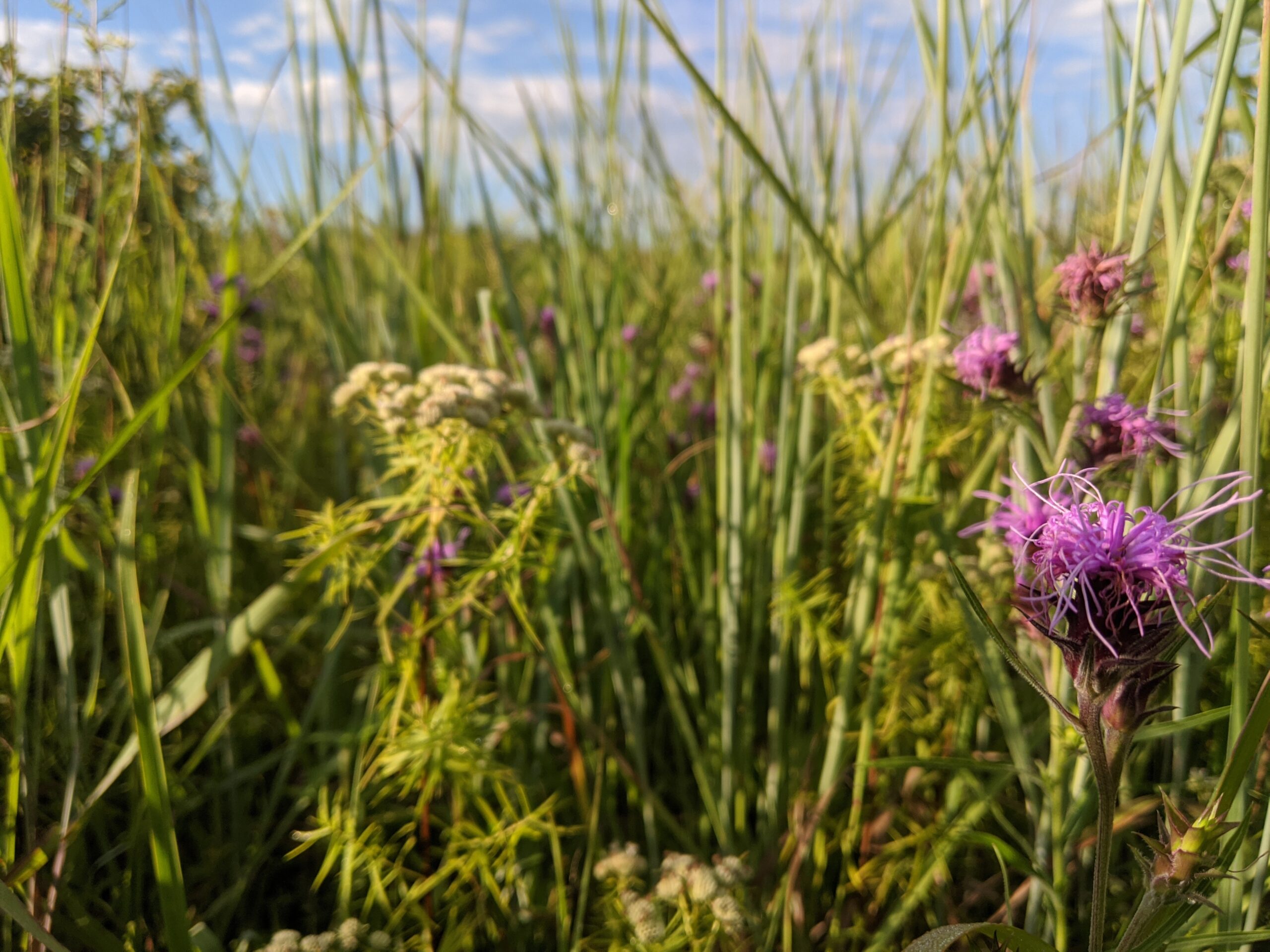
    A semi-natural grassland bursting with scaly blazing star (Liatris squarrosa) blooms in a powerline right-of-way in Fluvanna County, Virginia. Photo credit: Jordan Coscia.

    Across 34 sites, we identified 354 taxa (including subspecies and varieties), with an additional 53 groups only identifiable to genus or family. Of those identified to genus level or better, 330 (81%) are considered native, 41 (10%) are introduced, 11 (3%) are invasive, and 25 (6%) are of uncertain status in northern Virginia. The three most commonly recorded species were little bluestem (Schizachyrium scoparium), narrowleaf mountainmint (Pycnanthemum tenuifolium), and tapered rosette grass (Dichanthelium acuminatum).

    Our species list is available for download below.

    The final column is a count of occurrence, or how many sites a plant was recorded in, with a maximum possible value of 34. Plants are listed alphabetically by Latin species name in descending order of occurrence.

    We are continuing this work in 2021 through a collaborative effort with the Center for Urban Habitats. This year, we have expanded our grassland discovery and characterization to an eight-county area centered on the city of Charlottesville in the central Piedmont. With a larger team and a refined protocol, we have already discovered more than 300 remnant grassland fragments this growing season. Both the 2020 and 2021 surveys are generously supported by research grants from the Virginia Native Plant Society.

    Note: Part of this work represents a USDA NIFA Hatch project.

  • Torrey’s mountain mint – an oddball species?

    Torrey’s mountain mint – an oddball species?

    In a state whose flora has been studied for hundreds of years, grassland conservation and restoration are still hindered by a need for better understanding of basic plant ecology and systematics. Leighton Reid, Jordan Coscia, Jared Gorrell, and Bert Harris contributed to this post.

    All ecologists deal with puzzling groups of plants. In eastern North America, sedges (genus Carex) and panic grasses (genus Dichanthelium) are notorious for having many species with similar characteristics. In Central America, tree seedlings in the avocado family (Lauraceae) can be tricky to separate.

    Sometimes we also encounter oddballs – plant species that it’s hard to see where they fit into the contemporary landscape.

    Torrey’s mountain mint (Pycnanthemum torreyi) is a bit of both – an oddball species whose relationships to other mountain mints is not yet worked out.

    Late-season aspect of Torrey’s mountain mint. Photo credit: B. Harris.

    Like others in its genus, Torrey’s mountain mint is an aromatic herb that grows (mostly) in more-or-less open areas. Its crushed leaves have a delightful minty smell. In summer, it produces clusters of small, white flowers that are visited by a variety of pollinators.

    Unlike some other mountain mints, Torrey’s is also rare. NatureServe ranks it as a G2, meaning that it is imperiled throughout its range – which extends sporadically from New Hampshire to Kansas.

    Virginia has more Torrey’s mountain mint populations than the other states. The Flora of Virginia describes its habit as “dry, rocky, or sandy woodlands and clearings.” In some places, like the Piedmont, it occurs mainly on basic soils, whereas in other places, like the Coastal Plain, it lives in sandy, acidic soils. In the mountains it has been found also in limestone seepages.

    An oddball species

    While restoring natural areas in Chicagoland in the 1980s, Stephen Packard described some of the plants he saw as “oddball species”. Species like purple milkweed (Aslcepias purparescens) and cream gentian (Gentiana alba) grew neither in closed forest nor in open prairie, so where did they belong? These species preferred intermediate levels of light, such as would be found beneath a spreading burr oak. Packard’s observation that these species preferred savanna conditions sparked his realization that savanna had once been a frequent component of the Chicago landscape.

    Matthew Albrecht has considered a similar possibility in Tennessee for Pyne’s ground plum (Astragalus bibullatus). This species grows on so-called cedar glades around Nashville, but it does not grow right in the middle. It prefers the edges where there is intermediate light. This suggests that these cedar glades may once have had softer edges that tapered slowly from exposed, rocky glade into open woodland. With modern fire suppression, these edges have become hard; many glades are now bordered by dense forests of eastern red cedar.

    Could our own Pycnanthemum torreyi fall into the same category? An “oddball species” with a preferred niche that is neither full sun nor full shade? In our fieldwork on the northern Virginia Piedmont, we encountered several populations of Torrey’s mountain mint, all of which were growing in edgy sites, like powerline right of ways, or the edge of an old apple orchard.

    A small population of Torrey’s mountain mint grows along one edge of this field near the forest edge, not in the open center of the field. Is this typical of this species’ preferred light environment?

    Last summer, one of us (Leighton) tested P. torreyi’s habitat affinities inadvertently and with a very small sample size. He planted three seedlings in his small, Blacksburg, Virginia yard – one in an exposed spot on the south side of the house and two in a partially-shaded spot on the north side of the house. The plant in the more open, southerly spot grew okay, but it was somewhat stunted – like a spider plant that has been left out in the sun. Its stem and leaves grew short and tough. In contrast, the two plants on the north side of the house grew full and spread out, both flowering and fruiting in their first season. They also remained green late into the season, even after nearby P. tenuifolium and P. incanum had senesced. If this was a species desirous of full sun, shouldn’t it be doing better in the exposed position in the back by the parking lot?

    Two Torrey’s mountain mints growing well and flowering in partial shade on the north side of JL Reid’s home in Blacksburg, Virginia.

    Clearly Leighton’s sample is way too small to draw any conclusions, but it does make us wonder if Torrey’s mountain mint prefers and intermediate level of light, such as would be found in a savanna or an open woodland. These disturbance-dependent habitats were once widespread but are excluded today in much of the eastern United States. Maybe Torrey’s mountain mint is an oddball species whose habitat preferences will eventually lead us to design new restoration targets in Virginia, but we’ll have to study its ecology in a bit more detail first.

    A “Problematic Species”

    The Flora of Virginia also highlights that Torrey’s mountain mint is a “problematic species”, whose interpretation is “confounded by its similarity to Pycnanthemum verticillatum and its hybridization with other species.”

    During our fieldwork in 2020, we were able to positively identify all of the individuals that we encountered, differentiating P. torreyi from P. verticillatum by characteristics of their flowers and leaves. Still, the possibility that Torrey’s mountain mint is not a well-differentiated species is troubling. Several landowners in our area are conserving open habitat in part because this rare species occurs there, so it would be nice to know if it is a good species.

    I asked Gary Fleming, a Vegetation Ecologist for the Virginia Natural Heritage Program, for his thoughts. “Well, the entire genus Pycnanthemum is a bit problematic!” Gary wrote me in an email. He explained that the problem is that nobody has studied this genus using molecular phylogenetics, that is, using DNA to reconstruct the evolutionary relationships between species. As a result, our understanding of how species in this genus relate to each other is pretty fuzzy.

    “Personally, I think P. torreyi is a good species,” Gary continued, “Over the years, I’ve observed it in numerous places state-wide and it appears to be morphologically very consistent.”

    In a state whose flora has been studied for hundreds of years, apparently the Pycnanthumum nut has not yet been cracked. Hopefully some enterprising botanist will take this up soon (and maybe Packera while they’re at it).

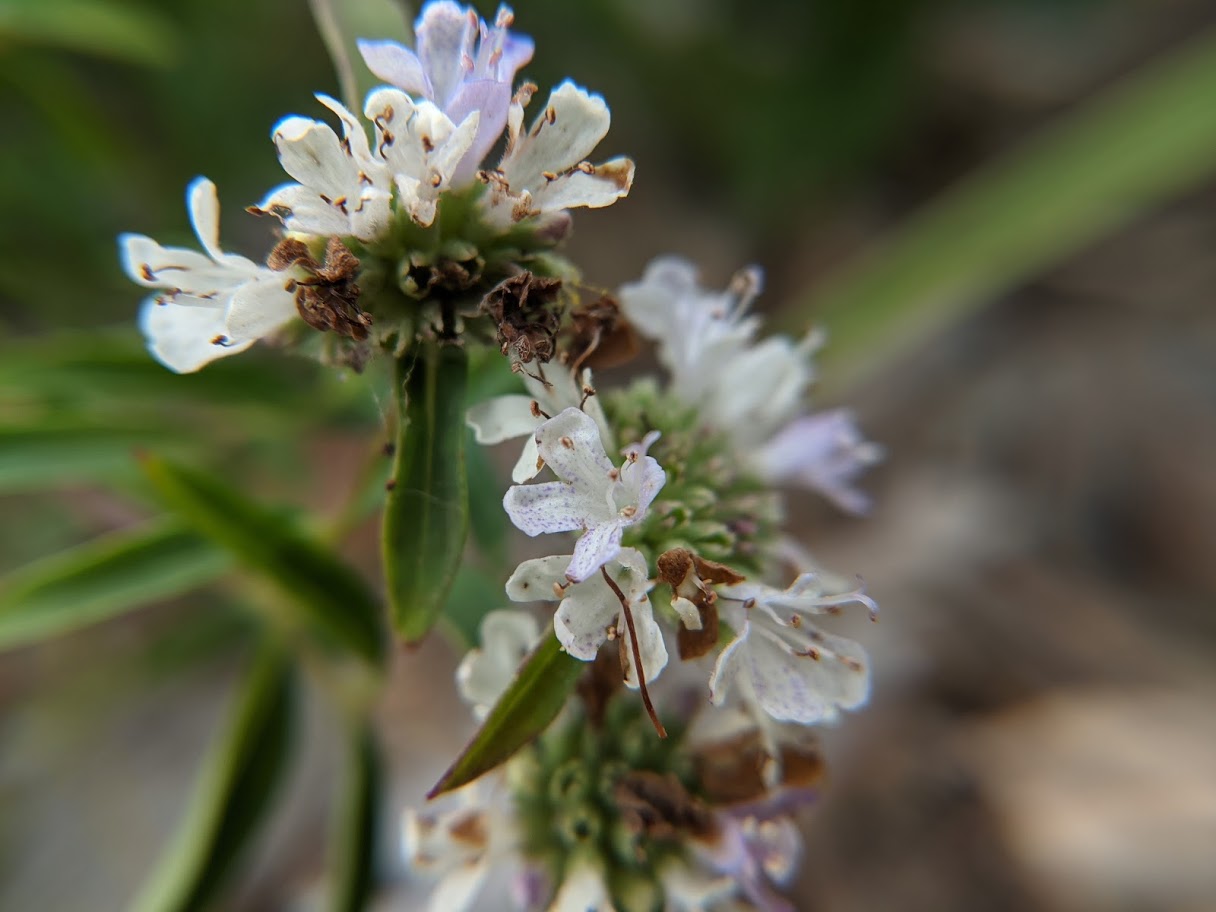
    Torrey’s mountain mint flowers. Photo credit: JL Reid.

    Note: Part of this blog post represents a USDA NIFA Hatch project.

  • Botanizing a Central Appalachian Shale Barren

    Botanizing a Central Appalachian Shale Barren

    Leighton Reid describes a field trip to a unique, natural community with Tom Wieboldt, retired curator of the Massey Herbarium at Virginia Tech.

    From southwestern Virginia to central Pennsylvania, ancient shale formations jut out of the mountains at wonky angles. Loose and crumbly, the rocks bake in the sun. Surface temperatures can reach 60° C (140° F) – comparable to a desert. Rocks slip and tumble easily on the steep slopes. Few eastern plants are tough enough to hack it under these conditions. Among those that can, a few are globally unique.

    On a warm day in August, I had the opportunity to botanize one such place – a central Appalachian shale barren in Craig County, Virginia – with Tom Wieboldt, retired curator of the Massey Herbarium at Virginia Tech (VPI), and a leading authority on shale barren flora. As we hiked and photographed plants, we talked about the conservation and potential for ecological restoration of these rare communities.

    Shale barren wild buckwheat (Eriogonum allenii), a central Appalachian endemic whose relatives are mostly west of the Mississippi.

    The gems of the shale barrens are the endemics. Amazingly, 22 species are found mostly or exclusively on central Appalachian shale barrens. Another seven species are rare or disjunct from the rest of their range – typically far to the west. For example, the closest population of chestnut lip fern (Cheilanthes castanea) outside of Virginia and West Virginia is in Oklahoma.

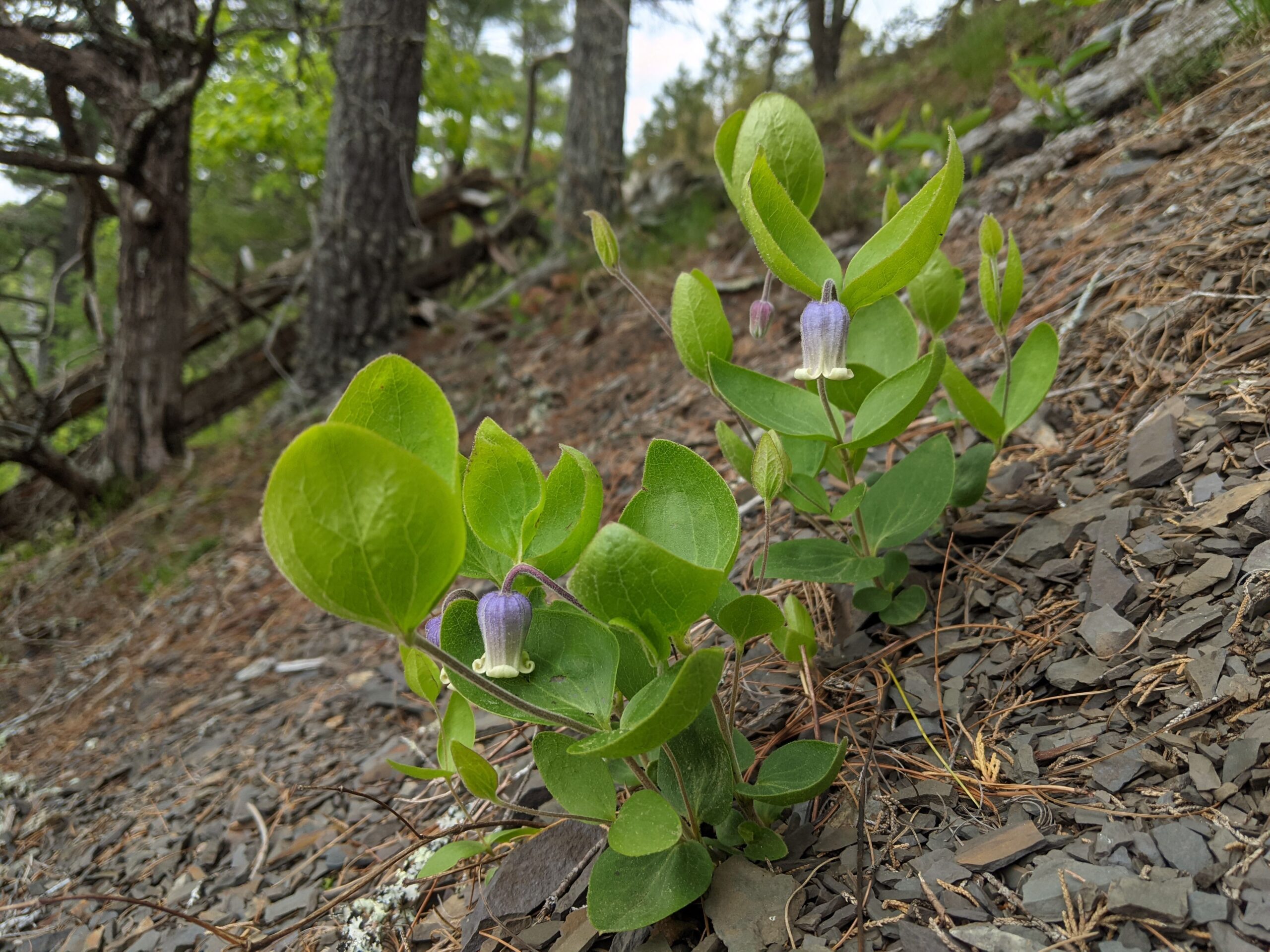
    Virginia white-haired leatherflower (Clematis coactilis), a Virginia endemic and one of three leatherflowers endemic to central Appalachian shale barrens.
    Shale-barren ragwort (Packera antennariifolia) had already finished flowering by August, but its leaves lived up to their name, looking very much like pussytoes (Antennaria sp.). This plant is strictly endemic to shale and metashale barrens.
    Kates Mountain clover (Trifolium virginicum) was long thought to be a shale barren endemic, but it also occurs (rarely) on other substrates.
    Shale barren evening primrose (Oenothera argillicola), a strict shale barren endemic.
    The teeny-tiny flowers of mountain nailwort (Paronychia montana), a plant that is not quite endemic to shale barrens. It also occurs on a variety of other substrates.

    Shale barren plant communities exist in a dynamic equilibrium. The steep, brittle shale formations often are under-cut by rivers, which carry away rocks and cause further erosion. In essence, the entire slope is constantly slipping downwards. Successful plants find the most stable areas and send down deep roots to try to keep their place on the rocky conveyor belt.

    Why do shale barrens occur only in the Central Appalachians and not also in the Southern Appalachians? Tom gave me two reasons. First, the shale deposits in the Central Appalachians get thinner south of Montgomery County, Virginia, where Virginia Tech is located. Second, the high Allegheny Mountains in West Virginia create a rain shadow over parts of the Central Appalachians, more so than the more southern and shorter Cumberland Mountains. Drier conditions in the Allegheny rain shadow contribute to the shale barrens’ uniquely western ambiance.

    Inhospitable as they are, shale barrens are not immune from human pressures. They are sometimes crossed by roads or utilities, and shale banks are sometimes quarried for road-building material. Livestock and overpopulated white-tailed deer browse the plants and catalyze erosion, while also adding nitrogen and foreign seeds to the sparse soil.

    Craig Creek undercuts several shale bluffs, hastening their erosion and creating the conditions for shale barren plants to flourish.

    Can disturbed shale barrens be restored?

    When Reed Noss visited a Virginia shale barren for his book Forgotten Grasslands of the South, he found traversing the slippery slopes, lurching from one scattered red cedar to another, “close to suicidal”. I had similar thoughts following Tom up the mountainside. He climbed like a mountain goat, wandering out on thin ledges to collect interesting looking mosses.

    Tom Wieboldt collects an interesting-looking moss from the side of a crumbling cliff.

    As we walked, Tom wondered aloud whether it would even be possible to restore such a fragile plant community if it was destroyed. Wouldn’t it be better just to leave these places alone?

    Undoubtedly leaving these places alone would be better. But I enjoyed thinking about how one might restore a shale barren that had already been destroyed – by quarrying, for instance. A first step might be to recontour the slope, aiming to reestablish a dynamic equilibrium with some areas eroding more actively than others. Perhaps this could be done by a skilled operator with some of the same quarrying equipment that had previously exploited the loose shale.

    To revegetate such a place would require a source of propagules. I am teaching a course on Plant Materials for Environmental Restoration, so I put it to my students to find out whether shale barren plants were available from two major conservation seed suppliers. The results were not promising. Out of 86 native, non-woody angiosperms found in central Appalachian shale barrens*, less than a quarter (23.3%) could be purchased from any major seed supplier, and only 2.3% were available as seed collected from Virginia. None of the endemics were available.

    As far as I can tell, few shale barren restorations have been undertaken, but I did read about one attempt in a shale barren in Green Ridge State Forest, Maryland. Whereas some shale barrens are actively threatened by acute pressures, like quarrying, this small (0.6 ha) barren was passively threatened by steady encroachment from the surrounding forest. Trees, especially pignut hickory (Carya glabra), were growing into a formerly open barren, stabilizing the soil and cutting off direct sunlight to plants closer to the ground. Managers restored the site in 2010-2011 by removing some of the pignut hickories and by burning the area during the winter. Together, these actions resulted in greater herbaceous vegetation cover and greater species diversity.

    Central Appalachian shale barren, Craig County, Virginia, with a mix of shale barren wild buckwheat (Eriogonum allenii) and hairy lip fern (Cheilanthes lanosa) dominating the foreground.

    Thanks to Tom Wieboldt for a fun field day, an excellent guest lecture, and stimulating discussions about botany, conservation, and restoration. To learn more about this unique natural community, read Tom’s co-authored chapter about shale barren communities in Savannas, Barrens, and Rock Outcrop Communities of North America, or Reed Noss’s chapter on shale barrens in Forgotten Grasslands of the South.

    *For the seed availability exercise, we used the list of plants recorded by the Virginia Natural Heritage Program in their description of Central Appalachian Shale Barren (Shale Ridge Bald / Prairie Type) CEGL008530. We excluded woody plants, non-native plants, and ferns.

  • Plant diversity, soil carbon, and ecological restoration in Virginia grasslands

    Plant diversity, soil carbon, and ecological restoration in Virginia grasslands

    Kathlynn Lewis is an undergraduate researcher in the School of Plant and Environmental Sciences at Virginia Tech. She is studying soil carbon storage as part of a larger project on grassland floristics, conservation, and restoration in northern Virginia. Keep up with her research on Twitter by following @KathlynnLewis.

    How many rare or “cool” plants do you drive by every day without noticing? Do you brake for Buchnera americana? Do you pull over for Pycnanthemum torreyi? This is something not a lot of people think about, and I didn’t think about either until very recently. The answer is that there are more cool plants along roadsides than you would think. Some of the rarest grassland plants in Virginia have found a home in roadside clearings and powerline cuts where regular removal of trees has created an opening for them to grow and sometimes thrive.

    This summer the Virginia Tech Restoration Ecology Lab team has been hard at work doing plant and soil surveys in several counties of northern Virginia. We are partnering with the Clifton Institute and Virginia Working Landscapes to find out where these rare grassland plants can be found and what are the greatest threats these populations face.

    American bluehearts (Buchnera americana) – a charismatic hemiparasite and rare denizen of high-quality Virginia grasslands. Photo by JL Reid.

    Many of the native vegetation surveys have taken us to the locations people might expect to find high-quality grassland plants, such as parts of Manassas Battlefield National Park where the soil and ecosystem have remained relatively undisturbed for almost 80 years. Other areas are much less expected. Rare plants also show up in power line right of ways and strips of roadside with tire tracks crisscrossing them in every direction and markers stuck in the ground indicating the soil was completely displaced to bury utility lines.

    A flourishing native grassland at Manassas National Battlefield Park. In July, it was bedazzled with the hot pink inflorescences of scaly blazing star (Liatris squarrosa). Photo by JL Reid.
    A hidden gem – high diversity native grassland along a back road in Culpeper County. The two lines show our 50 × 2 m sampling transect. Photo by JL Reid.

    During June, we collected samples from 29 sites to compare plant species diversity with the amount of carbon stored in the soil. We also sampled soils from grassland restoration plantings and pastures “improved” with tall fescue (Schedonorus arundinaceus) to compare the effect of different management practices and ecological restoration on soil carbon sequestration. The soil work is my part of the project. My prediction is that soil carbon storage will be greatest in diverse, native grasslands and lowest in degraded fescue fields. I expect that restored grasslands will be intermediate.
    A “blackjack” soil sample from a power line right of way in Culpeper County. This soil had so much clay you could pull it out of the probe and tie it in an overhand knot. Photo by JL Reid.
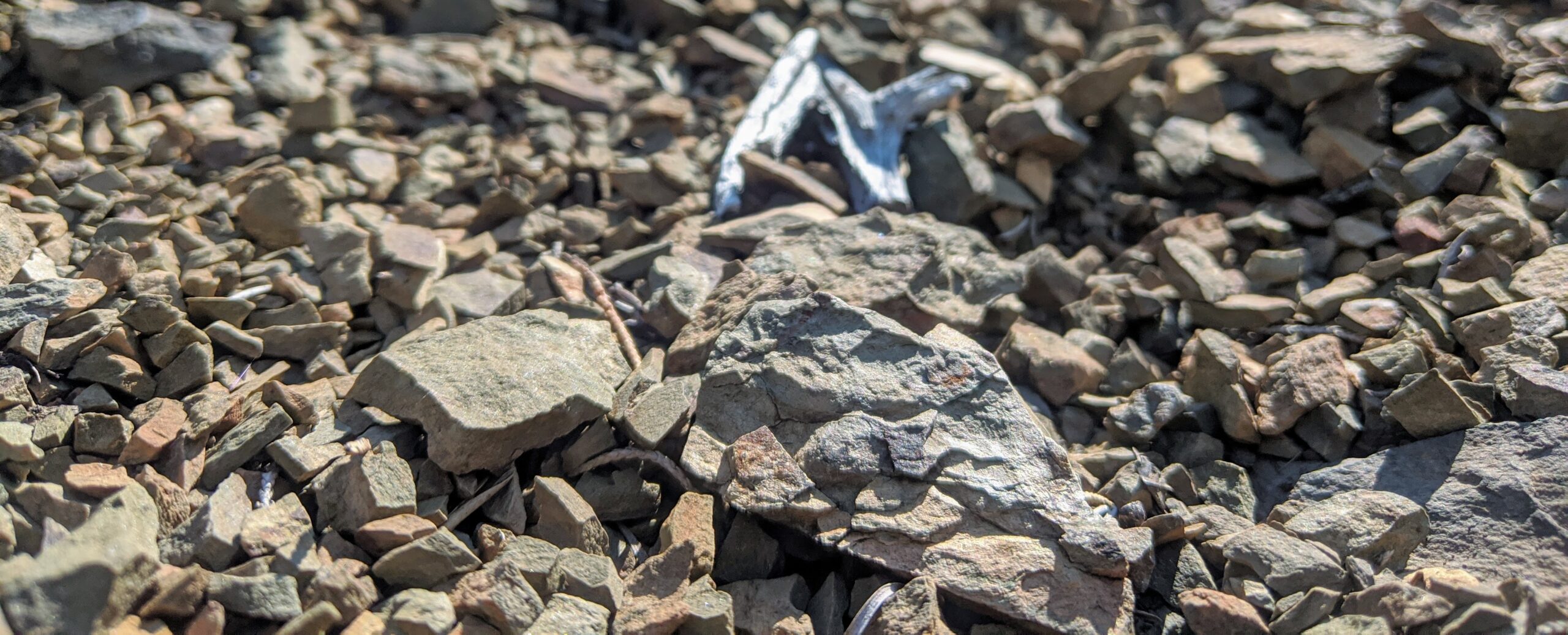
    Power line right of ways are an interesting focus of this study because they present both opportunities and challenges for plant conservation. Power companies keep these areas open by cutting out trees and spraying young sprouts with herbicide. This management is the only reason that grasslands exist in these places today, but the rare plants that live there are at constant risk of collateral damage. At least two of the areas that we sampled in June were sprayed in July, harming populations of rare plants like Torrey’s mountain mint (Pycnanthemum torreyi) and stiff goldenrod (Solidago rigida).

    Rose-pink (Sabatia angularis) next to a power line right of way in Prince William County. This plant can give away a good grassland even at 60 miles per hour. Photo by JL Reid.

    The vegetation surveying team has already observed over 450 species across the 29 sites sampled. Not all of these species are a welcome presence though. Invasive species appear to pose one of the largest threats to Virginia grassland ecosystems we have observed in the field. A newly emerging and particularly aggressive invader is joint-head grass (Arthraxon hispidis) which we have found in many of the sites we are sampling. This annual grass is similar to Japenese stiltgrass (Microstegium vimineum) but there is very little information about its effects on grassland ecosystems or methods for controlling it.

    Joint-head grass (tan-colored thatch) smothering one of the most diverse grasslands in northern Virginia. Photo by JL Reid.

    The plant survey team is now doing a second round of sampling to identify later-blooming species, and they are collating information about the land use history at each of our study sites. The soil samples we collected are currently being analyzed (by me) in a lab at Virginia Tech. We will start analyzing data in the fall and hope this summer’s fieldwork will help inform future research projects and the conversation around land management in Virginia grasslands.

    The author collects a panic grass (Dichanthelium sp.) for further observation. Photo by JL Reid.

    To find out how ecological restoration affects grassland soil carbon storage in northern Virginia, follow the author on Twitter @KathlynnLewis.