Tag: Argentina

  • ACCIÓN SERRANA Network: Conserving and restoring cloud forests in the mountains of Córdoba  province, central Argentina.

    ACCIÓN SERRANA Network: Conserving and restoring cloud forests in the mountains of Córdoba  province, central Argentina.

    By: Pablo Friedlander and Romina Torre

    Dr. Pablo Friedlander, Director of Acción Serrana has initiated and led pioneering restoration and intercultural education projects in Argentina, Brazil and Spain for more than two decades. He also organizes ethnobotanical research and expeditions to the Amazon and the Andes. pablofriedlander@gmail.com

    Biologist Romina Torre is the executive coordinator of Acción Serrana, with ten years of  experience in mountain restoration, research and educational activities involving rural communities, health practitioners and scientific institutions at bioregional and international levels. torre.romina@gmail.com

    Introduction to the Polylepis forests

    In the highest mountains of South America, remnants of vast stands of so-called cloud forests dominated by members of the beautiful Rose-family genus Polylepis are found throughout the Andes Cordillera, from Colombia and Venezuela to northern Chile and northwestern Argentina. In addition, in the much older Sierras Grandes de Córdoba, in central Argentina, the endemic Polylepis australis (locally known as Tabaquillo), occurs in scattered fragments of once extensive mid-altitude forests. At the continental scale, the canopies of these open, moist formations,  or what remains of them today, comprise 45 recognized species and constitute the highest altitude forests on Earth (Boza Espinoza & Kessler 2022). Sadly, their range and integrity has been drastically reduced by logging, burning, and overgrazing since the 16th century, especially with the introduction of European cattle.Their moss- and lichen-covered branches collect fog, while their roots prevent erosion and regulate water runoff. These forests also contribute to climate change mitigation,  by favoring carbon sequestration, and they support diverse endangered species dependent on these habitats. In all seven of the Andean countries where they occur, the restoration and conservation of these cloud forests is of vital importance to local communities and to protect. the headwaters of the main rivers and creeks (del Campo & Friedländer 2023).

    This locally famous ‘Grandfather’ Tabaquillo (Polylepis australis) tree grows in the heart of one of the last remaining cloud forest fragments in Córdoba  province.
    The Argentina anole, Pristidactylus achalensis, is an endemic lizard of the Pampa de Achala.

    The hand-shaped Polylepis leaves and the soft, multi-layered bark of the trees, draped with epiphytes, mosses and lichens, collect fog and give rise to the compelling and accurate image of the forest “milking” the omnipresent mist and clouds. At a continental scale, these cloud forests when they are healthy and thriving contribute to the ‘biotic pump’ connecting the Andes- the Amazon-and the Atlantic Forest biomes (Beveridge et al. 2024) and regulating water and climate cycles and  reducing the risk and severitry of wildfires. The savannas and cloud forests The recent increase of forest fires in all biomes of South – and Meso- and North America – demands more strategic and intercultural, public-private coalitions to increase restoration areas and protection of basins at multiple spatial scales for present and future generations (Argañaraz et al. 2015; Argibay & Renison 2018). Additionally, Polylepis roots and their mutualistic microorganisms retain and enrich soils. They also provide a ‘framework’ for regenerating forest communities undergoing active or assisted restoration. Indeed, when mature, these emblematic forests harbour very high biodiversity, including many endemic species of epiphytic orchids, insects, birds and reptiles, and also provide a wide range of ecosystem services to people at multiple spatial scales. Finally, they have huge cultural significance, and by working in synergy with local communities we aim to introduce and sustain biocultural as well as ecological restoration.

    Conserving and Restoring the cloud forests with Acción Serrana and Acción Andina

    In 2002, the project “Milking the Clouds” (Ordeñando Nubes, in Spanish) was launched, along with other local grassroots initiatives. Then, after a long learning curve in restoration methods and typical pioneering struggles, the five interrelated projects gradually scaled up their ‘footprint’ and their impact to a bioregional level over the next decade and a half. A big step was taken in 2018 when, together with the ECOAN (Asociación Ecosistemas Andinos) and Global Forest Generation, Acción Serrana was set up as a hub including 5 different local organizations to help in the launching of  “Acción Andina” as a a new international ecocultural restoration consortium. In that context, Acción Serrana is now managed by the Fundación de Actividades Biosféricas as part of Acción Andina

    Currently working in Peru, Ecuador, Colombia, Bolivia, Chile and Argentina, with 23 member institutions, Acción Andina partners have planted more than 7 million Polylepis trees, of many different species, and this number is rising each year, as is the success rate of the plantings. In 2023, Accion Andina received the prestigious Earthshot Prize, and in 2024 we were named one of the 7 UN World Restoration Flagships for the UN Decade on Ecosystem Restoration 2021-2030

    Map of the 12 Acción Serrana restoration sites in the Sierras Grandes de Córdoba.

    The 12 biocultural restoration areas in the Sierras Grandes of Córdoba under Acción Serrana management add up, at the time of writing, to a total of 3,170 fenced hectares. 

    The reforestation and restoration campaigns are made possible by 65 permanent staff members and over 1,500 volunteers per year on average. To date, we have produced and planted more than 860, 000 Polylepis australis nursery-grown saplings in consecutive seasons (see https://ecohealthglobal.org/network-sites/accion-serrana-argentina/). All of these trees were grown from seeds collected locally in each of the planting areas managed by the five different partnering organizations or local implementing groups  For the 2024-2025 October 2024 to March 2025 planting season, 250,000 trees were propagated in the 29 plant nurseries we maintain, and at the time of writing most of the plantings have been very successful. Since 2023, Accion Serrana has been helping to replicate the same initiative in Northwestern Argentina, with the Project Arbol y Vida in Jujuy Province (in cooperation with various high-Andean communities) and the Germinar Project in Tucuman Province (working with Diaguita communities of the Tafi del Valle bioregion), advising on and synergizing actions and application of  techniques and strategies. In addition to this biocultural restoration, another critical line of work is our environmental education program being run in local schools and municipalities for more than a decade already.

    The ecosystems of Acción Serrana are Sub-Andean and Chaco serrano forests and grasslands (sensu Cabrera 1976), composed of seasonally dry forests or open woodlands with 4 different altitudinal belts in the central Argentina mountain ranges, Sierras Grandes de Córdoba (Giorgis et al. 2011). The land tenure of the areas under restoration inside the Provincial Watershed Reserve of Pampa de Achala, which consists of private landholdings subject to Provincial Management & Conservation plans, or  public protected áreas within the National Park Quebrada del Condorito. The numerous activities we carry out include: maintenance and fencing of new areas, native forest tree and shrub seed collection, construction and improvements of nurseries, germination of seedlings, transplanting of seedlings to reusable plastic forest tubes, high mountain transfer of seedlings to the planting areas and their planting in the intervention areas during the rainy season. We establish permanent plots for scientific monitoring and we support research carried out in the intervention areas. Workshops, public talks and training programs are also organized yearly to train and recruit more enthusiastic and qualified citizen restorationists for the work in the mountains.

    Acción Serrana team planting the native Polylepis australis of Córdoba province.

    Implementation of Acción Serrana with local partners in reciprocity

    We work to  generate ecological, economic, social and cultural sustainability by reaching agreements with landowners, communities, networks and institutions (municipalities of Mina Clavero and Villa de Las Rosas, the Ministry of Education of the Province of Córdoba, and others). 

    To help with the local matching needed to be part of the Acción Andina  initiative, Acción Serrana had set up the Ayni Plan (“ayni” meaning “reciprocity” in the quechua language of the Andes). Basically this implies the commitment to generate 30% of operating costs through specific fundraising campaigns and by other quantified means. For example the constant one of inviting the public to participate by donations of the costs required for producing a forest (25 trees under monitoring), a tree or a volunteering activity. Then we promote the reception of donations of funds, lands, tools, materials, vehicles, etc.. In addition, we encourage ecotourism with a schedule for each area: summer plantations and seeds, winter transplanting of seedlings and fencing of restoration areas. Acción Serrana aims to increase reciprocity and abundance also throughout the different courses and events both virtual and in-person, and some special community parties, with raffles, concerts, talks, video screenings, and promotion of crowdfunding campaigns. Currently we are running our international matching crowdfunder campaign with the help of the Treeangle Foundation from the United Kingdom, as we have done each year from 2012, to complete the mission of this season January 2024 – March 2025. (See video here.)

    In the years ahead, Acción Serrana will propagate and plant a wider variety of native trees and shrubs in pursuit of a Framework species approach to restoration such as that being tested by EHN partner Daniel Perez and his team in Caviahue, Patagonia (Perez et al. 2019; see also here and (here). As a new initiative, we aim to  deploy 30% of funds raised to reintroduction of multipurpose Neltuma (formerly Prosopis) species and other framework species in lower altitudes of the mountain system, and 70% to ongoing Polylepis restoration in the high mountains. This year, we have begun studying how to propagate the obvious additional choices of “framework species” namely Maiten (Maytenus boaria), Escalonia (Escallonia cordobensis) and Molle (Lithraea molleoides)

    Escallonia cordobensis a formerly common shrub now considered key to restoration.
    Co-dominant Maytenus boaria and Polylepis australis ‘giants’.

    Next steps

    Following decades of reforestation and cloud forest restoration, we are working with Indigenous inhabitants in these mountains, including the Comechingones (Henia and Camiare tribes) and Sanavirones peoples, who have been historically marginalized. We are cultivating intercultural bridges (Rojas et al. 2025) in áreas like nursery propagation, environmental education, and llama and alpaca reintroduction and ancestral practices of weaving with camelid wool. This collaborative framework aims to integrate and restore  key zones around the Ansenuza Sea, Traslasierra Valley, Pampa Achala, and Pampa de Pocho. 

    In January 2025, Acción Serrana became a new member hub of the Ecological Health Network, following two fruitful visits from James Aronson. These visits facilitated knowledge sharing and collaboration, furthering our core purpose of scaling up watershed restoration, enhancing environmental education, and deepening intercultural collaboration for research projects. By integrating ecological, social, and economic perspectives and approaches, we aim to share our regenerative experiences across mountains, jungles, deserts and oceans within a quickly growing international network of networks. We are delighted to be part of this movement and consortium with a strong, clear set of values and shared purpose  – something we all need to cultivate in these critical times. As a meaningful next step of Acción Serrana, we look forward to participating in multi-site research projects based on the simultaneous monitoring and evaluation of a series of ecological and human health indicators in areas undergoing biocultural restoration protocols. Through these efforts, we are committed to enhancing ecosystem health and strengthening our relationship with nature, ensuring the longevity and health of Andean cloud forests and lower buffer zones of Chaco serrano forests -as well as the local communities living there for generations to come. 

    Learn more by watching these videos on Acción Serrana and the Biodiversity in Sierras Grandes de Córdoba.

    All images are from the archives of Acción Serrana.
  • Early steps towards ecocultural restoration of the ancient Araucaria araucana (Pehuén) forests in Caviahue, Northern Patagonia, Argentina. 

    Early steps towards ecocultural restoration of the ancient Araucaria araucana (Pehuén) forests in Caviahue, Northern Patagonia, Argentina. 

    By: James Aronson, Daniel R. Pérez, and Adam T. Cross 

    Daniel Pérez is head of the Laboratory for Rehabilitation and Restoration of Arid and semi-arid Ecosystems (LARREA) at the Faculty of Environmental and Health Sciences, National University of Comahue, Argentina. He also leads two ecological restoration projects in arid northern Patagonia, the first being the one described here and also the one described in his 2021 NHER post here. In addition, Daniel was coordinator of the Argentinian national Network for Ecological Restoration (ENREA) and organizer of its 3rd Congress held last November. James Aronson and Adam Cross are both members of the Steering Committee of the Ecological Health Network. James is also an Emeritus Scientist of the Center for Conservation and Sustainable Development, MBG, and Adam is Adjunct Senior Research Fellow at Curtin University, Perth, Western Australia.

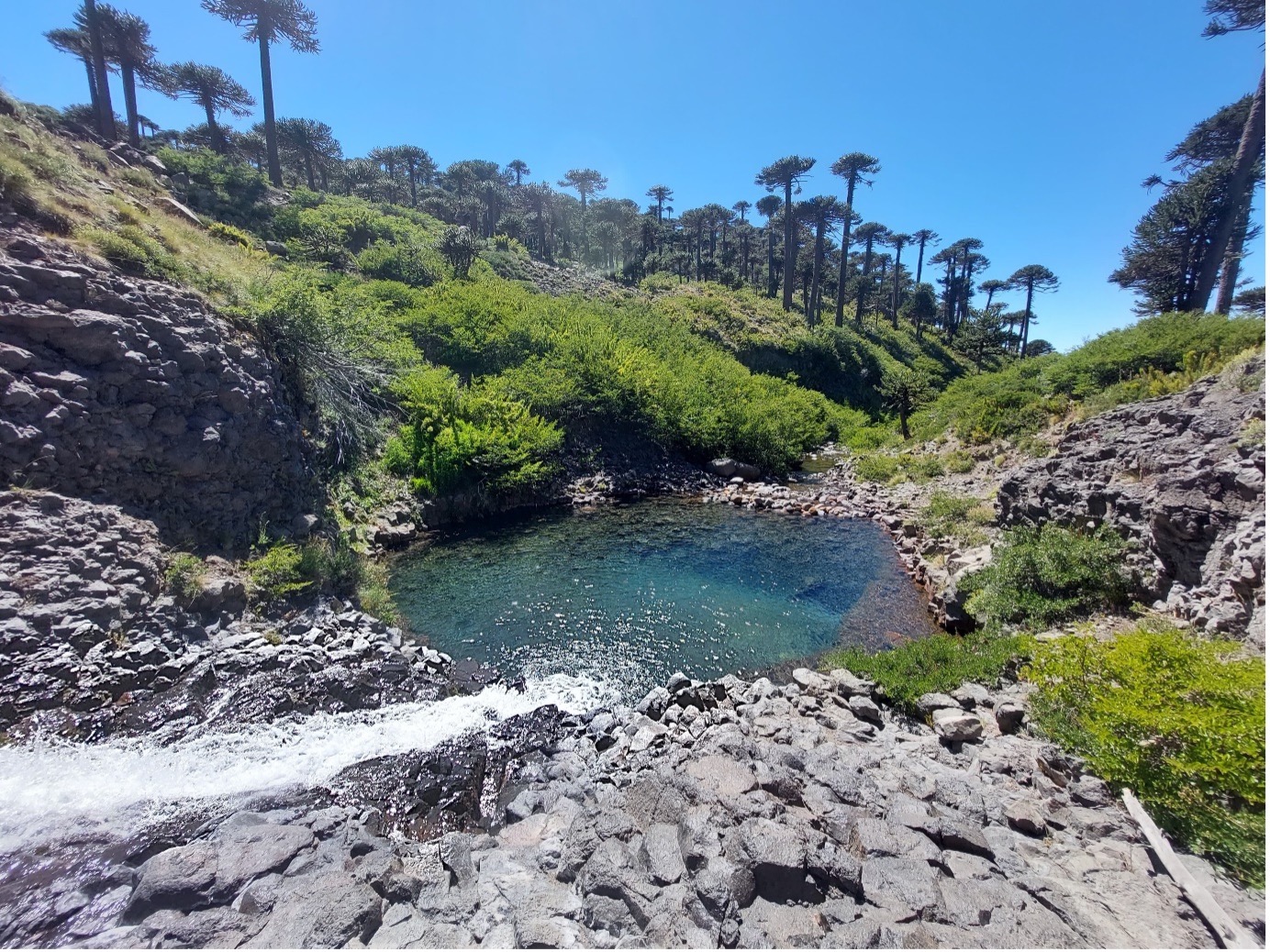
    Straddling the Andes and the border between Argentina and Chile, an ancient ‘Lost World’-looking forest persists. It occurs in fragments, dominated by the extraordinary Gondwanan conifer Araucaria araucana, called Pehuén in the Mapuche Mapudungun language and widely known by that name today in southern South America. The name of this giant emergent (up to 80 m tall), and very long-lived (1500 years and more), fire resistant ‘living fossil’ tree, is evidently related to the Pehuenche, an ancient ethnic tribe of migratory hunters in south central Chile and adjacent Argentina, before the 16th century CE when Spanish colonists began to arrive and change the course of everything.

    Forest fragment of Araucaria araucana (Pehuén) right in the town of Caviahue, with an understory of the southern South American bamboo, Chusquea culeou. Credit: Laura Abraham.

    The Pehuenche were so named for their dependence on the seeds of the Pehuén as a food source. Between 1550 and 1850 CE, some of them migrated west and merged with other peoples of northern Patagonia, in a process described by historians as becoming Araucanized. In the 21st century these Peoples still retain rights to some of their ancestral lands in northern Patagonia, but just barely. Despite the name Mapuche, which means “people of the land”, their situation in modern day Argentina is truly precarious.  

    While the Pehuén forest is alive and well and regenerating in some large parks in Chile and Argentina, where livestock are excluded, the dominant species is considered critically endangered by the IUCN, and a poignant example of its vulnerability can be found around Caviahue (Roig et al. 2014).

    Typical degraded Pehuén forest remnant near the shores of Lake Caviahue. Credit: Adam Cross.

    Pehuén, the rather odd English common name of which is Monkey Puzzle Tree, is one of only two highly disjunct Araucariaceae representatives in southern South America. The other 18 extant species of this Gondwanan family all occur in the South Pacific region, in New Caledonia, eastern Australia, Papua New Guinea, and Norfolk Island. 

    In Caviahue, whose name most fittingly means “Sacred Place of Reunions”, there is an ambitious ecocultural restoration, rehabilitation, and transcultural sustainable development and educational program getting underway, centered on Pehuén (Pérez et al. 2020). The first activities began six years ago with tree plantations and restoration-based education. Since then, there have been countless meetings with all social sectors of Caviahue such as the Mapuche community elders, Caviahue-Copahue Provincial Park, the Caviahue Ski center, primary and high school principals, political decision-makers, and leaders of the tourism sector, all in search of a social consensus and support for the restoration project. This vocation to build common ideas through dialogue, respecting visions, expectations, and desires of the whole community, is one of the most notable features of the work program. It is partly inspired by the Mapuche name for the site. But, as yet there have been only very limited discussions between the dominant, Spanish speaking, sedentary Western community and the transhumant, Mapudungun-speaking Mapuche.

    Transhumance – a disappearing way of life

    Transhumance is a form of animal husbandry and pastoralism that is remarkably well-adapted to arid and semi-arid lands. The word derives from the Latin trans (beyond) and humus (land), and thus means ‘beyond the land of origin’. It involves biannual movements of flocks between high summer pastures and winter grazing grounds at lower altitudes, or vice versa. In some cases, the entire tribe or group moves with the herds, while in others, only the herders make the biannual trek. This way of life was once widespread, in drylands on most continents, but is now lost and almost forgotten in most places. In Neuquen Province it still survives among the Mapuche. They camp in their ancestral lands near Caviahue lake (1646 meters above sea level) during the warm months, and then during the cold months they and their mixed herds migrate to Huncal (1204 masl) approximately 100 km east and much drier in summer than Caviahue.

    Typical Mapuche settler in transhumance, herding Neuquén Creole goats, a genotype especially well adapted to the region. Credit: Agustín Orejas.

    Although there is a transhumance law in Neuquén that seeks to protect this ancestral practice, Mapuche farmers are often forced to travel along paved roads to reach their destinations because many fields have become the private property of the colonizers and are blocked in with wire fences.

    The Caviahue site joined the Ecological Health Network in 2022 (see here), and a lot has happened since then. The first and third authors of this blog have been offering support to weave together a holistic, ecocultural approach with a focus on human health for the program. Numerous other colleagues in restoration science, and social sciences, from Argentina, Chile, Mexico and Brazil have started getting involved following a visit to the site led by Daniel Pérez of the 3rd Congress of the Argentinian National Ecological Restoration Network held last November, in Neuquén. 

    Field trip near Caviahue. Credit: Adam Cross. 

    The project was initiated with the goal of studying how to restore the Araucaria forest in Caviahue, one tree at a time. It is daunting because the trees grow very slowly and there is little previous research on similar species in xeric regions providing a template to build upon. 

    It has gradually become clear that the restoration of this ancient, isolated Araucaria forest must be ecocultural, and include ecological rehabilitation and landscape reintegration of the degraded grazing lands of the Mapuche pastoralists who camp with their herds of sheep, goats, cows and some horses at one end of Caviahue lake for 6 months of each year. Additionally, the town of Caviahue needs restorative work, because of the planting of invasive Pinus contorta from Western North America, which is escaping and naturalizing in a heritage landscape where this highly competitive conifer does not belong (see below). 

    Araucaria araucana emerging among a dense formation of invasive Pinus contorta in the town of Caviahue. Credit: Laura Abraham.

    At the same time, Daniel and his colleagues came to understand that a truly great context for ecocultural restoration exists here. Caviahue is an extremely interesting town of ca. 1000 permanent residents. There is a strong sense of community among the westerners, and a desire to keep the quiet, nature-based quality of their lifestyle in the town and its valley, despite the interest of many real estate developers to ‘grow’ the ski station and the town, with all its charming low-key tourism services into something much bigger. They are aware that the isolated, relictual population of Pehuén is of great cultural value, but they don’t necessarily see that something can be done to change the nature of the broadly degraded and fragmented landscape where only a few ancient trees remain with little evidence of regeneration. Such change can only come about through trust-building and cooperation with the Mapuche pastoralists. 

    Xeric Araucaria araucana forest remnant, extremely degraded by intensive livestock farming. Credit: Eliane Ceccon.

    If one visits the land of the Caviahue Ski centre, not far from the ski slopes, a spectacular remnant of primary-type Pehuén forest of a few hectares there reveals what the ancestral forest was like, and provides a reference model, at least for the more mesic sites in the valley, to those who would entertain the concepts and a project of ecological restoration.

    Primary-type forest of Araucaria on the protected lands of the Caviahue Ski Center. Credit: Laura Abraham.

    There, one can see the awe-inspiring, living fossil Pehuén trees towering over a thick understorey with Araucaria seedlings and saplings emerging from the deep humus, leaf litter, and topsoil, rather than bare rock and skeletal sands seen more generally in the area. Among the spectacular Pehuén are also seen stands of Antarctic Beech (Nothofagus antarctica), locally known as Ñire, and in the more humid places, the related Lenga (Nothofagus pumilio); both species belong to another Gondwanan genus often co-occurring with Araucariaceae (Peri et al. 2016Veblen et al. 1996). These areas are in stark contrast to the heavily grazed forest remnants where the Nothofagus persist only as rare, isolated stands, the lower two meters or so of which are stripped bare of foliage (Martínez et al. 2023).

    Ñire (Nothofagus anctarctica) on pedestal caused by massive loss of topsoil over many years due in part to over-browsing by goats and cattle. Credit: Daniel Pérez.

    The impacts of tree-felling for timber, overgrazing, and resulting topsoil loss over most of the valley are clearly profound. 

    The species is listed in IUCN’s Appendix I – Threatened with extinction, trade only in exceptional circumstances. Elsewhere, in Lanin Park in Argentina, and Conguillo Park in Chile relatively large stands occur but here in Caviahue, its future depends on local people, of two highly contrasting cultures.

    The Ecocultural Restoration Program led by LARREA at Caviahue will include both the Mapuche pastoralist, transhumant communities, made up of three groups of approximately 600 people each, and the sedendary community of ca. 800 non-Indigenous, European and Levantine descended people in the growing town at the other end of the lake. But how?  At present, there is little interaction among the communities, with one major exception, namely the population of teenagers in the public high school in the town. Roughly 60% of the teenagers in town are Mapuche, and 40% are Western, or non-Indigenous. In a meeting we attended last November, with Oscar Mansegosa the Elected Intendente (Mayor) of Caviahue, and four people from his staff, we learned that many young people in Caviahue experience mental health-related challenges, no doubt linked to the intense cold weather and meters of snow present on the ground for 5-6 months of the year. 

    Additionally, we learned that approximately 80% of the Mapuche students experience some form of blockage to obtain higher education. To help reverse this problem, a programmed diploma course which is being designed by the LARREA team will comprise periods of in-person learning in classrooms combined with practical learning in the field, plus virtual classes and modules. There is an integrated list of classes to be identified, and teachers to be named. Daniel has already begun inviting several of the people who attended the conference (including James) to contribute modules or units to the training course. Daniel will be pursuing further discussions with the university about this Diploma program and hopes EHN and others are willing to help not only with the training course but also with projects in and around the town. He has had clear signals from the senior administration of his University that they are keen on moving ahead with restorative projects like this.

    Class on dormancy and germination of Araucaria araucana seeds offered by LARREA for teachers and students of the Transhumante School No. 6 of Caviahue. Credit. Daniel Pérez.

    Controlling invasive Lodgepole pines: a way to bring people together

    One thing many young and older people in Caviahue do seem to understand is the problem of invasive Lodgepole pines (Pinus contorta) which is escaping from gardens and nearby tree plantations and competing with the native Pehuén

    And that’s something that will be part and parcel of any ecological restoration proposed for this town, its lake, and its valley. If people from different cultures work together to fight the spreading of the pines, and then go on to roll up their sleeves to do other interventions in the spirit of ecological restoration, then we’re in the realm of reciprocal, ecocultural restoration. Note that this Western North American pine, known in English as Lodgepole Pine, is considered one of the world’s worst weeds (CABI Digital Library). Yet in Caviahue many families, and tourism and forestry companies continue to plant this invasive tree, despite the fact that it is invading surrounding properties and fields, radically modifying and degrading the unique heritage and life-sustaining landscape of the Araucaria araucana forest. This needs to be corrected through environmental education, citizen science and community-based restoration and horticulture.

    Indeed, a pathway to help reverse this problem has begun in Caviahue. In 2023, the educational work began at Escuela Transhumante No. 6. The identification of traits of conifers of the genera AraucariaPinusPicea, and Abies, all present in the town of Caviahue, was addressed with teachers and students. In addition, the incessant spread of Lodgepole pine was discussed and the proposal to cut and remove the unwanted pine trees from town parks was accepted.

    A Pine-cutting field course with Caviahue teenagers. Credit: Daniel Pérez.

    The joint task allowed for dialogue and reflection on the value of Araucaria seeds as food for Mapuche communities, their cultural and ecological value, and the risk of the continued invasion of Lodgepole pine to the native forest and the ecocultural restoration program getting underway.

    A young student from the National University of Comahue cutting an invasive Pinus contorta in Araucaria forest with gusto. Credit: Daniel Pérez.

    Perspectives for Restoration-Based Education and training in ecocultural restoration for local people 

    An educational program is being undertaken with the main high school in town, called CPEM 47. This has already provided results published in an article in Spanish. Among the achievements, various tasks carried out by local secondary school students to plant Araucarias and generate participatory maps stand out.

    The educational experiences carried out with students of the Transhumant school to date were extracurricular, that is, in free time. 

    The next step to be developed in 2024 is the participation of the restoration team of the LARREA in formal education programs throughout the school year. 

    Informal class in the field of a member of LARREA with young Mapuches from Transhumante School No. 6. Credit: Daniel Pérez.

    Health and political issues

    In relation to the above-mentioned, non-trivial health issues among teenagers, a very good bond has been built with the medical staff of the Caviahue Health Center. In the meetings held, addictions and depression among young people emerged as the main topics to be addressed. Medical personnel consider that activities such as plant production, plantations, and sowing can contribute to the mental health of young people and within this framework they hope to design activities that in turn will need to be evaluated for their effectiveness and feasibility in terms of time and resources.

    Finally, at the political level, the election of a new mayor for the next four years has just taken place. There are good prospects for including ecological restoration in public policies given that the newly elected mayor had the courtesy to hold a meeting with his cabinet for three hours with restoration experts who visited the town. Next, some work priorities were established, such as the promotion of restoration tourism (direct seeding of Pehuén) and the creation of a diploma course in restoration for local youth. This course will be managed at the National University of Comahue with support in infrastructure for demonstration sites from the Municipality. The training will enable the teenagers and young adults of Caviahue to be better prepared to enter the workplace and discover new opportunities. Hopefully, it will also have positive effects socially through building relationships among Mapuche and Western youth.

    The Mapuche communities have shown great pleasure in participating in actions such as plantations, sowing and extraction of Pinus, although these actions thus far have always been mobilized from LARREA. It is hoped that in the future restoration activities will be assumed as their own by the two communities, Mapuche, and Westerners.

    May it be so.

  • The importance of knowledge of cultural values for dryland ecological restoration: Lessons from Argentine Patagonia

    The importance of knowledge of cultural values for dryland ecological restoration: Lessons from Argentine Patagonia

    Fernando Farinaccio, Eliane Ceccon and Daniel Pérez, describe the importance of documenting cultural values, in the use of native flora, as a contribution to the restoration of drylands. Fernando is a researcher at the Laboratory for the Rehabilitation and Restoration of Arid and Semi-arid Ecosystems (LARREA), Argentina. Eliane is a researcher at the Regional Center for Multidisciplinary Research at UNAM (National Autonomous University of Mexico), Mexico, and Daniel is the scientific director of LARREA.

    NB. LARREA belongs to the Faculty of Environmental and Health Sciences of the National University of Comahue, Argentina, where sixteen researchers and collaborators study selection of species for the recovery of sites with severe disturbance, seed-based restoration, interactions between exotic and native species, agroecological systems, and restoration-based education.

    The extreme socio-ecological transformation and degradation of vast areas of arid Argentinean Patagonia has its origin in the 1880s when the Argentine government carried out an official program of extermination of all Indigenous Peoples (ignominiously called the “Desert campaign”). The goal was to consolidate political dominance over the coveted territories and to expand livestock production.

    As elsewhere, this genocide led to a tragic loss of human lives and the uprooting and dispossession of native inhabitants who had lived in and managed this country for millennia prior to the arrival of the Europeans – most of whom had little or no understanding of the natural dynamics of this arid and semiarid territory or in the lives and cultures of the peoples who lived there.

    Aguada San Roque, an isolated rural settlement of 160 inhabitants, extends over an area of 142,000 hectares in an arid basin called “Añelo basin” in northern Patagonia. It is characterized by high altitude variability, from 223 to 2258 meters above sea level, over a linear distance of 50 km. This town is in one of the most arid ecosystems of Argentina called ‘Monte’ (Busso and Fernández 2017). This ecosystem covers 20% (approximately 50 million hectares) of Argentina. The Monte has an annual average temperature of 12°C, with a high thermal amplitude and an annual temperature range from 40°C to −13°C (Coronato et al. 2017). The relationship between precipitation and potential evapotranspiration ranges from 0.05 to 0.5, indicating a strong water deficit.

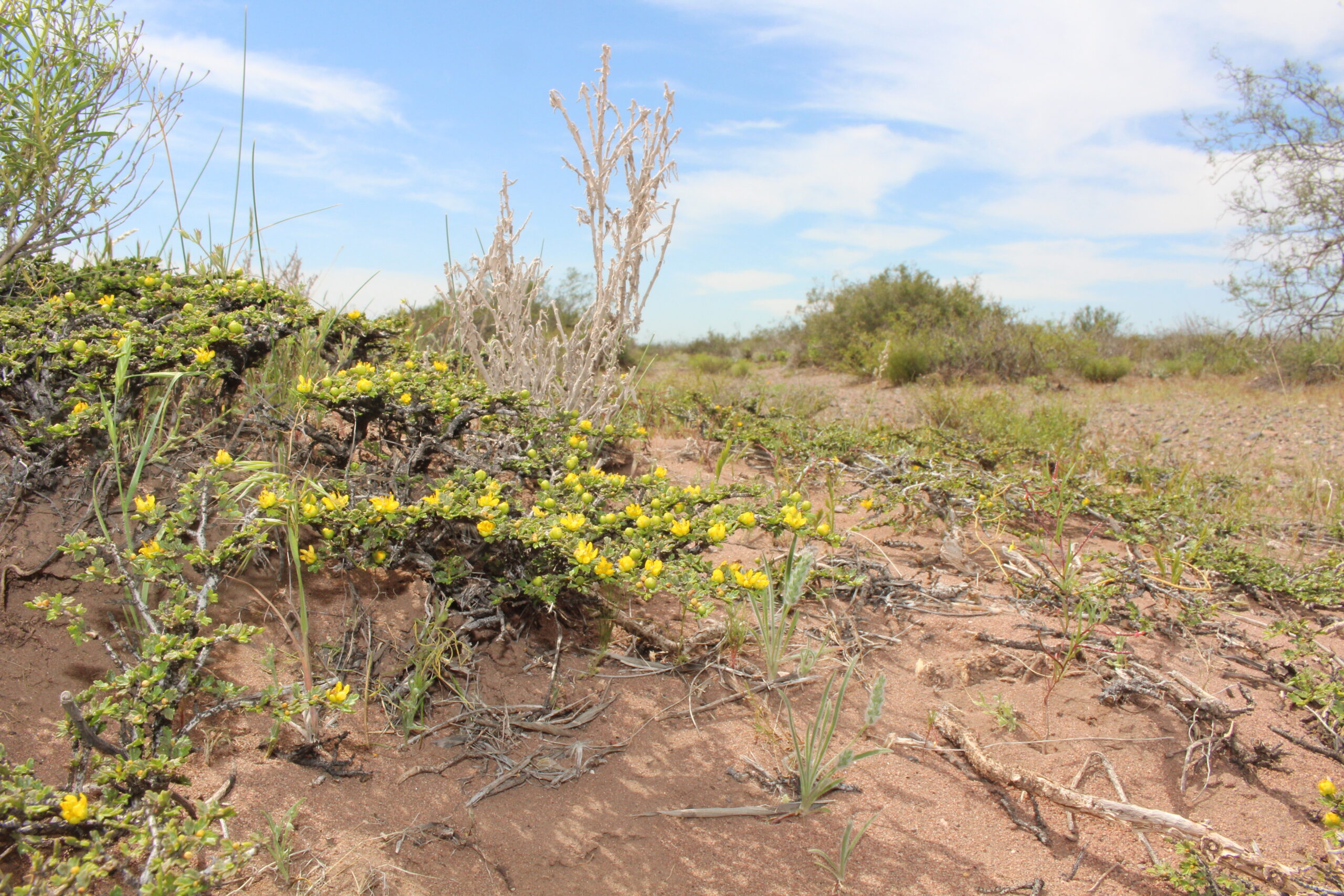
    “Jarillas” (Larrea spp.; Zygophyllaceae; creosote bush, in English) are the shrub species that give the typical appearance of most natural environments of Aguada San Roque. The dominant species of jarilla (L. divaricata, L. cuneifolia, and L. nitida) can reach approximately 2 meters in height when mature. For the attentive eye, it is probable that hybridizations between them have occurred and generated, among others, the striking “dwarf jarilla”(Larrea ameghinoi), that only reaches 20 to 30 cm in height.

    Photo 1. Larrea divaricata. Typical of the natural environment around Aguada San Roque, Patagonia Argentina. Credit: Daniel Pérez.
    Photo 2. “Dwarf Jarilla“ (Larrea ameghinoi).A species present in some areas of the Añelo basin. Its biology and reproduction  are very poorly known, but like all Creosote bush species in southern South America and the arid regions of North America, they have enormous influence on ecosystem functioning. Credit: Daniel Pérez.

    Despite the aridity of the Añelo Basin, where it rains only 150 mm (6 inches) a year on average, with some years of only 50 mm, the beauty of nature is starkly visible to those who pay attention to details, and its mystery is slowly being revealed through scientific studies of the surprising and wonderful  strategies of plant and animal adaptations to aridity and drought. For example, Grindelia chiloensis (Asteraceae) known as “yellow love” or “honey-eyed” surprises and intrigues with its sticky stems, leaves, and flowers, all bearing so much resin that it is perceptible to the slightest touch. This trait is the result of biochemical efforts to manufacture organic compounds to avoid water loss. Fully 1/3 of the dry weight biomass of individual Grindelia shrubs is made up of these dense resins that allow it to adapt and thrive under the most arid and – importantly – degraded environments.

    Photo 3. Detail of the flower of Grindelia chiloensis. Credit: Paul Alvarez.

    A species that has probably been benefiting from the advance of wind deposits that multiply due to overgrazing is the “Patagonian lily” (Habranthus jamesonii; Amaryllidaceae). This plant is only noticeably visible in spring, as it develops from bulbs that remain under the sand during periods of unfavorable weather.

    Photo 4. Habranthus jamesonii plant and flower in a sandy environment near Aguada San Roque. Credit: Daniel Pérez.

    A plant that is almost white in color due to saline exudates is Atriplex lampa; Chenopodiaceae; a member of the widespread arid lands Saltbush genus that rewards the watchful eyes of the desert dwellers (Photo 5). This species has a profuse annual production of fruits with two small bracts that act as ‘wings’(Photo 6).

    Photo 5: Atriplex lampa, typical of Monte desert landscapes, with fruits (almost yellow) in spring. Credit: Daniel Pérez.
    Photo 6: Fruits of Atriplex lampa. Two bracts act as wings, facilitating their flight and dispersal by the wind. Credit: Paul Alvarez.

    In very saline and clayey soils of our region, Halophytum ameghinoi (Halophytaceae) is very common. This species accumulates water in its stems and leaves as a strategy to withstand droughts. Their colors vary from intensely red to green tones during the juvenile and adult growth phases (Photo 7).

    Photo 7: Juvenile individual of Halophytum ameghinoi. The increase in salty soils due to degradation will probably increase the amount of natural habitat for this species. Credit: Daniel Pérez.

    Sadly, Aguada San Roque, like all the neighboring settlements, is seriously affected by long-standing desertification and degradation processes. Recently, the exploitation of large deposits of shale gas and oil, using fracking technology in the geological formation called “Vaca Muerta”, has revitalized economic activity, but also has induced a new and severe wave of environmental damage both underground and on the surface.

    Photo 8: The preparation of land for the extraction of hydrocarbons entails a tremendously brutal action that spells disaster for biodiversity, ecosystem ‘health’ and, ultimately, human health and wellbeing. Credit: Daniel Pérez.
    Photo 9: The action of the goats is not perceived with the same sensation of negative impact as that of the heavy machines engaged in fracking. However, overstocking of domestic livestock also causes irreversible damage. Credit: Daniel Pérez.
    Photo 10: Frequent dust storms are one of the consequences of overstocking livestock. Aguada San Roque. Credit: Fernando Farinaccio.
    Photo 11: A barchan dune, an example of the intense erosive processes in the vicinity of the Aguada San Roque settlement. These natural processes are exacerbated by overgrazing and intense hydrocarbon extraction activity. Credit: Eliane Ceccon.

    Therefore, in this region, it is essential to plan and carry out ecological restoration and rehabilitation projects and programs that take into account the harsh socioeconomic conditions of the local population and include them in the process from the beginning. Fully 24% of the inhabitants – all of whom are of “criollo” origin – live in stark poverty, and more than 30% are illiterate. Life for these people is truly precarious, with little or no easy access to potable water and gas, and only 15% have electricity in their homes. Despite these conditions, the families that live there show an admirable desire to find ways of life that will allow them to continue inhabiting these arid lands.

    Photo 12: Irma and Adalberto are owners of more than 9000 hectares of arid lands dedicated to raising goats in the Aguada San Roque area. They were unable to finish their basic studies in school and they have very limited income from the goats that they sell in informal markets. They are typical puesteros, or small scale farmers, of the region. Credit: Eliane Ceccon.
    Photo 13: Irma roams the arid lands trying to prevent predators such as pumas (Felis concolor) and foxes (Lycalopex culpaeus) from attacking her goats, while directing and herding them to the few locations that can provide intermittent supplies of forage and water. Credit: Eliane Ceccon.

    Therefore, due to the dire socioeconomic conditions mentioned above, it is necessary to conceive and launch sustainable restoration and rehabilitation projects that in addition to recovering ecological processes and functioning must also offer tangible goods and services to the local human population. In this sense, what we call “productive restoration” may be the most appropriate strategy, since it aims to recover soil productivity and offer products for the local population, along with some of the elements of the structure and function of the pre-disturbance ecosystem. (This is comparable to ecological rehabilitation as the term is used in the Society for Ecological Restoration Primer; SER 2004).

    As mentioned, a critical key to successfully developing productive restoration projects in San Roque and other settlements in Argentinean Patagonia is to know and understand the socio-ecological context of the local population, in cultural, educational, health, and socio-economic terms, and also the values that local people assign to native plant species. We carried out surveys and interviews among the local inhabitants and visits to each of their landholdings, which allowed us to evaluate the knowledge and the value that they gave to the local flora, and their interest in cultivating native (and introduced) species in future restoration projects. The ecological attributes of selected species, and their importance for the productive restoration were obtained through a literature review. This review arises as part of Fernando Farinaccio’s PhD work. For more details and information, read his open access paper in Ecosystems and People.

    Photo 14: Sometimes family settlements are located in places where there is an outcrop with easy access to groundwater (for example, a natural spring).This settlement recently benefited from government subsidies to improve water storage, allowing them to purchase and install the two water tanks shown here. Credit: Eliane Ceccon.

    Local knowledge and use value of the native flora

    Puesteros that we interviewed identified a total of 44 multipurpose species, of which 38 were native. Among the most frequently mentioned native species, Prosopis flexuosa var. depressa, Atriplex lampa, and Larrea spp., were considered by puesteros to have the highest potential and promise to restore and rehabilitate their fields and landholdings. The main reasons were not only ecological, but also the multiple uses of the plants, such as providing high quality fodder for livestock, and firewood for heating and cooking.

    Photo 15: A portion of a plantation of Atriplex lampa (a nutritious and palatable native shrub) carried out in 2012 in a degraded area near Aguada San Roque. A recent study has proposed this species as a “framework species” for dryland ecological restoration (Pérez et al. 2019). Credit: Laboratory for the Rehabilitation and Restoration of Arid and Semi-arid Ecosystems, National University of Comahue, Argentina.

    Ecological attributes for the reintroduction and reinforcement of populations of the plant species most valued by puesteros

    According to studies carried out locally, the most valued species show high and easy germination (with rates of >60%) and are relatively easy to propagate in plant nurseries (see Farinaccio et al. 2021). In addition, some of them have shown high success in terms of survival and growth in field experiments (>70%) (see Pérez et al. 2019; 2020). These species are attractive because they are food sources for vertebrates and invertebrates, and also offer thermal refuge and nest sites for seed dispersers (Farinaccio et al. 2021).

    Characteristics of puesteros‘ home gardens

    Home gardens are traditional agroforestry systems supporting subsistence of poor rural families, and they are usually located near people’s homes. These home garden shave also been the cradle for selection, domestication, diversification, and conservation of elements of flora and fauna, and the preservation of cultural values. In the puestero’s home gardens, a total of 44 species were identified, of which 85% were exotic, and used to obtain forest products (from afforestation), 47% for shade and other amenities, and only 40% to obtain forage, food, and medicine.

    Photo 16. Puesteros often use exotic trees in their home gardens. The most frequently used species are Eucalyptus spp., Populus spp., and Tamarix ramosissima, all of which are used for shade and wind breaks. Credit: Fernando Farinaccio.
    Photo 17. In some home gardens, small areas marked off with wooden or iron fences are used for the production of fruit trees, medicinal species, and forage (A). The cultivation of species for food consumption is also carried out (B), and in some cases, these species are protected from inclement weather (e.g., intense winds, and extreme low and high temperatures), through the construction of small greenhouses (C). Credit: Fernando Farinaccio.

    Conclusions

    The socio-ecological, economic, and cultural contexts of the Aguada San Roque community showed an unfavorable well-being panorama. Likewise, the extensive livestock production system, on which all puesteros’ depend for their subsistence, added to the intense hydrocarbon activity (fracking), have triggered an irreversible desertification process. In this context, local people recognize a low percentage of useful native species and prefer to use a large proportion of exotic species.Similar results have been documented in other studies in drylands of Argentina and the world. The low results regarding the use of native species by the local inhabitants, and the preference in the use of exotic species, show a loss of traditional ecological knowledge, which could be a consequence of the above-mentioned historical occupation of arid Argentinean Patagonia. However, they expressed motivation and interest in sharing their historical practices with restoration actions with multipurpose native species. Beyond this unfavorable panorama, the puesteros expressed motivation and interest in carrying out restoration and rehabilitation actions with multipurpose native species. The three species most frequently mentioned by the puesteros (Prosopis flexuosa var. depressa, Atriplex lampa, and Larrea spp.), were all successfully established in ongoing restoration pilot studies.

    This study proposes that the interpretation of the historical, social, cultural, and ecological reality of local people is fundamental before undertaking ecological restoration and rehabilitation programs. “Top down” programs may not be successful if the local inhabitants’ needs, desires, and proposals are not taken into account. A restoration-based education program can help implement these projects successfully. The program may promote the strengthening of local capacities and the rescue of traditional knowledge; increase collective learning, to ultimately restore the historical links between local people and the native, natural ecosystem.

    References cited and additional reading

    Busso, C.A., O.A. Fernández. 2017. Arid and semi-arid rangelands of Argentina. In: Gaur, M.K., V.R. Squires, editors. Climate variability impacts on land use and livelihoods in drylands. New York: Springer InternationalPublishing; p. 261–291.

    Coronato, A., E. Mazzoni, M. Vázquez, F. Coronato. 2017. Patagonia: una síntesis de su geografía física. Santa Cruz (Argentina): Editorial de la Universidad Nacional de la Patagonia Austral. ISBN 978-987-3714-40-5.

    Farinaccio, F.M., E. Ceccon, D.R. Pérez. 2021. Starting points for the restoration of desertified drylands: puesteros’ cultural values in the use of native flora. J Ecosystem & People. 17:476-490. https://doi.org/10.1080/26395916.2021.1968035

    Pérez, D.R., F.M. Farinaccio, J. Aronson. 2019. Towards a Dryland Framework Species Approach. Research in progress in the Monte Austral of Argentina. J. Arid Environments 161:1-10. https://doi.org/10.1016/j.jaridenv.2018.09.001.

    Pérez, D.R., C. Pilustrelli, F.M. Farinaccio, G. Sabino, J. Aronson. 2020. Evaluating success of various restorative interventions through drone- and field-collected data, using six putative framework species in Argentinian Patagonia. Restoration Ecology. 28:44-53. https:// doi: 10.1111/rec.13025.

    SER (Society for Ecological Restoration International Science & Policy Working Group). 2004. The SER International Primer on Ecological Restoration.https://www.ser-rrc.org/resource/the-ser-international-primer-on/.