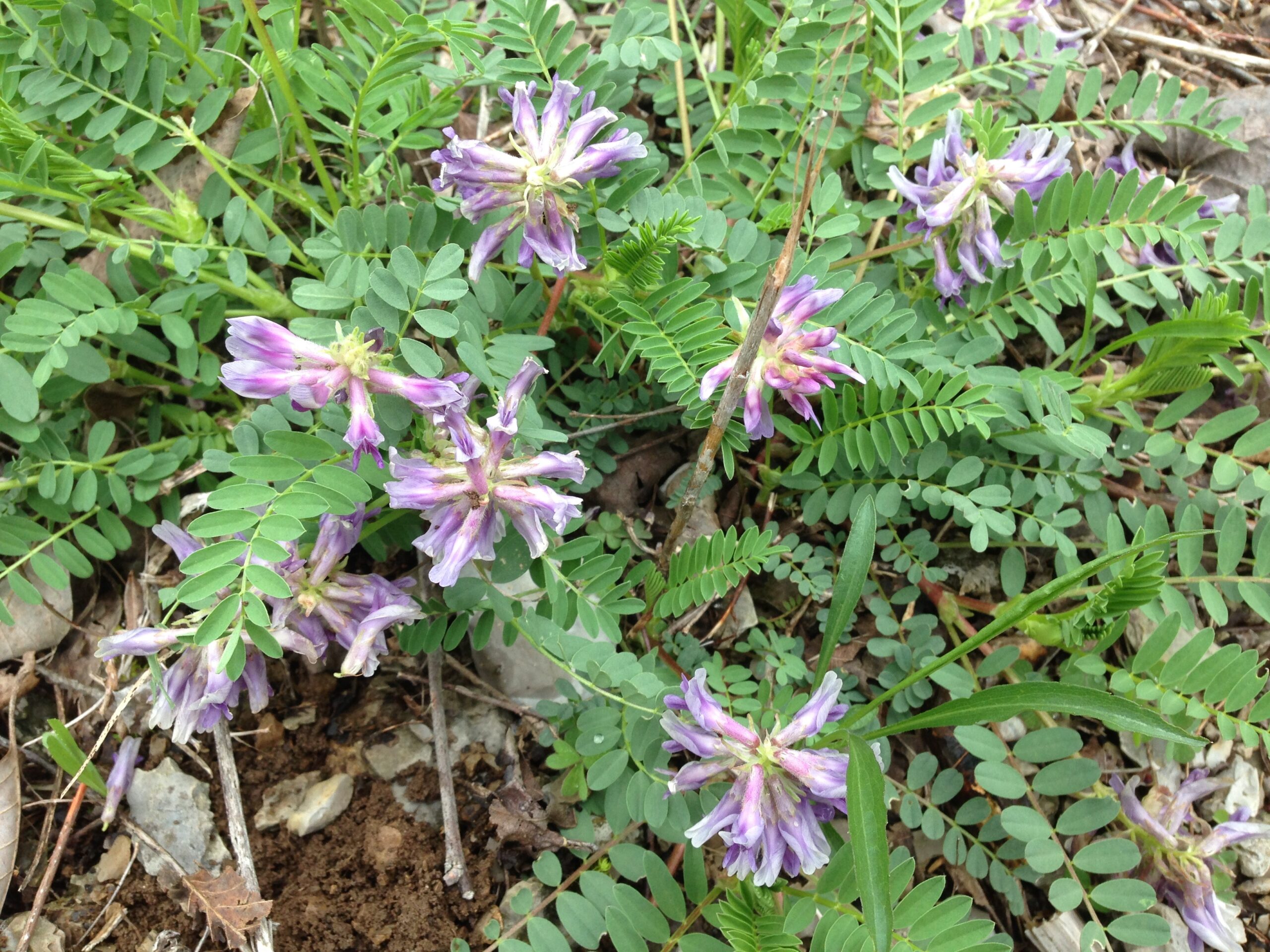
Tag: Astragalus bibullatus

  • A new perspective for plant translocation science: the International Plant Translocation Conference has been born

    A new perspective for plant translocation science: the International Plant Translocation Conference has been born

    By Thomas Abeli, Department of Science, Roma Tre University

    Many plant species around the globe are threatened with extinction or have already been extirpated from the wild as a result of habitat loss, pollution, alien invasive species, and climate change. Among the possibilities in the toolkit of conservation biologists to halt and reverse the loss of plant diversity, translocation is now a commonly used approach. Translocation is defined by the International Union for the Conservation of Nature (IUCN) as a deliberate transfer of species from one site to another for conservation purposes that includes different types of movements: population reinforcement of small and genetically depauperate populations, reintroduction of species within their native range in sites where they occurred in the past and from where have been extirpated, and conservation introduction of species outside their indigenous range. While the primary motivation for translocation is often the recovery of single species, translocation also plays a key role in ecosystem restoration – enabling the United Nations to achieve global goals for its 2020-2030 Decade of Ecosystem Restoration.

    Reintroduction of Pyne’s ground-plum (Astragalus bibullatus) was featured in a talk by Dr. Matthew Albrecht on adaptive management in reintroduction programs at the first International Plant Translocation Conference in June.

    Plant translocation is sometimes highly successful, sometimes dramatically discouraging and unsuccessful. Such variability in translocation outcome is rooted in the still poor understanding and standardization of techniques given that the field of translocation science remains in an early stage of scientific development. Translocation programs are challenging and complex, often requiring an interdisciplinary team that may include conservation biologists, restoration ecologists, taxonomists, geneticists, practitioners, policy makers, indigenous peoples, citizen scientists, and local community members.

    It is common in science to organize periodical conferences where scientists from around the world meet and discuss recent findings and share ideas in a specific field. Although plant translocation is often discussed in national and international conservation biology conferences, we lacked a dedicated conference or forum to share experiences and improve plant translocation science and practice to deliver more effective conservation outcomes. With the aim of filling this gap, a group of field-leading scientists developed the 1st International Plant Translocation Conference as a new forum to share ideas and advance the field of plant translocation.  After multiple delays over the past two years due to the COVID-19 pandemic, the Science Department of the Roma Tre University hosted the inaugural International Plant Translocation Conference (IPTC2022) from 20 to 23 June 2022 in Rome, Italy. Designed as a hybrid conference platform to promote global participation and inclusion, the conference included 71 participants (including online attendees) representing 19 countries and 5 continents.

    Attendees and staff of the 1st International Plant Translocation Conference (IPTC2022) in Rome.

    With nine international keynote speakers from the International Union for Conservation of Nature (IUCN), the Center for Plant Conservation (United States), the Missouri Botanical Garden, the Curtin University (Australia), the Meise Botanical Garden (Belgium), the Liverpool John Moores University (United Kingdom), the University of Cagliari, the University of Pavia and the Botanical Garden of Rome (La Sapienza University), along with nearly 40 talks, a poster session, workshop, social events, and a field trip, the IPTC represented an outstanding opportunity for the global community of conservation biologists involved in plant translocation to present recent findings, best practices, learn from each other’s experiences, initiate new collaborations, and transfer knowledge to the next generation of conservation scientists and practitioners. The congress was organized around five thematic sessions covering topics related to translocation techniques, ex situ conservation approaches to support translocation, data sharing and ethics, and translocation case studies from the Mediterranean bioclimatic region.

    Additionally, the congress discussed the controversial topics of assisted migration and de-extinction, which generate international news headlines. Assisted migrations are debated on one side for the opportunity they represent to save species threatened by climate change and, on the other side, for the risks they imply for recipient ecosystems. De-extinctions represent the last frontier of conservation. While still in the hypothetical stage, the idea of ​​reviving extinct species is fueling a wide scientific debate among supporters, opponents, and those who advocate conservation approaches that are more pragmatic. Research presented at the IPTC 2022 suggested that herbarium specimens and ex situ collections could support plant de-extinction perhaps more easily than resurrecting extinct animal species via back-breeding, cloning and synthetic biology.

    Dr. Hong Liu from Florida International University presenting her research at the IPTC 2022.

    The importance for scientists to meet in conferences has been exacerbated over the past two years when the COVID pandemic confined conferences to virtual online events. While virtual conferences remain an important vehicle for exchange of scientific knowledge, the lack of personal interactions through interactive workshops, brainstorming through informal discussions, and social events can stymie engagement and collaborative development. As one of the first post-pandemic congresses to meet in person, the number of new connections and collaborations developed during the IPTC conference should spur many advancements in translocation science.

    IPTC2022 attendees relaxing and chatting during the field trip in Castelluccio di Norcia (Central Apennines, Italy).

    For example, originating from informal discussions at social events a large group of IPTC attendees are now preparing a manuscript on best practice guidelines for mitigation translocations. The conference also revived discussion about developing a global interoperable register and database of plant translocation – a feature that would undoubtedly accelerate synthesis and meta-analysis and surely benefit the international community. Finally, a special issue of Plant Ecology entitled “Advances in Plant Translocation” will be dedicated to articles derived from IPTC talks.

    More broadly, the achievement of the first IPTC and the following editions, are expected to contribute to the United Nations 2030 Agenda that outlines the medium-term strategy to reverse the trend of global biodiversity loss, to integrate policies of sustainable exploitation of natural resources on which the well-being of the growing world population depends, and to reduce and mitigate conflicts between man and the environment. In particular, the IPTC conference will impact the Sustainable Development Goal 15 “Life on Land”, as well as the more specific United Nations initiative “Decade of Ecosystem Restoration”. The organising committee of the IPTC2022 is already at work to identify a suitable location for the next IPTC conference, ideally within the next two/three years. Stay tuned for more exciting news and developments.


    For more on translocations, see Translocating a threatened totem by Adam Cross
  • How a rare plant provided clues to restoring a degraded ecosystem

    How a rare plant provided clues to restoring a degraded ecosystem

    Dr. Matthew Albrecht is an associate scientist in conservation biology in the Center for Conservation and Sustainable Development at Missouri Botanical Garden. He describes the ecology of the endangered Pyne’s ground-plum (Astragalus bibullatus).

    Formed from the fossilized remains of an ancient tropical sea, the Nashville Basin encompasses the geographic center of Tennessee, stretching north to southern Kentucky and south to northern Alabama. Celebrated by some as the “home of country music,” many of us prefer to revel in the region’s unique flora and fauna associated with the globally rare limestone glades, or limestone cedar glades. Here, thin, rocky soils interspersed with flat, exposed limestone bedrock support sun-loving herbaceous plants adapted to the scorching temperatures and parched soils of summer followed by near-permanently saturated soils in winter. Trees and other woody vegetation struggle to take hold here, creating an open, desert-like ambience.

    Limestone Glade in the Nashville Basin with Oenothera macrocarpa (Missouri evening primrose), a rare disjunct species, in bloom. Photo by Matthew Albrecht

    Treasured for their unique flora, limestone glades feature over two dozen endemic or near-endemic species along with several unusual disjuncts – known mainly from grasslands far west of Mississippi River. Glade endemics such as Nashville Breadroot (Pediomelum subacaule) and Gattinger’s prairie clover (Dalea gattingeri), occur in open, shallow-soil communities dominated by C4 annual grasses and C3 winter annuals, including several members of Leavenworthia spp. Most of these glade-restricted species are widespread throughout the Nashville Basin. However, several of the disjuncts and endemics are extremely rare, such as the federally endangered Pyne’s ground-plum (Astragalus bibullatus). Known from just a few sites in a single-county, Pyne’s ground-plum teeters perilously close to the brink of extinction.

    Gattingers prairie clover (Dalea gattingeri; top) and Nashville breadroot (Pediomelum subacaule, bottom), characteristic glade species in the Nashville Basin.
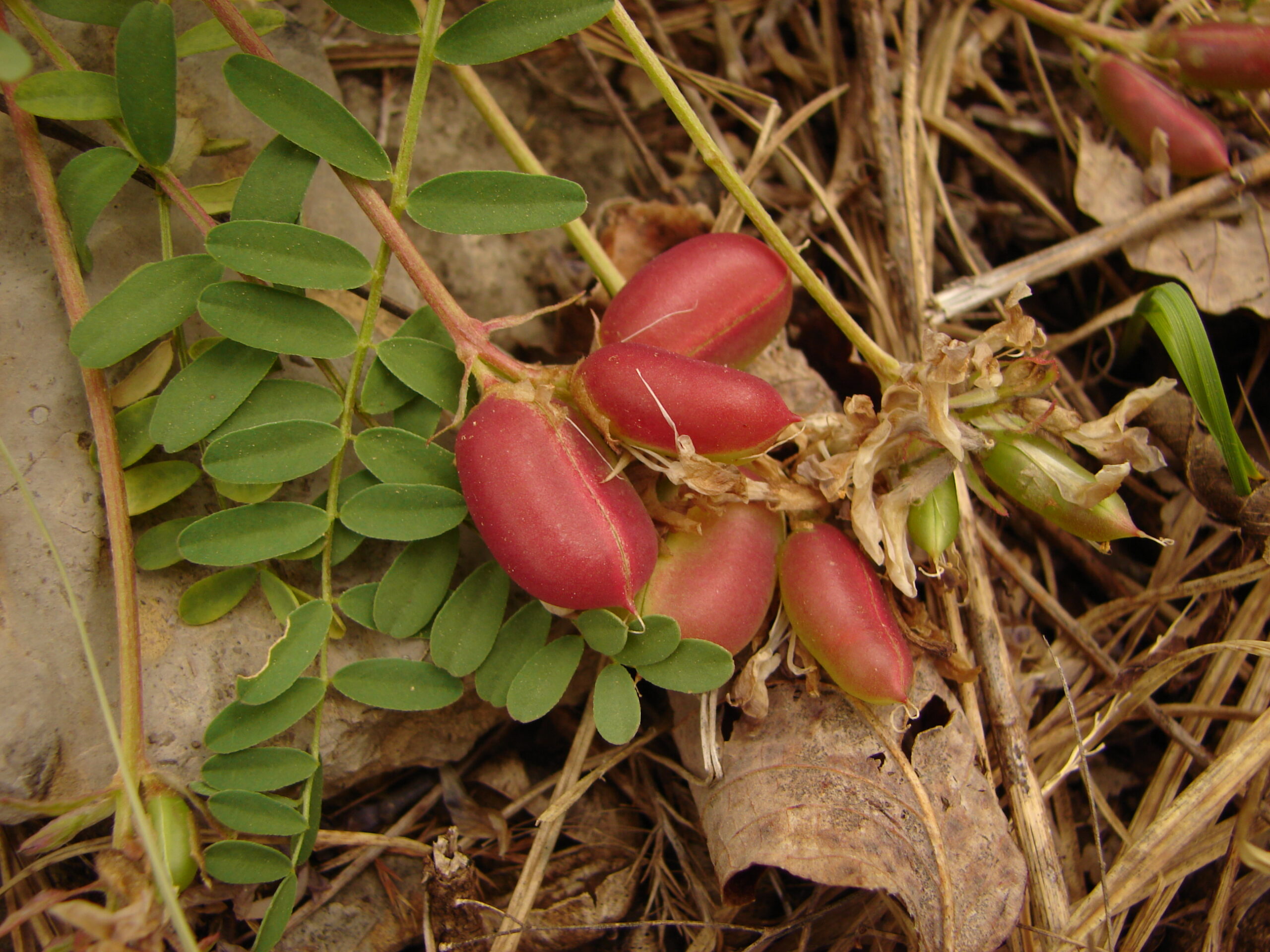
    Pyne’s ground-plum in flower (top) and fruit (bottom). Photos by Matthew Albrecht

    Why are Pyne’s ground-plum and a few other endemics and disjuncts so rare? At first glance, the obvious culprit appears to be habitat loss from the unrelenting sprawl of Nashville. Just take a drive from Nashville to Murfreesboro on I-24 and you will encounter an uninterrupted sea of strip malls and tract housing. In the late 1800’s, famed botanist Augustine Gattinger collected a specimen of Pyne’s ground-plum much farther north than where present-day populations are found, in a spot now inundated by the J. Piercy Priest Dam and Reservoir near Nashville. Constructed on the Stones River in the 1960s, the dam flooded thousands of acres for “recreational enjoyment” and hydroelectric power generation. Undoubtedly, other rare plant populations, unknown at the time, faced a similar fate. Over time, humans have abused many glades, using them as trash dumps or for off-road vehicle recreation, which could have also led to their demise.

    Trash dump at a limestone glade with a Pyne’s ground-plum population. Photo by Matthew Albrecht.

    Our long-term research with Pyne’s ground-plum also points to additional factors. In 2010, we began a demographic monitoring study on Pyne’s ground-plum populations to understand how we could reverse this species’ decline. Most remaining populations occupy slightly deeper soil pockets on glade edges where perennial C4 grasses and forbs form narrow, linear bands that abruptly transition into impenetrable thickets of woody vegetation – mostly of eastern red cedar (hereafter “cedar”). In a few cases, Pyne’s ground-plum grows in small, rocky openings surrounded by dense, dark cedar-hardwood forest.

    Monitoring Pyne’s ground-plum populations located in a glade edge (top) and small opening of a cedar-hardwood forest (bottom).

    At the time, the long-standing paradigm was that Pyne’s ground-plum – and some other extremely rare plants like Trifolium calcaricum – thrive in the partial shade cast by these adjacent cedar trees and woody vegetation at the glade edge. As the story goes, some endemics were less hardy and required some shade as a buffer from the extreme microclimate on the thin-soil outcrops. Much of the early, pioneering work on glade ecology by Elise Quarterman and her students – described stable plant communities under edaphic control of the thin, rocky soil. As was typical of that era, they described plant communities on deeper soils according to classical climax theories of eastern deciduous forest succession.

    However, several years of careful monitoring and experimentation in my lab began to reveal other factors at play. Initially considered an outlier, one of our monitored populations occurs beneath a utility right-of-way, which rapidly succeeds to woody vegetation in the absence of periodic mowing. Our data showed that plants here grew larger and usually produced far more flowers and fruits compared to shaded sites. After measuring soil properties, light availability, and other vegetation properties in permanent plots, our analyses indicated that the amount of woody vegetation cover rather than edaphic conditions drove growth and reproduction in Pyne’s ground-plum. Follow-up experiments conducted by then REU student, Rachel Becknell, confirmed light-conditions that mimic cedar resulted in reduced growth of Pyne’s ground plum.

    Top: Pyne’s ground population growing under a utility line kept open by periodic mowing. Bottom: Permanent monitoring plot with Pyne’s ground-plum and associated species.  Photo by Matthew Albrecht.

    With fresh eyes, we began to scrutinize the dense thickets of cedar at our study sites. Upon closer inspection, we noticed the occasional, gnarled, and open-grown (i.e., wolf tree) chinkapin or post oak jutting above the younger, even-aged thickets of redcedar. Chinkapin and post oaks grow slowly in these thin, rocky soils, but their low-lying branches in multiple directions suggest these wolf trees once grew in conditions more open in the distant past. Historical aerial imagery dating back to the 1950’s confirmed that some of these forested sites were once more open, with far fewer cedars.

    We speculate that disturbances from prior land-use activities probably kept these deeper soil areas around glade openings in a more savanna-like or open woodland state. In their absence, opportunistic woody vegetation – especially fast-growing cedar – colonized all but the thinnest soils in the limestone glades. Over time, this led to the development of multilayered forests and dense shrub layers that now surround the thin-soil glade openings at many of our study sites.

    Dense cedar thicket behind a small remnant population of Pyne’s ground-plum. Photo by Matthew Albrecht.

    To dig a bit deeper in time, my colleague, Dr. Quinn Long, and I also examined early land survey records dating back to the late 1700’s. Surveyors would delineate property boundaries based on the tree species (i.e., witness trees). If no tree species were present, surveyors used stakes (or sometimes stacks of rocks) to mark off the property boundary. In the records we examined, eastern redcedar represented just 2% of all witness tree species while oaks and stakes represented a majority of the records. Now, cedars are probably the most abundant tree in the Nashville Basin.

    Although we interpret historical data with caution, these multiple lines of evidence imply a historically more open landscape in the Nashville Basin with far fewer cedars. Cedars are fire intolerant, and we hypothesize that periodic fire – naturally set by lightning and Native Americans – maintained historically lower densities of woody vegetation and promoted grassland species surrounding the glade pavement openings. Genetic analyses by our collaborators Dr. Ashley Morris (Furman University) and colleagues show widespread admixture among populations of Pyne’s ground-plum, which also supports a historically open landscape mosaic that facilitated gene flow among remnant populations via pollinator or animal movement.

    Prescribed fire at Couchville Cedar Glades and Barrens Natural Area. Photo by Todd Crabtree.

    Admittedly, we were not the first to propose a paradigm shift in the ecology of the Nashville Basin. We soon realized a few other astute botanists long before us advocated for the use of fire management to create more open habitat around glades, but with limited data these recommendations never gained widespread traction among land managers or found their way into the scientific literature. Another issue was that ecologists and botanists tended to focus almost exclusively on the plant communities of open, thin-soil glades – which are clearly not fire-dependent – rather than on the matrix plant communities of slightly deeper soil surrounding them.

    Not surprisingly, our ideas faced much skepticism and many questions: Hasn’t cedar always been the dominant tree of the Nashville Basin? After all, the Cedars of Lebanon State Park and State Forest – the largest remaining tract of Nashville Basin Glades and Woodlands under public protection – was named after the towering eastern red cedars that reminded early settlers of the Biblical cedar forests around Mount Lebanon.

    At about the same time of our research discoveries, Dr. Dwayne Estes, botanist and Director of the Southeastern Grasslands Initiative, also began developing transformative ideas about the Nashville Basin. Like us, he hypothesized that the glades were historically embedded in a savanna and open woodland landscape rather than dense forests as they are now. Unfortunately, there are few historical descriptions of the Nashville Basin before early settlers radically altered the landscape via farming, pasturing, and logging. Estes speculates that lack of detailed naturalist descriptions of the Nashville Basin prior to the Civil War resulted in a misunderstanding of its historical condition. The earliest reports after the Civil War describe a largely forested region with large cedars, which could have easily developed over the 80-year period between the time of settlement and the mid-1800’s.

    Long before settlement, we know that American bison and other large mammalian grazers also crisscrossed this landscape along ancient traces or megafauna highways that connected mineral licks and water sources. Formerly known as French lick, what is now present day downtown Nashville contained a large salt lick, once visited by herds of bison and elk according to early accounts. Disturbance associated with grazing and large-animal activity combined with periodic fire and drought probably kept the Nashville Basin in a more open state. Interestingly, Pyne’s ground-plum’s presumed closest relative, Astragalus crassicarpus, is widespread throughout grasslands in the Great Plains. Commonly known as buffalo pea, it also produces large plum-colored fruits eaten by Native Americans and presumably bison. In many years of monitoring, we rarely find that animals eat Pyne’s ground-plum fruits, which slowly dehisce releasing their hard seeds next to mother plants. Seeds contain a double seed coat making them challenging to germinate. After years of experimentation, we have found that exposing seeds to high concentrations of sulfuric acid followed by a short period of cold stratification results in consistently high germination compared to other treatments. We now wonder whether this germination strategy might be linked to ancient relationships with mammalian grazers who possibly dispersed the fruits and scarified the seeds.

    How does Pyne’s ground-plum inform restoration of degraded woodland and savanna-like systems in the Nashville Basin? Thanks to the prodigious efforts of conservation agencies, several remnant limestone glades have been protected. However, until recently, the dense, cedar-hardwood forest surrounding open glades received little attention from land managers. In 2012, we along with collaborators at the Tennessee Department of Environment and Conservation (TDEC) and United States Fish and Wildlife Service began thinning woody vegetation in the most shaded Pyne’s ground-plum populations. After a few years, we noticed increased flowering at the most shaded sites. To reestablish a more open woodland and savanna-like structure in protected areas throughout the Nashville Basin, TDEC began widespread thinning of woody vegetation around glade openings and reinitiating the key ecological process of fire.

    A recently restored area at Flat Rock Cedar Glade and Barrens Natural Area.  Pyne’s ground-plum (inside cages) was reestablished at this site in 2016 after mechanical thinning and fire removed woody vegetation at the glade edge.

    On a warm, sunny afternoon this past October, my colleague, Noah Dell, and I set out to survey restored areas that might be suitable for establishing Pyne’s ground-plum populations. Hiking through recently restored areas we noticed grassland- and savanna-associated species slowly beginning to rebound and increase in abundance. Compared to previous years, it was much easier to find open, deeper soils on well-drained sites that are needed to reestablish Pyne’s ground-plum. With time and continued restoration of ecological processes, we are optimistic that this and many other rare species will continue towards path of recovery in the Nashville Basin.