Tag: Biodiversity

  • Reintroducing Kenya’s Threatened Trees and Shrubs in the Highlands Through Science and Community Action

    Reintroducing Kenya’s Threatened Trees and Shrubs in the Highlands Through Science and Community Action

    By Tobin Mutiso and Andrew Gichira 

    Tobin Mutiso is a research associate at the Centre for Ecosystem Restoration Kenya (CER-K). He works on plant ecology and taxonomy. He holds a BSc in plant ecology and environmental science from Jomo Kenyatta University of Science and Technology. Email: tmutiso@cerkenya.org

    Andrew Gichira, PhD, is a botanist and restoration ecologist specialising in conservation genetics and ecosystem restoration. He currently serves as the head of research at the CER-K. Email: agichira@cerkenya.org

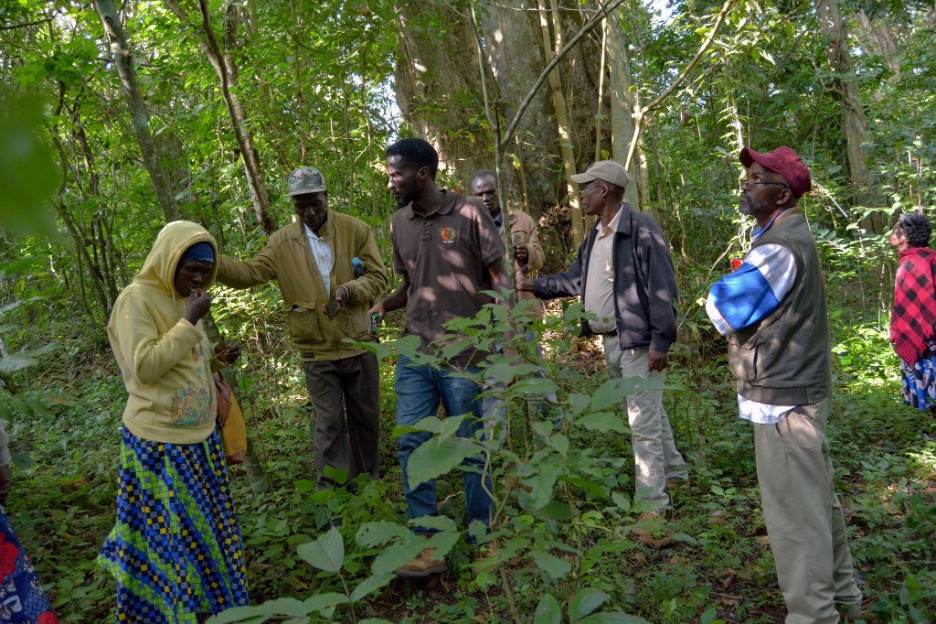
    Members of Community Forest Association (CFA) and trainers standing beside a mature Euphorbia cussonioides at Blue Post, Thikaafter a training on phenology monitoring, seed collection, and species-specific propagation techniques. Subsequently, other seedlings and mature individuals of this species were identified in Ndula Village, approximately 22 km from this site. Photo by Tobin Mutiso.

    The loss of native plant diversity is reshaping Kenya’s ecosystems in ways that are often subtle but deeply consequential. As woody plant species disappear, so do the ecological functions they support, including soil stabilisation along rivers, food and habitat for wildlife, local climate regulation, and cultural and livelihood values tied to native landscapes. According to the IUCN Red List, national reports, and NGO summaries assessing East African trees, roughly 13% of Kenya’s native tree species are threatened with extinction. Most persist in small, isolated stands where natural regeneration is compromised. 

    Natural regeneration becomes increasingly difficult for woody species with very small isolated populations in fragmented landscapes. This is because plants depend heavily on trophic interactions such as complex plant-pollinator relationships.  When these factors are compromised, seed production becomes irregular, which is further compounded with limited capacity of seedlings to establish in degraded and altered habitats. Even in places with improved protection, these species often fail to recover without deliberate conservation intervention. This reality presents a challenge for restoration efforts that rely heavily on a narrow set of fast-growing or readily available species, leaving threatened trees further marginalised and the ecosystems in which they are a key part vulnerable to further degradation and fragmentation. 

    Tree and shrub planting initiatives are expanding rapidly, but their contribution to biodiversity recovery depends on whether the species planted match local ecological conditions. Evidence-driven species selection, combined with local capacity to manage planted trees, remains unevenly distributed across projects, with technical guidance often outpacing on-the-ground monitoring. Threatened plant species, in particular, require targeted support, including improved data on their distribution, a deeper understanding of their ecology, tailored propagation and reintroduction protocols, and long-term care, which can be integrated into local land-use systems.

    Our project aims to investigate whether a species-focused reintroduction model can be effective in real-world conditions. Working with community forest associations, we have selected 22 threatened tree species, developing propagation methods for each and planting them in multiple sites managed by local communities. The central question is whether ecological restoration, species reintroduction and livelihood benefits could be pursued together without compromising the other. By integrating herbarium records, expert knowledge, targeted field science, and community engagement, we are building a reintroduction and restoration model that is both ecologically fit for purpose and socially sustainable, as well as adaptable to other landscapes facing similar biodiversity loss.

    The project is within the Kenyan Highlands, a section of the complex montane ecosystem in East Africa characterised by high habitat heterogeneity and notable levels of biodiversity and endemism (Gehrke & Linder, 2014; Dagallier et al., 2020). Kenya is subdivided into seven plant divisions (K1-K7), which are largely based on the early administrative boundaries (Zhou et al., 2017). Our surveys targeted multiple elevation zones, with a primary focus on the K4 region (1,500–3,000 m) within the central highlands and additional coverage of K7 (Taita Hills, 600–1,640 m) and K6 (Loita Forest, 2,000–2,300 m). Several focal species occur outside the central highlands but occupy comparable altitudinal ranges elsewhere in the country. This broad elevational gradient contributes to high floristic diversity, making the K4 zone a hotspot for Rare, Endangered, and Threatened (RET) species, particularly those of high conservation and use value, including timber and medicinal species such as Ixora scheffleri subsp. keniensis Bridson,  Prunus africana (Hook. f.) Kalkman  and Warburgia ugandensis Sprague.

    The seven phytogeographical divisions recognised in the Flora of Tropical East Africa. K4 and K7 are the most species-rich regions: K4 represents the central Kenyan highlands (~ 1,200–3,000 m above sea level). K7 mainly comprises the coastal lowlands of Kenya (0–150 m.a.s.l.) with some inland highland areas e.g., the Taita Hills (~1,000–2,200 m.a.s.l.). K2 zone also covers the Ilemi area at the northern border. This study focuses on threatened plant species occurring in high-elevation habitats (1,500 m – 3,000 m.a.s.l).

    Starting in the Archives: the herbarium as a roadmap

    This work began not in the field, but at the East Africa Herbarium at the National Museums of Kenya. Herbarium specimens, some collected more than a century ago, provided the most reliable baseline for understanding where threatened tree species historically occurred. We also consulted international databases, most notably the Global Biodiversity Information Facility (GBIF). These collections helped trace former distributions, habitat preferences, and altitudinal ranges for species now rarely encountered in the wild.

    Table 1: A list of 22 woody species that were targeted for the study based on observations recorded at the East Africa Herbarium and the Global Biodiversity Information Facility. Accessed in June, 2022.

    This archival work was complemented by key informant interviews with experienced taxonomists. Their insights helped resolve identification challenges, clarify taxonomic updates, and flag species frequently overlooked in restoration programmes. Surveys of commercial nurseries in the coastal regions further highlighted how threatened native trees and shrubs are systematically neglected in favour of exotic or common species. Literature reviews added further context, helping reconstruct historical range patterns and identify priority floristic regions for field verification. Together, these sources allowed us to move beyond generalized restoration species lists and ask more focused questions, specifically: where do these threatened species still exist, where have they been lost, where does restoration make sense, and, can we create a socio-economic model that sustainably uplifts the livelihoods of local communities while also supporting efforts for ecological and biocultural restoration? 

    Field expeditions and new records

    Guided by this evidence, we carried out targeted field expeditions across multiple landscapes in the Kenyan highlands, spanning 11 counties, including Taita Hills, Kijenge Hills, Thika, Irangi Forest, Ngaya, Thushi River, Nyambene Hills, Imenti Forest and Karura Forest, as well as selected dryland and forest-edge systems, in particular the Loita Hills. These surveys were designed not just to confirm presence or absence but to generate practical ecological insights for restoration practitioners.

    Map of survey areas in the Kenyan Highlands. The sites are distributed in phytogeographical zones K4 and K7, with a single record in K6.

    In several locations, fieldwork led to the identification of new records or previously undocumented populations. The most significant findings surrounded Euphorbia cussonioides (CR) and Brucea macrocarpa (EN), both species whose known populations have declined significantly in recent decades. Newly recorded individuals and regenerants provided urgently needed information on the species’ current area of occupancy and viable seed sources, as well as evidence that recovery is still possible if sites are protected and managed. Observations of flowering and fruiting patterns revealed clear opportunities for seed collection and assisted regeneration. Other threatened species encountered during surveys included Ixora scheffleri subsp. keniensis (CR), Embelia keniensis R.E. Fr. (CR) , Encephalartos kisambo Faden & Beentje (EN), and Vepris hanangensis (Kokwaro) Mziray (NT). 

    Table 2. Newly documented populations and occurrence records of selected threatened woody plant species.

    Newly documented natural regeneration (wildlings) of Euphorbia cussonioides were recorded during field surveys at Nkopon village in the Loita Hills. Photo by B. Maina.

    At each site, we recorded location, habitat condition, land-use context, population structure, regeneration status, threats, and phenological stage. This level of ecological detail transformed field observations into decision-ready data, helping bridge the gap between research and restoration action.

    Communities as conservation partners

    From the outset, the project treated local communities as central partners and not just beneficiaries. In areas where threatened species occurred on private or community-managed land, we worked closely with landowners, community forest associations (CFA), and local scouts to monitor the phenophases and liaise with local nurseries in propagating the seeds. In addition, the Kenya Forest Service (KFS) provided planting locations and collaborated with the CFAs to oversee and care for the seedlings.

    Training focused on practical, transferable skills, in particular: educating the community on the reasons we conserve plants, identifying threatened tree species, monitoring phenology to track flowering and fruiting cycles, collecting seed ethically with genetic diversity in mind, and applying appropriate propagation techniques. We engaged and trained 138 community seed collectors active as community phenology monitors and seed collectors.

    Community members in Embu, Kenya, are undertaking phenology monitoring and seed collection during a training session at Ngaya Forest. Photo by T. Mutiso.

    At Ngaya forest, Thika’s Blue Post, Kasigau (Taita) and Upper and Lower Imenti forests, community members were trained to identify threatened woody species in situ using diagnostic morphological traits, to map and tag individual plants, and apply basic protection measures to reduce disturbance. They also monitored flowering and fruit development to inform seed collection and to rescue naturally regenerated wildlings at risk from competition with invasive species, most notably Lantana camara. This hands-on engagement directly supported the propagation of Brucea macrocarpa,Pandanus kajuiGymnosporia keniensisCylicomorpha parvifloraPremna maximaVepris glandulosa, and Euphorbia cussonioides.

    Pandanus kajui seedlings propagated in Kithunguthia (Embu) community nursery. Photo by T. Mutiso.

    These efforts produced tangible outcomes, with over 28,000 seedlings of threatened species raised in community nurseries in Antubetwe (Ngaya Forest), Kasigau (Taita), Kithunguthia (Embu), Male (Laikipia), Kenya Forest Service (Meru), and Kamaruki (Nyambene), thereby creating viable restoration planting stock. Livelihood benefits were created through project-funded payments for seed collection, nursery establishment and management, and continued after-care management of planted seedlings. The financial support is largely from the Fondation Franklinia, and the funds are channelled through the Community Forest Associations. Building on the outcomes of the grant, we developed a community-based seed collection model in which trained local collectors form a coordinated network that sources seeds from RET taxa as well as other native plant species and supplies them to institutional seed banks. These seeds are subsequently made available to restoration practitioners for use in active restoration initiatives. Revenue generated through seed sales is reinvested to remunerate community seed collectors, thereby establishing a sustainable and locally grounded alternative income stream while reinforcing conservation and restoration objectives. The project’s impact and details of the community engagement aspects have been comprehensively outlined in an article published in the BGJournal Vol 22 (1), Seed banks for Biodiversity pages 39-42. 

    Building practical tools for practitioners

    Under this framework, the project has generated insights that have now been consolidated into practical tools for wider application, including species-specific propagation protocols shared with spatial databases linking historical and new records, producing phenology calendars to guide seed collection for threatened and non-threatened native plant species, and a structured framework for community engagement. Currently, the project has generated 21 propagation protocols for the 22 threatened species, including Uvariodendron anisatum, Brucea macrocarpa, Croton alienus, Euphorbia cussonioides, and Premna maxima, whilst others are still under review.  In addition to these tools, a growing network of restoration sites and partner nurseries is being established, enabling peer learning, harmonisation techniques, and coordinated tracking of threatened species across landscapes. The emerging practitioner network is now being facilitated through CER-K. 

    Restoring Kenya’s endangered trees and shrubs to the Highlands is an act of optimism, responsibility, and restoration, rather than just an ecological exercise. We are using science to pinpoint which species once flourished in Kenya’s phytogeographical regions, understand the reasons behind their decline, and determine the most effective way to bring them back. By taking community action, we ensure that restoration is long-lasting rather than temporary. As a result, the communities themselves own, maintain, and strengthen the conservation of threatened species rather than having it imposed upon them. We aim to increase the number of threatened species sites we survey, improve monitoring, develop a practitioner network, and continue to accumulate knowledge that informs successful conservation both in situ and ex situ. Visit https://cerkenya.org/ for more information on our work in general and in threatened species conservation in particular. 
  • Natural History and Ecological Restoration in the Madrean Mixed-Grass Prairie of Southeastern Arizona

    Natural History and Ecological Restoration in the Madrean Mixed-Grass Prairie of Southeastern Arizona

    By Matilda Essig

    Matilda Essig is an artist and agriculturalist who has lived in the grasslands of southeast Arizona since 2006. She uses visual art, hands-on restoration and public outreach to express the resilience of wild ecosystems. matilda@mindspring.com

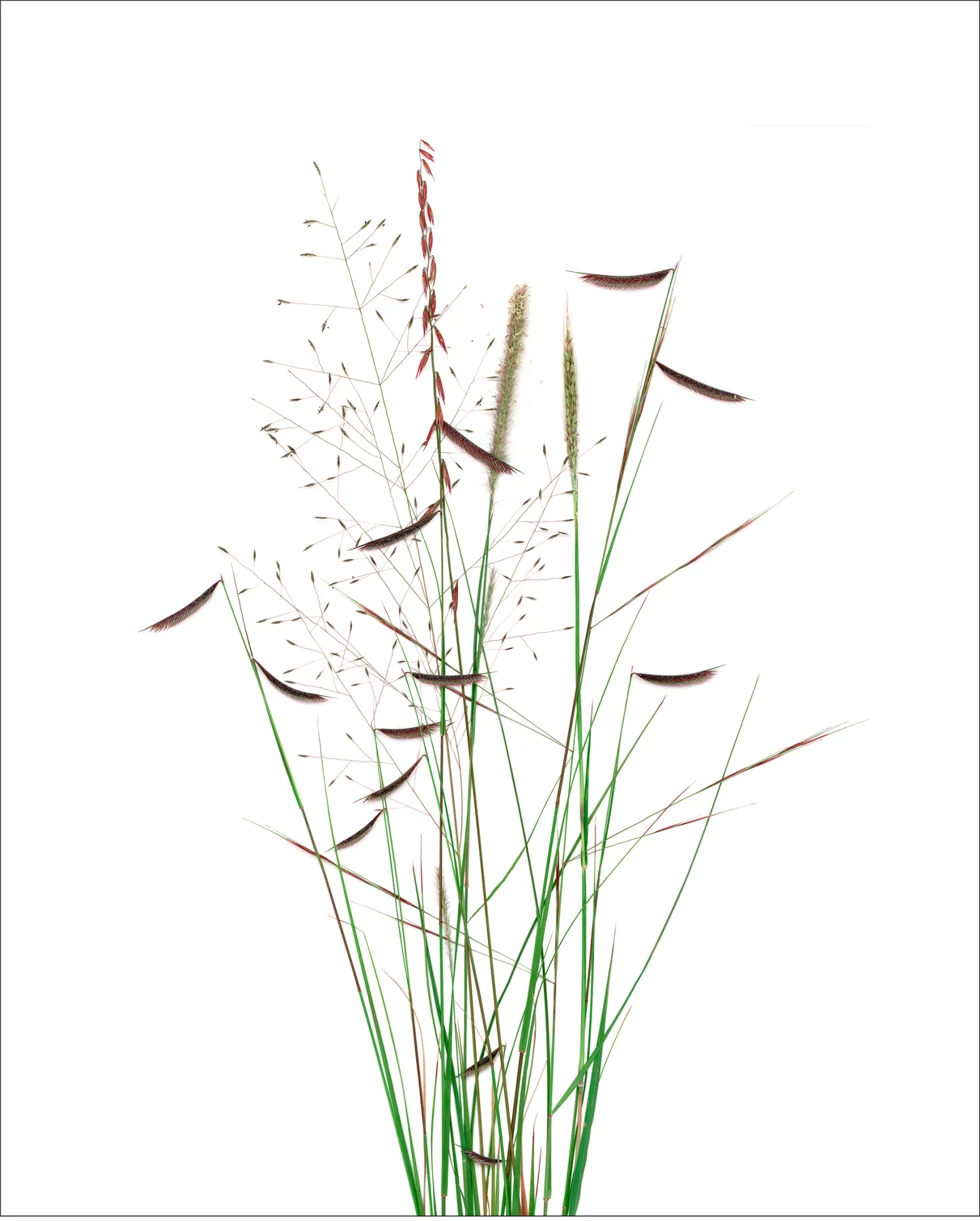
    Blue grama. Digital capture, archival inkjet print by Matilda Essig. Unless otherwise indicated, all images are by the author.

    Nineteen years ago, I began a project to restore the native diversity of the grasslands on a badly damaged 5-acre residential parcel in southeast Arizona, in a region locally known as the Apache Highlands Grasslands, a.k.a. Madrean-Mixed Grass Prairie to botanists, naturalists and biogeographers. My journey was informed and inspired by landscape stewards throughout the American west – ranchers and conservation groups alike. My mission included restoring not just the amazing diversity of grasses in the region, but also using my experiences, expressed through the arts, to help restore the role of art as a visionary vehicle within our culture. Visual beauty, ecological, and spiritual beauty – we need to get in touch with all of them again.

    San Rafael Valley Overview. A monsoon cloud unleashes its fury over Saddle Mountain, headwaters of the Santa Cruz River.

    In 2008, I wrote an article for Ecological Restoration, with my friend, and then-editor Mrill Ingram, wherein I described the conditions and biological makeup of my land. This article, Portraits of Grasses, gave an in-depth description of the biological ingredients I had to begin with, and also the artistic process I learned to use to make direct images from nature, using digital technology.
    At the invitation of my friend James Aronson, I am delighted to share an update here, in NHER, mentioning the methods that worked and failed, and highlighting  native grass species, and sharing how my portraits of these grasses engaged new audiences. What I have borne witness to in my brief tenure as an artist and restoration steward on my small tract of land has given rise to meaningful dialogue across the spectrum of possible audiences, through exhibitions, residencies, studio visits, and the artist’s book that I produced, Native Grasses of the Apache Highlands, which is now available for use in five university library special collections.

    Suite of five grasses. Blue grama (Bouteloua gracilis), Hairy grama (Bouteloua hirsuta), Little bluestem (Schizachrium scoparium), Sideoats grama (Bouteloua curtipendula), and Rothrock’s grama (Bouteloua barbata var. rothrockii). Digital capture, archival inkjet prints.

    The Apache Highlands grasslands – also known as the Madrean Mixed-Grass Prairie, which derives its name from The Madrean floristic region (named after the Sierra Madre Occidental) that occupies the arid and semiarid areas in the southwestern US and northwestern Mexico, at the northern edge of the subtropics. Sandwiched between huge basins and the rocky mountains, it’s a biodiversity hotspot. The summer monsoon delivers the most annual precipitation and is the primary (warm) growing season for the grasses. The San Rafael valley, which spans the US/Mexico border, is home to the southwestern-most intact stand of Shortgrass prairie in North America.

    The Apache Highlands Ecoregion, X marks Matilda’s property. Map by Robert Bailey, The Nature Conservancy.

    According to the late, great desert ecologist Tony Burgess, who passed away in 2022, these were the most characteristic native grasses in my region: Black grama Bouteloua eriopoda, Blue grama, Curly-mesquite grass – Hilaria belangeri, Vine-mesquite grass – Panicum obtusum, Cane beardgrass – Bothriochloa barbinodis, Purple threeawn – Aristida purpurea, Poverty three-awn grass – Aristida divaricata, Plains lovegrass – Eragrostis intermedia, Giant sacaton – Sporobolus wrightii and Arizona cottontop – Digitaria californica

    Over the years, I’ve come to recognize many more grasses, some of which I’ll mention below. Sadly, a plethora of invasive grasses and other plants now compete with the natives on my property which is in a subdivision carved out of what was, until quite recently, open grassland.

    Sideoats grama. Digital capture, archival inkjet print.

    The slope is gently north facing, with the buildings situated on the flat area of the ridgetop in the SE corner of my 5-acre property. It has fenced pastures which had been overgrazed by an equine for 20 years, resulting in an abundance of amaranths (Amaranthus spp.) and various kinds of ‘tumbleweeds’ including Salsola spp. (Chenopodiaceae). 

    Among the invasive grasses I had to deal with were Johnson grass (Sorghum halepense), and Lehmann’s love grass (Eragrostis lehmanniana), Yellow bluestem grass (Bothriochloa ischaemum), and the infamous, cosmopolitan weed Skutch grass or Bermuda grass (Cynodon dactylon) that had been planted by previous owners for lawn and equine grazing. My first steps to control the invasives, and promote recovery of the pre-existing flora and vegetation, began with cattle and rotational grazing practices that I learned from neighbors. That was quite successful in knocking back the swarms of amaranths at the start of the monsoonal growing season, thereby allowing the slow-growing grasses to gain a foothold. While I had wanted to work with goats in subsequent years, I chose not to undertake the labor-intensive fencing that would be required to control them and their voracious grazing habits. The cattle had been easy to contain with single strand aluminum wire and a solar charged battery for electricity.

    Five borrowed cattle – a British white park bull, and four criollo heifers – feasting on amaranth and other invasives at the start of the rains and growing season, early July.

    Instead, I invested in a high-quality mower and did a lot of pulling by hand of all the invasive species that I could. In the first few years, my progress was great – eliminating the amaranth completely around the buildings and well into the pastures, and completely extirpating the tumbleweeds, without any chemical assistance. Instead, I set out to learn about the root strengths and soil moisture of each invader species, so as to be able to pull each plant at the most appropriate moment in order to remove the entire root system with minimal soil disturbance. Working to reduce the invasives, I also learned about the natives, as I watched them rebound in the absence of competition.

    Sensing and observing the effects of my role as a player in this ecological equation gave me great inspiration for creating the artworks – to celebrate the grass species that I was learning about, and to share the story of healing the landscape. By healing, I mean restoring the native grasses which I knew, in turn, would be nourishing soil health and ecosystem health. 

    The Grasses

    Out of the more than 100 native Poaceae in the Apache Highlands, the most prevalent and iconic is Blue grama, a recognized keystone species and, now, a keystone also in the communications programs based on my artwork. It was the favorite of my first local mentor, senior rancher John Donaldson, who first taught me about the role of grasses in assisting the recovery of soil and watershed health on the nearby Empire Ranch, now the Las Cienegas National Conservation Area. This species has persisted and rebounded from the impacts of overgrazing on my property, and is notably much beloved throughout the interior western USA and northern Mexico, for its role  as a pillar of many kinds of grassland communities, and because it is palatable and provides high protein content for feed for livestock.

    I had immediate success in portraying the character of this species, and through the strong imagery, it served as a common denominator in rangeland discussion amongst the agricultural communities with whom I met at conferences. In particular, the Quivira Coalition’s 2009 conference on the theme of American conservationist Aldo Leopold was a great opportunity to engage in the dialogue about the role of beauty in land conservation. As I mentioned above, visual beauty, ecological beauty and spiritual beauty are all players, so to speak, in the determination of future land usage decisions based on human values. Sideoats grama, Rothrock’s grama, and Hairy grama were all present and easy to portray, with their vertical postures and  showy inflorescence, but Black grama was a far greater challenge to find and portray, with tiny its slivers of seed head, and prostate growth patterns.

    Black grama. Digital capture, archival inkjet print.

    I’d searched for this species after hearing Brandon Bestlemeyer, ecologist and research leader at the Jornada Experimental Range, describe it as a critical species in the future of grasslands conservation. Many such inspiring collaborative conversations came about in the context of annual science meetings convened by the Malpai Borderlands Group, whose legendary accomplishments in bringing ranchers and conservationists together have resulted in biological protection for vast tracts of open range grasslands in the Chihuahuan desert. My friend Ben Wilder, a biogeographer and communicator with the Next Generation Sonoran Desert Researchers, chose the image of Black grama to draw an audience for a fundraising event for the UA Herbarium and the vast resource of its collections. The image spoke to them about spirit and resilience.

    While my original focus had been to learn everything I could about how and where the individual grasses grow, the point of understanding multiple species was to illuminate the strength that biodiversity creates within the fabric of ecological communities. When the Land Institute, the Kansas-based agricultural research organization working to develop sustainable food crops, invited me to present as Artist for the 30th annual Prairie Festival (2010), they wanted an image for the theme of perennial polyculture. This challenged me to portray a group portrait that was inspired by a series that I collected, just as it occurred, from a pasture of a neighboring rancher, Rukin Jelks, who practiced holistic management methods: a mature rotational cell system designed byAlan Savory thirty years ago.

    Perennial Polyculture. Hairy grama, Plains lovegrass, Sideoats grama, Poverty three-awn, Bristle wolf’s-tail (Lycurus setosus), and the naturalized Afghani bluestem (Bothriochloa bladhii). Digital capture, archival inkjet print.

    The Audiences 

    The audiences at conservation meetings and the Prairie Festival knew the subject and shared my love for it. I believe they even felt their passion for land and prairie conservation was being recognized and honored in a new way. At traditional art venues —museums and galleries —the subject matter was largely novel, reaching audiences in different, more intuitive ways. The resounding response was, ‘I will never look at grasslands the same way again’. The diversity of plant characters also brought out the diversity in my audience:  some viewers related to chaotic images like Tanglehead grass (Heteropogon contortus) whereas others were repelled by it.

    Tanglehead grass. Digital capture, archival inkjet print.

    The audiences of the fine art world were ripe for the authenticity of nature based values, a light of climate change and then the pandemic. At Tucson Museum of Art, (2013) I worked with the curator to produce a large group exhibition called “Desert Grasslands”, which offered side events such as art-science panel talks about rangeland conservation, Buffelgrass (Pennisetum ciliareformerly calledCenchrus ciliaris),  the noxious and highly flammable invasive that now threatens the Sonoran desert. 
    At the Amerind Museum, I had a solo show for Native Grasses of the Apache Highlands,(2016) and was able to engage with Hopi and Navajo tribal members in a shared sense of spiritual and creative source in the natural world. At the Willa Cather Foundation my solo show focused on comparing the prairie grass characters to Cather’s meticulous human portraits of pioneer immigrants – studies in adaptation and resilience. At the Tucson Airports’ Center Gallery, in 2019, I was able to offer the work to the broadest audience yet, and also use the setting to meet with visiting classical composer Emerson Eads to discuss collaborative musical intentions, and also Indigenous author and botanist Robin Wall Kimmerer.

    Over Time

    While an extreme weather event in 2021 – 3 inches (75 mm) of rain in one hour – reversed years’ of hard work in a single episode, leading to the germination of an ‘avalanche’ of amaranth seed that had likely lain dormant for more than a decade, the subsequent two years of sustained drought allowed a favorite native grass of mine to appear – Sand dropseed (Sporobolus cryptandrus)- in uncanny abundance. Additionally, as I grew to learn the songs of grassland birds, my restoration priorities expanded to include the habitats of the avian species that also thrived from my work, Meadowlark and Scaled quail in particular.  The meadowlark’s song is both ancient and evolving in this landscape, as we have eastern, western, and also a new Chihuahuan subspecies recently identified by its song. The invasive plants have also inspired their own folio, currently underway.

    In conclusion,  my intentions moving forward are to work with the folios in university settings, to challenge our culture-driven perceptual paradigms of the natural world, engaging the next generation with the inspiration of stewardship thinking, both from conceptual understanding through the stories of these many land managers, and also to inspire them to see their own potential hand in the process, to experience the role of healer, and to know that no matter how small or large a parcel or landholding they may be working on, five acres or fifty thousand, every gesture makes a difference. To that end, I look forward to further opportunities to collaborate with EHN and its partners, to help inspire acts of ecological restoration, and to offer the arts as a catalyst for all.

    Matilda on Flecha, looking north across the San Rafael Valley, headwaters to the Santa Cruz river. Saddle Mountain and the Santa Rita Mountains in the background. Photo by Zay Hartigan.

    I would like to express my gratitude to James Aronson and Lauren Shew for editorial and technical assistance in creating this post.

  • Managing invasive common buckthorn (Rhamnus cathartica) in the Midwest US

    Managing invasive common buckthorn (Rhamnus cathartica) in the Midwest US

    Andrew Kaul is a Restoration Ecologist in the Center for Conservation and Sustainable Development at the Missouri Botanical Garden. Mike Schuster is a Researcher in the Department of Forest Resources at the University of Minnesota. 

    Removing invasive shrubs is a critical step in ecological restoration projects in many degraded forests and woodlands across the Eastern US. Invasive shrubs quickly spread and outcompete native plants, which leads to declines in plant species diversity and ecosystem functioning. By suppressing these aggressive non-native species, restoration efforts can promote the regeneration of native vegetation that provides habitat and food sources for local wildlife. Removing invasive shrubs also allows more sunlight to reach the forest floor, enabling the regeneration of native tree seedlings and understory plants. Establishing an understory community is necessary to conduct effective management with prescribed burns in fire-adapted systems.

    Rhamnus cathartica, also known as “common buckthorn” or “European buckthorn”, is one of the most aggressive invasive species in Eastern North American forests. This buckthorn species is a shrub/small tree originally native to Europe and Western parts of Asia, brought to North America in the 1800s, and planted as a hedge-forming species. Buckthorn biology and control have been studied extensively in recent years due to its significant ecological and economic impacts, particularly in the Midwest US.

    R. cathartica native range in Eastern Hemisphere (map from Kurylo et al. 2007).

    ​Many aspects of its growth and reproduction make buckthorn a successful invader.Buckthorn is dioecious (male and female flowers occur on separate individuals) and femalesproduce copious quantities of small berry-like fruits called drupes (like a cherry) that are widely dispersed by birds. Buckthorn can thrive in many soil and light conditions, being especially tolerant to low-light environments caused by shading from other trees and shrubs. It also has unique phenology, holding its leaves late into fall. Like many invasive shrubs, its dense branching physiognomy leads buckthorn to form thickets that shade out native vegetation, decreasing diversity of plant species in invaded forests. In addition to effects on plants, buckthorn invasion has also been linked to changes in soil chemistry and may increase soil erosion through reducing the cover of understory plants.

    R. cathartica non-native range as depicted by the Biota of North America Program (BONAP). Light blue denotes counties where buckthorn has been reported, and pink indicates where it is present and state-listed as a noxious weed. This map likely represents a conservative estimate of common buckthorn’s range, which has been expanding in recent years.

    Many of the same traits that make buckthorn a good invader also make it very difficult to remove and control when restoring natural areas. It produces extensive root systems that store nutrients, so it can re-sprout vigorously when cut. This means removal requires repeated control efforts over multiple years. The most common control methods used to manage buckthorn include mechanical and chemical treatments. Mechanically, young seedlings can be hand-pulled and saplings can be removed with a weed wrench. More mature plants are often girdled, cut, or mowed to remove most of the biomass, and then application of herbicide is necessary, otherwise, stems will survive and quickly re-sprout within only a few weeks. Herbicide can also be applied to basal bark without cutting, but this method is less effective on large individuals.

    Even with persistent effort, complete buckthorn control is rarely successful because it can quickly recolonize areas if not thoroughly removed. Fortunately, there is some good news about the feasibility of buckthorn management. It was previously believed that buckthorn seeds could form persistent “banks” in the soil, with seeds surviving for up to 6 or 7 years, waiting for the right set of conditions to trigger germination. However, our recent study showed that buckthorn seeds actually germinate in one to two years, with 97% germinating in the first year. This is a critical discovery for the management of buckthorn, as it indicates that after removing large individuals, management methods to suppress seedling establishment are key to preventing reinvasion. Moreover, if seedlings are suppressed for the first couple of years, then buckthorn control is possible. Because these fleshy-fruited invaders are so readily dispersed by birds, complete eradication is unlikely, but continued management can keep densities low enough to not impact native plant communities.

    R. cathartica seedlings forming a dense layer near the ground in a temperate deciduous forest in Eastern Minnesota USA (Photo by Andrew Kaul).

    ​Our research group at the University of Minnesota led by Peter Reich has been studying buckthorn for several years, funded by multiple grants from the Minnesota Invasive Terrestrial Plants and Pests Center (MITPPC). Recent work in our group has focused on how to suppress buckthorn regeneration after initial removal of large individuals. The Cover it up! project investigates which methods of revegetation are most effective for restoring the ground-layer with native species that can prevent buckthorn recruitment and growth. Various experimental introductions of native plants have included direct seeding shrubs, direct seeding trees, adding herbaceous seed mixes with variable ratios of grasses to forbs, and treatments with combinations of functional groups. For example, we combined sowing the Standard Cover It Up seed mix of 34 native grasses, and forbs with planting bare-root plants from other functional groups – trees, shrubs, ferns, or sedges.

    Across several experiments, one of the most important results has been that the extent to which revegetation treatments are effective in suppressing buckthorn, is mostly explained by their ability to rapidly establish vegetation, preempt space, and shade out buckthorn seedlings. Two of the most successful strategies include 1) planting native tree species and 2) seeding a mix of native Elymus spp. grasses (wild ryes) and wildflowers to establish an herbaceous understory. The native trees used in this experiment included species like Sambucus canadensis (elderberry), Abies balsamea (balsam fir), and Acer saccharum (sugar maple), planted immediately after clearing-out buckthorn. Planting woody native species can reduce buckthorn regrowth by up to 80%, and establishing a grassy herbaceous community can reduce regrowth by 77%.

    We recently published A Guide to Forest Understory Revegetation, which makes several science-based recommendations for invasive shrub management based on our research. Revegetation should occur as soon as possible after initial removal of large individuals. Additionally, restoring sites via revegetation will be most effective in areas with at least 10% open canopy so that sufficient light is present for native seedlings to establish. If opening the canopy is feasible by selectively removing some trees, this will facilitate a greater cover and diversity of herbaceous plants in the understory. When conducting revegetation with herbaceous species, planting a native seed mix with a high proportion of cool season (C3) grasses is ideal. These species grow well in shadier environments, establish rapidly, are inexpensive, and produce dense vegetation that can carry a fire to facilitate management with prescribed burns. Shade-adapted wildflowers such as Ageratina altissima (white snakeroot) or Hydrophyllum virginianum (Virginia waterleaf) should be included in the seed mix in order to add value to pollinators and other insects. When conducting revegetation with woody species, planting native tree species can be highly effective in excluding buckthorn, but revegetation through bare-root plantings has its drawbacks, being more expensive and labor intensive. This method would work well if implemented in smaller areas, especially where there are few deer. In general, revegetation plansshould prioritize reducing light reaching the ground where buckthorn seedling are growing.Counterintuitively, this can be achieved by opening the tree canopy to facilitate establishment of herbaceous cover in the understory. 
    In addition to studying methods of revegetation to suppress buckthorn seedlings, our research group is also investigating novel methods for removal of mature buckthorn plants. In June 2024, we initiated an experiment testing the efficacy of critical period cutting to kill large buckthorn without the use of chemicals. This method was pioneered by Friends of the Mississippi River (FMR) as a strategy for removing buckthorn without using herbicide, which is prohibited in Minneapolis parks. This method involves using a saw or loppers to cut off the top of a buckthorn plant about 1.5 m from the ground early in the growing season. Subsequently, a couple times throughout the growing season, each buckthorn is revisited and stripped (picked off easily by hand) of all re-growth. This process is then repeated the following year, if necessary. Cutting the stem at chest height rather than near the ground has multiple benefits of 1) reducing risk of stumps as a tripping hazard, 2) relocating previously cut stems, and 3) stripping re-sproutsthat usually occur at the end of the stem, which is near chest height.

    Given FMR’s success implementing the critical period cutting method, our experiment is examining when this method is most effective in killing buckthorn depending on the size of the individual or its light environment. We are also quantifying the minimal effort required to ensure buckthorn mortality by examining survival of buckthorn over two years of stripping re-sprouts, with 4, 6, or 10 total removals. To test how effective this method is for controlling other invasive shrub species, we are working with collaborators in Wisconsin, Maine, and Missouri, who are also conducing this experiment on the invasive shrubs Frangula alnus (glossy buckthorn) and Lonicera maackii (bush honeysuckle). These are also serious woody invaders of forests throughout the Midwest and our research aims to improve forest restoration outcomes at smaller scales when herbicide or other larger-scale methods are not possible.

    Stems of common buckthorn in a study area examining the efficacy of critical period cutting in Minnesota (Photo credit Alex Roth).
    Experimental stems of bush honeysuckle at the Missouri Botanical Garden’s Shaw Nature Reserve (Photos by Andrew Kaul). 

    If you are interested in learning about these projects in greater depth, you can read the guide to forest understory revegetation here or learn more about ongoing research in the Cover It Up! project here. If you have any questions, feel free to contact Mike (schuster@umn.edu) or Andrew (akaul@mobot.org).

  • An EHN Trip Report from Canada’s National Tree Seed Centre 

    An EHN Trip Report from Canada’s National Tree Seed Centre 

    Eve Allen, Program Director for the Northeast Bioregion, James Aronson, President, and Sefra Alexandra, Educational Coordinator of the Ecological Health Network, share their trip report from a recent visit to Canada’s National Tree Seed Center (NTSC) in June 2024. (In collaboration with Melissa Spearing, Seed biologist, Mary Knockwood, Indigenous Seed Program Coordinator, and Lucie Lavoie, Coordinator and Senior Forester of the NTSC).

    In Memory of Melissa Spearing 

    We dedicate this post to the loving memory of Melissa Spearing, our friend and devoted Seed Biologist at the National Tree Seed Centre, who graciously hosted our visit and played a key role in organizing it.

    Melissa’s career was marked by a profound commitment to tree seed conservation. Her work in the collection, storage, and study of seeds from across Canada ensured the preservation of the country’s diverse tree species for future generations. Her contributions to the Centre’s research were invaluable, and her passion for advancing conservation and climate research was unwavering. Her sudden passing on August 19, 2024, has deeply affected all who knew her, both professionally and personally.

    As many have shared, Melissa was not just a colleague or mentor but a dear friend to many in the seed conservation community. She was a proactive networker, working to build bridges between the Centre’s work in Atlantic Canada and our efforts in the Northeastern U.S. We are deeply saddened by her passing, yet profoundly grateful for the time we shared with her—experiencing her warmth, enthusiasm, generosity, and the passion she brought to her work. Like all who knew her, we have been significantly touched by her life and the enduring impact she leaves behind.

    Melissa Spearing demonstrating tree seed collection at the “Seed Forecasting Walk & Trailer Tools,” workshop with the National Tree Seed Centre Staff at the Huron-Wendat nations Ekionkiestha’ National Longhouse in Wendake, Quebec Canada – during the Two-Eyed Seeing Seed Collection Workshop at the Society of Ecological Restorations RE3 {Reclaim | Restore | Rewild} Conference. June 10th 2023. Credit: Sefra Alexandra

    Purpose of the Trip

    In June 2023, at the Society for Ecological Restoration’s RE3 Conference in Quebec City, we connected with leaders from Canada’s National Tree Seed Centre (NTSC) during a Two-Eyed Seeing Seed Collection workshop they hosted. We shared a mutual interest in staying connected, as the Northeastern U.S. and Atlantic Canada together form a crucial ecological and cultural transition zone.

    We made the trip one year later to visit our friends at the NTSC, Mellisa Spearing, Seed biologist, and Mary Knockwood, Indigenous Seed Program Coordinator, with the goal of testing the waters and appetite in this region to develop a regional hub of the Northeast Seed Network to serve and promote synergy in southern Québec, New Brunswick, Nova Scotia, and Prince Edward Island, as well as Maine, Vermont, New Hampshire, and upstate New York. A possible name for the hub is the Northern Appalachian/Atlantic Maritime Hub. 

    This region bridges temperate woodlands and boreal forests and is part of the smaller yet globally significant “Northern Appalachian-Acadian Wabanaki Ecoregion,” which holds high ecological and cultural value from a social-ecological perspective. A binational, biocultural consortium called Two Countries One Forest exists already, and EHN and the NTSC would like to work together. Fortunately, there are no significant legal or political challenges when it comes to sourcing or shipping seeds for research or use. A phytosanitary certification can be obtained through the Canadian Food Inspection Agency or the USDA’s Phytosanitary Certification Issuance and Tracking System (PCIT). 

    Overview of Canada’s National Tree Seed Centre

    Canada’s National Tree Seed Centre (NTSC) is the principal national resource for forest seed science and conservation in the country. Located in the Atlantic Forestry Centre in Fredericton, New Brunswick, the center was established in 1967 by the Canadian Forest Service. Initially, the NTSC focused on collecting, storing, and providing native tree seeds of known origin primarily to support the timber industry in Canada. Over the past five decades, this mandate has broadened to include the conservation of genetic resources threatened by invasive pests, pathogens, and climate change.

    In 2020, the NTSC underwent a significant renewal to enhance efforts to grow and maintain healthy forests in Canada as a viable economic sector and an effective strategy to address climate change. For example, in 2021, the Government of Canada committed CAD $3.2 billion to establish partnerships to plant two billion trees over ten years, aiming to ‘tackle the dual crisis of climate change and biodiversity loss.’ A 2023 press release reported that the project had exceeded its planting goals and now was intending to plant 56 million more. This project is just one among many ambitious undertakings for which the NTSC is at the helm. 

    The NTSC’s core function is seed collection management, encompassing the collection, processing, testing, documentation, and storage of seeds from tree and shrub species across Canada. Melissa Spearing organized a phenomenal tour of the facilities, which included a visit to the central laboratory with attached processing rooms, freezers that house seed collections, and cryopreservation storage, as well as greenhouses and on-site nursery installations. The NTSC also maintains an extensive digitized and readily accessible seed collection database.

    The Atlantic Forestry Centre is a campus of innovation. Behind each door is an impressive array of machinery for seed cleaning, assessment, preservation, and research operated by   enthusiastic teams of scientists and technicians. This centre is tackling the major issues that threaten the tree and shrub diversity of the varied landscapes of the ten provinces and three territories of Canada. Upon our arrival, the halls were bustling with a young, excited seed collection team, assembling their gear to head out on a week-long expedition for plant materials gathering to be safeguarded in the growing ex situ collections. The state-of-the-art greenhouses are propagating germplasm for utilization in restoration projects, and the surrounding grounds are teeming with pollinators dancing through the willows (Salix spp.) trials designed to determine which willow species thrive best for application in improving degraded soils. The dynamic atmosphere is fast-paced, and professional and instills an air of optimism in the face of the massive climate challenges facing the fields and forests of this country. 

    Overview of Canada’s National Tree Seed CentreStrengthening Indigenous Leadership in Seed Conservation

    As mentioned above, while seed collections at the NTSC have predominantly focused on tree species of economic importance to Canada, the center is now placing a stronger emphasis on non-commercial tree species, particularly those of high significance to Indigenous Peoples. Through its Indigenous Seed Collecting Program, the NTSC is advancing Indigenous engagement and inclusivity to help meet Canada’s Two-Billion Tree program objectives (2BT).

    In a 2023 press release, Natural Resources Canada confirmed that “Since 2021, the 2BT program has supported 179 tree-planting and capacity-building projects from coast to coast to coast. Ninety percent of these projects planted more than two types of trees, and one in five projects were Indigenous-led. Over 220 species were planted at more than 2,900 sites across Canada.” 

    Mary Knockwood, the Indigenous Programs Manager, shared how supporting Indigenous leadership and inclusion in seed conservation is the second priority in the NTSC Strategic Plan for 2021-2031, following the goal of supporting the two billion tree program with knowledge mobilization and capacity building. The NTSC recognizes Indigenous Peoples as the original caretakers of ecosystems across Turtle Island (North America) and the earliest seed collectors, processors, and distributors. This grassroots initiative, spearheaded by Indigenous communities nationwide, gathers and conserves tree seeds that hold economic value as well as significant cultural, spiritual, medicinal, and ecological importance to the Indigenous communities engaged in this work. Mary explained in a Simply Science article, “seed collection is important for our forest as it is important to the future of Mother Earth and all the creatures living upon her. It helps not only preserve flora species but also preserve the language, culture, and traditions of our Indigenous partners.” The program began with Mi’kmaq communities in Atlantic Canada, and as word spread, community interest grew. Today, over sixty Indigenous communities and organizations throughout the country are participating. The NTSC holds multiple-day-long workshops where Indigenous citizens come to share their knowledge and learn about seed conservation. To date, 56 field training sessions across Canada and seven lab training sessions at the Atlantic Forestry Centre have provided free training to over 200 members representing 70 Indigenous communities nationwide.

    The National Tree Seed Centre regularly tests the viability of stored seedlots to ensure they can be germinated when needed for research or recovery programs. Credit: Sefra Alexandra. 
    Over 1,900 Ash (Fraxinus spp.) seedlots are safeguarded in the -20 Celsius long-term storage seed bank at Canada’s National Tree Seed Centre, including backup collections from the USDA Fort Collins gene bank. This is part of a North American-wide effort to preserve the native species of Ash against local or global extinction from the accidentally introduced Emerald ash borer, Agrilus planipennis. Credit: Sefra Alexandra.

    Strengthening Indigenous Leadership in Seed Conservation

    As mentioned above, while seed collections at the NTSC have predominantly focused on tree species of economic importance to Canada, the center is now placing a stronger emphasis on non-commercial tree species, particularly those of high significance to Indigenous Peoples. Through its Indigenous Seed Collecting Program, the NTSC is advancing Indigenous engagement and inclusivity to help meet Canada’s Two-Billion Tree program objectives (2BT).

    In a 2023 press release, Natural Resources Canada confirmed that, “Since 2021, the 2BT program has supported 179 tree-planting and capacity-building projects from coast to coast to coast. Ninety percent of these projects planted more than two species of trees, and one in five projects were Indigenous-led. Over 220 species were planted at more than 2,900 sites across Canada.” 

    Mary Knockwood, the Indigenous Programs Manager, shared how supporting Indigenous leadership and inclusion in seed conservation is the second priority in the NTSC Strategic Plan for 2021-2031, following the goal of supporting the two billion tree program with knowledge mobilization and capacity building. The NTSC recognizes Indigenous Peoples as the original caretakers of ecosystems across Turtle Island (North America) and the earliest seed collectors, processors, and distributors. This grassroots initiative, spearheaded by Indigenous communities nationwide, gathers and conserves tree seeds that hold economic value as well as significant cultural, spiritual, medicinal, and ecological importance to the Indigenous communities engaged in this work. Mary explained in a Simply Science article, “seed collection is important for our forest as it is important to the future of Mother Earth and all the creatures living upon her. It helps not only preserve flora species but also preserve the language, culture, and traditions of our Indigenous partners.” The program began with Mi’kmaq communities in Atlantic Canada, and as word spread, community interest grew. Today, over sixty Indigenous communities and organizations throughout the country are participating. The NTSC holds multiple-day-long workshops where Indigenous citizens come to share their knowledge and learn about seed conservation. To date, 56 field training sessions across Canada and seven lab training sessions at the Atlantic Forestry Centre have provided free training to over 200 members representing 70 Indigenous communities nationwide.

    NTSC Coordinator Donnie Mcphee demonstrating cut testing for potential seed quality in the field with members representing Grand Conseil de la Nation Waban-Aki in Odanak,  Québec with National Tree Seed Centre Coordinator Donnie Mcphee demonstrating cut testing for potential seed quality in the field with Laurentian Forestry Centre Frank Grenon Chief of Forestry Science, Luc Nolet Odnak First Nation, Nicolas Pinceloup representing Grand Conseil de la Nation Waban-Aki in Odanak, Québec. Credit: Mary Knockwood. 

    The concept of Two-Eyed Seeing (Etuaptmumk in the Mi’kmaq language), articulated and popularized by Mi’kmaq Elder Albert Marshall, is integral to the program. It involves combining the strengths of Indigenous knowledge with those of Western science and technology, using both perspectives together. In Marshall’s words, “Two-Eyed seeing refers to learning to see from one eye with the strengths of Indigenous ways of knowing and from the other eye with the strengths of Western ways of knowing and to using both of these eyes together” (Bartlett, Marshall, & Marshall, 2012, p. 335).” This dual approach forms the foundation of the program. Mary Knockwood emphasizes that Two-Eyed Seeing is about merging not just two methodologies but also two different ways of knowing and worldviews. The same idea is expressed with similar phrases from Indigenous cultures in Australia, Aotearoa/New Zealand, South America, and elsewhere. It is clearly a concept that holds critical importance for moving our global society from an extractive to a restorative culture (Cross et al. 2019). 

    We note that the Indigenous Peoples of Canada have a long history of seed collection, storage, and use, and NTSC staff are learning from this rich knowledge base while also co-learning and integrating Western scientific practices with traditional ways and wisdom. Concurrently, Indigenous partners are adopting aspects of Western science to enhance their traditional methods, thereby improving processes, extending storage times, and increasing seed viability.

    The Indigenous Seed Collection Program aids in Canada’s reconciliation efforts with Indigenous Peoples by fostering deeper collaborations through community partnerships. As Donnie McPhee, Coordinator of the National Tree Seed Centre, explained: “At its core, the ISCP is a mutual network of knowledge sharing amongst Indigenous communities from coast to coast to coast. Different communities are working together and building a network, giving value to what they’re protecting.” The Indigenous Seed Collection Program is designed to listen to the needs of the Indigenous communities and provide training courses to help them reach their goals. 

    Conservation of Ash Species

    The conservation genetics of North American Ash trees (Fraxinus spp.) provide a prime example of how the NTSC’s  Indigenous Seed Collection Program is working to preserve cultural and ecological keystone species found in the forests of Canada and for some of them in much of the Eastern United States as well. 

    Young stand of Fraxinus nigra (Black ash) trees in New Brunswick on Peskotomuhkati lands near the Maine border. Photo credit: Mary Knockwood.

    For the past 20 years, the NTSC has worked with a wide variety of collaborators to collect and bank viable seed of all five Ash species native to Canada: 1) Fraxinus americana (White ash); 2) Fraxinus nigra (Black ash); 3) Fraxinus pennsylvanica (Green ash), 4) Fraxinus profunda (Pumpkin ash), and 5) (Fraxinus quadrangulata (Blue ash). Their efforts to preserve native Ash from decimation by the relentless Emerald Ash Borer are especially focused on Black ash, which is of particular importance to Indigenous communities and is the species most at risk of all the native species.

    Mary Knockwood explains, “Indigenous Peoples, such as the Mi’kmaw, Wolastoqey, Peskotomuhkati, in the Atlantic who are part of the Wabanaki Confederacy, all the First Nations part of the Haudenosaunee Confederacy, as far west to Manitoba and the Anishinaabek peoples have used and continue using Black Ash to this day. The importance of this species is not only for baskets, but it also carries a spiritual, traditional, and medicinal value to all of these groups. It is also a significant species to many of the Wabanaki Confederacy as it plays a significant role in many of our creation stories.”  These trees are integral to their cultural practices, notably in the creation of black ash splint baskets of many designs and uses. Over dozens of generations, these communities have acquired extensive knowledge of locating ash trees, nurturing their growth, and using them for both practical and artistic purposes. Ash trees also play crucial roles in providing materials for firewood, snowshoes, tools for hunting and fishing, canoe paddles, lumber, and various additional types of baskets and woven containers.

    Fraxinus nigra (Black ash) tree splints, prepared for use in traditional basket weaving. Photo credit: Mary Knockwood. 

    As of now, Emerald Ash Borer has spread to nearly 60% of the historic range of Black ash in Canada, expanding at an average rate of about 50 kilometers per year. Based on current projections, it is feared that more than 75% of the total basal area of Black ash will be lost across ~87% of its range in North America by 2035. Census data also indicate that in 2035, fully 98% of Indigenous populations residing within the Black ash’s geographic range in the US will be affected by the catastrophic losses of these cultural keystone trees (Siegert et al. 2023).

    In 2019, as the threat of Emerald Ash Borer was seen to be imminently threatening all stands of ash throughout Central and Atlantic Canada, the Committee on the Status of Endangered Wildlife in Canada federally listed all native Fraxinus spp. as “threatened species of important cultural value.” Luckily, that year happened to be a “rare, once-in-every-five-to-seven bumper crop year for Black ash seed production throughout its range in Ontario, western Quebec, eastern Manitoba, and New Brunswick,” reported Donnie McPhee in the May 2020 Tree Seed Working Group News Bulletin. In 2019, during a five-week period, the NTSC’s collecting teams gathered:

    • 648 Fraxinus nigra (Black ash) collections over an impressively large portion of the species’ Canadian range. 
    • And 609 additional ash collections, including 380 of Fraxinus nigra, 210 of Fraxinus americana (White ash), and 19 of Fraxinus pennsylvanica (Green ash), all from different stands to ensure including as large a genetic range as possible for the seed bank. 

    Conclusions

    We were deeply impressed by the NTSC’s robust programs and the dedication of its staff. The NTSC’s commitment to enhancing forest health and biodiversity through innovative seed conservation strategies is commendable and inspiring. In line with Siegert et al.’s (2023) call to support binational collaboration among scientists, resource managers, and Indigenous experts to mitigate Emerald Ash Borer impacts and preserve Black ash resources—given the species’ vulnerability and its cultural and ecological significance—the Ecological Health Network is committed to working with Canada’s NTSC.

    A key goal will be to collaborate with new members of the Northeast Seed Network in Maine, Vermont, New York, and Atlantic Canada to establish a sub-regional hub. This effort will enhance our ability to work closely and learn from each other to conserve and restore forests and their woody plant biodiversity throughout the Northern Appalachian-Acadian-Wabanaki Ecoregion, spanning the US-Canada border. Our visit reaffirmed the importance of building networks that bridge political boundaries and ecological ecotones. It also highlighted the urgency of forming alliances to share and safeguard the ecologically and culturally significant species of these regions, ensuring the health of ecosystems for present and future generations.

    In closing, we salute Melissa Spearing once again. She will be greatly missed by her family, friends, and colleagues both nationally and internationally. May she rest in peace. In her honor, please consider making a donation to the Kawartha Land Trust. 

    At Canada’s National Tree Seed Center (left to right): Melissa Spearing (Seed Biologist), James Aronson, Eve Allen, Martin Williams (Forest Genomics Research Scientist), Sefra Alexandra.

  • Birdwatching and organic cacao at Hacienda Herrera: exploring alternative pathways for a sustainable future in the Peruvian Amazon

    Birdwatching and organic cacao at Hacienda Herrera: exploring alternative pathways for a sustainable future in the Peruvian Amazon

    By: Thibaud Aronson

    Thibaud Aronson is a field ornithologist based in Peru, carrying out conservation work in the Amazonas region.

    Sunset at Hacienda Herrera with Puerto Maldonado in the background. © Thibaud Aronson

    Tambopata. For anyone who knows about the Peruvian Amazon, there are few names that are more evocative. All it takes is an hour and a half flight from Lima, quickly leaving behind the parched desert of the coast, flying above snow-capped glaciers, and finally down over the rainforest that surrounds Puerto Maldonado, one of Peru’s three main Amazonian cities. 

    Established in the year 2000 and covering 270,000 hectares (1,000 square miles), Tambopata is one of Peru’s 17 National Reserves. This is a category within the country’s protected area systems that allows a certain degree of human activities within its borders by the local communities. These include scattered Ese Ejja Indigenous people and more recently established colonists from other parts of Peru. The reserve borders the much larger Bahuaja-Sonene National Park, which itself connects to Madidi National Park in Bolivia, where MoBot researchers have been working for many years.

    Blue-and-yellow macaws (Ara ararauna) in a tree along the Madre de Dios River near Puerto Maldonado. © Thibaud Aronson

    Considering it’s a city of nearly a hundred thousand souls, the surroundings of Puerto Maldonado are still surprisingly wild. Macaws and poison dart frogs, some of the most common victims of human encroachment in the lowlands due to the never-ending demands of the illegal wildlife trade, can still be found only a couple minutes outside the city. Likewise, howlers and tamarin monkeys, elsewhere either hunted for food or trapped as pets, still dwell in forest patches on the city’s outskirts.

    Bolivian red howler monkey (Alouatta sera). © Thibaud Aronson

    There are a few reasons for this. First of all, there is more of an ecological conscience here than in many other parts of Peru. Visions of giant river otters or flocks of parrots coming in at clay licks, both easily seen in Tambopata, are some of the most ubiquitous marketing features of Peru’s tourism board, right after Machu Picchu, of course. Indeed, there are daily flights between Cuzco and Puerto Maldonado, one of the only flight routes in the country that connects two provincial cities, instead of having to transit through Lima’s hub. As a result, ecotourism represents a substantial share of the region’s income. 

    Furthermore, one of the main agricultural products of Madre de Dios is the Brazil nut (Bertholletia excelsa, locally called castaña. This is a massive canopy tree, one of the largest in the Amazon Basin, whose fruits are still harvested in a traditional way, within concessions that preserve the existing forest where the castaña trees grow. And of course, much of the region is covered in large protected areas, which are reasonably easy to access, and therefore easier to actually monitor and protect. The Amazonian tracts in central Peru, for example, where ecotourism is essentially inexistent, have been facing much more trouble.

    The dock leading to an ecolodge on Lago Sandoval. © Thibaud Aronson

    However, Madre de Dios is not a perfect Eden either, far from it. The city proper has only existed for a few decades, and reaching it from Cuzco used to be a journey that could take a week, navigating dubious muddy tracks that were regularly blocked by landslides. But since 2011, the city is reachable by an asphalt road, in only 10 hours from Cuzco. This is the infamous Interoceanic Highway, the only road that connects the Pacific and Atlantic shores of South America, and cuts through an immense swath of Amazonia. Years later, the Odebrecht scandal revealed that over 20 million dollars in bribes had been paid out to ensure its building, and economic studies have since demonstrated its very underwhelming contribution to the economy of either Peru or Brazil. But the damage is done.  

    There has since been a massive influx of migrants from the Andes, with a very different culture. They practice slash-and-burn agriculture, which regularly results in out-of-control wildfires. But the main environmental plague has been the gold rush that has been gripping the region for the past two decades. There are some 30 to 50 thousand gold miners in Madre de Dios, many of them working in illegal, small-scale operations on remote river tracts. What is left after these illegal operators move away has been described as moonscapes. And they have impacts far beyond the mining sites themselves. The mercury that is used to extract the gold seeps into the water and soils, to the tune of 50 tons per year, resulting in widespread environmental contamination and serious health issues. Furthermore, the region suffers more and more from increased crime and all the other societal ills that characterize resource-rich frontier regions undergoing rapid and poorly planned development.

    Fortunately, there are people working to propose alternatives for the future of the region. For example, various NGOs, including WWF, are carrying out restoration projects on abandoned mining sites, in some cases working with the miners themselves. Limiting heavy metal contamination, which plants can help with, is in everybody’s interest, after all.

    Hacienda Herrra, an ecolodge on the Rio Madre de Dios near Puerto Maldonado. © Thibaud Aronson

    Another notable initiative is the Hacienda Herrera. This 32-hectare (79-acre) property is located 15 minutes from the city, and reachable only by peque-peque, the narrow, motorized canoes that are the most common means of transportation on the Amazonian waterways. From the small wooden jetty, a path makes its way under massive-buttressed trees towards the buildings of the Hacienda. This land has belonged to the Herrera Segara family for 4 decades, where they used to plant various crops and raise cattle, as the regional government itself gave away cows to local people in order to “settle” the land. However, showing remarkable vision, the family realized the value of the forest they had, and decided to focus on agroforestry systems, growing avocado, orange, cocoa, banana and more, while helping the native forest recover around their crops. Ten hectares of the property (about 25 acres) are occupied by the various organic orchards, while the other 22 hectares (54 acres) are covered in tall forest, which is part of the buffer zone for the Tambopata National Reserve. Then, over 10 years ago, they partnered with CECCOT, the Tambopata Education, Science and Conservation Center, led by Dr. Ursula Valdez, a Peruvian ecologist who now teaches at the University of Washington. Together, they have developed their “forest school” philosophy. 

    Visiting Lago Sandoval with students from CECCOT. © Thibaud Aronson

    Each year, the CECCOT organizes courses and workshops that bring people from all over the world to learn and train at the Hacienda, on topics as diverse as nature photography, bird banding, tree scaling (a highly valuable skill in research projects involving arboreal camera traps or the collection of botanical specimens, for example), and much more. In addition to foreigners, CECCOT always integrates people from local communities to give them new opportunities for training or simply to learn more about the natural heritage of their land. Many local students, but also children from orphanages and disadvantaged communities have been able to come and learn at Hacienda Herrera.

    One of the main goals of the Hacienda is to offer a learning space about biodiversity conservation, but always working hand in hand with sustainable development. Dr. Valdez and her students have been carrying out a long-term study of the birds that use the Hacienda’s organic cacao orchards, and which subset they represent of the avifauna of the surrounding forest matrix. The finding that some of these “cacao birds” include antbirds, understory insectivores that notoriously are some of the first to disappear from fragmented forests, is very encouraging. Camera traps placed along the trails have registered most of Peru’s lowland mammals, including the full suite of felines and even the Short-eared dog (Atelocynus microtis), one of the most elusive mammals on the continent! Sure enough, during my visit, I was lucky enough to photograph a jaguarundi crossing an orange orchard between two forest patches!

    Jaguarundi (Puma yagouaroundi) crossing an orchard at Hacienda Herrera. © Thibaud Aronson

    At the same time, it has also become a gorgeous space to receive visitors and tourists, with a very strong focus on sustainability. This can be seen through the solar panels that are now the main source of electricity for all buildings, the collection of rainwater and the vegetarian cuisine, using products from the Hacienda’s garden and local producers. These have been implemented over time, with the family and the CECCOT sharing costs for the improvements. Ruth and Kenny, the husband-and-wife team, run everyday business at the Hacienda and they have created a travel company that takes visitors to see other natural attractions in the area, such as the famous Sandoval Lake or the Inkaterra canopy bridges.

    Black caiman (Melanosuchus niger). © Thibaud Aronson

    The grounds and trails of the Hacienda are a wonderful showcase for Amazonian biodiversity, from the bats that roost under the thatched roofs of the cabins to the massive caiman lizard that hunts water snails around the seasonal pond near the main building, to the multicolored butterflies that can be seen on flowers along the paths or on the muddy riverbanks. Meanwhile, with some 350 bird species, the Hacienda is becoming a hotspot in the booming world of birdwatching, with Peru finally starting to catch up to Ecuador and Colombia, where birds have been a powerful enginefor conservation and sustainable development.

    Sac-winged bat (Saccopteryx sp.) roosting under the eaves of a cabin at Hacienda Herrera. © Thibaud Aronson

    Besides the visitors, the Herrera family is also generating positive change outside its own borders. Some of the first mammals captured on the CECCOT camera traps were neighbors carrying out timber that they’d illegally harvested from the Hacienda itself. But they slowly made inroads with them, inviting them and their children to show them what they had managed to do. The idea was to have the Hacienda be a model for sustainable living. Things such as renewable energy or clean sanitation for their homes, achieved with relatively low investments. Now some of these same neighbors are implementing agroforestry systems on their orchards and planting native trees around them, while others are opening ecolodges of their own.

    Banana orchard growing in the shade of native trees at Hacienda Herrera. © Thibaud Aronson

    Just across the river is a stark reminder of how things could have gone, with the regular wildfires, illegal land grabs and health problems. On Hacienda Herrera’s side, people seem to finally have agreed that they want to try something else. Not long ago, when there was a problem with a roaming jaguar snatching dogs from people’s backyards, the neighbors got together. With help from experts at the San Diego Zoo, they agreed to a monitoring program, instead of sending a hunting party. After all, the jaguar, or otorongo, is the most emblematic species of the Amazon, even for Peruvians who aren’t of Indigenous descent. They summed it up in one sentence: “Do we want to be the community that kills our jaguar, or the community that protects him?”

    Black-capped squirrel monkey (Saimiri boliviensis) © Thibaud Aronson
  • The Restorative Landscape Coalition: A new social-ecological impact network takes root in the Eastern United States

    The Restorative Landscape Coalition: A new social-ecological impact network takes root in the Eastern United States

    Eve Allen, Program Director for the Northeast Bioregion, James Aronson, President of the Ecological Health Network, and Sefra Alexandra, Director of The Ecotype Project, share insights and outcomes from the inaugural workshop held at the Oak Spring Garden Foundation in Upperville, VA. This workshop led to the launch of a new coalition supporting initiatives for sustainable ecosystem and landscape restoration in the Eastern United States.

    Unprecedented federal and state-level investments, combined with growing environmental education programs and awareness, are increasing the demand for ecological restoration (ER) and allied activities in the US, Canada, and worldwide. This is causing a demand surge for native seed and plant material across the United States. Similar trends are coming to light in many other parts of the world as well.

    In January 2023, the National Academies of Sciences, Engineering, and Medicine released a 228-page report that found the country’s current supply of native seeds is already insufficient to meet the restoration needs of agencies like the US Forest Service and the Bureau of Land Management (BLM), and the situation is even more acute in the states east of the Mississippi River. 

    The skewed distribution of federal land ownership in the US exacerbates this problem.  To wit, the US Government owns about 46% of the land in the 11 contiguous Western states, whereas its ownership averages only 4.6% in the remaining mainland states. Given that the US government is the primary purchaser of seed and plant material nationally, for use in restoration programs on public lands, this demand serves as a strong signal for farmers and nursery professionals to ramp up production. Despite this, a notable procurement gap exists in the Eastern states, where land ownership is predominantly divided among state governments and private individuals, hindering the development and expansion of robust seed and plant material supply chains.

    In 2018, a survey of 760 respondents across the Eastern US states undertaken by the Mid-Atlantic Regional Seed Bank and the University of Maryland indicated that seed buyers sourced seeds from vendors located an average of 418 miles (673 km) away from their restoration sites (typically from vendors in the Upper Midwest (Tangren, Toth, and Siegel 2022). We conclude that there is an urgent need to build stronger networks in the Eastern US to increase supply chain capacity and to improve the quantity and quality of genetically and ecologically adapted seeds and nursery-grown plants with verified provenances.

    The Northeast Seed Network

    To this end, in March 2023, the Native Plant Trust, Ecological Health Network, and other partners launched the Northeast Seed Network (NSN) to reinforce and build connections and trust among government agencies, Tribal Nations, educational institutions, citizen groups, farmers, nurseries, other private companies, and nonprofit organizations including botanic gardens, seedbanks, and arboreta. By fostering collaboration among all these diverse stakeholders, the NSN seeks to facilitate knowledge exchange, promote impactful research, and advocate for the adoption of best practices, thus fostering a vibrant community of practice. Building strong private, public, and nonprofit partnerships is essential for building seed supply chain capacity or the ability to ensure that we have “the right seed [or plant], in the right place, at the right time” (Oldfield and Olwell 2015). This is because there are numerous ‘public good’ aspects of the ‘supply chain’ (e.g., R&D, education, demonstration, and advocacy) that will not be supported solely through market mechanisms. 

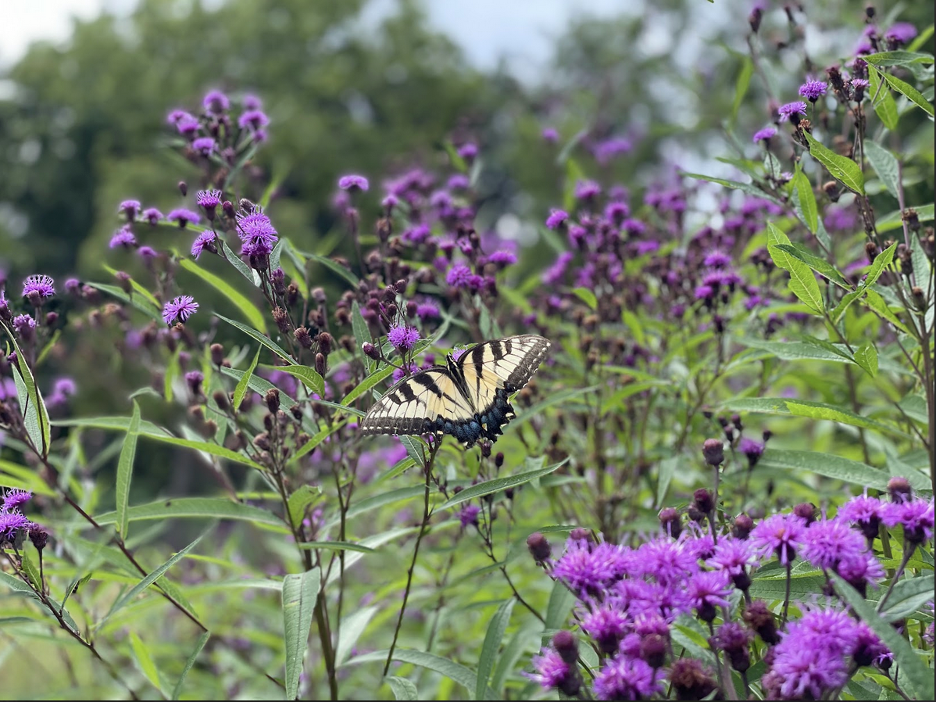
    New York ironweed (Vernonia noveboracensis), an important host plant to pollinators including the Eastern Tiger Swallowtail Butterfly (Papilio glaucus), is commonly used in ecological landscaping in the US Northeast Region. Credit: Sefra Alexandra.

    Recognizing the Role of Botanic Gardens

    To gather more information prior to undertaking any major new steps, the Ecological Health Network carried out a social network analysis to understand existing relationship patterns among the seed supply and demand chain actors in the Northeast US (Allen et al., under review). The study’s findings align with those of Tangren, Toth, and Siegel (2022), indicating that Midwestern seed vendors predominantly dominate markets in the Eastern US. For instance, a seed vendor based in Minnesota has established connections with over 94% of the end-users of native seed and plant material in the US Northeast identified in the study.

    However, the research also unveiled that producers of seed and plant materials within the US Northeast region enjoy well-established social ties with many botanic gardens, arboreta, seed banks (referred to as botanic gardens hereafter), and educational institutions in the region. These results support the argument that botanic gardens are uniquely positioned to play an essential role in ecological restoration science and practice (Hardwick et al. 2011), especially in their own regions. Botanic gardens have expertise in numerous relevant fields, including plant taxonomy, horticulture, genetics, seed science, and environmental education, as well as knowledge from ecological field research being undertaken by a growing number of botanic gardens around the world (Aronson et al. 2014Miller et al. 2016). Furthermore, as emphasized by Crane (2022), botanical gardens share the obligation of addressing socio-ecological challenges arising from climate change, alterations in land cover, and pollution. They must actively maintain their relevance through engagement, education, and tangible actions, particularly at the local level, outside the confines of their garden walls. 

    Indeed, many botanic gardens across the Northeastern and Northern Mid-Atlantic USA region have programs and activities aimed at strengthening native seed and plant material supply chains, among other things. For example, the Highstead Foundation in Redding, Connecticut, is deeply involved in sustainably harvesting seeds from local, naturally occurring plant populations. Following this, the staff meticulously cleans and stratifies the seeds before growing them into plugs. Local farmers, such as those affiliated with the Northeast Seed Collective will then proceed to amplify the plant material to produce the specialty crop of ecotypic seed. (Read more here). 

    In Hockessin, Delaware, Mt. Cuba Center, a botanic garden dedicated to preserving native plants and ecosystems across the Mid-Atlantic and Eastern Temperate Forest Region, conducts trial garden studies aimed at evaluating native species for their horticultural and ecological value. These studies serve to educate the public about the garden performance and ecosystem services provided by native species while also fostering the development of new markets for regionally produced seed and plant materials. The garden evaluates material and, where appropriate, shares material for local native plant nursery production. Beyond the horticultural side of the trade, Mt. Cuba engages with land managers and restoration growers, working to understand needs and promote local provenance workhorse species in collaboration with others in a mid-Atlantic seed users network.

    At the Cornell Botanic Gardens in Ithaca, New York, a native lawn demonstration project has successfully transformed a plot of turfgrass and weeds into a low-maintenance, low-input, high-biodiversity native grassy meadow. This project serves as a model for home and public green space redesign

    Native Plant Trust’s Nasami Farm in Whately, Massachusetts, Nasami Farm, has a longstanding practice of cultivating native plant material from hand-collected wild seeds. More recently, they have expanded their efforts by establishing seed increase plots to enhance production capacity for regional restoration projects. 

    These examples provide a sampler of the valuable contributions that botanic gardens across the region are already making to native seed and plant supply chains. However, in May 2023, Eve Allen and James Aronson, alongside Christopher Dunn, the Director of the Cornell Botanic Gardens, recognized a need to improve communication about these existing activities, and programs through improved networking among botanic gardens at a bioregional level. 

    Eve Allen, from the Ecological Health Network (EHN), and Todd Bittner, Director of Natural Areas at Cornell Botanic Gardens, discussing the Native Lawn Demonstration Area during the EHN Site visit in the fall of 2022. Photo Credit: James Aronson.
    Least trillium (Trillium pusillum) in bloom at the Mt. Cuba Center, a botanical garden in Delaware dedicated to preserving native plants and their ecosystems across the Mid-Atlantic and Eastern Temperate Forest Region. On the right, Eve Allen of the Ecological Health Network (EHN) stands with Élan Alford, Plant Conservation Scientist, and Jeff Downing, Executive Director of the Mt. Cuba Center, during an EHN site visit in the spring of 2023. Photo Credit: James Aronson.

    Convening Botanic Gardens 

    In this context, in late February 2024, the Northeast Seed Network brought together leaders and key staff members from thirteen botanic gardens, arboreta, seed banks, allied non-profit organizations, and the largest native seed and plant material supplier in the Northeast. The participants’ organizations included Coastal Maine Botanical GardenCornell Botanic GardensEcological Health NetworkThe Ecotype ProjectHighstead FoundationLongwood GardensMt. Cuba CenterNative Plant TrustVirginia Natural Heritage ProgramOak Spring Garden FoundationPinelands NurserySoutheastern Grasslands Institute, and the US National Arboretum. The convening workshop, organized and moderated by the Ecological Health Network, was graciously hosted by the Oak Spring Garden Foundation in Upperville, Virginia. This was the ideal venue from the Northeast Seed Network’s perspective, and the object of our workshop aligned seamlessly with Oak Spring Garden Foundation’s Mission Statement: “to support and inspire fresh thinking and bold action on the history and future of plants.”

    The formal garden bathed in sunset hues at the Oak Spring Garden Foundation, a non-profit organization established by Rachel “Bunny” Mellon to “support and inspire fresh thinking and bold action on the history and future of plants, including the art and culture of plants, gardens, and landscapes.” Photo Credit: Eve Allen.
    Workshop participants at the Oak Spring Garden Foundation (from left to right) – Marcello de Vitis, Southeastern Grasslands Institute; Charlotte Lorick, Oak Spring Garden Foundation; Élan Alford, Mt. Cuba Center; Melissa Cullina, Coastal Maine Botanical Gardens; Fran Chismar, Pinelands Nursery; Sefra Alexandra, The Ecotype Project; Uli Lorimer, Native Plant Trust; Eve Allen and James Aronson, Ecological Health Network; Richard Olsen, U.S. National Arboretum; Geordie Elkins, Highstead Foundation; Michael Piantedosi, Native Plant Trust; Lea Johnson, Longwood Gardens; Todd Bittner, Cornell Botanic Gardens; Ryan Klopf, Virginia Natural Heritage Program; Jessamine Finch, Native Plant Trust.

    The launch of the Restorative Landscape Coalition 

    Over the course of a long day and delightful evening, the participants worked together to chart a course for a new collaborative effort. Together, we recognized the distinctive responsibility botanical gardens bear to strengthen native seed and plant supply chains for landscape restoration across a spectrum of ecosystems, spanning from urban areas to suburbs, agricultural landscapes, corridors, and other protected areas of significant conservation value. More broadly, we agreed that botanic gardens are custodians of our shared plant biodiversity on our planet. By engaging in conservation, exploration, education, research, providing facilities, and leveraging expert horticultural know-how, they – and allied organizations like arboreta, herbaria, and seedbanks, should work together to bolster resilience and restore the health of people, ecosystems and landscapes. We also agreed that it would be timely to work on meeting this challenge at a bioregional level, namely in the Eastern US.

    Additionally, we discussed immediate ways to leverage experience, expertise, and educational capacity held within our gardens and allied organizations to address key objectives and recommendations outlined in the US National Seed Strategy and the National Academies of Sciences, Engineering, and Medicine’s 2023 Report, An Assessment of Native Seed Needs and the Capacity for Their Supply

    Enhancing demand signals by building better markets 

    The National Academies Report identifies unpredictable demand as the foremost challenge for native seed suppliers across the United States (p.98). This problem is especially pronounced in the US Northeast, as the substantial increase in demand for native seeds and plants fails to translate into intelligible markets. Current and potential suppliers within the Northeast Seed Network, including farmers and nursery professionals poised to expand their production of diverse species and ecotypes, require more consistent and transparent signals of demand.

    As such, a primary objective of the Restorative Landscape Coalition is to address and surmount the various policy, regulatory, and cultural obstacles hindering the utilization of source-identified, genetically diverse seed supplies, as well as nursery-grown or propagated plant materials. For example, we addressed the necessity of conducting targeted outreach and engagement with state and municipal agencies to facilitate the development of enhanced recommended species and species substitution lists. Currently, these lists predominantly feature mid-western species, likely due to their commercial availability. 

    Rather than solely focusing on seed production or amplification efforts, we recognize the critical importance of fortifying the ‘demand’ side of seed and plant material supply and demand chains. This strategic emphasis not only elucidates the distinction between the Restorative Landscape Coalition and the Northeast Seed Network but also underscores their mutually reinforcing relationship. Our approach involves generating and sharing knowledge, know-how, and best practices to enhance existing markets and create new markets for high quality seed and plant material. 

    Leverage our living collections to amplify seed production

    Citing The National Academies of Science’s 2023 report, we reaffirmed how the in situ  living collections (particularly conservation collections of wild origin) housed in botanic gardens and affiliated non-profit organizations serve as a crucial safeguard for native species within the plant materials development pipeline, when reproductively isolated from other related collections, for seed amplification.

    The US National Seed Strategy and National Academies of Sciences report emphasizes the imperative to increase collaboration and cooperation across agencies and with external partners. This involves sharing expertise, facilities, and optimizing the production and use of plant materials. Botanic gardens are custodians of our shared plant biodiversity. By engaging in conservation, education, research, providing facilities, and leveraging expert horticultural know-how, we are committed to providing a key link in efforts to bolster resilience and restore the health of landscapes in the Eastern US.

    In the Apple Room, our workshop proved not only enjoyable but remarkably productive. As the day drew to a close, participants reached a consensus on the crucial role of botanical gardens in tackling socio-ecological challenges stemming from climate change, land cover change, and pollution. Photo Credit: Sefra Alexandra. 
    As the evening drew to a close, together, we affirmed the unique responsibility botanical gardens bear in bolstering native seed and plant supply chains for landscape restoration. It was underscored that our institutions must actively assert our relevance through tangible actions, particularly at the local level, extending beyond the confines of our garden walls—a sentiment eloquently highlighted by Peter Crane, Director of the Oak Spring Garden Foundation, in his insightful 2022 opinion piece, Botanic gardens: Seizing the moment while imagining the future in Plants People Planet. Photo Credit: Oak Spring Garden Foundation.

    Fostering bioregional collaboration to achieve lasting social-ecological impact

    To advance the individual and collective missions and visions of the organizations and institutions participating in the Restorative Landscape Coalition, we will strive for a holistic perspective and approach that emphasizes the tremendous power and potential held within the concept of a bioregion. This is a spatial scale often overlooked by public, private, and government institutions. Note that a bioregion is not defined by political boundaries nor even by ecological and biogeographical boundaries alone. Rather, the concept corresponds to the geographical territories of human communities and cultural groups as well as the ecological systems on which they depend and of which they are a part. To be coherent, and useful, the boundaries of a bioregion must be delineated to uphold the integrity of its biological and human communities, ecosystems, and social-ecological systems. This includes preserving essential processes such as nutrient cycling, historical disturbance regimes, and species migration, among other biological and ecological factors. Additionally, sustainable and equitable management of resources and ecosystem services is vital, spanning generational and community boundaries within the diverse human populations inhabiting a bioregion. Bioregions vary in scale, ranging from watersheds to much larger territories, and may traverse international borders. However, they are fundamentally shaped by their flora, fauna, and human communities, each contributing to and benefiting from a distinctive identity defined by climatic, ecological, and cultural characteristics (Berg 1991).

    While initially complex and possibly daunting, there are significant advantages to the approach of organizing human activities and systems based on bioregional boundaries. Most importantly, it provides a strategic framework for connecting individual and collective efforts to facilitate impactful changes at appropriate scales to address biodiversity and climate goals (Pezzoli, 2015Wearne et al., 2023). That being said, addressing the intricate environmental challenges of the 21st century on a large spatial scale, especially with an unconventional concept like bioregionalism, demands innovative forms of network governance (Scarlett and McKinney, 2016).

    Left photo: Beds holding tree saplings for reforestation projects, including urban tree planting initiatives, in the Mid-Atlantic region. Right Photo: cleaned seeds of Arrow Wood Viburnum (Viburnum dentatum) at Pinelands Nursery in New Jersey. EHN Site Visit, Summer of 2022. Photo Credit: Eve Allen.

    Social impact and Social-ecological impact networks 

    A social impact network is one in which formal and informal institutions collaborate across diverse interests, sectors, and political arrangements to establish social norms, social capital, and trust that together can propel and sustain collective information sharing, decision-making, and action (Kapucu and Hu 2020Ehrlichman 2021). However, when social-impact networks are operating at broader geographical and societal levels – bioregions – and developing initiatives that target ecological and environmental challenges that demand integrated ecological and social interventions, we may call them social-ecological impact networks (Ecological Health Network 2024). 

    The Restorative Landscape Coalition is intended to be a social-ecological impact network dedicated to working with and enhancing the capacity and impact of the Northeast Seed Network and other seed production-focused partnerships, as well as emerging, restoration- and conservation-oriented partnerships operating across the Eastern US. Our commitment is to support initiatives that sustain, conserve, and, when necessary, restore degraded ecosystems and reintegrate fragmented landscapes within our bioregion – the overlapping and adjacent EPA Level III Ecoregions of the US Northeast, Mid-Atlantic, and Southeast regions. Please note that here we use the ecological definition of “landscape,” namely an assemblage of ecosystems that are arranged in recognizable patterns and that exchange organisms and materials such as nutrients and water (Forman & Godron 1986).

    Left photo: Seed increase plots of Slender Rush (Juncus tenuis), Common boneset (Eupatorium perfoliatum), Blue vervain (Verbena hastata), Swamp milkweed (Asclepias incarnata), and Coastal Plain Joe Pye Weed (Eutrochium dubium). Right photo: Flats of (clockwise from upper right), Bishop’s cap (Mitella diphylla), Blue wood-aster (Symphyotrichum cordifolium), Downy Goldenrod (Solidago puberula), New York aster (Symphyotrichum novi-belgii), Creeping Little Bluestem (Schizachyrium scoparium var. scoparium), Narrowleaf Mountain Mint (Pycnanthemum tenuifolium) at Native Plant Trust’s Nasami Farm in Whately, MA. Photo Credit: Eve Allen.
    Fall sneezeweed (Helenium autumnale) seed increase fields at The Hickories in Ridgefield, CT- the hub of the Northeast Seed Collective. Photo Credit: Sefra Alexandra. 

    Our next steps 

    While acknowledging the substantial work ahead, we are confident that the collective resources within our institutions, organizations, and like-minded networks will allow us to make inroads toward our shared goals. Collectively, we embrace an unwavering dedication to the public good and the well-being of future generations. Our shared missions encompass inspiring meaningful connections among people, plants, and the natural world, education and awareness, conservation and stewardship, and research and innovation, all aimed at enhancing society’s overall well-being, resilience to global changes, vigor, and – in a word – health.

    Please join the Restorative Landscape Coalition at the American Public Gardens Association’s Annual Meeting in Boston, June 24 to 27, 2024. We will be there, hosting a 90-minute workshop entitled Fostering regional collaboration among public gardens to address native seed and plant material needs, on Thursday, June 27th, from 10:30 a.m. to 12:00 p.m. 

    To stay in touch and receive updates about the Restorative Landscape Coalition and the Northeast Seed Network, please sign up for our mailing list. You can also follow us at @ecohealthglobal on Instagram, @EcoHealthNet on X and Facebook, and Ecological Health Network on LinkedIn for updates. 

  • Seedlings planted for Brazilian forest restoration are not representative of tropical tree biodiversity

    Seedlings planted for Brazilian forest restoration are not representative of tropical tree biodiversity

    A collaborative research project involving MBG’s Center for Conservation and Sustainable Development, the Tropical Silviculture Lab at the University of São Paulo, and the PARTNERS research coordination network highlights important differences between the native tree flora of the Brazilian Atlantic Forest and the species that are widely planted for ecological restoration projects.

    The Brazilian Atlantic Forest is a global biodiversity hotspot. This designation denotes two things. First, the Atlantic Forest is exceptionally and uniquely biodiverse. Second, the biodiversity of the Atlantic Forest is exceptionally threatened. This once-vast biome historically stretched from northern Argentina to Brazil’s eastern tip in Rio Grande do Norte, but it is now reduced to about 12% of its original size, and most of what remains exists as small, isolated fragments.

    During the past decade, a major, multilateral effort has been undertaken to staunch biodiversity loss by doubling the size of the Atlantic Forest through ecological restoration. The Atlantic Forest Restoration Pact is composed of more than 270 private companies, governments, NGOs, and research organizations. It aims to restore 15 million hectares of Atlantic Forest by 2050.

    Image_Atlantic_Forest_WWF
    The Atlantic Forest biome: a global biodiversity hotspot and the site of the most ambitious tropical forest restoration project on the planet. Map imagery from NASA via Wikimedia Commons.

    Atlantic Forest restoration projects are characteristically thorough and well-documented. For example, they often include high diversity plantings more than 80 tree species. Yet until recently there had never been a systematic study to evaluate how well these restoration plantings represented the Atlantic Forest biodiversity they aimed to protect.

    Dr. Pedro Brancalion is a professor at the University of São Paulo’s agricultural school in Piracicaba, Brazil, where he co-directs the Tropical Silviculture Lab. Five years ago, he approached me at a meeting of the Society for Ecological Restoration in Madison, Wisconsin, and over a beer he told me about a dataset that he thought could shed light on the how well Atlantic Forest restoration projects were conserving tree biodiversity. The dataset consisted of seedling donation records from the NGO SOS Mata Atlântica. Between 2002 and 2015, the NGO donated more than 14 million tree seedlings to 961 restoration projects. By comparing the species composition in these records to tree species living in mature forests, we could see what elements of biodiversity might be missing and how this could be affecting carbon stocking – an important factor in mitigating global climate change.

    Even in high diversity plantings, many of the most threatened tree species were not included.

    Last month, Pedro and our collaborative team published a paper in Conservation Letters describing our results. We found that restoration projects in the Atlantic Forest biome had included 416 tree species out of the >2,500 tree species known from mature and old-growth forest fragments. This is an impressive figure, but the team discovered that it reflects a highly biased subsample of the Atlantic Forest tree flora. The most under-represented species were those with large seeds that are dispersed by animals. Animal-dispersed trees make up as much as 89% of tree species in some parts of the Atlantic Forest and include some of the most threatened species.

    The reason that large-seeded, animal-dispersed species are being used less often was probably related to the cost and challenges of collecting and growing seeds. Large-seeded, animal-dispersed trees are more expensive to purchase from nurseries than small-seeded or wind-dispersed species. Because they are energetically expensive to produce and are contained within large fruits, trees tend to produce large seeds in relatively low quantities, with just one or a few seeds per fruit. They are generally found in remote forest areas, and seed collectors have to compete for them with seed-eating animals, like peccaries and agoutis. Once large seeds are collected, they also take up considerably more space in storage and production facilities.

    Image_SeedComparison
    In our analysis of animal-dispersed tree species, seed diameter explained 87% of the variance in seed price. Large seeds like those of Caryocar brasiliense were much more expensive than small ones, like Ficus guaranitica. Grid size: 1 mm. Photos reproduced from C. N. Souza Junior & P. H. S. Brancalion (2016).

    The absence of large-seeded, animal-dispersed tree species in restoration plantings has important implications for biodiversity conservation. First, fewer large-seeded trees means less food for large birds, some of which eat mainly large fruits. Second, these species are sometimes overharvested for timber and have difficulty recolonizing forests from which they have been removed. So the fact that large-seeded, animal-dispersed trees are under-represented in restoration projects means that even if the ambitious restoration goals of the Atlantic Forest Restoration Pact are met, the increase in forest cover may not improve dispersal between fragmented populations of the most vulnerable species.

    Large-seeded tree species also tend to store carbon more densely than small-seeded species. This tendency is related to large-seeded species growing slowly in the shady understory of the Atlantic Forest and their gradual formation of dense wood, which is rich in carbon. We simulated potential carbon stocking in restored forests and compared it to mature forests, and our results showed that under-representation of large-seeded, animal-dispersed trees could cause a 2.8-10.6% reduction in carbon storage. Based on the current price of carbon, this loss could represent $17-63 USD per hectare in lost carbon credits.

    Fragment_Pedro
    Many Atlantic Forest restoration projects are quite isolated. A large seed would have a hard time reaching sites like this forest in a sugarcane matrix. Photo by Pedro Brancalion.

    Reduced capacity for biodiversity conservation and carbon stocking sounds like bad news, and indeed it is not ideal. However, restoration ecology moves forward by identifying problems and seeking scientifically-based solutions to overcome them. Knowing that large-seeded, animal-dispersed trees are under-represented in restoration plantings means that we can turn our attention to innovative solutions.

    For example, new policies could help bridge the gap between Brazil’s exceptional tree biodiversity and the relative paucity of species being used for ecological restoration. One way this could happen would be for the Brazilian government to subsidize the cost of producing large-seeded, animal-dispersed tree seedlings. This could be done through financial incentives or potentially by opening some forest reserves for seed harvesting, to make it easier for collectors to acquire these species. Facilitating uptake by reducing costs would be a carrot. A stick could be to legally mandate some representation of these species in future restoration plantings.

    Market solutions may also exist. Based on our calculations, adding more large-seeded, animal-dispersed species to restoration plantings would increase carbon storage and carbon credits, offsetting the cost of the expensive seedlings and creating a net gain of $3-32 USD per hectare.

    Banner image: Sterculia striata (Malvaceae). Photo by Mauricio Mercadante. CC BY-NC-SA 2.0.