By Tobin Mutiso and Andrew Gichira
Tobin Mutiso is a research associate at the Centre for Ecosystem Restoration Kenya (CER-K). He works on plant ecology and taxonomy. He holds a BSc in plant ecology and environmental science from Jomo Kenyatta University of Science and Technology. Email: tmutiso@cerkenya.org
Andrew Gichira, PhD, is a botanist and restoration ecologist specialising in conservation genetics and ecosystem restoration. He currently serves as the head of research at the CER-K. Email: agichira@cerkenya.org

The loss of native plant diversity is reshaping Kenya’s ecosystems in ways that are often subtle but deeply consequential. As woody plant species disappear, so do the ecological functions they support, including soil stabilisation along rivers, food and habitat for wildlife, local climate regulation, and cultural and livelihood values tied to native landscapes. According to the IUCN Red List, national reports, and NGO summaries assessing East African trees, roughly 13% of Kenya’s native tree species are threatened with extinction. Most persist in small, isolated stands where natural regeneration is compromised.
Natural regeneration becomes increasingly difficult for woody species with very small isolated populations in fragmented landscapes. This is because plants depend heavily on trophic interactions such as complex plant-pollinator relationships. When these factors are compromised, seed production becomes irregular, which is further compounded with limited capacity of seedlings to establish in degraded and altered habitats. Even in places with improved protection, these species often fail to recover without deliberate conservation intervention. This reality presents a challenge for restoration efforts that rely heavily on a narrow set of fast-growing or readily available species, leaving threatened trees further marginalised and the ecosystems in which they are a key part vulnerable to further degradation and fragmentation.
Tree and shrub planting initiatives are expanding rapidly, but their contribution to biodiversity recovery depends on whether the species planted match local ecological conditions. Evidence-driven species selection, combined with local capacity to manage planted trees, remains unevenly distributed across projects, with technical guidance often outpacing on-the-ground monitoring. Threatened plant species, in particular, require targeted support, including improved data on their distribution, a deeper understanding of their ecology, tailored propagation and reintroduction protocols, and long-term care, which can be integrated into local land-use systems.
Our project aims to investigate whether a species-focused reintroduction model can be effective in real-world conditions. Working with community forest associations, we have selected 22 threatened tree species, developing propagation methods for each and planting them in multiple sites managed by local communities. The central question is whether ecological restoration, species reintroduction and livelihood benefits could be pursued together without compromising the other. By integrating herbarium records, expert knowledge, targeted field science, and community engagement, we are building a reintroduction and restoration model that is both ecologically fit for purpose and socially sustainable, as well as adaptable to other landscapes facing similar biodiversity loss.
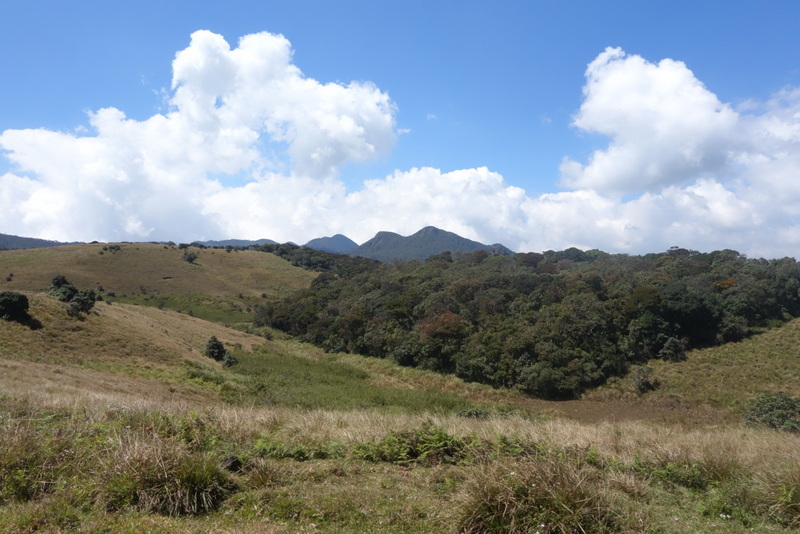
The project is within the Kenyan Highlands, a section of the complex montane ecosystem in East Africa characterised by high habitat heterogeneity and notable levels of biodiversity and endemism (Gehrke & Linder, 2014; Dagallier et al., 2020). Kenya is subdivided into seven plant divisions (K1-K7), which are largely based on the early administrative boundaries (Zhou et al., 2017). Our surveys targeted multiple elevation zones, with a primary focus on the K4 region (1,500–3,000 m) within the central highlands and additional coverage of K7 (Taita Hills, 600–1,640 m) and K6 (Loita Forest, 2,000–2,300 m). Several focal species occur outside the central highlands but occupy comparable altitudinal ranges elsewhere in the country. This broad elevational gradient contributes to high floristic diversity, making the K4 zone a hotspot for Rare, Endangered, and Threatened (RET) species, particularly those of high conservation and use value, including timber and medicinal species such as Ixora scheffleri subsp. keniensis Bridson, Prunus africana (Hook. f.) Kalkman and Warburgia ugandensis Sprague.

Starting in the Archives: the herbarium as a roadmap
This work began not in the field, but at the East Africa Herbarium at the National Museums of Kenya. Herbarium specimens, some collected more than a century ago, provided the most reliable baseline for understanding where threatened tree species historically occurred. We also consulted international databases, most notably the Global Biodiversity Information Facility (GBIF). These collections helped trace former distributions, habitat preferences, and altitudinal ranges for species now rarely encountered in the wild.
Table 1: A list of 22 woody species that were targeted for the study based on observations recorded at the East Africa Herbarium and the Global Biodiversity Information Facility. Accessed in June, 2022.

This archival work was complemented by key informant interviews with experienced taxonomists. Their insights helped resolve identification challenges, clarify taxonomic updates, and flag species frequently overlooked in restoration programmes. Surveys of commercial nurseries in the coastal regions further highlighted how threatened native trees and shrubs are systematically neglected in favour of exotic or common species. Literature reviews added further context, helping reconstruct historical range patterns and identify priority floristic regions for field verification. Together, these sources allowed us to move beyond generalized restoration species lists and ask more focused questions, specifically: where do these threatened species still exist, where have they been lost, where does restoration make sense, and, can we create a socio-economic model that sustainably uplifts the livelihoods of local communities while also supporting efforts for ecological and biocultural restoration?
Field expeditions and new records
Guided by this evidence, we carried out targeted field expeditions across multiple landscapes in the Kenyan highlands, spanning 11 counties, including Taita Hills, Kijenge Hills, Thika, Irangi Forest, Ngaya, Thushi River, Nyambene Hills, Imenti Forest and Karura Forest, as well as selected dryland and forest-edge systems, in particular the Loita Hills. These surveys were designed not just to confirm presence or absence but to generate practical ecological insights for restoration practitioners.

In several locations, fieldwork led to the identification of new records or previously undocumented populations. The most significant findings surrounded Euphorbia cussonioides (CR) and Brucea macrocarpa (EN), both species whose known populations have declined significantly in recent decades. Newly recorded individuals and regenerants provided urgently needed information on the species’ current area of occupancy and viable seed sources, as well as evidence that recovery is still possible if sites are protected and managed. Observations of flowering and fruiting patterns revealed clear opportunities for seed collection and assisted regeneration. Other threatened species encountered during surveys included Ixora scheffleri subsp. keniensis (CR), Embelia keniensis R.E. Fr. (CR) , Encephalartos kisambo Faden & Beentje (EN), and Vepris hanangensis (Kokwaro) Mziray (NT).
Table 2. Newly documented populations and occurrence records of selected threatened woody plant species.


At each site, we recorded location, habitat condition, land-use context, population structure, regeneration status, threats, and phenological stage. This level of ecological detail transformed field observations into decision-ready data, helping bridge the gap between research and restoration action.
Communities as conservation partners
From the outset, the project treated local communities as central partners and not just beneficiaries. In areas where threatened species occurred on private or community-managed land, we worked closely with landowners, community forest associations (CFA), and local scouts to monitor the phenophases and liaise with local nurseries in propagating the seeds. In addition, the Kenya Forest Service (KFS) provided planting locations and collaborated with the CFAs to oversee and care for the seedlings.
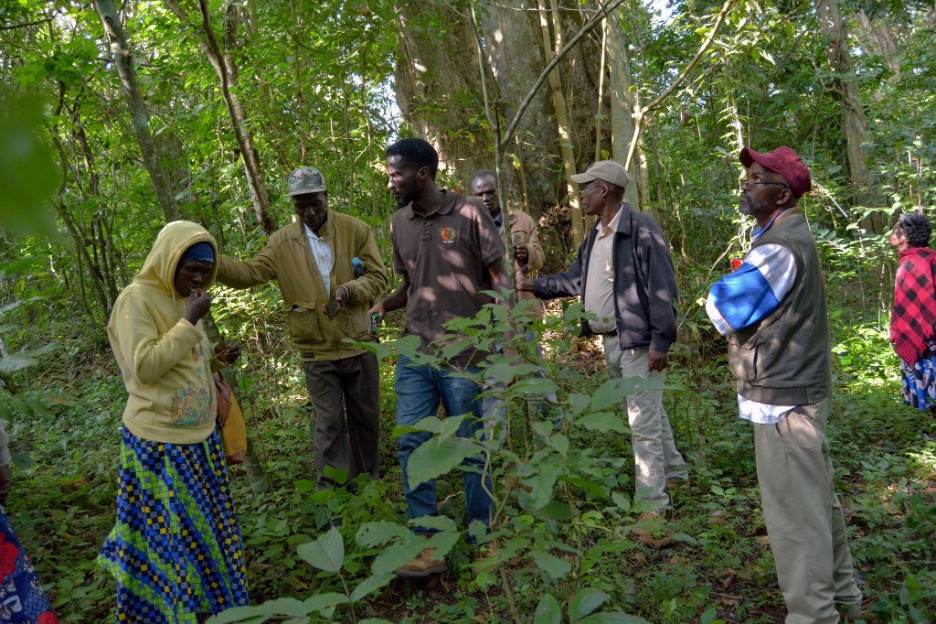
Training focused on practical, transferable skills, in particular: educating the community on the reasons we conserve plants, identifying threatened tree species, monitoring phenology to track flowering and fruiting cycles, collecting seed ethically with genetic diversity in mind, and applying appropriate propagation techniques. We engaged and trained 138 community seed collectors active as community phenology monitors and seed collectors.

At Ngaya forest, Thika’s Blue Post, Kasigau (Taita) and Upper and Lower Imenti forests, community members were trained to identify threatened woody species in situ using diagnostic morphological traits, to map and tag individual plants, and apply basic protection measures to reduce disturbance. They also monitored flowering and fruit development to inform seed collection and to rescue naturally regenerated wildlings at risk from competition with invasive species, most notably Lantana camara. This hands-on engagement directly supported the propagation of Brucea macrocarpa,Pandanus kajui, Gymnosporia keniensis, Cylicomorpha parviflora, Premna maxima, Vepris glandulosa, and Euphorbia cussonioides.

These efforts produced tangible outcomes, with over 28,000 seedlings of threatened species raised in community nurseries in Antubetwe (Ngaya Forest), Kasigau (Taita), Kithunguthia (Embu), Male (Laikipia), Kenya Forest Service (Meru), and Kamaruki (Nyambene), thereby creating viable restoration planting stock. Livelihood benefits were created through project-funded payments for seed collection, nursery establishment and management, and continued after-care management of planted seedlings. The financial support is largely from the Fondation Franklinia, and the funds are channelled through the Community Forest Associations. Building on the outcomes of the grant, we developed a community-based seed collection model in which trained local collectors form a coordinated network that sources seeds from RET taxa as well as other native plant species and supplies them to institutional seed banks. These seeds are subsequently made available to restoration practitioners for use in active restoration initiatives. Revenue generated through seed sales is reinvested to remunerate community seed collectors, thereby establishing a sustainable and locally grounded alternative income stream while reinforcing conservation and restoration objectives. The project’s impact and details of the community engagement aspects have been comprehensively outlined in an article published in the BGJournal Vol 22 (1), Seed banks for Biodiversity pages 39-42.
Building practical tools for practitioners
Under this framework, the project has generated insights that have now been consolidated into practical tools for wider application, including species-specific propagation protocols shared with spatial databases linking historical and new records, producing phenology calendars to guide seed collection for threatened and non-threatened native plant species, and a structured framework for community engagement. Currently, the project has generated 21 propagation protocols for the 22 threatened species, including Uvariodendron anisatum, Brucea macrocarpa, Croton alienus, Euphorbia cussonioides, and Premna maxima, whilst others are still under review. In addition to these tools, a growing network of restoration sites and partner nurseries is being established, enabling peer learning, harmonisation techniques, and coordinated tracking of threatened species across landscapes. The emerging practitioner network is now being facilitated through CER-K.
Restoring Kenya’s endangered trees and shrubs to the Highlands is an act of optimism, responsibility, and restoration, rather than just an ecological exercise. We are using science to pinpoint which species once flourished in Kenya’s phytogeographical regions, understand the reasons behind their decline, and determine the most effective way to bring them back. By taking community action, we ensure that restoration is long-lasting rather than temporary. As a result, the communities themselves own, maintain, and strengthen the conservation of threatened species rather than having it imposed upon them. We aim to increase the number of threatened species sites we survey, improve monitoring, develop a practitioner network, and continue to accumulate knowledge that informs successful conservation both in situ and ex situ. Visit https://cerkenya.org/ for more information on our work in general and in threatened species conservation in particular.