Tag: Invasive species

  • Native Plant Seeding Solutions for High Disturbance Highway Roadsides

    Native Plant Seeding Solutions for High Disturbance Highway Roadsides

    By Wes Bollinger

    Wes Bollinger completed his master’s in 2025 with Jeffrey Matthews lab in the Department of Natural Resources and Environmental Sciences at the University of Illinois. Wes is now a restoration ecologist in Chicago and runs his own restoration consulting business – Wildshape Ecological Design.

    The modern American landscape is crosscut by millions of miles of roadways. This land that was previously part of intact ecosystems has been converted into impermeable pavement and ditches, reducing the quantity and quality of habitat. Roadways also lead to habitat fragments, which can impede the movement of animals around the landscape. Highways in the Midwest (Illinois, Indiana, Iowa, Michigan, Minnesota, Missouri, Ohio, and Wisconsin) amount to more than 100,000 centerline miles (160,934 km) of roadway, and their unpaved right-of-way (roadside margins, medians, interchanges, etc.) total over 1,010,000 acres (445,000 ha) of unpaved land and soil. Highway roadsides typically experience high rates of disturbance due to wind, vehicle traffic and pollution from oil, microplastics from tires and litter, and often agricultural additives like herbicides, insecticides, and fertilizers. These lands and similar areas adjacent to roadways may be either burden or boon to the local ecosystem depending on management regimes and use of disturbance tolerant plant species. Here I recommend an approach to identifying appropriate native species for roadside vegetation, but this perspective may also apply to a variety of marginal greenspaces, such as residential sidewalk strips.

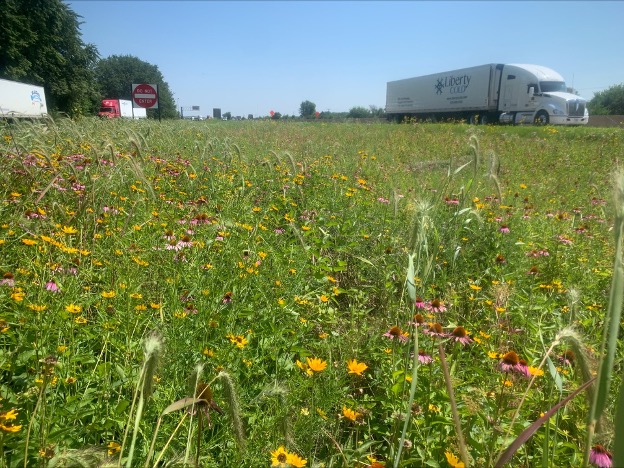
    Native species dominated restoration project on a highway roadside in Northern Illinois. Visible flowerheads are pale purple coneflower (Echinacea pallida), lanceleaf coreopsis (Coreopsis lanceolata), black-eyed Susan (Rudbeckia hirta), and Canada wildrye (Elymus canadensis). Photo by Wes Bollinger.

    If poorly managed, rights-of-way can become heavily invaded by nonnative plants like common reed (Phragmites australis), teasel (Dipsacus fullonumDipsacus laciniatus), and Johnsongrass (Sorghum halepense) among many others. These invasive species inhibit the native grasses and forbs and reduce ecosystem functioning. When heavily invaded, roadsides also cause economic impacts, functioning as source populations of weeds that can impact adjacent agroecosystems. Typically, roadsides are seeded with a mixture of Eurasian turfgrasses like Kentucky bluegrass (Poa pratensis) and red fescue (Festuca rubra). These nonnative grasses are comparatively short both in their above- and below-ground growth. Their short roots do not inhibit the growth of undesirable nonnative species, resulting in more mowing and maintenance than a native plant community to keep areas appearing ‘pristine.’ 

    However, roadsides can be restored with native species and managed using best practices to provide economic and environmental benefits to the region. Native-dominated vegetation can inhibit invasion, protect nearby remnant habitats, promote healthy soil, improve stormwater retention, absorb agricultural additives, sequester carbon, and provide forage and migration corridors for native animals. Though establishing native vegetation on roadsides may have these obvious benefits, there are many knowledge gaps pertaining to this practice such as how and what to seed in these areas to maintain the highest ecosystem fidelity and greatest economic benefits.

    We conducted research to determine which native species to seed on highways and the best practices for establishment and maintenance of these areas, with the goals of lowering overall maintenance costs by reducing the frequency of mowing needed to maintain these areas. This work was funded through grants from the Illinois and Indiana Departments of Transportation (DOTs) in conjunction with the Illinois Center for Transportation and the University of Illinois.

    I carried out three projects to gain empirical evidence on how to restore Midwestern roadsides with native species. Project 1) reviewed the native seeding practices of the DOTs of the Midwest to identify commonly seeded species and assessed establishment and management practices. For Project 2) we conducted experimental trials in Illinois comparing existing Illinois DOT mixes (non-native and partially native) with novel mixes that we designed to be more diverse and contain only native species. For Project 3) we conducted a field survey of existing native roadside plantings across Illinois and Indiana. Projects 2 and 3 sought to quantify the performance of individual species to determine which ones have the greatest establishment and persistence in roadside conditions, and what conditions lead to favorable native establishment generally.

    Project 1) Current native seeding and management practices

    My review of Midwestern DOT seeding practices revealed stark differences between DOTs among states, but some commonalities that are noteworthy for establishment and maintenance. Most interestingly was the disparity in native diversity between states. Michigan did not list any native species in their roadside manual, while Minnesota listed 108, the most of any Midwestern DOT. Further, Minnesota listed 11 majority or entirely native seed mixes and had the most comprehensive standard operating procedures for native seeding. Many mixes had average max heights under 3 ft (~1m) to avoid obscuring motorists views on roadsides; however, some states had mixes more than 5 ft (~1.5 m) for tallgrass areas and to increase the invasion resistance of an area by blocking light access with taller plants. Perhaps surprisingly, the states of Ohio and Indiana still list an invasive legume, crownvetch (Securigera varia), in mixes designed for erosion control.

    Number of majority native species mixes listed by Midwestern Department of Transportation in order of most to least native species (n) listed.

    Several establishment methods were common across states. Native seeds should be sown into low-fertility topsoil using a hydroseeding machine (a device that sprays a mixture of seed, water, and an organic adhesive agent directly onto soil) especially on sloped areas. Hydroseeders show remarkable success in soils with a seed bank containing invasive species, by avoiding tillage which can bring these seeds to the surface and increase their germination. Native straw can be applied as a mulch layer and may be harvested from areas scheduled for maintenance with mowing. Seeding should take place in the fall to allow for cold stratification. Local ecotype seeds are preferred to produce individuals with locally adapted phenotypes and avoid genetic contamination with seeds harvested outside the region. Mowing in the first year of growth is critical to reduce invasive species while native seedlings establish. Minnesota recommends three mows in year one, in May, June, and July, and a singular mow between July and August of year two. Controlled burning of these areas is ideal every 3-5 years but mowing at the same rate is also beneficial. 

    Project 2) Comparative performance of standard (mixed origin) and native-only mixes

    As a method of direct comparison between existing DOT seed mixes and a fully native roadside, I established four trials across Illinois to test differences in seeded, native, seeded native, and nonnative unseeded plant cover and richness, thus also providing information on invasion resistance between four popular mixes (DOT lawn, roadside, north IL, south IL) and four corresponding fully native plant mixes I designed to meet the same general criteria (low growing, disturbance, and salt tolerant) while also being higher diversity (from 9 to 38 species depending on mix). These experimental plots were seeded in November 2023 and surveyed in May and August of 2024. I observed that plantings differed in degrees of success, but every trial showed at least one significant positive result for the native planting over the nonnative IDOT mix. Native richness was higher for all sites by August of the first growing year, and native cover was higher for three of the four experiments. My trial of the IDOT Class 3 North Slope mix against a mix of 38 native species yielded significantly higher seeded cover by August 2024, and higher richness and cover of all native species in both May and August, suggesting that this high diversity mix competed very well against an existing DOT mix which was a combination of native forbs and nonnative grasses. Based on preliminary data collected during 2025, the native species are continuing to outpace the nonnatives in these mixes. 

    Of the native species seeded in these trials, those with the greatest record of germination in year one are lanceleaf coreopsis (Coreopsis lanceolata), common milkweed (Asclepias syriaca), partridge pea (Chamaecrista fasciculata), Illinois bundleflower (Desmanthus illinoensis), pale purple coneflower (Echinacea pallida), common evening primrose (Oenothera biennis), golden Alexander (Zizia aurea), blue vervain (Verbena stricta), and plains oval sedge (Carex brevior), which were present in the first year between 50% and100% of plots they were seeded in.

    Example paired plot before site prep and seeding (left) and August of the first growth year after establishment (right). IDOT mix on the left, native mix on the right of each image. Yellow flowers are golden Alexanders (Zizia aurea). Photo by Wes Bollinger.

    Project 3) Identifying the most successful native species from field surveys

    Lastly, I surveyed 34 native plantings on roadways across Illinois and Indiana at various distances from the road edge while collecting data on soil chemistry, surrounding land use, and soil compaction. Sites were more than two years old to avoid plantings early in their establishment. The purpose of this project was to identify which seeded species tend to germinate and persist, and what environmental factors contribute to higher native and invasive success. Of the 153 native species seeded in one or more sites, we found that 28 native species were observed in at least half of the planted sites and 84 species were never observed once despite being seeded in anywhere from one to 12 sites. Five species were found a total of 10 or more times each across all 34 sites: common milkweed (Asclepias syriaca), bee-balm (Monarda fistulosa), black-eyed Susan (Rudbeckia hirta), false sunflower (Heliopsis helianthoides), and switchgrass (Panicum virgatum). These five species along with Virginia wildrye (Elymus virginicus) were also the most observed species at sites where they were seeded. These surveys were not designed to be comprehensive given the size of many of these plantings and it is highly probable some other seeded species were present but unobserved.

    I found that native diversity and cover were generally higher further from the road edge, in areas with less salt, more basic soil, lower nitrogen and phosphorous, and a higher seed mix diversity. The opposite was true for nonnative cover and diversity. Richness of the seeded native mix was one of the strongest determinants of both diversity and cover. 

    In summary, we recommend that seed mixes should be hydroseeded at a rate of 60-70 seeds per square ft. (650-750 seeds per square meter) into low-nutrient, unfertilized soils, and covered in native straw. High-diversity mixes with no more than 10% legumes and an otherwise equal ratio of grasses to forbs should be used. Several species (but no more than 10%) should be early-establishing annual forbs for first year cover. Select species so that there is at least one blooming at all times of the growing season, favoring plants like golden Alexander (Zizia aurea) and native Alliumspecies for early spring blooms. Seed in as large an area as possible to reduce edge effects, consider cloverleaf interchanges as ideal locations for large projects.

    For maintenance in year one post-seeding, mow several times (May, June, July, potentially also August in warmer states) to a height of 6-8 inches. In year two, mow at least once between June and September. Controlled burning or mowing can be conducted as needed for persistent weed issues but generally are only required every three to five years. If mowing is needed, areas with low abundance of non-native plants can be harvested as native straw for future plantings.

    Native species with the best establishment record and widest usage are as follows and should be prioritized in high disturbance roadside plantings: Asclepias syriacaAsclepias verticillataBouteloua curtipendulaCarex breviorCarex cristatellaCarex hystericinaChamaecrista fasciculataCoreopsis lanceolataDalea purpureaDesmanthus illinoensisEchinacea purpureaElymus canadensisElymus virginicusEryngium yuccifoliumEupatorium perfoliatumHelianthus grosseserratusHeliopsis helianthoidesJuncus effususMonarda fistulosaOenothera biennisPanicum virgatumPenstemon digitalisPhysostegia virginianaPycnanthemum tenuifoliumRatibida pinnataRudbeckia hirtaSilphium laciniatumSymphyotrichum novae-angliaeSymphyotrichum puniceumLiatris pycnostachyaVerbena strictaVernonia fasciculataand Zizia aurea.

    Further details and methods can be found in the thesis here or by contacting the author at info@wildshaperestoration.com

  • Trouble in Paradise: Why the Galapagos Islands Need Ecological Restoration

    Trouble in Paradise: Why the Galapagos Islands Need Ecological Restoration

    By: Anna Calle-Loor

    MESM Anna Calle-Loor has nearly five years of experience working in ecological restoration and biodiversity conservation in the Galapagos Islands. She is a former researcher for the Galapagos Verde 2050 (GV2050) Program of the Charles Darwin Foundation (CDF). She is also a member of the Galapagos’ Plants Specialists Group of the IUCN’s Species Survival Commission and the Society for Ecological Restoration. annagcalle@gmail.com

    The Galapagos archipelago is famous for inspiring Charles Darwin’s theory of evolution by natural selection after his visit in 1835. Its geographic and environmental characteristics have given rise to unique creatures like giant tortoises, pink iguanas, the second smallest penguins in the world, flightless cormorants, and the only marine iguana. Due to its extraordinary biodiversity, it was established as Ecuador’s first national park in 1959 and declared a UNESCO World Heritage Site in 1979.

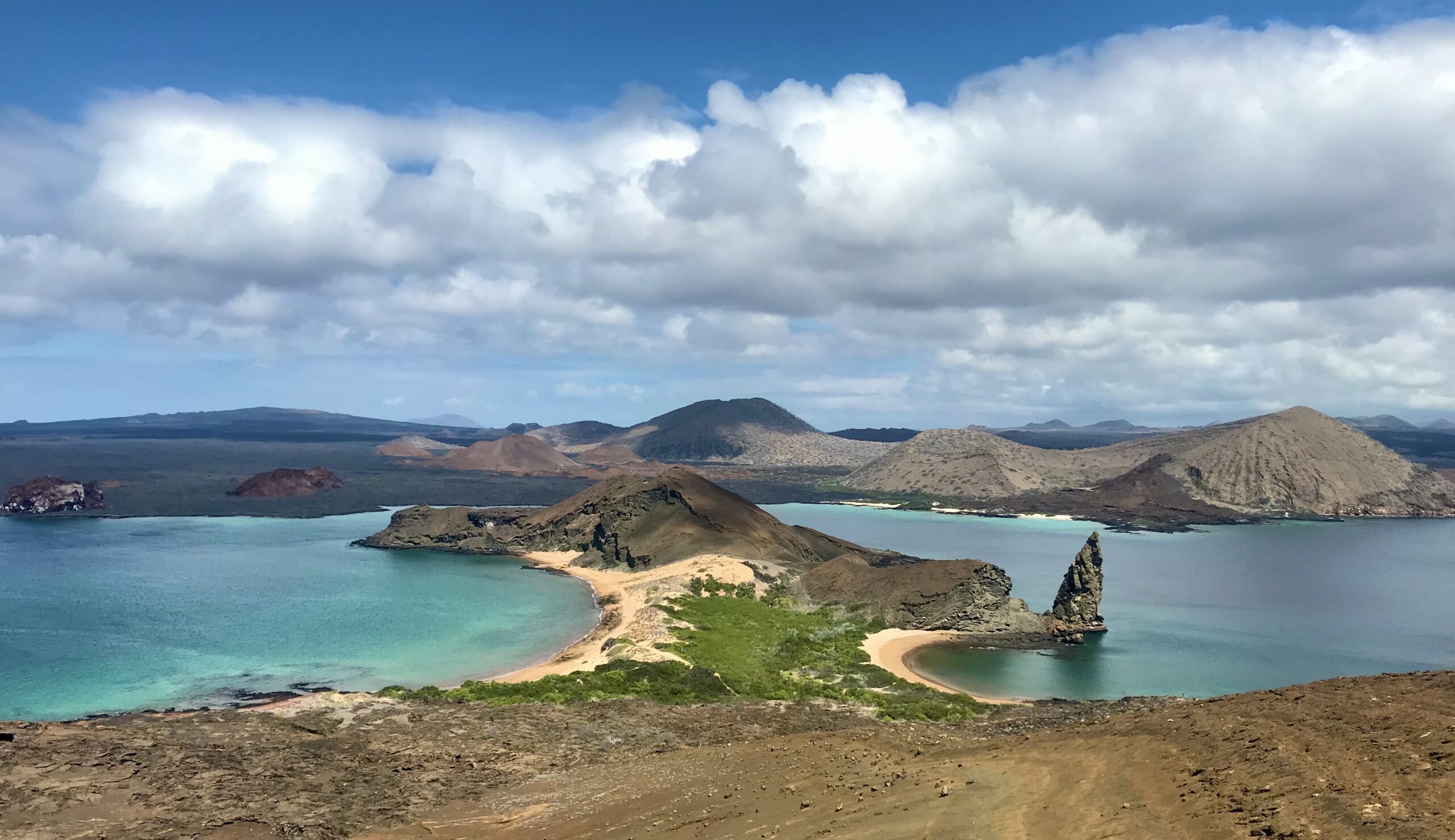
    Bartolomé Island, one of the most photographed landscapes in the Galapagos, offering a view of turquoise bays and the Pinnacle Rock formation. Photo credit: Anna Calle

    Today, the islands’ biodiversity and volcanic landscapes continue to astonish visitors. But behind their reputation as a pristine paradise lies a story of vulnerability, degradation, and a need for ecological restoration.

    Islands: Biodiversity Hotspots and Extinction Hotspots

    Islands often have high levels of endemic species, but they are also highly vulnerable to extinctions. With small populations, restricted geographical ranges, and often having evolved with no predators, many island species are especially sensitive to disturbances.

    We have seen the consequences before. On Easter Island, deforestation and overexploitation of limited resources led to ecological collapse and the downfall of a once-thriving society. Mauritius Island lost the dodo, one of the first species recognized as extinct due to human activity, in the 1600s. Hawaii has earned the unfortunate title of “the extinction capital of the world” because of its high extinction rates of plants, insects, and birds. Guam has lost most of its native birds following the introduction of the invasive brown tree snake. All of these are reminders of how quickly biodiversity can disappear when island ecosystems are disrupted.

    The Galapagos are no exception. With ecosystems that have already suffered degradation, efforts now go beyond species conservation to include ecological restoration.

    A History of Degradation

    With a recorded human history that starts in 1535 with the arrival of the bishop Tomás de Berlanga, there have been many people that have visited the islands and inevitably have left a mark on them. The first visitors were pirates, whalers, prisoners, and a few early settlers. But they did not come alone. They brought rats, cats, goats, and other animals, many of which became invasive and highly destructive. To give you a scale of the problem, an eradication campaign known as Isabela Project was launched in 1997 and eliminated >140K goats from three islands. 

    Today, the pressure continues. Around 30,000 people live in the Galápagos, and nearly 300,000 tourists visit every year. Of course, this level of human activity requires infrastructure. The islands now have roads, towns, gravel mines, agricultural fields, and landfills, all of which exert pressure on the surrounding environment. The continuous flow of tourists and imported goods make introduced species a growing threat.

    In response, the Galápagos National Park Directorate and conservation NGOs like the CDF have launched multiple ecological restoration projects. I have collaborated in several of these efforts through the GV2050 Program, combining endangered species recovery with ecological restoration strategies.

    Recovering Galapagos Endangered Flora

    About 60% of Galapagos flora is threatened with extinction. This includes Lecocarpus lecocarpoides, a shrub with yellow daisy flowers that is found only on Española Island and a few nearby islets. Unfortunately, it has almost disappeared from the main island, with a single population left, likely due to past goat herbivory. Although goats were eradicated from Española in the 1970s, L. lecocarpoides has not recovered.

    That led us to investigate deeper into its biology. Were the remaining plants producing viable seeds? A study found that yes, there was a large number of seeds in the soil and 80% were viable. Then, why did we rarely see any germination? There was something preventing the seeds from germinating, and the same study hinted at the thick outer seed coat. 

    In our laboratory, we found that using a scarification technique consisting of carefully cutting the seeds under a stereoscope leads to high germination rates of 75%. As part of the investigation, we returned 29 adult plants to Española and produced over 6000 seeds to continue restoration efforts. These were promising results, but they also led to more questions.

    Lankester composite dissection plate of Lecocarpus lecocarpoides showing key plant structures. Created by N. Espinosa-Ortega. Originally published in Calle-Loor & Jaramillo (2024).

    How does the scarification process happen in nature? The interactions with other species might play a key role. We have seen moth larvae feeding on the seed coat without damaging the embryo. And we suspect Darwin’s finches might also be involved. They feed on the hard and spiny seeds of Tribulus, which are very similar to Lecocarpus seeds. Could they be helping L. lecocarpoides germinate? This remains to be investigated.

    Restoration of Arid Ecosystems

    The first island most visitors arrive to in the Galapagos is Baltra Island, where the main airport is located. But few realize it is one of the most degraded islands in the archipelago. A combination of invasive especies and the construction of a U.S. military base during World War II led to habitat destruction and likely to the local extinction of land iguanas, the main seed dispersers. Although they have since been successfully reintroduced through a successful captive breeding program, much of the vegetation has not recovered.

    Aerial photo of the U.S. military base “The Rock” in Baltra. Two airstrips, roads, and several buildings can be appreciated. Photo credit: U.S. Army

    A challenge when restoring an ecosystem that has been significantly altered, especially when historical records are scarce, is defining what restoration should aim to achieve. To help answer that, we compared Baltra with its neighbor island, North Seymour, which shares similar ecological conditions but has suffered less degradation. 

    Through two vegetation surveys we identified the plant composition and community structure that once likely existed on Baltra. For example, we found that the five most dominant woody and cacti species in North Seymour are Bursera graveolens, Castela galapageia, Cordia lutea, Opuntia echios, and Parkinsonia aculeata. The surveys also showed that Baltra’s most intact vegetation remains in the north and southwest, while the central region is sparsely vegetated.

    These results can serve as guides for future restoration efforts. For example, for choosing what species to plant and where to plant them. On Baltra, where infrastructure like the airport, roads, and Ecuadorian military base already shape the landscape, restoration should minimize potential conflicts with these other land uses. Instead of trying to recreate the past, efforts should aim to increase connectivity between the two remaining patches of native vegetation to support wildlife movement and seed dispersal.

    Recovering Keystone Species: The Opuntia Genus

    If there is one Galapagos plant that is underrated, is the Opuntia prickly pear cactus. These cacti are a food source for two of the most charismatic animals of the Galapagos, giant tortoises and land iguanas. They also provide native birds with food, shelter, and nesting structures, including Darwin finches and Galapagos mockingbirds, two groups of birds that inspired Darwin’s theory of evolution by natural selection. 

    Additionally, they are one of the best examples of plant adaptive radiation in the Galapagos. Their 14 endemic taxa show great variation in form and size, with up to 4-fold differences in height and 100-fold in seed size. Some grow as tall as 12 meters, about the height of a pine tree! Interestingly, tree-like forms are found on islands with giant tortoises, while shorter forms occur where tortoises are absent.

    Unfortunately, populations have declined in some islands and low regeneration is a pattern throughout the archipelago. This is exacerbated by the pressure from introduced and native herbivores.

    Because of its ecological importance, Opuntia was included in a restoration plan for four islands. Among the actions proposed for increasing its numbers is testing different propagation methods: planting seedlings, cactus pads, seeds from fresh fruits, and perhaps most intriguingly, seeds collected from tortoise and iguana droppings. There is evidence that passing through the digestive system of these animals helps scarify the seeds, improving germination.*

    But giant tortoises and land iguanas are not the only species that seem to be helping Opuntia regenerate. We have observed Opuntia growing underneath the protection of trees and spiny shrubs. Could they be shielding them from herbivores or ameliorating harsh environmental conditions? The answer remains unknown, as there have been no formal studies on plant-plant facilitation in the Galapagos. This presents a unique opportunity to deepen our understanding of plant facilitation in island ecosystems and how these interactions can be used to improve restoration outcomes.

    Left: Giant tortoise feeding on a broken branch of Opuntia cactus. Photo credit: Anna Calle-Loor.
    Right: Cactus finch feeding on the pollen of an Opuntia flower. Photo credit: Elena Espín.

    From Evolution to Restoration
    The Galapagos changed our understanding of how new species emerge. Now, they are challenging us to learn how to repair the ecosystems that sustain those unique species. This extraordinary archipelago is no longer just a living laboratory for evolution. It’s becoming a living laboratory for restoration ecology. And if we get it right, the Galápagos can once again inspire the world, this time by showing what successful ecological restoration can look like, not just here, but everywhere.

    * Estupiñán, S., & Mauchamp, A. (1995). Interacción planta–animal en la dispersión de Opuntia de Galápagos. Charles Darwin Foundation, Puerto Ayora.

  • Ecological restoration of sandy grassland ecosystems in Kiskunság, central Hungary and combating the allergenic Common ragweed (Ambrosia artemisiifolia)

    Ecological restoration of sandy grassland ecosystems in Kiskunság, central Hungary and combating the allergenic Common ragweed (Ambrosia artemisiifolia)

    By: Katalin Török and Melinda Halassy

    Katalin Török and Melinda Halassy are restoration ecologists specializing in sandy grasslands in Central Hungary. Katalin focuses on botany, ecology, and biodiversity monitoring. Melinda, formerly Katalin’s student, took part in their first restoration experiment and is likely Hungary’s first PhD in restoration ecology. Their research aims to identify barriers to spontaneous restoration and analyze long-term ecological processes triggered by various restoration methods to find the most effective approaches. Both contribute to international ecological research (eLTER) and restoration policy (SERE), working to link scientific knowledge with public policy in ecological restoration.

    HUN-REN Centre for Ecological ResearchInstitute of Ecology and BotanyRestoration Ecology Research Group, halassy.melinda@ecolres.hu

    KIskun LTER Restoration Experiments site is located in a unique sandy landscape of central Europe. Situated at the center of a vast sandy region, the core area of Kiskunság National Park represents one of the largest of its kind in Central Europe, spanning approximately 7,400 square kilometers. This unique environment is especially accessible near the village of Fülöpháza, where visitors can experience an impressive range of sand dunes. The landscape features both open sand steppes and  wind-blown dunes, offering a rare glimpse into one of the continent’s most distinctive and unusual natural habitats. Credit: Melinda Halassy, CER2021

    The ecosystem

    One of Hungary’s most distinctive geological regions is the Danube–Tisza Interfluve (Kiskunság), which is an important reservoir of biological diversity within the Pannonian Biogeographical Region of Europe. Situated at the westernmost edge of the vast Eurasian forest-steppe biome, this region is part of a bioregion that extends approximately 9,000 km from Central Europe to Eastern Asia, covering more than 4.7 million km² (Erdős et al. 2022). The Eurasian forest-steppe represents Hungary’s dominant vegetation type, covering more than half of the country. Although the grasslands in this zone are sometimes misinterpreted as being heavily deforested in historic times, ecological models that integrate climate variability, topography, soil conditions, herbivory, and natural fire regimes reveal that forests and grasslands naturally coexist in a dynamic mosaic within the forest-steppe zone (Erdős et al. 2022). 

    The largest and most ecologically diverse areas of the region preserve the characteristic ”puszta“, which includes both sandy and alkaline grasslands, sand dune forests, and remnants of former sodic pans, marshes, fens, fen meadows, and wet grasslands. The inland sand dunes, shaped by wind action, consist of coarse-textured, lime-rich soils that are low in water and nutrients, supporting unique vegetation, including specialist plant and insect species. The sandy forest-steppe of the “puszta” consists of poplar-juniper sand dune forests and thickets, as well as open oak-dominated woodlands forming complex mosaics with both open and closed sand grasslands, all of which are considered habitats of high conservation concern by the European Commission. The driest grasslands in the region, known as ”Festucetum vaginatae danubiale“ community, are found on the crests and southern slopes of sand dunes. These grasslands are characterized by tussock-forming grasses such as the endemic grass Festuca vaginata and the protected Stipa borysthenica, interspersed with cryptogam cover of mosses, ferns, lichens, etc. and frequent patches of bare ground.

    Sandy Forest-Steppe Mosaic of the Puszta: Poplar-Juniper Stands and Open Sand Grasslands. Dominated by White Poplar (Populus alba), this landscape reflects the natural vegetation adapted to arid, sandy conditions.  Credit: Evgeni Dimitrov, eLTER 2023

    Throughout the 19th and 20th centuries, the landscape underwent significant human modifications, beginning with river regulation and drainage, followed by agricultural intensification and plantation forestry. As a result, the region is now predominantly covered by agricultural lands, forest plantations, and fragmented remnants of semi-natural grasslands.  During the post-socialist transition (1987–1999), large-scale agricultural land abandonment occurred, particularly in low-productivity areas such as the Kiskunság (Valkó et al. 2016). While some native vegetation regenerated spontaneously, abandoned lands also became increasingly susceptible to invasion by non-native species. One of the most problematic invaders is Black locust (Robinia pseudoacacia), a fast-growing, nitrogen-fixing hardwood tree from eastern North America, which has spread extensively. Another notorious example is Common ragweed (Ambrosia artemisiifolia) that we will discuss below.  The expansion of invasive species not only threatens native biodiversity and ecosystem health but can also have negative impacts on human health.

    Land abandonment presents a valuable opportunity for the spontaneous regeneration of native sandy grasslands, it also introduces significant ecological challenges. One of the most pressing threats to natural recovery is the aggressive spread of invasive alien plant species, particularly Common milkweed (Asclepias serica, formerly A. syriaca). Credit: Melinda Halassy, CER 2021

    Restoration experiments

    For the past 27 years, we have been conducting restoration experiments at the Kiskunság Long-term Ecological Research site to facilitate the recovery of sandy grasslands on lands degraded by Black locust plantations and arable cultivation. Our research focuses on the long-term effects of various treatments aimed at overcoming barriers to spontaneous grassland regeneration, assessing the positive and negative influences of the surrounding landscape, and enhancing invasion resistance through seed-based restoration.  

    Our findings indicate that active restoration interventions can significantly accelerate recovery. Specifically, sowing a mixture of locally sourced grass and forb species has proven to be the most effective method for initiating restoration in dry grasslands and controlling invasive species (Reis et al. 2023). Additionally, carbon amendments and mowing can serve as valuable complementary measures; however, they should be applied cautiously in invaded landscapes to avoid unintended ecological consequences (Reis et al. 2022).

    Seeding Native Species: A Key Strategy for Restoring Sandy Grasslands. In the restoration of dry sandy grasslands, sowing a carefully selected mixture of locally sourced grasses and forbs has emerged as the most effective strategy for initiating vegetation recovery and suppressing invasive species. Although remnants of native sand grasslands remain in the landscape, their specialist species show limited natural dispersal capacity. As a result, abandoned agricultural fields are often colonized by weeds and invasive alien plants, which significantly hinder the process of secondary succession. Research has shown that even the low-rate seeding of as few as five native species can have a catalytic effect, facilitating the establishment of characteristic grassland communities and accelerating the recovery of degraded former croplands. Credit: Melinda Halassy, CER2021

    The success of restoration efforts is further challenged by the presence of other aggressively invasive species beyond Black locust, including the tree of heaven (Ailanthus altissimus) and the herbaceous Common milkweed (Asclepias serica (formerly A. syriaca), which are particularly widespread in forest plantations (Csecserits et al. 2016). Even after the removal of dominant invasive species, new invasions may occur, likely due to legacy effects and the high dispersal capacity of these non-native species (Reis et al. 2023). To mitigate these negative impacts, restoration efforts should prioritize areas with lower invasion pressure or integrate early seeding of native species as a complementary strategy for invasion control (Csákvári et al. 2023Halassy et al. 2023).

    Managing Invasive Species: The Limitations of Mowing in Invasive Species Control. Mowing is widely used as a method to control the spread of invasive alien species. However, experience indicates that mowing alone often fails to deliver satisfactory results. This is largely due to the persistent legacy effects of previous invasions and the limited natural dispersal capacity of native grassland specialist species. While mowing can effectively suppress certain targeted invasives, it does not prevent secondary invasions—the establishment of other non-native species that quickly occupy the disturbed space. To ensure successful and lasting restoration, mowing must be combined with the active introduction of native species, which can stabilize the ecosystem and reduce vulnerability to further invasions. Credit: Márton Kállai 2023

    Restoration – human health links; research in progress  

    Enhancing public health through ecological restoration efforts can be of significant importance. Ecosystem services and direct contact with nature may contribute to this improvement (Millennium Ecosystem Assessment 2005Marselle et al. 2021), but robust evidence is needed to establish clear links between biodiversity, ecological restoration, and human health at landscape, regional, and national scales.  

    In Hungary, a national project has recently been launched to investigate these nature–health connections using ecosystem condition maps and health data (https://termeszetem.hu/en). This initiative aims to identify correlations between environmental factors and various health indicators, such as the prevalence of allergies, depression, autoimmune and inflammatory diseases, and self-reported well-being. The research focuses on detecting these relationships at the sub-regional scale and in urban areas, as well as assessing the economic impacts of health conditions. A key initial focus of the project is the highly allergenic Common ragweed (Ambrosia artemisiifolia), which poses significant public health challenges throughout Europe and elsewhere.

    Restoration as a Tool to Combat Common Ragweed and Its Public Health Impact. Abandoned croplands provide favorable conditions for the establishment and spread of Common ragweed (Ambrosia artemisiifolia), a highly invasive species known for its allergenic pollen. This plant poses a growing public health threat across Europe and beyond. In 2015 alone, ragweed allergy adversely affected the health of an estimated 13.5 million people in Europe, resulting in public health costs exceeding €7.4 billion (US$8.1 billion). Common ragweed thrives in open, disturbed soils, making abandoned agricultural lands particularly vulnerable to colonization. However, as natural vegetation succession progresses and plant cover becomes denser, ragweed populations tend to decline. This succession process can be significantly accelerated through active ecological restoration, which helps close vegetation gaps more quickly, thereby limiting the window during which ragweed can release its pollen and spread. Credit: Anikó Csecserits, CER 2020

    Battling Common ragweed – for ecosystem and human health

    Successes so far with reducing invasion of Common ragweed (Ambrosia artemisiifolia) are noteworthy.   For starters, note that the disservices of Common ragweed are already serious and likely to get worse throughout Europe since its allergenic pollen affects one in ten people throughout the European continentSchaffner et al. (2022) estimate that the health of 13.5 million people was adversely affected in 2015 by Common ragweed allergy in Europe alone, generating 7.4 billion euros (8.1 billion US$) in public health costs. Happily, our ecological restoration interventions have already demonstrated their effectiveness in battling this noxious annual weed (Fig. 1).

    Figure 1. The decrease of cover of the highly invasive, and allergenic, common ragweed (Ambrosia artemisiifolia), under three different restorative treatments and control. The figure shows the pooled data of three experiments that included mowing (Reis et al. 2021), carbon amendment (Halassy et al. 2021) and seeding (Reis et al. 2023) between 1995 and 2019. Carbon amendment through addition of sucrose and sawdust reduced available N-levels in the soil. Mowing was carried out twice a year, and was followed by removal of dry plant biomass.

    The successful reduction of Common ragweed invasion serves as a promising example of how ecological restoration can yield measurable benefits for human health. The new national-scale study aims to provide evidence-based insights into the potential interconnections between ecosystem health and human well-being. These findings could help inform policy decisions related to land management and restoration efforts not only in Hungary but also in other regions.  

    A potential next step is to investigate links between ecosystem conditions and asthmatic diseases. By analyzing data on general practitioner and specialist visits for asthma-related complaints, as well as the purchase of asthma-specific medications, we can correlate health trends with different ecosystem states across temporal and spatial scales (Nitschke et al. 2022). This approach will allow us to assess the broader health impacts of ecological restoration.  

    Moving forward, we plan to deepen our research on the relationship between ecological restoration and human health by collaborating with the Ecological Health Network and its member sites and hubs working on similar challenges. We believe that participation in an international social impact network will not only advance our research but also enhance its value and real-world impact.

  • Managing invasive common buckthorn (Rhamnus cathartica) in the Midwest US

    Managing invasive common buckthorn (Rhamnus cathartica) in the Midwest US

    Andrew Kaul is a Restoration Ecologist in the Center for Conservation and Sustainable Development at the Missouri Botanical Garden. Mike Schuster is a Researcher in the Department of Forest Resources at the University of Minnesota. 

    Removing invasive shrubs is a critical step in ecological restoration projects in many degraded forests and woodlands across the Eastern US. Invasive shrubs quickly spread and outcompete native plants, which leads to declines in plant species diversity and ecosystem functioning. By suppressing these aggressive non-native species, restoration efforts can promote the regeneration of native vegetation that provides habitat and food sources for local wildlife. Removing invasive shrubs also allows more sunlight to reach the forest floor, enabling the regeneration of native tree seedlings and understory plants. Establishing an understory community is necessary to conduct effective management with prescribed burns in fire-adapted systems.

    Rhamnus cathartica, also known as “common buckthorn” or “European buckthorn”, is one of the most aggressive invasive species in Eastern North American forests. This buckthorn species is a shrub/small tree originally native to Europe and Western parts of Asia, brought to North America in the 1800s, and planted as a hedge-forming species. Buckthorn biology and control have been studied extensively in recent years due to its significant ecological and economic impacts, particularly in the Midwest US.

    R. cathartica native range in Eastern Hemisphere (map from Kurylo et al. 2007).

    ​Many aspects of its growth and reproduction make buckthorn a successful invader.Buckthorn is dioecious (male and female flowers occur on separate individuals) and femalesproduce copious quantities of small berry-like fruits called drupes (like a cherry) that are widely dispersed by birds. Buckthorn can thrive in many soil and light conditions, being especially tolerant to low-light environments caused by shading from other trees and shrubs. It also has unique phenology, holding its leaves late into fall. Like many invasive shrubs, its dense branching physiognomy leads buckthorn to form thickets that shade out native vegetation, decreasing diversity of plant species in invaded forests. In addition to effects on plants, buckthorn invasion has also been linked to changes in soil chemistry and may increase soil erosion through reducing the cover of understory plants.

    R. cathartica non-native range as depicted by the Biota of North America Program (BONAP). Light blue denotes counties where buckthorn has been reported, and pink indicates where it is present and state-listed as a noxious weed. This map likely represents a conservative estimate of common buckthorn’s range, which has been expanding in recent years.

    Many of the same traits that make buckthorn a good invader also make it very difficult to remove and control when restoring natural areas. It produces extensive root systems that store nutrients, so it can re-sprout vigorously when cut. This means removal requires repeated control efforts over multiple years. The most common control methods used to manage buckthorn include mechanical and chemical treatments. Mechanically, young seedlings can be hand-pulled and saplings can be removed with a weed wrench. More mature plants are often girdled, cut, or mowed to remove most of the biomass, and then application of herbicide is necessary, otherwise, stems will survive and quickly re-sprout within only a few weeks. Herbicide can also be applied to basal bark without cutting, but this method is less effective on large individuals.

    Even with persistent effort, complete buckthorn control is rarely successful because it can quickly recolonize areas if not thoroughly removed. Fortunately, there is some good news about the feasibility of buckthorn management. It was previously believed that buckthorn seeds could form persistent “banks” in the soil, with seeds surviving for up to 6 or 7 years, waiting for the right set of conditions to trigger germination. However, our recent study showed that buckthorn seeds actually germinate in one to two years, with 97% germinating in the first year. This is a critical discovery for the management of buckthorn, as it indicates that after removing large individuals, management methods to suppress seedling establishment are key to preventing reinvasion. Moreover, if seedlings are suppressed for the first couple of years, then buckthorn control is possible. Because these fleshy-fruited invaders are so readily dispersed by birds, complete eradication is unlikely, but continued management can keep densities low enough to not impact native plant communities.

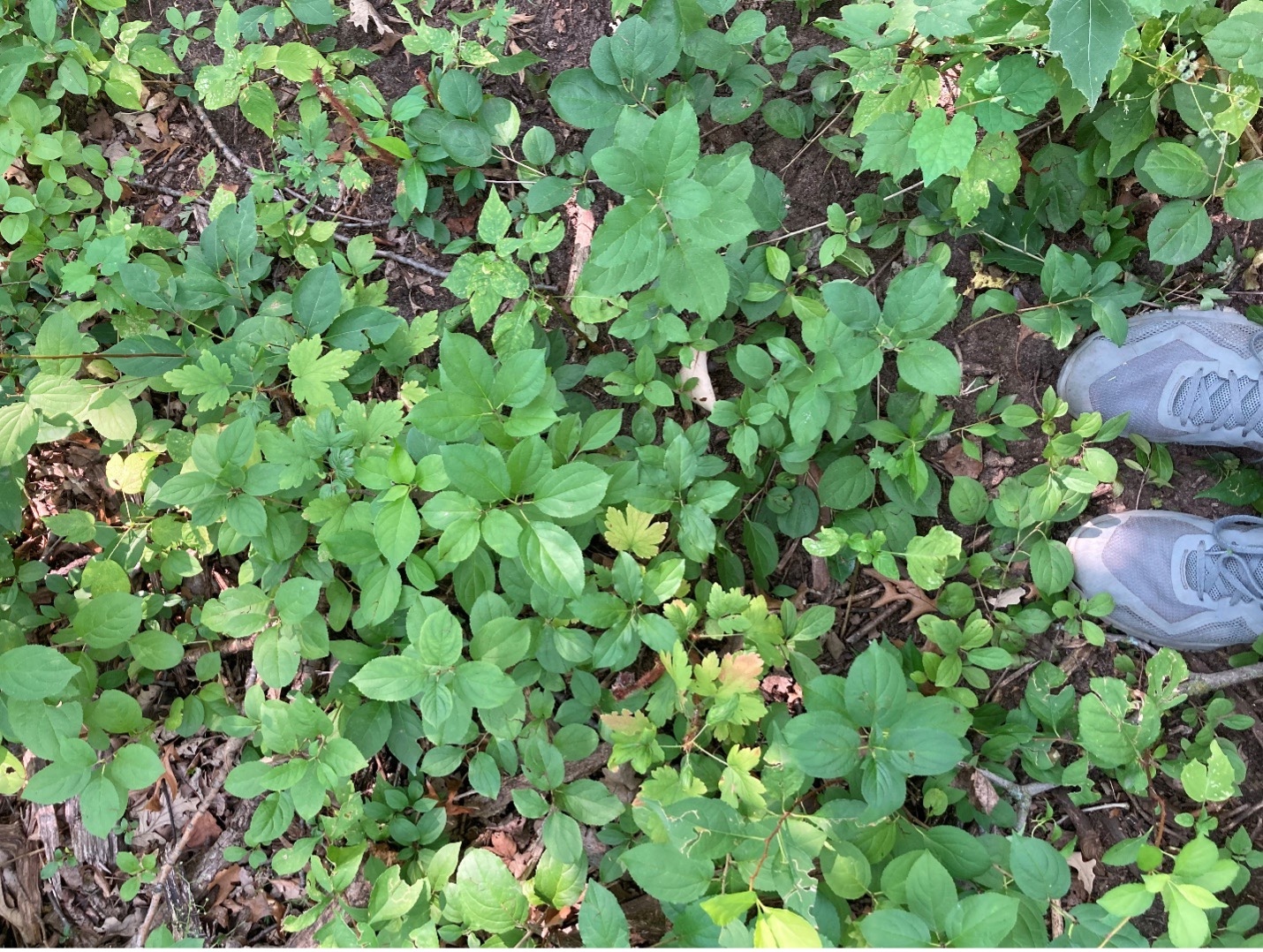
    R. cathartica seedlings forming a dense layer near the ground in a temperate deciduous forest in Eastern Minnesota USA (Photo by Andrew Kaul).

    ​Our research group at the University of Minnesota led by Peter Reich has been studying buckthorn for several years, funded by multiple grants from the Minnesota Invasive Terrestrial Plants and Pests Center (MITPPC). Recent work in our group has focused on how to suppress buckthorn regeneration after initial removal of large individuals. The Cover it up! project investigates which methods of revegetation are most effective for restoring the ground-layer with native species that can prevent buckthorn recruitment and growth. Various experimental introductions of native plants have included direct seeding shrubs, direct seeding trees, adding herbaceous seed mixes with variable ratios of grasses to forbs, and treatments with combinations of functional groups. For example, we combined sowing the Standard Cover It Up seed mix of 34 native grasses, and forbs with planting bare-root plants from other functional groups – trees, shrubs, ferns, or sedges.

    Across several experiments, one of the most important results has been that the extent to which revegetation treatments are effective in suppressing buckthorn, is mostly explained by their ability to rapidly establish vegetation, preempt space, and shade out buckthorn seedlings. Two of the most successful strategies include 1) planting native tree species and 2) seeding a mix of native Elymus spp. grasses (wild ryes) and wildflowers to establish an herbaceous understory. The native trees used in this experiment included species like Sambucus canadensis (elderberry), Abies balsamea (balsam fir), and Acer saccharum (sugar maple), planted immediately after clearing-out buckthorn. Planting woody native species can reduce buckthorn regrowth by up to 80%, and establishing a grassy herbaceous community can reduce regrowth by 77%.

    We recently published A Guide to Forest Understory Revegetation, which makes several science-based recommendations for invasive shrub management based on our research. Revegetation should occur as soon as possible after initial removal of large individuals. Additionally, restoring sites via revegetation will be most effective in areas with at least 10% open canopy so that sufficient light is present for native seedlings to establish. If opening the canopy is feasible by selectively removing some trees, this will facilitate a greater cover and diversity of herbaceous plants in the understory. When conducting revegetation with herbaceous species, planting a native seed mix with a high proportion of cool season (C3) grasses is ideal. These species grow well in shadier environments, establish rapidly, are inexpensive, and produce dense vegetation that can carry a fire to facilitate management with prescribed burns. Shade-adapted wildflowers such as Ageratina altissima (white snakeroot) or Hydrophyllum virginianum (Virginia waterleaf) should be included in the seed mix in order to add value to pollinators and other insects. When conducting revegetation with woody species, planting native tree species can be highly effective in excluding buckthorn, but revegetation through bare-root plantings has its drawbacks, being more expensive and labor intensive. This method would work well if implemented in smaller areas, especially where there are few deer. In general, revegetation plansshould prioritize reducing light reaching the ground where buckthorn seedling are growing.Counterintuitively, this can be achieved by opening the tree canopy to facilitate establishment of herbaceous cover in the understory. 

    In addition to studying methods of revegetation to suppress buckthorn seedlings, our research group is also investigating novel methods for removal of mature buckthorn plants. In June 2024, we initiated an experiment testing the efficacy of critical period cutting to kill large buckthorn without the use of chemicals. This method was pioneered by Friends of the Mississippi River (FMR) as a strategy for removing buckthorn without using herbicide, which is prohibited in Minneapolis parks. This method involves using a saw or loppers to cut off the top of a buckthorn plant about 1.5 m from the ground early in the growing season. Subsequently, a couple times throughout the growing season, each buckthorn is revisited and stripped (picked off easily by hand) of all re-growth. This process is then repeated the following year, if necessary. Cutting the stem at chest height rather than near the ground has multiple benefits of 1) reducing risk of stumps as a tripping hazard, 2) relocating previously cut stems, and 3) stripping re-sproutsthat usually occur at the end of the stem, which is near chest height.

    Given FMR’s success implementing the critical period cutting method, our experiment is examining when this method is most effective in killing buckthorn depending on the size of the individual or its light environment. We are also quantifying the minimal effort required to ensure buckthorn mortality by examining survival of buckthorn over two years of stripping re-sprouts, with 4, 6, or 10 total removals. To test how effective this method is for controlling other invasive shrub species, we are working with collaborators in Wisconsin, Maine, and Missouri, who are also conducing this experiment on the invasive shrubs Frangula alnus (glossy buckthorn) and Lonicera maackii (bush honeysuckle). These are also serious woody invaders of forests throughout the Midwest and our research aims to improve forest restoration outcomes at smaller scales when herbicide or other larger-scale methods are not possible.

    Stems of common buckthorn in a study area examining the efficacy of critical period cutting in Minnesota (Photo credit Alex Roth).
    Experimental stems of bush honeysuckle at the Missouri Botanical Garden’s Shaw Nature Reserve (Photos by Andrew Kaul). 

    If you are interested in learning about these projects in greater depth, you can read the guide to forest understory revegetation here or learn more about ongoing research in the Cover It Up! project here. If you have any questions, feel free to contact Mike (schuster@umn.edu) or Andrew (akaul@mobot.org).

  • Understanding the role of soil microbial communities in oak woodland restoration using DNA metabarcoding

    Understanding the role of soil microbial communities in oak woodland restoration using DNA metabarcoding

    By: Rachel Brant

    Rachel is a postdoctoral fellow in the Missouri Botanical Garden’s Center for Conservation & Sustainable Development whose research focuses on plant-pollinator interactions and using eDNA to advance the conservation and restoration of biodiversity.

    Oak-dominated ecosystems occur in many areas of the northern hemisphere, support considerable biodiversity, and provide vast benefits to humans. Although notably absent from the southern hemisphere, oak-dominated or mixed-oak dominated forests are found across much of southern and central Europe, northeast Asia, and the eastern and central United States. Oak ecosystems range from closed forests with a dense midstory to open forests or woodlands with continuous canopy or widely spaced trees and dominance of herbaceous vegetation in the understory.

    Around 80% or more of the plant diversity in oak forest and woodland ecosystems in the eastern US, including a large proportion of rare species, resides in the herbaceous layer, which contributes significantly to nutrient cycling and overall ecosystem function. However, these forests and woodlands have suffered significant degradation over the past century, resulting in dramatic shifts in species composition and structure due to human land-use activities, invasive species, and alterations in disturbance regimes. In particular, fire exclusion has led to the encroachment of fire-intolerant tree species and nonnative shrubs, decreasing both understory light availability and the abundance and diversity of herbaceous plant species.

    Restoration of oak ecosystems usually involves prescribed burning or a combination of burning, canopy thinning, and control of undesirable woody vegetation. Although these restorative practices encourage the passive recovery of herbaceous flora, restored oak woodlands often lack conservative species in the understory. Unlike matrix or ruderal plant species, conservative plant species are those that depend on high-quality or minimally damaged sites and rapidly disappear with degradation. In addition, they often fail to recolonize sites naturally, making them potentially important targets for reintroduction.

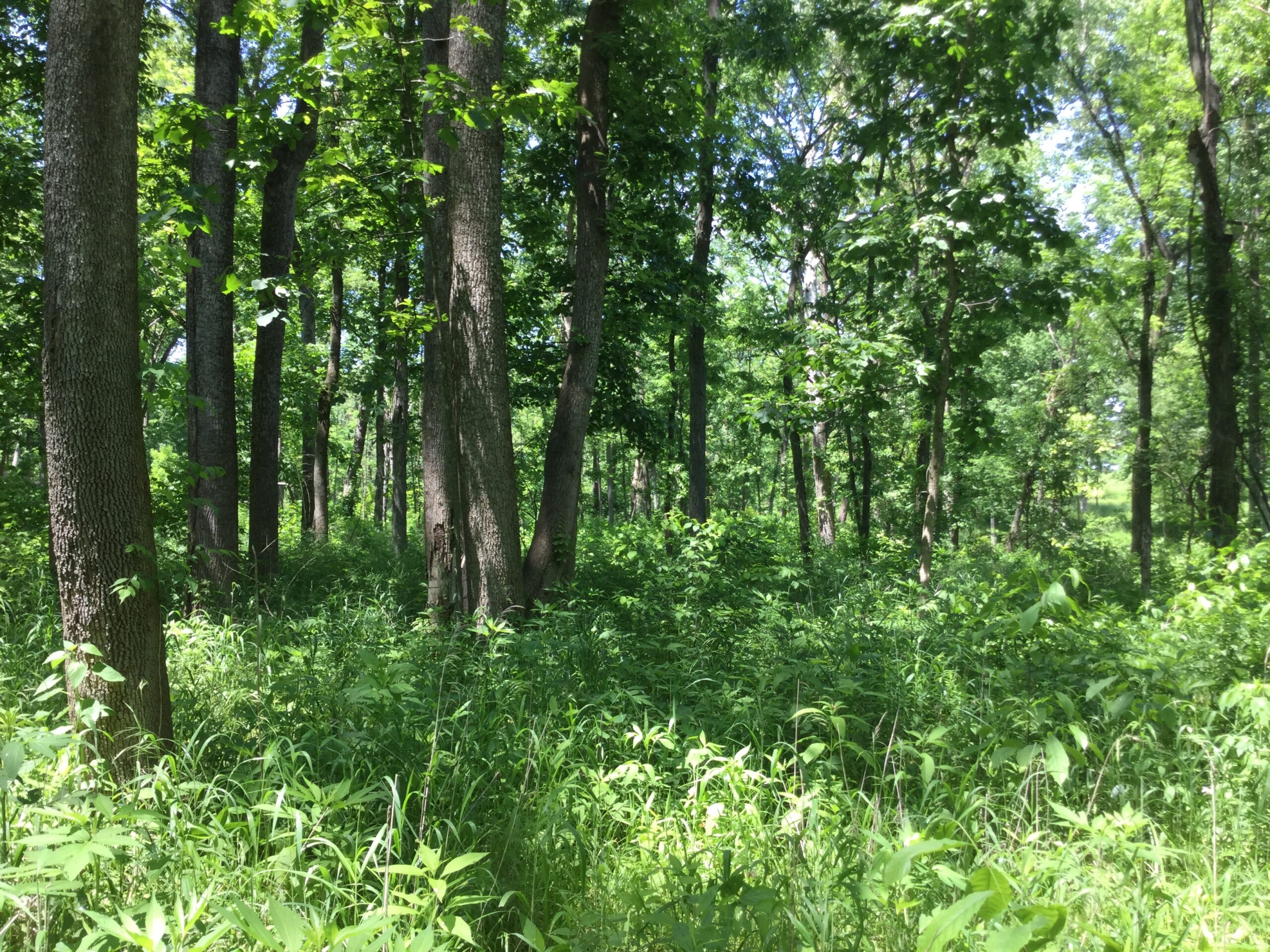
    (Top) Degraded oak woodland at Missouri Botanical Garden’s Shaw Nature Reserve infested with nonnative shrubs and fire-sensitive tree species and (Bottom) Adjacent restored oak woodland after mechanical control of woody encroachment and six prescribed burns. Note the minimal sunlight penetrating the woodland floor and lack of herbaceous species in the degraded woodland relative to the restored woodland. Photo: (Top) Brad Delfeld and (Bottom) Matthew Albrecht.

    Conservative species are notoriously challenging to reintroduce in restoration projects, with soil microbes emerging as a key factor influencing their success. Arbuscular mycorrhizal fungi (AMF) are particularly crucial in this context; they enhance nutrient uptake and improve stress resistance, benefits that are especially valuable for conservative plant species with specific habitat requirements. For example, one study found that conservative species were more dependent on AMF and exhibited higher habitat specificity compared to less conservative species (Bauer et al. 2018). The practice of soil inoculation with whole soil, which presumably contains beneficial mutualists like AMF, is increasingly employed to boost plant growth and survival in restoration projects. Despite its growing popularity, though, the effects of soil inoculation on the establishment of herbaceous species in oak-dominated ecosystems remain poorly tested.

    Another factor that may affect the establishment of conservative plant species is the timing of reintroduction. Environmental conditions are predicted to be more favorable for the establishment of conservative species later in restoration, in part because soil symbionts facilitating plant establishment may only be found in later-successional sites. Alternatively, early restorations may lack the establishment barriers potentially encountered later in restoration, such as competition with established vegetation or soil legacies from early-arriving species, but could be deficient in important microbial mutualists often required by conservative plant species.

    To test these hypotheses, we examined the potential role of soil microbial communities on the performance of conservative herbaceous species using an oak woodland restoration chronosequence at the Missouri Botanical Garden’s Shaw Nature Reserve. First, we collected bulked field soil samples from three sites representing different restoration ages (young, intermediate, and old) based on their onset since restoration began (7, 16, 29 years ago) with prescribed burning, selective tree thinning, and non-native shrub control. We quantified several soil abiotic properties (e.g., pH, phosphorus, potassium, and nitrogen) and employed DNA metabarcoding to describe the microbial composition of the soil. DNA metabarcoding is a cutting-edge technique that identifies many taxa from an environmental sample by sequencing specific genetic markers from extracted DNA. This method provides a comprehensive snapshot of the microbial diversity present, allowing one to better understand otherwise cryptic below ground communities. 

    Conservative perennial forbs used in a greenhouse study to test the effects of soil inoculation young, intermediate, and old restored woodlands on plant growth: Geum virginianum (left), Solidago argute (center), and Solidago caesia (right). Photo credit: Gerrit Davidse (left) and Missouri Botanical Garden (center and right).

    Next, we conducted a greenhouse study with three conservative forb species, Geum virginianum, Solidago arguta, and Solidago caesia, testing their growth responses to soil inoculum from sites that differ in restoration age. These species are components of the regional species pool, but absent from restored oak woodlands at Shaw Nature Reserve. We placed germinated seeds of each species in quart-sized pots filled with a sterilized topsoil mix that mimic oak woodland soils. Each sterile pot (270 in total) was then inoculated with 10 mL of the bulked live field soil (approx. 1% by volume) sourced from one of the three restored sites. Plants were grown for 12 weeks in standard greenhouse conditions and then evaluated for growth using nondestructive measurements.

    Planting seeds of conservative forb species into soil inoculum treatments in a greenhouse study. Photo credit: Leighton Reid

    Tree species and soil microbial communities in restored oak woodlands 
    Not surprisingly, we found that younger restored oak woodlands, with historically fewer prescribed fires, had a greater abundance of fire-sensitive tree species (e.g., sugar maple, Acer saccharum) than the intermediate and older restored sites. However, younger restored woodlands also exhibited lower levels of soil phosphorus compared to older sites, consistent with previous studies that have shown greater levels of potassium and phosphorus in soils post-burning. Other soil abiotic properties, however, did not differ across the restoration chronosequence. 

    A grove of sugar maples (Acer saccharum) during autumn in the young restoration site at Shaw Nature Reserve. Photo credit: Mike Saxton

    Bacterial and fungal communities varied in composition across the restoration chronosequence. For example, Firmicutes, a phylum of bacteria noted for surviving in extreme conditions, such as in severely burned areas, was more abundant in soils from the oldest restored woodland, which experienced a greater number of prescribed fires than the other sites. In contrast, the fungal phylum Ascomycota was more abundant in restored woodlands of young and intermediate age. Members of Ascomycota include decomposers that break down organic materials and endophytes that form mutualistic or commensal associations with plants. 

    Plant-soil interactions in response to soil inoculation
    After 12 weeks of plant growth in the greenhouse, we found that forbs tended to grow larger leaves when grown in soil inoculum from the younger restoration site compared to the intermediate restoration site. Additionally, S. arguta and S. caesia grew longer leaves in soil inoculated from the intermediate compared to the old site, while G. virginianum plants tended to produce longer leaves when grown in inoculum from young relative to the old restoration site.

    Leaf length (cm) of three native forbs after 12 weeks of growth in whole-soil inoculations from young, intermediate, and old restored oak woodlands at Shaw Nature Reserve. Geum virginianum (GV), Solidago arguta (SA), and Solidago caesia (SC).

    Results from the DNA metabarcoding provide a clue as to why the soil inoculum treatments induced different plant-growth responses. Soils from the young restoration exhibited increased relative abundance of mutualistic microbes, including AMF and cyanobacteria, and decreased pathogenic taxa after conditioning by each of the three species. In contrast, the oldest restoration site had the greatest relative abundance of pathogens and the lowest relative abundance of mutualists. This enhanced microbial profile in young restorations may facilitate better nutrient uptake, and disease and stress resistance in plants. From a practical perspective, early-stage restorations may provide the most favorable soil microbial community for the establishment of conservative plant species in these oak ecosystems. One possible reason for this could be a shift in the increased relative abundance of AMF-associating tree species (e.g., maple) from older to young restored woodlands. AMF-associating tree species may harbor unique AMF taxa that resulted in increased herbaceous plant growth and AMF colonization for plants conditioned with young soil inoculum.

    Interestingly, although some microbial taxa exhibited consistent patterns across all plant species within an inoculation treatment, each plant species also associated with unique microbial taxa when grown in the same soil inoculum treatment. For example, the Glomeraceae, which includes AMF, was marginally more abundant after S. caesia was grown in young inoculum, whereas Ascobolaceae – fungi that feed on decaying and dead matter – was significantly abundant only when G. virginianum was grown in old soil inoculum. This means that species reintroduced during different stages of oak ecosystem restoration could influence key ecological functions by selecting for or against certain microbes, including pathogens that regulate plant community dynamics, decomposers involved in nutrient cycling, and mutualists that enhance plant performance. 

    Overall, our study demonstrates how restoration age can shape interactions between soil microbes and herbaceous plant species in restored oak woodlands. By better understanding these interactions, we can enhance the restoration and recovery of degraded oak ecosystems. However, an important and lingering question from our study is whether differences in plant growth and microbial communities observed in the greenhouse persist after the focal plant species are transplanted into the field. A study currently underway at Shaw Nature Reserve is addressing this question across different restoration ages and competition treatments. Our study reinforces global calls that emphasize the need for more research on the dynamic nature of plant-microbe relationships and interactions over time during restoration. Advancing scientific research on the relationship between the soil microbiota and ecological restoration practices is crucial for meeting local, regional, biome level and global restoration goals.

    If you want to learn more about microbial-herbaceous plant interactions in restored oak woodland, we invite you to read our recent paper in Ecology and Evolution.

  • Critical (ecological) care in the land of the dodo: invasive species removal

    Critical (ecological) care in the land of the dodo: invasive species removal

    By Eva Colberg, postdoctoral fellow at Cornell University. Nearly all of Mauritius’s contemporary conservation plights are rooted in or exacerbated by the effects of invasive, non-native species. To see what restoration can do for the island’s few remaining forests, Dr. Eva Colberg joined members of the Tropical Island Biodiversity, Ecology & Conservation research group to visit (and weed) one of the island’s forest restoration sites.

    Two of Mauritius’s prominent ecological invaders, a macaque and strawberry guava. Photo: Eva Colberg.

    Red stems of strawberry guava (Psidium cattleyanum) form a wall dense enough to prevent walking through most of Mauritius’s remaining forests. Beyond impeding movement, the thick guava understory also reduces overstory tree fitness and disrupts native forest growth and succession. Originally from South America, strawberry guava is a classic case of a non-native, invasive species outcompeting and reducing habitat quality outside its native range (and islands are particularly vulnerable to invasion).

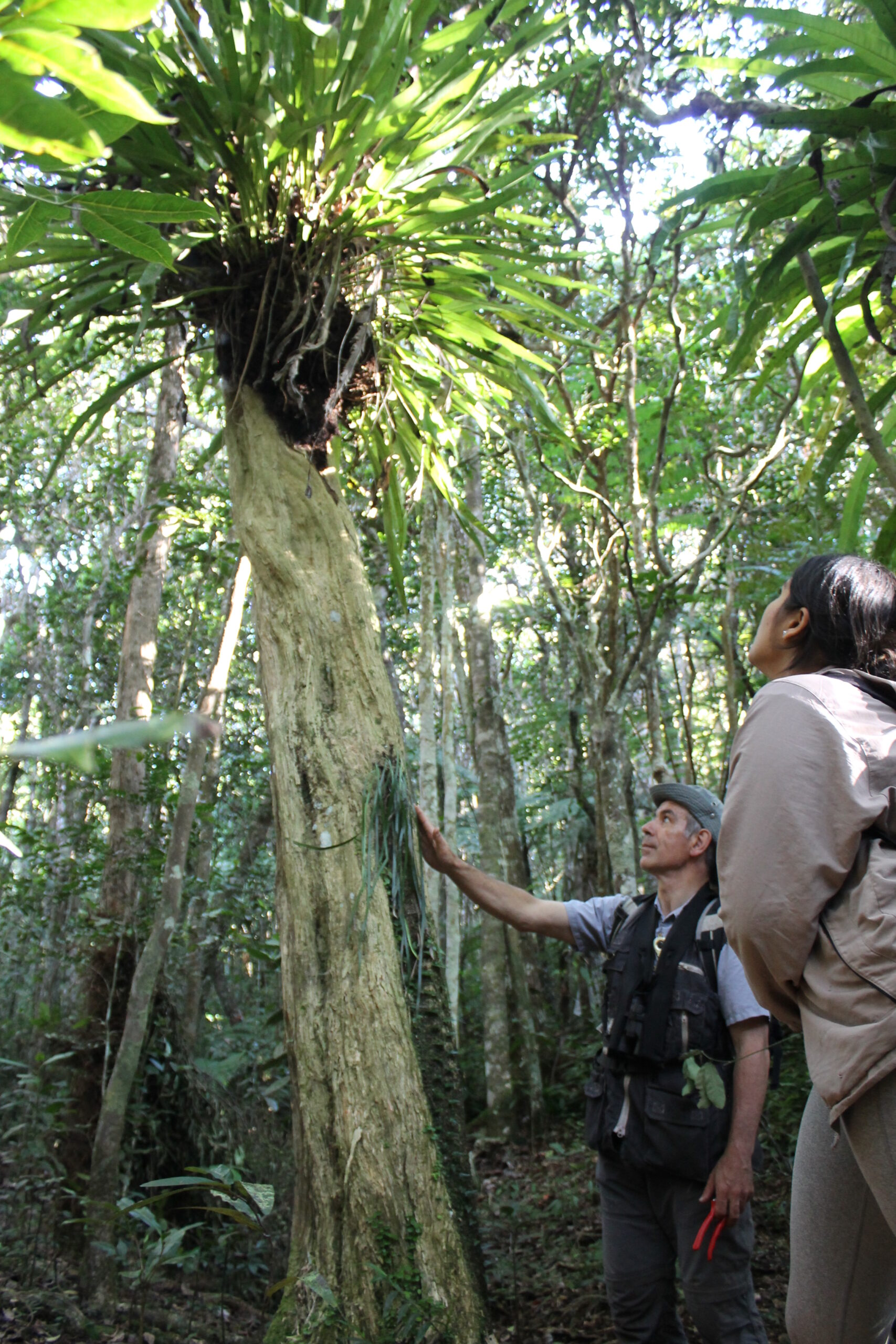
    Litter basket ferns (Asplenium nidus) and other native species grow in the understory space freed up in a 20-ha area since the UNDP-funded removal of strawberry guava and other invasives in 1996. Photo: Eva Colberg.

    Strawberry guava is far from the only invader threatening Mauritius’s flora and fauna. Alien ants disrupt pollination of native plants, an effect compounded by invasive plant presence. Conflicts between fruit farmers and a keystone seed disperser, the Mauritian flying fox (Pteropus niger), could be due to poor habitat quality and low native fruit production in invaded forests. Invasive macaques (Macaca fascicularis) further disrupt plant reproduction by breaking branches and eating fruits before they’re ripe, and eating and stealing nectar from native flowers without pollination.

    Vincent Florens and an undergraduate student discuss the diversity of epiphytes found in a weeded section of forest at Black River Gorges National Park. Photo: Eva Colberg.

    The ongoing onslaught of invasion means there’s no time to waste for restoration ecologists like F.B. Vincent Florens, Associate Professor at the University of Mauritius. “We have so many rare species on the brink of extinction [over 80% of the island’s endemic flowering plants are threatened], and have to work at the same time and learn as we go.” His life experience and ecological studies point to invasive species management as the island’s best hope for restoration and conservation, which he likens to healthcare. “First you save the person from dying and then you can treat the other issues.”

    Although the views from Black River Gorges National Park are stunning, they also show the sparseness of the park’s forest overstory, with fewer and farther-between survivors.

    Although avian re-introductions and rewilding small islets with tortoises are sexier solutions than mere weeding, the best way to keep Mauritius’s mainland forests from dying is through invasive plant removal. After weeding, native trees in all forest strata produce more flowers and fruit, woody plants increase in species richness and seedling density, and butterfly diversity and abundance also increase. These many benefits can be furthered and maintained by follow-up weeding and other subsequent measures (including the promise of biochar to suppress weed regeneration).

    Recently described and known to only a few locations, the orchid (Polystachya jubaultii) grows in a weeded forest remnant at Black River Gorges National Park. Photo: Eva Colberg.

    Despite decades’ worth of evidence pointing to the efficacy of invasive plant removal in Mauritius, it still isn’t widely implemented. Less than 5% of the island’s few remaining forests have been weeded of invasive plants, and even the best-protected forests are already dominated by invasive undergrowth. Frustratingly, some of the resources that could be used for invasive removal have instead hindered restoration via removal of native pioneer and nurse tree species. “We can do a lot of science, can come up with a lot of facts, but how do we get people to do what they don’t want to do?” Indeed, it’s far easier to uproot a small plant than to change someone’s mind, and Prof. Florens has an entire country to convince that saving their native forests is not only possible, but worth the effort.

  • Madagascar’s unique history has created unique restoration challenges

    Madagascar’s unique history has created unique restoration challenges

    Leighton Reid describes new research linking slow forest recovery to the ancient and protracted isolation that has made Madagascar a hotspot of global endemism – plus an example of working with local farmers to overcome these challenges and restore native rain forest.

    Madagascar is a special place with a special history. Separated by ocean from Africa and India for the last 88 million years, this isolated tropical island has fostered the evolution of plants and animals found nowhere else on Earth. Lemurs, couas, and the plant family Sarcolaenaceae are all examples of organisms that evolved only in Madagascar. Collectively, such endemic species make up more than 80% of all plants and animals there.

    Crested coua (Coua cristata), one of nine species in the genus Coua – all of which are found only in Madagascar. Photo credit: Olaf Oliveiero Riemer (CC BY-SA 3.0).

    Madagascar also has special problems. Almost half of the island’s forest has been cleared for agriculture since 1953, and remaining forests are at imminent risk. One recent study projected that if deforestation rates do not diminish soon, 93% of eastern Malagasy rain forest could be gone by 2070.

    The combination of a large proportion of endemic species and a high degree of habitat loss makes Madagascar a biodiversity hotspot. Some people call Madagascar one of the hottest hotspots because its endemism and habitat loss are so extreme.

    This week, a new study led by UC Berkeley PhD student Kat Culbertson identified another special problem in Madagascar: following disturbance, Malagasy forests recovery very slowly. Compared to other tropical forests around the world, Malagasy rain forests recover only about a quarter (26%) as much biomass in their first 20 years of recovery. Dry forests in Madagascar also recover more slowly, recovering just 35% as much biomass as American tropical dry forests over the same time period.

    Slow biomass recovery following disturbance in Madagascar (dark blue) compared to Central and South America (Neotropics), Africa (Afrotropics), and Asia (Asiatic tropics). Source: Katherine Culbertson et al. (2022) Biotropica.

    Why do Malagasy forests recover more slowly than forests in other regions? The answer may be related to Madagascar’s unusual evolutionary history. Culbertson and her co-authors developed four hypotheses and reviewed an array of scientific literature to evaluate support for each one.

    Four ways that Madagascar’s unique history could lead to slow forest recovery

    1. Native Malagasy forests lack resilience to shifting nutrient and fire regimes from current farming practices. Many rural people across Madagascar practice tavy, a farming method that involves clearing forest, burning it, and then growing rice – a staple crop. After one or a few years of growing rice, the land is allowed to recuperate for several years before it is cultivated again. In other tropical forest locations, such as southern Mexico where humans have farmed for thousands of years, similar practices can coexist with native forests, but Malagasy forests seem to have little resilience to tavy, as least at the intensity with which it is practiced today. For example, in eastern Madagascar, a 3-5 year tavy cycle can cause a native forest to transition to permanent herbaceous vegetation in just 20-40 years. The soil nutrient stocks in that fallow field may be as little as 1-6.5% of soil nutrients stocks in intact forest.

    2. Madagascar is an island, and islands tend to have more problems with invasive species. Goats in the Galapagos, brown tree snakes in Guam, acacia in Hawaii, and rats everywhere – these are just some of the ways that island ecosystems have been overwhelmed and transformed by invasive species. Madagascar is no exception. Rain forest regeneration at Ranomafana is stalled by invasive guava, eucalyptus, and rose apple, while dry forest regeneration at Berenty is inhibited by a vine – Cissus quadrangularis. People in Madagascar have many more anecdotes about problems with invasive species like silver oak and Melaleuca quiquenervia, although the extent and impact of these invaders on forest recovery have not yet been studied.

    3. Old, weathered soils have favored the evolution of slow-growing native plants. Madagascar is not only an island, it is a very old island, and as such its soils have been weathered and depleted of important nutrients like phosphorus. It’s hard to separate the effect of inherently low nutrient availability due to being an old island from the effect of human-induced nutrient scarcity through tavy, but one comparison of phosphorus content in rice stalks showed that phosphorus content was 10× lower in Madagascar compared to the rest of sub-Saharan Africa. If native trees have evolved to grow more slowly in Madagascar because of low nutrient availability, then on average exotic tree species should grow faster than native Malagasy ones in the same gardens. This has been shown in a few cases, but a more compelling analysis would need more species.

    4. Finally, Malagasy forests have dysfunctional seed dispersal. One way in which Madagascar is different from other tropical areas is that by and large its trees have evolved to have their fruits dispersed by lemurs. Unfortunately, many of the lemurs that could disperse Malagasy tree fruits are either extinct or endangered – in many cases due to a combination of hunting and habitat loss. Moreover, the lemurs that remain are reluctant to venture outside of forest fragments (perhaps with good reason) and so they are unable to disperse seeds to regenerating farmlands that most need them.

    Black and white ruffed lemur (Varecia variegata) – a critically endangered seed disperser in eastern Madagascar. Photo credit: Tim Treuer.

    In essence, the ancient and protracted isolation that has made Madagascar so unique has also made it uniquely vulnerable to contemporary changes like deforestation, fire, and agriculture. The result is an unfortunate combination: Madagascar not only has some of the highest deforestation rates, it is also one of the places least ecologically equipped to rebound from those disturbances.

    A mosaic of mature tropical dry forest and forest restoration at Berenty in southern Madagascar. Photo credit: Ariadna Mondragon Botero.

    The way forward – working with local people

    Despite these challenges, Madagascar has committed to restoring four million hectares of lost habitat by 2030, an area nearly 7% the total national territory. This is a tall order in a country where technical difficulties are high and financial resources are often low, but it can be done, and the way forward, undoubtedly, is to work with local people.

    One group that exemplifies bottom-up restoration is GreenAgain, a non-profit restoring native rain forest and supporting rural livelihoods in eastern Madagascar. GreenAgain is led and staffed by farmer-practitioners whose neighbors, family, and friends contract with GreenAgain to design, plant, and monitor diverse native forests on their lands. Last year, GreenAgain staff planted 20,000 trees across central eastern Madagascar, each one carried by hand, on foot, from one of eight regional tree nurseries. The rural farmers at GreenAgain collect rigorous data on tree survival and growth and collaborate with scientists to analyze and share the results of their tree planting experiments.

    For example, one of the earliest experiments at GreenAgain was an assay of tree planting strategies intended to improve native tree seedling survival during plantings that occur in the dry season. Trees planted during the dry season typically have high mortality, sometimes in excess of 40%. One of the strategies that local farmers recommended to improve survival was to erect small teepees over each seedling using the leaves of a common fern, Dicranopteris linearis. These structures are temporary – they eventually dry out and blow away – but GreenAgain’s experiment showed that they reduced transplant shock (i.e., mortality in the first few weeks) by 75% compared to seedlings that were left to bake in the hot sun. In contrast, many of the other treatments had no discernable effect.

    To analyze and publish these findings, GreenAgain partnered with an award-winning undergraduate researcher, Chris Logan, in my lab at Virginia Tech, who led a peer-reviewed paper that is now available at Restoration Ecology.

    Leaf tent made with a ubiquitous fern, Dicranopteris linearis, placed over a native tree seedling. Photo credit: Catherine Hill.

    Could technological solutions like hydrogels or irrigation systems produce greater improvements in dry season tree survival? Yes – they probably could for a certain price, but homegrown solutions like fern leaf shade tents are free and easily accessible to any person doing restoration across eastern Madagascar. They are also more likely to be used because they were developed by local people.

    This study also showed that some native tree species are much better at coping with dry season stress than other species, so another possible solution for dry season plantings could be to plant only the tough survivors. Once those trees survive and begin to produce shade, fern leaf tents may not even be needed anymore to help more sensitive native species survive and grow.

    To read more about ongoing restoration and ecological research in Madagascar, read our new review of how Madagascar’s evolutionary history limits forest recovery and our new open-access paper about strategies for dry season plantings in eastern Madagascar.

    If you are in a position to support the work of local farmers restoring rain forests in eastern Madagascar, consider donating to GreenAgain at their website, greenagainmadagascar.org.

  • The ‘botanical melting pot’ of Madeira: Notes on natural history and ecological restoration at species, ecosystem, and landscape scales

    The ‘botanical melting pot’ of Madeira: Notes on natural history and ecological restoration at species, ecosystem, and landscape scales

    By Thibaud Aronson and James Aronson. All photos by Thibaud Aronson.

    The main island of Madeira is just 740.7 km2 (286 mi2), while the handful of others are rather barren, and mostly uninhabited. That means the entire Madeiran archipelago is about the size of a medium-sized National Park in the US, such as Crater Lake, in Oregon, for a total population of just over 250,000.

    For garden and natural history/cultural history-oriented travellers, Madeira and its neighbors – the cooler Azores to the north, and the drier Canary Islands – are spectacular: these are three of the most appealing areas of the Atlantic for human habitation, gardening, farming, and hiking, with floras and faunas related to European, Mediterranean, and African biota, as well as some unifying Macaronesian elements shared among the three archipelagos. Agricultural crops are also quite spectacularly varied, with a strong presence of vineyards of very stunning appearance, and also subtropical bananas (about which, for some history, including the tale of the EU’s “bendy banana law”, see here).

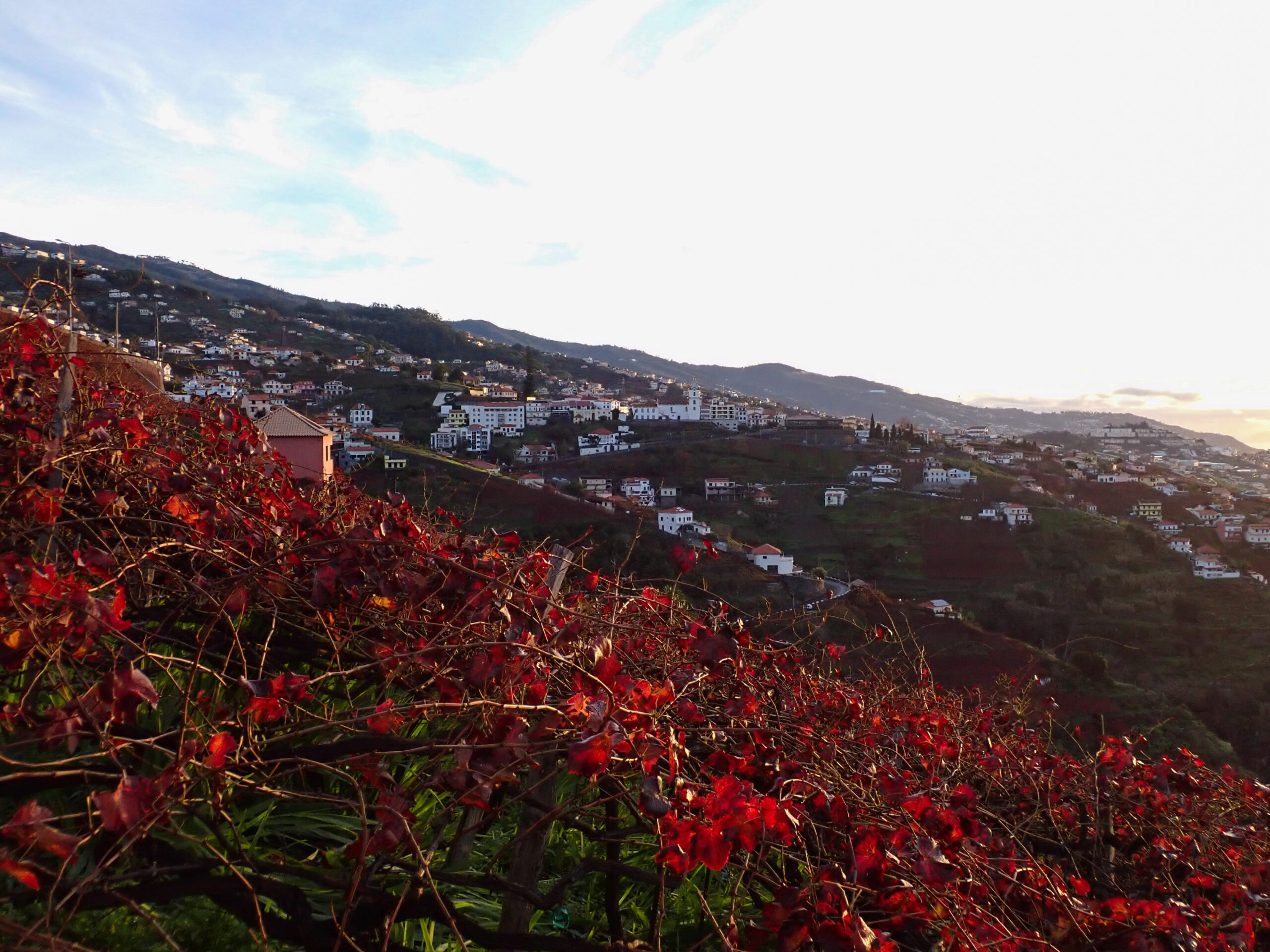
    Traditional vineyards with heritage grape varieties on the slopes of Câmara de Lobos, west of the capital. Numerous banana fields share this valley and many others like it in the periurban area around the capital city of Funchal.

    Of particular interest on the island – of combined natural and cultural heritage value, are the laurel forests (laurisilva to botanists). Mostly dominated by evergreen trees and tall shrubs of medium stature – no more than 15-20 m high – these kinds of forests typically occur at subtropical latitudes, in areas with mild climate and high humidity. They can be seen – in unconnected fragments for the most part, and with varying botanical composition of course – in places such as the Himalayan foothills, central Chile, or the highlands of Ethiopia. In Europe, true laurel forests used to cover much of the Mediterranean basin during the Tertiary era, from which they receded and disappeared as the region’s climate got progressively drier. Apart from a few fragments left in the remote Anti-Atlas Mountains of Morocco, and one small patch in southern Spain, the only surviving Atlantic laurel forests are found in Macaronesia. The highlands of Madeira hold the largest and best-preserved stands, somewhat protected over the past six centuries by the island’s dramatic topography and, since 2009, thanks to recognition as a UNESCO World Heritage site covering 15,000 hectares.

    Madeira’s laurisilva is draped in mist more often than not, and exuberant lichens and ferns cling to every tree branch, giving these forests a very primeval feeling, unlike anything else in Europe. The forest type is dominated by under a dozen evergreen tree species, most notably laurels (5 species in 4 different genera of Lauraceae) and tree heaths (Erica spp.), some of which get to be exceptionally tall for Ericas. But there are several dozen endemic shrubs and herbs in the undergrowth, such as various Geraniums and several giant daisy relatives. It has three endemic bird species as well.

    The whistles of the Madeiran Firecrest (Regulus madeirensis) are one of the most common sounds of the laurisilva, as this tiny sprite of a bird flits from branch to branch.
    The shy Trocaz Pigeon (Columba trocaz) is endemic to the forests of Madeira. Its two closest relatives are also laurisilva specialists, found in the western Canary Islands.
    The Madeiran Chaffinch (Fringilla coelebs maderensis) is most abundant along the levada canals of the Madeiran highlands, where these fearless birds have become accustomed to being fed crumbs by hikers.

    The archipelago was uninhabited until Portuguese sailors claimed it for the Portuguese crown in 1417. The island’s appealing climate was not lost on them and they set about settling it. Much of what they did shaped the island that we know today and no doubt led to a massive amount of irreversible clearing, deforestation, and soil erosion, as we will discuss further on.

    Madeira’s climate is very unbalanced. The northern slopes can receive nearly 3000 mm of rain in a year, while the southern part of the island is much, much drier. However, the south has gentler slopes, making it much more suitable for building and agriculture. Therefore, the Portuguese set about building levadas, irrigation canals to bring water from the north to the south. This enormous network, spanning thousands of kilometers, much of it dug from sheer cliff faces, with numerous long tunnels as well, was built over four centuries (with slave labor, many of whom lost their lives in the process); without it, large-scale settlement of Madeira would have been near impossible.

    A narrow path along the levada of the Caldeirão Verde (Green Cauldron), in the island’s central highlands.
    Waterfalls are plentiful along the sheer slopes of the highlands.

    The island also achieved tremendous prosperity especially in the 17th, 18th and 19th centuries, thanks to its privileged position for maritime trade in the north Atlantic and, for a while, its role as one of the world’s largest sugar cane exporters. The richer inhabitants, taking advantage of the favorable weather, began a tradition of having extravagant gardens, with plants from all over the world. Indeed, a walk in the streets of any town on the island today will reveal gardens bursting with an incredible melting-pot of plants, with Hydrangeas (from east Asia), growing side by side with Agaves and Yuccas (from Mexico), Agapanthus (from South Africa), Brugmansias and Passionflowers (from the Andes), Bougainvillea from the South Pacific, and more marvels, all under the shade of massive Agathis and Eucalpyts (Australia) and Araucaria trees (Norfolk Island, and Chile)! There is perhaps no better illustration of this potpourri quality of the cultivated plants than the fact that Madeira’s official flower is the Bird of paradise, Strelitzia reginae, a native of… South Africa!

    However, to anyone with naturalist’s eyes, a lot of what is seen outside of gardens is quite worrisome when one considers the island’s native flora, fauna, and varied ecosystems outside of the protected areas where the laurisilva occurs. There are massive areas of soil erosion, and as elsewhere throughout the Mediterranean region, abandoned lands and pastures that appear to have been cleared and then repeatedly burned over several centuries to maintain grazing lands for sheep and goats. Most of the extant revegetation has been done with Eucalyptus globulus, Mediterranean pines, and various other non-native conifers and  Australian Acacias. Of these latter fast-growing, colonizing, bird-dispersed trees, at least 6 are invasive on Madeira and the Azores, the worst of the lot being Australian blackwood.

    Most slopes on the southern face of the island are completely overtaken by Australian blackwood (Acacia melanoxylon) invasion, as seen here just above Funchal, the capital.

    So what now, from a restoration ecology perspective? Madeira is subject to strict Portuguese laws regarding sale or import of known invasive plant species; this makes a lot of sense given that already 15% or more of the flora of Portugal, and probably more than that in the Azores and Madeira consists of non-native invasives. But a lot of work beyond protection against new invasions could be envisioned, starting with control or eradication efforts on such an island whose natural beauty and biodiversity are its greatest asset. Reintroduction and reinforcement of populations of endangered native species are also needed and initial experiments in ecosystem restoration could be undertaken on the main island and perhaps some of the smaller islands as well. Education and job training and greater funding for restoration work are all needed and would probably be of great, and lasting value to local communities and the Autonomous Region as a whole. Coordination with similar efforts in the Azores, and on the mainland territory of Portugal should all be encouraged.

    One invader to be carefully monitored on Madeira is Kahili Wild Ginger (Hedychium gardnerianum) a garden-escape that is known to do great ecological damage to native woodlands in Hawai’i, and elsewhere. The IUCN considers it to be one of the world’s 100 worst invasive species. Indeed, its 1.5 to 2 m tall stalks can form extensive stands, with dense mats of rhizomes, that can choke out native understory if left unchecked. Reportedly, control efforts are underway inside the Madeira Natural Park.

    But what about all the areas infested with woody weeds outside the parks and UNESCO Heritage sites in the mountains? From our point of view, the extensive and multiplying stands of Acacia melanoxylon and other invasive wattles (Australian acacias), of Gorse (Ulex europaeus) and a few other noxious woody weeds we saw plenty of,  it seems clear that manual and mechanical controls, and perhaps some biocontrol would be worth testing.

    And, what about everything that ecological restoration, sensu lato, could bring to Madeira? On one road, in the center of the country, we saw a rather large plantation of tree saplings that looked like Ocotea foetens, one of the five native laurels of the laurisilva. That was encouraging to see, but the trees were planted grid-fashion and in monoculture, so that it was unclear what the intention was. As readers of this blog well know, reintroduction (or reinforcement of populations) of a single species of native plant or animal is not the same thing as ecological restoration: ‘restoration of Ocotea foetens’ is a non sequitur whereas reintroduction of this native tree, or its use in reforestation does make sense.

    We also learned that studies are underway regarding the native olive tree, long considered a feral ecotype or, for some systematists, a subspecies of the widespread European olive, Olea europaea, but now generally accepted as an island endemic Olea madeirensis. Pride in such native species should be definitely encouraged, serving as a driver for more attention to what should be planted in the context of future ecological restoration programs in coastal areas and hills, and in environmental education programs, parks, and botanical gardens as well.

    Next, let’s consider the spectacular Dracaena draco, or Dragon tree, that prospered on Madeira and also in the Canary Islands, Morocco, and Cape Verde, until Europeans in the 15th and 16th century began aggressive tapping of the sap from this stem succulent tree – the so-called Dragon’s blood – which was widely prized as a durable natural dye. By the end of the 16th century, Dragon tree was rendered nearly extinct in its natural distribution area thanks to a typical boom and bust pattern of exploitation, and today, the only wild populations of any importance occur on Tenerife, in the Canary Islands, with a few individuals in Morocco and Cape Verde.

    This iconic tree is seen planted all over Madeira, and indeed in frost-free dryland gardens all over the world. But there probably isn’t a single wild dragon tree left on the island! So, what should attempts to restore an ecosystem with populations of Dragon tree look like, over and beyond reintroductions? What reference should be used and which provenances of what trees should be planted and what else is needed for the project to survive and be meaningful to Madeirans?

    Rather spotty plantation of Dracaena draco along with the showy but non-native and potentially invasive Aloe arborescens near the village of Caniçal, on the easternmost peninsula of Madeira.
    A centuries-old specimen Dragon tree in one of the surviving stands of native Dracaeno draco on Tenerife, (near El Draguillo), Canary Islands.

    And now, for our last snapshot, let’s consider the Foxtail Agave, that is widely planted and clearly spreading on coastal cliffs and hills in Madeira. It is an absolutely stunning plant, and of great natural history interest but it starting to naturalize, following in the pattern of Agave americana and Opuntia stricta, that could already be considered serious weeds. Local people probably don’t consider that a problem, and we can certainly understand that, given the newcomer’s graceful beauty. But like the Kahili ginger, and the widely planted Aloe arborescens, the Foxtail Agave is a serious pest on O’ahu and other Hawai’ian islands, and this should give cause for concern to Madeirans.

    Fox-tail Agave, Agave attenuata naturalized near Câmara de Lobos.

    But, then, who are we to say what attitude Madeirans and their authorities should adopt towards non-native invasives? Given the fact that tourism is now far and away the leading economic sector on the island, perhaps – like the Galapagos Islands, or Iceland, or Malta – greater sensitivity to the need for and the value of ecological restoration efforts will develop in the future.

    One thing we could offer is a reminder that ecological restoration clearly includes restoration (or ecological and economic rehabilitation) of cultural or semi-cultural ecosystems, not to mention social-ecological systems and cultural landscapes. In the case of Madeira, this line of thinking would allow for reflection, and encourage investment in the restoration and rehabilitation of the working landscapes that thrived in lower latitudes on the southern half of the island with irrigation water being provided from the levada networks in the mountains. We can imagine remarkably interesting and inspiring landscape-scale restoration with ample opportunities for agritourism, and an expanded form of nature-based or ecotourism that would include cultural landscapes and heritage crops and traditional livelihoods, developed along corridors and valleys connecting levada canals all the way down to restored ‘working landscapes’ that certainly could have multiple benefits for local communities, for biodiversity, and for an emerging restoration economy linked to tourism. Worth considering, no?


  • What happened to the Bahama Nuthatch?

    What happened to the Bahama Nuthatch?

    On January 6-10, CCSD scientist Leighton Reid joined Bert Harris, Kelly Farrell, and David Wilcove on a search for what has become one of the rarest bird species in the western hemisphere.

    Maker:L,Date:2017-8-24,Ver:5,Lens:Kan03,Act:Kan02,E-ve
    Grand Bahama Island, only known home of the Bahama Nuthatch.

    The Bahama Nuthatch (Sitta insularis) is or was a bird found nowhere except on Grand Bahama Island, a thin, 153-km long piece of weathered limestone lying 84 km east of Palm Beach, Florida.


    The Bahama Nuthatch differs from a widespread southeastern US species, the Brown-headed Nuthatch (S. pusilla) in having a longer bill and a distinctive, high-pitched warbling call. It is a denizen of the Caribbean pine (Pinus caribaea) forests that cover about 60,000 ha of Grand Bahama Island. Perhaps always rare, the species was a lot more common in the 1960s than 30 years later in the early 1990s. Ten years ago, a nearly island-wide survey found only 14 individuals in a single tract of forest east of Freeport, the island’s largest settlement. A local nature guide, Erika Gates, regularly found one to three individuals of the species in this area through June 2016, but in early October 2016, Hurricane Matthew (Category 5) blew across the island, causing significant damage. The Bahama Nuthatch has not been detected since June 2016 despite Ms. Gates and others searching in its previous locations. It is considered “endangered” by the IUCN.

    Maker:L,Date:2017-8-24,Ver:5,Lens:Kan03,Act:Kan02,E-ve
    A postage stamp sheet commemorating the Bahama Nuthatch (Sitta insularis), an extremely rare species known only from a single island in the Bahamas.

    Maker:L,Date:2017-8-24,Ver:5,Lens:Kan03,Act:Kan02,E-ve
    Bert Harris plays the distinctive warbling call of the Bahama Nuthatch through a speaker into a very quiet Caribbean pine forest.

    For six days in early January, four of us intensively searched the area around the two most recent sightings, the ones from May and June 2016. We focused on the core area at first and gradually expanded outwards as it became clear that we were finding no individuals at the former sites. We estimated that we searched an area of roughly 4600 hectares of pine forest over a period of 26 hours (88 person-hours). We travelled approximately 92 km of roads and trails, both driving and walking. Many of these were old logging roads, which crisscross the entire island. While driving, we stopped every 0.4 km (0.25 mi) and played a recording of the nuthatch’s distinctive call. While walking, we played the call more frequently.

    We did not find any Bahama Nuthatches. We think that our group, the first to search for multiple days for this species since 2016, was also the first to fail to find it. Perhaps the species’ conservation status should be changed from endangered to critically endangered. Ideally, some Bahamian ornithologist will be able to survey again for the species during the coming breeding season, and if the species is rediscovered, its remaining habitat will be protected, restored, and expanded.


    In addition to the Bahama Nuthatch, we noted that several birds which breed exclusively in the pine forests were also very rare or absent. Bahama Yellowthroats (Geothlypis rostrata), Bahama Warblers (Setophaga flavescens), and Olive-capped Warblers (S. pityophila) were relatively abundant during surveys in 1968 and 2007, but Bahama Yellowthroats were totally absent from our search, and we found only a handful of Bahama Warblers and Olive-capped Warblers, making them even rarer in our survey than the nuthatch was in 2007 (though we searched during some relatively cold weather and during the non-breeding season). We also failed to detect a single Bahama Swallow (Tachycineta cyaneoviridis). Looking through historical records on eBird we noted that the West Indian Woodpecker (Melanerpes superciliaris) was formerly abundant across the island but has not been recently seen.

    The causes of decline for the Bahama Nuthatch and perhaps for other breeding birds of the pine forests are mysterious. Grand Bahama Island has been extensively logged, initially for large diameter timber (prior to 1900) and later (1940s-1970s) for pulpwood. The expansion of the city of Freeport and tree-killing inundation by seawater over large areas have both reduced the potential habitat area. Feral cats, introduced raccoons, and corn snakes introduced in the 1990s could be predating native birds. We saw at least nine raccoons during our short time on Grand Bahama. Altered fire frequency and the increased frequency of Atlantic hurricanes may also be impacting the species, possibly by removing snags that are required for nesting.

    Erika_Nuthatch3Bus
    As recently as 2011, 65 Caribbean ornithologists were able to view the Bahama Nuthatch simultaneously and within three meters of a tour van. Photo by Erika Gates.

    Addendum: After six weeks and 400 km of searching a team in Grand Bahama has located at least five extant individuals of the Bahama Nuthatch!

  • Microstegium population distribution (and control) along Brush Creek

    Microstegium population distribution (and control) along Brush Creek

    Restoration specialist, Mike Saxton, describes his observations on the distribution of invasive Japanese stiltgrass along a creek running through Shaw Nature Reserve.

    Map_Mike

    Brush Creek (blue) runs eastward through Shaw Nature Reserve in Gray Summit, Missouri. Gray Summit Road is in the upper right.

    July 28, 2017

    Yesterday, Adam and I put in to Brush Creek at the Old Gray Summit Rd. bridge and headed upstream spraying Microstegium vimenium (Japanese stiltgrass). This was the second time through this area this year and I made this sweep solo 3 times last season. My first outing last season, I used 3 gallons of herbicide before I finished the first wetland cell…this year it’s been much, much lighter. Last year, with only 1 person spraying, I was hard pressed to leave the creek bed because there was so much to spray directly along the accessible banks. And in our first outing this season, Catherine and I stayed completely within in the creek, rarely going up on the banks.
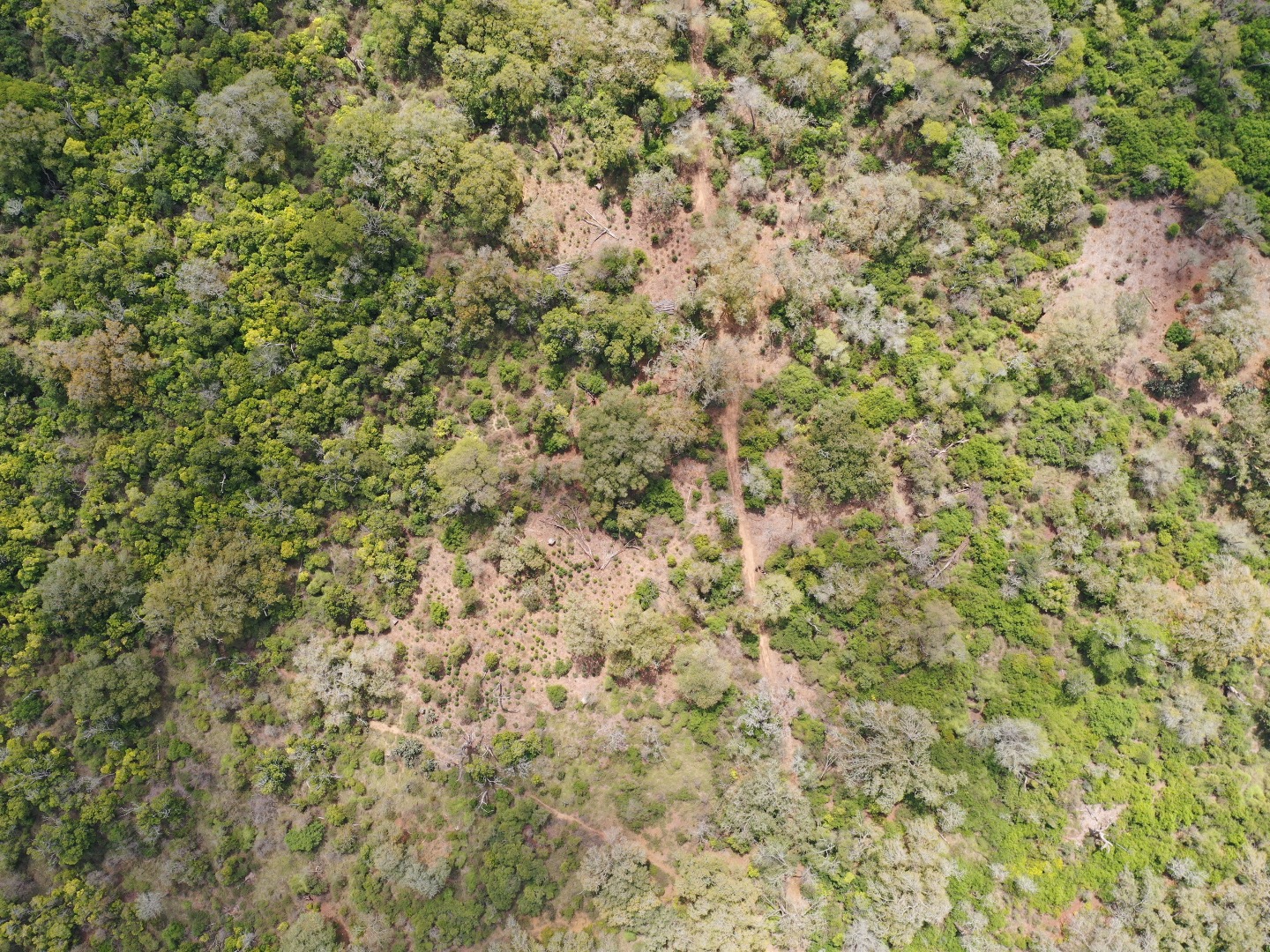
    However, yesterday Adam and I abandoned the creek bed and went crashing through the brushy banks, finding more Microstegium than I had anticipated. What was interesting was that pockets of stiltgrass followed a predictable pattern of distribution. In many areas, one creek bank will be severely down cut, perhaps 15 ft sheer banks, while the opposite bank is tapered with a more gradual slope. This is where you find the Microstegium. I posit that floodwaters do not over-top the high bank but rush over the lower bank depositing sediment and seed. Almost without fail, the lower bank, if totally brushy, would have scatted Microstegium. However, if the lower bank was open or had open pockets of sunlight, those pockets would be dense thickets of stiltgrass. We observed a nearly 1-to-1 correlation between bank height and stiltgrass presence/absence and open sunlit patches having dense patches of stiltgrass on the lower banks.

    I was covering a roughly 20 ft swath out from the bank edge before it dropped into the creek bed.  I did go further from the creek a number of times but wasn’t finding much (if any) the further I got from the creek.

    Management considerations

    Based on these observations, I believe that our current strategy of managing downstream from the “head waters” is prudent. Based on the diminished population this year and because the species has a 5-year seed viability, we should continue to see diminishing populations if we continue to be methodical and thorough with our management.

    We repeatedly found dense patches of Microstegium in high light availability openings/tree fall gaps. This suggests to me that if we open up the brush creek corridor with forestry mowing/brush cutting, the increased light levels and soil disturbance might cause a spike in Microstegium populations.  While the brush creek corridor isn’t priority #1, I know we’ll get there some day. Before we aggressively start clearing brush in this area, I’d like to have 3-5 years of aggressive Microstegium management under our belts. We have observed diminished populations in the wildflower garden, along Paw Paw Creek, and along Brush creek with just one year of management. Coupled this with a short seed viability…and we might have a winning strategy.


    JSG-min
    Large patch of Japanese stiltgrass (Microstegium vimenium) along Brush Creek at Shaw Nature Reserve.