Tag: Natural regeneration

  • From Soil Seed Banks to Seedlings: Deciphering the Natural Regeneration of Tropical Dry Forests in the Americas

    From Soil Seed Banks to Seedlings: Deciphering the Natural Regeneration of Tropical Dry Forests in the Americas

    By Viviana Londoño-Lemos

    Viviana Londoño-Lemos is a Ph.D. candidate with the Powers Lab in the Plant and Microbial Biology Program at the University of Minnesota. Email: vivianalondonolemos@gmail.com or londo074@umn.edu

    The tropical dry forest is a unique ecosystem that challenges many preconceived assumptions about the tropics. Unlike the iconic tropical rainforest, dry forests are highly seasonal, marked by distinct dry and rainy seasons. In some areas, plants may experience up to six months without rainfall. As a result, the species inhabiting these forests have evolved remarkable adaptations to thrive in this challenging environment, giving rise to exceptionally diverse plant communities. However, this unique diversity is under threat, as tropical dry forests are among the most threatened lowland ecosystems in the tropics. Urban expansion, mining, monoculture agriculture, and livestock production are among the main threats to this ecosystem. The loss of these forests not only endangers biodiversity but also jeopardizes the livelihoods of many human communities that depend on them.

    Given their threatened status, tropical dry forests have become a major focus of restoration efforts across the tropics. However, these efforts often lack critical information on how these forests naturally regenerate and how abiotic environmental conditions, such as light, water, and nutrient availability, influence seed and seedling survival in this ecosystem. During my PhD, I have been studying how abiotic environmental conditions shape natural seedling regeneration in tropical dry forests across Colombia and Costa Rica. My research focuses on three components of this regeneration cycle: the formation of the soil seed bank, the environmental conditions that drive germination, and the establishment of young seedlings.

    Tropical dry forest during the dry season in the Natural National Park Santa Rosa, Guanacaste, Costa Rica. Note how many of the trees lose their leaves due to water stress. Photo by Viviana Londoño-Lemos.

    Germination and establishment: the great choices in a plant’s life

    Germination is the most consequential choice a plant makes. Because plants are sessile organisms and germination is an irreversible process, the location where a seed germinates determines the environment where the plant must grow, compete, and reproduce for the rest of their lives.

    This story begins with a seed, which is the fertilized ovule of a plant. Each seed is a highly specialized structure that consists of three basic components: a protective seed coat, the nutritious tissue, and the plant embryo. Many seeds also include specialized structures that aid dispersal and sense environmental conditions, helping them determine when conditions are suitable for germination.

    Once seeds mature, the next step is dispersal in both space and time. Spatial dispersal determines how far a seed travels from its parent, whereas temporal dispersal determines when it germinates. Thus, natural seed regeneration depends on seeds arriving in the right place at the right time. Spatial dispersal of many tropical plants, particularly those dispersed by animal vectors, has been widely studied. In contrast, temporal dispersal, encompassing the study of soil seed banks within plant communities, remains understudied. Understanding both dimensions of seed dispersal is essential for assessing the regeneration potential of plant communities, an important consideration when designing plant-based restoration strategies, because it provides information on what species need to be planted versus which may regenerate naturally.

    Soil seed banks are the storage of viable seeds in forest soil. In theory, the soil seed bank of a given plant community contains seeds representing the species present in the vegetation aboveground. But not all seeds behave the same way. Seeds from some species persist in the soil until the next germination season — typically the rainy season in tropical dry forests— after which they germinate or die (transient species). Others persist for years, decades, or in exceptional cases, even centuries (persistent species). Understanding soil seed bank strategies helps identify which species have the potential to regenerate naturally.

    Once the appropriate spatiotemporal conditions are met and a seedling emerges, the next step is its establishment, defined as the transition from reliance on maternal sources (the seed) to physiological self-sufficiency. This critical bottleneck in the plant life cycle depends on the biotic and abiotic interactions of the seedling with its new environment. Biotic interactions, including mutualistic associations, predators, pathogens, and natural enemies, are widely assumed to explain the extraordinary diversity of tropical ecosystems. However, in seasonal ecosystems such as the tropical dry forests, abiotic interactions such as water, light, and nutrient availability play an important role in seedling survival. Environmental shifts, particularly in water availability, directly influence whether a seed successfully germinates and whether the resulting seedling survives long enough to establish. Understanding these processes is essential for designing effective restoration strategies grounded in the biology of the species they aim to support.

    A seedling of Enterolobium cyclocarpum at the Horizontes Forest Research Station, Guanacaste, Costa Rica. Photo by Viviana Londoño-Lemos.

    The hidden regeneration potential of tropical dry forests

    When planning a plant-based restoration project, understanding the site’s history, particularly its historical plant communities, is essential. Even after vegetation has been lost, soil often retains biological relics, such as persistent soil seed banks, of past communities. For many tropical woody species, soil seed banks are often considered transient, since tropical forests are not typically viewed as strongly seasonal systems. However, with distinct dry and wet seasons, tropical dry forests are a striking exception.

    To determine whether tropical dry forest species rely primarily on persistent or transient soil seed banks, we conducted experiments in the Tayrona National Natural Park in Colombia and at the Horizontes Forest Research Station in Costa Rica. Our goal was to assess how long selected species can survive in the soil. Because this experimental approach can be time-consuming and challenging, we also measured key seed traits such as seed dormancy type, dispersal syndrome, seed coat thickness, mass, volume, moisture content, and embryo-to-seed ratio to identify which seed traits are related to soil seed bank persistence.

    Our first experiment, conducted in Costa Rica, aimed to determine the extent to which tropical dry forest species form persistent or transient soil seed banks and whether canopy openness influences soil seed bank formation. For this experiment, we buried mesh bags that contained seeds from 15 liana and tree species under both canopy gaps and closed forest conditions. We retrieved the bags annually over three years and tested seed viability each time. After one year, only five species exhibited a persistent soil seed bank, suggesting that most species form transient soil seed banks and do not persist beyond a single rainy season.

    To explore this result in greater detail and determine whether transient species survive only until the first rainy season, we conducted a second experiment with 40 species, using shorter intervals between packet retrievals. This experiment was carried out in both Costa Rica and Colombia, in collaboration with researchers and students at the University of Magdalena. We evaluated seed viability after 3, 6, and 13 months.

    Although data analysis is still underway, preliminary results indicate that approximately half of the species employ a transient strategy, while the remaining half are persistent. Transient species tend to disappear from the soil seed bank, either by germinating or dying, by the end of the first rainy season. Persistent species, in contrast, retain their seeds longer, and in some cases germinate only a couple of seeds per year. Some species with persistent seeds tend to survive longer in canopy gaps. As for seed traits, we have observed a tendency for transient species to be wind-dispersed, possess a thinner seed coat, and lack physical dormancy (i.e., no impermeable seed coat). On the other hand, persistent species tend to have seeds with thick coats, physical dormancy, and are more commonly dispersed by gravity (autochory). We expect that our results will help inform decisions in selecting species best suited for planting in restoration efforts. More broadly, the results highlight the importance of understanding the soil seed bank strategies of candidate species in ecological restoration projects.

    Soil seed bank experimental setting at the Tayrona National Park in Magdalena, Colombia, in partnership with the University of Magdalena. Each mesh bag contains seeds of a single species; each row represents a harvesting period (3, 6, or 13 months). Photo by Viviana Londoño-Lemos.

    Germination sensitivity to hydration and dehydration pulses in the tropical dry forest

    Due to the pronounced seasonality, the main germination cue for tropical dry forest species is the onset of the rainy season. However, during the dry season, occasional rain showers may last for a couple of days. This means that the seeds of tropical dry forest species may be exposed to unpredictable rainfall pulses that can trigger premature germination at an unfavorable time of year, placing young seedlings at high risk of mortality.

    To understand how sensitive seeds are to hydration-dehydration cycles, we designed an experimental approach under lab conditions. We selected ten tropical dry forest species with varying seed morphology (e.g., seed dispersal types and sizes) and measured imbibition curves to assess the presence of physical dormancy. The imbibition curves also allowed us to determine the rate of water uptake and the time required for the water-intake percentage to reach different levels. Using data from the imbibition curves, we designed hydration and dehydration cycle experiments and set the germination chamber temperature to match the mean temperature measured in the soil seed bank experiments. We are currently working on this experiment. We expect the results of these experiments to inform us about the germination requirements of tropical dry forest species and the extent to which these species are vulnerable to changes in their normal seasonal patterns.

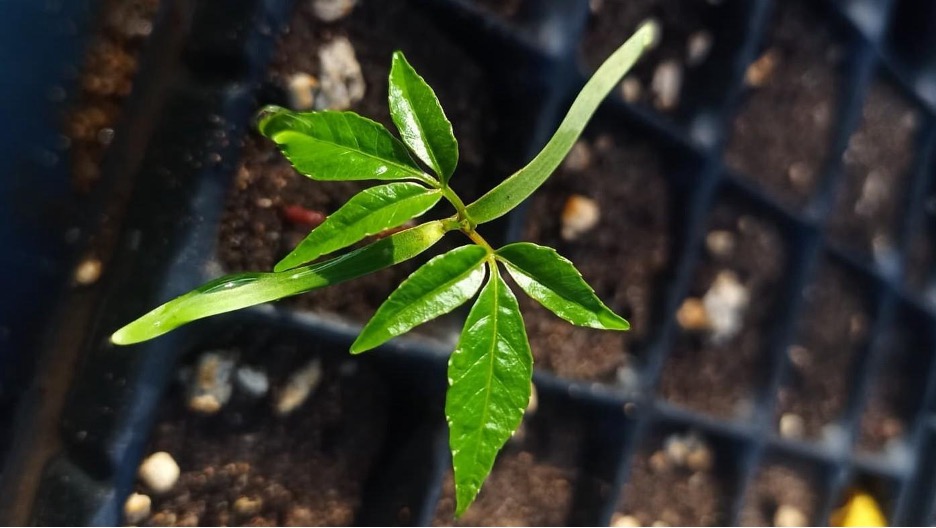
    Seedling of Spondias mombin in a nursery of the University of Magdalena, Colombia. This is one of the seedlings from the soil seed bank experiment that is germinating after one year. Photo by Luciano Macías Sposito.

    Demographic response of tropical dry forest seedlings to nutrient addition

    In addition to studying germination and seed persistence, we also evaluated nutrient limitation, a factor long proposed to limit seedling establishment in tropical ecosystems. A central biogeochemical dogma is that newly formed temperate soils are primarily limited by nitrogen, whereas tropical soils are typically limited by phosphorus. Although many experiments have tested this idea, results across tropical ecosystems are inconsistent, indicating the complexity of nutrient-plant interactions in the tropics.

    To investigate nutrient limitation in tropical dry forest species, the Powers lab established a factorial fertilization experiment with nitrogen and phosphorus at the Horizontes Forest Research Station in Costa Rica. This experiment tested the responses of the adult plant community to nutrient addition. One of the main findings of this experiment was that nitrogen-fixing legumes, a dominant functional group in tropical dry forests, showed a marked increase in growth to phosphorus addition, while non-nitrogen-fixing species exhibited variable responses. However, most studies evaluating seedling responses to nutrient addition are conducted in nurseries, which may not accurately represent field conditions. To determine whether nitrogen-fixing species are limited by phosphorus and whether non-nitrogen-fixing species are limited by nitrogen during their seedling stage, we planted seedlings of ten tropical dry forest species (5 nitrogen-fixing legumes, 5 non-nitrogen-fixing) directly into the existing fertilization experimental plots. We measured their survival and growth for four years. Because field experiments introduce multiple sources of variation, we also measured other environmental variables, such as litterfall, light, soil moisture, and pH.

    After tracking these seedlings for four years, we found that fertilization treatments did not increase seedling survival. However, nitrogen-fixing species tended to produce more leaves in response to nitrogen and phosphorus fertilization than non-nitrogen-fixing species. These results highlight significant demographic variation and inherently high mortality rates characteristic of the seedling stage. They also challenge the common assumption that fertilizer addition promotes plant growth and survival in restoration projects. This study will be published this year. Stay tuned if you want to learn more about the findings.

    A seedling of Dalbergia retusa at the fertilization experiment at Horizontes Research Station, Guanacaste, Costa Rica. Photo by Viviana Londoño-Lemos.

    Some seeds for thought for the future

    Together, the chapters of my dissertation aim to deepen our understanding of how tropical dry forest species regenerate from seed. My main goal is to make this information useful for designing more effective restoration strategies for this threatened ecosystem. Across ecosystems worldwide, a key challenge is that it remains difficult to generalize about the factors that enable a seed to survive, germinate, establish, and ultimately become a mature plant. This complexity underscores the importance of continued research on seed and seedling biology, especially in ecosystems as dynamic and highly seasonal as tropical dry forests. 

    At the Powers Lab, we strive not only to advance fundamental scientific understanding but also to share our findings with the general public.  To that end, we develop science communication materials that make our findings accessible and engaging to a general audience. One example of this outreach is a forthcoming book from Missouri Botanical Garden Press, created to introduce children to the tropical dry forest and inspire curiosity about this remarkable and often overlooked ecosystem.
  • Reforestation and Natural Regeneration:  Two approaches for Andean Forest Recovery in Ecuador

    Ximena Palomeque, Selene Báez and Hans Verbeeck, describe ongoing research on the suitability of native tree species for restoring degraded sites in the southern Andes. Ximena is a Professor in the Agriculture Faculty and researcher at Department of Water Resources and Environmental Sciences at the Universidad de Cuenca in Ecuador. Selene is an Associate Professor in the Department of Biology, National Polytechnic School of Ecuador, and Hans Verbeeck is a Professor in the Faculty of Bioscience Engineering, Department of Environment at Ghent University in Belgium. ximena.palomeque@ucuenca.edu.ec; selene.baez@epn.edu.ec; hans.verbeeck@ugent.be

    In recent decades, numerous international and regional agreements have formed the foundation for implementing restoration actions, setting ambitious goals and targets to reverse the degradation of tropical forests. For example, Ecuador has set itself a goal to restore 30,000 hectares between 2022 and 2025 as part of the National Program of Landscape Restoration, including both natural regeneration, sometimes called “passive restoration”, and reforestation, one form of “active restoration”. However, achieving lasting benefits in terms of biodiversity conservation, carbon storage, and other ecosystem services requires robust scientific guidance to ensure the implementation of the best possible restoration practices for such highly complex ecosystems as those found in the mountains of the tropical Andes,  one of the world’s biodiversity hotspots, spread across several megadiversity countries, including Ecuador.

    Andean forest landscapes are characterized by complex mosaics of different land cover types over relatively small spatial scales. Past experiences in restoration have taught us that forest recovery can be rapid and result in diverse forests, but it can be slowed down and even hindered by historical land-use practices. In particular, aggressive competitors such as invasive nonnative grasses (e.g., Festuca arundinacea, Setaria sphacelata, both introduced as fodder for livestock), and the cosmopolitan bracken fern (e.g., Pteridium arachnoideum) often impede the natural recovery of forests, especially in abandoned pastures or areas that have been repeatedly burned. Moreover, the historical use of introduced, fast-growing tree species for reforestation in the Andean region has led to extensive monocultures of Pinus spp., Eucalyptus spp., or Acacia spp., which have had disastrous consequences for local biodiversity by profoundly altering ecosystem dynamics. Given the need for information on efficient and effective reforestation practices using native tree species from the Andes of Ecuador, a large part of our research program aims to address critical knowledge gaps and provide clear guidelines for successful reforestation practices and policies. 

    To some extent, the extensive use of non-native species for reforestation reflects our limited knowledge of the diversity and potential of native Andean species when intentionally planted. This knowledge gap has hindered the production of adequate seeds and seedlings for use in local reforestation projects. Although some progress has been made in the last decade, a comprehensive understanding of the germination requirements and rates of plant establishment after planting of the most common native Andean tree species is still lacking. In order to bridge this knowledge gap, the Forest Ecology and Seed Laboratory at Universidad de Cuenca, researchers at the Department of Biology at Escuela Politécnica Nacional of Ecuador, the Department of Biology at Pontificia Universidad Católica del Ecuador, and the CAVELab at Gent University (UGENT) in Belgium collaborate to explore various aspects of reforestation using native trees and shrubs. To date, we have gathered experimental data on more than 25 Andean woody species, focusing on seed propagation in laboratory and nursery conditions, as well as the performance of outplanted seedlings on degraded lands. 

    As a natural progression, we are now conducting experimental research to assess how different outplanted native plant species perform in the field across environmental gradients. Additionally, we are evaluating the potential for carbon sequestration and biodiversity recovery in past reforestation projects, considering factors such as different types of human disturbance, environmental conditions, and landscape-scale attributes. Our findings indicate that landscapes with high natural forest cover have enhanced rates of aboveground biomass and biodiversity accrual, thanks to increased tree survival, sapling recruitment, and animal seed dispersal. In addition, as expected, undisturbed reforested areas recover faster than areas subjected to occasional cattle ranching. These research approaches encompass diverse levels of biological organization, employing a variety of research tools to study and compare plant species, plant communities, and ecosystem processes.

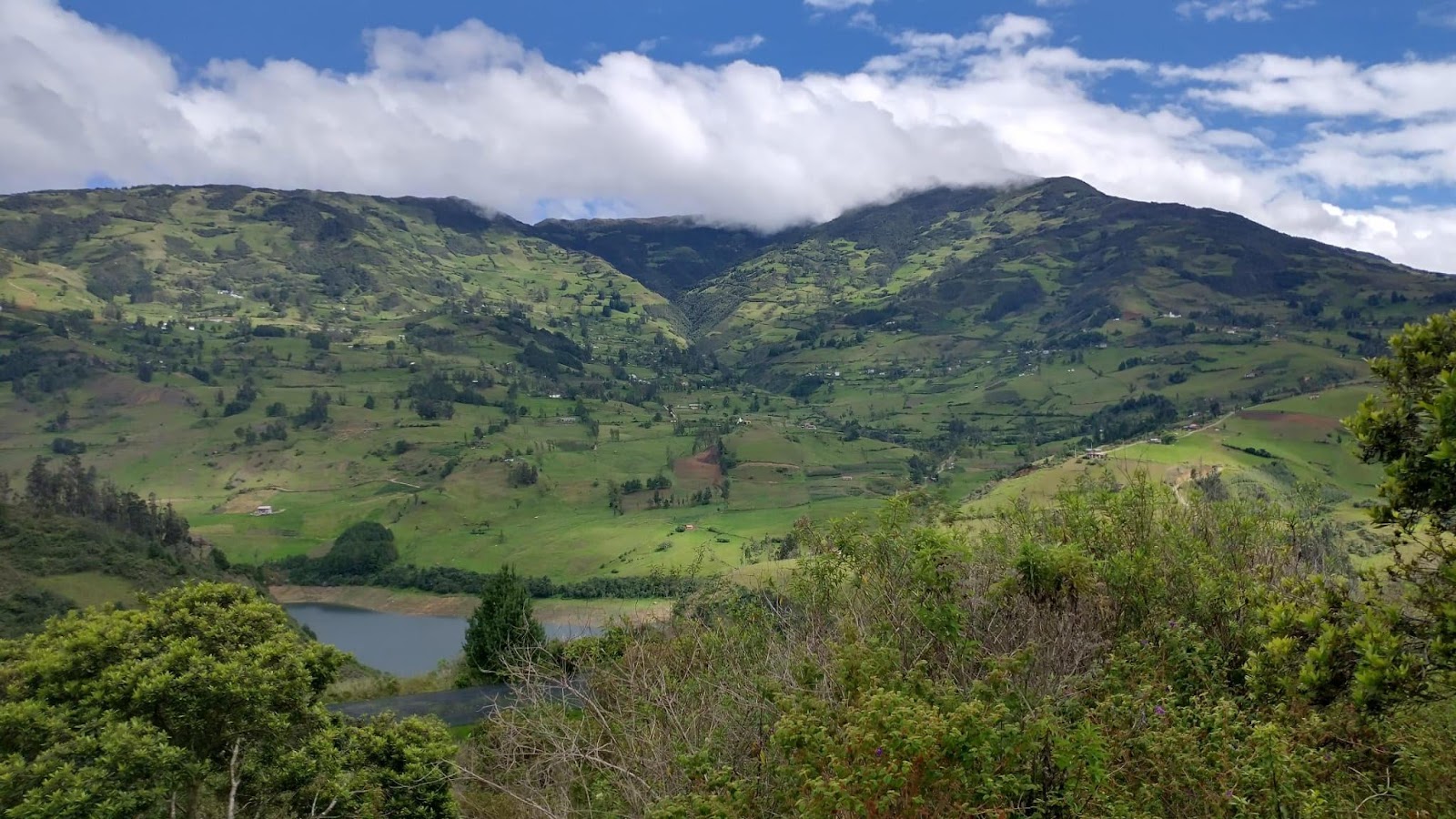
    Landscape mosaic illustrating the various land uses found in the area known as “Santa Rosa” in Sevilla de Oro, located at 2300 m a.s.l., Azuay province. Photo: Sebastián Tello.

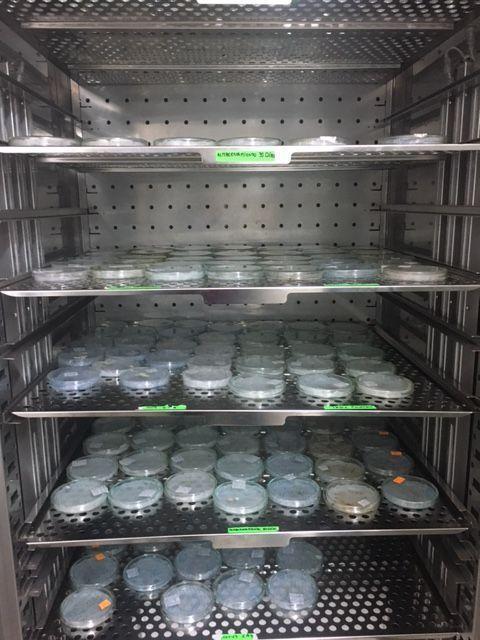
    Seed germination tests of native species in the plant growth chamber at Seed Lab, Universidad de Cuenca in Ecuador. Temperature of 9°C (night) and 12°C (day) under cycles of 12 h of alternating light and darkness. Photo: Ximena Palomeque.

    Currently, our main research projects on both approaches to restoration, “active” and “passive”, are led by doctoral students. In 2020, Franklin Marin, a PhD student at the CAVELab, UGENT, Belgium, initiated a large-scale reforestation experiment along an elevation gradient of 2,000 m a.s.l. in southern Ecuador. This experiment involved the planting of over 7,000 individuals from five native woody species, namely Oreocallis grandiflora, Hedyosmum luteynii, Weinmannia fagaroides, Morella pubescens, and Vallea stipularis. The groundwork for the experiment was laid two years earlier when we collected and germinated seeds from a diverse pool of mother trees. Four treatments were implemented, including grass removal and artificial shade, to examine their effects on seedling survival, performance, and species-level trait-plasticity. Weather stations were installed at each study site to monitor conditions that could influence seedling performance over time. This study aims to shed light on the suitability of native species for reforestation projects in sites with varying environmental conditions and interspecific competition. Furthermore, we seek to gain insights into the functional traits that render tree species especially suitable for early stages of forest recovery, which may allow us to generalize our findings to a wider range of Andean tree species under scenarios of natural regeneration or reforestation. 

    A picture containing plant, outdoor, crop, cash crop

Description automatically generated

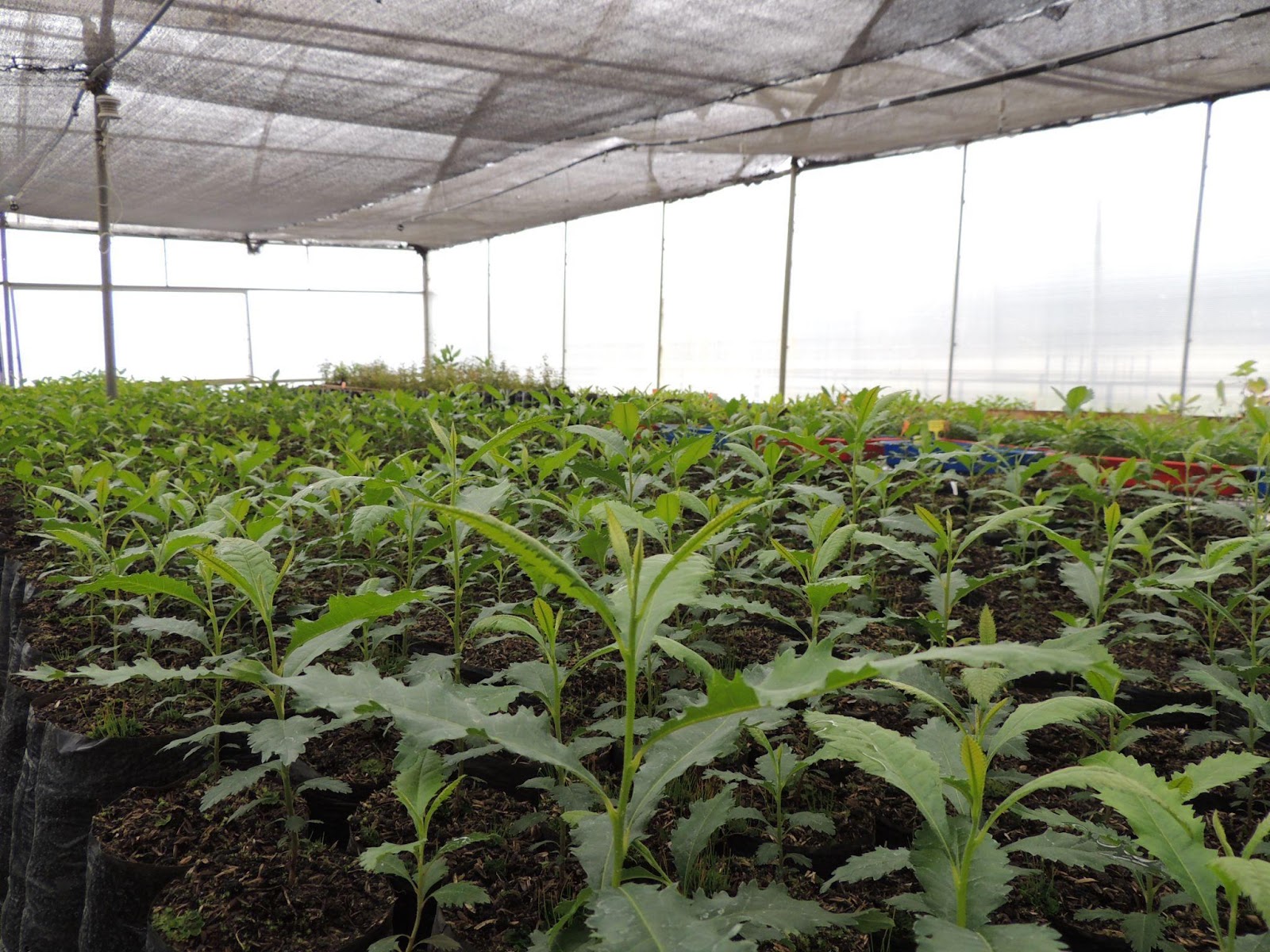
    Seedlings of five native species growing in the greenhouse at Universidad de Cuenca in Ecuador. Photo: Ximena Palomeque. 

    Reforestation experiment using the five native species named in the text on abandoned pastures, Irquis experimental farm, Universidad de Cuenca; located at 2800 m.a.s.l., Azuay province. Photo: Geomatics Lab, Facultad de Ciencias Agropecuarias, Universidad de Cuenca.

    Franklin Marín (PhD student) and Selene Báez (EPN) near the weather station and ozone diffusion tubes in the reforestation experiment, Irquis experimental farm, Universidad de Cuenca, Azuay province. Photo: Ximena Palomeque.

    A parallel research project led by Gabriela Maldonado, a PhD student at the University of Cuenca, explores the functional composition and diversity of woody plants along gradients of anthropogenic disturbance and across environmental conditions. Gabriela conducts a reforestation experiment using several key species (e.g., Oreocallis grandiflora), with functional traits (e.g., cluster root formation) that could facilitate the establishment of diverse sets of species under scenarios of natural regeneration or reforestation. These “restoration nuclei” could play a crucial role in reestablishing networks of pollinators in restored ecosystems, particularly as some of these species are essential resources for hummingbirds. Her research is conducted within the framework of the Experimental Network Ecology and Restoration, EXPER-NET project, which also involves researchers from the Swiss Federal Research Institute (WSL) and Universidad del Azuay.

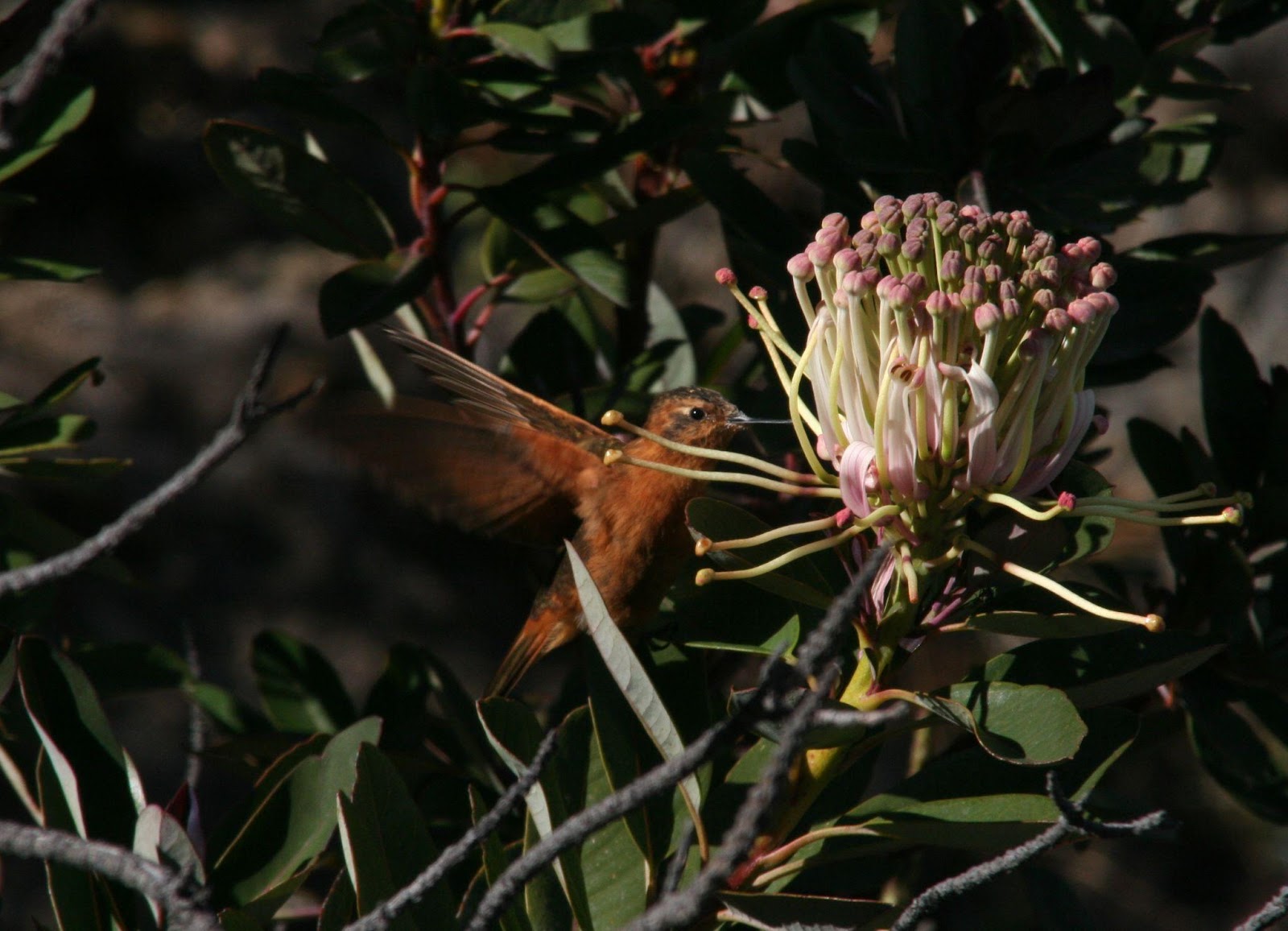
    Oreocallis grandiflora (Proteaceae), commonly known as gañal is one of the five native tree species used in the reforestation experiments. This species, the only member of its genus, is found only in the high Andes of Peru and Ecuador. Hummingbirds, several types of insects, and even rodents pollinate the flowers of this tree due to its generous production of nectar. Photo: Boris Tinoco.

    A person and person standing in a field

Description automatically generated with medium confidence

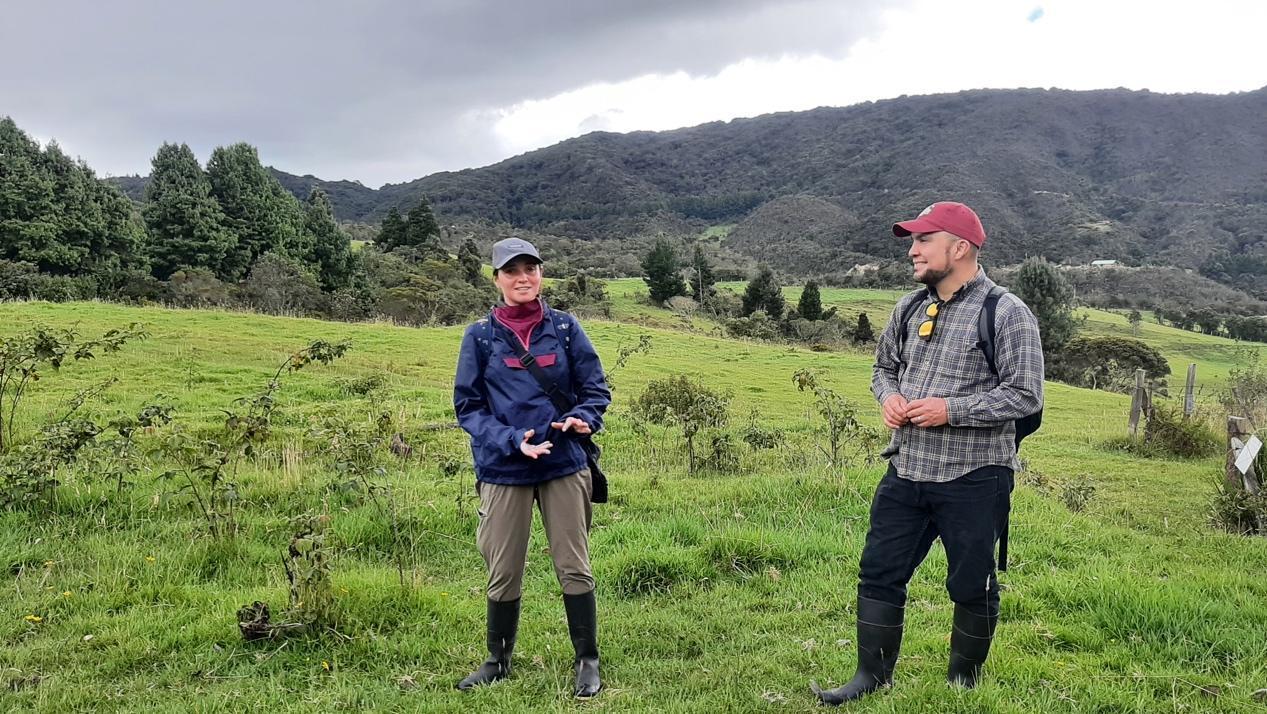
    Gabriela Maldonado (PhD student at University of Cuenca) and Sebastian Tello, Director of the Latin America Department at the Missouri Botanical Garden visiting the observational plots and discussing natural regeneration of degraded pastures at the Irquis experimental farm. To the left, non-native tree species, and in the back, hills with secondary forests. Photo: Selene Báez.

    The ongoing research projects have also contributed to scientific training and cultural exchange involving numerous MSc students and dozens of undergraduates. We aim to broaden our impact on the scientific capacity of Ecuadorian and international students by extending our collaborations with scientific groups based in Germany, UK, Switzerland and USA, as well as by fostering exchange programs and field summer courses that focus on specific topics of montane forest ecology and restoration ecology. 

    We emphasize the significance of international scientific collaborations and funding partners (mainly VLIR-UOS, Belgium) in catalyzing this research initiative. These interactions have enabled us to pursue innovative research in the context of restoration, with direct implications for restoration practices and policy making. Due to the need for solid scientific information to foster natural regeneration and hands-on restoration of Andean forests, several national and international institutions have become close allies of our research group. These organizations comprise local and international NGOs, water funds, electricity production companies such as  BOS+, MCF, FONAPA, CELEC, ELECAUSTRO and – most recently – the Missouri Botanical Garden

    This video presents more complete information about one of the projects; and click here for the announcement of the 2023 field course “Linking plant functional traits and ecosystem function in tropical montane forests”. If you require additional information, please do not hesitate contacting the authors of this blog post. 

  • Global pledges to restore forests face challenges, and need increased support

    Global pledges to restore forests face challenges, and need increased support

    Matthew Fagan is an assistant professor in Geography and Environmental Systems at University of Maryland Baltimore County. Here he describes the challenges confronting countries as they attempt large-scale forest restoration, and why many countries will need help to fulfill their goals. For more information, read his new, open-access paper in Conservation Letters.

    Degraded and deforested landscapes are widespread, and tropical forests are being lost at a rate of 15.8 million hectares a year. But there is good news—temperate forest area is increasing, and more and more countries are voluntarily pledging to restore vast tracts of degraded land. Restoring forests benefits biodiversity and society, and can combat global warming as well, as growing trees lock away carbon dioxide.

    International interest in restoring trees to landscapes emerged out of policy discussions last decade, and resulted in the 2011 Bonn Challenge and the creation of voluntary national restoration targets by many countries. The Bonn Challenge seeks to bring 150 million hectares into restoration by 2020, and 350 million hectarees by 2030 (that’s roughly 700 million American football fields, 350 million rugby fields, 500 million FIFA football fields, or an area a bit larger than India).

    Current Bonn Challenge pledges total some 172 million hectares. That’s a massive international commitment, and when you add in internal commitments by countries, the potential restoration area swells to 318 million hectares.

    All that area voluntarily committed to restoration got my co-authors and I excited, but also skeptical—were countries really going to follow through on their commitments?

    Fagan_RainforestBlowdown
    A rain forest blow-down in northeastern Costa Rica, with a storm-downed tree cut to clear a path. Silviculture restoration promotes the recovery of disturbed forests like this one. Photo credit: Matthew Fagan.

    To try to answer that question at this early stage, myself, Leighton Reid (Virginia Tech), Maggie Holland (UMBC), Justin Drew (UMBC), and Rakan Zahawi (University of Hawaiʻi at Mānoa) asked three related questions in a recent paper in Conservation Letters.

    1. Is the amount of land a country pledged to restore related to their past record of restoring forested landscapes and implementing sustainable development?
    2. For the small group of countries that have publicly reported their progress on commitments, is the amount of restoration they completed predictable by their development level or other risk factors, like deforestation?
    3. Which countries will likely face the greatest challenges to meet their commitments and maintain restored land into the future?

    We then set to gathering published information on country commitments and progress, and recent national rates of forest loss, agricultural expansion, and forest recovery.

    Fagan_NaturalRegeneration
    Recent natural regeneration in northeastern Costa Rica of varying ages. Photo credit: Matthew Fagan.

    All of these programs seek to reforest landscapes in ways that benefit both nature and people, including options like natural regeneration (letting natural forests recover and expand), silviculture (interventions to restore standing forests, like preventing forest fires and promoting recovery from selective logging), tree plantations (often tree monocultures to produce timber and pulp on degraded lands), and agroforestry (planting trees on and around farmland to shade crops or protect streams and fields). These options are not all equal in their benefits for biodiversity, carbon, and society, but a diverse menu of options allows countries to consider committing to at least some form of restoration over large areas.

    Fagan_VochysiaPlantation2
    A tree plantation in northeastern Costa Rica funded by the national payments for environmental services program. It is a monoculture of a single native species, Vochysia guatemalensis, grown for timber. Photo credit: Matthew Fagan.

    In a nutshell, what we found was both discouraging and encouraging.

    First, after adjusting for the size of a country and how much restoration they had done previously, we found that less-developed countries committed more land for restoration. This might be for positive reasons; for example, they may be taking proactive action against the greater risk they face from climate change. Or it might be because they underestimated how challenging it would be to achieve a large pledge.

    Fagan_Silvopasture
    Silvopastoral restoration, a type of agroforestry, in northeastern Costa Rica. The understory is a cattle pasture, while the overstory is plantation of a native tree species, Dipteryx panamensis. Photo credit: Matthew Fagan.

    Second, for twelve early-reporting countries, restoration progress was predictable based on a risk index. Countries with higher risk (risk factors included deforestation rates and progress on sustainable development goals, among others) had less restoration progress.

    Third, countries made massive individual commitments that will be hard to achieve without wholesale transformation of their food systems. One third of countries committed >10% of their land area (with a maximum of 81%, in Rwanda). A quarter either committed more area than they had in agriculture, or committed more area than they had in forest. And one quarter of countries had more forest loss and agricultural conversion in 2000–2015 than their restoration commitment for 2015–2030.

    Fagan_ShadeCoffee
    Coffee plantation under tree cover, a type of agroforestry, in central Costa Rica. The understory is a monoculture of coffee shrubs, while the overstory is scattered planted trees. The partial cover helps the shade-loving coffee plants stay healthy, but many coffee farmers are moving away from this traditional farming approach. Photo credit: Matthew Fagan.

    As noted in our paper, “If voluntary commitments like the Bonn Challenge fail to precipitate meaningful restoration across large areas, the UN’s vision of a sustainable future will become less attainable.” But what this study found is not countries that have failed on their restoration pledges. We are still in the first days of the UN Decade of Ecosystem Restoration. What we have identified is countries that will need help to restore their lands.

    We believe it is time for the international community to step up and aid all countries in achieving their restoration goals. To quote Thoreau, “If you have built castles in the air, your work need not be lost; that is where they should be. Now put the foundations under them.”

    Fagan_Rainbow
    A regrowing forest in central Costa Rica, showing the promise of restoration. Photo credit: Matthew Fagan.

  • Rules of thumb for tropical forest restoration

    Rules of thumb for tropical forest restoration

    Sometimes farmlands quickly regrow tropical forests on their own, but other times they don’t. Dr. Karen Holl, a professor at the University of California Santa Cruz, gives some rules of thumb for when we can save money on tropical forest restoration by letting nature do the work, and when we may need to invest in tree planting.

    Ambitious targets are being set to restore tropical forest because of their importance in storing carbon, regulating water cycles, conserving biodiversity, and supporting the wellbeing of people who live in tropical countries. For example, the 20 × 20 Initiative aims to restore 20 million hectares of tropical forest in Latin America by 2020. This represents an area slightly smaller than the country of Ecuador. One big question is: How are we going to restore forests at this scale with limited funds?

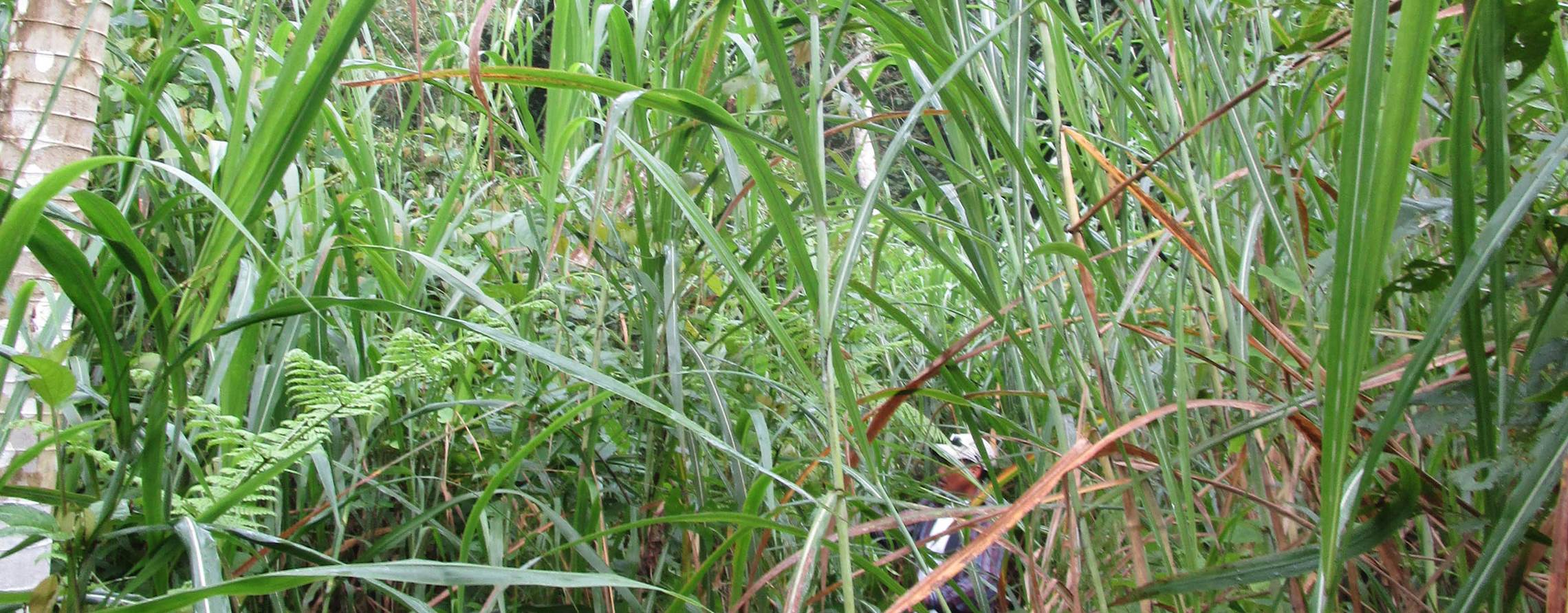
    One of the cheapest ways to restore forest is to let nature do the work and leave forests to recover on their own. This works in some sites where forests regenerate quickly. In other cases, usually sites that have been used intensively for agriculture, the land may be covered by tall grasses (up to 3 meters, or 10 feet high) for years. Our past research shows that even within a small region, the rate of natural forest recovery varies greatly.

    SideBySide
    Natural forest recovery is highly variable in southern Costa Rica, even after a decade of recovery. Left: slow recovery on a former farm, still dominated by non-native grasses, with an open canopy and little tree recruitment. Right: speedy recovery on a former farm, with virtually no grass cover, a closed canopy, and diverse tree recruitment. Photos by Andy Kulikowski.

    So, how do we predict which sites will recover quickly and which ones need some help in the form of clearing pasture grasses and planting trees? If we could develop some rules of thumb it would help land managers to more efficiently allocate scarce restoration funds.

    To answer this question, we drew on our long-term study on tropical forest restoration in southern Costa Rica. We have research plots at 13 different sites where we removed the land from agriculture and let the forest recover on its own. Each year we measure grass cover, tree canopy cover, and how many and what species of new tree seedling establish in the plots. We have also quantified the forest cover surrounding the plots, the nutrients in the soil, and how long cows had grazed the sites in the past.

    We found that two easy-to-measure variables explained on average two-thirds of variation in forest recovery 7 years later; those were the amount of grass cover and tree canopy cover measured after only 1.5 years. Plots that had more canopy cover and lower grass cover early on had a closed tree canopy and lots of forest tree seedlings from many species after nearly a decade. We were surprised that the amount of surrounding forest cover and soil nutrients did not explain much of the variation in forest recovery.

    GraphAbs
    Rules of thumb for predicting tropical forest regeneration on farmlands. Forests grow back quicker when there is not too much grass, a little bit of shade, and many tree seedlings already present. Illustrations by Michelle Pastor.

    Of course, our results need to be tested in other recovering tropical forests. But, if they hold true, this is good news! It means that land owners and managers just need to wait a year or two and then measure the tree canopy and grass cover. If some trees have established and are starting to shade out the grasses, land managers can use the low cost method of leaving the site to recover naturally. If the site is mostly a monoculture of dense grass, then the site is a good candidate to plant native trees. Planting trees takes more resources since it is necessary to clear around the native tree seedlings for a couple of years until they grow taller than the grasses. At least now there are some general guidelines to help chose where to invest the extra effort.

    For more information, see our new paper in Applied Vegetation Science. This work was supported by the National Science Foundation.

  • To plant or not to plant?*

    To plant or not to plant?*

    What we think we know about how to restore tropical forests is getting a second look. A new paper produced by scientists in Missouri Botanical Garden’s Center for Conservation and Sustainable Development (CCSD), the University of Hawaii’s Lyon Arboretum, and the University of Maryland Baltimore County points out an important bias in recent studies.

    How should we restore forests in places where they have been lost? This is one of the main questions that we study in the CCSD, so we were surprised last year when a big synthesis paper that compiled data from many earlier studies said that, when it comes to restoration, doing nothing was the same as doing something.

    That’s only a slight exaggeration. The paper, by Renato Crouzeilles and several other scientists, said that letting a forest regrow on its own (that is, natural regeneration) was usually more successful than planting trees (that is, active restoration). Their conclusion was based on comparing many studies done throughout the world’s tropical forest regions.

    Unequal comparison

    The problem with this paper (and several like it) was that the set of studies looking at natural regeneration were not really the same as the set of studies looking at tree planting. The natural regeneration studies focused on forests that already existed, while the tree planting studies focused on a wider range of sites, many of which started with no forest. In other words, the natural regeneration studies had already been filtered to exclude places with a weak ability to grow forests.

    To understand the problem, it is helpful to look back at the history of tropical forest restoration research. For many years, scientists who wanted to know about how forests recover after a disturbance (like a hurricane or logging) would go out and find several forests that had been recovering for different amounts of time. If you take forests that are 5, 10, and 20 years old, you can try to compare them to each other in order to see how a forest might change over 20 years. In contrast, tree planting studies usually start with a piece of land that has no trees on it. Scientists who want to know how trees grow on this land will plant some and then observe their survival and growth over time.  These trees may or may not create a forest there, as the land can vary in quality.

    So where does that bring us with respect to this study? If you compare a forest that already exists with another potential forest where planted trees may or may not survive and grow well, it’s a safe bet that the pre-existing forest will have taller trees. It has a head start over the planted forests, and we argue in our paper that the comparison is not a fair one.

    This means that letting forest regrow on its own is not always a better option than planting trees. In fact, there are many places – like overgrazed pastures, mine sites, and other heavily degraded lands – where forests have been cleared and most likely will not be able to grow back on their own.

    Omar_KHoll
    Comparison of natural regeneration (foreground) and active tree planting (background) to restore a cattle pasture in southern Costa Rica. Tree seedlings planted on the hillside are just visible in the 2005 image. The yellow circle indicates a person for scale. After nine years, active tree planting had produced a forest, whereas natural regeneration was stalled. Overgrown pasture grasses covered the ground. Natural regeneration is highly variable, so this example is not representative of all situations. Photos courtesy of Karen Holl.

     Same team!

    While we were not convinced by studies that said that natural regeneration is better than tree planting, we also don’t want to take any options off the table. Natural regeneration and tree planting are not mutually exclusive – in fact, they are highly complementary. Our practical advice is that if you want to get forest back, the best option is to see if natural regeneration can do the trick before you invest in tree planting. Or better yet, set up a paired experiment comparing the two strategies at the same site.

    *Thanks to Erle Ellis for coming up with the title for this blog post. For more information, please see our open-access paper and press releases at EurekAlert, UMBC News, and Science Daily.


  • Ecological Restoration in a Changing Biosphere

    Ecological Restoration in a Changing Biosphere

    If you were at the MBG Fall Symposium, we want to hear from you! How did the symposium change your perception of restoration? Send us an email at leighton.reid@mobot.org.

    On October 8th, Missouri Botanical Garden hosted its 63rd annual Fall Symposium. This year’s theme was Ecological Restoration in a Changing Biosphere. Author and journalist Paddy Woodworth moderated the day, and seven speakers presented contemporary perspectives on a core challenge in modern restoration ecology. Namely: in the post-COP21 world, when all three UN conventions call for scaling up and mainstreaming of restoration, it is clear that restoration will affect hundreds of millions of hectares – and as many people – over the coming decade. At the same time, we find ourselves in an era of unprecedented change where climate, ecological baselines, and future land-use changes are highly uncertain. This raises the question: What should large-scale restoration look like in the remainder of the 21st century?

    symposium_group-photo_01
    2016 Fall Symposium speakers. From left to right: Peter Wyse Jackson, Curt Meine, Robin Chazdon, James Aronson, Leighton Reid, Pedro Brancalion, Karen Holl, Don Falk, Paddy Woodworth, and Jim Miller. Photo by Andrea Androuais.

    Talks during the morning focused on tropical forests, where much of the international restoration dialogue is focused.

    • Leighton Reid (Missouri Botanical Garden) opened with a presentation on restoration longevity – the idea that some restoration projects create ecosystems that persist for more than a century (e.g., Floresta da Tijuca), while other projects fail quickly. Dr. Reid argued that how long restored ecosystems persist is quantifiable, predictable, and manipulable, opening the possibility for more ambitious restoration planning.
    • Robin Chazdon (University of Connecticut and beyond) then spoke about forest landscape restoration, an approach that aims to regain ecological integrity and enhance human well-being in deforested, human-impacted, or degraded forest landscapes. Drawing on a wealth of large-scale studies, Dr. Chazdon made the case that natural forest regeneration is the most ecologically effective and economically feasible approach to forest restoration globally.
    • Karen Holl (University of California Santa Cruz) presented her take on research priorities for forest restoration in the Neotropics. She highlighted that researchers could make an impact by studying forest restoration at larger spatial scales, at longer temporal scales, and in collaboration with stakeholders. Improving information exchange and standardizing monitoring protocols were also among her top priorities. (Graduate students, take note!)
    • Dr. Pedro Brancalion (University of São Paulo) completed the morning session with a TED talk-style discussion of the linkages between science, technology, policy, and best practice in Brazilian Atlantic Forest restoration. Using Thomas Kuhn’s structure of scientific revolutions, Dr. Brancalion argued that restoration ecology is in a crisis period, in part because disciplinary research has predominantly created solutions at smaller spatial scales than the (growing) problems the discipline seeks to address. Perhaps restoration is ripe for a paradigm shift?

    rc_pedro
    Dr. Pedro Brancalion (right) asks whether restoration ecology is ready for a new paradigm shift, as Paddy Woodworth (left) moderates. Photo by Robin Chazdon.

    After lunch, the conversation turned towards a major academic debate in restoration ecology. Has global change outpaced the restoration approach? And is a new approach needed?

    • Curt Meine (The Aldo Leopold Foundation) drew on his long experience in the upper Midwest, and, in particular, his studies of author and environmentalist Aldo Leopold (1887-1948). He argued that Leopold avoided the simple polarities through which some contemporary restoration debates are framed. He viewed nature in a relative way, neither entirely wild, nor entirely domesticated in any given landscape. Although he practiced ecological restoration in some contexts, he also advocated soil conservation and sustainable agriculture – activities motivated by his core values, as expressed in The Land Ethic (1949).
    • James Aronson (Missouri Botanical Garden) followed with an elucidation of the reference ecosystem concept. Reference ecosystems, he noted, help determine the social and ecological vision for a restoration project or program – a critical issue for restoring historic continuity in degraded landscapes. Dr. Aronson described a family of restorative actions for achieving progress towards the reference system, drawing on examples from Jordan and South Africa. He argued we need to look deeper into the past and ponder our choices from many angles as we decide how to do more effective restoration at the landscape and larger scales.
    • Donald Falk (University of Arizona) delivered the keynote address. He painted a disturbing portrait: rapid climate change is driving a massive forest-to-non-forest transition in the southwestern United States. In particular, many ponderosa pine forests will not be able to persist in the future where they have been in the recent past and present. Perhaps restoration ecologists should transition too. Rather than “chasing the ambulance”, maybe we could get out ahead of disasters and ease transitions between stable ecosystem states. Anticipating ecosystem transitions could mitigate the loss of ecosystem functioning that accompanies major climate-driven forest fires, but it would require a shift in restoration thinking. Importantly, Dr. Falk noted that ecosystems do not care what words we use – ecosystems respond to actions.

    With moderator Paddy Woodworth’s help, we finished the day with a panel discussion, inviting questions from the audience. Among the thoughts and questions that we were left with:

    • Is ecological restoration more difficult in places with greater population density?
    • Should restoration focus on policy, economic, or cultural motivations for engaging people?
    • Are values a better guide for land management than ecological history? Are the two complementary?
    • How can the reference ecosystem concept accommodate rapid biome changes, as we are seeing in the Southwestern USA?
    • What is the way forward to mainstream serious, multisectorial monitoring and evaluation with all these new factors to consider? Who will fund it?
    • To what extent can we move from restoring degraded ecosystems to avoiding degradation in the first place?
    • Can forest landscape restoration and natural forest regeneration bridge the gap between small-scale, past restoration experience and present, large-scale restoration needs?

    rc_lelandricardo
    PhD candidates Ricardo Cesar (University of São Paulo) and Leland Werdan (University of Minnesota) compare notes on seedling functional traits in dry tropical forest restoration. Leland was the recipient of the annual Delzie Demaree award. Photo by Robin Chazdon.

    mbg63-registrants
    More than 150 people registered for the symposium. They came from three continents, five countries, and seven US states.

  • Epiphyte restoration in Brazil’s Atlantic Forest

    Epiphyte restoration in Brazil’s Atlantic Forest

    CCSD restoration ecologist and PARTNERS member Leighton Reid spent 10 days collaborating with scientists and students in the Tropical Silviculture Lab (LASTROP) at the University of São Paulo. Epiphytes were a central theme of the visit.

    Vascular epiphytes are plants that live non-parasitically on other plants. Readers from the tropics will be quite familiar with some epiphytes, like the ubiquitous Tillandsia of Neotropical powerlines, but temperate zoners will have seen many epiphytes as well, at the florist, the botanical garden, and the mall. These plants are incredibly diverse; by one estimate, epiphytes make up 9% of all vascular plants worldwide. But epiphytes also face serious challenges in today’s world. Habitat loss and overharvesting threaten some epiphyte species with extinction. Many epiphytes also have a hard time recolonizing new habitat in regenerating forests, but new studies on epiphyte restoration could help.

    I spent the past 10 days in the State of São Paulo learning about epiphyte ecology, conservation, and restoration from students and scientists at the University of São Paulo’s College of Agriculture (Escola Superior de Agricultura Luiz de Queiroz). This part of Brazil was once covered in semideciduous tropical and subtropical forests, which hosted about 150 vascular epiphyte species. Today, only ~15% of the forest remains, but there is a large effort underway to restore 15 million hectares (nearly 58,000 square miles) of it by 2050.

    blog3
    ESALQ maintains shade house with more than 3,000 orchids, including (A) Cattleya loddigesii, (B) C. forbesii, and (C) Arpophyllum giganteum.

    Frederico Domene is a doctoral student studying epiphyte reintroduction in restored Atlantic Forest. Like his advisor, Pedro Brancalion, Fred’s interest in epiphyte restoration stems from a passion for orchids. He grows a variety of them at his house in Piracicaba, preferring true species over horticultural varieties.

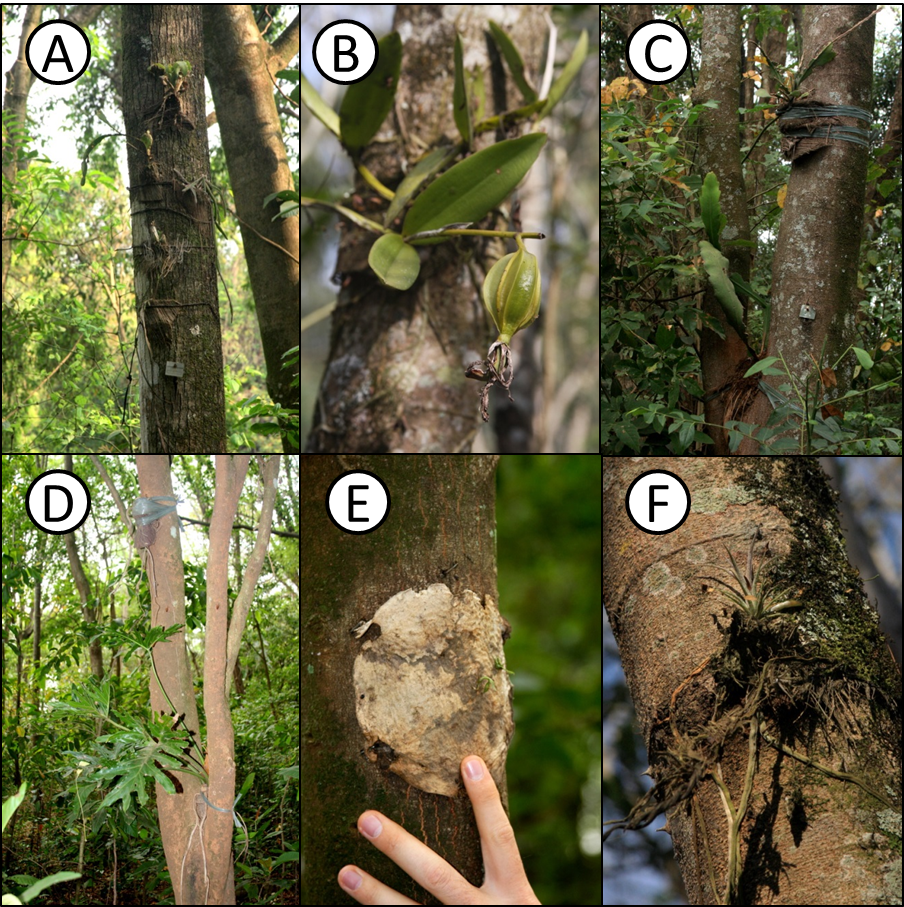
    Fred picked me up in his black pickup, “mamangava”, and took me on a tour of several tree plantations where he has been developing methods for reestablishing populations of epiphytic orchids, bromeliads, cacti, and aroids. Fred’s basic procedure involves collecting epiphyte seeds (or purchasing small plants, in the case of orchids), growing them out in a nursery, and then attaching them to trees using twine or plastic. He started his work in 2010 and has been monitoring his plants, and reintroducing new plants, every year since. He uses a ladder to put the orchids up high, out of easy reach for would-be poachers.

    blog2
    Atlantic Forest restoration plantations. Left: 60-year old plantation along the Rio Piracicaba near Rio Claro. Right: 12-year old plantation at the Anhembi Forest Science Experimental Station. The older restoration site had considerably more naturally recolonizing epiphytes than the younger site.

    Late August is mid-winter in São Paulo, and while it doesn’t get particularly cold, it is quite dry. The restoration plantations were crunchy with desiccated leaves and twigs. These are harsh conditions for epiphytes, which do not have the luxury of soil to buffer to their roots from the sunlight and dry air. Some of Fred’s epiphytes have withered and died, especially during a 100-year drought in 2012. But others are thriving, thanks to special adaptations, such as the velamen of orchid roots, which wicks up rainwater when it drips down the tree trunk during storms. Many individuals have started fruiting and flowering, a good sign for the future viability of these reintroduced populations.

    epi3
    Epiphyte reintroductions in restoration plantations. (A) A reintroduced festoon of bromeliads, orchids, and cacti. (B) A fruit-bearing orchid (Cattleya forbesii), six years after reintroduction. (C) This reintroduced cactus (Epiphyllum phyllanthus) seemed to grow better in tree forks than on vertical stems, as did an aroid, (D) Philodendron bipinnatifidum. (E) Two tiny cacti have germinated in this direct seeding experiment, using seeds enrobed in paper discs. (F) Even where epiphytes have dessicated and died, experimental infrastructure continues to enhance epiphyte development; here a small bromeliad (Tillandsia recurvata) uses a piece of natural twine as a foothold.

    To identify the key challenges for epiphyte restoration, it is also important to study epiphyte recolonization in naturally regenerating forests. Alex Mendes, an undergraduate researcher at ESALQ, is doing just that. On an unseasonably rainy morning, Alex, Fred, and I visited three regenerating forests near the sugar town of Rio Claro. We ducked under barbed wire fences and wandered through low, dense vegetation where Alex is systematically searching for vascular epiphytes. Two forests had rather few epiphytes – mostly generalist bromeliads – but one forest had a high density of orchids, which happened to be flowering spectacularly on the day we visited. Based on historical aerial photos, Alex knows that these three forests are at least 20 years old. They are part of a network of 75 sites that he will ultimately search for epiphytes. By the end of his undergraduate program, Alex hopes to be able to predict where epiphyte communities will regenerate on their own, and where they will need more assistance.

    20160831_095557
    This secondary forest near Rio Claro might have felt like your average overgrown Psidium guajava patch had it not been  decorated with dozens of Ionopsis sp. orchids.

    These are early days for learning about epiphyte restoration, and there is still a lot of work to be done. The projects that I visited in Brazil are making headway, complementing our research in Costa Rica. It remains to be seen under what circumstances epiphyte reintroductions will be most successful. Perhaps an even more important issue will be convincing funding agencies and land managers to think beyond trees.

    IMG_0011
    Fred Domene and Alex Mendes are making strides in the ecology of epiphyte reintroductions and community assembly. Here, they pose with a reintroduced bromeliad (Billbergia zebrina) at Anhembi experimental station.