Tag: Prescribed fire

  • Native Plant Seeding Solutions for High Disturbance Highway Roadsides

    Native Plant Seeding Solutions for High Disturbance Highway Roadsides

    By Wes Bollinger

    Wes Bollinger completed his master’s in 2025 with Jeffrey Matthews lab in the Department of Natural Resources and Environmental Sciences at the University of Illinois. Wes is now a restoration ecologist in Chicago and runs his own restoration consulting business – Wildshape Ecological Design.

    The modern American landscape is crosscut by millions of miles of roadways. This land that was previously part of intact ecosystems has been converted into impermeable pavement and ditches, reducing the quantity and quality of habitat. Roadways also lead to habitat fragments, which can impede the movement of animals around the landscape. Highways in the Midwest (Illinois, Indiana, Iowa, Michigan, Minnesota, Missouri, Ohio, and Wisconsin) amount to more than 100,000 centerline miles (160,934 km) of roadway, and their unpaved right-of-way (roadside margins, medians, interchanges, etc.) total over 1,010,000 acres (445,000 ha) of unpaved land and soil. Highway roadsides typically experience high rates of disturbance due to wind, vehicle traffic and pollution from oil, microplastics from tires and litter, and often agricultural additives like herbicides, insecticides, and fertilizers. These lands and similar areas adjacent to roadways may be either burden or boon to the local ecosystem depending on management regimes and use of disturbance tolerant plant species. Here I recommend an approach to identifying appropriate native species for roadside vegetation, but this perspective may also apply to a variety of marginal greenspaces, such as residential sidewalk strips.

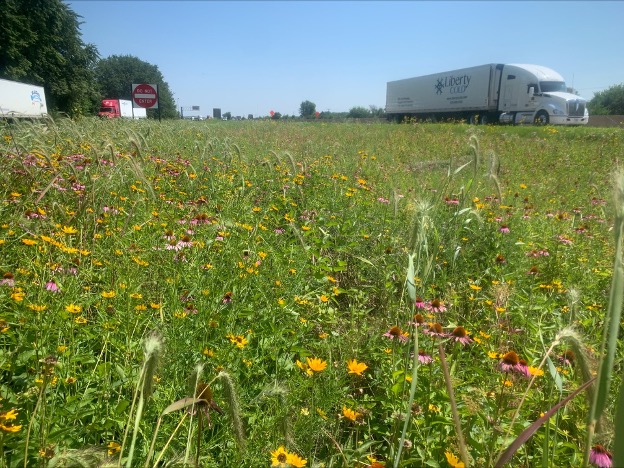
    Native species dominated restoration project on a highway roadside in Northern Illinois. Visible flowerheads are pale purple coneflower (Echinacea pallida), lanceleaf coreopsis (Coreopsis lanceolata), black-eyed Susan (Rudbeckia hirta), and Canada wildrye (Elymus canadensis). Photo by Wes Bollinger.

    If poorly managed, rights-of-way can become heavily invaded by nonnative plants like common reed (Phragmites australis), teasel (Dipsacus fullonumDipsacus laciniatus), and Johnsongrass (Sorghum halepense) among many others. These invasive species inhibit the native grasses and forbs and reduce ecosystem functioning. When heavily invaded, roadsides also cause economic impacts, functioning as source populations of weeds that can impact adjacent agroecosystems. Typically, roadsides are seeded with a mixture of Eurasian turfgrasses like Kentucky bluegrass (Poa pratensis) and red fescue (Festuca rubra). These nonnative grasses are comparatively short both in their above- and below-ground growth. Their short roots do not inhibit the growth of undesirable nonnative species, resulting in more mowing and maintenance than a native plant community to keep areas appearing ‘pristine.’ 

    However, roadsides can be restored with native species and managed using best practices to provide economic and environmental benefits to the region. Native-dominated vegetation can inhibit invasion, protect nearby remnant habitats, promote healthy soil, improve stormwater retention, absorb agricultural additives, sequester carbon, and provide forage and migration corridors for native animals. Though establishing native vegetation on roadsides may have these obvious benefits, there are many knowledge gaps pertaining to this practice such as how and what to seed in these areas to maintain the highest ecosystem fidelity and greatest economic benefits.

    We conducted research to determine which native species to seed on highways and the best practices for establishment and maintenance of these areas, with the goals of lowering overall maintenance costs by reducing the frequency of mowing needed to maintain these areas. This work was funded through grants from the Illinois and Indiana Departments of Transportation (DOTs) in conjunction with the Illinois Center for Transportation and the University of Illinois.

    I carried out three projects to gain empirical evidence on how to restore Midwestern roadsides with native species. Project 1) reviewed the native seeding practices of the DOTs of the Midwest to identify commonly seeded species and assessed establishment and management practices. For Project 2) we conducted experimental trials in Illinois comparing existing Illinois DOT mixes (non-native and partially native) with novel mixes that we designed to be more diverse and contain only native species. For Project 3) we conducted a field survey of existing native roadside plantings across Illinois and Indiana. Projects 2 and 3 sought to quantify the performance of individual species to determine which ones have the greatest establishment and persistence in roadside conditions, and what conditions lead to favorable native establishment generally.

    Project 1) Current native seeding and management practices

    My review of Midwestern DOT seeding practices revealed stark differences between DOTs among states, but some commonalities that are noteworthy for establishment and maintenance. Most interestingly was the disparity in native diversity between states. Michigan did not list any native species in their roadside manual, while Minnesota listed 108, the most of any Midwestern DOT. Further, Minnesota listed 11 majority or entirely native seed mixes and had the most comprehensive standard operating procedures for native seeding. Many mixes had average max heights under 3 ft (~1m) to avoid obscuring motorists views on roadsides; however, some states had mixes more than 5 ft (~1.5 m) for tallgrass areas and to increase the invasion resistance of an area by blocking light access with taller plants. Perhaps surprisingly, the states of Ohio and Indiana still list an invasive legume, crownvetch (Securigera varia), in mixes designed for erosion control.

    Number of majority native species mixes listed by Midwestern Department of Transportation in order of most to least native species (n) listed.

    Several establishment methods were common across states. Native seeds should be sown into low-fertility topsoil using a hydroseeding machine (a device that sprays a mixture of seed, water, and an organic adhesive agent directly onto soil) especially on sloped areas. Hydroseeders show remarkable success in soils with a seed bank containing invasive species, by avoiding tillage which can bring these seeds to the surface and increase their germination. Native straw can be applied as a mulch layer and may be harvested from areas scheduled for maintenance with mowing. Seeding should take place in the fall to allow for cold stratification. Local ecotype seeds are preferred to produce individuals with locally adapted phenotypes and avoid genetic contamination with seeds harvested outside the region. Mowing in the first year of growth is critical to reduce invasive species while native seedlings establish. Minnesota recommends three mows in year one, in May, June, and July, and a singular mow between July and August of year two. Controlled burning of these areas is ideal every 3-5 years but mowing at the same rate is also beneficial. 

    Project 2) Comparative performance of standard (mixed origin) and native-only mixes

    As a method of direct comparison between existing DOT seed mixes and a fully native roadside, I established four trials across Illinois to test differences in seeded, native, seeded native, and nonnative unseeded plant cover and richness, thus also providing information on invasion resistance between four popular mixes (DOT lawn, roadside, north IL, south IL) and four corresponding fully native plant mixes I designed to meet the same general criteria (low growing, disturbance, and salt tolerant) while also being higher diversity (from 9 to 38 species depending on mix). These experimental plots were seeded in November 2023 and surveyed in May and August of 2024. I observed that plantings differed in degrees of success, but every trial showed at least one significant positive result for the native planting over the nonnative IDOT mix. Native richness was higher for all sites by August of the first growing year, and native cover was higher for three of the four experiments. My trial of the IDOT Class 3 North Slope mix against a mix of 38 native species yielded significantly higher seeded cover by August 2024, and higher richness and cover of all native species in both May and August, suggesting that this high diversity mix competed very well against an existing DOT mix which was a combination of native forbs and nonnative grasses. Based on preliminary data collected during 2025, the native species are continuing to outpace the nonnatives in these mixes. 

    Of the native species seeded in these trials, those with the greatest record of germination in year one are lanceleaf coreopsis (Coreopsis lanceolata), common milkweed (Asclepias syriaca), partridge pea (Chamaecrista fasciculata), Illinois bundleflower (Desmanthus illinoensis), pale purple coneflower (Echinacea pallida), common evening primrose (Oenothera biennis), golden Alexander (Zizia aurea), blue vervain (Verbena stricta), and plains oval sedge (Carex brevior), which were present in the first year between 50% and100% of plots they were seeded in.

    Example paired plot before site prep and seeding (left) and August of the first growth year after establishment (right). IDOT mix on the left, native mix on the right of each image. Yellow flowers are golden Alexanders (Zizia aurea). Photo by Wes Bollinger.

    Project 3) Identifying the most successful native species from field surveys

    Lastly, I surveyed 34 native plantings on roadways across Illinois and Indiana at various distances from the road edge while collecting data on soil chemistry, surrounding land use, and soil compaction. Sites were more than two years old to avoid plantings early in their establishment. The purpose of this project was to identify which seeded species tend to germinate and persist, and what environmental factors contribute to higher native and invasive success. Of the 153 native species seeded in one or more sites, we found that 28 native species were observed in at least half of the planted sites and 84 species were never observed once despite being seeded in anywhere from one to 12 sites. Five species were found a total of 10 or more times each across all 34 sites: common milkweed (Asclepias syriaca), bee-balm (Monarda fistulosa), black-eyed Susan (Rudbeckia hirta), false sunflower (Heliopsis helianthoides), and switchgrass (Panicum virgatum). These five species along with Virginia wildrye (Elymus virginicus) were also the most observed species at sites where they were seeded. These surveys were not designed to be comprehensive given the size of many of these plantings and it is highly probable some other seeded species were present but unobserved.

    I found that native diversity and cover were generally higher further from the road edge, in areas with less salt, more basic soil, lower nitrogen and phosphorous, and a higher seed mix diversity. The opposite was true for nonnative cover and diversity. Richness of the seeded native mix was one of the strongest determinants of both diversity and cover. 

    In summary, we recommend that seed mixes should be hydroseeded at a rate of 60-70 seeds per square ft. (650-750 seeds per square meter) into low-nutrient, unfertilized soils, and covered in native straw. High-diversity mixes with no more than 10% legumes and an otherwise equal ratio of grasses to forbs should be used. Several species (but no more than 10%) should be early-establishing annual forbs for first year cover. Select species so that there is at least one blooming at all times of the growing season, favoring plants like golden Alexander (Zizia aurea) and native Alliumspecies for early spring blooms. Seed in as large an area as possible to reduce edge effects, consider cloverleaf interchanges as ideal locations for large projects.

    For maintenance in year one post-seeding, mow several times (May, June, July, potentially also August in warmer states) to a height of 6-8 inches. In year two, mow at least once between June and September. Controlled burning or mowing can be conducted as needed for persistent weed issues but generally are only required every three to five years. If mowing is needed, areas with low abundance of non-native plants can be harvested as native straw for future plantings.

    Native species with the best establishment record and widest usage are as follows and should be prioritized in high disturbance roadside plantings: Asclepias syriacaAsclepias verticillataBouteloua curtipendulaCarex breviorCarex cristatellaCarex hystericinaChamaecrista fasciculataCoreopsis lanceolataDalea purpureaDesmanthus illinoensisEchinacea purpureaElymus canadensisElymus virginicusEryngium yuccifoliumEupatorium perfoliatumHelianthus grosseserratusHeliopsis helianthoidesJuncus effususMonarda fistulosaOenothera biennisPanicum virgatumPenstemon digitalisPhysostegia virginianaPycnanthemum tenuifoliumRatibida pinnataRudbeckia hirtaSilphium laciniatumSymphyotrichum novae-angliaeSymphyotrichum puniceumLiatris pycnostachyaVerbena strictaVernonia fasciculataand Zizia aurea.

    Further details and methods can be found in the thesis here or by contacting the author at info@wildshaperestoration.com
  • Peter’s Mountain Mallow – Back on the brink as it approaches its 100th anniversary

    Peter’s Mountain Mallow – Back on the brink as it approaches its 100th anniversary

    By Ben Sapperstein, Quinlan Campbell, and Leighton Reid

    Ben Sapperstein and Quinlan Campbell are undergraduate researchers in Leighton Reid’s Restoration Ecology Lab at Virginia Tech.

    Peter’s Mountain Mallow (Iliamna corei) is among the rarest plants in the world. As of 2025, only five individuals remain in the wild, all of them clustered in a single population on a rocky ridge in southwestern Virginia. In the 98 years since its discovery, Peter’s Mountain Mallow has teetered on the edge of extinction and come roaring back like a phoenix from the ashes, but today its future is again uncertain.

    First discovered in 1927 by two botanists from West Virginia, Peter’s Mountain Mallow is a showy wildflower with light pink, hibiscus-like flowers. In full sun it reaches an impressive 2-m stature, with multiple stems covered in fuzzy, maple-like leaves. The blossoms are slightly smaller than the aperture of a coffee mug. They feature prominent columns of fused stamens tipped with yellow pollen. Uniquely, the flowers have no discernable scent.

    Peter’s Mountain Mallow (Iliamna corei) in full bloom during happier times. A key difference between this species and its midwestern relative the Kankakee Mallow (Iliamna remota) is that I. corei flowers have no discernable scent. Photo courtesy of the Massey Herbarium.

    The mallow’s habitat is a unique pine-oak woodland situated on a rocky ridge above the New River. The ridgetop is underlain by calcareous sandstone, which lends a richer feeling to this site than nearby ridges, which are much more acidic. For example, the plant community includes calciphiles like white-flowered leafcup (Polymnia canadensis), toothache tree (Zanthoxylum americanum), and American barberry (Berberis canadensis). Other species include honey locust (Gleditsia triacanthos) and northern leatherflower (Clematis viorna) – a distinctly rich ridgetop assemblage. Historically, the site had an open canopy that also supported sun-loving plants like Monarda and Coreopsis, but the canopy has apparently closed in and these are no longer evident.

    Changing vegetation structure at the Peters Mountain Mallow habitat. Left: an open canopy in the mid 1980s afforded a view of the surrounding landscape. Right: in 2025, there was nowhere that afforded such a view, suggesting that the canopy has closed substantially over the past ~40 years. Authors Quinlan Campbell and Ben Sapperstein (right) inspect an updated version of the herbivore exclosures first built by Johnny Randall (left), Mary Lipscomb, Tom Wieboldt, and others in the 1980s. Left photo by Tom Wieboldt. Right photo by Leighton Reid.

    Fire required

    Today, Peters Mountain is densely forested, but this may not always have been the case. Pine trees there bear fire scars showing that the mountain burned many times in the past. From the late 18th Century until the 1940s, Peters Mountain burned on average every second or third year, but after the 1940s fires abruptly disappear from the record. This reflects a change in federal policy towards fire suppression that affected forests throughout the United States.

    The loss of fire coincided with a decline in the mallow population. In 1927, when Perry Strausbaugh and Earl Core discovered it, they estimated that there were no more than 50 plants. Botanists in 1962 found the population little changed, but by 1985 the population was decimated – with only five individuals remaining.

    The US Fish and Wildlife Service added the mallow to the Endangered Species List in 1986, and a recovery plan was written by 1990. Yet in 1993 the population hit rock bottom with just three plants. Researchers at Virginia Tech and elsewhere mounted investigations to understand the cause of the mallow’s decline and clues about how best to assist its recovery.

    germination experiment in the early 1990s revealed a strong connection between fire and Peters Mountain Mallow. Jerry and Carol Baskin at the University of Kentucky tried to germinate a batch of mallow seeds, but only a tiny proportion (3%) grew. When they burned the seeds, the germination rate increased 13-fold, to 39%. The Baskins further increased seed germination by repeatedly heating the burned seeds to 80-90°C, ultimately achieving a maximum germination rate of 71% – nearly 24 times the baseline rate. They concluded that Peters Mountain Mallow forms a persistent seed bank and requires fire to break seed dormancy and trigger germination.

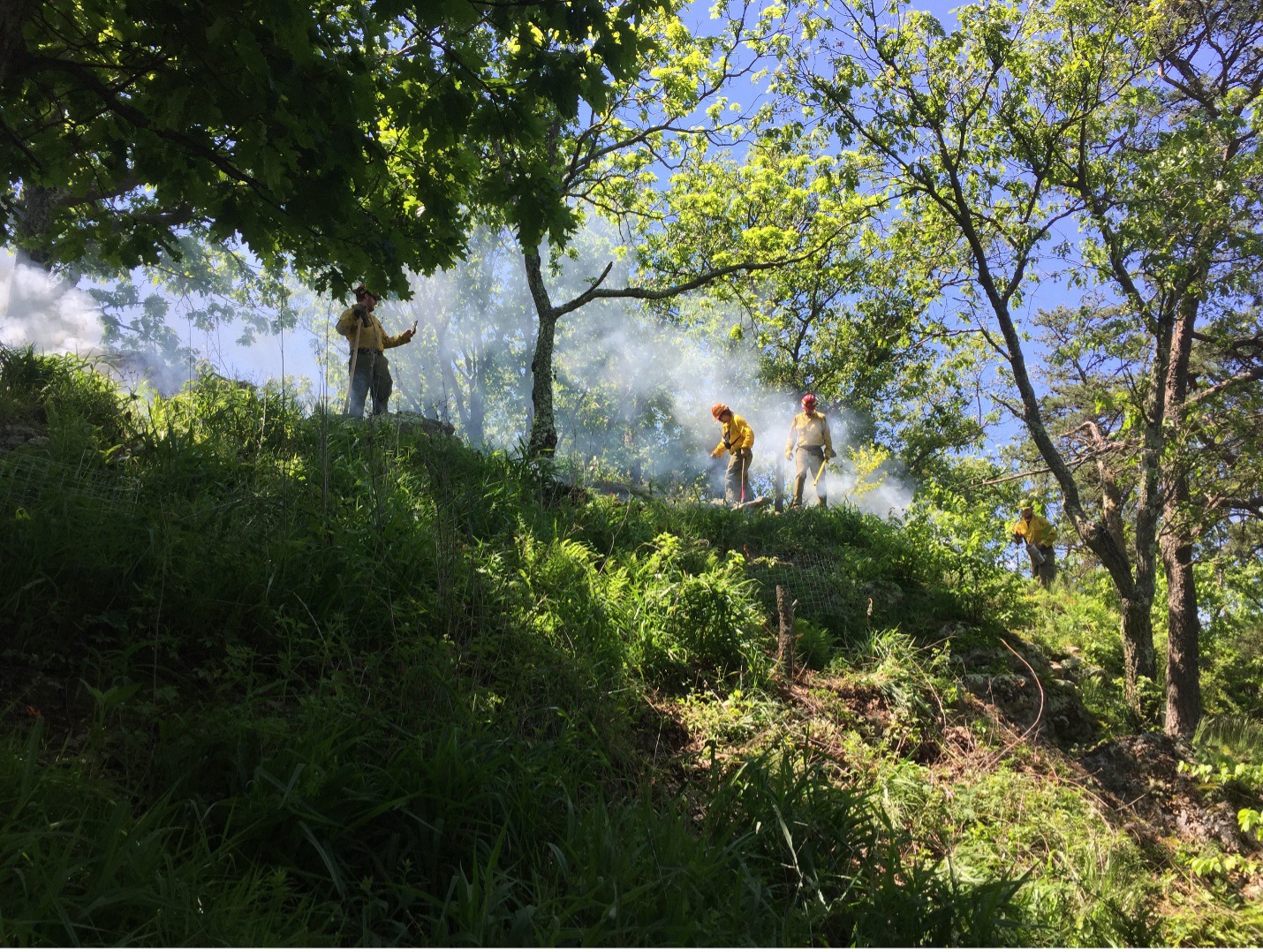
    A smoky prescribed fire on the crest of Peters Mountain in May 2017. Photo by Ryan Klopf.

    Population restoration

    These two lines of evidence – germination studies and fire history – suggested that a prescribed fire campaign would help reinvigorate the mallow population. A consortium of institutions rose to the challenge, including The Nature Conservancy and the Virginia Department of Conservation and Recreation. Burning the site was not easy. Fire crews hand-carried heavy tools, water, and drip torches off-trail up the side of the mountain. They created fire lines through steep, intact forest to prevent fire from spreading into the adjacent Jefferson National Forest.

    Initially, the ridgeline habitat was burned twice, once in 1992 and again in 1993. The return of fire led to a dramatic population increase as hundreds of seeds in the soil seed bank broke dormancy and germinated.

    In addition, the few remaining adult plants were caged to prevent wandering deer and other herbivores from eating them. Land managers removed trees, shrubs, and herbs with hand tools and herbicide to increase light availability. Two particular targets were white-flowered leafcup and garlic mustard (Alliaria petiolata) – an invasive species.

    As a further precaution, experimental populations were created offsite, including two at Virginia Tech. Some of the seeds from these garden plants were preserved frozen at the North Carolina Botanical Garden. Others were broadcast back into the habitat to await the next fire – and their opportunity to recruit into the population.

    In June 2004, lightning struck and a hot wildfire consumed the mountaintop. This conflagration followed two exceptionally dry years in which the Peters Mountain Mallow population failed to produce any fruits. The wildfire again stimulated germination of seeds in the soil seed bank, and a flush of mallows appeared over the next two years.

    Further burns in 2008, 2009, 2010, and 2011 assisted in growing the population from 74 individuals in 2005-2007 to an average of 110 individuals each year from 2012-2014. In May 2017, a multi-agency team burned the Peters Mountain Mallow habitat one last time. The vegetation was green, and the fire was smoky, but the population that year was robust. The team counted stems (an individual plant can have several) and found 345, down from 630 the year before. This was the last fire ignited on Peters Mountain before the COVID-19 outbreak. There has not been another one since.

    Reinvigorating research

    On a steamy morning in July 2024, a small group of ecologists, botanists, and land managers climbed the mountain to see how Peters Mountain Mallow was faring. One of us (Leighton) accompanied others from the Massey Herbarium, The Nature Conservancy, and the US Fish and Wildlife Service. What we found was disappointing. The mallow flowers we hoped to see were shriveled and dry from a prolonged drought. Worse, there were only a few of them. We did not do a thorough census, but this trip sparked the notion that the mallow required renewed attention.

    Drought-stressed flowers of Peters Mountain Mallow in summer 2024. Photo by Leighton Reid.

    For many years, researchers at Virginia Tech were heavily invested in this species – measuring the population, collecting seed, growing plants, performing genetic and physiological studies – even carrying jerry cans up the mountain to water plants during droughts. But this involvement waned as faculty retired and students moved on to other things. It seemed like a good time for a new wave of researchers to join the effort. Moreover, students in the newly-formed Ecological Restoration major had created a Society for Ecological Restoration student association (SER-VT) and were seeking a local project.

    Our first action was to formally survey the population. Last July, we laid out a transect to measure and map every individual. It did not take long. Since the last population inventory in 2018, the world’s only population of Peters Mountain Mallow has declined from 155 stems to just ten, representing only five individual plants. This is the same number of plants that there were when the species was first listed on the Endangered Species Act in 1986.

    What’s more, only two of the plants were large enough to produce flowers this year, and the flowering times were misaligned so that one plant was setting flower as the other was senescing. Peters Mountain Mallow requires cross-pollination, so no seeds were produced last year.

    While disappointing, this information is valuable for understanding the species’ boom-and-bust population dynamics and informing land managers about the acute need to bring fire back onto this landscape in the near future.

    Looking backwards to move ahead

    We know from the pine tree study that Peters Mountain burned frequently over the past two hundred years, but presumably the mallow has lived here for much longer. In what sort of environment did it evolve? Another undergraduate researcher, Nisha Polk, is using a different approach to construct an older, precolonial environmental history – and a potential reference for land managers to emulate.

    In October, Nisha climbed the mountain with Dr. Rachel Reid, a conservation paleoecologist in the Virginia Tech Geosciences Department. Nisha and Rachel inserted PVC tubes into the ground to collect soil cores from small pockets of earth between the boulders that make up the ridgetop. The soil is thin, no more than 25 cm, but it could contain organic matter from as much as 2,000 years ago.

    Over the next few months, Nisha will analyze the carbon isotopes from the soil organic matter to learn how old the soil is and what kinds of plants produced it. To age the soil, they will use carbon dating, which estimates when the soil was formed based on how much of the radioactive carbon-14 isotope is present. Then they will study the ratio of stable carbon-13 and carbon-12 isotopes to learn about past vegetation. In essence, lower ratios indicate plants that use a C3 photosynthetic pathway, including most broad-leaved plants that make up the temperate forests in our region, while higher ratios indicate plants that use a C4 photosynthetic pathway, such as warm-season grasses adapted to open grassland, savanna, and open woodland habitats. In other words, carbon isotopes can tell us what the predominant ecosystem was here over hundreds or thousands of years.

    Virginia Tech Ecological Restoration majors Nisha Polk (left) and Alex Owusu-Sampah (center) carefully collect a soil core on Peters Mountain with conservation paleoecologist Rachel Reid. Photo by Leighton Reid.

    A bright future?

    While Peters Mountain Mallow is again in the single digits worldwide, there are reasons for hope. First, the species produces a robust seed bank that may revitalize it when the site is next burned (hopefully soon). Second, the North Carolina Botanical Garden maintains a collection of its seeds – a back-up if the worst should happen. Third, the habitat is owned by The Nature Conservancy, whose land managers are committed to ensuring the species’ persistence. Fourth, the species is protected by the US Endangered Species Act, a 1973 law that is estimated to have prevented the extinction of more than 70 species.

    Finally, Virginians should have hope for the future of this botanical crown jewel because a new generation of undergraduate researchers is engaged, bringing fresh energy and insights to the cause, documenting the species’ ups and downs, and uncovering its natural history. Over the next five years, we envision an undergraduate-led research agenda that includes monitoring the mallow population, using paleoecology methods to learn about the long-term environmental history of the species’ habitat, and refining our understanding of its ecological niche.

    The New River cuts through Brush Mountain in southwest Virginia, just a bit upstream from Peters Mountain. Photo by Leighton Reid.
  • Understanding the role of soil microbial communities in oak woodland restoration using DNA metabarcoding

    Understanding the role of soil microbial communities in oak woodland restoration using DNA metabarcoding

    By: Rachel Brant

    Rachel is a postdoctoral fellow in the Missouri Botanical Garden’s Center for Conservation & Sustainable Development whose research focuses on plant-pollinator interactions and using eDNA to advance the conservation and restoration of biodiversity.

    Oak-dominated ecosystems occur in many areas of the northern hemisphere, support considerable biodiversity, and provide vast benefits to humans. Although notably absent from the southern hemisphere, oak-dominated or mixed-oak dominated forests are found across much of southern and central Europe, northeast Asia, and the eastern and central United States. Oak ecosystems range from closed forests with a dense midstory to open forests or woodlands with continuous canopy or widely spaced trees and dominance of herbaceous vegetation in the understory.

    Around 80% or more of the plant diversity in oak forest and woodland ecosystems in the eastern US, including a large proportion of rare species, resides in the herbaceous layer, which contributes significantly to nutrient cycling and overall ecosystem function. However, these forests and woodlands have suffered significant degradation over the past century, resulting in dramatic shifts in species composition and structure due to human land-use activities, invasive species, and alterations in disturbance regimes. In particular, fire exclusion has led to the encroachment of fire-intolerant tree species and nonnative shrubs, decreasing both understory light availability and the abundance and diversity of herbaceous plant species.

    Restoration of oak ecosystems usually involves prescribed burning or a combination of burning, canopy thinning, and control of undesirable woody vegetation. Although these restorative practices encourage the passive recovery of herbaceous flora, restored oak woodlands often lack conservative species in the understory. Unlike matrix or ruderal plant species, conservative plant species are those that depend on high-quality or minimally damaged sites and rapidly disappear with degradation. In addition, they often fail to recolonize sites naturally, making them potentially important targets for reintroduction.

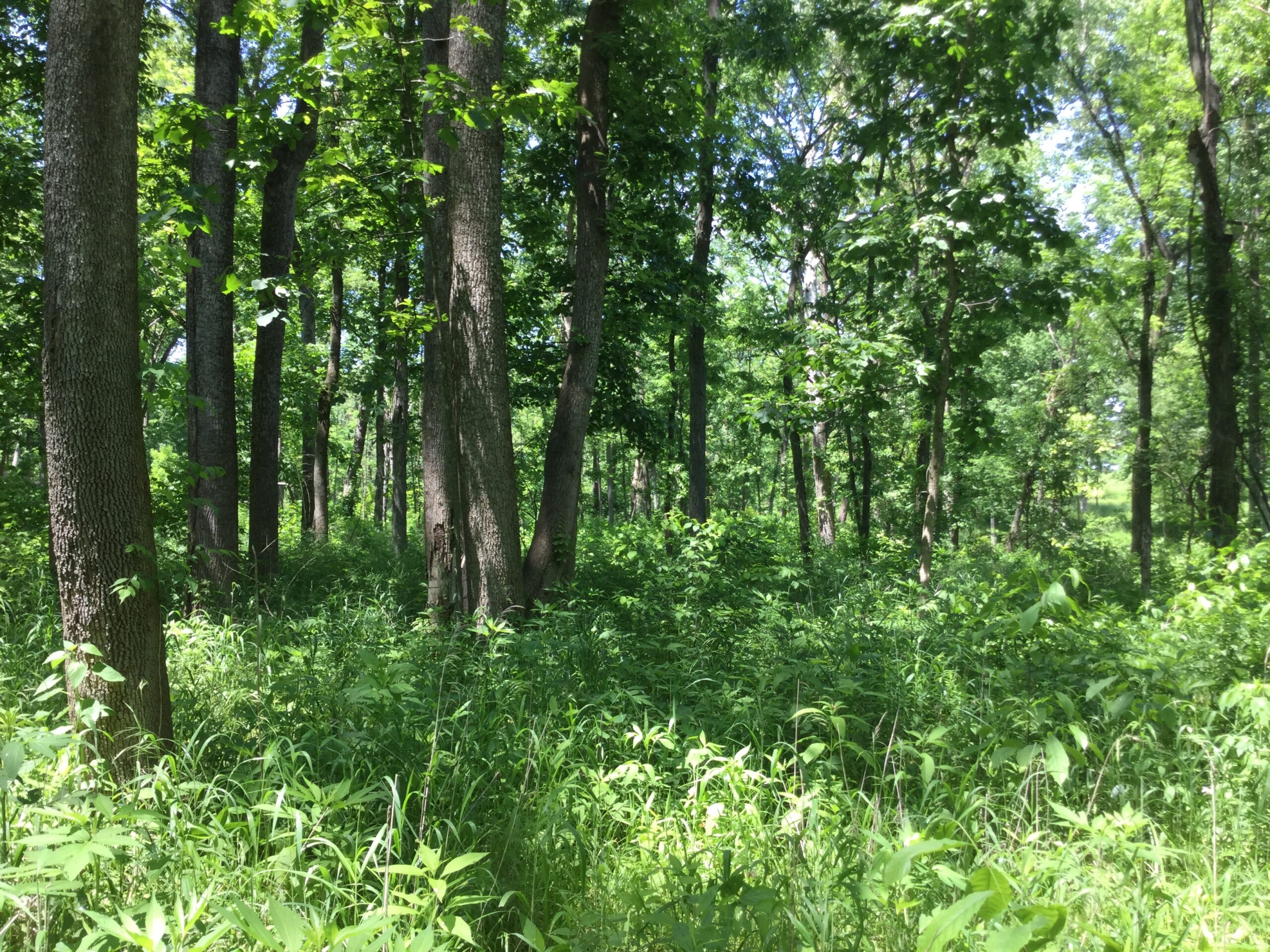
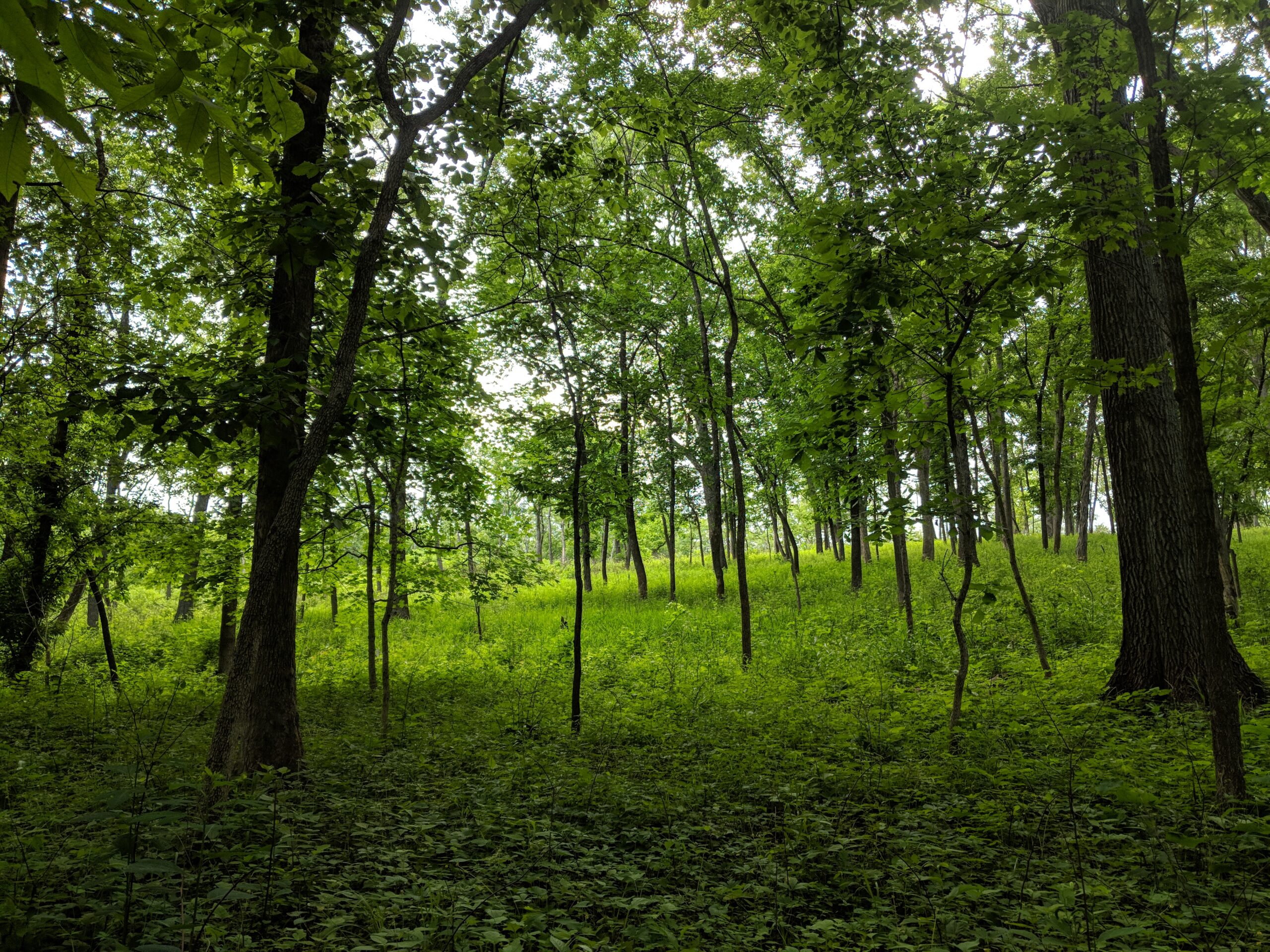
    (Top) Degraded oak woodland at Missouri Botanical Garden’s Shaw Nature Reserve infested with nonnative shrubs and fire-sensitive tree species and (Bottom) Adjacent restored oak woodland after mechanical control of woody encroachment and six prescribed burns. Note the minimal sunlight penetrating the woodland floor and lack of herbaceous species in the degraded woodland relative to the restored woodland. Photo: (Top) Brad Delfeld and (Bottom) Matthew Albrecht.

    Conservative species are notoriously challenging to reintroduce in restoration projects, with soil microbes emerging as a key factor influencing their success. Arbuscular mycorrhizal fungi (AMF) are particularly crucial in this context; they enhance nutrient uptake and improve stress resistance, benefits that are especially valuable for conservative plant species with specific habitat requirements. For example, one study found that conservative species were more dependent on AMF and exhibited higher habitat specificity compared to less conservative species (Bauer et al. 2018). The practice of soil inoculation with whole soil, which presumably contains beneficial mutualists like AMF, is increasingly employed to boost plant growth and survival in restoration projects. Despite its growing popularity, though, the effects of soil inoculation on the establishment of herbaceous species in oak-dominated ecosystems remain poorly tested.

    Another factor that may affect the establishment of conservative plant species is the timing of reintroduction. Environmental conditions are predicted to be more favorable for the establishment of conservative species later in restoration, in part because soil symbionts facilitating plant establishment may only be found in later-successional sites. Alternatively, early restorations may lack the establishment barriers potentially encountered later in restoration, such as competition with established vegetation or soil legacies from early-arriving species, but could be deficient in important microbial mutualists often required by conservative plant species.

    To test these hypotheses, we examined the potential role of soil microbial communities on the performance of conservative herbaceous species using an oak woodland restoration chronosequence at the Missouri Botanical Garden’s Shaw Nature Reserve. First, we collected bulked field soil samples from three sites representing different restoration ages (young, intermediate, and old) based on their onset since restoration began (7, 16, 29 years ago) with prescribed burning, selective tree thinning, and non-native shrub control. We quantified several soil abiotic properties (e.g., pH, phosphorus, potassium, and nitrogen) and employed DNA metabarcoding to describe the microbial composition of the soil. DNA metabarcoding is a cutting-edge technique that identifies many taxa from an environmental sample by sequencing specific genetic markers from extracted DNA. This method provides a comprehensive snapshot of the microbial diversity present, allowing one to better understand otherwise cryptic below ground communities. 

    Conservative perennial forbs used in a greenhouse study to test the effects of soil inoculation young, intermediate, and old restored woodlands on plant growth: Geum virginianum (left), Solidago argute (center), and Solidago caesia (right). Photo credit: Gerrit Davidse (left) and Missouri Botanical Garden (center and right).

    Next, we conducted a greenhouse study with three conservative forb species, Geum virginianum, Solidago arguta, and Solidago caesia, testing their growth responses to soil inoculum from sites that differ in restoration age. These species are components of the regional species pool, but absent from restored oak woodlands at Shaw Nature Reserve. We placed germinated seeds of each species in quart-sized pots filled with a sterilized topsoil mix that mimic oak woodland soils. Each sterile pot (270 in total) was then inoculated with 10 mL of the bulked live field soil (approx. 1% by volume) sourced from one of the three restored sites. Plants were grown for 12 weeks in standard greenhouse conditions and then evaluated for growth using nondestructive measurements.

    Planting seeds of conservative forb species into soil inoculum treatments in a greenhouse study. Photo credit: Leighton Reid

    Tree species and soil microbial communities in restored oak woodlands 
    Not surprisingly, we found that younger restored oak woodlands, with historically fewer prescribed fires, had a greater abundance of fire-sensitive tree species (e.g., sugar maple, Acer saccharum) than the intermediate and older restored sites. However, younger restored woodlands also exhibited lower levels of soil phosphorus compared to older sites, consistent with previous studies that have shown greater levels of potassium and phosphorus in soils post-burning. Other soil abiotic properties, however, did not differ across the restoration chronosequence. 

    A grove of sugar maples (Acer saccharum) during autumn in the young restoration site at Shaw Nature Reserve. Photo credit: Mike Saxton

    Bacterial and fungal communities varied in composition across the restoration chronosequence. For example, Firmicutes, a phylum of bacteria noted for surviving in extreme conditions, such as in severely burned areas, was more abundant in soils from the oldest restored woodland, which experienced a greater number of prescribed fires than the other sites. In contrast, the fungal phylum Ascomycota was more abundant in restored woodlands of young and intermediate age. Members of Ascomycota include decomposers that break down organic materials and endophytes that form mutualistic or commensal associations with plants. 

    Plant-soil interactions in response to soil inoculation
    After 12 weeks of plant growth in the greenhouse, we found that forbs tended to grow larger leaves when grown in soil inoculum from the younger restoration site compared to the intermediate restoration site. Additionally, S. arguta and S. caesia grew longer leaves in soil inoculated from the intermediate compared to the old site, while G. virginianum plants tended to produce longer leaves when grown in inoculum from young relative to the old restoration site.

    Leaf length (cm) of three native forbs after 12 weeks of growth in whole-soil inoculations from young, intermediate, and old restored oak woodlands at Shaw Nature Reserve. Geum virginianum (GV), Solidago arguta (SA), and Solidago caesia (SC).

    Results from the DNA metabarcoding provide a clue as to why the soil inoculum treatments induced different plant-growth responses. Soils from the young restoration exhibited increased relative abundance of mutualistic microbes, including AMF and cyanobacteria, and decreased pathogenic taxa after conditioning by each of the three species. In contrast, the oldest restoration site had the greatest relative abundance of pathogens and the lowest relative abundance of mutualists. This enhanced microbial profile in young restorations may facilitate better nutrient uptake, and disease and stress resistance in plants. From a practical perspective, early-stage restorations may provide the most favorable soil microbial community for the establishment of conservative plant species in these oak ecosystems. One possible reason for this could be a shift in the increased relative abundance of AMF-associating tree species (e.g., maple) from older to young restored woodlands. AMF-associating tree species may harbor unique AMF taxa that resulted in increased herbaceous plant growth and AMF colonization for plants conditioned with young soil inoculum.

    Interestingly, although some microbial taxa exhibited consistent patterns across all plant species within an inoculation treatment, each plant species also associated with unique microbial taxa when grown in the same soil inoculum treatment. For example, the Glomeraceae, which includes AMF, was marginally more abundant after S. caesia was grown in young inoculum, whereas Ascobolaceae – fungi that feed on decaying and dead matter – was significantly abundant only when G. virginianum was grown in old soil inoculum. This means that species reintroduced during different stages of oak ecosystem restoration could influence key ecological functions by selecting for or against certain microbes, including pathogens that regulate plant community dynamics, decomposers involved in nutrient cycling, and mutualists that enhance plant performance. 

    Overall, our study demonstrates how restoration age can shape interactions between soil microbes and herbaceous plant species in restored oak woodlands. By better understanding these interactions, we can enhance the restoration and recovery of degraded oak ecosystems. However, an important and lingering question from our study is whether differences in plant growth and microbial communities observed in the greenhouse persist after the focal plant species are transplanted into the field. A study currently underway at Shaw Nature Reserve is addressing this question across different restoration ages and competition treatments. Our study reinforces global calls that emphasize the need for more research on the dynamic nature of plant-microbe relationships and interactions over time during restoration. Advancing scientific research on the relationship between the soil microbiota and ecological restoration practices is crucial for meeting local, regional, biome level and global restoration goals.

    If you want to learn more about microbial-herbaceous plant interactions in restored oak woodland, we invite you to read our recent paper in Ecology and Evolution.

  • Looking Back to Guide the Future: Evaluating 23 Years of Management History in Big Meadows, Shenandoah National Park

    Looking Back to Guide the Future: Evaluating 23 Years of Management History in Big Meadows, Shenandoah National Park

    By Jordan T. Coscia

    Jordan is a PhD candidate in the Restoration Ecology Lab at Virginia Tech and a Research Fellow with the Smithsonian’s Virginia Working Landscapes program whose research focuses on the characterization and restoration of Virginia’s native grasslands.

    An open landscape of grasses, forbs, and low shrubs meets the edge of a forest in the background. Three trees are in the foreground to the right, and forested mountaintops are visible in the distance.
    The western section of Big Meadows, Shenandoah National Park in June 2022. Photo by Wendy Cass.

    Located at the heart of Shenandoah National Park, the Big Meadows landscape is a site of both natural and cultural history. The 134-acre meadow is the largest open area in the Park, and it is a popular visitor destination boasting numerous walking trails and proximity to campgrounds, picnic grounds, and one of the park’s two visitor centers. Ecologically, the Big Meadows landscape includes two globally critically rare Blue Ridge Mafic Fen plant communities, and hosts plant and animal diversity not found elsewhere in Shenandoah National Park.

    Like other meadows and grasslands across the Southeastern United States, Big Meadows occurs in a climate that can support closed-canopy forests. Therefore, the open landscape and the species that rely on it only persist due to a combination of edaphic characteristics, such as shallow and poorly drained soils, and frequent disturbance, such as fires or the grazing of herbivores, that prevent the growth of woody trees and shrubs. In the post-colonial absence of large herbivores and the suppression of both cultural burning and wildfires, the open landscape of Big Meadows was maintained by livestock grazing before the establishment of Shenandoah National Park in 1935. Continuous efforts have been made to preserve the historic open landscape since the Park’s founding, including routine mowing, prescribed burns, and the targeted cutting and herbicide treatment of encroaching Robinia pseudoacacia (black locust) saplings and Rubus (blackberry) canes. While initially successful, management efforts appear to have become less effective over time, and the spread of woody and invasive species threatens the open landscape of Big Meadows.

    Close-up of a sedge with a terminal, brown, staminate spike and two lower, pistillate spikes of green, oblong perigynia sporting “racing stripes” formed by impressed nerves.
    A rare sedge, Carex conoidea, in Big Meadows. Common names for this species include the prosaic “field sedge” (Flora of Virginia) and the romantic “ancient prairie sedge” (Southeastern Flora). Photo by Leighton Reid.

    Since 1998, botanist Wendy Cass and The Inventory and Monitoring program at Shenandoah National Park have recorded land management actions and collected plant community composition data in Big Meadows. Big Meadows was split into three major management zones, and all three zones were treated with prescribed fire each spring between 2000 and 2003. In 2004, a new management schedule was created with the goal of maintaining a three-year burn-mow-fallow cycle in each zone. To determine how these management changes impacted Big Meadows, Leighton Reid (Virginia Tech), Wendy Cass, and I assessed changes in the plant community composition from 2000 to 2023 using multivariate statistics and the creation of statistical models through regression analysis.

    Five people huddle around a field tape marking a vegetation transect through a grassland with white clouds and blue sky in the background.
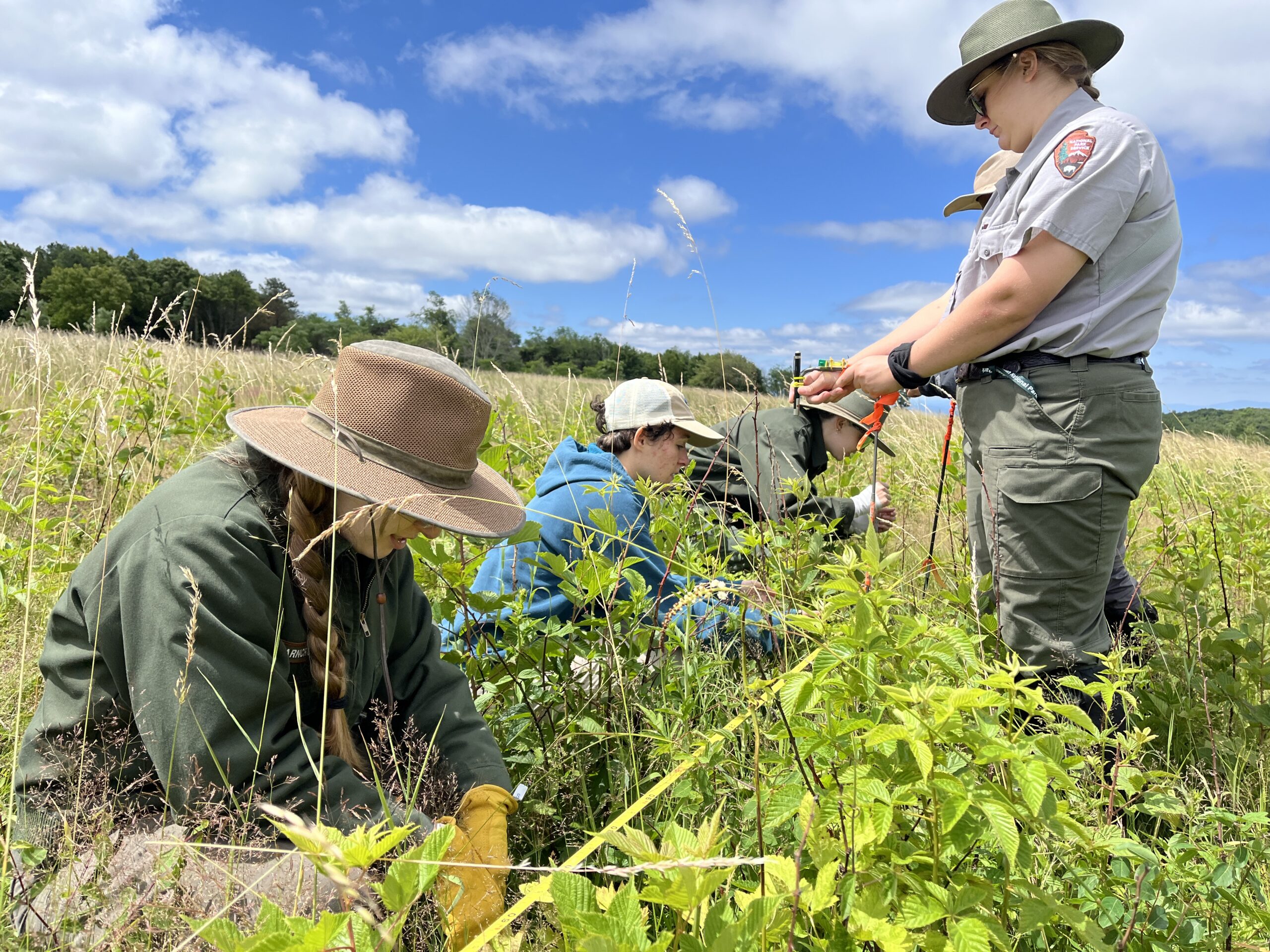
    Jordan Coscia (second from left) and Inventory and Monitoring NPS staff measuring plant community composition in Big Meadows in June 2024. Photo by Wendy Cass.

    We found that the plant community composition of Big Meadows shifted over the past 23 years, with the original mosaic of shrubs within a grass and herb-dominated community experiencing marked increases in low shrubs, young trees, and other woody plants. Though the average percentage of graminoids (grasses, rushes, and sedges) encountered along each survey transect experienced little overall change between 2000 and 2023, the average percentage of forbs (non-woody herbs that are not graminoids) encountered decreased by over 50%, while the average percentage of woody plants encountered increased by 200%-400%. This increase in woody plants was partially driven by native Rubus (blackberry) species, which increased from less than 1% of the plants encountered along each transect in 2000 to 15-20% of the plants encountered along each transect by 2023. Multivariate statistics revealed that the trajectory of change in the Big Meadows plant community shifted abruptly after the three-year burn-mow-fallow cycle was adopted in 2004. The direction of this shift was correlated with an increase in the time interval between prescribed burns.

    An open landscape of green vines interspersed with brown, leafless stems. The sky is cloudy and Big Meadows stretches into the distance, terminating in a line of trees.
    Woody encroachment near the northern edge of Big Meadows. Bare stems represent Robinia pseudoacacia (black locust) top-killed by prescribed fire. Emerging beneath them is a green carpet of invasive bittersweet (Celastrus orbiculatus). Photo by Leighton Reid.

    Our statistical models provided evidence that both climate and changes in the timing of land management actions have impacted the plant community in Big Meadows. There was moderate evidence that later springs (as indicated by the date of the last spring freeze) are correlated with desired increases in forbs, however, this positive effect may be lost as climate change brings milder winters with fewer frost days to Shenandoah National Park. There was strong evidence that longer intervals between prescribed fires are correlated with unwanted increases in woody plants and decreases in forbs and moderate evidence that longer intervals between mowings are correlated with unwanted increases in Robinia (black locust) and decreases in forbs. Together, this evidence indicates that these unwanted changes may be mitigated by increasing the frequency of prescribed burns and mowing in the future.

    Overall, our analysis revealed that the changes in land management between 2000 and 2023 have negatively impacted the plant community composition in Big Meadows. Together, the shifts in community trajectory after 2004 and the evidence from our statistical models suggest that the change from annual burning to a three-year burn-mow-fallow cycle in 2004 has contributed to the declining landscape conditions in Big Meadows. Though ad-hoc changes to the three-year management cycle and gaps in the plant data make it difficult to determine an ideal burn or mow interval from the existing data, evidence from the past 23 years suggests that more frequent burning and mowing may aid the preservation of the Big Meadows landscape for future park visitors and wildlife alike.

    An open landscape with patches of dark green trees in the left foreground and the right background, surrounded by a low, shrubby wetland. The sky is pale blue with a few wispy clouds above a forested hill that rises on the right hand side.
    A line of gray dogwoods (Cornus racemosa) accentuates a shorter canopy of narrowleaf meadowsweet (Spiraea alba) shrubs in the wet, central portion of Big Meadows. Photo by Leighton Reid.
  • How a rare plant provided clues to restoring a degraded ecosystem

    How a rare plant provided clues to restoring a degraded ecosystem

    Dr. Matthew Albrecht is an associate scientist in conservation biology in the Center for Conservation and Sustainable Development at Missouri Botanical Garden. He describes the ecology of the endangered Pyne’s ground-plum (Astragalus bibullatus).

    Formed from the fossilized remains of an ancient tropical sea, the Nashville Basin encompasses the geographic center of Tennessee, stretching north to southern Kentucky and south to northern Alabama. Celebrated by some as the “home of country music,” many of us prefer to revel in the region’s unique flora and fauna associated with the globally rare limestone glades, or limestone cedar glades. Here, thin, rocky soils interspersed with flat, exposed limestone bedrock support sun-loving herbaceous plants adapted to the scorching temperatures and parched soils of summer followed by near-permanently saturated soils in winter. Trees and other woody vegetation struggle to take hold here, creating an open, desert-like ambience.

    Limestone Glade in the Nashville Basin with Oenothera macrocarpa (Missouri evening primrose), a rare disjunct species, in bloom. Photo by Matthew Albrecht

    Treasured for their unique flora, limestone glades feature over two dozen endemic or near-endemic species along with several unusual disjuncts – known mainly from grasslands far west of Mississippi River. Glade endemics such as Nashville Breadroot (Pediomelum subacaule) and Gattinger’s prairie clover (Dalea gattingeri), occur in open, shallow-soil communities dominated by C4 annual grasses and C3 winter annuals, including several members of Leavenworthia spp. Most of these glade-restricted species are widespread throughout the Nashville Basin. However, several of the disjuncts and endemics are extremely rare, such as the federally endangered Pyne’s ground-plum (Astragalus bibullatus). Known from just a few sites in a single-county, Pyne’s ground-plum teeters perilously close to the brink of extinction.

    Gattingers prairie clover (Dalea gattingeri; top) and Nashville breadroot (Pediomelum subacaule, bottom), characteristic glade species in the Nashville Basin.
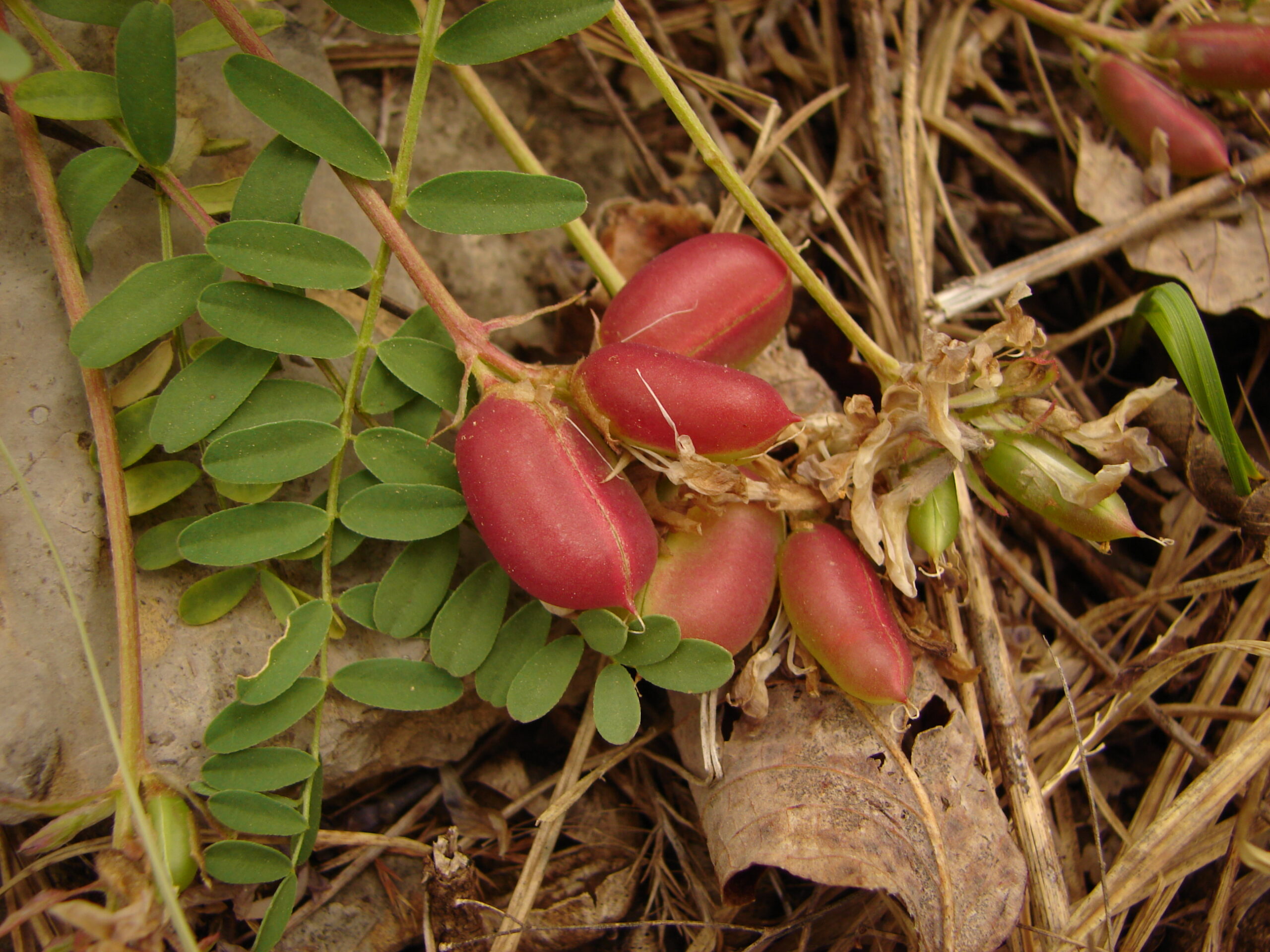
    Pyne’s ground-plum in flower (top) and fruit (bottom). Photos by Matthew Albrecht

    Why are Pyne’s ground-plum and a few other endemics and disjuncts so rare? At first glance, the obvious culprit appears to be habitat loss from the unrelenting sprawl of Nashville. Just take a drive from Nashville to Murfreesboro on I-24 and you will encounter an uninterrupted sea of strip malls and tract housing. In the late 1800’s, famed botanist Augustine Gattinger collected a specimen of Pyne’s ground-plum much farther north than where present-day populations are found, in a spot now inundated by the J. Piercy Priest Dam and Reservoir near Nashville. Constructed on the Stones River in the 1960s, the dam flooded thousands of acres for “recreational enjoyment” and hydroelectric power generation. Undoubtedly, other rare plant populations, unknown at the time, faced a similar fate. Over time, humans have abused many glades, using them as trash dumps or for off-road vehicle recreation, which could have also led to their demise.

    Trash dump at a limestone glade with a Pyne’s ground-plum population. Photo by Matthew Albrecht.

    Our long-term research with Pyne’s ground-plum also points to additional factors. In 2010, we began a demographic monitoring study on Pyne’s ground-plum populations to understand how we could reverse this species’ decline. Most remaining populations occupy slightly deeper soil pockets on glade edges where perennial C4 grasses and forbs form narrow, linear bands that abruptly transition into impenetrable thickets of woody vegetation – mostly of eastern red cedar (hereafter “cedar”). In a few cases, Pyne’s ground-plum grows in small, rocky openings surrounded by dense, dark cedar-hardwood forest.

    Monitoring Pyne’s ground-plum populations located in a glade edge (top) and small opening of a cedar-hardwood forest (bottom).

    At the time, the long-standing paradigm was that Pyne’s ground-plum – and some other extremely rare plants like Trifolium calcaricum – thrive in the partial shade cast by these adjacent cedar trees and woody vegetation at the glade edge. As the story goes, some endemics were less hardy and required some shade as a buffer from the extreme microclimate on the thin-soil outcrops. Much of the early, pioneering work on glade ecology by Elise Quarterman and her students – described stable plant communities under edaphic control of the thin, rocky soil. As was typical of that era, they described plant communities on deeper soils according to classical climax theories of eastern deciduous forest succession.

    However, several years of careful monitoring and experimentation in my lab began to reveal other factors at play. Initially considered an outlier, one of our monitored populations occurs beneath a utility right-of-way, which rapidly succeeds to woody vegetation in the absence of periodic mowing. Our data showed that plants here grew larger and usually produced far more flowers and fruits compared to shaded sites. After measuring soil properties, light availability, and other vegetation properties in permanent plots, our analyses indicated that the amount of woody vegetation cover rather than edaphic conditions drove growth and reproduction in Pyne’s ground-plum. Follow-up experiments conducted by then REU student, Rachel Becknell, confirmed light-conditions that mimic cedar resulted in reduced growth of Pyne’s ground plum.

    Top: Pyne’s ground population growing under a utility line kept open by periodic mowing. Bottom: Permanent monitoring plot with Pyne’s ground-plum and associated species.  Photo by Matthew Albrecht.

    With fresh eyes, we began to scrutinize the dense thickets of cedar at our study sites. Upon closer inspection, we noticed the occasional, gnarled, and open-grown (i.e., wolf tree) chinkapin or post oak jutting above the younger, even-aged thickets of redcedar. Chinkapin and post oaks grow slowly in these thin, rocky soils, but their low-lying branches in multiple directions suggest these wolf trees once grew in conditions more open in the distant past. Historical aerial imagery dating back to the 1950’s confirmed that some of these forested sites were once more open, with far fewer cedars.

    We speculate that disturbances from prior land-use activities probably kept these deeper soil areas around glade openings in a more savanna-like or open woodland state. In their absence, opportunistic woody vegetation – especially fast-growing cedar – colonized all but the thinnest soils in the limestone glades. Over time, this led to the development of multilayered forests and dense shrub layers that now surround the thin-soil glade openings at many of our study sites.

    Dense cedar thicket behind a small remnant population of Pyne’s ground-plum. Photo by Matthew Albrecht.

    To dig a bit deeper in time, my colleague, Dr. Quinn Long, and I also examined early land survey records dating back to the late 1700’s. Surveyors would delineate property boundaries based on the tree species (i.e., witness trees). If no tree species were present, surveyors used stakes (or sometimes stacks of rocks) to mark off the property boundary. In the records we examined, eastern redcedar represented just 2% of all witness tree species while oaks and stakes represented a majority of the records. Now, cedars are probably the most abundant tree in the Nashville Basin.

    Although we interpret historical data with caution, these multiple lines of evidence imply a historically more open landscape in the Nashville Basin with far fewer cedars. Cedars are fire intolerant, and we hypothesize that periodic fire – naturally set by lightning and Native Americans – maintained historically lower densities of woody vegetation and promoted grassland species surrounding the glade pavement openings. Genetic analyses by our collaborators Dr. Ashley Morris (Furman University) and colleagues show widespread admixture among populations of Pyne’s ground-plum, which also supports a historically open landscape mosaic that facilitated gene flow among remnant populations via pollinator or animal movement.

    Prescribed fire at Couchville Cedar Glades and Barrens Natural Area. Photo by Todd Crabtree.

    Admittedly, we were not the first to propose a paradigm shift in the ecology of the Nashville Basin. We soon realized a few other astute botanists long before us advocated for the use of fire management to create more open habitat around glades, but with limited data these recommendations never gained widespread traction among land managers or found their way into the scientific literature. Another issue was that ecologists and botanists tended to focus almost exclusively on the plant communities of open, thin-soil glades – which are clearly not fire-dependent – rather than on the matrix plant communities of slightly deeper soil surrounding them.

    Not surprisingly, our ideas faced much skepticism and many questions: Hasn’t cedar always been the dominant tree of the Nashville Basin? After all, the Cedars of Lebanon State Park and State Forest – the largest remaining tract of Nashville Basin Glades and Woodlands under public protection – was named after the towering eastern red cedars that reminded early settlers of the Biblical cedar forests around Mount Lebanon.

    At about the same time of our research discoveries, Dr. Dwayne Estes, botanist and Director of the Southeastern Grasslands Initiative, also began developing transformative ideas about the Nashville Basin. Like us, he hypothesized that the glades were historically embedded in a savanna and open woodland landscape rather than dense forests as they are now. Unfortunately, there are few historical descriptions of the Nashville Basin before early settlers radically altered the landscape via farming, pasturing, and logging. Estes speculates that lack of detailed naturalist descriptions of the Nashville Basin prior to the Civil War resulted in a misunderstanding of its historical condition. The earliest reports after the Civil War describe a largely forested region with large cedars, which could have easily developed over the 80-year period between the time of settlement and the mid-1800’s.

    Long before settlement, we know that American bison and other large mammalian grazers also crisscrossed this landscape along ancient traces or megafauna highways that connected mineral licks and water sources. Formerly known as French lick, what is now present day downtown Nashville contained a large salt lick, once visited by herds of bison and elk according to early accounts. Disturbance associated with grazing and large-animal activity combined with periodic fire and drought probably kept the Nashville Basin in a more open state. Interestingly, Pyne’s ground-plum’s presumed closest relative, Astragalus crassicarpus, is widespread throughout grasslands in the Great Plains. Commonly known as buffalo pea, it also produces large plum-colored fruits eaten by Native Americans and presumably bison. In many years of monitoring, we rarely find that animals eat Pyne’s ground-plum fruits, which slowly dehisce releasing their hard seeds next to mother plants. Seeds contain a double seed coat making them challenging to germinate. After years of experimentation, we have found that exposing seeds to high concentrations of sulfuric acid followed by a short period of cold stratification results in consistently high germination compared to other treatments. We now wonder whether this germination strategy might be linked to ancient relationships with mammalian grazers who possibly dispersed the fruits and scarified the seeds.

    How does Pyne’s ground-plum inform restoration of degraded woodland and savanna-like systems in the Nashville Basin? Thanks to the prodigious efforts of conservation agencies, several remnant limestone glades have been protected. However, until recently, the dense, cedar-hardwood forest surrounding open glades received little attention from land managers. In 2012, we along with collaborators at the Tennessee Department of Environment and Conservation (TDEC) and United States Fish and Wildlife Service began thinning woody vegetation in the most shaded Pyne’s ground-plum populations. After a few years, we noticed increased flowering at the most shaded sites. To reestablish a more open woodland and savanna-like structure in protected areas throughout the Nashville Basin, TDEC began widespread thinning of woody vegetation around glade openings and reinitiating the key ecological process of fire.

    A recently restored area at Flat Rock Cedar Glade and Barrens Natural Area.  Pyne’s ground-plum (inside cages) was reestablished at this site in 2016 after mechanical thinning and fire removed woody vegetation at the glade edge.

    On a warm, sunny afternoon this past October, my colleague, Noah Dell, and I set out to survey restored areas that might be suitable for establishing Pyne’s ground-plum populations. Hiking through recently restored areas we noticed grassland- and savanna-associated species slowly beginning to rebound and increase in abundance. Compared to previous years, it was much easier to find open, deeper soils on well-drained sites that are needed to reestablish Pyne’s ground-plum. With time and continued restoration of ecological processes, we are optimistic that this and many other rare species will continue towards path of recovery in the Nashville Basin.

  • A ten-year woodland restoration trajectory

    A ten-year woodland restoration trajectory

    Leighton Reid describes a long-term ecological research project at Shaw Nature Reserve (Franklin County, Missouri, USA). To learn more, read the new research paper (email the author for a pdf copy – jlreid@vt.edu) or tune in for a webinar from the Natural Areas Association on April 21 (register here).

    In 2000, the Dana Brown Woods were dark and dense. Brown oak leaves and juniper needles covered the sparsely vegetated ground, and invasive honeysuckle was creeping in around the edges. Biologically, the woodland was getting dormant.

    In contrast, the woods today are lit by sunlight everywhere except the lowest-lying streambanks, and the ground is hardly visible beneath a green layer of diverse, ground-level foliage. These changes were most likely caused by two actions: burning the woods, and cutting out invasive trees and shrubs.

    Many practitioners have seen woodlands recover to some extent when they are burned, but few have documented the recovery as thoroughly and over so long a period of time as Nels Holmberg and James Trager.

    IMG_0101-001
    Nels Holmberg (left) discussing the finer points of Rubus identification with Quinn Long in the Dana Brown Woods.

    Nels is an ecologist and sheep farmer in Washington, Missouri. He has inventoried the plants at several state parks and natural areas. In 2000, Nels teamed up with Shaw Nature Reserve’s resident natural historian, James Trager, and together they designed a study to describe how ecological restoration was changing the woodland flora at the reserve. They picked the Dana Brown Woods as their study area.

    In a nutshell, Nels and James chose 30 random points on a map. They divided the points evenly across three ecological communities. They placed 10 points in mesic woodlands – the gently sloping parts of the property where white oak and shagbark hickory were most prevalent. Ten points were in areas dominated by eastern red cedar – mostly thin-soiled ridgetops that faced the south, and ten points were in forest – the lower, thicker-soiled toe slopes where northern red oak and Shumard oak were dominant in the canopy with paw paws and spicebush down below.

    Fig_RevisedHabitats_HiRes_v2.3
    Three ecological communities in the Dana Brown Woods: (A) red cedar dominated areas which, after removing red cedar, looked more like dolomite glades in some parts; (B) mesic woodlands with lots of oak and hickory in the canopy; and (C) forest – which had a much darker understory.

    At each point, Nels hammered in a t-post, then walked 50 m in the steepest direction and hammered in another t-post. This was his transect. Every year for more than a decade (2000-2012), Nels walked the transects and recorded every stem of every species that was inside of 10 0.5-m2 study plots. Actually, he did this twice per year – once in the spring to capture the ephemeral plants, and once in early summer. Over the course of the study he spent more than 200 days in the field.

    Canopy Cover
    Dana Brown Woods before (left) and after (right) red cedar removal, with Nels’s 30 transects. The horizontal axis of the image is about 0.9 km. Imagery is from Google Earth.

    During this time the stewards at Shaw Nature Reserve were busy restoring the woods. From 2001-2012, they burned the woods five times. This amounted to about one fire every three years. In 2005-2006, they brought in a logging crew to remove all of the eastern red cedars.

    Maker:L,Date:2017-8-24,Ver:5,Lens:Kan03,Act:Kan02,E-ve
    James Trager lights a fire in a woodland at Shaw Nature Reserve.

    BigJuniperStump_20151104
    One of several thousand red cedar stumps from trees that were harvested from the Dana Brown Woods in 2005-2006.

    Plot R8
    One of Nels’s sampling quadrats in the Dana Brown Woods. Photo: Nels Holmberg.

    I met Nels and James in 2014. I had just joined Missouri Botanical Garden’s Center for Conservation and Sustainable Development as a postdoc, and I was looking for a local research project. I heard that Nels Holmberg had a giant dataset about woodland restoration, so I called him and asked if I could look at it. Nels said “Sure!”. I imagined he would send me an Excel file. Instead he brought in a giant cardboard box full of yellow legal pads where he had recorded his data.

    OLYMPUS DIGITAL CAMERA
    One of hundreds of datasheets where Nels recorded his detailed observations.

    It took a long time to digitize all of the data. There were more than 50,000 data points. But once we had it all together, this is what we learned:

    After eleven years of restoration, the number of native plant species in Dana Brown Woods increased by 35%, from 155 species in 2001 to 210 species in 2012. This increase was linear. That is, the number of native species was still increasing at the end of the study. If we repeated the study today, we expect the number of native species would be even greater than in 2012.

    The number of native species increased at different speeds and to different degrees in different ecological communities. In the lower and wetter forest areas, the numbers didn’t really shift very much. They jumped around but not in one direction. In the woodland areas, the number of native species increased by about 23% in the first three years and then leveled out. But in the higher and drier areas where red cedars had been dominant, the number of plants increased linearly by 36%.

    Native Species Richness
    Changes in the number of native plant species recorded over time in the Dana Brown Woods. On the left are overall changes for the whole management unit. On the right are changes for different ecological communities within the management unit. The management interventions are shown in gray.

    The plant species that benefited from the restoration were mostly forbs and grasses. A couple of the biggest “winners” were black snakeroot (Sanicula odorata) and nodding fescue (Festuca subverticillata). There were also some “losers”: Virginia creeper (Parthenocissus quenquefolia) and spring beauty (Claytonia virginica) both declined over time. Relatively few of the species that became more common were “conservative” – i.e., dependent on intact habitat. Mostly they were more widespread and tolerant species.

    IMG_0049
    Co-author Olivia Hajek demonstrates a hog peanut (Amphicarpaea bracteata) – a good representative of the type of species that benefited most from the restoration. Hog peanut is an herbaceous legume that is common in many woodlands, including disturbed ones.

    Our study did not include a control treatment, but counterfactuals exist at Shaw Nature Reserve (although they are becoming fewer and fewer with the excellent stewardship of Mike Saxton and many others). There are still thick patches of eastern red cedar covering remnant glades on parts of the property. Woodlands that have not been regularly burned are now filled with bush honeysuckle (Lonicera maackii), wintercreeper (Euonymus fortunei), and other invaders. And low-lying forest that has not been restored is very dark with fire-intolerant sugar maple (Acer saccharum) casting much of the shade. If we had included a control treatment in our experiment, these are probably the trends we would have found – definitely not a spontaneous resurgence of diverse native plants.

    IMG_0099
    Fragrant sumac (Rhus aromatica) was present at the outset of restoration and remained relatively stable.

    Why does this work matter? The biggest value of this study is that it shows a relatively long-term restoration trajectory, and it does so in fine botanical detail. Many managers and scientists already have data to show that fire and tree thinning increase woodland plant diversity. This study adds another dimension. It shows how quickly plant diversity recovered. It also shows how the speed and shape of the recovery varied across the landscape. We hope that other scientists and practitioners will compare the recovery trajectories in the Dana Brown Woods to their own natural areas. To facilitate that, we have made all of the underlying data freely available online.

    IMG_0029
    Buffalo clover (Trifolium reflexum) is a conservative species that is present in Dana Brown Woods but was not detected in any of the survey plots.

    One of the next steps for this research is to figure out how and when to re-introduce some more conservative plants. Although the Dana Brown Woods became much more diverse as it was being restored, most of the plants were early successional or generalist species. We found very few habitat specialists that cannot tolerate disturbance, which suggested to us that some of these species may have been lost from the site at some time in the past. To learn how conservative plants might be re-introduced, we have started a new experiment testing the effects of soil microbes, competition, and time since the start of restoration on the success of introduced seedlings from seven conservative plant species. In the next year or two, we hope to have new information and recommendations for restorationists looking to add more specialized biodiversity to their woodlands.

    WP_20150502_004
    Freemont’s leather flower (Clematis fremontii) is a restricted species occurring on dolomite glades in southeastern Missouri. Although it is present at Shaw Nature Reserve less than one kilometer from Dana Brown Woods, it has not colonized the restored glade habitats there. This photo is from Valley View Glade near Hillsboro, Missouri.

    To learn more about this research, you can read the original research paper in Natural Areas Journal. Email me for a pdf copy (jlreid@vt.edu). You can also tune in on April 21 for a webinar on this work. Register here.

  • Does fire affect Eastern Bluebird nest success at Shaw Nature Reserve?

    Does fire affect Eastern Bluebird nest success at Shaw Nature Reserve?

    Joseph Smith is a rising senior at Lake Superior State University. This summer, he studied the effect of prescribed fire on Eastern Bluebird nesting success at Shaw Nature Reserve as part of  MBG’s NSF-funded Research Experience for Undergraduates (REU) program.

    Among the rich plant diversity at Shaw Nature Reserve are a wide range of animal species, including the Eastern Bluebird (Sialia sialis). The Nature Reserve is home to an extensive bluebird trail consisting of 86 nest boxes in the north-central region of the reserve. This summer, I have been working with Dr. Leighton Reid and a citizen scientist, Lynn Buchanan, in an effort to understand the effects that land management practices have on bluebird nest success.

    Prescribed fire is one of the most important management practices used at Shaw Nature Reserve. In the 2016-2017 burn season, for instance, nature reserve staff set fire to 306 ha (756 acres) of woodlands, prairies, and glades to restore and maintain open vegetation structure and a high diversity of native plants. However, it was unclear what effect these fires might have bluebirds.

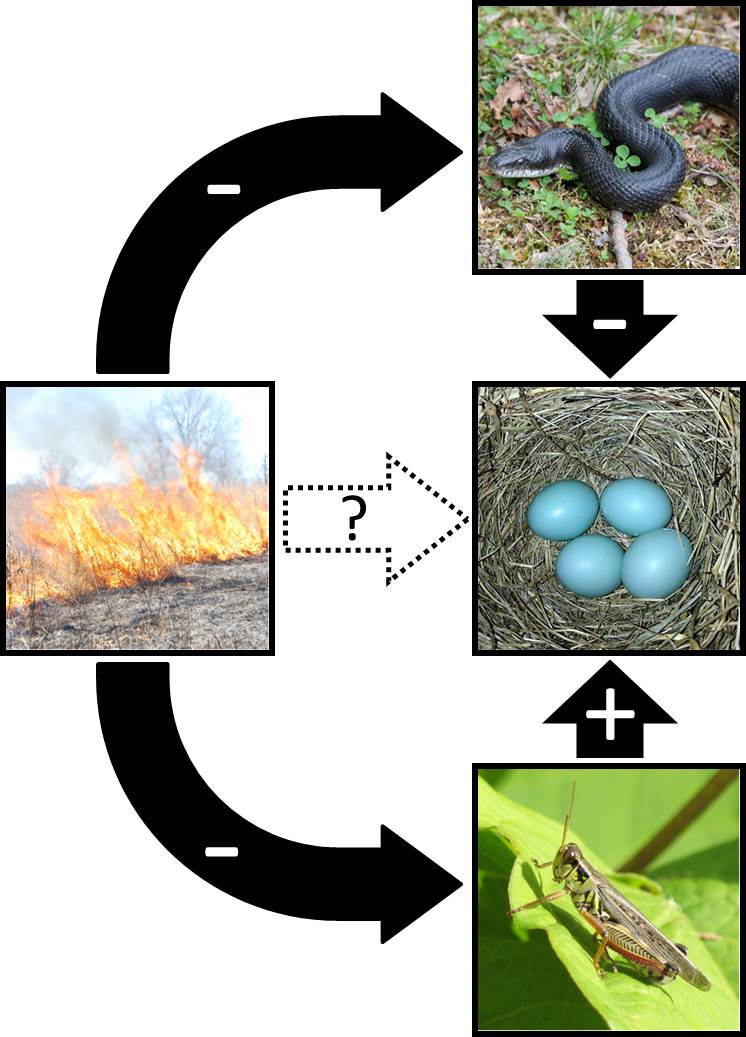
    FireHypotheses
    Hypothetical effects of prescribed fire on Eastern Bluebird nest success. +/- symbols denote the short-term effect of fire on snakes and arthropods, and the effect of snakes and arthropods on bluebird nest success. Photo credits: (1) Black rat snake (Pantherophis obsoletus) by John Mizel CC BY-NC-SA 2.0, (2) Bluebird eggs by Bailey & Clark (2014); (3) Red-legged grasshopper (Melanoplus femurrubrum) by Gilles Gonthier; (4) Prescribed fire courtesy of Shaw Nature Reserve.

    We hypothesized that fire might affect bluebird nesting success in two ways. First, fire could reduce the food supply for nesting birds. When understory vegetation burns, many arthropods are also killed, and it takes some time for their populations to rebound. During the lag, bluebirds might have less to eat, which could result in poorer nest success.

    Second, fires could increase nest success by reducing the risk of snake predation. Bluebird boxes at Shaw Nature Reserve are equipped with baffles to prevent snakes from getting in, but snake predation still occurs sometimes. After a fire, there is less vegetation to hide snakes from their own predators, like raptors, and we surmised that fewer snakes could mean more successful bluebird nests.

    BluebirdTrailMapLowRes
    The Bluebird Trail at Shaw Nature Reserve. Bluebird nest boxes are shown in yellow.

    We tested our hypotheses using a long-term dataset collected by volunteers. Over the past eight years, Lynn Buchanan and her team have monitored the nest boxes on the bluebird trail and kept records of their observations. Each week during the breeding season, they peek into all of the boxes and record the number of eggs and nestlings, how many nestlings fledged, and whether or not the nest was predated.

    With statistical help from Washington University researcher Joe LaManna, we found that prescribed fire had little or no effect on bluebird nesting. We compared areas that were burned with areas that were mowed, and we also compared burned areas at different time intervals since the most recent fire (0-3 years). Likewise, we found no effect of prescribed fire on the rate of snake predation.

    Species Probability of nest success (%)* Probability of snake predation (%)* Did nest success change from 2009-2016? Did prescribed fire have an effect on nest success?
    Eastern Bluebird 90.8 ± 0.5 4.6 ± 0.3 No No
    House Wren 92.1 ± 0.1 4.0 ± 0.3 No No
    Tree Swallow 92.1 ± 0.1 4.8 ± 0.4 No No

    *Standard errors are shown

    While the lack of significant results can be slightly disheartening after an entire summer of work, it is reassuring that the bluebird population is thriving at Shaw Nature Reserve. Overall, we calculated that 90.8 ± 0.5% of bluebird nests produced at least one fledgling. In addition, two other species (House Wrens and Tree Swallows) that commonly use bluebird boxes also had high nest success.

    There are more aspects of bluebird nesting to look at. For instance, the time from when an egg hatches until the chick leaves the nest could be longer in recently burned areas if there is less food (i.e., arthropods) available. In the meantime it appears the bluebirds are living well at Shaw Nature Reserve.

    BluebirdAndBox
    Eastern Bluebird (left) and bluebird nest box (right) at Shaw Nature Reserve. Photo credits: (L) Bluebird by Andy Reago & Chrissy Mclarren; (R) bluebird nest box by Rachel Weller.

  • Environmental determinants of plant community change during restoration at Shaw Nature Reserve

    Environmental determinants of plant community change during restoration at Shaw Nature Reserve

    Olivia Hajek spent 10 weeks this summer studying woodland restoration at Shaw Nature Reserve with CCSD scientist Leighton Reid. She participated in MBG’s NSF-funded Research Experience for Undergraduates (REU) program.

    WildFlowers
    Wildflowers in the restored Dana Brown Woods: purple milkweed (Asclepias purpurescens; left) and buffalo clover (Trifolium reflexum; right).

    During my ten weeks in Missouri, I completed a research project evaluating the role environmental conditions play in restoration at Shaw Nature Reserve.  Specifically, I worked in the Dana Brown Woods management unit, a part of the Missouri Ozark foothills that features diverse plant communities across its heterogeneous landscape.  Sixteen years ago, the Dana Brown Woods was a closed-canopy woodland highly invaded by eastern red cedar.  However, restoration practices including reintroduction of fire and mechanical removal of woody shrubs like eastern red cedar have dramatically changed plant communities since 2000.  I was very fortunate coming into this project because there was extensive data about the plant communities in the Dana Brown Woods from 2001-2012 while restoration was occurring.  A local botanist, Nels Holmberg, monitored understory plants beginning a year before the first fire, creating complete information about the plant community before restoration and as it changed over time.

    We wanted to see how different environmental conditions affect how plant communities change over time in response to restoration.  To answer this question, we visited 300 points across the woodland and measured several environmental parameters, including aspect, slope, rockiness, elevation, and juniper stump density (juniper stumps decay slowly, so many of the trees cut in 2006 were still visible).

    IMG_0049
    Fieldwork in Dana Brown Woods. Olivia makes friends with a hog peanut (Amphicarpaea bracteata).

    Just from field observations, we could see noticeable differences in the environment and plant community composition across the woodland.  Higher slopes were rockier, covered in old juniper stumps, and rich in sunflowers, whereas the lower regions near the Meramec River floodplain had deeper soil and more mesic plant species, like spicebush.

    Data analysis confirmed that environmental gradients moderated plant community change over time. Higher, rockier areas experienced greater plant species turnover and greater increases species richness and abundance from 2001-2012, whereas shaded valleys changed relatively little.

    DataPlot
    Plant composition change from 2001-2012 increased with elevation, particularly during spring surveys. BC = Bray-Curtis dissimilarity, which measures the difference in plant species composition between a plot in 2001 and itself in 2012. Juniper, red oak, and white oak were subjectively determined habitat classifications at the outset of the study.

    Our observations were likely driven by differential fire behavior across the woodland. Historically, fires were a frequent disturbance in the Ozark foothills. Four prescribed fires from 2001-2012 probably had larger impacts on the drier upland areas than in the wet lowlands, which would not have burned as well.

    Quantifying how ecological restoration practices, like prescribed fire, vary across environmental gradients is important for land management planning, especially in the Ozark foothills where the landscape is so heterogeneous.

    Poster
    Leighton stood by while Olivia presented her research to the public at Sensational Summer Nights.

  • Vegetation changes at Shaw Nature Reserve

    Vegetation changes at Shaw Nature Reserve

    CCSD scientists Leighton Reid, Matthew Albrecht, and Quinn Long are teaming up with restoration ecologist James Trager and botanist Nels Holmberg to learn how ecological restoration has affected herbaceous plant communities in an eastern Missouri woodland.

    What happens to Missouri’s grasses and forbs when you remove invasive shrubs? When you return prescribed fire to a degraded woodland? How do restoration impacts differ for summer-blooming plants and spring ephemerals? For dry hilltops versus mesic hollows? These are a few of the questions that we hope to address with a long-term dataset from Shaw Nature Reserve.

    IMG_0101-001
    Nels Holmberg (left) and Quinn Long (right) discuss the finer points of blackberry identification at Shaw Nature Reserve.

    Shaw Nature Reserve encompasses 10 km2 of woodlands and glades along the Meramec River in eastern Missouri. Missouri Botanical Garden purchased the land in 1925 when coal pollution in Saint Louis was so bad that it was killing plants; the garden decided to move its collections to the country where the air was pure. Ultimately the city cleaned up, the collections stayed in Saint Louis’s Tower Grove neighborhood, and the property along the Meramec became a nature reserve and popular hiking area.

    Like other ecosystems in the Missouri Ozark foothills, Shaw Nature Reserve changed considerably during the last century. Fire, once a regular disturbance, became scarce, allowing junipers to crowd in on the glades. Invasive species, like Amur honeysuckle, spread into the woodlands and created dense, understory thickets.

    blue wood aster (Symphyotrichum cordifolium)
    Blue wood aster (Symphyotrichum cordifolium) – a late bloomer in the Dana Brown Woods.

    Twenty five years ago, Shaw Nature Reserve began to counteract these changes through ecological restoration. Staff and volunteers cleared invasive shrubs and began to periodically burn the landscape.

    In 2000, restoration ecologist James Trager and botanist Nels Holmberg designed a study to monitor restoration effects on herbaceous vegetation. Holmberg surveyed 30 transects twice per year from 2000-2012, recording the abundances of more than 360 plant species. Restoration in this area started in 2003, so the first two years of Holmberg’s transects represent a pre-restoration baseline against which we can compare data from the subsequent decade.

    OLYMPUS DIGITAL CAMERA
    Holmberg’s dataset contains more than 50,000 rows. Thanks to Christian Schwarz for digitizing them!

    Recently, we plotted Holmberg’s transects on Google Earth. The images show clear changes since restoration began almost 15 years ago.

    DBW1995
    Holmberg’s transects transposed on a 1995 aerial photo of Shaw Nature Reserve – zoomed in on the Dana Brown Woods. This photo was taken in early spring before most trees leafed out. Dark vegetation is predominantly eastern red cedar (Juniperus virginiana). Holmberg originally grouped the transects into three classes based on the dominant vegetation.

    NelsAug2005
    Juniper clearing began in 2006. This is what the summer-time forest looked like the year before…

    DBW2006
    …and after juniper clearing. By 2006 the Dana Brown Woods had been burned twice with prescribed fires, and a lot of the junipers had been cut out. Compare the open/brown areas in this photo with the solid green canopy in 2005.

    DBW2014
    The most recent imagery, from October 2014, shows some fall color. Note that “red oak” mostly refers to upland Shumard oak, Quercus shumardii.

    Our plan for 2016 is to analyze changes in understory vegetation composition over twelve years. Stay tuned for more information in this ongoing project!