Tag: Seed collection

  • Reintroducing Kenya’s Threatened Trees and Shrubs in the Highlands Through Science and Community Action

    Reintroducing Kenya’s Threatened Trees and Shrubs in the Highlands Through Science and Community Action

    By Tobin Mutiso and Andrew Gichira 

    Tobin Mutiso is a research associate at the Centre for Ecosystem Restoration Kenya (CER-K). He works on plant ecology and taxonomy. He holds a BSc in plant ecology and environmental science from Jomo Kenyatta University of Science and Technology. Email: tmutiso@cerkenya.org

    Andrew Gichira, PhD, is a botanist and restoration ecologist specialising in conservation genetics and ecosystem restoration. He currently serves as the head of research at the CER-K. Email: agichira@cerkenya.org

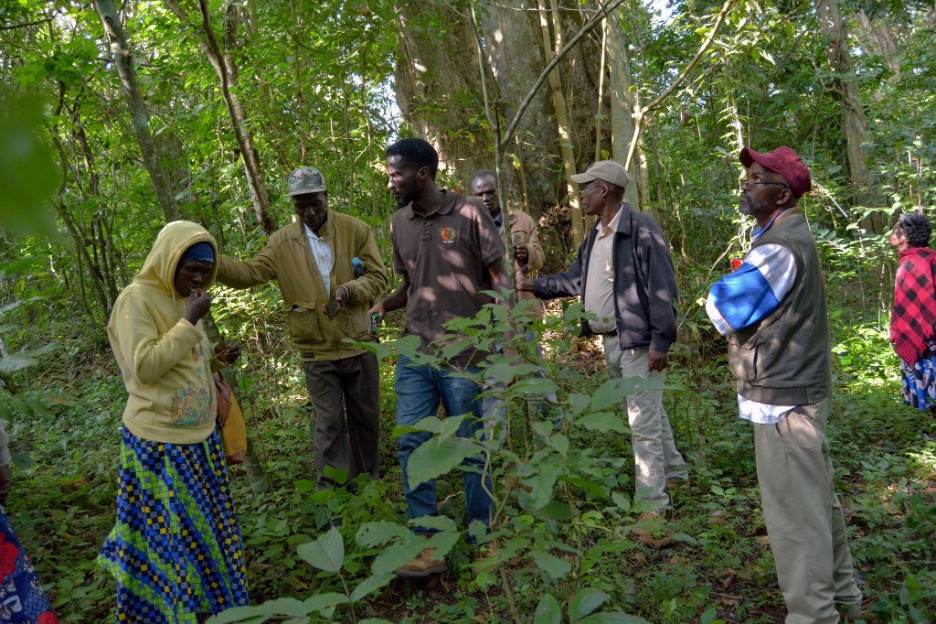
    Members of Community Forest Association (CFA) and trainers standing beside a mature Euphorbia cussonioides at Blue Post, Thikaafter a training on phenology monitoring, seed collection, and species-specific propagation techniques. Subsequently, other seedlings and mature individuals of this species were identified in Ndula Village, approximately 22 km from this site. Photo by Tobin Mutiso.

    The loss of native plant diversity is reshaping Kenya’s ecosystems in ways that are often subtle but deeply consequential. As woody plant species disappear, so do the ecological functions they support, including soil stabilisation along rivers, food and habitat for wildlife, local climate regulation, and cultural and livelihood values tied to native landscapes. According to the IUCN Red List, national reports, and NGO summaries assessing East African trees, roughly 13% of Kenya’s native tree species are threatened with extinction. Most persist in small, isolated stands where natural regeneration is compromised. 

    Natural regeneration becomes increasingly difficult for woody species with very small isolated populations in fragmented landscapes. This is because plants depend heavily on trophic interactions such as complex plant-pollinator relationships.  When these factors are compromised, seed production becomes irregular, which is further compounded with limited capacity of seedlings to establish in degraded and altered habitats. Even in places with improved protection, these species often fail to recover without deliberate conservation intervention. This reality presents a challenge for restoration efforts that rely heavily on a narrow set of fast-growing or readily available species, leaving threatened trees further marginalised and the ecosystems in which they are a key part vulnerable to further degradation and fragmentation. 

    Tree and shrub planting initiatives are expanding rapidly, but their contribution to biodiversity recovery depends on whether the species planted match local ecological conditions. Evidence-driven species selection, combined with local capacity to manage planted trees, remains unevenly distributed across projects, with technical guidance often outpacing on-the-ground monitoring. Threatened plant species, in particular, require targeted support, including improved data on their distribution, a deeper understanding of their ecology, tailored propagation and reintroduction protocols, and long-term care, which can be integrated into local land-use systems.

    Our project aims to investigate whether a species-focused reintroduction model can be effective in real-world conditions. Working with community forest associations, we have selected 22 threatened tree species, developing propagation methods for each and planting them in multiple sites managed by local communities. The central question is whether ecological restoration, species reintroduction and livelihood benefits could be pursued together without compromising the other. By integrating herbarium records, expert knowledge, targeted field science, and community engagement, we are building a reintroduction and restoration model that is both ecologically fit for purpose and socially sustainable, as well as adaptable to other landscapes facing similar biodiversity loss.

    The project is within the Kenyan Highlands, a section of the complex montane ecosystem in East Africa characterised by high habitat heterogeneity and notable levels of biodiversity and endemism (Gehrke & Linder, 2014; Dagallier et al., 2020). Kenya is subdivided into seven plant divisions (K1-K7), which are largely based on the early administrative boundaries (Zhou et al., 2017). Our surveys targeted multiple elevation zones, with a primary focus on the K4 region (1,500–3,000 m) within the central highlands and additional coverage of K7 (Taita Hills, 600–1,640 m) and K6 (Loita Forest, 2,000–2,300 m). Several focal species occur outside the central highlands but occupy comparable altitudinal ranges elsewhere in the country. This broad elevational gradient contributes to high floristic diversity, making the K4 zone a hotspot for Rare, Endangered, and Threatened (RET) species, particularly those of high conservation and use value, including timber and medicinal species such as Ixora scheffleri subsp. keniensis Bridson,  Prunus africana (Hook. f.) Kalkman  and Warburgia ugandensis Sprague.

    The seven phytogeographical divisions recognised in the Flora of Tropical East Africa. K4 and K7 are the most species-rich regions: K4 represents the central Kenyan highlands (~ 1,200–3,000 m above sea level). K7 mainly comprises the coastal lowlands of Kenya (0–150 m.a.s.l.) with some inland highland areas e.g., the Taita Hills (~1,000–2,200 m.a.s.l.). K2 zone also covers the Ilemi area at the northern border. This study focuses on threatened plant species occurring in high-elevation habitats (1,500 m – 3,000 m.a.s.l).

    Starting in the Archives: the herbarium as a roadmap

    This work began not in the field, but at the East Africa Herbarium at the National Museums of Kenya. Herbarium specimens, some collected more than a century ago, provided the most reliable baseline for understanding where threatened tree species historically occurred. We also consulted international databases, most notably the Global Biodiversity Information Facility (GBIF). These collections helped trace former distributions, habitat preferences, and altitudinal ranges for species now rarely encountered in the wild.

    Table 1: A list of 22 woody species that were targeted for the study based on observations recorded at the East Africa Herbarium and the Global Biodiversity Information Facility. Accessed in June, 2022.

    This archival work was complemented by key informant interviews with experienced taxonomists. Their insights helped resolve identification challenges, clarify taxonomic updates, and flag species frequently overlooked in restoration programmes. Surveys of commercial nurseries in the coastal regions further highlighted how threatened native trees and shrubs are systematically neglected in favour of exotic or common species. Literature reviews added further context, helping reconstruct historical range patterns and identify priority floristic regions for field verification. Together, these sources allowed us to move beyond generalized restoration species lists and ask more focused questions, specifically: where do these threatened species still exist, where have they been lost, where does restoration make sense, and, can we create a socio-economic model that sustainably uplifts the livelihoods of local communities while also supporting efforts for ecological and biocultural restoration? 

    Field expeditions and new records

    Guided by this evidence, we carried out targeted field expeditions across multiple landscapes in the Kenyan highlands, spanning 11 counties, including Taita Hills, Kijenge Hills, Thika, Irangi Forest, Ngaya, Thushi River, Nyambene Hills, Imenti Forest and Karura Forest, as well as selected dryland and forest-edge systems, in particular the Loita Hills. These surveys were designed not just to confirm presence or absence but to generate practical ecological insights for restoration practitioners.

    Map of survey areas in the Kenyan Highlands. The sites are distributed in phytogeographical zones K4 and K7, with a single record in K6.

    In several locations, fieldwork led to the identification of new records or previously undocumented populations. The most significant findings surrounded Euphorbia cussonioides (CR) and Brucea macrocarpa (EN), both species whose known populations have declined significantly in recent decades. Newly recorded individuals and regenerants provided urgently needed information on the species’ current area of occupancy and viable seed sources, as well as evidence that recovery is still possible if sites are protected and managed. Observations of flowering and fruiting patterns revealed clear opportunities for seed collection and assisted regeneration. Other threatened species encountered during surveys included Ixora scheffleri subsp. keniensis (CR), Embelia keniensis R.E. Fr. (CR) , Encephalartos kisambo Faden & Beentje (EN), and Vepris hanangensis (Kokwaro) Mziray (NT). 

    Table 2. Newly documented populations and occurrence records of selected threatened woody plant species.

    Newly documented natural regeneration (wildlings) of Euphorbia cussonioides were recorded during field surveys at Nkopon village in the Loita Hills. Photo by B. Maina.

    At each site, we recorded location, habitat condition, land-use context, population structure, regeneration status, threats, and phenological stage. This level of ecological detail transformed field observations into decision-ready data, helping bridge the gap between research and restoration action.

    Communities as conservation partners

    From the outset, the project treated local communities as central partners and not just beneficiaries. In areas where threatened species occurred on private or community-managed land, we worked closely with landowners, community forest associations (CFA), and local scouts to monitor the phenophases and liaise with local nurseries in propagating the seeds. In addition, the Kenya Forest Service (KFS) provided planting locations and collaborated with the CFAs to oversee and care for the seedlings.

    Training focused on practical, transferable skills, in particular: educating the community on the reasons we conserve plants, identifying threatened tree species, monitoring phenology to track flowering and fruiting cycles, collecting seed ethically with genetic diversity in mind, and applying appropriate propagation techniques. We engaged and trained 138 community seed collectors active as community phenology monitors and seed collectors.

    Community members in Embu, Kenya, are undertaking phenology monitoring and seed collection during a training session at Ngaya Forest. Photo by T. Mutiso.

    At Ngaya forest, Thika’s Blue Post, Kasigau (Taita) and Upper and Lower Imenti forests, community members were trained to identify threatened woody species in situ using diagnostic morphological traits, to map and tag individual plants, and apply basic protection measures to reduce disturbance. They also monitored flowering and fruit development to inform seed collection and to rescue naturally regenerated wildlings at risk from competition with invasive species, most notably Lantana camara. This hands-on engagement directly supported the propagation of Brucea macrocarpa,Pandanus kajuiGymnosporia keniensisCylicomorpha parvifloraPremna maximaVepris glandulosa, and Euphorbia cussonioides.

    Pandanus kajui seedlings propagated in Kithunguthia (Embu) community nursery. Photo by T. Mutiso.

    These efforts produced tangible outcomes, with over 28,000 seedlings of threatened species raised in community nurseries in Antubetwe (Ngaya Forest), Kasigau (Taita), Kithunguthia (Embu), Male (Laikipia), Kenya Forest Service (Meru), and Kamaruki (Nyambene), thereby creating viable restoration planting stock. Livelihood benefits were created through project-funded payments for seed collection, nursery establishment and management, and continued after-care management of planted seedlings. The financial support is largely from the Fondation Franklinia, and the funds are channelled through the Community Forest Associations. Building on the outcomes of the grant, we developed a community-based seed collection model in which trained local collectors form a coordinated network that sources seeds from RET taxa as well as other native plant species and supplies them to institutional seed banks. These seeds are subsequently made available to restoration practitioners for use in active restoration initiatives. Revenue generated through seed sales is reinvested to remunerate community seed collectors, thereby establishing a sustainable and locally grounded alternative income stream while reinforcing conservation and restoration objectives. The project’s impact and details of the community engagement aspects have been comprehensively outlined in an article published in the BGJournal Vol 22 (1), Seed banks for Biodiversity pages 39-42. 

    Building practical tools for practitioners

    Under this framework, the project has generated insights that have now been consolidated into practical tools for wider application, including species-specific propagation protocols shared with spatial databases linking historical and new records, producing phenology calendars to guide seed collection for threatened and non-threatened native plant species, and a structured framework for community engagement. Currently, the project has generated 21 propagation protocols for the 22 threatened species, including Uvariodendron anisatum, Brucea macrocarpa, Croton alienus, Euphorbia cussonioides, and Premna maxima, whilst others are still under review.  In addition to these tools, a growing network of restoration sites and partner nurseries is being established, enabling peer learning, harmonisation techniques, and coordinated tracking of threatened species across landscapes. The emerging practitioner network is now being facilitated through CER-K. 

    Restoring Kenya’s endangered trees and shrubs to the Highlands is an act of optimism, responsibility, and restoration, rather than just an ecological exercise. We are using science to pinpoint which species once flourished in Kenya’s phytogeographical regions, understand the reasons behind their decline, and determine the most effective way to bring them back. By taking community action, we ensure that restoration is long-lasting rather than temporary. As a result, the communities themselves own, maintain, and strengthen the conservation of threatened species rather than having it imposed upon them. We aim to increase the number of threatened species sites we survey, improve monitoring, develop a practitioner network, and continue to accumulate knowledge that informs successful conservation both in situ and ex situ. Visit https://cerkenya.org/ for more information on our work in general and in threatened species conservation in particular. 
  • An EHN Trip Report from Canada’s National Tree Seed Centre 

    An EHN Trip Report from Canada’s National Tree Seed Centre 

    Eve Allen, Program Director for the Northeast Bioregion, James Aronson, President, and Sefra Alexandra, Educational Coordinator of the Ecological Health Network, share their trip report from a recent visit to Canada’s National Tree Seed Center (NTSC) in June 2024. (In collaboration with Melissa Spearing, Seed biologist, Mary Knockwood, Indigenous Seed Program Coordinator, and Lucie Lavoie, Coordinator and Senior Forester of the NTSC).

    In Memory of Melissa Spearing 

    We dedicate this post to the loving memory of Melissa Spearing, our friend and devoted Seed Biologist at the National Tree Seed Centre, who graciously hosted our visit and played a key role in organizing it.

    Melissa’s career was marked by a profound commitment to tree seed conservation. Her work in the collection, storage, and study of seeds from across Canada ensured the preservation of the country’s diverse tree species for future generations. Her contributions to the Centre’s research were invaluable, and her passion for advancing conservation and climate research was unwavering. Her sudden passing on August 19, 2024, has deeply affected all who knew her, both professionally and personally.

    As many have shared, Melissa was not just a colleague or mentor but a dear friend to many in the seed conservation community. She was a proactive networker, working to build bridges between the Centre’s work in Atlantic Canada and our efforts in the Northeastern U.S. We are deeply saddened by her passing, yet profoundly grateful for the time we shared with her—experiencing her warmth, enthusiasm, generosity, and the passion she brought to her work. Like all who knew her, we have been significantly touched by her life and the enduring impact she leaves behind.

    Melissa Spearing demonstrating tree seed collection at the “Seed Forecasting Walk & Trailer Tools,” workshop with the National Tree Seed Centre Staff at the Huron-Wendat nations Ekionkiestha’ National Longhouse in Wendake, Quebec Canada – during the Two-Eyed Seeing Seed Collection Workshop at the Society of Ecological Restorations RE3 {Reclaim | Restore | Rewild} Conference. June 10th 2023. Credit: Sefra Alexandra

    Purpose of the Trip

    In June 2023, at the Society for Ecological Restoration’s RE3 Conference in Quebec City, we connected with leaders from Canada’s National Tree Seed Centre (NTSC) during a Two-Eyed Seeing Seed Collection workshop they hosted. We shared a mutual interest in staying connected, as the Northeastern U.S. and Atlantic Canada together form a crucial ecological and cultural transition zone.

    We made the trip one year later to visit our friends at the NTSC, Mellisa Spearing, Seed biologist, and Mary Knockwood, Indigenous Seed Program Coordinator, with the goal of testing the waters and appetite in this region to develop a regional hub of the Northeast Seed Network to serve and promote synergy in southern Québec, New Brunswick, Nova Scotia, and Prince Edward Island, as well as Maine, Vermont, New Hampshire, and upstate New York. A possible name for the hub is the Northern Appalachian/Atlantic Maritime Hub. 

    This region bridges temperate woodlands and boreal forests and is part of the smaller yet globally significant “Northern Appalachian-Acadian Wabanaki Ecoregion,” which holds high ecological and cultural value from a social-ecological perspective. A binational, biocultural consortium called Two Countries One Forest exists already, and EHN and the NTSC would like to work together. Fortunately, there are no significant legal or political challenges when it comes to sourcing or shipping seeds for research or use. A phytosanitary certification can be obtained through the Canadian Food Inspection Agency or the USDA’s Phytosanitary Certification Issuance and Tracking System (PCIT). 

    Overview of Canada’s National Tree Seed Centre

    Canada’s National Tree Seed Centre (NTSC) is the principal national resource for forest seed science and conservation in the country. Located in the Atlantic Forestry Centre in Fredericton, New Brunswick, the center was established in 1967 by the Canadian Forest Service. Initially, the NTSC focused on collecting, storing, and providing native tree seeds of known origin primarily to support the timber industry in Canada. Over the past five decades, this mandate has broadened to include the conservation of genetic resources threatened by invasive pests, pathogens, and climate change.

    In 2020, the NTSC underwent a significant renewal to enhance efforts to grow and maintain healthy forests in Canada as a viable economic sector and an effective strategy to address climate change. For example, in 2021, the Government of Canada committed CAD $3.2 billion to establish partnerships to plant two billion trees over ten years, aiming to ‘tackle the dual crisis of climate change and biodiversity loss.’ A 2023 press release reported that the project had exceeded its planting goals and now was intending to plant 56 million more. This project is just one among many ambitious undertakings for which the NTSC is at the helm. 

    The NTSC’s core function is seed collection management, encompassing the collection, processing, testing, documentation, and storage of seeds from tree and shrub species across Canada. Melissa Spearing organized a phenomenal tour of the facilities, which included a visit to the central laboratory with attached processing rooms, freezers that house seed collections, and cryopreservation storage, as well as greenhouses and on-site nursery installations. The NTSC also maintains an extensive digitized and readily accessible seed collection database.

    The Atlantic Forestry Centre is a campus of innovation. Behind each door is an impressive array of machinery for seed cleaning, assessment, preservation, and research operated by   enthusiastic teams of scientists and technicians. This centre is tackling the major issues that threaten the tree and shrub diversity of the varied landscapes of the ten provinces and three territories of Canada. Upon our arrival, the halls were bustling with a young, excited seed collection team, assembling their gear to head out on a week-long expedition for plant materials gathering to be safeguarded in the growing ex situ collections. The state-of-the-art greenhouses are propagating germplasm for utilization in restoration projects, and the surrounding grounds are teeming with pollinators dancing through the willows (Salix spp.) trials designed to determine which willow species thrive best for application in improving degraded soils. The dynamic atmosphere is fast-paced, and professional and instills an air of optimism in the face of the massive climate challenges facing the fields and forests of this country. 

    Overview of Canada’s National Tree Seed CentreStrengthening Indigenous Leadership in Seed Conservation

    As mentioned above, while seed collections at the NTSC have predominantly focused on tree species of economic importance to Canada, the center is now placing a stronger emphasis on non-commercial tree species, particularly those of high significance to Indigenous Peoples. Through its Indigenous Seed Collecting Program, the NTSC is advancing Indigenous engagement and inclusivity to help meet Canada’s Two-Billion Tree program objectives (2BT).

    In a 2023 press release, Natural Resources Canada confirmed that “Since 2021, the 2BT program has supported 179 tree-planting and capacity-building projects from coast to coast to coast. Ninety percent of these projects planted more than two types of trees, and one in five projects were Indigenous-led. Over 220 species were planted at more than 2,900 sites across Canada.” 

    Mary Knockwood, the Indigenous Programs Manager, shared how supporting Indigenous leadership and inclusion in seed conservation is the second priority in the NTSC Strategic Plan for 2021-2031, following the goal of supporting the two billion tree program with knowledge mobilization and capacity building. The NTSC recognizes Indigenous Peoples as the original caretakers of ecosystems across Turtle Island (North America) and the earliest seed collectors, processors, and distributors. This grassroots initiative, spearheaded by Indigenous communities nationwide, gathers and conserves tree seeds that hold economic value as well as significant cultural, spiritual, medicinal, and ecological importance to the Indigenous communities engaged in this work. Mary explained in a Simply Science article, “seed collection is important for our forest as it is important to the future of Mother Earth and all the creatures living upon her. It helps not only preserve flora species but also preserve the language, culture, and traditions of our Indigenous partners.” The program began with Mi’kmaq communities in Atlantic Canada, and as word spread, community interest grew. Today, over sixty Indigenous communities and organizations throughout the country are participating. The NTSC holds multiple-day-long workshops where Indigenous citizens come to share their knowledge and learn about seed conservation. To date, 56 field training sessions across Canada and seven lab training sessions at the Atlantic Forestry Centre have provided free training to over 200 members representing 70 Indigenous communities nationwide.

    The National Tree Seed Centre regularly tests the viability of stored seedlots to ensure they can be germinated when needed for research or recovery programs. Credit: Sefra Alexandra. 
    Over 1,900 Ash (Fraxinus spp.) seedlots are safeguarded in the -20 Celsius long-term storage seed bank at Canada’s National Tree Seed Centre, including backup collections from the USDA Fort Collins gene bank. This is part of a North American-wide effort to preserve the native species of Ash against local or global extinction from the accidentally introduced Emerald ash borer, Agrilus planipennis. Credit: Sefra Alexandra.

    Strengthening Indigenous Leadership in Seed Conservation

    As mentioned above, while seed collections at the NTSC have predominantly focused on tree species of economic importance to Canada, the center is now placing a stronger emphasis on non-commercial tree species, particularly those of high significance to Indigenous Peoples. Through its Indigenous Seed Collecting Program, the NTSC is advancing Indigenous engagement and inclusivity to help meet Canada’s Two-Billion Tree program objectives (2BT).

    In a 2023 press release, Natural Resources Canada confirmed that, “Since 2021, the 2BT program has supported 179 tree-planting and capacity-building projects from coast to coast to coast. Ninety percent of these projects planted more than two species of trees, and one in five projects were Indigenous-led. Over 220 species were planted at more than 2,900 sites across Canada.” 

    Mary Knockwood, the Indigenous Programs Manager, shared how supporting Indigenous leadership and inclusion in seed conservation is the second priority in the NTSC Strategic Plan for 2021-2031, following the goal of supporting the two billion tree program with knowledge mobilization and capacity building. The NTSC recognizes Indigenous Peoples as the original caretakers of ecosystems across Turtle Island (North America) and the earliest seed collectors, processors, and distributors. This grassroots initiative, spearheaded by Indigenous communities nationwide, gathers and conserves tree seeds that hold economic value as well as significant cultural, spiritual, medicinal, and ecological importance to the Indigenous communities engaged in this work. Mary explained in a Simply Science article, “seed collection is important for our forest as it is important to the future of Mother Earth and all the creatures living upon her. It helps not only preserve flora species but also preserve the language, culture, and traditions of our Indigenous partners.” The program began with Mi’kmaq communities in Atlantic Canada, and as word spread, community interest grew. Today, over sixty Indigenous communities and organizations throughout the country are participating. The NTSC holds multiple-day-long workshops where Indigenous citizens come to share their knowledge and learn about seed conservation. To date, 56 field training sessions across Canada and seven lab training sessions at the Atlantic Forestry Centre have provided free training to over 200 members representing 70 Indigenous communities nationwide.

    NTSC Coordinator Donnie Mcphee demonstrating cut testing for potential seed quality in the field with members representing Grand Conseil de la Nation Waban-Aki in Odanak,  Québec with National Tree Seed Centre Coordinator Donnie Mcphee demonstrating cut testing for potential seed quality in the field with Laurentian Forestry Centre Frank Grenon Chief of Forestry Science, Luc Nolet Odnak First Nation, Nicolas Pinceloup representing Grand Conseil de la Nation Waban-Aki in Odanak, Québec. Credit: Mary Knockwood. 

    The concept of Two-Eyed Seeing (Etuaptmumk in the Mi’kmaq language), articulated and popularized by Mi’kmaq Elder Albert Marshall, is integral to the program. It involves combining the strengths of Indigenous knowledge with those of Western science and technology, using both perspectives together. In Marshall’s words, “Two-Eyed seeing refers to learning to see from one eye with the strengths of Indigenous ways of knowing and from the other eye with the strengths of Western ways of knowing and to using both of these eyes together” (Bartlett, Marshall, & Marshall, 2012, p. 335).” This dual approach forms the foundation of the program. Mary Knockwood emphasizes that Two-Eyed Seeing is about merging not just two methodologies but also two different ways of knowing and worldviews. The same idea is expressed with similar phrases from Indigenous cultures in Australia, Aotearoa/New Zealand, South America, and elsewhere. It is clearly a concept that holds critical importance for moving our global society from an extractive to a restorative culture (Cross et al. 2019). 

    We note that the Indigenous Peoples of Canada have a long history of seed collection, storage, and use, and NTSC staff are learning from this rich knowledge base while also co-learning and integrating Western scientific practices with traditional ways and wisdom. Concurrently, Indigenous partners are adopting aspects of Western science to enhance their traditional methods, thereby improving processes, extending storage times, and increasing seed viability.

    The Indigenous Seed Collection Program aids in Canada’s reconciliation efforts with Indigenous Peoples by fostering deeper collaborations through community partnerships. As Donnie McPhee, Coordinator of the National Tree Seed Centre, explained: “At its core, the ISCP is a mutual network of knowledge sharing amongst Indigenous communities from coast to coast to coast. Different communities are working together and building a network, giving value to what they’re protecting.” The Indigenous Seed Collection Program is designed to listen to the needs of the Indigenous communities and provide training courses to help them reach their goals. 

    Conservation of Ash Species

    The conservation genetics of North American Ash trees (Fraxinus spp.) provide a prime example of how the NTSC’s  Indigenous Seed Collection Program is working to preserve cultural and ecological keystone species found in the forests of Canada and for some of them in much of the Eastern United States as well. 

    Young stand of Fraxinus nigra (Black ash) trees in New Brunswick on Peskotomuhkati lands near the Maine border. Photo credit: Mary Knockwood.

    For the past 20 years, the NTSC has worked with a wide variety of collaborators to collect and bank viable seed of all five Ash species native to Canada: 1) Fraxinus americana (White ash); 2) Fraxinus nigra (Black ash); 3) Fraxinus pennsylvanica (Green ash), 4) Fraxinus profunda (Pumpkin ash), and 5) (Fraxinus quadrangulata (Blue ash). Their efforts to preserve native Ash from decimation by the relentless Emerald Ash Borer are especially focused on Black ash, which is of particular importance to Indigenous communities and is the species most at risk of all the native species.

    Mary Knockwood explains, “Indigenous Peoples, such as the Mi’kmaw, Wolastoqey, Peskotomuhkati, in the Atlantic who are part of the Wabanaki Confederacy, all the First Nations part of the Haudenosaunee Confederacy, as far west to Manitoba and the Anishinaabek peoples have used and continue using Black Ash to this day. The importance of this species is not only for baskets, but it also carries a spiritual, traditional, and medicinal value to all of these groups. It is also a significant species to many of the Wabanaki Confederacy as it plays a significant role in many of our creation stories.”  These trees are integral to their cultural practices, notably in the creation of black ash splint baskets of many designs and uses. Over dozens of generations, these communities have acquired extensive knowledge of locating ash trees, nurturing their growth, and using them for both practical and artistic purposes. Ash trees also play crucial roles in providing materials for firewood, snowshoes, tools for hunting and fishing, canoe paddles, lumber, and various additional types of baskets and woven containers.

    Fraxinus nigra (Black ash) tree splints, prepared for use in traditional basket weaving. Photo credit: Mary Knockwood. 

    As of now, Emerald Ash Borer has spread to nearly 60% of the historic range of Black ash in Canada, expanding at an average rate of about 50 kilometers per year. Based on current projections, it is feared that more than 75% of the total basal area of Black ash will be lost across ~87% of its range in North America by 2035. Census data also indicate that in 2035, fully 98% of Indigenous populations residing within the Black ash’s geographic range in the US will be affected by the catastrophic losses of these cultural keystone trees (Siegert et al. 2023).

    In 2019, as the threat of Emerald Ash Borer was seen to be imminently threatening all stands of ash throughout Central and Atlantic Canada, the Committee on the Status of Endangered Wildlife in Canada federally listed all native Fraxinus spp. as “threatened species of important cultural value.” Luckily, that year happened to be a “rare, once-in-every-five-to-seven bumper crop year for Black ash seed production throughout its range in Ontario, western Quebec, eastern Manitoba, and New Brunswick,” reported Donnie McPhee in the May 2020 Tree Seed Working Group News Bulletin. In 2019, during a five-week period, the NTSC’s collecting teams gathered:

    • 648 Fraxinus nigra (Black ash) collections over an impressively large portion of the species’ Canadian range. 
    • And 609 additional ash collections, including 380 of Fraxinus nigra, 210 of Fraxinus americana (White ash), and 19 of Fraxinus pennsylvanica (Green ash), all from different stands to ensure including as large a genetic range as possible for the seed bank. 

    Conclusions

    We were deeply impressed by the NTSC’s robust programs and the dedication of its staff. The NTSC’s commitment to enhancing forest health and biodiversity through innovative seed conservation strategies is commendable and inspiring. In line with Siegert et al.’s (2023) call to support binational collaboration among scientists, resource managers, and Indigenous experts to mitigate Emerald Ash Borer impacts and preserve Black ash resources—given the species’ vulnerability and its cultural and ecological significance—the Ecological Health Network is committed to working with Canada’s NTSC.

    A key goal will be to collaborate with new members of the Northeast Seed Network in Maine, Vermont, New York, and Atlantic Canada to establish a sub-regional hub. This effort will enhance our ability to work closely and learn from each other to conserve and restore forests and their woody plant biodiversity throughout the Northern Appalachian-Acadian-Wabanaki Ecoregion, spanning the US-Canada border. Our visit reaffirmed the importance of building networks that bridge political boundaries and ecological ecotones. It also highlighted the urgency of forming alliances to share and safeguard the ecologically and culturally significant species of these regions, ensuring the health of ecosystems for present and future generations.

    In closing, we salute Melissa Spearing once again. She will be greatly missed by her family, friends, and colleagues both nationally and internationally. May she rest in peace. In her honor, please consider making a donation to the Kawartha Land Trust. 

    At Canada’s National Tree Seed Center (left to right): Melissa Spearing (Seed Biologist), James Aronson, Eve Allen, Martin Williams (Forest Genomics Research Scientist), Sefra Alexandra.

  • Land Abandonment, Succession, and Restoration: The Wolf Run Grassland Restoration Project at the Missouri Botanical Garden’s Shaw Nature Reserve

    Land Abandonment, Succession, and Restoration: The Wolf Run Grassland Restoration Project at the Missouri Botanical Garden’s Shaw Nature Reserve

    By: Mike Saxton and Calvin Maginel

    Mike Saxton (mike.saxton@mobot.org) is the Manager of Restoration and Land Stewardship, and Calvin Maginel (cmaginel@mobot.org) is the Ecological Resource Scientist at Shaw Nature Reserve

    Since 1950, over 1-billon acres of agricultural land have been abandoned worldwide. In certain landscape contexts, unassisted spontaneous recovery of high levels of native biodiversity in abandoned fields is possible while in others, like the Midwest USA, fallow fields rarely develop into biologically rich habitats. To achieve the ambitious goals of the UN Decade of Ecosystem Restoration, land managers and ecologists need to better understand how to assist the regeneration and ecological restoration of these highly altered landscapes. 

    In 1925, the Missouri Botanical Garden purchased 1,300 acres of battered farm ground in Gray Summit, MO – approximately 35 miles (56 km) west of St. Louis – to escape the deleterious impact urban air pollution was having on horticultural collections in St. Louis City. The intended uses of this acreage were to: (1) propagate and grow plants, trees, and shrubs for the main Garden’s displays and (2) establish an arboretum focusing on woody plant collections. The site was officially named the Shaw Arboretum in 1933. After decades of development, many non-essential operations at the Arboretum were eliminated in 1958 and many fields were abandoned to allow spontaneous successional change. In 2000, the Shaw Arboretum was renamed Shaw Nature Reserve to reflect its contemporary mission to demonstrate, test, and inspire responsible stewardship practices through education, restoration, and protection of natural habitats and public enjoyment of the natural world. Today the Nature Reserve consists of 2,400 acres of varied habitat in various stages of restoration and revised management, including the use of prescribed fire.  

    Prior to European settlement, the natural plant communities and ecosystems of the area were fire adapted, open oak-hickory woodlands and xeric glades with gallery forests along riparian corridors. Post-settlement, woodlands were clear-cut with some woodlots left to passively regenerate while others were converted to row crop agriculture. 

    Wolf Run Grassland Restoration 

    In 2016, Nature Reserve staff set an ambitious goal to bring all 2,400 acres of the site into active management to promote native biodiversity by the year 2030. This effort will include restoring open pastures and former row crop fields, a relatively simple process. A much more challenging effort will be reclaiming 120 acres of old fields with 60+ year successional development, which is our current Wolf Run Grassland Restoration project. The 120 acre project area was initially “wasted farm ground” that had erosion gullies “where a freight train could pass without you seeing it”, according to August Beilmann, former Arboretum Director from 1941 to 1956. The entire project area was re-sculpted and smoothed by a bulldozer in 1953 and then converted to bluegrass (Poa pratensis). “Every piece of this land that looks so likely to be just right was laboriously rebuilt,” said Beilmann in a 1974 interview.

    Wolf Run Grassland Restoration project area in ca. 1945 showing open fields (light green) maintained through cattle grazing and mowing with trees occupying wet-weather streams and ditches (dark green). Photo: MBG Archives.

    Since 1958 when areas including the Wolf Run Grassland Restoration were removed from mowing and grazing, the site was encroached upon and became dominated by eastern red cedar (Juniperus virginiana), the non-native invasive shrubs Amur honeysuckle (Lonicera maackii), and border privet (Ligustrum obtusifolium), as well as slippery elm (Ulmus rubra), shingle oak (Quercus imbricaria) and ash (Fraxinus) species, the latter of which which are in severe decline due to the emerald ash borer. 

    These degraded woodlands had little native ground flora and were highly infested with non-native shrubs. Tree abundance and species composition had no historic analog. When setting ecological restoration goals for the area, staff determined that much of the site could not be managed as an open oak-hickory woodland, which would have existed at the site pre-settlement.  A new vision was needed. 

    Goals for the Wolf Run Grassland Restoration project

    • Establish a mosaic of 80 acres (~32 ha) of prairie, 15 acres (~6 ha) of savanna and 25 acres (~10 ha) of oak-hickory woodlands
    • Maximize native flora diversity and aggressively control invasive shrub species 
    • Manage with periodic, dormant-season prescribed fire 

    In 2021, Nature Reserve staff marked hundreds of native trees to retain including white, red, bur and black oaks (Quercus alba, Q. rubra, Q. macrocarpa, Q. velutina) and shagbark hickory (Carya ovata) and bitternut hickory (C. cordiformis). Drainages and wet weather streams were left with a 50 ft. (~15 m)  untreated buffer zone while a perennial creek flowing through the unit retained a 150 ft. (~46 m) untouched buffer. A logger removed unmarked trees from the area, with the commercial value of the timber offsetting the cost of the removal. Following US Fish and Wildlife Service recovery management guidelines for the Indiana bat (Myotis sodalis) — a federally endangered species — trees were only removed from November 1st to April 1st.

    Wolf Run Grassland Restoration project area pre-thinning (2021), approximately 60 years after land abandonment. Note the dark green areas are dominated by eastern red cedar (Juniperus virginiana), a native tree that rapidly colonizes abandoned or disturbed lands in the Midwest. Historically, this fire-sensitive tree species primarily occurred on rocky outcrops and bluffs that served as refugia from periodic fires that were common in the pre-European settlement landscape. Photo: ESRI
    Wolf Run Grassland Restoration project area post-thinning (2023). Photo: ESRI
    Forestry contractor equipment was used to remove most woody biomass greater than 4.5 in. (~11 cm) in diameter and left behind mostly small-diameter slash. A bulldozer was used to collect the debris into 600 piles that were subsequently burned. Photo: Mike Saxton

    The Restoration team has spent the last 9 months focusing on the removal of stumps for the project area. Stumps can be a substantial hazard for vehicles, equipment and staff safety. To seed native species and effectively manage the area for invasive species in perpetuity, the stumps must be ground down or cut flush to the ground.

    Skid loader mounted stump grinder removing stumps. Photo: M. Saxton

    Concurrent to this effort has been the site preparation step of chemically treating all of the invasive species and the disturbance driven annual vegetation that emerged post-land clearing [primarily fireweed (Erechtites hieraciifolius), mare’s tail (Erigeron canadensis), ragweed (Ambrosia artemisiifolia) and fox tail (Setaria pumila)]. This step is necessary because diverse, healthy native plant communities have not existed in these areas in more than 100 years. Consequently, there is no native seedbank to support the unassisted spontaneous recovery of native perennial herbaceous species in these highly degraded acres. 

    In areas where stumps have not been cleared, traditional equipment (tractor boom sprayers and UTV mounted spray rigs) for applying herbicide are ineffective. The Nature Reserve hired a contractor that specializes in drone-assisted aerial herbicide applications. The drone flies 12 ft. (~37 m) above vegetation and can self-navigate around trees and other hazards. The unit carries a total of 8 gallons (~30 L) and sprays approximately 3 gallons of herbicide per acre. The effective width of each pass is 25 ft. (~8 m). A single battery powers the drone, with a flight time of 7.5 minutes and a re-charge time of 6 minutes. When the herbicide tank runs out, the drone re-deploys to the fill up location, is refilled by the contractor, and then returns to where it left off. 

    Aerial drone sprayer used to eliminate undesirable vegetation. Photo: M. Saxton

    The last step after the undesirable trees have been removed, biomass/debris has been burned, the stumps have been ground and invasive species have been controlled, is the final ground preparation. Currently, in 2023, we are again smoothing out erosion gullies and clearing away the last remnants of woody debris with a bulldozer. This effort will ensure effective seed-to-soil contact when we sow native seed in January 2024 and will enhance our ability to successfully search for invasive species in the coming years by eliminating deep ruts and rills.  

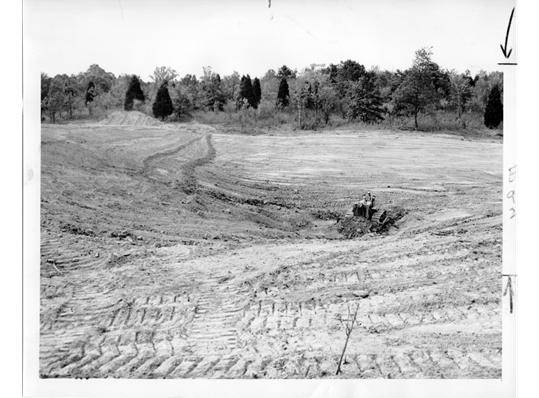
    Above: Bulldozer in 1953 eliminating erosion rills in Wolf Run Grassland Restoration project area. Below: Bulldozer completing site preparation for native seed addition (2023).  Top Photo: St. Louis Globe Democrat, Bottom Photo: M. Saxton

    Native Seeding and Experimentation to promote Biodiversity Recovery 

    During the growing season of 2023, the Restoration team at the Nature Reserve has been feverishly collecting seed for this 2024 seeding effort. More than 1,100 lbs. (~500 kg) of bulk, milled seed from ~200 locally collected native tallgrass prairie and open oak-hickory woodland species will be used in the restoration planting. Additionally, these acres are enrolled in the Environmental Quality Incentives Program, EQIP – part of the Natural Resources Conservation Service, and we must purchase viability-tested seed to meet the minimum required specifications of the contract. The hand-collected seed together with the pure live seed (PLS) – percentage of viable seed in a seed lot – purchased from commercial vendors will provide us with ample species and volume of seed to effectively cover the 40 acres (~16 ha) to be planted this winter. 

    Concurrent with the preparation effort, we initiated a research study, which will help inform our work and the broader research community on plant recruitment amongst scraped soils that have been inoculated with mycorrhizal fungi and those that have not. This study includes paired species from the same genus that have different CC-values, short for coefficients of conservatism, which represents a species’ tolerance of environmental degradation, or its fidelity to intact remnant or long-restored habitats, as determined by local botanical experts. Ecologists generally expect species that are dependent on stable intact communities (higher CC-values) to be more reliant on mycorrhizae connections to establish and flourish. Species with high CC-values tend to establish poorly in restoration sites, which is one of the reasons to pursue this study. Some examples from the ten herbaceous pairs of native species include sedges (Carex bushii [CC = 4] and Carex bicknellii [CC = 10]), grasses (Sporobolus compositus [CC = 3] and Bouteloua curtipendula [CC = 7]), and forbs (Oligoneuron rigidum [CC = 5] and Oligoneuron album [CC = 9]).

    We added all 20 species at the same rate of pure live seed to provide each species an equal opportunity to establish. Initial analyses after one growing season indicate that low CC-value species germinated more successfully, producing more seedlings and greater percent cover than the high CC-value species, regardless of inoculation. We expect the addition of mycorrhizal fungi to have the greatest effects on species during the first couple of years after germination. If the mycorrhizae associate with the roots of the high-CC species more than the low-CC species, this may help them grow faster or be more resistant to future stress. Future monitoring will show us if there are long-term effects of inoculation.

    To check for updates on restoration activities and results from experimental studies, please visit our webpage.

    Barrels of hand-collected seed connected to a seed dryer, which pumps air through tubes into the barrels to eliminate mold & moisture. Photo: M. Saxton