Tag: SOS Mata Atlantica

  • The relevance of species diversity and composition in restoration plantings: a case study in the Atlantic Forest in Brazil

    The relevance of species diversity and composition in restoration plantings: a case study in the Atlantic Forest in Brazil

    By Dr. Ricardo Viani

    Ricardo Viani is a professor at the Universidade Federal de São Carlos, Brazil, where he coordinates the LASPEF (viani@ufscar.br)

    The Atlantic Forest in Brazil is a highly diverse tropical forest, listed as a global hotspot for biodiversity conservation. It is also the home of the two biggest Brazilian cities, São Paulo and Rio de Janeiro, and it is where most Brazilians live; around 150 million people inhabit and depend on the Atlantic Forest for the provision of ecosystem services.

    Originally covering about 1.2 million square kilometers (297 million acres), the Atlantic Forest now covers less than 20% of its original area because of centuries of degradation. It is no wonder that the Atlantic Forest stands out globally as a region where forest restoration is urgently needed and is being taken seriously. In recent decades, many large-scale Atlantic Forest restoration programs have been implemented and, in 2009, the Pacto (Atlantic Forest Restoration Pact), a coalition of hundreds of institutions working for Atlantic Forest restoration, was launched. For its work, the Pacto was recognized as a World Restoration Flagship by the United Nations Decade on Ecosystem Restoration, highlighting it as a global example of an ongoing, large-scale, and long-term ecosystem restoration effort.

    Landscapes where forest restoration plantings are usually done in the Atlantic Forest in Brazil. A sugarcane plantation (left, photo: Paulo Molin) and a pasture matrix (right, photo: Ricardo Viani), with variable levels of scattered remaining forest.

    After decades of Atlantic Forest restoration efforts, it is time to evaluate what we have done so far, not only to assess the outcomes but also to inform other large-scale restoration initiatives worldwide. Thus, we recently investigated which tree species were included in 1,073 forest restoration plantings implemented from 2002 to 2018 in the Brazilian Atlantic Forest by restoration programs carried out by the NGO SOS Mata Atlântica.

    Overall, 423 tree species were included in the evaluated plantings, which represent less than 8% of the Atlantic Forest tree flora. In comparison with remaining forest patches, restoration plantings skewed towards nitrogen-fixing, non-animal-dispersed, and pioneer species. Plantings had poorly included endangered and endemic species as well as species that were previously indicated as priority for restoration based on their ecological interactions, carbon storage, and conservation values.

    However, the more striking result is that restoration initiatives are planting the same set of limited tree species across the whole Atlantic Forest. Although the Atlantic Forest has three types of forests (the Araucaria Forest, the Rainforest, and the Seasonal Forest), each one with their own singular floristics, restoration plantings are overall more similar in species composition to each other than to the remnants of the type of forest of the region where they exist. In other words, we plant the same species without considering spatial variation in local and regional floras.

    This pattern raises an uncomfortable question. Is large-scale restoration via tree planting contributing to biotic homogenization, that is, the tendency for distinct places to become more similar?

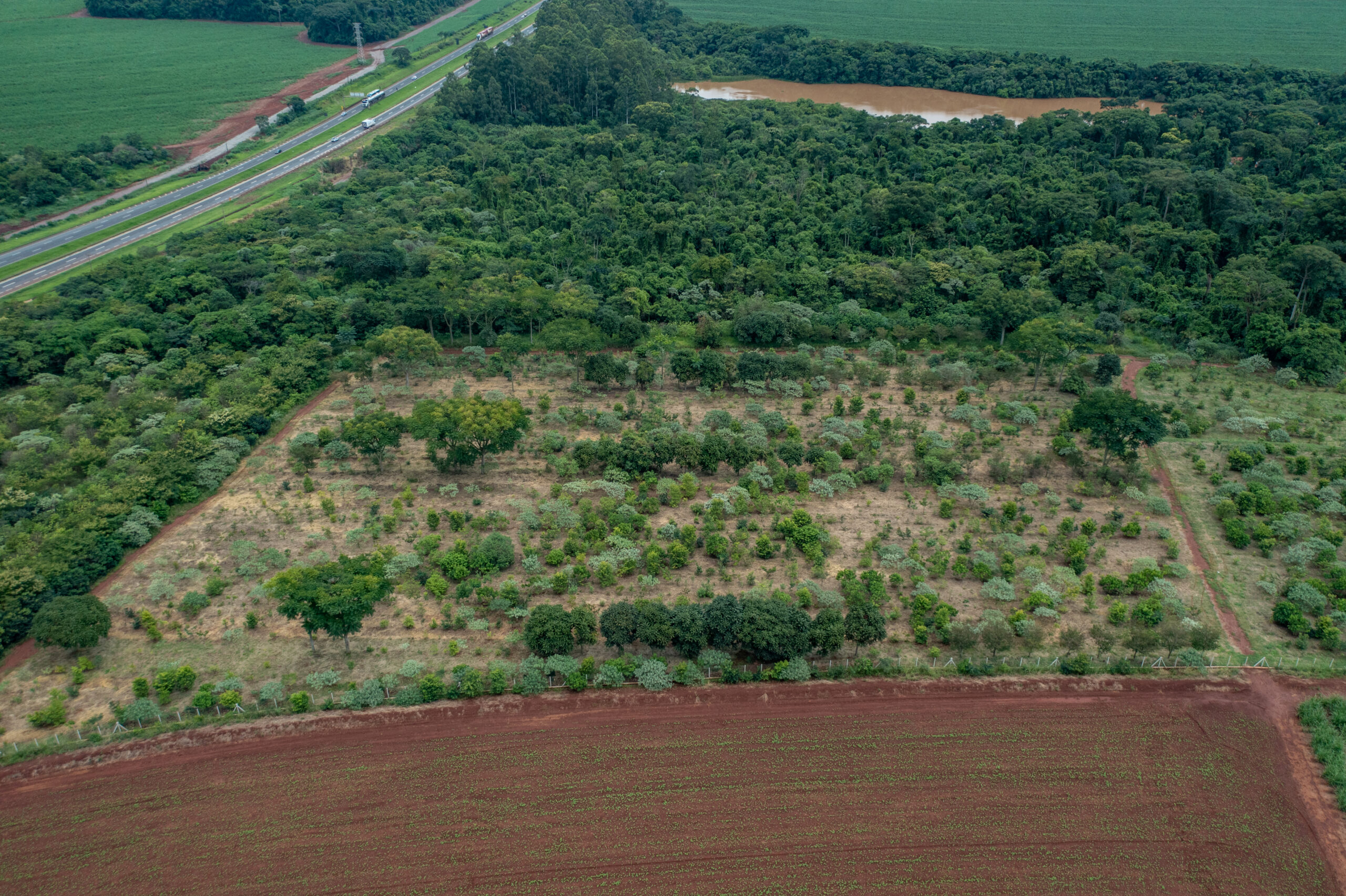
    A tropical forest restoration planting in the Atlantic Forest in Brazil. Plantings tend to be done with a similar set of species across the whole Atlantic Forest. Photo: Ricardo Viani

    Why should we pay attention to the trees we plant for tropical forest restoration?

    One may say that our role in tropical forest restoration is to trigger ecological succession, and it is not relevant if we plant just a few tree species across a wide, diverse region. Actually, some argue that we should plant the same species everywhere, by selecting and planting the best species to accelerate early forest development . This is one explanation for the overrepresentation of pioneer trees in restoration plantings, and a reason to increase the representation of generalist animal-dispersed trees, which attract native fauna to restoration sites and favor natural regeneration under planted trees. Another argument may be that evaluating what we plant for forest restoration is not so important because non-planted species will naturally colonize planting sites later on and change their floristic composition. However, this statement and the previous one are acceptable only if regional tree species can colonize restoration sites in fragmented landscapes – a questionable premise in typical landscapes of southeastern Brazil.

    The few studies available in rich tropical forests show that many non-planted trees species colonize restoration plantings, which is good news. However, some functional groups, such as slow-growing tree species dispersed by gravity or by larger animals tend to be bad colonizers, especially in fragmented or defaunated landscapes. In other words, if they are not planted, many tree species will not reach restoration sites on their own, and we should pay more attention to their inclusion in restoration plantings.

    Finally, we need also to consider that restoration is a strategy to promote in situ tree species conservation. The Atlantic Forest has more than 4,000 native tree species, almost half of them endemic, and dozens threatened by extinction. However, few endemic and threatened tree species are included in restoration plantings and some of the ones that are included are only used infrequently and in low abundance. Probably, some of them are also rare, absent in fragmented landscapes, and not good colonizers, which increases the importance of their planned and careful inclusion in restoration efforts.

    A practitioner planting a slow-growing tree in the understory of previously planted pioneer trees. This is part of an experiment in the Atlantic Forest in Brazil, aiming to answer when it is better to plant slow-growing species: together with pioneer trees or under their shade. Photo: Ricardo Viani

    The way forward

    Restoration initiatives have done great work for the Atlantic Forest in recent decades, but there are always points that could be improved, such as the representation of regional flora and of some groups of species currently underrepresented in plantings (e.g., animal-dispersed, endangered, high value species for conservation, etc.). Solving this issue involves much more than just recommending their inclusion in restoration initiatives. Many of these species are rare, lots of them do not have seeds or seedlings available for restoration and, many, if not most, are slow-growing trees. Knowing how restoration practitioners perceive the importance of species diversity, selection, and composition for restoration plantings and potential trade-offs in prioritizing diversity representation versus fast early recovery may give insights on strategies to overcome this challenge.

    In addition, as many underrepresented species in tropical forest restoration plantings are slow-growing, it is worth studying ways of introducing these species in restoration plantings. For instance, should we plant slow-growing trees under full-sun or under the canopy of previously planted pioneer trees? How can we balance the composition of restoration plantings to include slow-growing species without losing the benefits of rapid forest development promoted by fast-growing species? All these questions are still to be answered and part of my ongoing research project Optimizing high-diversity restoration: perceptions and approaches to add tree diversity in tropical forest restoration plantings.

     We are on our way, but there is still a long path to go before restoration will truly represent the diversity of complex and unique biomes.

    For more information, read our paper recent paper in Forest Ecology and Management or contact Dr. Viani (viani@ufscar.br).

    Part of an Atlantic Forest restoration experiment in Brazil where different abundances of fast and slow-growing species are being assessed aiming to find the best strategy to add slow-growing trees in tropical forest restoration plantings. Photo: Paulo Molin
  • Seedlings planted for Brazilian forest restoration are not representative of tropical tree biodiversity

    Seedlings planted for Brazilian forest restoration are not representative of tropical tree biodiversity

    A collaborative research project involving MBG’s Center for Conservation and Sustainable Development, the Tropical Silviculture Lab at the University of São Paulo, and the PARTNERS research coordination network highlights important differences between the native tree flora of the Brazilian Atlantic Forest and the species that are widely planted for ecological restoration projects.

    The Brazilian Atlantic Forest is a global biodiversity hotspot. This designation denotes two things. First, the Atlantic Forest is exceptionally and uniquely biodiverse. Second, the biodiversity of the Atlantic Forest is exceptionally threatened. This once-vast biome historically stretched from northern Argentina to Brazil’s eastern tip in Rio Grande do Norte, but it is now reduced to about 12% of its original size, and most of what remains exists as small, isolated fragments.

    During the past decade, a major, multilateral effort has been undertaken to staunch biodiversity loss by doubling the size of the Atlantic Forest through ecological restoration. The Atlantic Forest Restoration Pact is composed of more than 270 private companies, governments, NGOs, and research organizations. It aims to restore 15 million hectares of Atlantic Forest by 2050.

    Image_Atlantic_Forest_WWF
    The Atlantic Forest biome: a global biodiversity hotspot and the site of the most ambitious tropical forest restoration project on the planet. Map imagery from NASA via Wikimedia Commons.

    Atlantic Forest restoration projects are characteristically thorough and well-documented. For example, they often include high diversity plantings more than 80 tree species. Yet until recently there had never been a systematic study to evaluate how well these restoration plantings represented the Atlantic Forest biodiversity they aimed to protect.

    Dr. Pedro Brancalion is a professor at the University of São Paulo’s agricultural school in Piracicaba, Brazil, where he co-directs the Tropical Silviculture Lab. Five years ago, he approached me at a meeting of the Society for Ecological Restoration in Madison, Wisconsin, and over a beer he told me about a dataset that he thought could shed light on the how well Atlantic Forest restoration projects were conserving tree biodiversity. The dataset consisted of seedling donation records from the NGO SOS Mata Atlântica. Between 2002 and 2015, the NGO donated more than 14 million tree seedlings to 961 restoration projects. By comparing the species composition in these records to tree species living in mature forests, we could see what elements of biodiversity might be missing and how this could be affecting carbon stocking – an important factor in mitigating global climate change.

    Even in high diversity plantings, many of the most threatened tree species were not included.

    Last month, Pedro and our collaborative team published a paper in Conservation Letters describing our results. We found that restoration projects in the Atlantic Forest biome had included 416 tree species out of the >2,500 tree species known from mature and old-growth forest fragments. This is an impressive figure, but the team discovered that it reflects a highly biased subsample of the Atlantic Forest tree flora. The most under-represented species were those with large seeds that are dispersed by animals. Animal-dispersed trees make up as much as 89% of tree species in some parts of the Atlantic Forest and include some of the most threatened species.

    The reason that large-seeded, animal-dispersed species are being used less often was probably related to the cost and challenges of collecting and growing seeds. Large-seeded, animal-dispersed trees are more expensive to purchase from nurseries than small-seeded or wind-dispersed species. Because they are energetically expensive to produce and are contained within large fruits, trees tend to produce large seeds in relatively low quantities, with just one or a few seeds per fruit. They are generally found in remote forest areas, and seed collectors have to compete for them with seed-eating animals, like peccaries and agoutis. Once large seeds are collected, they also take up considerably more space in storage and production facilities.

    Image_SeedComparison
    In our analysis of animal-dispersed tree species, seed diameter explained 87% of the variance in seed price. Large seeds like those of Caryocar brasiliense were much more expensive than small ones, like Ficus guaranitica. Grid size: 1 mm. Photos reproduced from C. N. Souza Junior & P. H. S. Brancalion (2016).

    The absence of large-seeded, animal-dispersed tree species in restoration plantings has important implications for biodiversity conservation. First, fewer large-seeded trees means less food for large birds, some of which eat mainly large fruits. Second, these species are sometimes overharvested for timber and have difficulty recolonizing forests from which they have been removed. So the fact that large-seeded, animal-dispersed trees are under-represented in restoration projects means that even if the ambitious restoration goals of the Atlantic Forest Restoration Pact are met, the increase in forest cover may not improve dispersal between fragmented populations of the most vulnerable species.

    Large-seeded tree species also tend to store carbon more densely than small-seeded species. This tendency is related to large-seeded species growing slowly in the shady understory of the Atlantic Forest and their gradual formation of dense wood, which is rich in carbon. We simulated potential carbon stocking in restored forests and compared it to mature forests, and our results showed that under-representation of large-seeded, animal-dispersed trees could cause a 2.8-10.6% reduction in carbon storage. Based on the current price of carbon, this loss could represent $17-63 USD per hectare in lost carbon credits.

    Fragment_Pedro
    Many Atlantic Forest restoration projects are quite isolated. A large seed would have a hard time reaching sites like this forest in a sugarcane matrix. Photo by Pedro Brancalion.

    Reduced capacity for biodiversity conservation and carbon stocking sounds like bad news, and indeed it is not ideal. However, restoration ecology moves forward by identifying problems and seeking scientifically-based solutions to overcome them. Knowing that large-seeded, animal-dispersed trees are under-represented in restoration plantings means that we can turn our attention to innovative solutions.

    For example, new policies could help bridge the gap between Brazil’s exceptional tree biodiversity and the relative paucity of species being used for ecological restoration. One way this could happen would be for the Brazilian government to subsidize the cost of producing large-seeded, animal-dispersed tree seedlings. This could be done through financial incentives or potentially by opening some forest reserves for seed harvesting, to make it easier for collectors to acquire these species. Facilitating uptake by reducing costs would be a carrot. A stick could be to legally mandate some representation of these species in future restoration plantings.

    Market solutions may also exist. Based on our calculations, adding more large-seeded, animal-dispersed species to restoration plantings would increase carbon storage and carbon credits, offsetting the cost of the expensive seedlings and creating a net gain of $3-32 USD per hectare.

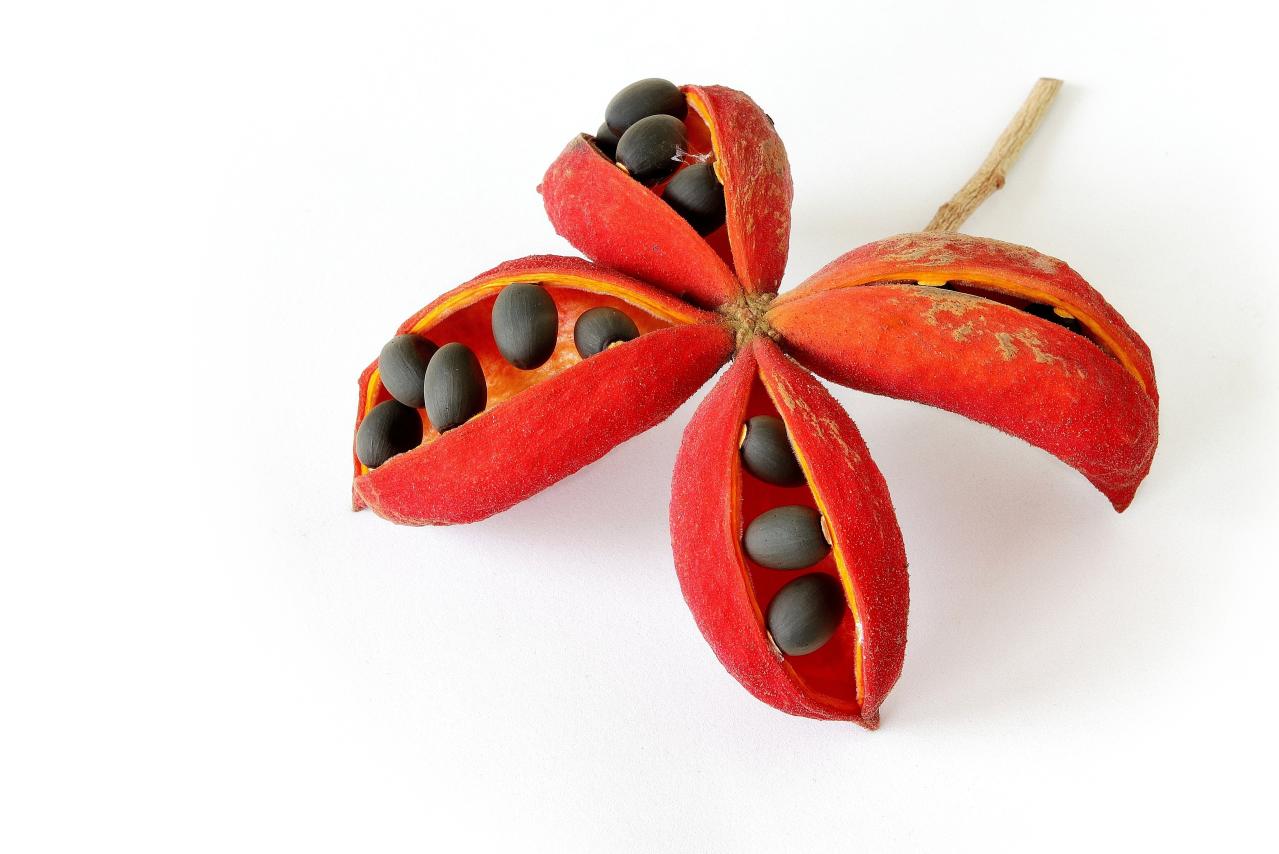
    Banner image: Sterculia striata (Malvaceae). Photo by Mauricio Mercadante. CC BY-NC-SA 2.0.