By Viviana Londoño-Lemos
Viviana Londoño-Lemos is a Ph.D. candidate with the Powers Lab in the Plant and Microbial Biology Program at the University of Minnesota. Email: vivianalondonolemos@gmail.com or londo074@umn.edu
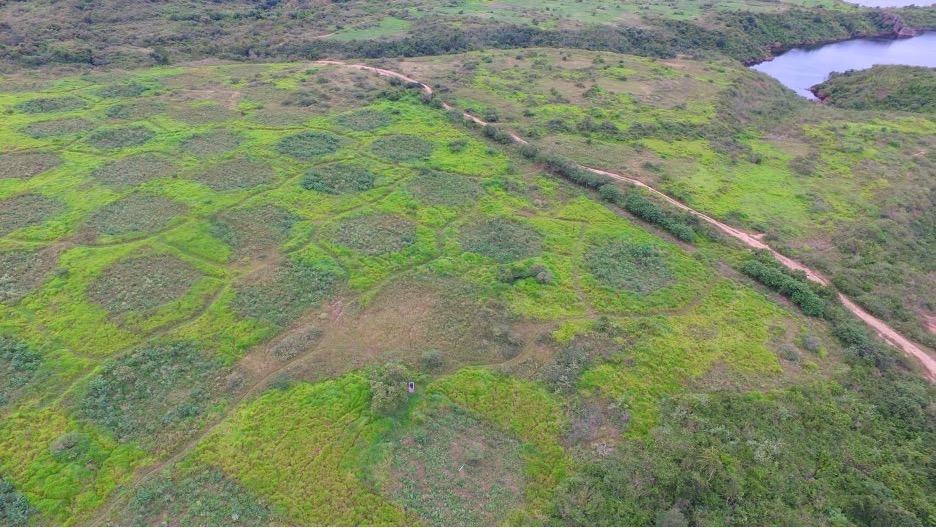
The tropical dry forest is a unique ecosystem that challenges many preconceived assumptions about the tropics. Unlike the iconic tropical rainforest, dry forests are highly seasonal, marked by distinct dry and rainy seasons. In some areas, plants may experience up to six months without rainfall. As a result, the species inhabiting these forests have evolved remarkable adaptations to thrive in this challenging environment, giving rise to exceptionally diverse plant communities. However, this unique diversity is under threat, as tropical dry forests are among the most threatened lowland ecosystems in the tropics. Urban expansion, mining, monoculture agriculture, and livestock production are among the main threats to this ecosystem. The loss of these forests not only endangers biodiversity but also jeopardizes the livelihoods of many human communities that depend on them.
Given their threatened status, tropical dry forests have become a major focus of restoration efforts across the tropics. However, these efforts often lack critical information on how these forests naturally regenerate and how abiotic environmental conditions, such as light, water, and nutrient availability, influence seed and seedling survival in this ecosystem. During my PhD, I have been studying how abiotic environmental conditions shape natural seedling regeneration in tropical dry forests across Colombia and Costa Rica. My research focuses on three components of this regeneration cycle: the formation of the soil seed bank, the environmental conditions that drive germination, and the establishment of young seedlings.

Germination and establishment: the great choices in a plant’s life
Germination is the most consequential choice a plant makes. Because plants are sessile organisms and germination is an irreversible process, the location where a seed germinates determines the environment where the plant must grow, compete, and reproduce for the rest of their lives.
This story begins with a seed, which is the fertilized ovule of a plant. Each seed is a highly specialized structure that consists of three basic components: a protective seed coat, the nutritious tissue, and the plant embryo. Many seeds also include specialized structures that aid dispersal and sense environmental conditions, helping them determine when conditions are suitable for germination.
Once seeds mature, the next step is dispersal in both space and time. Spatial dispersal determines how far a seed travels from its parent, whereas temporal dispersal determines when it germinates. Thus, natural seed regeneration depends on seeds arriving in the right place at the right time. Spatial dispersal of many tropical plants, particularly those dispersed by animal vectors, has been widely studied. In contrast, temporal dispersal, encompassing the study of soil seed banks within plant communities, remains understudied. Understanding both dimensions of seed dispersal is essential for assessing the regeneration potential of plant communities, an important consideration when designing plant-based restoration strategies, because it provides information on what species need to be planted versus which may regenerate naturally.
Soil seed banks are the storage of viable seeds in forest soil. In theory, the soil seed bank of a given plant community contains seeds representing the species present in the vegetation aboveground. But not all seeds behave the same way. Seeds from some species persist in the soil until the next germination season — typically the rainy season in tropical dry forests— after which they germinate or die (transient species). Others persist for years, decades, or in exceptional cases, even centuries (persistent species). Understanding soil seed bank strategies helps identify which species have the potential to regenerate naturally.
Once the appropriate spatiotemporal conditions are met and a seedling emerges, the next step is its establishment, defined as the transition from reliance on maternal sources (the seed) to physiological self-sufficiency. This critical bottleneck in the plant life cycle depends on the biotic and abiotic interactions of the seedling with its new environment. Biotic interactions, including mutualistic associations, predators, pathogens, and natural enemies, are widely assumed to explain the extraordinary diversity of tropical ecosystems. However, in seasonal ecosystems such as the tropical dry forests, abiotic interactions such as water, light, and nutrient availability play an important role in seedling survival. Environmental shifts, particularly in water availability, directly influence whether a seed successfully germinates and whether the resulting seedling survives long enough to establish. Understanding these processes is essential for designing effective restoration strategies grounded in the biology of the species they aim to support.

The hidden regeneration potential of tropical dry forests
When planning a plant-based restoration project, understanding the site’s history, particularly its historical plant communities, is essential. Even after vegetation has been lost, soil often retains biological relics, such as persistent soil seed banks, of past communities. For many tropical woody species, soil seed banks are often considered transient, since tropical forests are not typically viewed as strongly seasonal systems. However, with distinct dry and wet seasons, tropical dry forests are a striking exception.
To determine whether tropical dry forest species rely primarily on persistent or transient soil seed banks, we conducted experiments in the Tayrona National Natural Park in Colombia and at the Horizontes Forest Research Station in Costa Rica. Our goal was to assess how long selected species can survive in the soil. Because this experimental approach can be time-consuming and challenging, we also measured key seed traits such as seed dormancy type, dispersal syndrome, seed coat thickness, mass, volume, moisture content, and embryo-to-seed ratio to identify which seed traits are related to soil seed bank persistence.
Our first experiment, conducted in Costa Rica, aimed to determine the extent to which tropical dry forest species form persistent or transient soil seed banks and whether canopy openness influences soil seed bank formation. For this experiment, we buried mesh bags that contained seeds from 15 liana and tree species under both canopy gaps and closed forest conditions. We retrieved the bags annually over three years and tested seed viability each time. After one year, only five species exhibited a persistent soil seed bank, suggesting that most species form transient soil seed banks and do not persist beyond a single rainy season.
To explore this result in greater detail and determine whether transient species survive only until the first rainy season, we conducted a second experiment with 40 species, using shorter intervals between packet retrievals. This experiment was carried out in both Costa Rica and Colombia, in collaboration with researchers and students at the University of Magdalena. We evaluated seed viability after 3, 6, and 13 months.
Although data analysis is still underway, preliminary results indicate that approximately half of the species employ a transient strategy, while the remaining half are persistent. Transient species tend to disappear from the soil seed bank, either by germinating or dying, by the end of the first rainy season. Persistent species, in contrast, retain their seeds longer, and in some cases germinate only a couple of seeds per year. Some species with persistent seeds tend to survive longer in canopy gaps. As for seed traits, we have observed a tendency for transient species to be wind-dispersed, possess a thinner seed coat, and lack physical dormancy (i.e., no impermeable seed coat). On the other hand, persistent species tend to have seeds with thick coats, physical dormancy, and are more commonly dispersed by gravity (autochory). We expect that our results will help inform decisions in selecting species best suited for planting in restoration efforts. More broadly, the results highlight the importance of understanding the soil seed bank strategies of candidate species in ecological restoration projects.

Germination sensitivity to hydration and dehydration pulses in the tropical dry forest
Due to the pronounced seasonality, the main germination cue for tropical dry forest species is the onset of the rainy season. However, during the dry season, occasional rain showers may last for a couple of days. This means that the seeds of tropical dry forest species may be exposed to unpredictable rainfall pulses that can trigger premature germination at an unfavorable time of year, placing young seedlings at high risk of mortality.
To understand how sensitive seeds are to hydration-dehydration cycles, we designed an experimental approach under lab conditions. We selected ten tropical dry forest species with varying seed morphology (e.g., seed dispersal types and sizes) and measured imbibition curves to assess the presence of physical dormancy. The imbibition curves also allowed us to determine the rate of water uptake and the time required for the water-intake percentage to reach different levels. Using data from the imbibition curves, we designed hydration and dehydration cycle experiments and set the germination chamber temperature to match the mean temperature measured in the soil seed bank experiments. We are currently working on this experiment. We expect the results of these experiments to inform us about the germination requirements of tropical dry forest species and the extent to which these species are vulnerable to changes in their normal seasonal patterns.

Demographic response of tropical dry forest seedlings to nutrient addition
In addition to studying germination and seed persistence, we also evaluated nutrient limitation, a factor long proposed to limit seedling establishment in tropical ecosystems. A central biogeochemical dogma is that newly formed temperate soils are primarily limited by nitrogen, whereas tropical soils are typically limited by phosphorus. Although many experiments have tested this idea, results across tropical ecosystems are inconsistent, indicating the complexity of nutrient-plant interactions in the tropics.
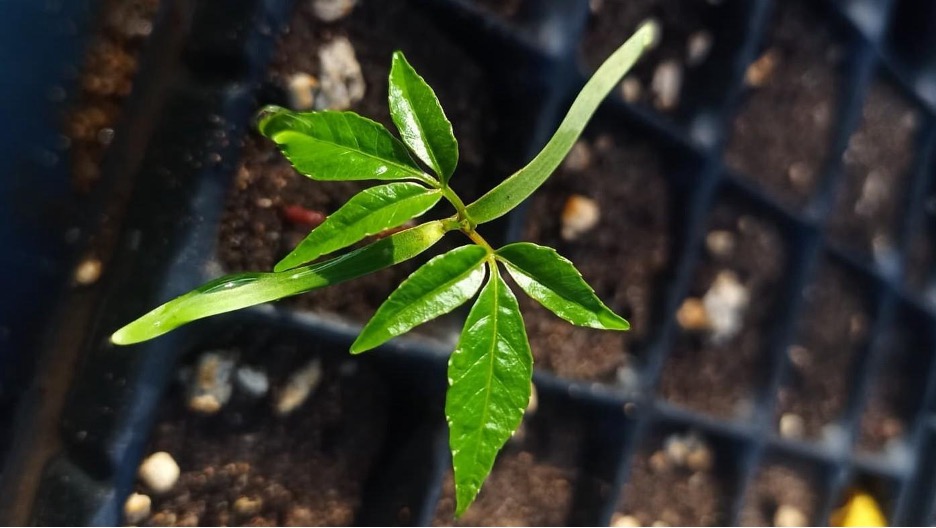
To investigate nutrient limitation in tropical dry forest species, the Powers lab established a factorial fertilization experiment with nitrogen and phosphorus at the Horizontes Forest Research Station in Costa Rica. This experiment tested the responses of the adult plant community to nutrient addition. One of the main findings of this experiment was that nitrogen-fixing legumes, a dominant functional group in tropical dry forests, showed a marked increase in growth to phosphorus addition, while non-nitrogen-fixing species exhibited variable responses. However, most studies evaluating seedling responses to nutrient addition are conducted in nurseries, which may not accurately represent field conditions. To determine whether nitrogen-fixing species are limited by phosphorus and whether non-nitrogen-fixing species are limited by nitrogen during their seedling stage, we planted seedlings of ten tropical dry forest species (5 nitrogen-fixing legumes, 5 non-nitrogen-fixing) directly into the existing fertilization experimental plots. We measured their survival and growth for four years. Because field experiments introduce multiple sources of variation, we also measured other environmental variables, such as litterfall, light, soil moisture, and pH.
After tracking these seedlings for four years, we found that fertilization treatments did not increase seedling survival. However, nitrogen-fixing species tended to produce more leaves in response to nitrogen and phosphorus fertilization than non-nitrogen-fixing species. These results highlight significant demographic variation and inherently high mortality rates characteristic of the seedling stage. They also challenge the common assumption that fertilizer addition promotes plant growth and survival in restoration projects. This study will be published this year. Stay tuned if you want to learn more about the findings.

Some seeds for thought for the future
Together, the chapters of my dissertation aim to deepen our understanding of how tropical dry forest species regenerate from seed. My main goal is to make this information useful for designing more effective restoration strategies for this threatened ecosystem. Across ecosystems worldwide, a key challenge is that it remains difficult to generalize about the factors that enable a seed to survive, germinate, establish, and ultimately become a mature plant. This complexity underscores the importance of continued research on seed and seedling biology, especially in ecosystems as dynamic and highly seasonal as tropical dry forests.
At the Powers Lab, we strive not only to advance fundamental scientific understanding but also to share our findings with the general public. To that end, we develop science communication materials that make our findings accessible and engaging to a general audience. One example of this outreach is a forthcoming book from Missouri Botanical Garden Press, created to introduce children to the tropical dry forest and inspire curiosity about this remarkable and often overlooked ecosystem.