Author: admin

  • Developing an Expanded Soil Profile methodology for restoring social-ecological relations: A case study of Sunnivue Farm, a biodynamic farm in Southwestern Ontario

    By Katherine Lawless, an associate professor in the Centre for Global Studies at Huron University College in London, Ontario, Canada. Katherine is trained as a critical theorist in the humanities and social sciences. Over the past 5 years, she has been developing a new field of specialization in the environmental humanities focusing on the social dimensions of conservation, restoration and climate change adaptation. Below, she describes a pilot study in her collaborative research project on human-soil relations. klawles@uwo.ca

    In 2019, my research team (including soil scientists, social scientists, artists, and humanists) and I received an Exploration Grant from the Canadian New Frontiers in Research Fund to conduct field research in Yukon, Southern Alberta and Southwestern Ontario with communities who understand soil as a living system rather than an inert object or simple resource. We wanted to know what kinds of solutions to complex social-ecological problems might emerge by reframing soil as a relational medium, and a set of natural and cultural relations that participate in the adaptive development of living systems combining ecological and social dynamics. Here, we take our cue from media theorists (Parikka, 2015), human geographers (Kryzwoszynska and Marchesi, 2020), and Science and Technology Studies scholars (Puig de la Bellacasa, 2015) in thinking of soil as a medium that bridges nature and culture; an object that is shaped by human interaction rather than a given, natural thing; and a network of human and more-than-human actors embedded in a nested series of social and ecological networks (see also Greenhough, 2014). This approach recognizes both the biophysical agency of multiple species and the ways in which humans co-create worlds with their non-human counterparts, from flora and fauna to rocks and water. Naturally, we gravitated toward practitioners and knowledge holders with a close relationship to soil, including regenerative farmers, environmental conservationists, restoration practitioners, and Indigenous communities. This research was delayed by the COVID pandemic; so, we started close to home with a small and willing pilot site: Sunnivue Farm. In what follows, I present an overview of this ongoing study in the spirit of the Ecological Health Network and SER International principles and standards for the practice of ecological restoration (Gann et al., 2019), wherein the Restoration Continuum includes the restoration of agroecosystems. 

    Beginning in 2021, we used this pilot study to develop our transdisciplinary methodology: the Expanded Soil Profile (ESP). The idea was to begin with conventional soil profiles and soil analyses, and build out from there, incorporating layers of social and cultural history across scales and eras through interviews and archival research. We hoped this would allow us to form a clearer picture of the kind of place-based social and ecological dynamics at play in the health and wellbeing of human and non-human members of any self-organizing “multi-species soil care community”. To be clear, we define “soil care community” as a group of individuals with a shared practical and ethical commitment to the ongoing labour and attention required to maintain and repair soils in need of repair, and all those who depend on soils in a given landscape, region or place, so as to live as well as possible with a given subset of the land, water, biodiversity, and resources that comprise our world. The concept of a “multi-species soil care community” recognizes that more-than-human actors share with humans in the care work that has shaped and continues to shape this biophysical world (see Kimmerer 2016 for an example).

    Our overall goal is to better understand the connections among soil health, farm ecosystem health, and the perceived health and wellbeing of the local farming and non-farming community in each study area. More specifically, we aim to show how, in the context of internal and external social and economic pressures, local place-based knowledge can be paired with scientific analysis and historical-archival research to orient and guide efforts to restore and maintain sustainable and desirable relations among social actors and institutions in differing contexts.
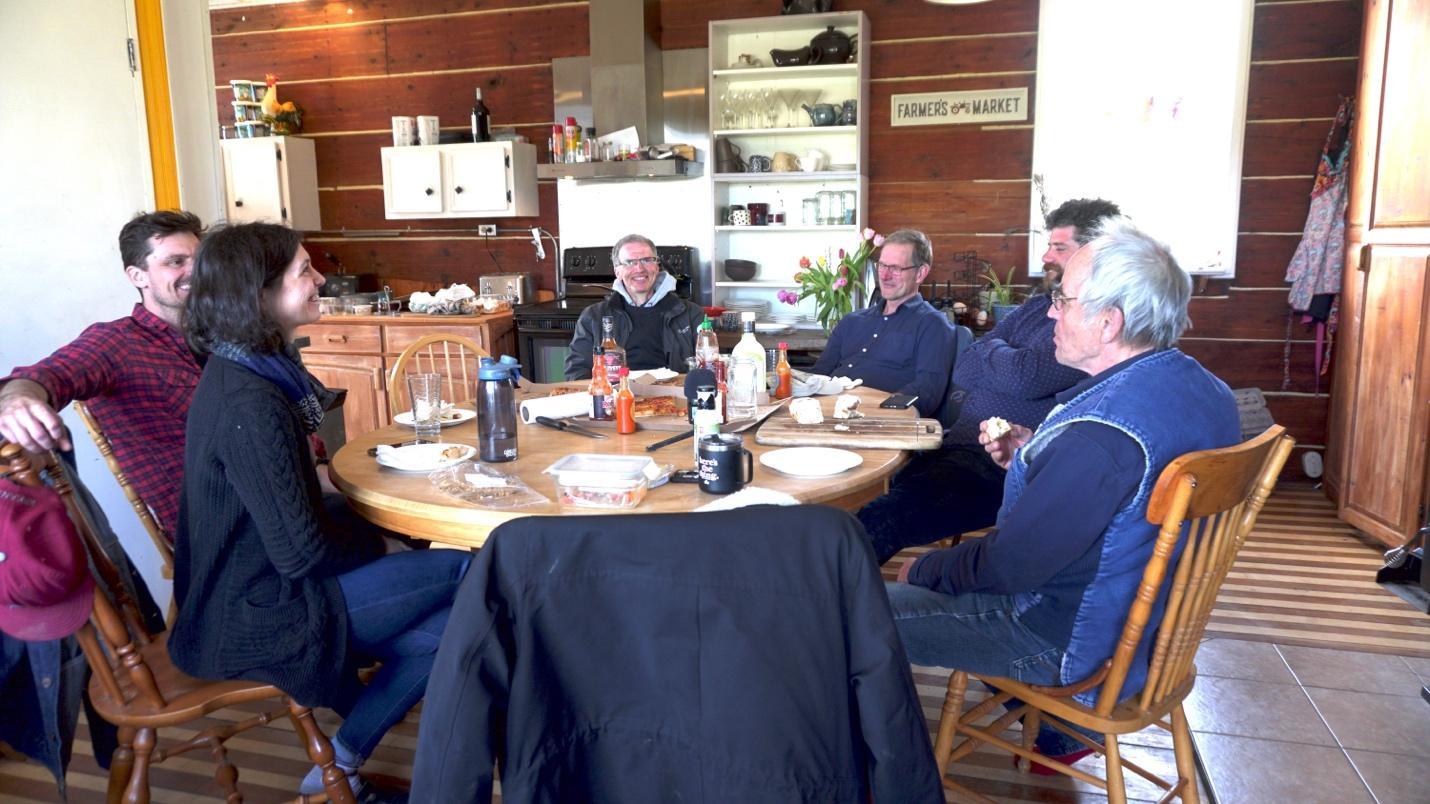
    A group of people sitting around a table  Description automatically generated

    The core members of the research team and two research participants discussing the project over lunch, Sunnivue Farmhouse, 2021. From left to right: Katherine Lawless (PI), David Janzen (co-PI), Henry Janzen (soil scientist collaborator), Ed Gregorich (soil scientist collaborator), Michael Courey (incoming farmer/research participant), and Alex Nurnberg (retiring farmer/research participant). Photo: Michelle Wilson.

    Sunnivue Farm is a 180-acre biodynamic farm about 22 mi from London, Ontario in the heart of the Carolinian forest, which boasts some of the highest biodiversity in Canada including rare and at risk species. Much of this biodiversity is threatened by urban expansion and agricultural intensification. According to a report issued by the Ecosystem Status and Trends Report (ESTR) Secretariat, “as of 2009, there were 865 species of conservation concern in the [Lake Erie Lowlands] ecozone,” including all 12 reptile and amphibian species, 7 of 8 native turtle species, and 11 of 17 snake species (ESTR Secretariat, 2016, p. 16). And, as the founders of Sunnivue Farm noted in our very first interview, bumblebees are on the decline (ESTR Secretariat, 2016, p. 16). 

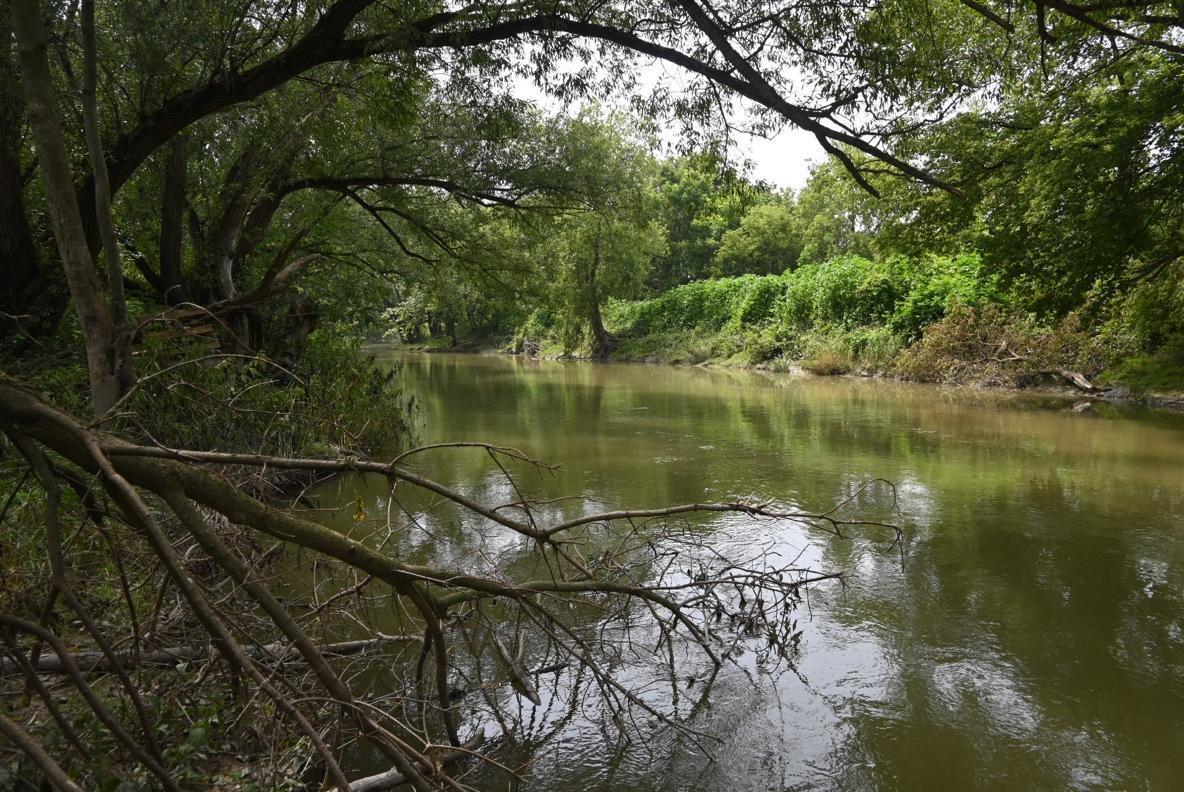
    Sunnivue rests on a Burford soil, a gravelly and cobbly soil formed by glacial-fluvial outwash, or fast-moving glacial meltwaters in a floodplain environment, and the back 20 acres is intact Carolinian forest. The farm is cut through by the Ausable River, a winding waterway flanked on both sides by a three-zone riparian buffer that runs south from West Perth to Ailsa Craig and arcs to the west before emptying into Lake Huron at Port Franks; significantly, it supports “26 species of freshwater mussels and 85 species of fish,” 6 of which are listed by the Committee on the Status of Endangered Wildlife in Canada (COSEWIC) as endangered, threatened, or of special concern (DFO, 2020, p. iii). Many of the key threats to these species—such as build up of sediments due to erosion following the loss of riparian cover, nutrient enrichment (due to tile drainage), contaminants (including pesticide and manure runoff), and habitat modification and landscape fragmentation (due to intensive land use and continuous cultivation)—are linked to the high levels of intensive agricultural practices introduced in the 1850s and that continue still today to dominate the watershed (DFO, 2020, p. iii). 
    A river with trees and bushes  Description automatically generated

    The Upper Ausable River running through Sunnivue Farm, 2023. Photo: Kate Lawless.

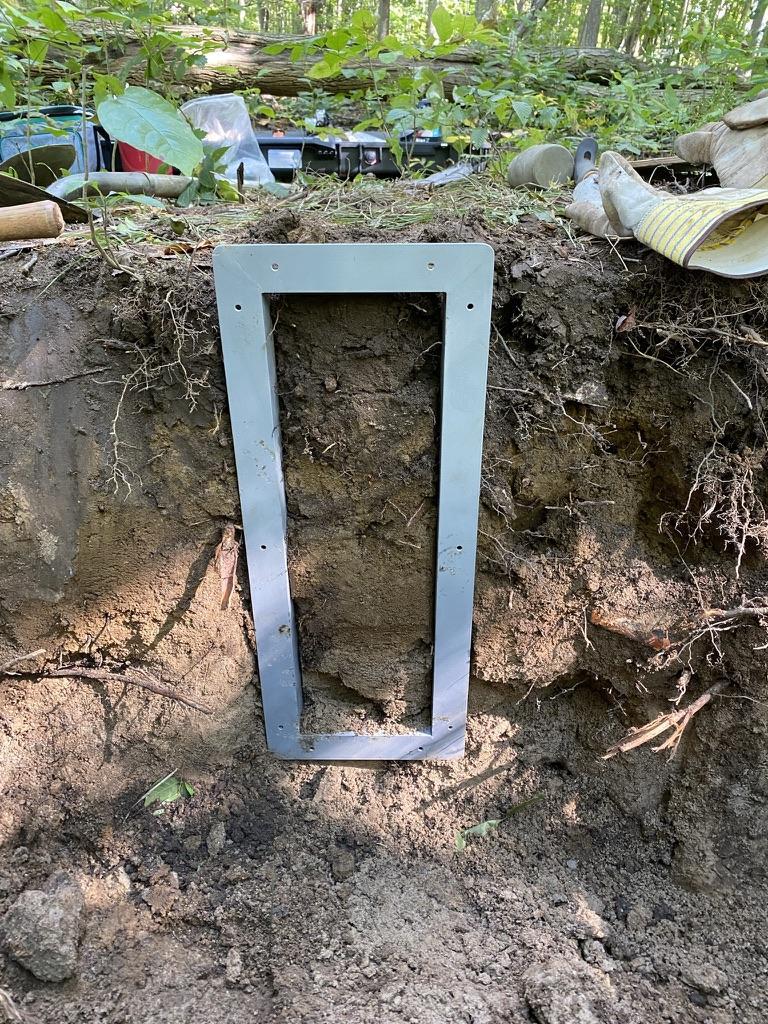
    We began field research in the summer of 2021 with in-depth oral history interviews with five key informants: Alex and Ellinor Nurnberg (the primary farmers from 1991-2021, and founding members of ROSE, a Land Care Association, the not-for-profit trust governing Sunnivue farm), Kristina and Michael Courey (the new farmers as of July 2021 and founders of the social enterprise, New Moon Community Homestead, now operating at Sunnivue) and Jens Stickling (a long-time member and then-chair of the ROSE Board of Directors). We followed these interviews by extracting soil monoliths and samples from two representative sites on the farm, one cultivated and the other uncultivated. The uncultivated site, located in a patch of forest in the back 20 acres, provided a benchmark for the cultivated site, an arable field (previously the market garden) hosting an alfalfa cover crop that has since been reconverted into a market garden. 
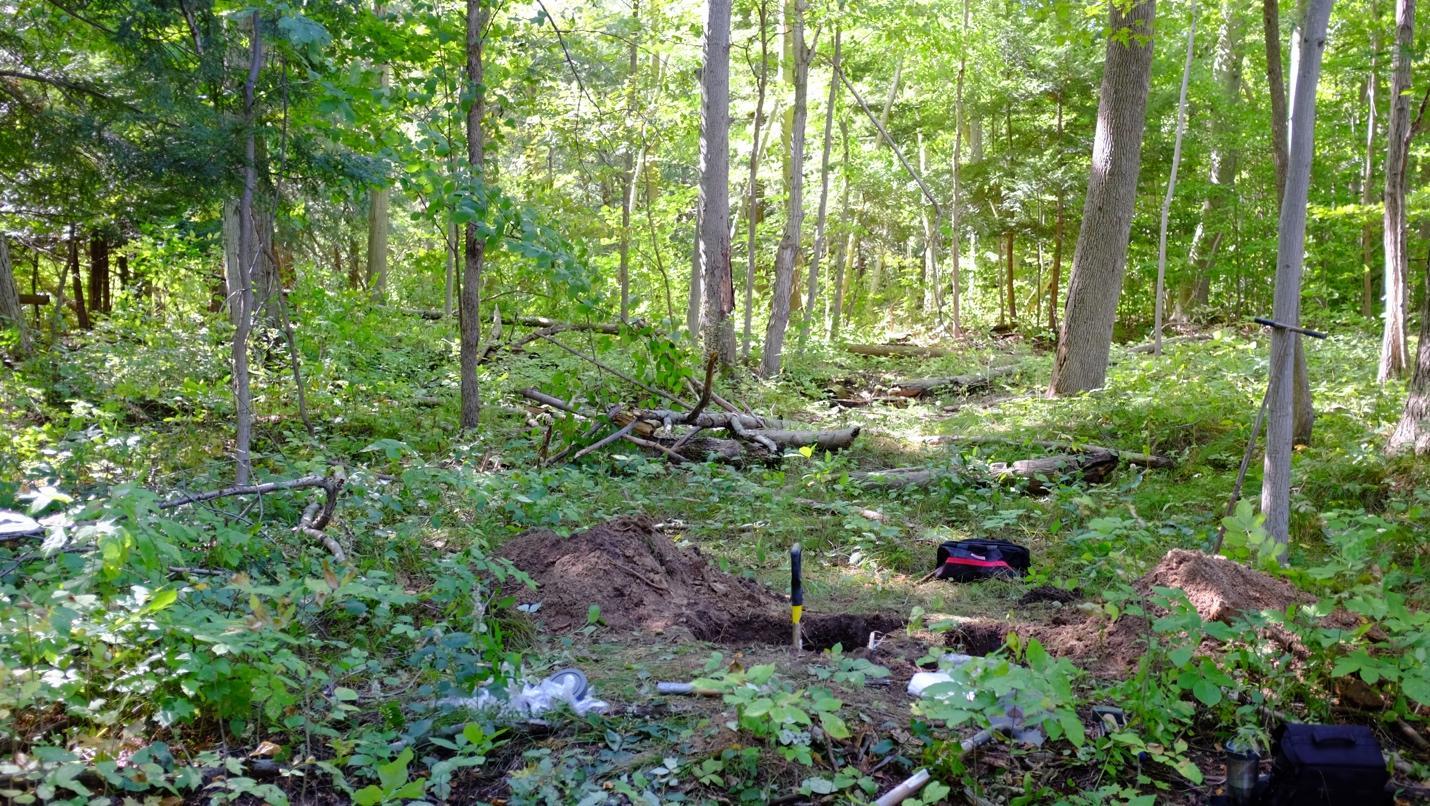
    A forest with trees and bushes  Description automatically generated Soil pit in uncultivated Carolinian forest soil, Sunnivue Farm, 2021. Photo: Ed Gregorich.

    A green field with trees and the sun  Description automatically generated

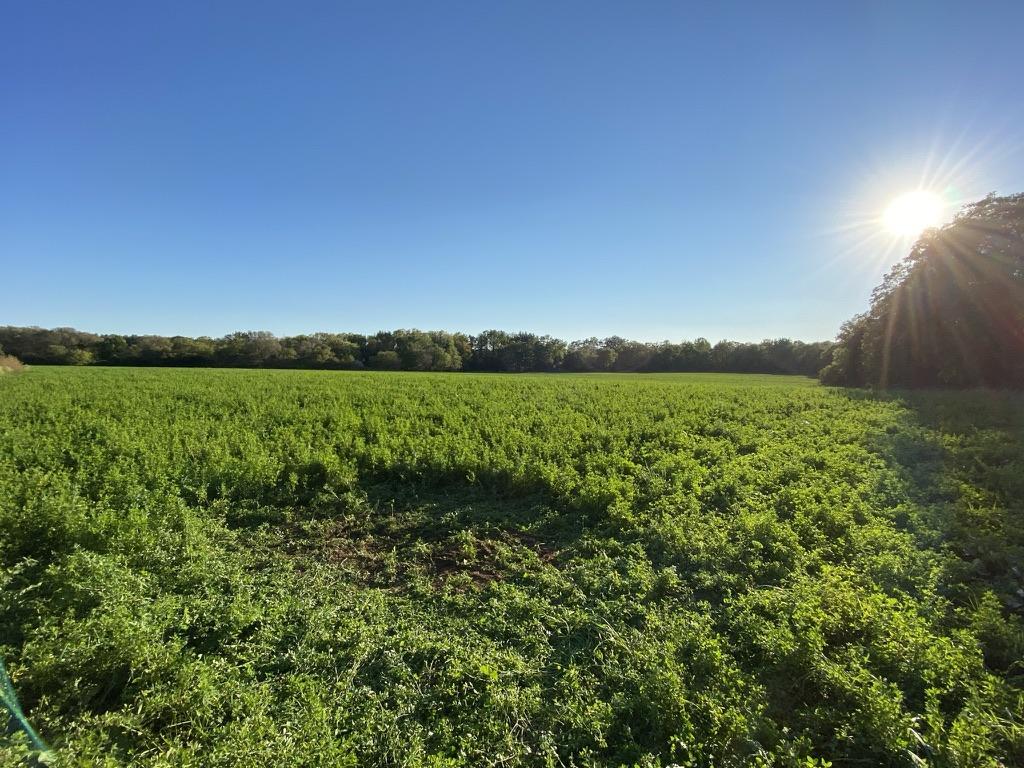
    Site of the soil pit in cultivated soil with a temporary alfalfa cover crop, Sunnivue Farm, 2021. Photo: Ed Gregorich.
    A metal frame on a dirt surface  Description automatically generated

    Extracting the forest soil monolith, Sunnivue Farm, 2021. Photo: Kate Lawless.

    From here, we began historical and archival research starting with Sunnivue Farm and ROSE: Celebrating 21 Years of Building a Dream, 1992-2013, a retrospective containing (among other things) a collection of annual newsletters written by Alex. We continued with visits to local archives and extended periods of participant observation, including a 3-day Vision Retreat in September 2021 to discuss the farm-level vision during the transition between incoming and outgoing farmers. We are continuing this background research by following threads in the interviews that lead us to broader systems-level interactions. We are especially interested in how the farmers and greater community understand their relations with non-humans on the farm, as well as how they speak about the relationship between natural and social systems and their decline or flourishing. Our aim through this process is to elucidate how local human-soil relations are shaped by the often-divergent pressures of both intimate social spheres (i.e., kinship networks) and more-or-less abstract global structures (i.e., international trade networks), and how multi-species soil care communities, or complex networks of diverse lifeforms, negotiate “ecological livelihoods”–or interdependent “habitats” of making, receiving, and providing (Miller & Gibson-Graham, 2020)–in this context. Importantly, the concept of “ecological livelihoods” refuses a clear distinction between Economy and Environment, instead recognizing the “myriad interdependencies in which our sustenance is implicated” (Miller & Gibson-Graham, 2020).

    The results of our research are preliminary but show high levels of soil health despite community perceptions of the overall decline of farm-level ecosystem health. Surprisingly, from a soil science perspective, the health of the cultivated soil (approximated here by measures of soil nutrient levels, soil organic carbon, and microbial respiration and biomass) surpasses that of the uncultivated soil in the forest on the same farm holding. While magnesium and potassium levels are comparable in both soils, phosphorus levels are much higher in the cultivated soil, which indicates good management of inputs. In addition, the total mass of soil organic carbon (which gives an estimate of the health and fertility of the soil) is roughly 40% higher in the cultivated soil (10.9 kg/m2) compared to the uncultivated soil (6.12 kg/m2) which, according to Ed Gregorich, our collaborating soil biochemist, is quite unusual. Alex and Ellinor attribute this to the incorporation of alfalfa in the rotation and the use of composted manure. In addition, the respiratory quotient of the arable soil is larger than that of the forest soil, indicating higher carbon cycling and nutrient cycling by soil microbiota.  

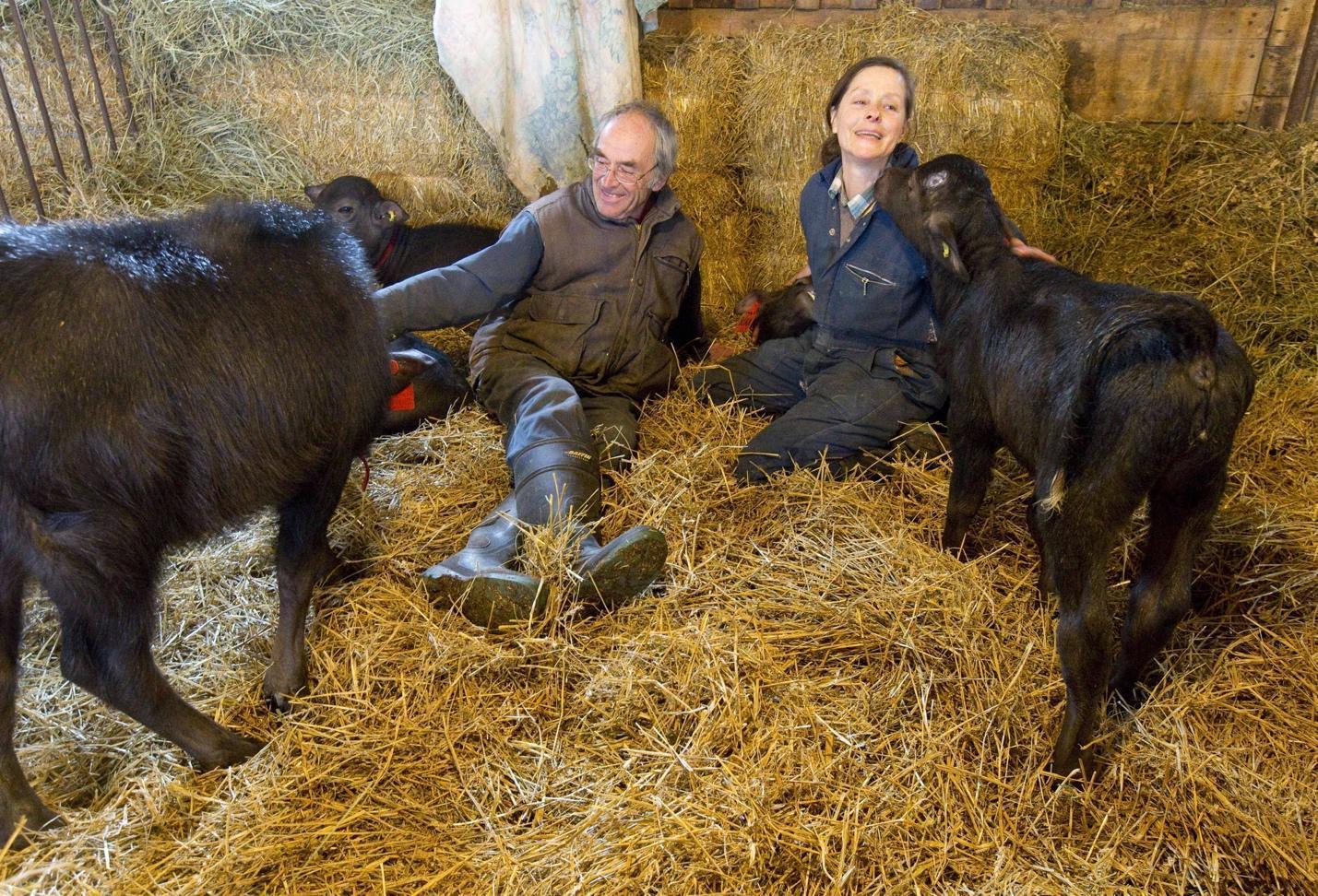
    By contrast, our qualitative analysis shows a shared perception of soil and social “crises” and farm “dis-ease” among the community members, a perception in part linked to declines in biodiversity observed by Alex and Ellinor, a worrying trend that they connect to changes in land use management. These changes were precipitated by external economic pressures, especially proposed changes to the milk quota in 2008. In response, Alex and Ellinor sold their dairy herd. Of course, this was a difficult decision for them since cows are a central component of biodynamic agriculture, which strives to operate as a closed-loop system. They replaced the herd with water buffalo (which does not have a quota), but the market for water buffalo milk is smaller, and water buffalo, as Alex explains in one of his newsletters, are not as open as cattle to being milked. Ensuing financial struggles were compounded by the difficulties of retirement and farmer succession (a significant problem across Southwestern Ontario); indeed, it took roughly 6 years for Alex and Ellinor to find a suitable incoming farm family (eventually Mike and Kristina) who would uphold the vision and objectives of the farm: promote biodynamic agriculture; make the farm a social, therapeutic and educational hub; assist with research related to these objectives; and hold the land in trust for agricultural use. In the meantime, they leased the land out to off-site farmers. 
    A person and person sitting with goats  Description automatically generated

    Alex and Ellinor with water buffalo calves, Sunnivue Farm, 2014. Photo: Craig Glover/The London Free Press.

    Throughout this transition, Alex and Ellinor claim that the health of the farm began to decline, a sentiment shared by the rest of the community at the Vision Retreat. The founding farmers explain that only a few years of “doing things differently” caused visible changes in biodiversity on the farm, in particular the disappearance of bobolinks (Dolichonyx oryzivorus), bumblebees and phlox (Phlox divaricata). A walk around the farm today shows that Common eastern bumblebees (Bombus impatiens) are on the rise, but the bobolinks have not returned and, indeed, this appears to be part of a larger dynamic that is as yet poorly understood. (To wit, bobolinks were assigned a COSEWIC status of “threatened” (T) in 2010, which was downgraded to “special concern” (SC) in 2016.) Some of these negative trends at Sunnivue Farm may have been the result of changes in farming practices (i.e., the use of liquid rather than composted manure during the transition period) and some might be attributed to broader environmental and climate changes (exemplified this past year by an unprecedented spate of Ontario wildfires and excessive precipitation). In the future, we will explore these questions. 

    The findings of this pilot study suggest at least two things: First, external political-economic pressures can disrupt sustainable social-ecological relations by prioritizing socioeconomic values over personal, cultural and ecological values (for more on the role of these values, and interactions among them, in ecological restoration see the four-quadrant model of Clewell & Aronson, 2013, Chapter 2). This results in a complex set of negotiations that has the potential to influence and indeed compromise the integrity of ecological trajectories in a site undergoing transition, and now restoration. Second, while the impacts of both systems-level and interpersonal conflict or disruption may not be visible in standard measurements of soil health, our qualitative research demonstrates that these disruptions may impact the health of the farm ecosystem. 

    Building on Henry Janzen’s claim that “the soil remembers” (Janzen, 2016), we will continue to explore how soils might “remember” or reflect past social and ecological relations, and our Expanded Soil Profile analytical tool will, we hope, help to identify the “latent and active ‘ecological memories’” (Balaguer et al., 2014, p. 12) required for the construction of multiple, sequential reference models that we expect will be needed to truly restore the Sunnivue Farm ecosystem. And we hypothesize that soil care communities with a shared conception of soil as a living system or relational medium are the best vehicles for this exploration because they are at the forefront of a broader ecosocial transformation that not only recognizes humans as part of nature (and soils) and understands the deep interdependencies of societies and ecosystems, but also recognizes the intrinsic value of nature and strives to minimize extractive practices. Moving forward, we will aim to further develop the Expanded Soil Profile as a tool for social-ecological restoration through the exploration of and collaboration with soil care communities in Dawson City, Yukon and Lethbridge, Alberta who also see soils as the foundation of both social and ecological health, integrity, vigour, care, and resilience. 

    Acknowledgments

    This research was funded by the Tri-Agencies’ (The Canadian Institutes of Health Research [CIHR], Natural Sciences and Engineering Research Council [NSERC], and Social Sciences and Humanities Research Council [SSHRC]) New Frontiers in Research Fund–Exploration Grant, which supports interdisciplinary, high risk/high reward, transformative research in Canada.

    References 

    Balaguer, L., Escudero, A., Martín-Duque, J. F., Mola, I., & Aronson, J. (2014). The historical reference in restoration ecology: Re-defining a cornerstone concept. Biological Conservation, 176, 12–20. https://doi.org/10.1016/j.biocon.2014.05.007

    Clewell, A. F., & Aronson, J. (2013). Ecological Restoration : Principles, Values, and Structure of an Emerging Profession. 2nd ed.  Island Press and SER.

    DFO. (2020). Action Plan for the Ausable River in Canada: An Ecosystem Approach (Species at Risk Act Action Plan Series. Fisheries and Oceans Canada. (see here

    ESTR Secretariat. (2016). Mixedwood Plains Ecozone: Evidence for key findings summary. Canadian Biodiversity: Ecosystem Status and Trends 2010. Canadian Councils of Resource Ministers. (see here

    Gann, G. D., McDonald, T., Walder, B., Aronson, J., Nelson, C. R., Jonson, J., Hallett, J. G., Eisenberg, C., Guariguata, M. R., Liu, J., Hua, F., Echeverría, C., Gonzales, E., Shaw, N., Decleer, K., & Dixon, K. W. (2019). International principles and standards for the practice of ecological restoration. Second edition. Restoration Ecology, 27(S1), S1–S46. https://doi.org/10.1111/rec.13035

    Greenhough, B. (2014). More-than-human Geographies. In R. Lee, N. Castree, R. Kitchin, V. Lawson, A. Paasi, C. Philo, S. Radcliffe, S. Roberts, & C. Withers (Eds.), The SAGE Handbook of Human Geography, volume 1 (pp. 94–119). SAGE Publications Ltd.

    Janzen, H. H. (2016). The Soil Remembers. Soil Science Society of America Journal, 80(6), 1429–1432. https://doi.org/10.2136/sssaj2016.05.0143

    Kimmerer, R. W. (2013). Braiding Sweetgrass: Indigenous Wisdom, Scientific Knowledge and the Teachings of Plants. Milkweed Editions.

    Krzywoszynska, A., & Marchesi, G. (2020). Toward a Relational Materiality of Soils: Introduction. Environmental Humanities, 12(1), 190–204. https://doi.org/10.1215/22011919-8142297

    Miller, E., & Gibson-Graham, J. K. (2020). Thinking with Interdependence: From Economy/Environment to Ecological Livelihoods. In:  J. Bennett & M. Zourazni (Eds.), Thinking in the World: A Reader. Bloomsbury Academic, 313-340.

    Parikka, J. (2015). A Geology of Media. U of Minnesota Press.

    Puig de la Bellacasa, M. (2015). Making time for soil: Technoscientific futurity and the pace of care. Social Studies of Science, 45(5), 691–716. https://doi.org/10.1177/0306312715599851
  • Reforestation and Natural Regeneration:  Two approaches for Andean Forest Recovery in Ecuador

    Ximena Palomeque, Selene Báez and Hans Verbeeck, describe ongoing research on the suitability of native tree species for restoring degraded sites in the southern Andes. Ximena is a Professor in the Agriculture Faculty and researcher at Department of Water Resources and Environmental Sciences at the Universidad de Cuenca in Ecuador. Selene is an Associate Professor in the Department of Biology, National Polytechnic School of Ecuador, and Hans Verbeeck is a Professor in the Faculty of Bioscience Engineering, Department of Environment at Ghent University in Belgium. ximena.palomeque@ucuenca.edu.ec; selene.baez@epn.edu.ec; hans.verbeeck@ugent.be

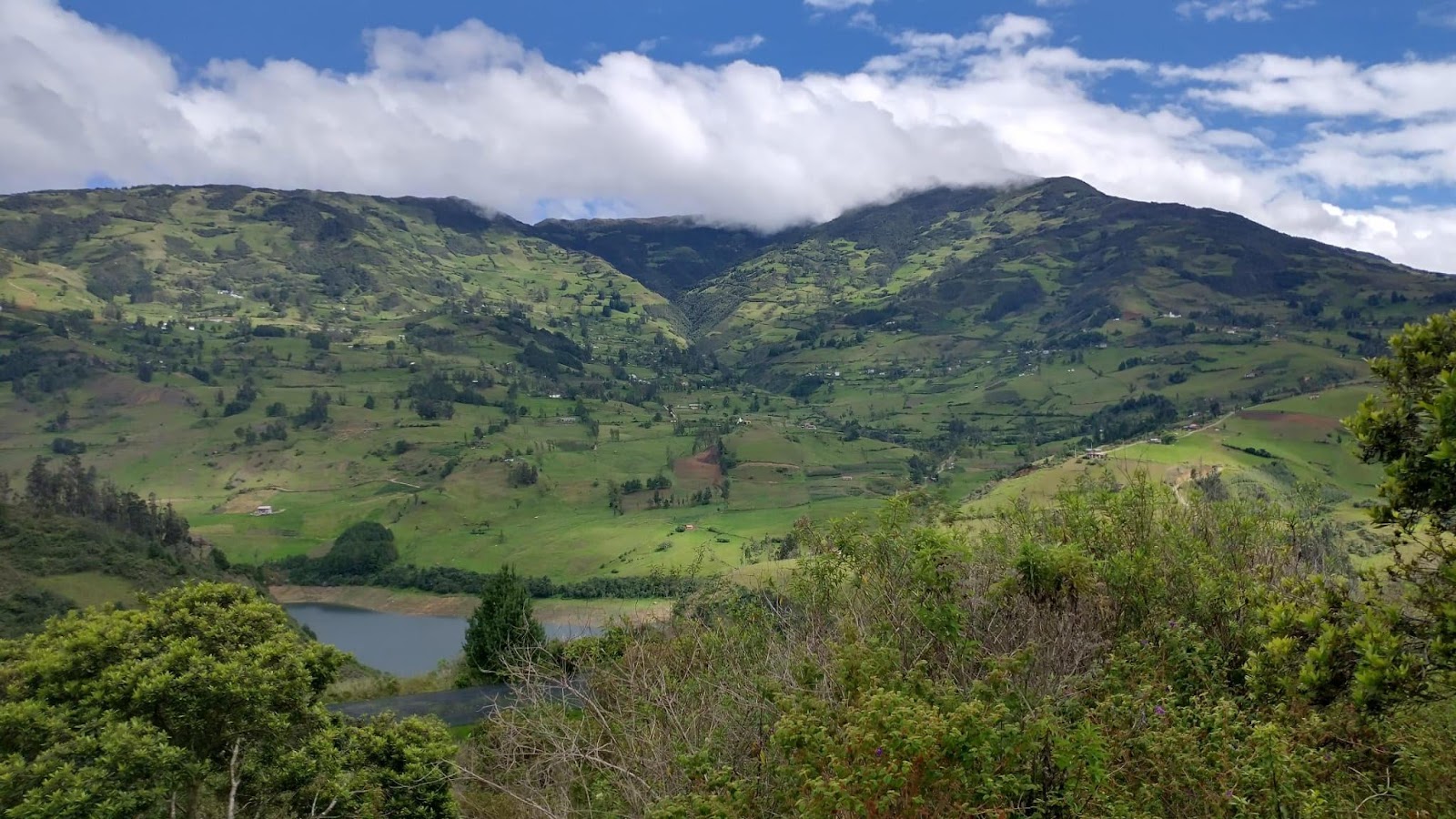
    In recent decades, numerous international and regional agreements have formed the foundation for implementing restoration actions, setting ambitious goals and targets to reverse the degradation of tropical forests. For example, Ecuador has set itself a goal to restore 30,000 hectares between 2022 and 2025 as part of the National Program of Landscape Restoration, including both natural regeneration, sometimes called “passive restoration”, and reforestation, one form of “active restoration”. However, achieving lasting benefits in terms of biodiversity conservation, carbon storage, and other ecosystem services requires robust scientific guidance to ensure the implementation of the best possible restoration practices for such highly complex ecosystems as those found in the mountains of the tropical Andes,  one of the world’s biodiversity hotspots, spread across several megadiversity countries, including Ecuador.

    Andean forest landscapes are characterized by complex mosaics of different land cover types over relatively small spatial scales. Past experiences in restoration have taught us that forest recovery can be rapid and result in diverse forests, but it can be slowed down and even hindered by historical land-use practices. In particular, aggressive competitors such as invasive nonnative grasses (e.g., Festuca arundinacea, Setaria sphacelata, both introduced as fodder for livestock), and the cosmopolitan bracken fern (e.g., Pteridium arachnoideum) often impede the natural recovery of forests, especially in abandoned pastures or areas that have been repeatedly burned. Moreover, the historical use of introduced, fast-growing tree species for reforestation in the Andean region has led to extensive monocultures of Pinus spp., Eucalyptus spp., or Acacia spp., which have had disastrous consequences for local biodiversity by profoundly altering ecosystem dynamics. Given the need for information on efficient and effective reforestation practices using native tree species from the Andes of Ecuador, a large part of our research program aims to address critical knowledge gaps and provide clear guidelines for successful reforestation practices and policies. 

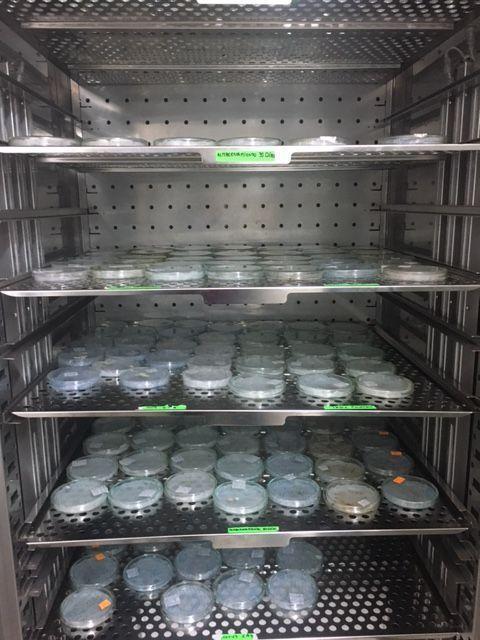
    To some extent, the extensive use of non-native species for reforestation reflects our limited knowledge of the diversity and potential of native Andean species when intentionally planted. This knowledge gap has hindered the production of adequate seeds and seedlings for use in local reforestation projects. Although some progress has been made in the last decade, a comprehensive understanding of the germination requirements and rates of plant establishment after planting of the most common native Andean tree species is still lacking. In order to bridge this knowledge gap, the Forest Ecology and Seed Laboratory at Universidad de Cuenca, researchers at the Department of Biology at Escuela Politécnica Nacional of Ecuador, the Department of Biology at Pontificia Universidad Católica del Ecuador, and the CAVELab at Gent University (UGENT) in Belgium collaborate to explore various aspects of reforestation using native trees and shrubs. To date, we have gathered experimental data on more than 25 Andean woody species, focusing on seed propagation in laboratory and nursery conditions, as well as the performance of outplanted seedlings on degraded lands. 

    As a natural progression, we are now conducting experimental research to assess how different outplanted native plant species perform in the field across environmental gradients. Additionally, we are evaluating the potential for carbon sequestration and biodiversity recovery in past reforestation projects, considering factors such as different types of human disturbance, environmental conditions, and landscape-scale attributes. Our findings indicate that landscapes with high natural forest cover have enhanced rates of aboveground biomass and biodiversity accrual, thanks to increased tree survival, sapling recruitment, and animal seed dispersal. In addition, as expected, undisturbed reforested areas recover faster than areas subjected to occasional cattle ranching. These research approaches encompass diverse levels of biological organization, employing a variety of research tools to study and compare plant species, plant communities, and ecosystem processes.

    Landscape mosaic illustrating the various land uses found in the area known as “Santa Rosa” in Sevilla de Oro, located at 2300 m a.s.l., Azuay province. Photo: Sebastián Tello.

    Seed germination tests of native species in the plant growth chamber at Seed Lab, Universidad de Cuenca in Ecuador. Temperature of 9°C (night) and 12°C (day) under cycles of 12 h of alternating light and darkness. Photo: Ximena Palomeque.

    Currently, our main research projects on both approaches to restoration, “active” and “passive”, are led by doctoral students. In 2020, Franklin Marin, a PhD student at the CAVELab, UGENT, Belgium, initiated a large-scale reforestation experiment along an elevation gradient of 2,000 m a.s.l. in southern Ecuador. This experiment involved the planting of over 7,000 individuals from five native woody species, namely Oreocallis grandiflora, Hedyosmum luteynii, Weinmannia fagaroides, Morella pubescens, and Vallea stipularis. The groundwork for the experiment was laid two years earlier when we collected and germinated seeds from a diverse pool of mother trees. Four treatments were implemented, including grass removal and artificial shade, to examine their effects on seedling survival, performance, and species-level trait-plasticity. Weather stations were installed at each study site to monitor conditions that could influence seedling performance over time. This study aims to shed light on the suitability of native species for reforestation projects in sites with varying environmental conditions and interspecific competition. Furthermore, we seek to gain insights into the functional traits that render tree species especially suitable for early stages of forest recovery, which may allow us to generalize our findings to a wider range of Andean tree species under scenarios of natural regeneration or reforestation. 

    A picture containing plant, outdoor, crop, cash crop

Description automatically generated

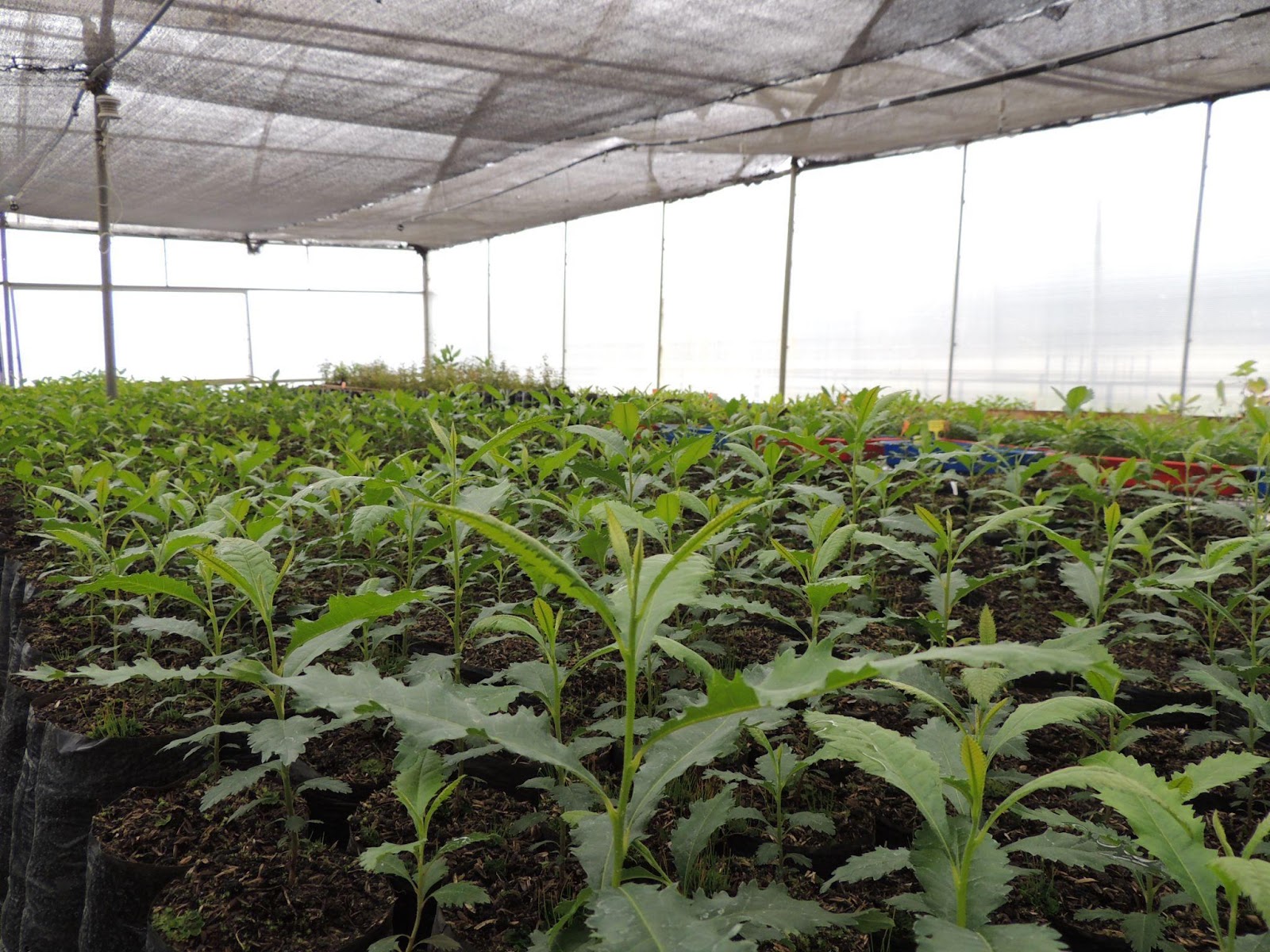
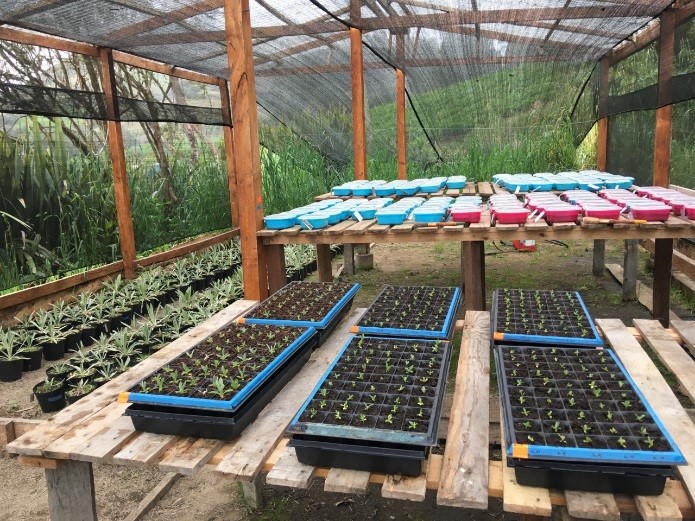
    Seedlings of five native species growing in the greenhouse at Universidad de Cuenca in Ecuador. Photo: Ximena Palomeque. 

    Reforestation experiment using the five native species named in the text on abandoned pastures, Irquis experimental farm, Universidad de Cuenca; located at 2800 m.a.s.l., Azuay province. Photo: Geomatics Lab, Facultad de Ciencias Agropecuarias, Universidad de Cuenca.

    Franklin Marín (PhD student) and Selene Báez (EPN) near the weather station and ozone diffusion tubes in the reforestation experiment, Irquis experimental farm, Universidad de Cuenca, Azuay province. Photo: Ximena Palomeque.

    A parallel research project led by Gabriela Maldonado, a PhD student at the University of Cuenca, explores the functional composition and diversity of woody plants along gradients of anthropogenic disturbance and across environmental conditions. Gabriela conducts a reforestation experiment using several key species (e.g., Oreocallis grandiflora), with functional traits (e.g., cluster root formation) that could facilitate the establishment of diverse sets of species under scenarios of natural regeneration or reforestation. These “restoration nuclei” could play a crucial role in reestablishing networks of pollinators in restored ecosystems, particularly as some of these species are essential resources for hummingbirds. Her research is conducted within the framework of the Experimental Network Ecology and Restoration, EXPER-NET project, which also involves researchers from the Swiss Federal Research Institute (WSL) and Universidad del Azuay.

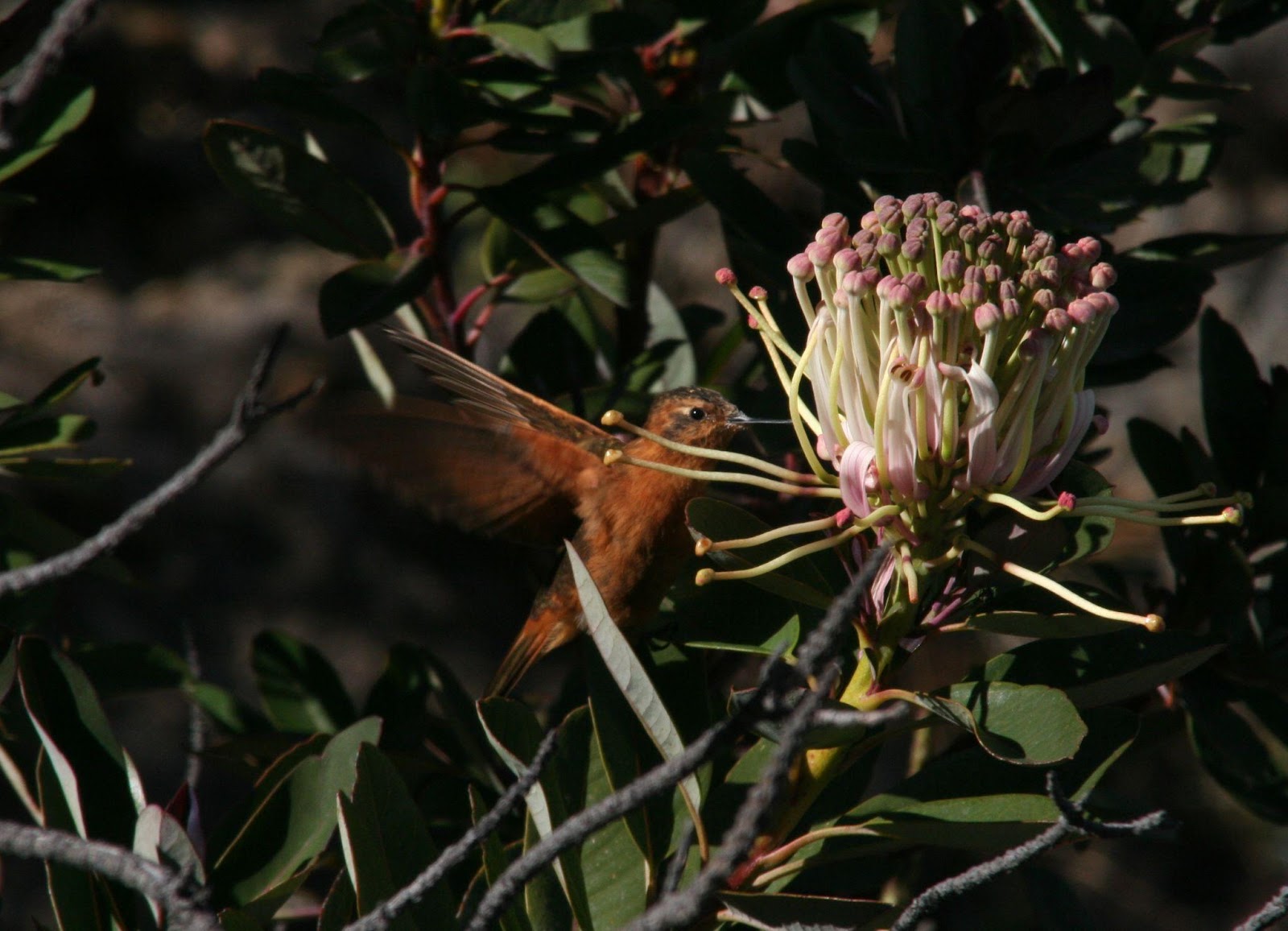
    Oreocallis grandiflora (Proteaceae), commonly known as gañal is one of the five native tree species used in the reforestation experiments. This species, the only member of its genus, is found only in the high Andes of Peru and Ecuador. Hummingbirds, several types of insects, and even rodents pollinate the flowers of this tree due to its generous production of nectar. Photo: Boris Tinoco.

    A person and person standing in a field

Description automatically generated with medium confidence

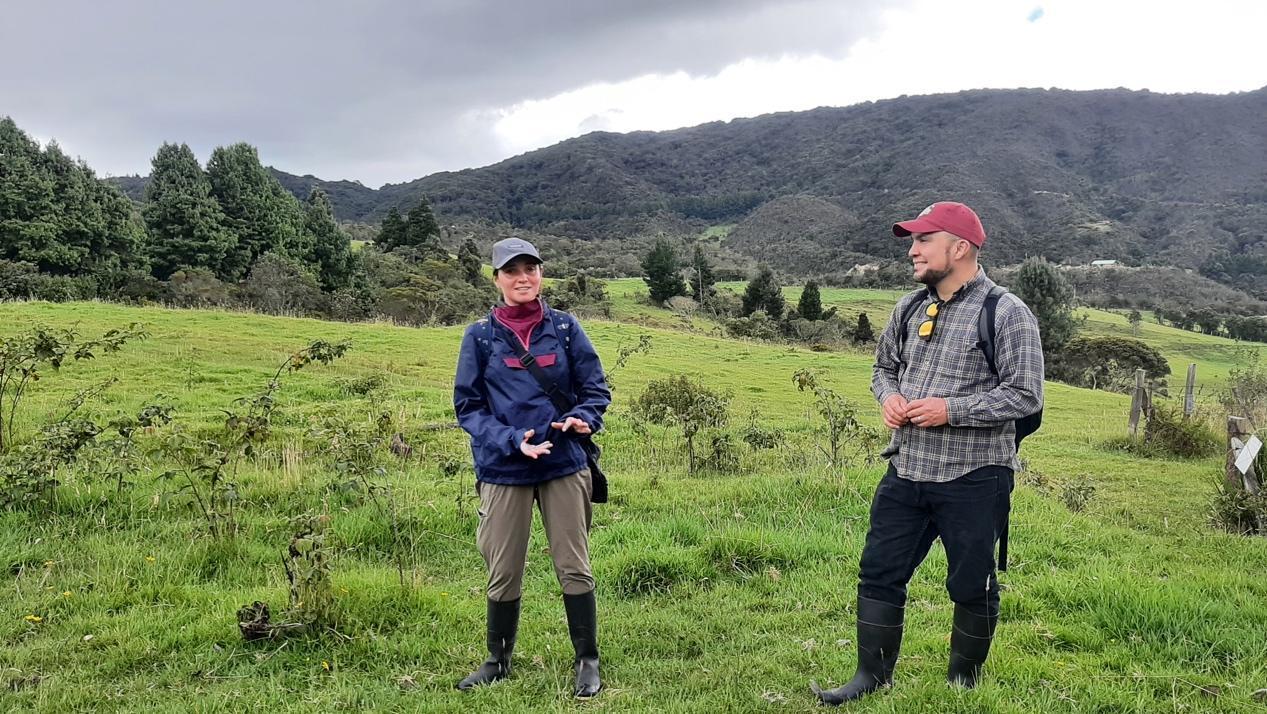
    Gabriela Maldonado (PhD student at University of Cuenca) and Sebastian Tello, Director of the Latin America Department at the Missouri Botanical Garden visiting the observational plots and discussing natural regeneration of degraded pastures at the Irquis experimental farm. To the left, non-native tree species, and in the back, hills with secondary forests. Photo: Selene Báez.

    The ongoing research projects have also contributed to scientific training and cultural exchange involving numerous MSc students and dozens of undergraduates. We aim to broaden our impact on the scientific capacity of Ecuadorian and international students by extending our collaborations with scientific groups based in Germany, UK, Switzerland and USA, as well as by fostering exchange programs and field summer courses that focus on specific topics of montane forest ecology and restoration ecology. 

    We emphasize the significance of international scientific collaborations and funding partners (mainly VLIR-UOS, Belgium) in catalyzing this research initiative. These interactions have enabled us to pursue innovative research in the context of restoration, with direct implications for restoration practices and policy making. Due to the need for solid scientific information to foster natural regeneration and hands-on restoration of Andean forests, several national and international institutions have become close allies of our research group. These organizations comprise local and international NGOs, water funds, electricity production companies such as  BOS+, MCF, FONAPA, CELEC, ELECAUSTRO and – most recently – the Missouri Botanical Garden

    This video presents more complete information about one of the projects; and click here for the announcement of the 2023 field course “Linking plant functional traits and ecosystem function in tropical montane forests”. If you require additional information, please do not hesitate contacting the authors of this blog post. 

  • Valorising Malagasy protected areas as seed sources for forest restoration

    By Chris Birkinshaw, Tefy Andriamihajarivo and Tabita Randrianarivony, all part of the team working to conserve the Analavelona Sacred Forest as part of the Missouri Botanical Garden’s Madagascar Research and Conservation Program.

    Often, in Madagascar, the costs of the setting aside land as protected areas for biodiversity conservation is borne primarily by local people whose access to the natural goods, on which they more or less rely, is restricted.  Yet, in the absence of repressive policing, the long-term success of these reserves for conservation requires local good will. Without such support, protected area managers will continually face local resistance that, if not addressed, will lead to failure. Consequently, conservation organisations, as part of their protected area management strategies, must try not only to explain the importance of natural ecosystems to provide goods and services, but also endeavour to develop significant, tangible livelihood benefits for impacted locals, to offset, at least in part, their losses. A few favourably-placed sites do this successfully through tourism (although, often, local beneficiaries are restricted to the most educated people). Yet most sites provide relatively few benefits for those living around the reserve that are clearly linked to the protected area. Thus, managers often resort to supporting small-scale development projects (such as poultry-rearing, handicrafts cottage industries, or vegetable-growing for nearby markets). Usually, these efforts are not directly related to the protected area and, even if successful, they often merely purchase temporary good-will.

    How then can we do better in managing protected areas to provide improved livelihoods for locals? In the innovative project described here, we are trying to make this paradigm a reality, while at the same time facilitating the use of native Malagasy trees in tree-planting projects.

    View of the Analavelona Forest, SW Madagascar (Photo: Tefy Andriamihajarivo).

    Missouri Botanical Garden’s Madagascar Program has been supporting the community-based conservation of the Analavelona Forest in southwest Madagascar for a decade. This forest is considered sacred to the local Bara people and thus entered the new millennium in an almost pristine condition. However, with increasing outside influences including Christianity, cell phones, and immigrants of different ethnicities, traditional beliefs are being eroded and previously very rare incidents of timber exploitation are becoming more frequent. Therefore, while we support the local hereditary leaders in preserving the sanctity – and therefore intactness – of the forest, we now also seek to develop additional motivations for locals to conserve the forest. Specifically this project will build local capacity to collect high-quality seed samples of native trees from Analavelona that can be sold to tree-planting projects with the revenue generation supporting improved education in local schools where standards are very low and constitute an important barrier to sustainable and inclusive local economic development.

    Lamentable condition of a local primary school (Photo: Chris Birkinshaw).

    In June 2022, this project gained support from the Darwin Initiative and implementation began shortly thereafter. Our major achievements to date include: receipt of permission from the Forest Service to collect and sell seeds of wild native trees; identification of 29 tree species native to Analavelona that appear to grow well in degraded ecosystems (and therefore are strong candidates for use in reforestation); training of 12 local men as seed collectors; training of 9 local women and three local men in best practice for the propagation of native trees; training of two local women to make cotton seed collection bags; installation of three village nurseries; recruitment of a local young entrepreneur who we will support to seek clients wanting to buy seeds of native trees and then to effect legal and smooth sales with income being transparently used to improve local education; creation of a webpage to constitute a sales interface; provision of support for eight local teachers; and distribution of 150 study kits for local students. Although we wish to sell seeds, rather than seedlings, to tree-planting projects, we will use subsamples of seeds of each species in germination and seedling trials to better understand their potential responses to varying reforestation conditions.  This knowledge is important because the very high endemism in the Malagasy flora means that technical knowledge can not be borrowed from other countries.  Voucher herbarium specimens of the trees from which seeds were collected will also be made to enable scientific identification. Thus, we hope to attract buyers not merely through access to high-quality seeds but also by providing correct identification of the seed samples as well as information on the performance of each species in different reforestation settings. After building capacity to implement the project at scale, we will soon be ready to seek our first clients to purchase seeds and then ensure that income generated is used transparently to support local schools.  

    Newly trained seed collectors (Photo: Patrice Antilahimena).

    Nurserywomen cleaning seeds at the newly installed nursery (Photo: Patrice Antilahimena)

    The primary aim of this project is to provide immediate tangible benefits directly associated with the protected area for those living around the Analavelona Forest. However, the initiative, if successful, and replicated more widely in Madagascar, could address two of the issues that currently contribute to the overwhelming dominance of alien tree species in tree-planting projects in the country: absence of reliable sources of high-quality seeds of correctly named native trees; and lack of knowledge about which tree species perform well under different conditions. There is an urgent need to address these obstacles because, through AFR100, Madagascar has pledged, by 2030, to reforest 4 million hectares of degraded land (total Malagasy land area = 58 million hectares) as its national contribution to meeting the Bonn Challenge. However, under current conditions, if this target is achieved then it will be through planting non-native trees (mainly species of eucalyptus and pine) despite the multiple negative impacts (e.g., impoverishing soil, lowering water tables and reducing biodiversity) in some circumstances of planting these taxa. While we acknowledge that none of Madagascar’s native trees are likely to be able to compete with the performance of eucalyptus and pine in terms of resilience on impoverished soils, rate of growth, regrowth after burning, utility of wood as fuel and timber, and ease of propagation and cultivation; under certain circumstances planting native trees may make sense. Obviously, these circumstances include projects aiming to restore native forests, but also as part of strictly commercial reforestation whereby areas planted with native trees might improve aesthetics, help contain wildfires that easily propagate through continuous tracts of eucalyptus or pine, or help reduce erosion on slopes. Our initiative fortuitously coincides with the launch in Madagascar (and five other tropical countries), under the leadership of Botanic Gardens Conservation International, of a five-year project to define and provide a Global Biodiversity Standard that will provide certification for tree-planting projects that have a positive impact on biodiversity. One of the aims of this initiative is to promote the flow of funds into initiatives that plant native trees, and therefore it should provide momentum for our endeavours.

    Terminalia seyrigii – one of our target species – common in degraded habitats and with wide distribution in southern and western Madagascar (Photo: Chris Birkinshaw).

    In Madagascar, a number of small and medium scale tree-planting projects already seek to purchase seeds of native trees. However, the phenomenon of micro-endemism in the Malagasy flora may mean that we should sometimes resist orders coming from certain potential purchasers seeking to plant species outside of their natural range.  Madagascar’s rich array of habitats based primarily on geology, bioclimate, elevation, and topography, coupled with dramatic past climatic fluctuations, have caused remarkable speciation resulting in rapid spatial turnover in species, and many species are native only to a small part of the country. This phenomenon could seriously restrict the number of clients for the many species with a small extent of occurrence and suggests that among the attributes used to define the target species for this project we should also focus on the minority of native tree species with large ranges.

    A close-up of the canopy of the Analavelona Forest including the Critically Endangered banana Ensete perrieri (Photo: Chris Birkinshaw).

    The success of this project will depend on whether the emphasis for support remains on crude planting of trees as crops to sequester carbon or whether more funds flow into multidimensional tree-planting projects that plant at least some native tree species. If the transition to the latter scenario can be achieved, then, through projects such as that described here, it will be possible to develop seed supply chains that benefit the creation of new forests and existing forests – along with the people and local communities around them.

    Acknowledgments

    This project is funded by the UK Government through Darwin Initiative and we gratefully acknowledge this support.

  • The ’23 National Native Seed Conference – Cultivating the Restoration Supply Chain and Launching the Northeast Seed Network

    By Eve Allen and James Aronson (Ecological Health Network), Sefra Alexandra (The Ecotype Project), Geordie Elkins (Highstead Foundation), and Uli Lorimer (Native Plant Trust). At the ’23 National Native Seed Conference, the newly formed Northeast Seed Network announced their efforts to build a partnership to improve the accessibility of genetically diverse source-identified seed and plant material for the ecoregions of the Northeastern US.

    Butterfly Weed (Asclepias tuberosa) seed heads. This Northeastern native milkweed species is an important source of nectar for pollinators (Photo: Uli Lorimer).

    In late March of this year, people from all over the US and elsewhere gathered in Alexandria, Virginia, just outside of Washington D.C., for the 5th National Native Seed Conference ‘Cultivating the Restoration Supply Chain.’ This event connects research, industry, land management, and restoration professionals to share the latest findings, best practices, and success stories related to the collection, development, production, and use of native seed. The conference is the world’s largest event focused on native seed.  

    To learn more about this year’s event, we had a follow-up conversation with Tom Kaye, Executive Director, and Senior Ecologist of the Institute for Applied Ecology. This organization is the force behind the conference. Tom shared that the meeting held this year was by far the largest to date, with over 500 participants, a twenty-five percent rise in attendance from the last gathering in 2017. This signals a growing awareness and interest in addressing seed limitations for ecological restoration and other restorative actions. The momentum to ensure that we have ‘the right seed, in the right place, at the right time’ is also gaining traction at Capitol Hill. Tom explained, “there was a greater focus this year to encourage policymakers to direct Inflation Reduction Act and Bipartisan Infrastructure Law dollars at critical pieces of the restoration supply chain infrastructure.”

    Tom Kaye, Executive Director, and Senior Ecologist of the Institute for Applied Ecology, the driving force behind the 5th National Native Seed Conference (Photo: Institute for Applied Ecology).

    Furthermore, at this year’s native seed conference, Indigenous seed and plant producers and restorationists led sessions and workshops that brought Indigenous Knowledge (a.k.a., Traditional Ecological Knowledge) to the fore of conversations about ‘cultivating’ the restoration supply chain. Tom anticipates that one outcome of the conference will be more pressure toward changing how the US Government manages lands by including Indigenous voices, perspectives, and rights for sovereignty. Tom also told us that he perceives and supports a greater acceptance of the need to implement intentional genetic management through developing climate resilient adaptive admixtures of seed for restoration activities. He shared, “People are realizing that the climate has already changed, and local isn’t local anymore. Our management practices need to change now, not in the future.” What is not clear, however, is what this actually means for the practice, policy, and science of ecological restoration across the spectrum of regional and bioregional, and cultural contexts.  

    A new report from the US National Academies of Sciences, Engineering, and Medicine found that the most robust and functional seed and plant material supply chains exist in the Western US, where the federal government manages up to 40% of the land in some states. Tom explained that as a result of this, “the US Government is the biggest buyer of native seeds in the country, and they’re not buying for the Eastern states as much [as they could and should!].” However, although there are significant differences between land ownership patterns and biogeography among the different regions of the US, there are also commonalities. These include “the need for seeds at scale and the need for seeds in response to environmental disasters, whether that be extreme wildfires, floods, drought, or invasive plants,” said Tom.

    Germination flats of selected native species being propagated from seed with known provenance at Nasami Farm Nursery Whately, MA (Photo: Uli Lorimer).

    Mr. Chuck Newman, founder of Planters’ Choice Nursery in Newton, CT, with containerized plant material grown from source-identified seed (Photo: The Seed Huntress, Sefra Alexandra).

    However, what hampers the work of producers and users of native seed and nursery stock everywhere in the US and worldwide is asynchronous supply and demand. Producers of native seed want to grow at a large scale and distribute their products to as many markets as possible. Users often require seeds with locally adapted genotypes on a sporadic or project-by-project basis. This tension can stifle our ability to restore ecosystems effectively. One solution is a distributed network of seed banks and storage facilities. However, some keystone species for ecosystem and habitat restoration and reintroduction or reinforcement of populations of endangered species are recalcitrant, meaning they can’t be dried and stored for future use. For example, the seeds of smooth cordgrass (Spartina alterniflora), a matrix species in many coastal habitat restoration projects along the US Eastern Coast, are only viable when freshly harvested.

    Smooth cordgrass (Spartina alterniflora), a matrix species in many coastal habitat restoration projects along the US Eastern Coast (Photo: Uli Lorimer)

    Asynchronous seed supply and demand amidst a backdrop of accelerating climate change, ecosystem degradation, and biodiversity loss present is a complex problem. Regional seed partnerships or networks are better equipped to address such challenges than interventions by a single governmental agency or any single organization. These networks bring together social actors from industry, academia, government, non-profit and private organizations, and tribal groups to exchange thoughts, ideas, and resources, enabling collective action across conventional boundaries. A dozen or so seed networks, partnerships, or collaboratives are functioning in the US West, including The Oregon Native Seed Partnerships, East Cascades Native Plant Hub, Northwest Oregon Restoration Partnership Program, The Colorado Plateau Native Plant Program, Nevada Native Seed Partnership, and Wyoming Native Seed Strategy Partnership.

    Local and state officials, community members, and Bureau of Land Management officials celebrate the opening of the seed warehouse in Boise, Idaho—one of the largest warehouses for native seed in the US. The Eastern US does not have large public or private seed warehouses. This means that the region does not have adequate supplies of material on hand for the next large-scale natural disaster. Seed warehousing is more challenging in the eastern states than in the dry and arid western states due to the humid climate (Photo: Lukas Eggen).

    The Eastern US is experiencing a demand surge for native seed and plant material. This is due to growing investments and reallocation of land use to promote and sustain reforestation and forest, grassland, wetland, riverine, and coastline restoration, urban street tree planting and green space expansion and connection, plus forestry, agroforestry and regenerative agriculture, not to mention Pollinator Pathways design and implementation. However, the Eastern US is distinct from other regions because state governments and private individuals own most of the land. The results of a 2018 survey found that land managers and practitioners, on average, purchase seed from vendors an average of 418 miles (673 km) away! In other words, the Upper Midwest has largely captured the seed market in the Eastern US. 

    That being said, many dedicated organizations, including the Mid-Atlantic Regional Seed Bank (MARS-B), the Native Plant Trust, the Ecotype Project, Eco59, Pinelands Nursery, Planters’ Choice, the Highstead Foundation, Wild Seed Project, and Hilltop Hanover Farm have been creating supplies of genetically appropriate seed and plant material of known provenance for the US Northeast. However, beyond efforts like these, seed collection, processing, and production of genetically appropriate seed and plant material is carried out on a short-term or individual project basis. Clearly, meeting the growing demand for native seed and plant materials in our region is too big of a job for any one sector or entity to tackle independently.

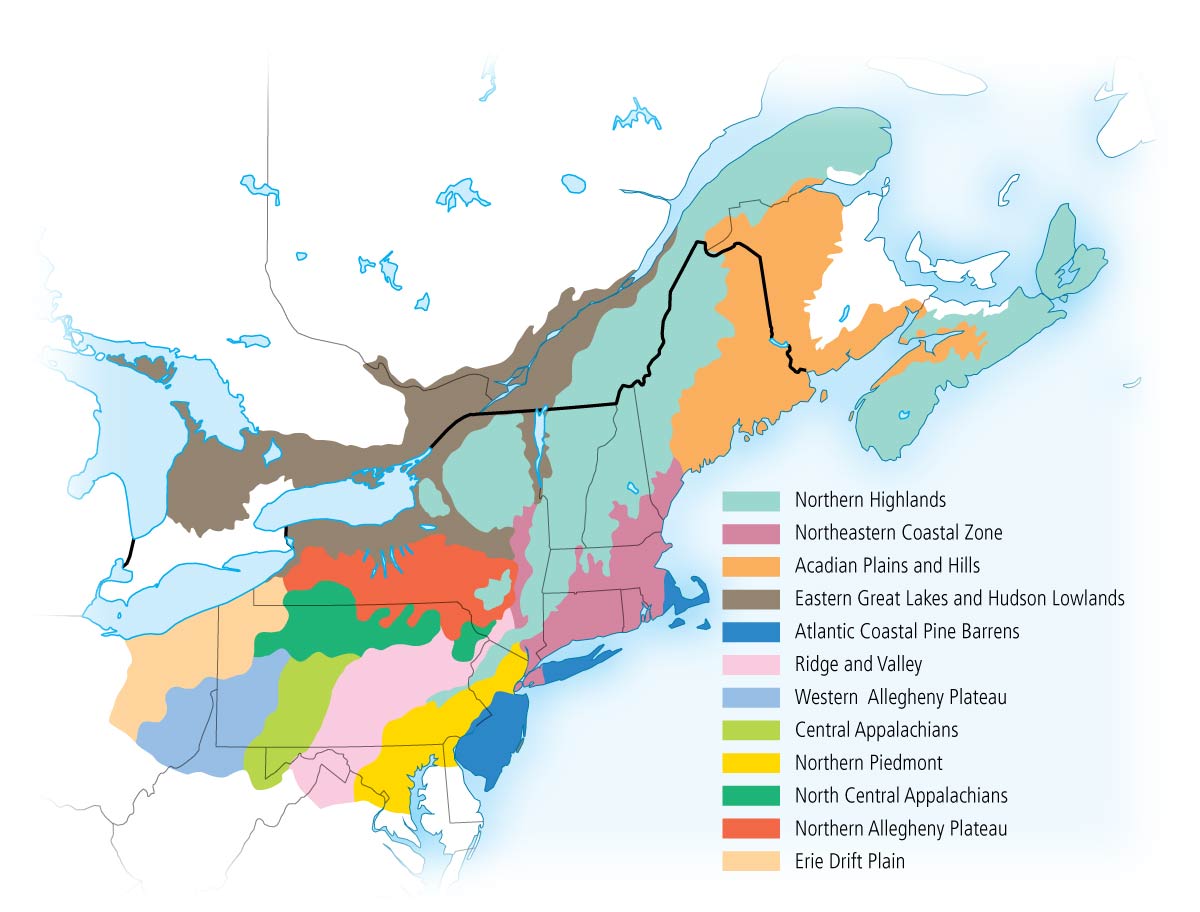
    At this year’s National Native Seed Conference, the Native Plant Trust and the Ecological Health Network announced the launch of the Northeast Seed Network to bring together industry, academia, government, non-profit and private organizations, and tribal groups from the Ecoregions of the US Northeast and the Mid-Atlantic States. 

    Map of the Omernik Level III Ecoregions of the Northeastern US (Photo: Uli Lorimer).

    The conference provided an opportunity for the Northeast Seed Network to organize a symposium that brought together seven presenters to discuss the demand and lack of supply for genetically appropriate source-identified seed in the Eastern US and emerging efforts to build a network to address supply chain shortages. The symposium’s presenters highlighted the extent of the demand and lack of supply in our region, research carried out to identify and map the complex social network of supply chain actors, and how the Northeast Seed Network is leveraging that research to build the partnership’s capacity. The Northeast cohort also shared news about projects underway, including developing shared priority species lists to help spur commercial production and training programs for farmers. For example, The Ecotype Project created a Getting Started Toolkit to help build literacy amongst smallholder farmers in the region to amplify the amount of seed available for restoration and allied activities. This initiative is helping to train cohorts of seed producers in the specialty crop of source-identified ecotypic seed and led to the creation of the recently formed farmer-led seed collective Eco59. Implementing founder plots on farms has demonstrated improved ecological benefits for farmers. Incorporating founder plots of native plant species has increased the diversity of beneficial insects leading to higher pollination rates in field crops and predation reduction. 

    In short, the young but determined Northeast Seed Network, with its growing membership, aims to build and reinforce connections, at a regional scale, to reduce resource competition, leverage collective expertise, and promote trust and new synergies. This is a prerequisite to increasing the accessibility of genetically diverse source-identified seed and plant material to meet the region’s restoration goals. It is also an essential process, we think, for helping the region prepare for climate change, reverse ecosystem degradation, advance equity, generate just livelihood options, and improve the health and well-being of humans and wildlife. Sign up to receive email updates and learn about joining the Northeast Seed Network.

    Northeast Seed Network collaborators (Photo: Ecological Health Network).

    All the participants in the Northeast Seed Network’s Symposium (Photo: Ecological Health Network).

    Here’s the takeaway: inadequate seed supply hinders effective restoration efforts globally. We take heart in the news that the Committee of the US National Academies of Sciences, Engineering, and Medicine’s new report has recommended that the US Government form an interagency collaboration to coordinate and support regional partnerships. In a second piece in this blog space, later this year, we will provide more news of our efforts in the Northeast and discuss its relevance to what is going on elsewhere around the world.

  • Seed additions facilitate herb-layer restoration in a temperate oak woodland

    Seed additions facilitate herb-layer restoration in a temperate oak woodland

    By Andrew Kaul, a Restoration Ecology Post-doc in the Center for Conservation and Sustainable Development at the Missouri Botanical Garden. His new, open-access paper in Ecological Solutions and Evidence is available here.

    Throughout most of the eastern United States, oak woodlands were once a widespread and dominant ecosystem. These woodlands experienced periodic fires, which prevented woody trees and shrubs from growing so densely that the overstory canopy became closed. The partly open canopy allowed light to reach the ground, supporting a diverse community of herbaceous plants including wildflowers, grasses, and sedges. However, over the past two centuries, human induced changes including fire suppression, invasion by non-native shrubs, and other factors have caused most woodlands to become overgrown, and lose much of the diversity of plant species in the herbaceous ground layer.

    Research on how to manage and restore these woodlands has shown that cutting down some trees to thin out the woodland, as well as removing non-native shrubs, and reintroducing periodic fires, are all strategies that help improve the quality of these habitats. However, even after employing all of these management strategies, many desirable plant species may still not return on their own. Ecosystem restoration often involves re-introducing plant species as a seed mix distributed over a cleared area, and this method can be very effective for grassland and savanna habitats that contain few trees. Restoring wildflowers and grasses in wooded areas with the addition of a seed mix could drastically improve the diversity and quality of the herbaceous community, but this approach has not been experimentally studied, and little is known about how to select the right species for re-introduction this way.

    To address these knowledge gaps, scientists and land managers at the Missouri Botanical Garden started an experiment at the Shaw Nature Reserve in 2016, where highly diverse seed mixes of native plants were added to a degraded woodland undergoing active restoration. Throughout late 2016 and much of 2017, crews of managers and volunteer land stewards worked to thin the canopy by removing less desirable tree species, especially the aggressively fast growing native conifer, Eastern Redcedar (Juniperus virginiana). After thinning the canopy, crews used a combination of mechanical removal and herbicides to control the dense non-native shrubs. Fire was reintroduced through controlled burns starting in late 2017.

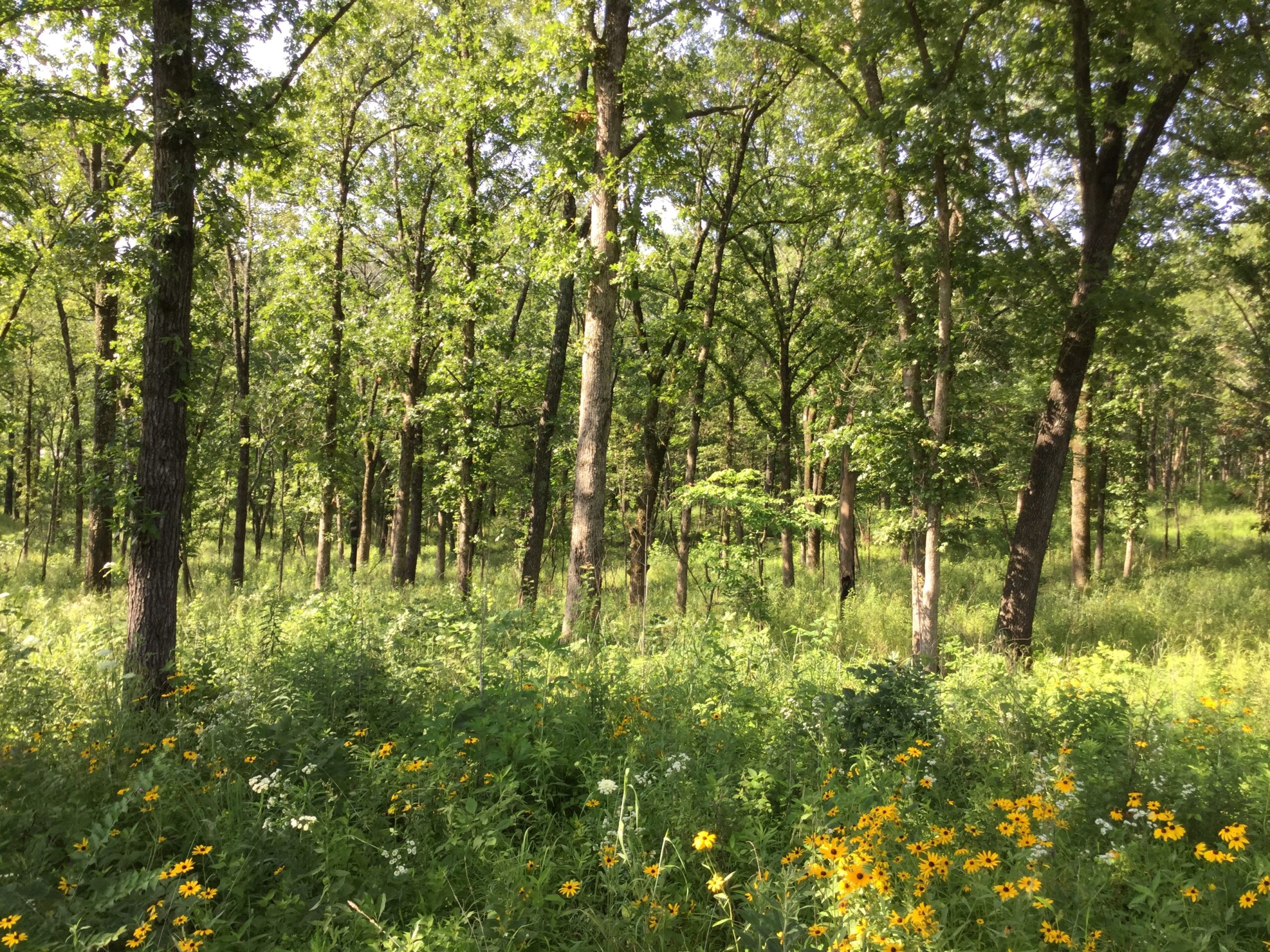
    Large Eastern Redcedars dominate a degraded woodland at Shaw Nature Reserve in Gray Summit MO. The understory is overgrown with non-native woody species including bush honeysuckle (Lonicera maackii), privet (Ligustrum obtusifolium), and wintercreeper (Euonymus fortunei). The lack of recent fire has led to a build up in leaf litter, and native herbaceous species are mostly absent. Photo: CCSD & SNR staff.

    After the woodland was thinned, in January of 2018, we added seed mixes to three different management units, along a gradient of lower/wetter to higher/drier parts of this landscape. The seed mixes contained between 79 and 93 species, and all of the seed was collected from plants growing at the nature reserve. In order to track how these seed additions influenced the establishment of the herbaceous community, we collected data on the composition of the plant communities in areas that received seed and areas that did not. We sampled the plant community in 2017 before the seed additions and in the following two years, 2018-2019.

    Top: Woodland under management at Shaw Nature Reserve in March of 2017, after selective thinning of trees to open up the canopy and removal of most woody shrubs. Leaves of some persistent bush honeysuckle can be seen. Bottom: Same woodland in June of 2019 after the addition of a seed mix in 2018. Photo: CCSD & SNR staff.

    In both the seeded and non-seeded woodlands, the effect of management actions was very clear and positive, since both the number and cover of herbaceous species dramatically increased from the sample in 2017 to later sample dates. This is consistent with previous research showing that thinning the canopy, removing shrubs, and reintroducing fire promote restoration of herbaceous plants.

    We also found substantial benefits from reintroducing species with seed mixes. The areas that received seed had about 10 more plant species present within a one square meter area, than the areas that did not get seed. We were also interested in the quality of the kinds of species that were establishing based on coefficients of conservatism, which denote how sensitive species are to human disturbances. We found that areas with seed added, contained fewer plants that were weedy ruderals, and more that were conservative and generally found only in high-quality intact habitat. Interestingly, areas that got seed additions were also more dominated by grasses and the areas that did not receive seed, although less rich in species, tended to have more abundant wildflowers (forbs). Specifically, common grasses that were sown at high rates tended to dominate areas that received seed additions, including river oats (Chasmanthium latifolium), hairy woodland brome (Bromus pubescens), and bottlebrush grass (Elymus hystrix). The restored areas that did not get a seed addition were dominated by ruderal (low conservatism) forbs such as jumpseed (Persicaria virginiana), white snakeroot (Ageratina altissima), and common yellow woodsorrel (Oxalis stricta).

    A representative area that had seed added (top) and an area that did not (bottom) in June of 2019. In the non-seeded area, a large patch of the weedy native composite, giant ragweed (Ambrosia trifida), can be seen in the foreground. Photo: CCSD & SNR staff.

    Our final goal was to examine the recruitment success of the over 100 different plant species that we added as seeds, to see if there were patterns in which kinds of species tended to establish best. Perhaps surprisingly, over half of the species we added were never detected in vegetation samples. These species might not have been sown into favorable conditions, or potentially, the quality of the seed might have been poor, since it came from wild populations and the seeds might not have been viable or mature. Still, some seeds may be dormant for many years, and more added species may break dormancy and recruit later. Among the species that did establish from added seeds, we found that recruitment was much higher for species that were sown at higher rates, suggesting that some species might have benefitted from a higher seeding rate. Both grasses and forbs tended to recruit well when sown at high rates, but the 25 sedge species we added had little or no recruitment success.

    Based on our results, future research on woodland restoration should address why sedges are difficult to restore and methods to remedy this deficit. Additionally, it will be interesting to track the development of these herbaceous communities into the future, to examine how sown and unsown areas resist re-invasion by shrubs while they are continually managed with periodic burns. Our seed mixes dramatically improved the diversity and floristic quality of the herb layer in this woodland, however many species did not recruit, and key functional groups including sedges and forbs were underrepresented in their abundance. Future research should investigate what ratios of functional groups in seed mixes produce the best restoration outcomes, since conventions established for grassland restoration may not be the best approaches for restoring herbaceous species under a tree canopy. If you are interested in learning about this project in greater depth, the paper is freely accessible here. If you have any questions, feel free to contact Andrew (akaul@mobot.org).

  • Critical (ecological) care in the land of the dodo: invasive species removal

    Critical (ecological) care in the land of the dodo: invasive species removal

    By Eva Colberg, postdoctoral fellow at Cornell University. Nearly all of Mauritius’s contemporary conservation plights are rooted in or exacerbated by the effects of invasive, non-native species. To see what restoration can do for the island’s few remaining forests, Dr. Eva Colberg joined members of the Tropical Island Biodiversity, Ecology & Conservation research group to visit (and weed) one of the island’s forest restoration sites.

    Two of Mauritius’s prominent ecological invaders, a macaque and strawberry guava. Photo: Eva Colberg.

    Red stems of strawberry guava (Psidium cattleyanum) form a wall dense enough to prevent walking through most of Mauritius’s remaining forests. Beyond impeding movement, the thick guava understory also reduces overstory tree fitness and disrupts native forest growth and succession. Originally from South America, strawberry guava is a classic case of a non-native, invasive species outcompeting and reducing habitat quality outside its native range (and islands are particularly vulnerable to invasion).

    Litter basket ferns (Asplenium nidus) and other native species grow in the understory space freed up in a 20-ha area since the UNDP-funded removal of strawberry guava and other invasives in 1996. Photo: Eva Colberg.

    Strawberry guava is far from the only invader threatening Mauritius’s flora and fauna. Alien ants disrupt pollination of native plants, an effect compounded by invasive plant presence. Conflicts between fruit farmers and a keystone seed disperser, the Mauritian flying fox (Pteropus niger), could be due to poor habitat quality and low native fruit production in invaded forests. Invasive macaques (Macaca fascicularis) further disrupt plant reproduction by breaking branches and eating fruits before they’re ripe, and eating and stealing nectar from native flowers without pollination.

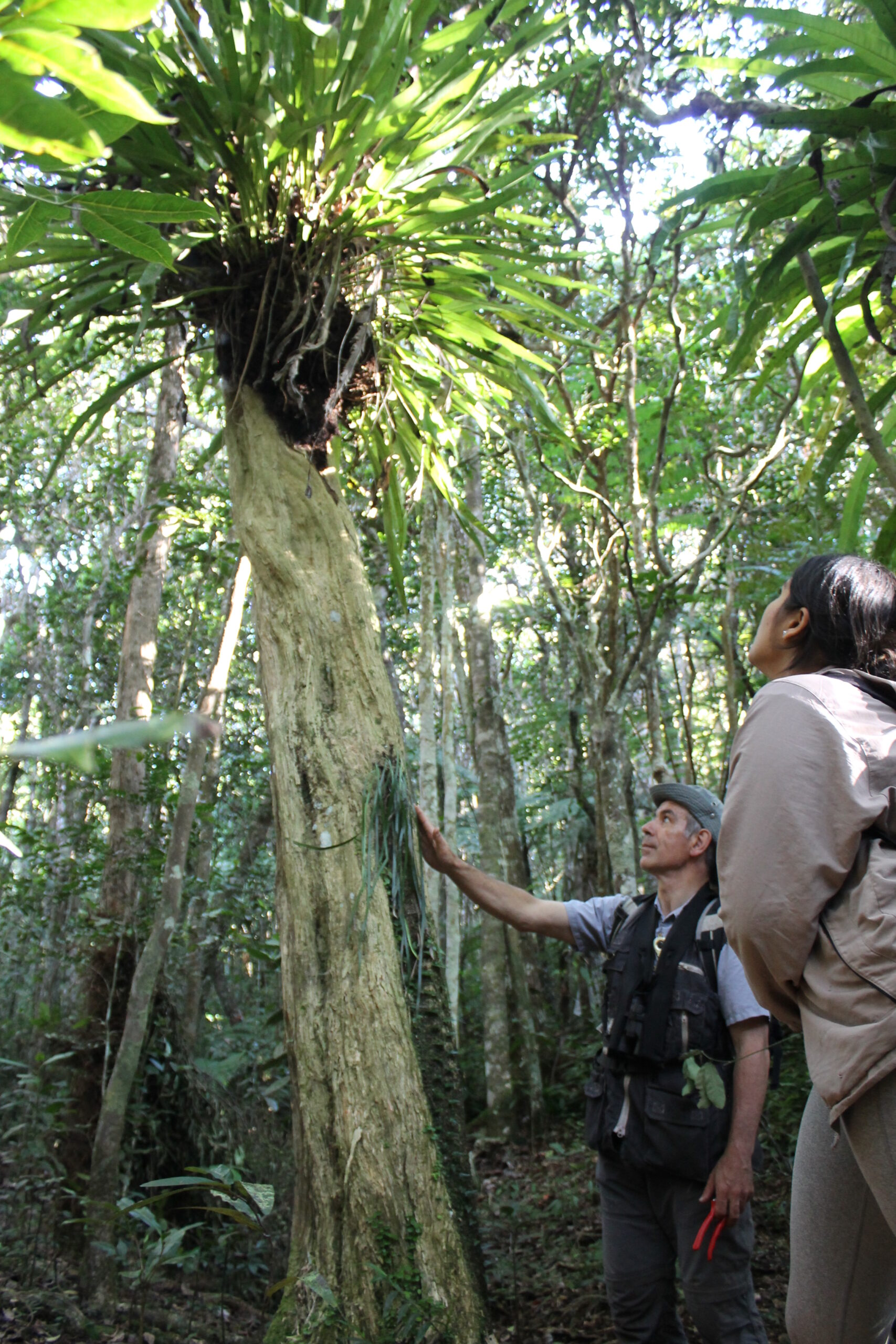
    Vincent Florens and an undergraduate student discuss the diversity of epiphytes found in a weeded section of forest at Black River Gorges National Park. Photo: Eva Colberg.

    The ongoing onslaught of invasion means there’s no time to waste for restoration ecologists like F.B. Vincent Florens, Associate Professor at the University of Mauritius. “We have so many rare species on the brink of extinction [over 80% of the island’s endemic flowering plants are threatened], and have to work at the same time and learn as we go.” His life experience and ecological studies point to invasive species management as the island’s best hope for restoration and conservation, which he likens to healthcare. “First you save the person from dying and then you can treat the other issues.”

    Although the views from Black River Gorges National Park are stunning, they also show the sparseness of the park’s forest overstory, with fewer and farther-between survivors.

    Although avian re-introductions and rewilding small islets with tortoises are sexier solutions than mere weeding, the best way to keep Mauritius’s mainland forests from dying is through invasive plant removal. After weeding, native trees in all forest strata produce more flowers and fruit, woody plants increase in species richness and seedling density, and butterfly diversity and abundance also increase. These many benefits can be furthered and maintained by follow-up weeding and other subsequent measures (including the promise of biochar to suppress weed regeneration).

    Recently described and known to only a few locations, the orchid (Polystachya jubaultii) grows in a weeded forest remnant at Black River Gorges National Park. Photo: Eva Colberg.

    Despite decades’ worth of evidence pointing to the efficacy of invasive plant removal in Mauritius, it still isn’t widely implemented. Less than 5% of the island’s few remaining forests have been weeded of invasive plants, and even the best-protected forests are already dominated by invasive undergrowth. Frustratingly, some of the resources that could be used for invasive removal have instead hindered restoration via removal of native pioneer and nurse tree species. “We can do a lot of science, can come up with a lot of facts, but how do we get people to do what they don’t want to do?” Indeed, it’s far easier to uproot a small plant than to change someone’s mind, and Prof. Florens has an entire country to convince that saving their native forests is not only possible, but worth the effort.

  • Bunkered ex situ plant conservation and páramo biodiversity farms

    Bunkered ex situ plant conservation and páramo biodiversity farms

    By Iván Jiménez (Center for Conservation and Sustainable Development, Missouri Botanical Garden), Carlos A. Vargas (Herbario, Jardín Botánico de Bogotá José Celestino Mutis), Carlos I. Suárez (Colecciones Vivas, Jardín Botánico de Bogotá José Celestino Mutis), and Erika Benavides (Finca Milmesetas, Pasca, Sumapaz, Cundinamarca, Colombia)

    As anthropogenic pressures on biodiversity mount, plant species conservation increasingly requires the integration of a variety approaches, including ex situ conservation: the maintenance of populations in intensively managed living collections. Conventional seed banking is commonly regarded as a particularly effective and efficient method of ex situ conservation, because a large number of seeds representing many species can be stored for long periods in relatively small spaces at seemingly low cost. It entails drying seeds to 15% relative humidity and storing them at −20 °C. For some “exceptional” species that cannot be easily represented in conventional seed banks, cryopreservation and associated methods are seen as good choices. In contrast, living collections of whole growing plants are often seen as relatively inefficient, requiring more space and care.

    A particular problem with seed banks and cryopreservation projects, however, is that they may suffer from a “bunkered” conception of biodiversity conservation. By example, the Millenium Seed Bank is a “flood, bomb and radiation proof” underground facility designed as a “global insurance policy” to conserve seed diversity. Although focused on crops rather than wild plants, the Svalbard Global Seed Vault has a similar bunker ethos, aiming to guard against the loss of plant diversity due “not only to natural catastrophes and war, but also to avoidable disasters, such as lack of funding or poor management”. These bunker-like seed banks invite obvious questions: what protects them from lack of funding, miscalculation, poor management or extreme political ideology?

    Both bunker-like seed banks are remarkable spatial concentrations of resources for ex situ conservation, seemingly at odds with the key biological insight according to which a large spatial spread decreases the probability of extinction. At the same time, these seed banks correspond to what Bruno Latour called “centers of calculation”, institutions where observations and specimens from faraway locations are amassed, organized and combined to produce scientific knowledge. Centers of calculation were foundational to the expansion of European colonialism. The Millenium Seed Bank and the Svalbard Global Seed Vault may be seen as contemporary extensions of the same colonial mindset, repurposed in the context of biodiversity conservation.

    While other seed banks might not seem as obviously colonial, many do dislocate plant propagules from their original wild plant populations and human milieu. Most plant diversity in ex situ collections is held in the Global North, largely away from sources at the main centers of plant diversity. Even seed banks focused on nearby regional floras remove propagules from their immediate human and non-human environments.

    And while not all seed banks boast about their bunker-like properties, many do sit well within the “ark paradigm”, whereby representative samples of species must be secured away (perhaps even in the back side of the moon, as suggested by a foundational paper) in preparation for a likely apocalyptic future of widespread extinction. The ark paradigm is clearly articulated in a chapter about the role of botanical gardens in ex situ plant conservation: “The primary goal of ex situ collections is to maintain a representation of the species as a source of material for restoration, should the species be lost in the wild, and this should be done as effectively and efficiently as possible”. This salvific post-extinction role for seed banks (let alone cryopreservation projects) seems to have little support in practice.

    An alternative to the ark paradigm suggests that ex situ conservation can play a primary role before the extinction of wild populations. Ex situ collections may be used for research, training, education, awareness-raising and incentive programs that directly target the causes of primary threats to wild populations. In terms of this pre-extinction role, the conservation value of ex situ collections may be determined by their geographic location. The primary threats to many plant species are local. To address the causes of such threats, the most valuable living collections may be those able to engage the human communities coexisting with threatened plants. Bunkered living collections, removed from the human and non-human environment of the source plant populations, would likely be ineffective and inefficient at this task.

    The alternative to the ark paradigm also suggests that ex situ conservation can play a central role in offsetting the effects of threats to wild populations, through the restoration of wild populations via reinforcement. Ex situ collections may provide plant stock for population management aimed at mitigating the effects of threats. Here, again, the geographic location of ex situ collections may determine their effectiveness and efficiency. Ex situ collections in the vicinity of threatened species would seem best for reinforcement programs. Moreover, issues related to propagation of whole growing plants would seem far more germane in this context than the worries about long-term storage prioritized by the ark paradigm and pursued in seed banks and cryopreservation projects.

    An initiative adopting this alternative view of ex situ conservation is taking place in the páramo de Sumapaz, perched on the Eastern Colombian Andes. Páramos are high elevation ecosystems that are central for provisioning water to human populations in the tropical Andes. They are perilously affected by global change. The páramo de Sumapaz occupies about 315,000 hectares and, based on analysis of a recently compiled and edited database, hosts more than 3,000 plant species. Although the conservation status of 76% of these species has yet to be evaluated, currently 64 species are known to be threatened.

    In this context, a group of researchers including local campesinos as well as staff and students from the Jardín Botánico de Bogotá, Parque Nacional Natural Sumapaz, Universidad Nacional de Colombia, Washington University in St. Louis, and the Missouri Botanical Garden, are engaged in participatory action research, with partial support from the Living Earth Collaborative. The aim is to develop the concept of “páramo biodiversity farms”, provisionally defined as properties in or near the páramo that derive economic benefits from at least one of four activities: i) biodiversity research, ii) education about biodiversity, iii) ex situ conservation of threatened plant species in living collections, and iv) plant stock production for population or ecosystem restoration.

    A pilot páramo biodiversity farm began in 2019 at “El Carmen”, a 40-hectare property in the Sumapaz region. This pilot is focused on an ex situ collection of plants in the genus Espeletia (Asteraceae). Although páramo biodiversity farms would include work on many other plants, the focus on Espeletia at El Carmen is strategic. First, Espeletia are dominant “nurse-plants” in páramos and largely determine the physical structure of these ecosystems. Second, despite being locally dominant, several taxonomic species of Espeletia are threatened. Third, obtaining meaningful monitoring data for conservation is often difficult because the species boundaries in Espeletia are poorly understood and field identification is problematic.

    Espeletia plants are dominant in páramos, as shown in the picture of the páramo de Sumapaz on the left. Orlando Romero, a campesino working for the Parque Nacional Natural Sumapaz, collects Espeletia seeds for the living collection at El Carmen. Photos by Iván Jiménez.

    The living collection at El Carmen serves multiple purposes. First, it is a “common garden” experiment, designed to understand species boundaries and phenotypic characteristics of Espeletia species from Sumapaz. The experiment entails propagating plants from seeds sourced from +500 mother plants occurring across the páramo de Sumapaz, initially in a nursery and subsequently in an outdoor landscape. Second, the living collection serves as a facility to train local students in plant biology and conservation. Third, the collection conserves ex situ threatened Espeletia species that are endemic to the Sumapaz region. Finally, the living collection may serve as a seed-increase field providing Espeletia plant stock for future population or ecological restoration projects.

    The picture on the left shows part of the living collection at El Carmen, including seedling trays (forefront), germination containers (right and back), and 3-year old plants in pots on the ground (back left). On the right Rudy Ortiz (left) and Natalia Beltrán, both biology students at the Universidad Nacional de Colombia, measure Espeletia seedlings at El Carmen. Photos by Erika Benavides.

    A central theme of the project is the participation of local campesinos as co-investigators and managers, alongside researchers and officials from academic and environmental institutions. Achieving true participatory research and exchange of knowledge across these actors is far from trivial. Nonetheless, a concrete result of the project is that co-investigators, including campesinos, developed a sophisticated understanding of the phenotypic groups of Espeletia and their geographic distributions across Sumapaz, facilitating conservation monitoring programs. This increase in plant awareness among people coexisting with Espeletia plants is a key step towards addressing the causes of threats to páramo plant diversity. Campesino management of the ex situ collection at El Carmen (and the associated information) provides modest but direct economic benefits to a local family. We hope it also builds local capacity for the governance of biodiversity and collaborative relationships between campesinos and institutions focused on studying and managing biodiversity.

    Jorge Penagos (left) and Erika Benavides, both campesinos from Sumapaz, record survival of Espeletia seedlings in the living collection at El Carmen. Photo by Rudy Ortiz.

    The pilot biodiversity farm at El Carmen hints at how ex situ collections of whole growing plants may help prevent extinction of wild populations. This kind of collection is often thought to be inefficient because requirements of space and resources may be higher than for seed banks and cryopreservation. Collections of whole growing plants for ex situ conservation can indeed be costly when bunkered inside botanical gardens. But they can be more efficient when spread across lands owned by human communities coexisting with threatened plants. We suspect that páramo biodiversity farms may not be more costly than comparable seed banks in the Global North. And the benefits from páramo biodiversity farms would include ex situ collections that act not only as safeguards (the ark paradigm) but also as tools to prevent extinction in the wild and promote local (rather than colonial) biodiversity governance. Studies comparing costs and benefits, beyond back-of-the-envelope calculations, are needed to determine which approaches to ex situ conservation are more effective and efficient in different regions of the world.

  • “We planted a forest!” – The mental health benefits of ecological restoration: a pilot study

    “We planted a forest!” – The mental health benefits of ecological restoration: a pilot study

    By Suzanne Hicks, Ecological Health Network, Gondwana Link. Suzanne Hicks is a clinical psychologist from Margaret River, Western Australia, with an interest in how nature influences our mental health. Here, she describes the evolution of an innovative pilot project involving disengaged young people in ecological restoration work with the intention of improving their mental health. The novel experimental design allowed her and her colleagues to test the hypothesis that there is a causal link between the observed improvements in social anxiety of the participants and the ecological restoration work undertaken by them.

    An intriguing discussion in 2020 with James Aronson, of the global organisation Ecological Health Network (EHN), about the links between ecological restoration, soil health, and human health, whetted my curiosity to attend the second workshop in Hobart, Tasmania in February the following year. Although a clinical psychologist, rather than a scientist or ecologist, I have long been aware of the ways that being out and about in nature has a positive impact on mental wellbeing, both mine and that of my patients. But I wanted to learn more about the mechanisms by which this might occur, and also to be part of the growing movement involved in the regeneration of degraded landscapes and restoration of habitat.

    In the days prior to the conference, we visited a site in the North East Bioregion of Tasmania where a group of unemployed people, brought together by Todd Dudley, president of the North East Bioregional Network, had undertaken ecological restoration at the site of a former pine plantation. Over 700 hectares of harvested, burned plantation land had been restored to the trajectory of a thriving native forest recovering from several cycles of clearing and pine plantations.

    Landscape immediately following clearing of pine plantation in the North East Bioregion of Tasmania, Australia (left), and the same landscape four years after initiation of restoration of the endemic forest ecosystem.

    The scale and success of the Tasmanian ecological restoration project was impressive, but equally intriguing from my point of view was the reported improvement in the physical and mental health of the participants. Accounts of changes from apathetic, disengaged and unhealthy unemployed people to enthusiastic and fit workers, some of whom went on to do further study in forest management and ecological restoration and regeneration, piqued my interest. However, what also stuck in my mind was a comment made by James Aronson. While applauding the success of the project, he also remarked that “It may as well not have happened”. Puzzled, I asked him why. His answer – because there was no empirical research data to support its outcomes. The intuitively obvious link between being involved ecological restoration and improvements in human health was purely anecdotal. I held that thought…

    I felt somewhat out of my comfort zone at the start of the Hobart workshop, sitting among a high-powered group of public health researchers and environmental scientists from Australasia and the United States. While passionate about nature and very committed, through my work, to helping people improve their mental well-being, I certainly didn’t have deep scientific understanding of the nexus between the two. However, I was welcomed by the group and soon found myself intrigued and stimulated by what I was learning about ecological regeneration efforts being undertaken around Australia and Aotearoa New Zealand, and the ways that human health is impacted by natural environments and healthy biomes. The take-home message was clear: being in nature is good for people. In particular, the restoration of riverbanks may have the biggest bang for buck, improving water quality and the downstream health of the people who use the water. Yet, again and again, the need for empirical evidence was emphasized.

    There is an abundance of data attesting to improvements in human health from being in nature, and also for the positive impacts on the environment of improving biodiversity. However, when it comes to support for the hypothesis that being actively involved in ecological regeneration, in and of itself, improves human health and wellbeing, EHN’s Adam Cross informed me there appears to be only a handful of published papers worldwide. Of these, almost all are correlational, and rely on subjective measures of well-being. There is, therefore, an urgent need for empirical data to guide ecological restoration endeavors, and further, in these times of escalating health budgets, to attract funding for ecological restoration as an important public health intervention.

    On the plane back to my home in rural Margaret River, Western Australia, I mulled over what I had learned and wondered how I might bring it to bear in my community. My academic training as a clinical psychologist prompted me to speculate on the ways one might empirically research the hypothesized link between healing activities for impaired ecosystems and psychological health.

    The Margaret River Program

    I am a member of a recently-formed group of volunteers, who call ourselves Mindful Margaret River (MMR). We are working to improve the mental health and well-being of people in our town, which has had its fair share of recent natural disasters and tragedies: serious bushfires in 2011 and 2021 that burned numerous homes as well as large areas of national parks, and a multi-generational murder/suicide that took seven members of a single family. In addition, I belong to our local Nature Conservation group (NCMR). I wondered if, under the umbrella of MMR, I might develop a program, drawing on the resources of NCMR, whereby disengaged students from our local high school were invited to be part of a 20-week ecological restoration program aiming to improve both nature and the participants’ mental health. The novel part of the program would be to allocate students to one of two groups, the first involved in ecological restoration and the other to be in actively working in nature but not specifically participating in restoration activities. Researchers from the Psychology Department of University of Western Australia (UWA) would be invited to empirically evaluate the outcomes of the program.

    In collaboration with my colleague Sandra Robertson, a community nurse at the local high school, a twenty-week program was developed taking students from school one day per week under the supervision of two teachers. The program would be assisted by NCMR staff in the practical aspects of restoration work. Volunteers from the Cape to Cape Walking Track  would guide the second group in maintenance of this long-distance coastal hiking track. The program would be under the formal custodianship of the local Indigenous Peoples, the Wandandi Peoples, who welcomed the students onto their Country (an Australian term referring to the ancestral Traditional lands of an Indigenous group) and accompanied them for a number of days throughout the program to teach them about Indigenous lore and culture, and about caring for Country. Additionally, a number of people working in environmental science and management such as rangers, scientists, and artists, were approached to talk to the students about nature-based career options, and on other occasions the students heard from experts in various components and aspects of local biodiversity.

    Wandandi cultural custodian Zac Webb drawing a map of Country for the participants of the high school program.
    Students of the program learning simple survey skills prior to beginning restoration work.

    Over the course of 2020 we secured seed funding for the project from EHN Hub Gondwana Link, and subsequently full project funding from the Western Australian state-based grants body, Lotterywest, to operate the program for a further two years. Following this success, our pilot program was launched in 2021. Twenty-four year 10 and 11 students were selected, semi-randomly, for the two groups. There were 17 boys and seven girls, and four of the students were Indigenous. Their average age was sixteen. Sadly, due to behavioral issues, after 12 weeks the group involved in track maintenance was disbanded.

    Students were excited to record different species of fungi during biological surveys.

    The regeneration group completed the 20-week program and three questionnaire measures of their psychological wellbeing, taken at three points in the program, were obtained and analyzed by the UWA researchers. Taken together with focus group information, the researchers determined that there had been a statistically significant reduction in the students’ social anxiety over the course of the program, and that they had developed a greater sense of connection with nature and more appreciation of the actions they could take as individuals to help preserve their local environment.

    The Boodja (“Country”) Regeneration crew, on Country during their 20-week program.
    The Biddi (“Coastal path”) crew, on Country during the program.

    After the challenges of the pilot stage, more work is now being undertaken to modify the research model of the program to fit more smoothly within the framework and timetabling of the school curriculum. However, even at this early stage we are pleased to be able to begin demonstrating empirically the benefits for mental health of being involved in ecological restoration activities. We hope that the next stage of the program will build our evidence base further, developing strong empirical support for the health benefits of engaging with nature and participating in ecological restoration—towards a vision where such activities might even become a central aspect of learning and education. In the meantime, it was a delight to have the enthusiastic endorsement of our young participants, captured in the comment from one of them – “We planted a forest!”

  • How does prescribed fire affect a threatened terrestrial orchid?

    How does prescribed fire affect a threatened terrestrial orchid?

    By Leighton Reid and Ryan Klopf

    Leighton Reid is an assistant professor of ecological restoration in the School of Plant and Environmental Sciences at Virginia Tech. Ryan Klopf is the Mountain Region supervisor and natural areas science coordinator for the Virginia Natural Heritage Program. They describe a new research project that aims to understand how an important restoration tool impacts the population dynamics of federally threatened small whorled pogonia orchids. This project has an open PhD position available to start in January 2023; details can be found at the end of this post.

    Deep in the heart of Virginia’s Shenandoah Valley, nestled against the western edge of the Blue Ridge Mountains, two clusters of small, green orchids grow in the dappled sunlight of a woodland understory. The orchids are small whorled pogonias (Isotria medeoloides) – a rare species that is considered threatened by the United States government because its population is declining so quickly that it could become endangered in the foreseeable future. We have monitored these populations for the past two summers, keeping tabs on every individual, to learn how this species is affected by one of the most important restoration tools in North America – prescribed fire.

    A small whorled pogonia orchid with two flowers at Mount Joy Pond Natural Area Preserve. Photo: Lindsay Caplan.

    Small whorled pogonia

    As their name implies, small whorled pogonias are small (≤25 cm) and whorled (their leaves radiate outward from the stem). This species is a member of the Pogonieae, an orchid tribe that includes species in Asia and eastern North America. Its closest relative is the large whorled pogonia (I. verticillata) which sometimes grows alongside small whorled pogonia, but is distinguished by its purplish stem (small whorled pogonia has a whitish green, glaucous stem).

    Small whorled pogonia (left) with a whitish, glaucous stem compared to large whorled pogonia (right) with a purplish stem base. Photos: Sara Klopf (left) & JL Reid (right).

    Small whorled pogonias emerge from the leaf litter in late spring and in some years produce one or two solitary greenish yellow flowers, particularly when plants are exposed to more sunlight. Their flowers do not require any help with pollination; they produce the same amount of seed whether they are cross-pollinated or pollinate themselves.

    The seeds themselves are tiny – like vanilla seeds, which are in the same orchid sub-family (Vanilloideae). The parent plant (which is usually both a mother and a father) provides almost no resources at all to its offspring. Each seed’s fate is closely linked to whether or not it finds a mycorrhizal fungus in the Russulaceae family to help it acquire the resources that it needs to survive and grow. In a typical relationship between plants and mycorrhizal fungus, the fungus scours the soil for nutrients like nitrogen and phosphorus and provides them to the plant in return for energy in the form of carbohydrates, which the plant produces through photosynthesis.

    A developing fruit on a small whorled pogonia orchid at Mount Joy Pond Natural Area Preserve in June 2022. Photo: Andres Cunningham.

    Fire and water at Mount Joy Pond

    The story of this research project begins about 80 years ago, in a DuPont chemical plant in Waynesboro, Virginia. In the 1930s-1950s, the DuPont facility used mercury to produce rayon – a synthetic, silk-like fiber. Some of the mercury escaped from the plant and leaked into the South River – a tributary of the Shenandoah River. Mercury is a neurotoxin, and in the environment it can accumulate to dangerous levels in animals that are higher on the food chain, like fish. For many years, people living along the South River have been warned about the poor water quality and advised not to eat the fish.

    In 2016, DuPont reached a $50 million USD settlement with the United States Department of Justice, the Department of the Interior, and the Commonwealth of Virginia to restore habitat for wildlife in the South River watershed, enhance water quality, and improve recreational areas. This settlement represented one of the largest environmental damage settlements in United States history.

    Some of the DuPont settlement money was allocated to the Virginia Natural Heritage Program, a division of the Virginia Department of Conservation and Recreation that uses science-based conservation to protect Virginia’s plants and animals. Specifically, funds were provided to allow the Virginia Natural Heritage Program to protect and restore woodland habitat surrounding a unique wetland at the Mount Joy Pond Natural Area Preserve in Augusta County.

    Briefly, Mount Joy Pond is a Shenandoah Valley Sinkhole community; that is, it is a groundwater-controlled wetland that floods intermittently when water percolates up through underlying carbonate rocks and then floods over the top of a clay lens perched in a layer of soil derived from the overlying sedimentary rocks. When this happens, the water becomes trapped, like water in a saucer. This unique situation creates wetland habitats which have persisted for the past 15,000 years and contain numerous rare and disjunct species, including the globally rare Virginia sneezeweed (Helenium virginicum). There are several dozen Shenandoah Sinkhole ponds, but only a handful of them are protected.

    Virginia sneezeweed, an endemic species in the southeastern United States with disjunct populations in Virginia’s Shenandoah Valley sinkhole ponds and in a similar wetland situation in the Ozark Mountains of southern Missouri. Photo: JL Reid.

    In the past, Mount Joy Pond filled with water every few years, but in recent decades it has filled up less and less often. To restore the wetland’s hydrology, the Virginia Natural Heritage Program set out to thin the surrounding forest and re-introduce fire to prevent fire intolerant trees, such as red maple, from regenerating. This may sound counterintuitive to some, but the logic is this:

    • Each tree is like a drinking straw sucking water out of the ground and releasing it into the air via transpiration. If there are a lot of trees, the groundwater may stay too low to fill up the pond.
    • Fire used to be much more common in the Shenandoah Valley. Prior to European colonization, Indigenous People burned the landscape and maintained much of it as savanna and open woodland – ecosystem types that have fewer trees than present day forests.
    • By removing some trees and reintroducing a regular fire cycle, land managers at Mount Joy Pond Natural Area Preserve can restore an open woodland and raise the groundwater level, causing the pond to flood more often.

    The Virginia Natural Heritage Program began to implement this restoration project in 2017, and the first thinning operations and burn were a success. In the years since, the groundwater level appears to have gone up, suggesting that the hydrological restoration plan is working.

    Small whorled pogonia discovery

    In the first spring after that first fire, a botanist was surveying the burned woods near the pond and found something unexpected – a small population of small whorled pogonia orchids, which had not been seen previously in the preserve despite extensive surveying by the Virginia Natural Heritage Program’s inventory team. Were the orchids there all along and nobody noticed them? Maybe. Or maybe the fire helped the orchid population emerge after years of suppression in the dense leaf litter in the shady understory.

    Our team uses a grid sweep survey to search for new small whorled pogonia individuals in June 2022. Photo: JL Reid.

    The story became more complicated later that summer when a more intensive search turned up a second population of small whorled pogonia orchids on the preserve – this one in an area that had not been burned.

    The immediate consequence of discovering the new pogonia populations was that the United States Fish and Wildlife Service expressed concerns that future fire management might be detrimental to this threatened species. Nobody had studied how small whorled pogonia responds to fire, and there was a chance that burning could damage the population, even if it was good for the nearby pond’s hydrology. Of course, there was also a chance that not burning could damage the population. With fire, inaction is still an action.

    To help settle the issue, the United States Fish and Wildlife Service agreed to sponsor a PhD student to study the small whorled pogonias at Mount Joy Pond and figure out how their population dynamics are impacted by prescribed fire.

    Lindsay Caplan and Jimmy Francis monitor a population of small whorled pogonias at Mount Joy Pond Natural Area Preserve in June 2022. Photo: JL Reid.

    Effects of prescribed fire on small whorled pogonia orchids

    The main goal of our ongoing research is to understand how prescribed fire impacts small whorled pogonias. To do this, we will map and monitor the two subpopulations and the woodland plant communities in which they live. Over the next two years, one of the two subpopulations will be burned during a winter or early spring prescribed fire, and we will continue monitoring to document changes in plant vigor, reproduction, and population size. We will pay special attention to the light environment, which seems to be important for small whorled pogonia reproduction, and to the diversity and composition of soil fungi, which are important for small whorled pogonia emergence. We will also conduct annual surveys of the entire reserve to search for additional populations.

    Ethan Dunn uses a canopy imager to measure canopy cover, photosynthetically active radiation, and leaf area index over a tiny small whorled pogonia individual in July 2021. Photo: JL Reid.

    This project is just beginning. To date, we have monitored the two populations for two growing seasons (2021, 2022). There is still much work to be done. One of the next steps will be to produce an accurate map of each plant’s location, which will require centimeter-level precision using high-quality GPS equipment under a forest canopy.

    We are currently seeking a PhD student to lead this research project starting in January 2023. A description of this opportunity is below. This project is an excellent opportunity for a student to develop expertise in ecological restoration and threatened species conservation from both a scientific perspective and an on-the-ground land management perspective.

    Ultimately, the results of from this study will inform management of natural areas and small whorled pogonia restoration projects throughout the species’ wide range – from Ontario to Georgia.

  • A new perspective for plant translocation science: the International Plant Translocation Conference has been born

    A new perspective for plant translocation science: the International Plant Translocation Conference has been born

    By Thomas Abeli, Department of Science, Roma Tre University

    Many plant species around the globe are threatened with extinction or have already been extirpated from the wild as a result of habitat loss, pollution, alien invasive species, and climate change. Among the possibilities in the toolkit of conservation biologists to halt and reverse the loss of plant diversity, translocation is now a commonly used approach. Translocation is defined by the International Union for the Conservation of Nature (IUCN) as a deliberate transfer of species from one site to another for conservation purposes that includes different types of movements: population reinforcement of small and genetically depauperate populations, reintroduction of species within their native range in sites where they occurred in the past and from where have been extirpated, and conservation introduction of species outside their indigenous range. While the primary motivation for translocation is often the recovery of single species, translocation also plays a key role in ecosystem restoration – enabling the United Nations to achieve global goals for its 2020-2030 Decade of Ecosystem Restoration.

    Reintroduction of Pyne’s ground-plum (Astragalus bibullatus) was featured in a talk by Dr. Matthew Albrecht on adaptive management in reintroduction programs at the first International Plant Translocation Conference in June.

    Plant translocation is sometimes highly successful, sometimes dramatically discouraging and unsuccessful. Such variability in translocation outcome is rooted in the still poor understanding and standardization of techniques given that the field of translocation science remains in an early stage of scientific development. Translocation programs are challenging and complex, often requiring an interdisciplinary team that may include conservation biologists, restoration ecologists, taxonomists, geneticists, practitioners, policy makers, indigenous peoples, citizen scientists, and local community members.

    It is common in science to organize periodical conferences where scientists from around the world meet and discuss recent findings and share ideas in a specific field. Although plant translocation is often discussed in national and international conservation biology conferences, we lacked a dedicated conference or forum to share experiences and improve plant translocation science and practice to deliver more effective conservation outcomes. With the aim of filling this gap, a group of field-leading scientists developed the 1st International Plant Translocation Conference as a new forum to share ideas and advance the field of plant translocation.  After multiple delays over the past two years due to the COVID-19 pandemic, the Science Department of the Roma Tre University hosted the inaugural International Plant Translocation Conference (IPTC2022) from 20 to 23 June 2022 in Rome, Italy. Designed as a hybrid conference platform to promote global participation and inclusion, the conference included 71 participants (including online attendees) representing 19 countries and 5 continents.

    Attendees and staff of the 1st International Plant Translocation Conference (IPTC2022) in Rome.

    With nine international keynote speakers from the International Union for Conservation of Nature (IUCN), the Center for Plant Conservation (United States), the Missouri Botanical Garden, the Curtin University (Australia), the Meise Botanical Garden (Belgium), the Liverpool John Moores University (United Kingdom), the University of Cagliari, the University of Pavia and the Botanical Garden of Rome (La Sapienza University), along with nearly 40 talks, a poster session, workshop, social events, and a field trip, the IPTC represented an outstanding opportunity for the global community of conservation biologists involved in plant translocation to present recent findings, best practices, learn from each other’s experiences, initiate new collaborations, and transfer knowledge to the next generation of conservation scientists and practitioners. The congress was organized around five thematic sessions covering topics related to translocation techniques, ex situ conservation approaches to support translocation, data sharing and ethics, and translocation case studies from the Mediterranean bioclimatic region.

    Additionally, the congress discussed the controversial topics of assisted migration and de-extinction, which generate international news headlines. Assisted migrations are debated on one side for the opportunity they represent to save species threatened by climate change and, on the other side, for the risks they imply for recipient ecosystems. De-extinctions represent the last frontier of conservation. While still in the hypothetical stage, the idea of ​​reviving extinct species is fueling a wide scientific debate among supporters, opponents, and those who advocate conservation approaches that are more pragmatic. Research presented at the IPTC 2022 suggested that herbarium specimens and ex situ collections could support plant de-extinction perhaps more easily than resurrecting extinct animal species via back-breeding, cloning and synthetic biology.

    Dr. Hong Liu from Florida International University presenting her research at the IPTC 2022.

    The importance for scientists to meet in conferences has been exacerbated over the past two years when the COVID pandemic confined conferences to virtual online events. While virtual conferences remain an important vehicle for exchange of scientific knowledge, the lack of personal interactions through interactive workshops, brainstorming through informal discussions, and social events can stymie engagement and collaborative development. As one of the first post-pandemic congresses to meet in person, the number of new connections and collaborations developed during the IPTC conference should spur many advancements in translocation science.

    IPTC2022 attendees relaxing and chatting during the field trip in Castelluccio di Norcia (Central Apennines, Italy).

    For example, originating from informal discussions at social events a large group of IPTC attendees are now preparing a manuscript on best practice guidelines for mitigation translocations. The conference also revived discussion about developing a global interoperable register and database of plant translocation – a feature that would undoubtedly accelerate synthesis and meta-analysis and surely benefit the international community. Finally, a special issue of Plant Ecology entitled “Advances in Plant Translocation” will be dedicated to articles derived from IPTC talks.

    More broadly, the achievement of the first IPTC and the following editions, are expected to contribute to the United Nations 2030 Agenda that outlines the medium-term strategy to reverse the trend of global biodiversity loss, to integrate policies of sustainable exploitation of natural resources on which the well-being of the growing world population depends, and to reduce and mitigate conflicts between man and the environment. In particular, the IPTC conference will impact the Sustainable Development Goal 15 “Life on Land”, as well as the more specific United Nations initiative “Decade of Ecosystem Restoration”. The organising committee of the IPTC2022 is already at work to identify a suitable location for the next IPTC conference, ideally within the next two/three years. Stay tuned for more exciting news and developments.


    For more on translocations, see Translocating a threatened totem by Adam Cross