Category: North America

  • News from the Northeast Seed Network: Launching Wild Seed Collection Protocols

    News from the Northeast Seed Network: Launching Wild Seed Collection Protocols

    By Eve Allen, Geordie Elkins, Heather Liljengren, and Sefra Alexandra

    Eve Allen is the US Northeast Regional Director at the Ecological Health Network. In this role, she co-coordinates the Northeast Seed Network. She is joined by Geordie Elkins, the Executive Director of the Highstead Foundation, Heather Liljengren, the owner and president of Local Land Consulting, and Sefra Alexandra- The Seed Huntress- co-founder of the Ecotype Project. Together, they share about the process of the Northeast Seed Network’s Standards and Protocols Committee coming together to develop wild seed collecting protocols for the US Northeastern and Mid-Atlantic States.

    The collection of seeds and cuttings from wild plant populations is a critical first step in increasing the availability of cultivated seed and propagated plant materials for ecological restoration. Across nearly all regions of the world, the limited supply of native seeds and plant materials remains a persistent bottleneck, constraining the scale, effectiveness, and long-term durability of restoration efforts.

    Seeds and nursery-grown plants are often a key part of carrying out restoration activities, typically through the reestablishment of native species to sites where they have been lost or depleted. This reintroduction is important for supporting recovery on heavily degraded sites and contributes to maintaining genetic diversity, providing wildlife habitat, improving resilience to climate change impacts and disturbance, and reducing the spread of invasive species. As restoration efforts scale up, so does the demand for native seeds and plant materials. Projects spanning hundreds to thousands of hectares can require vast quantities of seed and planting stock. For example, in Minnesota, more than 500,000 kg (1.1 million lb) of seed was used to restore 9,000 hectares (~22,000 acres) of northern tallgrass prairie. Similarly, restoration practitioners at the Massachusetts Division of Ecological Restoration report that individual projects restoring wetlands, streams, and sandplain grasslands may require between 5,000 and 50,000 native plant plugs per project depending on the size and the extent of degradation.

    Meeting both current and future demand is challenging because wild populations are often the primary source of seeds and cuttings—a reliance that can place additional pressure on already fragmented and degraded ecosystems. A more sustainable and scalable approach involves bringing native species into horticultural and agricultural production systems to multiply seed and develop reliable sources of propagated plant materials. This step is paramount to building regional seed supply chains that can provide diverse, source-identified seed and plant materials for the range of activities across the Society of Ecological Restoration’s Restorative Continuum.

    In this post, we share the story behind the Northeast Seed Network’s Wild Seed Collecting Protocols—why they were developed, how they came together, and what they aim to achieve. These protocols provide a practical framework to help land managers, land trusts, and seed collectors make thoughtful, ethical decisions that protect wild plant populations, maintain genetic diversity, and ensure that seed remains available for future restoration work. Developed with support from a Land Trust Alliance grant, they are designed both for our regional partners and as a model for others looking to build or strengthen seed collection programs.

    While the guidance focuses on common plant species (and does not address the additional considerations required for threatened or endangered plants), the core idea applies broadly: when done responsibly, seed collection can be an important conservation action. This is especially relevant for land trusts, which steward and care for large areas of conserved land and are increasingly engaged in restoration and habitat management to promote conservation goals and objectives. At the same time, our experience across the seed supply chain has shown that collecting from the wild is not always the right first step. Throughout this post, we explore the “why, when, and how” of seed collection, emphasizing a key principle—wild seed collecting should be approached with care, intention, and restraint, and in many cases, considered a strategy of last resort rather than a default approach.

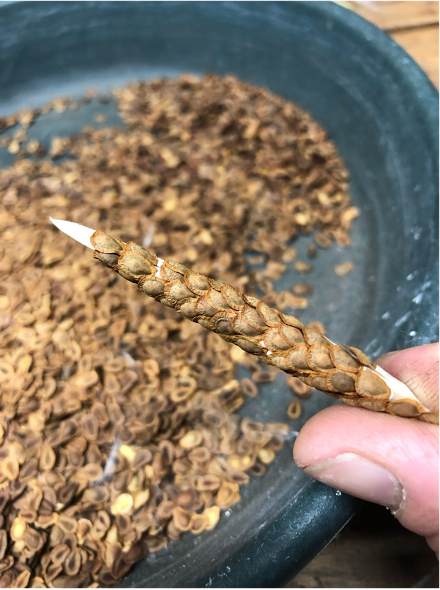
    Geordie Elkins, Highstead Foundation, collecting seed of round-headed bush-clover (Lespedeza capitata) at the Wilton Land Trust, Slaughter Fields Preserve, Wilton, Connecticut. Credit: Highstead Foundation. 

    The Northeast Seed Network: A Regional Alliance of Seed Hubs and Partnerships

    At the 2023 National Native Seed Conference, stakeholders came together to formally launch the Northeast Seed Network (NSN) and build a more resilient, region-wide supply chain. It was recognized that strengthening the region’s supply chain to meet the growing demand for ecological restoration activities is too big a job for any entity to tackle on its own. See our shared timeline of key efforts and activities that have helped spark a groundswell of support and enthusiasm for this collective work. The Ecological Health Network currently coordinates the NSN. 

    Our multi-hub and spoke network currently brings together more than 150 partners—from Virginia to Maine and into Atlantic Canada—including seed farmers, nursery professionals, land managers, Tribal Nations, restoration practitioners, home gardeners, seed bank curators, botanic gardens, land trusts, and regional academic institutions. Learn more about our partners on our Network Directory Map.

    Our mission is to foster connection and knowledge sharing among those working to improve access to diverse, source-identified native seeds and plants for ecological restoration, as well as related efforts such as ecological landscaping and regenerative agriculture—activities that increasingly rely on native species to support biodiversity and ecosystem health, and strengthen connections to place and a culture of belonging and stewardship. Learn more about the NSN’s core activities and governance model in our Network Charter.

    The Growing Need for Seed

    In the eastern United States (US), research has shown that restoration practitioners often source seed from suppliers located an average of 584 km (363 miles) away. One of the clearest needs identified by NSN’s members has been a growing demand for locally sourced seed that can serve as a starting point for the production of bulk seed and native plant nursery stock. Without this initial material collected from wild populations, there is no pathway to scale up supply.

    In response, network partners across the region have been working to coordinate wild seed collection and establish seed production fields, often sourcing from multiple populations within the US Environmental Protection Agency’s Ecoregional Level III boundaries to maintain genetic diversity and better reflect local conditions. Once established, these production plots, also referred to as “seed increase plots,” can remain viable for up to five years before farmers begin to see a significant decline in seed production or genetic variation for most species.

    Seed collection of Butterfly Milkweed (Asclepias tuberosa) (left image) and Joe-Pye weed (Eutrochium dubium). Credit: Sefra Alexandra- The Seed Huntress. 

    The Need for Shared Standards Across the Network

    As the Northeast Seed Network (NSN) has grown, so has the recognition that coordination alone is not enough—shared standards are essential for building a functional and trustworthy seed supply system. With partners working across all stages of the supply chain, from wild seed collection to production and use, there is a clear need for consistency in how seed is collected, amplified, documented, and managed. However, developing and agreeing on a set of standards is not enough; we are also providing resources and guidance for those new to working with diverse, source-identified native seeds and plants.

    In response to these needs, in December 2023, the NSN established a Standards and Protocols Committee. The goal of the committee is to bring partners together to develop guidance that supports consistency, transparency, and ecological integrity across the network, while still allowing for flexibility across our regional alliance of partnerships and hubs.

    One of the committee’s first actions was to apply for and secure funding through a Land Trust Alliance grant. This support enabled the convening of a focused working group to develop wild seed collection protocols for land trusts and create landowner permission templates for organizations and individuals interested in seed collection. Wild seed collection was identified as an immediate and shared priority across NSN hubs and partnerships, given its foundational role in building initial seed supply.

    Through this effort, partners from across the region contributed their experience and expertise to co-develop a set of protocols grounded in real-world practice. The process itself was as important as the outcome, helping to align approaches, identify regional challenges, and build a shared understanding of what responsible and effective seed collection would mean for our bioregion. This work represents an early but important step toward broader standardization through shared practices across the network, beginning with one of the most critical entry points in the supply chain. 

    Populations of northern blue flag iris (Iris versicolor) and cardinal flower (Lobelia cardinalis) at the Highstead Foundation in Redding, Connecticut, are being stewarded as potential seed collection sources for future restoration efforts. Credit: Geordie Elkins.

    Wild Seed Collecting Protocols

    A working group with private, public, nonprofit, and Tribal partners met monthly from March 2024 to May 2026. Their process involved reviewing existing international literature and established standards, then adapting those approaches to the ecological, logistical, and cultural context of the U.S. Northeast and Mid-Atlantic. This was a critical step, as many existing protocols have been developed for different regions, species, or production systems, and yet none of them was entirely appropriate to the conditions and needs of our bioregion. For example, the Seeds of Success Protocols (SOS), which are widely used across the US and are derived from Royal Botanic Gardens, Kew Millennium Seed Bank protocols, were designed to support the broader goals of the SOS program, including long-term conservation and storage, and largely assume collection from extensive federal land holdings with large plant populations. However, landscapes are much more fragmented across the Northeastern and Mid-Atlantic states, which do not support the same continuous large populations of species as in the US West. Adapting the protocols to reflect smaller population sizes was necessary to reduce the risk of overharvesting. For example, the SOS protocols broadly recommend a 20% “safe seed fraction” for collection. However, we recommend evaluating collection limits on a species-by-species basis to determine whether a 20% threshold is truly sustainable or whether lower collection levels may be more appropriate for certain species or populations. Collections in our region may not need to have an ideal target of 10,000 seeds, especially when collections are intended to provide starter material for seed increase plots. Our collections are also not slated to have a portion sent to a National Seed Extractory, in Bend, Oregon.

    From this work, we drew two products:

    1) Northeast Seed Network’s Wild Seed Collecting Protocols — a comprehensive guidance document designed to support land managers, seed collectors, and restoration practitioners engaged in ethical and sustainable wild seed collection. The document is intentionally adaptable, recognizing that approaches may need to be tailored to specific species, sites, and organizational goals. It is also intended to be a living resource that will continue to evolve as knowledge grows and the community of practice expands.

    2) Wild Seed Collecting Best Practices: Key Messages and Protocols for Land Trusts — an adapted guidance document developed specifically to support land trusts in creating thoughtful policies, partnerships, and practices for ethical wild seed collection. Drawing from the Northeast Seed Network’s broader protocols, this publication provides practical language, decision-making frameworks, and field guidance to help land trusts protect the ecological integrity of their preserves while contributing to the development of a resilient regional supply of locally adapted native seed.

    A central principle that we want to emphasize is that wild collection should be justified. Collectors are encouraged to first determine whether seed is already available from existing sources and to proceed only when wild collection is necessary to support restoration, seed increase, or conservation goals. Seed collecting should not be done to commodify a wild product or exploit our natural resources but rather as part of larger programs to strengthen ecosystem health and landscape interconnectedness, for public benefit and for future generations.

    Coevolution of plants and pollinators. From left to right: Spicebush swallowtail butterfly (Papilio troilus) on Swamp milkweed (Asclepias incarnata); Fruit fly (Drosophila) on common yarrow (Achillea millefolium); Silver Spotted Skipper (Epargyreus clarus) on Wild bergamot (Monarda fistulosa). Credit: Abbye Carsten at The Hickories seed increase plots, Ridgefield, Connecticut. 

    Supporting Land Trusts Through Wild Seed Collection

    Land trusts are uniquely positioned to play a key role in building a sustainable and ethically sound regional native seed supply. Across the United States,  most landscapes are fragmented, and land trusts represent a significant portion of conserved and protected lands. This is especially true in the eastern US, where there is less federally owned and managed land than west of the Mississippi. As a result, land trusts provide some of the best opportunities to collect, safeguard, and regrow native plant populations. These trusts exist to conserve and steward land for ecological, agricultural, and community benefit, with efforts focused on habitat protection, invasive species management, and ecosystem restoration. This places them in a strong position to support the responsible collection and use of diverse, source-identified seed.

    Through collaborative seed networks and partnerships, land trusts have become important partners in advancing sustainable wild seed collection as part of broader conservation, restoration, and landscape connectivity strategies. There is growing recognition that seed collecting is not separate from land and landscape stewardship, but rather an extension of it. When done well, and especially where there is planning, protocols, and cooperation, wild seed collecting is a conservation and restoration action supporting conservation, restoration, and reintegration of fragmented landscapes at bioregional levels. 

    Our work with land trusts to date has demonstrated how seed collection can be incorporated into day-to-day stewardship. This includes collecting seed from healthy populations and, in some cases, growing and planting that seed back into the same landscape to bolster existing populations. It also helps to support restoration both on and off conserved lands.

    Wild seed collection also creates meaningful opportunities for engagement. Many land trusts already rely on volunteers, and seed collection can bring people more directly into the work of restoration. It can become part of a full-cycle approach, where seeds are collected, cleaned, grown, and ultimately returned to sites and ecosystems where they are needed. In practice, this work often involves close collaboration among land managers, botanists, seed collectors, and seed bank curators, along with careful monitoring of plant populations to track their health, size, and changes over time. This sustained attention not only improves understanding of how plant populations respond to environmental change and disturbance but also supports more informed conservation, restoration, and land management strategies. At the same time, seed collection must be approached carefully. It should not be haphazard or extractive, but guided by clear policies, ethical frameworks, and strong relationships between land managers and collectors.  

    Direct seeding of wrinkleleaf goldenrod (Solidago rugosa), little bluestem (Schizachyrium scoparium), and purpletop (Tridens flavus) from wild-collected seed within the Kent Land Trust preserve system in Kent, Connecticut. Credit: Melissa Cherniske, Program Manager.

    Conclusions and Looking Ahead

    Protecting the long-term health of wild populations must remain the top priority, even as demand for native seed continues to grow. We hope that our new Wild Seed Collection Protocols will provide clear guidance for responsible collection, support ethical decision-making in the field, and help ensure that seed collection practices contribute to long-term ecosystem health rather than placing additional pressure on already vulnerable plant populations.

    A next step for NSN partners across all hubs and partnerships is to establish a shared system for documenting wild seed collections and tracking what is currently in production. Improving visibility into existing wild seed collections, regional seed bank holdings, and species currently being increased in production fields can help reduce the need for additional collections from wild populations, thereby minimizing unnecessary and unhealthy pressure on ecosystems and plant communities. Better information sharing can also support more strategic planning across the network, enabling partners to coordinate efforts more effectively and avoid unnecessary duplication.

    Meeting the scale and diversity of restoration needs across the Northeast and Mid-Atlantic requires a coordinated yet largely decentralized approach. The region’s wide range of species, habitat types, and restoration priorities depends on many individuals and organizations contributing at different scales and across different geographies. The volatility of native seed markets further underscores the need for flexible, locally driven production and stewardship efforts. At the same time, this distributed model makes strong communication and shared planning even more essential. By using diverse, source-identified seed from local populations, working within appropriate ecological boundaries, and adopting a network-based approach, we can help ensure that restoration efforts place the right seeds and plants, in the right places, at the right time.

    At its core, this work relies on building relational capital among a diverse constellation of partners and practitioners. These connections are the foundation needed to sustain wild plant populations over the long term and build the infrastructure for durable, ecologically sound restoration—supporting healthier, more resilient ecosystems and, in turn, healthier human communities. 

    Acknowledgements

    We extend our sincere thanks to the Land Trust Alliance for their generous support in making this work possible. We are also deeply grateful to the Northeast Seed Network’s Standards and Protocol Committee members, as well as the many contributors and reviewers who helped shape and strengthen this work.

    Contributors:
    Geordie Elkins — Executive Director, Highstead Foundation
    Heather Liljengren — Owner and President, LocalLand Consulting
    Sefra Alexandra — The Seed Huntress – Co-founder, The Ecotype Project
    Eve Allen — US Northeast Program Director, Ecological Health Network
    Dina Brewster — Founder, The Hickories; Northeast Seed Collective; Co-founder, Ecotype Project
    Lauren Shew — Director of Operations, Ecological Health Network
    Matthew Garrambone — Principal Consultant at Beechwood Environmental LLC, contracted by Native Plant Trust 
    Seth August — Manager of the Seed Programs, NYC Parks Plant Ecology Center and Nursery
    Lindsey Feinberg — Native Plants Manager, Hilltop Hanover Farms 
    Emily Baisden —Seed Stewardship Director, Wild Seed project
    Brooke Fleischman — Conservation Nursery Seed Coordinator, Intervale Center
    Linda Rohleder, , President, Wild Woods Restoration Project
    Erin Camire — Ecological Landscape Consultant, Association to Preserve Cape Cod
    Brigitte Wierzbicki — Plant Materials Program Coordinator, New York State Parks
    Kate Rakosky — Volunteer / Rhode Island Wild Plant Society; Co-owner of Sagewood Botanical Sanctuary 
    Jay Richardson Grebe — Co-founder and Executive Director of Just Harvest
    Ashley Senegal — Co-founder, Traditional Eastern Foodways Alliance
    Jessica Raspitha — Land Resources Program Manager, Saint Regis Mohawk Tribe 
    Dan Brubaker — Director of Conservation and Outreach at Greenwich Land Trust 
    Mary Ellen Lemay — Director of Landowner Engagement, Aspetuck Land Trust
    Lizzie Hunt — Trustee, Rhode Island Wild Plant Society, and a member of the ReSeeding RI Steering Committee  
    Alliy Gundlach-Massimino — Heritage Nursery Seed Program Manager, Tree Pittsburgh Heritage Nursery 
    Sue Theriault — Vice President, Rhode Island Wild Plant Society, chair of the ReSeeding RI Steering Committee 
    John Price — Native Seed Collection Coordinator, Mid-Atlantic Regional Seed Bank
    Melissa Cullina — Vice President of Plants and Science, Coastal Maine Botanical Gardens
  • From Hayfield to Meadow: An Herbicide-Free Sod Removal Trial to Restore Native Meadows in Virginia’s Northern Piedmont Region, USA.  

    From Hayfield to Meadow: An Herbicide-Free Sod Removal Trial to Restore Native Meadows in Virginia’s Northern Piedmont Region, USA.  

    By Charlotte Lorick

    Charlotte Lorick is the Head of Biodiversity Conservation at the Oak Spring Garden Foundation in Virginia, United States. She also leads the Forgotten Flora Project, an environmental and educational consulting initiative. In addition to this work, she serves as a co-lead of the Restorative Landscape Coalition, a working group of the Northeast Seed Network. In this blog, she shares her hands-on experience organically restoring a meadow in a former horse pasture and hayfield in the eastern United States.

    Transformation of former hay fields (left) to native meadow (right) using sod removal for site prep. Photo by Charlotte Lorick.

    In Virginia’s Northern Piedmont region, where rolling hills extend from the Blue Ridge Mountains toward the Atlantic Coastal Plain, sits the Oak Spring Garden Foundation (OSGF). Its mission is to support and inspire scholarship and public dialogue on the history and future of plants, including the art and culture of plants, gardens, and landscapes, and the importance of plants for human well-being. OSGF advances this mission through fellowship and residency programs, a renowned research library, and by cultivating a biocultural conservation farm and ornamental gardens. The foundation also convenes meetings and collaborations focused on botany, horticulture, and landscape conservation. In this capacity, OSGF hosted the inaugural meeting of the Restorative Landscape Coalition in 2024

    Among the foundation’s primary goals is conserving and promoting native plants and biodiversity across the 280-hectares (700-acres) of land under its care. This goal can often prove challenging because the land at OSGF, like much of the rich soils of the Northern Piedmont, has long been shaped by agricultural land use. The impacts of agriculture on soil and plant communities are long lasting and can be detrimental to native species richness and diversity. Heavy fertilization favors exotic species over natives and the common practice of heavy tillage forever alters the soil and seed bank, further decreasing native species richness. Indeed, the IUCN considers temperate grasslands the least protected, most heavily altered, and most endangered terrestrial biome in the world. In the southeastern United States in particular, an estimated 90% of pre-European grasslands have been lost due to agricultural practices and other factors. And the small amount that do remain are indicators of the incredible species richness that have been lost. A recent study of Virginia’s Piedmont grasslands demonstrates they are far more biodiverse than previously documented, with surveyed sites having over 100 plant species in a single 100 m² plot. 

    This ecological and land use legacy raises a common challenge for conservation landowners across our region: how to restore native meadows to ecosystems degraded by intensive agriculture? As agricultural abandonment has increased across the region, converting old pastures to native meadows by removing existing vegetation and seeding a regionally native seed mix has become a common practice to address that challenge. Meadow restoration as a practice can actually mean different things depending on the situation. In the context of the Society for Ecological Restoration’s (SER) Restorative Continuum of activities, most often these kinds of meadow plantings fall along the restoration continuum but are distinct from efforts to fully restore native biodiversity and ecosystem health based on a reference ecosystem. Instead, in our region and at OSGF these meadow restorations emphasize incorporating designed, site-adapted native plant communities into degraded grasslands. We are aiming to increase native diversity in our grasslands and this is one way to accomplish this. However, for several reasons, including lack of robust data on reference communities or access to hyperlocal native seed, we consider these projects as distinct from but complementary to a full-scale ecological restoration effort. 

    As every practitioner will tell you, restoring a native meadow is a challenging process in this region as the non-native weeds and pasture grasses (that had historically been introduced for cattle and hay production throughout the Eastern US) are tenacious. Removing them effectively to allow establishment from a native seed mix is arguably the most critical yet most challenging part of the meadow restoration process. Conventional methods rely on heavy use of herbicides or tilling, which both have considerable downsides. Yet data are lacking in this region specifically on alternatives. To address this gap and inspire formal research on innovative or alternative techniques to restore native meadows in the Eastern US, in 2023 we trialed a novel method to restore a meadow that could prove a viable alternative for small areas to the conventional herbicide and tillage approaches.  

    This post details our project, outcomes, and lessons learned. We outline the experimental approach, site preparation methods, and early establishment results, and reflect on the practical implications of this technique. This project is a case study rather than a formal experiment, but we believe that what we learned in the field and are sharing here can havevalue for generating hypotheses and informing land managers interested in applying this method on their land and researchers interested in conducting future studies.

    Landscape Context and the Case for Meadow Restoration

    The OSGF landscape includes a rich mosaic of open fields, meadows, forests, streams, and wetlands that have been shaped by a long history of anthropogenic influence. In Pre-settlement times, the commonly held theory is that the Piedmont was characterized by oak-hickory landscapes with patches of forest and savannahs often managed by controlled fire. Post European settlement, the land at OSGF was managed, including by enslaved people, for row crops and apple orchards, grazing cattle and hay production, and, in the last 50 years, horse pasture. 

    Today, through careful inventory of the landscape, we have identified several remnant and globally rare plant communities on the OSGF property that seem to have escaped much of the human impacts. These include a Piedmont upland depression swamp containing cypress-knee sedge (Carex decomposita), a species designated as critically imperiled in Virginia with fewer than five known populations remaining in the state, and false hop sedge (Carex lupuliformis), another exceptionally rare species.

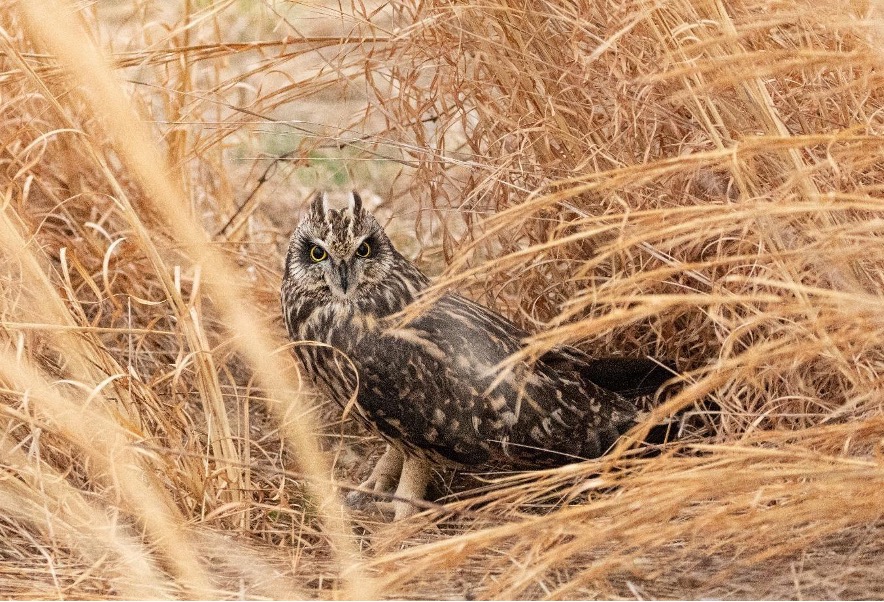
    However, most of the open fields on the property are now products of a two and a half century agricultural legacy and are low in diversity, dominated by non-native cool-season grasses and other exotic species. While these non-native grass dominated pastures are actually choice nesting areas for many declining grassland specialist bird species at OSGF (including Eastern Meadowlarks (Sturnella magna), Grasshopper Sparrows (Ammodramus savannarum) and Bobolinks (Dolichonyx oryzivorus), we are selecting areas carefully to convert to native meadow where these birds are not nesting to support other suites of species that benefit from native meadow conversion. These areas hold strong potential for ecological restoration and conversion to diverse native meadow habitat and have become high priorities for conservation for OSGF.  For example OSGF is also home to several threatened or declining bird species that depend on diverse grasslands and early successional plant communities. These species include Short-eared Owl (Asio flammeus), Northern Bobwhite (Colinus virginianus), American Kestrel (Falco sparverius), Savannah Sparrow (Passerculus sandwichensis), and Henslow’s Sparrow (Centronyx henslowii). Notably, the native meadows that OSGF has established over the years have become winter hotspots for Short-eared Owls and Northern Harriers (Circus hudsonius) and other birds.

    Short eared Owls overwinter at OSGF every year and prefer roosting in clumps of native bunch grasses and in our restored native meadows. Pictured here in native broomsedge (Anatherum virginicus, syn. Andropogon virginicus) and purpletop (Tridens flavus) clump. Photo by Josh Rector, OSGF.

    Can Sod Removal Replace Herbicides?

    As OSGF transitions away from its historic use of the land for hayfields and pasture, we have initiated several native meadow restoration projects over the past decade, totaling roughly 24 hectares (60 acres). These projects have primarily used conventional installation approaches, including herbicide application or chemical-free methods such as repeated tilling and plowing. The most common conventional method is to apply a broad-spectrum herbicide, such as glyphosate, at least 3 times to create enough bare ground to seed the meadow. But chemical herbicides are not always effective on some of the most aggressive weeds, they are not effective on controlling weed seeds in the seed bank, they can alsonegatively alter the soil, and pose safety concerns for humans and wildlife. Unfortunately the common organic alternative relies on heavy tillage which comes with its own major downsides, including increases in noxious non-native weeds and negative impacts on soil health.

    OSGF is particularly interested in restoration strategies that minimize or avoid the use of chemical herbicides. We are not alone. Across our region, many landowners are exploring herbicide-free approaches to meadow restoration. However, robust data on the efficacy of alternative methods are limited.

    For this project we decided to try sod removal or scraping. Although this method of site preparation is often employed on small scales for garden installation or lawn conversion, we found little data on this method for large scale restoration plantings. However, we were encouraged by the results of some restoration studies from Europe and California involving topsoil removal.

    Sod Removal Project Design: Methods, Site Preparation, Seeding, and Maintenance

    The sod removal trial was designed with two main goals: to test an understudied organic approach to meadow restoration site preparation, and to share our case study to encourage further exploration of the approach, and perhaps formal research comparing this method with more common approaches. 

    The trial took place on a 0.8-hectare (2-acre) parcel of a former horse pasture and hayfield. Baseline vegetation surveys showed it was dominated by introduced cool-season pasture grasses: tall fescue (Lolium arundinaceum), orchard grass (Dactylis glomerata), and Kentucky bluegrass (Poa pratensis).

    To track change over time, we established permanent vegetation monitoring plots across the site. Vegetation surveys were conducted at baseline (Year 0) before disturbance and twice per growing season following seeding (2024 = Year 1, 2025 = Year 2). Soil samples were also collected at baseline and in each subsequent year. In November 2023, we removed the top layer of sod using the bucket of a skid-steer at a depth of approximately two inches. Afterward, the soil surface was lightly raked to improve seed-to-soil contact. We hand-broadcast a native seed mix using pine shavings as a carrier at 13.5 kg per hectare (12 lb per acre) and seeded a temporary cover crop of 50% winter rye and 50% oats at 34 kg per hectare (30 lb per acre). The field was then lightly covered with straw using a straw blower. The seed mix included 28 regionally appropriate species, roughly 60% perennial grasses and 40% forbs. 

    Management during the first two years was intentionally light. In Year 1, the cover crop was flail-mowed once in the spring. Other interventions involved manual cutting or pulling of problem weeds, primarily biennial thistles (Carduusspp.), a single clump of Johnsongrass (Sorghum halepense) likely introduced during site preparation, and spot mowing of creeping thistle (Cirsium arvense). Additional mowing had been planned but proved unnecessary due to relatively low weed pressure. The most common weeds were the annual grass Setaria pumila, which we expected to decline naturally, and white clover (Trifolium repens), which remained low-growing and did not appear to inhibit germination of the native seed mix. In Year 2, the meadow was flail-mowed once in the spring, followed by two days of manual cutting of problem weeds—mainly biennial thistles—to prevent seed set during the growing season.

    Progress photos

    Year 0 baseline (left) dominated by cool-season pasture grasses with intermittent ruderal forbs. Site prep (middle & right) included sod removal with skid-steer, raking soil, hand seeding and covering with straw. Photos by Charlotte Lorick.
    Year 1 from left to right, July, September, October. A lot of bare ground in year 1 (left) and complete removal of non-native grasses with pioneering black-eyed susan and mistflower (middle) already blooming. Slower-growing perennials such as hoary mountain-mint were abundant as well (right). Photos by Charlotte Lorick.
    Year 2 from left to right, July, September, October. Abundant mountain mints and volunteer path rush dominating the wetter section with black-eyed susans in the background (left). Many perennials flowering and fruiting including the gray goldenrod and little bluestem (middle & right). Photos by Charlotte Lorick.

    Preliminary but Encouraging Outcomes 

    Because native meadows take time to establish, we want to emphasize that these observations are preliminary, with only two growing seasons documented so far. We will continue monitoring the site over the coming years and hope to share longer-term results as the meadow develops.

    Nevertheless, at this early stage, several encouraging patterns have emerged. Total native species richness approximately doubled in Year 1 and tripled in Year 2 compared to baseline conditions. Native forb richness increased even more dramatically, more than tripling from baseline to Year 2. At the same time, the three most abundant baseline species—all exotic cool-season grasses—dropped from nearly 100% cover in Year 0 to less than 5% cover by Year 2 when averaged across all survey plots. This is an important indicator that sod removal was extremely effective in removing existing non-native vegetation.

    Figure 6. Total number of species documented across all survey plots and including incidentals encountered outside formal surveys. Plants were designated native or introduced rank based VA Digital Atlas and given invasive rank based off : https://www.dcr.virginia.gov/natural-heritage/invsppdflist
    Figure 7. Total number of native forb species documented across all survey plots and including incidentals encountered outside formal surveys. 

    By the second year, 22 of the 28 species in the seed mix had germinated, with several species already fruiting in the first year. This is a highly successful germination result by year two. For comparison, some of our other meadow restoration projects that used herbicide did not have germination of many of these same species until after year 2.

    Species seeded. P = Present but not seen flowering or fruiting, F = Observed flowering or fruiting, 0 = Not observed. *A small number of Midwestern species were included to provide early visual interest and occupy space in the first few years, but are expected to fade as the native perennial species establish. ** This species was only seeded in a small drift to prevent overabundance.

    In addition to the seeded species, we documented a number of native volunteer species that were not part of the seed mix and were not recorded in baseline surveys. These included secund rush (Juncus secundus), path rush (Juncus tenuis), forked rush (Juncus dichotomus), sweet everlasting (Pseudognaphalium obtusifolium), green milkweed (Asclepias viridiflora), and sedges such as fox sedge (Carex vulpinoidea), straw-colored flatsedge (Cyperus strigosus) and globe flatsedge (Cyperus echinatus). The arrival of native volunteer species was an exciting bonus and good indicator that some of the legacy native seedbank was still intact and uncovered with sod removal.

    Lessons Learned and Key Takeaways 

    While this project was not designed as a formal experiment, the results have been striking and our hypotheses can inform further studies. Compared to other meadow restoration efforts attempted at OSGF, this planting has performed exceptionally well. It has required far less maintenance and weed management, and the native seed mix established with noticeably higher germination, flowering, and overall cover. The method was also particularly effective at suppressing the dominant cool-season grasses that often make meadow establishment so challenging.

    Before seeding, the site supported very little native diversity. And the few native plants that we did find were woody seedlings or ruderal species such as horse-nettle (Solanum carolinense) and pokeweed (Phytolacca americana). Following the restoration work, native forb diversity increased substantially, including the appearance of several volunteer species. Although non-native white clover became the dominant plant by percent cover, its low, spreading growth did not appear to suppress the emerging native seedlings.

    Of course, many factors could have contributed to this success. The seed was broadcast rather than drilled, which may have supported quicker germination. Careful site selection, existing vegetation conditions, and even the drought that followed seeding may also have played a role. Still, after more than a decade spent surveying and working in meadows across Virginia, this site stands out as one of the most rapidly successful restorations I’ve ever observed.

    Our working hypothesis is that scraping away the existing sod removed much of the weed pressure by removing the grassrhizomes in the uppermost soil profile and some of the associated seed bank. It also slightly reduced the organic matter and nutrient layer at the soil surface—conditions that may have favored native species during establishment by reducingweed pressure (which thrive in more fertile soil). Although a decrease in organic matter may not be ideal for overall soil health, the decline is likely temporary. A growing body of research suggests that over time, the increase in native plant diversity may ultimately improve soil health beyond what we observed at baseline. This is something we plan to monitor in the years ahead with continued soil sampling. 

    The primary drawback of this method is cost. Removing and relocating large amounts of topsoil requires significant upfront investment, which may be impractical in some situations and at larger scales. However, this material can be reused elsewhere on a property in areas not prioritized for restoration or offered as a resource to farmers or composting operations. It is possible that these higher initial costs could ultimately be offset by reduced long-term maintenance and weed control, but that would take further study to determine.

    Another challenge we encountered was sourcing local seed. Ideally, we would have used seed with documented provenance sourced from populations occurring in Virginia’s Northern Piedmont ecoregion, but the native seed supply chain still has significant gaps. To help address native seed shortages, OSGF has partnered with the Northeast Seed Network’s Mid-Atlantic Seed Partnership and the Restorative Landscape Coalition, a working group of botanic gardens, arboreta, seed banks, and allied organizations working to expand the availability of diverse, source-identified native seed for ecological restoration across the Mid-Atlantic and Northeastern United States. For this project we purchased seed from Ernst Conservation Seed in Pennsylvania and although not all seeds were sourced from our ecoregion, we were pleased that all their seed was from very nearby ecoregions and states in the Eastern US. 

    We hope this project encourages others to explore sod removal for meadow restoration. There is much practical experience still to be gained and there are many questions worth investigating in controlled experiments to compare this method with other site preparation techniques, test different sod removal depths, or variations in seed mix compositions.

    In the meantime, we plan to explore the further use of this approach in future restoration projects at OSGF. If you’re curious about the project or interested in collaborating, we’d be happy to connect.

    Please feel free to reach out to me at charlotte.lorick@osgf.org, and stay up to date with the outcomes of this project—and more of my work—at https://www.osgf.org/conservation-biodiversity and https://forgottenfloraproject.substack.com/.

    Acknowledgements: Special thank you to OSGF team Clif Brown, Josh Rector, Katharine Perkin, Sarah Krementz, Sam Terry and local contractor Virginica LLC for support of this project.

  • Native Plant Seeding Solutions for High Disturbance Highway Roadsides

    Native Plant Seeding Solutions for High Disturbance Highway Roadsides

    By Wes Bollinger

    Wes Bollinger completed his master’s in 2025 with Jeffrey Matthews lab in the Department of Natural Resources and Environmental Sciences at the University of Illinois. Wes is now a restoration ecologist in Chicago and runs his own restoration consulting business – Wildshape Ecological Design.

    The modern American landscape is crosscut by millions of miles of roadways. This land that was previously part of intact ecosystems has been converted into impermeable pavement and ditches, reducing the quantity and quality of habitat. Roadways also lead to habitat fragments, which can impede the movement of animals around the landscape. Highways in the Midwest (Illinois, Indiana, Iowa, Michigan, Minnesota, Missouri, Ohio, and Wisconsin) amount to more than 100,000 centerline miles (160,934 km) of roadway, and their unpaved right-of-way (roadside margins, medians, interchanges, etc.) total over 1,010,000 acres (445,000 ha) of unpaved land and soil. Highway roadsides typically experience high rates of disturbance due to wind, vehicle traffic and pollution from oil, microplastics from tires and litter, and often agricultural additives like herbicides, insecticides, and fertilizers. These lands and similar areas adjacent to roadways may be either burden or boon to the local ecosystem depending on management regimes and use of disturbance tolerant plant species. Here I recommend an approach to identifying appropriate native species for roadside vegetation, but this perspective may also apply to a variety of marginal greenspaces, such as residential sidewalk strips.

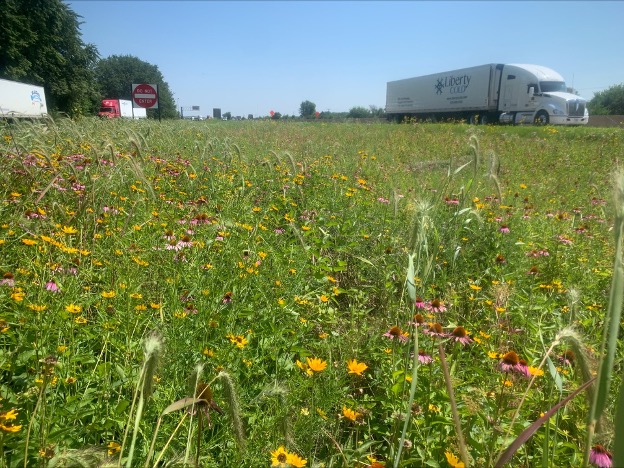
    Native species dominated restoration project on a highway roadside in Northern Illinois. Visible flowerheads are pale purple coneflower (Echinacea pallida), lanceleaf coreopsis (Coreopsis lanceolata), black-eyed Susan (Rudbeckia hirta), and Canada wildrye (Elymus canadensis). Photo by Wes Bollinger.

    If poorly managed, rights-of-way can become heavily invaded by nonnative plants like common reed (Phragmites australis), teasel (Dipsacus fullonumDipsacus laciniatus), and Johnsongrass (Sorghum halepense) among many others. These invasive species inhibit the native grasses and forbs and reduce ecosystem functioning. When heavily invaded, roadsides also cause economic impacts, functioning as source populations of weeds that can impact adjacent agroecosystems. Typically, roadsides are seeded with a mixture of Eurasian turfgrasses like Kentucky bluegrass (Poa pratensis) and red fescue (Festuca rubra). These nonnative grasses are comparatively short both in their above- and below-ground growth. Their short roots do not inhibit the growth of undesirable nonnative species, resulting in more mowing and maintenance than a native plant community to keep areas appearing ‘pristine.’ 

    However, roadsides can be restored with native species and managed using best practices to provide economic and environmental benefits to the region. Native-dominated vegetation can inhibit invasion, protect nearby remnant habitats, promote healthy soil, improve stormwater retention, absorb agricultural additives, sequester carbon, and provide forage and migration corridors for native animals. Though establishing native vegetation on roadsides may have these obvious benefits, there are many knowledge gaps pertaining to this practice such as how and what to seed in these areas to maintain the highest ecosystem fidelity and greatest economic benefits.

    We conducted research to determine which native species to seed on highways and the best practices for establishment and maintenance of these areas, with the goals of lowering overall maintenance costs by reducing the frequency of mowing needed to maintain these areas. This work was funded through grants from the Illinois and Indiana Departments of Transportation (DOTs) in conjunction with the Illinois Center for Transportation and the University of Illinois.

    I carried out three projects to gain empirical evidence on how to restore Midwestern roadsides with native species. Project 1) reviewed the native seeding practices of the DOTs of the Midwest to identify commonly seeded species and assessed establishment and management practices. For Project 2) we conducted experimental trials in Illinois comparing existing Illinois DOT mixes (non-native and partially native) with novel mixes that we designed to be more diverse and contain only native species. For Project 3) we conducted a field survey of existing native roadside plantings across Illinois and Indiana. Projects 2 and 3 sought to quantify the performance of individual species to determine which ones have the greatest establishment and persistence in roadside conditions, and what conditions lead to favorable native establishment generally.

    Project 1) Current native seeding and management practices

    My review of Midwestern DOT seeding practices revealed stark differences between DOTs among states, but some commonalities that are noteworthy for establishment and maintenance. Most interestingly was the disparity in native diversity between states. Michigan did not list any native species in their roadside manual, while Minnesota listed 108, the most of any Midwestern DOT. Further, Minnesota listed 11 majority or entirely native seed mixes and had the most comprehensive standard operating procedures for native seeding. Many mixes had average max heights under 3 ft (~1m) to avoid obscuring motorists views on roadsides; however, some states had mixes more than 5 ft (~1.5 m) for tallgrass areas and to increase the invasion resistance of an area by blocking light access with taller plants. Perhaps surprisingly, the states of Ohio and Indiana still list an invasive legume, crownvetch (Securigera varia), in mixes designed for erosion control.

    Number of majority native species mixes listed by Midwestern Department of Transportation in order of most to least native species (n) listed.

    Several establishment methods were common across states. Native seeds should be sown into low-fertility topsoil using a hydroseeding machine (a device that sprays a mixture of seed, water, and an organic adhesive agent directly onto soil) especially on sloped areas. Hydroseeders show remarkable success in soils with a seed bank containing invasive species, by avoiding tillage which can bring these seeds to the surface and increase their germination. Native straw can be applied as a mulch layer and may be harvested from areas scheduled for maintenance with mowing. Seeding should take place in the fall to allow for cold stratification. Local ecotype seeds are preferred to produce individuals with locally adapted phenotypes and avoid genetic contamination with seeds harvested outside the region. Mowing in the first year of growth is critical to reduce invasive species while native seedlings establish. Minnesota recommends three mows in year one, in May, June, and July, and a singular mow between July and August of year two. Controlled burning of these areas is ideal every 3-5 years but mowing at the same rate is also beneficial. 

    Project 2) Comparative performance of standard (mixed origin) and native-only mixes

    As a method of direct comparison between existing DOT seed mixes and a fully native roadside, I established four trials across Illinois to test differences in seeded, native, seeded native, and nonnative unseeded plant cover and richness, thus also providing information on invasion resistance between four popular mixes (DOT lawn, roadside, north IL, south IL) and four corresponding fully native plant mixes I designed to meet the same general criteria (low growing, disturbance, and salt tolerant) while also being higher diversity (from 9 to 38 species depending on mix). These experimental plots were seeded in November 2023 and surveyed in May and August of 2024. I observed that plantings differed in degrees of success, but every trial showed at least one significant positive result for the native planting over the nonnative IDOT mix. Native richness was higher for all sites by August of the first growing year, and native cover was higher for three of the four experiments. My trial of the IDOT Class 3 North Slope mix against a mix of 38 native species yielded significantly higher seeded cover by August 2024, and higher richness and cover of all native species in both May and August, suggesting that this high diversity mix competed very well against an existing DOT mix which was a combination of native forbs and nonnative grasses. Based on preliminary data collected during 2025, the native species are continuing to outpace the nonnatives in these mixes. 

    Of the native species seeded in these trials, those with the greatest record of germination in year one are lanceleaf coreopsis (Coreopsis lanceolata), common milkweed (Asclepias syriaca), partridge pea (Chamaecrista fasciculata), Illinois bundleflower (Desmanthus illinoensis), pale purple coneflower (Echinacea pallida), common evening primrose (Oenothera biennis), golden Alexander (Zizia aurea), blue vervain (Verbena stricta), and plains oval sedge (Carex brevior), which were present in the first year between 50% and100% of plots they were seeded in.

    Example paired plot before site prep and seeding (left) and August of the first growth year after establishment (right). IDOT mix on the left, native mix on the right of each image. Yellow flowers are golden Alexanders (Zizia aurea). Photo by Wes Bollinger.

    Project 3) Identifying the most successful native species from field surveys

    Lastly, I surveyed 34 native plantings on roadways across Illinois and Indiana at various distances from the road edge while collecting data on soil chemistry, surrounding land use, and soil compaction. Sites were more than two years old to avoid plantings early in their establishment. The purpose of this project was to identify which seeded species tend to germinate and persist, and what environmental factors contribute to higher native and invasive success. Of the 153 native species seeded in one or more sites, we found that 28 native species were observed in at least half of the planted sites and 84 species were never observed once despite being seeded in anywhere from one to 12 sites. Five species were found a total of 10 or more times each across all 34 sites: common milkweed (Asclepias syriaca), bee-balm (Monarda fistulosa), black-eyed Susan (Rudbeckia hirta), false sunflower (Heliopsis helianthoides), and switchgrass (Panicum virgatum). These five species along with Virginia wildrye (Elymus virginicus) were also the most observed species at sites where they were seeded. These surveys were not designed to be comprehensive given the size of many of these plantings and it is highly probable some other seeded species were present but unobserved.

    I found that native diversity and cover were generally higher further from the road edge, in areas with less salt, more basic soil, lower nitrogen and phosphorous, and a higher seed mix diversity. The opposite was true for nonnative cover and diversity. Richness of the seeded native mix was one of the strongest determinants of both diversity and cover. 

    In summary, we recommend that seed mixes should be hydroseeded at a rate of 60-70 seeds per square ft. (650-750 seeds per square meter) into low-nutrient, unfertilized soils, and covered in native straw. High-diversity mixes with no more than 10% legumes and an otherwise equal ratio of grasses to forbs should be used. Several species (but no more than 10%) should be early-establishing annual forbs for first year cover. Select species so that there is at least one blooming at all times of the growing season, favoring plants like golden Alexander (Zizia aurea) and native Alliumspecies for early spring blooms. Seed in as large an area as possible to reduce edge effects, consider cloverleaf interchanges as ideal locations for large projects.

    For maintenance in year one post-seeding, mow several times (May, June, July, potentially also August in warmer states) to a height of 6-8 inches. In year two, mow at least once between June and September. Controlled burning or mowing can be conducted as needed for persistent weed issues but generally are only required every three to five years. If mowing is needed, areas with low abundance of non-native plants can be harvested as native straw for future plantings.

    Native species with the best establishment record and widest usage are as follows and should be prioritized in high disturbance roadside plantings: Asclepias syriacaAsclepias verticillataBouteloua curtipendulaCarex breviorCarex cristatellaCarex hystericinaChamaecrista fasciculataCoreopsis lanceolataDalea purpureaDesmanthus illinoensisEchinacea purpureaElymus canadensisElymus virginicusEryngium yuccifoliumEupatorium perfoliatumHelianthus grosseserratusHeliopsis helianthoidesJuncus effususMonarda fistulosaOenothera biennisPanicum virgatumPenstemon digitalisPhysostegia virginianaPycnanthemum tenuifoliumRatibida pinnataRudbeckia hirtaSilphium laciniatumSymphyotrichum novae-angliaeSymphyotrichum puniceumLiatris pycnostachyaVerbena strictaVernonia fasciculataand Zizia aurea.

    Further details and methods can be found in the thesis here or by contacting the author at info@wildshaperestoration.com

  • Peter’s Mountain Mallow – Back on the brink as it approaches its 100th anniversary

    Peter’s Mountain Mallow – Back on the brink as it approaches its 100th anniversary

    By Ben Sapperstein, Quinlan Campbell, and Leighton Reid

    Ben Sapperstein and Quinlan Campbell are undergraduate researchers in Leighton Reid’s Restoration Ecology Lab at Virginia Tech.

    Peter’s Mountain Mallow (Iliamna corei) is among the rarest plants in the world. As of 2025, only five individuals remain in the wild, all of them clustered in a single population on a rocky ridge in southwestern Virginia. In the 98 years since its discovery, Peter’s Mountain Mallow has teetered on the edge of extinction and come roaring back like a phoenix from the ashes, but today its future is again uncertain.

    First discovered in 1927 by two botanists from West Virginia, Peter’s Mountain Mallow is a showy wildflower with light pink, hibiscus-like flowers. In full sun it reaches an impressive 2-m stature, with multiple stems covered in fuzzy, maple-like leaves. The blossoms are slightly smaller than the aperture of a coffee mug. They feature prominent columns of fused stamens tipped with yellow pollen. Uniquely, the flowers have no discernable scent.

    Peter’s Mountain Mallow (Iliamna corei) in full bloom during happier times. A key difference between this species and its midwestern relative the Kankakee Mallow (Iliamna remota) is that I. corei flowers have no discernable scent. Photo courtesy of the Massey Herbarium.

    The mallow’s habitat is a unique pine-oak woodland situated on a rocky ridge above the New River. The ridgetop is underlain by calcareous sandstone, which lends a richer feeling to this site than nearby ridges, which are much more acidic. For example, the plant community includes calciphiles like white-flowered leafcup (Polymnia canadensis), toothache tree (Zanthoxylum americanum), and American barberry (Berberis canadensis). Other species include honey locust (Gleditsia triacanthos) and northern leatherflower (Clematis viorna) – a distinctly rich ridgetop assemblage. Historically, the site had an open canopy that also supported sun-loving plants like Monarda and Coreopsis, but the canopy has apparently closed in and these are no longer evident.

    Changing vegetation structure at the Peters Mountain Mallow habitat. Left: an open canopy in the mid 1980s afforded a view of the surrounding landscape. Right: in 2025, there was nowhere that afforded such a view, suggesting that the canopy has closed substantially over the past ~40 years. Authors Quinlan Campbell and Ben Sapperstein (right) inspect an updated version of the herbivore exclosures first built by Johnny Randall (left), Mary Lipscomb, Tom Wieboldt, and others in the 1980s. Left photo by Tom Wieboldt. Right photo by Leighton Reid.

    Fire required

    Today, Peters Mountain is densely forested, but this may not always have been the case. Pine trees there bear fire scars showing that the mountain burned many times in the past. From the late 18th Century until the 1940s, Peters Mountain burned on average every second or third year, but after the 1940s fires abruptly disappear from the record. This reflects a change in federal policy towards fire suppression that affected forests throughout the United States.

    The loss of fire coincided with a decline in the mallow population. In 1927, when Perry Strausbaugh and Earl Core discovered it, they estimated that there were no more than 50 plants. Botanists in 1962 found the population little changed, but by 1985 the population was decimated – with only five individuals remaining.

    The US Fish and Wildlife Service added the mallow to the Endangered Species List in 1986, and a recovery plan was written by 1990. Yet in 1993 the population hit rock bottom with just three plants. Researchers at Virginia Tech and elsewhere mounted investigations to understand the cause of the mallow’s decline and clues about how best to assist its recovery.

    germination experiment in the early 1990s revealed a strong connection between fire and Peters Mountain Mallow. Jerry and Carol Baskin at the University of Kentucky tried to germinate a batch of mallow seeds, but only a tiny proportion (3%) grew. When they burned the seeds, the germination rate increased 13-fold, to 39%. The Baskins further increased seed germination by repeatedly heating the burned seeds to 80-90°C, ultimately achieving a maximum germination rate of 71% – nearly 24 times the baseline rate. They concluded that Peters Mountain Mallow forms a persistent seed bank and requires fire to break seed dormancy and trigger germination.

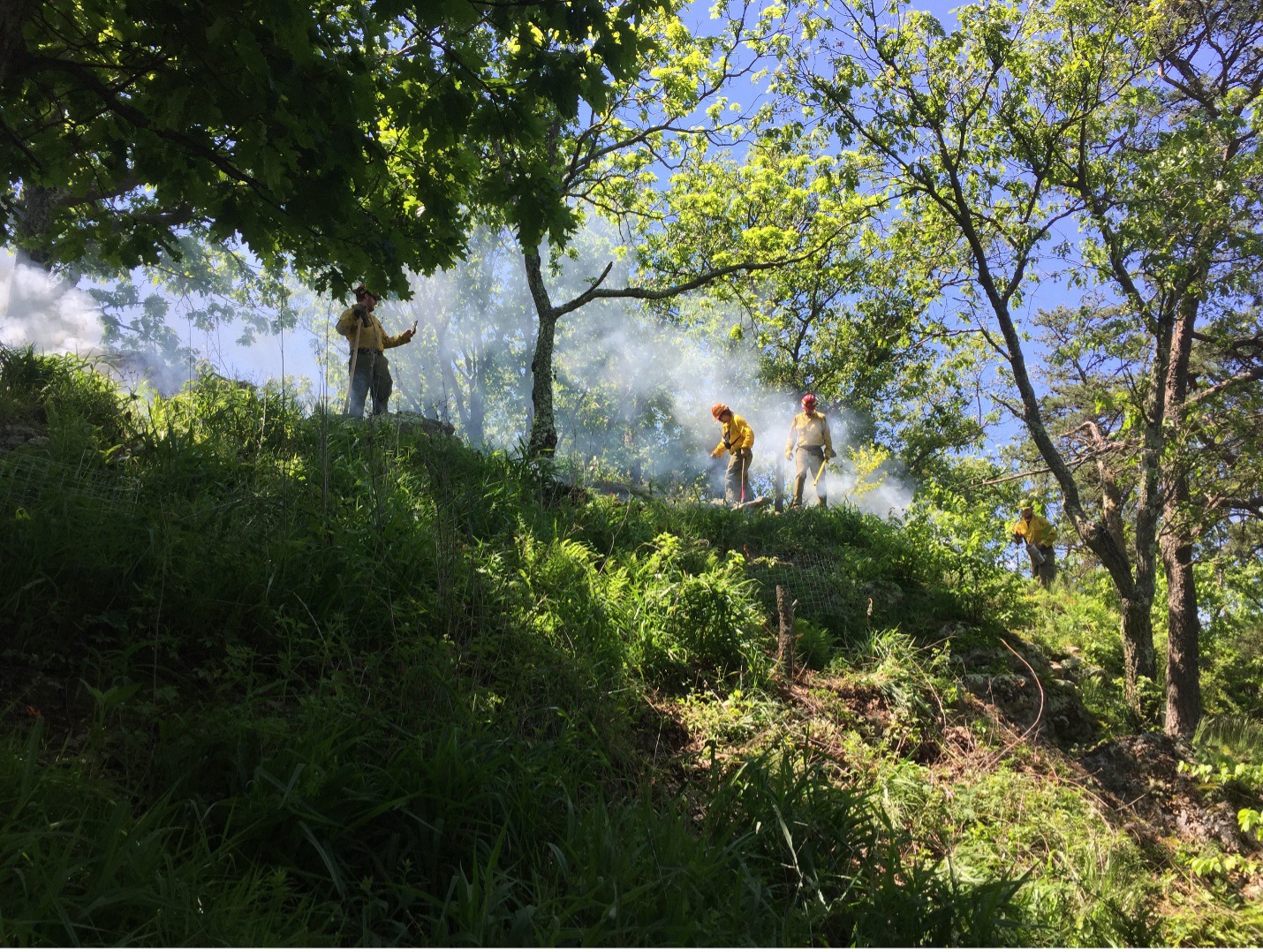
    A smoky prescribed fire on the crest of Peters Mountain in May 2017. Photo by Ryan Klopf.

    Population restoration

    These two lines of evidence – germination studies and fire history – suggested that a prescribed fire campaign would help reinvigorate the mallow population. A consortium of institutions rose to the challenge, including The Nature Conservancy and the Virginia Department of Conservation and Recreation. Burning the site was not easy. Fire crews hand-carried heavy tools, water, and drip torches off-trail up the side of the mountain. They created fire lines through steep, intact forest to prevent fire from spreading into the adjacent Jefferson National Forest.

    Initially, the ridgeline habitat was burned twice, once in 1992 and again in 1993. The return of fire led to a dramatic population increase as hundreds of seeds in the soil seed bank broke dormancy and germinated.

    In addition, the few remaining adult plants were caged to prevent wandering deer and other herbivores from eating them. Land managers removed trees, shrubs, and herbs with hand tools and herbicide to increase light availability. Two particular targets were white-flowered leafcup and garlic mustard (Alliaria petiolata) – an invasive species.

    As a further precaution, experimental populations were created offsite, including two at Virginia Tech. Some of the seeds from these garden plants were preserved frozen at the North Carolina Botanical Garden. Others were broadcast back into the habitat to await the next fire – and their opportunity to recruit into the population.

    In June 2004, lightning struck and a hot wildfire consumed the mountaintop. This conflagration followed two exceptionally dry years in which the Peters Mountain Mallow population failed to produce any fruits. The wildfire again stimulated germination of seeds in the soil seed bank, and a flush of mallows appeared over the next two years.

    Further burns in 2008, 2009, 2010, and 2011 assisted in growing the population from 74 individuals in 2005-2007 to an average of 110 individuals each year from 2012-2014. In May 2017, a multi-agency team burned the Peters Mountain Mallow habitat one last time. The vegetation was green, and the fire was smoky, but the population that year was robust. The team counted stems (an individual plant can have several) and found 345, down from 630 the year before. This was the last fire ignited on Peters Mountain before the COVID-19 outbreak. There has not been another one since.

    Reinvigorating research

    On a steamy morning in July 2024, a small group of ecologists, botanists, and land managers climbed the mountain to see how Peters Mountain Mallow was faring. One of us (Leighton) accompanied others from the Massey Herbarium, The Nature Conservancy, and the US Fish and Wildlife Service. What we found was disappointing. The mallow flowers we hoped to see were shriveled and dry from a prolonged drought. Worse, there were only a few of them. We did not do a thorough census, but this trip sparked the notion that the mallow required renewed attention.

    Drought-stressed flowers of Peters Mountain Mallow in summer 2024. Photo by Leighton Reid.

    For many years, researchers at Virginia Tech were heavily invested in this species – measuring the population, collecting seed, growing plants, performing genetic and physiological studies – even carrying jerry cans up the mountain to water plants during droughts. But this involvement waned as faculty retired and students moved on to other things. It seemed like a good time for a new wave of researchers to join the effort. Moreover, students in the newly-formed Ecological Restoration major had created a Society for Ecological Restoration student association (SER-VT) and were seeking a local project.

    Our first action was to formally survey the population. Last July, we laid out a transect to measure and map every individual. It did not take long. Since the last population inventory in 2018, the world’s only population of Peters Mountain Mallow has declined from 155 stems to just ten, representing only five individual plants. This is the same number of plants that there were when the species was first listed on the Endangered Species Act in 1986.

    What’s more, only two of the plants were large enough to produce flowers this year, and the flowering times were misaligned so that one plant was setting flower as the other was senescing. Peters Mountain Mallow requires cross-pollination, so no seeds were produced last year.

    While disappointing, this information is valuable for understanding the species’ boom-and-bust population dynamics and informing land managers about the acute need to bring fire back onto this landscape in the near future.

    Looking backwards to move ahead

    We know from the pine tree study that Peters Mountain burned frequently over the past two hundred years, but presumably the mallow has lived here for much longer. In what sort of environment did it evolve? Another undergraduate researcher, Nisha Polk, is using a different approach to construct an older, precolonial environmental history – and a potential reference for land managers to emulate.

    In October, Nisha climbed the mountain with Dr. Rachel Reid, a conservation paleoecologist in the Virginia Tech Geosciences Department. Nisha and Rachel inserted PVC tubes into the ground to collect soil cores from small pockets of earth between the boulders that make up the ridgetop. The soil is thin, no more than 25 cm, but it could contain organic matter from as much as 2,000 years ago.

    Over the next few months, Nisha will analyze the carbon isotopes from the soil organic matter to learn how old the soil is and what kinds of plants produced it. To age the soil, they will use carbon dating, which estimates when the soil was formed based on how much of the radioactive carbon-14 isotope is present. Then they will study the ratio of stable carbon-13 and carbon-12 isotopes to learn about past vegetation. In essence, lower ratios indicate plants that use a C3 photosynthetic pathway, including most broad-leaved plants that make up the temperate forests in our region, while higher ratios indicate plants that use a C4 photosynthetic pathway, such as warm-season grasses adapted to open grassland, savanna, and open woodland habitats. In other words, carbon isotopes can tell us what the predominant ecosystem was here over hundreds or thousands of years.

    Virginia Tech Ecological Restoration majors Nisha Polk (left) and Alex Owusu-Sampah (center) carefully collect a soil core on Peters Mountain with conservation paleoecologist Rachel Reid. Photo by Leighton Reid.

    A bright future?

    While Peters Mountain Mallow is again in the single digits worldwide, there are reasons for hope. First, the species produces a robust seed bank that may revitalize it when the site is next burned (hopefully soon). Second, the North Carolina Botanical Garden maintains a collection of its seeds – a back-up if the worst should happen. Third, the habitat is owned by The Nature Conservancy, whose land managers are committed to ensuring the species’ persistence. Fourth, the species is protected by the US Endangered Species Act, a 1973 law that is estimated to have prevented the extinction of more than 70 species.

    Finally, Virginians should have hope for the future of this botanical crown jewel because a new generation of undergraduate researchers is engaged, bringing fresh energy and insights to the cause, documenting the species’ ups and downs, and uncovering its natural history. Over the next five years, we envision an undergraduate-led research agenda that includes monitoring the mallow population, using paleoecology methods to learn about the long-term environmental history of the species’ habitat, and refining our understanding of its ecological niche.

    The New River cuts through Brush Mountain in southwest Virginia, just a bit upstream from Peters Mountain. Photo by Leighton Reid.
  • Under the canopy: how light shapes oak woodland restoration

    Under the canopy: how light shapes oak woodland restoration

    By Rory Schiafo

    Rory Schiafo is a PhD Candidate in Plant Biology and Conservation at Chicago Botanic Garden and Northwestern University. All images are taken by the author. rschiafo@u.northwestern.edu 

    In the Midwestern United States, oak woodlands are a diverse ecosystem characterized by tree densities intermediate between open grassland and closed-canopy forest. These woodlands are typically dominated by oaks (Quercus spp.), forming a single layer of overstory trees with a few scattered hardwoods like hickories (Carya spp.) and elms (Ulmus spp.) throughout. The midstory layer is sparse, but the herbaceous understory at ground level is dense and highly diverse. The loosely scattered oaks create canopy gaps with ample sunlight that provide habitat for sun-loving prairie species such as wild bergamot (Monarda fistulosa), as well as shaded areas containing forest species like bluestem goldenrod (Solidago caesia). Some plants in oak woodland understories, like heart-leaved skull cap (Scutellaria ovata) and starry campion (Silene stellata) are specialists uniquely adapted to these patchy conditions. This variation in canopy cover produces a remarkably unique and species-rich ecosystem where dozens of plant species can exist within just a few square meters. 

    Somme Woods, Forests Preserves of Cook County, is a beautiful, restored oak woodland that clearly shows the single layer of canopy trees, with a diverse and vibrant herbaceous understory community.
    Oak woodland species heart-leaved skull cap (Scutellaria ovata) adapted to the dappled and patchy sunlight found in this ecosystem. 
    Starry campion (Silene stellata) are adapted to the dappled and patchy sunlight found in this ecosystem. 

    Once widespread, the occurrence of open woodlands has been significantly reduced due to human expansion and land use changes. The oak woodlands that remain have been radically altered by factors such as fire suppression and invasion by non-native shrub species. Oak woodlands now typically exist in a degraded state, with closed, dense canopies of non-oak trees such as maples (Acer spp.), a dense shrub layer of non-native species, and an almost absent understory. As a result, many of the species in woodland understories are threatened or already missing from the landscape. 

    Ecological restoration aims to recover biodiversity by returning oak woodlands to a structure more similar to what was found before degradation. Restoration efforts often include a combination of techniques, but an important component is the removal of undesirable trees, particularly non-oak trees, to open the canopy and reintroduce the gradients of light that were once a vital part in maintaining diversity in the woodland understory. As a graduate student in Plant Biology and Conservation at Northwestern University and the Chicago Botanic Garden, my PhD thesis examines the importance of these gradients of light and the role that a changing canopy structure plays in the restoration of plant biodiversity in oak woodland understories. My three graduate research projects investigate 1) how understory plant diversity changes with canopy cover over multiple decades of management, 2) how canopy cover and addition of native species with seed mixes interact to influence understory diversity, and 3) how shading and order of arrival shape competitive dynamics among understory herbs.

    Project 1.

    I first wanted to understand how shifts in woodland canopy over the last thirty years have affected understory composition and diversity. Did increases or decreases in canopy coincide with changes in the diversity (i.e., number) of plant species in the understory? Further, were there other factors that might have influenced this relationship between canopy and the understory? To address these questions, I used data collected by the Illinois Natural History Survey’s Critical Trends Assessment Program. This dataset included 120 woodland sites scattered throughout Illinois. Botanists have meticulously surveyed these sites every five years for the past thirty years. During each survey, they recorded detailed information such as all plant species in the canopy, midstory and understory. With this dataset, I was able to build statistical models that characterize the relationship between changes in canopy and changes in the diversity of species in the woodland understory over the last thirty years. 

    I found that as forest canopies became denser, the diversity of plant species in the understory declined. In contrast, when woodland canopies opened, similar to what often occurs during restoration, understory plant diversity tended to increase. However, that increase in diversity wasn’t always guaranteed. It was most pronounced when non-native shrub species in the midstory were either absent or present in very low numbers. In contrast, sites with a high occurrence of non-native shrubs were less likely to experience increases in diversity with canopy opening. This has important implications for how we approach tree removal in oak woodland restoration. It suggests that opening the canopy is most effective at boosting understory diversity when non-native shrubs are managed first. This study also reveals thirty years of canopy closure and resulting loss of species diversity in the understory, highlighting the urgent need for interventions that restore the canopy structure required to support this diverse ecosystem. 

    Project 2.

    Recognizing that canopy structure can profoundly influence understory diversity, I set out to explore how canopy openings might interact with our other restoration practices in oak woodlands. I was particularly interested in whether canopy openings influenced understory diversity in oak woodlands undergoing native seed additions, just as they would in woodlands without such interventions. Native seed additions are commonly used in restoration efforts to reintroduce species that have been lost from the landscape and to help overcome dispersal barriers imposed by habitat fragmentation. However, while native seeding is widely used to increase diversity and cover of native species, these seeded restorations may behave differently than restorations without native seed additions. It is possible that environmental factors such as light availability become less influential in driving diversity when species are being deliberately reintroduced as part of the restoration process. 

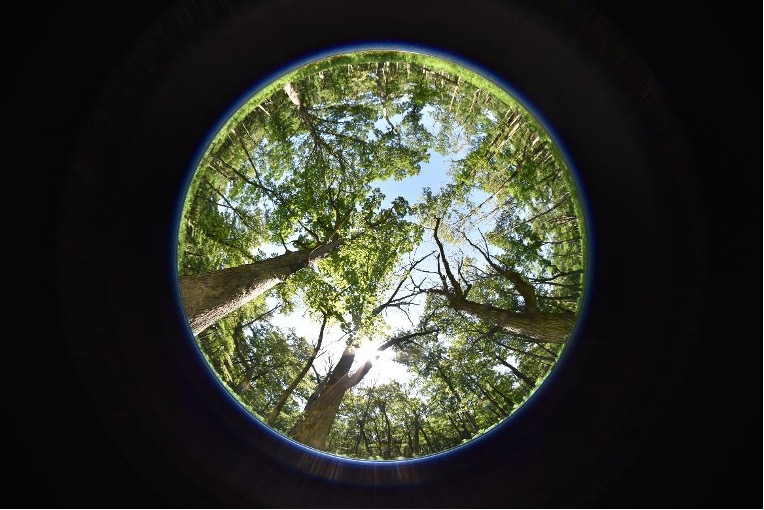
    To address this possibility, I conducted surveys across seven woodland restorations sites in the Forest Preserves of Cook County, Illinois. These included both sites that had received supplemental seeding and those that had not. I used 1 m2 plots to systematically identify and record the ground-layer plant species, measuring how much of the understory each one covered. I was seeking to get a clear picture of the diversity, that is how many species there were in each plot, as well as the cover of each species. In total, I identified roughly 170 species. I also took hemispherical photographs with a fish-eye lens and digital camera. This allowed me to measure how open the canopy was above each plot and gave me a good understanding of how much light was reaching the understory plants. 

    A birds-eye view of one of the 1 m2 plots used to survey the plants in the understory of seven restoration sites in Cook County, Illinois. 
    Northwestern University student intern, Kyndall Hadley, with a survey plot and the digital camera set-up used to capture hemispherical photos in the field. 
    A hemispherical photo captured above a survey plot. These photos were then processed with a software package specifically designed to calculate metrics of canopy openness. 

    I found, once again, that the canopy was important for driving dynamics in the understory. Canopy openness was positively associated with the cover of native species, meaning that areas with more open canopies had a higher cover of native plants. However, the relationship between canopy openness and the diversity of native species depended on whether the site had been seeded. In restorations that had not received seed additions, it seemed that native diversity increased with more open canopies. However, in seeded restorations, canopy openness had no clear effect on native diversity. The reasons for this pattern aren’t entirely clear, but it’s useful to recognize that seeded restorations may respond differently to canopy openings compared to unseeded ones. This underscores the need for further research into how various restoration strategies, particularly the use of native seed additions, influence plant diversity in woodland understories.

    Project 3.

    Finally, I wanted to explore how light availability might shape the way plants compete with each other in restored woodland understories. Competition, which can have negative effects on plants, occurs when they try to capture the same essential resources, such as light. In ecology, it is typically thought that the more resources there are in an environment, the stronger the competition between species will be. Thus, plant competition in woodlands may depend on how much light reaches the understory. To complicate things, the order in which species ‘arrive’ and have access to that light can also have a strong influence on competition between species. Referred to as priority effects, a species that arrives early—by dispersing, germinating, and beginning to grow before the other—may gain a competitive advantage. 

    To better understand how plants compete in woodlands, I tested whether competition was stronger with more light and whether arriving early gave species an advantage. I set up an experiment with 180 pots, each containing twelve native plant species commonly used in woodland restoration. These plants competed under three light levels, and I varied the order in which they arrived. The results were striking. Competition had the strongest negative impact on plant growth when light was abundant. I also found that when a species arrived twenty-four days before its competitors, it performed much better than when all species arrived at the same time. Interestingly, this early-arrival advantage was even more pronounced under high-light conditions compared to low light. Overall, this work helps us better understand the factors that shape species growth and success in woodland restorations. With this knowledge, we can continue improving restoration strategies that support diverse, resilient oak woodland ecosystems. 

    Twelve species were planted together in a single pot so I could measure competition. I also manipulated the order that each species arrived in the pot. This picture was taken when the final plants were added to the pot. There were a total of 180 of these pots throughout the whole experiment. 

    I used shade cloth to manipulate light in my competition experiment. 

    Here, you can see the moderate (30% shade) and low (80% shade) light treatments .
    Here, you can see the high light treatment (no shade cloth).
    Harvest Day! At the end of the growing season, I, with the help of some awesome interns, harvested each plant growing in these pots, separated them by species, dried them and then measured their biomass. This helped me calculate how competition affected each species’ growth under different conditions. 

    Together, these studies reveal how crucial canopy structure is for shaping plant diversity in oak woodlands. Light availability not only influences diversity and native cover but also mediates competitive interactions and priority effects. As restoration practitioners work to restore and protect biodiversity in this threatened ecosystem, understanding the complex interplay between canopy trees and understory diversity will be vital. My research highlights that while canopy thinning is a necessary tool to restore biodiversity in woodlands, there are areas to refine our knowledge and approaches to this restoration practice. In doing so, we can better ensure long-term resilience of oak woodland ecosystems and the many diverse species they support. 

    Results from the three studies will soon be submitted for publication to peer-reviewed journals. For questions about this research, please contact Rory at rschiafo@u.northwestern.edu.

  • Natural History and Ecological Restoration in the Madrean Mixed-Grass Prairie of Southeastern Arizona

    Natural History and Ecological Restoration in the Madrean Mixed-Grass Prairie of Southeastern Arizona

    By Matilda Essig

    Matilda Essig is an artist and agriculturalist who has lived in the grasslands of southeast Arizona since 2006. She uses visual art, hands-on restoration and public outreach to express the resilience of wild ecosystems. matilda@mindspring.com

    Blue grama. Digital capture, archival inkjet print by Matilda Essig. Unless otherwise indicated, all images are by the author.

    Nineteen years ago, I began a project to restore the native diversity of the grasslands on a badly damaged 5-acre residential parcel in southeast Arizona, in a region locally known as the Apache Highlands Grasslands, a.k.a. Madrean-Mixed Grass Prairie to botanists, naturalists and biogeographers. My journey was informed and inspired by landscape stewards throughout the American west – ranchers and conservation groups alike. My mission included restoring not just the amazing diversity of grasses in the region, but also using my experiences, expressed through the arts, to help restore the role of art as a visionary vehicle within our culture. Visual beauty, ecological, and spiritual beauty – we need to get in touch with all of them again.

    San Rafael Valley Overview. A monsoon cloud unleashes its fury over Saddle Mountain, headwaters of the Santa Cruz River.

    In 2008, I wrote an article for Ecological Restoration, with my friend, and then-editor Mrill Ingram, wherein I described the conditions and biological makeup of my land. This article, Portraits of Grasses, gave an in-depth description of the biological ingredients I had to begin with, and also the artistic process I learned to use to make direct images from nature, using digital technology.
    At the invitation of my friend James Aronson, I am delighted to share an update here, in NHER, mentioning the methods that worked and failed, and highlighting  native grass species, and sharing how my portraits of these grasses engaged new audiences. What I have borne witness to in my brief tenure as an artist and restoration steward on my small tract of land has given rise to meaningful dialogue across the spectrum of possible audiences, through exhibitions, residencies, studio visits, and the artist’s book that I produced, Native Grasses of the Apache Highlands, which is now available for use in five university library special collections.

    Suite of five grasses. Blue grama (Bouteloua gracilis), Hairy grama (Bouteloua hirsuta), Little bluestem (Schizachrium scoparium), Sideoats grama (Bouteloua curtipendula), and Rothrock’s grama (Bouteloua barbata var. rothrockii). Digital capture, archival inkjet prints.

    The Apache Highlands grasslands – also known as the Madrean Mixed-Grass Prairie, which derives its name from The Madrean floristic region (named after the Sierra Madre Occidental) that occupies the arid and semiarid areas in the southwestern US and northwestern Mexico, at the northern edge of the subtropics. Sandwiched between huge basins and the rocky mountains, it’s a biodiversity hotspot. The summer monsoon delivers the most annual precipitation and is the primary (warm) growing season for the grasses. The San Rafael valley, which spans the US/Mexico border, is home to the southwestern-most intact stand of Shortgrass prairie in North America.

    The Apache Highlands Ecoregion, X marks Matilda’s property. Map by Robert Bailey, The Nature Conservancy.

    According to the late, great desert ecologist Tony Burgess, who passed away in 2022, these were the most characteristic native grasses in my region: Black grama Bouteloua eriopoda, Blue grama, Curly-mesquite grass – Hilaria belangeri, Vine-mesquite grass – Panicum obtusum, Cane beardgrass – Bothriochloa barbinodis, Purple threeawn – Aristida purpurea, Poverty three-awn grass – Aristida divaricata, Plains lovegrass – Eragrostis intermedia, Giant sacaton – Sporobolus wrightii and Arizona cottontop – Digitaria californica

    Over the years, I’ve come to recognize many more grasses, some of which I’ll mention below. Sadly, a plethora of invasive grasses and other plants now compete with the natives on my property which is in a subdivision carved out of what was, until quite recently, open grassland.

    Sideoats grama. Digital capture, archival inkjet print.

    The slope is gently north facing, with the buildings situated on the flat area of the ridgetop in the SE corner of my 5-acre property. It has fenced pastures which had been overgrazed by an equine for 20 years, resulting in an abundance of amaranths (Amaranthus spp.) and various kinds of ‘tumbleweeds’ including Salsola spp. (Chenopodiaceae). 

    Among the invasive grasses I had to deal with were Johnson grass (Sorghum halepense), and Lehmann’s love grass (Eragrostis lehmanniana), Yellow bluestem grass (Bothriochloa ischaemum), and the infamous, cosmopolitan weed Skutch grass or Bermuda grass (Cynodon dactylon) that had been planted by previous owners for lawn and equine grazing. My first steps to control the invasives, and promote recovery of the pre-existing flora and vegetation, began with cattle and rotational grazing practices that I learned from neighbors. That was quite successful in knocking back the swarms of amaranths at the start of the monsoonal growing season, thereby allowing the slow-growing grasses to gain a foothold. While I had wanted to work with goats in subsequent years, I chose not to undertake the labor-intensive fencing that would be required to control them and their voracious grazing habits. The cattle had been easy to contain with single strand aluminum wire and a solar charged battery for electricity.

    Five borrowed cattle – a British white park bull, and four criollo heifers – feasting on amaranth and other invasives at the start of the rains and growing season, early July.

    Instead, I invested in a high-quality mower and did a lot of pulling by hand of all the invasive species that I could. In the first few years, my progress was great – eliminating the amaranth completely around the buildings and well into the pastures, and completely extirpating the tumbleweeds, without any chemical assistance. Instead, I set out to learn about the root strengths and soil moisture of each invader species, so as to be able to pull each plant at the most appropriate moment in order to remove the entire root system with minimal soil disturbance. Working to reduce the invasives, I also learned about the natives, as I watched them rebound in the absence of competition.

    Sensing and observing the effects of my role as a player in this ecological equation gave me great inspiration for creating the artworks – to celebrate the grass species that I was learning about, and to share the story of healing the landscape. By healing, I mean restoring the native grasses which I knew, in turn, would be nourishing soil health and ecosystem health. 

    The Grasses

    Out of the more than 100 native Poaceae in the Apache Highlands, the most prevalent and iconic is Blue grama, a recognized keystone species and, now, a keystone also in the communications programs based on my artwork. It was the favorite of my first local mentor, senior rancher John Donaldson, who first taught me about the role of grasses in assisting the recovery of soil and watershed health on the nearby Empire Ranch, now the Las Cienegas National Conservation Area. This species has persisted and rebounded from the impacts of overgrazing on my property, and is notably much beloved throughout the interior western USA and northern Mexico, for its role  as a pillar of many kinds of grassland communities, and because it is palatable and provides high protein content for feed for livestock.

    I had immediate success in portraying the character of this species, and through the strong imagery, it served as a common denominator in rangeland discussion amongst the agricultural communities with whom I met at conferences. In particular, the Quivira Coalition’s 2009 conference on the theme of American conservationist Aldo Leopold was a great opportunity to engage in the dialogue about the role of beauty in land conservation. As I mentioned above, visual beauty, ecological beauty and spiritual beauty are all players, so to speak, in the determination of future land usage decisions based on human values. Sideoats grama, Rothrock’s grama, and Hairy grama were all present and easy to portray, with their vertical postures and  showy inflorescence, but Black grama was a far greater challenge to find and portray, with tiny its slivers of seed head, and prostate growth patterns.

    Black grama. Digital capture, archival inkjet print.

    I’d searched for this species after hearing Brandon Bestlemeyer, ecologist and research leader at the Jornada Experimental Range, describe it as a critical species in the future of grasslands conservation. Many such inspiring collaborative conversations came about in the context of annual science meetings convened by the Malpai Borderlands Group, whose legendary accomplishments in bringing ranchers and conservationists together have resulted in biological protection for vast tracts of open range grasslands in the Chihuahuan desert. My friend Ben Wilder, a biogeographer and communicator with the Next Generation Sonoran Desert Researchers, chose the image of Black grama to draw an audience for a fundraising event for the UA Herbarium and the vast resource of its collections. The image spoke to them about spirit and resilience.

    While my original focus had been to learn everything I could about how and where the individual grasses grow, the point of understanding multiple species was to illuminate the strength that biodiversity creates within the fabric of ecological communities. When the Land Institute, the Kansas-based agricultural research organization working to develop sustainable food crops, invited me to present as Artist for the 30th annual Prairie Festival (2010), they wanted an image for the theme of perennial polyculture. This challenged me to portray a group portrait that was inspired by a series that I collected, just as it occurred, from a pasture of a neighboring rancher, Rukin Jelks, who practiced holistic management methods: a mature rotational cell system designed byAlan Savory thirty years ago.

    Perennial Polyculture. Hairy grama, Plains lovegrass, Sideoats grama, Poverty three-awn, Bristle wolf’s-tail (Lycurus setosus), and the naturalized Afghani bluestem (Bothriochloa bladhii). Digital capture, archival inkjet print.

    The Audiences 

    The audiences at conservation meetings and the Prairie Festival knew the subject and shared my love for it. I believe they even felt their passion for land and prairie conservation was being recognized and honored in a new way. At traditional art venues —museums and galleries —the subject matter was largely novel, reaching audiences in different, more intuitive ways. The resounding response was, ‘I will never look at grasslands the same way again’. The diversity of plant characters also brought out the diversity in my audience:  some viewers related to chaotic images like Tanglehead grass (Heteropogon contortus) whereas others were repelled by it.

    Tanglehead grass. Digital capture, archival inkjet print.

    The audiences of the fine art world were ripe for the authenticity of nature based values, a light of climate change and then the pandemic. At Tucson Museum of Art, (2013) I worked with the curator to produce a large group exhibition called “Desert Grasslands”, which offered side events such as art-science panel talks about rangeland conservation, Buffelgrass (Pennisetum ciliareformerly calledCenchrus ciliaris),  the noxious and highly flammable invasive that now threatens the Sonoran desert. 
    At the Amerind Museum, I had a solo show for Native Grasses of the Apache Highlands,(2016) and was able to engage with Hopi and Navajo tribal members in a shared sense of spiritual and creative source in the natural world. At the Willa Cather Foundation my solo show focused on comparing the prairie grass characters to Cather’s meticulous human portraits of pioneer immigrants – studies in adaptation and resilience. At the Tucson Airports’ Center Gallery, in 2019, I was able to offer the work to the broadest audience yet, and also use the setting to meet with visiting classical composer Emerson Eads to discuss collaborative musical intentions, and also Indigenous author and botanist Robin Wall Kimmerer.

    Over Time

    While an extreme weather event in 2021 – 3 inches (75 mm) of rain in one hour – reversed years’ of hard work in a single episode, leading to the germination of an ‘avalanche’ of amaranth seed that had likely lain dormant for more than a decade, the subsequent two years of sustained drought allowed a favorite native grass of mine to appear – Sand dropseed (Sporobolus cryptandrus)- in uncanny abundance. Additionally, as I grew to learn the songs of grassland birds, my restoration priorities expanded to include the habitats of the avian species that also thrived from my work, Meadowlark and Scaled quail in particular.  The meadowlark’s song is both ancient and evolving in this landscape, as we have eastern, western, and also a new Chihuahuan subspecies recently identified by its song. The invasive plants have also inspired their own folio, currently underway.

    In conclusion,  my intentions moving forward are to work with the folios in university settings, to challenge our culture-driven perceptual paradigms of the natural world, engaging the next generation with the inspiration of stewardship thinking, both from conceptual understanding through the stories of these many land managers, and also to inspire them to see their own potential hand in the process, to experience the role of healer, and to know that no matter how small or large a parcel or landholding they may be working on, five acres or fifty thousand, every gesture makes a difference. To that end, I look forward to further opportunities to collaborate with EHN and its partners, to help inspire acts of ecological restoration, and to offer the arts as a catalyst for all.

    Matilda on Flecha, looking north across the San Rafael Valley, headwaters to the Santa Cruz river. Saddle Mountain and the Santa Rita Mountains in the background. Photo by Zay Hartigan.

    I would like to express my gratitude to James Aronson and Lauren Shew for editorial and technical assistance in creating this post.

  • Using a 130-year-old dataset to inform ecological restoration decisions on Mount Desert Island, Maine, USA

    Using a 130-year-old dataset to inform ecological restoration decisions on Mount Desert Island, Maine, USA

    By: Tate Bushell

    Tate Bushell is the Director of Natural Lands with the Mount Desert Land & Garden Preserve on Mount Desert Island, Maine, where he cares for ~1,400 acres of beautiful spruce-fir forest.  tbushell@gardenpreserve.org

    The Mount Desert Land & Garden Preserve’s mission is to conserve and share the beauty of our historic lands and gardens, which it does by managing three historic gardens and approximately 1,400 acres (567 ha) of natural land on Mount Desert Island, Maine for ecosystem health. Also, as needed, we undertake restoration interventions, particularly in our post-agricultural meadows. 

    Mount Desert Island (‘MDI’, ~60,000 acres, 24,280 ha) is well known for its breathtaking, rugged coastal scenery and for holding the largest unit of Acadia National Park (~30,500 acres, 12,343 ha), one of America’s earliest (1916) and most visited (~4 million visitors/year) national parks. The two other units of Acadia National Park include part of Schoodic Peninsula (2,366 acres, 957 ha) and part of Isle au Haut (2,900 acres, 1,200 ha).  The Garden Preserve’s natural lands are directly adjacent to Acadia National Park and mirror it ecologically; both are covered by spruce-dominated hills (primarily red spruce, Picea rubens), streams and wetlands.

    Acadia National Park (shown in green on map) comprises three primary units. Mount Desert Island is home to the park’s largest unit. The yellow star shows the location of the Land & Garden Preserve’s natural lands (1,400 acres, 567 ha).  Map courtesy of US National Park Service.

    As the Land & Garden Preserve’s Director of Natural Lands, I am charged with conserving the ecological integrity of the natural lands while ensuring safe public access. Our ten miles of trails and ten miles of carriage roads see over 75,000 visitors per year. A twenty-acre, post-agricultural meadow sits at the heart of the natural lands, and from the nearby carriage road the meadow provides picturesque views of the surroundings, making this a popular destination for walkers, dog walkers, horseback riders, and bird watchers.

    A ‘carriage road’ sits next to the 20-acre meadow. Because of its views, this road is a draw to thousands of walkers and nature enthusiasts. (This and all other photos are by the author unless otherwise indicated.)

    I have focused management on Garden Preserve’s meadow because early successional habitats are uncommon on Mount Desert Island (Acadia National Park manages less than 100 acres of upland meadows on MDI) and because of the presence of invasive glossy buckthorn (Frangula alnus), invasive reed canary grass (Phalaris arundinacea), and some other weedy, nonnative plants. To establish a firm understanding of the plant community I commissioned a wonderful field botanist to conduct a survey of the meadow’s vascular plants (completed in 2020). From 2019-2021 we eradicated the canary grass from three monoculture patches (totaling 2,500 ft², 232 m²) and began restoring the area left behind.  We have used a 130-year-old dataset – Flora of Mount Desert Island, Maine, published in 1894 – to better understand changes in the meadow’s plant community, and help us select a plant species list for our ecological restoration work. I also visited approximately 15 different meadows – ranging from 2-60 miles (3.2 km – 97 km) away – to develop a loose reference system. The goal of this restoration work was to 1) ensure long term eradication of reed canary grass and, 2) establish an enduring native plant assemblage that could provide habitat and other ecosystem benefits to the meadow’s fauna. I began with a conservative approach to ‘native’ and selected species according to this hierarchy:

    MDI>Hancock County>Maine>New England. Most species we use in this restoration naturally occur in Maine.

    Aerial photo of a portion of the Land & Garden Preserve’s meadow. Two patches of invasive reed canary grass are visible: center left (with hole in middle of patch), and center (some soil is exposed). Once the grass was eradicated, we restored the areas with native plants. Photo credit: Allison Bourke. 

    The 1894 Flora of Mount Desert Island, Maine by Rand and Redfield        

    The Champlain Society was a group of scientifically minded Harvard students who, starting in the early 1880’s, dedicated their summers to learning and documenting MDI’s natural history. Student Edward L. Rand headed up the society’s botanical studies and, along with John C. Redfield, published the Flora of Mount Desert Island, Maine in 1894. The flora is incredibly comprehensive, including nearly 1,500 species of vascular plants, marine algae, bryophytes, and lichen. Remarkably, MDI represents less than 1% of the state of Maine’s land area but supports more than half of its known plant species (Greene et al. 2005).  

    Members of the Champlain Society at their summer campsite on Mount Desert Island, 1880. These students from Harvard University summered on MDI starting in 1880 and documented the island’s natural history. Photo credit: Mount Desert Island Historical Society.

    The 1894 Flora has proven to be a reliably accurate reference for late 19th century plant life on MDI. For example, by reviewing the herbarium vouchers, Greene et al. (2005) concluded that less than 45 taxa were misidentified. As a natural resource professional, this 285-page book serves me as a priceless reference. I even found an original copy signed by the authors in the Garden Preserve’s library! 

    Old datasets of this breadth, accuracy and credibility are rare, and therefore extremely valuable to understanding how plant communities change over time. When you compare the ‘Flora of Mount Desert Island, Maine’ (1894) to the contemporary ‘Vascular flora of Acadia National Park region, Maine’, (2005) as MacKenzie et al. (2019) did, you can see just how much has changed in approximately 120 years. They report that between 1894 and 2005, 15.8% of the original species are no longer found on MDI, 34.4% declined in abundance, 30.4% experienced no apparent change in abundance, 19.4% increased in abundance, and there were 205 new plant species in 2005.  

    In their 1894 Flora, Rand and Redfield left us wonderful notes about each taxa’s abundance, special occurrences and locations, which I’ve used to reconstruct something of an 1894 Flora for the Garden Preserve’s meadow (albeit incomplete). For example, many entries include location names where large populations of that taxa could be found, and location names such as ‘long pond meadows’ (the old name of our meadow), ‘Seal Harbor’ (the village where the meadow is found), ‘road to Jordan Pond’ (approximately ½ mile from meadow) provide a direct link to the Garden Preserve’s meadow of the 1880’s. To show how prevalent this anecdotal data is, ‘Long Pond meadows’ is included in 30 taxa entries and ‘Seal Harbor’ is included in over 100 taxa entries. 

    Where Rand and Redfield did not provide location names, I use their notes on habitat (e.g., ‘fields’, ‘meadows’, ‘open areas’) and abundance (e.g., ‘common’, ‘frequent’, ‘rare’), and what I personally know about these species’ habitats to infer which taxa were found in 1894 at or around the Garden Preserve’s meadow. For example, the entry for New York aster (Symphyotrichum novi-belgii) includes ‘Abundant everywhere in both wet and dry ground’ (pg. 115). Therefore, although Rand and Redfield did not tell us that New York American aster was found at the Long Pond meadows, I can assume that it was. 

    When I compared my 2020 meadow survey (340 taxa) to the list I recreated from Rand and Redfield’s 1894 Flora, I found that at least nine native forbs were likely present in the late 19th century but are no longer found on or around the Garden Preserve’s meadow. I call these ‘historic’ species. There are more than nine historic species, but for the purposes of this article, I only discuss the taxa considered for meadow restoration. The nine historic forbs I have identified are: 

    Anaphalis margaritacea (pearly everlasting), Clematis virginiana (Virginia virgin’s bower), Eupatorium perfoliatum (boneset), Eutrochium maculatum (spotted Joe-Pye weed), Lobelia spicata (pale-spiked lobelia), Symphyotrichum ciliolatum (Lindley’s American-aster), Symphyotrichum lanceolatum (Lance-leaved American-aster), Symphyotrichum pilosum (awl American-aster), Symphyotrichum undulatum (wavy-leaved American-aster)

    Although I conclude that these species are no longer found in our meadow, they have not been extirpated from Maine. For example, I see Anaphalis margaritacea growing on roadsides on MDI, and I infrequently see Eupatorium perfoliatum in Acadia National Park. Likewise, I see large swaths of Symphyotrichum lanceolatum on the mainland, just three miles from MDI. Other Symphyotrichum species were more difficult to find, but they still turned up when I searched similar meadows approximately 30-60 miles from MDI. 

    Natural resource professionals can be apprehensive by nature because we fear the slow creep of local species extinction. We understandably get nervous when our data reveal that we lost at least nine forbs in a 130-year span. The reasonable question becomes: ‘With viable populations of these historic species nearby, should we include these in our ecological restoration efforts’? 

    Using ‘historic’ species in meadow restoration efforts

    Starting in 2021 we decided to incorporate eight of the nine ‘historic species’ into our meadow restoration efforts (Virginia virgin’s bower requires different habitat characteristics and was used elsewhere), via two different methods: 1) planting pint and quart-size live plants, and 2) seeding (with associated seed bed preparation). These eight historic species were among a larger group of approximately 25 species, all of which are native to Maine and/or New England and found in similar early successional habitats.  

    The author monitors the germination of native plants at a restoration site, August, three months after seeding. The site was formerly dominated by invasive reed canary grass. Photo credit: Christa Little-Siebold
    Restoration site, June, in its second growing season. We used a seed mix of twenty native species (13 forbs, 7 graminoids).
    Restoration site, August, in its second growing season.

    The Mount Desert Land & Garden Preserve operates a propagation facility to support the needs of our three gardens, and the propagation staff enthusiastically grows native plants from seed for our restoration projects on the natural lands.

    Staff propagator waters her plants in the Land & Garden Preserve’s propagation facility. Photo credit: Cassie Banning.

    While obtaining the seed for the historic species, I employed a ‘local is better’ mindset regarding provenance. I collected seed from populations on MDI where possible, then as near as possible thereafter. Where I couldn’t collect the seed for a given species myself or obtain wild-collected seed from a trusted colleague in Maine, I purchased seed from the Wild Seed Project (Portland, Maine). Some of the asters were only available through larger, Midwestern nurseries such as Prairie Moon Nursery (Minnesota).

    A pint sized wavy-leaved aster ready for planting in a meadow restoration site that was formerly dominated by invasive reed canary grass.

    The only consistent impediment to historic plant reintroduction and establishment that we have observed has been deer browse, which impacted six of the eight species.

    Staff planting native plants in a restoration site.

    An all too familiar story – too many deer

    White tailed deer foraging has been shown to impact a great variety of North America’s ecosystems including forest ecosystems, tallgrass prairie, boreal forests  through selective browsing. It is generally accepted that at high enough densities selective deer browse can drive floristic changes in plant communities, decrease native plant biodiversity, impact wildlife populations and hinder forest regeneration.    

    The National Park Service’s ecologists conducted forest health assessments in Acadia National Park, 2006-2013, and found that forest health is relatively good, and that deer abundance is within the carrying capacity of the park (i.e. tree regeneration is sufficient). In fact, for both of those metrics, the forests of Acadia National Park scored better than the seven other National Park forests in their ‘Northeast Temperate Network’ study. Acadia National Park’s forests may not be experiencing the detrimental effects of deer browse that many other forests in eastern USA are (yet), but my work in the Garden Preserve’s meadow suggests that forb diversity in early successional habitats is – at least in part – influenced by deer. Ask any gardener or farmer in the northeast USA, and they will agree that deer are an issue.  

    In New England, white tailed deer abundance has risen and fallen in response to landscape-scale land use changes since European colonization. The 1890’s saw the lowest historic deer population in the United States (only 350,000 animals). It is very likely that the flora documented by Rand and Redfield in the late 1800’s thrived in a period of low deer abundance, which allowed some of these more deer palatable historic species to survive.

    White tailed deer browse on New England aster in a meadow restoration site. Notice that the terminal shoot has been chewed off.

    It’s not currently realistic to manage the deer herd on the Garden Preserve’s natural lands so I have experimented with planting some of the deer-palatable historic species in areas that deer are less likely to access, such as behind pre-existing fences and near buildings and other structures. I have had good success with this.

    This fence was erected to manage human and dog traffic entering a pond, but we have since used it to deter white tailed deer from browsing historic species.
    Here we are using historic species joe-pye weed (pink flowers) and boneset (white flowers) behind a fence where deer cannot reach it. In the absence of deer browse, both species have flourished.
    Virginia’s virgin bower, an historic species no longer found on Land & Garden Preserve’s natural lands. Here, we use the vine on a fence where it has space and support to grow and spread.

    At the Garden Preserve, we are not attempting to recreate past ecological conditions. Incorporating some historic species into our meadow restoration would be nice if it were possible, but I am keeping an open mind going forward regarding which plants we promote versus which plants we try to remove. We have experimented with some (native to Maine) species not currently found on MDI or in the county. So long as deer browse remains an issue, we may need to use plant species that are not native in the strictest sense, and I personally feel comfortable with that. Our restoration work is benefitted by partnering with others in the Northern Appalachian/Atlantic Maritime hub of the Northeast Seed Network.

  • Accurately estimating restoration efficacy across large landscapes and timeframes

    Accurately estimating restoration efficacy across large landscapes and timeframes

    By: Dr. Allison Simler-Williamson

    Note from the editors: This month marks ten years since we started Natural History of Ecological Restoration! During the last decade, we’ve posted 127 times on a wide variety of ecological restoration stories from around the world. At the same time, our global readership has grown from 4,000 viewers in our first full year to more than 14,000 viewers in each of the last five years, with readers coming from 150 countries. At their best, NHER stories illuminate ecological restoration’s natural history, taken in the most inclusive sense to mean stories about the people, places, organisms, institutions, and interactions involved in ecological restoration projects.

    This month’s post by Allison Simler-Williamson (Boise State University) exemplifies this standard. In her post, Dr. Simler-Williamson describes how environmental conditions, land manager decisions, and restoration outcomes interact in complex and confusing ways – and she charts a path forward for better understanding the real-world impacts generated by restoration projects.

    A “randomized” experiment can be a beautiful and powerful tool in restoration ecology. Randomization ensures that an experimental treatment (such as a restoration action) is unrelated to any other environmental factors that might influence the outcome we are measuring (such as plant establishment). When we confidently compare plots that received an herbicide or planting treatment to adjacent “reference” sites, our estimation of restoration effectiveness hinges on this assumption of randomization.

    But, despite their elegance, randomized experiments are labor-intensive and often spatially or temporally constrained, limiting how applicable they may be to new areas or in atypical years. Thus, randomized experiments are increasingly mismatched with widespread ecological degradation and growing needs for restoration. Emerging “big data”, such as the US Geological Survey’s Land Treatment Digital Library, which contains information about more than 65,000 restoration treatments that have occurred on Bureau of Land Management land in the western United States, could help tackle the problem of understanding restoration efficacy across wide spatial and temporal scales.

    When we pivot to using these “observational” datasets, which are opportunistically collected, we incur an important tradeoff. We gain generalizability but lose the power of randomization because (and this likely is not a surprise to anyone working in restoration!) real-world management treatments are almost never applied randomly across large landscapes. Restoration occurs in certain parts of landscapes more than others, due to a mix of ecological need, bureaucratic constraints, and stakeholder decision-making processes.

    Why is this lack of randomization a problem when we want to leverage these kinds of large datasets? In statistics courses, I like to use some of my son’s favorite bathtime toys as an analogy for what can occur. When you pour water into these colorful pipes, the wheels spin, and my son loves to create networks between them. If the pipes are arranged as below (Figure 1A) with water flowing through them, it would be immediately obvious that there is no direct relationship between the wheels “X” and “Y” – they are simply both being spun by the water flowing out of “Z”. However, if I were to obscure the connections between the pipes (Figure 1B) and instead ask you, “Based on your observations, is there a relationship between X and Y?”, you could detect a correlation. Depending on your understanding of the system, you might assume that this link is a direct cause of X on Y, or vice versa.

    Figure 1. Confounding variables (Z) jointly impact a predictor variable (X) and our response (Y), biasing our understanding of the relationship between X and Y.

    This phenomenon is an example of statistical “confounding,” in which a background driver can bias our understanding of the relationship between two other variables. This potential for confounding is a big concern if we would like to estimate the efficacy of restoration treatments that were applied in non-random places or times because it can falsely inflate or shrink apparent effects in our analyses. For instance, if restoration actions (X) are disproportionately applied in dry areas (Figure 2a), and drought stress simultaneously reduces plant establishment (Y) (Figure 2b), the correlations between variables can cause a treatment effect to shrink (even if the treatment works!), if we ignore this lack of randomization in treatment applications.

    Figure 2. Non-random application of restoration treatments in real-world settings, due to ecological, social, and institutional processes, can bias estimation of treatment effectiveness.

    In a 2022 study (Simler-Williamson and Germino 2022), we explored how the ‘non-random’ application of restoration seedings of big sagebrush (Artemisia tridentata) influenced our estimation of treatment effectiveness, using observations of post-fire seedings across the western U.S. in the Land Treatment Digital Library.

    When we used statistical models that assumed these restoration treatments were applied randomly, we found a somewhat counterintuitive result: a negative relationship between sagebrush seeding and sagebrush recovery. However, this statistical illusion emerged because of background relationships in our dataset: restoration seedings (Figure 2; X) tended to occur in hotter, drier, and more degraded places (Z), where plant establishment was already more difficult (Y). In short, restoration actions were disproportionately applied in more “dire” ecological settings, creating the illusion of failure.

    Next, we compared this approach to two sets of statistical methods designed to minimize the effects of confounders (“Z”) on our treatment effect. The first set of approaches required that we include pre-existing data about the hypothesized confounding variables directly into our model. When we accounted for some of these measured drivers of “non-random” seeding application using existing data about soil types, climate conditions, and fire impacts, restoration efficacy shifted from a negative number toward a neutral effect.

    Finally, the last set of approaches instead used repeated observations of sagebrush stands to ‘control for’ confounding variables, by accounting for pre-existing differences between treated and untreated stands before they had been seeded, rather than requiring the direct inclusion of measured variables. Only when measured and many unmeasured differences between treated and untreated sites were accounted for in our analysis, we revealed a positive impact (of ~4-6% in sagebrush cover by 10 years post-fire) of restoration seedings in degraded sagebrush ecosystems.

    The pattern we described in that paper underscores two key needs in restoration science: one social and one statistical. These results suggest that we urgently need better information about the socio-economic drivers determining where and when we apply restoration treatments, which are poorly described. The analyses that incorporated some common ecological drivers of restoration need (e.g., fire impacts, climate variables) only accounted for some of the bias in the effects of restoration seeding. The strong shift to positive impacts of restoration after “unmeasured” sources of bias were considered suggests that there are significant additional unmeasured processes that simultaneously shape where we attempt to restore and where plant populations recover. In the focal sagebrush steppe ecosystems, these may include diverse drivers such as seed availability, bureaucratic constraints, aesthetic considerations, cultural values, land use, and grazing management. Collecting and understanding these variables seems essential to advancing our understanding of restoration effectiveness broadly.

    But no matter how elegant randomized experiments are as a concept, they may not be able to generate estimates of restoration effectiveness at the broad spatial and temporal scales we require to manage rapidly changing ecosystems. As a community, I think we need to be integrating big, opportunistically collected datasets with statistical approaches that recognize the “messiness” of these data and aim to minimize the risk of confounding in treatment effects. Well-estimated treatment effects can improve how we connect restoration resources (such as seeds, time, and funding) with the locations where the ecological benefits may be greatest, both in space and time.

    For more information about Dr. Simler-Williamson’s work, see her lab website or her 2022 paper in Nature Communications.

  • Managing invasive common buckthorn (Rhamnus cathartica) in the Midwest US

    Managing invasive common buckthorn (Rhamnus cathartica) in the Midwest US

    Andrew Kaul is a Restoration Ecologist in the Center for Conservation and Sustainable Development at the Missouri Botanical Garden. Mike Schuster is a Researcher in the Department of Forest Resources at the University of Minnesota. 

    Removing invasive shrubs is a critical step in ecological restoration projects in many degraded forests and woodlands across the Eastern US. Invasive shrubs quickly spread and outcompete native plants, which leads to declines in plant species diversity and ecosystem functioning. By suppressing these aggressive non-native species, restoration efforts can promote the regeneration of native vegetation that provides habitat and food sources for local wildlife. Removing invasive shrubs also allows more sunlight to reach the forest floor, enabling the regeneration of native tree seedlings and understory plants. Establishing an understory community is necessary to conduct effective management with prescribed burns in fire-adapted systems.

    Rhamnus cathartica, also known as “common buckthorn” or “European buckthorn”, is one of the most aggressive invasive species in Eastern North American forests. This buckthorn species is a shrub/small tree originally native to Europe and Western parts of Asia, brought to North America in the 1800s, and planted as a hedge-forming species. Buckthorn biology and control have been studied extensively in recent years due to its significant ecological and economic impacts, particularly in the Midwest US.

    R. cathartica native range in Eastern Hemisphere (map from Kurylo et al. 2007).

    ​Many aspects of its growth and reproduction make buckthorn a successful invader.Buckthorn is dioecious (male and female flowers occur on separate individuals) and femalesproduce copious quantities of small berry-like fruits called drupes (like a cherry) that are widely dispersed by birds. Buckthorn can thrive in many soil and light conditions, being especially tolerant to low-light environments caused by shading from other trees and shrubs. It also has unique phenology, holding its leaves late into fall. Like many invasive shrubs, its dense branching physiognomy leads buckthorn to form thickets that shade out native vegetation, decreasing diversity of plant species in invaded forests. In addition to effects on plants, buckthorn invasion has also been linked to changes in soil chemistry and may increase soil erosion through reducing the cover of understory plants.

    R. cathartica non-native range as depicted by the Biota of North America Program (BONAP). Light blue denotes counties where buckthorn has been reported, and pink indicates where it is present and state-listed as a noxious weed. This map likely represents a conservative estimate of common buckthorn’s range, which has been expanding in recent years.

    Many of the same traits that make buckthorn a good invader also make it very difficult to remove and control when restoring natural areas. It produces extensive root systems that store nutrients, so it can re-sprout vigorously when cut. This means removal requires repeated control efforts over multiple years. The most common control methods used to manage buckthorn include mechanical and chemical treatments. Mechanically, young seedlings can be hand-pulled and saplings can be removed with a weed wrench. More mature plants are often girdled, cut, or mowed to remove most of the biomass, and then application of herbicide is necessary, otherwise, stems will survive and quickly re-sprout within only a few weeks. Herbicide can also be applied to basal bark without cutting, but this method is less effective on large individuals.

    Even with persistent effort, complete buckthorn control is rarely successful because it can quickly recolonize areas if not thoroughly removed. Fortunately, there is some good news about the feasibility of buckthorn management. It was previously believed that buckthorn seeds could form persistent “banks” in the soil, with seeds surviving for up to 6 or 7 years, waiting for the right set of conditions to trigger germination. However, our recent study showed that buckthorn seeds actually germinate in one to two years, with 97% germinating in the first year. This is a critical discovery for the management of buckthorn, as it indicates that after removing large individuals, management methods to suppress seedling establishment are key to preventing reinvasion. Moreover, if seedlings are suppressed for the first couple of years, then buckthorn control is possible. Because these fleshy-fruited invaders are so readily dispersed by birds, complete eradication is unlikely, but continued management can keep densities low enough to not impact native plant communities.

    R. cathartica seedlings forming a dense layer near the ground in a temperate deciduous forest in Eastern Minnesota USA (Photo by Andrew Kaul).

    ​Our research group at the University of Minnesota led by Peter Reich has been studying buckthorn for several years, funded by multiple grants from the Minnesota Invasive Terrestrial Plants and Pests Center (MITPPC). Recent work in our group has focused on how to suppress buckthorn regeneration after initial removal of large individuals. The Cover it up! project investigates which methods of revegetation are most effective for restoring the ground-layer with native species that can prevent buckthorn recruitment and growth. Various experimental introductions of native plants have included direct seeding shrubs, direct seeding trees, adding herbaceous seed mixes with variable ratios of grasses to forbs, and treatments with combinations of functional groups. For example, we combined sowing the Standard Cover It Up seed mix of 34 native grasses, and forbs with planting bare-root plants from other functional groups – trees, shrubs, ferns, or sedges.

    Across several experiments, one of the most important results has been that the extent to which revegetation treatments are effective in suppressing buckthorn, is mostly explained by their ability to rapidly establish vegetation, preempt space, and shade out buckthorn seedlings. Two of the most successful strategies include 1) planting native tree species and 2) seeding a mix of native Elymus spp. grasses (wild ryes) and wildflowers to establish an herbaceous understory. The native trees used in this experiment included species like Sambucus canadensis (elderberry), Abies balsamea (balsam fir), and Acer saccharum (sugar maple), planted immediately after clearing-out buckthorn. Planting woody native species can reduce buckthorn regrowth by up to 80%, and establishing a grassy herbaceous community can reduce regrowth by 77%.

    We recently published A Guide to Forest Understory Revegetation, which makes several science-based recommendations for invasive shrub management based on our research. Revegetation should occur as soon as possible after initial removal of large individuals. Additionally, restoring sites via revegetation will be most effective in areas with at least 10% open canopy so that sufficient light is present for native seedlings to establish. If opening the canopy is feasible by selectively removing some trees, this will facilitate a greater cover and diversity of herbaceous plants in the understory. When conducting revegetation with herbaceous species, planting a native seed mix with a high proportion of cool season (C3) grasses is ideal. These species grow well in shadier environments, establish rapidly, are inexpensive, and produce dense vegetation that can carry a fire to facilitate management with prescribed burns. Shade-adapted wildflowers such as Ageratina altissima (white snakeroot) or Hydrophyllum virginianum (Virginia waterleaf) should be included in the seed mix in order to add value to pollinators and other insects. When conducting revegetation with woody species, planting native tree species can be highly effective in excluding buckthorn, but revegetation through bare-root plantings has its drawbacks, being more expensive and labor intensive. This method would work well if implemented in smaller areas, especially where there are few deer. In general, revegetation plansshould prioritize reducing light reaching the ground where buckthorn seedling are growing.Counterintuitively, this can be achieved by opening the tree canopy to facilitate establishment of herbaceous cover in the understory. 

    In addition to studying methods of revegetation to suppress buckthorn seedlings, our research group is also investigating novel methods for removal of mature buckthorn plants. In June 2024, we initiated an experiment testing the efficacy of critical period cutting to kill large buckthorn without the use of chemicals. This method was pioneered by Friends of the Mississippi River (FMR) as a strategy for removing buckthorn without using herbicide, which is prohibited in Minneapolis parks. This method involves using a saw or loppers to cut off the top of a buckthorn plant about 1.5 m from the ground early in the growing season. Subsequently, a couple times throughout the growing season, each buckthorn is revisited and stripped (picked off easily by hand) of all re-growth. This process is then repeated the following year, if necessary. Cutting the stem at chest height rather than near the ground has multiple benefits of 1) reducing risk of stumps as a tripping hazard, 2) relocating previously cut stems, and 3) stripping re-sproutsthat usually occur at the end of the stem, which is near chest height.

    Given FMR’s success implementing the critical period cutting method, our experiment is examining when this method is most effective in killing buckthorn depending on the size of the individual or its light environment. We are also quantifying the minimal effort required to ensure buckthorn mortality by examining survival of buckthorn over two years of stripping re-sprouts, with 4, 6, or 10 total removals. To test how effective this method is for controlling other invasive shrub species, we are working with collaborators in Wisconsin, Maine, and Missouri, who are also conducing this experiment on the invasive shrubs Frangula alnus (glossy buckthorn) and Lonicera maackii (bush honeysuckle). These are also serious woody invaders of forests throughout the Midwest and our research aims to improve forest restoration outcomes at smaller scales when herbicide or other larger-scale methods are not possible.

    Stems of common buckthorn in a study area examining the efficacy of critical period cutting in Minnesota (Photo credit Alex Roth).
    Experimental stems of bush honeysuckle at the Missouri Botanical Garden’s Shaw Nature Reserve (Photos by Andrew Kaul). 

    If you are interested in learning about these projects in greater depth, you can read the guide to forest understory revegetation here or learn more about ongoing research in the Cover It Up! project here. If you have any questions, feel free to contact Mike (schuster@umn.edu) or Andrew (akaul@mobot.org).

  • An EHN Trip Report from Canada’s National Tree Seed Centre 

    An EHN Trip Report from Canada’s National Tree Seed Centre 

    Eve Allen, Program Director for the Northeast Bioregion, James Aronson, President, and Sefra Alexandra, Educational Coordinator of the Ecological Health Network, share their trip report from a recent visit to Canada’s National Tree Seed Center (NTSC) in June 2024. (In collaboration with Melissa Spearing, Seed biologist, Mary Knockwood, Indigenous Seed Program Coordinator, and Lucie Lavoie, Coordinator and Senior Forester of the NTSC).

    In Memory of Melissa Spearing 

    We dedicate this post to the loving memory of Melissa Spearing, our friend and devoted Seed Biologist at the National Tree Seed Centre, who graciously hosted our visit and played a key role in organizing it.

    Melissa’s career was marked by a profound commitment to tree seed conservation. Her work in the collection, storage, and study of seeds from across Canada ensured the preservation of the country’s diverse tree species for future generations. Her contributions to the Centre’s research were invaluable, and her passion for advancing conservation and climate research was unwavering. Her sudden passing on August 19, 2024, has deeply affected all who knew her, both professionally and personally.

    As many have shared, Melissa was not just a colleague or mentor but a dear friend to many in the seed conservation community. She was a proactive networker, working to build bridges between the Centre’s work in Atlantic Canada and our efforts in the Northeastern U.S. We are deeply saddened by her passing, yet profoundly grateful for the time we shared with her—experiencing her warmth, enthusiasm, generosity, and the passion she brought to her work. Like all who knew her, we have been significantly touched by her life and the enduring impact she leaves behind.

    Melissa Spearing demonstrating tree seed collection at the “Seed Forecasting Walk & Trailer Tools,” workshop with the National Tree Seed Centre Staff at the Huron-Wendat nations Ekionkiestha’ National Longhouse in Wendake, Quebec Canada – during the Two-Eyed Seeing Seed Collection Workshop at the Society of Ecological Restorations RE3 {Reclaim | Restore | Rewild} Conference. June 10th 2023. Credit: Sefra Alexandra

    Purpose of the Trip

    In June 2023, at the Society for Ecological Restoration’s RE3 Conference in Quebec City, we connected with leaders from Canada’s National Tree Seed Centre (NTSC) during a Two-Eyed Seeing Seed Collection workshop they hosted. We shared a mutual interest in staying connected, as the Northeastern U.S. and Atlantic Canada together form a crucial ecological and cultural transition zone.

    We made the trip one year later to visit our friends at the NTSC, Mellisa Spearing, Seed biologist, and Mary Knockwood, Indigenous Seed Program Coordinator, with the goal of testing the waters and appetite in this region to develop a regional hub of the Northeast Seed Network to serve and promote synergy in southern Québec, New Brunswick, Nova Scotia, and Prince Edward Island, as well as Maine, Vermont, New Hampshire, and upstate New York. A possible name for the hub is the Northern Appalachian/Atlantic Maritime Hub. 

    This region bridges temperate woodlands and boreal forests and is part of the smaller yet globally significant “Northern Appalachian-Acadian Wabanaki Ecoregion,” which holds high ecological and cultural value from a social-ecological perspective. A binational, biocultural consortium called Two Countries One Forest exists already, and EHN and the NTSC would like to work together. Fortunately, there are no significant legal or political challenges when it comes to sourcing or shipping seeds for research or use. A phytosanitary certification can be obtained through the Canadian Food Inspection Agency or the USDA’s Phytosanitary Certification Issuance and Tracking System (PCIT). 

    Overview of Canada’s National Tree Seed Centre

    Canada’s National Tree Seed Centre (NTSC) is the principal national resource for forest seed science and conservation in the country. Located in the Atlantic Forestry Centre in Fredericton, New Brunswick, the center was established in 1967 by the Canadian Forest Service. Initially, the NTSC focused on collecting, storing, and providing native tree seeds of known origin primarily to support the timber industry in Canada. Over the past five decades, this mandate has broadened to include the conservation of genetic resources threatened by invasive pests, pathogens, and climate change.

    In 2020, the NTSC underwent a significant renewal to enhance efforts to grow and maintain healthy forests in Canada as a viable economic sector and an effective strategy to address climate change. For example, in 2021, the Government of Canada committed CAD $3.2 billion to establish partnerships to plant two billion trees over ten years, aiming to ‘tackle the dual crisis of climate change and biodiversity loss.’ A 2023 press release reported that the project had exceeded its planting goals and now was intending to plant 56 million more. This project is just one among many ambitious undertakings for which the NTSC is at the helm. 

    The NTSC’s core function is seed collection management, encompassing the collection, processing, testing, documentation, and storage of seeds from tree and shrub species across Canada. Melissa Spearing organized a phenomenal tour of the facilities, which included a visit to the central laboratory with attached processing rooms, freezers that house seed collections, and cryopreservation storage, as well as greenhouses and on-site nursery installations. The NTSC also maintains an extensive digitized and readily accessible seed collection database.

    The Atlantic Forestry Centre is a campus of innovation. Behind each door is an impressive array of machinery for seed cleaning, assessment, preservation, and research operated by   enthusiastic teams of scientists and technicians. This centre is tackling the major issues that threaten the tree and shrub diversity of the varied landscapes of the ten provinces and three territories of Canada. Upon our arrival, the halls were bustling with a young, excited seed collection team, assembling their gear to head out on a week-long expedition for plant materials gathering to be safeguarded in the growing ex situ collections. The state-of-the-art greenhouses are propagating germplasm for utilization in restoration projects, and the surrounding grounds are teeming with pollinators dancing through the willows (Salix spp.) trials designed to determine which willow species thrive best for application in improving degraded soils. The dynamic atmosphere is fast-paced, and professional and instills an air of optimism in the face of the massive climate challenges facing the fields and forests of this country. 

    Overview of Canada’s National Tree Seed CentreStrengthening Indigenous Leadership in Seed Conservation

    As mentioned above, while seed collections at the NTSC have predominantly focused on tree species of economic importance to Canada, the center is now placing a stronger emphasis on non-commercial tree species, particularly those of high significance to Indigenous Peoples. Through its Indigenous Seed Collecting Program, the NTSC is advancing Indigenous engagement and inclusivity to help meet Canada’s Two-Billion Tree program objectives (2BT).

    In a 2023 press release, Natural Resources Canada confirmed that “Since 2021, the 2BT program has supported 179 tree-planting and capacity-building projects from coast to coast to coast. Ninety percent of these projects planted more than two types of trees, and one in five projects were Indigenous-led. Over 220 species were planted at more than 2,900 sites across Canada.” 

    Mary Knockwood, the Indigenous Programs Manager, shared how supporting Indigenous leadership and inclusion in seed conservation is the second priority in the NTSC Strategic Plan for 2021-2031, following the goal of supporting the two billion tree program with knowledge mobilization and capacity building. The NTSC recognizes Indigenous Peoples as the original caretakers of ecosystems across Turtle Island (North America) and the earliest seed collectors, processors, and distributors. This grassroots initiative, spearheaded by Indigenous communities nationwide, gathers and conserves tree seeds that hold economic value as well as significant cultural, spiritual, medicinal, and ecological importance to the Indigenous communities engaged in this work. Mary explained in a Simply Science article, “seed collection is important for our forest as it is important to the future of Mother Earth and all the creatures living upon her. It helps not only preserve flora species but also preserve the language, culture, and traditions of our Indigenous partners.” The program began with Mi’kmaq communities in Atlantic Canada, and as word spread, community interest grew. Today, over sixty Indigenous communities and organizations throughout the country are participating. The NTSC holds multiple-day-long workshops where Indigenous citizens come to share their knowledge and learn about seed conservation. To date, 56 field training sessions across Canada and seven lab training sessions at the Atlantic Forestry Centre have provided free training to over 200 members representing 70 Indigenous communities nationwide.

    The National Tree Seed Centre regularly tests the viability of stored seedlots to ensure they can be germinated when needed for research or recovery programs. Credit: Sefra Alexandra. 
    Over 1,900 Ash (Fraxinus spp.) seedlots are safeguarded in the -20 Celsius long-term storage seed bank at Canada’s National Tree Seed Centre, including backup collections from the USDA Fort Collins gene bank. This is part of a North American-wide effort to preserve the native species of Ash against local or global extinction from the accidentally introduced Emerald ash borer, Agrilus planipennis. Credit: Sefra Alexandra.

    Strengthening Indigenous Leadership in Seed Conservation

    As mentioned above, while seed collections at the NTSC have predominantly focused on tree species of economic importance to Canada, the center is now placing a stronger emphasis on non-commercial tree species, particularly those of high significance to Indigenous Peoples. Through its Indigenous Seed Collecting Program, the NTSC is advancing Indigenous engagement and inclusivity to help meet Canada’s Two-Billion Tree program objectives (2BT).

    In a 2023 press release, Natural Resources Canada confirmed that, “Since 2021, the 2BT program has supported 179 tree-planting and capacity-building projects from coast to coast to coast. Ninety percent of these projects planted more than two species of trees, and one in five projects were Indigenous-led. Over 220 species were planted at more than 2,900 sites across Canada.” 

    Mary Knockwood, the Indigenous Programs Manager, shared how supporting Indigenous leadership and inclusion in seed conservation is the second priority in the NTSC Strategic Plan for 2021-2031, following the goal of supporting the two billion tree program with knowledge mobilization and capacity building. The NTSC recognizes Indigenous Peoples as the original caretakers of ecosystems across Turtle Island (North America) and the earliest seed collectors, processors, and distributors. This grassroots initiative, spearheaded by Indigenous communities nationwide, gathers and conserves tree seeds that hold economic value as well as significant cultural, spiritual, medicinal, and ecological importance to the Indigenous communities engaged in this work. Mary explained in a Simply Science article, “seed collection is important for our forest as it is important to the future of Mother Earth and all the creatures living upon her. It helps not only preserve flora species but also preserve the language, culture, and traditions of our Indigenous partners.” The program began with Mi’kmaq communities in Atlantic Canada, and as word spread, community interest grew. Today, over sixty Indigenous communities and organizations throughout the country are participating. The NTSC holds multiple-day-long workshops where Indigenous citizens come to share their knowledge and learn about seed conservation. To date, 56 field training sessions across Canada and seven lab training sessions at the Atlantic Forestry Centre have provided free training to over 200 members representing 70 Indigenous communities nationwide.

    NTSC Coordinator Donnie Mcphee demonstrating cut testing for potential seed quality in the field with members representing Grand Conseil de la Nation Waban-Aki in Odanak,  Québec with National Tree Seed Centre Coordinator Donnie Mcphee demonstrating cut testing for potential seed quality in the field with Laurentian Forestry Centre Frank Grenon Chief of Forestry Science, Luc Nolet Odnak First Nation, Nicolas Pinceloup representing Grand Conseil de la Nation Waban-Aki in Odanak, Québec. Credit: Mary Knockwood. 

    The concept of Two-Eyed Seeing (Etuaptmumk in the Mi’kmaq language), articulated and popularized by Mi’kmaq Elder Albert Marshall, is integral to the program. It involves combining the strengths of Indigenous knowledge with those of Western science and technology, using both perspectives together. In Marshall’s words, “Two-Eyed seeing refers to learning to see from one eye with the strengths of Indigenous ways of knowing and from the other eye with the strengths of Western ways of knowing and to using both of these eyes together” (Bartlett, Marshall, & Marshall, 2012, p. 335).” This dual approach forms the foundation of the program. Mary Knockwood emphasizes that Two-Eyed Seeing is about merging not just two methodologies but also two different ways of knowing and worldviews. The same idea is expressed with similar phrases from Indigenous cultures in Australia, Aotearoa/New Zealand, South America, and elsewhere. It is clearly a concept that holds critical importance for moving our global society from an extractive to a restorative culture (Cross et al. 2019). 

    We note that the Indigenous Peoples of Canada have a long history of seed collection, storage, and use, and NTSC staff are learning from this rich knowledge base while also co-learning and integrating Western scientific practices with traditional ways and wisdom. Concurrently, Indigenous partners are adopting aspects of Western science to enhance their traditional methods, thereby improving processes, extending storage times, and increasing seed viability.

    The Indigenous Seed Collection Program aids in Canada’s reconciliation efforts with Indigenous Peoples by fostering deeper collaborations through community partnerships. As Donnie McPhee, Coordinator of the National Tree Seed Centre, explained: “At its core, the ISCP is a mutual network of knowledge sharing amongst Indigenous communities from coast to coast to coast. Different communities are working together and building a network, giving value to what they’re protecting.” The Indigenous Seed Collection Program is designed to listen to the needs of the Indigenous communities and provide training courses to help them reach their goals. 

    Conservation of Ash Species

    The conservation genetics of North American Ash trees (Fraxinus spp.) provide a prime example of how the NTSC’s  Indigenous Seed Collection Program is working to preserve cultural and ecological keystone species found in the forests of Canada and for some of them in much of the Eastern United States as well. 

    Young stand of Fraxinus nigra (Black ash) trees in New Brunswick on Peskotomuhkati lands near the Maine border. Photo credit: Mary Knockwood.

    For the past 20 years, the NTSC has worked with a wide variety of collaborators to collect and bank viable seed of all five Ash species native to Canada: 1) Fraxinus americana (White ash); 2) Fraxinus nigra (Black ash); 3) Fraxinus pennsylvanica (Green ash), 4) Fraxinus profunda (Pumpkin ash), and 5) (Fraxinus quadrangulata (Blue ash). Their efforts to preserve native Ash from decimation by the relentless Emerald Ash Borer are especially focused on Black ash, which is of particular importance to Indigenous communities and is the species most at risk of all the native species.

    Mary Knockwood explains, “Indigenous Peoples, such as the Mi’kmaw, Wolastoqey, Peskotomuhkati, in the Atlantic who are part of the Wabanaki Confederacy, all the First Nations part of the Haudenosaunee Confederacy, as far west to Manitoba and the Anishinaabek peoples have used and continue using Black Ash to this day. The importance of this species is not only for baskets, but it also carries a spiritual, traditional, and medicinal value to all of these groups. It is also a significant species to many of the Wabanaki Confederacy as it plays a significant role in many of our creation stories.”  These trees are integral to their cultural practices, notably in the creation of black ash splint baskets of many designs and uses. Over dozens of generations, these communities have acquired extensive knowledge of locating ash trees, nurturing their growth, and using them for both practical and artistic purposes. Ash trees also play crucial roles in providing materials for firewood, snowshoes, tools for hunting and fishing, canoe paddles, lumber, and various additional types of baskets and woven containers.

    Fraxinus nigra (Black ash) tree splints, prepared for use in traditional basket weaving. Photo credit: Mary Knockwood. 

    As of now, Emerald Ash Borer has spread to nearly 60% of the historic range of Black ash in Canada, expanding at an average rate of about 50 kilometers per year. Based on current projections, it is feared that more than 75% of the total basal area of Black ash will be lost across ~87% of its range in North America by 2035. Census data also indicate that in 2035, fully 98% of Indigenous populations residing within the Black ash’s geographic range in the US will be affected by the catastrophic losses of these cultural keystone trees (Siegert et al. 2023).

    In 2019, as the threat of Emerald Ash Borer was seen to be imminently threatening all stands of ash throughout Central and Atlantic Canada, the Committee on the Status of Endangered Wildlife in Canada federally listed all native Fraxinus spp. as “threatened species of important cultural value.” Luckily, that year happened to be a “rare, once-in-every-five-to-seven bumper crop year for Black ash seed production throughout its range in Ontario, western Quebec, eastern Manitoba, and New Brunswick,” reported Donnie McPhee in the May 2020 Tree Seed Working Group News Bulletin. In 2019, during a five-week period, the NTSC’s collecting teams gathered:

    • 648 Fraxinus nigra (Black ash) collections over an impressively large portion of the species’ Canadian range. 
    • And 609 additional ash collections, including 380 of Fraxinus nigra, 210 of Fraxinus americana (White ash), and 19 of Fraxinus pennsylvanica (Green ash), all from different stands to ensure including as large a genetic range as possible for the seed bank. 

    Conclusions

    We were deeply impressed by the NTSC’s robust programs and the dedication of its staff. The NTSC’s commitment to enhancing forest health and biodiversity through innovative seed conservation strategies is commendable and inspiring. In line with Siegert et al.’s (2023) call to support binational collaboration among scientists, resource managers, and Indigenous experts to mitigate Emerald Ash Borer impacts and preserve Black ash resources—given the species’ vulnerability and its cultural and ecological significance—the Ecological Health Network is committed to working with Canada’s NTSC.

    A key goal will be to collaborate with new members of the Northeast Seed Network in Maine, Vermont, New York, and Atlantic Canada to establish a sub-regional hub. This effort will enhance our ability to work closely and learn from each other to conserve and restore forests and their woody plant biodiversity throughout the Northern Appalachian-Acadian-Wabanaki Ecoregion, spanning the US-Canada border. Our visit reaffirmed the importance of building networks that bridge political boundaries and ecological ecotones. It also highlighted the urgency of forming alliances to share and safeguard the ecologically and culturally significant species of these regions, ensuring the health of ecosystems for present and future generations.

    In closing, we salute Melissa Spearing once again. She will be greatly missed by her family, friends, and colleagues both nationally and internationally. May she rest in peace. In her honor, please consider making a donation to the Kawartha Land Trust. 

    At Canada’s National Tree Seed Center (left to right): Melissa Spearing (Seed Biologist), James Aronson, Eve Allen, Martin Williams (Forest Genomics Research Scientist), Sefra Alexandra.