Category: North America

  • The Restorative Landscape Coalition: A new social-ecological impact network takes root in the Eastern United States

    The Restorative Landscape Coalition: A new social-ecological impact network takes root in the Eastern United States

    Eve Allen, Program Director for the Northeast Bioregion, James Aronson, President of the Ecological Health Network, and Sefra Alexandra, Director of The Ecotype Project, share insights and outcomes from the inaugural workshop held at the Oak Spring Garden Foundation in Upperville, VA. This workshop led to the launch of a new coalition supporting initiatives for sustainable ecosystem and landscape restoration in the Eastern United States.

    Unprecedented federal and state-level investments, combined with growing environmental education programs and awareness, are increasing the demand for ecological restoration (ER) and allied activities in the US, Canada, and worldwide. This is causing a demand surge for native seed and plant material across the United States. Similar trends are coming to light in many other parts of the world as well.

    In January 2023, the National Academies of Sciences, Engineering, and Medicine released a 228-page report that found the country’s current supply of native seeds is already insufficient to meet the restoration needs of agencies like the US Forest Service and the Bureau of Land Management (BLM), and the situation is even more acute in the states east of the Mississippi River. 

    The skewed distribution of federal land ownership in the US exacerbates this problem.  To wit, the US Government owns about 46% of the land in the 11 contiguous Western states, whereas its ownership averages only 4.6% in the remaining mainland states. Given that the US government is the primary purchaser of seed and plant material nationally, for use in restoration programs on public lands, this demand serves as a strong signal for farmers and nursery professionals to ramp up production. Despite this, a notable procurement gap exists in the Eastern states, where land ownership is predominantly divided among state governments and private individuals, hindering the development and expansion of robust seed and plant material supply chains.

    In 2018, a survey of 760 respondents across the Eastern US states undertaken by the Mid-Atlantic Regional Seed Bank and the University of Maryland indicated that seed buyers sourced seeds from vendors located an average of 418 miles (673 km) away from their restoration sites (typically from vendors in the Upper Midwest (Tangren, Toth, and Siegel 2022). We conclude that there is an urgent need to build stronger networks in the Eastern US to increase supply chain capacity and to improve the quantity and quality of genetically and ecologically adapted seeds and nursery-grown plants with verified provenances.

    The Northeast Seed Network

    To this end, in March 2023, the Native Plant Trust, Ecological Health Network, and other partners launched the Northeast Seed Network (NSN) to reinforce and build connections and trust among government agencies, Tribal Nations, educational institutions, citizen groups, farmers, nurseries, other private companies, and nonprofit organizations including botanic gardens, seedbanks, and arboreta. By fostering collaboration among all these diverse stakeholders, the NSN seeks to facilitate knowledge exchange, promote impactful research, and advocate for the adoption of best practices, thus fostering a vibrant community of practice. Building strong private, public, and nonprofit partnerships is essential for building seed supply chain capacity or the ability to ensure that we have “the right seed [or plant], in the right place, at the right time” (Oldfield and Olwell 2015). This is because there are numerous ‘public good’ aspects of the ‘supply chain’ (e.g., R&D, education, demonstration, and advocacy) that will not be supported solely through market mechanisms. 

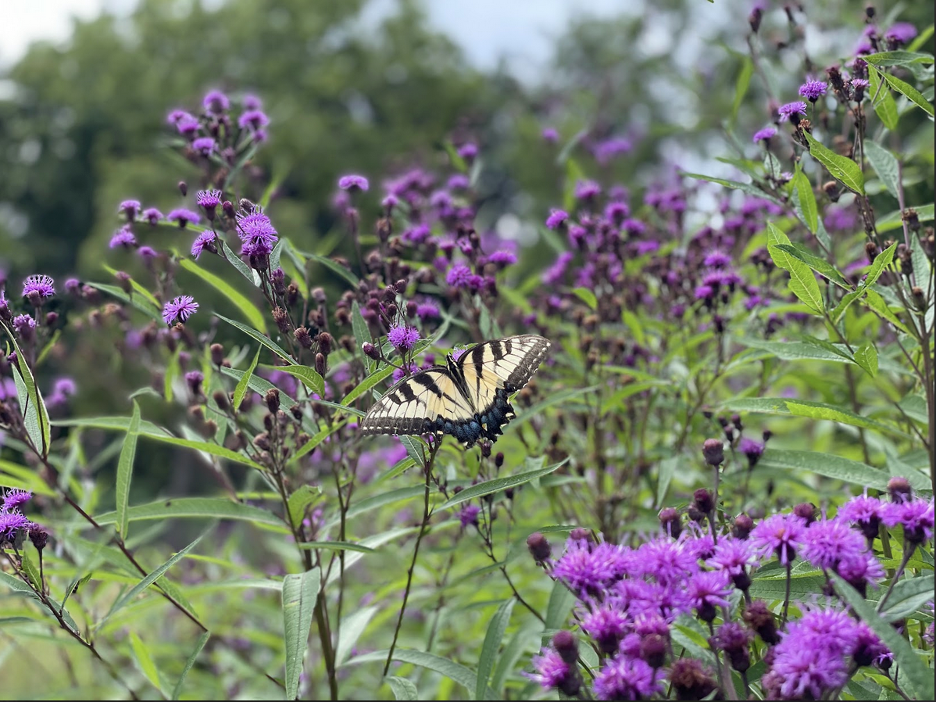
    New York ironweed (Vernonia noveboracensis), an important host plant to pollinators including the Eastern Tiger Swallowtail Butterfly (Papilio glaucus), is commonly used in ecological landscaping in the US Northeast Region. Credit: Sefra Alexandra.

    Recognizing the Role of Botanic Gardens

    To gather more information prior to undertaking any major new steps, the Ecological Health Network carried out a social network analysis to understand existing relationship patterns among the seed supply and demand chain actors in the Northeast US (Allen et al., under review). The study’s findings align with those of Tangren, Toth, and Siegel (2022), indicating that Midwestern seed vendors predominantly dominate markets in the Eastern US. For instance, a seed vendor based in Minnesota has established connections with over 94% of the end-users of native seed and plant material in the US Northeast identified in the study.

    However, the research also unveiled that producers of seed and plant materials within the US Northeast region enjoy well-established social ties with many botanic gardens, arboreta, seed banks (referred to as botanic gardens hereafter), and educational institutions in the region. These results support the argument that botanic gardens are uniquely positioned to play an essential role in ecological restoration science and practice (Hardwick et al. 2011), especially in their own regions. Botanic gardens have expertise in numerous relevant fields, including plant taxonomy, horticulture, genetics, seed science, and environmental education, as well as knowledge from ecological field research being undertaken by a growing number of botanic gardens around the world (Aronson et al. 2014Miller et al. 2016). Furthermore, as emphasized by Crane (2022), botanical gardens share the obligation of addressing socio-ecological challenges arising from climate change, alterations in land cover, and pollution. They must actively maintain their relevance through engagement, education, and tangible actions, particularly at the local level, outside the confines of their garden walls. 

    Indeed, many botanic gardens across the Northeastern and Northern Mid-Atlantic USA region have programs and activities aimed at strengthening native seed and plant material supply chains, among other things. For example, the Highstead Foundation in Redding, Connecticut, is deeply involved in sustainably harvesting seeds from local, naturally occurring plant populations. Following this, the staff meticulously cleans and stratifies the seeds before growing them into plugs. Local farmers, such as those affiliated with the Northeast Seed Collective will then proceed to amplify the plant material to produce the specialty crop of ecotypic seed. (Read more here). 

    In Hockessin, Delaware, Mt. Cuba Center, a botanic garden dedicated to preserving native plants and ecosystems across the Mid-Atlantic and Eastern Temperate Forest Region, conducts trial garden studies aimed at evaluating native species for their horticultural and ecological value. These studies serve to educate the public about the garden performance and ecosystem services provided by native species while also fostering the development of new markets for regionally produced seed and plant materials. The garden evaluates material and, where appropriate, shares material for local native plant nursery production. Beyond the horticultural side of the trade, Mt. Cuba engages with land managers and restoration growers, working to understand needs and promote local provenance workhorse species in collaboration with others in a mid-Atlantic seed users network.

    At the Cornell Botanic Gardens in Ithaca, New York, a native lawn demonstration project has successfully transformed a plot of turfgrass and weeds into a low-maintenance, low-input, high-biodiversity native grassy meadow. This project serves as a model for home and public green space redesign

    Native Plant Trust’s Nasami Farm in Whately, Massachusetts, Nasami Farm, has a longstanding practice of cultivating native plant material from hand-collected wild seeds. More recently, they have expanded their efforts by establishing seed increase plots to enhance production capacity for regional restoration projects. 

    These examples provide a sampler of the valuable contributions that botanic gardens across the region are already making to native seed and plant supply chains. However, in May 2023, Eve Allen and James Aronson, alongside Christopher Dunn, the Director of the Cornell Botanic Gardens, recognized a need to improve communication about these existing activities, and programs through improved networking among botanic gardens at a bioregional level. 

    Eve Allen, from the Ecological Health Network (EHN), and Todd Bittner, Director of Natural Areas at Cornell Botanic Gardens, discussing the Native Lawn Demonstration Area during the EHN Site visit in the fall of 2022. Photo Credit: James Aronson.
    Least trillium (Trillium pusillum) in bloom at the Mt. Cuba Center, a botanical garden in Delaware dedicated to preserving native plants and their ecosystems across the Mid-Atlantic and Eastern Temperate Forest Region. On the right, Eve Allen of the Ecological Health Network (EHN) stands with Élan Alford, Plant Conservation Scientist, and Jeff Downing, Executive Director of the Mt. Cuba Center, during an EHN site visit in the spring of 2023. Photo Credit: James Aronson.

    Convening Botanic Gardens 

    In this context, in late February 2024, the Northeast Seed Network brought together leaders and key staff members from thirteen botanic gardens, arboreta, seed banks, allied non-profit organizations, and the largest native seed and plant material supplier in the Northeast. The participants’ organizations included Coastal Maine Botanical GardenCornell Botanic GardensEcological Health NetworkThe Ecotype ProjectHighstead FoundationLongwood GardensMt. Cuba CenterNative Plant TrustVirginia Natural Heritage ProgramOak Spring Garden FoundationPinelands NurserySoutheastern Grasslands Institute, and the US National Arboretum. The convening workshop, organized and moderated by the Ecological Health Network, was graciously hosted by the Oak Spring Garden Foundation in Upperville, Virginia. This was the ideal venue from the Northeast Seed Network’s perspective, and the object of our workshop aligned seamlessly with Oak Spring Garden Foundation’s Mission Statement: “to support and inspire fresh thinking and bold action on the history and future of plants.”

    The formal garden bathed in sunset hues at the Oak Spring Garden Foundation, a non-profit organization established by Rachel “Bunny” Mellon to “support and inspire fresh thinking and bold action on the history and future of plants, including the art and culture of plants, gardens, and landscapes.” Photo Credit: Eve Allen.
    Workshop participants at the Oak Spring Garden Foundation (from left to right) – Marcello de Vitis, Southeastern Grasslands Institute; Charlotte Lorick, Oak Spring Garden Foundation; Élan Alford, Mt. Cuba Center; Melissa Cullina, Coastal Maine Botanical Gardens; Fran Chismar, Pinelands Nursery; Sefra Alexandra, The Ecotype Project; Uli Lorimer, Native Plant Trust; Eve Allen and James Aronson, Ecological Health Network; Richard Olsen, U.S. National Arboretum; Geordie Elkins, Highstead Foundation; Michael Piantedosi, Native Plant Trust; Lea Johnson, Longwood Gardens; Todd Bittner, Cornell Botanic Gardens; Ryan Klopf, Virginia Natural Heritage Program; Jessamine Finch, Native Plant Trust.

    The launch of the Restorative Landscape Coalition 

    Over the course of a long day and delightful evening, the participants worked together to chart a course for a new collaborative effort. Together, we recognized the distinctive responsibility botanical gardens bear to strengthen native seed and plant supply chains for landscape restoration across a spectrum of ecosystems, spanning from urban areas to suburbs, agricultural landscapes, corridors, and other protected areas of significant conservation value. More broadly, we agreed that botanic gardens are custodians of our shared plant biodiversity on our planet. By engaging in conservation, exploration, education, research, providing facilities, and leveraging expert horticultural know-how, they – and allied organizations like arboreta, herbaria, and seedbanks, should work together to bolster resilience and restore the health of people, ecosystems and landscapes. We also agreed that it would be timely to work on meeting this challenge at a bioregional level, namely in the Eastern US.

    Additionally, we discussed immediate ways to leverage experience, expertise, and educational capacity held within our gardens and allied organizations to address key objectives and recommendations outlined in the US National Seed Strategy and the National Academies of Sciences, Engineering, and Medicine’s 2023 Report, An Assessment of Native Seed Needs and the Capacity for Their Supply

    Enhancing demand signals by building better markets 

    The National Academies Report identifies unpredictable demand as the foremost challenge for native seed suppliers across the United States (p.98). This problem is especially pronounced in the US Northeast, as the substantial increase in demand for native seeds and plants fails to translate into intelligible markets. Current and potential suppliers within the Northeast Seed Network, including farmers and nursery professionals poised to expand their production of diverse species and ecotypes, require more consistent and transparent signals of demand.

    As such, a primary objective of the Restorative Landscape Coalition is to address and surmount the various policy, regulatory, and cultural obstacles hindering the utilization of source-identified, genetically diverse seed supplies, as well as nursery-grown or propagated plant materials. For example, we addressed the necessity of conducting targeted outreach and engagement with state and municipal agencies to facilitate the development of enhanced recommended species and species substitution lists. Currently, these lists predominantly feature mid-western species, likely due to their commercial availability. 

    Rather than solely focusing on seed production or amplification efforts, we recognize the critical importance of fortifying the ‘demand’ side of seed and plant material supply and demand chains. This strategic emphasis not only elucidates the distinction between the Restorative Landscape Coalition and the Northeast Seed Network but also underscores their mutually reinforcing relationship. Our approach involves generating and sharing knowledge, know-how, and best practices to enhance existing markets and create new markets for high quality seed and plant material. 

    Leverage our living collections to amplify seed production

    Citing The National Academies of Science’s 2023 report, we reaffirmed how the in situ  living collections (particularly conservation collections of wild origin) housed in botanic gardens and affiliated non-profit organizations serve as a crucial safeguard for native species within the plant materials development pipeline, when reproductively isolated from other related collections, for seed amplification.

    The US National Seed Strategy and National Academies of Sciences report emphasizes the imperative to increase collaboration and cooperation across agencies and with external partners. This involves sharing expertise, facilities, and optimizing the production and use of plant materials. Botanic gardens are custodians of our shared plant biodiversity. By engaging in conservation, education, research, providing facilities, and leveraging expert horticultural know-how, we are committed to providing a key link in efforts to bolster resilience and restore the health of landscapes in the Eastern US.

    In the Apple Room, our workshop proved not only enjoyable but remarkably productive. As the day drew to a close, participants reached a consensus on the crucial role of botanical gardens in tackling socio-ecological challenges stemming from climate change, land cover change, and pollution. Photo Credit: Sefra Alexandra. 
    As the evening drew to a close, together, we affirmed the unique responsibility botanical gardens bear in bolstering native seed and plant supply chains for landscape restoration. It was underscored that our institutions must actively assert our relevance through tangible actions, particularly at the local level, extending beyond the confines of our garden walls—a sentiment eloquently highlighted by Peter Crane, Director of the Oak Spring Garden Foundation, in his insightful 2022 opinion piece, Botanic gardens: Seizing the moment while imagining the future in Plants People Planet. Photo Credit: Oak Spring Garden Foundation.

    Fostering bioregional collaboration to achieve lasting social-ecological impact

    To advance the individual and collective missions and visions of the organizations and institutions participating in the Restorative Landscape Coalition, we will strive for a holistic perspective and approach that emphasizes the tremendous power and potential held within the concept of a bioregion. This is a spatial scale often overlooked by public, private, and government institutions. Note that a bioregion is not defined by political boundaries nor even by ecological and biogeographical boundaries alone. Rather, the concept corresponds to the geographical territories of human communities and cultural groups as well as the ecological systems on which they depend and of which they are a part. To be coherent, and useful, the boundaries of a bioregion must be delineated to uphold the integrity of its biological and human communities, ecosystems, and social-ecological systems. This includes preserving essential processes such as nutrient cycling, historical disturbance regimes, and species migration, among other biological and ecological factors. Additionally, sustainable and equitable management of resources and ecosystem services is vital, spanning generational and community boundaries within the diverse human populations inhabiting a bioregion. Bioregions vary in scale, ranging from watersheds to much larger territories, and may traverse international borders. However, they are fundamentally shaped by their flora, fauna, and human communities, each contributing to and benefiting from a distinctive identity defined by climatic, ecological, and cultural characteristics (Berg 1991).

    While initially complex and possibly daunting, there are significant advantages to the approach of organizing human activities and systems based on bioregional boundaries. Most importantly, it provides a strategic framework for connecting individual and collective efforts to facilitate impactful changes at appropriate scales to address biodiversity and climate goals (Pezzoli, 2015Wearne et al., 2023). That being said, addressing the intricate environmental challenges of the 21st century on a large spatial scale, especially with an unconventional concept like bioregionalism, demands innovative forms of network governance (Scarlett and McKinney, 2016).

    Left photo: Beds holding tree saplings for reforestation projects, including urban tree planting initiatives, in the Mid-Atlantic region. Right Photo: cleaned seeds of Arrow Wood Viburnum (Viburnum dentatum) at Pinelands Nursery in New Jersey. EHN Site Visit, Summer of 2022. Photo Credit: Eve Allen.

    Social impact and Social-ecological impact networks 

    A social impact network is one in which formal and informal institutions collaborate across diverse interests, sectors, and political arrangements to establish social norms, social capital, and trust that together can propel and sustain collective information sharing, decision-making, and action (Kapucu and Hu 2020Ehrlichman 2021). However, when social-impact networks are operating at broader geographical and societal levels – bioregions – and developing initiatives that target ecological and environmental challenges that demand integrated ecological and social interventions, we may call them social-ecological impact networks (Ecological Health Network 2024). 

    The Restorative Landscape Coalition is intended to be a social-ecological impact network dedicated to working with and enhancing the capacity and impact of the Northeast Seed Network and other seed production-focused partnerships, as well as emerging, restoration- and conservation-oriented partnerships operating across the Eastern US. Our commitment is to support initiatives that sustain, conserve, and, when necessary, restore degraded ecosystems and reintegrate fragmented landscapes within our bioregion – the overlapping and adjacent EPA Level III Ecoregions of the US Northeast, Mid-Atlantic, and Southeast regions. Please note that here we use the ecological definition of “landscape,” namely an assemblage of ecosystems that are arranged in recognizable patterns and that exchange organisms and materials such as nutrients and water (Forman & Godron 1986).

    Left photo: Seed increase plots of Slender Rush (Juncus tenuis), Common boneset (Eupatorium perfoliatum), Blue vervain (Verbena hastata), Swamp milkweed (Asclepias incarnata), and Coastal Plain Joe Pye Weed (Eutrochium dubium). Right photo: Flats of (clockwise from upper right), Bishop’s cap (Mitella diphylla), Blue wood-aster (Symphyotrichum cordifolium), Downy Goldenrod (Solidago puberula), New York aster (Symphyotrichum novi-belgii), Creeping Little Bluestem (Schizachyrium scoparium var. scoparium), Narrowleaf Mountain Mint (Pycnanthemum tenuifolium) at Native Plant Trust’s Nasami Farm in Whately, MA. Photo Credit: Eve Allen.
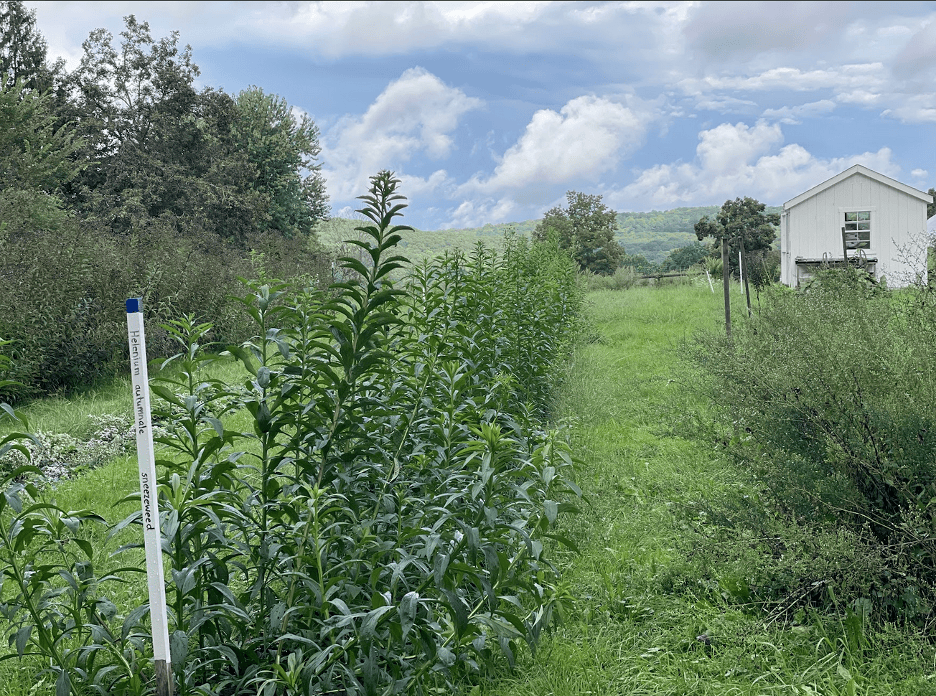
    Fall sneezeweed (Helenium autumnale) seed increase fields at The Hickories in Ridgefield, CT- the hub of the Northeast Seed Collective. Photo Credit: Sefra Alexandra. 

    Our next steps 

    While acknowledging the substantial work ahead, we are confident that the collective resources within our institutions, organizations, and like-minded networks will allow us to make inroads toward our shared goals. Collectively, we embrace an unwavering dedication to the public good and the well-being of future generations. Our shared missions encompass inspiring meaningful connections among people, plants, and the natural world, education and awareness, conservation and stewardship, and research and innovation, all aimed at enhancing society’s overall well-being, resilience to global changes, vigor, and – in a word – health.

    Please join the Restorative Landscape Coalition at the American Public Gardens Association’s Annual Meeting in Boston, June 24 to 27, 2024. We will be there, hosting a 90-minute workshop entitled Fostering regional collaboration among public gardens to address native seed and plant material needs, on Thursday, June 27th, from 10:30 a.m. to 12:00 p.m. 

    To stay in touch and receive updates about the Restorative Landscape Coalition and the Northeast Seed Network, please sign up for our mailing list. You can also follow us at @ecohealthglobal on Instagram, @EcoHealthNet on X and Facebook, and Ecological Health Network on LinkedIn for updates. 
  • Reconstructing and reconnecting native habitats post-pipeline construction at the Litzsinger Road Ecology Center

    Reconstructing and reconnecting native habitats post-pipeline construction at the Litzsinger Road Ecology Center

    By James Faupel & Caity Sims 

    James Faupel is the urban ecology restoration supervisor at the Litzsinger Road Ecology Center (LREC) and Caity Sims is the Project Clear restoration coordinator. The LREC is a private, urban outdoor education site in the heart of Metropolitan St. Louis, Missouri that is managed by the Missouri Botanical Garden for educational programming with K-12 teachers and students, and supported by many local university-based researchers.

    Part 1: by James Faupel

    Anticipating Loss

    In September of 2018, when I took on the lead restoration ecologist role at the  Litzsinger Road Ecology Center (LREC), I was aware of the impending utility pipeline project (Project Clear) that would impact around a quarter of this education center’s restored habitats and the adjoining urban Deer Creek. The 15.8-hectare (39-acre) ecology center combines a mix of reconstructed bottomland prairie and restored riparian woodlands, with a stretch of urban creek in surprisingly good ecological condition. I knew this was a unique opportunity to set up a long-term study to examine the processes of reconstructing tallgrass prairie following major anthropogenic soil and landscape disturbance, a topic with little previous research, especially in urban areas.

    The 6.3 km (3.9 mile) long Deer Creek branch of Project Clear was slated to dissect a 0.8 km (0.5 mile) long swath of LREC’s restored habitats – a pretty significant amount of collateral damage. To be clear, the purpose behind Project Clear’s sanitary pipeline path is well intentioned. The Metropolitan St. Louis Sewer District’s (MSD) Project Clear is a six billion dollar, 28-year long initiative to improve water quality and alleviate many wastewater concerns related to the frequent sewage overflows of the legacy sewer system of the St. Louis region. Cleaner water in Deer Creek would mean healthier breeding and feeding conditions for a wide variety of wildlife that live in or rely on the water of the creek, as well as healthier adjoining ecosystems, and much healthier domestic water supplies for human residents of St Louis County. The collateral damage of the MSD Deer Creek branch was 6.3 km (3.9 mile) of riparian habitat was damaged, degraded or destroyed.

    In 2019, the Litzsinger Road Ecology Center (LREC)’s oldest prairie reconstruction and woodlands were dissected by the Project Clear pipeline path. The LREC is an outdoor educational facility of the Missouri Botanical Garden, and relies on functional ecosystem services to introduce children to the intricacies of nature. The pipeline project construction equipment would directly impact the LREC’s grounds and classes for three years, but its impact to the habitats here will be felt for generations. Photo by James Faupel.

    As discussed in a previous NHER blog post on the topic, urban prairie reconstructions are important tools in the toolbox of prairie education to the general public and in saving North America’s prairie remnants. Remnant prairies are invaluable fragments of a once vast grassland ecosystem of the Midwest and are now one of the most endangered ecosystems in the world. Getting the chance to expand the area covered by reconstructed prairie at an educational site like LREC was an opportunity that I did not want to miss. The downside was that the LREC restoration team would have only one year to gather baseline data before the sanitary pipeline construction began, and I also had to fit in learning all of the other ins and outs of my new role.

    Throughout 2019, with the assistance of LREC volunteers, interns, and partner researchers from local universities and organizations, we were able to gather a wide array of baseline data that could be used as a comparison in the years ahead, once the future restored prairies are older. In 2019, the previously restored habitats at LREC were 30 years old, among some of the oldest restored habitats in the St. Louis region. Restoration projects of this age are incredibly valuable for ecological research projects looking to better understand anthropogenic impacts on the environment around urban centers and to learn best practices for effective, long-lasting restoration efforts. They are priceless.

     During the growing season of 2019, we were able to survey all the vascular and nonvascular plant species growing in the proposed pipeline path and adjoining areas, as well as survey for birds, bees, spiders, ants, and algae thanks to the varied expertise of all involved. Baseline samples were collected of the upper soil horizons along the entire pipeline path, in addition to a complete inventory of all of the trees and shrubs that would be removed during construction so we could assess their value. The most significant baseline dataset is that of Elizabeth Hasenmueller and her Lab at Saint Louis University, who had been studying the water quality of Deer Creek at LREC for five years prior to the sanitary pipeline installation and are excited to continue this research, hoping to capture more data and test hypotheses concerning the hydrology and geochemistry of this urban stream as water quality improves with the removal of the sewage overflows from the creek.

    LREC volunteers assisted staff in a tree inventory of 746 native trees and shrubs ahead of the pipeline installation in 2019. The canopy trees were measured and their value assessed using the US Forest Service’s iTree database. The USFS’s estimated replacement value of the 289 mature canopy trees was half a million US dollars. This dollar value is in addition to the countless ways the ecological and environmental services provided by these trees could be valued. Photo by James Faupel.

    Deconstruction of Habitat

    On September 30th, 2019, construction vehicles arrived on the grounds of LREC, and began the month-long habitat removal on site. In what felt like the blink of an eye, a large section of one of the oldest prairie reconstructions in the St. Louis region, along with 746 individual native trees and shrubs, were gone and no longer providing any ecological or educational services. It was quick, like a bandage being ripped from the skin.

    Before and after the 0.8 km (0.5 mile) MSD pipeline construction path on the property of the LREC. 
    Left: October 2018. Right: August 2020 (Google Earth 2019, 2021).

    The pipeline installation process, from start to finish on LREC property, lasted nearly three years. Following the removal of all the preexisting habitat, work began on trenching the ground open, dynamiting the bedrock, installing the sewer pipe, reworking the now homogenized limestone bedrock/C horizon soil mix back into the trenches, restabilizing the streambanks from their stream crossings, and finally grading the soil out to pre-construction elevations. We knew from the beginning of their trenching process that we would ultimately be trying to grow native prairie plants in a “novel ecosystem” with soil conditions that would never co-occur with them in nature. 

    Throughout the construction process, there was plenty of time for planning how we would restore the land once it came back into our hands, as well as how we would monitor it long term. There is little research that has been done on the topic of prairie reconstruction following major anthropogenic soil disturbance. Initially we thought it would be beneficial to test many different methods of soil remediation ahead of the seeding of native prairie plants in different study plots. However, during the three year construction period, there were several major flooding events from the adjacent Deer Creek that changed our minds. The regularity and increasing frequency of these flash flood events of this urban creek made us take pause and the aforementioned research idea was scrapped. These events aren’t likely to lessen anytime soon, as the area covered by impervious surfaces in the surrounding watershed continues to grow. Future flooding events would introduce too many confounding variables to any kind of research that compared the outcomes of various soil remediation methods to make it a worthwhile investment of our time and resources.

    Left: Throughout the construction of the pipeline path (2019-2022), the path was impacted by Deer Creek flooding beyond its banks 11 times. It was completely covered by 4 major flash flood events as seen here. Right: The pipeline path a few months after construction had finished in late summer of 2022, covered in a growing season’s worth of early successional species. Here a contractor puts down the first annual cover crop to help break up the compacted soils and help hold the soil in place during rain events. Photos by James Faupel.

    In late summer of 2022, the property was handed back to the staff at LREC to begin the habitat reconstruction work. By this point in time, I had been promoted to a supervisor position at LREC and had many more responsibilities that took me away from being able to dedicate significant time to the Project Clear pipeline restoration project. Our two summer interns that year assisted with the second round of soil sampling for comparison to the baseline soil data and an inventory of all of the plants that naturally colonized the disturbed areas along the entirety of the pipeline path that year. For information from that botanical inventory, you can read our article that was published in the 2022 volume of Missouriensis. Our immediate reconstruction plans were to bring in a contractor that could quickly get annual cover crops down and hopefully germinate and root into the compacted soil before any fall or winter flooding events occurred. We also planned for a major seed collecting effort in 2023, so that we could sow a wide variety of early successional native species onto the pipeline path in late fall of 2023, or before the first snow of winter.

    With my role having been redirected away from the pipeline path reconstruction, I lobbied for a new staff member that could replace me and focus all their efforts on the reconstruction, research, and monitoring of this important project. Caity Sims was hired for the role of coordinator of the project in January of 2023 and hit the ground running. It has been an incredible year mentoring her throughout this process and I look forward to exploring the reconstructed prairie habitat she will be establishing and chaperoning with our amazing team of volunteers, staff, and interns over the next few years.

    Part 2: by Caity Sims 

    Before Reconstruction Began

    I was fortunate enough to witness the LREC before Project Clear as a summer intern in 2019. That summer, I assisted with collecting pre-deconstruction baseline data on trees and the algae found in Deer Creek. After my internship, I left St. Louis for Jonesboro, Arkansas to earn a master’s degree focused on botany in the Mississippi Alluvial Plain. Ready to apply my botanical and research skills in the working world, I returned to the LREC in January 2023 as the Project Clear restoration coordinator. I was shocked to finally see first-hand the impact the pipeline construction project had had on the riparian, woodland, and prairie ecosystems of LREC. What seemed in my memory like a maze of bottomland woodland was reduced to a scanty wooded edge surrounded by a sparsely vegetated brown strip of fallow land. 

    Before I joined the LREC team, a cover crop of common wheat (Triticum aestivum) had been seeded onto a majority of the pipeline path in winter 2022. Around the same time, a six-species cover crop mix, consisting of crop grasses, common pea, and field mustard (Brassica rapa) was seeded onto the southern section of the path. Cover crops mend the soil by adding nutrients, perforating the soil for better water infiltration, outcompeting weedy species, and preventing erosion of bare soil. 

    Unfortunately, the first round of cover crop mixes did not do well, and by mid-April the common wheat was barely a foot tall and had already gone to seed. The mixed species cover crop did not grow on most of the seeded area of the southern section due to flooding washing away a majority of the seeds. The path desperately needed a second cover crop at that point, so we hired contractors to seed the warm season crop, Sudan grass (Sorghum bicolor), onto the majority of the path again and a nine species cover crop mix onto the southern section. The Sudan grass did much better, growing to heights of over six feet in some areas. Although the mixed species cover crop seemed to do better, the extreme summer heat drying out the compacted soils resulted in depauperate mature plants. There were many areas directly over the pipeline that seemed unlikely to hold any vegetation at all. 

    Cover crop comparison between common wheat, taken on May 23, 2023 (A) and Sudan grass taken on August 3, 2023 (B); both photos were taken from about the same position on the path, but facing in opposite directions. Pictured in panel C are size comparisons of common wheat individuals on May 26, 2023, the two on the left were collected from the middle of the pipeline and the one on the right from the outer edge of the pipeline path. Note the numerous bare patches of soil in panels A and C. Photos: Caity Sims.

    Despite environmental conditions being heavily anthropogenically impacted, a good number of native early successional and bottomland species grew alongside the cover crops on the path. I was surrounded by many familiar disturbance-prone and riparian species, as my master’s thesis had focused on plants growing on Mississippi River islands. I recorded 310 species growing on the entire path after completing vegetation surveys in 2023. As I expected, some of the most common species were yellow foxtail grass (Setaria pumila), southern crabgrass (Digitaria ciliaris), barnyard grass (Echinochloa crusgalli and E. muricata), hairy seed crowngrass (Paspalum pubiflorum), late boneset (Eupatorium serotinum), and tall goldenrod (Solidago altissima), all of which thrive in disturbed environments. 

    As I work toward reconstructing the land to improve structure and function of the ecosystem for many native organisms, I need to quantify the results of this effort. To measure the changes in plant communities along the pipeline path over time, I established dozens of permanent vegetation monitoring plots along the path that will be monitored every summer. For each plot, I collect the presence and percent cover of each species in the plot. I am hopeful that by 2027, native prairie plants will constitute 75% of the flora and vegetation in every plot. 

    Summer interns, Karen (left) and Cicely (right), learning to identify plants from a vegetation monitoring plot on the pipeline path. Photo: Adam Rembert.

    Also found post-pipeline construction were two species new to Missouri:  Centaurium pulchellum, and Myosotis arvensis, and three new to St. Louis County records: Sesamum indicum, Cyclospermum leptophyllum, and Krigia cespitosa. All record species are not native to Missouri except K. cespitosa, which has been recorded from neighboring counties. It’s not uncommon to find new state or county records in disturbed areas. For more detailed information about those species, their identification, and potential explanations for their introduction to the LREC, check out my article in the 2023 volume of Missouriensis

    We have classified several different habitat types on the pipeline path including wet depressions and ephemeral ponds, rocky upland (i.e., “glade”), creek bank, woodland edge, and fallow ground. Due to a permanent pipeline access easement built and maintained by the Metropolitan St. Louis Sewer District (MSD), we cannot reconstruct the bottomland woodland that was destroyed. However, we can reconstruct a bottomland prairie on a majority of the path where the fallow ground with rocky and compacted soil are the most prominent. In the wider southern section, we will reconstruct a savanna that will include tree plantings outside of the MSD’s easement. 

    Going Forward

    Staff and volunteers collected seed throughout the 2023 growing season. We focused on collecting species with Coefficient of Conservatism (C-Value) ranks of six or below, which is consistent with the range of C-values observed in the 2022 vegetation survey of the path. The coefficient of conservatism (or C-scores) is an index ranging from 0-10, representing a species’ fidelity to intact remnant or long-restored habitats, as determined by local botanical experts. Species with higher C-scores are less tolerant of environmental degradation and increasingly restricted to high quality sites. Species with C-Values from 0-6 are likely to be found in disturbed and early successional environments, while species with C-Values from 7-10 are more likely to be found in near-pristine and remnant environments (Ladd and Thomas 2015). High C-Value species are harder to establish in restored and reconstructed habitats. 

    Summer and fall interns focused mainly on seed collection, cleaning, and organization to prepare for the 2023/2024 winter seeding. It was a monumental effort with amazing results. We collected seeds from 96 species in 2023 for a total weight of 49 kg (108 lbs) of mostly Pure Live Seed (PLS), with some chaff. In addition to collecting seeds, contractors have drilled 39 prairie species onto the pipeline path seeding a total of 16 kg (36 lbs) of PLS. We also added seeds collected in previous years that were housed in seed storage at the LREC. Including the 2023 collected seed, the PLS from contractors, and the previously collected seed, a total of 189 species with a total weight of 74 kg (164 lbs) was seeded on the pipeline path. To view the results of our seed collecting effort in 2023, please see our interns’ compiled end of season unpublished report.

    Boxes of Culver’s root (Veronicastrum virginicum) seed ready to be cleaned (A), fall intern, Cailyn, posing with seed to be added to the broadcasting mix (B), staff and volunteers mixing seed in preparation for broadcasting the pipeline path on January 5, 2024 (C), and staff and volunteers broadcasting the “glade” mix onto the most well-drained and rocky portion of the pipeline path on January 11, 2024 (D). Top photos by Adam Rembert, bottom photos by Caity Sims.

    I am hopeful that the seedings will be successful and signs of a prairie will begin to emerge this year. However, flooding and poor soil conditions are major issues on the pipeline path. I have already dealt with the aftermath of floods washing away cover crops and soil, and remaining soils lacking suitable nutrients and structure for plant growth. These are out of my control, so all I can do is accept them, keep trying, have patience, and not let frustration get the best of me. 

    In three years, I anticipate less introduced and early successional species as they fail to compete with the maturing perennial natives. I envision more pollinator observations on the former pipeline path as the prairie species begin to bloom. After the third growing year, we may be able to burn the young prairie and savanna. In 30 years, I hope to return to see restored prairie, savanna, woodland, and creek habitats functioning as home to a diversity of plants, insects, birds, reptiles, amphibians, mammals, and microbiota like the undisturbed LREC habitats do today. 

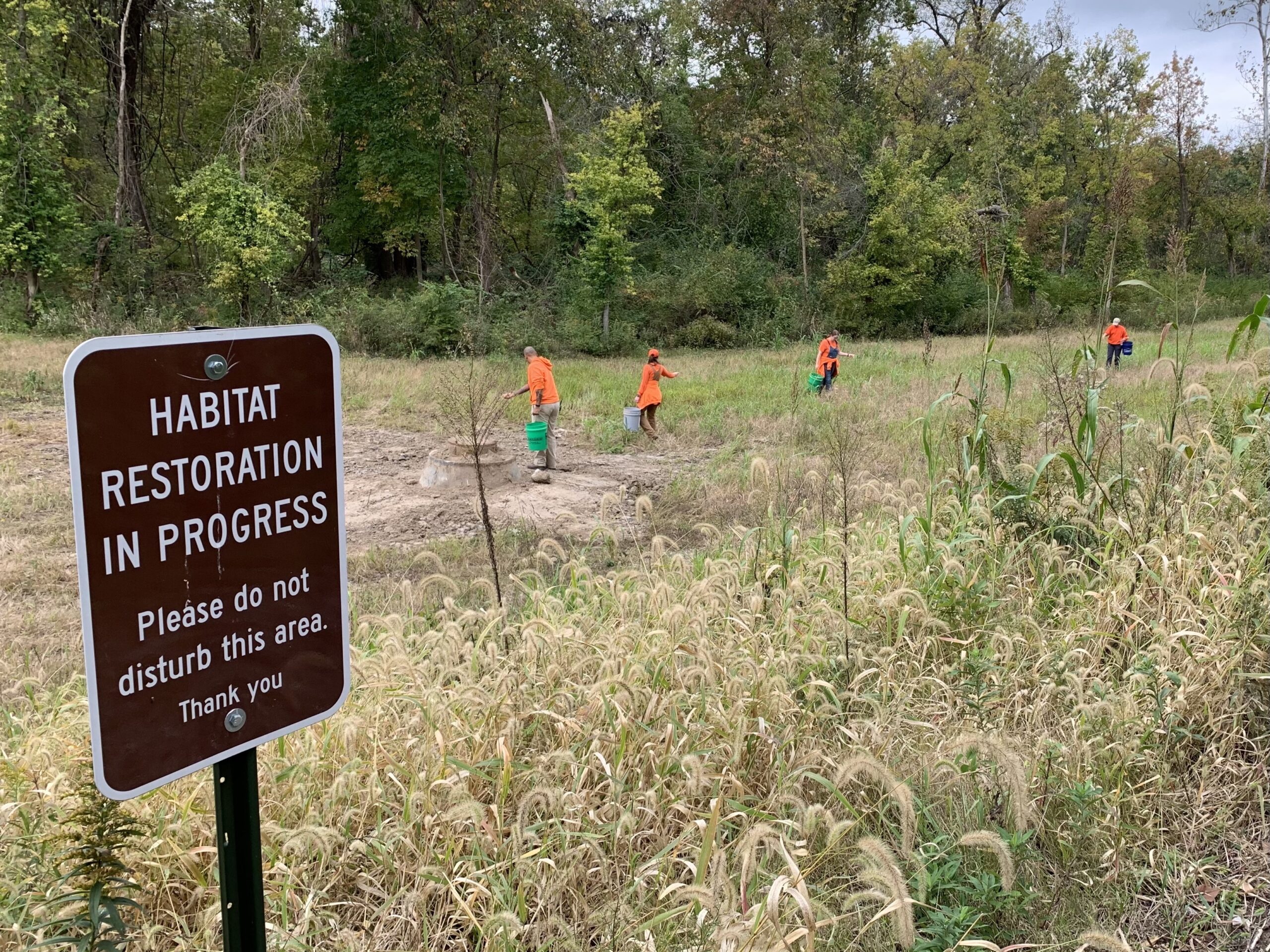
    Staff and volunteers broadcasting a spring and summer flowering seed mix onto the pipeline path on October 13, 2023. Photo: Tom Kibby.

  • Land Abandonment, Succession, and Restoration: The Wolf Run Grassland Restoration Project at the Missouri Botanical Garden’s Shaw Nature Reserve

    Land Abandonment, Succession, and Restoration: The Wolf Run Grassland Restoration Project at the Missouri Botanical Garden’s Shaw Nature Reserve

    By: Mike Saxton and Calvin Maginel

    Mike Saxton (mike.saxton@mobot.org) is the Manager of Restoration and Land Stewardship, and Calvin Maginel (cmaginel@mobot.org) is the Ecological Resource Scientist at Shaw Nature Reserve

    Since 1950, over 1-billon acres of agricultural land have been abandoned worldwide. In certain landscape contexts, unassisted spontaneous recovery of high levels of native biodiversity in abandoned fields is possible while in others, like the Midwest USA, fallow fields rarely develop into biologically rich habitats. To achieve the ambitious goals of the UN Decade of Ecosystem Restoration, land managers and ecologists need to better understand how to assist the regeneration and ecological restoration of these highly altered landscapes. 

    In 1925, the Missouri Botanical Garden purchased 1,300 acres of battered farm ground in Gray Summit, MO – approximately 35 miles (56 km) west of St. Louis – to escape the deleterious impact urban air pollution was having on horticultural collections in St. Louis City. The intended uses of this acreage were to: (1) propagate and grow plants, trees, and shrubs for the main Garden’s displays and (2) establish an arboretum focusing on woody plant collections. The site was officially named the Shaw Arboretum in 1933. After decades of development, many non-essential operations at the Arboretum were eliminated in 1958 and many fields were abandoned to allow spontaneous successional change. In 2000, the Shaw Arboretum was renamed Shaw Nature Reserve to reflect its contemporary mission to demonstrate, test, and inspire responsible stewardship practices through education, restoration, and protection of natural habitats and public enjoyment of the natural world. Today the Nature Reserve consists of 2,400 acres of varied habitat in various stages of restoration and revised management, including the use of prescribed fire.  

    Prior to European settlement, the natural plant communities and ecosystems of the area were fire adapted, open oak-hickory woodlands and xeric glades with gallery forests along riparian corridors. Post-settlement, woodlands were clear-cut with some woodlots left to passively regenerate while others were converted to row crop agriculture. 

    Wolf Run Grassland Restoration 

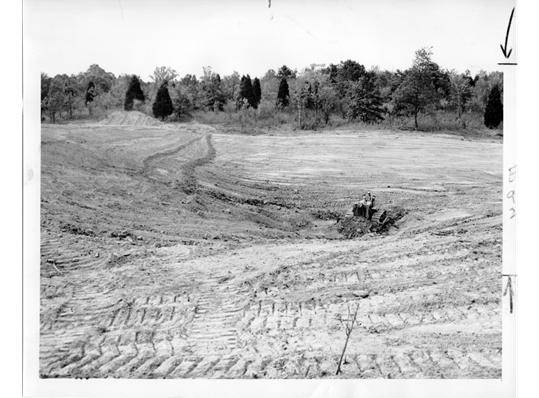
    In 2016, Nature Reserve staff set an ambitious goal to bring all 2,400 acres of the site into active management to promote native biodiversity by the year 2030. This effort will include restoring open pastures and former row crop fields, a relatively simple process. A much more challenging effort will be reclaiming 120 acres of old fields with 60+ year successional development, which is our current Wolf Run Grassland Restoration project. The 120 acre project area was initially “wasted farm ground” that had erosion gullies “where a freight train could pass without you seeing it”, according to August Beilmann, former Arboretum Director from 1941 to 1956. The entire project area was re-sculpted and smoothed by a bulldozer in 1953 and then converted to bluegrass (Poa pratensis). “Every piece of this land that looks so likely to be just right was laboriously rebuilt,” said Beilmann in a 1974 interview.

    Wolf Run Grassland Restoration project area in ca. 1945 showing open fields (light green) maintained through cattle grazing and mowing with trees occupying wet-weather streams and ditches (dark green). Photo: MBG Archives.

    Since 1958 when areas including the Wolf Run Grassland Restoration were removed from mowing and grazing, the site was encroached upon and became dominated by eastern red cedar (Juniperus virginiana), the non-native invasive shrubs Amur honeysuckle (Lonicera maackii), and border privet (Ligustrum obtusifolium), as well as slippery elm (Ulmus rubra), shingle oak (Quercus imbricaria) and ash (Fraxinus) species, the latter of which which are in severe decline due to the emerald ash borer. 

    These degraded woodlands had little native ground flora and were highly infested with non-native shrubs. Tree abundance and species composition had no historic analog. When setting ecological restoration goals for the area, staff determined that much of the site could not be managed as an open oak-hickory woodland, which would have existed at the site pre-settlement.  A new vision was needed. 

    Goals for the Wolf Run Grassland Restoration project

    • Establish a mosaic of 80 acres (~32 ha) of prairie, 15 acres (~6 ha) of savanna and 25 acres (~10 ha) of oak-hickory woodlands
    • Maximize native flora diversity and aggressively control invasive shrub species 
    • Manage with periodic, dormant-season prescribed fire 

    In 2021, Nature Reserve staff marked hundreds of native trees to retain including white, red, bur and black oaks (Quercus alba, Q. rubra, Q. macrocarpa, Q. velutina) and shagbark hickory (Carya ovata) and bitternut hickory (C. cordiformis). Drainages and wet weather streams were left with a 50 ft. (~15 m)  untreated buffer zone while a perennial creek flowing through the unit retained a 150 ft. (~46 m) untouched buffer. A logger removed unmarked trees from the area, with the commercial value of the timber offsetting the cost of the removal. Following US Fish and Wildlife Service recovery management guidelines for the Indiana bat (Myotis sodalis) — a federally endangered species — trees were only removed from November 1st to April 1st.

    Wolf Run Grassland Restoration project area pre-thinning (2021), approximately 60 years after land abandonment. Note the dark green areas are dominated by eastern red cedar (Juniperus virginiana), a native tree that rapidly colonizes abandoned or disturbed lands in the Midwest. Historically, this fire-sensitive tree species primarily occurred on rocky outcrops and bluffs that served as refugia from periodic fires that were common in the pre-European settlement landscape. Photo: ESRI
    Wolf Run Grassland Restoration project area post-thinning (2023). Photo: ESRI
    Forestry contractor equipment was used to remove most woody biomass greater than 4.5 in. (~11 cm) in diameter and left behind mostly small-diameter slash. A bulldozer was used to collect the debris into 600 piles that were subsequently burned. Photo: Mike Saxton

    The Restoration team has spent the last 9 months focusing on the removal of stumps for the project area. Stumps can be a substantial hazard for vehicles, equipment and staff safety. To seed native species and effectively manage the area for invasive species in perpetuity, the stumps must be ground down or cut flush to the ground.

    Skid loader mounted stump grinder removing stumps. Photo: M. Saxton

    Concurrent to this effort has been the site preparation step of chemically treating all of the invasive species and the disturbance driven annual vegetation that emerged post-land clearing [primarily fireweed (Erechtites hieraciifolius), mare’s tail (Erigeron canadensis), ragweed (Ambrosia artemisiifolia) and fox tail (Setaria pumila)]. This step is necessary because diverse, healthy native plant communities have not existed in these areas in more than 100 years. Consequently, there is no native seedbank to support the unassisted spontaneous recovery of native perennial herbaceous species in these highly degraded acres. 

    In areas where stumps have not been cleared, traditional equipment (tractor boom sprayers and UTV mounted spray rigs) for applying herbicide are ineffective. The Nature Reserve hired a contractor that specializes in drone-assisted aerial herbicide applications. The drone flies 12 ft. (~37 m) above vegetation and can self-navigate around trees and other hazards. The unit carries a total of 8 gallons (~30 L) and sprays approximately 3 gallons of herbicide per acre. The effective width of each pass is 25 ft. (~8 m). A single battery powers the drone, with a flight time of 7.5 minutes and a re-charge time of 6 minutes. When the herbicide tank runs out, the drone re-deploys to the fill up location, is refilled by the contractor, and then returns to where it left off. 

    Aerial drone sprayer used to eliminate undesirable vegetation. Photo: M. Saxton

    The last step after the undesirable trees have been removed, biomass/debris has been burned, the stumps have been ground and invasive species have been controlled, is the final ground preparation. Currently, in 2023, we are again smoothing out erosion gullies and clearing away the last remnants of woody debris with a bulldozer. This effort will ensure effective seed-to-soil contact when we sow native seed in January 2024 and will enhance our ability to successfully search for invasive species in the coming years by eliminating deep ruts and rills.  

    Above: Bulldozer in 1953 eliminating erosion rills in Wolf Run Grassland Restoration project area. Below: Bulldozer completing site preparation for native seed addition (2023).  Top Photo: St. Louis Globe Democrat, Bottom Photo: M. Saxton

    Native Seeding and Experimentation to promote Biodiversity Recovery 

    During the growing season of 2023, the Restoration team at the Nature Reserve has been feverishly collecting seed for this 2024 seeding effort. More than 1,100 lbs. (~500 kg) of bulk, milled seed from ~200 locally collected native tallgrass prairie and open oak-hickory woodland species will be used in the restoration planting. Additionally, these acres are enrolled in the Environmental Quality Incentives Program, EQIP – part of the Natural Resources Conservation Service, and we must purchase viability-tested seed to meet the minimum required specifications of the contract. The hand-collected seed together with the pure live seed (PLS) – percentage of viable seed in a seed lot – purchased from commercial vendors will provide us with ample species and volume of seed to effectively cover the 40 acres (~16 ha) to be planted this winter. 

    Concurrent with the preparation effort, we initiated a research study, which will help inform our work and the broader research community on plant recruitment amongst scraped soils that have been inoculated with mycorrhizal fungi and those that have not. This study includes paired species from the same genus that have different CC-values, short for coefficients of conservatism, which represents a species’ tolerance of environmental degradation, or its fidelity to intact remnant or long-restored habitats, as determined by local botanical experts. Ecologists generally expect species that are dependent on stable intact communities (higher CC-values) to be more reliant on mycorrhizae connections to establish and flourish. Species with high CC-values tend to establish poorly in restoration sites, which is one of the reasons to pursue this study. Some examples from the ten herbaceous pairs of native species include sedges (Carex bushii [CC = 4] and Carex bicknellii [CC = 10]), grasses (Sporobolus compositus [CC = 3] and Bouteloua curtipendula [CC = 7]), and forbs (Oligoneuron rigidum [CC = 5] and Oligoneuron album [CC = 9]).

    We added all 20 species at the same rate of pure live seed to provide each species an equal opportunity to establish. Initial analyses after one growing season indicate that low CC-value species germinated more successfully, producing more seedlings and greater percent cover than the high CC-value species, regardless of inoculation. We expect the addition of mycorrhizal fungi to have the greatest effects on species during the first couple of years after germination. If the mycorrhizae associate with the roots of the high-CC species more than the low-CC species, this may help them grow faster or be more resistant to future stress. Future monitoring will show us if there are long-term effects of inoculation.

    To check for updates on restoration activities and results from experimental studies, please visit our webpage.

    Barrels of hand-collected seed connected to a seed dryer, which pumps air through tubes into the barrels to eliminate mold & moisture. Photo: M. Saxton
  • Developing an Expanded Soil Profile methodology for restoring social-ecological relations: A case study of Sunnivue Farm, a biodynamic farm in Southwestern Ontario

    By Katherine Lawless, an associate professor in the Centre for Global Studies at Huron University College in London, Ontario, Canada. Katherine is trained as a critical theorist in the humanities and social sciences. Over the past 5 years, she has been developing a new field of specialization in the environmental humanities focusing on the social dimensions of conservation, restoration and climate change adaptation. Below, she describes a pilot study in her collaborative research project on human-soil relations. klawles@uwo.ca

    In 2019, my research team (including soil scientists, social scientists, artists, and humanists) and I received an Exploration Grant from the Canadian New Frontiers in Research Fund to conduct field research in Yukon, Southern Alberta and Southwestern Ontario with communities who understand soil as a living system rather than an inert object or simple resource. We wanted to know what kinds of solutions to complex social-ecological problems might emerge by reframing soil as a relational medium, and a set of natural and cultural relations that participate in the adaptive development of living systems combining ecological and social dynamics. Here, we take our cue from media theorists (Parikka, 2015), human geographers (Kryzwoszynska and Marchesi, 2020), and Science and Technology Studies scholars (Puig de la Bellacasa, 2015) in thinking of soil as a medium that bridges nature and culture; an object that is shaped by human interaction rather than a given, natural thing; and a network of human and more-than-human actors embedded in a nested series of social and ecological networks (see also Greenhough, 2014). This approach recognizes both the biophysical agency of multiple species and the ways in which humans co-create worlds with their non-human counterparts, from flora and fauna to rocks and water. Naturally, we gravitated toward practitioners and knowledge holders with a close relationship to soil, including regenerative farmers, environmental conservationists, restoration practitioners, and Indigenous communities. This research was delayed by the COVID pandemic; so, we started close to home with a small and willing pilot site: Sunnivue Farm. In what follows, I present an overview of this ongoing study in the spirit of the Ecological Health Network and SER International principles and standards for the practice of ecological restoration (Gann et al., 2019), wherein the Restoration Continuum includes the restoration of agroecosystems. 

    Beginning in 2021, we used this pilot study to develop our transdisciplinary methodology: the Expanded Soil Profile (ESP). The idea was to begin with conventional soil profiles and soil analyses, and build out from there, incorporating layers of social and cultural history across scales and eras through interviews and archival research. We hoped this would allow us to form a clearer picture of the kind of place-based social and ecological dynamics at play in the health and wellbeing of human and non-human members of any self-organizing “multi-species soil care community”. To be clear, we define “soil care community” as a group of individuals with a shared practical and ethical commitment to the ongoing labour and attention required to maintain and repair soils in need of repair, and all those who depend on soils in a given landscape, region or place, so as to live as well as possible with a given subset of the land, water, biodiversity, and resources that comprise our world. The concept of a “multi-species soil care community” recognizes that more-than-human actors share with humans in the care work that has shaped and continues to shape this biophysical world (see Kimmerer 2016 for an example).

    Our overall goal is to better understand the connections among soil health, farm ecosystem health, and the perceived health and wellbeing of the local farming and non-farming community in each study area. More specifically, we aim to show how, in the context of internal and external social and economic pressures, local place-based knowledge can be paired with scientific analysis and historical-archival research to orient and guide efforts to restore and maintain sustainable and desirable relations among social actors and institutions in differing contexts.

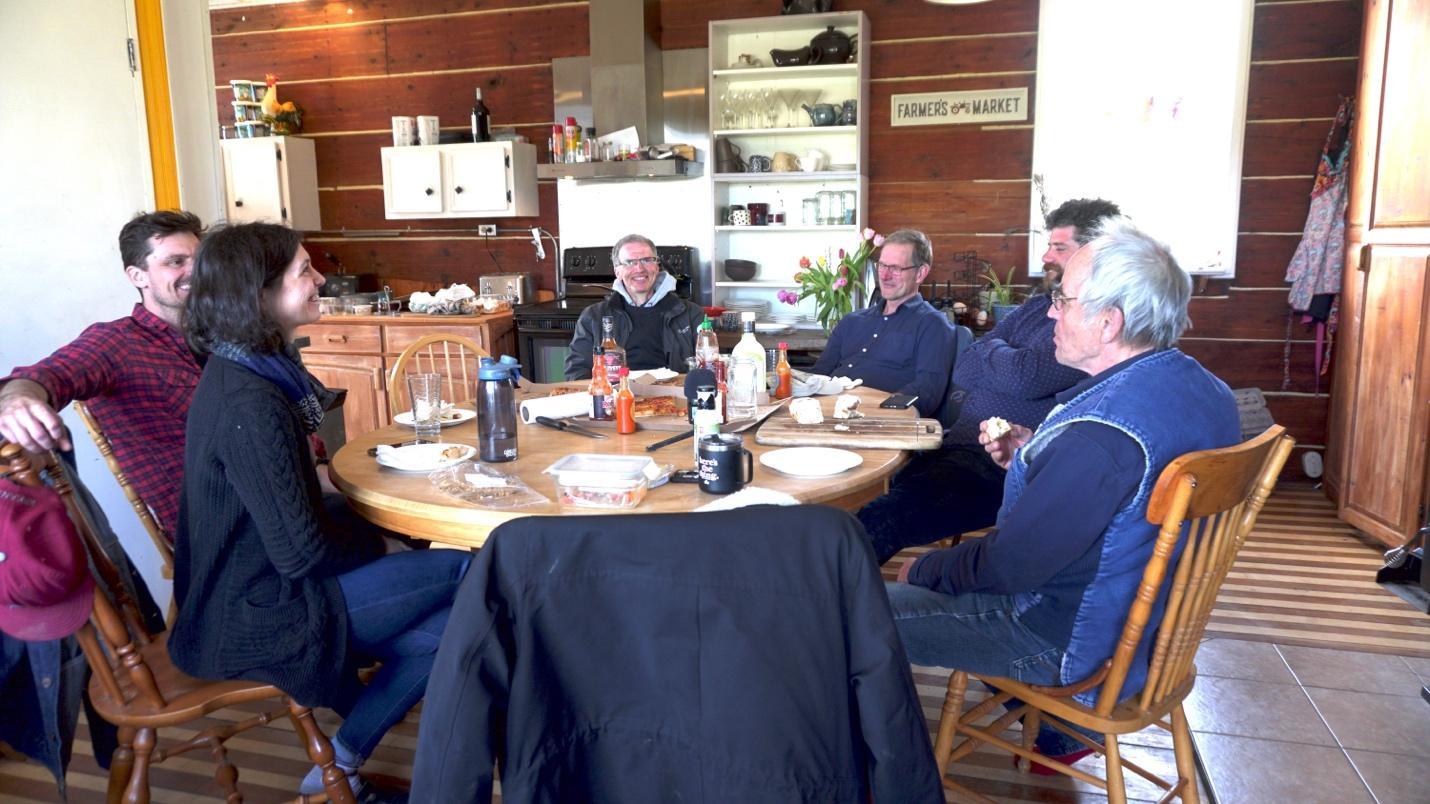
    A group of people sitting around a table  Description automatically generated

    The core members of the research team and two research participants discussing the project over lunch, Sunnivue Farmhouse, 2021. From left to right: Katherine Lawless (PI), David Janzen (co-PI), Henry Janzen (soil scientist collaborator), Ed Gregorich (soil scientist collaborator), Michael Courey (incoming farmer/research participant), and Alex Nurnberg (retiring farmer/research participant). Photo: Michelle Wilson.

    Sunnivue Farm is a 180-acre biodynamic farm about 22 mi from London, Ontario in the heart of the Carolinian forest, which boasts some of the highest biodiversity in Canada including rare and at risk species. Much of this biodiversity is threatened by urban expansion and agricultural intensification. According to a report issued by the Ecosystem Status and Trends Report (ESTR) Secretariat, “as of 2009, there were 865 species of conservation concern in the [Lake Erie Lowlands] ecozone,” including all 12 reptile and amphibian species, 7 of 8 native turtle species, and 11 of 17 snake species (ESTR Secretariat, 2016, p. 16). And, as the founders of Sunnivue Farm noted in our very first interview, bumblebees are on the decline (ESTR Secretariat, 2016, p. 16). 

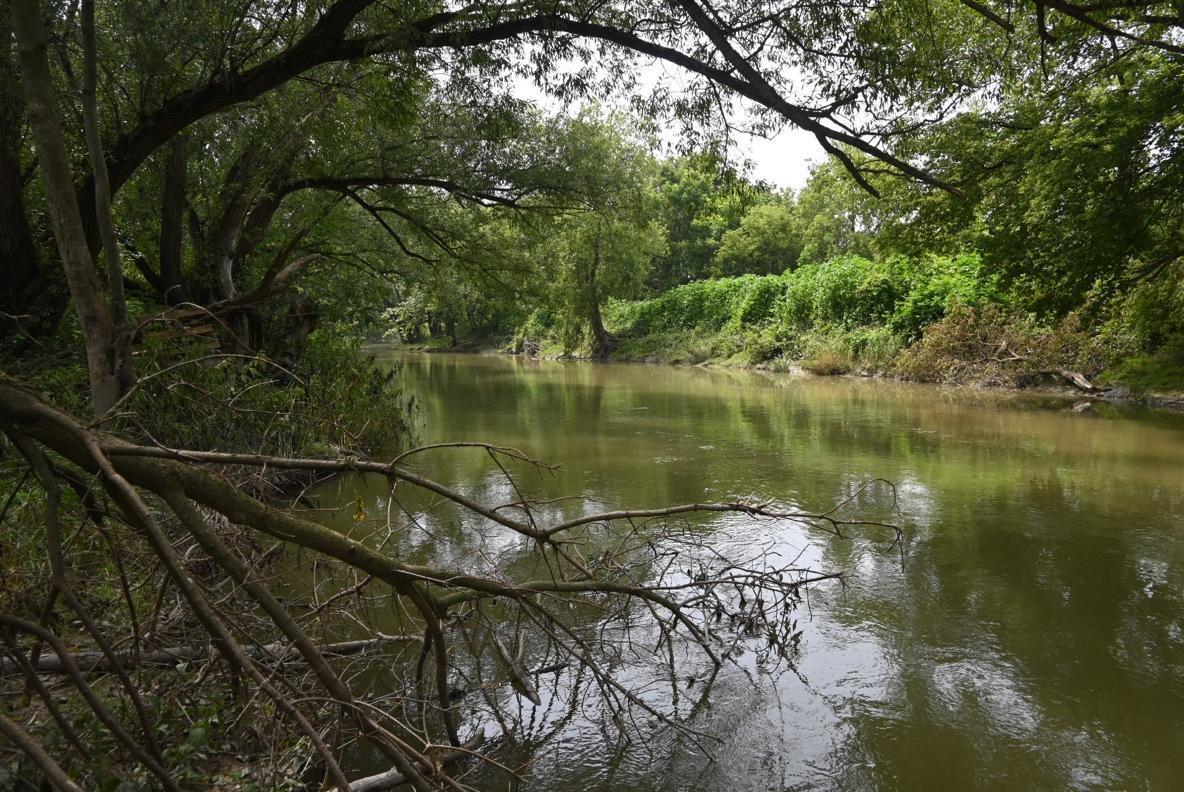
    Sunnivue rests on a Burford soil, a gravelly and cobbly soil formed by glacial-fluvial outwash, or fast-moving glacial meltwaters in a floodplain environment, and the back 20 acres is intact Carolinian forest. The farm is cut through by the Ausable River, a winding waterway flanked on both sides by a three-zone riparian buffer that runs south from West Perth to Ailsa Craig and arcs to the west before emptying into Lake Huron at Port Franks; significantly, it supports “26 species of freshwater mussels and 85 species of fish,” 6 of which are listed by the Committee on the Status of Endangered Wildlife in Canada (COSEWIC) as endangered, threatened, or of special concern (DFO, 2020, p. iii). Many of the key threats to these species—such as build up of sediments due to erosion following the loss of riparian cover, nutrient enrichment (due to tile drainage), contaminants (including pesticide and manure runoff), and habitat modification and landscape fragmentation (due to intensive land use and continuous cultivation)—are linked to the high levels of intensive agricultural practices introduced in the 1850s and that continue still today to dominate the watershed (DFO, 2020, p. iii). 

    A river with trees and bushes  Description automatically generated

    The Upper Ausable River running through Sunnivue Farm, 2023. Photo: Kate Lawless.

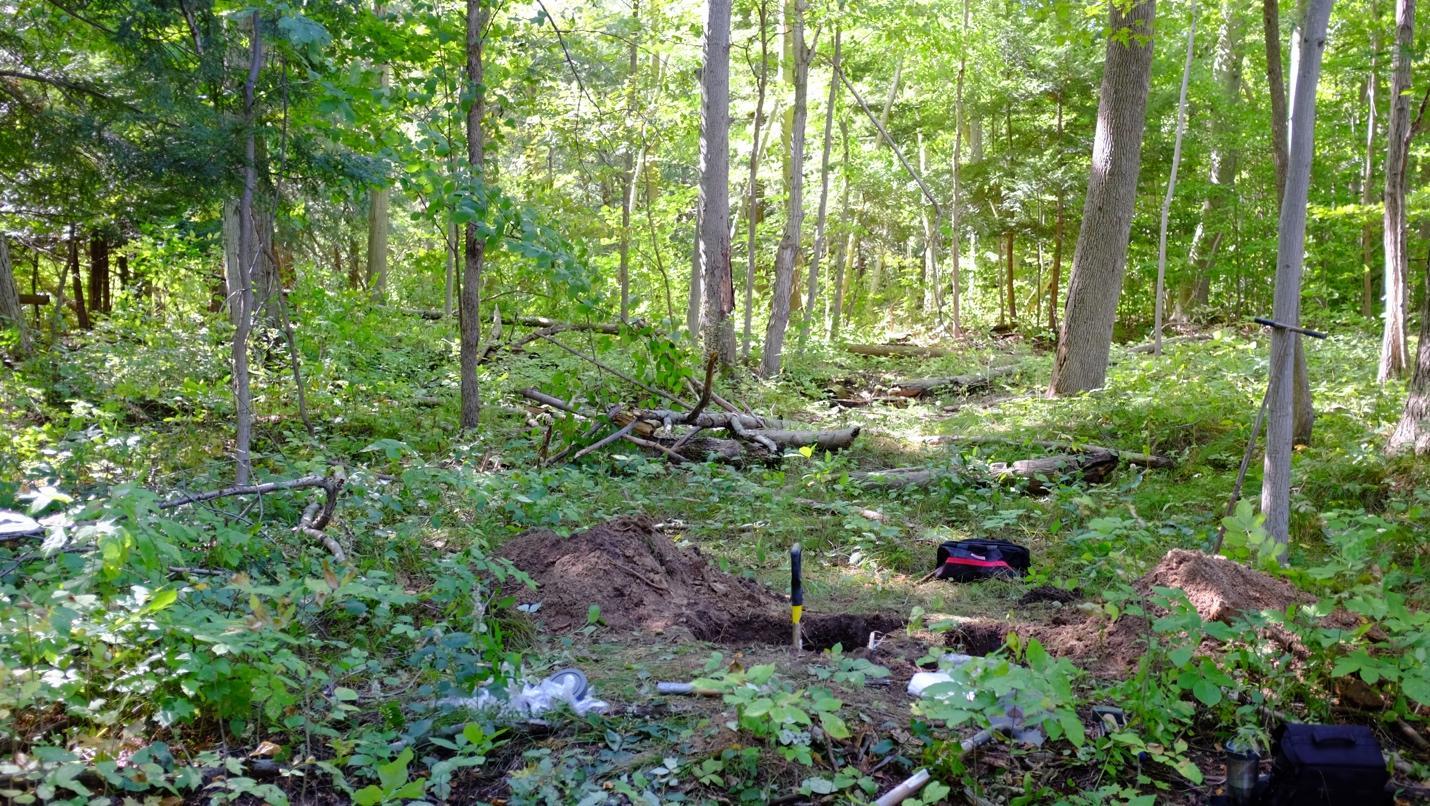
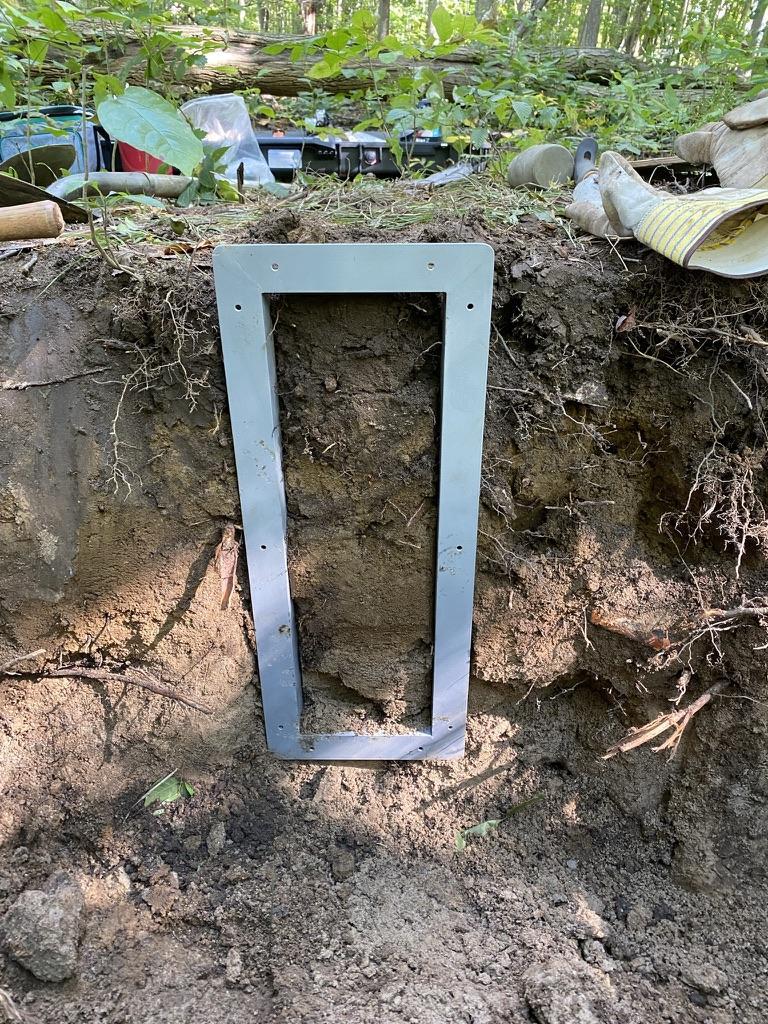
    We began field research in the summer of 2021 with in-depth oral history interviews with five key informants: Alex and Ellinor Nurnberg (the primary farmers from 1991-2021, and founding members of ROSE, a Land Care Association, the not-for-profit trust governing Sunnivue farm), Kristina and Michael Courey (the new farmers as of July 2021 and founders of the social enterprise, New Moon Community Homestead, now operating at Sunnivue) and Jens Stickling (a long-time member and then-chair of the ROSE Board of Directors). We followed these interviews by extracting soil monoliths and samples from two representative sites on the farm, one cultivated and the other uncultivated. The uncultivated site, located in a patch of forest in the back 20 acres, provided a benchmark for the cultivated site, an arable field (previously the market garden) hosting an alfalfa cover crop that has since been reconverted into a market garden. 

    A forest with trees and bushes  Description automatically generated Soil pit in uncultivated Carolinian forest soil, Sunnivue Farm, 2021. Photo: Ed Gregorich.
    A green field with trees and the sun  Description automatically generated

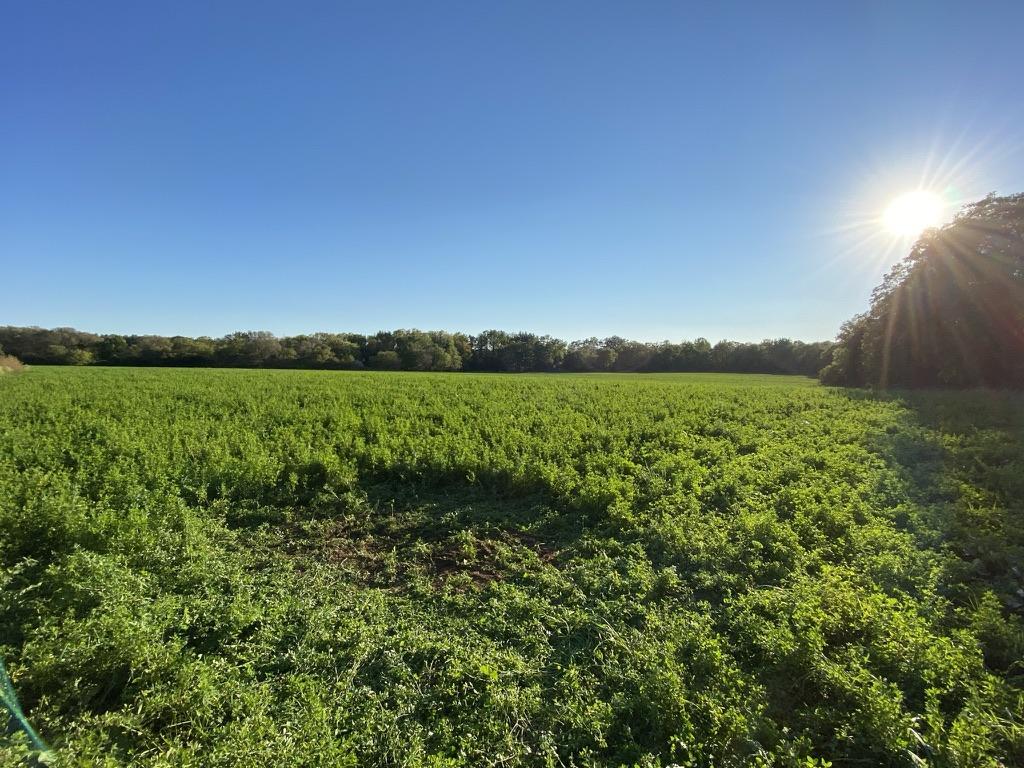
    Site of the soil pit in cultivated soil with a temporary alfalfa cover crop, Sunnivue Farm, 2021. Photo: Ed Gregorich.
    A metal frame on a dirt surface  Description automatically generated

    Extracting the forest soil monolith, Sunnivue Farm, 2021. Photo: Kate Lawless.

    From here, we began historical and archival research starting with Sunnivue Farm and ROSE: Celebrating 21 Years of Building a Dream, 1992-2013, a retrospective containing (among other things) a collection of annual newsletters written by Alex. We continued with visits to local archives and extended periods of participant observation, including a 3-day Vision Retreat in September 2021 to discuss the farm-level vision during the transition between incoming and outgoing farmers. We are continuing this background research by following threads in the interviews that lead us to broader systems-level interactions. We are especially interested in how the farmers and greater community understand their relations with non-humans on the farm, as well as how they speak about the relationship between natural and social systems and their decline or flourishing. Our aim through this process is to elucidate how local human-soil relations are shaped by the often-divergent pressures of both intimate social spheres (i.e., kinship networks) and more-or-less abstract global structures (i.e., international trade networks), and how multi-species soil care communities, or complex networks of diverse lifeforms, negotiate “ecological livelihoods”–or interdependent “habitats” of making, receiving, and providing (Miller & Gibson-Graham, 2020)–in this context. Importantly, the concept of “ecological livelihoods” refuses a clear distinction between Economy and Environment, instead recognizing the “myriad interdependencies in which our sustenance is implicated” (Miller & Gibson-Graham, 2020).

    The results of our research are preliminary but show high levels of soil health despite community perceptions of the overall decline of farm-level ecosystem health. Surprisingly, from a soil science perspective, the health of the cultivated soil (approximated here by measures of soil nutrient levels, soil organic carbon, and microbial respiration and biomass) surpasses that of the uncultivated soil in the forest on the same farm holding. While magnesium and potassium levels are comparable in both soils, phosphorus levels are much higher in the cultivated soil, which indicates good management of inputs. In addition, the total mass of soil organic carbon (which gives an estimate of the health and fertility of the soil) is roughly 40% higher in the cultivated soil (10.9 kg/m2) compared to the uncultivated soil (6.12 kg/m2) which, according to Ed Gregorich, our collaborating soil biochemist, is quite unusual. Alex and Ellinor attribute this to the incorporation of alfalfa in the rotation and the use of composted manure. In addition, the respiratory quotient of the arable soil is larger than that of the forest soil, indicating higher carbon cycling and nutrient cycling by soil microbiota.  

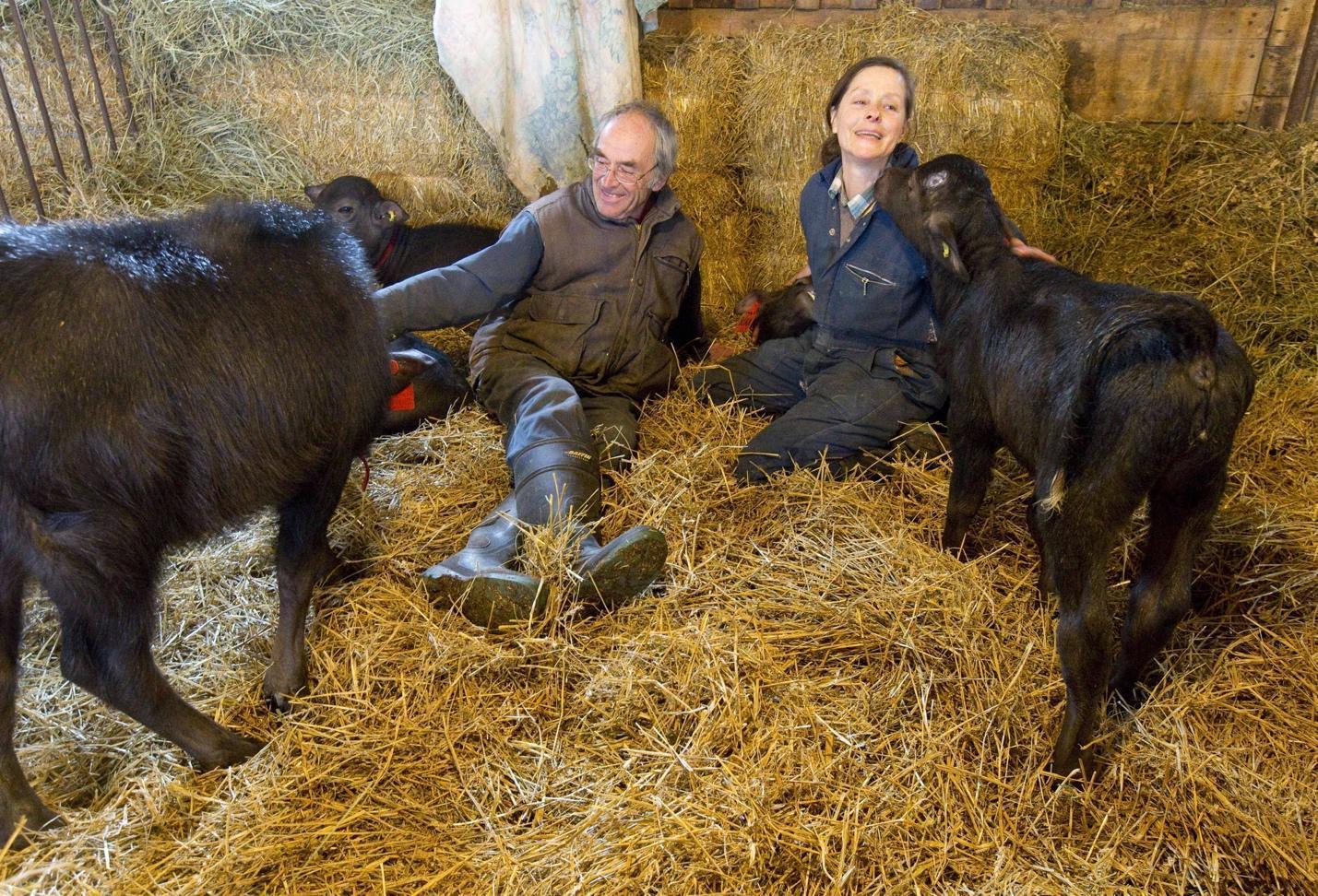
    By contrast, our qualitative analysis shows a shared perception of soil and social “crises” and farm “dis-ease” among the community members, a perception in part linked to declines in biodiversity observed by Alex and Ellinor, a worrying trend that they connect to changes in land use management. These changes were precipitated by external economic pressures, especially proposed changes to the milk quota in 2008. In response, Alex and Ellinor sold their dairy herd. Of course, this was a difficult decision for them since cows are a central component of biodynamic agriculture, which strives to operate as a closed-loop system. They replaced the herd with water buffalo (which does not have a quota), but the market for water buffalo milk is smaller, and water buffalo, as Alex explains in one of his newsletters, are not as open as cattle to being milked. Ensuing financial struggles were compounded by the difficulties of retirement and farmer succession (a significant problem across Southwestern Ontario); indeed, it took roughly 6 years for Alex and Ellinor to find a suitable incoming farm family (eventually Mike and Kristina) who would uphold the vision and objectives of the farm: promote biodynamic agriculture; make the farm a social, therapeutic and educational hub; assist with research related to these objectives; and hold the land in trust for agricultural use. In the meantime, they leased the land out to off-site farmers. 

    A person and person sitting with goats  Description automatically generated

    Alex and Ellinor with water buffalo calves, Sunnivue Farm, 2014. Photo: Craig Glover/The London Free Press.

    Throughout this transition, Alex and Ellinor claim that the health of the farm began to decline, a sentiment shared by the rest of the community at the Vision Retreat. The founding farmers explain that only a few years of “doing things differently” caused visible changes in biodiversity on the farm, in particular the disappearance of bobolinks (Dolichonyx oryzivorus), bumblebees and phlox (Phlox divaricata). A walk around the farm today shows that Common eastern bumblebees (Bombus impatiens) are on the rise, but the bobolinks have not returned and, indeed, this appears to be part of a larger dynamic that is as yet poorly understood. (To wit, bobolinks were assigned a COSEWIC status of “threatened” (T) in 2010, which was downgraded to “special concern” (SC) in 2016.) Some of these negative trends at Sunnivue Farm may have been the result of changes in farming practices (i.e., the use of liquid rather than composted manure during the transition period) and some might be attributed to broader environmental and climate changes (exemplified this past year by an unprecedented spate of Ontario wildfires and excessive precipitation). In the future, we will explore these questions. 

    The findings of this pilot study suggest at least two things: First, external political-economic pressures can disrupt sustainable social-ecological relations by prioritizing socioeconomic values over personal, cultural and ecological values (for more on the role of these values, and interactions among them, in ecological restoration see the four-quadrant model of Clewell & Aronson, 2013, Chapter 2). This results in a complex set of negotiations that has the potential to influence and indeed compromise the integrity of ecological trajectories in a site undergoing transition, and now restoration. Second, while the impacts of both systems-level and interpersonal conflict or disruption may not be visible in standard measurements of soil health, our qualitative research demonstrates that these disruptions may impact the health of the farm ecosystem. 

    Building on Henry Janzen’s claim that “the soil remembers” (Janzen, 2016), we will continue to explore how soils might “remember” or reflect past social and ecological relations, and our Expanded Soil Profile analytical tool will, we hope, help to identify the “latent and active ‘ecological memories’” (Balaguer et al., 2014, p. 12) required for the construction of multiple, sequential reference models that we expect will be needed to truly restore the Sunnivue Farm ecosystem. And we hypothesize that soil care communities with a shared conception of soil as a living system or relational medium are the best vehicles for this exploration because they are at the forefront of a broader ecosocial transformation that not only recognizes humans as part of nature (and soils) and understands the deep interdependencies of societies and ecosystems, but also recognizes the intrinsic value of nature and strives to minimize extractive practices. Moving forward, we will aim to further develop the Expanded Soil Profile as a tool for social-ecological restoration through the exploration of and collaboration with soil care communities in Dawson City, Yukon and Lethbridge, Alberta who also see soils as the foundation of both social and ecological health, integrity, vigour, care, and resilience. 

    Acknowledgments

    This research was funded by the Tri-Agencies’ (The Canadian Institutes of Health Research [CIHR], Natural Sciences and Engineering Research Council [NSERC], and Social Sciences and Humanities Research Council [SSHRC]) New Frontiers in Research Fund–Exploration Grant, which supports interdisciplinary, high risk/high reward, transformative research in Canada.

    References 

    Balaguer, L., Escudero, A., Martín-Duque, J. F., Mola, I., & Aronson, J. (2014). The historical reference in restoration ecology: Re-defining a cornerstone concept. Biological Conservation, 176, 12–20. https://doi.org/10.1016/j.biocon.2014.05.007

    Clewell, A. F., & Aronson, J. (2013). Ecological Restoration : Principles, Values, and Structure of an Emerging Profession. 2nd ed.  Island Press and SER.

    DFO. (2020). Action Plan for the Ausable River in Canada: An Ecosystem Approach (Species at Risk Act Action Plan Series. Fisheries and Oceans Canada. (see here

    ESTR Secretariat. (2016). Mixedwood Plains Ecozone: Evidence for key findings summary. Canadian Biodiversity: Ecosystem Status and Trends 2010. Canadian Councils of Resource Ministers. (see here

    Gann, G. D., McDonald, T., Walder, B., Aronson, J., Nelson, C. R., Jonson, J., Hallett, J. G., Eisenberg, C., Guariguata, M. R., Liu, J., Hua, F., Echeverría, C., Gonzales, E., Shaw, N., Decleer, K., & Dixon, K. W. (2019). International principles and standards for the practice of ecological restoration. Second edition. Restoration Ecology, 27(S1), S1–S46. https://doi.org/10.1111/rec.13035

    Greenhough, B. (2014). More-than-human Geographies. In R. Lee, N. Castree, R. Kitchin, V. Lawson, A. Paasi, C. Philo, S. Radcliffe, S. Roberts, & C. Withers (Eds.), The SAGE Handbook of Human Geography, volume 1 (pp. 94–119). SAGE Publications Ltd.

    Janzen, H. H. (2016). The Soil Remembers. Soil Science Society of America Journal, 80(6), 1429–1432. https://doi.org/10.2136/sssaj2016.05.0143

    Kimmerer, R. W. (2013). Braiding Sweetgrass: Indigenous Wisdom, Scientific Knowledge and the Teachings of Plants. Milkweed Editions.

    Krzywoszynska, A., & Marchesi, G. (2020). Toward a Relational Materiality of Soils: Introduction. Environmental Humanities, 12(1), 190–204. https://doi.org/10.1215/22011919-8142297

    Miller, E., & Gibson-Graham, J. K. (2020). Thinking with Interdependence: From Economy/Environment to Ecological Livelihoods. In:  J. Bennett & M. Zourazni (Eds.), Thinking in the World: A Reader. Bloomsbury Academic, 313-340.

    Parikka, J. (2015). A Geology of Media. U of Minnesota Press.

    Puig de la Bellacasa, M. (2015). Making time for soil: Technoscientific futurity and the pace of care. Social Studies of Science, 45(5), 691–716. https://doi.org/10.1177/0306312715599851