Category: Shaw Nature Reserve

  • Managing invasive common buckthorn (Rhamnus cathartica) in the Midwest US

    Managing invasive common buckthorn (Rhamnus cathartica) in the Midwest US

    Andrew Kaul is a Restoration Ecologist in the Center for Conservation and Sustainable Development at the Missouri Botanical Garden. Mike Schuster is a Researcher in the Department of Forest Resources at the University of Minnesota. 

    Removing invasive shrubs is a critical step in ecological restoration projects in many degraded forests and woodlands across the Eastern US. Invasive shrubs quickly spread and outcompete native plants, which leads to declines in plant species diversity and ecosystem functioning. By suppressing these aggressive non-native species, restoration efforts can promote the regeneration of native vegetation that provides habitat and food sources for local wildlife. Removing invasive shrubs also allows more sunlight to reach the forest floor, enabling the regeneration of native tree seedlings and understory plants. Establishing an understory community is necessary to conduct effective management with prescribed burns in fire-adapted systems.

    Rhamnus cathartica, also known as “common buckthorn” or “European buckthorn”, is one of the most aggressive invasive species in Eastern North American forests. This buckthorn species is a shrub/small tree originally native to Europe and Western parts of Asia, brought to North America in the 1800s, and planted as a hedge-forming species. Buckthorn biology and control have been studied extensively in recent years due to its significant ecological and economic impacts, particularly in the Midwest US.

    R. cathartica native range in Eastern Hemisphere (map from Kurylo et al. 2007).

    ​Many aspects of its growth and reproduction make buckthorn a successful invader.Buckthorn is dioecious (male and female flowers occur on separate individuals) and femalesproduce copious quantities of small berry-like fruits called drupes (like a cherry) that are widely dispersed by birds. Buckthorn can thrive in many soil and light conditions, being especially tolerant to low-light environments caused by shading from other trees and shrubs. It also has unique phenology, holding its leaves late into fall. Like many invasive shrubs, its dense branching physiognomy leads buckthorn to form thickets that shade out native vegetation, decreasing diversity of plant species in invaded forests. In addition to effects on plants, buckthorn invasion has also been linked to changes in soil chemistry and may increase soil erosion through reducing the cover of understory plants.

    R. cathartica non-native range as depicted by the Biota of North America Program (BONAP). Light blue denotes counties where buckthorn has been reported, and pink indicates where it is present and state-listed as a noxious weed. This map likely represents a conservative estimate of common buckthorn’s range, which has been expanding in recent years.

    Many of the same traits that make buckthorn a good invader also make it very difficult to remove and control when restoring natural areas. It produces extensive root systems that store nutrients, so it can re-sprout vigorously when cut. This means removal requires repeated control efforts over multiple years. The most common control methods used to manage buckthorn include mechanical and chemical treatments. Mechanically, young seedlings can be hand-pulled and saplings can be removed with a weed wrench. More mature plants are often girdled, cut, or mowed to remove most of the biomass, and then application of herbicide is necessary, otherwise, stems will survive and quickly re-sprout within only a few weeks. Herbicide can also be applied to basal bark without cutting, but this method is less effective on large individuals.

    Even with persistent effort, complete buckthorn control is rarely successful because it can quickly recolonize areas if not thoroughly removed. Fortunately, there is some good news about the feasibility of buckthorn management. It was previously believed that buckthorn seeds could form persistent “banks” in the soil, with seeds surviving for up to 6 or 7 years, waiting for the right set of conditions to trigger germination. However, our recent study showed that buckthorn seeds actually germinate in one to two years, with 97% germinating in the first year. This is a critical discovery for the management of buckthorn, as it indicates that after removing large individuals, management methods to suppress seedling establishment are key to preventing reinvasion. Moreover, if seedlings are suppressed for the first couple of years, then buckthorn control is possible. Because these fleshy-fruited invaders are so readily dispersed by birds, complete eradication is unlikely, but continued management can keep densities low enough to not impact native plant communities.

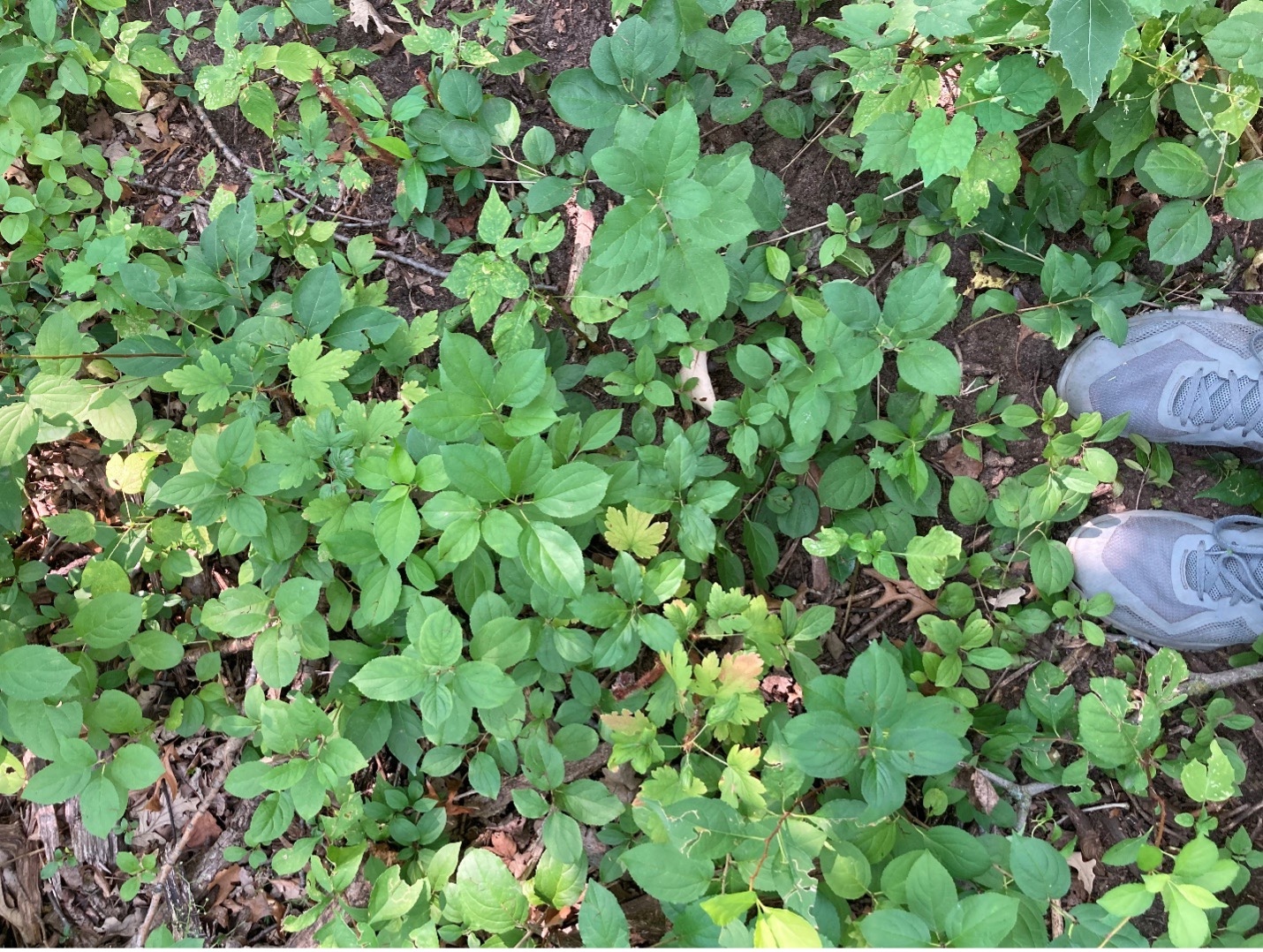
    R. cathartica seedlings forming a dense layer near the ground in a temperate deciduous forest in Eastern Minnesota USA (Photo by Andrew Kaul).

    ​Our research group at the University of Minnesota led by Peter Reich has been studying buckthorn for several years, funded by multiple grants from the Minnesota Invasive Terrestrial Plants and Pests Center (MITPPC). Recent work in our group has focused on how to suppress buckthorn regeneration after initial removal of large individuals. The Cover it up! project investigates which methods of revegetation are most effective for restoring the ground-layer with native species that can prevent buckthorn recruitment and growth. Various experimental introductions of native plants have included direct seeding shrubs, direct seeding trees, adding herbaceous seed mixes with variable ratios of grasses to forbs, and treatments with combinations of functional groups. For example, we combined sowing the Standard Cover It Up seed mix of 34 native grasses, and forbs with planting bare-root plants from other functional groups – trees, shrubs, ferns, or sedges.

    Across several experiments, one of the most important results has been that the extent to which revegetation treatments are effective in suppressing buckthorn, is mostly explained by their ability to rapidly establish vegetation, preempt space, and shade out buckthorn seedlings. Two of the most successful strategies include 1) planting native tree species and 2) seeding a mix of native Elymus spp. grasses (wild ryes) and wildflowers to establish an herbaceous understory. The native trees used in this experiment included species like Sambucus canadensis (elderberry), Abies balsamea (balsam fir), and Acer saccharum (sugar maple), planted immediately after clearing-out buckthorn. Planting woody native species can reduce buckthorn regrowth by up to 80%, and establishing a grassy herbaceous community can reduce regrowth by 77%.

    We recently published A Guide to Forest Understory Revegetation, which makes several science-based recommendations for invasive shrub management based on our research. Revegetation should occur as soon as possible after initial removal of large individuals. Additionally, restoring sites via revegetation will be most effective in areas with at least 10% open canopy so that sufficient light is present for native seedlings to establish. If opening the canopy is feasible by selectively removing some trees, this will facilitate a greater cover and diversity of herbaceous plants in the understory. When conducting revegetation with herbaceous species, planting a native seed mix with a high proportion of cool season (C3) grasses is ideal. These species grow well in shadier environments, establish rapidly, are inexpensive, and produce dense vegetation that can carry a fire to facilitate management with prescribed burns. Shade-adapted wildflowers such as Ageratina altissima (white snakeroot) or Hydrophyllum virginianum (Virginia waterleaf) should be included in the seed mix in order to add value to pollinators and other insects. When conducting revegetation with woody species, planting native tree species can be highly effective in excluding buckthorn, but revegetation through bare-root plantings has its drawbacks, being more expensive and labor intensive. This method would work well if implemented in smaller areas, especially where there are few deer. In general, revegetation plansshould prioritize reducing light reaching the ground where buckthorn seedling are growing.Counterintuitively, this can be achieved by opening the tree canopy to facilitate establishment of herbaceous cover in the understory. 

    In addition to studying methods of revegetation to suppress buckthorn seedlings, our research group is also investigating novel methods for removal of mature buckthorn plants. In June 2024, we initiated an experiment testing the efficacy of critical period cutting to kill large buckthorn without the use of chemicals. This method was pioneered by Friends of the Mississippi River (FMR) as a strategy for removing buckthorn without using herbicide, which is prohibited in Minneapolis parks. This method involves using a saw or loppers to cut off the top of a buckthorn plant about 1.5 m from the ground early in the growing season. Subsequently, a couple times throughout the growing season, each buckthorn is revisited and stripped (picked off easily by hand) of all re-growth. This process is then repeated the following year, if necessary. Cutting the stem at chest height rather than near the ground has multiple benefits of 1) reducing risk of stumps as a tripping hazard, 2) relocating previously cut stems, and 3) stripping re-sproutsthat usually occur at the end of the stem, which is near chest height.

    Given FMR’s success implementing the critical period cutting method, our experiment is examining when this method is most effective in killing buckthorn depending on the size of the individual or its light environment. We are also quantifying the minimal effort required to ensure buckthorn mortality by examining survival of buckthorn over two years of stripping re-sprouts, with 4, 6, or 10 total removals. To test how effective this method is for controlling other invasive shrub species, we are working with collaborators in Wisconsin, Maine, and Missouri, who are also conducing this experiment on the invasive shrubs Frangula alnus (glossy buckthorn) and Lonicera maackii (bush honeysuckle). These are also serious woody invaders of forests throughout the Midwest and our research aims to improve forest restoration outcomes at smaller scales when herbicide or other larger-scale methods are not possible.

    Stems of common buckthorn in a study area examining the efficacy of critical period cutting in Minnesota (Photo credit Alex Roth).
    Experimental stems of bush honeysuckle at the Missouri Botanical Garden’s Shaw Nature Reserve (Photos by Andrew Kaul). 

    If you are interested in learning about these projects in greater depth, you can read the guide to forest understory revegetation here or learn more about ongoing research in the Cover It Up! project here. If you have any questions, feel free to contact Mike (schuster@umn.edu) or Andrew (akaul@mobot.org).
  • Understanding the role of soil microbial communities in oak woodland restoration using DNA metabarcoding

    Understanding the role of soil microbial communities in oak woodland restoration using DNA metabarcoding

    By: Rachel Brant

    Rachel is a postdoctoral fellow in the Missouri Botanical Garden’s Center for Conservation & Sustainable Development whose research focuses on plant-pollinator interactions and using eDNA to advance the conservation and restoration of biodiversity.

    Oak-dominated ecosystems occur in many areas of the northern hemisphere, support considerable biodiversity, and provide vast benefits to humans. Although notably absent from the southern hemisphere, oak-dominated or mixed-oak dominated forests are found across much of southern and central Europe, northeast Asia, and the eastern and central United States. Oak ecosystems range from closed forests with a dense midstory to open forests or woodlands with continuous canopy or widely spaced trees and dominance of herbaceous vegetation in the understory.

    Around 80% or more of the plant diversity in oak forest and woodland ecosystems in the eastern US, including a large proportion of rare species, resides in the herbaceous layer, which contributes significantly to nutrient cycling and overall ecosystem function. However, these forests and woodlands have suffered significant degradation over the past century, resulting in dramatic shifts in species composition and structure due to human land-use activities, invasive species, and alterations in disturbance regimes. In particular, fire exclusion has led to the encroachment of fire-intolerant tree species and nonnative shrubs, decreasing both understory light availability and the abundance and diversity of herbaceous plant species.

    Restoration of oak ecosystems usually involves prescribed burning or a combination of burning, canopy thinning, and control of undesirable woody vegetation. Although these restorative practices encourage the passive recovery of herbaceous flora, restored oak woodlands often lack conservative species in the understory. Unlike matrix or ruderal plant species, conservative plant species are those that depend on high-quality or minimally damaged sites and rapidly disappear with degradation. In addition, they often fail to recolonize sites naturally, making them potentially important targets for reintroduction.

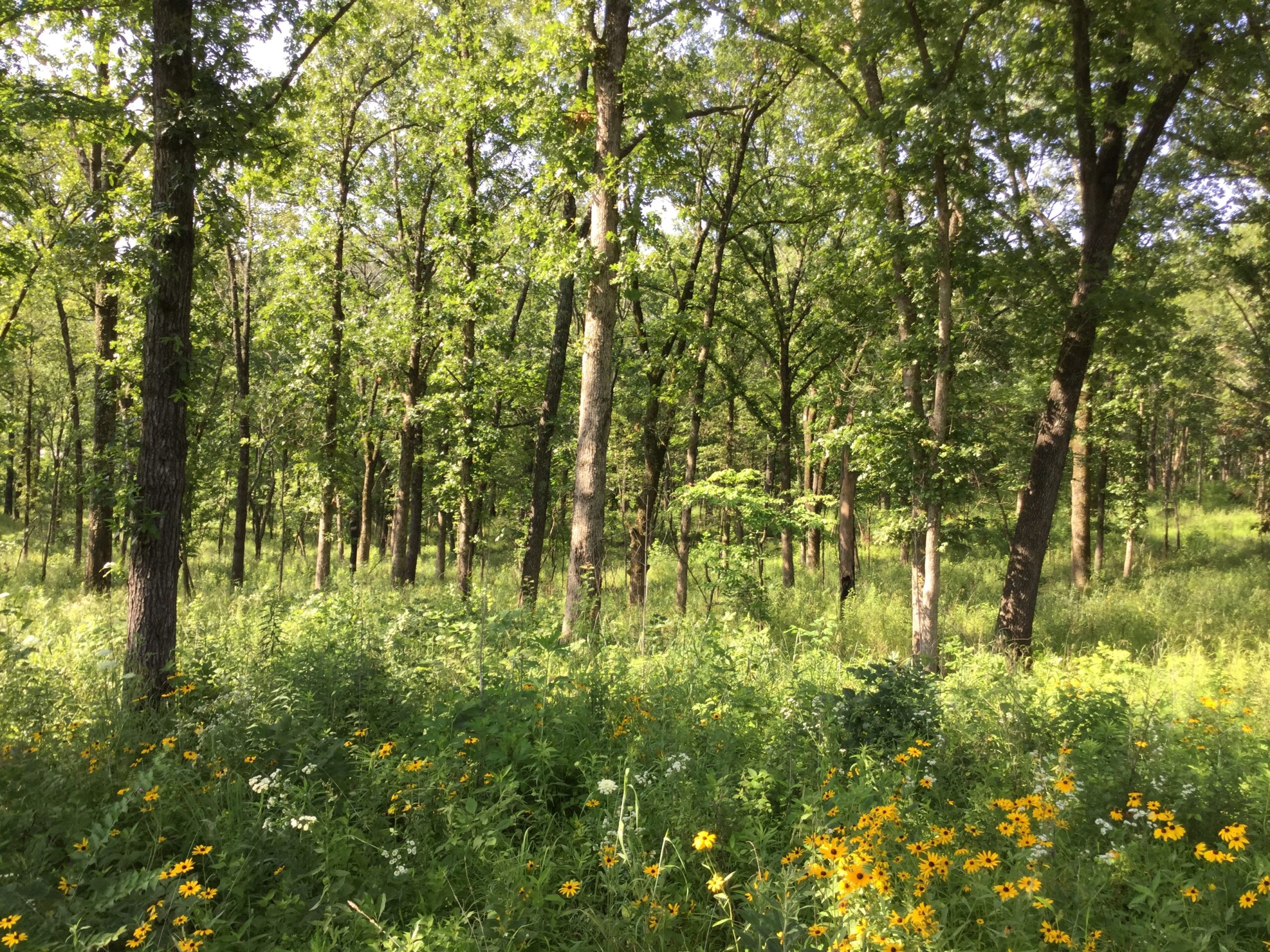
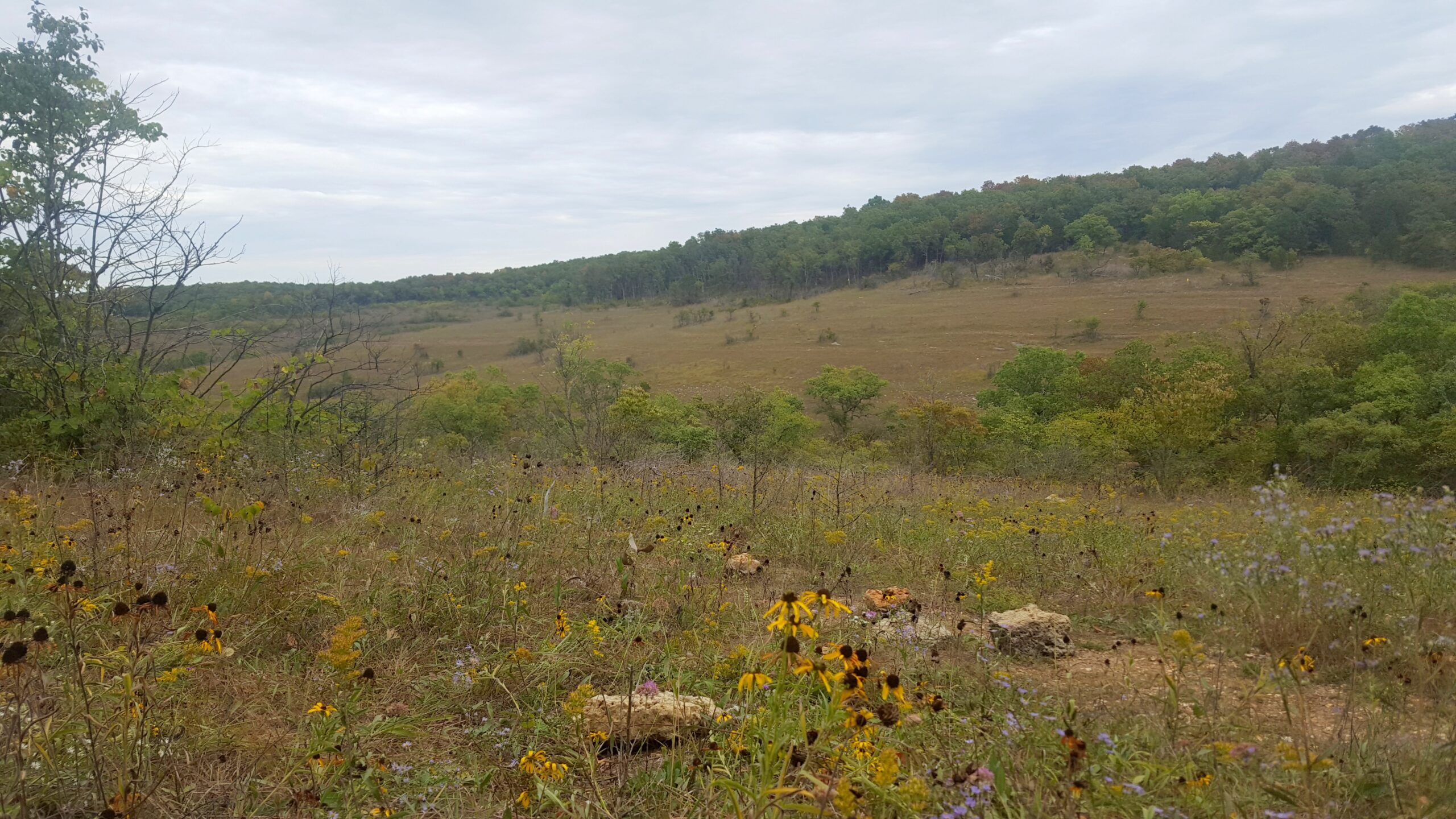
    (Top) Degraded oak woodland at Missouri Botanical Garden’s Shaw Nature Reserve infested with nonnative shrubs and fire-sensitive tree species and (Bottom) Adjacent restored oak woodland after mechanical control of woody encroachment and six prescribed burns. Note the minimal sunlight penetrating the woodland floor and lack of herbaceous species in the degraded woodland relative to the restored woodland. Photo: (Top) Brad Delfeld and (Bottom) Matthew Albrecht.

    Conservative species are notoriously challenging to reintroduce in restoration projects, with soil microbes emerging as a key factor influencing their success. Arbuscular mycorrhizal fungi (AMF) are particularly crucial in this context; they enhance nutrient uptake and improve stress resistance, benefits that are especially valuable for conservative plant species with specific habitat requirements. For example, one study found that conservative species were more dependent on AMF and exhibited higher habitat specificity compared to less conservative species (Bauer et al. 2018). The practice of soil inoculation with whole soil, which presumably contains beneficial mutualists like AMF, is increasingly employed to boost plant growth and survival in restoration projects. Despite its growing popularity, though, the effects of soil inoculation on the establishment of herbaceous species in oak-dominated ecosystems remain poorly tested.

    Another factor that may affect the establishment of conservative plant species is the timing of reintroduction. Environmental conditions are predicted to be more favorable for the establishment of conservative species later in restoration, in part because soil symbionts facilitating plant establishment may only be found in later-successional sites. Alternatively, early restorations may lack the establishment barriers potentially encountered later in restoration, such as competition with established vegetation or soil legacies from early-arriving species, but could be deficient in important microbial mutualists often required by conservative plant species.

    To test these hypotheses, we examined the potential role of soil microbial communities on the performance of conservative herbaceous species using an oak woodland restoration chronosequence at the Missouri Botanical Garden’s Shaw Nature Reserve. First, we collected bulked field soil samples from three sites representing different restoration ages (young, intermediate, and old) based on their onset since restoration began (7, 16, 29 years ago) with prescribed burning, selective tree thinning, and non-native shrub control. We quantified several soil abiotic properties (e.g., pH, phosphorus, potassium, and nitrogen) and employed DNA metabarcoding to describe the microbial composition of the soil. DNA metabarcoding is a cutting-edge technique that identifies many taxa from an environmental sample by sequencing specific genetic markers from extracted DNA. This method provides a comprehensive snapshot of the microbial diversity present, allowing one to better understand otherwise cryptic below ground communities. 

    Conservative perennial forbs used in a greenhouse study to test the effects of soil inoculation young, intermediate, and old restored woodlands on plant growth: Geum virginianum (left), Solidago argute (center), and Solidago caesia (right). Photo credit: Gerrit Davidse (left) and Missouri Botanical Garden (center and right).

    Next, we conducted a greenhouse study with three conservative forb species, Geum virginianum, Solidago arguta, and Solidago caesia, testing their growth responses to soil inoculum from sites that differ in restoration age. These species are components of the regional species pool, but absent from restored oak woodlands at Shaw Nature Reserve. We placed germinated seeds of each species in quart-sized pots filled with a sterilized topsoil mix that mimic oak woodland soils. Each sterile pot (270 in total) was then inoculated with 10 mL of the bulked live field soil (approx. 1% by volume) sourced from one of the three restored sites. Plants were grown for 12 weeks in standard greenhouse conditions and then evaluated for growth using nondestructive measurements.

    Planting seeds of conservative forb species into soil inoculum treatments in a greenhouse study. Photo credit: Leighton Reid

    Tree species and soil microbial communities in restored oak woodlands 
    Not surprisingly, we found that younger restored oak woodlands, with historically fewer prescribed fires, had a greater abundance of fire-sensitive tree species (e.g., sugar maple, Acer saccharum) than the intermediate and older restored sites. However, younger restored woodlands also exhibited lower levels of soil phosphorus compared to older sites, consistent with previous studies that have shown greater levels of potassium and phosphorus in soils post-burning. Other soil abiotic properties, however, did not differ across the restoration chronosequence. 

    A grove of sugar maples (Acer saccharum) during autumn in the young restoration site at Shaw Nature Reserve. Photo credit: Mike Saxton

    Bacterial and fungal communities varied in composition across the restoration chronosequence. For example, Firmicutes, a phylum of bacteria noted for surviving in extreme conditions, such as in severely burned areas, was more abundant in soils from the oldest restored woodland, which experienced a greater number of prescribed fires than the other sites. In contrast, the fungal phylum Ascomycota was more abundant in restored woodlands of young and intermediate age. Members of Ascomycota include decomposers that break down organic materials and endophytes that form mutualistic or commensal associations with plants. 

    Plant-soil interactions in response to soil inoculation
    After 12 weeks of plant growth in the greenhouse, we found that forbs tended to grow larger leaves when grown in soil inoculum from the younger restoration site compared to the intermediate restoration site. Additionally, S. arguta and S. caesia grew longer leaves in soil inoculated from the intermediate compared to the old site, while G. virginianum plants tended to produce longer leaves when grown in inoculum from young relative to the old restoration site.

    Leaf length (cm) of three native forbs after 12 weeks of growth in whole-soil inoculations from young, intermediate, and old restored oak woodlands at Shaw Nature Reserve. Geum virginianum (GV), Solidago arguta (SA), and Solidago caesia (SC).

    Results from the DNA metabarcoding provide a clue as to why the soil inoculum treatments induced different plant-growth responses. Soils from the young restoration exhibited increased relative abundance of mutualistic microbes, including AMF and cyanobacteria, and decreased pathogenic taxa after conditioning by each of the three species. In contrast, the oldest restoration site had the greatest relative abundance of pathogens and the lowest relative abundance of mutualists. This enhanced microbial profile in young restorations may facilitate better nutrient uptake, and disease and stress resistance in plants. From a practical perspective, early-stage restorations may provide the most favorable soil microbial community for the establishment of conservative plant species in these oak ecosystems. One possible reason for this could be a shift in the increased relative abundance of AMF-associating tree species (e.g., maple) from older to young restored woodlands. AMF-associating tree species may harbor unique AMF taxa that resulted in increased herbaceous plant growth and AMF colonization for plants conditioned with young soil inoculum.

    Interestingly, although some microbial taxa exhibited consistent patterns across all plant species within an inoculation treatment, each plant species also associated with unique microbial taxa when grown in the same soil inoculum treatment. For example, the Glomeraceae, which includes AMF, was marginally more abundant after S. caesia was grown in young inoculum, whereas Ascobolaceae – fungi that feed on decaying and dead matter – was significantly abundant only when G. virginianum was grown in old soil inoculum. This means that species reintroduced during different stages of oak ecosystem restoration could influence key ecological functions by selecting for or against certain microbes, including pathogens that regulate plant community dynamics, decomposers involved in nutrient cycling, and mutualists that enhance plant performance. 

    Overall, our study demonstrates how restoration age can shape interactions between soil microbes and herbaceous plant species in restored oak woodlands. By better understanding these interactions, we can enhance the restoration and recovery of degraded oak ecosystems. However, an important and lingering question from our study is whether differences in plant growth and microbial communities observed in the greenhouse persist after the focal plant species are transplanted into the field. A study currently underway at Shaw Nature Reserve is addressing this question across different restoration ages and competition treatments. Our study reinforces global calls that emphasize the need for more research on the dynamic nature of plant-microbe relationships and interactions over time during restoration. Advancing scientific research on the relationship between the soil microbiota and ecological restoration practices is crucial for meeting local, regional, biome level and global restoration goals.

    If you want to learn more about microbial-herbaceous plant interactions in restored oak woodland, we invite you to read our recent paper in Ecology and Evolution.

  • Land Abandonment, Succession, and Restoration: The Wolf Run Grassland Restoration Project at the Missouri Botanical Garden’s Shaw Nature Reserve

    Land Abandonment, Succession, and Restoration: The Wolf Run Grassland Restoration Project at the Missouri Botanical Garden’s Shaw Nature Reserve

    By: Mike Saxton and Calvin Maginel

    Mike Saxton (mike.saxton@mobot.org) is the Manager of Restoration and Land Stewardship, and Calvin Maginel (cmaginel@mobot.org) is the Ecological Resource Scientist at Shaw Nature Reserve

    Since 1950, over 1-billon acres of agricultural land have been abandoned worldwide. In certain landscape contexts, unassisted spontaneous recovery of high levels of native biodiversity in abandoned fields is possible while in others, like the Midwest USA, fallow fields rarely develop into biologically rich habitats. To achieve the ambitious goals of the UN Decade of Ecosystem Restoration, land managers and ecologists need to better understand how to assist the regeneration and ecological restoration of these highly altered landscapes. 

    In 1925, the Missouri Botanical Garden purchased 1,300 acres of battered farm ground in Gray Summit, MO – approximately 35 miles (56 km) west of St. Louis – to escape the deleterious impact urban air pollution was having on horticultural collections in St. Louis City. The intended uses of this acreage were to: (1) propagate and grow plants, trees, and shrubs for the main Garden’s displays and (2) establish an arboretum focusing on woody plant collections. The site was officially named the Shaw Arboretum in 1933. After decades of development, many non-essential operations at the Arboretum were eliminated in 1958 and many fields were abandoned to allow spontaneous successional change. In 2000, the Shaw Arboretum was renamed Shaw Nature Reserve to reflect its contemporary mission to demonstrate, test, and inspire responsible stewardship practices through education, restoration, and protection of natural habitats and public enjoyment of the natural world. Today the Nature Reserve consists of 2,400 acres of varied habitat in various stages of restoration and revised management, including the use of prescribed fire.  

    Prior to European settlement, the natural plant communities and ecosystems of the area were fire adapted, open oak-hickory woodlands and xeric glades with gallery forests along riparian corridors. Post-settlement, woodlands were clear-cut with some woodlots left to passively regenerate while others were converted to row crop agriculture. 

    Wolf Run Grassland Restoration 

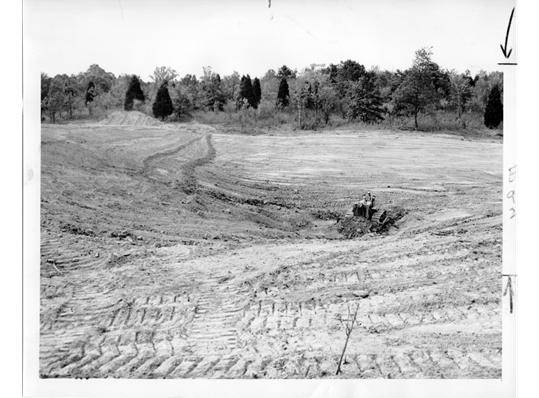
    In 2016, Nature Reserve staff set an ambitious goal to bring all 2,400 acres of the site into active management to promote native biodiversity by the year 2030. This effort will include restoring open pastures and former row crop fields, a relatively simple process. A much more challenging effort will be reclaiming 120 acres of old fields with 60+ year successional development, which is our current Wolf Run Grassland Restoration project. The 120 acre project area was initially “wasted farm ground” that had erosion gullies “where a freight train could pass without you seeing it”, according to August Beilmann, former Arboretum Director from 1941 to 1956. The entire project area was re-sculpted and smoothed by a bulldozer in 1953 and then converted to bluegrass (Poa pratensis). “Every piece of this land that looks so likely to be just right was laboriously rebuilt,” said Beilmann in a 1974 interview.

    Wolf Run Grassland Restoration project area in ca. 1945 showing open fields (light green) maintained through cattle grazing and mowing with trees occupying wet-weather streams and ditches (dark green). Photo: MBG Archives.

    Since 1958 when areas including the Wolf Run Grassland Restoration were removed from mowing and grazing, the site was encroached upon and became dominated by eastern red cedar (Juniperus virginiana), the non-native invasive shrubs Amur honeysuckle (Lonicera maackii), and border privet (Ligustrum obtusifolium), as well as slippery elm (Ulmus rubra), shingle oak (Quercus imbricaria) and ash (Fraxinus) species, the latter of which which are in severe decline due to the emerald ash borer. 

    These degraded woodlands had little native ground flora and were highly infested with non-native shrubs. Tree abundance and species composition had no historic analog. When setting ecological restoration goals for the area, staff determined that much of the site could not be managed as an open oak-hickory woodland, which would have existed at the site pre-settlement.  A new vision was needed. 

    Goals for the Wolf Run Grassland Restoration project

    • Establish a mosaic of 80 acres (~32 ha) of prairie, 15 acres (~6 ha) of savanna and 25 acres (~10 ha) of oak-hickory woodlands
    • Maximize native flora diversity and aggressively control invasive shrub species 
    • Manage with periodic, dormant-season prescribed fire 

    In 2021, Nature Reserve staff marked hundreds of native trees to retain including white, red, bur and black oaks (Quercus alba, Q. rubra, Q. macrocarpa, Q. velutina) and shagbark hickory (Carya ovata) and bitternut hickory (C. cordiformis). Drainages and wet weather streams were left with a 50 ft. (~15 m)  untreated buffer zone while a perennial creek flowing through the unit retained a 150 ft. (~46 m) untouched buffer. A logger removed unmarked trees from the area, with the commercial value of the timber offsetting the cost of the removal. Following US Fish and Wildlife Service recovery management guidelines for the Indiana bat (Myotis sodalis) — a federally endangered species — trees were only removed from November 1st to April 1st.

    Wolf Run Grassland Restoration project area pre-thinning (2021), approximately 60 years after land abandonment. Note the dark green areas are dominated by eastern red cedar (Juniperus virginiana), a native tree that rapidly colonizes abandoned or disturbed lands in the Midwest. Historically, this fire-sensitive tree species primarily occurred on rocky outcrops and bluffs that served as refugia from periodic fires that were common in the pre-European settlement landscape. Photo: ESRI
    Wolf Run Grassland Restoration project area post-thinning (2023). Photo: ESRI
    Forestry contractor equipment was used to remove most woody biomass greater than 4.5 in. (~11 cm) in diameter and left behind mostly small-diameter slash. A bulldozer was used to collect the debris into 600 piles that were subsequently burned. Photo: Mike Saxton

    The Restoration team has spent the last 9 months focusing on the removal of stumps for the project area. Stumps can be a substantial hazard for vehicles, equipment and staff safety. To seed native species and effectively manage the area for invasive species in perpetuity, the stumps must be ground down or cut flush to the ground.

    Skid loader mounted stump grinder removing stumps. Photo: M. Saxton

    Concurrent to this effort has been the site preparation step of chemically treating all of the invasive species and the disturbance driven annual vegetation that emerged post-land clearing [primarily fireweed (Erechtites hieraciifolius), mare’s tail (Erigeron canadensis), ragweed (Ambrosia artemisiifolia) and fox tail (Setaria pumila)]. This step is necessary because diverse, healthy native plant communities have not existed in these areas in more than 100 years. Consequently, there is no native seedbank to support the unassisted spontaneous recovery of native perennial herbaceous species in these highly degraded acres. 

    In areas where stumps have not been cleared, traditional equipment (tractor boom sprayers and UTV mounted spray rigs) for applying herbicide are ineffective. The Nature Reserve hired a contractor that specializes in drone-assisted aerial herbicide applications. The drone flies 12 ft. (~37 m) above vegetation and can self-navigate around trees and other hazards. The unit carries a total of 8 gallons (~30 L) and sprays approximately 3 gallons of herbicide per acre. The effective width of each pass is 25 ft. (~8 m). A single battery powers the drone, with a flight time of 7.5 minutes and a re-charge time of 6 minutes. When the herbicide tank runs out, the drone re-deploys to the fill up location, is refilled by the contractor, and then returns to where it left off. 

    Aerial drone sprayer used to eliminate undesirable vegetation. Photo: M. Saxton

    The last step after the undesirable trees have been removed, biomass/debris has been burned, the stumps have been ground and invasive species have been controlled, is the final ground preparation. Currently, in 2023, we are again smoothing out erosion gullies and clearing away the last remnants of woody debris with a bulldozer. This effort will ensure effective seed-to-soil contact when we sow native seed in January 2024 and will enhance our ability to successfully search for invasive species in the coming years by eliminating deep ruts and rills.  

    Above: Bulldozer in 1953 eliminating erosion rills in Wolf Run Grassland Restoration project area. Below: Bulldozer completing site preparation for native seed addition (2023).  Top Photo: St. Louis Globe Democrat, Bottom Photo: M. Saxton

    Native Seeding and Experimentation to promote Biodiversity Recovery 

    During the growing season of 2023, the Restoration team at the Nature Reserve has been feverishly collecting seed for this 2024 seeding effort. More than 1,100 lbs. (~500 kg) of bulk, milled seed from ~200 locally collected native tallgrass prairie and open oak-hickory woodland species will be used in the restoration planting. Additionally, these acres are enrolled in the Environmental Quality Incentives Program, EQIP – part of the Natural Resources Conservation Service, and we must purchase viability-tested seed to meet the minimum required specifications of the contract. The hand-collected seed together with the pure live seed (PLS) – percentage of viable seed in a seed lot – purchased from commercial vendors will provide us with ample species and volume of seed to effectively cover the 40 acres (~16 ha) to be planted this winter. 

    Concurrent with the preparation effort, we initiated a research study, which will help inform our work and the broader research community on plant recruitment amongst scraped soils that have been inoculated with mycorrhizal fungi and those that have not. This study includes paired species from the same genus that have different CC-values, short for coefficients of conservatism, which represents a species’ tolerance of environmental degradation, or its fidelity to intact remnant or long-restored habitats, as determined by local botanical experts. Ecologists generally expect species that are dependent on stable intact communities (higher CC-values) to be more reliant on mycorrhizae connections to establish and flourish. Species with high CC-values tend to establish poorly in restoration sites, which is one of the reasons to pursue this study. Some examples from the ten herbaceous pairs of native species include sedges (Carex bushii [CC = 4] and Carex bicknellii [CC = 10]), grasses (Sporobolus compositus [CC = 3] and Bouteloua curtipendula [CC = 7]), and forbs (Oligoneuron rigidum [CC = 5] and Oligoneuron album [CC = 9]).

    We added all 20 species at the same rate of pure live seed to provide each species an equal opportunity to establish. Initial analyses after one growing season indicate that low CC-value species germinated more successfully, producing more seedlings and greater percent cover than the high CC-value species, regardless of inoculation. We expect the addition of mycorrhizal fungi to have the greatest effects on species during the first couple of years after germination. If the mycorrhizae associate with the roots of the high-CC species more than the low-CC species, this may help them grow faster or be more resistant to future stress. Future monitoring will show us if there are long-term effects of inoculation.

    To check for updates on restoration activities and results from experimental studies, please visit our webpage.

    Barrels of hand-collected seed connected to a seed dryer, which pumps air through tubes into the barrels to eliminate mold & moisture. Photo: M. Saxton
  • Seed additions facilitate herb-layer restoration in a temperate oak woodland

    Seed additions facilitate herb-layer restoration in a temperate oak woodland

    By Andrew Kaul, a Restoration Ecology Post-doc in the Center for Conservation and Sustainable Development at the Missouri Botanical Garden. His new, open-access paper in Ecological Solutions and Evidence is available here.

    Throughout most of the eastern United States, oak woodlands were once a widespread and dominant ecosystem. These woodlands experienced periodic fires, which prevented woody trees and shrubs from growing so densely that the overstory canopy became closed. The partly open canopy allowed light to reach the ground, supporting a diverse community of herbaceous plants including wildflowers, grasses, and sedges. However, over the past two centuries, human induced changes including fire suppression, invasion by non-native shrubs, and other factors have caused most woodlands to become overgrown, and lose much of the diversity of plant species in the herbaceous ground layer.

    Research on how to manage and restore these woodlands has shown that cutting down some trees to thin out the woodland, as well as removing non-native shrubs, and reintroducing periodic fires, are all strategies that help improve the quality of these habitats. However, even after employing all of these management strategies, many desirable plant species may still not return on their own. Ecosystem restoration often involves re-introducing plant species as a seed mix distributed over a cleared area, and this method can be very effective for grassland and savanna habitats that contain few trees. Restoring wildflowers and grasses in wooded areas with the addition of a seed mix could drastically improve the diversity and quality of the herbaceous community, but this approach has not been experimentally studied, and little is known about how to select the right species for re-introduction this way.

    To address these knowledge gaps, scientists and land managers at the Missouri Botanical Garden started an experiment at the Shaw Nature Reserve in 2016, where highly diverse seed mixes of native plants were added to a degraded woodland undergoing active restoration. Throughout late 2016 and much of 2017, crews of managers and volunteer land stewards worked to thin the canopy by removing less desirable tree species, especially the aggressively fast growing native conifer, Eastern Redcedar (Juniperus virginiana). After thinning the canopy, crews used a combination of mechanical removal and herbicides to control the dense non-native shrubs. Fire was reintroduced through controlled burns starting in late 2017.

    Large Eastern Redcedars dominate a degraded woodland at Shaw Nature Reserve in Gray Summit MO. The understory is overgrown with non-native woody species including bush honeysuckle (Lonicera maackii), privet (Ligustrum obtusifolium), and wintercreeper (Euonymus fortunei). The lack of recent fire has led to a build up in leaf litter, and native herbaceous species are mostly absent. Photo: CCSD & SNR staff.

    After the woodland was thinned, in January of 2018, we added seed mixes to three different management units, along a gradient of lower/wetter to higher/drier parts of this landscape. The seed mixes contained between 79 and 93 species, and all of the seed was collected from plants growing at the nature reserve. In order to track how these seed additions influenced the establishment of the herbaceous community, we collected data on the composition of the plant communities in areas that received seed and areas that did not. We sampled the plant community in 2017 before the seed additions and in the following two years, 2018-2019.

    Top: Woodland under management at Shaw Nature Reserve in March of 2017, after selective thinning of trees to open up the canopy and removal of most woody shrubs. Leaves of some persistent bush honeysuckle can be seen. Bottom: Same woodland in June of 2019 after the addition of a seed mix in 2018. Photo: CCSD & SNR staff.

    In both the seeded and non-seeded woodlands, the effect of management actions was very clear and positive, since both the number and cover of herbaceous species dramatically increased from the sample in 2017 to later sample dates. This is consistent with previous research showing that thinning the canopy, removing shrubs, and reintroducing fire promote restoration of herbaceous plants.

    We also found substantial benefits from reintroducing species with seed mixes. The areas that received seed had about 10 more plant species present within a one square meter area, than the areas that did not get seed. We were also interested in the quality of the kinds of species that were establishing based on coefficients of conservatism, which denote how sensitive species are to human disturbances. We found that areas with seed added, contained fewer plants that were weedy ruderals, and more that were conservative and generally found only in high-quality intact habitat. Interestingly, areas that got seed additions were also more dominated by grasses and the areas that did not receive seed, although less rich in species, tended to have more abundant wildflowers (forbs). Specifically, common grasses that were sown at high rates tended to dominate areas that received seed additions, including river oats (Chasmanthium latifolium), hairy woodland brome (Bromus pubescens), and bottlebrush grass (Elymus hystrix). The restored areas that did not get a seed addition were dominated by ruderal (low conservatism) forbs such as jumpseed (Persicaria virginiana), white snakeroot (Ageratina altissima), and common yellow woodsorrel (Oxalis stricta).

    A representative area that had seed added (top) and an area that did not (bottom) in June of 2019. In the non-seeded area, a large patch of the weedy native composite, giant ragweed (Ambrosia trifida), can be seen in the foreground. Photo: CCSD & SNR staff.

    Our final goal was to examine the recruitment success of the over 100 different plant species that we added as seeds, to see if there were patterns in which kinds of species tended to establish best. Perhaps surprisingly, over half of the species we added were never detected in vegetation samples. These species might not have been sown into favorable conditions, or potentially, the quality of the seed might have been poor, since it came from wild populations and the seeds might not have been viable or mature. Still, some seeds may be dormant for many years, and more added species may break dormancy and recruit later. Among the species that did establish from added seeds, we found that recruitment was much higher for species that were sown at higher rates, suggesting that some species might have benefitted from a higher seeding rate. Both grasses and forbs tended to recruit well when sown at high rates, but the 25 sedge species we added had little or no recruitment success.

    Based on our results, future research on woodland restoration should address why sedges are difficult to restore and methods to remedy this deficit. Additionally, it will be interesting to track the development of these herbaceous communities into the future, to examine how sown and unsown areas resist re-invasion by shrubs while they are continually managed with periodic burns. Our seed mixes dramatically improved the diversity and floristic quality of the herb layer in this woodland, however many species did not recruit, and key functional groups including sedges and forbs were underrepresented in their abundance. Future research should investigate what ratios of functional groups in seed mixes produce the best restoration outcomes, since conventions established for grassland restoration may not be the best approaches for restoring herbaceous species under a tree canopy. If you are interested in learning about this project in greater depth, the paper is freely accessible here. If you have any questions, feel free to contact Andrew (akaul@mobot.org).

  • Drought, flood, and fire: an unexpected habitat recipe for at-risk bats

    Drought, flood, and fire: an unexpected habitat recipe for at-risk bats

    Mike Saxton is an ecologist restoration specialist at Shaw Nature Reserve, a 10 km2 mosaic of restored and reconstructed woodlands, prairies, wetlands, and riparian forest along the Meramec River in Gray Summit, Missouri.

    For most land managers, there aren’t enough hours in the day. Between invasive species management, native seed collection and prescribed fire implementation, there are never enough boots on the ground. Add in equipment break downs, erratic weather and administrative tasks and it’s no surprise that with so many balls in the air, something gets dropped. Far too often, we drop the ball on science and monitoring, which are critically important for biodiversity-driven ecosystem management and restoration. Research and monitoring can, in some cases, be expensive; usually they take a certain amount of specialization, and they most certainly take time. For these reasons and many others, land managers build partnerships with universities, collaborate with outside agencies, and engage the public in community science to meet research and monitoring needs.

    What follows is an example of a highly successful partnership between non-profit organizations, a private consulting group, and a federal agency to better understand and protect a federally endangered species.

    A female Indiana bat, “Celeste”, captured during mist netting surveys at Shaw Nature Reserve in 2017 and 2019. Photo credit: Cassidy Moody.

    In 2017, Shaw Nature Reserve hosted a Bioblitz partnering with the non-profit Academy of Science, St. Louis. For two days, participants combed the area looking for as many plant and animal species as they could find. A single federally endangered Indiana bat (Myotis sodalis) was captured during an evening mist netting session along a riparian corridor, marking the first time this species was documented at the Nature Reserve.

    Wildheart Ecology, the local consulting firm which carried out the Bioblitz bat survey, returned in the summer of 2018 to deploy acoustic detectors to further document bat populations at the Nature Reserve. The data revealed the presence of nine different species, including the Indiana bat, the endangered gray bat (Myotis grisescens), and several other species of conservation concern.

    The audio signature of an Indiana bat, captured by detectors at Shaw Nature Reserve. Courtesy: Wildheart Ecology.

    After these surprising and impressive findings, scientists at the U.S. Fish and Wildlife Service carried out mist netting in summer 2019 at the Nature Reserve to gather more information about the federally endangered population of Indiana bats. Netted individuals were tagged and fitted with tiny transponders. Using telemetry, USFWS staff were able to locate a maternal roost colony tree in the Meramec River flood plain. After multiple emergence sampling events conducted at dusk, the population is estimated to be 150+ individuals, making it one of the largest recorded in Missouri.

    Indiana bat roost site at Shaw Nature Reserve. Photo credit: Cassidy Moody.

    So how did Shaw Nature Reserve end up with one of the state’s largest populations of at-risk bat species? The story begins in fall 2015, when a major flooding event on the Meramec River deposited large amounts of woody biomass and created logjams in the Nature Reserve’s floodplain. Another major flooding event in the spring 2017 compounded these conditions. In the fall of 2017, moderate drought gripped the region, drying leaf litter and woody fuels on the forest floor. In November of that year and on a low humidity day in drought conditions, we conducted a prescribed fire that thoroughly burned the floodplain forest, which normally does not carry fire. The flames crept into flood-debris logjams, causing a major conflagration. Dozens of floodplain forest trees died — mostly silver maple, elm and cottonwood— leaving an open patch of larger-diameter snags, or upright dead trees. It is in these snags where the federally-endangered Indiana bats have found a home. Turns out, the serendipitous convergence of flood, drought, and fire created just the ideal conditions. Couple that with high-quality foraging areas across a healthy, diverse, managed landscape and this population is thriving.

    Indiana bat roost habitat along the Meramec River at Shaw Nature Reserve in Gray Summit, Missouri. Photo credit: Cassidy Moody.

    Current status of Indiana Bats

    Unfortunately, like many bat species, the Indiana bat has been in decline and imperiled by human disturbance and disease. According to the U.S. Fish and Wildlife Service, hibernating Indiana bats are especially vulnerable to disturbance, since they often congregate in large numbers – from 20,000 to 50,000 – to overwinter. A large number of deaths can occur if humans disturb these caves during hibernation. While other factors are also responsible for their decline, the devastating wildlife disease known as white-nose syndrome — discovered in 2006 — is a serious threat to the long-term survival of the species.

    According to the U.S. Fish and Wildlife Service population status update, the states with largest net loss of Indiana Bats since 2007 (% decline since 2007) includes:

    1. Indiana: -53,220 (-22%)
    2. New York: -39,367 (-75%)
    3. Missouri: -18,157 (-9%)
    4. Kentucky: -15,220 (-21%)
    5. West Virginia: -14,125 (-96%)
    6. Tennessee -6,509 (-73%)
    7. Ohio: -4,739 (-62%)
    8. Pennsylvania: -1,027 (-99%)

    What Can Be Done

    With thoughtful management and strategic planning, conservation practitioners can conserve and restore bat habitat. Providing a continuous supply of roosting trees and maintaining a habitat structure to facilitate foraging are key aspects of restoration and management plans for bats. According to the Beneficial Forest Management Practices for White Nose Syndrome-affected Bats, below are some best-practice guidelines for achieving these goals:

    • Harvest timber during the hibernation period to eliminate or significantly reduces the likelihood of direct fatality or injury to tree-roosting bats.
    • Create large-diameter snags and canopy gaps, via girdling or chemical (e.g., “hack and squirt”) methods, to increase sun exposure to existing and potential roost trees.
    • Increasing midstory openness to facilitate travel corridors and foraging opportunities via increased mobility and insect prey detection.
    • Retain or create large-diameter snags during forest regeneration harvests or when managing stands affected by windthrow or disease/insect outbreaks.
    • Limit aerial or broadcast spraying near known hibernacula, maternity sites, and surface karst features, unless it can be demonstrated that it would have no adverse impact on bat populations or habitat.
    • Avoid disturbances near maternal roost sites or colonies when possible.
    • Fell hazard trees that appear to provide bat roosting habitat and do not pose an imminent danger to human safety or property during winter (hibernation period) and avoid removing them during June and July when non-flying bat pups may be present.
    • Avoid burning during cold periods since this can be detrimental to colonies of some species if individuals cannot escape smoke and heat from fires.
    • Apply low-intensity fires when possible since high-intensity fires are more likely to cause injury.
    • Account for caves, mines, important rock features, bridges, and other artificial structures when developing burn plans since these locations are often occupied by roosting or hibernating bats.
    • Remove hazard trees and construct fire-lines during winter, when possible, to reduce chances of removing occupied roost trees or disturbing maternity colonies.
    • Protect known maternity roost trees and exceptionally high-quality potential roost trees (e.g., large snags or large-diameter live trees with lots of exfoliating bark) from fire by removing fuels from around their base prior to ignition.
    • Limit management activities and disturbances near cave entrances.
    • Eradicate and control invasive plants to improve habitat quality for bats.
  • Notes on dolomite glade natural history and restoration

    Notes on dolomite glade natural history and restoration

    In early October, CCSD scientists Leighton Reid, Matthew Albrecht, and James Aronson and Shaw Nature Reserve naturalist James Trager toured several dolomite glades with Greg Mueller (Chicago Botanic Garden) and Betty Strack (Field Museum). We used the opportunity to discuss glade natural history and restoration.

    In his book The Terrestrial Natural Communities of Missouri, Paul Nelson describes glades as:

    “…open, rocky, barren areas dominated by drought-adapted forbs, warm-season grasses and a specialized fauna. They appear as small or large essentially treeless openings within landscapes primarily dominated by woodlands.”

    Missouri glades are characterized by their geology. Many occur on southwestern-facing slopes with outcrops of sedimentary rocks, like dolomite and sandstone. But some also occur with igneous rocks in the St. Francis Mountains and Tom Sauk Mountain.

    For some, glades seem like miniature deserts, complete with cacti, collared lizards, tarantulas, and even roadrunners in southwestern Missouri.

    But glades are also like islands. To many of the organisms adapted to these sunny, rocky environments, the dark, duffy woodlands that surround them may seem like an oceanic barrier to movement. Dispersal events between glades can be rare. For collared lizards, dispersal is contingent on landscape fire to temporarily make the surrounding woodlands more easily traversable.

    Glades are rarely cultivated, but many have been grazed. Cattle degrade glades by eroding and compacting their thin, precious soil. Some glades are also maintained by fire, which keeps woody trees and shrubs from crowding out the forbs and grasses. When people suppress fires, some glades become overrun with trees – especially eastern redcedar (Juniperus virginiana).

    Shaw Nature Reserve contains a kind of chronosequence of glade restorations. Near the Maritz Trail House, Crescent and Long Glades were restored in the 1990s by clearing out the encroaching redcedar, establishing a fire regime, and reintroducing forbs and grasses – some of which were sourced from the remnant prairie at Calvary Cemetery in St. Louis. Other glades at Shaw Nature Reserve were restored in the 2000s and 2010s using similar techniques. So it might be possible to study changes in restored glades over time by comparing older restored glades to younger ones.

    Could better-conserved dolomite glades serve as a reference to guide restoration at Shaw Nature Reserve? Beautiful dolomite glades are conserved at Valley View Glades Natural Area, Victoria Glades Conservation Area, and Meramec State Park. Some of these have plant species that are missing from Shaw Nature Reserve, possibly because they once existed at Shaw Nature Reserve and were extirpated, or possibly because glades at Shaw Nature Reserve lack appropriate ecological conditions for these plants. For example, prior grazing may have stripped the soil of some vital mycorrhizal fungi. Either way, the lack of some rare plants at Shaw Nature Reserve is probably exacerbated by fragmentation – a remnant plant population at Valley View Glades Natural Area would probably have trouble dispersing seeds 28 kilometers (17 miles) to Shaw Nature Reserve.

    Further reading

    Nelson P. (2010) Terrestrial Natural Communities of Missouri. 550 pages.

    CrescentGladeSoilLine
    Lines of woody vegetation on dolomite glades correspond to the local stratigraphy; plants like gum bumelia (Sideroxylon lanuginosum) and eastern redbud (Cercis canadensis) accrue on slightly deeper-than-average soils. (Crescent Glade, Shaw Nature Reserve)

    20171002_124035
    In this regularly burned glade at Shaw Nature Reserve, there is a fairly seamless transition between the open glade with abundant Rudbeckia and Silphium and the adjacent oak/hickory woodland. In other places, such glade/woodland transitions are marked by a dense thicket of vegetation, often with a strong component of eastern redbud or eastern redcedar. (Crescent Glade, Shaw Nature Reserve)

    SpecialGoldenrodCrescentGlade
    Gattinger’s goldenrod (Solidago gattingeri) is an open-panicled goldenrod found on dolomite glades in the northern Ozarks and, disjunctly, in the cedar barrens of central Tennessee. This one was growing just above a transition from dolomite to sandstone substrate on Crescent Glade at Shaw Nature Reserve.

    KatydidCrescentGlade
    A short-winged meadow katydid (Conocephalus brevipennis) rests on a seed head of Missouri coneflower (Rudbeckia missouriensis). These black seed heads were abundant across Crescent Glade in early October.

    BarnGlade
    Barn glade has been restored much more recently. A line of green, resprouting brush (including invasive Lonicera maackii and Ailanthus altissima) is visible where woody vegetation was recently removed. Blue flags in the foreground mark an experimental population of endangered Pyne’s ground plum (Astragalus bibullatus).

    LichenGrasshopper
    A denizen of barn glade – the lichen grasshopper. (Shaw Nature Reserve)

    ValleyViewOverlook

    The quality of Valley View Glades Natural Area is evident in the abundant and diverse fall wildflowers that were present in early October. Could regional dolomite glades like this one serve as references to guide glade restoration at Shaw Nature Reserve?


  • Microstegium population distribution (and control) along Brush Creek

    Microstegium population distribution (and control) along Brush Creek

    Restoration specialist, Mike Saxton, describes his observations on the distribution of invasive Japanese stiltgrass along a creek running through Shaw Nature Reserve.

    Map_Mike

    Brush Creek (blue) runs eastward through Shaw Nature Reserve in Gray Summit, Missouri. Gray Summit Road is in the upper right.

    July 28, 2017

    Yesterday, Adam and I put in to Brush Creek at the Old Gray Summit Rd. bridge and headed upstream spraying Microstegium vimenium (Japanese stiltgrass). This was the second time through this area this year and I made this sweep solo 3 times last season. My first outing last season, I used 3 gallons of herbicide before I finished the first wetland cell…this year it’s been much, much lighter. Last year, with only 1 person spraying, I was hard pressed to leave the creek bed because there was so much to spray directly along the accessible banks. And in our first outing this season, Catherine and I stayed completely within in the creek, rarely going up on the banks.

    However, yesterday Adam and I abandoned the creek bed and went crashing through the brushy banks, finding more Microstegium than I had anticipated. What was interesting was that pockets of stiltgrass followed a predictable pattern of distribution. In many areas, one creek bank will be severely down cut, perhaps 15 ft sheer banks, while the opposite bank is tapered with a more gradual slope. This is where you find the Microstegium. I posit that floodwaters do not over-top the high bank but rush over the lower bank depositing sediment and seed. Almost without fail, the lower bank, if totally brushy, would have scatted Microstegium. However, if the lower bank was open or had open pockets of sunlight, those pockets would be dense thickets of stiltgrass. We observed a nearly 1-to-1 correlation between bank height and stiltgrass presence/absence and open sunlit patches having dense patches of stiltgrass on the lower banks.

    I was covering a roughly 20 ft swath out from the bank edge before it dropped into the creek bed.  I did go further from the creek a number of times but wasn’t finding much (if any) the further I got from the creek.

    Management considerations

    Based on these observations, I believe that our current strategy of managing downstream from the “head waters” is prudent. Based on the diminished population this year and because the species has a 5-year seed viability, we should continue to see diminishing populations if we continue to be methodical and thorough with our management.

    We repeatedly found dense patches of Microstegium in high light availability openings/tree fall gaps. This suggests to me that if we open up the brush creek corridor with forestry mowing/brush cutting, the increased light levels and soil disturbance might cause a spike in Microstegium populations.  While the brush creek corridor isn’t priority #1, I know we’ll get there some day. Before we aggressively start clearing brush in this area, I’d like to have 3-5 years of aggressive Microstegium management under our belts. We have observed diminished populations in the wildflower garden, along Paw Paw Creek, and along Brush creek with just one year of management. Coupled this with a short seed viability…and we might have a winning strategy.


    JSG-min
    Large patch of Japanese stiltgrass (Microstegium vimenium) along Brush Creek at Shaw Nature Reserve.


  • Soil and vegetation recovery on burn pile scars at Shaw Nature Reserve

    Soil and vegetation recovery on burn pile scars at Shaw Nature Reserve

    Claire Waldman is a senior at Centre College. This summer, she worked with CCSD scientist Matthew Albrecht to study the legacy of burn pile scars – the ashy leftovers from burning thinned tree trunks – in a restored woodland at Shaw Nature Reserve as part of MBG’s NSF-funded Research Experience for Undergraduates (REU) program.

    In December 2016, the staff at Shaw Nature Reserve began a major restoration project focusing on 60 acres of woodland that were heavily invaded by bush honeysuckle (Lonicera maackii), Japanese privet (Ligustrum japonicum), and other invasive shrubs. This work, funded by the Institute of Museum and Library Services, commenced with removal of the invasive shrubs and thinning the canopy through selective tree cutting to promote a more open woodland structure. An open canopy structure allows for future use of prescribed burns in the area to help maintain the open canopy and facilitate diverse understory vegetation.

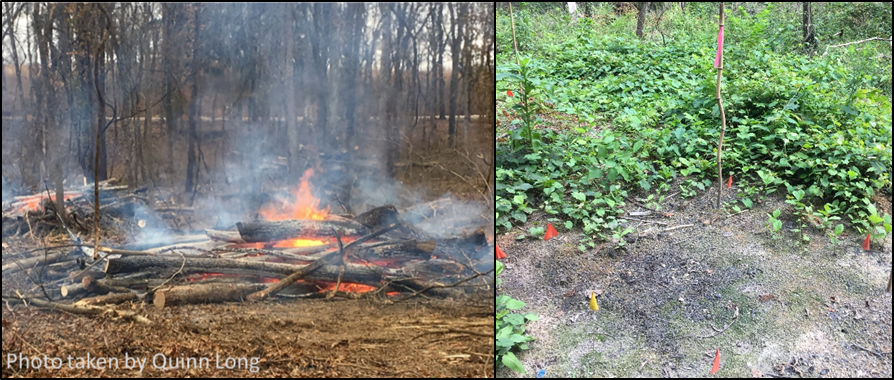
    Canopy thinning left land managers with excess woody debris – that is, there were many large, fallen trees covering the forest floor. Rather than use heavy machinery to remove the logs (which often creates a large amount of soil disruption), the wood was stacked into piles and burned. These slash pile burns create an extremely localized but intensive disturbance. The soil at the burn site becomes sterilized and covered in a layer of ash. These sites are referred to as burn scars. The layer of ash that remains, as well as the absence of vegetation, make burn scars easily identifiable.

    BurnPileMontage
    Slash pile burn at Shaw Nature Reserve, December 2016 (left). Barren sampling plot in a burn scar six months later (right).

    Slash pile scars were distributed across the restored site at Shaw Nature Reserve. Previous research has suggested the combustion of biomass and extreme temperatures of the burns can be lethal to the soil seedbank, alter soil structure, moisture, and nutrient availability. The rate of native vegetation recovery on slash pile scars depends on burn intensity, pile area, and properties of the surrounding plant community. The native plant community in burn pile scars, without active seed addition by people, are expected to recover slowly. If the native plant community recovers slowly over time, it raises the concern that slash pile scars could serve as foci for the reestablishment and spread of invasive or undesirable species.

    This summer, as part of the NSF-funded Research Experience for Undergraduates program at the Missouri Botanical Garden, I worked under the guidance of Matthew Albrecht to further our understanding of these slash pile burn scars.

    First we developed a field experiment focused on native vegetation recovery in slash pile burns. In order to characterize the changes in soil nutrients, compaction, and moisture that occur in these burn piles, we took soil samples from the burn piles as well as adjacent control areas and sent them to the University of Missouri Soil and Plant Testing Laboratory. The results we obtained from this soil analysis were dramatic. Soil pH, P, Ca, Mg, and K were all significantly higher in the burn pile. Soil compaction and soil organic matter were both significantly lower in the burn pile.

    SoilProperties
    Soil chemical properties from samples of the top 4 cm of burn pile and control soil (Albrecht et al. Unpublished data).

    While there was an apparent flush of nutrients available in these burn piles, in the first growing season after a burn occurred, we found that burn scars remained essentially bare. We created experimental burn scar plots in which we seeded six native species. The six species sown into the plots were Bromus pubescens (grass), Chasmanthium latifolium (grass), Lespedeza violacea (legume), Senna marilandica (legume), Solidago ulmifolia (composite), and Symphyotrichum drummondii (composite).  We also seeded these species in adjacent unburned control plots. We then monitored plant occupancy in these plots over the course of eight weeks.

    SpeciesII
    Six native plant species seeded into the burn pile scars and adjacent control areas.

    We found four of the six species established significantly better in the control plots relative to the burn scar plots. These results support that while there is a significant influx of nutrients in the burn scars, there are other factors that are limiting native species establishment in the burn scars.

    BareGroundReVeg
    Vegetation cover in a burn plot six months after a slash pile burn (left) and an adjacent, unburned control plot (right).

    PercentPlantCov
    Average percent native vegetation cover (± 1 standard error) in burned plots and unburned control plots (Albrecht et al. Unpublished data).

    There are restoration implications of our results. We found, of the six species sowed into the burn plots, native grasses established best. While the microenvironment created by slash pile burns presents a barrier to the restoration of native vegetation in burn pile scars, seed additions of native grasses provide a practical management strategy for promoting native vegetation recovery in burn pile scars.

    PlotOccupancy
    Average plot occupancy for six native herbaceous plant species in burned plots and unburned control plots. Error bars denote 1 standard error. P-values were derived from a generalized linear mixed effects model. Brpu = Bromus pubescens, Chla = Chasmanthium latifolium, Levi = Lespedeza violacea, Sema = Senna marilandica, Soul = Solidago ulmifolia, Sydr = Symphyotrichum drummondii. (Albrecht et al. Unpublished data).

    Claire
    Claire Waldman recording  plant occupancy in an experimental plot at Shaw Nature Reserve.

  • Does fire affect Eastern Bluebird nest success at Shaw Nature Reserve?

    Does fire affect Eastern Bluebird nest success at Shaw Nature Reserve?

    Joseph Smith is a rising senior at Lake Superior State University. This summer, he studied the effect of prescribed fire on Eastern Bluebird nesting success at Shaw Nature Reserve as part of  MBG’s NSF-funded Research Experience for Undergraduates (REU) program.

    Among the rich plant diversity at Shaw Nature Reserve are a wide range of animal species, including the Eastern Bluebird (Sialia sialis). The Nature Reserve is home to an extensive bluebird trail consisting of 86 nest boxes in the north-central region of the reserve. This summer, I have been working with Dr. Leighton Reid and a citizen scientist, Lynn Buchanan, in an effort to understand the effects that land management practices have on bluebird nest success.

    Prescribed fire is one of the most important management practices used at Shaw Nature Reserve. In the 2016-2017 burn season, for instance, nature reserve staff set fire to 306 ha (756 acres) of woodlands, prairies, and glades to restore and maintain open vegetation structure and a high diversity of native plants. However, it was unclear what effect these fires might have bluebirds.

    FireHypotheses
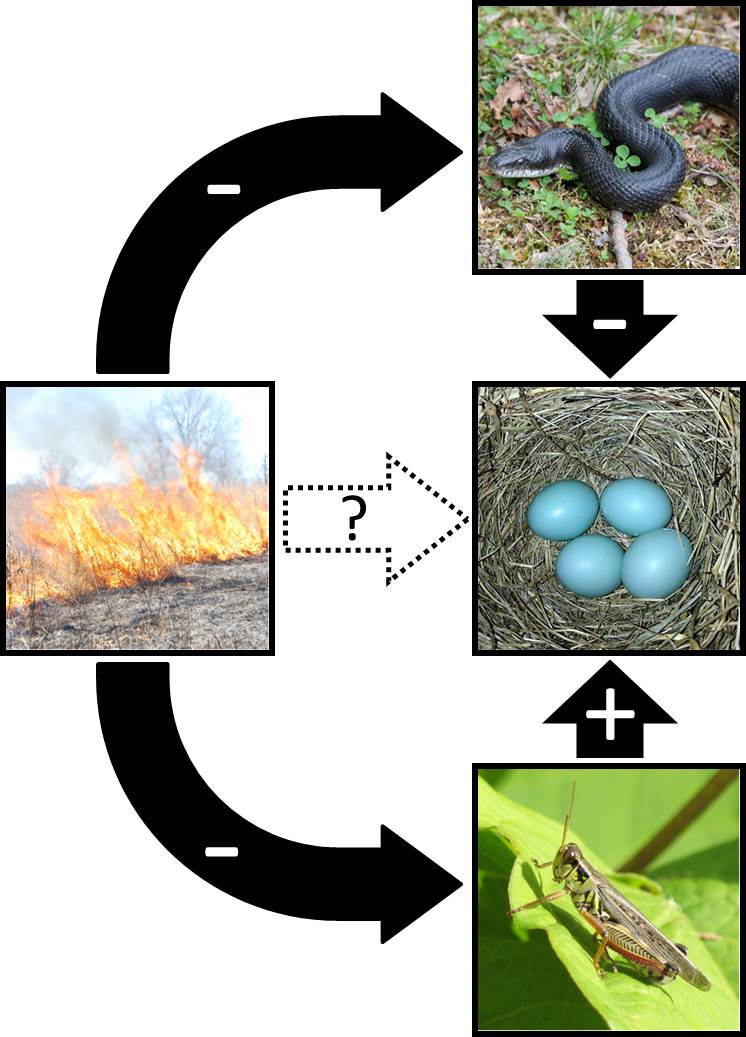
    Hypothetical effects of prescribed fire on Eastern Bluebird nest success. +/- symbols denote the short-term effect of fire on snakes and arthropods, and the effect of snakes and arthropods on bluebird nest success. Photo credits: (1) Black rat snake (Pantherophis obsoletus) by John Mizel CC BY-NC-SA 2.0, (2) Bluebird eggs by Bailey & Clark (2014); (3) Red-legged grasshopper (Melanoplus femurrubrum) by Gilles Gonthier; (4) Prescribed fire courtesy of Shaw Nature Reserve.

    We hypothesized that fire might affect bluebird nesting success in two ways. First, fire could reduce the food supply for nesting birds. When understory vegetation burns, many arthropods are also killed, and it takes some time for their populations to rebound. During the lag, bluebirds might have less to eat, which could result in poorer nest success.

    Second, fires could increase nest success by reducing the risk of snake predation. Bluebird boxes at Shaw Nature Reserve are equipped with baffles to prevent snakes from getting in, but snake predation still occurs sometimes. After a fire, there is less vegetation to hide snakes from their own predators, like raptors, and we surmised that fewer snakes could mean more successful bluebird nests.

    BluebirdTrailMapLowRes
    The Bluebird Trail at Shaw Nature Reserve. Bluebird nest boxes are shown in yellow.

    We tested our hypotheses using a long-term dataset collected by volunteers. Over the past eight years, Lynn Buchanan and her team have monitored the nest boxes on the bluebird trail and kept records of their observations. Each week during the breeding season, they peek into all of the boxes and record the number of eggs and nestlings, how many nestlings fledged, and whether or not the nest was predated.

    With statistical help from Washington University researcher Joe LaManna, we found that prescribed fire had little or no effect on bluebird nesting. We compared areas that were burned with areas that were mowed, and we also compared burned areas at different time intervals since the most recent fire (0-3 years). Likewise, we found no effect of prescribed fire on the rate of snake predation.

    Species Probability of nest success (%)* Probability of snake predation (%)* Did nest success change from 2009-2016? Did prescribed fire have an effect on nest success?
    Eastern Bluebird 90.8 ± 0.5 4.6 ± 0.3 No No
    House Wren 92.1 ± 0.1 4.0 ± 0.3 No No
    Tree Swallow 92.1 ± 0.1 4.8 ± 0.4 No No

    *Standard errors are shown

    While the lack of significant results can be slightly disheartening after an entire summer of work, it is reassuring that the bluebird population is thriving at Shaw Nature Reserve. Overall, we calculated that 90.8 ± 0.5% of bluebird nests produced at least one fledgling. In addition, two other species (House Wrens and Tree Swallows) that commonly use bluebird boxes also had high nest success.

    There are more aspects of bluebird nesting to look at. For instance, the time from when an egg hatches until the chick leaves the nest could be longer in recently burned areas if there is less food (i.e., arthropods) available. In the meantime it appears the bluebirds are living well at Shaw Nature Reserve.

    BluebirdAndBox
    Eastern Bluebird (left) and bluebird nest box (right) at Shaw Nature Reserve. Photo credits: (L) Bluebird by Andy Reago & Chrissy Mclarren; (R) bluebird nest box by Rachel Weller.

  • Monitoring Breeding Birds at Shaw Nature Reserve

    Monitoring Breeding Birds at Shaw Nature Reserve

    The best time to start a long-term dataset is 25 years ago. The second-best time is now!

    Summer solstice is the height of the bird breeding season at Shaw Nature Reserve. Dozens of species are singing, from Dickcissels in the open prairies, to Prothonotary Warblers in the damp forests along the Meramec River, to near-ubiquitous Blue-gray Gnatcatchers, seemingly everywhere.


    For six days this month, two students and I are counting birds systematically across Shaw Nature Reserve to learn how they are influenced by ecological restoration. Birds are a common focus for monitoring restoration projects because they can be observed efficiently over large areas, and because they often respond quickly to changes in ecosystem structure. Ovenbirds, for instance, prefer the dark shade of closed-canopy forests, whereas Kentucky Warblers replace them in woodlands that have been burned (fire is a common restoration strategy in many Missouri ecosystems).

    Map
    Locations of bird counting stations at Shaw Nature Reserve. Each point is at least 100 meters from the edge of a management unit and at least 200 meters from any other station.

    A typical bird survey goes like this:

    • 4:20 AM. I pour a travel mug of coffee, pick up a student to help record data, and drive to Shaw Nature Reserve in the dark. There are way too many deer along the side of I-44.
    • ~5:00 AM. We arrive at Shaw Nature Reserve in twilight and hear a cacophony of birds singing over one another. Indigo Buntings scatter from the loop road ahead of our car.
    • ~5:15 AM. We arrive at the first bird counting station and record the temperature, cloud cover, and wind speed. For five minutes, we write down each bird that we hear or see. Sometimes during these early morning counts, nocturnal birds, like Chuck-will’s-widow, are still calling.
    • ~5:30-10:00 AM. After we finish a point, I set my GPS to navigate to the next point on our route and we continue to record birds until mid-morning, by which time it is warm and many birds have stopped singing (although the Red-eyed Vireos are still going strong).

    Combo
    Leighton Reid (left) listens to Wood Thrushes and Northern Parulas while REU student Joseph Smith (Lake Superior State University, right) records data. As indicated by the abundant bush honeysuckle (Lonicera maackii; e.g., by Leighton’s right leg), this particular part of the reserve has yet to be restored.

    This is our inaugural bird survey at Shaw Nature Reserve. Unlike many of my projects, this one does not have explicit apriori hypotheses; I’m not trying to “test” anything. Instead, I intend for these data to be used for monitoring and demonstrating progress. Over time, I hope and expect these observations to provide a record of biodiversity change as portions of the reserve are restored and managed.

    20170616_062244-001.jpg
    Counting Common Yellowthroats, Dickcissels, and Red-winged Blackbirds at dawn at the Wetland Mitigation Bank.

    For more information on breeding birds at Shaw Nature Reserve, you can explore citizen science observations on eBird, including this printable checklist of birds recorded in June during the past 10 years.