Tag: Costa Rica

  • From Soil Seed Banks to Seedlings: Deciphering the Natural Regeneration of Tropical Dry Forests in the Americas

    From Soil Seed Banks to Seedlings: Deciphering the Natural Regeneration of Tropical Dry Forests in the Americas

    By Viviana Londoño-Lemos

    Viviana Londoño-Lemos is a Ph.D. candidate with the Powers Lab in the Plant and Microbial Biology Program at the University of Minnesota. Email: vivianalondonolemos@gmail.com or londo074@umn.edu

    The tropical dry forest is a unique ecosystem that challenges many preconceived assumptions about the tropics. Unlike the iconic tropical rainforest, dry forests are highly seasonal, marked by distinct dry and rainy seasons. In some areas, plants may experience up to six months without rainfall. As a result, the species inhabiting these forests have evolved remarkable adaptations to thrive in this challenging environment, giving rise to exceptionally diverse plant communities. However, this unique diversity is under threat, as tropical dry forests are among the most threatened lowland ecosystems in the tropics. Urban expansion, mining, monoculture agriculture, and livestock production are among the main threats to this ecosystem. The loss of these forests not only endangers biodiversity but also jeopardizes the livelihoods of many human communities that depend on them.

    Given their threatened status, tropical dry forests have become a major focus of restoration efforts across the tropics. However, these efforts often lack critical information on how these forests naturally regenerate and how abiotic environmental conditions, such as light, water, and nutrient availability, influence seed and seedling survival in this ecosystem. During my PhD, I have been studying how abiotic environmental conditions shape natural seedling regeneration in tropical dry forests across Colombia and Costa Rica. My research focuses on three components of this regeneration cycle: the formation of the soil seed bank, the environmental conditions that drive germination, and the establishment of young seedlings.

    Tropical dry forest during the dry season in the Natural National Park Santa Rosa, Guanacaste, Costa Rica. Note how many of the trees lose their leaves due to water stress. Photo by Viviana Londoño-Lemos.

    Germination and establishment: the great choices in a plant’s life

    Germination is the most consequential choice a plant makes. Because plants are sessile organisms and germination is an irreversible process, the location where a seed germinates determines the environment where the plant must grow, compete, and reproduce for the rest of their lives.

    This story begins with a seed, which is the fertilized ovule of a plant. Each seed is a highly specialized structure that consists of three basic components: a protective seed coat, the nutritious tissue, and the plant embryo. Many seeds also include specialized structures that aid dispersal and sense environmental conditions, helping them determine when conditions are suitable for germination.

    Once seeds mature, the next step is dispersal in both space and time. Spatial dispersal determines how far a seed travels from its parent, whereas temporal dispersal determines when it germinates. Thus, natural seed regeneration depends on seeds arriving in the right place at the right time. Spatial dispersal of many tropical plants, particularly those dispersed by animal vectors, has been widely studied. In contrast, temporal dispersal, encompassing the study of soil seed banks within plant communities, remains understudied. Understanding both dimensions of seed dispersal is essential for assessing the regeneration potential of plant communities, an important consideration when designing plant-based restoration strategies, because it provides information on what species need to be planted versus which may regenerate naturally.

    Soil seed banks are the storage of viable seeds in forest soil. In theory, the soil seed bank of a given plant community contains seeds representing the species present in the vegetation aboveground. But not all seeds behave the same way. Seeds from some species persist in the soil until the next germination season — typically the rainy season in tropical dry forests— after which they germinate or die (transient species). Others persist for years, decades, or in exceptional cases, even centuries (persistent species). Understanding soil seed bank strategies helps identify which species have the potential to regenerate naturally.

    Once the appropriate spatiotemporal conditions are met and a seedling emerges, the next step is its establishment, defined as the transition from reliance on maternal sources (the seed) to physiological self-sufficiency. This critical bottleneck in the plant life cycle depends on the biotic and abiotic interactions of the seedling with its new environment. Biotic interactions, including mutualistic associations, predators, pathogens, and natural enemies, are widely assumed to explain the extraordinary diversity of tropical ecosystems. However, in seasonal ecosystems such as the tropical dry forests, abiotic interactions such as water, light, and nutrient availability play an important role in seedling survival. Environmental shifts, particularly in water availability, directly influence whether a seed successfully germinates and whether the resulting seedling survives long enough to establish. Understanding these processes is essential for designing effective restoration strategies grounded in the biology of the species they aim to support.

    A seedling of Enterolobium cyclocarpum at the Horizontes Forest Research Station, Guanacaste, Costa Rica. Photo by Viviana Londoño-Lemos.

    The hidden regeneration potential of tropical dry forests

    When planning a plant-based restoration project, understanding the site’s history, particularly its historical plant communities, is essential. Even after vegetation has been lost, soil often retains biological relics, such as persistent soil seed banks, of past communities. For many tropical woody species, soil seed banks are often considered transient, since tropical forests are not typically viewed as strongly seasonal systems. However, with distinct dry and wet seasons, tropical dry forests are a striking exception.

    To determine whether tropical dry forest species rely primarily on persistent or transient soil seed banks, we conducted experiments in the Tayrona National Natural Park in Colombia and at the Horizontes Forest Research Station in Costa Rica. Our goal was to assess how long selected species can survive in the soil. Because this experimental approach can be time-consuming and challenging, we also measured key seed traits such as seed dormancy type, dispersal syndrome, seed coat thickness, mass, volume, moisture content, and embryo-to-seed ratio to identify which seed traits are related to soil seed bank persistence.

    Our first experiment, conducted in Costa Rica, aimed to determine the extent to which tropical dry forest species form persistent or transient soil seed banks and whether canopy openness influences soil seed bank formation. For this experiment, we buried mesh bags that contained seeds from 15 liana and tree species under both canopy gaps and closed forest conditions. We retrieved the bags annually over three years and tested seed viability each time. After one year, only five species exhibited a persistent soil seed bank, suggesting that most species form transient soil seed banks and do not persist beyond a single rainy season.

    To explore this result in greater detail and determine whether transient species survive only until the first rainy season, we conducted a second experiment with 40 species, using shorter intervals between packet retrievals. This experiment was carried out in both Costa Rica and Colombia, in collaboration with researchers and students at the University of Magdalena. We evaluated seed viability after 3, 6, and 13 months.

    Although data analysis is still underway, preliminary results indicate that approximately half of the species employ a transient strategy, while the remaining half are persistent. Transient species tend to disappear from the soil seed bank, either by germinating or dying, by the end of the first rainy season. Persistent species, in contrast, retain their seeds longer, and in some cases germinate only a couple of seeds per year. Some species with persistent seeds tend to survive longer in canopy gaps. As for seed traits, we have observed a tendency for transient species to be wind-dispersed, possess a thinner seed coat, and lack physical dormancy (i.e., no impermeable seed coat). On the other hand, persistent species tend to have seeds with thick coats, physical dormancy, and are more commonly dispersed by gravity (autochory). We expect that our results will help inform decisions in selecting species best suited for planting in restoration efforts. More broadly, the results highlight the importance of understanding the soil seed bank strategies of candidate species in ecological restoration projects.

    Soil seed bank experimental setting at the Tayrona National Park in Magdalena, Colombia, in partnership with the University of Magdalena. Each mesh bag contains seeds of a single species; each row represents a harvesting period (3, 6, or 13 months). Photo by Viviana Londoño-Lemos.

    Germination sensitivity to hydration and dehydration pulses in the tropical dry forest

    Due to the pronounced seasonality, the main germination cue for tropical dry forest species is the onset of the rainy season. However, during the dry season, occasional rain showers may last for a couple of days. This means that the seeds of tropical dry forest species may be exposed to unpredictable rainfall pulses that can trigger premature germination at an unfavorable time of year, placing young seedlings at high risk of mortality.

    To understand how sensitive seeds are to hydration-dehydration cycles, we designed an experimental approach under lab conditions. We selected ten tropical dry forest species with varying seed morphology (e.g., seed dispersal types and sizes) and measured imbibition curves to assess the presence of physical dormancy. The imbibition curves also allowed us to determine the rate of water uptake and the time required for the water-intake percentage to reach different levels. Using data from the imbibition curves, we designed hydration and dehydration cycle experiments and set the germination chamber temperature to match the mean temperature measured in the soil seed bank experiments. We are currently working on this experiment. We expect the results of these experiments to inform us about the germination requirements of tropical dry forest species and the extent to which these species are vulnerable to changes in their normal seasonal patterns.

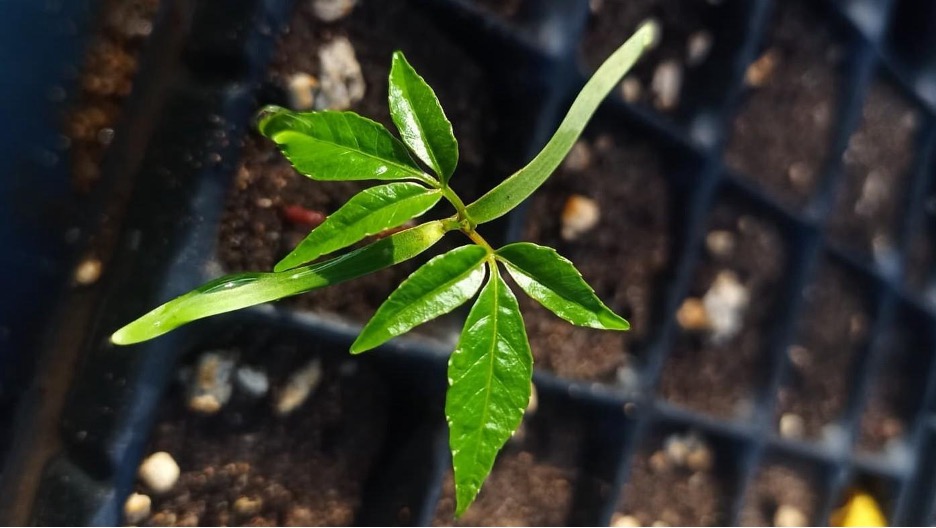
    Seedling of Spondias mombin in a nursery of the University of Magdalena, Colombia. This is one of the seedlings from the soil seed bank experiment that is germinating after one year. Photo by Luciano Macías Sposito.

    Demographic response of tropical dry forest seedlings to nutrient addition

    In addition to studying germination and seed persistence, we also evaluated nutrient limitation, a factor long proposed to limit seedling establishment in tropical ecosystems. A central biogeochemical dogma is that newly formed temperate soils are primarily limited by nitrogen, whereas tropical soils are typically limited by phosphorus. Although many experiments have tested this idea, results across tropical ecosystems are inconsistent, indicating the complexity of nutrient-plant interactions in the tropics.

    To investigate nutrient limitation in tropical dry forest species, the Powers lab established a factorial fertilization experiment with nitrogen and phosphorus at the Horizontes Forest Research Station in Costa Rica. This experiment tested the responses of the adult plant community to nutrient addition. One of the main findings of this experiment was that nitrogen-fixing legumes, a dominant functional group in tropical dry forests, showed a marked increase in growth to phosphorus addition, while non-nitrogen-fixing species exhibited variable responses. However, most studies evaluating seedling responses to nutrient addition are conducted in nurseries, which may not accurately represent field conditions. To determine whether nitrogen-fixing species are limited by phosphorus and whether non-nitrogen-fixing species are limited by nitrogen during their seedling stage, we planted seedlings of ten tropical dry forest species (5 nitrogen-fixing legumes, 5 non-nitrogen-fixing) directly into the existing fertilization experimental plots. We measured their survival and growth for four years. Because field experiments introduce multiple sources of variation, we also measured other environmental variables, such as litterfall, light, soil moisture, and pH.

    After tracking these seedlings for four years, we found that fertilization treatments did not increase seedling survival. However, nitrogen-fixing species tended to produce more leaves in response to nitrogen and phosphorus fertilization than non-nitrogen-fixing species. These results highlight significant demographic variation and inherently high mortality rates characteristic of the seedling stage. They also challenge the common assumption that fertilizer addition promotes plant growth and survival in restoration projects. This study will be published this year. Stay tuned if you want to learn more about the findings.

    A seedling of Dalbergia retusa at the fertilization experiment at Horizontes Research Station, Guanacaste, Costa Rica. Photo by Viviana Londoño-Lemos.

    Some seeds for thought for the future

    Together, the chapters of my dissertation aim to deepen our understanding of how tropical dry forest species regenerate from seed. My main goal is to make this information useful for designing more effective restoration strategies for this threatened ecosystem. Across ecosystems worldwide, a key challenge is that it remains difficult to generalize about the factors that enable a seed to survive, germinate, establish, and ultimately become a mature plant. This complexity underscores the importance of continued research on seed and seedling biology, especially in ecosystems as dynamic and highly seasonal as tropical dry forests. 

    At the Powers Lab, we strive not only to advance fundamental scientific understanding but also to share our findings with the general public.  To that end, we develop science communication materials that make our findings accessible and engaging to a general audience. One example of this outreach is a forthcoming book from Missouri Botanical Garden Press, created to introduce children to the tropical dry forest and inspire curiosity about this remarkable and often overlooked ecosystem.
  • Reforesting with Figs

    Reforesting with Figs

     Benjamin E. Smith is a Ph.D. student at George Washington University. He recently completed a field ecology course with the Organization for Tropical Studies in Costa Rica, where he worked with CCSD scientist Leighton Reid. When he’s not coring fig trees in Costa Rica, Benjamin studies plant-herbivore interactions in American chestnut.

    It was my recent privilege to spend a week at Las Cruces Biological Station in Costa Rica where I learned about some amazing properties of fig trees.

    The genus Ficus contains over 800 species, which can be found in the tropical to warm temperate regions throughout the world. Where they occur, figs are vital components of their local ecosystems because they provide high quality fruits for many animals. Animals attracted by the delicious figs often carry other plants’ seeds in their digestive tracks and subsequently deposit them below the fruiting fig tree. This can lead to patches of forest with especially high plant diversity.

    FICOBT
    Two individuals of Ficus obtusifolia demonstrating the strangler lifestyle (left) and the free-standing lifestyle (right). The individual on the left has overtaken one host tree and is reaching out to claim another. The individual on the right was planted (either by humans or birds) in a fence row.

    Some fig species have the ability to resprout roots, branches, and leaves from broken limbs – an adaptation that would be useful in an ecosystem with frequent disturbances, like hurricanes or landslides. Rural people have been utilizing this incredible feat of nature to create living fences for hundreds of years; they simply cut branches from a tree and plant them. Plant a large enough branch, and you’ve got an instant tree.

    Instant fruiting trees could be a practical tool for ecological restoration, and there is currently an experiment underway to test this idea. But not all fig species can resprout from cuttings, so in order for this tool to be useful outside of southern Costa Rica, it would be helpful to know which species will resprout and which will not.

    FICCOL Stake
    A healthy cutting of Ficus colubrinae. This instant tree was planted in May 2015.

    Does wood density predict resprouting in figs?

    We sought a way to determine whether a particular fig species would be able to resprout from a limb cutting before actually cutting apart large trees. This would mean only trees whose cuttings will survive would be used and trees that can’t resprout could be left undamaged.

    We believed that wood density would be a good measure to figure this out. Wood density can tell you a lot about a tree’s life history strategy. Is it a hard tree that will resist snapping in a stiff breeze? Or is it a softer tree that might break, but then resprout?

    To test this, we took core samples from seven fig species and headed to the lab. After a couple days of measurements, we had our data.

    Methods
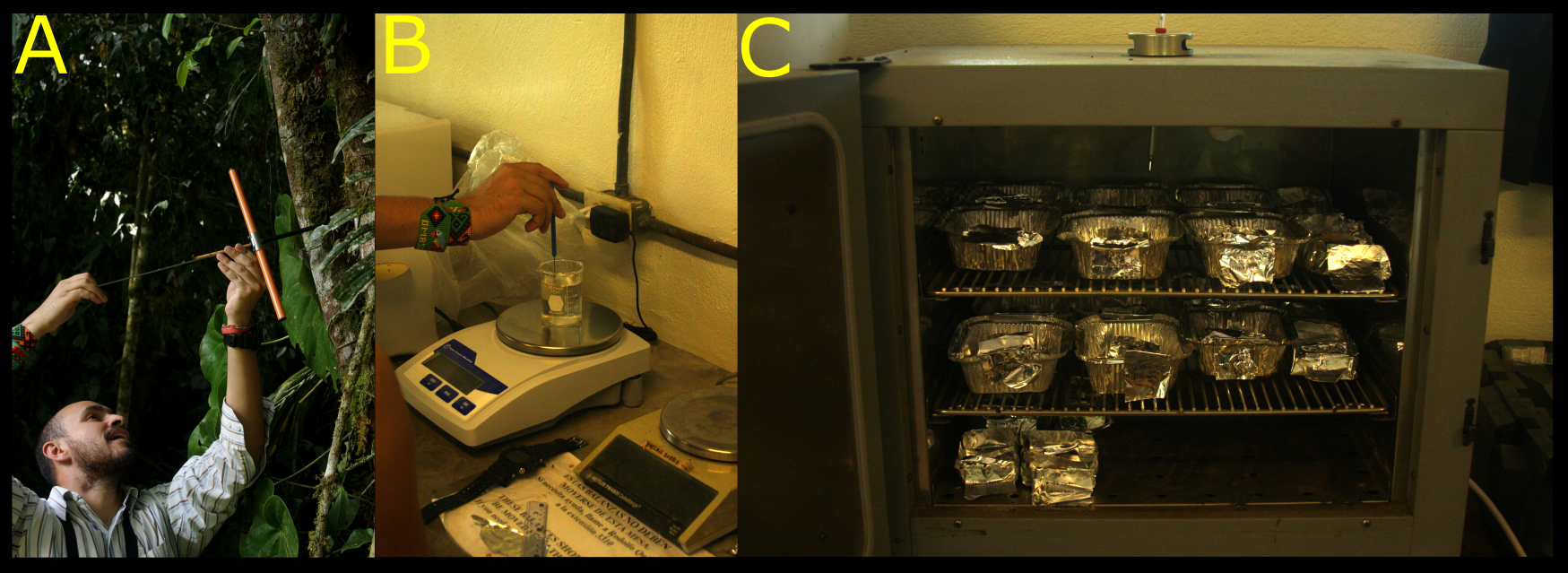
    (A) OTS student Orlando Acevedo Charry extracts a core from a Ficus colubrinae. (B) Cores were cut into small pieces. We measured the mass of the water that each segment displaced to determine the wood’s green volume. (C) Next, samples were placed in a drying oven at 106° C for 24 hours. Finally, we measured the mass of the dried samples and divided by the green volume to determine wood density.

    The fig species we tested turned out to have pretty similar wood densities. Also, the slight variations in wood density did not correlate with trees’ resprouting abilities. This initially came as a big disappointment, but after taking a second look at our data we started to see a trend that may actually be much cooler.

    Results
    Wood density was a poor predictor of resprouting capacity (measured by tallying fig cuttings that were planted in April-May 2015; Left), but strangler figs in the subgenus Urostigma performed much better than two free-standing species in subgenus Pharmacosycea.

    Fig species come in a variety of forms. Some are rather conventional free-standing trees that grow from the ground up, but others start as seedlings high in the canopy of another tree and send roots down to the ground, gradually strangling their host. Still others are shrubs, climbers, and epiphytes. We found that stakes cut from strangling figs, the ones that initially rely on a host tree, were much more likely to resprout than stakes cut from free-standing fig species. If this holds true, no measurements will be needed in the future. People around the world may be able to tell if a tree will likely sprout from a cutting just by the way it grows.

  • Monitoring epiphyte colonization in Costa Rican forest restoration

    Monitoring epiphyte colonization in Costa Rican forest restoration

    Leighton Reid and Miguel Chaves are investigating how tropical forest restoration influences plant diversity. Leighton is a postdoctoral fellow in the Center for Conservation and Sustainable Development. Miguel is a doctoral student at University of Missouri Saint Louis.

    Epiphytes are plants that live non-parasitically on other plants. That is, they grow on the trunk or branches of another plant (often a tree) without extracting nutrients from it, as mistletoes do. In Missouri, one example is the resurrection fern (Pleopeltis polypodioides), an epiphyte famous for its ability to re-green after lengthy desiccation.

    In tropical forests, epiphytes are much more diverse. Science writers commonly use the word “festooned” to describe the profuse growth of aroids, bromeliads, ferns, and especially orchids on tropical trees. In certain places, epiphytes can make up as much as 50% of a forest’s vascular plant species.

    We were curious about how ecological restoration influences epiphyte communities, so over the summer Miguel Chaves worked with local conservationist Juan Abel Rosales and botanist Federico Oviedo to survey the vascular epiphyte composition and abundance on 1086 trees growing in thirteen restoration sites in southern Costa Rica. They found about one hundred species, several of which are depicted below.

    This fall, we are analyzing these data to learn about how tree planting influences epiphyte community assembly compared to natural forest regeneration. In particular, we hope to shed light on two questions:

    (1) To what degree does tree planting facilitate epiphyte recovery?

    (2) At what spatial scale does local forest restoration interact with landscape context to influence epiphyte recolonization?

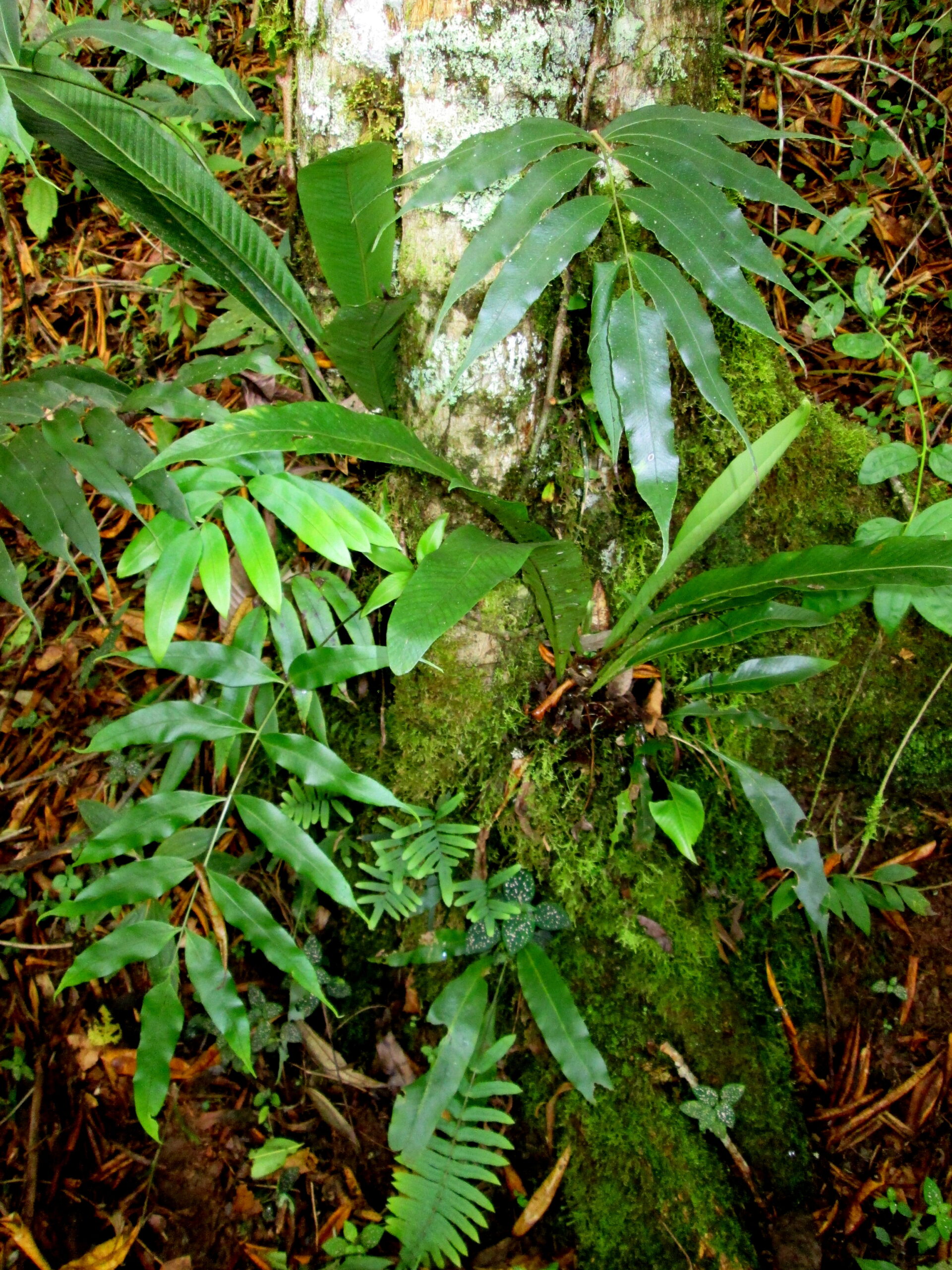
    The base of this poro tree (Erythrina poeppigiana) has sufficient ferns to warrant the descriptor “festooned”. Ferns visible in this photograph include: Niphidium crassifolium, Serpocaulon fraxinifolium, Serpocaulon dissimile and Polypodium dulce.
    The base of this poro tree (Erythrina poeppigiana) has sufficient ferns to warrant the descriptor “festooned”. Ferns visible in this photograph include: Niphidium crassifolium, Serpocaulon fraxinifolium, Serpocaulon dissimile and Polypodium dulce.

    A showy orchid (Dichaea cryptarrhena) hangs from a mossy bed below two bromeliads.
    A showy orchid (Dichaea cryptarrhena) hangs from a mossy bed below two bromeliads.

    An inflorescence of Drymonia macrantha (Gesneriaceae).
    An inflorescence of Drymonia macrantha (Gesneriaceae).

    Miguel and Juan Abel at work next to a particularly good-looking bromeliad (Guzmania zahnii). Photo by Karen Holl.
    Miguel and Juan Abel at work next to a particularly good-looking bromeliad (Guzmania zahnii). Photo by Karen Holl.

    Many of the epiphytes that Miguel and Juan Abel observed were flowerless seedlings, like this Gongora armeniaca.
    Many of the epiphytes that Miguel and Juan Abel observed were flowerless seedlings, like this Gongora armeniaca (Orchidaceae).

  • Drones can help monitor forest restoration

    Leighton Reid is a postdoctoral fellow in the Center for Conservation and Sustainable Development.

    Hexacopter flying over a restoration site. The red, digital camera is visible between the landing bars.
    Hexacopter flying over a restoration site. The red, digital camera is visible between the landing bars.

    Monitoring restoration projects is important to demonstrate progress and learn what works and what doesn’t, but it can be time consuming and expensive. As such, restoration practitioners around the world are looking to automate tasks like monitoring, and one way this can be done is with unmanned aerial vehicles, or drones.

    Over the past two years I’ve worked with a research team in southern Costa Rica to test how well drones can monitor tropical forest restoration. We used hexacopter drones: helicopter-like contraptions with six rotors. Each drone had a consumer-grade digital camera attached to the bottom. We flew the drones over thirteen restoration sites and then used Ecosynth computer software to stitch the images together and create three-dimensional models of the vegetation structure.

    Drones accurately estimated forest structure

    Drone-based measurements of canopy height closely matched our hard-won field measurements (but with less sweat and insect bites). The drone-based system also detected canopy gaps, predicted fruit-eating bird movements, and estimated above ground biomass. The ability to accurately assess above ground biomass is particularly important; it suggests that drones could be used to monitor carbon accumulation in regenerating forests.

    Editors’ choice – a must read

    Our research on drones and forest restoration was published this week in the journal Biological Conservation. The editors selected it as the must-read choice of the month, saying:

    “The rapidly expanding use of unmanned vehicles to monitor vegetation and other aspects of biodiversity is an exciting development in conservation biology. This article also demonstrates that bird abundance can be estimated using data gathered by UAVs.”

    The paper is freely available for download through August 27, 2015 at the publisher’s website.

    Researchers Jonathan Dandois and Dana Nadwodny launch a drone at a site in Costa Rica [Photo courtesy of Karen Holl].
    Researchers Jonathan Dandois and Dana Nadwodny (University of Maryland Baltimore County) launch a drone at a site in Costa Rica [Photo courtesy of Karen Holl].

  • Talking Ecological Restoration on the Osa Peninsula, Costa Rica

    Talking Ecological Restoration on the Osa Peninsula, Costa Rica

    Over the weekend, thirty scientists and land managers met in a rainforest clearing on Costa Rica’s Osa Peninsula. We discussed tropical, ecological restoration. Among the attendees were some of the luminaries of tropical biology and conservation. Expertise ranged from forestry to power grid infrastructure to loan financing to mangrove snails. Here are a few thoughts that I took from the gathering.

    Red-lored Parrot (Amazona autumnalis) in a royal palm (Raphia taedigera)
    Red-lored Parrot (Amazona autumnalis) in a royal palm (Raphia taedigera)

    Tropical forest restoration isn’t just tree planting. Planting trees is a standard restoration practice, but it can become impractical at the enormous spatial scales needed to preserve hundreds of thousands of organisms and their interactions. Moreover, forests are made of more than just trees; fruit-eating animals (like spider monkeys) and meat-eating animals (like jaguars) are vital for maintaining ecologically intact tropical forests. Even flies can do the grunt work of restoration.

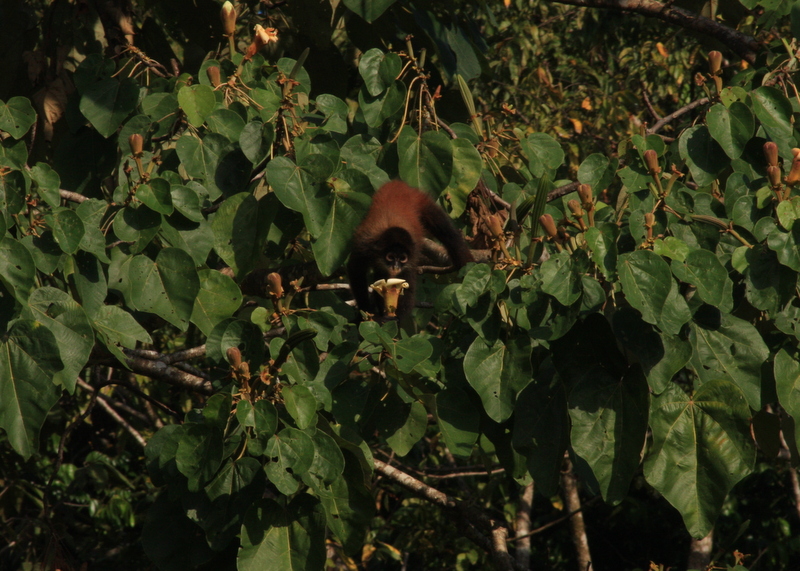
    Above: Spider monkeys (Ateles geoffroyi) drinking nectar from Ochroma pyramidale flowers. Spider monkeys also disperse tree seeds throughout the forest. One scientist at the workshop quipped that a lowland, Neotropical rainforest without spider monkeys has serious problems.

    Restoration doesn’t happen without people. Knowing your neighbors can afford special opportunities. The longer that people have lived in a landscape, the richer their potential as informants and collaborators. Restoration gains ground when it provides things that people want, like clean water, wild nature, and jobs. Working with people in government could be the surest way to achieve restoration permanence.

    Watch out for the trap of the ivory tower. Designing restoration experiments is intellectually satisfying, but to make a difference at a regional or global level, these ideas also need to be scaled up and implemented as land management practices. Ideally, restoration research is place-based; that is, it’s designed to meet the unique conservation challenges of its particular landscape using local resources.

    -Leighton Reid

  • Planning Fig Tree Planting in Costa Rica

    Planning Fig Tree Planting in Costa Rica

    In early December I spent 10 days in southern Costa Rica preparing sites for a tropical forest restoration experiment using fig trees. Figs are classic keystone species; that is, they have a large influence on their ecosystem relative to their abundance. Figs produce fruits that are eaten by many animals throughout the year. These animals disperse other plant species’ seeds below the figs’ crowns, and as a result, forests around fig trees often have diverse types of seedlings.

    Some figs are also capable of resprouting from vegetative cuttings, meaning that one can cut branches from adult trees and plant them as though they were seedlings. If cuttings are taken from fruiting adult trees, the cuttings can even produce fruits in the first year after they are planted, potentially attracting seed-carrying animals.

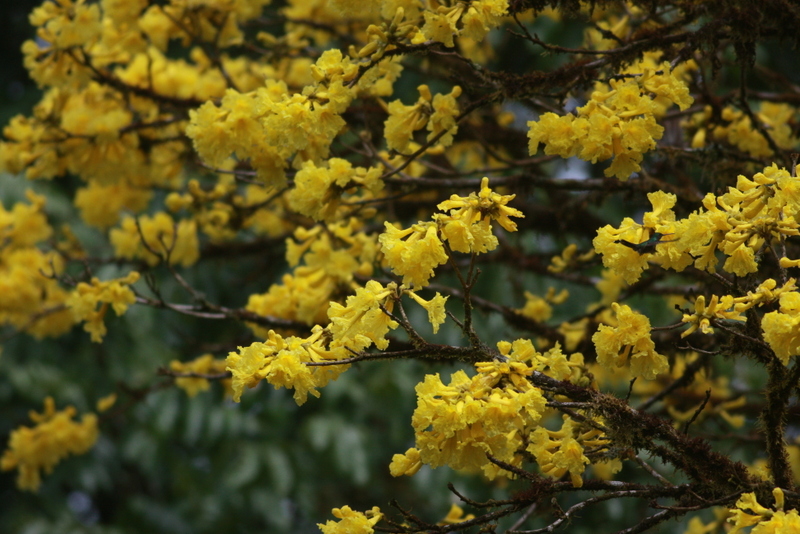
    On one humid night last week, I woke up at 2AM, my bed shaking from a nearby magnitude 6.6 earthquake. The next day a co-worker cut through his shin to the bone with a machete. It rained every day, but flowering corteza amarilla (Tabebuia ochracea) trees signified that the dry season is nearly here.

    You can read more about tropical forest restoration research in Costa Rica in our latest paper on seed dispersal, or you can listen to a podcast from earlier this fall on Science Sort-Of.

    -Leighton Reid