Planning Fig Tree Planting in Costa Rica

In early December I spent 10 days in southern Costa Rica preparing sites for a tropical forest restoration experiment using fig trees. Figs are classic keystone species; that is, they have a large influence on their ecosystem relative to their abundance. Figs produce fruits that are eaten by many animals throughout the year. These animals disperse other plant species’ seeds below the figs’ crowns, and as a result, forests around fig trees often have diverse types of seedlings.

Some figs are also capable of resprouting from vegetative cuttings, meaning that one can cut branches from adult trees and plant them as though they were seedlings. If cuttings are taken from fruiting adult trees, the cuttings can even produce fruits in the first year after they are planted, potentially attracting seed-carrying animals.

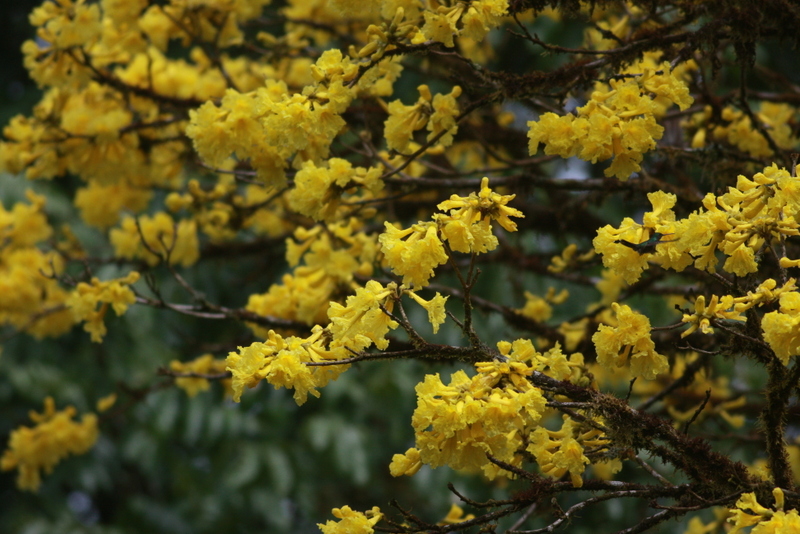
On one humid night last week, I woke up at 2AM, my bed shaking from a nearby magnitude 6.6 earthquake. The next day a co-worker cut through his shin to the bone with a machete. It rained every day, but flowering corteza amarilla (Tabebuia ochracea) trees signified that the dry season is nearly here.

You can read more about tropical forest restoration research in Costa Rica in our latest paper on seed dispersal, or you can listen to a podcast from earlier this fall on Science Sort-Of.

-Leighton Reid


Discover more from Natural History of Ecological Restoration

Subscribe to get the latest posts sent to your email.

Comments

4 responses to “Planning Fig Tree Planting in Costa Rica”

  1. Eric Ferguson Avatar
    Eric Ferguson

    If you will be in the San Vito again, I d like to know and maybe help. Im an expat and speak spanish like a local. I have some questions too such as where you got young figs to plant. I have about 5 or 6 especies from stranglers/ mata palo that I collect to nursery bought specimens. Maybe you can help id them. I have cuttings of 4 types now rooting and starting to bud. I have a veriagated fight i think is f.benjamina and the green versión. In my yard I have another with similar leaves but differant bar. And strangler cuttings are going crazy now. I will use some for bonzai and some in my yard. If you are here again Id like to meet you and learn about ficus trees. They are my faveriot and good for bonsai in some cases. Id be happy to help out with translation and even be hapoy to root cuttings for your project. Replanting is a great thing to help do if I can. Thanks for your time, hasta luego, Eric

    1. mbgadmin Avatar

      Hi Eric – Thanks for reaching out. Feel free to drop me a line. My contact information is on the Missouri Botanical Garden website. -Leighton

  2. […] fruiting trees could be a practical tool for ecological restoration, and there is currently an experiment underway to test this idea. But not all fig species can resprout from cuttings, so in order for […]

  3. […] open access paper on this project in Perspectives in Ecology and Conservation and prior blog posts here, here, and […]

Leave a Reply

Your email address will not be published. Required fields are marked *