Qiming Liang holds an MSc from East China Normal University, with a background in ecology. He worked on biodiversity surveys for Shanghai’s environmental authorities and near-natural restoration design and long-term monitoring. In 2025 he joined WWF China as Project Officer for Grassland Conservation and Sustainable Pastoralism in Hulunbuir.
China’s grasslands are predominantly “working landscapes,” meaning that restoration efforts must be closely integrated with local livelihoods. In Northeast China’s Songnen Plain, this challenge is compounded by severe soil salinization and alkalization. These conditions create a hostile soil environment that traps the ecosystem in a degradation cycle, making passive recovery methods—like simply reducing grazing—insufficient. Active intervention is essential.
To address this challenge, WWF China, local communities, and partner organizations launched an 11.26-hectare pilot project in Qian’an County in 2019. The project’s core objective is to test whether a combination of native grass seeding, site-specific soil preparation, and protection from disturbance can successfully restore degraded saline-alkaline grasslands.
Diagnosing the site before applying treatments
The 11.26-hectare restoration pilot in Qian’an County, Jilin Province, established in 2019 by WWF China with local communities and partner organizations. “Pilot” here means a small trial site where methods are tested before wider application. The site was established to test whether native grass seeding, site-specific soil preparation, and protection from disturbance can together restore degraded saline-alkaline grassland.Left: the pilot site was divided into four zones (A–D) based on soil and vegetation conditions, and each zone was sown with a different native seed mixture. Right: the four species used. Alkali grass (4), tolerant of saline-alkaline soil, was included in every mixture as a stress-tolerant base. Each mixture paired it with one of two target perennial grasses, Chinese rye grass (1) or Dahurian wildrye (2), and zones C and D also included yellow sweet clover (3), a legume expected to improve soil conditions and forage value.
The work began with baseline surveys of soil and vegetation conditions, which informed the delineation of the four restoration zones described above and the development of a restoration plan focused on rapid vegetation recovery.
The objective was to accelerate vegetation establishment while allowing subsequent plant succession to gradually shift the site toward a typical meadow steppe community dominated by Leymus chinensis and Elymus dahuricus. To achieve this objective, the restoration measures tried included site preparation, native grass seeding, fencing, and follow-up management. In areas where soil and vegetation conditions allowed it, the team used more active preparation before sowing. In alkaline patches, however, ploughing was avoided. Instead, direct seeding was used to reduce additional disturbance to the stressed soil surface.
Species Selection
The restoration design used four plant species in different seed mixtures: Leymus chinensis (Chinese rye grass), Elymus dahuricus (Dahurian wildrye), Melilotus officinalis. (yellow sweet clover), and Puccinellia tenuiflora(Alkalai grass). Each species was selected for a different restoration function.
Leymus chinensis is a characteristic grass of meadow steppes in Northeast China and represents the desired direction of long-term community recovery. Elymus dahuricus, a perennial grass, contributes to early vegetation establishment and provides valuable forage. Puccinellia tenuiflorais tolerant of saline-alkaline conditions and was especially important for the most degraded and alkaline patches within the site. Melilotus officinalis, a legume included in two of the seed mixtures, was expected to improve soil conditions, forage value, and functional diversity within the developing plant community.
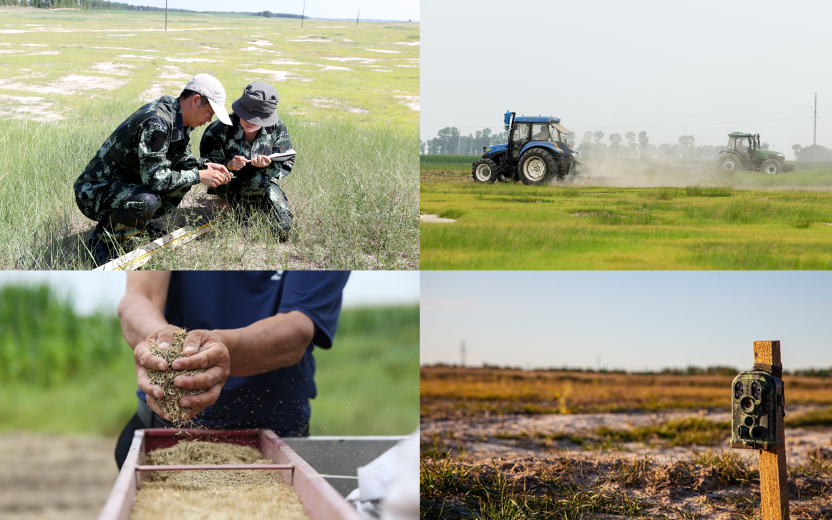
Field vegetation survey, seeding activities, seed mixtures, and post-restoration monitoring. Photo credit: WWF China.
Early ecological response
After approximately three years of restoration, vegetation recovery was visible at the pilot site, and monitoring in 2022 recorded 48 native plant species. This was important because it suggested that the site was not only being colonized by the sown species, but that a diverse native plant community was beginning to reestablish.
The faunal response also provided evidence of ecological recovery. Monitoring recorded 19 insect species, about twice the number recorded in 2021, as well as 26 vertebrate species. Common pheasants were observed, and a family of red foxes was also recorded using the site.
These observations need to be interpreted carefully. The presence of a fox family does not demonstrate complete ecosystem recovery. Foxes are highly mobile animals and may use many different habitat types. However, considered together with the increase in native plant species, insect records, and bird observations, these findings suggest that the restored site was beginning to function as habitat rather than merely as a planted area.
A red fox observed at the restored pilot site. Camera trap photo: WWF China.Before-and-after comparison of vegetation recovery at the demonstration site. Photo credit: WWF China.
Livelihoods were part of the restoration design
The Qian’an pilot was not an isolated ecological experiment, but part of WWF China’s broader initiative in the Songnen Plain, where grassland restoration, sustainable production, and community engagement are being developed together. This context is crucial because the Songnen Plain is a “working landscape” intertwined with farming and livestock production. Restoration measures—like fencing, seeding, and mowing control—directly affect land use. If ecological efforts are not compatible with local production systems, they simply will not be maintained over the long term.
To address this constraint, WWF broadened the project by integrating demonstration plots and field training. One practical example was using earthworms to process cattle manure into vermicompost, successfully linking livestock waste treatment, soil improvement, crop production, and local income. This livelihood component showed local people how ecological recovery connects to land productivity and household decision-making. It also highlighted that restoration cannot rely on short-term protection alone; it requires a management systemthat local communities can understand, adopt, and maintain.
Ultimately, the Songnen Plain work relied on two necessary types of evidence. The first was ecological: tracking native plant recovery, insect responses, and improvement in habitat quality. The second was practical: demonstrating that restoration and sustainable production could actually be adopted by local communities. Both are indispensable. A technically successful restoration fails without local stewardship, just as a livelihood intervention provides limited conservation if it does not enhance biodiversity recovery. The true challenge is aligning them.
What the Songnen pilot shows
The Qian’an restoration pilot suggests several lessons for saline-alkaline grassland restoration.
Targeted interventions: Site diagnosis must guide restoration treatments, as soil and vegetation conditions vary locally.
Functional species selection: Native grasses should be chosen for their specific ecological roles (e.g., Puccinellia for its tolerance to saline-alkaline conditions and Leymus for accelerating succession).
Active seeding: Direct intervention is crucial to restart succession where severe soil stress and seed limitations stall passive recovery.
Comprehensive monitoring: Success should be measured by broader indicators of biodiversity recovery—including plants, insects, and vertebrates—not just vegetation cover alone.
Livelihood integration: Linking ecological goals with sustainable production ensures local relevance.
Remaining questions
The pilot also identifies several critical areas for future research and action:
Long-term stability: Continuous monitoring is needed to track whether missing functional groups, such as forbs and pollinators, naturally return or require additional seeding.
Adaptive management: Post-establishment management regimes, such as grazing, mowing, or periods of rest, must be carefully balanced so that disturbance does not reverse recovery or alter community structure.
Scaling challenges: Expanding from an 11-hectare pilot will require robust seed supplies, capacity, funding, and clear criteria for determining where active versus passive restoration is needed.
Durable livelihood benefits: Long-term adoption relies on demonstrating that ecological recovery directly enhances forage quality, soil health, and household economic resilience.
From Songnen to Hulunbuir
The Songnen experience provides a foundational model for WWF China’s ongoing work in Hulunbuir. Unlike Qian’an, Hulunbuir is a largely intact, highly connected pastoral landscape vital for wildlife, supporting thousands of Mongolian gazelles and raptors using nest boxes, and traditional herding. However, challenges like degradation from long-term over-mowing remain. Here, the scale of intervention expands from restoring degraded patches to maintaining steppe connectivity, optimizing herd structures, and developing community-based co-management mechanisms. Recovery depends on aligning conservation goals with herder decisions and sustainable pastoral institutions.
WWF China is now developing community-based restoration approaches in Hulunbuir. Planned activities include establishing community committees, implementing locally adapted restoration measures, optimizing herd structure, promoting nature education, and fostering international collaboration. These activities are not separate from ecological restoration rather they are integral to its success. Because Hulunbuir’s grasslands are working pastoral landscapes, successful recovery depends not only on plants and soil but also on livestock movement, herder decisions, wildlife needs, and long-term management institutions.
Conclusion
While the Qian’an pilot successfully answered technical questions about restoring saline-alkaline soils using native grasses, its broader legacy is a paradigm shift: grassland restoration must be a dual process of ecological recovery and livelihood transition. Whether in the farming-pastoral ecotone of Songnen or the expansive steppes of Hulunbuir, the ultimate goal is not merely “greening” the land. It is to restore ecological function while ensuring the landscape remains economically and socially viable for the communities that depend on and manage them.
For more information on this project, please see the below resources or email the author at qimingwgs@gmail.com.
Dr. Gabrielle Ripa is a postdoctoral researcher at North Carolina State University.
Imagine: it’s a nice warm and breezy evening and you decide to enjoy your dinner outside. You hear the burbling of a nearby stream mingling with the nightly chorus of frogs and insects. Maybe a Barred Owl is asking “who cooks for you?” in the distance. The species making noise at dusk are supported by the stream ecosystem: from the side channels and ephemeral pools that support breeding frogs and aquatic macroinvertebrates to the streamside vegetation that provides food and cover for many other species of wildlife.
Now imagine it’s quiet – or even human-made noise like traffic takes centerstage in the streamside symphony. That would make for a less enjoyable outdoor dining experience.
To support the biodiversity of the ecosystem, the different components of the stream system must work in tandem. However, in urban environments, streams are under threat from many fronts including climate change, pollution, and invasive species. Stream restoration is increasingly used to address the symptoms of these stressors such as streambank erosion or poor water quality, or to mitigate harm to riparian systems from human development.
Restoration goals differ among projects. In the Chesapeake Bay watershed in the eastern United States, emphasis is largely placed on improving water quality by reducing certain pollutants and fixing stream incision and erosion. Unfortunately, these projects have often focused on stream engineering with little attention paid to the biota.
An eroded streambank with exposed roots. Photo: Gabrielle Ripa.
The Chesapeake Bay watershed connects six U.S. states and Washington D.C. and encompasses over 64,000 square miles of land. The Chesapeake Bay Trust brings together researchers, state and federal agencies, and restoration practitioners to improve watershed restoration practices within the Chesapeake Bay watershed. Many of the projects they fund through their Pooled Monitoring Initiative are in response to questions raised by those doing the on-the-ground work. Restoration managers recognized the growing encroachment of invasive plant species on restored streams and sought solutions to the problem. Invasive plants threaten biodiversity globally and have been at least partially responsible for 60% of extinctions, therefore preventing and limiting their establishment where possible is consequential for many native species of flora and fauna.
Thus, the focus of my dissertation research was to give recommendations to restoration practitioners on how to limit invasive plant establishment on urban stream restoration projects. Additionally, I was interested in how invasive plants and stream restoration could impact stream soundscapes, or the sum of all sounds in an environment.
Stream restoration has the perverse impact of worsening plant invasion
To understand how restoration impacts the vegetation community, I compared 46 stream reach pairs: each pair consisted of a restored stream reach and an unrestored stream reach. I found that half of all of the restored stream reaches had greater invasive plant richness and cover and lower native plant richness and cover than their paired unrestored stream reach. Many restoration projects improved the stream geomorphology, but didn’t improve, or even worsened, the riparian plant community. Largely, invasion of both restored and unrestored stream reaches was driven by light and soil nutrient availabilities. However, restored streams were not more likely to be resource-rich compared to their unrestored counterparts.
The projects spanned between 8 and 30 years since project initiation. Some might wonder whether invasive plants are ephemeral features of newly restored streams, taking advantage of the pulse of light and open soil that accompany stream reconstruction (e.g., revegetation after streambanks vegetation was cleared to stabilize the banks). But I didn’t find any evidence for invasive plants phasing out of the vegetation communities as they matured. More often than not, stream restoration in the Chesapeake Bay watershed was facilitating rather than limiting invasion.
A restored stream heavily invaded by Japanese stiltgrass (Microstegium vimineum). Photo: Gabrielle Ripa.
Stream restoration design and implementation have limited power to prevent invasion
Given restored reaches were more invaded than unrestored reaches, I focused on determining how different aspects of restoration influence invasion, including: planting design, project monitoring, project attributes, resource availability, and surrounding land use. Planting design variables included metrics such as the number of species planted, the stem density that was planted, and the number of species that I detected in my surveys that were originally planted during restoration. I examined project monitoring variables such as the number of years a project was monitored and whether invasive plants were monitored. Project attributes focused on the specifications of the restoration project, like the length of stream that was restored and whether the stream was restored as mitigation or for bank stabilization/erosion control/water quality. Because of previously established relationships between increased resource availability, as well as human land use/disturbance, and invasive plants, I also included several of these variables (e.g., measures of soil nutrients and light availability, human development) to determine whether the design and implementation of stream restoration could overcome these limitations.
Of all the five categories of variables, resource availability and surrounding land use were the most important for predicting invasive plant cover on stream restoration projects. Heavily engineered stream restorations remove trees and expose bare soil – generating light and nutrient resource pulses exploited by invasive species. Therefore, recommendations to limit invasive plant establishment on stream restoration projects include overstory tree retention and actions to accelerate canopy closure.
Sites with more urban and suburban land nearby had greater invasive plant cover. Potential invasive plant pressure due to surrounding urban and suburban land use is important to incorporate into project monitoring, management, and budgeting (e.g., having an invasive species management plan and setting aside money to treat invasions).
Projects that used a reference site either for project design or to compare restoration outcomes had significantly lower invasive plant cover than those that did not. Reference sites are important components of restoration design to ensure appropriate ecological targets and to know when project outcomes may have gotten off track.
While resource availability and surrounding land use play outsized roles in facilitating invasive plant cover on stream restoration projects, restoration practitioners can still address invasion by leaving overstory trees, adding fertilizer only as necessary, and incorporating reference sites into design and monitoring of projects.
Plant invasion and stream restoration drive seasonal soundscapes
The urban streams I studied are all invaded to some extent, and many are either in need of, or have undergone, restoration. Why does it matter if restored streams become more invaded? Impairment of stream function or increase in invasive plant prevalence in an ecosystem can have rippling effects on the rest of the system. Invasive plants have been shown to negatively affect both bird and insect species, especially in urban areas, and to limit frog survival and foraging success. When the species affected are ones that make sound, we might be able to hear the impacts of invasive plants and stream restoration.
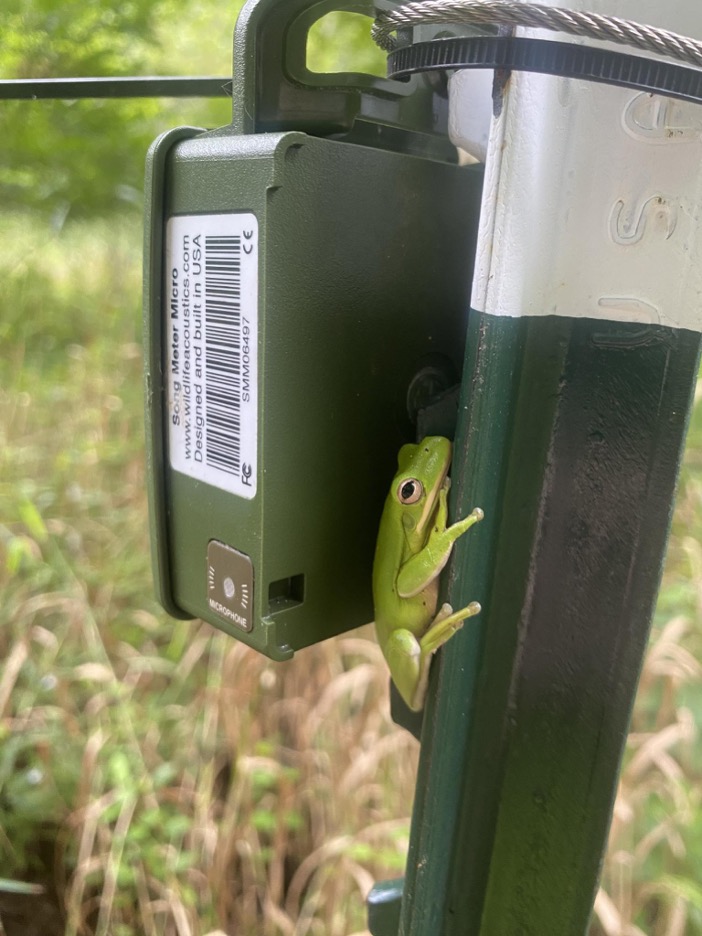
A green treefrog (Hyla cinerea) on a streamside acoustic recorder. Photo: Gabrielle Ripa.
To determine how invasive plants and stream restoration impact urban stream soundscapes, I deployed acoustic recorders at 20 of my paired streams for one year. Restored streams had greater bioacoustic activity in the spring, from late February to mid-April, potentially due to more frog activity as restoration reconnected floodplains resulting in more ephemeral pools.
As expected, there was greater bioacoustic activity in the early summer on streams that were less invaded. This coincides with the typical phenology of Maryland’s temperate system as birds are mating and there is more insect activity alongside peak native vegetation biomass. However, in the winter, bioacoustic activity was greater on more invaded streams from October to mid-February. It’s possible that the different phenology of invasive plants, such as later leafing and fruiting than native plants, provides more food and cover resources in the winter compared to less invaded streams.
As we’re midway through the UN Decade on Ecosystem Restoration, the use of restoration is increasing to remedy human impacts to natural systems. However, current practices are often understudied in their impacts on native plant and, especially, wildlife communities. My work highlights that improvements to restoration practices are needed to achieve ecological uplift, and additional research can aid in promoting recovery of native biodiversity.
Matías Barceló is an early career researcher at the Centre for Research and Innovation on Climate Change (CiiCC) at Santo Tomás University, Chile, SECOS Institute and at the Laboratory for Ecosystem Conservation and Human Well-being (LabCBH). His research focuses on local communities and the land-sea interface. In particular, he has worked on assessing the role of local knowledge in adaptive capacity in a rapidly changing world, as well as investigating the various perceived values of nature associated with the various practices of local communities. He is currently assessing how these values can reinforce various initiatives to restore and reconnect degraded and fragmented ecosystems at the land-sea interface.
Chile is often described through its contrasts: deserts, mountains, temperate rainforests, mediterranean-type climate ecosystems, fjords, kelp forests, and one of the longest coastlines in the world with 4,200 km from north to south, roughly the distance from Lisbon, Portugal, to Moscow, Russia. When accounting for its islands, fjords, channels, and intricate geography, its total coastal perimeter exceeds 80,000 km. These ecosystems also include areas of exceptional conservation value, including the globally recognized Chilean Winter Rainfall–Valdivian Forests Biodiversity Hotspot in central and southern Chile.
A map of South America showing Chile (in red) surrounded – and isolated – by the very high Andes mountain range and the Pacific Ocean. Image-generated by Matías Barceló.
Restoration in Chile is growing, but in what way, and in what direction?
Our recent review of 95 restoration initiatives, that comes from a dataset compiled by the Chilean Ministry of the Environment, showed that most projects nation-wide are concentrated in terrestrial ecosystems, particularly in central and south-central Chile, where wildfires and forest plantations are among the main drivers of degradation and transformation (see Figure below). Our work showed that 94.7% of the initiatives were terrestrial while the other 5.3% represent wetlands and there are no initiatives in the database focused directly on marine ecosystem restoration, despite Chile’s extensive coastline.
This review also revealed a key social gap: only 35.7% of the initiatives explicitly involved local communities from the outset, and when communities were included, their role was often limited to operational activities such as planting, cleaning sites, or basic monitoring. In other words, people participated in restoration activities, but not necessarily in defining restoration goals, identifying priority areas, making decisions, or shaping governance processes.
The map on the left shows the restoration initiatives recorded by Chile’s Ministry of the Environment between 2010 and 2021, marked with red dots. The panels on the right summarize key features of these initiatives, including: (A) main causes of site degradation; (B) ecosystem type; (C) land use or land cover targeted for restoration; (D) whether actions involved water bodies; (E) whether local communities were involved; (F) whether seeds were collected from nearby areas; (G) whether seedlings were produced by the initiatives; (H) whether planting was carried out; (I) whether monitoring was in place; and (J) whether a reference ecosystem was selected or assembled.
This is relevant because as mentioned above restoration work should reach beyond ecological goals. If restoration projects focus exclusively on biophysical recovery, they may overlook local livelihoods, cultural values, traditional practices, historical relationships with species, and also the meanings that communities attach to degraded or transformed landscapes. A restoration project can be technically well designed and still fail socially if it does not engage with the people who live in, depend on, and care for those ecosystems. The challenge is to move toward social-ecological restoration, an approach that integrates ecological recovery with local knowledge, values of nature, community participation, and long-term human well-being.
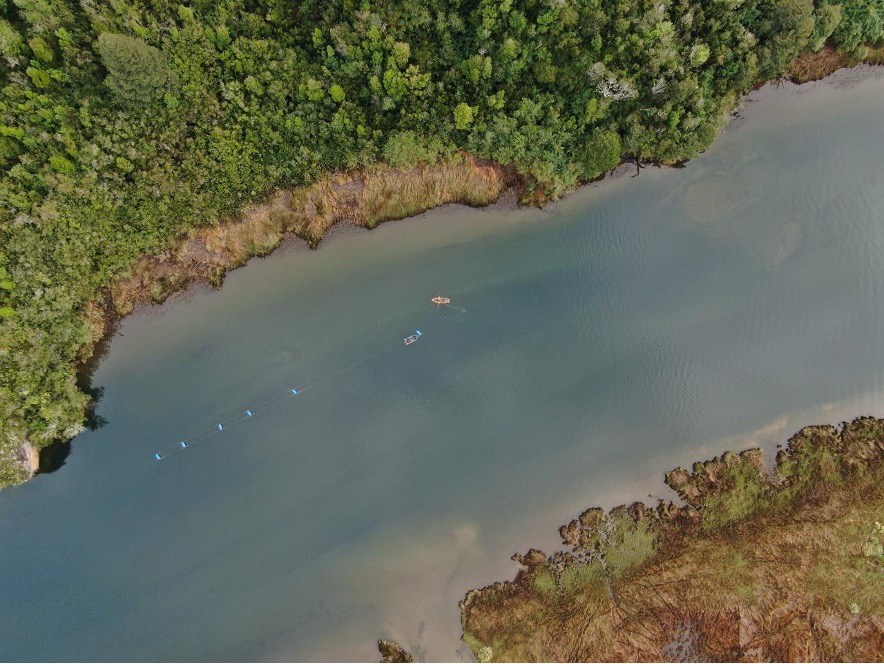
The mouth of the Chaihuín River where it flows into the Pacific Ocean is a highly representative location for studying land-sea interactions via the river. Chaihuín, Valdivia, Chile. Photo credit: Matías Barceló.
Why land and sea must be restored together
Although terrestrial and marine ecosystems are often managed separately, many communities experience them as interconnected territories. Changes in one part of the system can affect the others. Forest degradation can influence water quality, sediment flows, coastal habitats, and livelihoods. Marine degradation can affect food security, local economies, cultural practices, and people’s sense of belonging.
Drying red seaweed species for marketing purposes on the southern coast of Chile. Photo credit: Matías Barceló.Artisanal divers checking water quality monitoring equipment. Photo credit: Matías Barceló
For this reason, we have undertaken a project that focuses on representative coastal sites of southern Chile: Lenca, Puelo, and Cochamó (see Figure below). These places were selected because they represent different but connected expressions of the land-sea interface in the south-central Regions. Lenca combines temperate rainforest, proximity to Alerce Andino National Park, artisanal fishing, seaweed harvesting, and coastal livelihoods. Puelo connects mountain, riverine, freshwater, and marine systems. Cochamó brings together valleys, temperate forests, rivers, coastal areas, artisanal fishing, shellfish harvesting, and community-based tourism. Together, these sites offer a unique opportunity to ask and test how restoration can be conceived not only for “nature”, but also for people.
(a) Dots indicate the study site locations: Lenca (red), Cochamó (yellow), and Puelo (light blue) in Reloncaví (Llanquihue Province, Los Lagos Region), southern Chile. (b) Pink dots show the locations of the study sites in a subcontinental geographic context. Maps created by Matías Barceló.
From ecological restoration to social-ecological restoration
Our project starts with the idea that restoration priorities should be defined by integrating ecological evidence with local perceptions. It combines remote sensing analysis of native and kelp forest change with interviews with local actors about perceived environmental changes, key species, threats, and meaningful places. This information will be co-validated with communities mentioned above, recognizing that scientific data alone is not enough to guide restoration, and that local knowledge is essential to understand degradation and identify restoration needs.
Why values matter for restoration
One of the main contributions of this project is its focus on plural values. People value ecosystems in different ways: some values are instrumental like forests and marine ecosystems that provide food, income, materials, protection, or tourism opportunities; others are intrinsic: species and ecosystems may be considered valuable in themselves, regardless of their usefulness to people. But many values are relational: they emerge from identity, care, memory, responsibility, belonging, and connection to place. These relational values are especially important for restoration.
Our project will explore these values through photo-voice. Participants will be invited to take photographs of places and species that are meaningful to them. Each photograph will be accompanied by a short narrative explaining why the place or species may be relevant for restoration. This method will allow to communicate environmental change not only through words, but also through images, memories, emotions, and territorial experience.
Co-creating restoration futures
Our project moves from diagnosis to action. One approach is relevant here. Pockets of the past, which invite communities to identify values, practices, or ways of life from the past that they want to carry into the future. These may include forms of care, uses of species, relationships with rivers or forests, collective practices that remain meaningful for sustainable futures.
This approach suggests that restoration initiatives can be more legitimate and sustainable when they are grounded in local values, ecological evidence, and community priorities. In this sense, community-led pilot initiatives and methodological guides can serve as useful tools to translate plural and relational values into restoration practice. They offer a pathway for moving from diagnosis to action, while also generating lessons that may be adapted to other land-sea territories facing similar social-ecological challenges.
A window of opportunity: restoring relationships in southern Chile
Chile currently finds itself in a unique institutional moment. The National Landscape Restoration Plan 2021–2030 and the newly established Biodiversity and Protected Areas Service that opens a major opportunity to embed social-ecological restoration into national policy and planning. This opportunity will only be meaningful if restoration moves beyond narrow ecological targets.
Land-sea interface in southern Chile, showing an area used for mussel farming, which is subject to terrestrial environmental changes resulting from potential land-sea interactions. Photo credit: Felipe Torres.
Restoration is often imagined as the recovery of what has been lost such as forest cover, indigenous species, habitats, ecosystem functions. But degradation can also weaken what is relational: knowledge, memories, practices, livelihoods, and the sense of belonging that connects people to place. Restoring green and blue forests in southern Chile is not only about recovering trees or kelp. It is also about strengthening relationships that make restoration meaningful: relationships between people and nature. By placing plural values and community participation at the center, this project seeks to contribute to a broader transformation in restoration practice to build more sustainable, just, and place-based futures.
This research is funded by The National Agency for Research and Development of Chile (ANID) and it is just getting started; if you’re interested, please don’t hesitate to contact the first author at barcelo.matias@gmail.com.
I gratefully acknowledge the collaboration of my friends and collaborators Claudia Rojas & Alejandro Venegas‐González.These gaps and lines of research stem from our recent paper in Restoration Ecology.
By Eve Allen, Geordie Elkins, Heather Liljengren, and Sefra Alexandra
Eve Allen is the US Northeast Regional Director at the Ecological Health Network. In this role, she co-coordinates the Northeast Seed Network. She is joined by Geordie Elkins, the Executive Director of the Highstead Foundation, Heather Liljengren, the owner and president of Local Land Consulting, and Sefra Alexandra- The Seed Huntress- co-founder of the Ecotype Project. Together, they share about the process of the Northeast Seed Network’s Standards and Protocols Committee coming together to develop wild seed collecting protocols for the US Northeastern and Mid-Atlantic States.
The collection of seeds and cuttings from wild plant populations is a critical first step in increasing the availability of cultivated seed and propagated plant materials for ecological restoration. Across nearly all regions of the world, the limited supply of native seeds and plant materials remains a persistent bottleneck, constraining the scale, effectiveness, and long-term durability of restoration efforts.
Seeds and nursery-grown plants are often a key part of carrying out restoration activities, typically through the reestablishment of native species to sites where they have been lost or depleted. This reintroduction is important for supporting recovery on heavily degraded sites and contributes to maintaining genetic diversity, providing wildlife habitat, improving resilience to climate change impacts and disturbance, and reducing the spread of invasive species. As restoration efforts scale up, so does the demand for native seeds and plant materials. Projects spanning hundreds to thousands of hectares can require vast quantities of seed and planting stock. For example, in Minnesota, more than 500,000 kg (1.1 million lb) of seed was used to restore 9,000 hectares (~22,000 acres) of northern tallgrass prairie. Similarly, restoration practitioners at the Massachusetts Division of Ecological Restoration report that individual projects restoring wetlands, streams, and sandplain grasslands may require between 5,000 and 50,000 native plant plugs per project depending on the size and the extent of degradation.
Meeting both current and future demand is challenging because wild populations are often the primary source of seeds and cuttings—a reliance that can place additional pressure on already fragmented and degraded ecosystems. A more sustainable and scalable approach involves bringing native species into horticultural and agricultural production systems to multiply seed and develop reliable sources of propagated plant materials. This step is paramount to building regional seed supply chains that can provide diverse, source-identified seed and plant materials for the range of activities across the Society of Ecological Restoration’s Restorative Continuum.
In this post, we share the story behind the Northeast Seed Network’s Wild Seed Collecting Protocols—why they were developed, how they came together, and what they aim to achieve. These protocols provide a practical framework to help land managers, land trusts, and seed collectors make thoughtful, ethical decisions that protect wild plant populations, maintain genetic diversity, and ensure that seed remains available for future restoration work. Developed with support from a Land Trust Alliancegrant, they are designed both for our regional partners and as a model for others looking to build or strengthen seed collection programs.
While the guidance focuses on common plant species (and does not address the additional considerations required for threatened or endangered plants), the core idea applies broadly: when done responsibly, seed collection can be an important conservation action. This is especially relevant for land trusts, which steward and care for large areas of conserved land and are increasingly engaged in restoration and habitat management to promote conservation goals and objectives. At the same time, our experience across the seed supply chain has shown that collecting from the wild is not always the right first step. Throughout this post, we explore the “why, when, and how” of seed collection, emphasizing a key principle—wild seed collecting should be approached with care, intention, and restraint, and in many cases, considered a strategy of last resort rather than a default approach.
Geordie Elkins, Highstead Foundation, collecting seed of round-headed bush-clover (Lespedeza capitata) at the Wilton Land Trust, Slaughter Fields Preserve, Wilton, Connecticut. Credit: Highstead Foundation.
The Northeast Seed Network: A Regional Alliance of Seed Hubs and Partnerships
At the 2023 National Native Seed Conference, stakeholders came together to formally launch the Northeast Seed Network (NSN) and build a more resilient, region-wide supply chain. It was recognized that strengthening the region’s supply chain to meet the growing demand for ecological restoration activities is too big a job for any entity to tackle on its own. See our shared timeline of key efforts and activities that have helped spark a groundswell of support and enthusiasm for this collective work. The Ecological Health Network currently coordinates the NSN.
Our multi-hub and spoke network currently brings together more than 150 partners—from Virginia to Maine and into Atlantic Canada—including seed farmers, nursery professionals, land managers, Tribal Nations, restoration practitioners, home gardeners, seed bank curators, botanic gardens, land trusts, and regional academic institutions. Learn more about our partners on ourNetwork Directory Map.
Our mission is to foster connection and knowledge sharing among those working to improve access to diverse, source-identified native seeds and plants for ecological restoration, as well as related efforts such as ecological landscaping and regenerative agriculture—activities that increasingly rely on native species to support biodiversity and ecosystem health, and strengthen connections to place and a culture of belonging and stewardship. Learn more about the NSN’s core activities and governance model in ourNetwork Charter.
The Growing Need for Seed
In the eastern United States (US),research has shown that restoration practitioners often source seed from suppliers located an average of 584 km (363 miles) away. One of the clearest needs identified by NSN’s members has been a growing demand for locally sourced seed that can serve as a starting point for the production of bulk seed and native plant nursery stock. Without this initial material collected from wild populations, there is no pathway to scale up supply.
In response, network partners across the region have been working to coordinate wild seed collection and establish seed production fields, often sourcing from multiple populations within the US Environmental Protection Agency’s Ecoregional Level III boundaries to maintain genetic diversity and better reflect local conditions. Once established, these production plots, also referred to as “seed increase plots,” can remain viable for up to five years before farmers begin to see a significant decline in seed production or genetic variation for most species.
Seed collection of Butterfly Milkweed (Asclepias tuberosa) (left image) and Joe-Pye weed (Eutrochium dubium). Credit: Sefra Alexandra- The Seed Huntress.
The Need for Shared Standards Across the Network
As the Northeast Seed Network (NSN) has grown, so has the recognition that coordination alone is not enough—shared standards are essential for building a functional and trustworthy seed supply system. With partners working across all stages of the supply chain, from wild seed collection to production and use, there is a clear need for consistency in how seed is collected, amplified, documented, and managed. However, developing and agreeing on a set of standards is not enough; we are also providing resources and guidance for those new to working with diverse, source-identified native seeds and plants.
In response to these needs, in December 2023, the NSN established a Standards and Protocols Committee. The goal of the committee is to bring partners together to develop guidance that supports consistency, transparency, and ecological integrity across the network, while still allowing for flexibility across our regional alliance of partnerships and hubs.
One of the committee’s first actions was to apply for and secure funding through aLand Trust Alliance grant. This support enabled the convening of a focused working group to develop wild seed collection protocols for land trusts and create landowner permission templates for organizations and individuals interested in seed collection. Wild seed collection was identified as an immediate and shared priority across NSN hubs and partnerships, given its foundational role in building initial seed supply.
Through this effort, partners from across the region contributed their experience and expertise to co-develop a set of protocols grounded in real-world practice. The process itself was as important as the outcome, helping to align approaches, identify regional challenges, and build a shared understanding of what responsible and effective seed collection would mean for our bioregion. This work represents an early but important step toward broader standardization through shared practices across the network, beginning with one of the most critical entry points in the supply chain.
Populations of northern blue flag iris (Iris versicolor) and cardinal flower (Lobelia cardinalis) at the Highstead Foundation in Redding, Connecticut, are being stewarded as potential seed collection sources for future restoration efforts. Credit: Geordie Elkins.
Wild Seed Collecting Protocols
A working group with private, public, nonprofit, and Tribal partners met monthly from March 2024 to May 2026. Their process involved reviewing existing international literature and established standards, then adapting those approaches to the ecological, logistical, and cultural context of the U.S. Northeast and Mid-Atlantic. This was a critical step, as many existing protocols have been developed for different regions, species, or production systems, and yet none of them was entirely appropriate to the conditions and needs of our bioregion. For example, the Seeds of Success Protocols (SOS), which are widely used across the US and are derived from Royal Botanic Gardens, Kew Millennium Seed Bank protocols, were designed to support the broader goals of the SOS program, including long-term conservation and storage, and largely assume collection from extensive federal land holdings with large plant populations. However, landscapes are much more fragmented across the Northeastern and Mid-Atlantic states, which do not support the same continuous large populations of species as in the US West. Adapting the protocols to reflect smaller population sizes was necessary to reduce the risk of overharvesting. For example, the SOS protocols broadly recommend a 20% “safe seed fraction” for collection. However, we recommend evaluating collection limits on a species-by-species basis to determine whether a 20% threshold is truly sustainable or whether lower collection levels may be more appropriate for certain species or populations. Collections in our region may not need to have an ideal target of 10,000 seeds, especially when collections are intended to provide starter material for seed increase plots. Our collections are also not slated to have a portion sent to a National Seed Extractory, in Bend, Oregon.
From this work, we drew two products:
1) Northeast Seed Network’s Wild Seed Collecting Protocols — a comprehensive guidance document designed to support land managers, seed collectors, and restoration practitioners engaged in ethical and sustainable wild seed collection. The document is intentionally adaptable, recognizing that approaches may need to be tailored to specific species, sites, and organizational goals. It is also intended to be a living resource that will continue to evolve as knowledge grows and the community of practice expands.
2) Wild Seed Collecting Best Practices: Key Messages and Protocols for Land Trusts — an adapted guidance document developed specifically to support land trusts in creating thoughtful policies, partnerships, and practices for ethical wild seed collection. Drawing from the Northeast Seed Network’s broader protocols, this publication provides practical language, decision-making frameworks, and field guidance to help land trusts protect the ecological integrity of their preserves while contributing to the development of a resilient regional supply of locally adapted native seed.
A central principle that we want to emphasize is that wild collection should be justified.Collectors are encouraged to first determine whether seed is already available from existing sources and to proceed only when wild collection is necessary to support restoration, seed increase, or conservation goals. Seed collecting should not be done to commodify a wild product or exploit our natural resources but rather as part of larger programs to strengthen ecosystem health and landscape interconnectedness, for public benefit and for future generations.
Supporting Land Trusts Through Wild Seed Collection
Land trusts are uniquely positioned to play a key role in building a sustainable and ethically sound regional native seed supply. Across the United States, most landscapes are fragmented, and land trusts represent a significant portion of conserved and protected lands. This is especially true in the eastern US, where there is less federally owned and managed land than west of the Mississippi. As a result, land trusts provide some of the best opportunities to collect, safeguard, and regrow native plant populations. These trusts exist to conserve and steward land for ecological, agricultural, and community benefit, with efforts focused on habitat protection, invasive species management, and ecosystem restoration. This places them in a strong position to support the responsible collection and use of diverse, source-identified seed.
Through collaborative seed networks and partnerships, land trusts have become important partners in advancing sustainable wild seed collection as part of broader conservation, restoration, and landscape connectivity strategies. There is growing recognition that seed collecting is not separate from land and landscape stewardship, but rather an extension of it. When done well, and especially where there is planning, protocols, and cooperation, wild seed collecting is a conservation and restoration action supporting conservation, restoration, and reintegration of fragmented landscapes at bioregional levels.
Our work with land trusts to date has demonstrated how seed collection can be incorporated into day-to-day stewardship. This includes collecting seed from healthy populations and, in some cases, growing and planting that seed back into the same landscape to bolster existing populations. It also helps to support restoration both on and off conserved lands.
Wild seed collection also creates meaningful opportunities for engagement. Many land trusts already rely on volunteers, and seed collection can bring people more directly into the work of restoration. It can become part of a full-cycle approach, where seeds are collected, cleaned, grown, and ultimately returned to sites and ecosystems where they are needed. In practice, this work often involves close collaboration among land managers, botanists, seed collectors, and seed bank curators, along with careful monitoring of plant populations to track their health, size, and changes over time. This sustained attention not only improves understanding of how plant populations respond to environmental change and disturbance but also supports more informed conservation, restoration, and land management strategies. At the same time, seed collection must be approached carefully. It should not be haphazard or extractive, but guided by clear policies, ethical frameworks, and strong relationships between land managers and collectors.
Direct seeding of wrinkleleaf goldenrod (Solidago rugosa), little bluestem (Schizachyrium scoparium), and purpletop (Tridens flavus) from wild-collected seed within the Kent Land Trust preserve system in Kent, Connecticut. Credit: Melissa Cherniske, Program Manager.
Conclusions and Looking Ahead
Protecting the long-term health of wild populations must remain the top priority, even as demand for native seed continues to grow. We hope that our new Wild Seed Collection Protocols will provide clear guidance for responsible collection, support ethical decision-making in the field, and help ensure that seed collection practices contribute to long-term ecosystem health rather than placing additional pressure on already vulnerable plant populations.
A next step for NSN partners across all hubs and partnerships is to establish a shared system for documenting wild seed collections and tracking what is currently in production. Improving visibility into existing wild seed collections, regional seed bank holdings, and species currently being increased in production fields can help reduce the need for additional collections from wild populations, thereby minimizing unnecessary and unhealthy pressure on ecosystems and plant communities. Better information sharing can also support more strategic planning across the network, enabling partners to coordinate efforts more effectively and avoid unnecessary duplication.
Meeting the scale and diversity of restoration needs across the Northeast and Mid-Atlantic requires a coordinated yet largely decentralized approach. The region’s wide range of species, habitat types, and restoration priorities depends on many individuals and organizations contributing at different scales and across different geographies. The volatility of native seed markets further underscores the need for flexible, locally driven production and stewardship efforts. At the same time, this distributed model makes strong communication and shared planning even more essential. By using diverse, source-identified seed from local populations, working within appropriate ecological boundaries, and adopting a network-based approach, we can help ensure that restoration efforts place the right seeds and plants, in the right places, at the right time.
At its core, this work relies on building relational capital among a diverse constellation of partners and practitioners. These connections are the foundation needed to sustain wild plant populations over the long term and build the infrastructure for durable, ecologically sound restoration—supporting healthier, more resilient ecosystems and, in turn, healthier human communities.
Acknowledgements
We extend our sincere thanks to the Land Trust Alliance for their generous support in making this work possible. We are also deeply grateful to the Northeast Seed Network’s Standards and Protocol Committee members, as well as the many contributors and reviewers who helped shape and strengthen this work.
Contributors: Geordie Elkins — Executive Director, Highstead Foundation Heather Liljengren — Owner and President, LocalLand Consulting Sefra Alexandra — The Seed Huntress – Co-founder, The Ecotype Project Eve Allen — US Northeast Program Director, Ecological Health Network Dina Brewster — Founder, The Hickories; Northeast Seed Collective; Co-founder, Ecotype Project Lauren Shew — Director of Operations, Ecological Health Network Matthew Garrambone — Principal Consultant at Beechwood Environmental LLC, contracted by Native Plant Trust Seth August — Manager of the Seed Programs, NYC Parks Plant Ecology Center and Nursery Lindsey Feinberg — Native Plants Manager, Hilltop Hanover Farms Emily Baisden —Seed Stewardship Director, Wild Seed project Brooke Fleischman — Conservation Nursery Seed Coordinator, Intervale Center Linda Rohleder, , President, Wild Woods Restoration Project Erin Camire — Ecological Landscape Consultant, Association to Preserve Cape Cod Brigitte Wierzbicki — Plant Materials Program Coordinator, New York State Parks Kate Rakosky — Volunteer / Rhode Island Wild Plant Society; Co-owner of Sagewood Botanical Sanctuary Jay Richardson Grebe — Co-founder and Executive Director of Just Harvest Ashley Senegal — Co-founder, Traditional Eastern Foodways Alliance Jessica Raspitha — Land Resources Program Manager, Saint Regis Mohawk Tribe Dan Brubaker — Director of Conservation and Outreach at Greenwich Land Trust Mary Ellen Lemay — Director of Landowner Engagement, Aspetuck Land Trust Lizzie Hunt — Trustee, Rhode Island Wild Plant Society, and a member of the ReSeeding RI Steering Committee Alliy Gundlach-Massimino — Heritage Nursery Seed Program Manager, Tree Pittsburgh Heritage Nursery Sue Theriault — Vice President, Rhode Island Wild Plant Society, chair of the ReSeeding RI Steering Committee John Price — Native Seed Collection Coordinator, Mid-Atlantic Regional Seed Bank Melissa Cullina — Vice President of Plants and Science, Coastal Maine Botanical Gardens
In the Midwestern United States, oak woodlands are a diverse ecosystem characterized by tree densities intermediate between open grassland and closed-canopy forest. These woodlands are typically dominated by oaks (Quercusspp.), forming a single layer of overstory trees with a few scattered hardwoods like hickories (Carya spp.) and elms (Ulmus spp.) throughout. The midstory layer is sparse, but the herbaceous understory at ground level is dense and highly diverse. The loosely scattered oaks create canopy gaps with ample sunlight that provide habitat for sun-loving prairie species such as wild bergamot (Monarda fistulosa), as well as shaded areas containing forest species like bluestem goldenrod (Solidagocaesia). Some plants in oak woodland understories, like heart-leaved skull cap (Scutellariaovata) and starry campion (Silenestellata) are specialists uniquely adapted to these patchy conditions. This variation in canopy cover produces a remarkably unique and species-rich ecosystem where dozens of plant species can exist within just a few square meters.
Somme Woods, Forests Preserves of Cook County, is a beautiful, restored oak woodland that clearly shows the single layer of canopy trees, with a diverse and vibrant herbaceous understory community.
Oak woodland species heart-leaved skull cap (Scutellariaovata) adapted to the dappled and patchy sunlight found in this ecosystem.
Starry campion (Silenestellata) are adapted to the dappled and patchy sunlight found in this ecosystem.
Once widespread, the occurrence of open woodlands has been significantly reduced due to human expansion and land use changes. The oak woodlands that remain have been radically altered by factors such as fire suppression and invasion by non-native shrub species. Oak woodlands now typically exist in a degraded state, with closed, dense canopies of non-oak trees such as maples (Acer spp.), a dense shrub layer of non-native species, and an almost absent understory. As a result, many of the species in woodland understories are threatened or already missing from the landscape.
Ecological restoration aims to recover biodiversity by returning oak woodlands to a structure more similar to what was found before degradation. Restoration efforts often include a combination of techniques, but an important component is the removal of undesirable trees, particularly non-oak trees, to open the canopy and reintroduce the gradients of light that were once a vital part in maintaining diversity in the woodland understory. As a graduate student in Plant Biology and Conservation at Northwestern University and the Chicago Botanic Garden, my PhD thesis examines the importance of these gradients of light and the role that a changing canopy structure plays in the restoration of plant biodiversity in oak woodland understories. My three graduate research projects investigate 1) how understory plant diversity changes with canopy cover over multiple decades of management, 2) how canopy cover and addition of native species with seed mixes interact to influence understory diversity, and 3) how shading and order of arrival shape competitive dynamics among understory herbs.
Project 1.
I first wanted to understand how shifts in woodland canopy over the last thirty years have affected understory composition and diversity. Did increases or decreases in canopy coincide with changes in the diversity (i.e., number) of plant species in the understory? Further, were there other factors that might have influenced this relationship between canopy and the understory? To address these questions, I used data collected by the Illinois Natural History Survey’s Critical Trends Assessment Program. This dataset included 120 woodland sites scattered throughout Illinois. Botanists have meticulously surveyed these sites every five years for the past thirty years. During each survey, they recorded detailed information such as all plant species in the canopy, midstory and understory. With this dataset, I was able to build statistical models that characterize the relationship between changes in canopy and changes in the diversity of species in the woodland understory over the last thirty years.
I found that as forest canopies became denser, the diversity of plant species in the understory declined. In contrast, when woodland canopies opened, similar to what often occurs during restoration, understory plant diversity tended to increase. However, that increase in diversity wasn’t always guaranteed. It was most pronounced when non-native shrub species in the midstory were either absent or present in very low numbers. In contrast, sites with a high occurrence of non-native shrubs were less likely to experience increases in diversity with canopy opening. This has important implications for how we approach tree removal in oak woodland restoration. It suggests that opening the canopy is most effective at boosting understory diversity when non-native shrubs are managed first. This study also reveals thirty years of canopy closure and resulting loss of species diversity in the understory, highlighting the urgent need for interventions that restore the canopy structure required to support this diverse ecosystem.
Project 2.
Recognizing that canopy structure can profoundly influence understory diversity, I set out to explore how canopy openings might interact with our other restoration practices in oak woodlands. I was particularly interested in whether canopy openings influenced understory diversity in oak woodlands undergoing native seed additions, just as they would in woodlands without such interventions. Native seed additions are commonly used in restoration efforts to reintroduce species that have been lost from the landscape and to help overcome dispersal barriers imposed by habitat fragmentation. However, while native seeding is widely used to increase diversity and cover of native species, these seeded restorations may behave differently than restorations without native seed additions. It is possible that environmental factors such as light availability become less influential in driving diversity when species are being deliberately reintroduced as part of the restoration process.
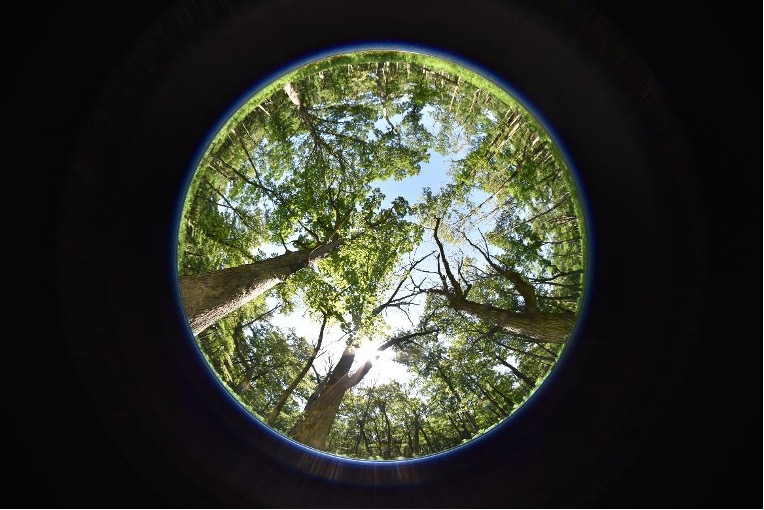
To address this possibility, I conducted surveys across seven woodland restorations sites in the Forest Preserves of Cook County, Illinois. These included both sites that had received supplemental seeding and those that had not. I used 1 m2 plots to systematically identify and record the ground-layer plant species, measuring how much of the understory each one covered. I was seeking to get a clear picture of the diversity, that is how many species there were in each plot, as well as the cover of each species. In total, I identified roughly 170 species. I also took hemispherical photographs with a fish-eye lens and digital camera. This allowed me to measure how open the canopy was above each plot and gave me a good understanding of how much light was reaching the understory plants.
A birds-eye view of one of the 1 m2 plots used to survey the plants in the understory of seven restoration sites in Cook County, Illinois. Northwestern University student intern, Kyndall Hadley, with a survey plot and the digital camera set-up used to capture hemispherical photos in the field. A hemispherical photo captured above a survey plot. These photos were then processed with a software package specifically designed to calculate metrics of canopy openness.
I found, once again, that the canopy was important for driving dynamics in the understory. Canopy openness was positively associated with the cover of native species, meaning that areas with more open canopies had a higher cover of native plants. However, the relationship between canopy openness and the diversity of native species depended on whether the site had been seeded. In restorations that had not received seed additions, it seemed that native diversity increased with more open canopies. However, in seeded restorations, canopy openness had no clear effect on native diversity. The reasons for this pattern aren’t entirely clear, but it’s useful to recognize that seeded restorations may respond differently to canopy openings compared to unseeded ones. This underscores the need for further research into how various restoration strategies, particularly the use of native seed additions, influence plant diversity in woodland understories.
Project 3.
Finally, I wanted to explore how light availability might shape the way plants compete with each other in restored woodland understories. Competition, which can have negative effects on plants, occurs when they try to capture the same essential resources, such as light. In ecology, it is typically thought that the more resources there are in an environment, the stronger the competition between species will be. Thus, plant competition in woodlands may depend on how much light reaches the understory. To complicate things, the order in which species ‘arrive’ and have access to that light can also have a strong influence on competition between species. Referred to as priority effects, a species that arrives early—by dispersing, germinating, and beginning to grow before the other—may gain a competitive advantage.
To better understand how plants compete in woodlands, I tested whether competition was stronger with more light and whether arriving early gave species an advantage. I set up an experiment with 180 pots, each containing twelve native plant species commonly used in woodland restoration. These plants competed under three light levels, and I varied the order in which they arrived. The results were striking. Competition had the strongest negative impact on plant growth when light was abundant. I also found that when a species arrived twenty-four days before its competitors, it performed much better than when all species arrived at the same time. Interestingly, this early-arrival advantage was even more pronounced under high-light conditions compared to low light. Overall, this work helps us better understand the factors that shape species growth and success in woodland restorations. With this knowledge, we can continue improving restoration strategies that support diverse, resilient oak woodland ecosystems.
Twelve species were planted together in a single pot so I could measure competition. I also manipulated the order that each species arrived in the pot. This picture was taken when the final plants were added to the pot. There were a total of 180 of these pots throughout the whole experiment.
I used shade cloth to manipulate light in my competition experiment.
Here, you can see the moderate (30% shade) and low (80% shade) light treatments .
Here, you can see the high light treatment (no shade cloth).
Harvest Day! At the end of the growing season, I, with the help of some awesome interns, harvested each plant growing in these pots, separated them by species, dried them and then measured their biomass. This helped me calculate how competition affected each species’ growth under different conditions.
Together, these studies reveal how crucial canopy structure is for shaping plant diversity in oak woodlands. Light availability not only influences diversity and native cover but also mediates competitive interactions and priority effects. As restoration practitioners work to restore and protect biodiversity in this threatened ecosystem, understanding the complex interplay between canopy trees and understory diversity will be vital. My research highlights that while canopy thinning is a necessary tool to restore biodiversity in woodlands, there are areas to refine our knowledge and approaches to this restoration practice. In doing so, we can better ensure long-term resilience of oak woodland ecosystems and the many diverse species they support.
Results from the three studies will soon be submitted for publication to peer-reviewed journals. For questions about this research, please contact Rory at rschiafo@u.northwestern.edu.
MESM Anna Calle-Loor has nearly five years of experience working in ecological restoration and biodiversity conservation in the Galapagos Islands. She is a former researcher for the Galapagos Verde 2050 (GV2050) Program of the Charles Darwin Foundation (CDF). She is also a member of the Galapagos’ Plants Specialists Group of the IUCN’s Species Survival Commission and the Society for Ecological Restoration. annagcalle@gmail.com
The Galapagos archipelago is famous for inspiring Charles Darwin’s theory of evolution by natural selection after his visit in 1835. Its geographic and environmental characteristics have given rise to unique creatures like giant tortoises, pink iguanas, the second smallest penguins in the world, flightless cormorants, and the only marine iguana. Due to its extraordinary biodiversity, it was established as Ecuador’s first national park in 1959 and declared a UNESCO World Heritage Site in 1979.
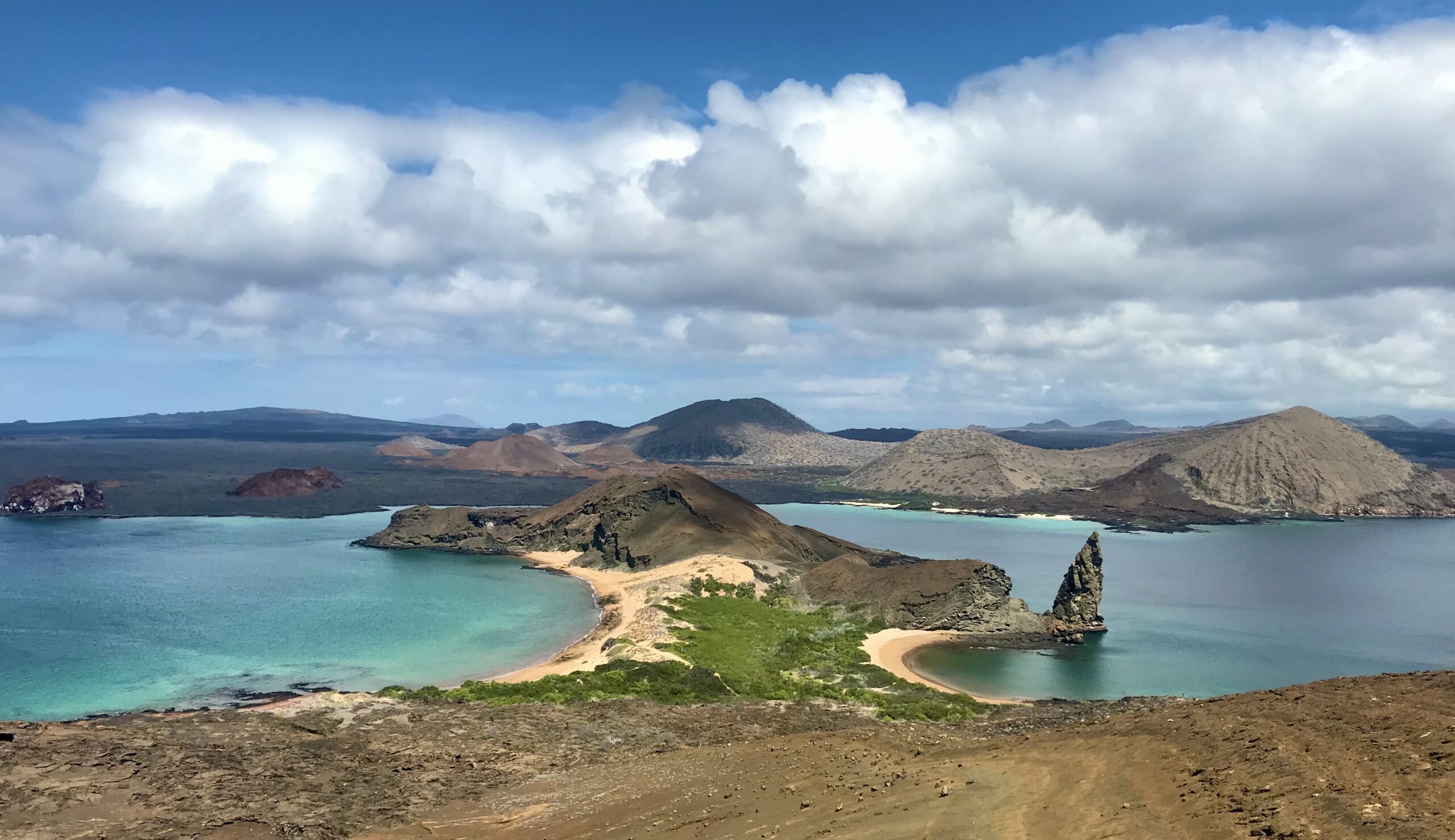
Bartolomé Island, one of the most photographed landscapes in the Galapagos, offering a view of turquoise bays and the Pinnacle Rock formation. Photo credit: Anna Calle
Today, the islands’ biodiversity and volcanic landscapes continue to astonish visitors. But behind their reputation as a pristine paradise lies a story of vulnerability, degradation, and a need for ecological restoration.
Islands: Biodiversity Hotspots and Extinction Hotspots
Islands often have high levels of endemic species, but they are also highly vulnerable to extinctions. With small populations, restricted geographical ranges, and often having evolved with no predators, many island species are especially sensitive to disturbances.
We have seen the consequences before. On Easter Island, deforestation and overexploitation of limited resources led to ecological collapse and the downfall of a once-thriving society. Mauritius Island lost the dodo, one of the first species recognized as extinct due to human activity, in the 1600s. Hawaii has earned the unfortunate title of “the extinction capital of the world” because of its high extinction rates of plants, insects, and birds. Guam has lost most of its native birds following the introduction of the invasive brown tree snake. All of these are reminders of how quickly biodiversity can disappear when island ecosystems are disrupted.
The Galapagos are no exception. With ecosystems that have already suffered degradation, efforts now go beyond species conservation to include ecological restoration.
A History of Degradation
With a recorded human history that starts in 1535 with the arrival of the bishop Tomás de Berlanga, there have been many people that have visited the islands and inevitably have left a mark on them. The first visitors were pirates, whalers, prisoners, and a few early settlers. But they did not come alone. They brought rats, cats, goats, and other animals, many of which became invasive and highly destructive. To give you a scale of the problem, an eradication campaign known as Isabela Project was launched in 1997 and eliminated >140K goats from three islands.
Today, the pressure continues. Around 30,000 people live in the Galápagos, and nearly 300,000 tourists visit every year. Of course, this level of human activity requires infrastructure. The islands now have roads, towns, gravel mines, agricultural fields, and landfills, all of which exert pressure on the surrounding environment. The continuous flow of tourists and imported goods make introduced species a growing threat.
In response, the Galápagos National Park Directorate and conservation NGOs like the CDF have launched multiple ecological restoration projects. I have collaborated in several of these efforts through the GV2050 Program, combining endangered species recovery with ecological restoration strategies.
Recovering Galapagos Endangered Flora
About 60% of Galapagos flora is threatened with extinction. This includes Lecocarpus lecocarpoides, a shrub with yellow daisy flowers that is found only on Española Island and a few nearby islets. Unfortunately, it has almost disappeared from the main island, with a single population left, likely due to past goat herbivory. Although goats were eradicated from Española in the 1970s, L. lecocarpoides has not recovered.
That led us to investigate deeper into its biology. Were the remaining plants producing viable seeds? A study found that yes, there was a large number of seeds in the soil and 80% were viable. Then, why did we rarely see any germination? There was something preventing the seeds from germinating, and the same study hinted at the thick outer seed coat.
In our laboratory, we found that using a scarification technique consisting of carefully cutting the seeds under a stereoscope leads to high germination rates of 75%. As part of the investigation, we returned 29 adult plants to Española and produced over 6000 seeds to continue restoration efforts. These were promising results, but they also led to more questions.
Lankester composite dissection plate of Lecocarpus lecocarpoides showing key plant structures. Created by N. Espinosa-Ortega. Originally published in Calle-Loor & Jaramillo (2024).
How does the scarification process happen in nature? The interactions with other species might play a key role. We have seen moth larvae feeding on the seed coat without damaging the embryo. And we suspect Darwin’s finches might also be involved. They feed on the hard and spiny seeds of Tribulus, which are very similar to Lecocarpus seeds. Could they be helping L. lecocarpoides germinate? This remains to be investigated.
Restoration of Arid Ecosystems
The first island most visitors arrive to in the Galapagos is Baltra Island, where the main airport is located. But few realize it is one of the most degraded islands in the archipelago. A combination of invasive especies and the construction of a U.S. military base during World War II led to habitat destruction and likely to the local extinction of land iguanas, the main seed dispersers. Although they have since been successfully reintroduced through a successful captive breeding program, much of the vegetation has not recovered.
Aerial photo of the U.S. military base “The Rock” in Baltra. Two airstrips, roads, and several buildings can be appreciated. Photo credit: U.S. Army
A challenge when restoring an ecosystem that has been significantly altered, especially when historical records are scarce, is defining what restoration should aim to achieve. To help answer that, we compared Baltra with its neighbor island, North Seymour, which shares similar ecological conditions but has suffered less degradation.
These results can serve as guides for future restoration efforts. For example, for choosing what species to plant and where to plant them. On Baltra, where infrastructure like the airport, roads, and Ecuadorian military base already shape the landscape, restoration should minimize potential conflicts with these other land uses. Instead of trying to recreate the past, efforts should aim to increase connectivity between the two remaining patches of native vegetation to support wildlife movement and seed dispersal.
Recovering Keystone Species: The Opuntia Genus
If there is one Galapagos plant that is underrated, is the Opuntia prickly pear cactus. These cacti are a food source for two of the most charismatic animals of the Galapagos, giant tortoises and land iguanas. They also provide native birds with food, shelter, and nesting structures, including Darwin finches and Galapagos mockingbirds, two groups of birds that inspired Darwin’s theory of evolution by natural selection.
Additionally, they are one of the best examples of plant adaptive radiation in the Galapagos. Their 14 endemic taxa show great variation in form and size, with up to 4-fold differences in height and 100-fold in seed size. Some grow as tall as 12 meters, about the height of a pine tree! Interestingly, tree-like forms are found on islands with giant tortoises, while shorter forms occur where tortoises are absent.
Unfortunately, populations have declined in some islands and low regeneration is a pattern throughout the archipelago. This is exacerbated by the pressure from introduced and native herbivores.
Because of its ecological importance, Opuntia was included in a restoration plan for four islands. Among the actions proposed for increasing its numbers is testing different propagation methods: planting seedlings, cactus pads, seeds from fresh fruits, and perhaps most intriguingly, seeds collected from tortoise and iguana droppings. There is evidence that passing through the digestive system of these animals helps scarify the seeds, improving germination.*
But giant tortoises and land iguanas are not the only species that seem to be helping Opuntia regenerate. We have observed Opuntia growing underneath the protection of trees and spiny shrubs. Could they be shielding them from herbivores or ameliorating harsh environmental conditions? The answer remains unknown, as there have been no formal studies on plant-plant facilitation in the Galapagos. This presents a unique opportunity to deepen our understanding of plant facilitation in island ecosystems and how these interactions can be used to improve restoration outcomes.
Left: Giant tortoise feeding on a broken branch of Opuntia cactus. Photo credit: Anna Calle-Loor. Right: Cactus finch feeding on the pollen of an Opuntia flower. Photo credit: Elena Espín.
From Evolution to Restoration The Galapagos changed our understanding of how new species emerge. Now, they are challenging us to learn how to repair the ecosystems that sustain those unique species. This extraordinary archipelago is no longer just a living laboratory for evolution. It’s becoming a living laboratory for restoration ecology. And if we get it right, the Galápagos can once again inspire the world, this time by showing what successful ecological restoration can look like, not just here, but everywhere.
*Estupiñán, S., & Mauchamp, A. (1995). Interacción planta–animal en la dispersión de Opuntia de Galápagos. Charles Darwin Foundation, Puerto Ayora.
Katalin Török and Melinda Halassy are restoration ecologists specializing in sandy grasslands in Central Hungary. Katalin focuses on botany, ecology, and biodiversity monitoring. Melinda, formerly Katalin’s student, took part in their first restoration experiment and is likely Hungary’s first PhD in restoration ecology. Their research aims to identify barriers to spontaneous restoration and analyze long-term ecological processes triggered by various restoration methods to find the most effective approaches. Both contribute to international ecological research (eLTER) and restoration policy (SERE), working to link scientific knowledge with public policy in ecological restoration.
KIskun LTER Restoration Experiments site is located in a unique sandy landscape of central Europe. Situated at the center of a vast sandy region, the core area of Kiskunság National Park represents one of the largest of its kind in Central Europe, spanning approximately 7,400 square kilometers. This unique environment is especially accessible near the village of Fülöpháza, where visitors can experience an impressive range of sand dunes. The landscape features both open sand steppes and wind-blown dunes, offering a rare glimpse into one of the continent’s most distinctive and unusual natural habitats. Credit: Melinda Halassy, CER2021
The ecosystem
One of Hungary’s most distinctive geological regions is the Danube–Tisza Interfluve (Kiskunság), which is an important reservoir of biological diversity within the Pannonian Biogeographical Region of Europe. Situated at the westernmost edge of the vast Eurasian forest-steppe biome, this region is part of a bioregion that extends approximately 9,000 km from Central Europe to Eastern Asia, covering more than 4.7 million km² (Erdős et al. 2022). The Eurasian forest-steppe represents Hungary’s dominant vegetation type, covering more than half of the country. Although the grasslands in this zone are sometimes misinterpreted as being heavily deforested in historic times, ecological models that integrate climate variability, topography, soil conditions, herbivory, and natural fire regimes reveal that forests and grasslands naturally coexist in a dynamic mosaic within the forest-steppe zone (Erdős et al. 2022).
The largest and most ecologically diverse areas of the region preserve the characteristic ”puszta“, which includes both sandy and alkaline grasslands, sand dune forests, and remnants of former sodic pans, marshes, fens, fen meadows, and wet grasslands. The inland sand dunes, shaped by wind action, consist of coarse-textured, lime-rich soils that are low in water and nutrients, supporting unique vegetation, including specialist plant and insect species. The sandy forest-steppe of the “puszta” consists of poplar-juniper sand dune forests and thickets, as well as open oak-dominated woodlands forming complex mosaics with both open and closed sand grasslands, all of which are considered habitats of high conservation concern by the European Commission. The driest grasslands in the region, known as ”Festucetum vaginatae danubiale“ community, are found on the crests and southern slopes of sand dunes. These grasslands are characterized by tussock-forming grasses such as the endemic grass Festuca vaginataand the protected Stipa borysthenica, interspersed with cryptogam cover of mosses, ferns, lichens, etc. and frequent patches of bare ground.
Sandy Forest-Steppe Mosaic of the Puszta: Poplar-Juniper Stands and Open Sand Grasslands. Dominated by White Poplar (Populus alba), this landscape reflects the natural vegetation adapted to arid, sandy conditions. Credit: Evgeni Dimitrov, eLTER 2023
Throughout the 19th and 20th centuries, the landscape underwent significant human modifications, beginning with river regulation and drainage, followed by agricultural intensification and plantation forestry. As a result, the region is now predominantly covered by agricultural lands, forest plantations, and fragmented remnants of semi-natural grasslands. During the post-socialist transition (1987–1999), large-scale agricultural land abandonment occurred, particularly in low-productivity areas such as the Kiskunság (Valkó et al. 2016). While some native vegetation regenerated spontaneously, abandoned lands also became increasingly susceptible to invasion by non-native species. One of the most problematic invaders is Black locust (Robinia pseudoacacia), a fast-growing, nitrogen-fixing hardwood tree from eastern North America, which has spread extensively. Another notorious example is Common ragweed (Ambrosia artemisiifolia) that we will discuss below. The expansion of invasive species not only threatens native biodiversity and ecosystem health but can also have negative impacts on human health.
Land abandonment presents a valuable opportunity for the spontaneous regeneration of native sandy grasslands, it also introduces significant ecological challenges. One of the most pressing threats to natural recovery is the aggressive spread of invasive alien plant species, particularly Common milkweed (Asclepias serica, formerly A. syriaca). Credit: Melinda Halassy, CER 2021
Restoration experiments
For the past 27 years, we have been conducting restoration experiments at the Kiskunság Long-term Ecological Research site to facilitate the recovery of sandy grasslands on lands degraded by Black locust plantations and arable cultivation. Our research focuses on the long-term effects of various treatments aimed at overcoming barriers to spontaneous grassland regeneration, assessing the positive and negative influences of the surrounding landscape, and enhancing invasion resistance through seed-based restoration.
Our findings indicate that active restoration interventions can significantly accelerate recovery. Specifically, sowing a mixture of locally sourced grass and forb species has proven to be the most effective method for initiating restoration in dry grasslands and controlling invasive species (Reis et al. 2023). Additionally, carbon amendments and mowing can serve as valuable complementary measures; however, they should be applied cautiously in invaded landscapes to avoid unintended ecological consequences (Reis et al. 2022).
Seeding Native Species: A Key Strategy for Restoring Sandy Grasslands. In the restoration of dry sandy grasslands, sowing a carefully selected mixture of locally sourced grasses and forbs has emerged as the most effective strategy for initiating vegetation recovery and suppressing invasive species. Although remnants of native sand grasslands remain in the landscape, their specialist species show limited natural dispersal capacity. As a result, abandoned agricultural fields are often colonized by weeds and invasive alien plants, which significantly hinder the process of secondary succession. Research has shown that even the low-rate seeding of as few as five native species can have a catalytic effect, facilitating the establishment of characteristic grassland communities and accelerating the recovery of degraded former croplands. Credit: Melinda Halassy, CER2021
The success of restoration efforts is further challenged by the presence of other aggressively invasive species beyond Black locust, including the tree of heaven (Ailanthus altissimus) and the herbaceous Common milkweed (Asclepias serica (formerly A. syriaca), which are particularly widespread in forest plantations (Csecserits et al. 2016). Even after the removal of dominant invasive species, new invasions may occur, likely due to legacy effects and the high dispersal capacity of these non-native species (Reis et al. 2023). To mitigate these negative impacts, restoration efforts should prioritize areas with lower invasion pressure or integrate early seeding of native species as a complementary strategy for invasion control (Csákvári et al. 2023, Halassy et al. 2023).
Managing Invasive Species: The Limitations of Mowing in Invasive Species Control. Mowing is widely used as a method to control the spread of invasive alien species. However, experience indicates that mowing alone often fails to deliver satisfactory results. This is largely due to the persistent legacy effects of previous invasions and the limited natural dispersal capacity of native grassland specialist species. While mowing can effectively suppress certain targeted invasives, it does not prevent secondary invasions—the establishment of other non-native species that quickly occupy the disturbed space. To ensure successful and lasting restoration, mowing must be combined with the active introduction of native species, which can stabilize the ecosystem and reduce vulnerability to further invasions. Credit: Márton Kállai 2023
Restoration – human health links; research in progress
Enhancing public health through ecological restoration efforts can be of significant importance. Ecosystem services and direct contact with nature may contribute to this improvement (Millennium Ecosystem Assessment 2005, Marselle et al. 2021), but robust evidence is needed to establish clear links between biodiversity, ecological restoration, and human health at landscape, regional, and national scales.
In Hungary, a national project has recently been launched to investigate these nature–health connections using ecosystem condition maps and health data (https://termeszetem.hu/en). This initiative aims to identify correlations between environmental factors and various health indicators, such as the prevalence of allergies, depression, autoimmune and inflammatory diseases, and self-reported well-being. The research focuses on detecting these relationships at the sub-regional scale and in urban areas, as well as assessing the economic impacts of health conditions. A key initial focus of the project is the highly allergenic Common ragweed (Ambrosia artemisiifolia), which poses significant public health challenges throughout Europe and elsewhere.
Restoration as a Tool to Combat Common Ragweed and Its Public Health Impact. Abandoned croplands provide favorable conditions for the establishment and spread of Common ragweed (Ambrosia artemisiifolia), a highly invasive species known for its allergenic pollen. This plant poses a growing public health threat across Europe and beyond. In 2015 alone, ragweed allergy adversely affected the health of an estimated 13.5 million people in Europe, resulting in public health costs exceeding €7.4 billion (US$8.1 billion). Common ragweed thrives in open, disturbed soils, making abandoned agricultural lands particularly vulnerable to colonization. However, as natural vegetation succession progresses and plant cover becomes denser, ragweed populations tend to decline. This succession process can be significantly accelerated through active ecological restoration, which helps close vegetation gaps more quickly, thereby limiting the window during which ragweed can release its pollen and spread. Credit: Anikó Csecserits, CER 2020
Battling Common ragweed – for ecosystem and human health
Successes so far with reducing invasion of Common ragweed (Ambrosia artemisiifolia) are noteworthy. For starters, note that the disservices of Common ragweed are already serious and likely to get worse throughout Europe since its allergenic pollen affects one in ten people throughout the European continent. Schaffner et al. (2022) estimate that the health of 13.5 million people was adversely affected in 2015 by Common ragweed allergy in Europe alone, generating 7.4 billion euros (8.1 billion US$) in public health costs. Happily, our ecological restoration interventions have already demonstrated their effectiveness in battling this noxious annual weed (Fig. 1).
Figure 1. The decrease of cover of the highly invasive, and allergenic, common ragweed (Ambrosia artemisiifolia), under three different restorative treatments and control. The figure shows the pooled data of three experiments that included mowing (Reis et al. 2021), carbon amendment (Halassy et al. 2021) and seeding (Reis et al. 2023) between 1995 and 2019. Carbon amendment through addition of sucrose and sawdust reduced available N-levels in the soil. Mowing was carried out twice a year, and was followed by removal of dry plant biomass.
The successful reduction of Common ragweed invasion serves as a promising example of how ecological restoration can yield measurable benefits for human health. The new national-scale study aims to provide evidence-based insights into the potential interconnections between ecosystem health and human well-being. These findings could help inform policy decisions related to land management and restoration efforts not only in Hungary but also in other regions.
A potential next step is to investigate links between ecosystem conditions and asthmatic diseases. By analyzing data on general practitioner and specialist visits for asthma-related complaints, as well as the purchase of asthma-specific medications, we can correlate health trends with different ecosystem states across temporal and spatial scales (Nitschke et al. 2022). This approach will allow us to assess the broader health impacts of ecological restoration.
Moving forward, we plan to deepen our research on the relationship between ecological restoration and human health by collaborating with the Ecological Health Network and its member sites and hubs working on similar challenges. We believe that participation in an international social impact network will not only advance our research but also enhance its value and real-world impact.
The Mount Desert Land & Garden Preserve’s mission is to conserve and share the beauty of our historic lands and gardens, which it does by managing three historic gardens and approximately 1,400 acres (567 ha) of natural land on Mount Desert Island, Maine for ecosystem health. Also, as needed, we undertake restoration interventions, particularly in our post-agricultural meadows.
Mount Desert Island (‘MDI’, ~60,000 acres, 24,280 ha) is well known for its breathtaking, rugged coastal scenery and for holding the largest unit of Acadia National Park (~30,500 acres, 12,343 ha), one of America’s earliest (1916) and most visited (~4 million visitors/year) national parks. The two other units of Acadia National Park include part of Schoodic Peninsula (2,366 acres, 957 ha) and part of Isle au Haut (2,900 acres, 1,200 ha). The Garden Preserve’s natural lands are directly adjacent to Acadia National Park and mirror it ecologically; both are covered by spruce-dominated hills (primarily red spruce, Picea rubens), streams and wetlands.
Acadia National Park (shown in green on map) comprises three primary units. Mount Desert Island is home to the park’s largest unit. The yellow star shows the location of the Land & Garden Preserve’s natural lands (1,400 acres, 567 ha). Map courtesy of US National Park Service.
As the Land & Garden Preserve’s Director of Natural Lands, I am charged with conserving the ecological integrity of the natural lands while ensuring safe public access. Our ten miles of trails and ten miles of carriage roads see over 75,000 visitors per year. A twenty-acre, post-agricultural meadow sits at the heart of the natural lands, and from the nearby carriage road the meadow provides picturesque views of the surroundings, making this a popular destination for walkers, dog walkers, horseback riders, and bird watchers.
A ‘carriage road’ sits next to the 20-acre meadow. Because of its views, this road is a draw to thousands of walkers and nature enthusiasts. (This and all other photos are by the author unless otherwise indicated.)
I have focused management on Garden Preserve’s meadow because early successional habitats are uncommon on Mount Desert Island (Acadia National Park manages less than 100 acres of upland meadows on MDI) and because of the presence of invasive glossy buckthorn (Frangula alnus), invasive reed canary grass (Phalaris arundinacea), and some other weedy, nonnative plants. To establish a firm understanding of the plant community I commissioned a wonderful field botanist to conduct a survey of the meadow’s vascular plants (completed in 2020). From 2019-2021 we eradicated the canary grass from three monoculture patches (totaling 2,500 ft², 232 m²) and began restoring the area left behind. We have used a 130-year-old dataset – Flora of Mount Desert Island, Maine, published in 1894 – to better understand changes in the meadow’s plant community, and help us select a plant species list for our ecological restoration work. I also visited approximately 15 different meadows – ranging from 2-60 miles (3.2 km – 97 km) away – to develop a loose reference system. The goal of this restoration work was to 1) ensure long term eradication of reed canary grass and, 2) establish an enduring native plant assemblage that could provide habitat and other ecosystem benefits to the meadow’s fauna. I began with a conservative approach to ‘native’ and selected species according to this hierarchy:
MDI>Hancock County>Maine>New England. Most species we use in this restoration naturally occur in Maine.
Aerial photo of a portion of the Land & Garden Preserve’s meadow. Two patches of invasive reed canary grass are visible: center left (with hole in middle of patch), and center (some soil is exposed). Once the grass was eradicated, we restored the areas with native plants. Photo credit: Allison Bourke.
The 1894 Flora of Mount Desert Island, Maine by Rand and Redfield
The Champlain Society was a group of scientifically minded Harvard students who, starting in the early 1880’s, dedicated their summers to learning and documenting MDI’s natural history. Student Edward L. Rand headed up the society’s botanical studies and, along with John C. Redfield, published the Flora of Mount Desert Island, Maine in 1894. The flora is incredibly comprehensive, including nearly 1,500 species of vascular plants, marine algae, bryophytes, and lichen. Remarkably, MDI represents less than 1% of the state of Maine’s land area but supports more than half of its known plant species (Greene et al. 2005).
Members of the Champlain Society at their summer campsite on Mount Desert Island, 1880. These students from Harvard University summered on MDI starting in 1880 and documented the island’s natural history. Photo credit: Mount Desert Island Historical Society.
The 1894 Flora has proven to be a reliably accurate reference for late 19th century plant life on MDI. For example, by reviewing the herbarium vouchers, Greene et al. (2005) concluded that less than 45 taxa were misidentified. As a natural resource professional, this 285-page book serves me as a priceless reference. I even found an original copy signed by the authors in the Garden Preserve’s library!
Old datasets of this breadth, accuracy and credibility are rare, and therefore extremely valuable to understanding how plant communities change over time. When you compare the ‘Flora of Mount Desert Island, Maine’ (1894) to the contemporary ‘Vascular flora of Acadia National Park region, Maine’, (2005) as MacKenzie et al. (2019) did, you can see just how much has changed in approximately 120 years. They report that between 1894 and 2005, 15.8% of the original species are no longer found on MDI, 34.4% declined in abundance, 30.4% experienced no apparent change in abundance, 19.4% increased in abundance, and there were 205 new plant species in 2005.
In their 1894 Flora, Rand and Redfield left us wonderful notes about each taxa’s abundance, special occurrences and locations, which I’ve used to reconstruct something of an 1894 Flora for the Garden Preserve’s meadow (albeit incomplete). For example, many entries include location names where large populations of that taxa could be found, and location names such as ‘long pond meadows’ (the old name of our meadow), ‘Seal Harbor’ (the village where the meadow is found), ‘road to Jordan Pond’ (approximately ½ mile from meadow) provide a direct link to the Garden Preserve’s meadow of the 1880’s. To show how prevalent this anecdotal data is, ‘Long Pond meadows’ is included in 30 taxa entries and ‘Seal Harbor’ is included in over 100 taxa entries.
Where Rand and Redfield did not provide location names, I use their notes on habitat (e.g., ‘fields’, ‘meadows’, ‘open areas’) and abundance (e.g., ‘common’, ‘frequent’, ‘rare’), and what I personally know about these species’ habitats to infer which taxa were found in 1894 at or around the Garden Preserve’s meadow. For example, the entry for New York aster (Symphyotrichum novi-belgii) includes ‘Abundant everywhere in both wet and dry ground’ (pg. 115). Therefore, although Rand and Redfield did not tell us that New York American aster was found at the Long Pond meadows, I can assume that it was.
When I compared my 2020 meadow survey (340 taxa) to the list I recreated from Rand and Redfield’s 1894 Flora, I found that at least nine native forbs were likely present in the late 19th century but are no longer found on or around the Garden Preserve’s meadow. I call these ‘historic’ species. There are more than nine historic species, but for the purposes of this article, I only discuss the taxa considered for meadow restoration. The nine historic forbs I have identified are:
Although I conclude that these species are no longer found in our meadow, they have not been extirpated from Maine. For example, I see Anaphalismargaritacea growing on roadsides on MDI, and I infrequently see Eupatorium perfoliatum in Acadia National Park. Likewise, I see large swaths of Symphyotrichum lanceolatum on the mainland, just three miles from MDI. Other Symphyotrichum species were more difficult to find, but they still turned up when I searched similar meadows approximately 30-60 miles from MDI.
Natural resource professionals can be apprehensive by nature because we fear the slow creep of local species extinction. We understandably get nervous when our data reveal that we lost at least nine forbs in a 130-year span. The reasonable question becomes: ‘With viable populations of these historic species nearby, should we include these in our ecological restoration efforts’?
Using ‘historic’ species in meadow restoration efforts
Starting in 2021 we decided to incorporate eight of the nine ‘historic species’ into our meadow restoration efforts (Virginia virgin’s bower requires different habitat characteristics and was used elsewhere), via two different methods: 1) planting pint and quart-size live plants, and 2) seeding (with associated seed bed preparation). These eight historic species were among a larger group of approximately 25 species, all of which are native to Maine and/or New England and found in similar early successional habitats.
The author monitors the germination of native plants at a restoration site, August, three months after seeding. The site was formerly dominated by invasive reed canary grass. Photo credit: Christa Little-SieboldRestoration site, June, in its second growing season. We used a seed mix of twenty native species (13 forbs, 7 graminoids).Restoration site, August, in its second growing season.
The Mount Desert Land & Garden Preserve operates a propagation facility to support the needs of our three gardens, and the propagation staff enthusiastically grows native plants from seed for our restoration projects on the natural lands.
Staff propagator waters her plants in the Land & Garden Preserve’s propagation facility. Photo credit: Cassie Banning.
While obtaining the seed for the historic species, I employed a ‘local is better’ mindset regarding provenance. I collected seed from populations on MDI where possible, then as near as possible thereafter. Where I couldn’t collect the seed for a given species myself or obtain wild-collected seed from a trusted colleague in Maine, I purchased seed from the Wild Seed Project (Portland, Maine). Some of the asters were only available through larger, Midwestern nurseries such as Prairie Moon Nursery (Minnesota).
A pint sized wavy-leaved aster ready for planting in a meadow restoration site that was formerly dominated by invasive reed canary grass.
The only consistent impediment to historic plant reintroduction and establishment that we have observed has been deer browse, which impacted six of the eight species.
Staff planting native plants in a restoration site.
The National Park Service’s ecologists conducted forest health assessments in Acadia National Park, 2006-2013, and found that forest health is relatively good, and that deer abundance is within the carrying capacity of the park (i.e. tree regeneration is sufficient). In fact, for both of those metrics, the forests of Acadia National Park scored better than the seven other National Park forests in their ‘Northeast Temperate Network’ study. Acadia National Park’s forests may not be experiencing the detrimental effects of deer browse that many other forests in eastern USA are (yet), but my work in the Garden Preserve’s meadow suggests that forb diversity in early successional habitats is – at least in part – influenced by deer. Ask any gardener or farmer in the northeast USA, and they will agree that deer are an issue.
In New England, white tailed deer abundance has risen and fallen in response to landscape-scale land use changes since European colonization. The 1890’s saw the lowest historic deer population in the United States (only 350,000 animals). It is very likely that the flora documented by Rand and Redfield in the late 1800’s thrived in a period of low deer abundance, which allowed some of these more deer palatable historic species to survive.
White tailed deer browse on New England aster in a meadow restoration site. Notice that the terminal shoot has been chewed off.
It’s not currently realistic to manage the deer herd on the Garden Preserve’s natural lands so I have experimented with planting some of the deer-palatable historic species in areas that deer are less likely to access, such as behind pre-existing fences and near buildings and other structures. I have had good success with this.
This fence was erected to manage human and dog traffic entering a pond, but we have since used it to deter white tailed deer from browsing historic species.Here we are using historic species joe-pye weed (pink flowers) and boneset (white flowers) behind a fence where deer cannot reach it. In the absence of deer browse, both species have flourished.Virginia’s virgin bower, an historic species no longer found on Land & Garden Preserve’s natural lands. Here, we use the vine on a fence where it has space and support to grow and spread.
At the Garden Preserve, we are not attempting to recreate past ecological conditions. Incorporating some historic species into our meadow restoration would be nice if it were possible, but I am keeping an open mind going forward regarding which plants we promote versus which plants we try to remove. We have experimented with some (native to Maine) species not currently found on MDI or in the county. So long as deer browse remains an issue, we may need to use plant species that are not native in the strictest sense, and I personally feel comfortable with that. Our restoration work is benefitted by partnering with others in the Northern Appalachian/Atlantic Maritime hub of the Northeast Seed Network.
Note from the editors: This month marks ten years since we started Natural History of Ecological Restoration! During the last decade, we’ve posted 127 times on a wide variety of ecological restoration stories from around the world. At the same time, our global readership has grown from 4,000 viewers in our first full year to more than 14,000 viewers in each of the last five years, with readers coming from 150 countries. At their best, NHER stories illuminate ecological restoration’s natural history, taken in the most inclusive sense to mean stories about the people, places, organisms, institutions, and interactions involved in ecological restoration projects.
This month’s post by Allison Simler-Williamson (Boise State University) exemplifies this standard. In her post, Dr. Simler-Williamson describes how environmental conditions, land manager decisions, and restoration outcomes interact in complex and confusing ways – and she charts a path forward for better understanding the real-world impacts generated by restoration projects.
A “randomized” experiment can be a beautiful and powerful tool in restoration ecology. Randomization ensures that an experimental treatment (such as a restoration action) is unrelated to any other environmental factors that might influence the outcome we are measuring (such as plant establishment). When we confidently compare plots that received an herbicide or planting treatment to adjacent “reference” sites, our estimation of restoration effectiveness hinges on this assumption of randomization.
But, despite their elegance, randomized experiments are labor-intensive and often spatially or temporally constrained, limiting how applicable they may be to new areas or in atypical years. Thus, randomized experiments are increasingly mismatched with widespread ecological degradation and growing needs for restoration. Emerging “big data”, such as the US Geological Survey’s Land Treatment Digital Library, which contains information about more than 65,000 restoration treatments that have occurred on Bureau of Land Management land in the western United States, could help tackle the problem of understanding restoration efficacy across wide spatial and temporal scales.
When we pivot to using these “observational” datasets, which are opportunistically collected, we incur an important tradeoff. We gain generalizability but lose the power of randomization because (and this likely is not a surprise to anyone working in restoration!) real-world management treatments are almost never applied randomly across large landscapes. Restoration occurs in certain parts of landscapes more than others, due to a mix of ecological need, bureaucratic constraints, and stakeholder decision-making processes.
Why is this lack of randomization a problem when we want to leverage these kinds of large datasets? In statistics courses, I like to use some of my son’s favorite bathtime toys as an analogy for what can occur. When you pour water into these colorful pipes, the wheels spin, and my son loves to create networks between them. If the pipes are arranged as below (Figure 1A) with water flowing through them, it would be immediately obvious that there is no direct relationship between the wheels “X” and “Y” – they are simply both being spun by the water flowing out of “Z”. However, if I were to obscure the connections between the pipes (Figure 1B) and instead ask you, “Based on your observations, is there a relationship between X and Y?”, you could detect a correlation. Depending on your understanding of the system, you might assume that this link is a direct cause of X on Y, or vice versa.
Figure 1. Confounding variables (Z) jointly impact a predictor variable (X) and our response (Y), biasing our understanding of the relationship between X and Y.
This phenomenon is an example of statistical “confounding,” in which a background driver can bias our understanding of the relationship between two other variables. This potential for confounding is a big concern if we would like to estimate the efficacy of restoration treatments that were applied in non-random places or times because it can falsely inflate or shrink apparent effects in our analyses. For instance, if restoration actions (X) are disproportionately applied in dry areas (Figure 2a), and drought stress simultaneously reduces plant establishment (Y) (Figure 2b), the correlations between variables can cause a treatment effect to shrink (even if the treatment works!), if we ignore this lack of randomization in treatment applications.
Figure 2. Non-random application of restoration treatments in real-world settings, due to ecological, social, and institutional processes, can bias estimation of treatment effectiveness.
In a 2022 study (Simler-Williamson and Germino 2022), we explored how the ‘non-random’ application of restoration seedings of big sagebrush (Artemisia tridentata) influenced our estimation of treatment effectiveness, using observations of post-fire seedings across the western U.S. in the Land Treatment Digital Library.
When we used statistical models that assumed these restoration treatments were applied randomly, we found a somewhat counterintuitive result: a negative relationship between sagebrush seeding and sagebrush recovery. However, this statistical illusion emerged because of background relationships in our dataset: restoration seedings (Figure 2; X) tended to occur in hotter, drier, and more degraded places (Z), where plant establishment was already more difficult (Y). In short, restoration actions were disproportionately applied in more “dire” ecological settings, creating the illusion of failure.
Next, we compared this approach to two sets of statistical methods designed to minimize the effects of confounders (“Z”) on our treatment effect. The first set of approaches required that we include pre-existing data about the hypothesized confounding variables directly into our model. When we accounted for some of these measured drivers of “non-random” seeding application using existing data about soil types, climate conditions, and fire impacts, restoration efficacy shifted from a negative number toward a neutral effect.
Finally, the last set of approaches instead used repeated observations of sagebrush stands to ‘control for’ confounding variables, by accounting for pre-existing differences between treated and untreated stands before they had been seeded, rather than requiring the direct inclusion of measured variables. Only when measured and many unmeasured differences between treated and untreated sites were accounted for in our analysis, we revealed a positive impact (of ~4-6% in sagebrush cover by 10 years post-fire) of restoration seedings in degraded sagebrush ecosystems.
The pattern we described in that paper underscores two key needs in restoration science: one social and one statistical. These results suggest that we urgently need better information about the socio-economic drivers determining where and when we apply restoration treatments, which are poorly described. The analyses that incorporated some common ecological drivers of restoration need (e.g., fire impacts, climate variables) only accounted for some of the bias in the effects of restoration seeding. The strong shift to positive impacts of restoration after “unmeasured” sources of bias were considered suggests that there are significant additional unmeasured processes that simultaneously shape where we attempt to restore and where plant populations recover. In the focal sagebrush steppe ecosystems, these may include diverse drivers such as seed availability, bureaucratic constraints, aesthetic considerations, cultural values, land use, and grazing management. Collecting and understanding these variables seems essential to advancing our understanding of restoration effectiveness broadly.
But no matter how elegant randomized experiments are as a concept, they may not be able to generate estimates of restoration effectiveness at the broad spatial and temporal scales we require to manage rapidly changing ecosystems. As a community, I think we need to be integrating big, opportunistically collected datasets with statistical approaches that recognize the “messiness” of these data and aim to minimize the risk of confounding in treatment effects. Well-estimated treatment effects can improve how we connect restoration resources (such as seeds, time, and funding) with the locations where the ecological benefits may be greatest, both in space and time.
Eve Allen, Program Director for the Northeast Bioregion, James Aronson, President of the Ecological Health Network, and Sefra Alexandra, Director of The Ecotype Project, share insights and outcomes from the inaugural workshop held at the Oak Spring Garden Foundation in Upperville, VA. This workshop led to the launch of a new coalition supporting initiatives for sustainable ecosystem and landscape restoration in the Eastern United States.
Unprecedented federal and state-level investments, combined with growing environmental education programs and awareness, are increasing the demand for ecological restoration (ER) and allied activities in the US, Canada, and worldwide. This is causing a demand surge for native seed and plant material across the United States. Similar trends are coming to light in many other parts of the world as well.
In January 2023, the National Academies of Sciences, Engineering, and Medicine released a 228-page report that found the country’s current supply of native seeds is already insufficient to meet the restoration needs of agencies like the US Forest Service and the Bureau of Land Management (BLM), and the situation is even more acute in the states east of the Mississippi River.
The skewed distribution of federal land ownership in the US exacerbates this problem. To wit, the US Government owns about 46% of the land in the 11 contiguous Western states, whereas its ownership averages only 4.6% in the remaining mainland states. Given that the US government is the primary purchaser of seed and plant material nationally, for use in restoration programs on public lands, this demand serves as a strong signal for farmers and nursery professionals to ramp up production. Despite this, a notable procurement gap exists in the Eastern states, where land ownership is predominantly divided among state governments and private individuals, hindering the development and expansion of robust seed and plant material supply chains.
In 2018, a survey of 760 respondents across the Eastern US states undertaken by the Mid-Atlantic Regional Seed Bank and the University of Maryland indicated that seed buyers sourced seeds from vendors located an average of 418 miles (673 km) away from their restoration sites (typically from vendors in the Upper Midwest (Tangren, Toth, and Siegel 2022). We conclude that there is an urgent need to build stronger networks in the Eastern US to increase supply chain capacity and to improve the quantity and quality of genetically and ecologically adapted seeds and nursery-grown plants with verified provenances.
The Northeast Seed Network
To this end, in March 2023, the Native Plant Trust, Ecological Health Network, and other partners launched the Northeast Seed Network (NSN) to reinforce and build connections and trust among government agencies, Tribal Nations, educational institutions, citizen groups, farmers, nurseries, other private companies, and nonprofit organizations including botanic gardens, seedbanks, and arboreta. By fostering collaboration among all these diverse stakeholders, the NSN seeks to facilitate knowledge exchange, promote impactful research, and advocate for the adoption of best practices, thus fostering a vibrant community of practice. Building strong private, public, and nonprofit partnerships is essential for building seed supply chain capacity or the ability to ensure that we have “the right seed [or plant], in the right place, at the right time” (Oldfield and Olwell 2015). This is because there are numerous ‘public good’ aspects of the ‘supply chain’ (e.g., R&D, education, demonstration, and advocacy) that will not be supported solely through market mechanisms.
New York ironweed (Vernonia noveboracensis), an important host plant to pollinators including the Eastern Tiger Swallowtail Butterfly (Papilio glaucus), is commonly used in ecological landscaping in the US Northeast Region. Credit: Sefra Alexandra.
Recognizing the Role of Botanic Gardens
To gather more information prior to undertaking any major new steps, the Ecological Health Network carried out a social network analysis to understand existing relationship patterns among the seed supply and demand chain actors in the Northeast US (Allen et al., under review). The study’s findings align with those of Tangren, Toth, and Siegel (2022), indicating that Midwestern seed vendors predominantly dominate markets in the Eastern US. For instance, a seed vendor based in Minnesota has established connections with over 94% of the end-users of native seed and plant material in the US Northeast identified in the study.
However, the research also unveiled that producers of seed and plant materials within the US Northeast region enjoy well-established social ties with many botanic gardens, arboreta, seed banks (referred to as botanic gardens hereafter), and educational institutions in the region. These results support the argument that botanic gardens are uniquely positioned to play an essential role in ecological restoration science and practice (Hardwick et al. 2011), especially in their own regions. Botanic gardens have expertise in numerous relevant fields, including plant taxonomy, horticulture, genetics, seed science, and environmental education, as well as knowledge from ecological field research being undertaken by a growing number of botanic gardens around the world (Aronson et al. 2014; Miller et al. 2016). Furthermore, as emphasized by Crane (2022), botanical gardens share the obligation of addressing socio-ecological challenges arising from climate change, alterations in land cover, and pollution. They must actively maintain their relevance through engagement, education, and tangible actions, particularly at the local level, outside the confines of their garden walls.
Indeed, many botanic gardens across the Northeastern and Northern Mid-Atlantic USA region have programs and activities aimed at strengthening native seed and plant material supply chains, among other things. For example, the Highstead Foundation in Redding, Connecticut, is deeply involved in sustainably harvesting seeds from local, naturally occurring plant populations. Following this, the staff meticulously cleans and stratifies the seeds before growing them into plugs. Local farmers, such as those affiliated with the Northeast Seed Collective will then proceed to amplify the plant material to produce the specialty crop of ecotypic seed. (Read more here).
In Hockessin, Delaware, Mt. Cuba Center, a botanic garden dedicated to preserving native plants and ecosystems across the Mid-Atlantic and Eastern Temperate Forest Region, conducts trial garden studies aimed at evaluating native species for their horticultural and ecological value. These studies serve to educate the public about the garden performance and ecosystem services provided by native species while also fostering the development of new markets for regionally produced seed and plant materials. The garden evaluates material and, where appropriate, shares material for local native plant nursery production. Beyond the horticultural side of the trade, Mt. Cuba engages with land managers and restoration growers, working to understand needs and promote local provenance workhorse species in collaboration with others in a mid-Atlantic seed users network.
Native Plant Trust’s Nasami Farm in Whately, Massachusetts, Nasami Farm, has a longstanding practice of cultivating native plant material from hand-collected wild seeds. More recently, they have expanded their efforts by establishing seed increase plots to enhance production capacity for regional restoration projects.
These examples provide a sampler of the valuable contributions that botanic gardens across the region are already making to native seed and plant supply chains. However, in May 2023, Eve Allen and James Aronson, alongside Christopher Dunn, the Director of the Cornell Botanic Gardens, recognized a need to improve communication about these existing activities, and programs through improved networking among botanic gardens at a bioregional level.
Eve Allen, from the Ecological Health Network (EHN), and Todd Bittner, Director of Natural Areas at Cornell Botanic Gardens, discussing the Native Lawn Demonstration Area during the EHN Site visit in the fall of 2022. Photo Credit: James Aronson.Least trillium (Trillium pusillum) in bloom at the Mt. Cuba Center, a botanical garden in Delaware dedicated to preserving native plants and their ecosystems across the Mid-Atlantic and Eastern Temperate Forest Region. On the right, Eve Allen of the Ecological Health Network (EHN) stands with Élan Alford, Plant Conservation Scientist, and Jeff Downing, Executive Director of the Mt. Cuba Center, during an EHN site visit in the spring of 2023. Photo Credit: James Aronson.
Over the course of a long day and delightful evening, the participants worked together to chart a course for a new collaborative effort. Together, we recognized the distinctive responsibility botanical gardens bear to strengthen native seed and plant supply chains for landscape restoration across a spectrum of ecosystems, spanning from urban areas to suburbs, agricultural landscapes, corridors, and other protected areas of significant conservation value. More broadly, we agreed that botanic gardens are custodians of our shared plant biodiversity on our planet. By engaging in conservation, exploration, education, research, providing facilities, and leveraging expert horticultural know-how, they – and allied organizations like arboreta, herbaria, and seedbanks, should work together to bolster resilience and restore the health of people, ecosystems and landscapes. We also agreed that it would be timely to work on meeting this challenge at a bioregional level, namely in the Eastern US.
Enhancing demand signals by building better markets
The National Academies Report identifies unpredictable demand as the foremost challenge for native seed suppliers across the United States (p.98). This problem is especially pronounced in the US Northeast, as the substantial increase in demand for native seeds and plants fails to translate into intelligible markets. Current and potential suppliers within the Northeast Seed Network, including farmers and nursery professionals poised to expand their production of diverse species and ecotypes, require more consistent and transparent signals of demand.
As such, a primary objective of the Restorative Landscape Coalition is to address and surmount the various policy, regulatory, and cultural obstacles hindering the utilization of source-identified, genetically diverse seed supplies, as well as nursery-grown or propagated plant materials. For example, we addressed the necessity of conducting targeted outreach and engagement with state and municipal agencies to facilitate the development of enhanced recommended species and species substitution lists. Currently, these lists predominantly feature mid-western species, likely due to their commercial availability.
Rather than solely focusing on seed production or amplification efforts, we recognize the critical importance of fortifying the ‘demand’ side of seed and plant material supply and demand chains. This strategic emphasis not only elucidates the distinction between the Restorative Landscape Coalition and the Northeast Seed Network but also underscores their mutually reinforcing relationship. Our approach involves generating and sharing knowledge, know-how, and best practices to enhance existing markets and create new markets for high quality seed and plant material.
Leverage our living collections to amplify seed production
Citing The National Academies of Science’s 2023 report, we reaffirmed how the in situ living collections (particularly conservation collections of wild origin) housed in botanic gardens and affiliated non-profit organizations serve as a crucial safeguard for native species within the plant materials development pipeline, when reproductively isolated from other related collections, for seed amplification.
The US National Seed Strategy and National Academies of Sciences report emphasizes the imperative to increase collaboration and cooperation across agencies and with external partners. This involves sharing expertise, facilities, and optimizing the production and use of plant materials. Botanic gardens are custodians of our shared plant biodiversity. By engaging in conservation, education, research, providing facilities, and leveraging expert horticultural know-how, we are committed to providing a key link in efforts to bolster resilience and restore the health of landscapes in the Eastern US.
In the Apple Room, our workshop proved not only enjoyable but remarkably productive. As the day drew to a close, participants reached a consensus on the crucial role of botanical gardens in tackling socio-ecological challenges stemming from climate change, land cover change, and pollution. Photo Credit: Sefra Alexandra. As the evening drew to a close, together, we affirmed the unique responsibility botanical gardens bear in bolstering native seed and plant supply chains for landscape restoration. It was underscored that our institutions must actively assert our relevance through tangible actions, particularly at the local level, extending beyond the confines of our garden walls—a sentiment eloquently highlighted by Peter Crane, Director of the Oak Spring Garden Foundation, in his insightful 2022 opinion piece, Botanic gardens: Seizing the moment while imagining the future in Plants People Planet. Photo Credit: Oak Spring Garden Foundation.
Fostering bioregional collaboration to achieve lasting social-ecological impact
To advance the individual and collective missions and visions of the organizations and institutions participating in the Restorative Landscape Coalition, we will strive for a holistic perspective and approach that emphasizes the tremendous power and potential held within the concept of a bioregion. This is a spatial scale often overlooked by public, private, and government institutions. Note that a bioregion is not defined by political boundaries nor even by ecological and biogeographical boundaries alone. Rather, the concept corresponds to the geographical territories of human communities and cultural groups as well as the ecological systems on which they depend and of which they are a part. To be coherent, and useful, the boundaries of a bioregion must be delineated to uphold the integrity of its biological and human communities, ecosystems, and social-ecological systems. This includes preserving essential processes such as nutrient cycling, historical disturbance regimes, and species migration, among other biological and ecological factors. Additionally, sustainable and equitable management of resources and ecosystem services is vital, spanning generational and community boundaries within the diverse human populations inhabiting a bioregion. Bioregions vary in scale, ranging from watersheds to much larger territories, and may traverse international borders. However, they are fundamentally shaped by their flora, fauna, and human communities, each contributing to and benefiting from a distinctive identity defined by climatic, ecological, and cultural characteristics (Berg 1991).
While initially complex and possibly daunting, there are significant advantages to the approach of organizing human activities and systems based on bioregional boundaries. Most importantly, it provides a strategic framework for connecting individual and collective efforts to facilitate impactful changes at appropriate scales to address biodiversity and climate goals (Pezzoli, 2015; Wearne et al., 2023). That being said, addressing the intricate environmental challenges of the 21st century on a large spatial scale, especially with an unconventional concept like bioregionalism, demands innovative forms of network governance (Scarlett and McKinney, 2016).
Left photo: Beds holding tree saplings for reforestation projects, including urban tree planting initiatives, in the Mid-Atlantic region. Right Photo: cleaned seeds of Arrow Wood Viburnum(Viburnum dentatum) at Pinelands Nursery in New Jersey. EHN Site Visit, Summer of 2022. Photo Credit: Eve Allen.
Social impact and Social-ecological impact networks
A social impact network is one in which formal and informal institutions collaborate across diverse interests, sectors, and political arrangements to establish social norms, social capital, and trust that together can propel and sustain collective information sharing, decision-making, and action (Kapucu and Hu 2020; Ehrlichman 2021). However, when social-impact networks are operating at broader geographical and societal levels – bioregions – and developing initiatives that target ecological and environmental challenges that demand integrated ecological and social interventions, we may call them social-ecological impact networks (Ecological Health Network 2024).
The Restorative Landscape Coalition is intended to be a social-ecological impact network dedicated to working with and enhancing the capacity and impact of the Northeast Seed Network and other seed production-focused partnerships, as well as emerging, restoration- and conservation-oriented partnerships operating across the Eastern US. Our commitment is to support initiatives that sustain, conserve, and, when necessary, restore degraded ecosystems and reintegrate fragmented landscapes within our bioregion – the overlapping and adjacent EPA Level III Ecoregions of the US Northeast, Mid-Atlantic, and Southeast regions. Please note that here we use the ecological definition of “landscape,” namely an assemblage of ecosystems that are arranged in recognizable patterns and that exchange organisms and materials such as nutrients and water (Forman & Godron 1986).
While acknowledging the substantial work ahead, we are confident that the collective resources within our institutions, organizations, and like-minded networks will allow us to make inroads toward our shared goals. Collectively, we embrace an unwavering dedication to the public good and the well-being of future generations. Our shared missions encompass inspiring meaningful connections among people, plants, and the natural world, education and awareness, conservation and stewardship, and research and innovation, all aimed at enhancing society’s overall well-being, resilience to global changes, vigor, and – in a word – health.
Please join the Restorative Landscape Coalition at the American Public Gardens Association’s Annual Meeting in Boston, June 24 to 27, 2024. We will be there, hosting a 90-minute workshop entitled Fostering regional collaboration among public gardens to address native seed and plant material needs, on Thursday, June 27th, from 10:30 a.m. to 12:00 p.m.
To stay in touch and receive updates about the Restorative Landscape Coalition and the Northeast Seed Network, please sign up for our mailing list. You can also follow us at @ecohealthglobal on Instagram, @EcoHealthNet on X and Facebook, and Ecological Health Network on LinkedIn for updates.