Category: Forest Restoration

  • The Restorative Landscape Coalition: A new social-ecological impact network takes root in the Eastern United States

    The Restorative Landscape Coalition: A new social-ecological impact network takes root in the Eastern United States

    Eve Allen, Program Director for the Northeast Bioregion, James Aronson, President of the Ecological Health Network, and Sefra Alexandra, Director of The Ecotype Project, share insights and outcomes from the inaugural workshop held at the Oak Spring Garden Foundation in Upperville, VA. This workshop led to the launch of a new coalition supporting initiatives for sustainable ecosystem and landscape restoration in the Eastern United States.

    Unprecedented federal and state-level investments, combined with growing environmental education programs and awareness, are increasing the demand for ecological restoration (ER) and allied activities in the US, Canada, and worldwide. This is causing a demand surge for native seed and plant material across the United States. Similar trends are coming to light in many other parts of the world as well.

    In January 2023, the National Academies of Sciences, Engineering, and Medicine released a 228-page report that found the country’s current supply of native seeds is already insufficient to meet the restoration needs of agencies like the US Forest Service and the Bureau of Land Management (BLM), and the situation is even more acute in the states east of the Mississippi River. 

    The skewed distribution of federal land ownership in the US exacerbates this problem.  To wit, the US Government owns about 46% of the land in the 11 contiguous Western states, whereas its ownership averages only 4.6% in the remaining mainland states. Given that the US government is the primary purchaser of seed and plant material nationally, for use in restoration programs on public lands, this demand serves as a strong signal for farmers and nursery professionals to ramp up production. Despite this, a notable procurement gap exists in the Eastern states, where land ownership is predominantly divided among state governments and private individuals, hindering the development and expansion of robust seed and plant material supply chains.

    In 2018, a survey of 760 respondents across the Eastern US states undertaken by the Mid-Atlantic Regional Seed Bank and the University of Maryland indicated that seed buyers sourced seeds from vendors located an average of 418 miles (673 km) away from their restoration sites (typically from vendors in the Upper Midwest (Tangren, Toth, and Siegel 2022). We conclude that there is an urgent need to build stronger networks in the Eastern US to increase supply chain capacity and to improve the quantity and quality of genetically and ecologically adapted seeds and nursery-grown plants with verified provenances.

    The Northeast Seed Network

    To this end, in March 2023, the Native Plant Trust, Ecological Health Network, and other partners launched the Northeast Seed Network (NSN) to reinforce and build connections and trust among government agencies, Tribal Nations, educational institutions, citizen groups, farmers, nurseries, other private companies, and nonprofit organizations including botanic gardens, seedbanks, and arboreta. By fostering collaboration among all these diverse stakeholders, the NSN seeks to facilitate knowledge exchange, promote impactful research, and advocate for the adoption of best practices, thus fostering a vibrant community of practice. Building strong private, public, and nonprofit partnerships is essential for building seed supply chain capacity or the ability to ensure that we have “the right seed [or plant], in the right place, at the right time” (Oldfield and Olwell 2015). This is because there are numerous ‘public good’ aspects of the ‘supply chain’ (e.g., R&D, education, demonstration, and advocacy) that will not be supported solely through market mechanisms. 

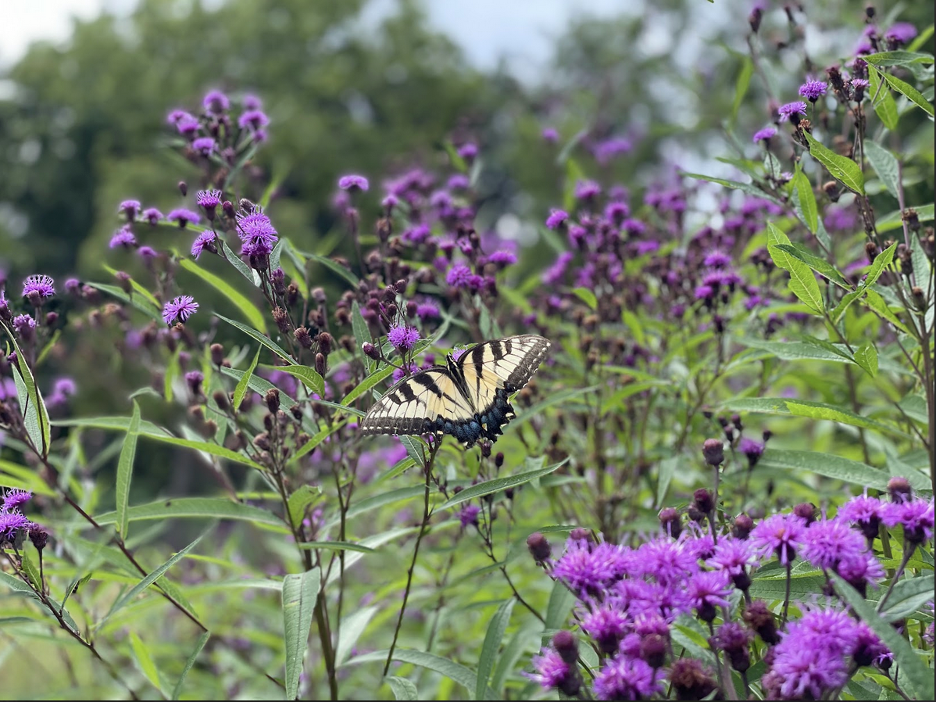
    New York ironweed (Vernonia noveboracensis), an important host plant to pollinators including the Eastern Tiger Swallowtail Butterfly (Papilio glaucus), is commonly used in ecological landscaping in the US Northeast Region. Credit: Sefra Alexandra.

    Recognizing the Role of Botanic Gardens

    To gather more information prior to undertaking any major new steps, the Ecological Health Network carried out a social network analysis to understand existing relationship patterns among the seed supply and demand chain actors in the Northeast US (Allen et al., under review). The study’s findings align with those of Tangren, Toth, and Siegel (2022), indicating that Midwestern seed vendors predominantly dominate markets in the Eastern US. For instance, a seed vendor based in Minnesota has established connections with over 94% of the end-users of native seed and plant material in the US Northeast identified in the study.

    However, the research also unveiled that producers of seed and plant materials within the US Northeast region enjoy well-established social ties with many botanic gardens, arboreta, seed banks (referred to as botanic gardens hereafter), and educational institutions in the region. These results support the argument that botanic gardens are uniquely positioned to play an essential role in ecological restoration science and practice (Hardwick et al. 2011), especially in their own regions. Botanic gardens have expertise in numerous relevant fields, including plant taxonomy, horticulture, genetics, seed science, and environmental education, as well as knowledge from ecological field research being undertaken by a growing number of botanic gardens around the world (Aronson et al. 2014Miller et al. 2016). Furthermore, as emphasized by Crane (2022), botanical gardens share the obligation of addressing socio-ecological challenges arising from climate change, alterations in land cover, and pollution. They must actively maintain their relevance through engagement, education, and tangible actions, particularly at the local level, outside the confines of their garden walls. 

    Indeed, many botanic gardens across the Northeastern and Northern Mid-Atlantic USA region have programs and activities aimed at strengthening native seed and plant material supply chains, among other things. For example, the Highstead Foundation in Redding, Connecticut, is deeply involved in sustainably harvesting seeds from local, naturally occurring plant populations. Following this, the staff meticulously cleans and stratifies the seeds before growing them into plugs. Local farmers, such as those affiliated with the Northeast Seed Collective will then proceed to amplify the plant material to produce the specialty crop of ecotypic seed. (Read more here). 

    In Hockessin, Delaware, Mt. Cuba Center, a botanic garden dedicated to preserving native plants and ecosystems across the Mid-Atlantic and Eastern Temperate Forest Region, conducts trial garden studies aimed at evaluating native species for their horticultural and ecological value. These studies serve to educate the public about the garden performance and ecosystem services provided by native species while also fostering the development of new markets for regionally produced seed and plant materials. The garden evaluates material and, where appropriate, shares material for local native plant nursery production. Beyond the horticultural side of the trade, Mt. Cuba engages with land managers and restoration growers, working to understand needs and promote local provenance workhorse species in collaboration with others in a mid-Atlantic seed users network.

    At the Cornell Botanic Gardens in Ithaca, New York, a native lawn demonstration project has successfully transformed a plot of turfgrass and weeds into a low-maintenance, low-input, high-biodiversity native grassy meadow. This project serves as a model for home and public green space redesign

    Native Plant Trust’s Nasami Farm in Whately, Massachusetts, Nasami Farm, has a longstanding practice of cultivating native plant material from hand-collected wild seeds. More recently, they have expanded their efforts by establishing seed increase plots to enhance production capacity for regional restoration projects. 

    These examples provide a sampler of the valuable contributions that botanic gardens across the region are already making to native seed and plant supply chains. However, in May 2023, Eve Allen and James Aronson, alongside Christopher Dunn, the Director of the Cornell Botanic Gardens, recognized a need to improve communication about these existing activities, and programs through improved networking among botanic gardens at a bioregional level. 

    Eve Allen, from the Ecological Health Network (EHN), and Todd Bittner, Director of Natural Areas at Cornell Botanic Gardens, discussing the Native Lawn Demonstration Area during the EHN Site visit in the fall of 2022. Photo Credit: James Aronson.
    Least trillium (Trillium pusillum) in bloom at the Mt. Cuba Center, a botanical garden in Delaware dedicated to preserving native plants and their ecosystems across the Mid-Atlantic and Eastern Temperate Forest Region. On the right, Eve Allen of the Ecological Health Network (EHN) stands with Élan Alford, Plant Conservation Scientist, and Jeff Downing, Executive Director of the Mt. Cuba Center, during an EHN site visit in the spring of 2023. Photo Credit: James Aronson.

    Convening Botanic Gardens 

    In this context, in late February 2024, the Northeast Seed Network brought together leaders and key staff members from thirteen botanic gardens, arboreta, seed banks, allied non-profit organizations, and the largest native seed and plant material supplier in the Northeast. The participants’ organizations included Coastal Maine Botanical GardenCornell Botanic GardensEcological Health NetworkThe Ecotype ProjectHighstead FoundationLongwood GardensMt. Cuba CenterNative Plant TrustVirginia Natural Heritage ProgramOak Spring Garden FoundationPinelands NurserySoutheastern Grasslands Institute, and the US National Arboretum. The convening workshop, organized and moderated by the Ecological Health Network, was graciously hosted by the Oak Spring Garden Foundation in Upperville, Virginia. This was the ideal venue from the Northeast Seed Network’s perspective, and the object of our workshop aligned seamlessly with Oak Spring Garden Foundation’s Mission Statement: “to support and inspire fresh thinking and bold action on the history and future of plants.”

    The formal garden bathed in sunset hues at the Oak Spring Garden Foundation, a non-profit organization established by Rachel “Bunny” Mellon to “support and inspire fresh thinking and bold action on the history and future of plants, including the art and culture of plants, gardens, and landscapes.” Photo Credit: Eve Allen.
    Workshop participants at the Oak Spring Garden Foundation (from left to right) – Marcello de Vitis, Southeastern Grasslands Institute; Charlotte Lorick, Oak Spring Garden Foundation; Élan Alford, Mt. Cuba Center; Melissa Cullina, Coastal Maine Botanical Gardens; Fran Chismar, Pinelands Nursery; Sefra Alexandra, The Ecotype Project; Uli Lorimer, Native Plant Trust; Eve Allen and James Aronson, Ecological Health Network; Richard Olsen, U.S. National Arboretum; Geordie Elkins, Highstead Foundation; Michael Piantedosi, Native Plant Trust; Lea Johnson, Longwood Gardens; Todd Bittner, Cornell Botanic Gardens; Ryan Klopf, Virginia Natural Heritage Program; Jessamine Finch, Native Plant Trust.

    The launch of the Restorative Landscape Coalition 

    Over the course of a long day and delightful evening, the participants worked together to chart a course for a new collaborative effort. Together, we recognized the distinctive responsibility botanical gardens bear to strengthen native seed and plant supply chains for landscape restoration across a spectrum of ecosystems, spanning from urban areas to suburbs, agricultural landscapes, corridors, and other protected areas of significant conservation value. More broadly, we agreed that botanic gardens are custodians of our shared plant biodiversity on our planet. By engaging in conservation, exploration, education, research, providing facilities, and leveraging expert horticultural know-how, they – and allied organizations like arboreta, herbaria, and seedbanks, should work together to bolster resilience and restore the health of people, ecosystems and landscapes. We also agreed that it would be timely to work on meeting this challenge at a bioregional level, namely in the Eastern US.

    Additionally, we discussed immediate ways to leverage experience, expertise, and educational capacity held within our gardens and allied organizations to address key objectives and recommendations outlined in the US National Seed Strategy and the National Academies of Sciences, Engineering, and Medicine’s 2023 Report, An Assessment of Native Seed Needs and the Capacity for Their Supply

    Enhancing demand signals by building better markets 

    The National Academies Report identifies unpredictable demand as the foremost challenge for native seed suppliers across the United States (p.98). This problem is especially pronounced in the US Northeast, as the substantial increase in demand for native seeds and plants fails to translate into intelligible markets. Current and potential suppliers within the Northeast Seed Network, including farmers and nursery professionals poised to expand their production of diverse species and ecotypes, require more consistent and transparent signals of demand.

    As such, a primary objective of the Restorative Landscape Coalition is to address and surmount the various policy, regulatory, and cultural obstacles hindering the utilization of source-identified, genetically diverse seed supplies, as well as nursery-grown or propagated plant materials. For example, we addressed the necessity of conducting targeted outreach and engagement with state and municipal agencies to facilitate the development of enhanced recommended species and species substitution lists. Currently, these lists predominantly feature mid-western species, likely due to their commercial availability. 

    Rather than solely focusing on seed production or amplification efforts, we recognize the critical importance of fortifying the ‘demand’ side of seed and plant material supply and demand chains. This strategic emphasis not only elucidates the distinction between the Restorative Landscape Coalition and the Northeast Seed Network but also underscores their mutually reinforcing relationship. Our approach involves generating and sharing knowledge, know-how, and best practices to enhance existing markets and create new markets for high quality seed and plant material. 

    Leverage our living collections to amplify seed production

    Citing The National Academies of Science’s 2023 report, we reaffirmed how the in situ  living collections (particularly conservation collections of wild origin) housed in botanic gardens and affiliated non-profit organizations serve as a crucial safeguard for native species within the plant materials development pipeline, when reproductively isolated from other related collections, for seed amplification.

    The US National Seed Strategy and National Academies of Sciences report emphasizes the imperative to increase collaboration and cooperation across agencies and with external partners. This involves sharing expertise, facilities, and optimizing the production and use of plant materials. Botanic gardens are custodians of our shared plant biodiversity. By engaging in conservation, education, research, providing facilities, and leveraging expert horticultural know-how, we are committed to providing a key link in efforts to bolster resilience and restore the health of landscapes in the Eastern US.

    In the Apple Room, our workshop proved not only enjoyable but remarkably productive. As the day drew to a close, participants reached a consensus on the crucial role of botanical gardens in tackling socio-ecological challenges stemming from climate change, land cover change, and pollution. Photo Credit: Sefra Alexandra. 
    As the evening drew to a close, together, we affirmed the unique responsibility botanical gardens bear in bolstering native seed and plant supply chains for landscape restoration. It was underscored that our institutions must actively assert our relevance through tangible actions, particularly at the local level, extending beyond the confines of our garden walls—a sentiment eloquently highlighted by Peter Crane, Director of the Oak Spring Garden Foundation, in his insightful 2022 opinion piece, Botanic gardens: Seizing the moment while imagining the future in Plants People Planet. Photo Credit: Oak Spring Garden Foundation.

    Fostering bioregional collaboration to achieve lasting social-ecological impact

    To advance the individual and collective missions and visions of the organizations and institutions participating in the Restorative Landscape Coalition, we will strive for a holistic perspective and approach that emphasizes the tremendous power and potential held within the concept of a bioregion. This is a spatial scale often overlooked by public, private, and government institutions. Note that a bioregion is not defined by political boundaries nor even by ecological and biogeographical boundaries alone. Rather, the concept corresponds to the geographical territories of human communities and cultural groups as well as the ecological systems on which they depend and of which they are a part. To be coherent, and useful, the boundaries of a bioregion must be delineated to uphold the integrity of its biological and human communities, ecosystems, and social-ecological systems. This includes preserving essential processes such as nutrient cycling, historical disturbance regimes, and species migration, among other biological and ecological factors. Additionally, sustainable and equitable management of resources and ecosystem services is vital, spanning generational and community boundaries within the diverse human populations inhabiting a bioregion. Bioregions vary in scale, ranging from watersheds to much larger territories, and may traverse international borders. However, they are fundamentally shaped by their flora, fauna, and human communities, each contributing to and benefiting from a distinctive identity defined by climatic, ecological, and cultural characteristics (Berg 1991).

    While initially complex and possibly daunting, there are significant advantages to the approach of organizing human activities and systems based on bioregional boundaries. Most importantly, it provides a strategic framework for connecting individual and collective efforts to facilitate impactful changes at appropriate scales to address biodiversity and climate goals (Pezzoli, 2015Wearne et al., 2023). That being said, addressing the intricate environmental challenges of the 21st century on a large spatial scale, especially with an unconventional concept like bioregionalism, demands innovative forms of network governance (Scarlett and McKinney, 2016).

    Left photo: Beds holding tree saplings for reforestation projects, including urban tree planting initiatives, in the Mid-Atlantic region. Right Photo: cleaned seeds of Arrow Wood Viburnum (Viburnum dentatum) at Pinelands Nursery in New Jersey. EHN Site Visit, Summer of 2022. Photo Credit: Eve Allen.

    Social impact and Social-ecological impact networks 

    A social impact network is one in which formal and informal institutions collaborate across diverse interests, sectors, and political arrangements to establish social norms, social capital, and trust that together can propel and sustain collective information sharing, decision-making, and action (Kapucu and Hu 2020Ehrlichman 2021). However, when social-impact networks are operating at broader geographical and societal levels – bioregions – and developing initiatives that target ecological and environmental challenges that demand integrated ecological and social interventions, we may call them social-ecological impact networks (Ecological Health Network 2024). 

    The Restorative Landscape Coalition is intended to be a social-ecological impact network dedicated to working with and enhancing the capacity and impact of the Northeast Seed Network and other seed production-focused partnerships, as well as emerging, restoration- and conservation-oriented partnerships operating across the Eastern US. Our commitment is to support initiatives that sustain, conserve, and, when necessary, restore degraded ecosystems and reintegrate fragmented landscapes within our bioregion – the overlapping and adjacent EPA Level III Ecoregions of the US Northeast, Mid-Atlantic, and Southeast regions. Please note that here we use the ecological definition of “landscape,” namely an assemblage of ecosystems that are arranged in recognizable patterns and that exchange organisms and materials such as nutrients and water (Forman & Godron 1986).

    Left photo: Seed increase plots of Slender Rush (Juncus tenuis), Common boneset (Eupatorium perfoliatum), Blue vervain (Verbena hastata), Swamp milkweed (Asclepias incarnata), and Coastal Plain Joe Pye Weed (Eutrochium dubium). Right photo: Flats of (clockwise from upper right), Bishop’s cap (Mitella diphylla), Blue wood-aster (Symphyotrichum cordifolium), Downy Goldenrod (Solidago puberula), New York aster (Symphyotrichum novi-belgii), Creeping Little Bluestem (Schizachyrium scoparium var. scoparium), Narrowleaf Mountain Mint (Pycnanthemum tenuifolium) at Native Plant Trust’s Nasami Farm in Whately, MA. Photo Credit: Eve Allen.
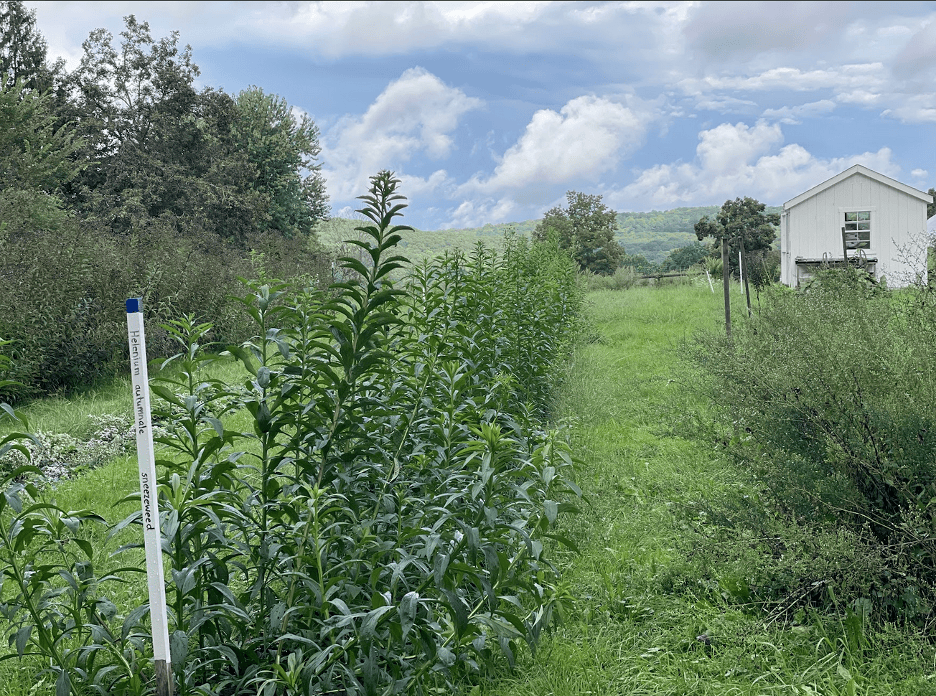
    Fall sneezeweed (Helenium autumnale) seed increase fields at The Hickories in Ridgefield, CT- the hub of the Northeast Seed Collective. Photo Credit: Sefra Alexandra. 

    Our next steps 

    While acknowledging the substantial work ahead, we are confident that the collective resources within our institutions, organizations, and like-minded networks will allow us to make inroads toward our shared goals. Collectively, we embrace an unwavering dedication to the public good and the well-being of future generations. Our shared missions encompass inspiring meaningful connections among people, plants, and the natural world, education and awareness, conservation and stewardship, and research and innovation, all aimed at enhancing society’s overall well-being, resilience to global changes, vigor, and – in a word – health.

    Please join the Restorative Landscape Coalition at the American Public Gardens Association’s Annual Meeting in Boston, June 24 to 27, 2024. We will be there, hosting a 90-minute workshop entitled Fostering regional collaboration among public gardens to address native seed and plant material needs, on Thursday, June 27th, from 10:30 a.m. to 12:00 p.m. 

    To stay in touch and receive updates about the Restorative Landscape Coalition and the Northeast Seed Network, please sign up for our mailing list. You can also follow us at @ecohealthglobal on Instagram, @EcoHealthNet on X and Facebook, and Ecological Health Network on LinkedIn for updates. 
  • Early steps towards ecocultural restoration of the ancient Araucaria araucana (Pehuén) forests in Caviahue, Northern Patagonia, Argentina. 

    Early steps towards ecocultural restoration of the ancient Araucaria araucana (Pehuén) forests in Caviahue, Northern Patagonia, Argentina. 

    By: James Aronson, Daniel R. Pérez, and Adam T. Cross 

    Daniel Pérez is head of the Laboratory for Rehabilitation and Restoration of Arid and semi-arid Ecosystems (LARREA) at the Faculty of Environmental and Health Sciences, National University of Comahue, Argentina. He also leads two ecological restoration projects in arid northern Patagonia, the first being the one described here and also the one described in his 2021 NHER post here. In addition, Daniel was coordinator of the Argentinian national Network for Ecological Restoration (ENREA) and organizer of its 3rd Congress held last November. James Aronson and Adam Cross are both members of the Steering Committee of the Ecological Health Network. James is also an Emeritus Scientist of the Center for Conservation and Sustainable Development, MBG, and Adam is Adjunct Senior Research Fellow at Curtin University, Perth, Western Australia.

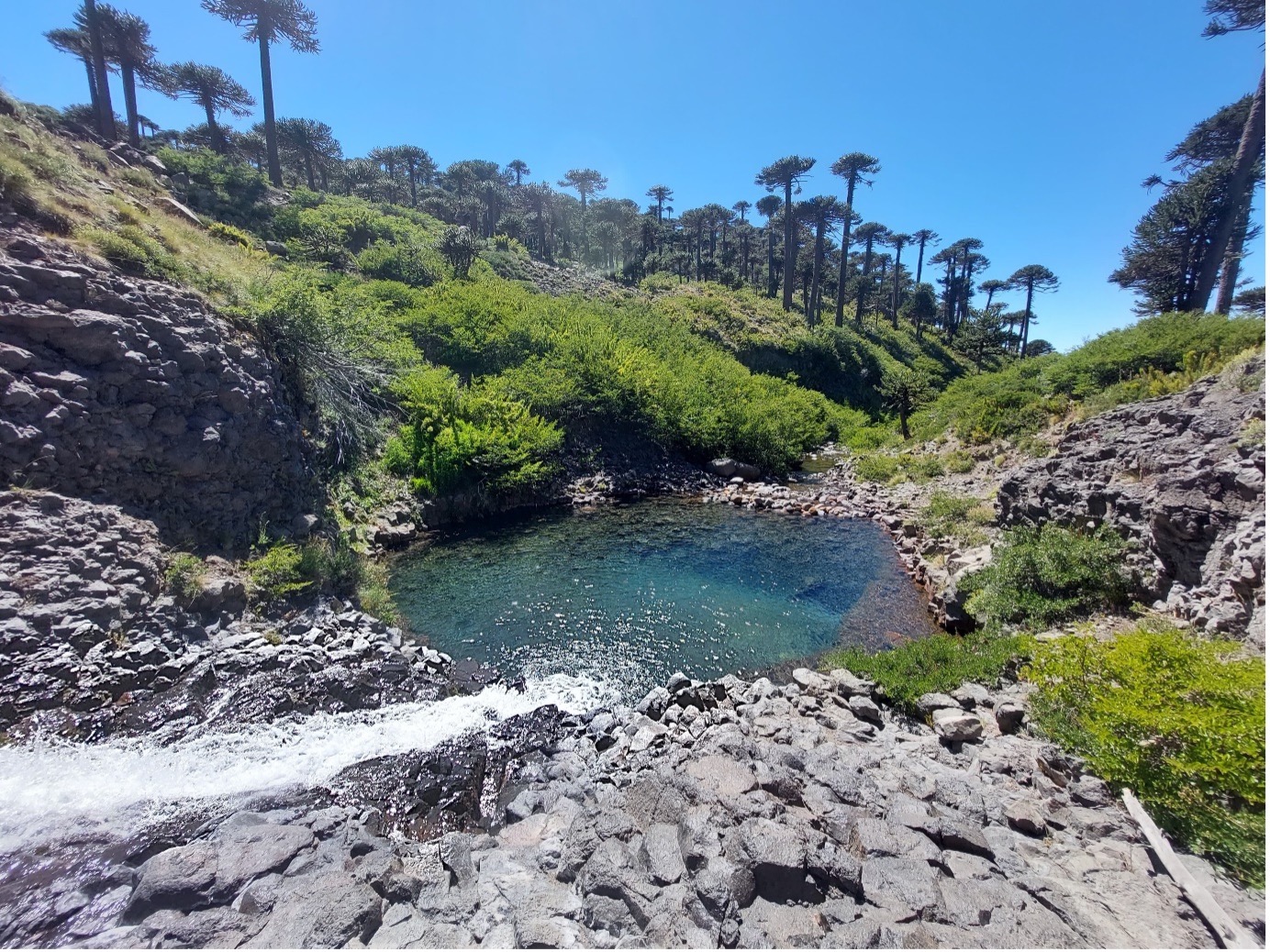
    Straddling the Andes and the border between Argentina and Chile, an ancient ‘Lost World’-looking forest persists. It occurs in fragments, dominated by the extraordinary Gondwanan conifer Araucaria araucana, called Pehuén in the Mapuche Mapudungun language and widely known by that name today in southern South America. The name of this giant emergent (up to 80 m tall), and very long-lived (1500 years and more), fire resistant ‘living fossil’ tree, is evidently related to the Pehuenche, an ancient ethnic tribe of migratory hunters in south central Chile and adjacent Argentina, before the 16th century CE when Spanish colonists began to arrive and change the course of everything.

    Forest fragment of Araucaria araucana (Pehuén) right in the town of Caviahue, with an understory of the southern South American bamboo, Chusquea culeou. Credit: Laura Abraham.

    The Pehuenche were so named for their dependence on the seeds of the Pehuén as a food source. Between 1550 and 1850 CE, some of them migrated west and merged with other peoples of northern Patagonia, in a process described by historians as becoming Araucanized. In the 21st century these Peoples still retain rights to some of their ancestral lands in northern Patagonia, but just barely. Despite the name Mapuche, which means “people of the land”, their situation in modern day Argentina is truly precarious.  

    While the Pehuén forest is alive and well and regenerating in some large parks in Chile and Argentina, where livestock are excluded, the dominant species is considered critically endangered by the IUCN, and a poignant example of its vulnerability can be found around Caviahue (Roig et al. 2014).

    Typical degraded Pehuén forest remnant near the shores of Lake Caviahue. Credit: Adam Cross.

    Pehuén, the rather odd English common name of which is Monkey Puzzle Tree, is one of only two highly disjunct Araucariaceae representatives in southern South America. The other 18 extant species of this Gondwanan family all occur in the South Pacific region, in New Caledonia, eastern Australia, Papua New Guinea, and Norfolk Island. 

    In Caviahue, whose name most fittingly means “Sacred Place of Reunions”, there is an ambitious ecocultural restoration, rehabilitation, and transcultural sustainable development and educational program getting underway, centered on Pehuén (Pérez et al. 2020). The first activities began six years ago with tree plantations and restoration-based education. Since then, there have been countless meetings with all social sectors of Caviahue such as the Mapuche community elders, Caviahue-Copahue Provincial Park, the Caviahue Ski center, primary and high school principals, political decision-makers, and leaders of the tourism sector, all in search of a social consensus and support for the restoration project. This vocation to build common ideas through dialogue, respecting visions, expectations, and desires of the whole community, is one of the most notable features of the work program. It is partly inspired by the Mapuche name for the site. But, as yet there have been only very limited discussions between the dominant, Spanish speaking, sedentary Western community and the transhumant, Mapudungun-speaking Mapuche.

    Transhumance – a disappearing way of life

    Transhumance is a form of animal husbandry and pastoralism that is remarkably well-adapted to arid and semi-arid lands. The word derives from the Latin trans (beyond) and humus (land), and thus means ‘beyond the land of origin’. It involves biannual movements of flocks between high summer pastures and winter grazing grounds at lower altitudes, or vice versa. In some cases, the entire tribe or group moves with the herds, while in others, only the herders make the biannual trek. This way of life was once widespread, in drylands on most continents, but is now lost and almost forgotten in most places. In Neuquen Province it still survives among the Mapuche. They camp in their ancestral lands near Caviahue lake (1646 meters above sea level) during the warm months, and then during the cold months they and their mixed herds migrate to Huncal (1204 masl) approximately 100 km east and much drier in summer than Caviahue.

    Typical Mapuche settler in transhumance, herding Neuquén Creole goats, a genotype especially well adapted to the region. Credit: Agustín Orejas.

    Although there is a transhumance law in Neuquén that seeks to protect this ancestral practice, Mapuche farmers are often forced to travel along paved roads to reach their destinations because many fields have become the private property of the colonizers and are blocked in with wire fences.

    The Caviahue site joined the Ecological Health Network in 2022 (see here), and a lot has happened since then. The first and third authors of this blog have been offering support to weave together a holistic, ecocultural approach with a focus on human health for the program. Numerous other colleagues in restoration science, and social sciences, from Argentina, Chile, Mexico and Brazil have started getting involved following a visit to the site led by Daniel Pérez of the 3rd Congress of the Argentinian National Ecological Restoration Network held last November, in Neuquén. 

    Field trip near Caviahue. Credit: Adam Cross. 

    The project was initiated with the goal of studying how to restore the Araucaria forest in Caviahue, one tree at a time. It is daunting because the trees grow very slowly and there is little previous research on similar species in xeric regions providing a template to build upon. 

    It has gradually become clear that the restoration of this ancient, isolated Araucaria forest must be ecocultural, and include ecological rehabilitation and landscape reintegration of the degraded grazing lands of the Mapuche pastoralists who camp with their herds of sheep, goats, cows and some horses at one end of Caviahue lake for 6 months of each year. Additionally, the town of Caviahue needs restorative work, because of the planting of invasive Pinus contorta from Western North America, which is escaping and naturalizing in a heritage landscape where this highly competitive conifer does not belong (see below). 

    Araucaria araucana emerging among a dense formation of invasive Pinus contorta in the town of Caviahue. Credit: Laura Abraham.

    At the same time, Daniel and his colleagues came to understand that a truly great context for ecocultural restoration exists here. Caviahue is an extremely interesting town of ca. 1000 permanent residents. There is a strong sense of community among the westerners, and a desire to keep the quiet, nature-based quality of their lifestyle in the town and its valley, despite the interest of many real estate developers to ‘grow’ the ski station and the town, with all its charming low-key tourism services into something much bigger. They are aware that the isolated, relictual population of Pehuén is of great cultural value, but they don’t necessarily see that something can be done to change the nature of the broadly degraded and fragmented landscape where only a few ancient trees remain with little evidence of regeneration. Such change can only come about through trust-building and cooperation with the Mapuche pastoralists. 

    Xeric Araucaria araucana forest remnant, extremely degraded by intensive livestock farming. Credit: Eliane Ceccon.

    If one visits the land of the Caviahue Ski centre, not far from the ski slopes, a spectacular remnant of primary-type Pehuén forest of a few hectares there reveals what the ancestral forest was like, and provides a reference model, at least for the more mesic sites in the valley, to those who would entertain the concepts and a project of ecological restoration.

    Primary-type forest of Araucaria on the protected lands of the Caviahue Ski Center. Credit: Laura Abraham.

    There, one can see the awe-inspiring, living fossil Pehuén trees towering over a thick understorey with Araucaria seedlings and saplings emerging from the deep humus, leaf litter, and topsoil, rather than bare rock and skeletal sands seen more generally in the area. Among the spectacular Pehuén are also seen stands of Antarctic Beech (Nothofagus antarctica), locally known as Ñire, and in the more humid places, the related Lenga (Nothofagus pumilio); both species belong to another Gondwanan genus often co-occurring with Araucariaceae (Peri et al. 2016Veblen et al. 1996). These areas are in stark contrast to the heavily grazed forest remnants where the Nothofagus persist only as rare, isolated stands, the lower two meters or so of which are stripped bare of foliage (Martínez et al. 2023).

    Ñire (Nothofagus anctarctica) on pedestal caused by massive loss of topsoil over many years due in part to over-browsing by goats and cattle. Credit: Daniel Pérez.

    The impacts of tree-felling for timber, overgrazing, and resulting topsoil loss over most of the valley are clearly profound. 

    The species is listed in IUCN’s Appendix I – Threatened with extinction, trade only in exceptional circumstances. Elsewhere, in Lanin Park in Argentina, and Conguillo Park in Chile relatively large stands occur but here in Caviahue, its future depends on local people, of two highly contrasting cultures.

    The Ecocultural Restoration Program led by LARREA at Caviahue will include both the Mapuche pastoralist, transhumant communities, made up of three groups of approximately 600 people each, and the sedendary community of ca. 800 non-Indigenous, European and Levantine descended people in the growing town at the other end of the lake. But how?  At present, there is little interaction among the communities, with one major exception, namely the population of teenagers in the public high school in the town. Roughly 60% of the teenagers in town are Mapuche, and 40% are Western, or non-Indigenous. In a meeting we attended last November, with Oscar Mansegosa the Elected Intendente (Mayor) of Caviahue, and four people from his staff, we learned that many young people in Caviahue experience mental health-related challenges, no doubt linked to the intense cold weather and meters of snow present on the ground for 5-6 months of the year. 

    Additionally, we learned that approximately 80% of the Mapuche students experience some form of blockage to obtain higher education. To help reverse this problem, a programmed diploma course which is being designed by the LARREA team will comprise periods of in-person learning in classrooms combined with practical learning in the field, plus virtual classes and modules. There is an integrated list of classes to be identified, and teachers to be named. Daniel has already begun inviting several of the people who attended the conference (including James) to contribute modules or units to the training course. Daniel will be pursuing further discussions with the university about this Diploma program and hopes EHN and others are willing to help not only with the training course but also with projects in and around the town. He has had clear signals from the senior administration of his University that they are keen on moving ahead with restorative projects like this.

    Class on dormancy and germination of Araucaria araucana seeds offered by LARREA for teachers and students of the Transhumante School No. 6 of Caviahue. Credit. Daniel Pérez.

    Controlling invasive Lodgepole pines: a way to bring people together

    One thing many young and older people in Caviahue do seem to understand is the problem of invasive Lodgepole pines (Pinus contorta) which is escaping from gardens and nearby tree plantations and competing with the native Pehuén

    And that’s something that will be part and parcel of any ecological restoration proposed for this town, its lake, and its valley. If people from different cultures work together to fight the spreading of the pines, and then go on to roll up their sleeves to do other interventions in the spirit of ecological restoration, then we’re in the realm of reciprocal, ecocultural restoration. Note that this Western North American pine, known in English as Lodgepole Pine, is considered one of the world’s worst weeds (CABI Digital Library). Yet in Caviahue many families, and tourism and forestry companies continue to plant this invasive tree, despite the fact that it is invading surrounding properties and fields, radically modifying and degrading the unique heritage and life-sustaining landscape of the Araucaria araucana forest. This needs to be corrected through environmental education, citizen science and community-based restoration and horticulture.

    Indeed, a pathway to help reverse this problem has begun in Caviahue. In 2023, the educational work began at Escuela Transhumante No. 6. The identification of traits of conifers of the genera AraucariaPinusPicea, and Abies, all present in the town of Caviahue, was addressed with teachers and students. In addition, the incessant spread of Lodgepole pine was discussed and the proposal to cut and remove the unwanted pine trees from town parks was accepted.

    A Pine-cutting field course with Caviahue teenagers. Credit: Daniel Pérez.

    The joint task allowed for dialogue and reflection on the value of Araucaria seeds as food for Mapuche communities, their cultural and ecological value, and the risk of the continued invasion of Lodgepole pine to the native forest and the ecocultural restoration program getting underway.

    A young student from the National University of Comahue cutting an invasive Pinus contorta in Araucaria forest with gusto. Credit: Daniel Pérez.

    Perspectives for Restoration-Based Education and training in ecocultural restoration for local people 

    An educational program is being undertaken with the main high school in town, called CPEM 47. This has already provided results published in an article in Spanish. Among the achievements, various tasks carried out by local secondary school students to plant Araucarias and generate participatory maps stand out.

    The educational experiences carried out with students of the Transhumant school to date were extracurricular, that is, in free time. 

    The next step to be developed in 2024 is the participation of the restoration team of the LARREA in formal education programs throughout the school year. 

    Informal class in the field of a member of LARREA with young Mapuches from Transhumante School No. 6. Credit: Daniel Pérez.

    Health and political issues

    In relation to the above-mentioned, non-trivial health issues among teenagers, a very good bond has been built with the medical staff of the Caviahue Health Center. In the meetings held, addictions and depression among young people emerged as the main topics to be addressed. Medical personnel consider that activities such as plant production, plantations, and sowing can contribute to the mental health of young people and within this framework they hope to design activities that in turn will need to be evaluated for their effectiveness and feasibility in terms of time and resources.

    Finally, at the political level, the election of a new mayor for the next four years has just taken place. There are good prospects for including ecological restoration in public policies given that the newly elected mayor had the courtesy to hold a meeting with his cabinet for three hours with restoration experts who visited the town. Next, some work priorities were established, such as the promotion of restoration tourism (direct seeding of Pehuén) and the creation of a diploma course in restoration for local youth. This course will be managed at the National University of Comahue with support in infrastructure for demonstration sites from the Municipality. The training will enable the teenagers and young adults of Caviahue to be better prepared to enter the workplace and discover new opportunities. Hopefully, it will also have positive effects socially through building relationships among Mapuche and Western youth.

    The Mapuche communities have shown great pleasure in participating in actions such as plantations, sowing and extraction of Pinus, although these actions thus far have always been mobilized from LARREA. It is hoped that in the future restoration activities will be assumed as their own by the two communities, Mapuche, and Westerners.

    May it be so.

  • Understanding the contributions of restored forests for nature and people: The NewFor Project

    Understanding the contributions of restored forests for nature and people: The NewFor Project

    By Dr. Pedro Brancalion

    Dr. Brancalion is an associate professor of tropical forestry in the Department of Forest Sciences at the Luiz de Queiroz College of Agriculture (ESALQ) of the University of São Paulo. A leading expert in tropical forest restoration, Dr. Brancalion coordinates the Laboratory of Tropical Forestry (LASTROP), is partner at Re.green – a restoration company, is the Director of Innovation of the Center for Carbon Research in Tropical Agriculture, and member of the coordination board of the Center of Studies Sustainable Amazon.

    Forest Landscape Restoration (FLR) emerged as a promising approach to revitalize degraded and deforested landscapes, by recovering their biodiversity, ecosystem services, and economic value. The Bonn Challenge is a pivotal FLR initiative, with an overarching goal of restoring 350 million hectares of degraded land by 2030. Over 210 million hectares have been pledged so far, by more than 60 nations, mostly across the tropics. Given its importance for mitigating some of the most pressing environmental crises of our time, like climate change and the sixth mass extinction, the Bonn Challenge and other FLR initiatives are strongly connected to other environmental and restoration programs, such as the Paris Climate Agreement, the United Nations’ Decade on Ecosystem Restoration and the UN Sustainable Development Goals. In spite of great promises and expectations, the implementation of these pledges has lagged behind schedule, highlighting the need to better engage local people by promoting FLR approaches that maximize desired benefits and overcome critical barriers for implementation.

    FLR can be implemented through several reforestation approaches, including natural forest re-growth, mixed plantations of native species, monoculture tree plantations, and agroforestry. Planning the distribution of these approaches over space and time is a critical step towards effective FLR, and it depends on local socioecological conditions, targeted benefits, and stakeholders’ perceptions of the potential of each FLR approach to deliver these expected benefits. The aim of FLR is to establish multipurpose landscapes, where different FLR approaches are implemented in different areas to maximize various benefits.

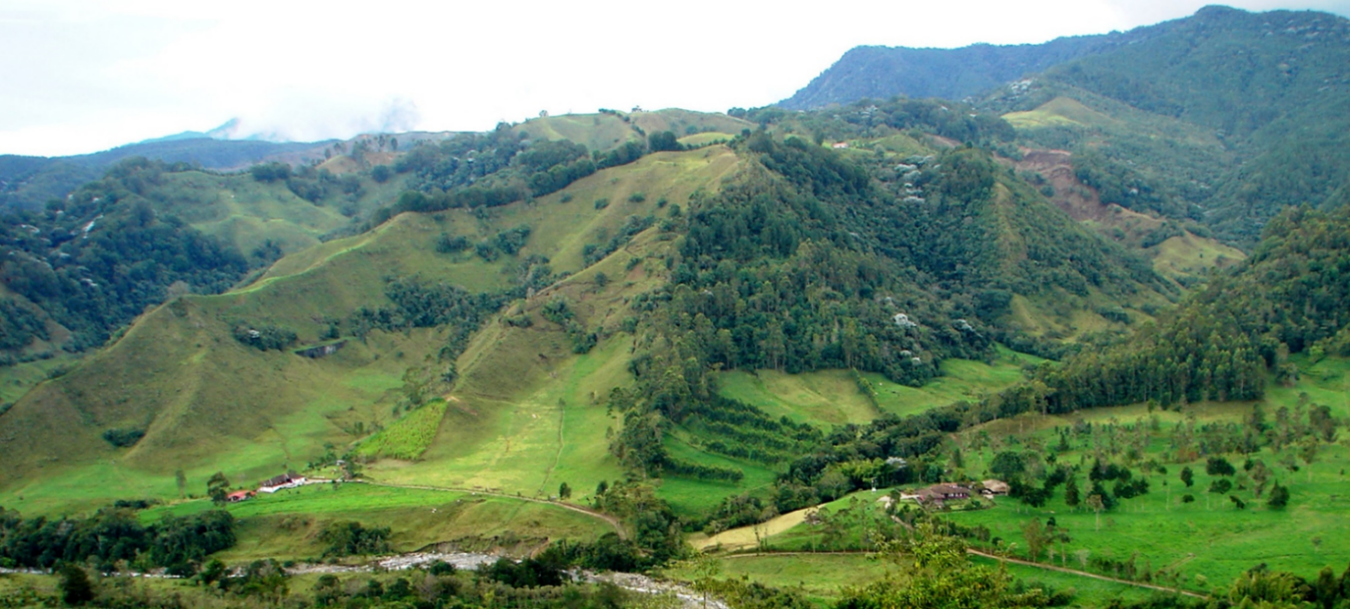
    Two contrasting farms in Colombia: On the left, a traditional cattle ranching farm in which most of the landholding area, even the riparian buffers, is occupied by planted pastures. The variation of color of the pastures (light green in the lower lands where soil is more fertile, and brownish at the slopes where soil is shallow, and erosion is high) is a clear indication that only a small portion of the land is productive. On the right, a restored farm, which had a similar initial condition to the neighbor farm but was submitted to FLR interventions over the past 20 years by a non-governmental organization, CIPAV. Degraded pastures in the slopes were abandoned for natural forest regeneration, a eucalyptus woodlot was planted to supply wood and fencing poles, a silvopastoral system was established in the lowlands, and restoration plantations were employed to protect riparian buffers (such plantations are not shown in the photo). Photo: P. Brancalion.

    FLR relies on the increase in landscape heterogeneity for recovering multiple environmental benefits. However, nearly half of the FLR pledges to the Bonn Challenge are composed of monoculture tree plantations, which maximize financial returns in the short term but undermine the optimal recovery of biodiversity and ecosystem services. Rather than promoting landscape heterogeneity, some of these FLR initiatives may have promoted the opposite process, a form of forest landscape degradation that may magnify the impacts of climate change and the biodiversity crisis. A critical step to shift the direction is to better understand the pros and cons of different FLR approaches for delivering contributions for nature and people.

    The NewFor Project

    The Atlantic Forest of Brazil is a top global hotspot for the restoration of tropical rainforest landscapes. Since mid-2010’s, there has been a net increase in native forest cover and a fast expansion of eucalypt plantations, indicating that his region is rapidly transitioning to a mosaic of agricultural, forest, and urban landscapes. However, rather than the old-growth native forest remnants that once covered the region before deforestation, the new forest cover is now composed of a heterogeneous mosaic of different tree cover types. My colleagues and I believe it is important to understand how different tree cover types in different socioecological contexts influence human wellbeing and conservation. Doing so will allow us to develop new landscape-scale rules of thumb for FLR and will inform a menu of FLR options available to restoration practitioners to help them achieve their goals. At the same time, it would allow us to decipher some guidelines for restoration practice and offer a more robust menu of options for restoration practitioners to select the restoration approaches that better match their restoration conditions and expected benefits.

    With these premises in mind, the project “Understanding restored forest benefits for nature and people – NewFor” was established initially as a partnership between the University of São Paulo (Brazil) and Wageningen University and Research (The Netherlands), financially supported by the São Paulo Research Foundation (FAPESP) and the Dutch Research Council (NWO). However, what was initially established as a research project between two universities rapidly transformed into a broad network of research organizations, NGOs (10), private companies (13), governmental agencies (5), and farms (over 50), which greatly increased the financial and logistical support of the project and allowed us to scale up our FLR project evaluations. These organizations have actively collaborated in the co-production of knowledge with researchers, an essential step towards more effective and transformative restoration.

    The NewFor team. Photo: Gehard Waller.

    The NewFor Project was initiated in 2020 based on the application of a protocol for evaluating forest multifunctionality (soil carbon, chemical and physical evaluations, soil water infiltration, litter and dead wood stocks, forest inventory of trees with diameter at breast height ≥5 cm, counting of regenerating individuals with height ≥2 m and diameter <5 cm, in 30 x 30 m plots) in different tree cover types (natural forest re-growth, mixed species restoration plantations, monoculture tree plantations, agroforests, forest remnants and agropastoral land uses as a control) distributed across a broad range of age and biophysical conditions (soil and climate types, relief, neighboring land uses, landscape connectivity). Further, the field plots were integrated into remote sensing evaluations based on lidar and hyperspectral sensors carried on drones and airplanes. The study area is the state of São Paulo, in southeastern Brazil, where most of the biophysical gradients of interest were present and restoration projects abound.

    The NewFor Project has been implemented through the following step:

    • identification of a local partner who knows the region and can help identify and access different types of tree cover;
    • evaluation of aerial and satellite images to create land use/cover maps, which are validated with a local partner and further used to randomly allocate the position of the field plot;
    • field checking of the land use/cover, allocation of the permanent plots in the field with plastic tubes at the corners and high-precision geolocation;
    • implementation of the protocol, tagging each tree with a metallic tag;
    • flights over the field plot and the polygon with the tree cover type where the plot is located;
    • processing of the samples in laboratory; and
    • organization, storage, and validation of the data and metadata.

    So far, the project accumulated data for more than 700 plots, which includes nearly 1,200 tree species, ~80,000 stems and ~50,000 trees, and obtained lidar data for ~400,000 hectares.

    Field work by the NewFor team. Photos: Pedro Brancalion

    Activities of the geospatial team: high-precision geolocation of the plots with a GNSS GPS equipment, field checking of the delimitation of the boundaries of the polygon composed by the tree cover type of interest where the field plots are established, and flight over the polygon and plot with a drone equipped with a lidar and hyperspectral sensor. Photos: Paulo Molin

    Although few results of the project have been published in the literature so far, the bulk of data analysis, publications, and policy recommendations are about to start, as data collection has finished, and the dataset is ready to use. One of the most immediate – and perhaps most important – impacts of the NewFor Project was the inspiration for creating a similar nation-wide initiative by the Ministry of Science, Technology and Innovation, the Regenera Brasil initiative, which will employ a similar monitoring approach across all Brazilian regions and vegetation types, with the support of local research and outreach organizations. The Regenera Brasil project is about to start, which may make Brazil the first country to have a national restoration inventory.

    To learn more about the NewFor Project, visit our blog and read our scientific papers about distinguishing between different FLR-related tree cover types and monitoring the outcomes of FLR interventions using UAV-based remote sensing, or contact the author. Also, follow us in social media: Instagram, YouTube, LinkedIn, and Facebook.

    For additional information, contact Pedro Brancalion: pedrob@usp.br

  • Critical (ecological) care in the land of the dodo: invasive species removal

    Critical (ecological) care in the land of the dodo: invasive species removal

    By Eva Colberg, postdoctoral fellow at Cornell University. Nearly all of Mauritius’s contemporary conservation plights are rooted in or exacerbated by the effects of invasive, non-native species. To see what restoration can do for the island’s few remaining forests, Dr. Eva Colberg joined members of the Tropical Island Biodiversity, Ecology & Conservation research group to visit (and weed) one of the island’s forest restoration sites.

    Two of Mauritius’s prominent ecological invaders, a macaque and strawberry guava. Photo: Eva Colberg.

    Red stems of strawberry guava (Psidium cattleyanum) form a wall dense enough to prevent walking through most of Mauritius’s remaining forests. Beyond impeding movement, the thick guava understory also reduces overstory tree fitness and disrupts native forest growth and succession. Originally from South America, strawberry guava is a classic case of a non-native, invasive species outcompeting and reducing habitat quality outside its native range (and islands are particularly vulnerable to invasion).

    Litter basket ferns (Asplenium nidus) and other native species grow in the understory space freed up in a 20-ha area since the UNDP-funded removal of strawberry guava and other invasives in 1996. Photo: Eva Colberg.

    Strawberry guava is far from the only invader threatening Mauritius’s flora and fauna. Alien ants disrupt pollination of native plants, an effect compounded by invasive plant presence. Conflicts between fruit farmers and a keystone seed disperser, the Mauritian flying fox (Pteropus niger), could be due to poor habitat quality and low native fruit production in invaded forests. Invasive macaques (Macaca fascicularis) further disrupt plant reproduction by breaking branches and eating fruits before they’re ripe, and eating and stealing nectar from native flowers without pollination.

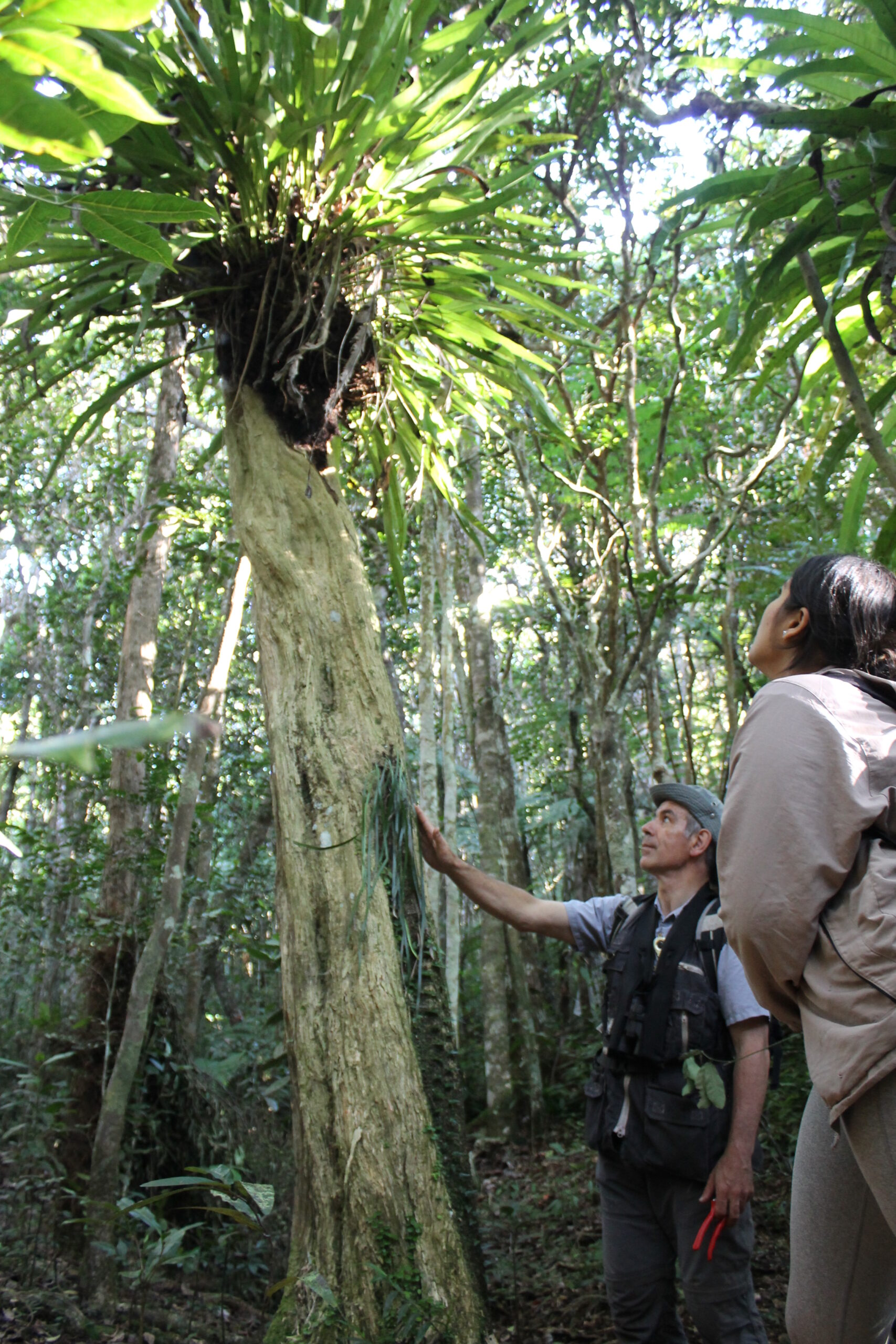
    Vincent Florens and an undergraduate student discuss the diversity of epiphytes found in a weeded section of forest at Black River Gorges National Park. Photo: Eva Colberg.

    The ongoing onslaught of invasion means there’s no time to waste for restoration ecologists like F.B. Vincent Florens, Associate Professor at the University of Mauritius. “We have so many rare species on the brink of extinction [over 80% of the island’s endemic flowering plants are threatened], and have to work at the same time and learn as we go.” His life experience and ecological studies point to invasive species management as the island’s best hope for restoration and conservation, which he likens to healthcare. “First you save the person from dying and then you can treat the other issues.”

    Although the views from Black River Gorges National Park are stunning, they also show the sparseness of the park’s forest overstory, with fewer and farther-between survivors.

    Although avian re-introductions and rewilding small islets with tortoises are sexier solutions than mere weeding, the best way to keep Mauritius’s mainland forests from dying is through invasive plant removal. After weeding, native trees in all forest strata produce more flowers and fruit, woody plants increase in species richness and seedling density, and butterfly diversity and abundance also increase. These many benefits can be furthered and maintained by follow-up weeding and other subsequent measures (including the promise of biochar to suppress weed regeneration).

    Recently described and known to only a few locations, the orchid (Polystachya jubaultii) grows in a weeded forest remnant at Black River Gorges National Park. Photo: Eva Colberg.

    Despite decades’ worth of evidence pointing to the efficacy of invasive plant removal in Mauritius, it still isn’t widely implemented. Less than 5% of the island’s few remaining forests have been weeded of invasive plants, and even the best-protected forests are already dominated by invasive undergrowth. Frustratingly, some of the resources that could be used for invasive removal have instead hindered restoration via removal of native pioneer and nurse tree species. “We can do a lot of science, can come up with a lot of facts, but how do we get people to do what they don’t want to do?” Indeed, it’s far easier to uproot a small plant than to change someone’s mind, and Prof. Florens has an entire country to convince that saving their native forests is not only possible, but worth the effort.

  • How does prescribed fire affect a threatened terrestrial orchid?

    How does prescribed fire affect a threatened terrestrial orchid?

    By Leighton Reid and Ryan Klopf

    Leighton Reid is an assistant professor of ecological restoration in the School of Plant and Environmental Sciences at Virginia Tech. Ryan Klopf is the Mountain Region supervisor and natural areas science coordinator for the Virginia Natural Heritage Program. They describe a new research project that aims to understand how an important restoration tool impacts the population dynamics of federally threatened small whorled pogonia orchids. This project has an open PhD position available to start in January 2023; details can be found at the end of this post.

    Deep in the heart of Virginia’s Shenandoah Valley, nestled against the western edge of the Blue Ridge Mountains, two clusters of small, green orchids grow in the dappled sunlight of a woodland understory. The orchids are small whorled pogonias (Isotria medeoloides) – a rare species that is considered threatened by the United States government because its population is declining so quickly that it could become endangered in the foreseeable future. We have monitored these populations for the past two summers, keeping tabs on every individual, to learn how this species is affected by one of the most important restoration tools in North America – prescribed fire.

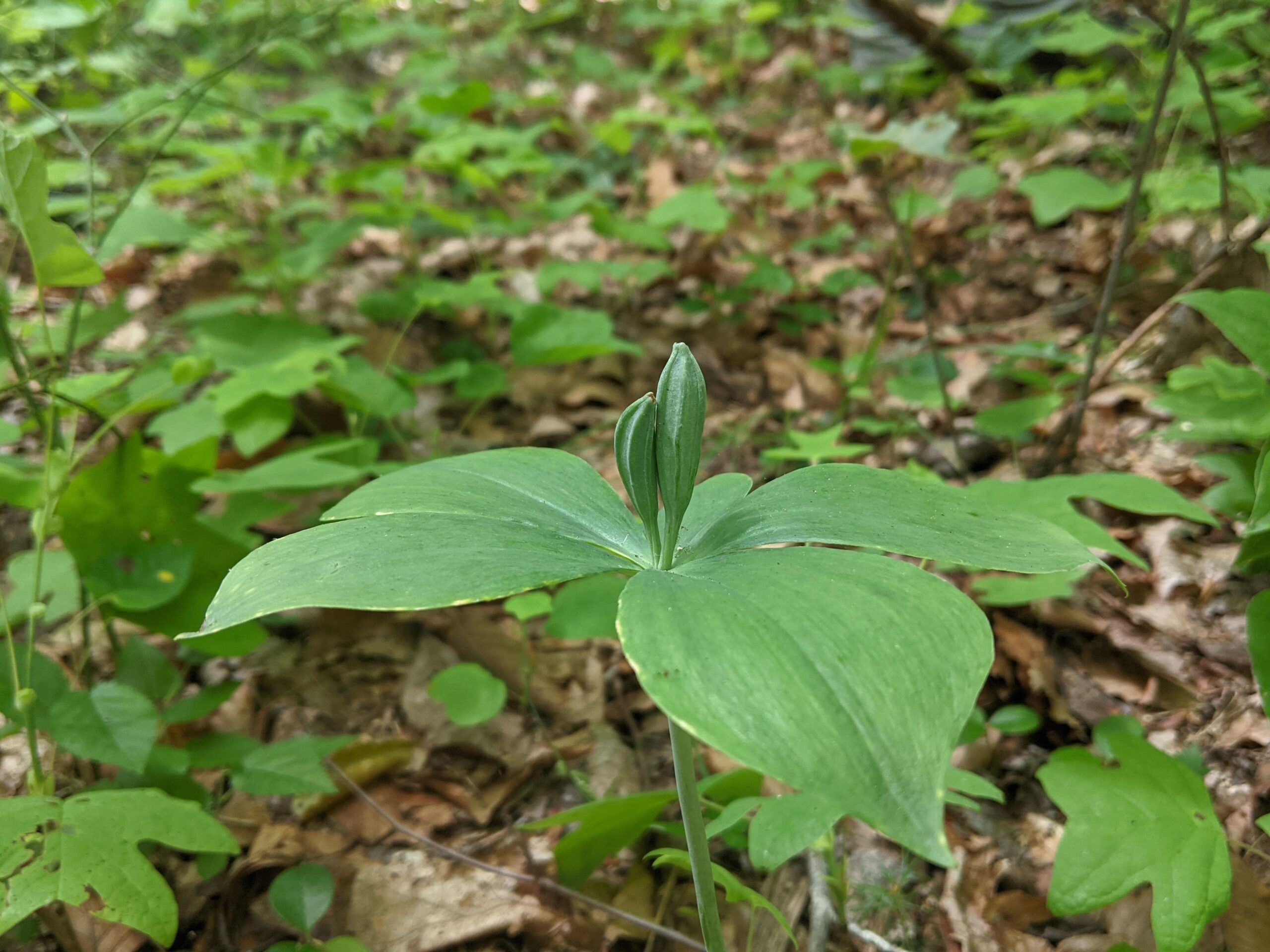
    A small whorled pogonia orchid with two flowers at Mount Joy Pond Natural Area Preserve. Photo: Lindsay Caplan.

    Small whorled pogonia

    As their name implies, small whorled pogonias are small (≤25 cm) and whorled (their leaves radiate outward from the stem). This species is a member of the Pogonieae, an orchid tribe that includes species in Asia and eastern North America. Its closest relative is the large whorled pogonia (I. verticillata) which sometimes grows alongside small whorled pogonia, but is distinguished by its purplish stem (small whorled pogonia has a whitish green, glaucous stem).

    Small whorled pogonia (left) with a whitish, glaucous stem compared to large whorled pogonia (right) with a purplish stem base. Photos: Sara Klopf (left) & JL Reid (right).

    Small whorled pogonias emerge from the leaf litter in late spring and in some years produce one or two solitary greenish yellow flowers, particularly when plants are exposed to more sunlight. Their flowers do not require any help with pollination; they produce the same amount of seed whether they are cross-pollinated or pollinate themselves.

    The seeds themselves are tiny – like vanilla seeds, which are in the same orchid sub-family (Vanilloideae). The parent plant (which is usually both a mother and a father) provides almost no resources at all to its offspring. Each seed’s fate is closely linked to whether or not it finds a mycorrhizal fungus in the Russulaceae family to help it acquire the resources that it needs to survive and grow. In a typical relationship between plants and mycorrhizal fungus, the fungus scours the soil for nutrients like nitrogen and phosphorus and provides them to the plant in return for energy in the form of carbohydrates, which the plant produces through photosynthesis.

    A developing fruit on a small whorled pogonia orchid at Mount Joy Pond Natural Area Preserve in June 2022. Photo: Andres Cunningham.

    Fire and water at Mount Joy Pond

    The story of this research project begins about 80 years ago, in a DuPont chemical plant in Waynesboro, Virginia. In the 1930s-1950s, the DuPont facility used mercury to produce rayon – a synthetic, silk-like fiber. Some of the mercury escaped from the plant and leaked into the South River – a tributary of the Shenandoah River. Mercury is a neurotoxin, and in the environment it can accumulate to dangerous levels in animals that are higher on the food chain, like fish. For many years, people living along the South River have been warned about the poor water quality and advised not to eat the fish.

    In 2016, DuPont reached a $50 million USD settlement with the United States Department of Justice, the Department of the Interior, and the Commonwealth of Virginia to restore habitat for wildlife in the South River watershed, enhance water quality, and improve recreational areas. This settlement represented one of the largest environmental damage settlements in United States history.

    Some of the DuPont settlement money was allocated to the Virginia Natural Heritage Program, a division of the Virginia Department of Conservation and Recreation that uses science-based conservation to protect Virginia’s plants and animals. Specifically, funds were provided to allow the Virginia Natural Heritage Program to protect and restore woodland habitat surrounding a unique wetland at the Mount Joy Pond Natural Area Preserve in Augusta County.

    Briefly, Mount Joy Pond is a Shenandoah Valley Sinkhole community; that is, it is a groundwater-controlled wetland that floods intermittently when water percolates up through underlying carbonate rocks and then floods over the top of a clay lens perched in a layer of soil derived from the overlying sedimentary rocks. When this happens, the water becomes trapped, like water in a saucer. This unique situation creates wetland habitats which have persisted for the past 15,000 years and contain numerous rare and disjunct species, including the globally rare Virginia sneezeweed (Helenium virginicum). There are several dozen Shenandoah Sinkhole ponds, but only a handful of them are protected.

    Virginia sneezeweed, an endemic species in the southeastern United States with disjunct populations in Virginia’s Shenandoah Valley sinkhole ponds and in a similar wetland situation in the Ozark Mountains of southern Missouri. Photo: JL Reid.

    In the past, Mount Joy Pond filled with water every few years, but in recent decades it has filled up less and less often. To restore the wetland’s hydrology, the Virginia Natural Heritage Program set out to thin the surrounding forest and re-introduce fire to prevent fire intolerant trees, such as red maple, from regenerating. This may sound counterintuitive to some, but the logic is this:

    • Each tree is like a drinking straw sucking water out of the ground and releasing it into the air via transpiration. If there are a lot of trees, the groundwater may stay too low to fill up the pond.
    • Fire used to be much more common in the Shenandoah Valley. Prior to European colonization, Indigenous People burned the landscape and maintained much of it as savanna and open woodland – ecosystem types that have fewer trees than present day forests.
    • By removing some trees and reintroducing a regular fire cycle, land managers at Mount Joy Pond Natural Area Preserve can restore an open woodland and raise the groundwater level, causing the pond to flood more often.

    The Virginia Natural Heritage Program began to implement this restoration project in 2017, and the first thinning operations and burn were a success. In the years since, the groundwater level appears to have gone up, suggesting that the hydrological restoration plan is working.

    Small whorled pogonia discovery

    In the first spring after that first fire, a botanist was surveying the burned woods near the pond and found something unexpected – a small population of small whorled pogonia orchids, which had not been seen previously in the preserve despite extensive surveying by the Virginia Natural Heritage Program’s inventory team. Were the orchids there all along and nobody noticed them? Maybe. Or maybe the fire helped the orchid population emerge after years of suppression in the dense leaf litter in the shady understory.

    Our team uses a grid sweep survey to search for new small whorled pogonia individuals in June 2022. Photo: JL Reid.

    The story became more complicated later that summer when a more intensive search turned up a second population of small whorled pogonia orchids on the preserve – this one in an area that had not been burned.

    The immediate consequence of discovering the new pogonia populations was that the United States Fish and Wildlife Service expressed concerns that future fire management might be detrimental to this threatened species. Nobody had studied how small whorled pogonia responds to fire, and there was a chance that burning could damage the population, even if it was good for the nearby pond’s hydrology. Of course, there was also a chance that not burning could damage the population. With fire, inaction is still an action.

    To help settle the issue, the United States Fish and Wildlife Service agreed to sponsor a PhD student to study the small whorled pogonias at Mount Joy Pond and figure out how their population dynamics are impacted by prescribed fire.

    Lindsay Caplan and Jimmy Francis monitor a population of small whorled pogonias at Mount Joy Pond Natural Area Preserve in June 2022. Photo: JL Reid.

    Effects of prescribed fire on small whorled pogonia orchids

    The main goal of our ongoing research is to understand how prescribed fire impacts small whorled pogonias. To do this, we will map and monitor the two subpopulations and the woodland plant communities in which they live. Over the next two years, one of the two subpopulations will be burned during a winter or early spring prescribed fire, and we will continue monitoring to document changes in plant vigor, reproduction, and population size. We will pay special attention to the light environment, which seems to be important for small whorled pogonia reproduction, and to the diversity and composition of soil fungi, which are important for small whorled pogonia emergence. We will also conduct annual surveys of the entire reserve to search for additional populations.

    Ethan Dunn uses a canopy imager to measure canopy cover, photosynthetically active radiation, and leaf area index over a tiny small whorled pogonia individual in July 2021. Photo: JL Reid.

    This project is just beginning. To date, we have monitored the two populations for two growing seasons (2021, 2022). There is still much work to be done. One of the next steps will be to produce an accurate map of each plant’s location, which will require centimeter-level precision using high-quality GPS equipment under a forest canopy.

    We are currently seeking a PhD student to lead this research project starting in January 2023. A description of this opportunity is below. This project is an excellent opportunity for a student to develop expertise in ecological restoration and threatened species conservation from both a scientific perspective and an on-the-ground land management perspective.

    Ultimately, the results of from this study will inform management of natural areas and small whorled pogonia restoration projects throughout the species’ wide range – from Ontario to Georgia.

  • Madagascar’s unique history has created unique restoration challenges

    Madagascar’s unique history has created unique restoration challenges

    Leighton Reid describes new research linking slow forest recovery to the ancient and protracted isolation that has made Madagascar a hotspot of global endemism – plus an example of working with local farmers to overcome these challenges and restore native rain forest.

    Madagascar is a special place with a special history. Separated by ocean from Africa and India for the last 88 million years, this isolated tropical island has fostered the evolution of plants and animals found nowhere else on Earth. Lemurs, couas, and the plant family Sarcolaenaceae are all examples of organisms that evolved only in Madagascar. Collectively, such endemic species make up more than 80% of all plants and animals there.

    Crested coua (Coua cristata), one of nine species in the genus Coua – all of which are found only in Madagascar. Photo credit: Olaf Oliveiero Riemer (CC BY-SA 3.0).

    Madagascar also has special problems. Almost half of the island’s forest has been cleared for agriculture since 1953, and remaining forests are at imminent risk. One recent study projected that if deforestation rates do not diminish soon, 93% of eastern Malagasy rain forest could be gone by 2070.

    The combination of a large proportion of endemic species and a high degree of habitat loss makes Madagascar a biodiversity hotspot. Some people call Madagascar one of the hottest hotspots because its endemism and habitat loss are so extreme.

    This week, a new study led by UC Berkeley PhD student Kat Culbertson identified another special problem in Madagascar: following disturbance, Malagasy forests recovery very slowly. Compared to other tropical forests around the world, Malagasy rain forests recover only about a quarter (26%) as much biomass in their first 20 years of recovery. Dry forests in Madagascar also recover more slowly, recovering just 35% as much biomass as American tropical dry forests over the same time period.

    Slow biomass recovery following disturbance in Madagascar (dark blue) compared to Central and South America (Neotropics), Africa (Afrotropics), and Asia (Asiatic tropics). Source: Katherine Culbertson et al. (2022) Biotropica.

    Why do Malagasy forests recover more slowly than forests in other regions? The answer may be related to Madagascar’s unusual evolutionary history. Culbertson and her co-authors developed four hypotheses and reviewed an array of scientific literature to evaluate support for each one.

    Four ways that Madagascar’s unique history could lead to slow forest recovery

    1. Native Malagasy forests lack resilience to shifting nutrient and fire regimes from current farming practices. Many rural people across Madagascar practice tavy, a farming method that involves clearing forest, burning it, and then growing rice – a staple crop. After one or a few years of growing rice, the land is allowed to recuperate for several years before it is cultivated again. In other tropical forest locations, such as southern Mexico where humans have farmed for thousands of years, similar practices can coexist with native forests, but Malagasy forests seem to have little resilience to tavy, as least at the intensity with which it is practiced today. For example, in eastern Madagascar, a 3-5 year tavy cycle can cause a native forest to transition to permanent herbaceous vegetation in just 20-40 years. The soil nutrient stocks in that fallow field may be as little as 1-6.5% of soil nutrients stocks in intact forest.

    2. Madagascar is an island, and islands tend to have more problems with invasive species. Goats in the Galapagos, brown tree snakes in Guam, acacia in Hawaii, and rats everywhere – these are just some of the ways that island ecosystems have been overwhelmed and transformed by invasive species. Madagascar is no exception. Rain forest regeneration at Ranomafana is stalled by invasive guava, eucalyptus, and rose apple, while dry forest regeneration at Berenty is inhibited by a vine – Cissus quadrangularis. People in Madagascar have many more anecdotes about problems with invasive species like silver oak and Melaleuca quiquenervia, although the extent and impact of these invaders on forest recovery have not yet been studied.

    3. Old, weathered soils have favored the evolution of slow-growing native plants. Madagascar is not only an island, it is a very old island, and as such its soils have been weathered and depleted of important nutrients like phosphorus. It’s hard to separate the effect of inherently low nutrient availability due to being an old island from the effect of human-induced nutrient scarcity through tavy, but one comparison of phosphorus content in rice stalks showed that phosphorus content was 10× lower in Madagascar compared to the rest of sub-Saharan Africa. If native trees have evolved to grow more slowly in Madagascar because of low nutrient availability, then on average exotic tree species should grow faster than native Malagasy ones in the same gardens. This has been shown in a few cases, but a more compelling analysis would need more species.

    4. Finally, Malagasy forests have dysfunctional seed dispersal. One way in which Madagascar is different from other tropical areas is that by and large its trees have evolved to have their fruits dispersed by lemurs. Unfortunately, many of the lemurs that could disperse Malagasy tree fruits are either extinct or endangered – in many cases due to a combination of hunting and habitat loss. Moreover, the lemurs that remain are reluctant to venture outside of forest fragments (perhaps with good reason) and so they are unable to disperse seeds to regenerating farmlands that most need them.

    Black and white ruffed lemur (Varecia variegata) – a critically endangered seed disperser in eastern Madagascar. Photo credit: Tim Treuer.

    In essence, the ancient and protracted isolation that has made Madagascar so unique has also made it uniquely vulnerable to contemporary changes like deforestation, fire, and agriculture. The result is an unfortunate combination: Madagascar not only has some of the highest deforestation rates, it is also one of the places least ecologically equipped to rebound from those disturbances.

    A mosaic of mature tropical dry forest and forest restoration at Berenty in southern Madagascar. Photo credit: Ariadna Mondragon Botero.

    The way forward – working with local people

    Despite these challenges, Madagascar has committed to restoring four million hectares of lost habitat by 2030, an area nearly 7% the total national territory. This is a tall order in a country where technical difficulties are high and financial resources are often low, but it can be done, and the way forward, undoubtedly, is to work with local people.

    One group that exemplifies bottom-up restoration is GreenAgain, a non-profit restoring native rain forest and supporting rural livelihoods in eastern Madagascar. GreenAgain is led and staffed by farmer-practitioners whose neighbors, family, and friends contract with GreenAgain to design, plant, and monitor diverse native forests on their lands. Last year, GreenAgain staff planted 20,000 trees across central eastern Madagascar, each one carried by hand, on foot, from one of eight regional tree nurseries. The rural farmers at GreenAgain collect rigorous data on tree survival and growth and collaborate with scientists to analyze and share the results of their tree planting experiments.

    For example, one of the earliest experiments at GreenAgain was an assay of tree planting strategies intended to improve native tree seedling survival during plantings that occur in the dry season. Trees planted during the dry season typically have high mortality, sometimes in excess of 40%. One of the strategies that local farmers recommended to improve survival was to erect small teepees over each seedling using the leaves of a common fern, Dicranopteris linearis. These structures are temporary – they eventually dry out and blow away – but GreenAgain’s experiment showed that they reduced transplant shock (i.e., mortality in the first few weeks) by 75% compared to seedlings that were left to bake in the hot sun. In contrast, many of the other treatments had no discernable effect.

    To analyze and publish these findings, GreenAgain partnered with an award-winning undergraduate researcher, Chris Logan, in my lab at Virginia Tech, who led a peer-reviewed paper that is now available at Restoration Ecology.

    Leaf tent made with a ubiquitous fern, Dicranopteris linearis, placed over a native tree seedling. Photo credit: Catherine Hill.

    Could technological solutions like hydrogels or irrigation systems produce greater improvements in dry season tree survival? Yes – they probably could for a certain price, but homegrown solutions like fern leaf shade tents are free and easily accessible to any person doing restoration across eastern Madagascar. They are also more likely to be used because they were developed by local people.

    This study also showed that some native tree species are much better at coping with dry season stress than other species, so another possible solution for dry season plantings could be to plant only the tough survivors. Once those trees survive and begin to produce shade, fern leaf tents may not even be needed anymore to help more sensitive native species survive and grow.

    To read more about ongoing restoration and ecological research in Madagascar, read our new review of how Madagascar’s evolutionary history limits forest recovery and our new open-access paper about strategies for dry season plantings in eastern Madagascar.

    If you are in a position to support the work of local farmers restoring rain forests in eastern Madagascar, consider donating to GreenAgain at their website, greenagainmadagascar.org.

  • Planting trees recovers 70 years’ worth of dead wood carbon pools in less than two decades

    Planting trees recovers 70 years’ worth of dead wood carbon pools in less than two decades

    By Estefania P. Fernandez Barrancos, a PhD candidate in Biology at the University of Missouri – St. Louis and a fellow of the Whitney R. Harris World Ecology Center. Her most recent research paper in Forest Ecology and Management is freely available through March 9th.

    When most people walk through a forest the last thing they probably look at is dead vegetation, and unless you are an avid mushroom harvester you probably don’t even notice dead logs. However, dead wood stores an important amount of carbon. An amount important enough that if dead wood disappeared it could promote more changes to our already rapidly changing climate.

    Mushrooms on a dead log. Photo: JL Reid.

    Dead wood is also a crucial habitat for many organisms such as fungi, insects, and birds. Many insects and fungi use dead wood as a source of food and nutrients, and several species of birds are only able to nest in dead logs.

    A Resplendent Quetzal (Pharomachrus mocinno) exiting its nest inside a standing dead log to go harvest food for its fledglings. Photo: Estefania Fernandez.

    Anthropogenic disturbances, such as logging and deforestation, can significantly decrease the amounts of dead wood present on the forest floor, sometimes leading to losses of up to 98% of dead wood. The implications of dead wood loss are potentially warmer temperatures due to the release of carbon contained in dead wood as well as the loss of habitat that is critical to many forest organisms. Tropical ecosystems contain some of the most biodiverse habitats on Earth, yet they are among the ecosystems that suffer the most from anthropogenic disturbance. For example, most forests in the county of Coto Brus in Southern Costa Rica, our study area, were transformed into cattle pasture or coffee plantations in the 1950s-1980s. Today, the landscape consists of a mosaic of cattle pasture, coffee plantations, and small forest remnants.

    Deforestation to create farms and cattle pastures has decreased the amount of dead wood in southern Costa Rica. Photo credit: JL Reid.

    Forest restoration is the process of assisting the recovery of an ecosystem that has been damaged or destroyed (SER International Standards) and it has a high potential to reverse the problem of dead wood loss through different strategies. In the Tropics, the most common restoration strategies are passive and active restoration. Passive restoration consists of allowing an ecosystem to recover with minimal to no human input.  In contrast, active restoration consists of assisting the ecosystem in its recovery through actions such as tree planting.

    Old-growth forest (A) and and two restoration treatments: tree plantations (B) and natural regeneration (C). Old-growth forests are ≥100 years old. Plantations and natural regeneration were 16-17 years old at the time of the study. Photos:  Juan Abel Rosales & Estefania Fernandez.

    Recently, I studied the pattern of dead wood re-accumulation through time after disturbance in southern Costa Rica as well as the effectiveness of passive and active restoration at recovering dead wood as it is found in undisturbed forests. To evaluate dead wood accumulation through time, my team and I surveyed dead wood volumes inside 35 forest patches of increasing ages (from 3 to over 100 years old) that were former coffee plantations. We evaluated the effectiveness of active vs. passive restoration at recovering dead wood by surveying dead wood volumes inside 17-year old passive and active restoration plots and inside nearby old-growth forests. Our passive restoration treatment was represented by natural regeneration plots around which fences were established to exclude cattle and where vegetation was allowed to re-establish naturally. Our active restoration treatment was represented by restoration plantations, where seedlings of two native (Terminalia amazonia and Vochysia guatemalensis) and two naturalized (Inga edulis and Erythrina poeppegiana) tree species were planted 17 years ago to facilitate the re-establishment of vegetation. Our reference ecosystem included nearby old-growth forests over 100 years old.

    Juan Abel Rosales measures the diameter of dead logs in order to estimate their volume in an old-growth forest in Southern Costa Rica. Photo: Estefania Fernandez.
    To measure the diameter of dead, rotting logs, we measured the distance between two tent poles set vertically along the logs’ edges. Photo: Estefania Fernandez.
    Jeisson Figueroa Sandí establishes a transect to evaluate dead wood inside a forest fragment. Photo: Estefania Fernandez.

    We found that dead wood recovers following a logistic shape through time in our study area: volumes are low initially, increase rapidly, and then plateau. The low volumes of dead wood at the beginning of succession could be explained by the fact that most of the wood remains are typically harvested by local inhabitants after lands are abandoned in our study area. As pioneer trees recolonize abandoned coffee plantations and subsequently die, they produce dead wood. As the forest grows older, there is a mix of short-lived pioneer trees and long-lived trees which contribute to large amounts of dead wood on the forest floor through branchfall and their own deaths.

    Dead wood volumes as function of forest age in a chronosequence of secondary forests in southern Costa Rica. Blue dots represent the raw data (i.e. course woody debris, or CWD, volumes per hectare). The red line represents the predicted values from a generalized linear model plotted using a smoothing function. Eight outliers that were included for the analysis where CWD volume per transect was ≥125 m3ha-1 were removed for better visualization. CWD volumes in plantations (purple dot), natural regeneration (yellow triangle) and five nearby old-growth forests (green dot) are also represented. Mean CWD volumes per hectare for each restoration plot (n=5) and corresponding 95% confidence intervals are shown.

    We also found that restoration plantations contain 41% of dead wood amounts found in old-growth forests, whereas natural regeneration only contained 1.7% of dead wood volumes found in old-growth forests. The extremely low recovery of dead wood in natural regeneration might be explained by the fact that our natural regeneration plots were dominated by exotic grasses which typically hamper tree colonization. If there are no trees growing in the plots, there cannot be dead wood either. This is an important finding, because it shows that restoration plantations area a faster and more efficient way to recover dead wood in this fragmented, pasture-dominated landscape, even though this restoration strategy might be more time consuming and expensive due to the costs and time of planting seedlings.

    Overall, our study unveils an important forest process, showing that dead wood carbon pools recover following a dynamic logistic pattern through time in this Neotropical forest region. Knowing that dead wood is 50% carbon, our findings allow us to predict carbon stocks in Neotropical forests more accurately. Our study also shows that restoration plantations accelerate the recovery of dead wood carbon pools in this Neotropical ecosystem, and potentially promote the preservation of dead wood-associated biodiversity.

    For more information, see our recent paper in Forest Ecology and Management, which is freely available online through March 8th, 2022.

  • 30 dump truck loads of coffee pulp help restore a Costa Rican rainforest

    30 dump truck loads of coffee pulp help restore a Costa Rican rainforest

    Rakan “Zak” Zahawi is the executive director of the Charles Darwin Foundation in Galápagos, Ecuador. He and his collaborator, Rebecca Cole, partnered with a coffee processing plant to repurpose farm waste and help restore a rainforest. Read more about the project in an open access article in Ecological Solutions and Evidence.

    From the very first time I saw the results of the orange peel project on the ground back in 2004 I was sold! What a brilliant idea I thought – use the waste products generated from the production of orange juice (and any related citrus products) to regenerate degraded habitats where expansive dry forests were once found. The idea was Dan Janzen’s, an ecologist at the University of Pennsylvania who has worked in northern Costa Rica for the better part of 50 years. At the time I was working for the Organization for Tropical Studies (OTS) and given that I work as an ecologist in forest restoration, a colleague thought I might be interested.

    One of thirty dump truck loads of coffee pulp, locally called brosa, spread on former farmland to restore rainforest in southern Costa Rica. Photo credit: Rebecca Cole.

    The idea is simple, take truckloads of agricultural waste (in this case orange peels) and spread them in a layer ~0.5 m thick across hectares of extremely degraded land dominated by forage grasses. Under the tropical sun this layer generates an enormous amount of heat, and in the process of ‘cooking’ down it asphyxiates and kills the forage grass that is notoriously difficult to eradicate. At the same time, birds and other seed dispersers visit the site, attracted by the abundant larvae helping to decompose the material. The net result is a lot of organic material and nutrients and many seeds dispersed combining to help jump-start the recovery of a degraded habitat and return it to a forested state.

    I never forgot that visit and over the years that I worked in southern Costa Rica as Director of the Las Cruces Biological Station (a field station run by OTS) I always thought of trying the study there. The difference was that there was no orange production in the region but another agricultural byproduct was widely available – coffee pulp waste! I wondered – could the results of the orange project be replicated with another agricultural waste product? While the idea was always on my mind, it took more than a decade for me to actually test it after Rebecca Cole, a long-term research colleague who was based at the University of Hawaii expressed interest in collaborating.

    Before: a former cattle pasture in southern Costa Rica. Photo credit: Rebecca Cole.
    During: coffee pulp piled half a meter high over the experimental plot. Photo credit: Rebecca Cole.
    After: the area piled high with coffee pulp rapidly grew into a secondary forest (left) while the control area remained covered in pasture grass, as it has been for decades (right). Photo credit: Rebecca Cole.

    With funds secured from the March Conservation Fund, we setup a modest pilot study with a 35 × 45 m plot buried half a meter deep. That’s 30 dump trucks – or 360 m3 of material! As with the orange peel study, this land was primarily degraded pasture and would have been slow to recover on its own. We monitored this and an adjacent similar-sized plot for 2 years and the results were nothing short of spectacular. While the control treatment languished with overgrown grasses with a few shrubs, the coffee waste plot was completely transformed. The grass was smothered and in its place a patch of young trees. All species were pioneers but they are nonetheless critical to the recovery process – and the fact that they dominated the entire plot was really promising. With time it is hoped that more mature forest species will come into this system and establish – and with a young canopy of pioneers providing a little shade, the conditions are perfect for this to happen!

    Drone image showing the area where coffee pulp was dumped (left) and the control plot (right) after two years. Photo credit: Rakan Zahawi.

    This study is a small pilot project, but the results speak for themselves. So does the coffee industry! Every year, millions of tons of coffee pulp waste are generated and finding a way to not only dispose of this waste in an ecologically sound manner, but also use it for habitat recovery is a win-win for everybody. It is exceedingly rare for industry to be able to pair up so seamlessly with conservation and restoration that it is hard to believe. Of course, there are hurdles – such as governmental regulations that manage such waste products, but the potential here is enormous.  And the next challenge before us is to see if we can bring this idea to scale and test the methodology across big areas of degraded habitat in the tropics. We will keep you posted!

    Read more about this project in a recent open-access article published in Ecological Solutions and Evidence.

  • Drought, flood, and fire: an unexpected habitat recipe for at-risk bats

    Drought, flood, and fire: an unexpected habitat recipe for at-risk bats

    Mike Saxton is an ecologist restoration specialist at Shaw Nature Reserve, a 10 km2 mosaic of restored and reconstructed woodlands, prairies, wetlands, and riparian forest along the Meramec River in Gray Summit, Missouri.

    For most land managers, there aren’t enough hours in the day. Between invasive species management, native seed collection and prescribed fire implementation, there are never enough boots on the ground. Add in equipment break downs, erratic weather and administrative tasks and it’s no surprise that with so many balls in the air, something gets dropped. Far too often, we drop the ball on science and monitoring, which are critically important for biodiversity-driven ecosystem management and restoration. Research and monitoring can, in some cases, be expensive; usually they take a certain amount of specialization, and they most certainly take time. For these reasons and many others, land managers build partnerships with universities, collaborate with outside agencies, and engage the public in community science to meet research and monitoring needs.

    What follows is an example of a highly successful partnership between non-profit organizations, a private consulting group, and a federal agency to better understand and protect a federally endangered species.

    A female Indiana bat, “Celeste”, captured during mist netting surveys at Shaw Nature Reserve in 2017 and 2019. Photo credit: Cassidy Moody.

    In 2017, Shaw Nature Reserve hosted a Bioblitz partnering with the non-profit Academy of Science, St. Louis. For two days, participants combed the area looking for as many plant and animal species as they could find. A single federally endangered Indiana bat (Myotis sodalis) was captured during an evening mist netting session along a riparian corridor, marking the first time this species was documented at the Nature Reserve.

    Wildheart Ecology, the local consulting firm which carried out the Bioblitz bat survey, returned in the summer of 2018 to deploy acoustic detectors to further document bat populations at the Nature Reserve. The data revealed the presence of nine different species, including the Indiana bat, the endangered gray bat (Myotis grisescens), and several other species of conservation concern.

    The audio signature of an Indiana bat, captured by detectors at Shaw Nature Reserve. Courtesy: Wildheart Ecology.

    After these surprising and impressive findings, scientists at the U.S. Fish and Wildlife Service carried out mist netting in summer 2019 at the Nature Reserve to gather more information about the federally endangered population of Indiana bats. Netted individuals were tagged and fitted with tiny transponders. Using telemetry, USFWS staff were able to locate a maternal roost colony tree in the Meramec River flood plain. After multiple emergence sampling events conducted at dusk, the population is estimated to be 150+ individuals, making it one of the largest recorded in Missouri.

    Indiana bat roost site at Shaw Nature Reserve. Photo credit: Cassidy Moody.

    So how did Shaw Nature Reserve end up with one of the state’s largest populations of at-risk bat species? The story begins in fall 2015, when a major flooding event on the Meramec River deposited large amounts of woody biomass and created logjams in the Nature Reserve’s floodplain. Another major flooding event in the spring 2017 compounded these conditions. In the fall of 2017, moderate drought gripped the region, drying leaf litter and woody fuels on the forest floor. In November of that year and on a low humidity day in drought conditions, we conducted a prescribed fire that thoroughly burned the floodplain forest, which normally does not carry fire. The flames crept into flood-debris logjams, causing a major conflagration. Dozens of floodplain forest trees died — mostly silver maple, elm and cottonwood— leaving an open patch of larger-diameter snags, or upright dead trees. It is in these snags where the federally-endangered Indiana bats have found a home. Turns out, the serendipitous convergence of flood, drought, and fire created just the ideal conditions. Couple that with high-quality foraging areas across a healthy, diverse, managed landscape and this population is thriving.

    Indiana bat roost habitat along the Meramec River at Shaw Nature Reserve in Gray Summit, Missouri. Photo credit: Cassidy Moody.

    Current status of Indiana Bats

    Unfortunately, like many bat species, the Indiana bat has been in decline and imperiled by human disturbance and disease. According to the U.S. Fish and Wildlife Service, hibernating Indiana bats are especially vulnerable to disturbance, since they often congregate in large numbers – from 20,000 to 50,000 – to overwinter. A large number of deaths can occur if humans disturb these caves during hibernation. While other factors are also responsible for their decline, the devastating wildlife disease known as white-nose syndrome — discovered in 2006 — is a serious threat to the long-term survival of the species.

    According to the U.S. Fish and Wildlife Service population status update, the states with largest net loss of Indiana Bats since 2007 (% decline since 2007) includes:

    1. Indiana: -53,220 (-22%)
    2. New York: -39,367 (-75%)
    3. Missouri: -18,157 (-9%)
    4. Kentucky: -15,220 (-21%)
    5. West Virginia: -14,125 (-96%)
    6. Tennessee -6,509 (-73%)
    7. Ohio: -4,739 (-62%)
    8. Pennsylvania: -1,027 (-99%)

    What Can Be Done

    With thoughtful management and strategic planning, conservation practitioners can conserve and restore bat habitat. Providing a continuous supply of roosting trees and maintaining a habitat structure to facilitate foraging are key aspects of restoration and management plans for bats. According to the Beneficial Forest Management Practices for White Nose Syndrome-affected Bats, below are some best-practice guidelines for achieving these goals:

    • Harvest timber during the hibernation period to eliminate or significantly reduces the likelihood of direct fatality or injury to tree-roosting bats.
    • Create large-diameter snags and canopy gaps, via girdling or chemical (e.g., “hack and squirt”) methods, to increase sun exposure to existing and potential roost trees.
    • Increasing midstory openness to facilitate travel corridors and foraging opportunities via increased mobility and insect prey detection.
    • Retain or create large-diameter snags during forest regeneration harvests or when managing stands affected by windthrow or disease/insect outbreaks.
    • Limit aerial or broadcast spraying near known hibernacula, maternity sites, and surface karst features, unless it can be demonstrated that it would have no adverse impact on bat populations or habitat.
    • Avoid disturbances near maternal roost sites or colonies when possible.
    • Fell hazard trees that appear to provide bat roosting habitat and do not pose an imminent danger to human safety or property during winter (hibernation period) and avoid removing them during June and July when non-flying bat pups may be present.
    • Avoid burning during cold periods since this can be detrimental to colonies of some species if individuals cannot escape smoke and heat from fires.
    • Apply low-intensity fires when possible since high-intensity fires are more likely to cause injury.
    • Account for caves, mines, important rock features, bridges, and other artificial structures when developing burn plans since these locations are often occupied by roosting or hibernating bats.
    • Remove hazard trees and construct fire-lines during winter, when possible, to reduce chances of removing occupied roost trees or disturbing maternity colonies.
    • Protect known maternity roost trees and exceptionally high-quality potential roost trees (e.g., large snags or large-diameter live trees with lots of exfoliating bark) from fire by removing fuels from around their base prior to ignition.
    • Limit management activities and disturbances near cave entrances.
    • Eradicate and control invasive plants to improve habitat quality for bats.
  • Do we really need to plant a trillion trees? Tree islands are an ecologically and economically sound strategy to facilitate tropical forest recovery

    Do we really need to plant a trillion trees? Tree islands are an ecologically and economically sound strategy to facilitate tropical forest recovery

    Karen Holl (UC Santa Cruz) and Leighton Reid (Virginia Tech) describe lessons learned from a 15-year study of tropical forest restoration in southern Costa Rica. Their new paper is published in the Journal of Applied Ecology.

    It seems that everybody from business people to politicians to even Youtubers is proposing that we should plant millions, billions, or even trillions of trees. They cite a host of reasons, such as storing carbon, conserving biodiversity, and providing income. These efforts should be done carefully and with a long-term commitment to ensure that the trees survive and to prevent unintended negative consequences, such as destroying native grasslands, reducing water supply in arid areas, or diverting attention from efforts to reduce greenhouse gas emissions.

    Another important question is whether we really need to plant that many trees to restore forest. In a new paper in the Journal of Applied Ecology, we summarize some the lessons we have learned about a different approach.

    Volunteer plants tree seedlings in one of our plantations in southern Costa Rica. Photo: Karen Holl

    Over 15 years ago, we set up an experiment in southern Costa Rica to test whether planting small patches or “islands” of trees could speed up forest recovery for a lower cost than typical tree plantations. The idea is to plant small groups of trees that attract birds and bats, which disperse most tropical forest tree seeds. The tree canopy also shades out light-demanding grasses that can outcompete tree seedlings. As a result, over time these tree islands spread as they grow and facilitate the establishment of a lot more trees.

    Compared to tree plantations, the tree island approach has two major benefits. First, it better simulates the patchiness of natural forest recovery. Second, it costs much less than planting rows and rows of trees.

    Trade-offs in forest restoration strategies. Planting fewer trees leaves more to chance and can require more time, but tree plantations are more expensive and leave a bigger ecological footprint. Our study tests an intermediate option, and after 15 years it appears to provide a good balance. Figure modified from Corbin & Holl (2012).

    In our experiment, we planted tree islands that covered about 20% of a 50 × 50 m plot of former cattle pasture. We compared that to plots where no trees were planted (natural recovery) and to the more intensive and more typical restoration strategy of planting trees in rows throughout the plot (plantation). We repeated this set-up at 15 sites in 2004-2006.

    Over the past 15 years, we have monitored the recovery of vegetation, litterfall, nutrient cycling, epiphytes, birds, bats, arthropods, and more. Our data reveal a few key lessons about how to restore tropical forests more ecologically and economically.

    First, our data show that planting tree islands is as effective as bigger tree plantations, despite cutting costs by around two-thirds. Compared to plantations, tree islands have similar recovery of nutrient cycling, tree seedling recruitment, and visitation by fruit-eating animals. Both tree islands and plantations speed up tropical forest recovery compared to letting the forest recover on its own. After 15 years, cover of trees and shrubs in the island planting plots has increased from 20% to over 90%.

    Artist's depiction of three tropical forest restoration treatments: natural regeneration, tree islands, and plantation.
    Drawing of our three treatments showing a few trees establishing in the natural regeneration plots, the tree island merging canopies merging in the island plots, and the rows of trees in the plantation. Artist: Michelle Pastor.

    Second, we have found that larger tree islands are more effective than smaller islands in enhancing the establishment of fauna and flora, as larger tree islands attract more birds and shade out competitive grasses.

    Third, while tree islands cost less than plantations, some landowners won’t use the tree island approach because the land looks “messier” than orderly tree plantations. Some people prefer to plant lots of trees that are valuable for timber or fruit, rather than having the diverse suite of species that are typical of a tropical forest. So, the tree island planting strategy will be more suitable in cases where the goal is to restore forest.

    Natural recruitment of trees seedling in the understory of a canopy of planted trees.

    Our results and those of others show that the tree island planting approach holds promise as a cost-effective forest restoration strategy in cases where there are seed sources nearby to colonize and animals to disperse them, and where the spread of tree islands is not likely to be slowed by fire or invasive species. But we need more long-term studies to judge whether tree islands will be effective in other tropical forest ecosystems and to test other questions, like how the particular tree species used affect forest recovery, or what is the best distance to leave between tree islands.

    More broadly, our study shows that tropical forests can recover some species quickly but it will take many decades, or longer, for forests to fully recover. So, preserving existing rain forests is critical to conserve biodiversity and the services that intact forests provide to people.

    Yes, carefully-planned tree planting can help accelerate tropical forest recovery. But, in many cases we don’t need to plant trees everywhere. Rather we should use restoration strategies that encourage trees to plant themselves.

    To learn more about our research, read our new article in the Journal of Applied Ecology, visit our websites (Holl Lab, Reid Lab), or watch a 7-min. video below.

    Karen Holl describes the tree planting restoration approach and our long-term experiment in southern Costa Rica.
    Los investigadores principales describen el método de applied nucleation y nuestro experimento a largo plazo en el sur de Costa Rica.