Category: Forest Restoration

  • Environmental determinants of plant community change during restoration at Shaw Nature Reserve

    Environmental determinants of plant community change during restoration at Shaw Nature Reserve

    Olivia Hajek spent 10 weeks this summer studying woodland restoration at Shaw Nature Reserve with CCSD scientist Leighton Reid. She participated in MBG’s NSF-funded Research Experience for Undergraduates (REU) program.

    WildFlowers
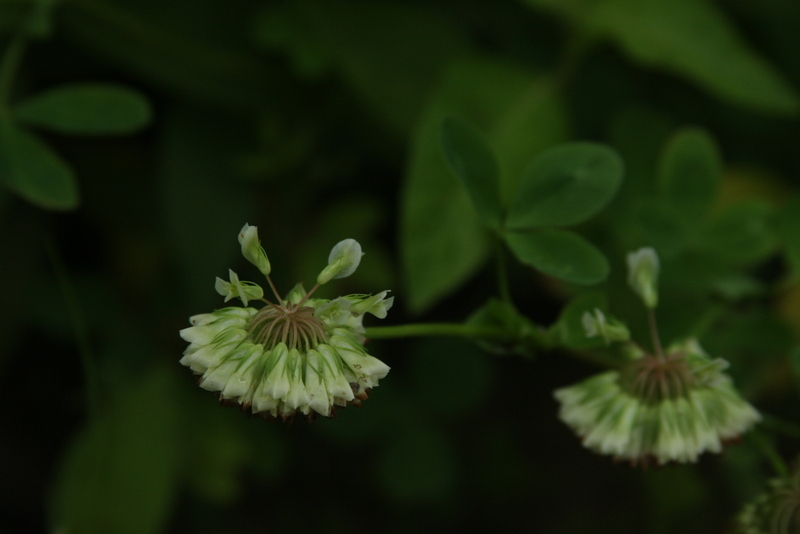
    Wildflowers in the restored Dana Brown Woods: purple milkweed (Asclepias purpurescens; left) and buffalo clover (Trifolium reflexum; right).

    During my ten weeks in Missouri, I completed a research project evaluating the role environmental conditions play in restoration at Shaw Nature Reserve.  Specifically, I worked in the Dana Brown Woods management unit, a part of the Missouri Ozark foothills that features diverse plant communities across its heterogeneous landscape.  Sixteen years ago, the Dana Brown Woods was a closed-canopy woodland highly invaded by eastern red cedar.  However, restoration practices including reintroduction of fire and mechanical removal of woody shrubs like eastern red cedar have dramatically changed plant communities since 2000.  I was very fortunate coming into this project because there was extensive data about the plant communities in the Dana Brown Woods from 2001-2012 while restoration was occurring.  A local botanist, Nels Holmberg, monitored understory plants beginning a year before the first fire, creating complete information about the plant community before restoration and as it changed over time.

    We wanted to see how different environmental conditions affect how plant communities change over time in response to restoration.  To answer this question, we visited 300 points across the woodland and measured several environmental parameters, including aspect, slope, rockiness, elevation, and juniper stump density (juniper stumps decay slowly, so many of the trees cut in 2006 were still visible).

    IMG_0049
    Fieldwork in Dana Brown Woods. Olivia makes friends with a hog peanut (Amphicarpaea bracteata).

    Just from field observations, we could see noticeable differences in the environment and plant community composition across the woodland.  Higher slopes were rockier, covered in old juniper stumps, and rich in sunflowers, whereas the lower regions near the Meramec River floodplain had deeper soil and more mesic plant species, like spicebush.

    Data analysis confirmed that environmental gradients moderated plant community change over time. Higher, rockier areas experienced greater plant species turnover and greater increases species richness and abundance from 2001-2012, whereas shaded valleys changed relatively little.

    DataPlot
    Plant composition change from 2001-2012 increased with elevation, particularly during spring surveys. BC = Bray-Curtis dissimilarity, which measures the difference in plant species composition between a plot in 2001 and itself in 2012. Juniper, red oak, and white oak were subjectively determined habitat classifications at the outset of the study.

    Our observations were likely driven by differential fire behavior across the woodland. Historically, fires were a frequent disturbance in the Ozark foothills. Four prescribed fires from 2001-2012 probably had larger impacts on the drier upland areas than in the wet lowlands, which would not have burned as well.

    Quantifying how ecological restoration practices, like prescribed fire, vary across environmental gradients is important for land management planning, especially in the Ozark foothills where the landscape is so heterogeneous.

    Poster
    Leighton stood by while Olivia presented her research to the public at Sensational Summer Nights.
  • Fig Stakes: Shoreline Restoration for a Costa más Rica

    Fig Stakes: Shoreline Restoration for a Costa más Rica

    Andres Santana is the graduate program coordinator at the Organization for Tropical Studies. During a recent fieldtrip in southern Costa Rica, he and CCSD restoration ecologist Leighton Reid compared notes on using fig stakes for ecological restoration.

    Tropical beaches are many things to many people. To plants, beaches are hot, sandy, and salty – complicating their restoration.

    Costa Rica has 1228 km (763 mi) of coast line – including 1016 km on the Pacific side and 212 km on the Caribbean. Along Costa Rica’s northern Pacific coast, the beach forms the natural edge of the dry forest. Farther south the adjacent forest is more humid. Giant trees, 40 m or more in height, grow right up to the high tide mark, particularly along the Caribbean.

    But as with so many tropical ecosystems, Costa Rica’s coastal forests have been subject to human impacts. Many shoreline forests were cleared for cattle ranching, and exotic grasses were introduced as forage. Some of these grasses are fierce competitors and prevent tree seedlings from establishing, even long after the pastures have been abandoned.

    Playa Hermosa Antes y Despues
    Playa Hermosa, before (left) and after (right) planting 2-m long cuttings of a coastal fig species (Ficus goldmannii).

    In 2009, a small non-profit organization, Costas Verdes, was formed to restore coastal forests along degraded shorelines, particularly wildlife refuges. The restoration work was initially challenging; tree seedlings were hard to establish along the coast because of the harsh environment – high temperatures and salinity and lack of freshwater were among the most significant obstacles. Not to mention the invasive cattle forage grasses.

    OLYMPUS DIGITAL CAMERA
    Coastal restoration at Playa Hermosa

    Playa Hermosa, a surfing destination on the Central Pacific coast, was among the most heavily deforested project sites. This area, part of a wetland and river estuary, was declared a national wildlife refuge in 1998. By 2009, very little forest had naturally regenerated. This led Costas Verdes to implement a restoration project at this beach. Planting plots were established where invasive grass was removed. In other areas, grasses left intact, as a comparison. It quickly became evident that tree seedlings were outcompeted by the grass. Those in the cleared plots grew better, but they still faced the other coastal habitat challenges.

    Some native trees are resistant to hot substrates and high salinity, but these species were not available in tree nurseries, most of which focused on ornamental species. This meant that seedlings needed to come from locally collected and germinated seeds. We realized that this would take time to get going. Tree seedlings under 50 cm rarely survive, even if they have the proper coastal adaptations.

    To accelerate the restoration, we decided to use tree cuttings rather than growing seedlings from seed. A colleague suggested Ficus goldmannii as a candidate species, so in 2011 we conducted a planting trial. We planted 225 2-m long cuttings. Of these, 195 (87%) survived their first year. By the second year all 195 survivors had become established and were quickly providing canopy cover and lowering the temperature of the sand.

    Ficus
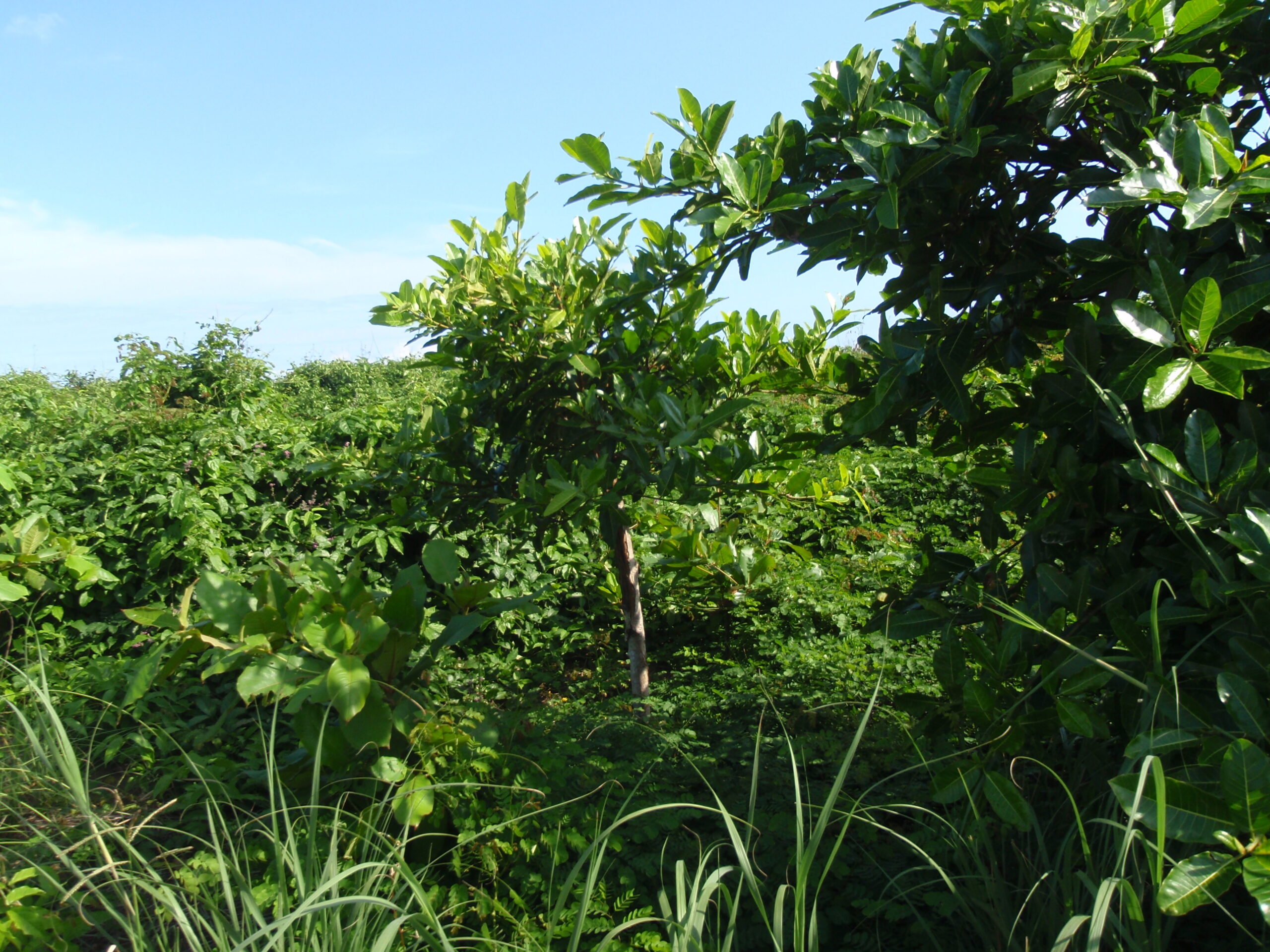
    An established fig stake with a dense canopy. Note the weak, patchy grass below it.

    Once fig stakes created some canopy cover, we brought in other tree species – mostly from the coastal tree nursery that we created. Shade from the fig canopy also began to inhibit the invasive grasses, which require high sunlight to photosynthesize efficiently. Reduced competition with these grasses allowed other tree seedling species to survive.

    In this instance Ficus cuttings turned out to be useful in promoting restoration. We have since used cuttings for other plots with similar success.

    OLYMPUS DIGITAL CAMERA
    Coastal trees and shrubs growing below established fig cuttings at Playa Hermosa.
  • Can the Ozark chinquapin successfully re-colonize interior highland forests?

    Can the Ozark chinquapin successfully re-colonize interior highland forests?

    Jenn Rosen is an undergraduate at the University of Missouri – Saint Louis. This summer, she participated in the Missouri Botanical Garden’s Research Experience for Undergraduates (REU) program. She spent eight weeks working with scientists in the Center for Conservation and Sustainable Development. Here, Jenn writes about her field experiment at Shaw Nature Reserve.

    Conservationists and ecologists have recently sought to restore an ecologically important tree, the Ozark chinquapin (Castanea ozarkensis), that became threatened not by the effects of clear-cutting, but instead due to an incurable parasitic fungus called chestnut blight (Chyphonectria parasitica). After devastating its cousin (American chestnut) in eastern forests, the fungal disease moved west and began infecting chinquapin trees in the Ozark and Ouachita Mountains. The blight is presumed to have been brought into the United States by accident in the early 1900s when Chinese chestnuts (C. mollissima) were imported into the country. What makes the Ozark chinquapin and the American chestnut so susceptible to the disease is that the fungus’ wind-borne ascospores can easily enter through small cavities in their bark where they then grow and spread to neighboring trees. The blight causes Ozark chinquapin trees to die back to the roots, from which multiple stems resprout to form a large shrub-like growth form. Once a widely dispersed canopy tree in upland Interior Highland forests, chinquapins declined in abundance and are now often found as multi-stemmed, blight-infected subcanopy shrubs.

    Castanea ozarkensis seeds from two maternal lines. One group's seeds are twice the size of the others. Large seeds hold more resources, which can give seedlings a head start. But larger seeds also face a higher risk of being preyed upon by rodents.
    Castanea ozarkensis seeds, with white radicles, from two maternal lines. One group’s seeds are twice the size of the others. Large seeds hold more resources, which can give seedlings a head start. But larger seeds also face a higher risk of being preyed upon by rodents.

    Chinquapins were prized by many folks of the Ozarks for the nutrient-rich nuts they produced, and its rot-resistant woods were used to make furniture, railroad ties, and fence posts, among other products. Additionally, large mammals such as black bears were known to forage in the Ozarks in search for the nutritious nuts to help replenish their fat reserves for the upcoming breeding season. There is a collaborative effort among groups to restore the chinquapin throughout its’ former range once blight-resistant seeds become widely available, estimated to take approximately 20 – 30 years.

    Once blight-resistant seed becomes available, understanding how chinquapin trees successfully regenerate in the wild will be the key to successfully restoring this species. Unfortunately, little is known about the ecology of the tree prior to blight infection. Like other nut-bearing trees in Ozark woodlands (e.g., oaks), we suspect that there may be several limiting factors to chinquapin seedling recruitment, such as seed predation, poor soil quality and/or poor light availability. In order to test these predictions, we planted 320 chinquapin seeds (from two distinct maternal origins from the wild) across ten experimental replicates at the Shaw Nature Reserve (Gray Summit, Missouri). The criteria for each replicate was that there had to be a shrub microhabitat, which was dominated by the common understory tree, eastern redbud (Cercis canadensis), and an open habitat, separated by at least three meters. Like other Ozark woodlands, prescribed fire is currently being used to restore woodlands at the Shaw Nature Reserve and will likely be a key component to successfully reintroducing chinquapins back into the wild. After enduring many scrapes and pricks from constructing mammal exclusion cages for half of the seeds, roughly two weeks after planting the seeds we had a bounty of little chinquapin seedlings emerge.

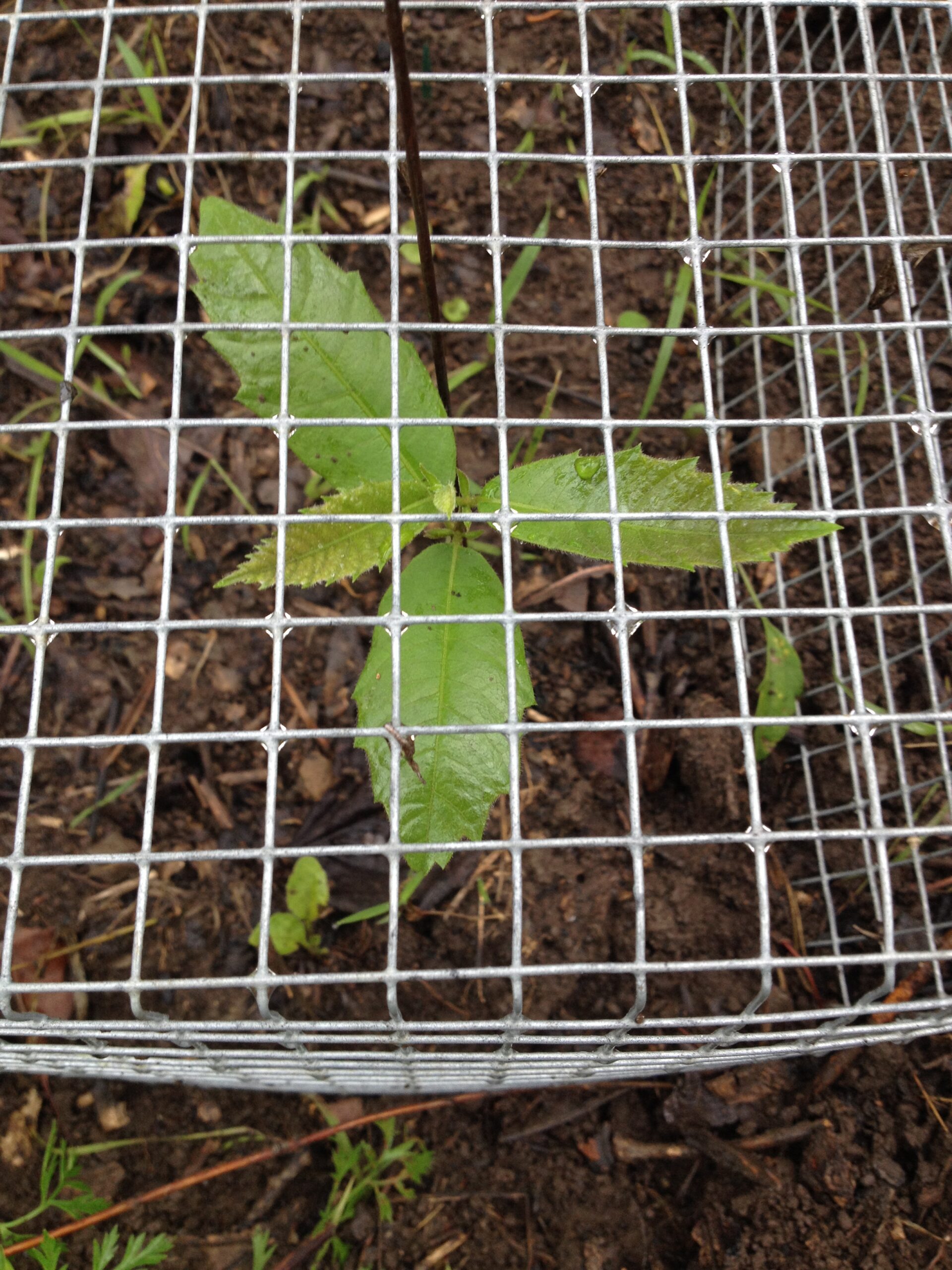
    Castanea ozarkensis seedling, protected from marauding rodents by a wire cage.
    Castanea ozarkensis seedling, protected from marauding rodents by a wire cage.

    We found that consumer treatment and microhabitat structure, as expected, influenced the rates of Ozark chinquapin seed emergence. Nearly all of the seeds that were exposed to small mammals were eaten or removed, even though seeds were buried a few centimeters in the soil. Interestingly, small mammals consumed seed at greater rates in shrub than open microhabitats. These results imply that understory vegetation structure determines where chinquapin seedlings can successfully recruit through its influence on small mammal behavior. Also, small mammals removed larger, and presumably more nutritious, seed at greater rates than smaller seed. Environmental factors, like light availability, did not affect seedling growth, but the short duration of the study may not have been adequate for the potential influence of these factors to become apparent.

    Our work contributes to a larger ongoing project by the Ozark Chinquapin Foundation to restore and conserve Ozark chinquapins. Given the high rates of seed removal, future restorationists will have to transplant chinquapin seedlings as opposed to seeds to successfully reestablish this species in the wild. However, once reintroduced seedlings grow to maturity and produce seed, our study suggests that microhabitat structure in Ozark woodlands will play a key role in determining the recruitment and growth rates of restored populations.