Sometimes farmlands quickly regrow tropical forests on their own, but other times they don’t. Dr. Karen Holl, a professor at the University of California Santa Cruz, gives some rules of thumb for when we can save money on tropical forest restoration by letting nature do the work, and when we may need to invest in tree planting.
Ambitious targets are being set to restore tropical forest because of their importance in storing carbon, regulating water cycles, conserving biodiversity, and supporting the wellbeing of people who live in tropical countries. For example, the 20 × 20 Initiative aims to restore 20 million hectares of tropical forest in Latin America by 2020. This represents an area slightly smaller than the country of Ecuador. One big question is: How are we going to restore forests at this scale with limited funds?
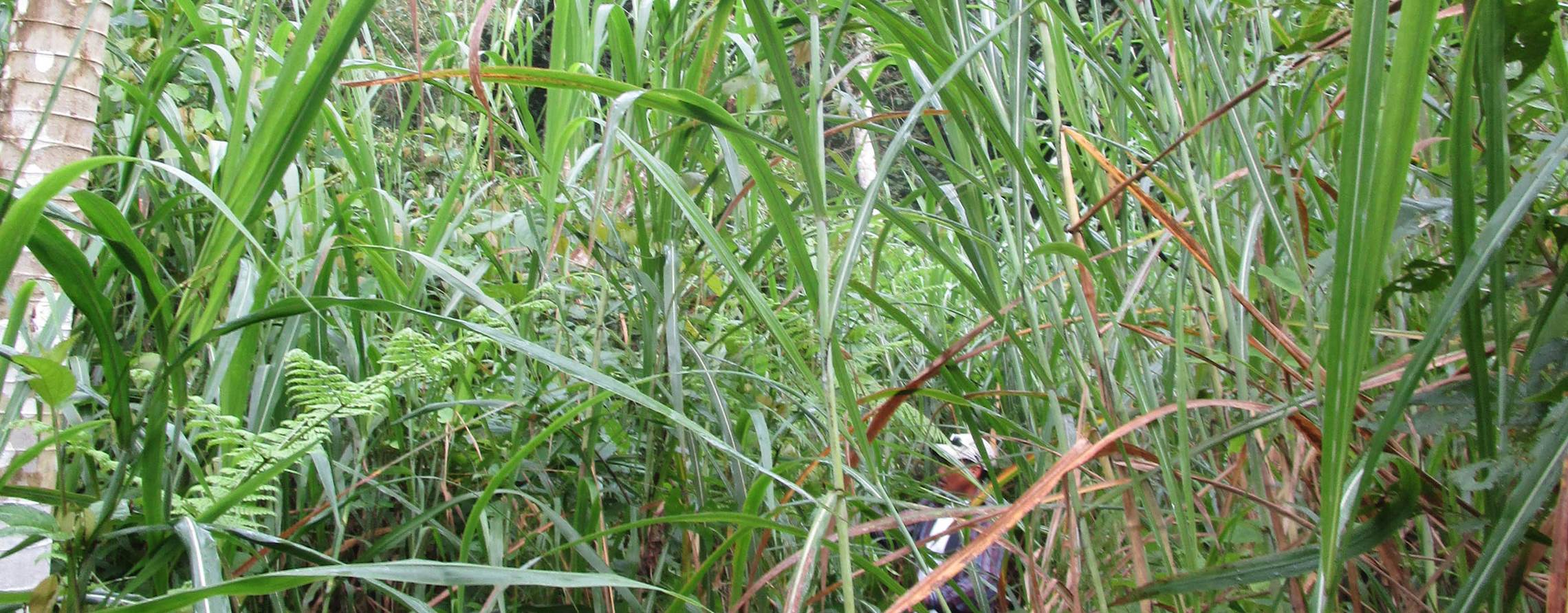
One of the cheapest ways to restore forest is to let nature do the work and leave forests to recover on their own. This works in some sites where forests regenerate quickly. In other cases, usually sites that have been used intensively for agriculture, the land may be covered by tall grasses (up to 3 meters, or 10 feet high) for years. Our past research shows that even within a small region, the rate of natural forest recovery varies greatly.
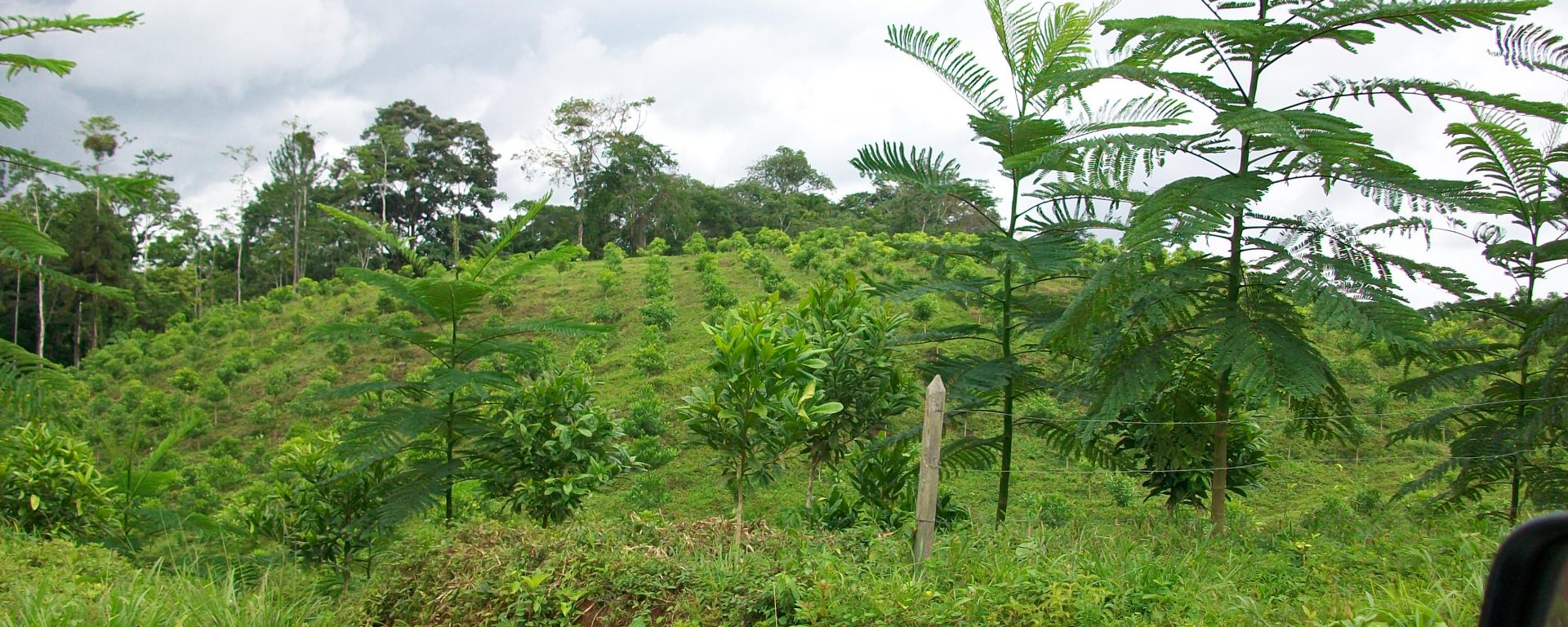
Natural forest recovery is highly variable in southern Costa Rica, even after a decade of recovery. Left: slow recovery on a former farm, still dominated by non-native grasses, with an open canopy and little tree recruitment. Right: speedy recovery on a former farm, with virtually no grass cover, a closed canopy, and diverse tree recruitment. Photos by Andy Kulikowski.
So, how do we predict which sites will recover quickly and which ones need some help in the form of clearing pasture grasses and planting trees? If we could develop some rules of thumb it would help land managers to more efficiently allocate scarce restoration funds.
To answer this question, we drew on our long-term study on tropical forest restoration in southern Costa Rica. We have research plots at 13 different sites where we removed the land from agriculture and let the forest recover on its own. Each year we measure grass cover, tree canopy cover, and how many and what species of new tree seedling establish in the plots. We have also quantified the forest cover surrounding the plots, the nutrients in the soil, and how long cows had grazed the sites in the past.
We found that two easy-to-measure variables explained on average two-thirds of variation in forest recovery 7 years later; those were the amount of grass cover and tree canopy cover measured after only 1.5 years. Plots that had more canopy cover and lower grass cover early on had a closed tree canopy and lots of forest tree seedlings from many species after nearly a decade. We were surprised that the amount of surrounding forest cover and soil nutrients did not explain much of the variation in forest recovery.
Rules of thumb for predicting tropical forest regeneration on farmlands. Forests grow back quicker when there is not too much grass, a little bit of shade, and many tree seedlings already present. Illustrations by Michelle Pastor.
Of course, our results need to be tested in other recovering tropical forests. But, if they hold true, this is good news! It means that land owners and managers just need to wait a year or two and then measure the tree canopy and grass cover. If some trees have established and are starting to shade out the grasses, land managers can use the low cost method of leaving the site to recover naturally. If the site is mostly a monoculture of dense grass, then the site is a good candidate to plant native trees. Planting trees takes more resources since it is necessary to clear around the native tree seedlings for a couple of years until they grow taller than the grasses. At least now there are some general guidelines to help chose where to invest the extra effort.
CCSD scientist Leighton Reid and Lyon Arboretum director Rakan Zahawi write about giant fig tree cuttings: how to make them and why some grow better than others.
Choosing the right species to include in a restoration project is a hard choice, but in the economy of nature, some species earn a bigger ROI than others. For example, Pacific sea otters maintain kelp forests by eating sea urchins, and wolves in Yellowstone National Park allow aspen groves to regenerate by scaring away tree-munching elk. These vital creatures are called “keystone species” because they hold ecosystems together, much like the keystone in an arch.
A keystone and three keystone species. (A) This small keystone holds up an arch in the Shoenberg Temperate House at Missouri Botanical Garden. (B) Sea otters are keystone predators in kelp forests. Photo by Marshal Hedin CC-BY 2.0. (C) Gray Wolves are keystone terrestrial predators. Photo by Gary Kramer USFWS CC-BY-NC 2.0. (D) A keystone fig tree feeding a Knobbed Hornbill in Sulawesi, Indonesia. Photo by T. R. Shankar Raman CC BY-SA 3.0.
Plants can be keystone species too. Around the world there are about 800 species of fig trees, and they hold tropical forests together by providing food for a wide array of animals. On any given day, the busiest tree in a rain forest is likely to be a fig tree with fruits. Monkeys, birds, bats, and others gather at fig trees to eat, and in the process, they deposit seeds of other plant species that they have been carrying in their guts. This chain of events, repeated day after day, often turns the area beneath a fig tree into a hotspot of plant diversity.
A few years ago, we had an idea to plant keystone fig trees in young forests in Costa Rica. We wanted the figs to grow as fast as they could, so instead of planting seedlings, we planted cuttings – big ones. With help from our local collaborator, Juan Abel Rosales, we cut dozens of twelve foot-long branches from eight species of fig trees. We stripped off all of their leaves to keep them from drying out, and then we planted our figs trees in shallow holes.
Rakan Zahawi (delighted!) poses with a three year-old fig stake.
To our delight, many of the fig trees grew!
The ones that did the best came from a special group, the subgenus Urostigma. Many figs in this group have a unique life strategy. They begin their lives in the top of a tree when their tiny seeds are deposited on a branch by a bird or some other animal. As they grow in the treetop, they send long roots down to the ground, and these roots harden and fuse together, forming a lattice-like trunk. Over time, these figs kill their host trees by taking most of the water, nutrients, and light. They also keep the host tree from growing outwards, giving them the nickname “strangler figs”. Maybe the ability to transform a flimsy, dangling root into a solid trunk is related to these figs being able to grow from cuttings.
To find out how well our planted fig cuttings might survive over the long-term, we also tracked down some fig cuttings that we had planted in 2004. We were happy to learn that out of the trees that survived for their first three years of life, all of them were still thriving a decade later.
Full disclosure: planting large cuttings is not a new idea. Farmers in many parts of the tropics plant trees this way to create ‘living fences’ – with all of the normal fixings like gates and barbed wire, but with a row of living trees instead of dead posts. The advantages for farmers are many – their fences don’t rot and fall apart (that happens quickly in the tropics); the trees provide shade for cattle; they have a constant source of new fence posts (by cutting off a limb); and in some cases they can feed the young shoots to livestock.
Big cuttings have big benefits for restoration too. Not only are planted trees already several feet tall, you also get to skip the pricey nursery phase, and, most excitingly, cuttings have a tendency to fruit quickly.
Some of our young fig trees are now making fruit, but we will have to wait a bit longer to see whether they start attracting more big animals and whether those animals carry more tree seeds into our young forests. For now, we can say that others who are interested in growing keystone figs for forest restoration may have the best luck by working with the stranglers.
How to grow an instant fig tree. (A) Remove a long, thin branch segment from an adult tree. The red arrow shows a cut branch. (B) Strip the cuttings of their leaves to keep them from drying out, then carefully transport cuttings so as not to damage cortical tissue. Here, cuttings are padded by a foam mattress. (C) Remove the bark from a ring on the cutting to promote root growth. Here, a ring is being cut about 20 cm (8 in) above the base so that it will be just below the soil surface when planted. (D) Dig a shallow hole and plant the cutting. Be sure that the cutting is firmly planted to prevent it from toppling, but take care not to compact the soil too much around its roots. Photos by Rakan Zahawi.
How should we restore forests in places where they have been lost? This is one of the main questions that we study in the CCSD, so we were surprised last year when a big synthesis paper that compiled data from many earlier studies said that, when it comes to restoration, doing nothing was the same as doing something.
That’s only a slight exaggeration. The paper, by Renato Crouzeilles and several other scientists, said that letting a forest regrow on its own (that is, natural regeneration) was usually more successful than planting trees (that is, active restoration). Their conclusion was based on comparing many studies done throughout the world’s tropical forest regions.
Unequal comparison
The problem with this paper (and several like it) was that the set of studies looking at natural regeneration were not really the same as the set of studies looking at tree planting. The natural regeneration studies focused on forests that already existed, while the tree planting studies focused on a wider range of sites, many of which started with no forest. In other words, the natural regeneration studies had already been filtered to exclude places with a weak ability to grow forests.
To understand the problem, it is helpful to look back at the history of tropical forest restoration research. For many years, scientists who wanted to know about how forests recover after a disturbance (like a hurricane or logging) would go out and find several forests that had been recovering for different amounts of time. If you take forests that are 5, 10, and 20 years old, you can try to compare them to each other in order to see how a forest might change over 20 years. In contrast, tree planting studies usually start with a piece of land that has no trees on it. Scientists who want to know how trees grow on this land will plant some and then observe their survival and growth over time. These trees may or may not create a forest there, as the land can vary in quality.
So where does that bring us with respect to this study? If you compare a forest that already exists with another potential forest where planted trees may or may not survive and grow well, it’s a safe bet that the pre-existing forest will have taller trees. It has a head start over the planted forests, and we argue in our paper that the comparison is not a fair one.
This means that letting forest regrow on its own is not always a better option than planting trees. In fact, there are many places – like overgrazed pastures, mine sites, and other heavily degraded lands – where forests have been cleared and most likely will not be able to grow back on their own.
Comparison of natural regeneration (foreground) and active tree planting (background) to restore a cattle pasture in southern Costa Rica. Tree seedlings planted on the hillside are just visible in the 2005 image. The yellow circle indicates a person for scale. After nine years, active tree planting had produced a forest, whereas natural regeneration was stalled. Overgrown pasture grasses covered the ground. Natural regeneration is highly variable, so this example is not representative of all situations. Photos courtesy of Karen Holl.
Same team!
While we were not convinced by studies that said that natural regeneration is better than tree planting, we also don’t want to take any options off the table. Natural regeneration and tree planting are not mutually exclusive – in fact, they are highly complementary. Our practical advice is that if you want to get forest back, the best option is to see if natural regeneration can do the trick before you invest in tree planting. Or better yet, set up a paired experiment comparing the two strategies at the same site.
A collaborative research project involving MBG’s Center for Conservation and Sustainable Development, the Tropical Silviculture Lab at the University of São Paulo, and the PARTNERS research coordination network highlights important differences between the native tree flora of the Brazilian Atlantic Forest and the species that are widely planted for ecological restoration projects.
The Brazilian Atlantic Forest is a global biodiversity hotspot. This designation denotes two things. First, the Atlantic Forest is exceptionally and uniquely biodiverse. Second, the biodiversity of the Atlantic Forest is exceptionally threatened. This once-vast biome historically stretched from northern Argentina to Brazil’s eastern tip in Rio Grande do Norte, but it is now reduced to about 12% of its original size, and most of what remains exists as small, isolated fragments.
During the past decade, a major, multilateral effort has been undertaken to staunch biodiversity loss by doubling the size of the Atlantic Forest through ecological restoration. The Atlantic Forest Restoration Pact is composed of more than 270 private companies, governments, NGOs, and research organizations. It aims to restore 15 million hectares of Atlantic Forest by 2050.
The Atlantic Forest biome: a global biodiversity hotspot and the site of the most ambitious tropical forest restoration project on the planet. Map imagery from NASA via Wikimedia Commons.
Atlantic Forest restoration projects are characteristically thorough and well-documented. For example, they often include high diversity plantings more than 80 tree species. Yet until recently there had never been a systematic study to evaluate how well these restoration plantings represented the Atlantic Forest biodiversity they aimed to protect.
Dr. Pedro Brancalion is a professor at the University of São Paulo’s agricultural school in Piracicaba, Brazil, where he co-directs the Tropical Silviculture Lab. Five years ago, he approached me at a meeting of the Society for Ecological Restoration in Madison, Wisconsin, and over a beer he told me about a dataset that he thought could shed light on the how well Atlantic Forest restoration projects were conserving tree biodiversity. The dataset consisted of seedling donation records from the NGO SOS Mata Atlântica. Between 2002 and 2015, the NGO donated more than 14 million tree seedlings to 961 restoration projects. By comparing the species composition in these records to tree species living in mature forests, we could see what elements of biodiversity might be missing and how this could be affecting carbon stocking – an important factor in mitigating global climate change.
Even in high diversity plantings, many of the most threatened tree species were not included.
Last month, Pedro and our collaborative team published a paper in Conservation Letters describing our results. We found that restoration projects in the Atlantic Forest biome had included 416 tree species out of the >2,500 tree species known from mature and old-growth forest fragments. This is an impressive figure, but the team discovered that it reflects a highly biased subsample of the Atlantic Forest tree flora. The most under-represented species were those with large seeds that are dispersed by animals. Animal-dispersed trees make up as much as 89% of tree species in some parts of the Atlantic Forest and include some of the most threatened species.
The reason that large-seeded, animal-dispersed species are being used less often was probably related to the cost and challenges of collecting and growing seeds. Large-seeded, animal-dispersed trees are more expensive to purchase from nurseries than small-seeded or wind-dispersed species. Because they are energetically expensive to produce and are contained within large fruits, trees tend to produce large seeds in relatively low quantities, with just one or a few seeds per fruit. They are generally found in remote forest areas, and seed collectors have to compete for them with seed-eating animals, like peccaries and agoutis. Once large seeds are collected, they also take up considerably more space in storage and production facilities.
The absence of large-seeded, animal-dispersed tree species in restoration plantings has important implications for biodiversity conservation. First, fewer large-seeded trees means less food for large birds, some of which eat mainly large fruits. Second, these species are sometimes overharvested for timber and have difficulty recolonizing forests from which they have been removed. So the fact that large-seeded, animal-dispersed trees are under-represented in restoration projects means that even if the ambitious restoration goals of the Atlantic Forest Restoration Pact are met, the increase in forest cover may not improve dispersal between fragmented populations of the most vulnerable species.
Large-seeded tree species also tend to store carbon more densely than small-seeded species. This tendency is related to large-seeded species growing slowly in the shady understory of the Atlantic Forest and their gradual formation of dense wood, which is rich in carbon. We simulated potential carbon stocking in restored forests and compared it to mature forests, and our results showed that under-representation of large-seeded, animal-dispersed trees could cause a 2.8-10.6% reduction in carbon storage. Based on the current price of carbon, this loss could represent $17-63 USD per hectare in lost carbon credits.
Many Atlantic Forest restoration projects are quite isolated. A large seed would have a hard time reaching sites like this forest in a sugarcane matrix. Photo by Pedro Brancalion.
Reduced capacity for biodiversity conservation and carbon stocking sounds like bad news, and indeed it is not ideal. However, restoration ecology moves forward by identifying problems and seeking scientifically-based solutions to overcome them. Knowing that large-seeded, animal-dispersed trees are under-represented in restoration plantings means that we can turn our attention to innovative solutions.
For example, new policies could help bridge the gap between Brazil’s exceptional tree biodiversity and the relative paucity of species being used for ecological restoration. One way this could happen would be for the Brazilian government to subsidize the cost of producing large-seeded, animal-dispersed tree seedlings. This could be done through financial incentives or potentially by opening some forest reserves for seed harvesting, to make it easier for collectors to acquire these species. Facilitating uptake by reducing costs would be a carrot. A stick could be to legally mandate some representation of these species in future restoration plantings.
Market solutions may also exist. Based on our calculations, adding more large-seeded, animal-dispersed species to restoration plantings would increase carbon storage and carbon credits, offsetting the cost of the expensive seedlings and creating a net gain of $3-32 USD per hectare.
Alex Fernando Mendes is an undergraduate researcher in the Tropical Silviculture Lab at the University of São Paulo, Brazil. He describes his thesis project, undertaken in dozens of forest fragments in the endangered Atlantic Forest biome. Currently, Alex is analyzing his data as a visiting researcher in the Center for Conservation and Sustainable Development.
Historically, intensive agriculture in the Brazilian Atlantic Forest has caused large-scale deforestation of this biome. However, new legal requirements, land exhaustion, and the shifting priorities of farmers have recently allowed forests to regenerate on some formerly farmed lands. Given the unique nature of the Atlantic Forest, its high species endemism, and its potential for providing ecosystem services, the Tropical Silviculture Lab (LASTROP) at the University of São Paulo, coordinated by Prof. Pedro Brancalion and its partners, initiated a project in 2014 to better understand the structure and composition of these new forests.
However, forests aren’t made solely of trees. Among the plant components of a forest, there are others life forms such as epiphytes, lianas, and herbs that contribute to biodiversity and provide food, water, and shelter for many animal species. Epiphytes are plants that use other plants as support. Due to their sensitivity to environmental changes, epiphytes can be used as bioindicators. Therefore, we asked how these plants are doing in these young regenerating forests. And what landscape and local attributes facilitate or hinder their recolonization?
To try to answer these questions, we are studying the epiphyte communities in 40 second-growth forests (i.e., forests that were once completely cut down). We are considering three landscape drivers (distance from watercourses, distance from forest edge and forest cover in a 1-km buffer around the remnant) and four local drivers (previous land use, forest age, liana abundance, and tree basal area). We expect that forests close to watercourses would provide the moisture required by epiphytes. We expect to find more epiphytes further from the forest edge since forest cover in more conserved forests may limit their establishment. Since our forests regenerated from abandoned eucalyptus plantation and pastures, we want to check if the non-native eucalyptus could act as a filter preventing epiphytes recolonization. We also expect that older forests and forests with more basal area could house more epiphytes than young forests. Finally, field observations made us wonder if lianas could compete with epiphytes by occupying the same niche.
Of the more than 6,000 phorophytes (trees that could support epiphytes) sampled in these 40 forests we found 398 epiphytes belonging to 21 morphospecies distributed in 4 families (Araceae – 1 species, Bromeliaceae – 14 species, Cactaceae – 5 species, Orchidaceae – 5 species). Only three species, Tillandsia pohliana, Tillandsia tricholepis, and Ionopsis utricularioides, represented more than half (59.5%) of all epiphytes found in second-growth forests. The genus Tillandsia was expected to be abundant in these young forests, since these are disturbance-adapted species that can even be found growing on power lines in cities.
Epiphytes of the genus Tillandsia (Bromeliaceae) are often found in extreme microenvironments in urban areas (Photos by A. Mendes, 2017).
Our analysis is in progress, but our preliminary observations suggest that forests closer to watercourses and closer to forest edge are more likely to have epiphyte recolonization than forests far from edge and watercourses. Forests regenerated on pastures have more epiphytes than those on abandoned eucalyptus plantation. Our dataset will soon be upgraded with new forest types: conserved and disturbed old-growth forests, and mixed tree plantings for forest restoration, totaling approximately 70 forests with epiphyte samples.
With this research, we hope to find out the local and landscape factors that contribute to epiphyte recolonization in second-growth forests. In practice, this will allow us to locate sites with limited potential for spontaneous colonization of this life form to take actions that promote colonization and establishment, such as introducing individuals. Finally, by identifying epiphytes species that are more sensitive to disturbance, we can focus our reintroduction interventions.
Small, remnant forests are surrounded by cattle pastures in southern Brazil.
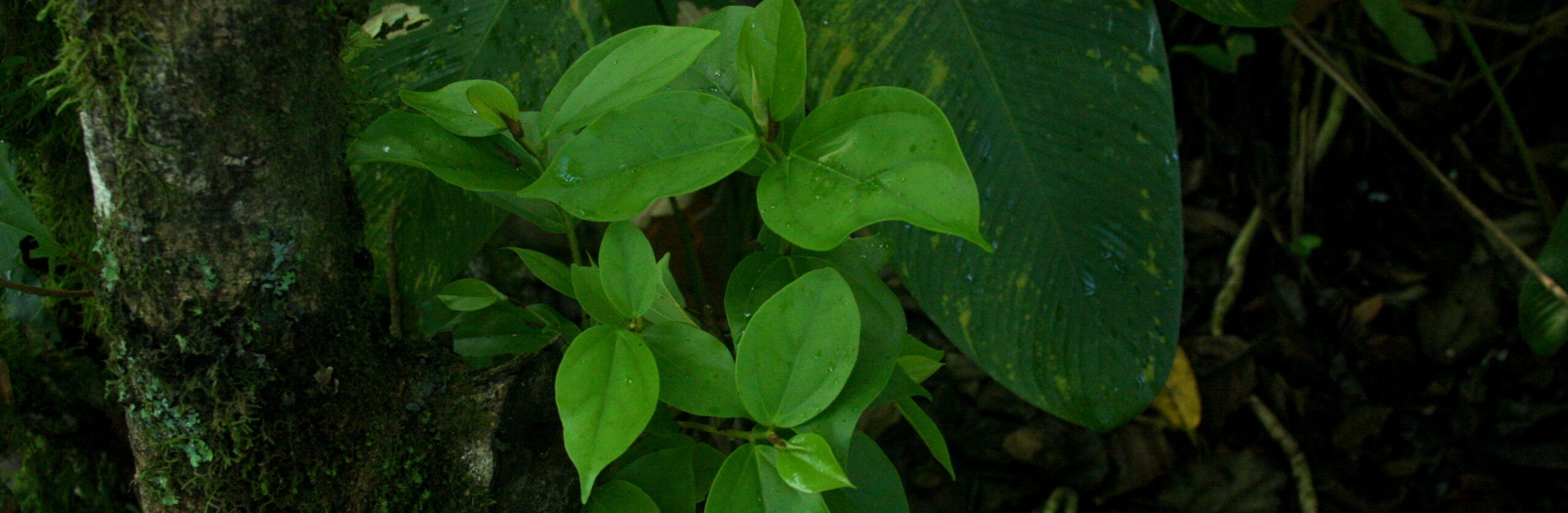
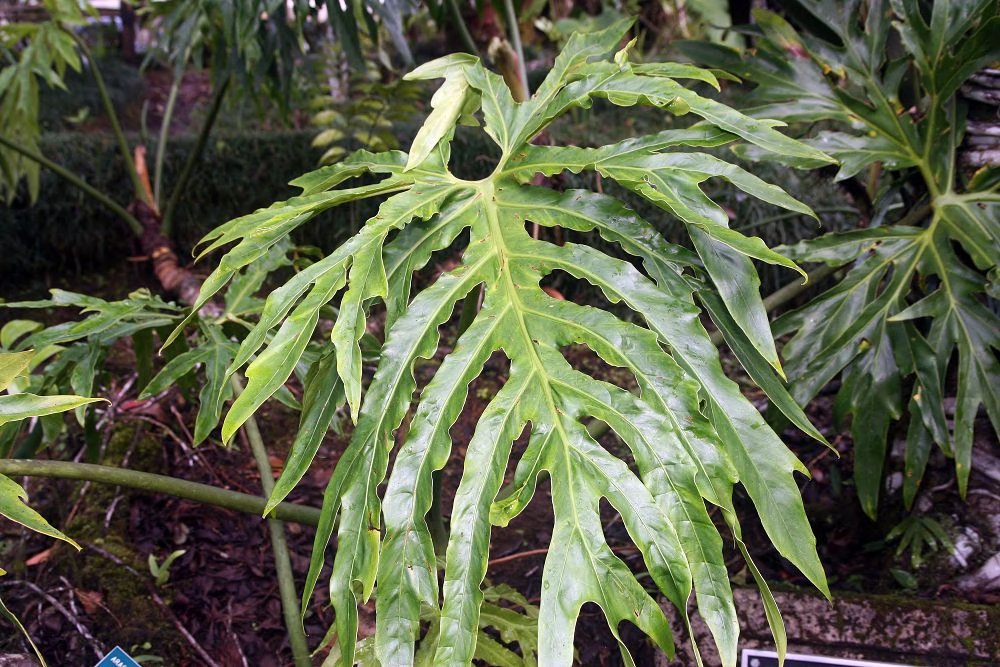
Note: The image of Philodendron bipinnatifidum featured at the top of this post was taken by David Stang.
MBG Madagascar’s Chris Birkinshaw and Dinasoa Tahirinirainy describe exciting, preliminary results from a forest restoration experiment in highland Madagascar.
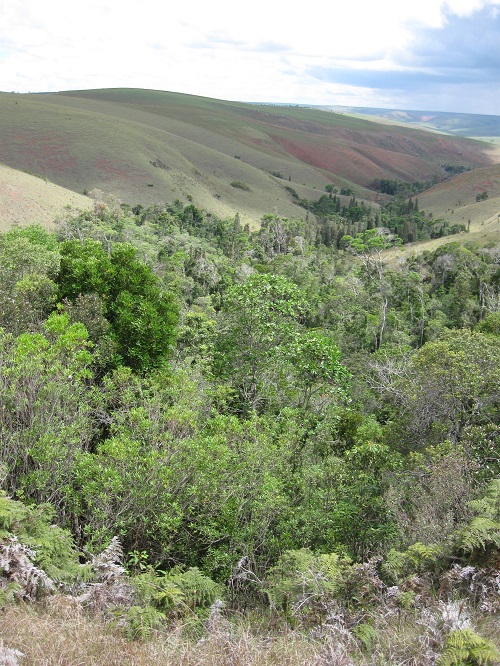
This sliver of riparian forest is one of the last vestiges of Madagascar’s highland forests. Decades of Missouri Botanical Garden research in Madagascar have shown that more than 80% of all plant species on the island exist nowhere else. Many are threatened with extinction due to habitat loss. Severalpreviousposts have described forest restoration efforts at this site, home to the largest population of the endemic sohisika tree (Schizolaena tampoketsana) – a species that belongs to a family (Sarcolanaceae) that only exists on Madagascar.
A small number of forest restoration projects in Madagascar routinely inoculate the tree seedlings in their nurseries with a homemade mycorrhizal inoculum. While the nurserymen are convinced that this technique promotes growth and survival of tree seedlings, there seems to be no published data objectively demonstrating these positive outcomes. In an effort to provide the evidence to justify investment in this technique, we designed a simple experiment that will compare the survival and growth under four treatments of young plants of six native trees planted in grassland adjacent to the Ankafobe Forest on the central Malagasy highlands.
Table – Four experimental treatments to test the effects of mulch and mycorrhizal inoculum on native tree seedling growth in highland Madagascar
Inoculated
Not inoculated
Mulched
Treatment 1
Treatment 2
Not mulched
Treatment 3
Treatment 4 (control)
In our experiment, fifteen seedlings of each of six native tree species will be grown under each of the four treatments listed above. The mycorrhizal inoculum was made by filling a pit (150 cm long × 50 cm wide × 30 cm deep) lined with sacks with topsoil collected from around the roots of three native tree species, then growing maize and beans in this soil for three months before cutting these plants down and letting the substrate dry out for two weeks. The substrate remaining in the pit is the inoculum and was used by adding one tablespoon to each seedling container.
Beans and maize are grown in topsoil collected from a remnant forest to amplify local mycorrhizae populations. This enriched soil (i.e., inoculum) is then added to seedling containers.
The tree seedlings that received mycorrhizal enrichment were inoculated in November 2017, and all of the seedlings were otherwise grown under the same conditions in the nursery until January 2018 when they were planted out into an experimental plot at Ankafobe. Half of the tree seedlings were surrounded by a thick layer of grass-based mulch (~30-cm deep). The comparison of seedling performance with and without the addition of mulch is interesting because of the possibility that mulch helps to maintain a relatively cool and moist environment in which the mycorrhizae can flourish.
Table – Mean difference in tree seedling height (cm) between seedlings inoculated versus not inoculated with homemade mycorrhizae, after two months in the nursery (N = 30 seedlings per species).
Species
Inoculated seedling height
Non-inoculated seedling height
t
p1
Aphloia theiformis
29.5 ± 10.2
33.4 ± 6.5
-1.75
1.0000
Baronia tarantana
18.1 ± 6.1
11.4 ± 3.5
5.21
<0.0001
Brachylaena ramiflora
27.2 ± 6.0
31.8 ± 6.5
-2.87
1.0000
Craspidospermum verticillatum
43.0 ± 5.9
42.6 ± 3.7
0.37
1.0000
Macaranga alnifolia
34.8 ± 8.6
39.2 ± 5.2
-2.43
1.0000
Uapaca densifolia
23.0 ± 7.9
11.5 ± 2.6
7.58
<0.0001
1 t and p values are from a one-tailed student’s t-test asking whether inoculated seedling height was greater than non-inoculated seedling height. P values are adjusted for multiple comparisons with Bonferroni correction.
Although we plan to measure seedling survival and growth 12 months from the time when they were planted (i.e., in January 2019), we were interested to see that for two of the species the height of inoculated seedlings was significantly greater than the height of non-inoculated seedlings after a mere two months in the nursery. On average, inoculated seedlings of Baronia tarantana are 1.6× taller than non-inoculated seedlings; while the seedlings of Uapaca densifolia are a full 2× taller. For the other species there was no significant difference between the height of the inoculated and non-inoculated plants.
Tree seedlings are planted out in a field experiment at Ankafobe in January 2018. These seedlings are planted adjacent to a line of “green manure” (i.e., nitrogen-fixing Tephrosia shrubs planted to improve the degraded highland soil prior to planting native tree seedlings).
During a recent trip to Costa Rica, CCSD scientist Leighton Reid toured La Sabana, Costa Rica’s largest urban park, with Wilmar Ovares, an instructor at the Universidad Estadal a Distancia who has been studying the recovery of bird diversity following large-scale replacement of exotic trees with native ones.
The first time I visited La Sabana Metropolitan Park in downtown San Jose was in 2005. At that time it was essentially a eucalyptus woodland; the tall trees with peeling bark stretched upwards above the soccer fields and hiking trails. No longer. La Sabana has gotten a makeover in the last few years – and for the better.
The old La Sabana (exotic eucalyptus trees in background – slated for removal in the near future) and the new (native trees and a eucalyptus stump in the foreground). The tree at right (unidentified species; Solanaceae) is a natural recruit, dispersed to the site by a bird or a bat. The slightly curved tree at center-right has died, but it can still serve as a bird perch and might facilitate the dispersal and establishment of a new, native tree in its place.
The project was initiated as a collaboration between three institutions: the National Biodiversity Institute (INBio), the National Sports and Recreation Institute (ICODER), and Scotiabank. Beginning in 2010, this collaborative removed most of the exotic trees in La Sabana and replaced them with more than 5000 native trees, representing 234 species. Not all of the species are native to the central valley, but all are native to the country.
Although the planted trees are still quite small, one short-term indicator of project success is the recovery of bird diversity in the park. On my first visits to La Sabana prior to 2010, the birding was slow, with occasional excitement when I would stumble on a eucalypt in flower – abuzz with warblers, orioles, and hummingbirds. Now, Wilmar Ovares finds that the number of bird species has increased by more than a third. Many of the new species are migrants, which breed in North America and winter in Central America. Others have drifted in from nearby riparian forests along the Rio Torres and the Rio Maria Aguilar. In some cases, birds and other animals have carried in and deposited native tree seeds, complementing the plantings.
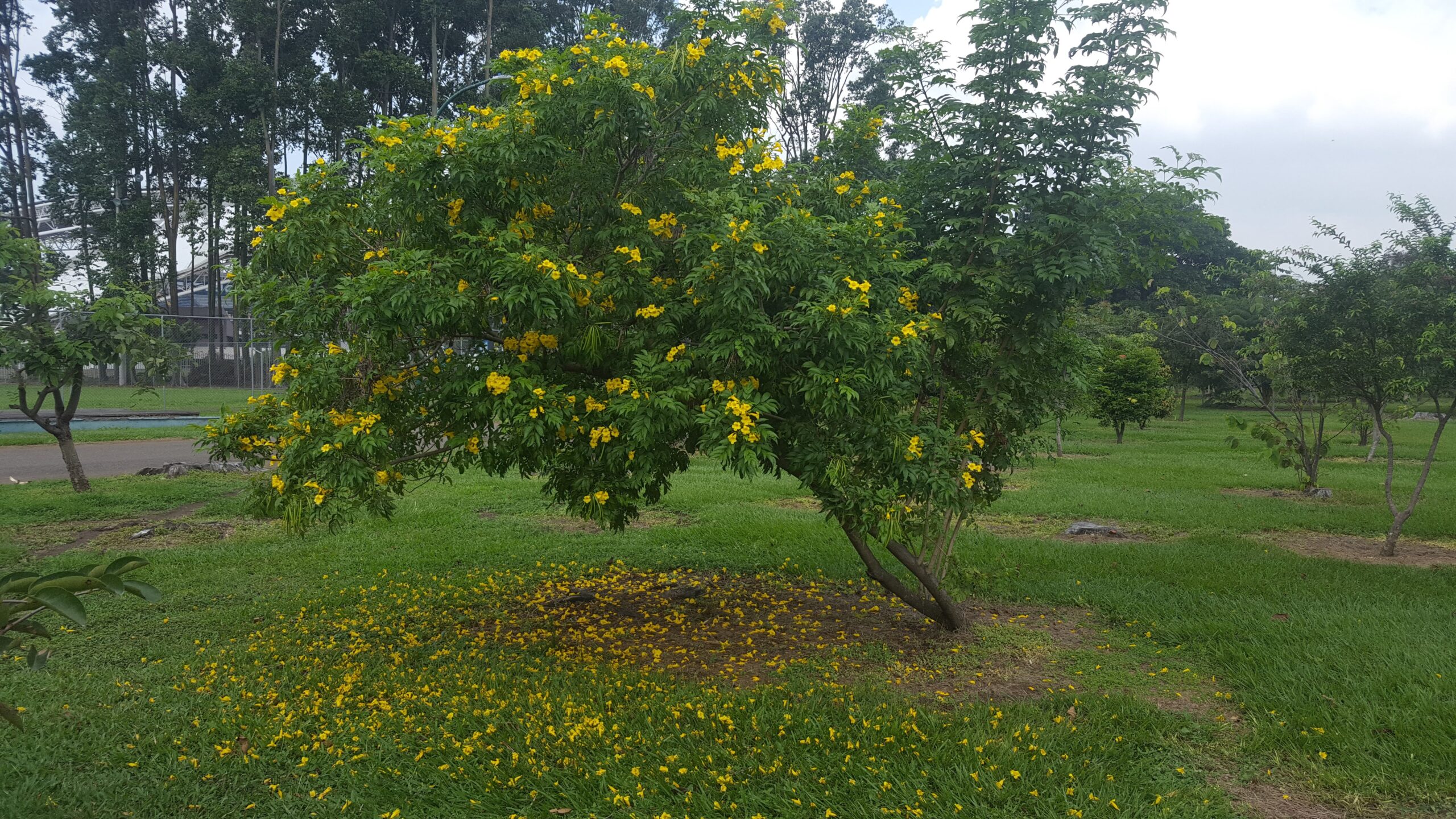
Vainillo (Tecoma stans, Bignoniaceae), a beautiful, native addition to La Sabana.This Annona cherimola (Annonaceae) recruited on its own at this site in La Sabana. Its large seed may have been dispersed by a bird, a squirrel, a raccoon, or even a human. The source of the seed may have been the Rio Torres, which flows through a riparian forest not far from the park. This tree species is a conservation priority species in the Central Valley.
To be clear, this project is not strictly ecological restoration; below the new trees is a manicured lawn, and it is likely to remain that way for some time. The work is better classified as rehabilitation – a return of some elements of the local biodiversity, but by no means all of it. This approach is sensible given that the park is a resource for human recreation – not just a habitat for plants and animals. Still, if the park administration wished to go further, they could consider introducing some native, understory shrubs, ground-layer plants, and epiphytes, all of which would enhance bird diversity and enrich the experience of visitors.
Jicaro (Crescentia alata, Bignoniaceae) is a champion of forest restoration efforts in Guanacaste, and it looks good in La Sabana as well. The large flowers are pollinated by nectar-eating bats, and the fruits are used by some indigenous people as water canteens.Acerola (Malpighia glabra, Malpighiaceae) in a recent planting in La Sabana. This tree/shrub produces edible fruits, which are not very sweet. (Thanks to Amy Pool for correcting a previous misidentification!)The last vestiges of the old La Sabana. This area near the stadium is dominated by eucalyptus (from Australia) and Cupressus lusitanica (from Mexico and northern Central America). Wilmar Ovares finds a lower diversity of bird species in these exotic tree groves, despite their much greater stature. Though it cannot be denied that when the eucalyptus are flowering, warblers, orioles, hummingbirds and others may be found in large numbers feeding on the nectar and nectar-eating insects.Wilmar Ovares has been monitoring changes in the bird community in La Sabana as a result of the native tree rehabilitation.
James and Thibaud Aronson made a stop in Hong Kong recently, and post a report on what’s going on restoration-wise at the 60-year old Kadoorie Farm and Botanic Gardens.
After three weeks in New Zealand – about which we will report in our next two posts – we stopped recently in Hong Kong to visit the Kadoorie Farm and Botanic Garden (KFBG), which has just celebrated its 60th anniversary. Most visitors to Hong Kong never leave the city center, which has the second highest concentration of skyscrapers in the world and rivals London and New York for shopping, but also as a global hub for finance, trading, and marketing. But, we were lucky: through our friend Kingsley Dixon we had an introduction to Dr. Gunter Fischer, Head of the Flora Conservation Department at KFBG. Dr. Fischer came to Hong Kong from Austria, 7 years ago, and now oversees the vast – and gorgeous – botanic garden, the herbarium, the genetic and ecology laboratories and the various restoration and native plant recovery programs at the KFBG, which is the result of an exemplary public sector-private sector partnership. Behind the scenes, a key component is the large on-site tree nursery and enormous amounts of effort devoted to seed collecting and plantations of mother plant collections of rare native tree species for seed production. “In a changing world, resilience comes from diversity”, as Gunter so nicely puts it.
Ms. Chung Yick Kwan, an employee of the garden working in the KFBG tree nursery, handling one of the many rare native species propagated here.
Other departments at KFBG include the Sustainable Living and Agriculture, Fauna Conservation, Kadoorie Conservation China, and Education. Activities are devoted to developing and demonstrating sustainable small-scale farming methods for food production in South China, including new methods such as permaculture and traditional Chinese methods that have been lost or abandoned during the Chinese cultural revolution. There is also an extensive rehabilitation program for wild animals, notably many rare and endangered turtles, mammals, and birds that were seized by Hong Kong customs or delivered by animal rescue organizations.
All of these activities stem naturally from the original raison d’être of the organization. When Sir Horace and his brother Lord Lawrence Kadoorie founded the Farm 60 years ago, their goal was to help Chinese immigrants get established as small farmers.
Sir Horace and Lord Lawrence Kadoorie – the founders of KFBG. (Photo: KFBG archives)Text of one of the guiding principles of the charity work of KFBG in the early 1950s, which is still valid in the 21st century (NB. In the 1950s KFBG was called KAAA, Kadoorie Agricultural Aid Association). (Photo: KFBG archives)
To this day, the Kadoorie Foundation is the main funding source of the KFBG. But with vastly greater affluence in Hong Kong today, since the mid-1990s, a decision was made to transform the property into a world-class education and conservation center with a botanic garden at its heart. The conservation work comprises numerous projects in Hong Kong and mainland China but also parts of Southeast Asia, such as poorly explored regions of Laos and Cambodia.
Originally, Hong Kong was covered in tropical and subtropical forest, but it was completely deforested after the British took over in 1841; visitors in the 19th and early 20th century called Hong Kong a “barren rock”. As a result of centuries of cultivation with crops such as rice and tea, and ongoing urbanization in combination with more and more exhausted soils, many mountain slopes were left to their fate, completely denuded of any vegetation ongoing soil erosion, and high run-off during the annual monsoon seasons caused landslides and wreaked havoc.
Starting in the 1880s, successive governments undertook massive afforestation programs, as documented by the eminent ecologist Richard Corlett. However, during the World War II Japanese occupation of Hong Kong, most of the recently recovered forests were burned or devastated by harvesting of fuel wood.
After WWII, secondary forests began to recover, but of the 450 native tree species, only ca. 100 regenerated naturally, and the other species carry on sadly towards extinction. Moreover, there are huge problems with introduced grasses, many of which carry fire far better than anyone would like.
Upper area of KFBG’s restoration site devastated by a fire in 2004. (Photo: Dr. Billy Hau)
Thus the challenges for conservation and restoration are enormous. Indeed, the same is true at the regional scale. As Gunter told us, “most of the forests of South China have been trashed”; only tiny fragments of primary forest remain, and very little work on restoration of the original forest is going on. Since he arrived at KFBG, over 6 years ago, Gunter has done remarkable things in the botanic garden portion of the 159 hectare property, located on a steep slope of Tai Mo Shan, the highest point in Hong Kong (957 m or 3140 ft), including the launch of an ambitious restoration program on the recovering wilderness portion of the property that few visitors see. Rather than full coverage, a tree island, or assisted nucleation approach is taken, similar to that used in on-going experiments in Costa Rica, which Leighton Reid posted on last November.
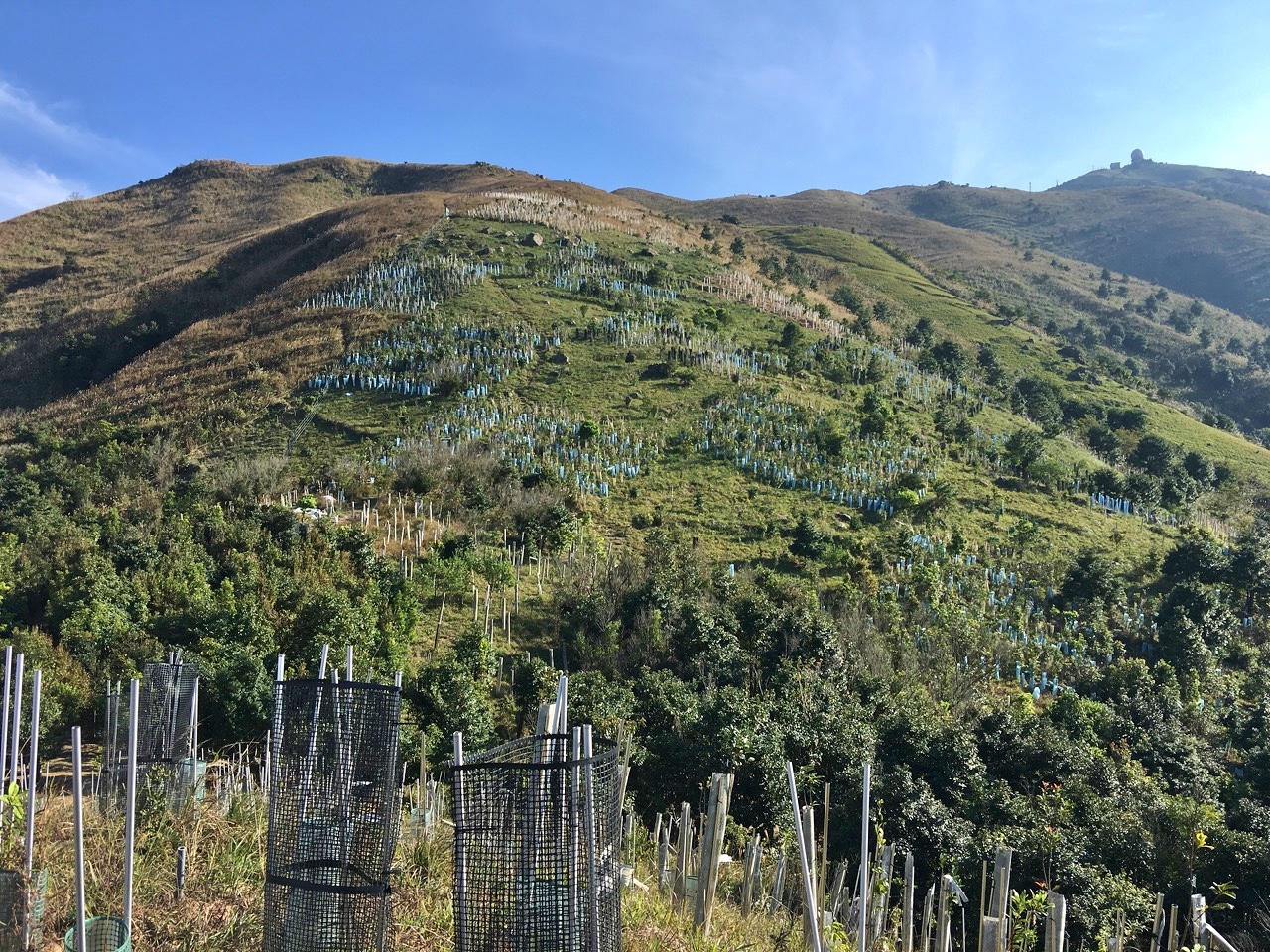
Core area of the 15 hectare (42 acre) experiment restoration site at KFBG, showing tree island plantings of 2015 and 2016, with various soil preparation techniques and tree guards being tested. (Photo : Gunter Fischer)
The focus is largely scientific and conservation-oriented, given that most of the flora of Hong Kong is highly endangered. However, horticulture and arboriculture are as important as ecology here, Gunter assures us – an observation that jives well with the Missouri Botanical Garden’s approach to restoration as well. For example, Gunter and his colleagues not only plant ten thousand trees on average each year, all produced in the experimental KFBG nursery, they also prune and shape the trees they’ve planted to encourage upward growth rather than low shrubby formatting, which is what often happens with many trees after planting.
Structurally pruned Quercus edithiae, a rare canopy tree in South China.
A large proportion of the tree planting budget is devoted to plastic cylinders (tree guards/shelters) to protect tree saplings from barking deer and wild boar, but also from harsh climatic conditions.
Tree guards used to protect seedlings on a ridge from strong desiccating winds.
The KFBG restoration team also makes a big effort to study soil improvement techniques that will compensate for degraded soils and improve survival and early growth of the planted trees. One of the most interesting components of this experimental work concerns the use of Biochar prepared on site, by slowly heating wood in closed containers with almost no air. Much of the wood comes from stems and trunks of intentionally introduced and now invasive fast-growing trees, such as the appropriately named Acacia confusa, that are gradually being removed from the property. This approach to invasive woody weeds has great potential in many parts of the world and should receive a lot more attention and investment.
Invasive trees and those deemed hazardous to human safety are continuously removed and replaced with native species. The wood is used to prepare biochar.
Clearly, KFBG is one of the bright spots of plant and animal conservation, and ecological restoration in Asia today.
Native animals such as this bamboo pit viper (Trimeresurus stejnegeri) are recolonising the restoration site. (Photo: Gunter Fischer)
For more information, see the recent article published by Gunter and his colleague Jinlong Zhang. Also, if you’re travelling to Hong Kong, be sure to stop by. Even if you don’t trek to the higher slopes to see restoration work-in-progress, the Botanic Garden is also full of interesting natural and cultural sights and stories too, such as these elevated pigeon hotels. And how many botanical gardens occasionally have to close a road because a massive python is stretched right across it, digesting a deer for a week!
Dragon boat pigeon hotel on the KFBG grounds.
And there is the museum, theme gardens such as the Gloria Barretto orchid sanctuary, and lush forest gardens that appear to be native forest fragments but in fact are tropical gardens providing an exhilarating experience for thousands of visitors each month just a few miles from downtown Hong Kong.
Montane streamside forest garden with trees covered in epiphytic ferns.
Estefania Fernandez is a Bascom Fellow who recently finished her master’s thesis at the University of Montpelier, France. Last year, Estefania wrote about her preliminary results on tropical forest restoration and vascular epiphyte reintroductions in Costa Rica. Here, she describes the final results, recently published in Restoration Ecology.
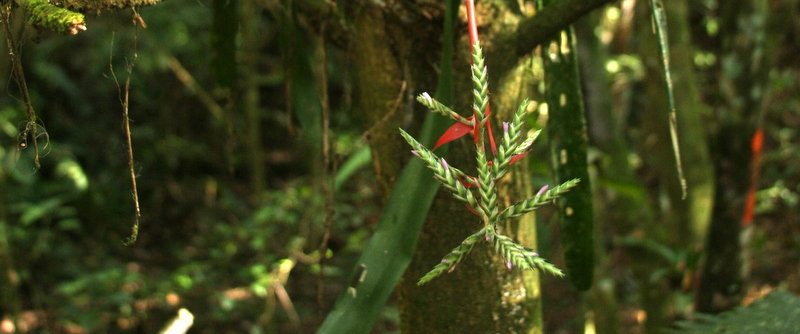
A transplanted bromeliad, Aechmea dactylina flowering in a 10-year old tree plantation.
Vascular epiphytes are plants that germinate and root on other plants without taking their nourishment from their host plant, and they represent 50% of the flora in some tropical forests and 9% of all vascular plants worldwide. If you are a plant lover, then you most likely have one or several vascular epiphytes in your house. Some of the most appreciated horticultural families include orchids (Orchidaceae), aroids (Araceae), and bromeliads (Bromeliaceae).
Vascular epiphytes also play key roles in our ecosystems. They are crucial to forest water and mineral recycling as they intercept rainfall and prevent rapid run-off and nutrient leaching. Vascular epiphytes are also exceptional microhabitats where invertebrate communities find refugia and birds and arboreal mammals forage.
Transplanted individual of Werauhia gladioliflora
Despite their importance in forest ecosystems, vascular epiphytes are rarely taken into account in forest restoration. This is problematic because vascular epiphytes are often among the slowest plants to recolonize regenerating forests.
In 2015-2016, I tested whether transplanting epiphytes into young restoration sites could be a viable strategy to accelerate their reestablishment. I used a bromeliad for my experiment, Werauhia gladioliflora (H. Wendl.) J.R. Grant, which was common in remnant forest but had not been found during epiphyte surveys in nearby restoration areas. In March-June 2015, I transplanted 60 bromeliads into three restoration plantations near Las Cruces Biological Station in southern Costa Rica. I revisited the sites in January-February 2016, nine months after transplantation, to monitor survival and arthropod recolonization.
Happily, over 75% bromeliads survived and the number of arthropods on branches with bromeliads was seven times greater than in branches without bromeliads. Additionally, I observed that bromeliads buffered the local microclimate; during the driest and hottest times of the day, the interior of the bromeliads was moister and cooler than ambient air.
Transplanted individuals of Werauhia gladioliflora (left) hosted considerably more arthropods in their rosettes than could be found on the stems of trees that had not received a transplant. GN, JG, and MM are three study sites near Las Cruces Biological Station in southern Costa Rica. Photo by Dave Janas.
Restoring arboreal refugia
My research suggests that transplanting fallen epiphytes onto trees in restored sites contributes to the recovery of vascular epiphyte diversity in these ecosystems and has the additional benefits of bringing back arthropod diversity to these sites. Epiphytes, and specifically “tank” epiphytes that retain water in their rosettes, help stabilize microclimatic conditions, a critical function in light of climate change, which may put arboreal communities at special risk. Indeed, the body temperature of many animals such as invertebrates entirely depends on ambient temperatures but rising temperatures could push arboreal animal communities to the ground. Epiphytes offer ideal refugia from high temperatures and drought and their presence in tree canopies and understory is critical to preserve arboreal animal communities. Transplanting other epiphyte families or even entire epiphyte communities found on fallen branches could be tested in the future to broaden this strategy.
Estefania inspects a flowering individual of an Aechmea dactylina transplant
This work was supported by a grant from the National Science Foundation.
CCSD restoration ecologist and PARTNERS member Leighton Reid spent 10 days collaborating with scientists and students in the Tropical Silviculture Lab (LASTROP) at the University of São Paulo. Epiphytes were a central theme of the visit.
Vascular epiphytes are plants that live non-parasitically on other plants. Readers from the tropics will be quite familiar with some epiphytes, like the ubiquitous Tillandsia of Neotropical powerlines, but temperate zoners will have seen many epiphytes as well, at the florist, the botanical garden, and the mall. These plants are incredibly diverse; by one estimate, epiphytes make up 9% of all vascular plants worldwide. But epiphytes also face serious challenges in today’s world. Habitat loss and overharvesting threaten some epiphyte species with extinction. Many epiphytes also have a hard time recolonizing new habitat in regenerating forests, but new studies on epiphyte restoration could help.
I spent the past 10 days in the State of São Paulo learning about epiphyte ecology, conservation, and restoration from students and scientists at the University of São Paulo’s College of Agriculture (Escola Superior de Agricultura Luiz de Queiroz). This part of Brazil was once covered in semideciduous tropical and subtropical forests, which hosted about 150 vascular epiphyte species. Today, only ~15% of the forest remains, but there is a large effort underway to restore 15 million hectares (nearly 58,000 square miles) of it by 2050.
Frederico Domene is a doctoral student studying epiphyte reintroduction in restored Atlantic Forest. Like his advisor, Pedro Brancalion, Fred’s interest in epiphyte restoration stems from a passion for orchids. He grows a variety of them at his house in Piracicaba, preferring true species over horticultural varieties.
Fred picked me up in his black pickup, “mamangava”, and took me on a tour of several tree plantations where he has been developing methods for reestablishing populations of epiphytic orchids, bromeliads, cacti, and aroids. Fred’s basic procedure involves collecting epiphyte seeds (or purchasing small plants, in the case of orchids), growing them out in a nursery, and then attaching them to trees using twine or plastic. He started his work in 2010 and has been monitoring his plants, and reintroducing new plants, every year since. He uses a ladder to put the orchids up high, out of easy reach for would-be poachers.
Atlantic Forest restoration plantations. Left: 60-year old plantation along the Rio Piracicaba near Rio Claro. Right: 12-year old plantation at the Anhembi Forest Science Experimental Station. The older restoration site had considerably more naturally recolonizing epiphytes than the younger site.
Late August is mid-winter in São Paulo, and while it doesn’t get particularly cold, it is quite dry. The restoration plantations were crunchy with desiccated leaves and twigs. These are harsh conditions for epiphytes, which do not have the luxury of soil to buffer to their roots from the sunlight and dry air. Some of Fred’s epiphytes have withered and died, especially during a 100-year drought in 2012. But others are thriving, thanks to special adaptations, such as the velamen of orchid roots, which wicks up rainwater when it drips down the tree trunk during storms. Many individuals have started fruiting and flowering, a good sign for the future viability of these reintroduced populations.
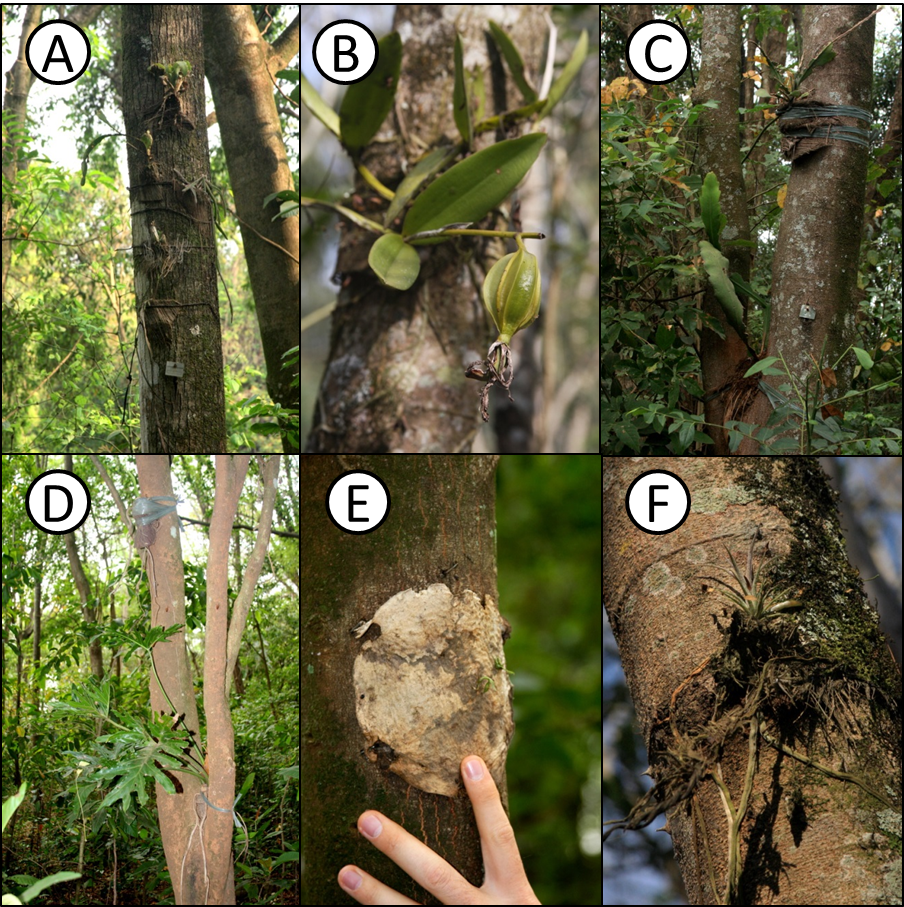
Epiphyte reintroductions in restoration plantations. (A) A reintroduced festoon of bromeliads, orchids, and cacti. (B) A fruit-bearing orchid (Cattleya forbesii), six years after reintroduction. (C) This reintroduced cactus (Epiphyllum phyllanthus) seemed to grow better in tree forks than on vertical stems, as did an aroid, (D) Philodendron bipinnatifidum. (E) Two tiny cacti have germinated in this direct seeding experiment, using seeds enrobed in paper discs. (F) Even where epiphytes have dessicated and died, experimental infrastructure continues to enhance epiphyte development; here a small bromeliad (Tillandsia recurvata) uses a piece of natural twine as a foothold.
To identify the key challenges for epiphyte restoration, it is also important to study epiphyte recolonization in naturally regenerating forests. Alex Mendes, an undergraduate researcher at ESALQ, is doing just that. On an unseasonably rainy morning, Alex, Fred, and I visited three regenerating forests near the sugar town of Rio Claro. We ducked under barbed wire fences and wandered through low, dense vegetation where Alex is systematically searching for vascular epiphytes. Two forests had rather few epiphytes – mostly generalist bromeliads – but one forest had a high density of orchids, which happened to be flowering spectacularly on the day we visited. Based on historical aerial photos, Alex knows that these three forests are at least 20 years old. They are part of a network of 75 sites that he will ultimately search for epiphytes. By the end of his undergraduate program, Alex hopes to be able to predict where epiphyte communities will regenerate on their own, and where they will need more assistance.
This secondary forest near Rio Claro might have felt like your average overgrown Psidium guajava patch had it not been decorated with dozens of Ionopsis sp. orchids.
These are early days for learning about epiphyte restoration, and there is still a lot of work to be done. The projects that I visited in Brazil are making headway, complementing our research in Costa Rica. It remains to be seen under what circumstances epiphyte reintroductions will be most successful. Perhaps an even more important issue will be convincing funding agencies and land managers to think beyond trees.
Fred Domene and Alex Mendes are making strides in the ecology of epiphyte reintroductions and community assembly. Here, they pose with a reintroduced bromeliad (Billbergia zebrina) at Anhembi experimental station.