Category: Tropical Ecological Restoration

  • Fig Stakes: Shoreline Restoration for a Costa más Rica

    Fig Stakes: Shoreline Restoration for a Costa más Rica

    Andres Santana is the graduate program coordinator at the Organization for Tropical Studies. During a recent fieldtrip in southern Costa Rica, he and CCSD restoration ecologist Leighton Reid compared notes on using fig stakes for ecological restoration.

    Tropical beaches are many things to many people. To plants, beaches are hot, sandy, and salty – complicating their restoration.

    Costa Rica has 1228 km (763 mi) of coast line – including 1016 km on the Pacific side and 212 km on the Caribbean. Along Costa Rica’s northern Pacific coast, the beach forms the natural edge of the dry forest. Farther south the adjacent forest is more humid. Giant trees, 40 m or more in height, grow right up to the high tide mark, particularly along the Caribbean.

    But as with so many tropical ecosystems, Costa Rica’s coastal forests have been subject to human impacts. Many shoreline forests were cleared for cattle ranching, and exotic grasses were introduced as forage. Some of these grasses are fierce competitors and prevent tree seedlings from establishing, even long after the pastures have been abandoned.

    Playa Hermosa Antes y Despues
    Playa Hermosa, before (left) and after (right) planting 2-m long cuttings of a coastal fig species (Ficus goldmannii).

    In 2009, a small non-profit organization, Costas Verdes, was formed to restore coastal forests along degraded shorelines, particularly wildlife refuges. The restoration work was initially challenging; tree seedlings were hard to establish along the coast because of the harsh environment – high temperatures and salinity and lack of freshwater were among the most significant obstacles. Not to mention the invasive cattle forage grasses.

    OLYMPUS DIGITAL CAMERA
    Coastal restoration at Playa Hermosa

    Playa Hermosa, a surfing destination on the Central Pacific coast, was among the most heavily deforested project sites. This area, part of a wetland and river estuary, was declared a national wildlife refuge in 1998. By 2009, very little forest had naturally regenerated. This led Costas Verdes to implement a restoration project at this beach. Planting plots were established where invasive grass was removed. In other areas, grasses left intact, as a comparison. It quickly became evident that tree seedlings were outcompeted by the grass. Those in the cleared plots grew better, but they still faced the other coastal habitat challenges.

    Some native trees are resistant to hot substrates and high salinity, but these species were not available in tree nurseries, most of which focused on ornamental species. This meant that seedlings needed to come from locally collected and germinated seeds. We realized that this would take time to get going. Tree seedlings under 50 cm rarely survive, even if they have the proper coastal adaptations.

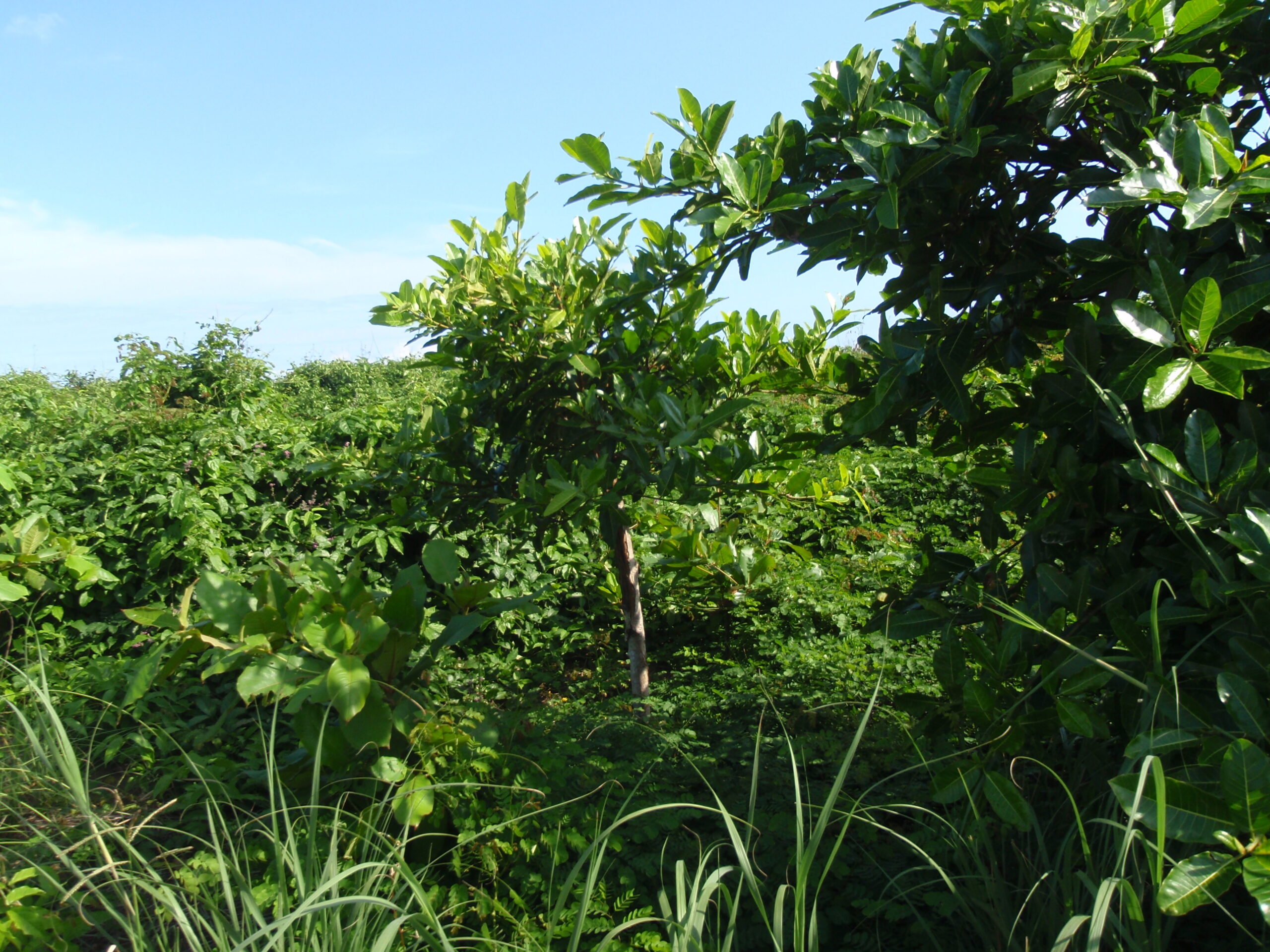
    To accelerate the restoration, we decided to use tree cuttings rather than growing seedlings from seed. A colleague suggested Ficus goldmannii as a candidate species, so in 2011 we conducted a planting trial. We planted 225 2-m long cuttings. Of these, 195 (87%) survived their first year. By the second year all 195 survivors had become established and were quickly providing canopy cover and lowering the temperature of the sand.

    Ficus
    An established fig stake with a dense canopy. Note the weak, patchy grass below it.

    Once fig stakes created some canopy cover, we brought in other tree species – mostly from the coastal tree nursery that we created. Shade from the fig canopy also began to inhibit the invasive grasses, which require high sunlight to photosynthesize efficiently. Reduced competition with these grasses allowed other tree seedling species to survive.

    In this instance Ficus cuttings turned out to be useful in promoting restoration. We have since used cuttings for other plots with similar success.

    OLYMPUS DIGITAL CAMERA
    Coastal trees and shrubs growing below established fig cuttings at Playa Hermosa.
  • Reforesting with Figs

    Reforesting with Figs

     Benjamin E. Smith is a Ph.D. student at George Washington University. He recently completed a field ecology course with the Organization for Tropical Studies in Costa Rica, where he worked with CCSD scientist Leighton Reid. When he’s not coring fig trees in Costa Rica, Benjamin studies plant-herbivore interactions in American chestnut.

    It was my recent privilege to spend a week at Las Cruces Biological Station in Costa Rica where I learned about some amazing properties of fig trees.

    The genus Ficus contains over 800 species, which can be found in the tropical to warm temperate regions throughout the world. Where they occur, figs are vital components of their local ecosystems because they provide high quality fruits for many animals. Animals attracted by the delicious figs often carry other plants’ seeds in their digestive tracks and subsequently deposit them below the fruiting fig tree. This can lead to patches of forest with especially high plant diversity.

    FICOBT
    Two individuals of Ficus obtusifolia demonstrating the strangler lifestyle (left) and the free-standing lifestyle (right). The individual on the left has overtaken one host tree and is reaching out to claim another. The individual on the right was planted (either by humans or birds) in a fence row.

    Some fig species have the ability to resprout roots, branches, and leaves from broken limbs – an adaptation that would be useful in an ecosystem with frequent disturbances, like hurricanes or landslides. Rural people have been utilizing this incredible feat of nature to create living fences for hundreds of years; they simply cut branches from a tree and plant them. Plant a large enough branch, and you’ve got an instant tree.

    Instant fruiting trees could be a practical tool for ecological restoration, and there is currently an experiment underway to test this idea. But not all fig species can resprout from cuttings, so in order for this tool to be useful outside of southern Costa Rica, it would be helpful to know which species will resprout and which will not.

    FICCOL Stake
    A healthy cutting of Ficus colubrinae. This instant tree was planted in May 2015.

    Does wood density predict resprouting in figs?

    We sought a way to determine whether a particular fig species would be able to resprout from a limb cutting before actually cutting apart large trees. This would mean only trees whose cuttings will survive would be used and trees that can’t resprout could be left undamaged.

    We believed that wood density would be a good measure to figure this out. Wood density can tell you a lot about a tree’s life history strategy. Is it a hard tree that will resist snapping in a stiff breeze? Or is it a softer tree that might break, but then resprout?

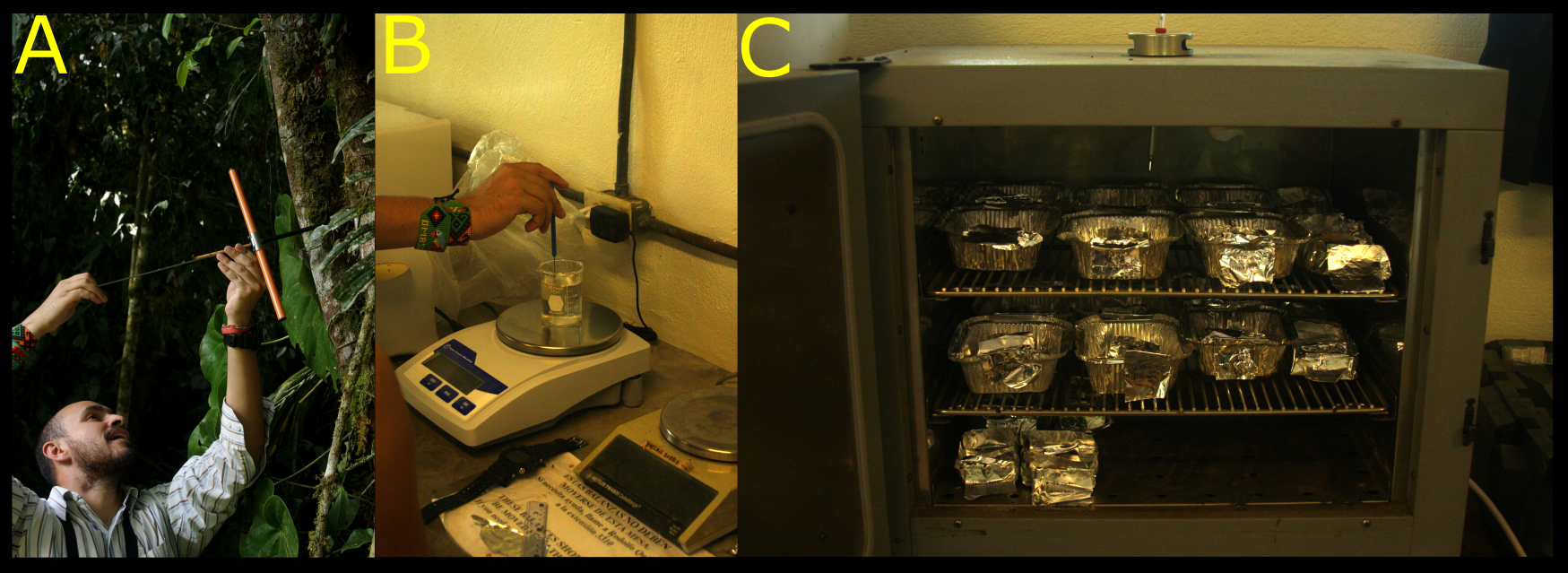
    To test this, we took core samples from seven fig species and headed to the lab. After a couple days of measurements, we had our data.

    Methods
    (A) OTS student Orlando Acevedo Charry extracts a core from a Ficus colubrinae. (B) Cores were cut into small pieces. We measured the mass of the water that each segment displaced to determine the wood’s green volume. (C) Next, samples were placed in a drying oven at 106° C for 24 hours. Finally, we measured the mass of the dried samples and divided by the green volume to determine wood density.

    The fig species we tested turned out to have pretty similar wood densities. Also, the slight variations in wood density did not correlate with trees’ resprouting abilities. This initially came as a big disappointment, but after taking a second look at our data we started to see a trend that may actually be much cooler.

    Results
    Wood density was a poor predictor of resprouting capacity (measured by tallying fig cuttings that were planted in April-May 2015; Left), but strangler figs in the subgenus Urostigma performed much better than two free-standing species in subgenus Pharmacosycea.

    Fig species come in a variety of forms. Some are rather conventional free-standing trees that grow from the ground up, but others start as seedlings high in the canopy of another tree and send roots down to the ground, gradually strangling their host. Still others are shrubs, climbers, and epiphytes. We found that stakes cut from strangling figs, the ones that initially rely on a host tree, were much more likely to resprout than stakes cut from free-standing fig species. If this holds true, no measurements will be needed in the future. People around the world may be able to tell if a tree will likely sprout from a cutting just by the way it grows.

  • Hill of Honey: Forest Recovery on Madagascar’s Central Highlands

    Hill of Honey: Forest Recovery on Madagascar’s Central Highlands

    This post was co-written by Leighton Reid and Chris Birkinshaw after a three-day field trip in the tampoketsa with Cyprien Mandriamanana and Jeannie Raharimampionona.

    A narrow, paved road winds north from Antananarivo through a high, windswept plain. It is the wet season, and the hills are green and close-cropped, but in the long dry season the landscape burns black. Orange rivers wind through the valleys, muddied by massive erosion. Here and there are thin strips of riparian forest, chock full of endemic species.

    The biggest chunk of remaining forest is Ambohitantely, Malagasy for “hill of honey”. Ambohitantely encompasses 1,800 ha of humid forest (about three times the size of Saint Louis’s Forest Park). We visited the reserve to observe natural forest recovery in one of the few places it can still be seen on Madagascar’s Central Highlands.

    Ambohitantely map
    Ambohitantely: the last large tract of forest on Madagascar’s Central Highlands. Ten kilometers to the northwest is Ankafobe, a much smaller forest fragment managed by a local community with assistance from Missouri Botanical Garden.
    Forest transition feedback
    Why is forest recovery so rare in the Malagasy highlands? Madagascar’s Central Highlands are currently undergoing a complete ecological transition, from forest and wooded savanna to grassland. The degradation cycle often starts when people cut forest trees to extract wood for timber and charcoal production. Small-scale cutting opens the canopy, dries the forest floor, and creates debris, all of which increase forest vulnerability to annual wildfires that sweep across the grasslands during the eight month dry season. C4 grasses quickly colonize the burned land, inhibiting forest recovery, and creating ideal conditions for future fires. The reason that Ambohitantely has natural forest recovery for us to observe is because reserve staff maintain a wide fire break for more than thirty kilometers around the reserve.

    Our guide at Ambohitantely took us on a hike through several areas where forest had once been cleared and burned but where fire had been excluded for 15 or 25 years, allowing the forest to begin to recover. Frankly, the vegetation was uninspiring. Low shrubs and forbs were scattered through a matrix of C4 grass (mostly Aristida), but trees and tree seedlings were nowhere to be seen outside of the forest (where they were abundant). By tropical forest standards, this looked slow. But for natural forest recovery on the Central Highlands, it’s hard to imagine a better situation than being protected from fire and immediately adjacent to the largest remaining tract of forest.

    Ambohitantely forest edge
    After 25 years of recovery, forest edges were sharp. Tree seedlings were almost totally restricted to forest, and grasses dominated the ground layer just outside.

    Our main interest in Ambohitantely was to compare natural forest recovery there to our observations at another forest fragment, Ankafobe, 10 km northwest. For the last decade, MBG has partnered with a local community to preserve a thin, riparian forest containing several critically endangered plant species. Community members constructed a fire break and have begun to restore the surrounding hillsides by turning over the orange clay and planting fast-growing legumes to develop the soil.

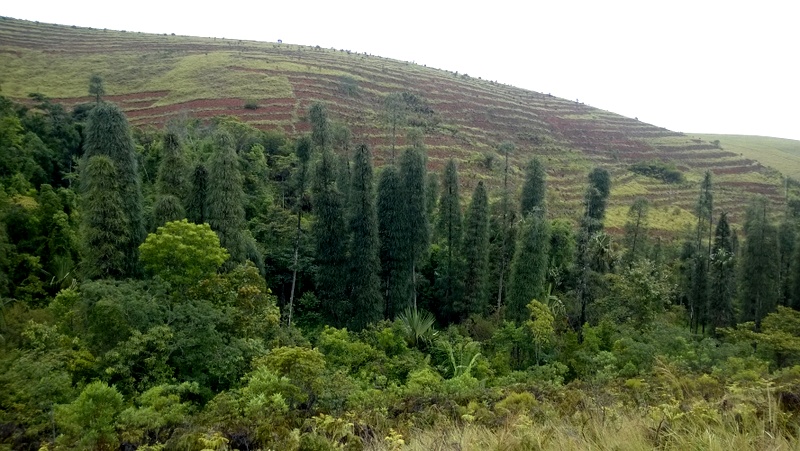
    Ankafobe hillside with Schizolaena
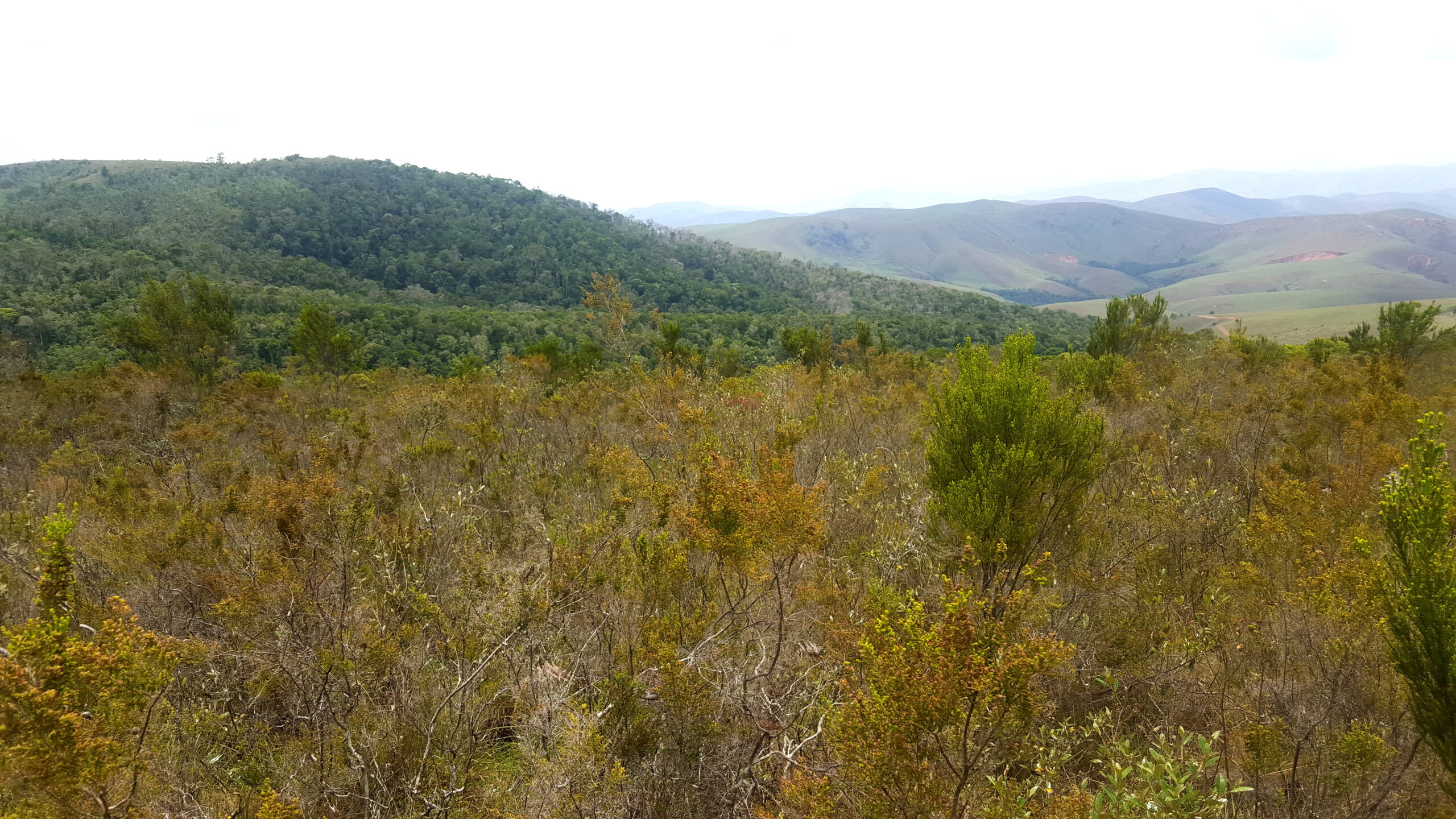
    A degraded hillside at Ankafobe; the remnant forest is down the hill to the right, near the edge of the photo. The tree at the top of the hill is Schizolaena tampoketsana, a critically endangered microendemic in an endemic Malagasy plant family (Sarcolaenaceae). It is a remnant forest tree that likely escaped repeated fires by being nestled in a deep, protective gully. The multi-stemmed shrub in the foreground is actually a large tree species, Brexia montana, which has likely resprouted many times from a well-developed root system.

    Some of our comparative observations were promising. We were happy to find examples at Ambohitantely where recovering land dominated by heather and blueberry seemed to have continued developing into a more diverse thicket, including Nuxia capitata, Psiadia altissima, and Razafimandimbisonia minor. At Ankafobe, we had worried that the heather growing in some areas signified poor soil conditions and possibly arrested development.

    Overall our visit left us with more questions than answers. We hope to answer at least a couple of them over the coming years.

    • Why is natural forest recovery so slow on the Central Highlands?
    • Has it always been this slow?
    • Are Malagasy tree species poor pioneers because of their long, relatively stable evolutionary ecological history?
    • Is there any way to make Malagasy trees grow any faster on the degraded grasslands?1
    • Are the fire-stoking C4 grasses introduced from east Africa rather than being native species?
    • If so, when?
    • Is the soil too far gone to ever recover?
    • How important were now-extinct seed dispersers and grazers, like 200-kg lemurs and elephant birds?
    Ambohitantely cloud cover
    Although Ambohitantely is the only remnant forest fragment of any size, we learned recently that it may not be a perfect reference system for Ankafobe. For one thing, Ambohitantely is slightly higher and farther east, which results in considerably greater cloud cover during the dry season. This probably ameliorates the harsh conditions outside of the forest, at least a little. Shown here is cloud frequency from May – October, taken from NOAA MODIS satellite imagery. Thanks, Michael Douglas!

    References

    Goodman, S.M. & Jungers, W.L. 2014. Extinct Madagascar: Picturing the Island’s Past. University of Chicago Press, Chicago, IL.

    Pareliussen, I., Olsson, E.G.A. & Armbruster, W.S. 2006. Factors Limiting the Survival of Native Tree Seedlings Used in Conservation Efforts at the Edges of Forest Fragments in Upland Madagascar. Restoration Ecology 14: 196-203.

    1Two datasets (one from our team and one from Pareliussen et al’s [2006]) suggest that NPK fertilizer, even in relatively small doses, reduces native tree seedling performance. It is unclear whether this is because of toxicity (a direct effect) or because other plants, like shrubs, are better able to utilize the nutrient pulse and then compete more strongly against the native tree seedlings (an indirect effect).

  • El Niño’d: tropical field research when climate won’t sit still

    El Niño’d: tropical field research when climate won’t sit still

    Steve Roels is a PhD candidate in the Department of Integrative Biology at Michigan State University. His research asks how trophic cascades interact with tropical forest restoration. When not in Panama, he enjoys documenting biodiversity and restoring native vegetation on his own 6.2 acres of Michigan.

    Tropical field biology has a lot of uncertainty built into it. The scientific community is still barely scratching the surface of tropical biodiversity and the immense complexity of biotic interactions (relationships between organisms). Biologists, myself included, often get lulled into thinking of the tropical climate as a stable abiotic backdrop that lies behind the great drama of biotic interactions. But what happens when those abiotic conditions change abruptly and dramatically?

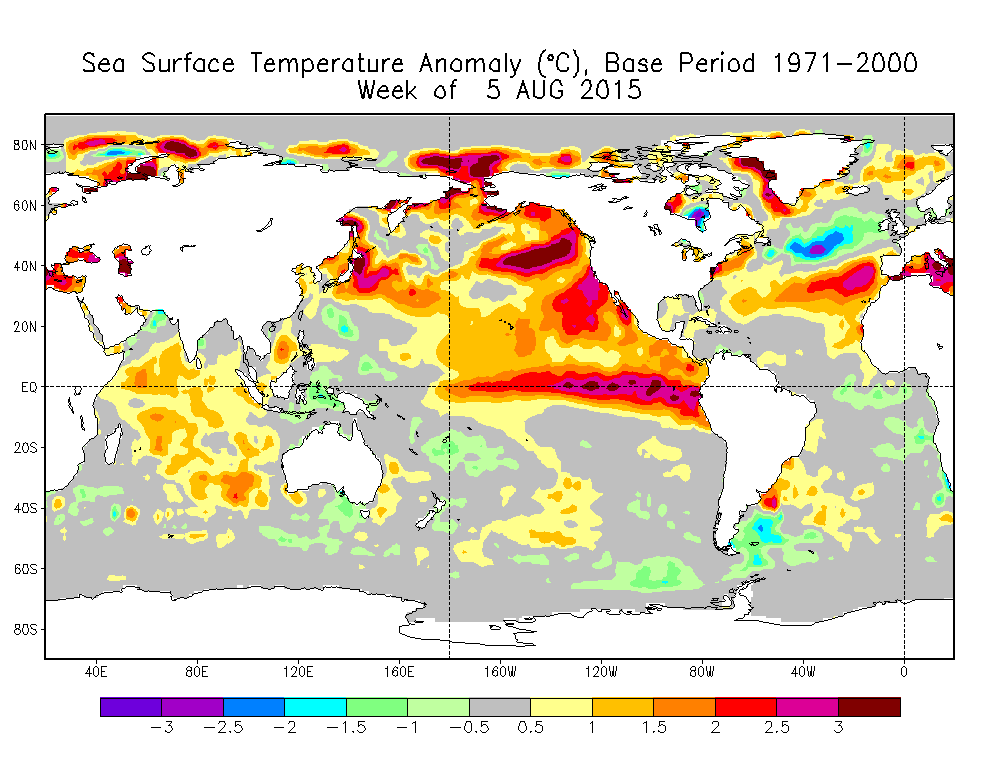
    The current El Niño event in the Pacific is now regarded by meteorologists as one of, if not the, strongest El Niño events ever recorded. The North American media understandably focuses on how El Niños affect our continent; usually wetter West Coast winters and dryer, warmer Midwest winters. What many North Americans don’t realize is that El Niño events have their most profound effects on Pacific countries in the tropics.

    El Niños are one extreme of a much larger climate pattern, the Southern Oscillation. The El Niño-Southern Oscillation (ENSO) is an erratic seesaw of Pacific surface water temperatures from warm to cool (La Niña events) and back again. Temperature swings from one extreme to the other occur every few years (on average about 5) and “the switch” is often flipped very abruptly, shifting ocean currents, air pressure, and precipitation throughout the eastern Pacific. It is important to keep in mind that ENSO events are not “bad” per se, just different, and that creates biological winners and losers.

    1
    Strong El Niño conditions in the eastern Pacific during my field season. Image from: www.ncdc.noaa.gov.

    In central Panama, where I research bird communities in forest restorations, El Niño conditions generally bring warm coastal waters and drought. I say “generally” because each El Niño is like a snowflake—there are some basic patterns, but every event is unique. This El Niño is sticking to the pattern: central Panama is currently experiencing a severe drought and creating headaches for many of my colleagues at the Smithsonian Tropical Research Institute (STRI). The drought has played havoc with the frog biologists, who are waiting for mating frogs, who have, in turn, often been waiting for rain. Coral researchers are scrambling as abnormally warm waters cause coral bleaching. However, some scientists view this El Niño as an opportunity because it could be considered a proxy for future climate. The El Niño is compounding the warming effects of global climate change, putting 2015 on track to be the warmest year on record. A friend of mine who studies tree physiology and water use in forest restorations says she is getting great data. After all, a key challenge for restoration ecology is deciding what we restore to. An ecosystem that tries to match what was formerly present? Or one that will continue to thrive in an uncertain future?

    2
    The Agua Salud restoration site. The blocks of vegetation in the landscape are different experimental tree planting treatments. Lake Gatun, part of the Panama Canal, lies in the haze on the horizon. Lake levels are anticipated to drop to record lows this dry season.

    The effects of current El Niño on my own research are difficult to assess. I study trophic cascades (basically, ripples in food webs) at STRI’s Agua Salud forest restoration project, especially focusing on birds, insects, and trees. I conducted an experiment this past July-August, which is normally the heart of the wet season, but was instead a historic drought. How this drought effected tree growth, insect populations, and bird behavior—all components of my study—is hard to say. Prior research on ENSO effects on trophic relationships is limited (it’s hard to plan research around an unpredictable and irregular event!) but some long-term studies have found large ENSO effects on food webs in Panama and Chile.

    When I returned to the United States after my field season and talked with my research advisor about the uncertainty the El Niño brought to my study, she said, “You’re going to hate me for saying it…” I replied, “I already know what you’re going to say.” Maybe I need to do the experiment again next year.

  • Monitoring epiphyte colonization in Costa Rican forest restoration

    Monitoring epiphyte colonization in Costa Rican forest restoration

    Leighton Reid and Miguel Chaves are investigating how tropical forest restoration influences plant diversity. Leighton is a postdoctoral fellow in the Center for Conservation and Sustainable Development. Miguel is a doctoral student at University of Missouri Saint Louis.

    Epiphytes are plants that live non-parasitically on other plants. That is, they grow on the trunk or branches of another plant (often a tree) without extracting nutrients from it, as mistletoes do. In Missouri, one example is the resurrection fern (Pleopeltis polypodioides), an epiphyte famous for its ability to re-green after lengthy desiccation.

    In tropical forests, epiphytes are much more diverse. Science writers commonly use the word “festooned” to describe the profuse growth of aroids, bromeliads, ferns, and especially orchids on tropical trees. In certain places, epiphytes can make up as much as 50% of a forest’s vascular plant species.

    We were curious about how ecological restoration influences epiphyte communities, so over the summer Miguel Chaves worked with local conservationist Juan Abel Rosales and botanist Federico Oviedo to survey the vascular epiphyte composition and abundance on 1086 trees growing in thirteen restoration sites in southern Costa Rica. They found about one hundred species, several of which are depicted below.

    This fall, we are analyzing these data to learn about how tree planting influences epiphyte community assembly compared to natural forest regeneration. In particular, we hope to shed light on two questions:

    (1) To what degree does tree planting facilitate epiphyte recovery?

    (2) At what spatial scale does local forest restoration interact with landscape context to influence epiphyte recolonization?

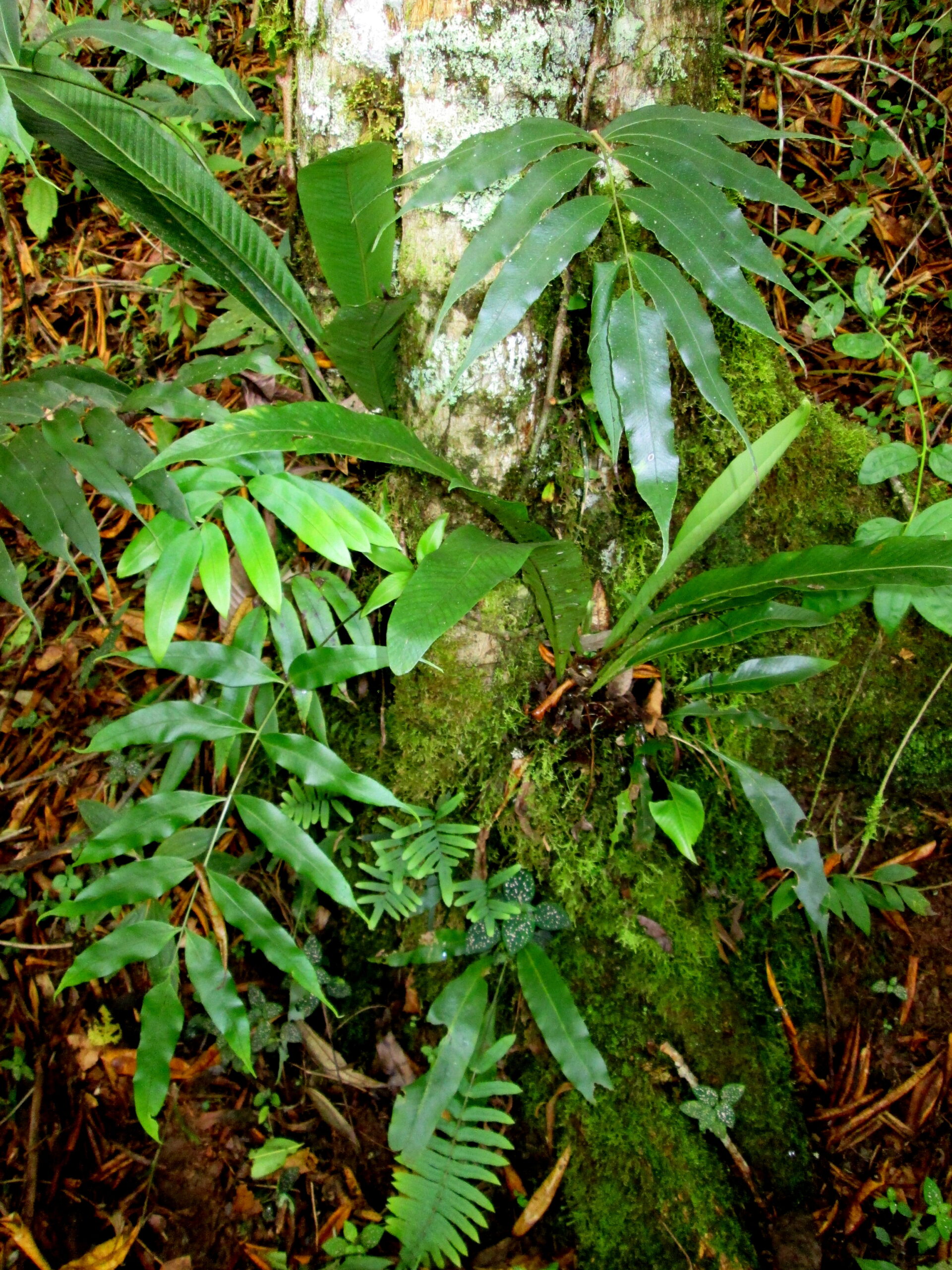
    The base of this poro tree (Erythrina poeppigiana) has sufficient ferns to warrant the descriptor “festooned”. Ferns visible in this photograph include: Niphidium crassifolium, Serpocaulon fraxinifolium, Serpocaulon dissimile and Polypodium dulce.
    The base of this poro tree (Erythrina poeppigiana) has sufficient ferns to warrant the descriptor “festooned”. Ferns visible in this photograph include: Niphidium crassifolium, Serpocaulon fraxinifolium, Serpocaulon dissimile and Polypodium dulce.
    A showy orchid (Dichaea cryptarrhena) hangs from a mossy bed below two bromeliads.
    A showy orchid (Dichaea cryptarrhena) hangs from a mossy bed below two bromeliads.
    An inflorescence of Drymonia macrantha (Gesneriaceae).
    An inflorescence of Drymonia macrantha (Gesneriaceae).
    Miguel and Juan Abel at work next to a particularly good-looking bromeliad (Guzmania zahnii). Photo by Karen Holl.
    Miguel and Juan Abel at work next to a particularly good-looking bromeliad (Guzmania zahnii). Photo by Karen Holl.
    Many of the epiphytes that Miguel and Juan Abel observed were flowerless seedlings, like this Gongora armeniaca.
    Many of the epiphytes that Miguel and Juan Abel observed were flowerless seedlings, like this Gongora armeniaca (Orchidaceae).
  • Transplanted bromeliads improve microclimate and facilitate arthropods in restored forests

    Transplanted bromeliads improve microclimate and facilitate arthropods in restored forests

    Estefania Fernandez is a masters student at the University of Montpellier, France. She spent the past six months working with scientists in the Center for Conservation and Sustainable Development on a tropical forest restoration experiment in southern Costa Rica.

    Costa Rica is one of the world’s most biodiverse countries, hosting 4% of flowering plant species in an area representing only 0.03% of the Earth’s terrestrial surface. With a large diversity of ecosystems, ranging from mangroves to cloud forests, Costa Rica hosts a unique family of (almost exclusively) Neotropical plants: the Bromeliaceae, commonly called bromeliads. With their colorful inflorescences and strikingly patterned leaves, numerous bromeliads are cultivated around the world for their ornamental value. Less is known, however, about their ecology in tropical ecosystems, particularly in regenerating forests.

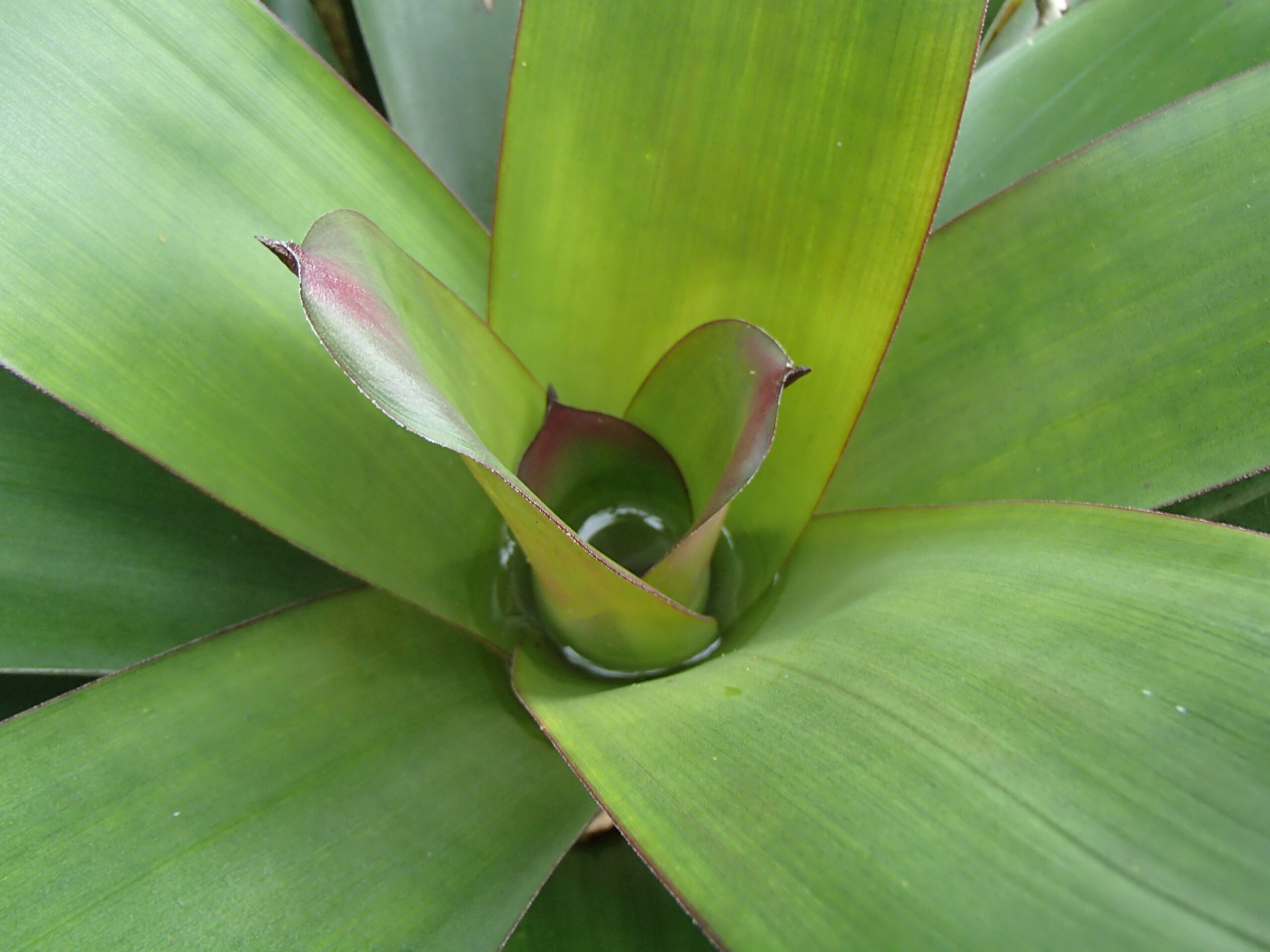
    Werauhia gladioliflora rosette, showing its overlapping leaves.
    Werauhia gladioliflora rosette, showing its overlapping leaves.

    Many of the so-called “tank bromeliads” are epiphytes, meaning that they grow non-parasitically on other plants. These bromeliads have ample rosettes of overlapping leaves, capable of holding considerable amounts of water. These water tanks keep them hydrated, and plant detritus that accumulates in these structures also provides bromeliads with nutrients. Arthropods take refuge in bromeliad rosettes, and consequently these plants attract mammals and birds seeking prey. Mutualistic ants build their nests in bromeliad rhizospheres, or root zones, and frogs lay eggs in the tanks. When sufficiently numerous in tree canopies, bromeliads can stabilize local temperature and humidity.

    Water stored inside a W. gladioliflora tank.
    Water stored inside a W. gladioliflora tank. (Photo courtesy of Dave Janas)

    Despite these important ecological roles, vascular epiphytes like bromeliads are often scarce in regenerating tropical forests. Their recovery could be slowed by limited seed dispersal or by a lack of suitable recruitment sites. One way to overcome dispersal limitation is to transplant individuals. In our study area in southern Costa Rica, transplanting bromeliads is relatively simple because they are easily found on fallen tree branches in the old growth forest reserve at Las Cruces Biological Station. We hypothesized that transplanting bromeliads from the old growth forest into 10-year old forest restoration sites would buffer local temperatures and increase arthropod abundance and diversity compared to bare, control branches.

    Measuring local temperature in a transplanted Aechmea dactylina.
    Measuring local temperature in a transplanted Aechmea dactylina.

    To test our hypothesis, we transplanted 120 bromeliads into three restoration sites in southern Costa Rica. The restoration sites are part of the Islas Project, an NSF-funded restoration experiment led by Drs. Karen Holl and Rakan Zahawi. Bromeliads were sterilized and attached to tree branches in the restoration sites with twine. Each day, we measured the microsite temperature on branches with and without transplanted bromeliads, as well as ambient temperature in the nearby air. To characterize arthropod colonization, we extracted and identified arthropods (to order) from transplanted bromeliads after two and three weeks.

    We found that transplanted bromeliads decreased local temperatures on tree branches, creating a less stressful microclimate for other organisms. Bromeliads also facilitated arthropods; transplanted bromeliads were quickly colonized, especially by ants. We also observed small frogs inside of some bromeliad tanks, but none on the bare branches where we did not transplant bromeliads.

    We found this frog (Craugastor stejnegerianus) in a small  Catopsis sessiliflora tank. (Photo courtesy of Dave Janas)
    We found this frog (Craugastor stejnegerianus) in a small Catopsis sessiliflora tank. (Photo courtesy of Dave Janas)

    Our observations suggest that bromeliad transplantation can buffer microclimates and create useful structures for invertebrates. If so, this method could improve restoration outcomes for canopy flora and fauna. Given that this experiment was conducted over a single field season, it is still an open question whether transplanted bromeliads will survive over longer time periods. It will also be important to learn whether transplanted bromeliads will facilitate colonization by other epiphytic plants. We did find some evidence of this as ferns were already growing in several bromeliads’ rhizospheres after two months.

  • Galápagos: A Restoration Reference for Arid Archipelagos?

    Galápagos: A Restoration Reference for Arid Archipelagos?

    Leighton Reid, a postdoctoral fellow in the Center for Conservation and Sustainable Development, reflects on tortoises, tree cacti, and ecological isolation.

    The Galápagos is the world’s most pristine tropical archipelago, and it is utterly unique. Nearly the entire island group is a national park, and 200,000 visitors per year come to witness its ecological singularities ‒ things like penguins and iguanas swimming side-by-side through a mangrove lagoon. The archipelago consists of fourteen large, volcanic islands and over a hundred smaller rocks and islets. Most of the land surface is low and dry. The easternmost island is about 900 km from mainland Ecuador, which is a probable source for the organisms that first began to colonize Galápagos when its volcanic peaks surfaced above the Pacific five million years ago. Indeed, the islands’ ecology is characterized by their isolation. Each island contains a relatively low diversity of organisms, many of which are unafraid of large primates. The biotas’ ecological simplicity and naiveté have facilitated major scientific discoveries, such as that small, heritable variations can have life or death consequences for individuals and ultimately change populations.

    One of the more bizarre life forms on Galápagos is the tree cactus. Prickly pear cacti (Opuntia species) are not particularly rare in the western hemisphere. In the United States, for instance, they occur in every state except Alaska. But over millions of years in Galápagos they have become quite varied. Some grow low to the ground, like the familiar continental forms, whereas others grow as trees, towering up to 15 m above the ground. The first botanist to speculate on this phenomenon was Alban Stewart (1911), a scientist-sailor with the California Academy of Science. He noted that erect, tree cacti tended to grow on islands that also housed another over-sized organism – the Galápagos tortoise (Chelonoidis nigra). Galápagos tortoises eat the fleshy cactus pads, which contain water – a limiting resource in arid environments. Stewart posited that the pressure from tortoises craning their long necks upward to munch cactus pads may have favored taller cacti.

    Opuntia echios var. barringtonensis is one of the taller tree cacti, presumably made that way by pad depredation by giant tortoises over many generations.
    Opuntia echios var. barringtonensis is one of the taller tree cacti, presumably made that way by pad depredation by giant tortoises over many generations.
    A low-growing cactus (Opuntia echios var. zacona) growing on Seymour Norte, an island that historically had no tortoises or iguanas. Herbivore pressure is visible here; an introduced land iguana (Conolophus subcristatus) has been taking bites from the lowest pads.
    A low-growing cactus (Opuntia echios var. zacona) growing on Seymour Norte, an island that historically had no tortoises or iguanas. Herbivore pressure is visible here; an introduced land iguana (Conolophus subcristatus) has been taking bites from the lowest pads.

    The relationship between tortoises and cacti was thrown into disarray after the Galápagos were discovered (accidentally) by Panamanian Bishop Tomás de Berlanga in 1535. By the late 19th Century, pirates and whalers removed thousands of tortoises from the islands, stowing the living animals in their holds as fresh meat for their long Pacific voyages. Eventually, overharvesting extirpated tortoises from several of the islands, with rippling effects on the rest of the ecosystem. Even where tortoises survived, they were often unable to reproduce because their offspring were eaten by introduced, European rats. Tree cacti were among the hardest hit; tortoise decimation stripped these plants of their main seed disperser.

    Reintroduced giant tortoise in the littoral zone on Isabela Island.
    Reintroduced giant tortoise in the littoral zone on Isabela Island.

    In response to tortoise declines, the Charles Darwin Foundation and the Galápagos National Park Service began a captive breeding program on Santa Cruz Island. Since 1965 they have raised and repatriated thousands of tortoises to several islands, waiting to release them until the tortoises have gotten big enough to be “rat proof”. By and large the reintroductions have been successful. On Española Island, for example, tortoise populations had crashed to fifteen individuals in 1960, but by 2007 more than 1500 individuals had been repatriated, and the population appeared stable. Moreover, these reintroduced tortoises reinitiated seed dispersal for an endangered tree cactus (Opuntia megasperma var. megasperma), increasing the number of juvenile plants.

    In addition to species reintroductions, ecological restoration in Galápagos has often entailed species eradications. Isolation historically shaped Galápagos ecology; nine hundred miles is a long way for a snake or a lizard to float on a vegetation raft. But Galápagos’s isolation was compromised by seafaring humans, who facilitated island colonization by domesticated animals and hundreds of plant species. Goats have been among the worst invaders. Until recently, goats overgrazed the islands’ vegetation, converting it into habitat unsuitable for native species. One of the most ambitious restoration projects in Galápagos has been eradicating goats from the archipelago. On the largest island, Isabela, more than 140,000 goats were killed in 2004-2005 using unconventional restoration tools, including helicopters, AR15 rifles, and Mata Hari goats – sterilized female goats induced into long-term estrus and fitted with radio telemetry collars to root out the last hold-outs. Goat eradication has resulted in spontaneous vegetation recovery. In addition to goats, the Charles Darwin Foundation and the Galápagos National Park Service have also eradicated eight exotic plant species. Other species will be harder to get rid of, like rats, guava, blackberry, and domestic cats.

    Despite its one-of-a-kind nature, can the world’s most pristine tropical archipelago serve as a reference for other arid, tropical islands? That is, can we evaluate the success of other island restorations by comparing them to the relatively intact Galápagos’s ecosystem structure, function, and composition? Perhaps to some extent we can. Historical contingency leads to unique island assemblages (for example: giant tortoises in Galápagos, giant skinks in Cabo Verde, giant lizards in Komodo), but many islands may be characterized by their lack of functional redundancy. In other words, if you remove a species from an island, the ecosystem consequences may be greater than if you had removed a species from a more diverse mainland ecosystem. Additionally, plant restoration in the arid Galápagos suggests that when disturbances are removed, vegetation can recover rapidly. This may also be true of other oceanic archipelagos, whose plants and animals have already colonized difficult terrain from a long way away.

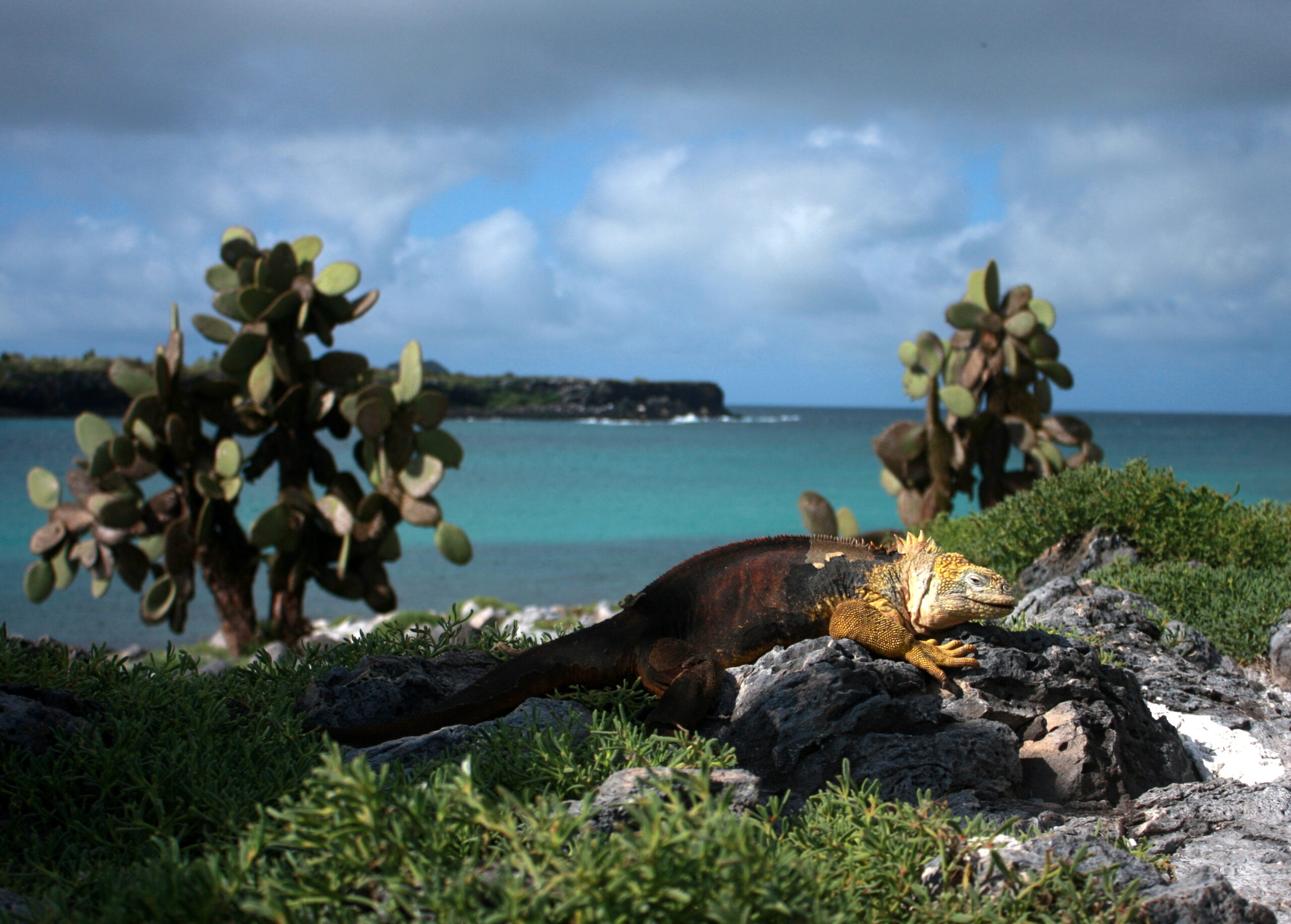
    Land iguana and tree cacti (Opuntia echios var. echios) on Plaza Sur Island.
    Land iguana and tree cacti (Opuntia echios var. echios) on Plaza Sur Island.
  • Drones can help monitor forest restoration

    Leighton Reid is a postdoctoral fellow in the Center for Conservation and Sustainable Development.

    Hexacopter flying over a restoration site. The red, digital camera is visible between the landing bars.
    Hexacopter flying over a restoration site. The red, digital camera is visible between the landing bars.

    Monitoring restoration projects is important to demonstrate progress and learn what works and what doesn’t, but it can be time consuming and expensive. As such, restoration practitioners around the world are looking to automate tasks like monitoring, and one way this can be done is with unmanned aerial vehicles, or drones.

    Over the past two years I’ve worked with a research team in southern Costa Rica to test how well drones can monitor tropical forest restoration. We used hexacopter drones: helicopter-like contraptions with six rotors. Each drone had a consumer-grade digital camera attached to the bottom. We flew the drones over thirteen restoration sites and then used Ecosynth computer software to stitch the images together and create three-dimensional models of the vegetation structure.

    Drones accurately estimated forest structure

    Drone-based measurements of canopy height closely matched our hard-won field measurements (but with less sweat and insect bites). The drone-based system also detected canopy gaps, predicted fruit-eating bird movements, and estimated above ground biomass. The ability to accurately assess above ground biomass is particularly important; it suggests that drones could be used to monitor carbon accumulation in regenerating forests.

    Editors’ choice – a must read

    Our research on drones and forest restoration was published this week in the journal Biological Conservation. The editors selected it as the must-read choice of the month, saying:

    “The rapidly expanding use of unmanned vehicles to monitor vegetation and other aspects of biodiversity is an exciting development in conservation biology. This article also demonstrates that bird abundance can be estimated using data gathered by UAVs.”

    The paper is freely available for download through August 27, 2015 at the publisher’s website.

    Researchers Jonathan Dandois and Dana Nadwodny launch a drone at a site in Costa Rica [Photo courtesy of Karen Holl].
    Researchers Jonathan Dandois and Dana Nadwodny (University of Maryland Baltimore County) launch a drone at a site in Costa Rica [Photo courtesy of Karen Holl].
  • Can fungus help grow trees in Madagascar?

    Can fungus help grow trees in Madagascar?

    Thomas Timberlake and Cyprien Miandrimanana write from Madagascar about a field experiment using fungus to help tree seedlings survive.

    One of the problems that has long bedeviled ecological restoration efforts in Madagascar is persuading young seedlings to grow at a pace of more than just a few centimetres per year. The site of Ankafobe in the central highlands is a prime example, with many five year old individuals, planted in the anthropogenic grassland surrounding the remaining forest fragments, still no taller than waist height. Clearly, the environment into which the seedlings are planted is in some way inhospitable.  One hypothesis to explain seedling underperformance  is that they are not managing to establish their normal symbiotic relationships with vesicular arbuscular mycorrhizae (VAM) fungi on which most higher plants depend.

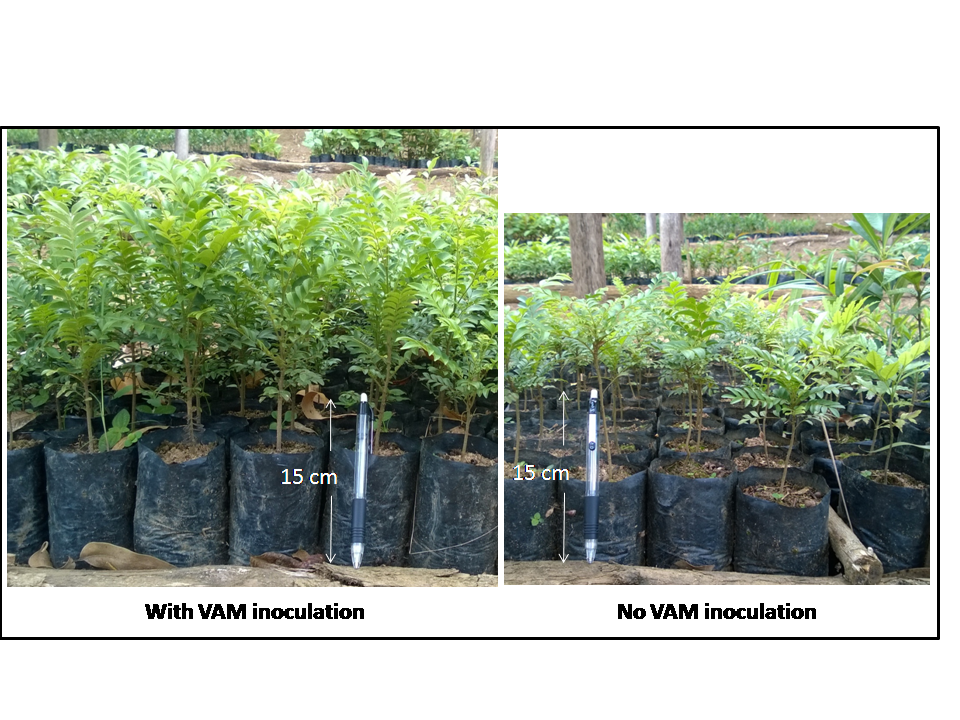
    Scaled visual comparison of VAM and VAM-less seedlings at Mitsinjo in Andasibe, Madagascar.
    Scaled visual comparison of VAM and VAM-less seedlings at Mitsinjo in Andasibe, Madagascar.

    In a VAM symbiosis, plants exchange a significant carbohydrate donation to the fungus in return for important nutrients, particularly phosphorus, and often increased drought tolerance. So if mycorrhizae propagules are absent in the savanna soil, this could well explain the slow growth rates and high mortality observed among planted tree seedlings at sites like Ankafobe.

    In response to concern about poor seedling performance, various restoration projects in Madagascar have begun inoculating their nursery seedlings with VAM using a simple protocol pioneered by Mitsinjo, a restoration project in the eastern rain forest of Andasibe. Soil (presumed to contain mycorrhizal fungus) is gathered from underneath forest trees, mixed with sand in a sack-lined pit and then sown with rice and beans to act as hosts for the developing VAM. After three months of maturation, you have a sack-full of VAM inoculum, ready to be applied to the young germinating seedlings – one teaspoon per plant.

    Many groups in Madagascar swear by the VAM protocol and the visual results can be compelling, but as yet there have been no experiments in the country to rigorously test whether this method is actually effective. This lack of clear evidence is what prompted us to work on a series of experiments testing and perhaps refining the VAM protocol.

    We planted 480 native tree seedlings with and without VAM inoculation to test whether this method increases seedling survival and growth in the degraded savanna around Ankafobe. Digging into the solid laterite and planting the experimental seedlings was hard work but our efforts were rewarded one day with the sighting of a family of 10 young Tenrecs (Tenrec ecaudatus) who ventured bravely out of the security of the forest to observe the progress.

    Planting complete, we took our “Time Zero” measurements and then a small sample of roots from both VAM and control seedlings to return to Antananarivo and check for the presence of mycorrhizae vesicles. The process of staining involved cooking up some rather nasty chemicals in our improvised laboratory – the kitchen – back in Tana.

    Our next project will be to replicate our VAM study in Ananalava, a humid site on the east coast that contrasts with the drier climate of the Malagasy Highlands. Repeating our study in different environments will help generalize our results and recommendations for people working across this heterogeneous island.

    Cyprien in our kitchen laboratory preparing an improvised stain to look for VAM vesicles.
    Cyprien in our kitchen laboratory preparing an improvised stain to look for VAM vesicles.
  • A Tale of Two Highlands Part II: Ankafobe, Madagascar

    A Tale of Two Highlands Part II: Ankafobe, Madagascar

    Leighton Reid, James Aronson, and Chris Birkinshaw all contributed to this post on restoration in one of Missouri Botanical Garden’s community-based conservation sites in Madagascar. They are currently travelling together discussing opportunities for ecological restoration in MBG’s Madagascar Program and more generally for the country as a whole.

    Madagascar’s central highlands appear as a grassy sea – an undulating terrain with intermittent red gashes where heavy rain has dramatically eroded the landscape. Driving north along the national highway from the capital, Antananarivo, one sees Eucalpytus trees growing near villages, as fuel and firewood plantations, but there is almost no natural forest. The few natural communities that remain represent vestiges of a former world.

    The view across the road from Ankafobe - nearly unbroken grassland.
    The view across the road from Ankafobe – nearly unbroken grassland.

    Our destination today is one such vestige – the Ankafobe reserve. Ankafobe is a tiny (33 hectare) strip of native forest growing near the headwaters of a highland stream. Water-loving Pandanus trees demarcate the stream bed and provide fruits for several lemur species. A Souimanga Sunbird (Cinnyris sovimanga) flitters from tree to tree. Just outside of the forest, highly flammable grassland stretches to every horizon.

    Pandanus spikes stand out in this thin patch of gallery forest at Ankafobe.
    Fragmented gallery forest at Ankafobe. Spikey Pandanus demarcate the streambed. Red strips in the background are incipient forest restoration plots, where the soil has been turned over prior to planting nitrogen-fixing shrubs and native trees.

    MBG staff and local villagers are working to restore forest on these bare hills, but it is not an easy task. Between clumps of grass is baked, orange laterite – rock hard soil bereft of life and nutrients. Tree seedlings planted in it grow slowly, or not at all. To improve seedling growth, MBG scientists are testing several strategies. One method is to turn over the soil and seed hearty legumes, whose symbiotic bacteria replenish soil nitrogen – a key ingredient in DNA.

    Last October, a wildfire jumped the double fire breaks surrounding Ankafobe and burned a piece of the forest. Two hundred people from the local village (with a population of 600) voluntarily and spontaneously fought the fire for three days. Their impressive response minimized damage to this small forest and raised hopes and excitement about working together on conservation going forward.

    The wildfire highlighted this forest fragment’s vulnerability, but it also provided a unique opportunity to observe the response to fire by a natural biotic community that has almost disappeared from the world. A number of trees were completely burned up that had been growing in the savannah just outside of the forest. Unexpectedly, several of these resprouted from their base and from superficial roots at some distance from the main stem. Nearby, the burned grassland bloomed an interesting  array of geophytic plants – particularly orchids – that were rarely observed in unburned grassland. These observations seem to support the hypothesis that at least part of the highland flora may be adapted to fire – a controversial idea that complicates the already challenging task of managing Ankafobe.

    Ankafobe is a rare gem; a green emerald that stands out from the surrounding countryside and supports at least one species found almost nowhere else. The reserve is also a special opportunity for ecological restoration. Hard-won lessons from this site could eventually be used to restore tens of thousands of square miles of Madagascar’s central highlands.

    Chris Birkinshaw (center) and the Ankafobe restoration team after a rainy afternoon in the field.
    Chris Birkinshaw (center) and the Ankafobe restoration team after a rainy afternoon in the field.