In their third report from arid Australia, James and Thibaud Aronson discuss some of the serious issues facing conservationists and restorationists.
Concerning the non-native animals in Australia, the general consensus today is that eradication is impossible: the only option that remains is control, in the form of fences or culling, or both. Yet, conflicts of opinion on the ethics of culling abound, even for the armies of feral cats that reportedly kill 75 million native animals every single night. Even fences have their pros and cons, in particular the interruption of the migration of thousands of emus.
Western Australia’s State Barrier Fence, 1170 km long, meant to control dingoes, dogs, foxes and other feral animals, with varying degrees of success.
Both feral cats and foxes are most lethal in areas with relatively little vegetation cover, that is, the massive dry interior of the continent. This is compounded by the monster fires that have plagued Australia since European settlement. A single such fire can burn down hundreds of thousands of hectares, leaving small mammals and other animals with nowhere to hide.
Even this rather small fire, which spared the trees (their dead appearance is deceptive; these trees will resprout), has almost entirely eliminated all low vegetation, leaving small animals vulnerable to cats and foxes. West MacDonnell National Park, Northern Territory.
What’s more, as mentioned in our previous blogpost, most land managers continue to burn on an annual basis without sufficient attention to the impact on animals and indeed many plants. Things are changing though.
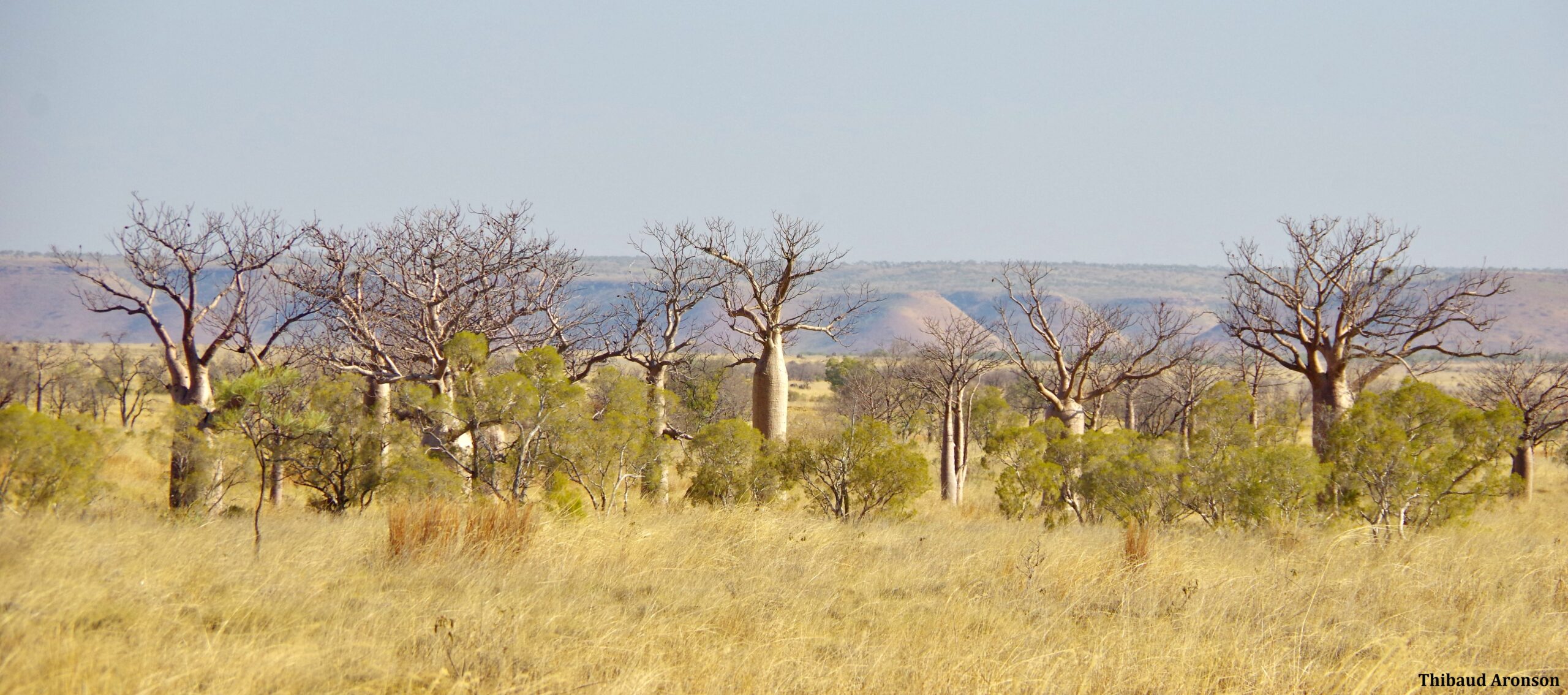
In the seasonally dry, tropical Kimberley region, in the northwest, the Australian Wildlife Conservancy, or AWC, is testing new methods, focusing on patchy prescribed burning in the early dry season, and controlling cattle grazing. They are having good results with this approach in preserving more plant cover for small native animals and thereby reducing the lethal impact of feral cats. The AWC has also shown that their fire management techniques are not only beneficial for native animals, but also for pasture quality, and would therefore benefit pastoralists, whom Australians call graziers. Since most landowners in the area are graziers, let’s hope they will follow suit and try new fire management regimes. It is in this region, by the way, that occurs the endemic baobab of Australia, known here as Boab. To our surprise there are thousands of them, in a wide range of habitats. Some are estimated to be well over 1000 years old. Survival of this tree, at least, is clearly not threatened by fire or foxes, even if other problems – such as climate change – do exist. Let’s hope they go on thriving for another 1000 years.
A typical landscape of the Kimberley, dominated by the majestic boabs (Adansonia gregorii). King Leopold Ranges Conservation Park.
Another reason invoked for the proliferation of cats and foxes in Australia is the virtual absence of top predators to control them. This phenomenon, called meso-predator release, is also found in North America, where coyotes have greatly expanded following the extirpation of wolves throughout large portions of the continent. Therefore, some have suggested that allowing dingoes to maintain higher population numbers would have a significant effect on controlling cats and foxes. However, dingoes are still considered pests by pastoralists, and large amounts of money go into controlling them.
And that’s not the last of it. In the last 200 years, people have also introduced many exotic plant species, some of which have become terrible weeds, such as buffel grass (Cenchrus ciliaris) (see our previous blog post), but also Tamarix, Kutch (aka Bermuda grass, Cynodondactylon), Karroo thorn (Acacia horrida) and others. By 2009, the Commonwealth Scientific and Industrial Research Organisation (CSIRO) estimated that introduced invasive plants were costing the country 4 billion Australian dollars a year in weed control and lost agricultural production, and causing “serious damage to the environment”. With climate change, it seems possible that numerous “lurking” or “sleeper” weeds such as the White weeping broom, Retama raetam, may increase their ranges and their negative impacts.
Buffel grass presents a particularly severe problem – and like the cats, and dingoes, it is controversial. It was one of dozens of African grasses intentionally introduced by Australian agricultural researchers to “improve” pasture for cattle. Indeed cattle do like it, but the problem is that the grass spreads with amazing tenacity and crowds out native grasses, and all other groundstory plants where it invades, and, it carries fire like few other plants. Control is possible, but it is tedious and expensive and is never 100% effective at a large-scale. Furthermore, the ranchers prefer it to the native grasses, and their ideas on when and how to burn are very different from those concerned with conservation. Indeed, only few of the people we met envision stopping prescribed fire altogether.
For example, Peter Latz, a native of the Red Centre, plant ecologist, and author we met in Alice Springs, has been conducting manual removal of buffel and Kutch on his own land. But his main focus has been on excluding fire altogether, and achieving thereby pretty impressive results.
Peter Latz in his garden, next to the hemi-parasitic quandong tree (Santalum acuminatum). Alice Springs.
In our next blog post, we’ll talk about some of the other people and groups in arid and SW Australia undertaking serious steps towards restoration, while fully aware of the obstacles and the complexity of the challenge.
In this second report from arid Australia, James and Thibaud Aronson discuss the debated roles of fire, cattle and invasive mammals on the native fauna and flora.
To quote Gary Dinham, director of the Alice Springs Desert Park, “although the average annual rainfall in Alice Springs is just 270 mm, [9 in.], it’s erratic. For example, in 2009 the year’s total rainfall at Desert Park was 64 mm. In 2010, it was 990!”
Imagine, then, a vast region where almost no rain falls for several years, and then one year, a meter falls in two weeks, causing devastating floods. Despite the aridity, and the unpredictability, there are wooded areas in vast parts of inland Australia with annual rainfall comparable to that of Syria or Sudan! In fact, there is such a remarkable diversity of trees and shrubs, and indeed such extensive savanna or woodland tree cover, that it makes perfect sense to speak of desert canopies occurring there. However, that stunning first impression does not reveal how much the ecosystems and landscapes have been disturbed, especially in the past two centuries. How? Through severely altered fire regimes, overgrazing by domestic and feral herbivores, open-pit mining, and outrageous numbers of intentional and accidental introductions of exotic species of all sorts that really shouldn’t be there.
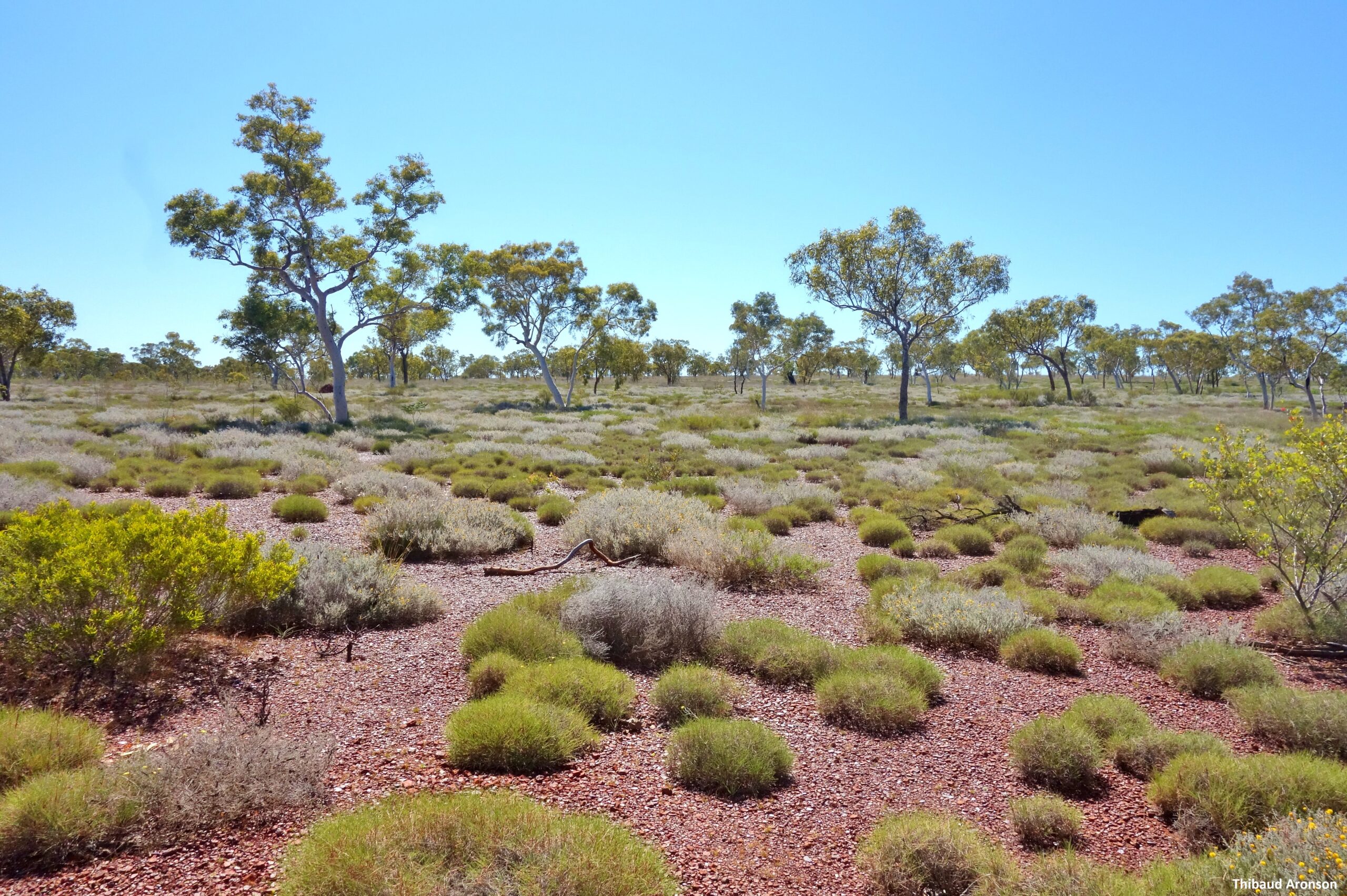
Open Eucalypt woodland with spinifex grass (Triodia spp.) dominated undergrowth. Karijini National Park, Western Australia.
Because of its inordinately high biomass, the Australian center burns – or gets burned – every year or every other year…. The 70 species of spinifex grasses present throughout the arid and semiarid areas are in fact some of the most flammable plants on the planet. But that’s just part of the story.
500 meters away from where the previous photo was taken, this spot had burned six months earlier. The Eucalypts display here the unusual feature of branches resprouting high in a tree with a completely burnt trunk. What makes this possible in some few trees – including the Mediterranean cork oak – is epicormic buds. Taking advantage of the pulse of nutrients released in the soil, annuals have germinated in profusion, and spinifex will come back too, a little slower.
Because European settlers stubbornly tried to import inappropriate farming and pastoral techniques into Australia’s arid center, with its poor soils and unpredictable rainfall, they overstocked and let their cattle roam essentially freely over vast areas. Under these conditions, certain grasses and shrubs are favored, and vegetation is much more fire-prone. this has led to a large increase in the frequency of monster fires, capable of burning vast areas within days or weeks.
Even today, most landowners with cattle in the outback burn their land every single year. Why? So as to reduce fuel load, as a matter of fact, in efforts – often unsuccessful, as we’ve just said – to reduce the risk of wildfires that might burn down their houses and other infrastructure. But they also are aiming to increase the amount of palatable grasses, including the introduced Buffel grass.
Buffel grass (Pennisetum cenchroides, more commonly known by its old name Cenchrus ciliaris) by a river, showing the worst of its invasive capability, crowding out all native understory species under the canopy of red river gums (Euc. camaldulensis). Hardey River, near Paraburdoo, Western Australia.
There is little doubt that this approach could be improved on, but the truly problematic point is whether or not the desert needs to burn. That debate ultimately is rooted in divergent interpretations of the past 100,000 years of Australia’s history.
It is generally agreed that humans arrived on the island continent approximately 50,000 years ago. What is unclear is what lasting impact the first immigrants had, and on what scale. The suggested date for their arrival roughly coincides with the extinction of all animal species weighing more than 100 kg, similar to what happened later in the Americas and even later in Madagascar. Therefore, some argue that humans must have driven the megafauna to extinction. Others say that Australia had been getting progressively hotter and drier for 20 to 50 thousand years prior to the arrival of humans, and that large animals could not cope with the new climate. If that’s true, at most the earliest Australians hunted out only tiny remnant populations of these large animals (including giant kangaroos, rhinoceros-sized wombats, a lizard twice the size of a Komodo dragon, giant turtles, marsupial lions, and some of the largest birds that ever lived on Earth).
Beaten only by the ostrich, the emu (Dromaius novaehollandiae) is the second largest living bird, standing as tall as an average person. However, it is small compared to the now extinct mihurung or thunder bird (Dromornis stirtoni), that was nearly twice its size and weighed half a ton!
Through the use of ‘fire-stick farming’ (the practice of setting fires in patches to stimulate new tender shoots on grasses and other plants, and thereby attract game), the Aborigines – according to some scholars – gradually transformed most of Australia’s landscapes from fire-sensitive thickets, woodlands, and forests, to spinifex grasslands and Eucalypt woodlands highly tolerant of this kind of fire regime.
Others counter that the earliest humans in Australia in fact stayed at low population densities until the arrival of Europeans and that their nomadic societies could not possibly have transformed landscapes at any meaningful scale. To date, no clear consensus has yet emerged.
What is beyond question is the enormous impact that Europeans have had since 1788, when the first English settlers drove in their tent pegs and set up corrals for their sheep and cattle. The introduced livestock were the first animals with cloven hooves ever to walk on Australian soil. As a direct result, the biocrust, that is the beneficial communities of lichens, mosses, and bacteria which form on undisturbed soils in many arid lands, and indeed the top profiles of the soils themselves were quickly eliminated.
European settlers also cleared vast areas of land for grazing and crop lands, and introduced rabbits, cats, foxes, rats, mice, donkeys, camels, and other exotic animals which have had horrific impact on small marsupials, birds, and reptiles of the island, not to mention the complex ecological networks and community dynamics in which those animals occurred. Sad to say, Australia has the worst record of any country for recent animal extinctions.
Unsupervised cattle at a waterhole. Cockatoo Creek, Willare, Western Australia.Cleared and overgrazed land on a cattle station in Western Australia. The ribbon of woodland in the background provides a reference for what the whole area once looked like.
Of the 60 mammal species that have gone extinct worldwide, in the last 200 years, 30 were Australian – and most inhabited the arid and semi-arid zone. Besides, a further 6 formerly widespread mammals are on the brink of extinction today, surviving only on handkerchief-sized, fenced off reserves or offshore islands inaccessible to feral cats and foxes.
While that is a terribly bleak legacy, promising steps are now being taken to limit the damage going forward, and ensure that the history of massive human-caused extinctions is not repeated. In our third and fourth blog posts from Australia we will discuss the obstacles to restoration, and then some of the encouraging endeavors underway.
James and Thibaud Aronson report from Australia, where they went to study desert trees and on-going restoration efforts.
Australia’s deserts are like no others, we found. For one thing, they have tree canopies galore and a range of habitat types that one would not expect when looking at the generally flat topography. And they are vast. Australia’s ‘dry country’ occupies 60% of its area, or more, depending on your sources, that is roughly 5 million square km (1.9 million sq mi) or over half the size of the continental US.
Map of Australia’s deserts. From Morton et al. (2011)
These huge regions stand on red or white sands with outcrops of granite, and other subtle but marvelous geomorphological jewels, and hide deep reserves of iron, copper, bauxite, uranium, and of course, gold. For two naturalists from the northern hemisphere, it’s like a candy shop: endless skies and landscapes, intriguing animals, and such an array of unique Gondwanan plants.
Very striking indeed was the remarkable diversity of trees in areas with less than 400 mm (12 in) mean annual rainfall, which is our rough and ready cutoff point for the book we are writing on dryland ecosystem restoration, with Edouard Le Floc’h. At present count, we will include at least 400 species of Australian trees, roughly a quarter of the total number of desert trees species, worldwide. But even more striking was the sheer amount of biomass in those trees and the extensive canopies they form, despite the infertile soils and highly unpredictable rainfall.
Eucalypts, the native cypress relative, Callitris sp., and the endemic tree cycad Macrozamia macdonnelii densely packed on rocky ridges. Standley Chasm, West MacDonnell National Park, Northern Territory.Remarkably dense woodland, away from water, in an area with 286 mm average annual rainfall. Serpentine Gorge, West MacDonnell National Park, Northern Territory.
There are few mountain ranges, perennial rivers, and drainage systems, and yet, regardless of the scale of observation, arid and semi-arid Australia is remarkably heterogeneous. These deserts are also host to a wide array of beautifully adapted animals, including the remarkable “roos”, which come in all shapes and sizes, the blue-tongued lizards, and many more.
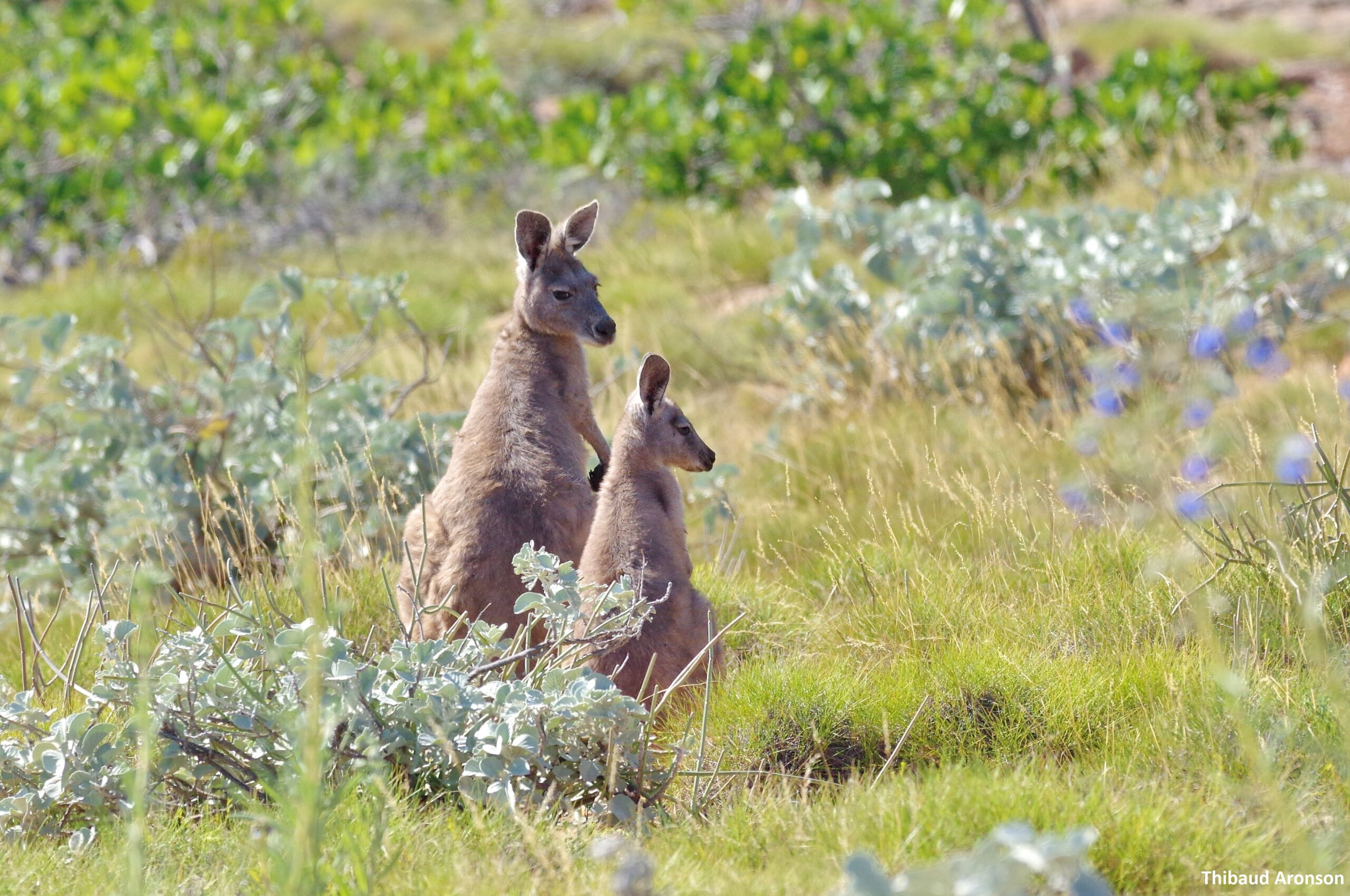
Two common wallaroos (Macropus robustus erubescens). Cape Range National Park, Western Australia.Spinifex pigeon (Geophaps plumifera). Karijini National Park, Western Australia.Bobtail blue-tongued skink (Tiliqua rugosa). Corackerup Reserve, Western Australia.Galah (Eolophus roseicapilla). This cockatoo is a nomadic inland species that has greatly increased its range as a result of human land use changes. Fraser Range station, Western Australia.
One of the key areas we visited was where the desert meets the South-Western Floristic Region, which has one of the highest plant diversities on the planet, and is the only biodiversity hotspot in Australia.
This area is characterized by a large number of granite outcrops which act as fire barriers and constitute highly diversified, humid habitats with mosses, ferns and other surprises. Most remarkably, they host a significant number of both terrestrial orchids and sundews, a type of carnivorous plant, two groups we’ve never seen in arid areas anywhere before.
One of the many sundews (Drosera aff. macrantha; fide K. Dixon) found in arid Australia. Kalbarri National Park, Western Australia.Spider orchid (Caladenia dimidia). Norseman, Western Australia.
This area is what Stephen Hopper – one of the most eminent plant scientists in Australia – calls an OCBIL , an acronym for Old, Climatically Buffered, Infertile Landscapes, describing the relatively few places on Earth that for a very long time have not been rejuvenated either by orogenesis – mountain formation – or glaciation. This leads to very poor, infertile soils. Southwestern Australia, is one such place, and one that is under threat as well, given the huge pressure from the mining industry, wheat growers, pastoralists, and a government administration that seems to only think short-term.
In our next post, we will discuss a defining, and problematic process of Australian desert ecology, namely fire.
Reference cited:
Morton S., Smith D.S., Dickman C., et al. 2011. A fresh framework for the ecology of arid Australia. J. Arid. Environ. 75:313–329.
Epiphytes are plants that live non-parasitically on other plants. That is, they grow on the trunk or branches of another plant (often a tree) without extracting nutrients from it, as mistletoes do. In Missouri, one example is the resurrection fern (Pleopeltis polypodioides), an epiphyte famous for its ability to re-green after lengthy desiccation.
In tropical forests, epiphytes are much more diverse. Science writers commonly use the word “festooned” to describe the profuse growth of aroids, bromeliads, ferns, and especially orchids on tropical trees. In certain places, epiphytes can make up as much as 50% of a forest’s vascular plant species.
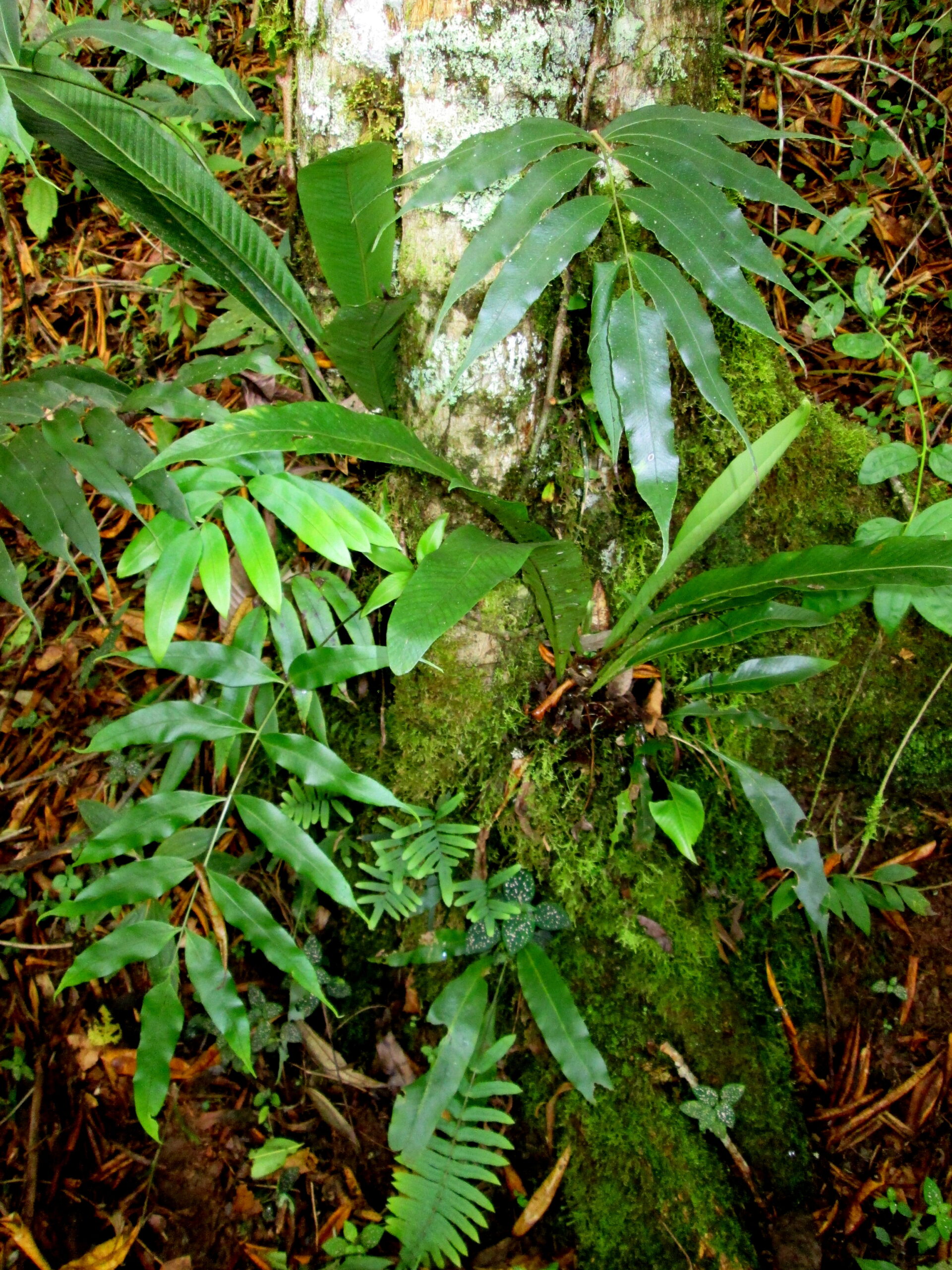
We were curious about how ecological restoration influences epiphyte communities, so over the summer Miguel Chaves worked with local conservationist Juan Abel Rosales and botanist Federico Oviedo to survey the vascular epiphyte composition and abundance on 1086 trees growing in thirteen restoration sites in southern Costa Rica. They found about one hundred species, several of which are depicted below.
This fall, we are analyzing these data to learn about how tree planting influences epiphyte community assembly compared to natural forest regeneration. In particular, we hope to shed light on two questions:
(1) To what degree does tree planting facilitate epiphyte recovery?
(2) At what spatial scale does local forest restoration interact with landscape context to influence epiphyte recolonization?
Plants that use other plants for support but also have roots in the ground are called “hemiepiphytes”.
These aroids (Monstera sp and Syngonium hastiferum) are secondary hemiepiphytes, that is, plants that begin life on the forest floor and climb upwards towards the light.
Many of the epiphytes that Miguel and Juan Abel observed were flowerless seedlings, like this Gongora armeniaca(Orchidaceae).
Estefania Fernandez is a masters student at the University of Montpellier, France. She spent the past six months working with scientists in the Center for Conservation and Sustainable Development on a tropical forest restoration experiment in southern Costa Rica.
Costa Rica is one of the world’s most biodiverse countries, hosting 4% of flowering plant species in an area representing only 0.03% of the Earth’s terrestrial surface. With a large diversity of ecosystems, ranging from mangroves to cloud forests, Costa Rica hosts a unique family of (almost exclusively) Neotropical plants: the Bromeliaceae, commonly called bromeliads. With their colorful inflorescences and strikingly patterned leaves, numerous bromeliads are cultivated around the world for their ornamental value. Less is known, however, about their ecology in tropical ecosystems, particularly in regenerating forests.
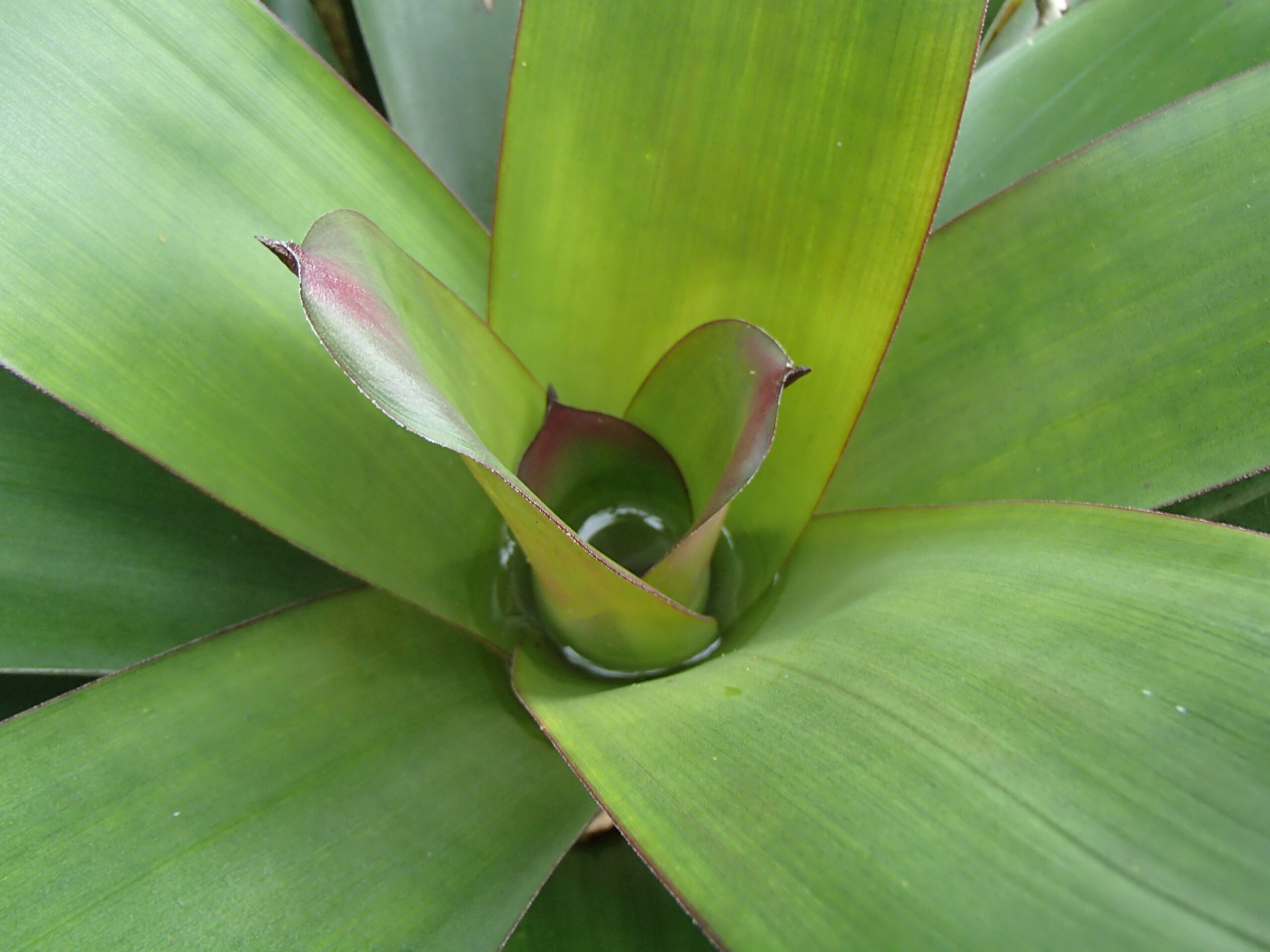
Werauhia gladioliflora rosette, showing its overlapping leaves.
Many of the so-called “tank bromeliads” are epiphytes, meaning that they grow non-parasitically on other plants. These bromeliads have ample rosettes of overlapping leaves, capable of holding considerable amounts of water. These water tanks keep them hydrated, and plant detritus that accumulates in these structures also provides bromeliads with nutrients. Arthropods take refuge in bromeliad rosettes, and consequently these plants attract mammals and birds seeking prey. Mutualistic ants build their nests in bromeliad rhizospheres, or root zones, and frogs lay eggs in the tanks. When sufficiently numerous in tree canopies, bromeliads can stabilize local temperature and humidity.
Water stored inside a W. gladioliflora tank. (Photo courtesy of Dave Janas)
Despite these important ecological roles, vascular epiphytes like bromeliads are often scarce in regenerating tropical forests. Their recovery could be slowed by limited seed dispersal or by a lack of suitable recruitment sites. One way to overcome dispersal limitation is to transplant individuals. In our study area in southern Costa Rica, transplanting bromeliads is relatively simple because they are easily found on fallen tree branches in the old growth forest reserve at Las Cruces Biological Station. We hypothesized that transplanting bromeliads from the old growth forest into 10-year old forest restoration sites would buffer local temperatures and increase arthropod abundance and diversity compared to bare, control branches.
Measuring local temperature in a transplanted Aechmea dactylina.
To test our hypothesis, we transplanted 120 bromeliads into three restoration sites in southern Costa Rica. The restoration sites are part of the Islas Project, an NSF-funded restoration experiment led by Drs. Karen Holl and Rakan Zahawi. Bromeliads were sterilized and attached to tree branches in the restoration sites with twine. Each day, we measured the microsite temperature on branches with and without transplanted bromeliads, as well as ambient temperature in the nearby air. To characterize arthropod colonization, we extracted and identified arthropods (to order) from transplanted bromeliads after two and three weeks.
We found that transplanted bromeliads decreased local temperatures on tree branches, creating a less stressful microclimate for other organisms. Bromeliads also facilitated arthropods; transplanted bromeliads were quickly colonized, especially by ants. We also observed small frogs inside of some bromeliad tanks, but none on the bare branches where we did not transplant bromeliads.
We found this frog (Craugastor stejnegerianus) in a small Catopsis sessiliflora tank. (Photo courtesy of Dave Janas)
Our observations suggest that bromeliad transplantation can buffer microclimates and create useful structures for invertebrates. If so, this method could improve restoration outcomes for canopy flora and fauna. Given that this experiment was conducted over a single field season, it is still an open question whether transplanted bromeliads will survive over longer time periods. It will also be important to learn whether transplanted bromeliads will facilitate colonization by other epiphytic plants. We did find some evidence of this as ferns were already growing in several bromeliads’ rhizospheres after two months.
Conservationists and ecologists have recently sought to restore an ecologically important tree, the Ozark chinquapin (Castanea ozarkensis), that became threatened not by the effects of clear-cutting, but instead due to an incurable parasitic fungus called chestnut blight (Chyphonectria parasitica). After devastating its cousin (American chestnut) in eastern forests, the fungal disease moved west and began infecting chinquapin trees in the Ozark and Ouachita Mountains. The blight is presumed to have been brought into the United States by accident in the early 1900s when Chinese chestnuts (C. mollissima) were imported into the country. What makes the Ozark chinquapin and the American chestnut so susceptible to the disease is that the fungus’ wind-borne ascospores can easily enter through small cavities in their bark where they then grow and spread to neighboring trees. The blight causes Ozark chinquapin trees to die back to the roots, from which multiple stems resprout to form a large shrub-like growth form. Once a widely dispersed canopy tree in upland Interior Highland forests, chinquapins declined in abundance and are now often found as multi-stemmed, blight-infected subcanopy shrubs.
Castanea ozarkensis seeds, with white radicles, from two maternal lines. One group’s seeds are twice the size of the others. Large seeds hold more resources, which can give seedlings a head start. But larger seeds also face a higher risk of being preyed upon by rodents.
Chinquapins were prized by many folks of the Ozarks for the nutrient-rich nuts they produced, and its rot-resistant woods were used to make furniture, railroad ties, and fence posts, among other products. Additionally, large mammals such as black bears were known to forage in the Ozarks in search for the nutritious nuts to help replenish their fat reserves for the upcoming breeding season. There is a collaborative effort among groups to restore the chinquapin throughout its’ former range once blight-resistant seeds become widely available, estimated to take approximately 20 – 30 years.
Once blight-resistant seed becomes available, understanding how chinquapin trees successfully regenerate in the wild will be the key to successfully restoring this species. Unfortunately, little is known about the ecology of the tree prior to blight infection. Like other nut-bearing trees in Ozark woodlands (e.g., oaks), we suspect that there may be several limiting factors to chinquapin seedling recruitment, such as seed predation, poor soil quality and/or poor light availability. In order to test these predictions, we planted 320 chinquapin seeds (from two distinct maternal origins from the wild) across ten experimental replicates at the Shaw Nature Reserve (Gray Summit, Missouri). The criteria for each replicate was that there had to be a shrub microhabitat, which was dominated by the common understory tree, eastern redbud (Cercis canadensis), and an open habitat, separated by at least three meters. Like other Ozark woodlands, prescribed fire is currently being used to restore woodlands at the Shaw Nature Reserve and will likely be a key component to successfully reintroducing chinquapins back into the wild. After enduring many scrapes and pricks from constructing mammal exclusion cages for half of the seeds, roughly two weeks after planting the seeds we had a bounty of little chinquapin seedlings emerge.
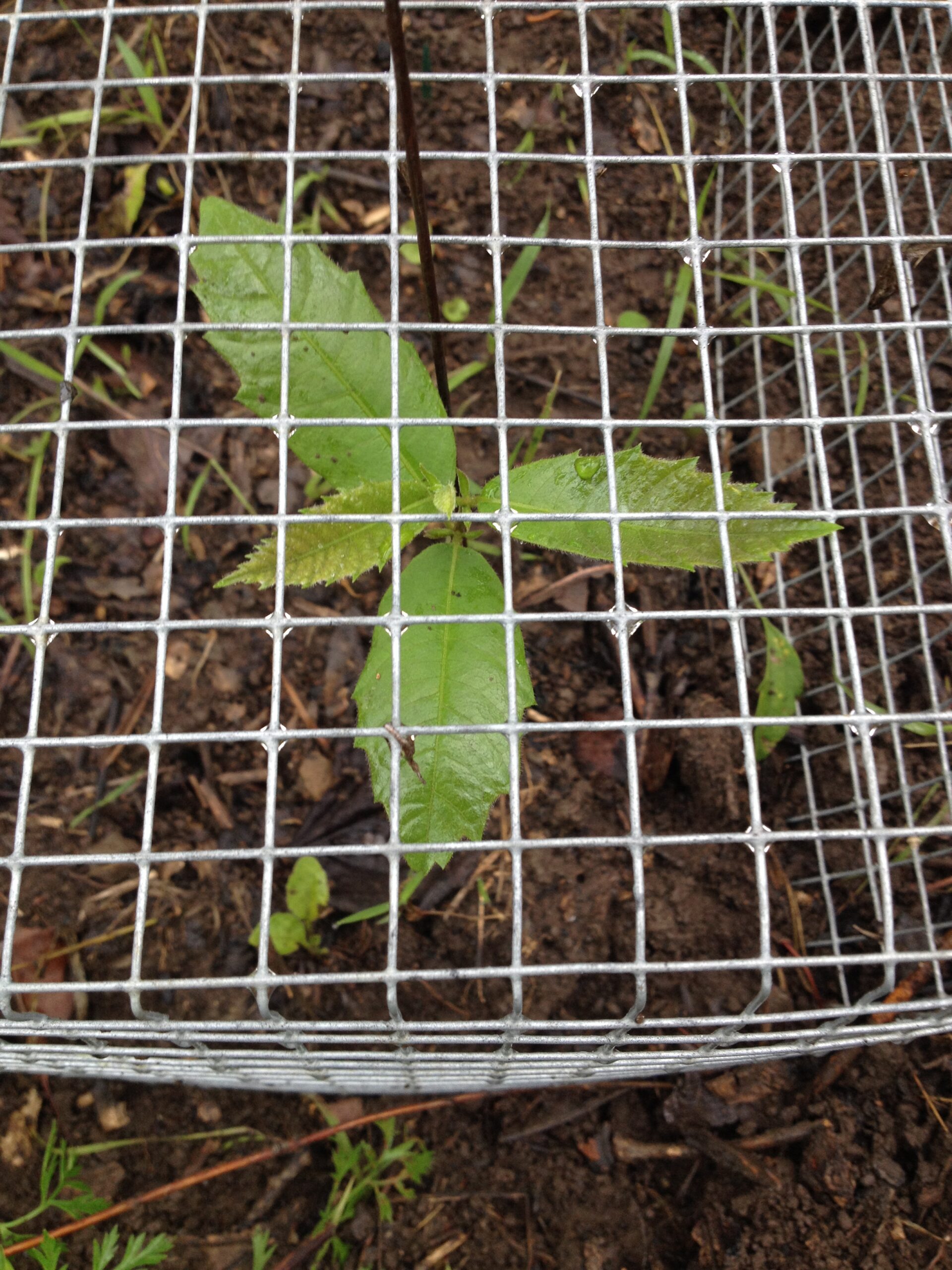
Castanea ozarkensis seedling, protected from marauding rodents by a wire cage.
We found that consumer treatment and microhabitat structure, as expected, influenced the rates of Ozark chinquapin seed emergence. Nearly all of the seeds that were exposed to small mammals were eaten or removed, even though seeds were buried a few centimeters in the soil. Interestingly, small mammals consumed seed at greater rates in shrub than open microhabitats. These results imply that understory vegetation structure determines where chinquapin seedlings can successfully recruit through its influence on small mammal behavior. Also, small mammals removed larger, and presumably more nutritious, seed at greater rates than smaller seed. Environmental factors, like light availability, did not affect seedling growth, but the short duration of the study may not have been adequate for the potential influence of these factors to become apparent.
A rodent successfully consumed this unprotected nut.
A thwarted attempt to breach a protective cage.
Our work contributes to a larger ongoing project by the Ozark Chinquapin Foundation to restore and conserve Ozark chinquapins. Given the high rates of seed removal, future restorationists will have to transplant chinquapin seedlings as opposed to seeds to successfully reestablish this species in the wild. However, once reintroduced seedlings grow to maturity and produce seed, our study suggests that microhabitat structure in Ozark woodlands will play a key role in determining the recruitment and growth rates of restored populations.
Leighton Reid, a postdoctoral fellow in the Center for Conservation and Sustainable Development, reflects on tortoises, tree cacti, and ecological isolation.
The Galápagos is the world’s most pristine tropical archipelago, and it is utterly unique. Nearly the entire island group is a national park, and 200,000 visitors per year come to witness its ecological singularities ‒ things like penguins and iguanas swimming side-by-side through a mangrove lagoon. The archipelago consists of fourteen large, volcanic islands and over a hundred smaller rocks and islets. Most of the land surface is low and dry. The easternmost island is about 900 km from mainland Ecuador, which is a probable source for the organisms that first began to colonize Galápagos when its volcanic peaks surfaced above the Pacific five million years ago. Indeed, the islands’ ecology is characterized by their isolation. Each island contains a relatively low diversity of organisms, many of which are unafraid of large primates. The biotas’ ecological simplicity and naiveté have facilitated major scientific discoveries, such as that small, heritable variations can have life or death consequences for individuals and ultimately change populations.
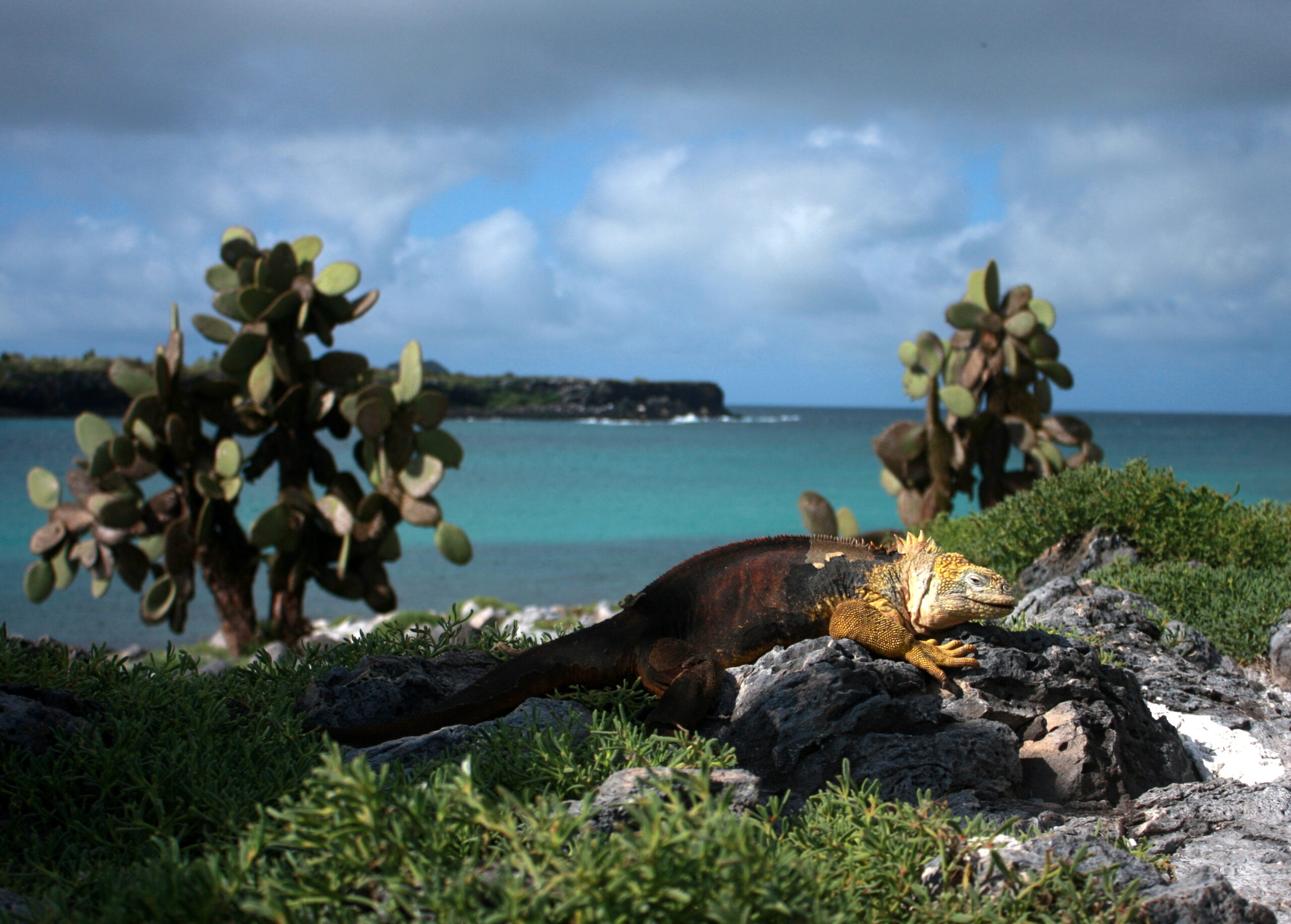
One of the more bizarre life forms on Galápagos is the tree cactus. Prickly pear cacti (Opuntia species) are not particularly rare in the western hemisphere. In the United States, for instance, they occur in every state except Alaska. But over millions of years in Galápagos they have become quite varied. Some grow low to the ground, like the familiar continental forms, whereas others grow as trees, towering up to 15 m above the ground. The first botanist to speculate on this phenomenon was Alban Stewart (1911), a scientist-sailor with the California Academy of Science. He noted that erect, tree cacti tended to grow on islands that also housed another over-sized organism – the Galápagos tortoise (Chelonoidis nigra). Galápagos tortoises eat the fleshy cactus pads, which contain water – a limiting resource in arid environments. Stewart posited that the pressure from tortoises craning their long necks upward to munch cactus pads may have favored taller cacti.
Opuntia echios var. barringtonensis is one of the taller tree cacti, presumably made that way by pad depredation by giant tortoises over many generations.A low-growing cactus (Opuntiaechios var. zacona) growing on Seymour Norte, an island that historically had no tortoises or iguanas. Herbivore pressure is visible here; an introduced land iguana (Conolophussubcristatus) has been taking bites from the lowest pads.
The relationship between tortoises and cacti was thrown into disarray after the Galápagos were discovered (accidentally) by Panamanian Bishop Tomás de Berlanga in 1535. By the late 19th Century, pirates and whalers removed thousands of tortoises from the islands, stowing the living animals in their holds as fresh meat for their long Pacific voyages. Eventually, overharvesting extirpated tortoises from several of the islands, with rippling effects on the rest of the ecosystem. Even where tortoises survived, they were often unable to reproduce because their offspring were eaten by introduced, European rats. Tree cacti were among the hardest hit; tortoise decimation stripped these plants of their main seed disperser.
Reintroduced giant tortoise in the littoral zone on Isabela Island.
In response to tortoise declines, the Charles Darwin Foundation and the Galápagos National Park Service began a captive breeding program on Santa Cruz Island. Since 1965 they have raised and repatriated thousands of tortoises to several islands, waiting to release them until the tortoises have gotten big enough to be “rat proof”. By and large the reintroductions have been successful. On Española Island, for example, tortoise populations had crashed to fifteen individuals in 1960, but by 2007 more than 1500 individuals had been repatriated, and the population appeared stable. Moreover, these reintroduced tortoises reinitiated seed dispersal for an endangered tree cactus (Opuntia megasperma var. megasperma), increasing the number of juvenile plants.
In addition to species reintroductions, ecological restoration in Galápagos has often entailed species eradications. Isolation historically shaped Galápagos ecology; nine hundred miles is a long way for a snake or a lizard to float on a vegetation raft. But Galápagos’s isolation was compromised by seafaring humans, who facilitated island colonization by domesticated animals and hundreds of plant species. Goats have been among the worst invaders. Until recently, goats overgrazed the islands’ vegetation, converting it into habitat unsuitable for native species. One of the most ambitious restoration projects in Galápagos has been eradicating goats from the archipelago. On the largest island, Isabela, more than 140,000 goats were killed in 2004-2005 using unconventional restoration tools, including helicopters, AR15 rifles, and Mata Hari goats – sterilized female goats induced into long-term estrus and fitted with radio telemetry collars to root out the last hold-outs. Goat eradication has resulted in spontaneous vegetation recovery. In addition to goats, the Charles Darwin Foundation and the Galápagos National Park Service have also eradicated eight exotic plant species. Other species will be harder to get rid of, like rats, guava, blackberry, and domestic cats.
Despite its one-of-a-kind nature, can the world’s most pristine tropical archipelago serve as a reference for other arid, tropical islands? That is, can we evaluate the success of other island restorations by comparing them to the relatively intact Galápagos’s ecosystem structure, function, and composition? Perhaps to some extent we can. Historical contingency leads to unique island assemblages (for example: giant tortoises in Galápagos, giant skinks in Cabo Verde, giant lizards in Komodo), but many islands may be characterized by their lack of functional redundancy. In other words, if you remove a species from an island, the ecosystem consequences may be greater than if you had removed a species from a more diverse mainland ecosystem. Additionally, plant restoration in the arid Galápagos suggests that when disturbances are removed, vegetation can recover rapidly. This may also be true of other oceanic archipelagos, whose plants and animals have already colonized difficult terrain from a long way away.
Land iguana and tree cacti (Opuntia echios var. echios) on Plaza Sur Island.
Leighton Reid is a postdoctoral fellow in the Center for Conservation and Sustainable Development.
Hexacopter flying over a restoration site. The red, digital camera is visible between the landing bars.
Monitoring restoration projects is important to demonstrate progress and learn what works and what doesn’t, but it can be time consuming and expensive. As such, restoration practitioners around the world are looking to automate tasks like monitoring, and one way this can be done is with unmanned aerial vehicles, or drones.
Over the past two years I’ve worked with a research team in southern Costa Rica to test how well drones can monitor tropical forest restoration. We used hexacopter drones: helicopter-like contraptions with six rotors. Each drone had a consumer-grade digital camera attached to the bottom. We flew the drones over thirteen restoration sites and then used Ecosynth computer software to stitch the images together and create three-dimensional models of the vegetation structure.
Drones accurately estimated forest structure
Drone-based measurements of canopy height closely matched our hard-won field measurements (but with less sweat and insect bites). The drone-based system also detected canopy gaps, predicted fruit-eating bird movements, and estimated above ground biomass. The ability to accurately assess above ground biomass is particularly important; it suggests that drones could be used to monitor carbon accumulation in regenerating forests.
“The rapidly expanding use of unmanned vehicles to monitor vegetation and other aspects of biodiversity is an exciting development in conservation biology. This article also demonstrates that bird abundance can be estimated using data gathered by UAVs.”
The paper is freely available for download through August 27, 2015 at the publisher’s website.
Researchers Jonathan Dandois and Dana Nadwodny (University of Maryland Baltimore County) launch a drone at a site in Costa Rica [Photo courtesy of Karen Holl].
James and Thibaud Aronson report from the eastern Himalayas, where they journeyed in Bhutan, truly one of the Last Great Places on Earth.
The Kingdom of Bhutan, a small landlocked country the size of Switzerland, in the eastern Himalayas, is mostly known for its policy of Gross National Happiness. Its stated goal is to create the best possible living conditions for its 700,000 citizens through four pillars: good governance, equitable socio-economic development, preservation of cultural heritage, and conservation of the environment. To a cynical outsider, this could sound like just another PR gimmick. Having spent three weeks in Bhutan, we got to observe things firsthand.
The country, which lived in a nearly medieval feudal society until the late 1940s, is developing at a very fast pace – for good and possibly for bad. In thirty years, nearly the entire population, most of which lives in remote mountain villages, has received access to electricity. The country is also now crisscrossed by roads which are constantly being widened – for good and for bad. Many hydroelectric projects are in the works too, to generate income and foreign revenues from the country’s many rivers flowing through steep valleys. Exporting energy and promoting “low volume, low impact” tourism are thus the main economic drivers of this country that is opening up fast to the outside world. Mining is under development too, and that could prove to be a Pandora’s Box, environmentally, socially, and politically. However, 70% of the population still lives from subsistence farming and livestock under very tough conditions. A two-tiered economy is on the horizon.
Although most tourists come to experience the atmosphere of the last living Himalayan Buddhist kingdom, the country’s natural riches are unparalleled as well. Bhutan boasts an incredible 70% forest cover, most of it in pristine or near-pristine condition. Indeed, all over the country, from the alpine shrubberies at 4000 meters above sea level down to the subtropical forests at 150 masl, we got to observe a living ecology textbook on altitudinal zonation and see some astonishing plants, birds, and people along the way.
Alpine vegetation near Tharpaling monastery, at 3700 masl.The transition between cool broadleaved forests with spruce near Trongsa, central Bhutan.Oak-rhododendron forest around 2600 masl, near the Tiger’s Nest Monastery. This is some of the only remaining primary forest in this populated area, most of it having been replaced by chir pine.
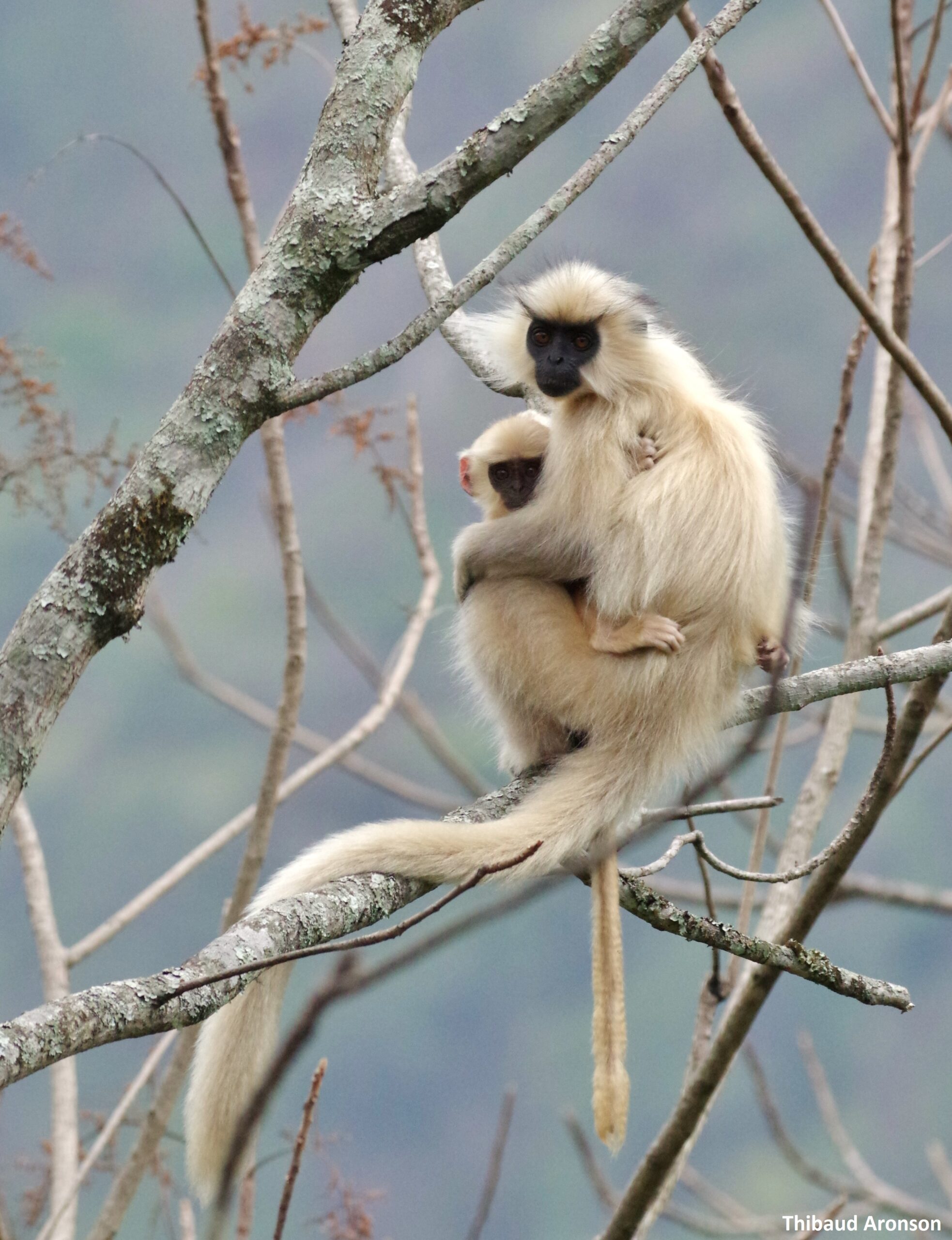
At the moment, an exemplary 51% of the territory is protected in parks and biological corridors, and new parks continue to be created, as the 2008 constitution states that no less than 60% of the total territory must be protected for “the environment”. Without a doubt, Bhutan holds the best preserved ecosystems in the entire Himalayan region. As a result, it offers some of the best habitat and long-term prospects for flagship species such as tigers, snow leopards, golden langurs, and many threatened birds, such as the satyr tragopan and the rufous-necked hornbill. Thinking long-term, this means that nature-based tourism has a great future, and that if a strong impetus for restoration were ever to develop in neighboring countries, Bhutan could serve as a reference for what the ecosystems in these countries once looked like.
The endangered golden langur (Trachypitecus geei), found only in western Assam and southern Bhutan.The tragopans are some of the most mythical birds of Asia, and all are endangered. With much of its population found in pristine forest in Bhutan, where it is protected by law, the satyr tragopan (Tragopan satyra) is the least endangered of the five extant species, only being considered Near Threatened by the IUCN.The rufous-necked hornbill (Aceros nipalensis) is the northernmost representative of its family. Once found in mountains across southeast Asia, it has disappeared in many places, such as Nepal, and Bhutan retains the healthiest population.While not as threatened as the previous species, the great hornbill (Buceros bicornis) is declining through much of its range, because of habitat loss and hunting. Again, Bhutan is one of few places where it thrives.
However, there is work to be done within the country’s borders as well. Slash and burn agriculture is still commonly practiced, especially in the east, though the government is developing incentives for farmers to switch to more sedentary farming practices. Once abandoned, the degraded pastureland is rapidly recolonized by pines, chir pine (Pinus roxburghii) in the east and at lower altitudes, and blue pine (Pinus wallichiana) higher up. As elsewhere, these pioneer pines are more tolerant to harsh soil conditions than almost any other tree. Following perturbation, they quickly colonize degraded lands and form monospecific stands, which support very low biodiversity and present a significant fire hazard. They are considered valuable, however, as they produce timber. However, the broadleaved forests that they replace would have higher aesthetic, spiritual, touristic, and biodiversity values – long-term. Besides, they could still provide some timber while being at considerably lesser risk from fire and pests. It’s a trade-off though, and motivation for investment in long-term ecological restoration does not yet seem to be well developed.
A typical landscape near Thimphu, the capital, showing anthropized pastureland, and the chir pine that invades it when it is abandoned.
More severe in their direct and indirect impacts at the landscape and regional scales are the hydro-electric projects already being developed, and those that are planned. As currently undertaken, these hydropower works lead to enormous disturbances in the affected river valleys. Because of the steep terrain, the dams don’t need to be enormous, it is true, but the impact of their construction, as well as the access roads – with the heavy equipment ill-suited to the terrain, and minimal apparent concern regarding the ecological impact on rivers and mountain slopes is enormous, in sharp contrast to the highly enlightened policy on how not to manage tourism and how it can be done. We were told that there is a clear understanding in government that watershed protection is important for maintaining their capacity to produce exportable quantities of hydropower. This apparently helps justify the remarkably high levels of set-aside areas in the mountains. It would be good, however, if the engineers charged with designing and building mountain roads and hydro-power project could proceed with a much lighter ecological footprint in mind; surely it is in the country’s long-term interest. It would also surely correspond more closely with the Buddhist philosophy that truly prevails in this unique country.
In most remote areas, such as here near Bey Langdra monastery, near Wangdi Phodrang, human occupation takes the form of small scattered farms nestled amidst pristine primary forest.
Happily, there are several state-run organizations equipped to carry out large-scale conservation planning and restoration. The forestry division already has been involved in planting native oak trees and other species in several localities, something which could be extended to the national scale and better integrated with development plans. Another institution, the Royal Botanical Garden, part of the National Biodiversity Centre in Thimphu, founded in 1999, could also participate via seedbanking, biological inventories, rescue missions for endangered species, etc. According to Ms. Sangay Dema, Principal Biodiversity Officer at the National Biodiversity Center of the Ministry of Agriculture and Forests, and Curator of the Botanical Garden, emphasis for now is on collecting and banking germplasm of traditional varieties of crops, ex-situ conservation of prioritized native flora, and seed banking, as well as banking of semen (in liquid nitrogen) of traditional breeds of domestic livestock. Biological inventories are underway and interest is growing for expanding existing work and developing ecological restoration programs, possibly in collaboration with BGCI’s ERA, of which Missouri Botanical Garden is a founding member, and SER. It is noteworthy that reforestation takes place almost exclusively with native species of trees, including the glorious Himalayan Cypress, national tree of Bhutan, and other conifers, willows, poplars, and oaks.
Both Sangay Dema, and Dr. Nawang Norbu, Director of the Ugyen Wangchuck Institute for Conservation and Environment, told us that ecological restoration is on the radar screen for their institutes and the government as a whole. For starters, we’d suggest testing the direct seeding of acorns, as the native oaks and the complex communities of which they are part are at risk in several areas. One of the traditional practices here is to collect virtually all the leaf litter produced by oaks to mix it with animal manure and produce compost for field crops. While this makes fine compost, the ill effects on the oak stands and the prospects for natural regeneration are clear enough to see.
As ambassadors of the Missouri Botanical Garden, Botanical Gardens Conservation International’s new Ecological Restoration Alliance, and also the Society for Ecological Restoration, we extended a warm welcome to get involved in the international networks and growing number of commitments to large-scale restoration gathering momentum today. While it might be tempting to think that – almost alone among the world’s developing nations, Bhutan is doing very well indeed in the area of nature protection, and doesn’t need to worry about ecological restoration, we think that would be short-sighted.
Most important of all, what will the new generation of Bhutanese think about Nature Protection as one of the four pillars of Bhutanese society and the unique quest for Gross National Happiness? How will natural ecosystems survive in the face of the very rapid development that the country is experiencing?
In such rugged, mountainous terrain, much will survive, that is clear, and adapt as best it can to rapid climate change. But, which direction, and what environmental and economic policies, will the country follow going forward?
Bhutan holds some of the last stands of mature spruce forest in the Himalayas, seen here near Kiki La Pass, at 2900 masl.
James and Thibaud Aronson post their third report from Jordan, as they continue to study prospects for ecological restoration in deserts, with special focus on trees and the animals that use them.
Trees never lie. Michael Zohary.
As you travel east from Amman, Jordan’s capital, you quickly leave behind cultivated landscapes and enter the hammada, a desert of black basalt gravel with very little rainfall. Large tracts are devoid of any vegetation at all; in the few places where water occurs, the abundance of life is remarkable.
A ‘densely’ vegetated (sic!) tract of Hammada near Shaumari Reserve, 100 km east of Amman.
The first place we visit is Wadi Butum, 26 km east of Amman. This is an ephemeral river, or wash (Wadi or Oued in Arabic). It is lined along 30 km by a gallery forest of magnificent Pistaciaatlantica trees (Butum in Arabic). Judging by the trees, and the ancient architectural remains at this site, this entire region looked vastly different a mere millennium or so ago. Back then, clearly, it was inhabited by many people, at least along some rivers, and there were many wild animals, such as gazelles, ibex, probably lions and much more. In addition to the trees, one can visit the bath house associated with the Amra Palace, QasrAmra, in Arabic, built during the reign of the Umayyad Caliphate, (661-750 CE). Archeological and historical records show that 1300 years ago, this site was maintained with a large staff and regularly used as a hunting lodge and pleasure palace for nobles who traveled 200 km south from the Caliphate’s capital in Damascus. Water was drawn from a hand-dug well 25 meters deep.
Bathhouse at Amra Palace, Wadi Butum, eastern Jordan. Building to the right contains the well and water wheel (nuria).
Its ornately decorated bath house shows scenes of daytime and nocturnal hunts, as well as dancing women, musicians, and much more that contrast starkly with the environment here today.
Murals inside the bathhouse, Amra Palace, Wadi Butum. A hunting scene.A bather.
Dead wood from nearby trees and abundant shrubs, including branches from the Butum trees, surely provided most of the wood necessary for heating the water for the bathhouse.
Panels showing people cutting wood, presumably harvested nearby.Pistacia atlantica, in Wadi Butum, eastern Jordan.
If it is true that trees never lie, as quoted above from Michael Zohary, these multi-secular trees strongly suggest there was once a much more extensive gallery forest along this Wadi – and the others – than we can easily imagine… Without them, one could easily assume that the frescoes in the bathhouse represent scenes from elsewhere in the Omayyad Caliphate’s dominion. Yet because of the Butum trees, we suppose these scenes depicted what the visiting nobles saw and hoped to experience in the immediate environs.
Twenty kilometers further east is Azraq, and a much sadder tale of human water use. “Azraq” means “blue” in Arabic, and was named after a large oasis, which was once 26 km2. A beacon in the desert, it attracted up to 350,000 migrating birds, who stopped there on their long journey between their breeding grounds in northern Europe and their wintering areas south of the Sahara.
A photo of Azraq, a large wetland in the desert, as it was in the early 1960s.
However, the abundant water also came to be viewed as a resource for human use. In the 1960s, water began being extracted to feed the growing cities of Amman and Irbid, the two largest cities in the country. By 1975, water was extracted twice as fast as it could replenish itself, and hundreds of illegal private wells were taking an additional toll on the oasis. By 1991, it had entirely dried up. The Azraq killifish (Aphanius sirhani) – Jordan’s only endemic vertebrate – almost disappeared, and only survived ex-situ. Still, pumping continued, directly from the aquifer. It was only in 1994 that the Jordanian government took steps to stop water extraction. Yet, it only finally stopped because of brackish water infiltration, which rendered the water unsuitable for human consumption or irrigation. What once was a lush oasis is now a dry husk. In 2000, a census counted 1200 birds in the entire migrating season, a third of one percent of what there once was.
Then, in 2011, the sad and sorry site was designated a nature reserve, to be administered by the Royal Society for the Conservation of Nature or RSCN. They began a restoration and rehabilitation project, with a goal of recovering 10% of the original wetland, including both permanent and seasonal areas. An agreement was signed with the Jordanian Ministry of Water, and each year since then, between 1.5 and 2.5 million cubic meters of water are pumped back into the oasis to provide habitat for birds and to promote the spontaneous recovery of native plants.
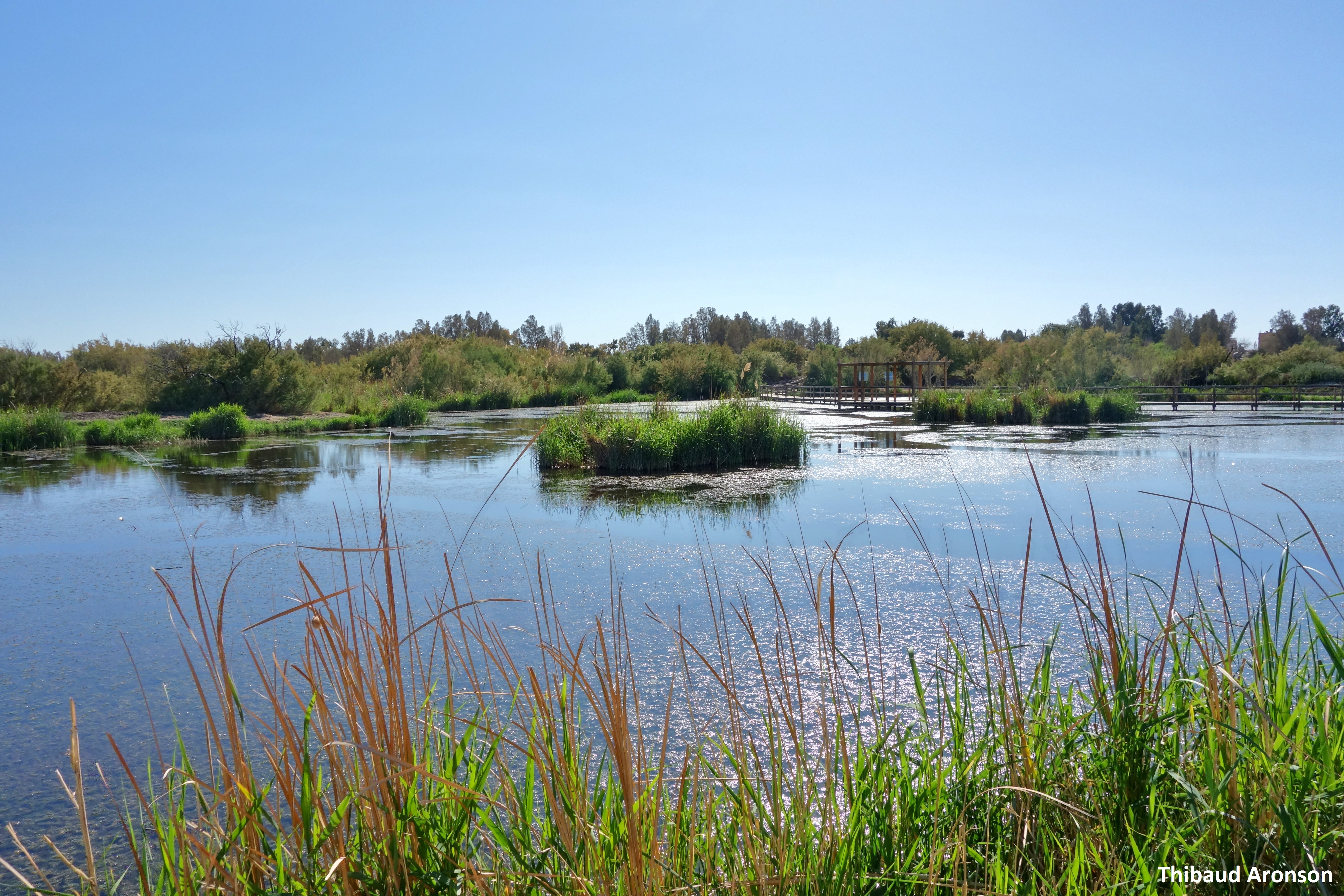
In April 2015, at the time of our visit, there were 5 permanent pools, covering 3 ha, and a total of 170 ha of wetlands which are seasonally flooded. The system is very far from being stable, and if water stopped being pumped, the wetlands would surely dry out, as there are still many illegal wells in the area. However, even without any plantings, Tamarisk trees and reeds have recolonized the area, and bird numbers are increasing each year.
Permanent pools at the Azraq reserve, undergoing restoration and rehabilitation.
A few kilometers to the south is Shaumari, another RSCN reserve, which tackles another problem. Due to heavy hunting, Jordan’s ungulate populations have been severely depleted; several species disappeared altogether in the 20th century. The reserve now serves as a breeding center for Arabian oryx, onager, and Dorcas gazelle. The first two are already breeding freely in the reserve, and a few oryx have also been introduced to Wadi Rum, in the south of the country.
Arabian oryx (Oryx leucoryx) in breeding enclosures at Shaumari reserve.
Clearly, the RSCN, the RBG Jordan, and other NGOs working for conservation in Jordan have a long way to go in their valiant efforts to protect and restore this country’s marvelous landscapes and preserve its biological richness. As in so many other countries, a paradigm shift towards sustainable resource use and nature conservation is needed. Still, a few pilot projects such as those described here, and a growing interest in ecological restoration, led by the RBG Jordan, are harbingers of change.














![Researchers Jonathan Dandois and Dana Nadwodny launch a drone at a site in Costa Rica [Photo courtesy of Karen Holl].](https://i0.wp.com/mbgecologicalrestoration.wordpress.com/wp-content/uploads/2015/06/helicopters-2.jpg?ssl=1)