From Wadi Hasa, we ascended a long road of switchbacks, up to 1000 m.a.s.l., while still travelling north, and from the town of Al Karak, we descended, for a mere 20 linear km, to the Dead Sea, lowest place on Earth and part of the Dead Sea Rift, a fault line between the Arabian and African tectonic plates. Here, just 80 kms from the montane forests where we started, in the so-called Feifa Forest, which more resembles a savanna, we admired Afro-tropical vegetation dominated by tree species commonly found in the Sahel region, south of the Sahara desert, but almost nowhere else in Jordan or Israel.
Travelling north along the Dead Sea shore, we also saw shrubby forms of Salvadorapersica, and date palm, Phoenixdactylifera, growing wild in the rocks…Finally at one site only, called Zara, 10 km north of the Mujib bridge, we were thrilled to see a dozen or more huge Moringa trees and a few tree-like Capparisdecidua, in a small abandoned field surrounded by fields planted with vegetable crops.
In all three segments of our Med-Dead transect, we observed canopies that were fragmented, but clearly visible and hosting mixed communities of trees in natural associations. These provide marvelous reference systems for those who would engage in restoration in this country or any of its neighbors where the same patterns and ecosystem types occur.
In many cases, we found tree species showing a remarkable degree of plasticity, or malleability, both in shape and in habitat, including Rhus tripartita, Retama raetam, Amygdalus arabica and Rhamnus palaestina. We also saw near ubiquitous signs of the ravages of goats and sheep. Only in a few places during our trip, and most notably at the Ajloun nature reserve, did we see places spared their impact.
All over Jordan, domestic but unruly goats and sheep eat most of the herbaceous vegetation, and tips of trees and shrubs, leaving only the taller adult trees and unpalatable shrubs to grow and prosper.
Having recently been on Guadalupe Island, Mexico, where goats were eradicated a mere 7 years ago, and where vegetation is leaping back, we can’t help but wish it were possible to do large scale experiments here…
But just like Mexico, the socioeconomic situation is complex and conservation and restoration are challenging. Woodcutting for firewood is one major problem, because most people rely on wood as their sole source of energy for heating and cooking.
Invasive plants are another problem, such as the South American mesquite tree, intentionally introduced and now spreading widely, with help of sheep, goats, and camels that relish the fleshy pods.
Mesquite, Prosopis juliflora , well known as a noxious weed in Africa, Asia and Australia, it is worrisome to find it spreading rapidly and without control at low altitudes throughout western Jordan. Shown here in a wadi near the Dead Sea, sopping up much of the available moisture in the riverbed and crowding out native trees and shrubs.
Despite these obstacles, the Royal Society for the Protection of Nature (RSPN), an NGO, and its Botanic Garden, are cause for hope, not only here, but throughout the Middle East. Here’s to Jordan, where all trees are protected by law, and to the RSPN and RBG Jordan, and here’s a tribute in particular to HRH Basma Bint Ali, the Garden’s founder. In the context of the Ecological Restoration Alliance of Botanic Gardens, there is indeed hope for the future.
James and Thibaud Aronson post here the first part of a 3-part report from The Hashemite Kingdom of Jordan, mid-April, 2015.
As part of an epic project undertaken with our very dear friend in France, Edouard Le Floc’h, and now with expert help from our friend Delphine Vinck, we are working on an ambitious book about trees that grow in deserts, their role in ecosystems there, and their not-to-be underestimated role in the vast number of ecological restoration projects and programs waiting to be undertaken in the vast deserts of the world, and on their ‘shores’, the even vaster semiarid regions of the earth.
This trip started with an inspiring meeting attended by James, in Amman, as part of the fourth gathering of the Ecological Restoration Alliance of Botanic Gardens, and a visit for Thibaud in southern Israel to observe, in some awe, the annual south-to-north bird migration along one of the major flyways of the western Palearctic.
Steppe buzzards (Buteo buteo vulpinus) and black kites (Milvus migrans) flying over Aqaba, Jordan. That day, about 10000 birds flew over in 4 hours.
And some mammals along the way.
Five pups of Arabian red fox (Vulpes vulpes arabica) in front of their den. Kibbutz Lotan, Israel.
We reunited in Aqaba, to begin a 4 x 4 road trip together with Hatem Taifour, chief botanist at the Royal Botanic Gardens of Jordan. Jordan and Israel form an incredible crossroads where the floras, faunas and cultures of three continents meet, Africa, Asia and Europe.
Map of the world as a cloverleaf, with Jerusalem at its center. By Henricus Bünting. Itinerarium Sacrae Scripturae. Helmstedt, 1581.
According to Avinoam Danin (1999), southwestern Jordan is the ideal place for tracing transects as huge variations in climate, geology, flora, and fauna can be seen over short distances, and remarkable Mediterranean relicts and dozens of endemics occur there, far more so than in Israel and Sinai.
Therefore, our goal was to describe ecological transects following gradients of aridity, from relatively wet mediterranean climate regions at high-elevations with cypress, pine, oaks and pistacia, westward to steppe-desert with juniper and other trees of its own, into the hot, tropical desert of the Rift Valley. The Acacia-dominated vegetation found from the Red Sea to the Dead Sea, and the Jordan Valley, from the Dead Sea to the Sea of Galilee, represents a ‘tongue’ of so-called Sudanian flora, rich in trees. To one side is a colder desert with a Saharo-Arabian flora dominated by shrubs. On the other, is a tongue of penetration coming in from the east and the north of the so-called Irano-Turanian steppe, which experiences hot summers and very cold winters.
We began our trip with a morning visit to the justly celebrated archaeological site of Petra (looking at the trees along the way). We then drove up to Dana Nature Reserve – a jewel of the Mediterranean Basin by any standards and full of endemics and relicts of the Mediterranean vegetation that is now rare in the Near East. We visited rich montane Mediterranean forests, with a real canopy of evergreen oaks and Red Juniper, with populations of Atlantic Pistacia and a small, venerable and unquestionably wild population of Mediterranean Cypress – the only one in all the Near East. To our knowledge, its only other wild populations are in Cyprus and Cyrenaica, Libya. Two of these cypress trees are estimated to be roughly 800 years old.
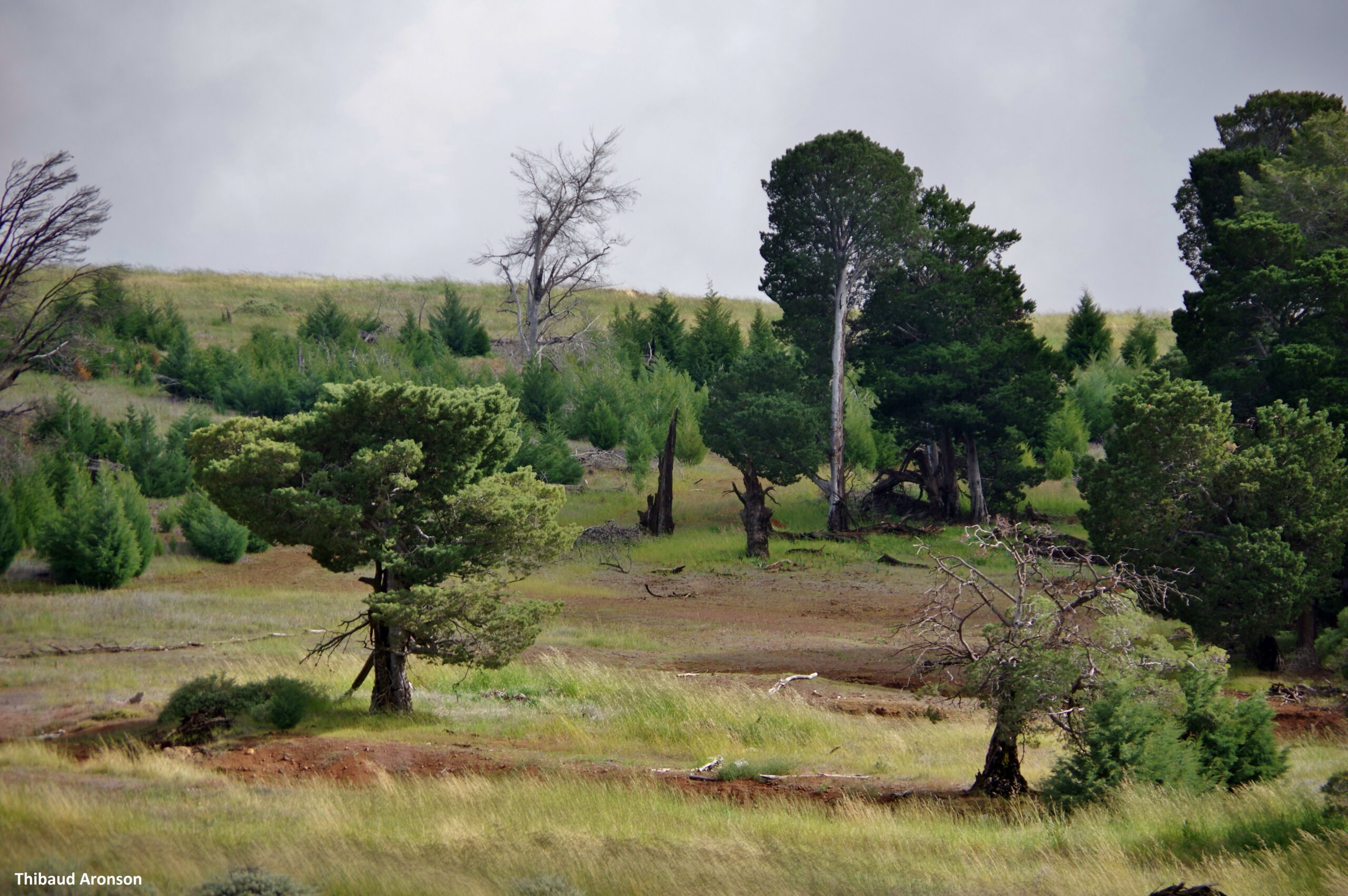
Giant Mediterranean Cypress tree (Cupressus sempervirens) and nearby, a younger stand, with spontaneous regeneration taking place, amidst Juniperus phoenicea, Pistacia atlantica. Near Dana Nature Reserve, 1500 meters above sea level (masl).
From there, in just 22 km as the crow flies, we descended to semi-arid steppes at 300 m above sea level, where the vegetation was dominated by red juniper and Rhustripartita.
Steppe dominated by Juniperus phoenicea.And Rhus tripartita, on the road leading north from Dana towards the Dead Sea.
Then, Hatem led us down a steep dirt road to a site he had discovered, at 100 m.a.s.l., in remote Wadi Hasa, far from any town or garden. Growing there amidst native poplar and willow, we saw a population of Dalbergia sissoo, where we would never have expected to find it. This tree is native to India, Pakistan, southern Iran, Afghanistan and Oman (Tengberg & Potts 1999) and widely cultivated elsewhere. Danin (1999) reports it occurring in oases near the Dead Sea in Israel, and there are reports of it occurring in Sudan. In Jordan, Hatem Taifour has never seen it anywhere except in this location in Wadi Hasa and in one other wadi.
How then did this wind-dispersed tree get here? Is this a relict from earlier times when climate was different and the species was more widespread, and the tree was widely used for a range of purposes and perhaps intentionally introduced throughout the Near East? There is no clear answer to date….But it certainly added spice to our field trip and food for thought for restorationists working in Near Eastern deserts.
Dalbergia sissoo, commonly known as Rosewood of Sind or Shisham, far from its center of distribution on the Indian subcontinent and southern Iran. Commonly introduced elsewhere around the world, it frequently escapes cultivation and becomes naturalized. However, both in Jordan and in Israel, there are a few populations that seem possibly quite ancient. This is a mystery to be explored.
References.
Danin, A, 1999. Desert rocks as plant refugia in the Near East. The Botanical Review 65: 93-170.
Tengberg, M. & D. T. Potts 1999. mes.mii-gan-na (Dalbergiasissoo Roxb.) at Tell Abraq [Oman]. Arabian Archaeology and Epigraphy 10:129-133.
James and Thibaud Aronson, and Edouard Le Floc’h, are working on a book on lost and regained tree canopies and ecological restoration in desert and dryland regions of the Earth. Here is their second report from Baja California, Mexico in March 2015.
In our last posting, we described Guadalupe Island and the NGO “Group for Ecology and Island Conservation” or Grupo de Ecología y Conservación de Islas(GECI), which is doing fine restoration work on more than two dozen Mexican islands since 1995.
After spending a week on Guadalupe Island, with Luciana Luna and Julio Montoya of GECI, Luciana and Antonio Alcaraz accompanied us to cross the bumpy and still quite remote Central Desert, which includes 77,700 square kilometers (30,000 square miles) of some of the most beautiful desert in the world.
We crossed from El Rosario, on the Pacific coast, to Bahia de los Angeles on the coast of the Sea of Cortez, also known as the Gulf of California. This is the enchanted subtropical desert that Joseph Wood Krutch described so memorably in The Forgotten Peninsula based on his visits to the region in the late 1950s, when “Baja” was still incredibly difficult to visit and almost no scientific work had been undertaken.
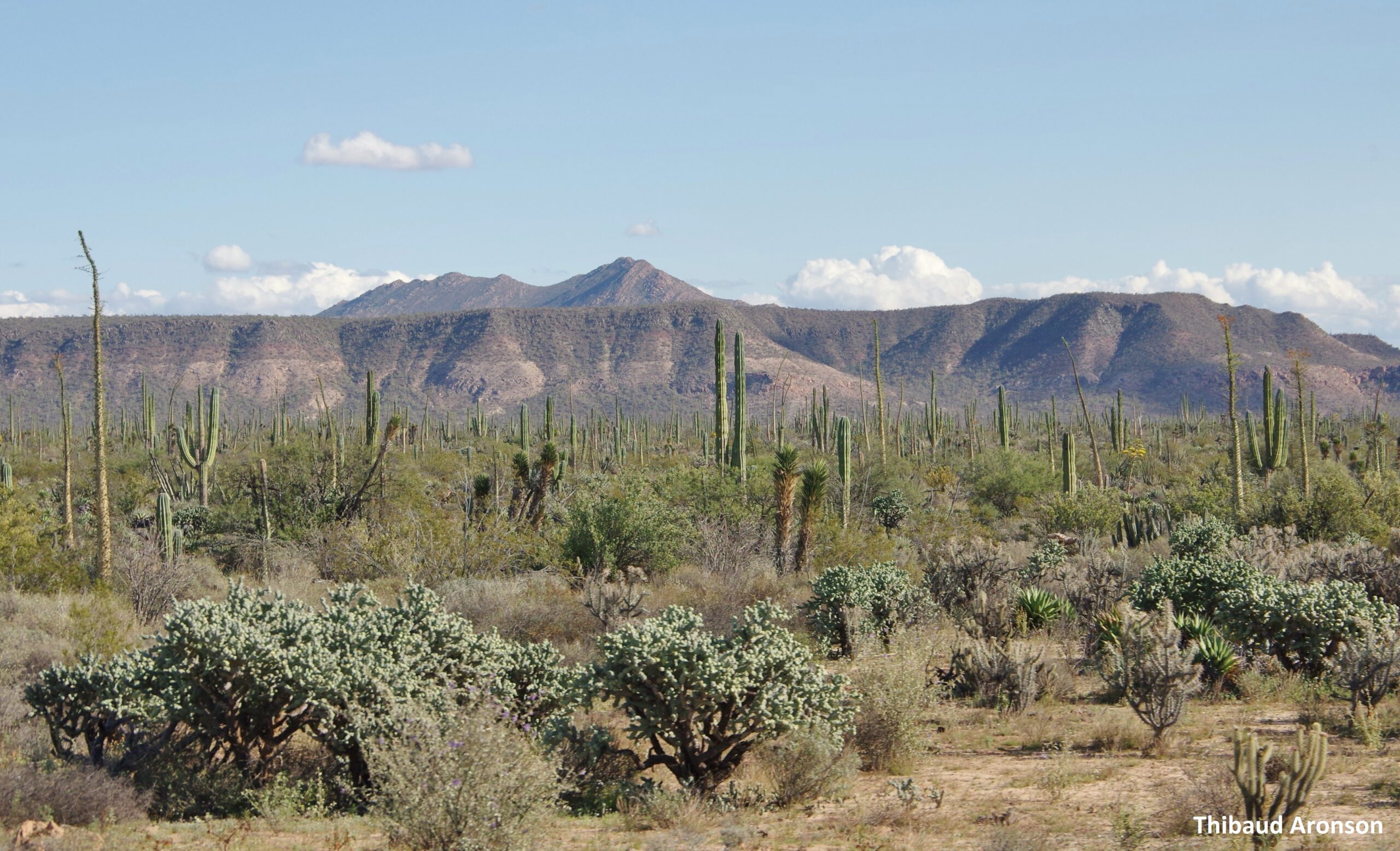
Luciana Luna and Antonio Ortiz Alcaraz of GECI, the Grupo de Ecología y Conservación de Islas.Desert landscape between Cataviña and Punta Prieta, Baja California.
Our focus of course is on trees, of all sizes and shapes, including the “queer, queerer and queerest” as J. W. Krutch called them, including the Boojum tree, known in Spanish as cirio. We are also keenly interested in the animals that use them, including birds, bats, and invertebrates.
A 6-meter tall Boojum (Fouquieria columnaris) providing a nesting site for a red-tailed hawk (Buteo jamaicensis), at the gateway to the Valle de los Cirios National Park, Baja California.Gila woodpecker (Melanerpes uropygialis) on a Cardón, Pachycereus pringlei. Cataviña, Baja California.
The spectacular desert palm trees merit our full attention as well, of course, wherever they still occur in washes, or arroyos.
Mexican fan palm (Washingtonia robusta) and the blue fan palm (Brahea armata) in an arroyo at the entrance of Cataviña, Baja California.
Also the giant cacti, which we consider as trees of a special kind, not only because of their height and longevity, but also because of their multiple ecological roles in the desert canopy.
Large stand of cardón, or elephant cactus (Pachycereus pringlei), mixed with Boojum as a “Forest”, between Punta Prieta and Cataviña, Baja California.
But, we wonder, where are the large hardwood trees that formerly contributed to the gallery or riparian forests canopies, judging from historic records? Where are the mesquites (Prosopisglandulosa) from which so many roof beams and kitchen tables were made, and the incredibly hard-wooded Ironwood?
Ironwood (Olneya tesota) in the Tucson Mountain Park, near Tucson, Arizona.
Both species were heavily over-used in the past for firewood and charcoal production as well as construction wood, but Ironwood also appears to be surprisingly sensitive to drought and can die suddenly. In much of Baja California, except on the islands, what is left in the canopy is the softwoods, of little or no energetic value, such as the charming but soft-wooded, swollen-trunked elephant tree, often growing with columnar cacti, and the boojum.
The beautiful white-stemmed elephant tree (Pachycormus discolor) growing with cardón and cirio, near Cataviña, Baja California.
The take-home message is this: let us never forget the forest for the trees, in the compelling and urgent context of desert and dryland restoration.
Daniel Pauly’s Shifting Baseline Syndrome is more than ever relevant nowadays, not only to fisheries but also to the restoration of desert canopies. If we want to get serious about restoring desert and dryland ecosystems, we have to imagine what the canopies – however spatially constricted and reduced in diversity they are today – could have looked like 100 years ago, and think how they could look 100 – 300 years from now.
James and Thibaud Aronson are working on a book, with James’s longtime collaborator Edouard Le Floc’h, on “desert canopies” and ecological restoration in arid and semi-arid regions of the world. They report here on the first leg of their trip to Baja California, Mexico.
Isla Guadalupe is a large volcanic island (250 km²), 240 km west of northern Mexico, with fewer than 150 permanent inhabitants. Approximately one-fifth of the island’s 150 native plant species are endemic. Of particular interest are the remnant populations of trees in the foggy, northern highlands of the island, including an endemic variety of Monterey pine (Pinusradiata var. binata), and the endemic cypress.
Three additional tree species survive in small populations : an endemic oak (Quercustomentella), California juniper (Juniperus californica) and an endemic fan palm (Braheaedulis). At the southern end, there are remnants of both chapparal and matorral shrublands including taxa with Californian affinities and others from the Sonoran desert biome. The southern tip is very dry – with just 120 mm (5 in.) of mean annual rainfall. The northern half is mountainous with 250 mm (10 in.) of annual rain, and thick fogs that double or triple the effective precipitation.
People first came to the island in the early 19th century. By 1850, sailors had introduced goats to provide a meat reserve for passing ships. Not surprisingly, the goat population exploded, reaching an estimated 100,000 animals by 1870. Over-grazing led to the disappearance of entire plant communities and several dozen endemic species. One example is Hesperelaeapalmeri, an endemic member of the olive family. Particularly appreciated by goats, it was gone by 1870. Domestic cats got to the island somewhat later, probably introduced intentionally to control the mice. The cats went feral, and had an enormous impact on the extremely tame birds, both endemic land birds, and breeding seabirds.
By the early 20th century, 6 of the 9 endemic land birds had gone extinct, as well as an endemic seabird. Meanwhile, the Guadalupe fur seal and the northern elephant seal were hunted relentlessly, the former for its fur, the latter for its blubber. The hunting only stopped in 1894, when both species were thought to be extinct. Happily, both species did in fact survive, albeit in extremely small numbers; the entire fur seal population dropped to 15 individuals. In 1928, the island became a set-aside reserve and seal populations finally started to recover, and today, they number 20,000!
Fur seal (Arctocephalus townsendi) on Isla Guadalupe, March, 2015.
The northern elephant seals have done even better. They have recolonized much of the northern Pacific, and the total population is more than 150,000 individuals.
Elephant seal (Mirounga angustirostris) on Isla Guadalupe, March, 2015.
On land, however, things kept worsening. The goat numbers stabilized around 15,000. As a result of over-grazing, most of the island was stripped to bare soil and rocks; only a few hundred trees survived and goats ate every seedling they produced. Cats caused enormous mortality in breeding seabirds and one of the remaining three endemic land birds, the Guadalupe Junco (Juncoinsularis), was headed towards extinction, with only 50-100 individuals left.
That’s when the Group for Ecology and Island Conservation (GECI) got in gear, and it’s thanks to them that things are looking up. Since 1995, this NGO has eradicated 48 populations of invasive mammals – mostly sheep, goats, cats, and mice – on 30 Mexican islands. They got to Guadalupe in 2002 and started an intensive eradication campaign. By 2007, the goats were gone. Within a year, the trees had produced thousands of recruits, which today are several meters high, in the case of both the pine and the cypress. In fact, in 2008, a fire burned through a large portion of the remaining stand of cypress. A few years earlier, this would have been a catastrophe. But without goats to eat them, thousands of seedlings sprouted immediately all over the burnt area and are growing nicely, thanks not only to the absence of goats, but also to the heavy fogs, which provide favorable conditions for the seedlings. Besides, half a dozen native shrubs, including some endemic species, have reappeared in large numbers in many parts of the island. Several species which were though extinct have been rediscovered, and one new species has been discovered as well.
All is not well, however, in the invasives department, nor in soil conservation. Dozens of species of herbs and grasses from the Mediterranean Basin and Europe are prevalent in open areas, and there are dramatic signs of soil erosion. Former shrublands – matorral and chaparral – are deeply degraded everywhere on the island. Half a dozen species of native shrubs are re-colonizing certain areas and acting as very effective pioneer species. These are being watched and probably can be used in active restoration efforts in the future.
Feral cats and several kinds of mice are still present and continue to prey on birds. However, a fence now protects the southern tip of the island, which is home to a breeding colony of the Laysan albatross, one of few albatross populations in the world which is growing in numbers.
Laysan albatross (Phoebastria immutabilis) breeding and raising chicks on Isla Guadalupe.
To date, GECI has focused on eradicating invasive mammals, mainly to protect marine birds. The regeneration of the island’s vegetation was a happy by-product. However, they are now seeing the potential for taking a more active hand in restoring the islands’ plant communities. We suggested several approaches. One would be the establishment of plant nurseries to support both ex-situ conservation and reintroduction of plants within experimental plots set up to study what approaches are most effective for different plants, in different parts of the island. There are only 30 to 40 adult oak trees left on the island and less than 10 known Junipers. Unlike the endemic cypress, pine, and fan palm, neither the oak nor the juniper is recovering. Active intervention will be needed to reconstitute mixed conifer-oak woodlands and to bring the fan palm populations back to their former glory. Finally, some heavy work is needed in relation to water and soil management, and roughly 400 feral domestic cats still run free on the island. Total eradication will be extremely costly, but GECI hopes to achieve it by 2025. As is the case in Madagascar, and Sri Lanka, restorationists must learn how to cope with and manage fire.
With all this in mind, can our friends from GECI initiate a sustainable restoration process on the entire island, ideally within a coherent conservation, management, and restoration plan? Also, can the restoration work underway serve as a prototype for restoration on other islands, e.g., Mauritius and Madagascar where MBG scientists are already working?
Spontaneous Guadalupe cypress regeneration following the fire of 2008.
Thomas Timberlake and Cyprien Miandrimanana write from Madagascar about a field experiment using fungus to help tree seedlings survive.
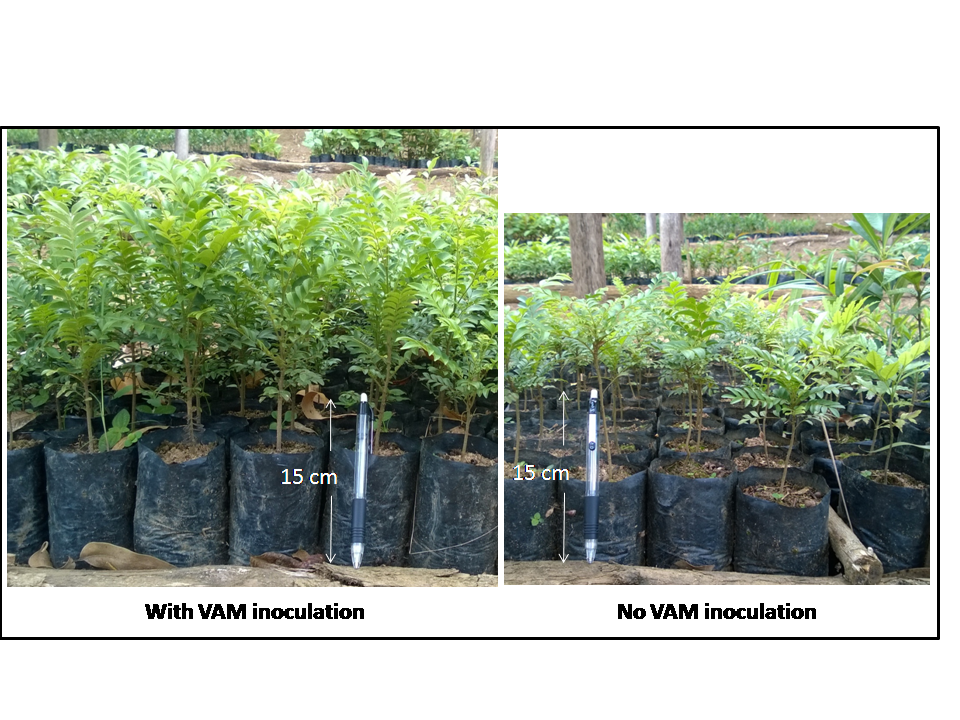
One of the problems that has long bedeviled ecological restoration efforts in Madagascar is persuading young seedlings to grow at a pace of more than just a few centimetres per year. The site of Ankafobe in the central highlands is a prime example, with many five year old individuals, planted in the anthropogenic grassland surrounding the remaining forest fragments, still no taller than waist height. Clearly, the environment into which the seedlings are planted is in some way inhospitable. One hypothesis to explain seedling underperformance is that they are not managing to establish their normal symbiotic relationships with vesicular arbuscular mycorrhizae (VAM) fungi on which most higher plants depend.
Scaled visual comparison of VAM and VAM-less seedlings at Mitsinjo in Andasibe, Madagascar.
In a VAM symbiosis, plants exchange a significant carbohydrate donation to the fungus in return for important nutrients, particularly phosphorus, and often increased drought tolerance. So if mycorrhizae propagules are absent in the savanna soil, this could well explain the slow growth rates and high mortality observed among planted tree seedlings at sites like Ankafobe.
In response to concern about poor seedling performance, various restoration projects in Madagascar have begun inoculating their nursery seedlings with VAM using a simple protocol pioneered by Mitsinjo, a restoration project in the eastern rain forest of Andasibe. Soil (presumed to contain mycorrhizal fungus) is gathered from underneath forest trees, mixed with sand in a sack-lined pit and then sown with rice and beans to act as hosts for the developing VAM. After three months of maturation, you have a sack-full of VAM inoculum, ready to be applied to the young germinating seedlings – one teaspoon per plant.
Inspecting the VAM inoculate at a Mitsinjo nursery.
Experimental Conchopetalum madagascariense (Sapindaceae) seedlings ready for planting.
Many groups in Madagascar swear by the VAM protocol and the visual results can be compelling, but as yet there have been no experiments in the country to rigorously test whether this method is actually effective. This lack of clear evidence is what prompted us to work on a series of experiments testing and perhaps refining the VAM protocol.
We planted 480 native tree seedlings with and without VAM inoculation to test whether this method increases seedling survival and growth in the degraded savanna around Ankafobe. Digging into the solid laterite and planting the experimental seedlings was hard work but our efforts were rewarded one day with the sighting of a family of 10 young Tenrecs (Tenrec ecaudatus) who ventured bravely out of the security of the forest to observe the progress.
Four holes down, 476 to go!
Tom planting tree seedlings in the mud and rain.
Tenrec ecaudatus inspecting the digging progress
Planting complete, we took our “Time Zero” measurements and then a small sample of roots from both VAM and control seedlings to return to Antananarivo and check for the presence of mycorrhizae vesicles. The process of staining involved cooking up some rather nasty chemicals in our improvised laboratory – the kitchen – back in Tana.
Our next project will be to replicate our VAM study in Ananalava, a humid site on the east coast that contrasts with the drier climate of the Malagasy Highlands. Repeating our study in different environments will help generalize our results and recommendations for people working across this heterogeneous island.
Cyprien in our kitchen laboratory preparing an improvised stain to look for VAM vesicles.
Leighton Reid, James Aronson, and Chris Birkinshaw all contributed to this post on restoration in one of Missouri Botanical Garden’s community-based conservation sites in Madagascar. They are currently travelling together discussing opportunities for ecological restoration in MBG’s Madagascar Program and more generally for the country as a whole.
Madagascar’s central highlands appear as a grassy sea – an undulating terrain with intermittent red gashes where heavy rain has dramatically eroded the landscape. Driving north along the national highway from the capital, Antananarivo, one sees Eucalpytus trees growing near villages, as fuel and firewood plantations, but there is almost no natural forest. The few natural communities that remain represent vestiges of a former world.
The view across the road from Ankafobe – nearly unbroken grassland.
Our destination today is one such vestige – the Ankafobe reserve. Ankafobe is a tiny (33 hectare) strip of native forest growing near the headwaters of a highland stream. Water-loving Pandanus trees demarcate the stream bed and provide fruits for several lemur species. A Souimanga Sunbird (Cinnyris sovimanga) flitters from tree to tree. Just outside of the forest, highly flammable grassland stretches to every horizon.
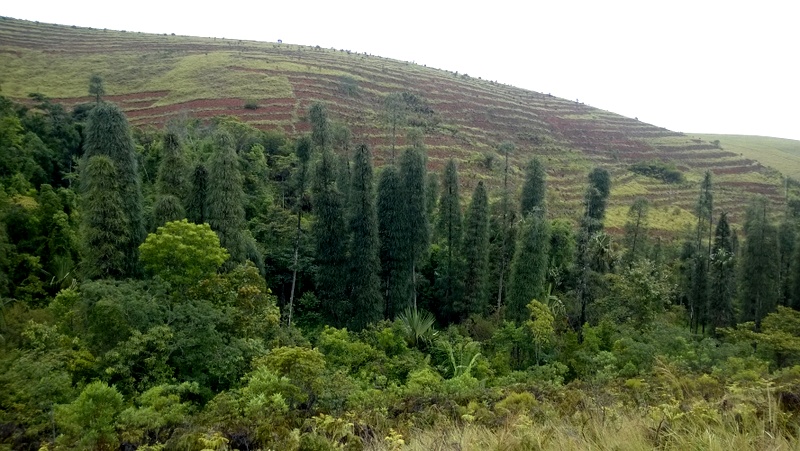
Fragmented gallery forest at Ankafobe. Spikey Pandanus demarcate the streambed. Red strips in the background are incipient forest restoration plots, where the soil has been turned over prior to planting nitrogen-fixing shrubs and native trees.
MBG staff and local villagers are working to restore forest on these bare hills, but it is not an easy task. Between clumps of grass is baked, orange laterite – rock hard soil bereft of life and nutrients. Tree seedlings planted in it grow slowly, or not at all. To improve seedling growth, MBG scientists are testing several strategies. One method is to turn over the soil and seed hearty legumes, whose symbiotic bacteria replenish soil nitrogen – a key ingredient in DNA.
Leguminous shrubs, like this Tephrosia, have been planted on turned-over soil to replenish its fertility.
Crotalaria, another green manure species.
Last October, a wildfire jumped the double fire breaks surrounding Ankafobe and burned a piece of the forest. Two hundred people from the local village (with a population of 600) voluntarily and spontaneously fought the fire for three days. Their impressive response minimized damage to this small forest and raised hopes and excitement about working together on conservation going forward.
The wildfire highlighted this forest fragment’s vulnerability, but it also provided a unique opportunity to observe the response to fire by a natural biotic community that has almost disappeared from the world. A number of trees were completely burned up that had been growing in the savannah just outside of the forest. Unexpectedly, several of these resprouted from their base and from superficial roots at some distance from the main stem. Nearby, the burned grassland bloomed an interesting array of geophytic plants – particularly orchids – that were rarely observed in unburned grassland. These observations seem to support the hypothesis that at least part of the highland flora may be adapted to fire – a controversial idea that complicates the already challenging task of managing Ankafobe.
Ankafobe is a rare gem; a green emerald that stands out from the surrounding countryside and supports at least one species found almost nowhere else. The reserve is also a special opportunity for ecological restoration. Hard-won lessons from this site could eventually be used to restore tens of thousands of square miles of Madagascar’s central highlands.
Chris Birkinshaw (center) and the Ankafobe restoration team after a rainy afternoon in the field.
This post is contributed by Dr. James Aronson, a restoration ecologist at MBG’s Center for Conservation and Sustainable Development, and his son Thibaud Aronson. James is also a researcher with the CNRS (National Center for Scientific Research) in Montpellier, France.
In Sinhalese Sri Lanka means “Resplendent Isle”, a fine name indeed for this tear-shaped island off the coast of southeastern India, just north of the equator. Last month I travelled with my son on a self-guided Natural History + Ecological Restoration visit, we are finding and photographing cloud forests and birds galore, like the endangered endemic Sri Lanka whistling thrush, Myophonus blighi, and the Kashmir flycatcher, Ficedula subrubra, which over-winters exclusively in the Sri Lanka highlands, from its very restricted breeding grounds in Kashmir, northern India.
We were also looking at the mosaic of grasslands, cloud forests, and lowland forests we find here from a restoration ecology perspective. That means we’re trying to “read” the landscapes we see in terms of known transformations carried out during the British colonial era (1815 and 1948, when Sri Lanka was known as Ceylon), and since independence. The remarkable Horton Plains National Park is a mosaic of montane grassland (ca. 35%) and cloud forest (ca. 65%), encompassing the headwaters of three major rivers. It was declared a sanctuary in 1969 and elevated to national park status in 1988; it became part of a large UNESCO World Heritage site in 2010. In the central highlands of Madagascar, grasslands appear to occupy about 99% and most people assume they are anthropogenic…. This month, I’m travelling with Leighton Reid in the Central Highlands of Madagascar, and we will be blogging about this soon.
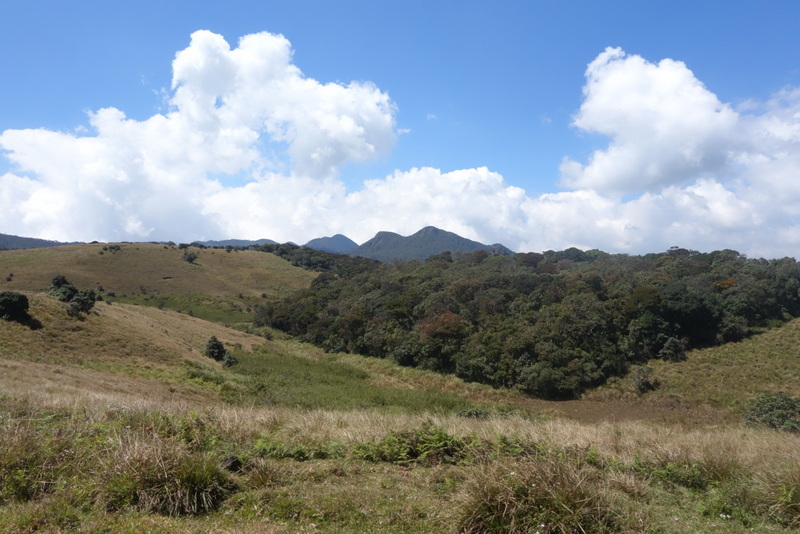
Horton Plains National Park, where the grassland – cloud forest mosaic shows some sharp edges where human land use has had impacts, but otherwise with high species diversity and landscape scale heterogeneity.
Tree ferns (Cyathea sp.) in the Horton Plains cloud forest.
But, the history of preservation in the highlands here goes back a lot further, to the days when the Isle was part of the British empire, along with all of India. According to information we gathered at the extraordinary, and poorly known Hakgala Botanic Gardens, the great English botanist and explorer Joseph Dalton Hooker had advised the British government to leave all montane forests above 5000 ft. (ca. 1300 m) above sea level “undisturbed” and after 1873 the administration prohibited clearing and felling of forests throughout the central highlands. What a great idea that was! It is too bad there were not enlightened laws on hunting of wild animals as well. One Scottish officer in colonial service in Sri Lanka bragged he had shot and killed over 1400 elephants in Horton Plains and nearby. Today, there are none left there and, so far as we could determine, no plans to reintroduce them from the other remarkable parks, including Yalla and Uda Walawe….
So, what is the significance of the absence of elephants in this park? And, what else can we learn from past regimes and historic periods in Sri Lanka? For starters, we discover that conservation, and respect for other organisms goes back much further than the 19th century. Consider the sign at the entrance to Udawattakele Forest Reserve, near Kandy, one of the historic capitals from the long period of successive kingdoms the island had known prior to the European colonial chapter in Sri Lanka’s history:
“O Great King, the birds of the air and the beasts have an equal right to live and move about in any part of this land as thou. The land belongs to the peoples and the other beings and thou are only the guardian of it.”
-Arahath Mahinda (a son of the emperor Asoka the Great, who brought Buddhism to Sri Lanka)
How would it be if we could revive that approach to the Web of Life in our own day and age?
So, what has Horton Plains National Park, with its grassland-forest mosaic, its tourists, and its absent elephants got to do with the Central highlands of Madagascar? For one thing, we can see that fire is a big ecological driver in both areas. The abundant arborescent Rhododendrons in Horton Plains tell a vivid tale in this regard.
Rhododendron arboreum subsp. zeylanicum at Horton Plains National Park. It appears to be fire-resistant and is the only tree species present in large areas of grasslands subject to fire.
On the grand scale of things, Sri Lanka’s Central highlands also resemble those of Madagascar’s since both are the crowns of a poor, emerging tropical island with small and very similar human population size (21 million vs. 24 million), despite being much nearly ten times smaller, and with over 30,000 years of human history, as compared to merely two millennia for Madagascar.
Horton Plains also has remarkable conservation value both for its biodiversity and the ecosystem services it provides to people. Also, as I said, it’s a mosaic of grasslands and cloud forest, that in the past was certainly much affected by both elephants and fire.
Finally, both Sri Lanka (along with the Western Ghats of southern India) and Madagascar count among the world’s biodiversity hotspots, easily visible in their fauna and flora, which is one of the main reasons why MBG researchers, and many others travel and work in Madagascar.
Now, let’s turn back to fires. A big fire hit Horton Plains in 1998, and there are serious invasions of two noxious, cosmopolitan weeds, namely Gorse and Bracken fern. Some control work is underway on the Gorse, but the Bracken fern is apparently not seen as being a problem. Rainbow trout were introduced in the 19th c. and apparently have displaced all native fish, and are taking a toll on native shrimp and no doubt other fauna.
Gorse (Ulex europaeus) – a spiny invasive introduced as an ornamental in the colonial period for its pretty yellow flowers and now a noxious weed throughout the highlands of Sri Lanka.
Horton Plains grasslands infested with Bracken fern (Pteridium aquilinum).
Explanatory sign at Horton Plains National Park, in English, Singhala and Tamoul. Text on Rainbow trout and what it does when it swims where it shouldn’t be.
Over the weekend, thirty scientists and land managers met in a rainforest clearing on Costa Rica’s Osa Peninsula. We discussed tropical, ecological restoration. Among the attendees were some of the luminaries of tropical biology and conservation. Expertise ranged from forestry to power grid infrastructure to loan financing to mangrove snails. Here are a few thoughts that I took from the gathering.
Red-lored Parrot (Amazona autumnalis) in a royal palm (Raphia taedigera)
Tropical forest restoration isn’t just tree planting. Planting trees is a standard restoration practice, but it can become impractical at the enormous spatial scales needed to preserve hundreds of thousands of organisms and their interactions. Moreover, forests are made of more than just trees; fruit-eating animals (like spider monkeys) and meat-eating animals (like jaguars) are vital for maintaining ecologically intact tropical forests. Even flies can do the grunt work of restoration.
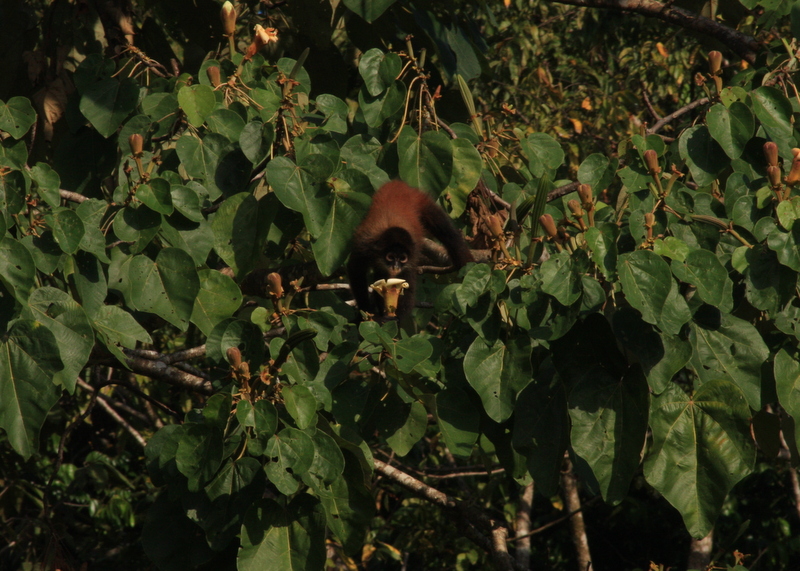
Above: Spider monkeys (Ateles geoffroyi) drinking nectar from Ochroma pyramidale flowers. Spider monkeys also disperse tree seeds throughout the forest. One scientist at the workshop quipped that a lowland, Neotropical rainforest without spider monkeys has serious problems.
Restoration doesn’t happen without people. Knowing your neighbors can afford special opportunities. The longer that people have lived in a landscape, the richer their potential as informants and collaborators. Restoration gains ground when it provides things that people want, like clean water, wild nature, and jobs. Working with people in government could be the surest way to achieve restoration permanence.
Watch out for the trap of the ivory tower. Designing restoration experiments is intellectually satisfying, but to make a difference at a regional or global level, these ideas also need to be scaled up and implemented as land management practices. Ideally, restoration research is place-based; that is, it’s designed to meet the unique conservation challenges of its particular landscape using local resources.
-Leighton Reid
Leafcutter ants hauling food to their fungus farm
Sea turtle headed for the Pacific Ocean
Black Hawk (Buteogallus anthracinus) in a coconut palm (Cocos nucifera), waiting for a sea turtle hatchling snack.
In early December I spent 10 days in southern Costa Rica preparing sites for a tropical forest restoration experiment using fig trees. Figs are classic keystone species; that is, they have a large influence on their ecosystem relative to their abundance. Figs produce fruits that are eaten by many animals throughout the year. These animals disperse other plant species’ seeds below the figs’ crowns, and as a result, forests around fig trees often have diverse types of seedlings.
The end of the road.
The fold belt topography of the Ouachita Mountains
Some figs are also capable of resprouting from vegetative cuttings, meaning that one can cut branches from adult trees and plant them as though they were seedlings. If cuttings are taken from fruiting adult trees, the cuttings can even produce fruits in the first year after they are planted, potentially attracting seed-carrying animals.
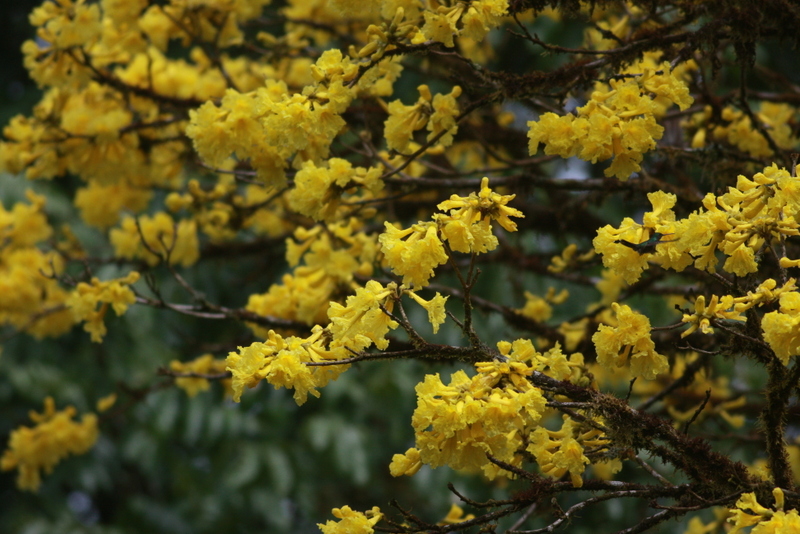
On one humid night last week, I woke up at 2AM, my bed shaking from a nearby magnitude 6.6 earthquake. The next day a co-worker cut through his shin to the bone with a machete. It rained every day, but flowering corteza amarilla (Tabebuia ochracea) trees signified that the dry season is nearly here.
You can read more about tropical forest restoration research in Costa Rica in our latest paper on seed dispersal, or you can listen to a podcast from earlier this fall on Science Sort-Of.
-Leighton Reid
An epiphytic bromeliad growing on an 8.5-yr old tree trunk in a restoration site.
Collecting seed of Solidago ouachitensis with a light dusting of snow
Ficus tonduzii – a fig species that we are using for an enrichment experiment.
An 8.5-yr old fig (Ficus americana) planted as a giant, 4-m long, vegetative cutting.
Solidago ouachitensis with mature seed. A charred log in the background provides evidence of recent fire.
Some 300 million years ago, the South American plate collided with the North American continental crust. The resultant buckling formed the dramatic topography of the Ouachita Mountains, which extend from southwestern Arkansas into eastern Oklahoma, defining the southern extent of the Interior Highlands of mid-continental North America.
The fold belt topography of the Ouachita Mountains
Although the Ozark region, which forms the northern portion of the Interior Highlands, has received more attention in terms of both scientific literature and public familiarity, the Ouachita Mountains have a larger number of endemic plant taxa. In total, fourteen endemic plant taxa have been documented from the Ouachita Mountains, several of which have only been described in recent decades. As a member of the Center for Plant Conservation network of botanical gardens, we work to conserve imperiled plant species in the southeastern United States through seedbanking, reintroduction, and research to better understand the ecology and life history of these species. This research ranges from experiments to understand the ecological conditions necessary to break dormancy and induce germination, to field experiments that aim to provide guidance for ecological restoration and management of the communities and ecosystems in which these taxa occur.
Scenic vista in the southern Ouachita Mountains
Ouachita mountain goldenrod (Solidago ouachitensis) is one of the rare and endemic taxa which we are working to conserve in this region. Recently, during the week of November 17th-21st, Matthew Albrecht and I traveled to the Ouachita Mountains to collect seed of S. ouachitensis. A minor snowfall preceded our arrival, bringing with it unseasonably low temperatures. The snow remained for several days on north facing slopes, which increased both the scenic beauty of the region and the difficulty of traversing steep terrain.
Collecting seed of Solidago ouachitensis with a light dusting of snow
The trip was perfectly timed to coincide with the peak of seed maturation, which made for a successful collection effort. Solidago ouachitensis occurs predominantly in two distinct habitat types – mesic oak dominated forest near the summit of slopes and also mixed hardwood forest of riparian toe slopes. Several populations occur along the Talimena National Scenic Byway, where the ridge tops are dominated by a dwarf forest comprised of a near continuous canopy of gnarled, windswept white oak. Solidago ouachitensis occurs on several north-facing aspects down slope from these dwarf forest. Populations vary greatly in size, from no more than several individuals up to thousands of individuals. It appears that the most robust populations (in terms of total population size, the proportion of the population producing seed, and the reproductive output of individual plants) occur in areas with evidence of recent fire. Prescribed fire is used as a management tool in the Ouachita National Forest, which appears to be beneficial for Solidago ouachitensis. To further explore this, we’re initiating experiments to examine whether chemical compounds in smoke enhance germination.
– Quinn Long
Solidago ouachitensis with mature seed. A charred log in the background provides evidence of recent fire.